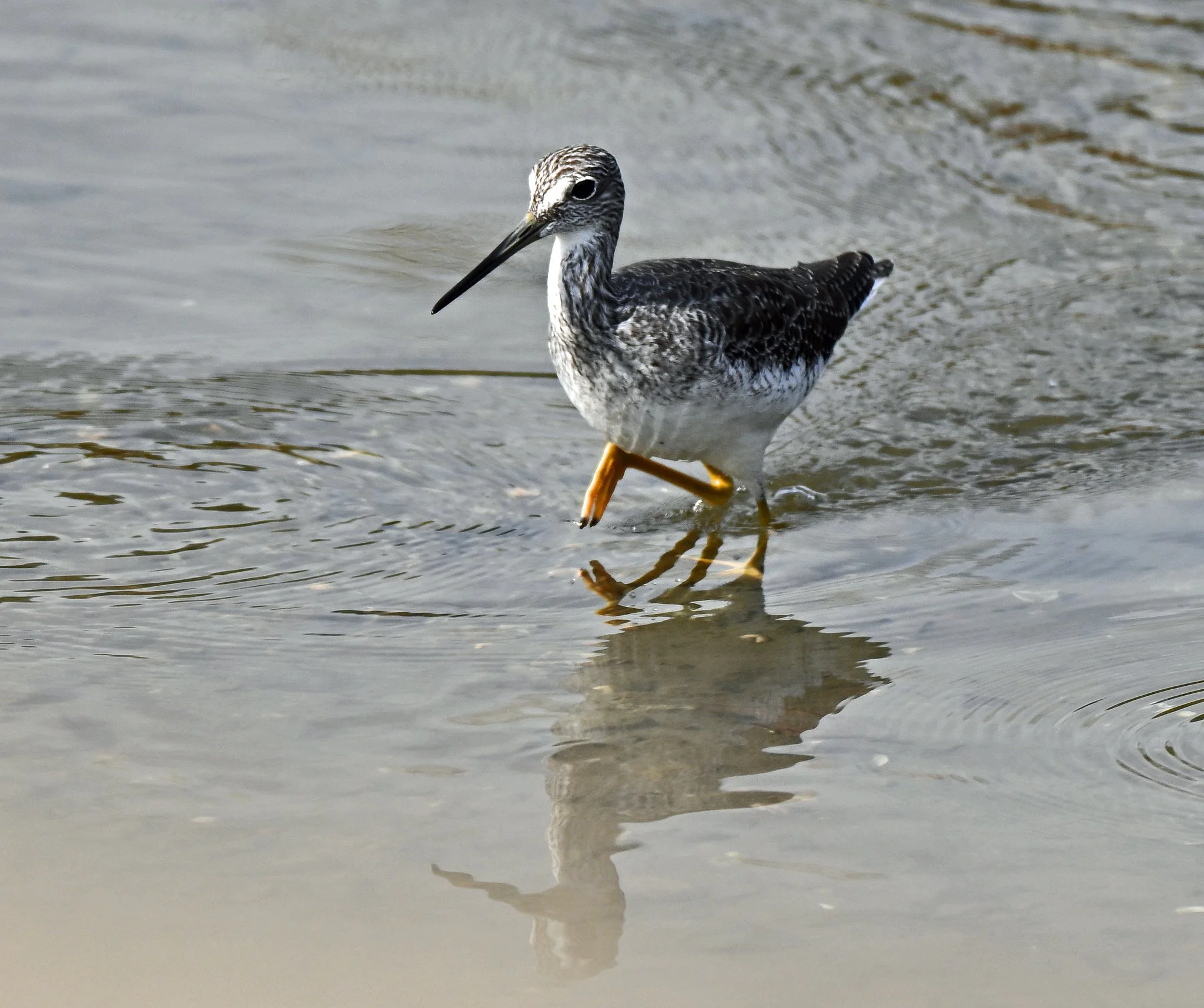
This little, high-stepping sandpiper is passing through Maine now. She’s probably from Canada and on her way to a beautiful beach in South America.
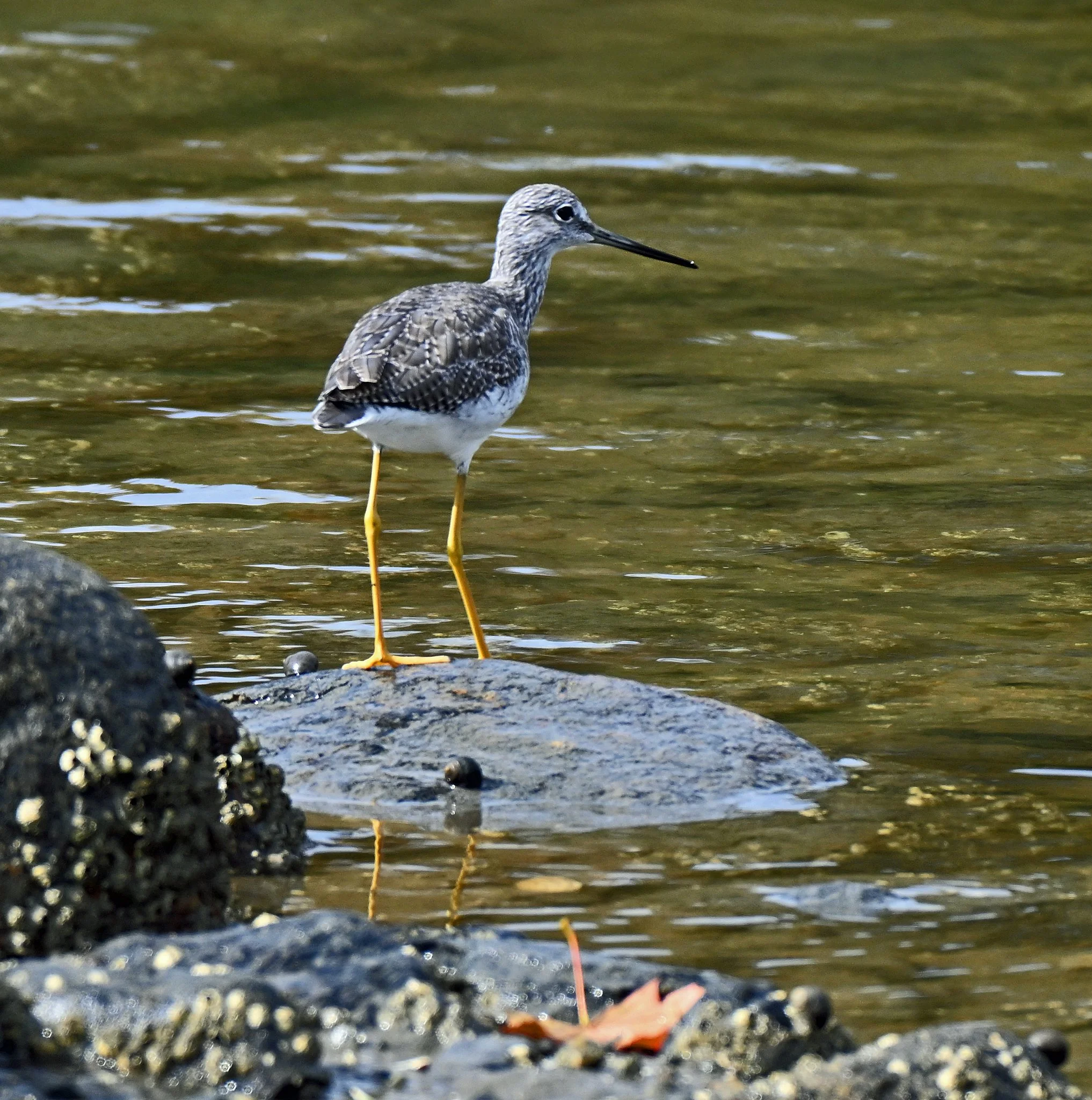
Ornithologists have not given her a name that reflects her combination of delicate beauty and enormous stamina. She’s named simply a “lesser yellow legs” for two descriptive reasons, First, her species (Tringa flavipes) averages about 9 to 11 inches in height compared to the 11½-to-15-inch average of the sandpiper named simply the “greater yellow legs” (Tringa melanoleuca).
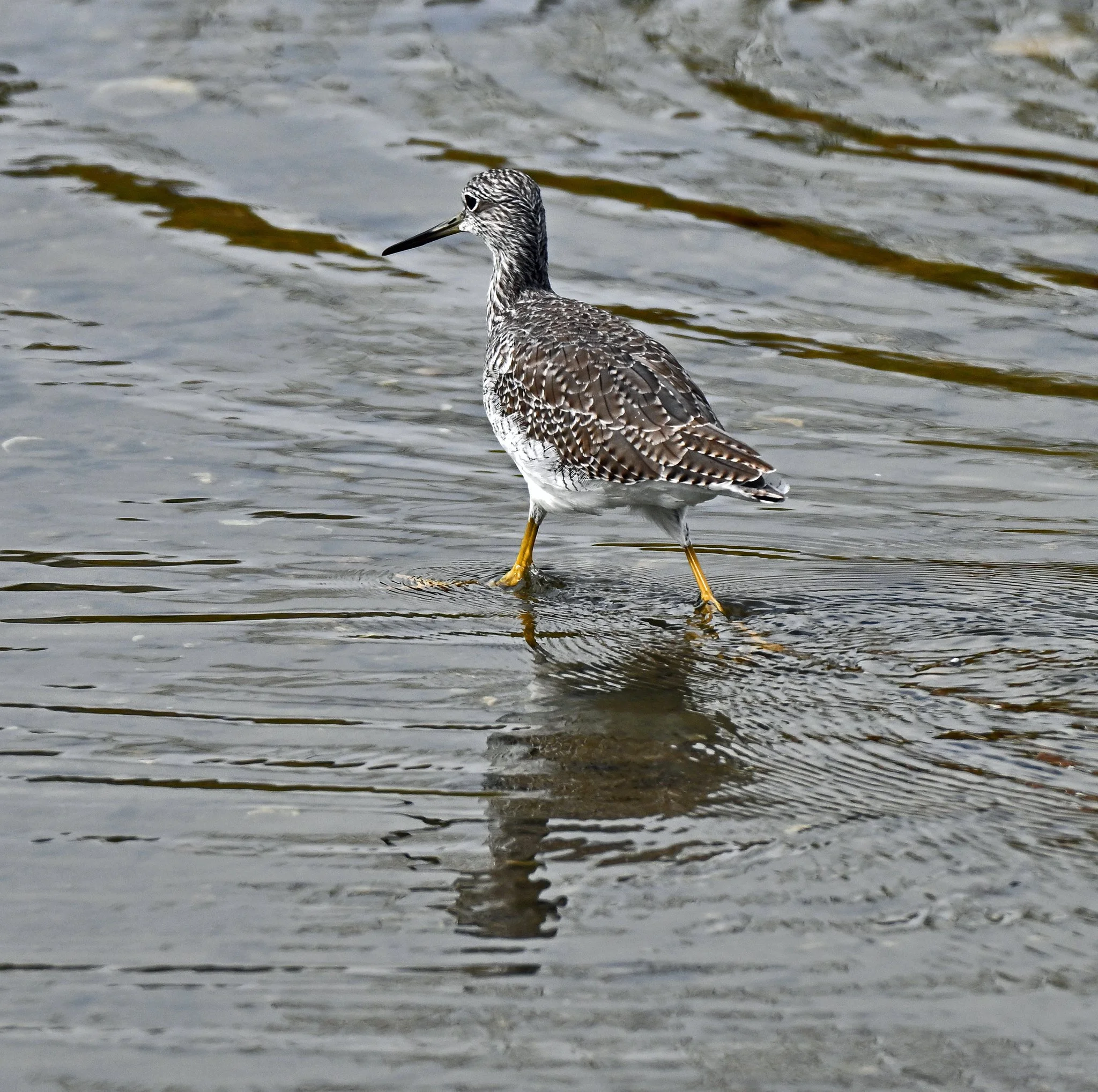
Second, both species have long, bright yellow legs that allow beginning birders to see them at a great distance and boast “Yellow Legs!” – only to be stymied when an advanced birder asks “greater or lesser?” It’s very difficult to tell the two species apart at a distance unless they’re together when their height differential is obvious.
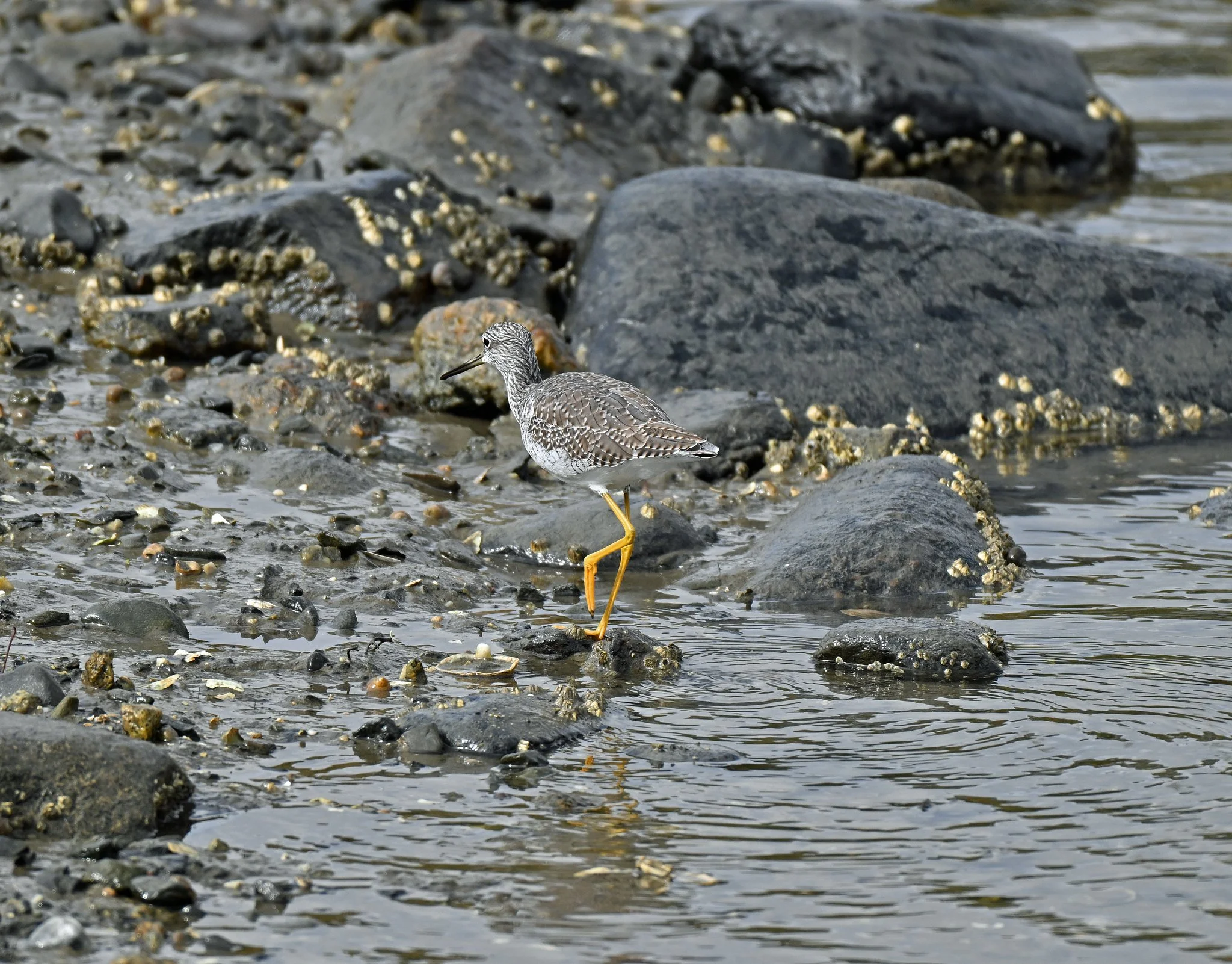
A telltale sign: “Greaters” hunt alone more often, while “Lessers” more often hunt in small “flings.” (A group of sandpipers is delightfully called a “fling.”) Another sign if you get close: “Lessers” have straight, needle-thin bills that match or exceed the length of their heads; the bills of “Greaters” are proportionately shorter, thicker, wider at the base, and slightly curved upward.
(Images taken in Blue Hill, Maine, on October 8, 2026; sex assumed.)