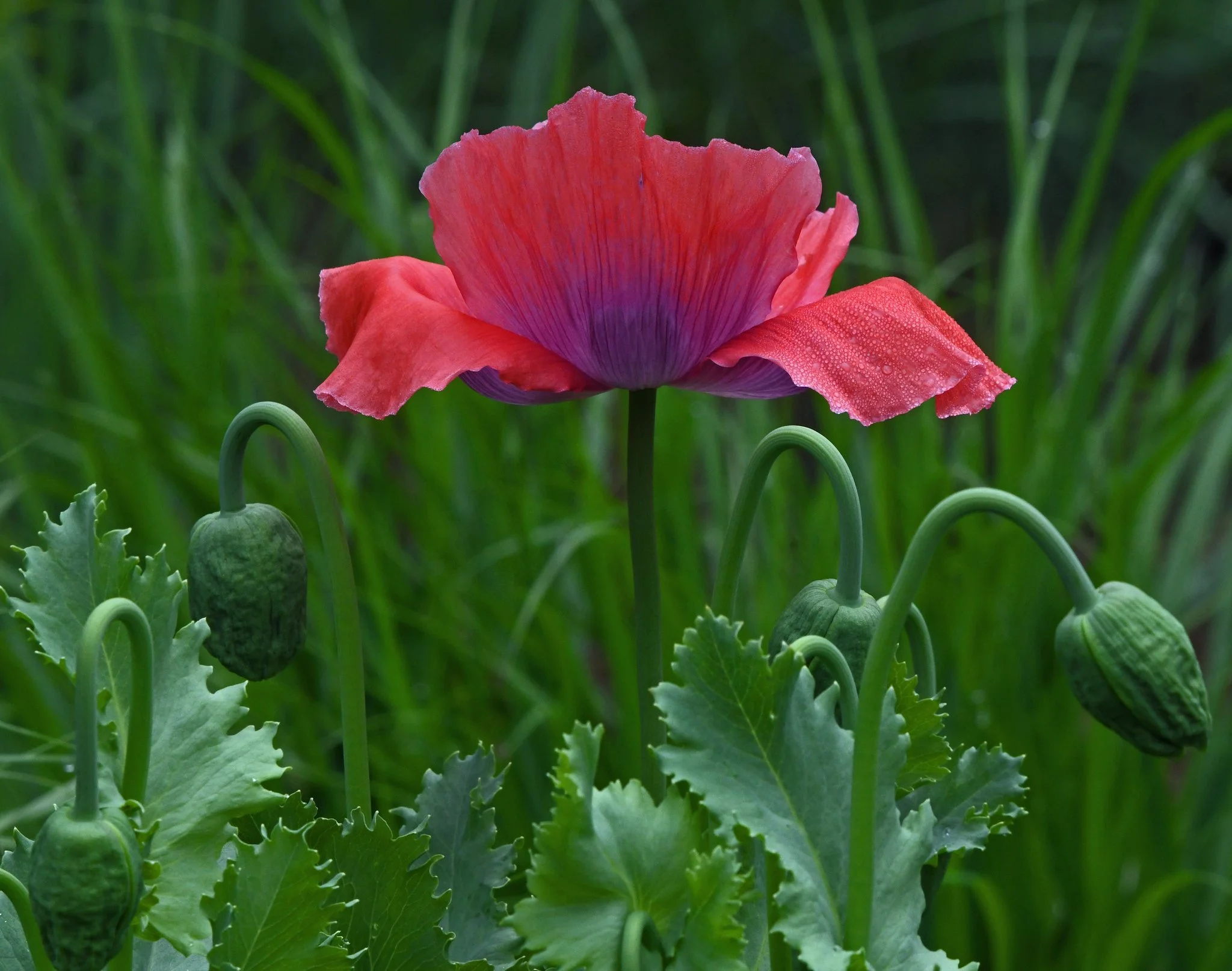
Guess what’s popping out all over now. Poppies add an ancient and mysterious beauty to the garden. Their large, crepe-like petals open and close the flower in slight breezes, revealing flashes of what – with a little imagination – looks like the creation of a small universe or a secret symbol for a sun-worshiping cult:
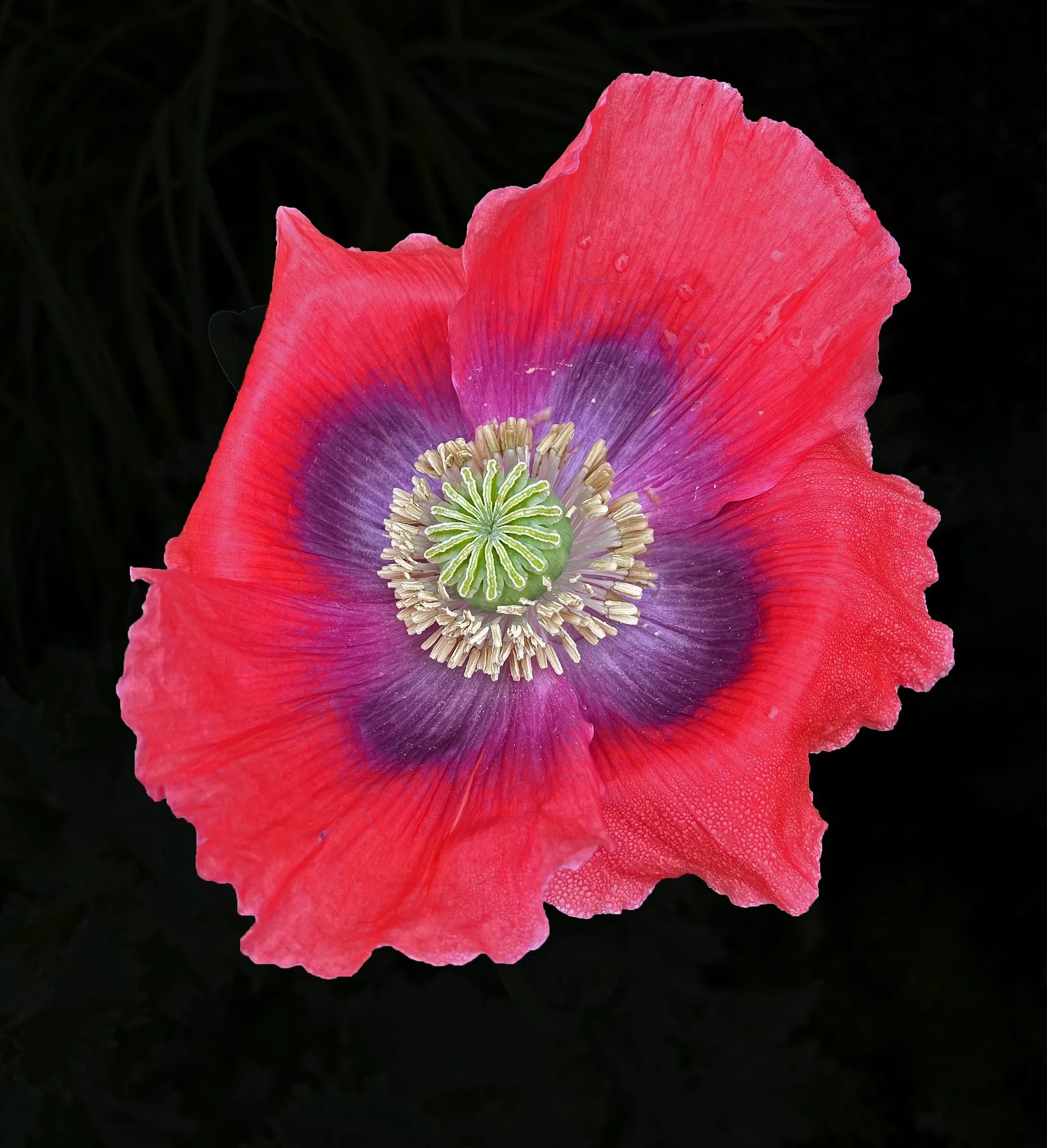
The popularity of these flowers has survived severe tests of time. The Minoans in Crete were cultivating poppies at least by 2700 BCE and the Egyptians entombed them with important personages, according to the ancient histories. And, the appearance of wild poppies on the bloody, death-strewn Western Front during World War I moved John McCrae to write his heart-twisting 1915 poem, “In Flanders Fields,” which inspired today’s recognition of red poppies as symbols of fallen members of the military.
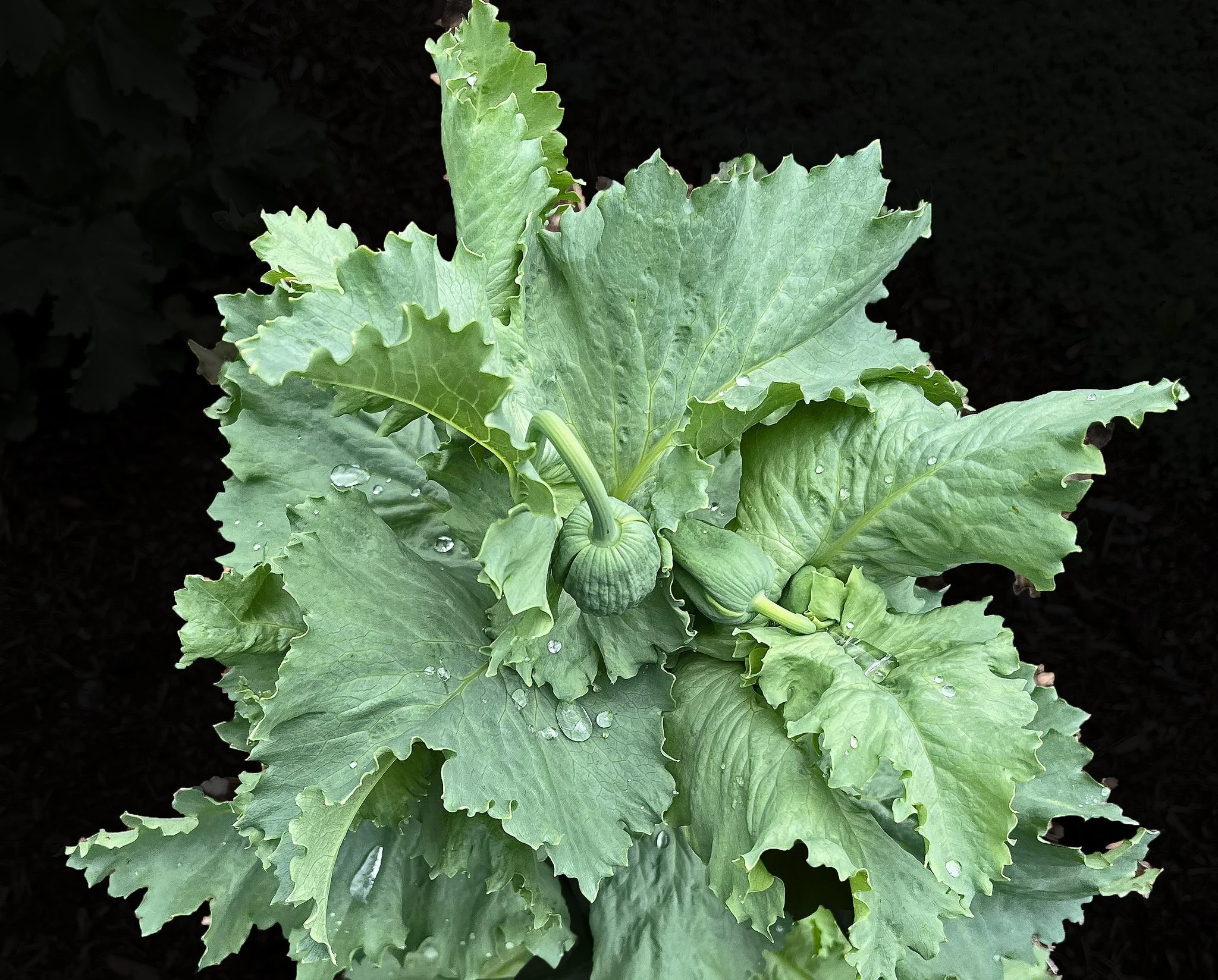
Of course, some varieties of poppies contain calm-inducing and pain-reducing alkaloids such as morphine and codeine. These opium varieties are not sold in your local flower nursery – I hope. They’ve been extraordinarily beneficial in the right hands and extremely harmful in the wrong ones. (Morphine, as you may know, is named after the Greek god for sleep and dreams, Morpheus.)
(Images taken in Brooklin, Maine, June 27, 2026.)