Common milkweed flower heads are starting to blossom here. The plant derives its name from its milky-white sap, which is a toxic latex substance that plays an important role in the lifecycle of monarch butterflies.
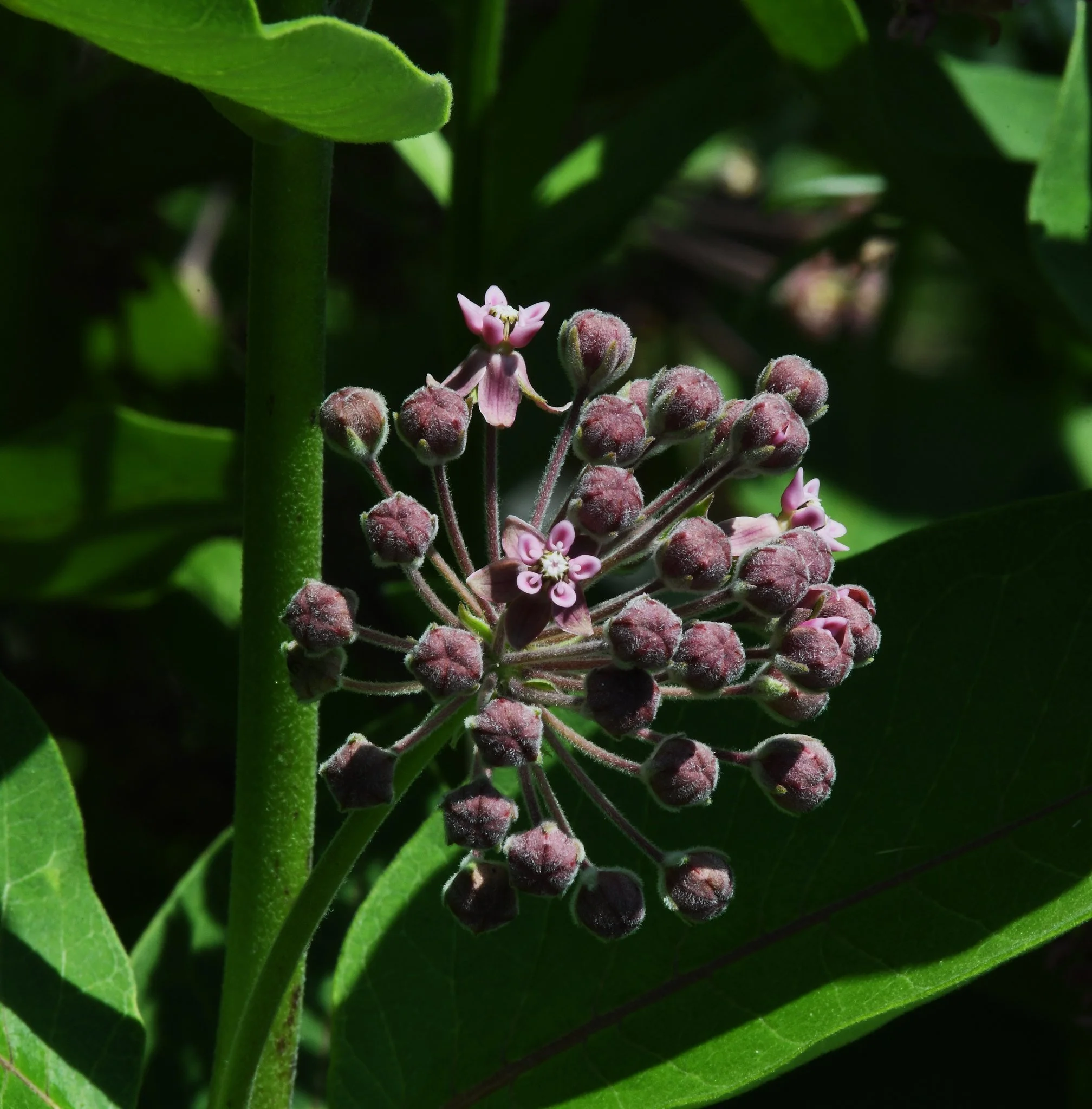
Common milkweed (Asclepias syriaca) and its cousin butterfly weed (Asclepias tuberosa, aka butterfly milkweed) are both native plants here on which Monarchs will lay eggs. The eggs develop into caterpillars that eat the plant leaves and become somewhat toxic themselves, both as caterpillars and butterflies. Most insect predators have learned of this toxicity and leave the monarch eggs, caterpillars and butterflies alone.
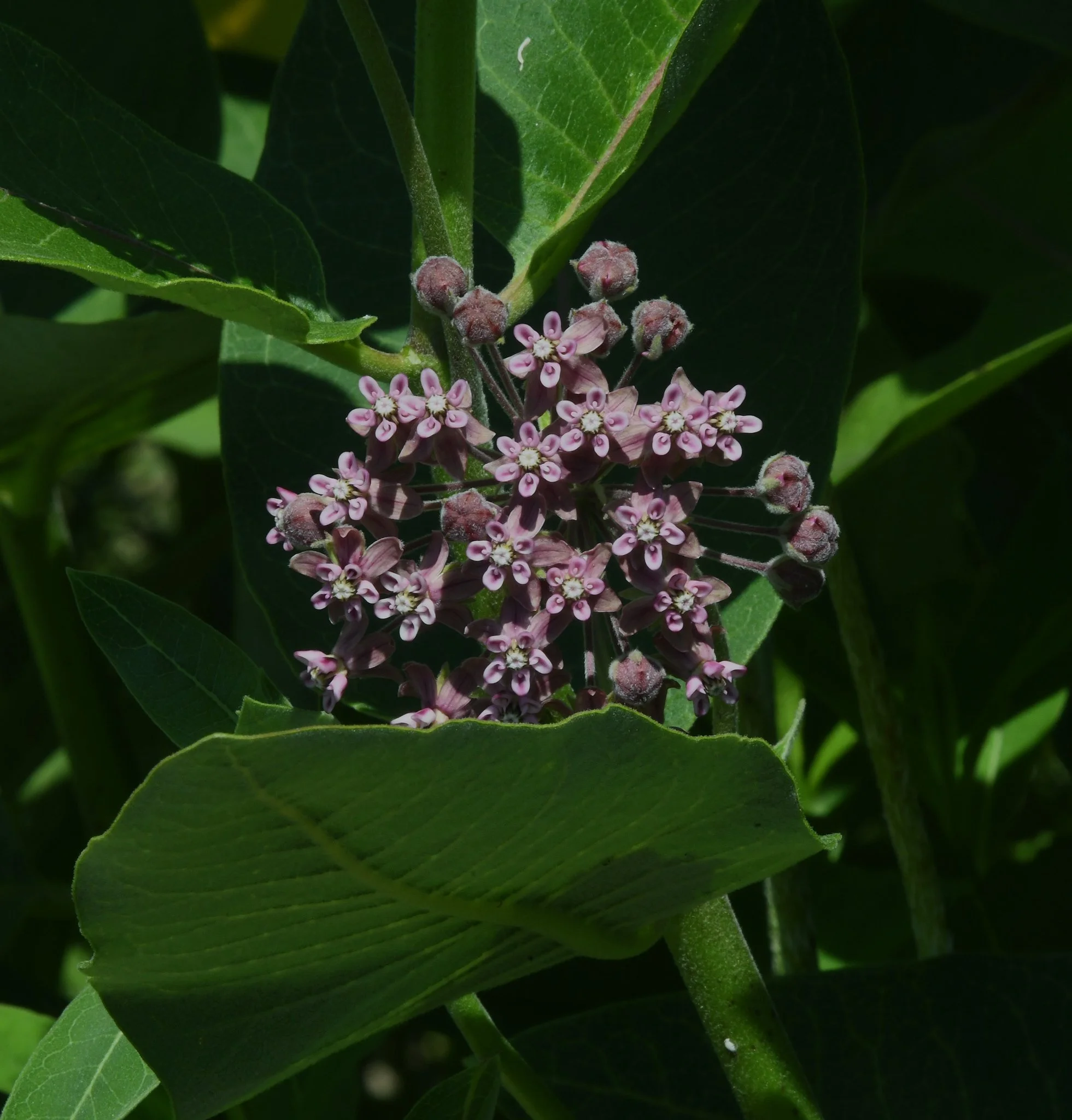
There seem to be two relevant myths associated with the monarch life cycle. First, common milkweed and butterfly weed are not the only milkweeds on which monarchs lay eggs. There are hundreds of milkweed species in North America and monarchs will lay eggs on many of them; they just prefer certain species if they can find them.
Second, the toxicity of monarch caterpillars and butterflies does not protect them from all predators. They have many hungry enemies. Some spiders, wasps, and ants eat the eggs and the small caterpillars; some birds have learned how to attack and eat the less toxic parts of the caterpillars and butterflies, and frogs, toads and even small mice and rats have been known to dine on a monarch in one or another of its forms.
Nonetheless, common milkweed is blooming and the hit monarch show is about to begin. (Images taken in Brooklin, Maine, on July 2, 2026.)