Comment

In the Right Place: Battle Fatique

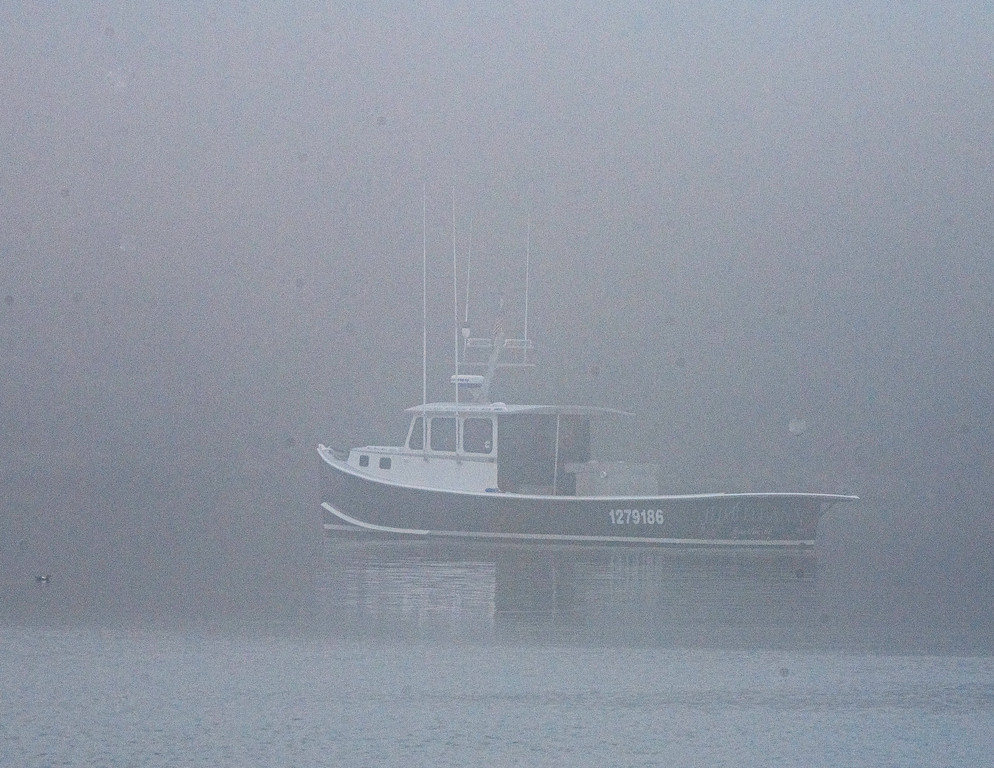
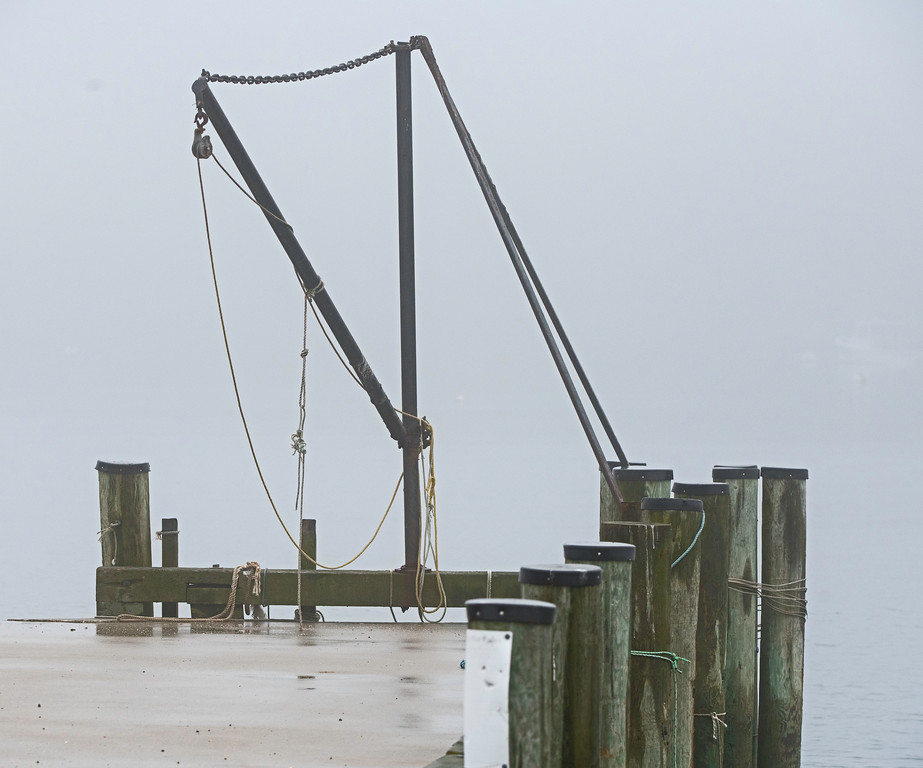
Here we see the sun early this morning riding to the rescue of Great Cove, which was being throttled by fog. By about 6 a.m., the fog was gone.

5.jpg

Ever since, the sun has been fighting desperate battles with avenging clouds; it brightly wins one, then is beaten back in a gray counterattack. It looks like we’re going to see such meteorological trench warfare most of today. Nonetheless, this is a considerable improvement from yesterday and the day before, when it felt like we were trapped inside a rainy and foggy terrarium most of the time.

2.jpg
4.jpg

(Brooklin, Maine)

Comment

Comment

In the Right Place: Being Bright

This has been a dark and dank Spring in which many of our trees and bushes have not yet fully leafed-out. Yet, our male American Goldfinches already are wearing their outlandish summer suits. Their genes apparently gave them no choice; it’s time to for them to attract a mate and help the species survive.

E.jpg

Evolution has dictated that the brighter the male’s yellow plumage, the healthier he is. Female Goldfinches instinctively know that: male color brightness is a major criterion for them when they choose a mate. These females remain conservatively-tailored all year, which helps camouflage them when they are nesting as well as when the branches are bare:

F.jpg

On the other hand, the males’ bright yellow vests in bushes without leaves can attract hawks as well as mates. There are downsides to being handsome. (Brooklin, Maine)

Comment

Comment

In the Right Place: The Blues

This is an image of last night’s uncommon “Full Flower Moon” that is merged with an image of one of our most common flowers. A May full moon is called a Flower Moon for an obvious reason: May is when many flowers appear, especially Dandelions.

1.jpg

But, last night’s moon was special because it was the third full moon in Spring, which began with the March 20 equinox. There will be a fourth full moon on June 17, before Spring ends on June 21. By astronomic definition, the third full moon in any one season that has four full moons is a “Blue Moon.” (The second full moon in any one month also is called a “Blue Moon.”)

2.jpg

These white moons are called Blue Moons because they are relatively rare, as are real blue moons caused by smoke or other atmospheric disturbances. Here is last night’s moon as it really was:

3.jpg

(Brooklin, Maine)

Comment

Comment

In the Right Place: Getting Ready

Many of our lobster fishermen (a term that includes females) are getting their gear in shape now to return to the water in late May or June, when the lobsters should be very active near our coast. Here we see neighbor Sandy White apparently working on trap identification tags in the Whites’ side yard.

1.jpg

She’ll soon be fishing with her husband, John, on their boat Blue Sky or its newer version now being built. As with many of our lobstermen, the Whites run hundreds of traps.

2.jpg

The current limits for most Maine fishing zones reportedly are 800 traps per licensee with no more than five traps on a single trawl line. (Brooklin, Maine)

Comment

Comment

In the Right Place: Summer Construction

This presumably female Broad-Winged Hawk has gotten our hopes up. We’ve seen her several times this week near a historic raptors’ nest.

i-tBDPGcB-XL.jpg

In June of 2017, a pair of BWHs successfully raised four of the cutest raptors you’ll ever see in that secluded nest.

RJL_6367_edited-1-XL.jpg
RJL_6377_edited-1-XL.jpg

Female BWHs are the primary movers in selecting and building sturdy nests, although males have been known to help in the summer construction.

051119-01 Yellow Trail.jpg

They usually nest in dense woods, where they can better protect their eggs and fledglings from raccoons, porcupines, owls, other hawks, and crows. Initially, they’ll hunt with their offspring in those woods and around field and pond edges for frogs, toads, snakes, small rodents, and large insects.

i-Rc584xw-XL.jpg

(Brooklin, Maine)

Comment

Comment

In the Right Place: Land of Plenty

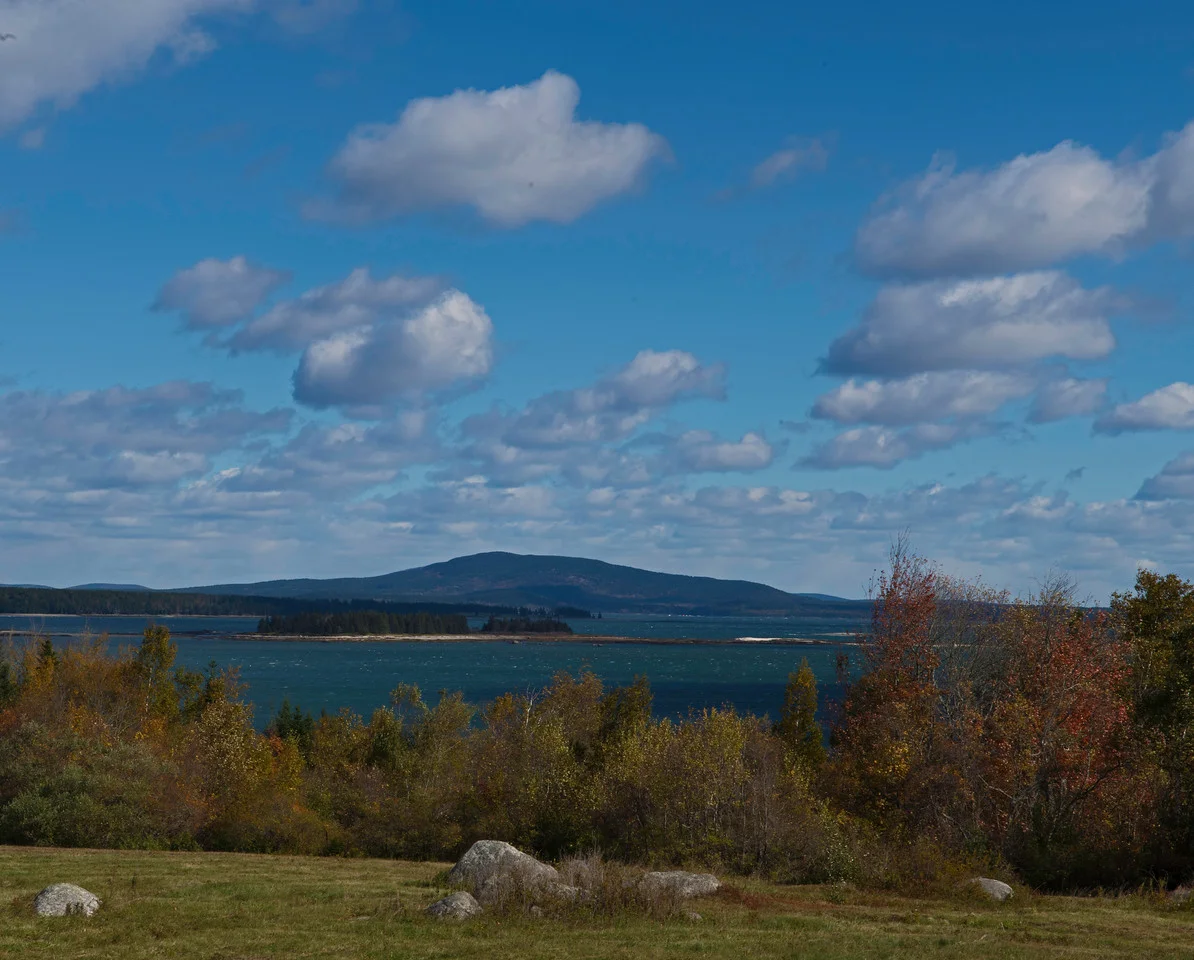
When it’s clear, we can see two island mountains that remind us of the area’s French history. Below this paragraph, we view the top of Champlain Mountain rising above and well behind the islands in Eggemoggin Reach.  (May 8 image) Mount Champlain is about 11 miles to the south-south-west of us on Isle au Haut (“High Mountain Island”), which was named in 1604 by French explorer Samuel de Champlain.

i-ZNR9dCh-XL.jpg

Below this second paragraph, we view Cadillac Mountain across Blue Hill Bay. (Last Year’s image) That mountain is about 18 miles to the east-north-east of us on another French-named island, Mount Desert (“Barren Mountain”) Island (MDI). It’s in the original part of Acadia National Park and was named in honor of French explorer Antoine Laumet de La Mothe Sieur de Cadillac who, in 1688, was given ownership of MDI, among other lands around here.

RJL_2665-Edit 2-X2.jpg

During the 17th Century, much of North America’s northeast, including what is now the Canadian Maritime Provinces and Maine, was the French Colony of L’Acadie (“Acadia,” a transliteration of a Native American word for “Land of Plenty”). (Brooklin, Maine)

Comment

Comment

In the Right Place: Blurs

Here’s a newly-arrived member of royalty that nobody bows to. She’s a Ruby-Crowned Kinglet – little king – but she’ll never wear a crown. Only the males of her species have crowns, and they only show their red daubs when they’re excited.

050919-WBS Field.jpg

Otherwise, male and female RCKs wear identical commoners’ wardrobes on their four-inch bodies. Thus, they’re all but invisible to casual observers. But, these flying blurs do lead extraordinary lives. For one thing, this female likely will lay up to 12 eggs this month, each of which could weigh as much as she does. While she’s incubating her dozen future royals, her mate will be working his crown off to feed her. (Brooklin, Maine)

Comment

Comment

In the Right Place: Awakenings

Bears are not the only things that emerge from hibernation in the spring. Many boats are emerging from their winter sleep now. Here’s Free Spirit, a beautiful 1948 Concordia sloop, coming out of its cave at the WoodenBoat School last week to get ready for the sailing season.

X.jpg

Also at WoodenBoat, smaller boats are being hauled out of storage and being prepared to reenter the water:

Y.jpg

On the commercial side of things, the aptly-colored Sun’s Up returned to Connery Cove a few days ago; she’ll soon be lobstering again:

Z.jpg

Come June, there’ll be many more boats in our waters than bears in our woods. (Brooklin, Maine)

Comment

Comment

In the Right Place: Splendor

This Japanese Flowering Crabapple (Malus floribunda) is one of our very old neighbors. It’s not native, but it’s a welcome sight at any time of the year. Here, we see it on Wednesday (May 8), as it’s spring leaves are beginning to form a green crown.

i-zbJX9p7-X2.jpg

Soon, that crown will become a profusion of pink and red buds that, by early summer, will have evolved into a shimmering white mass of flowers. In the fall and early winter, the tree’s yellow and red fruit will appear and drop, much to the satisfaction of our deer and other wildlife. In the winter snow, its arthritic architecture will be dramatically silhouetted, reminding us that there can be splendor in resilient old age. (Brooklin, Maine)

Comment

Comment

In the Right Place: Tasty

We have a very busy Muskrat in a nearby marsh pond. It appears to be digging several burrows with underwater entrances.

2.jpg

Muskrats are powerful swimmers with webbed hind feet and side-swishing tails; they can swim backwards and hold their breath up to 20 minutes. These rodents get their name from the strong scent that they use to mark their territory.

1.jpg

They once were hunted widely for their soft fur and purported rabbit-like taste – “sauté until golden,” according to one recipe. (Brooklin, Maine; prior year images)

Comment

Comment

In the Right Place: Quietude

This was a moment from yesterday: an uncertain sun; a slight chill; greening grass; budding branches; a float ready to return to Great Cove; a canoe waiting to be painted; quietude, except for the singing robin.

i-ZgP3t7N-XL.jpg

(Brooklin, Maine)

Comment

Comment

In the Right Place: On the Fly

Some Tree Swallows are building their nests here now. The females usually contribute the twigs; the males usually finish up with a feather lining. They’ll be incubating eggs within about two weeks, if weather conditions allow. Males share the feeding chores and sometimes help with incubating.

2.jpg

While some Tree Swallows are building their nests, others are hanging out, watching WoodenBoat School summer staff prepare the campus for this year’s programs.  Nest building usually precedes boatbuilding at WBS.

1.jpg

A pair of these fast-flying acrobats needs a daily diet of about 6,000 small insects – all caught in the air – to feed themselves and their four to seven fledglings. Extended periods of spring cold and rain (when small insects don’t fly) can have a devastating effect on the birds. Tree Swallows not only eat on the fly, they drink and bathe while skimming over still water.

i-CCfZHZ9-XL.jpg

(Brooklin, Maine)

Comment

Comment

In the Right Place: Gentleness

Here we see the first Painted Turtle to resurrect itself from the muddy tombs at the bottom of our pond. She appeared yesterday. If history is prologue, she’ll soon be joined by three or four male and female summer painters to form a “bale” of basking turtles.

i-LwhrWSf-XL.jpg

She’ll eventually accept a male’s gentle suggestion, dive with him into the pond depths, mate, and return to the surface to wait for a sensation. When she gets that sensation, she’ll climb up into our North Field, make her nest, lay her eggs, and return to the pond while they incubate.

2.jpg

 If the raccoons, skunks, coyotes, and crows don’t find the eggs, some of the hatchlings may come back to our pond; others will look elsewhere for a summer place with a water view. (Brooklin, Maine)

Comment

Comment

In the Right Place: Legends

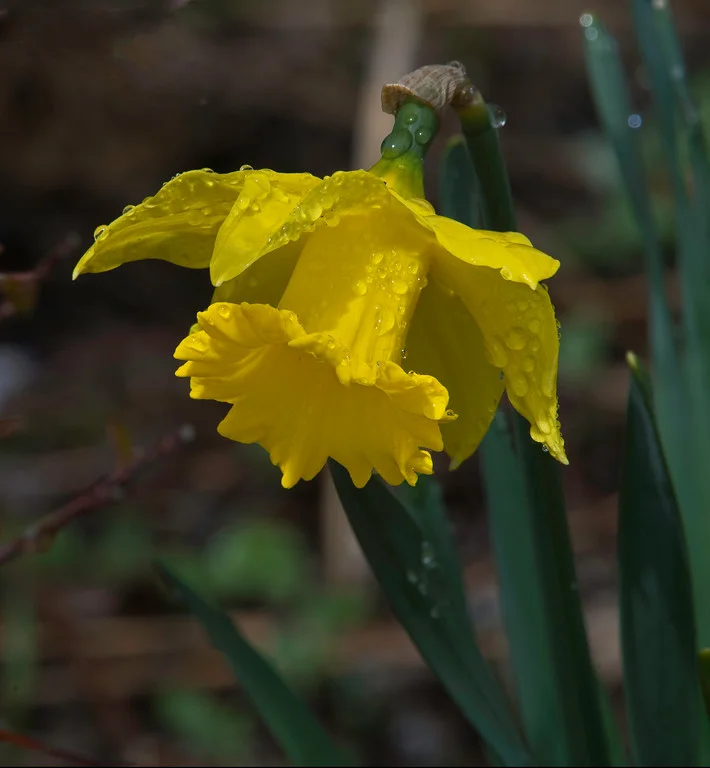
Yesterday’s early-morning fog and rain bent this Daffodil, but also bejeweled her. The sun soon smiled on her and she perked up nicely.

1.jpg

Surprisingly, Daffodils were named after the ancient Asphodel plant, which Greek legend associated with death, graves, and the underworld. We prefer to associate Daffodils with renewal of life, especially after a Spring rain. (Brooklin, Maine)

Comment

Comment

In the Right Place: Rumps

It’s bad enough to be named a Yellow-Rumped Warbler. But, when you’re called a “Myrtle Form Yellow-Rumped Warbler,” it’s time to go hide in the Cat Tails, as this little fellow was doing Wednesday (May 1).

2.jpg

In 1973, the American Ornithologist’s Union dictated that four American warblers should all be called forms of the Yellow-Rumped Warbler. These forms were the eastern Myrtle, western Audubon’s, Mexican Black-Fronted, and Guatemalan Goldman’s Warblers. There is now a proposal to reverse that decision and go back to considering each of these birds a separate species of warbler.

Prior year image

Prior year image

By the way, Mrytles were not named after someone’s great aunt. They got that name because they’re the only warblers that eat and can digest wax-myrtle berries, which are among the fruits and seeds in their diets when insects are not available. That broader diet helps them to be among the first and last migrating warblers that we see; in fact, some Mrytles reportedly are now staying north through the winter. (Brooklin, Maine)

Comment

Comment

In the Right Place: Finally!

This wild Red Maple (Acer rubrum) was in flower yesterday, as are many other trees in the woods. Red Maples can produce both male and female flowers or just flowers of one sex, all of which look like little sea creatures. The ones shown here appear to be males because they have pollen-tipped stamens. (Female flowers have stigmas that extend far out, ready to catch the pollen.)

i-sTJ3sx5-XL.jpg

The “fruit” of the pollinated female Red Maple is in the form of red winged seeds (“double samaras”) that spiral (helicopter) down to the ground before the leaves are fully out. Sugar Maples, on the other hand, have green winged seeds that stay on those trees until late summer or fall. (Brooklin, Maine)

Comment

Comment

In the Right Place: Air-Blown

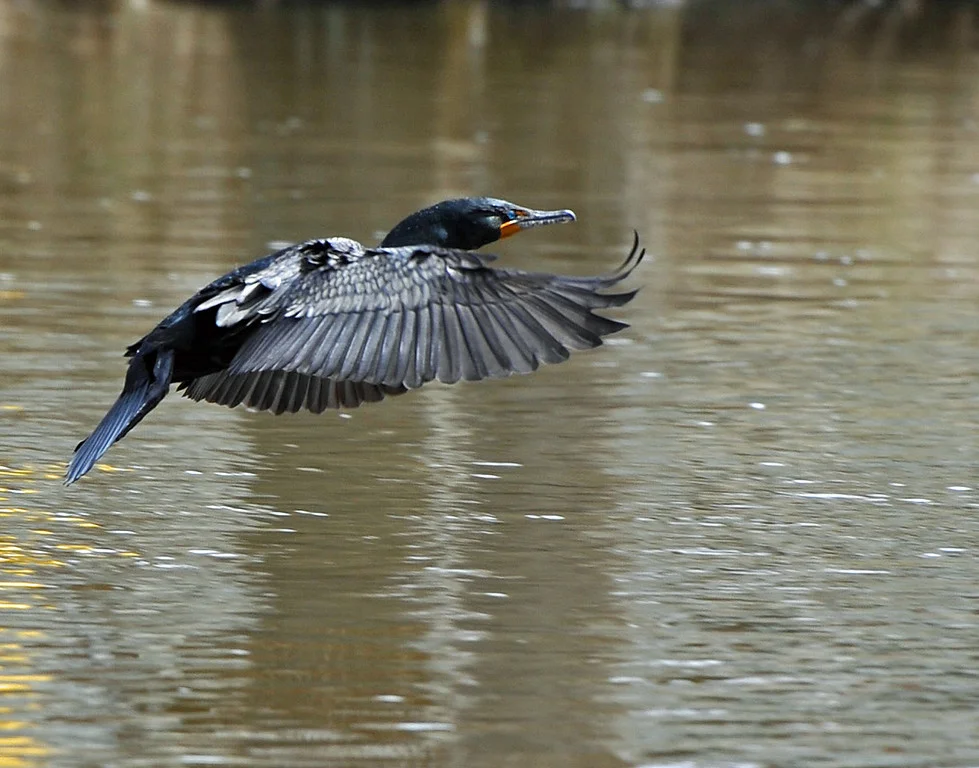
Double-Crested Cormorants come back to the Ellsworth Marina moorings well before the boats do. These birds are perhaps our most skilled fishing birds.

Prior year image

Prior year image

They dive deeply and stay under dark water for long periods, peering with specialized blue eyes for fish and eels. Their muscular legs pump their two big webbed feet simultaneously and their short wings are used as submarine rudders.

Prior year image

Prior year image

Those short wings may be good for flying under water, but Cormorants need a long runway to take off into the air above water. They frequently just stand around with wings spread. They’re not praying.

Prior year image

Prior year image

Their outer feathers are adapted to absorb water and repel air bubbles, which reduces buoyancy and creates speed underwater. However, Cormorant feathers get wetter than those of other water birds and need to be warmed and air-blown dry. See also the image in first Comment space. (Ellsworth, Maine)

Comment

Comment

In the Right Place: Comings and Goings

Temperamental April left yesterday, giving us a weak smile that was enough to brighten the woods that she left damp.

i-r7ZT594-XL.jpg

Hopeful May arrived this morning and cheerily got right to work at greening the trees and fields.

i-BgCGBkP-X2.jpg

(Brooklin, Maine)

Comment