Comment

In the Right Place: Life with Harry, III

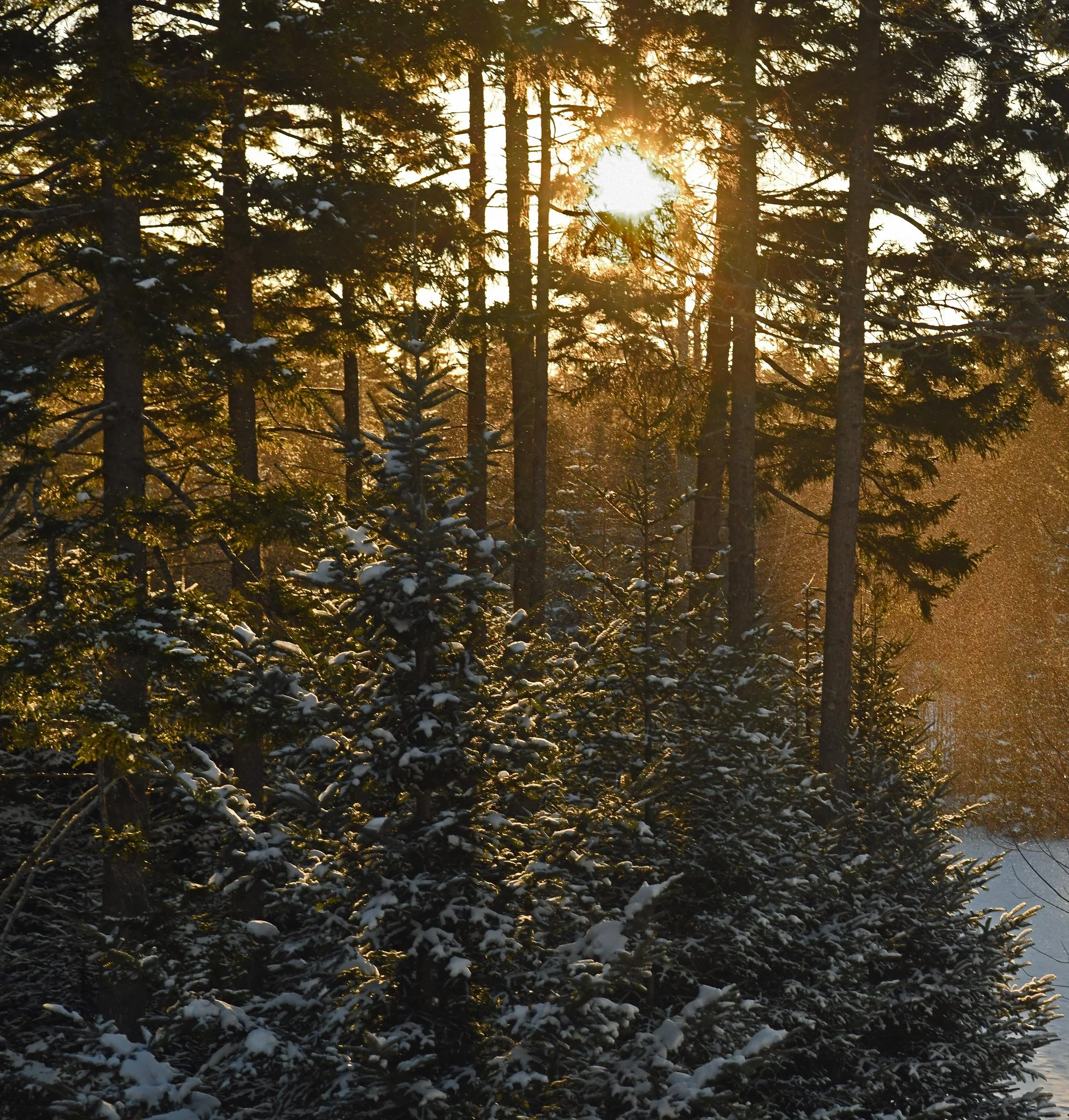
We continue to see Harry frequently. He seems content this winter in his own eccentric way, but it’s difficult to psychoanalyze North American porcupines (aka “quillpigs”).
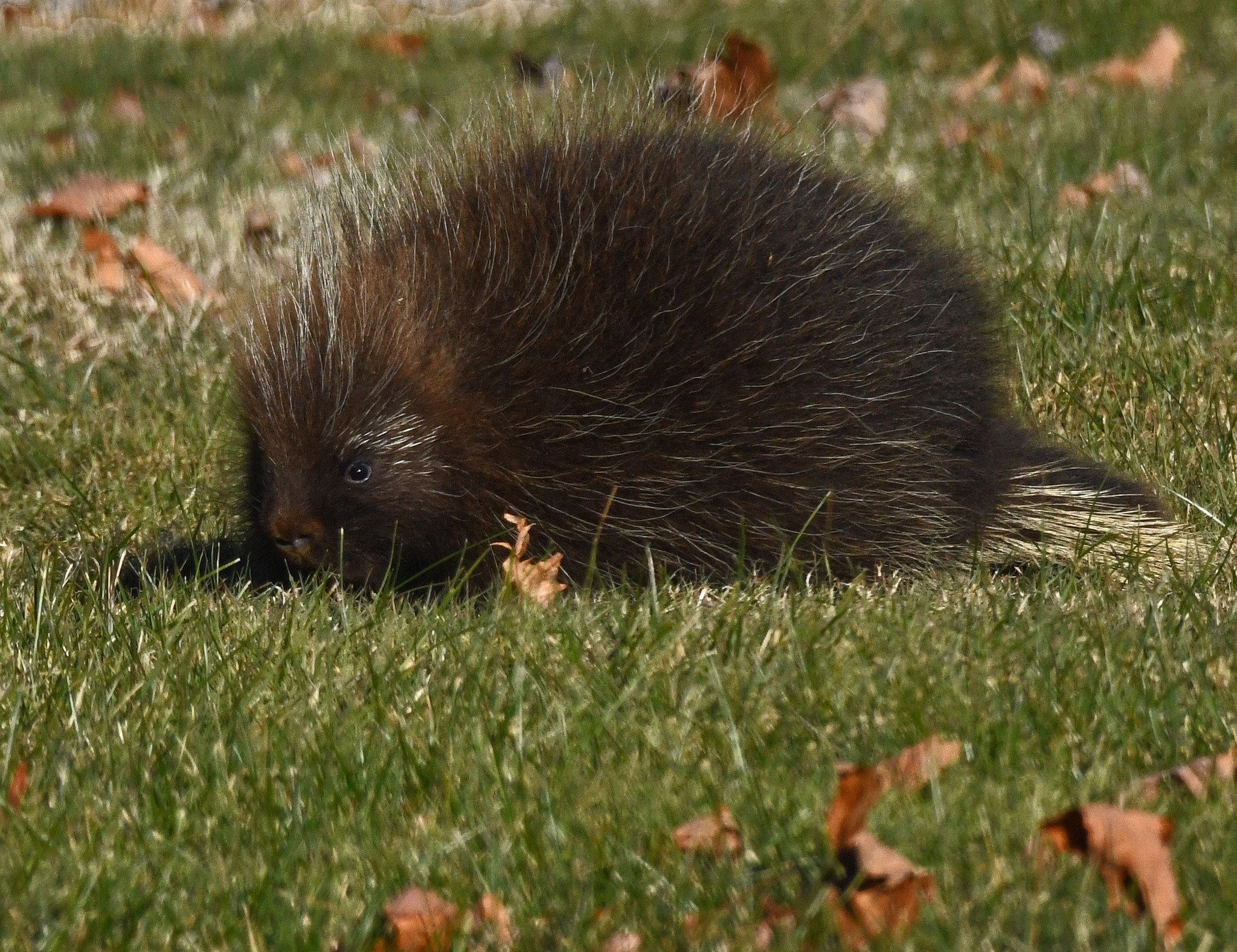
Harry spends a lot of time feeding in open fields and lawns in daylight, which seems unusual for a rodent that’s supposed to be shy and primarily a nocturnal feeder. He apparently hasn’t switched to what is supposed to be the porcupine winter diet of conifer needles, twigs, and the nutrient-rich inner bark (cambium) of trees such as hemlock, birch, fir, and aspen.

Harry seems to spend most of his winter days with his head in field and lawn vegetation, feeding on grasses, other low growth, and maybe roots. It may be that climate warming has kept nonwoody vegetation alive and tasty.
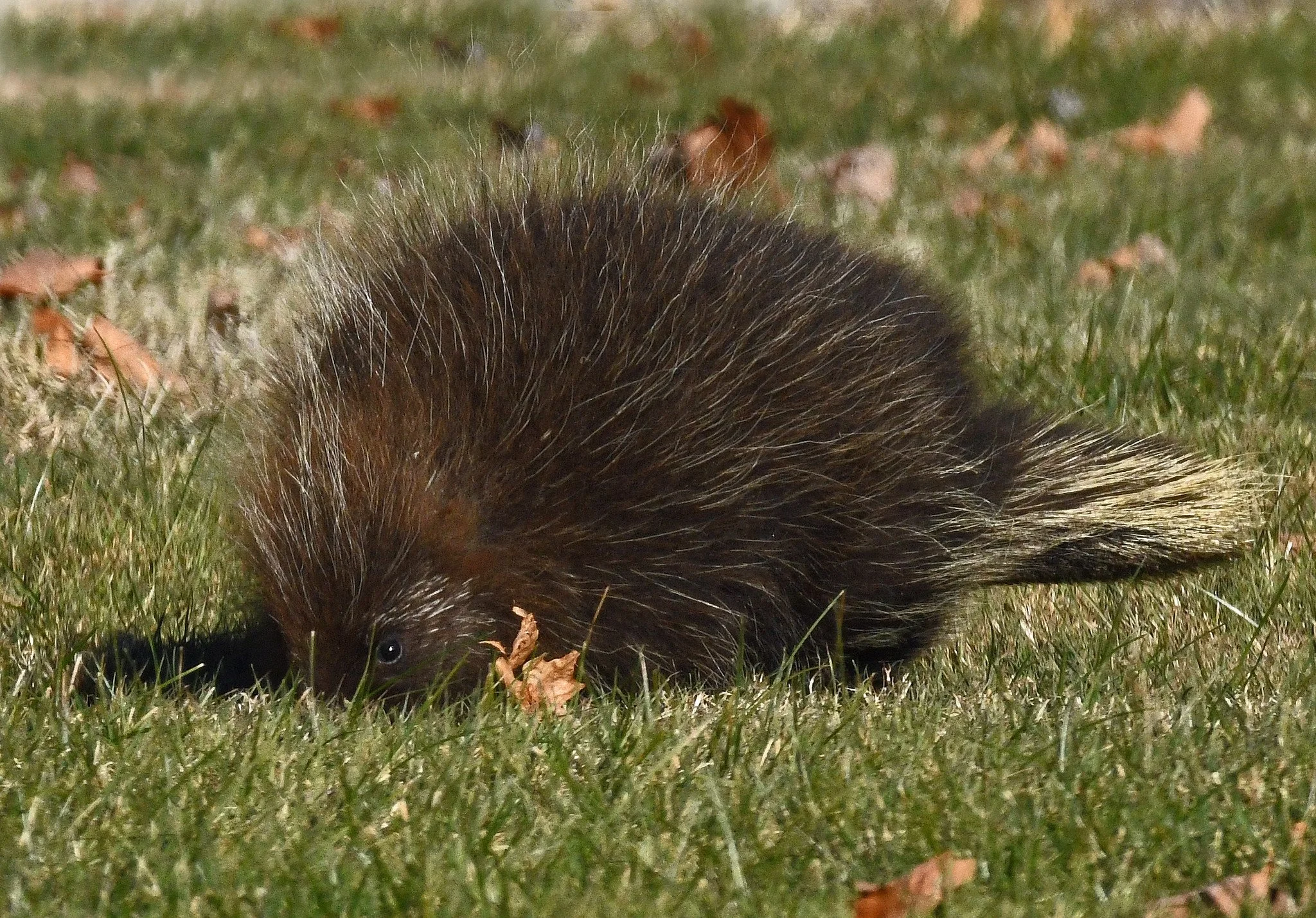
As with all porcupines, Harry has poor eyesight and is slow to react to surprises. If you get upwind of him and move carefully, you often can get fairly close to him. He’ll move off and try to keep his back to you when he discovers your presence. (His tail is a spiked club that is his primary defensive weapon.)

(Images taken in Brooklin, Maine, on December 22, 2025.)

Comment

Comment

In the Right Place: The Long and Short of It All

Yesterday’s winter SOLstice arrived appropriately on SUNday, played now-you-see-it-now-you don’t with the SUNlight much of that shortest day of the year, and then ended the day at 3:48 p.m. with this magnificent SUNdown. The longest night of the year had begun.

“Solstice” literally means standing sun. As you probably know, the winter solstice occurs when our northern hemisphere is tilted farthest from the Sun, marking the start of astronomical winter and the time from which days slowly begin to get longer again as we tilt back. (Image taken on December 21, 2025.) Click on the image to enlarge it.

Comment

Comment

In the Right Place: A Winter’s View

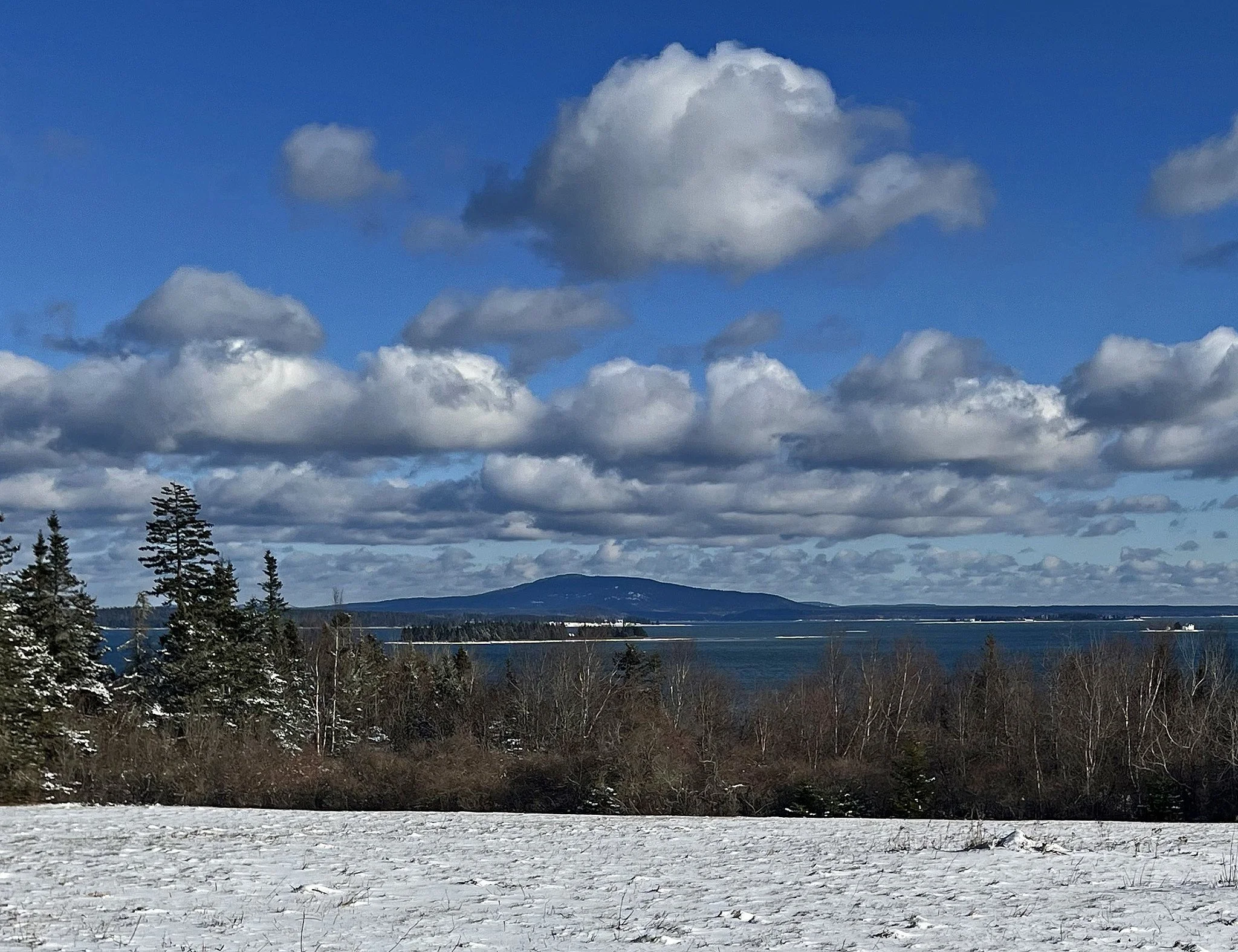
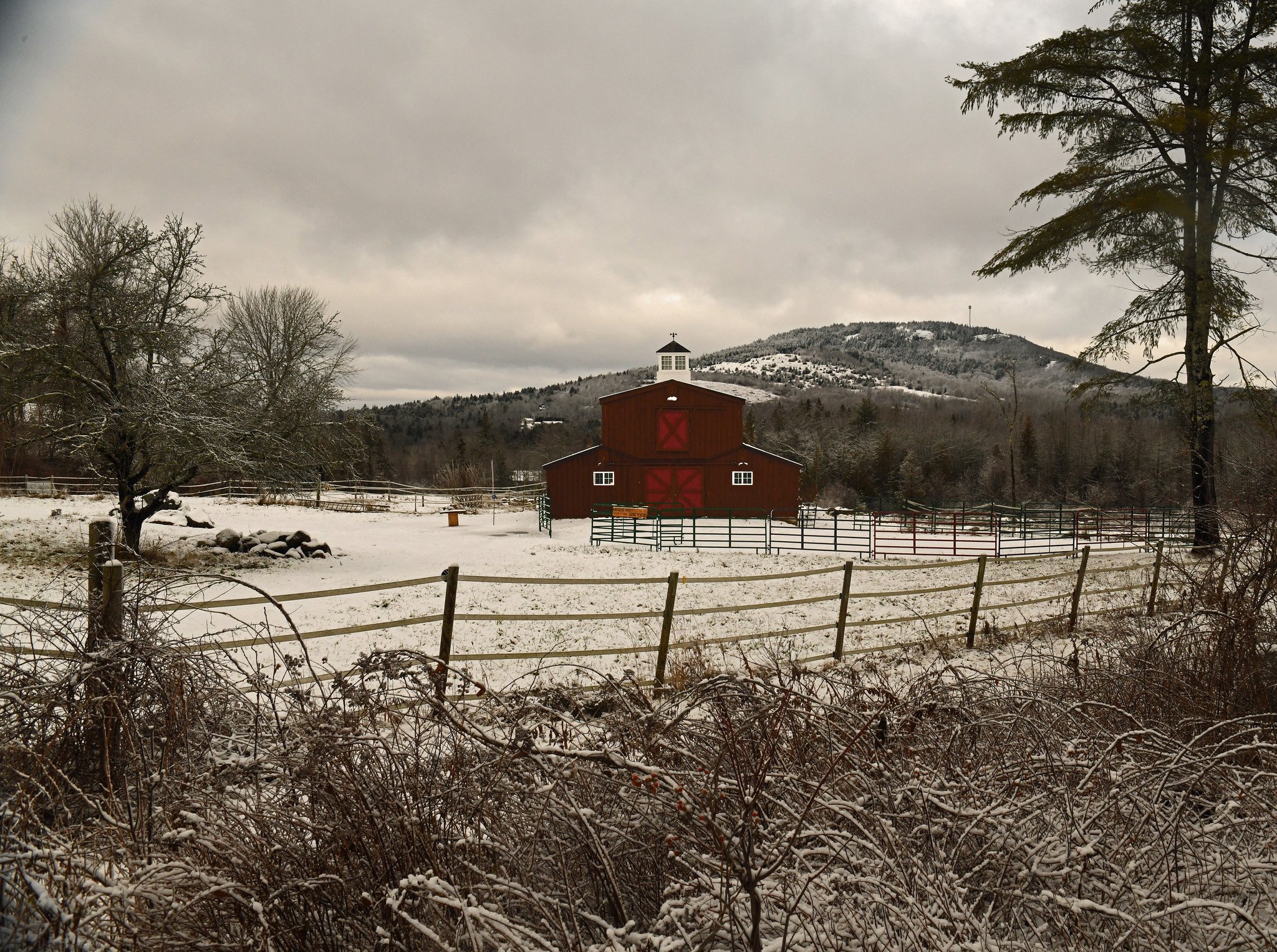
Here you see a winter’s view the south face of the near-mountain called Blue Hill, where conifer trees are evergreen, deciduous trees are now leafless, and glacier-deposited rocks abound:

A closer look at the summit reveals a communications tower that was put up there in 1981 for transmitters and repeaters and rebuilt later to add cellular service equipment. Ground views of the summit often reveal (as you’ll see) the steeple of the First Congregational Church of Blue Hill, which was built in 1843:

A distant view of the Hill revaels beautiful Blue Hill Bay at its feet:

(Images taken in Blue Hill, Maine, on December 16, 2025.)

Comment

Comment

In the Right Place: Holiday Styles

This may be the first in a series of posts on contrasting Christmas and winter holiday expressions in our Down East neighborhood.

Above, you see a fine old house decorated for the season in what we’ll call the “exuberant style”:  a snowman train traveling south; Santa’s reindeer sleigh traveling northwest; massive evergreen wreaths and (I think) huge gingerbread cookies on the house, and much more. It’s a belly-laugh.

Below, you’ll see another fine old house decorated for the season in what we’ll call the “restrained style”: two big, beautiful evergreen wreaths discretely displayed at the back of a porch. It’s a contented smile:

(Images taken in Blue Hill [exuberant] and Brooklin [understated], Maine, on December 18 and 11, 2025, respectively.)

Comment

Comment

In the Right Place: Salty Tales

Here you see seagulls (two herring, one ring-billed) about to quench their thirsts in a small pond of melted ice water atop sea ice.

Sea ice takes longer to freeze due to its salt content, but freezing and melting can desalinate the ice; the older the melting ice, the less salt its melt-water will have. Very old sea ice will melt into a fluid that has no or virtually no salt. Unless you’re desperate, however, don’t drink that liquid – it may contain bacteria, viruses, and/or other contamination.

Seagulls and many other sea birds can—and often do – drink their sea water straight. But they seem to like fresh water when they can get it. Most seagulls and other sea birds have special desalinating glands that filter out excess salt, which is excreted through their nostrils, according to the literature. (Images taken in Blue Hill, Maine, on December 16, 2025.)

Comment

Comment

In the Right Place: Crispy/Crunchy

Here you see yesterday’s rising tide in Great Cove, which is now devoid of the many vessels she hosts from spring into fall. That’s the WoodenBoat School’s pier to the right:

There was a bit of a wind up yesterday morning. The tide was coming in on small, rolling waves that roiled the rockweed and broke on the stoney shore with repetitive crispy/crunchy percussions that turned into sizzles when the wave’s water raced through the stones, shuddered to a stop, and backed off a bit:

(Images taken in Brooklin, Maine, on December 17, 2025.)

Comment

Comment

In the Right Place: Merriness Makers

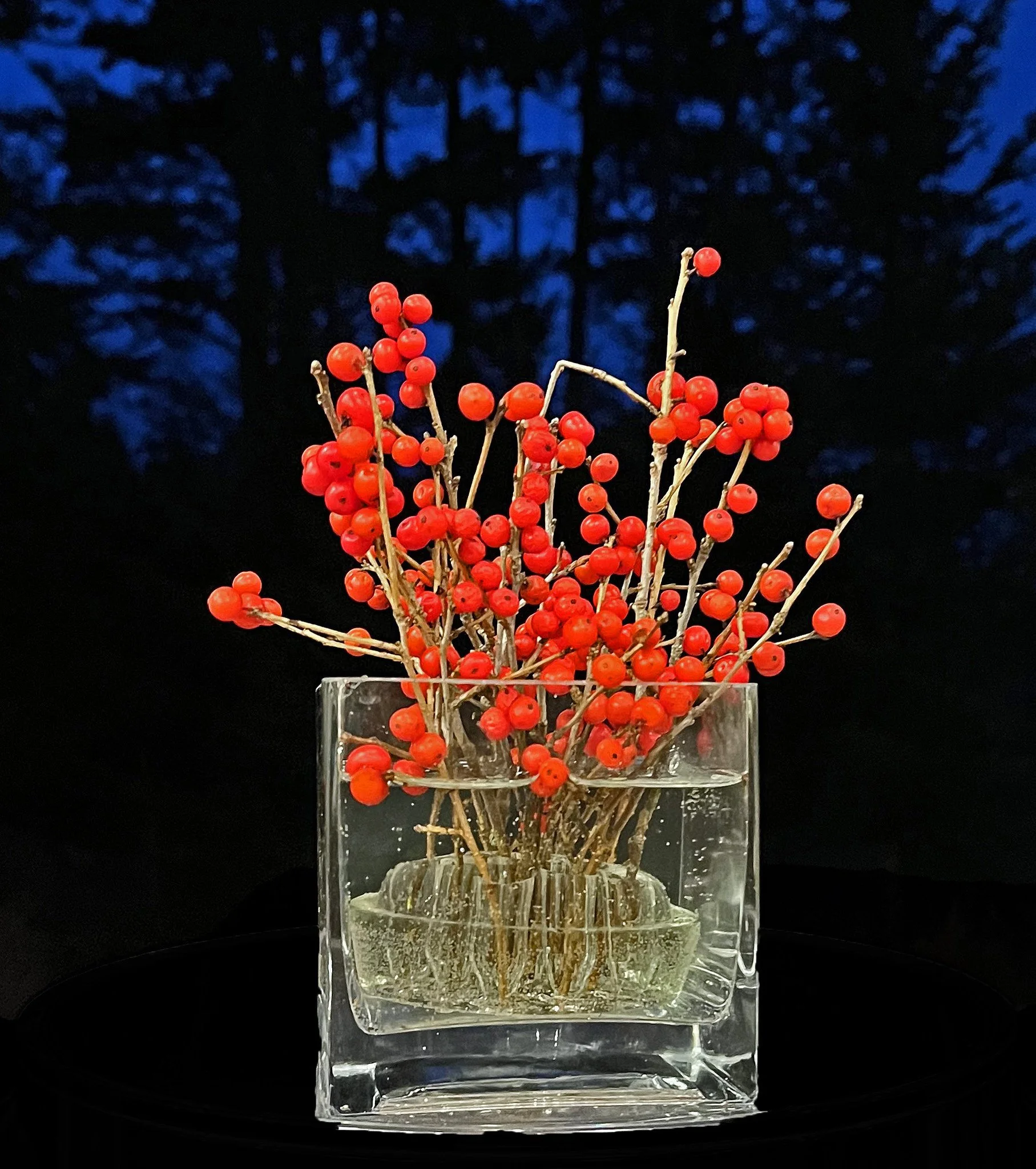
‘Tis the season … when Barbara sprinkles the house with holiday flowers and berries, some of them elf-sized, some immigrants, some natives, all merry.

Above, you see a green-leafed, red-bracted poinsettia branch of Mexican derivation. (The plant’s vibrantly-colored bracts are not flower petals; they’re specialized leaves.) Below, you’ll see New England winterberry holly in its leafless winter form with berries like Christmas tree ornaments strung by an elf that has imbibed too much good cheer:

There also is the chunky-size variety of winterberry:

(Images taken in Brooklin, Maine, on December 15, 2025.)

Comment

Comment

In the Right Place: Dressed Warmly

Yesterday was sharply cold and pleasantly clear at windy Conary Cove. The old red boat house was dressed in her usual warm colors. She even sported a holiday wreath and (I think) holiday lights. I’ll have to check her out after dark some evening.

(Images taken in Blue Hill, Maine, on December 15, 2025.)

Comment

Comment

In the Right Place: Life with Bernie & Bernice, X

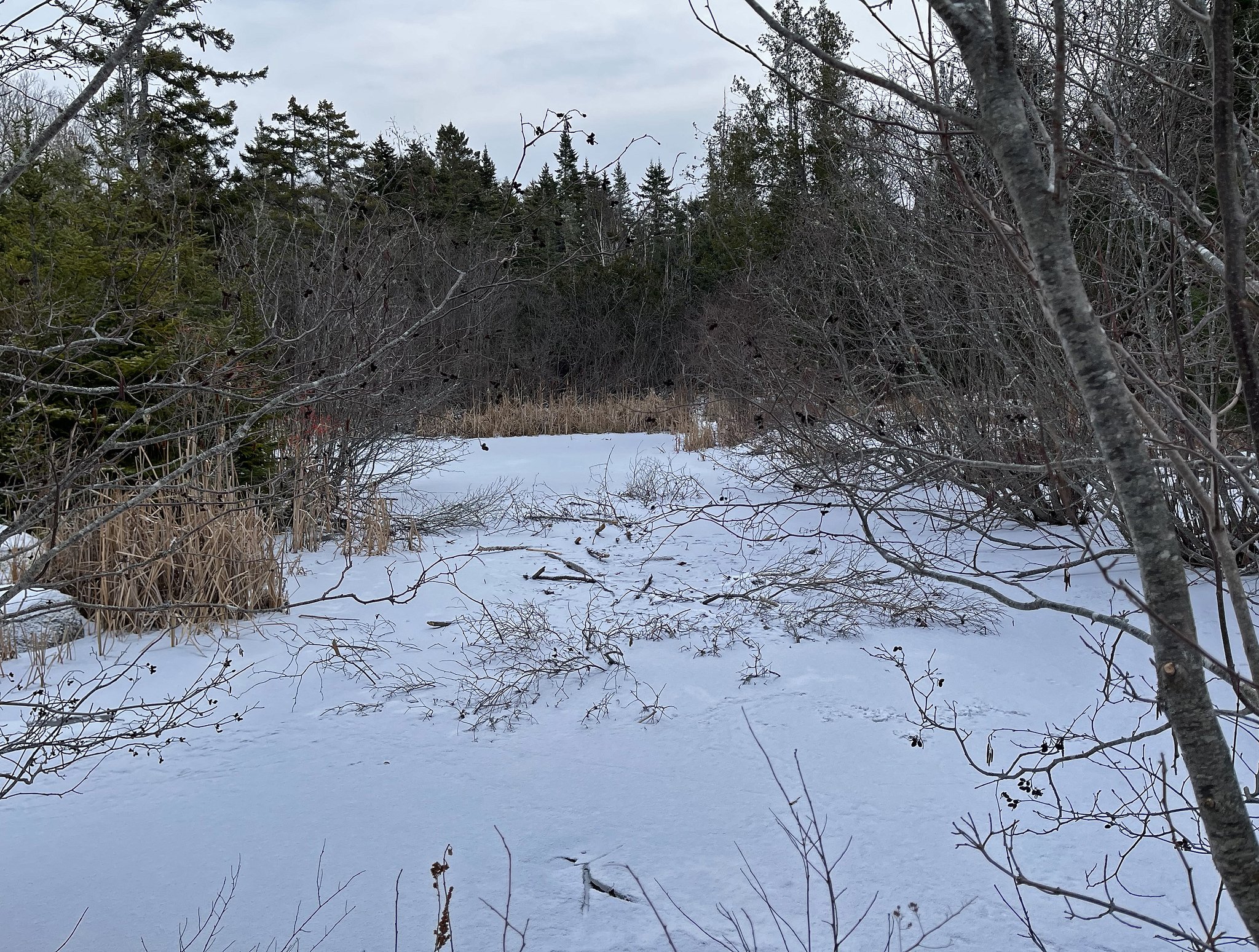
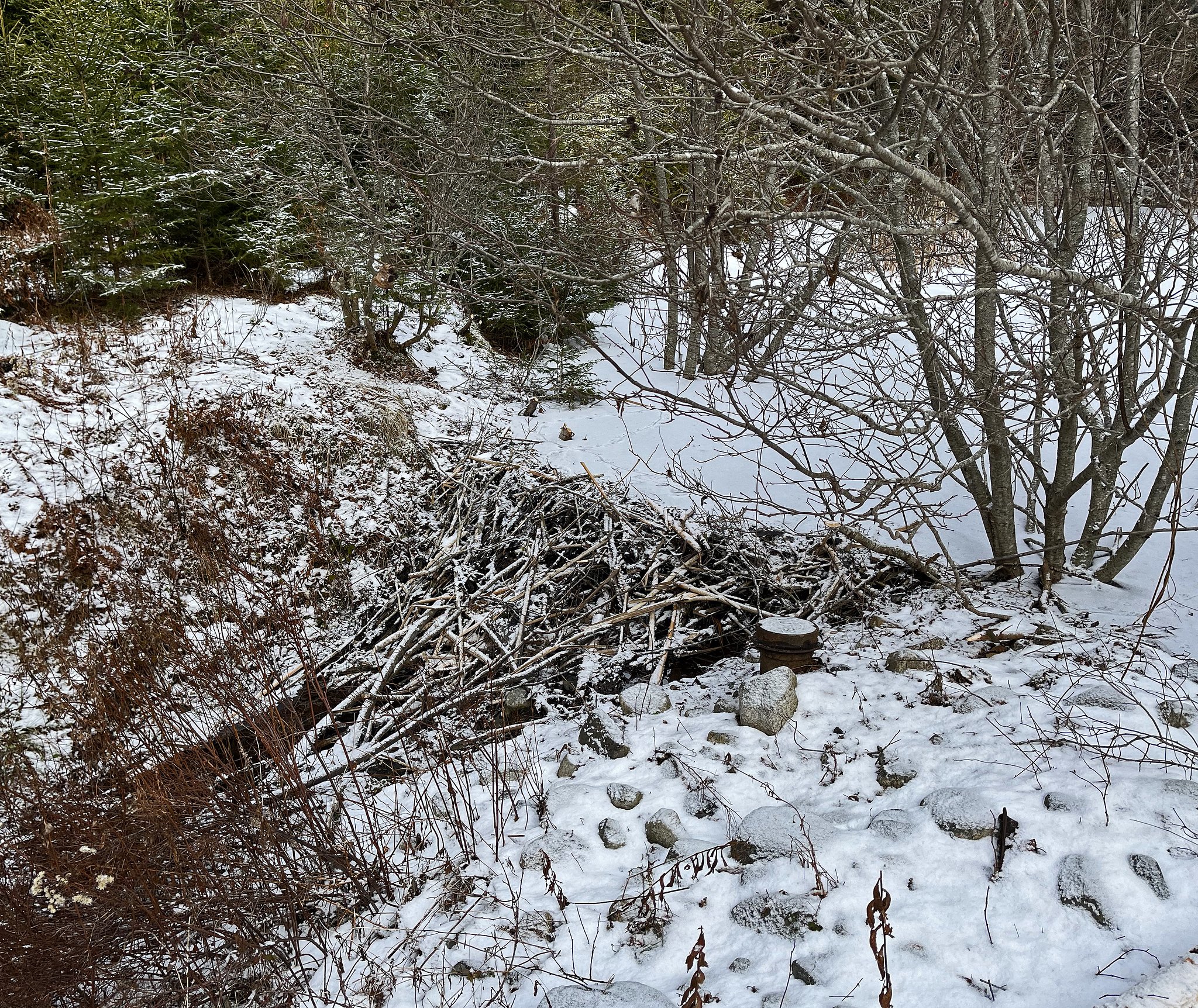
No videos of Bernie and Bernice swimming today! Above, you see their unfinished lodge imbedded within ice and mostly covered by snow yesterday. Below, you’ll see their largest dam holding back most of a snow- and ice-topped pond yesterday.

B&B have been nowhere in sight for about a week; there are no beaver tracks in the snow on or around the pond, nor have there been the telltale signs of beaver activity in the form of newly-felled trees. There are, however, coyote tracks down there in the snow-topped ice. That’s an indication that B&B have not gone to Florida for the holidays, as well as a reminder of the winter dangers that our claim-jumping visitors undergo when protective water freezes.

Beavers don’t hibernate. The odds are that B&B are hunkered down in a “bank den.” That den likely would consist of one or more large tunnels with one or more underwater entrances. It’s probably in the bank of the island at the left of the first image and it’s most likely that it was created by the-ever-so-prudent Bernie when he arrived in September looking for a mate.

It's also likely that Bernie and his industrious mate collected many tender branches in the fall and early winter and stored them in the mud at the bottom of the pond as an underwater food cache for use in severe weather. If the weather warms up and the ice melts a little, we’ll probably see B&B back at work toppling trees and continuing the construction of a more substantial home for them and their sure-to-come little buck-toothed offspring.

In the meantime, B&B will find something to do underground; they’re on their honeymoon after all. (Images taken in Brooklin, Maine, on December 14, 2025.)

Comment

Comment

In the Right Place: Down by the Old Mill Stream

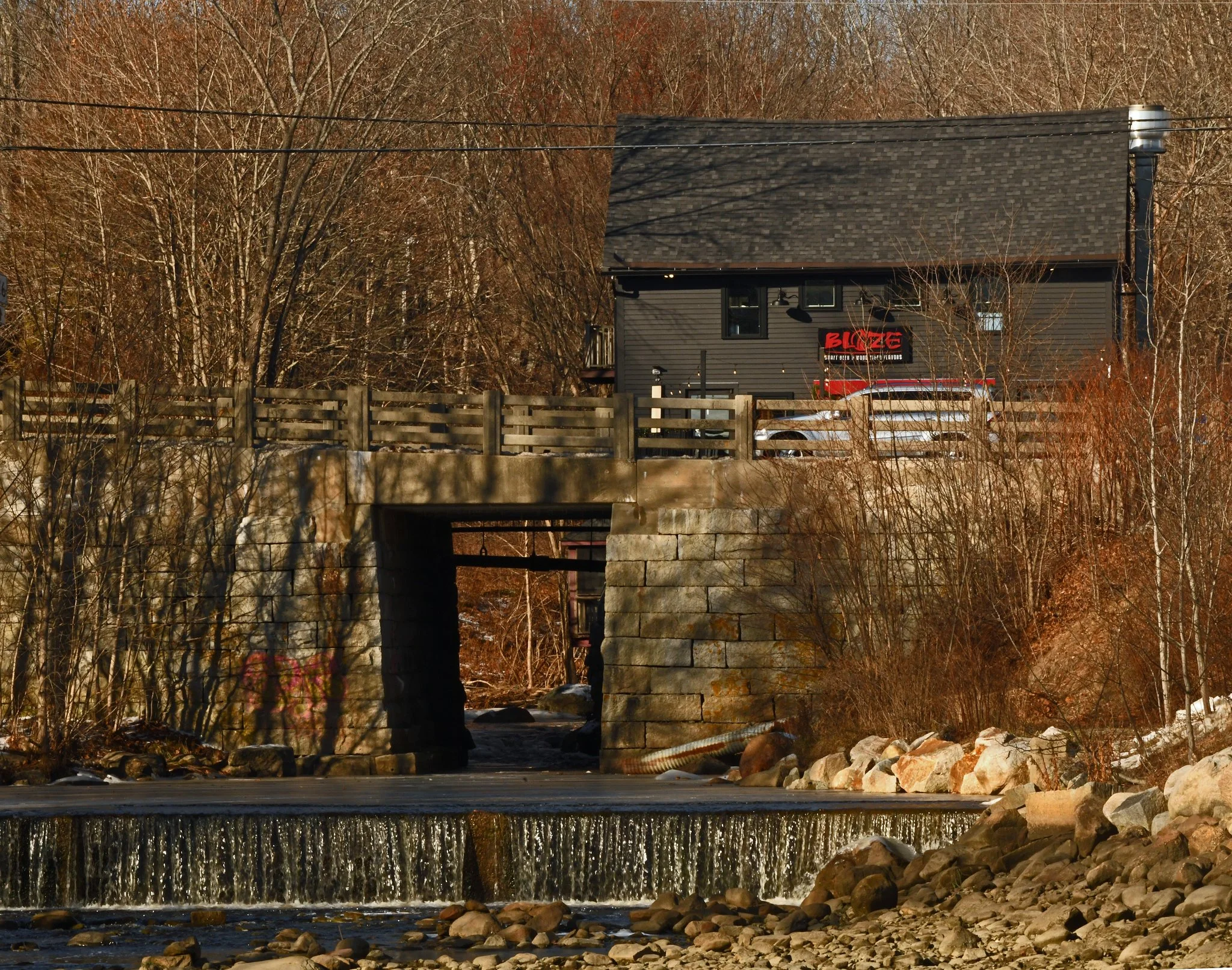
Here you see Mill Stream running under Blue Hill’s Main Street into Blue Hill Bay. In the 18th and 19th Centuries along the Stream, sawmills produced lumber, grist mills ground grain, there is a report of a cotton mill, and some tide-powered saw and grist mills near the Stream’s mouth harnessed the Bay’s highs and lows to produce their power.

The structure that you see is a Blaze Restaurant, one of a series of restaurants that have occupied that building in the 20th and 21st Centuries. But the building reportedly was built in the 1880 and is best known for its many years as the forge of popular blacksmith and metal artist Charles Westcott, who operated it from 1910 until his death in 1959.

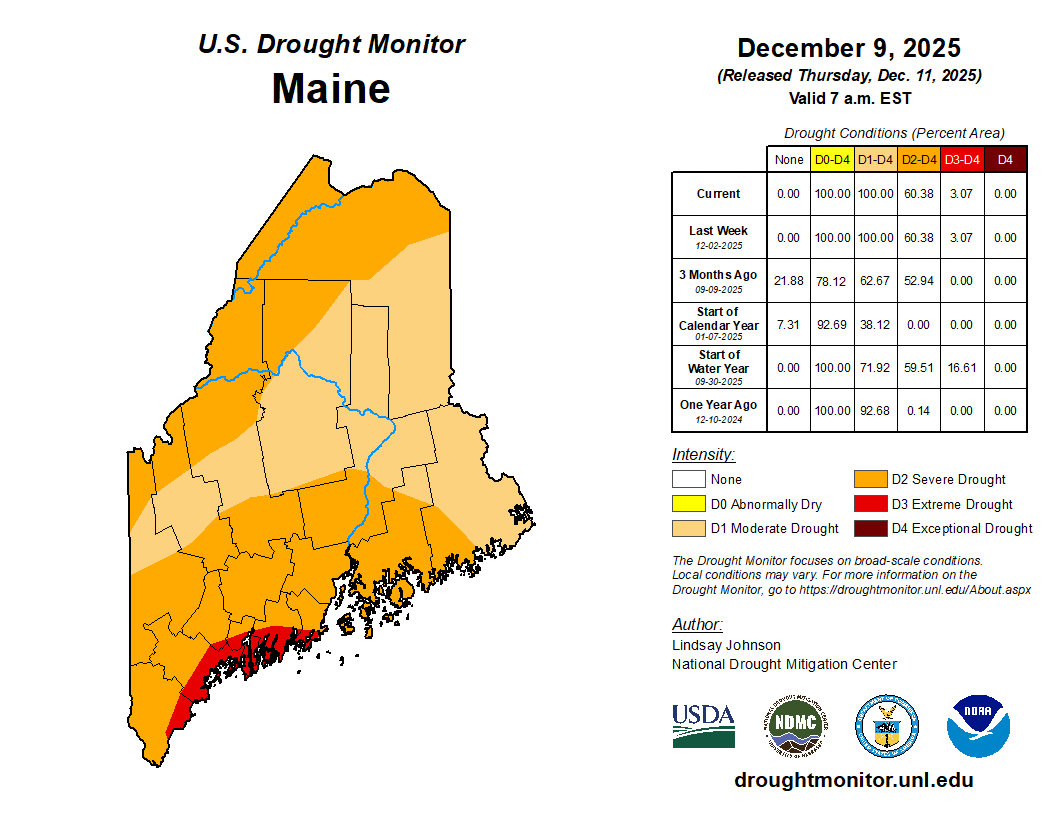
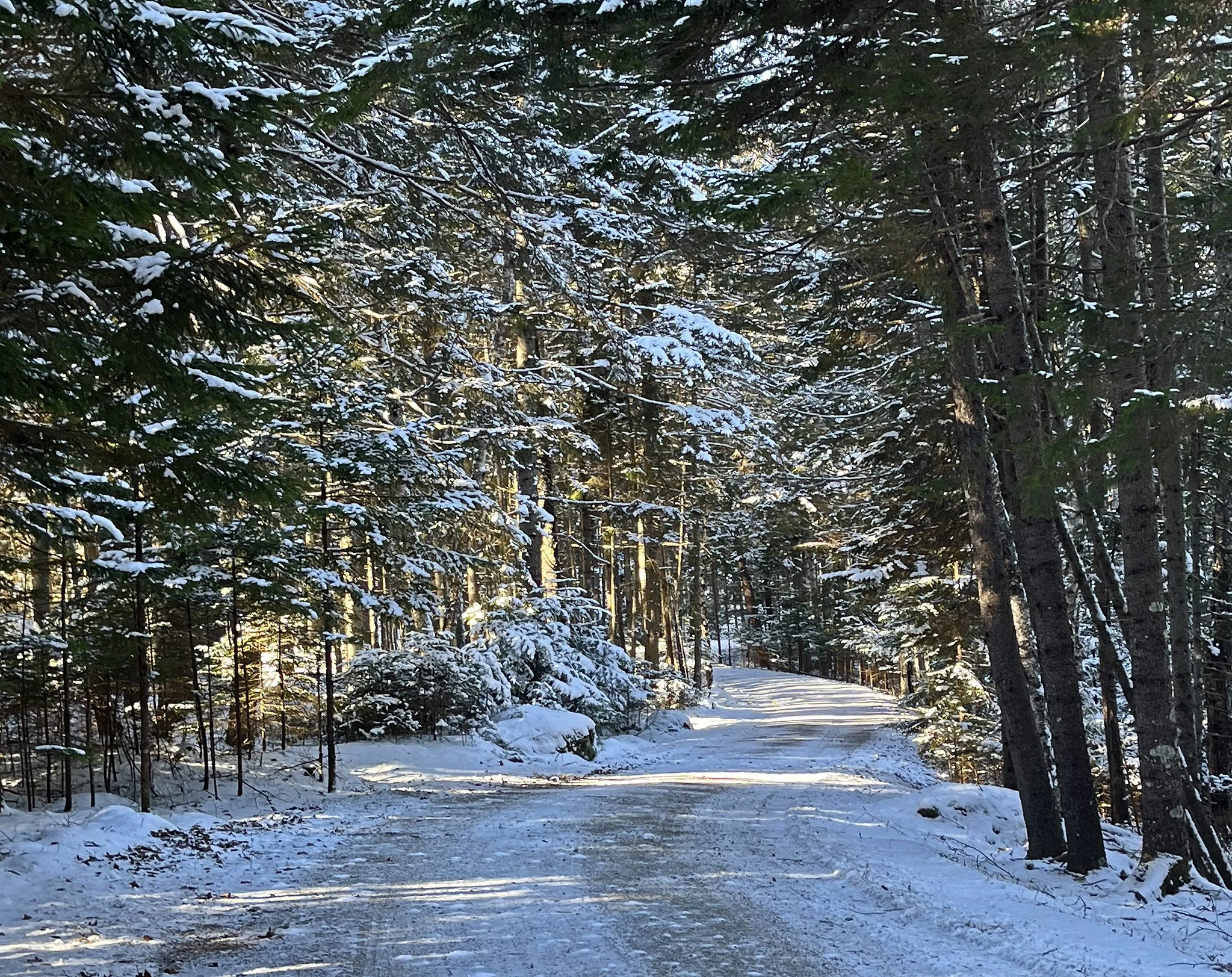
Mill Stream this year, as with all of our streams, has been suffering from the obdurate drought that has plagued Maine and the rest of Northeast. Recent snow flurries (including one last night) have not benefitted our soils and streamflows in any meaningful way. Take a look at the most recent drought report:

(Photo taken in Blue Hill, Maine, on December 12, 2025.)
Comment

Comment

In the Right Place: Thar She Glows!

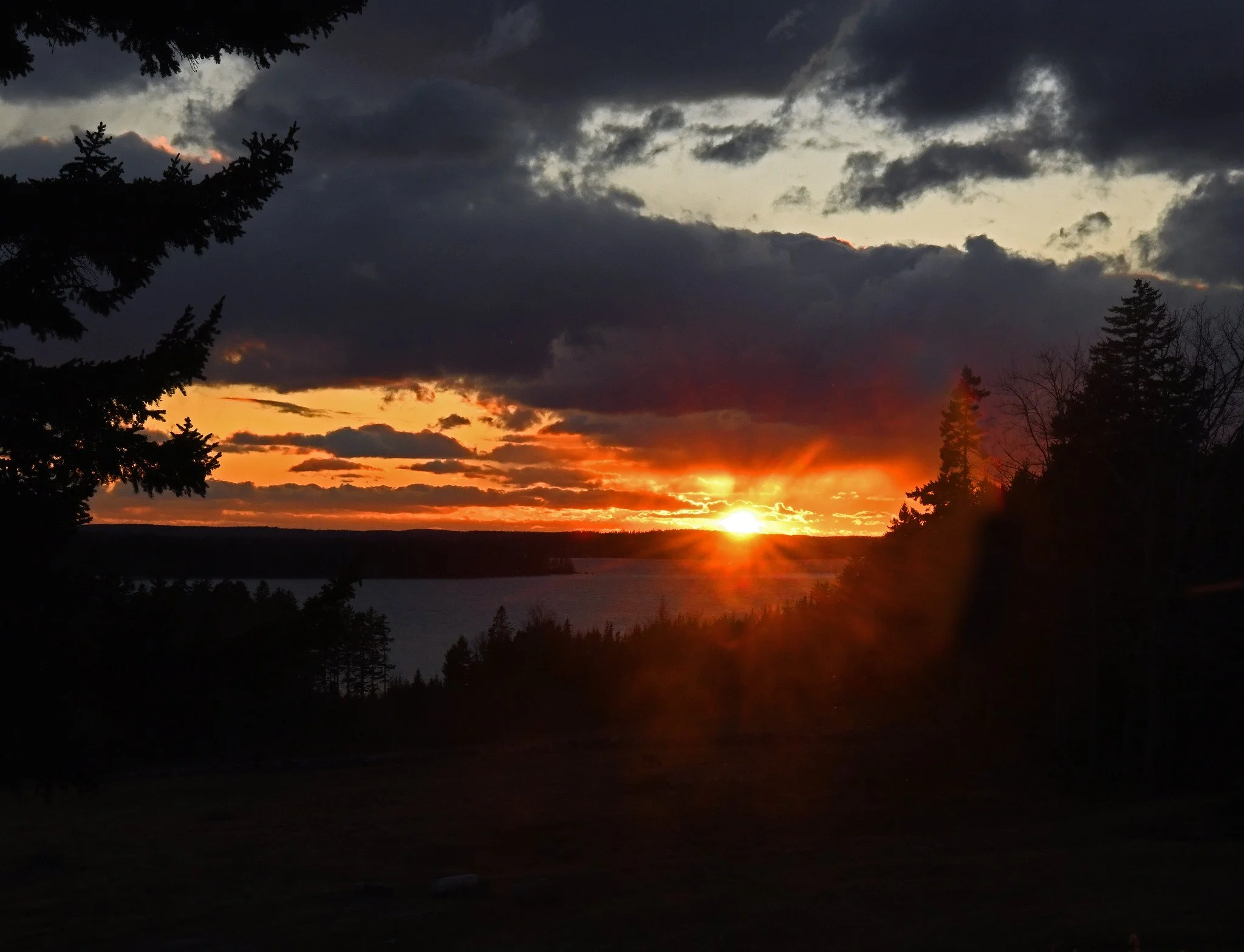
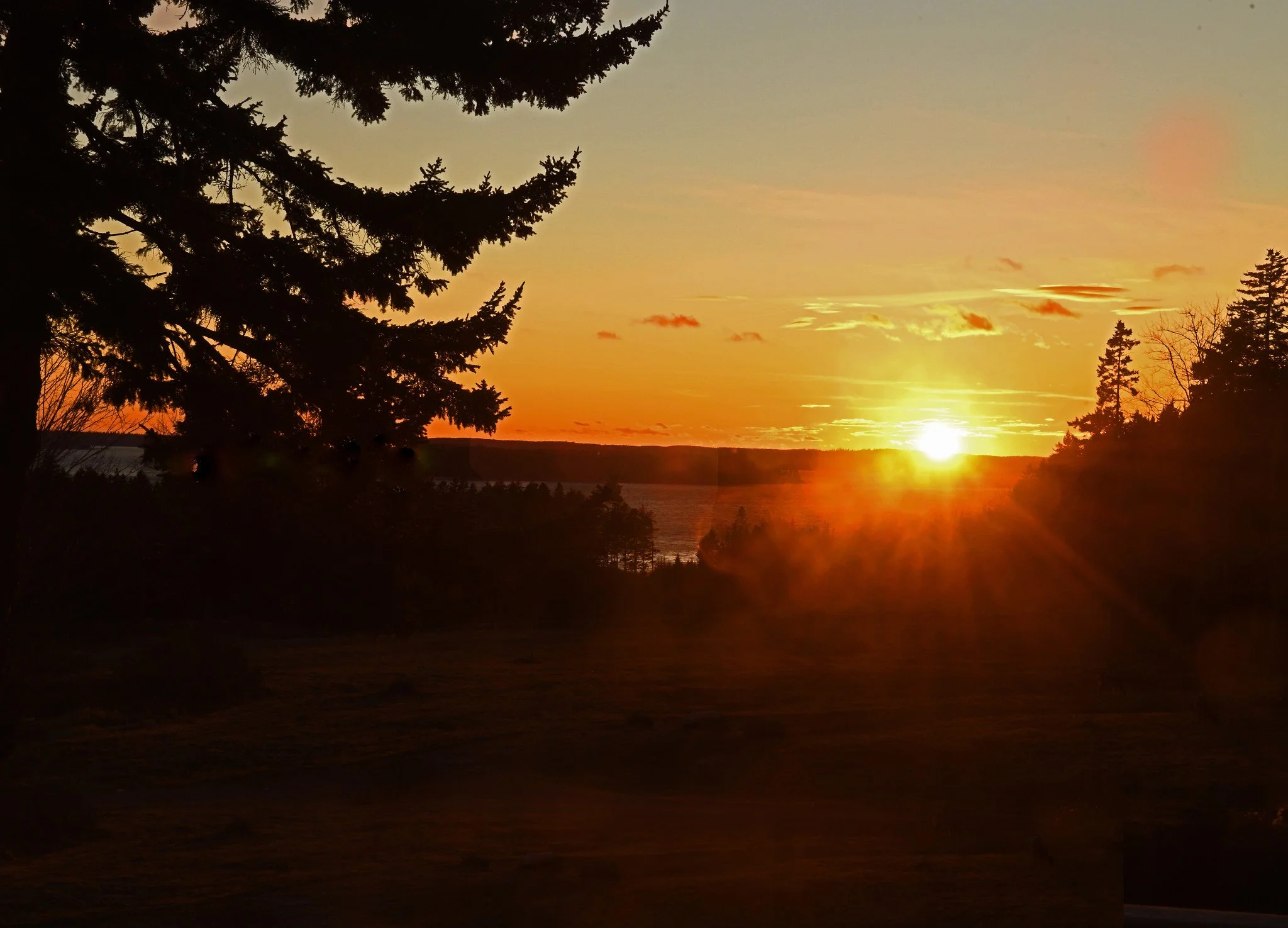
On clear days, our view of the December sun sinking behind Deer Isle comes early and gloriously before the darkness and – if we’re lucky – a blue hour. Each sundown is different. Generally, the winter air has less grit and water vapor in it to obscure the events. Above, you see Thursday’s sunset at 4:45 p.m. Below, you’ll see yesterday’s sunset at 4:47 p.m.:

(Images taken in Brooklin, Maine, on December 11 and 12, 2025.)
Comment

Comment

In the Right Place: Survivors

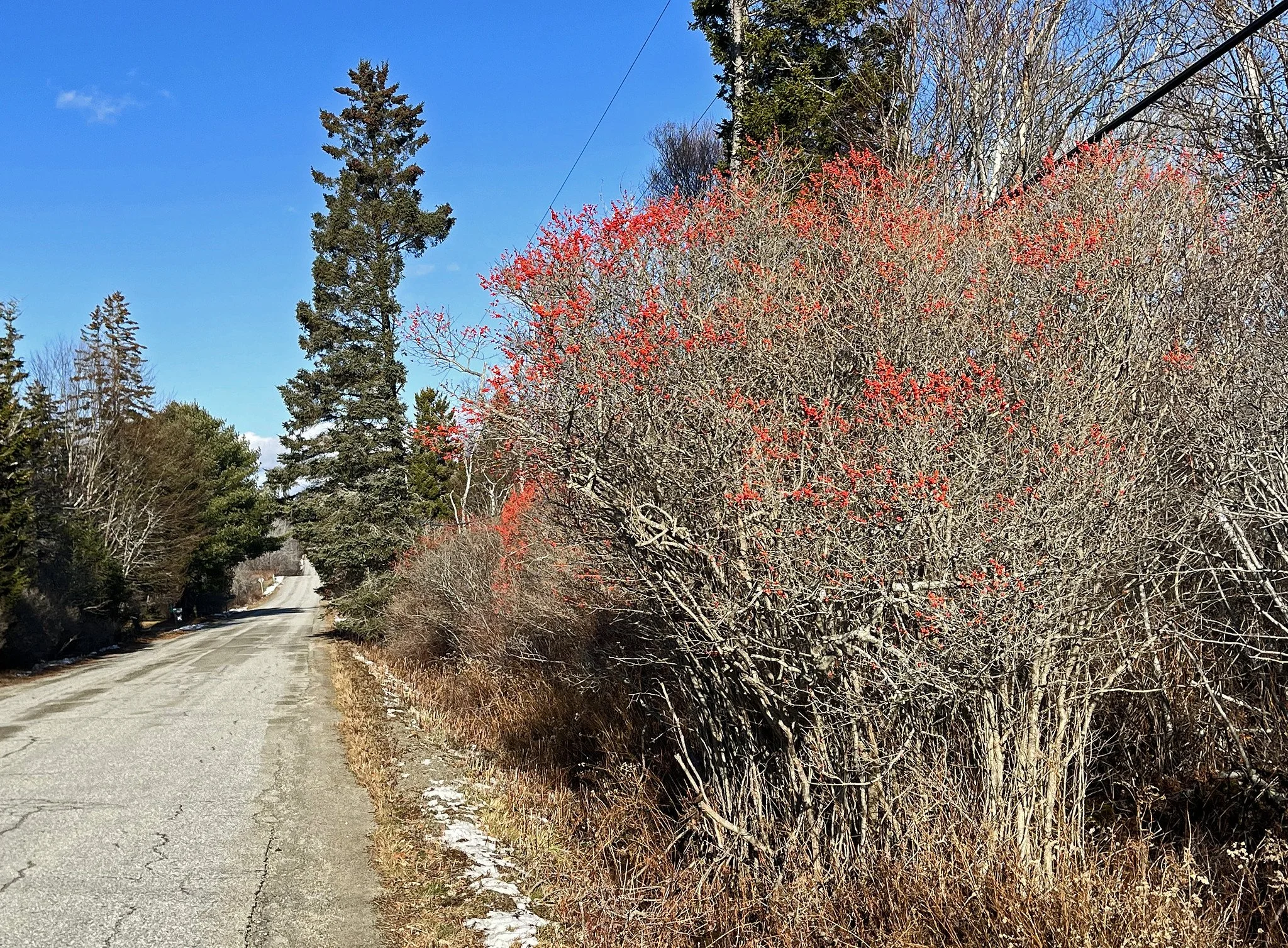
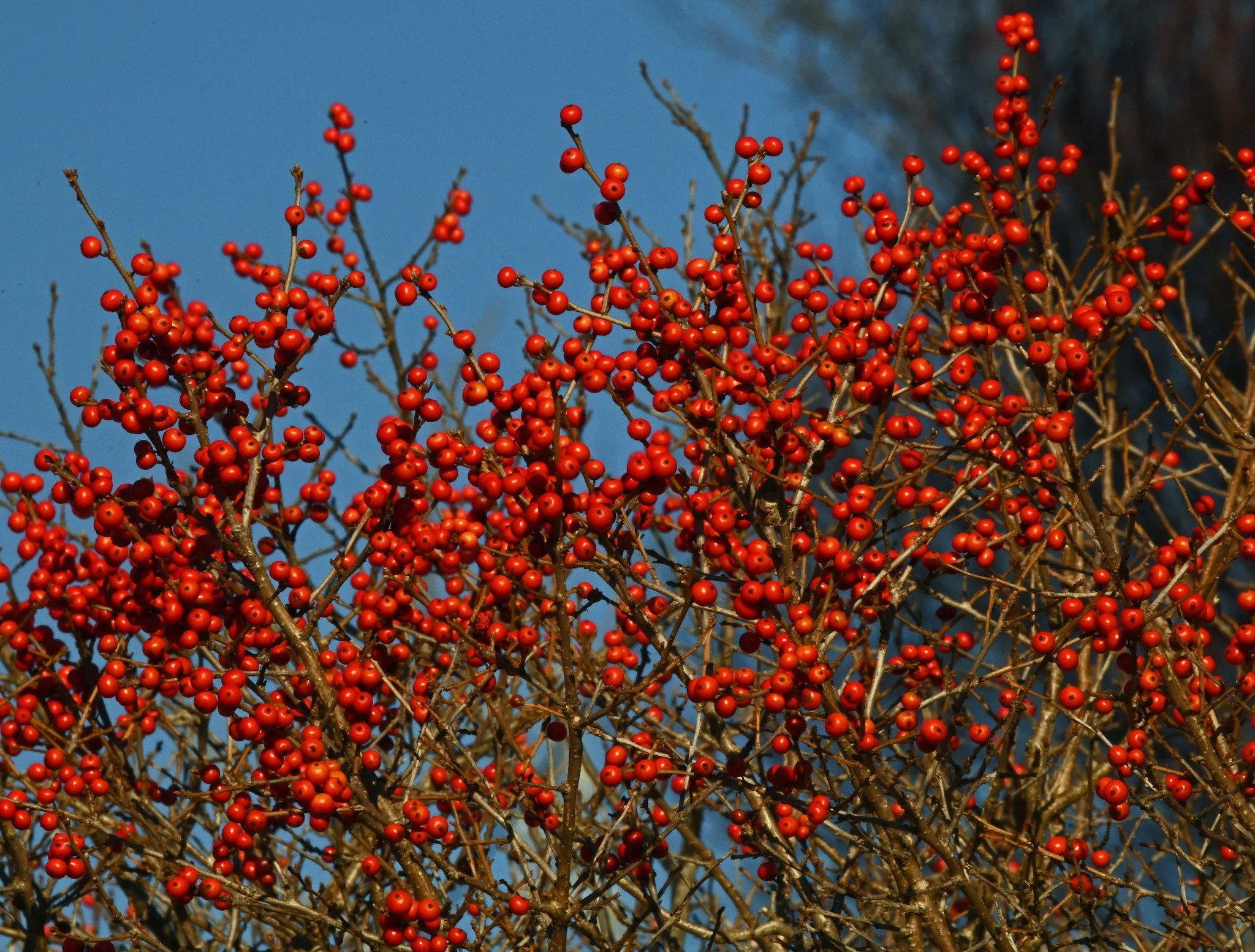
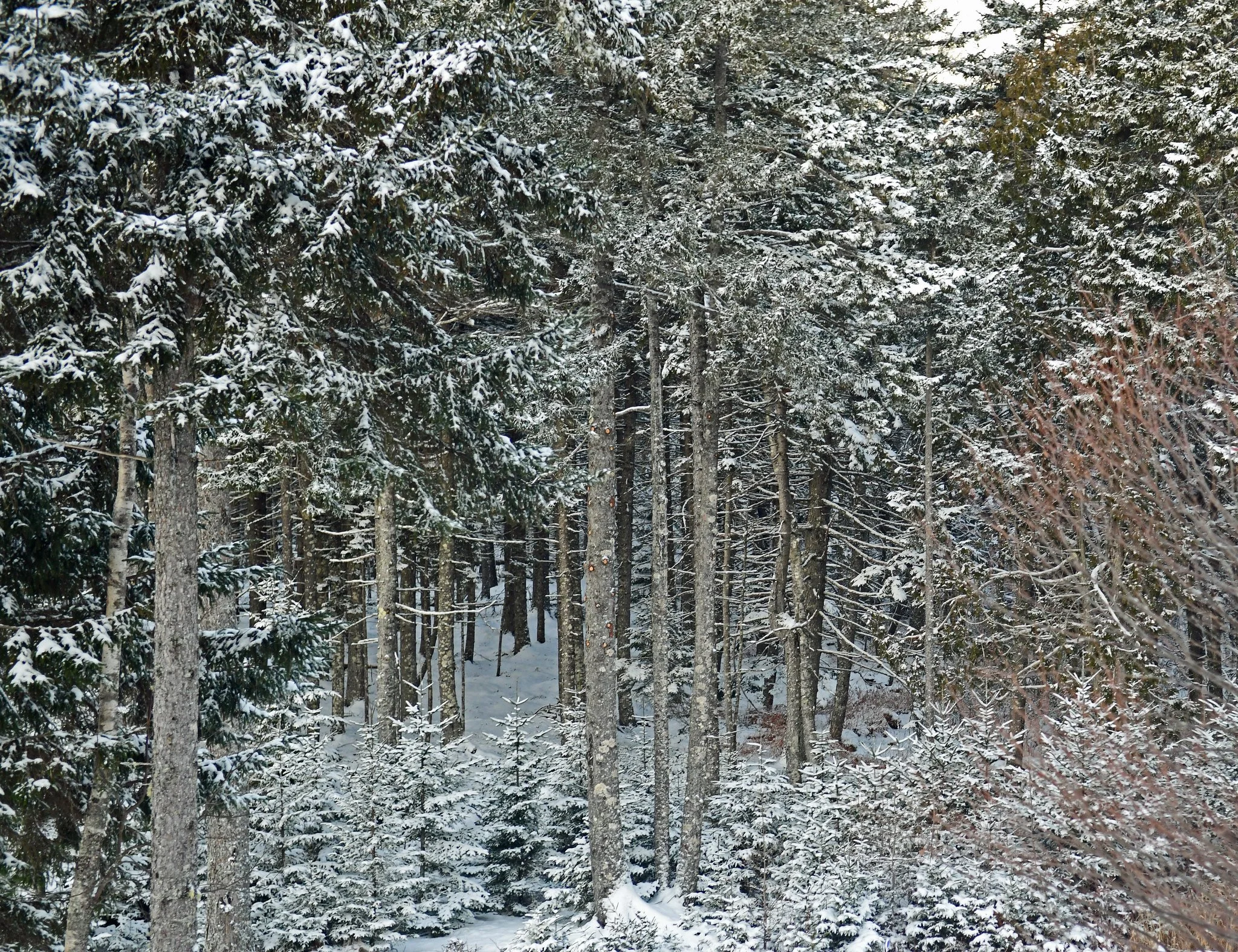
It’s the middle of December when crowds of bright red winterberries appear on Maine roadsides clinging tightly to their bare branches like sole survivors on winter wreckage. They are profuse this year.

Winterberry (Ilex verticillata) is a native, deciduous holly that is a crucial winter food for birds, but toxic to humans. It thrives in wet ditches beside roads, enjoys life as male and female plants (it’s “dioecious”), and was historically used by Native Americans for applied medical remedies. Don’t taste those berries! But they can be used for long-lasting decorations:

(Images taken in Brooklin, Maine, on December 11, 2025.)

Comment

Comment

In the Right Place: Going, Going, (Soon) Gone

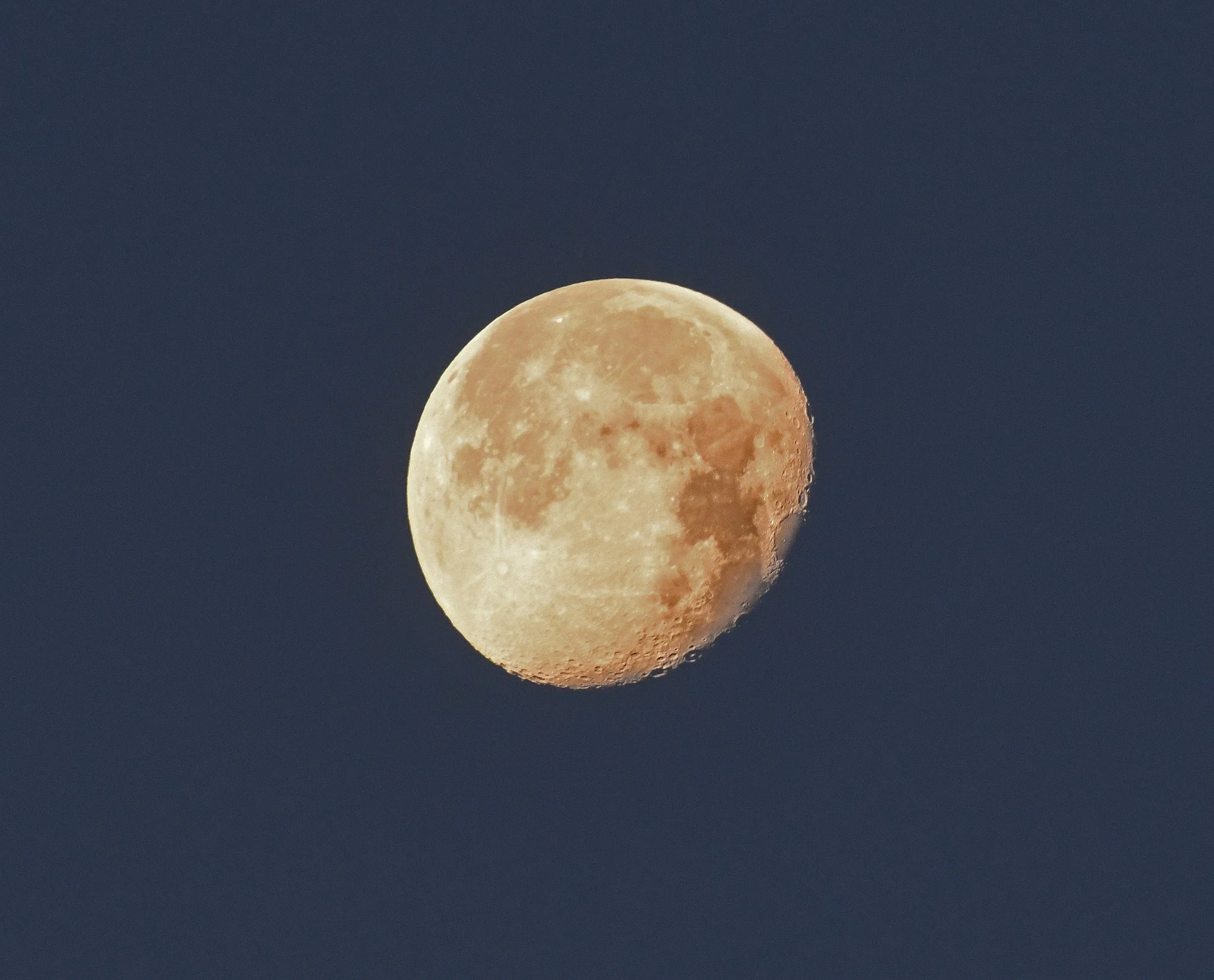
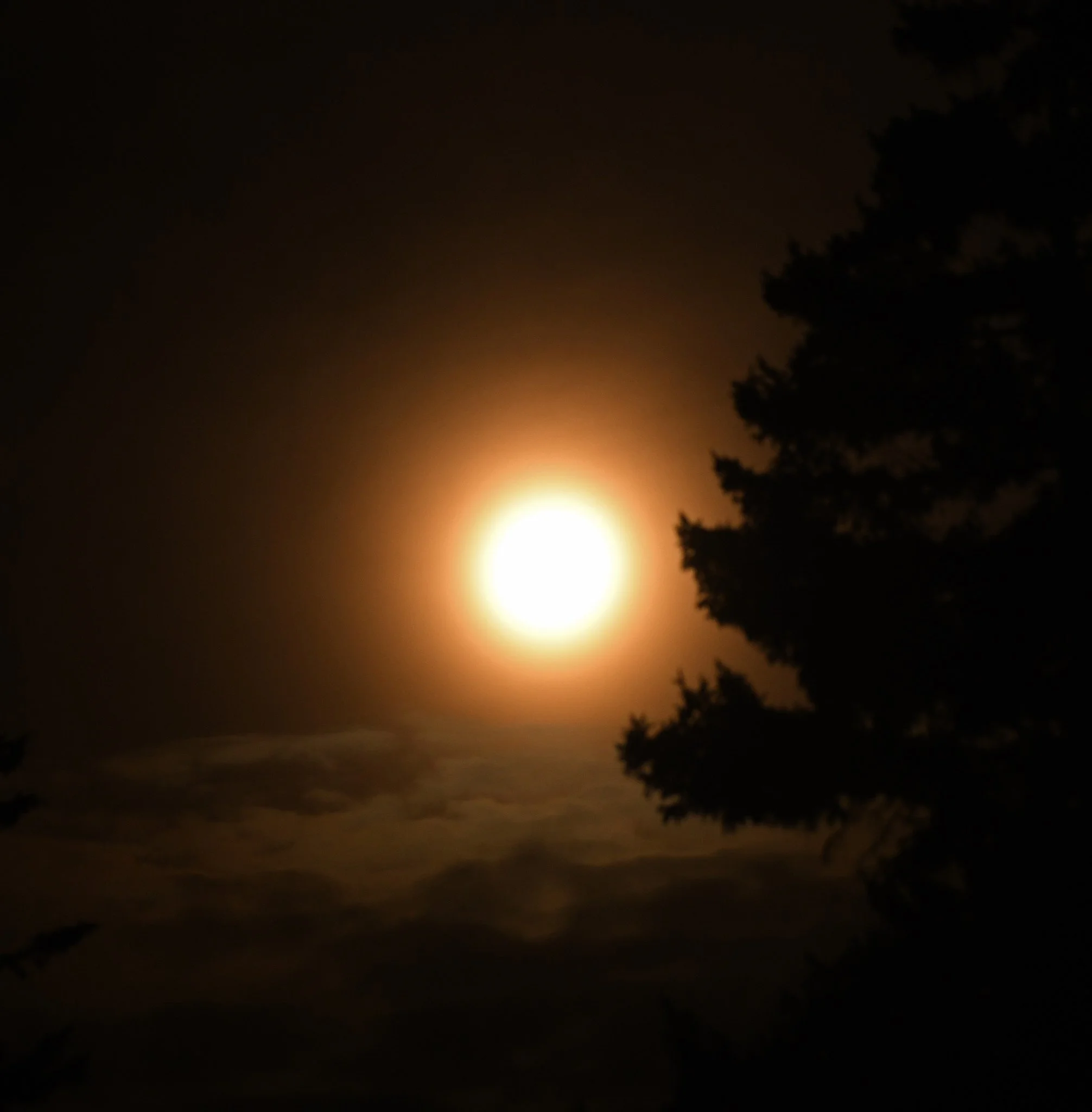
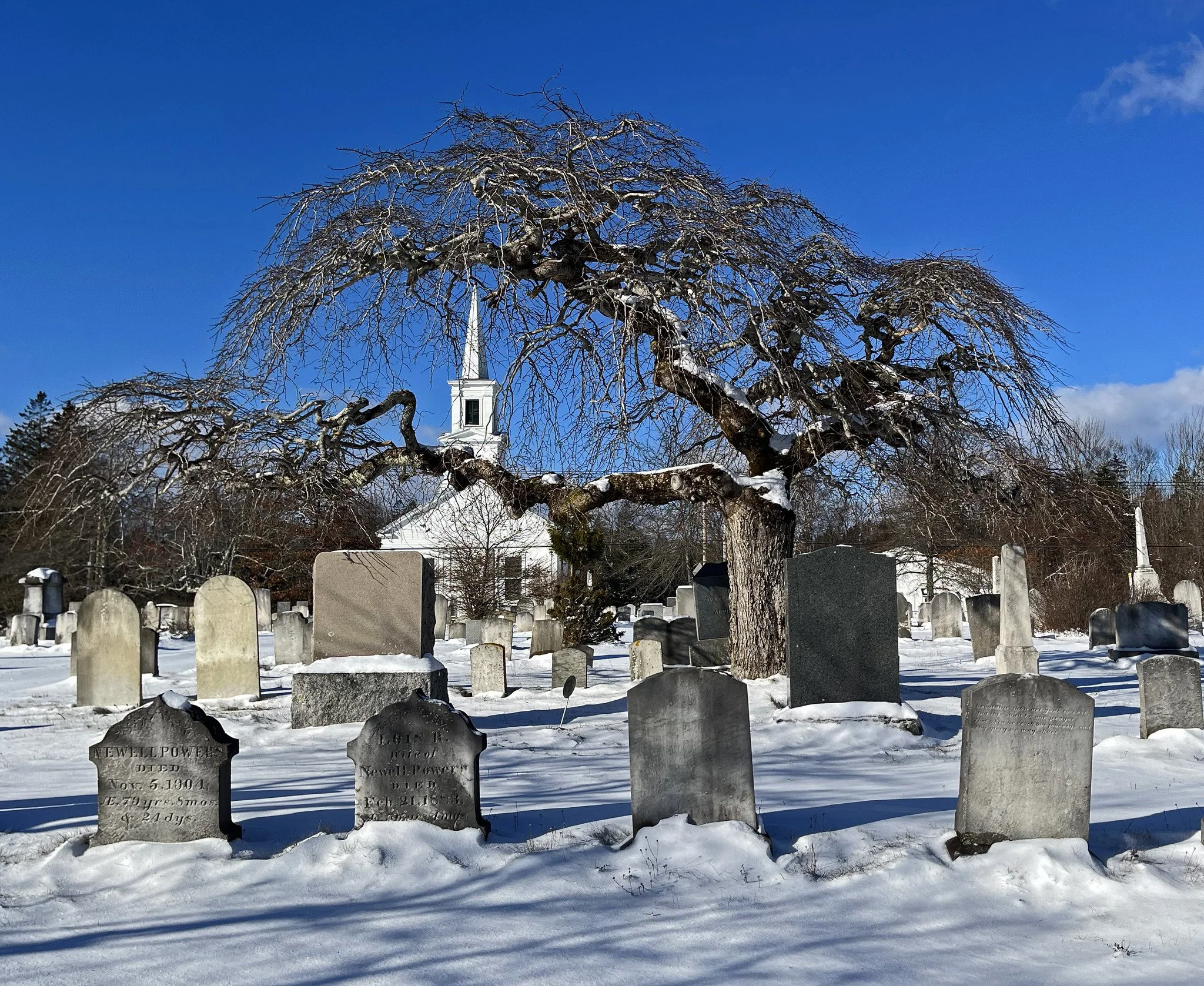
Here you see the December Cold Moon as it was being transformed into a lovely “morning moon” at 7:50 a.m. on Sunday. Morning moons are not rare (the moon is up over us for about 12 hours), but the conditions are not always favorable for our seeing them.

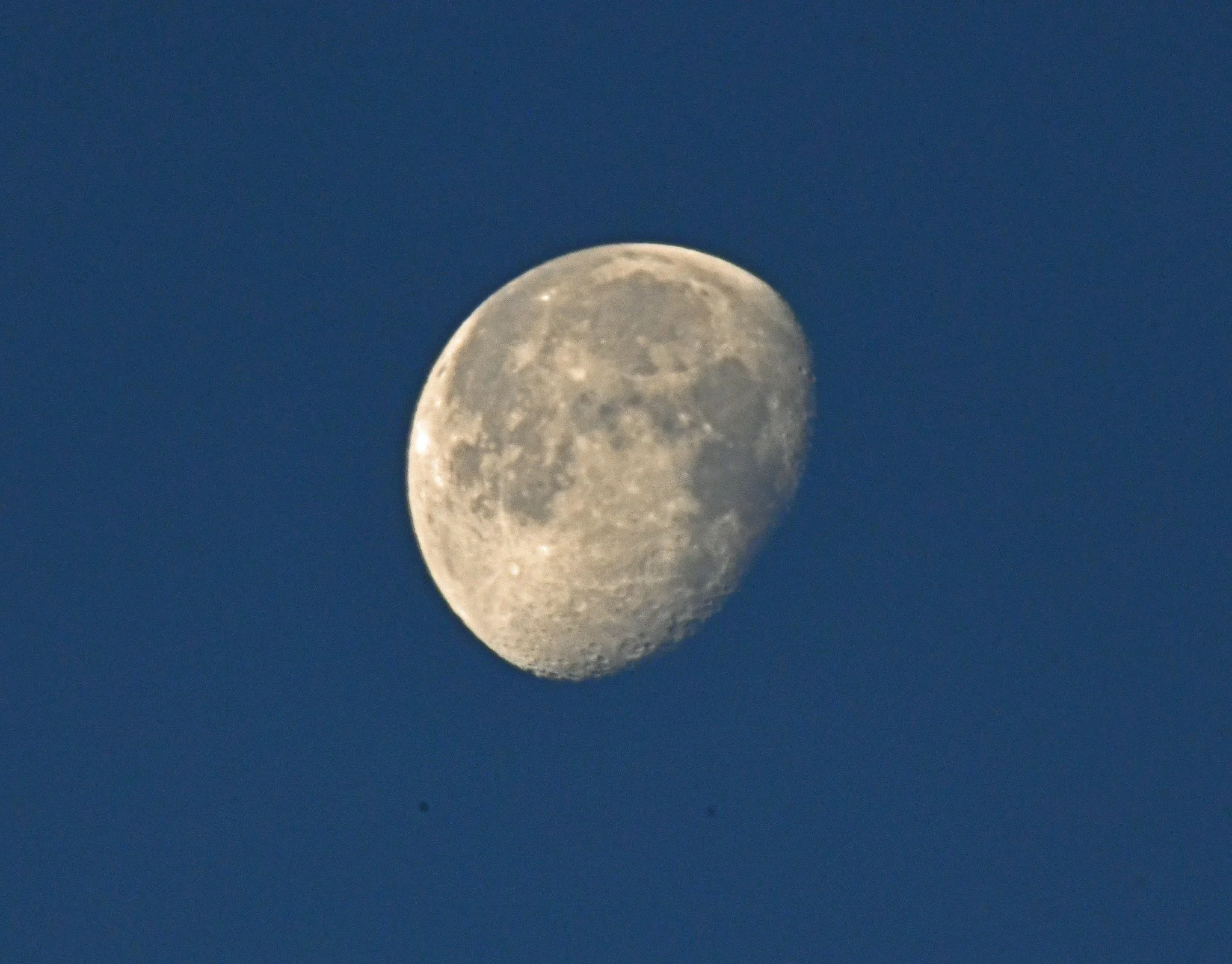
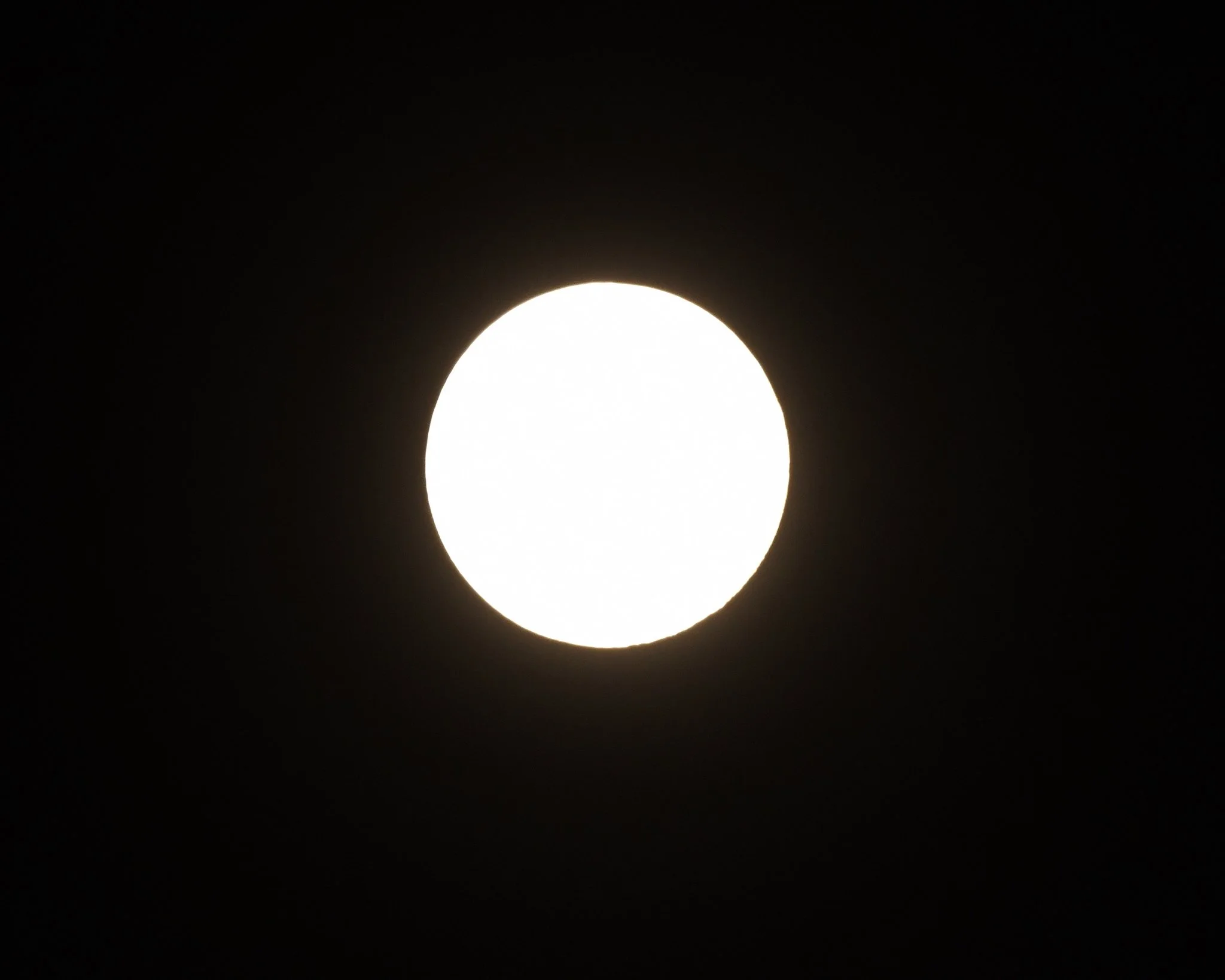
The reflective parts of the moon that we see now are shrinking (“waning”). This moon is a “waning gibbous” moon because it is hunch-shaped with more than 50 percent illumination and on the way to losing more light. It was within our dirty atmosphere when the image was taken, which gave it a sepia-like cast. When it escaped our atmosphere far into the celestial heights Monday morning, it turned silver-gray:

The sun’s reflective light won’t be able to reach the moon in its orbit on December 19, when it will disappear from us as a black “new moon.” After that, the parts of the moon that we’ll see will start growing (“waxing”) from slim crescents to a full “Wolf Moon” on January 3, 2026

(Images taken from Brooklin, Maine, on December 7 and 8, 2025.)
Comment

Comment

In the Right Place: Positively Perfect

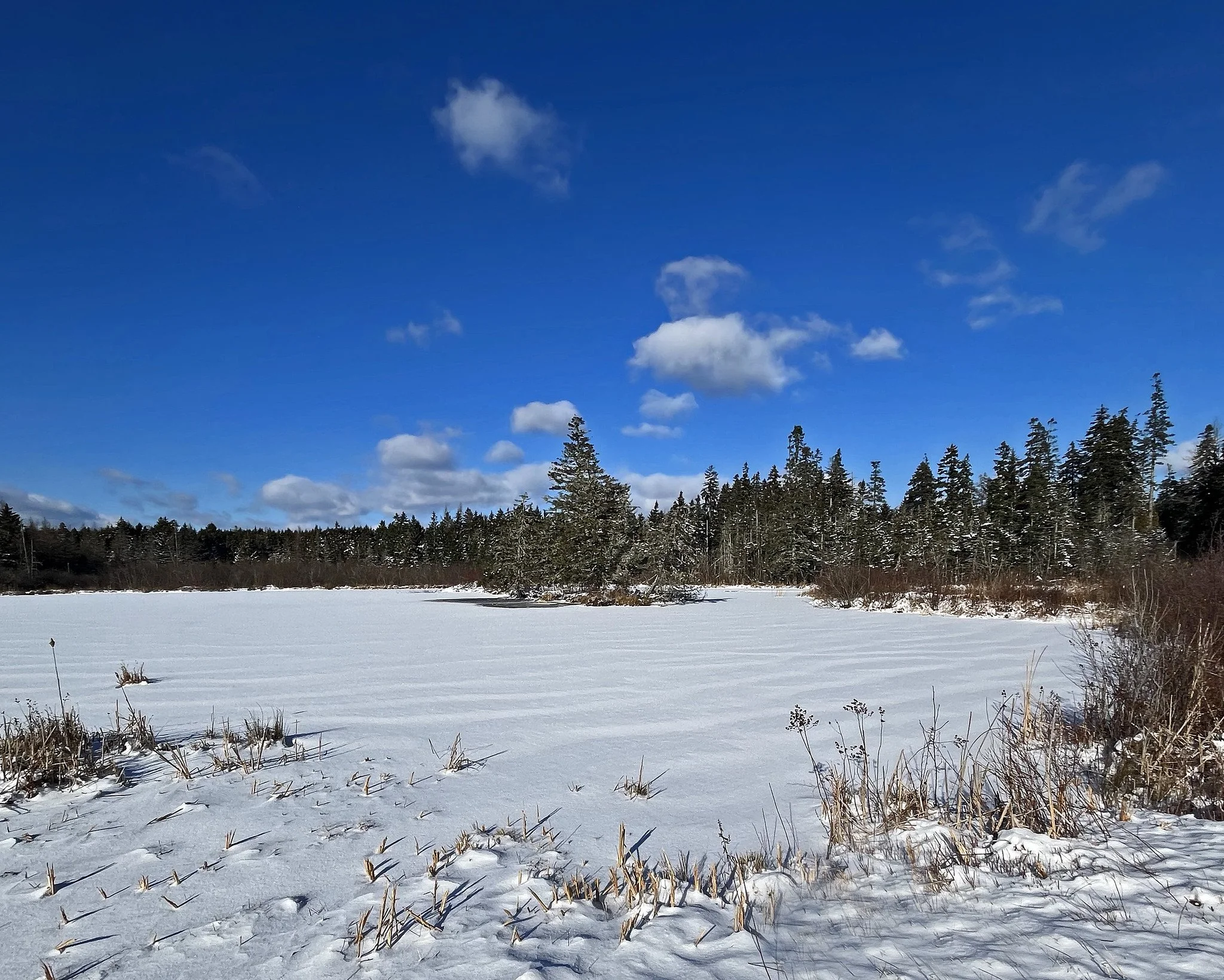
That small and easy-going snow storm that came through Brooklin in the early hours of Monday proved to be a perfect storm — positively speaking — for those who like their snow in small doses. Monday dawned clear and sunny and sparkling with white accents, a Down East December day at its finest. It was one of those days that you just had to go out and about. Here a few things that I saw in Brooklin:

(Images taken in Brooklin, Maine, on December 8, 2025.)
Comment

Comment

In the Right Place: Awakenings

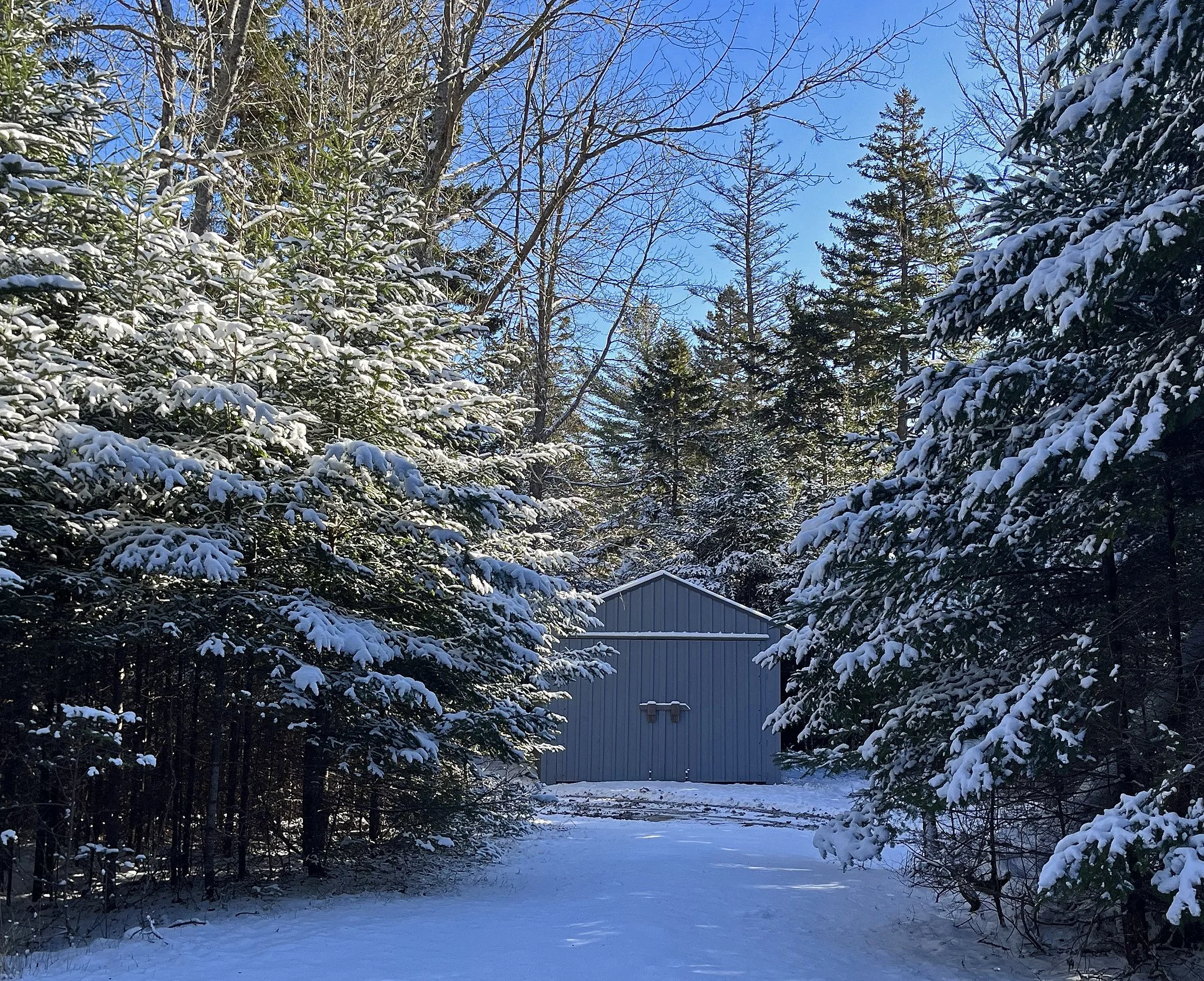
We awoke this morning to a landscape that was decorated delicately with new snow and watched the first light explore it tenderly. Great Cove was living up to her name and the woods seemed to be enjoying their awakening, as well.  

(Images taken in Brooklin, Maine, on December 8, 2025.)
Comment

Comment

In the Right Place: Holiday Trappings

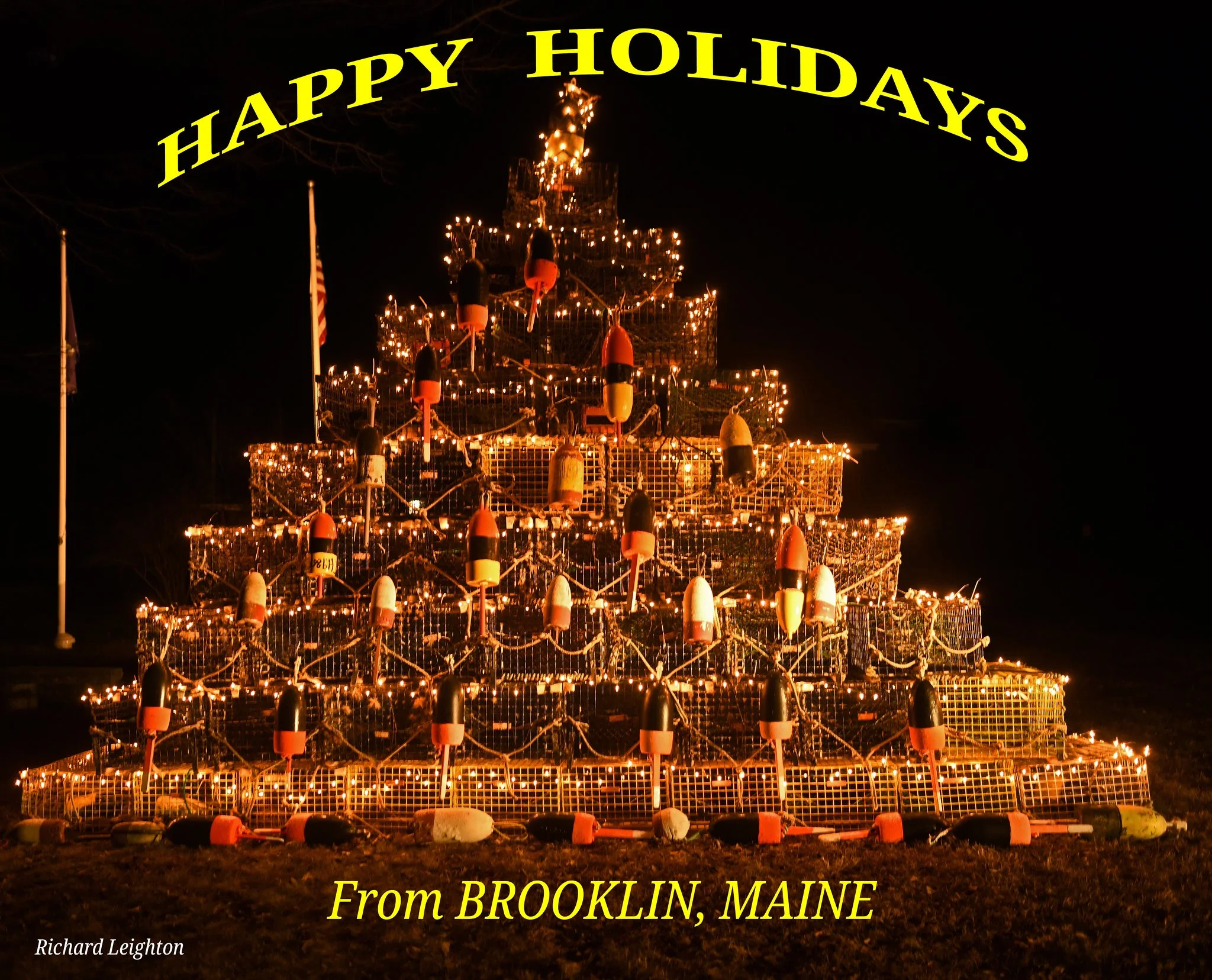
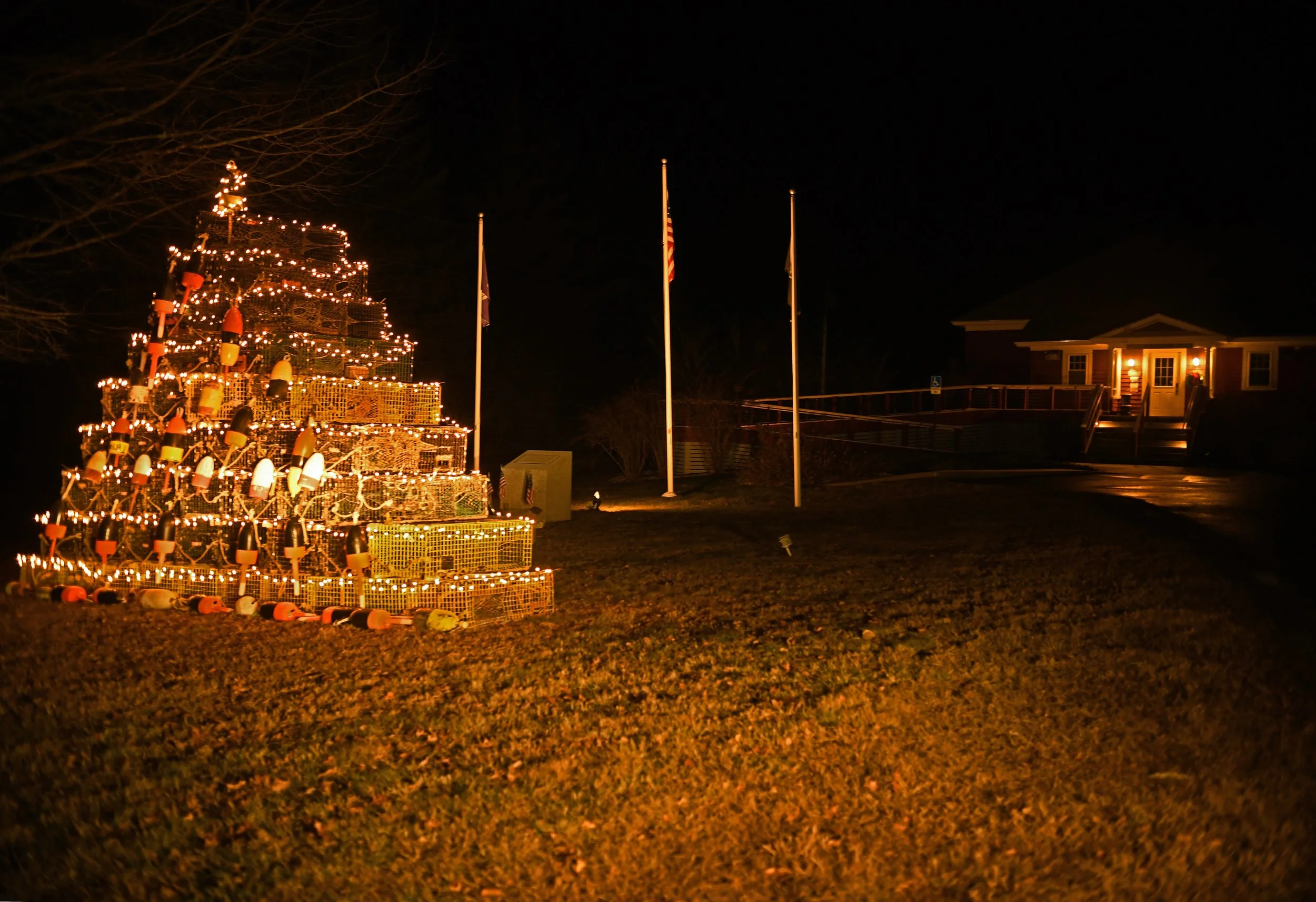
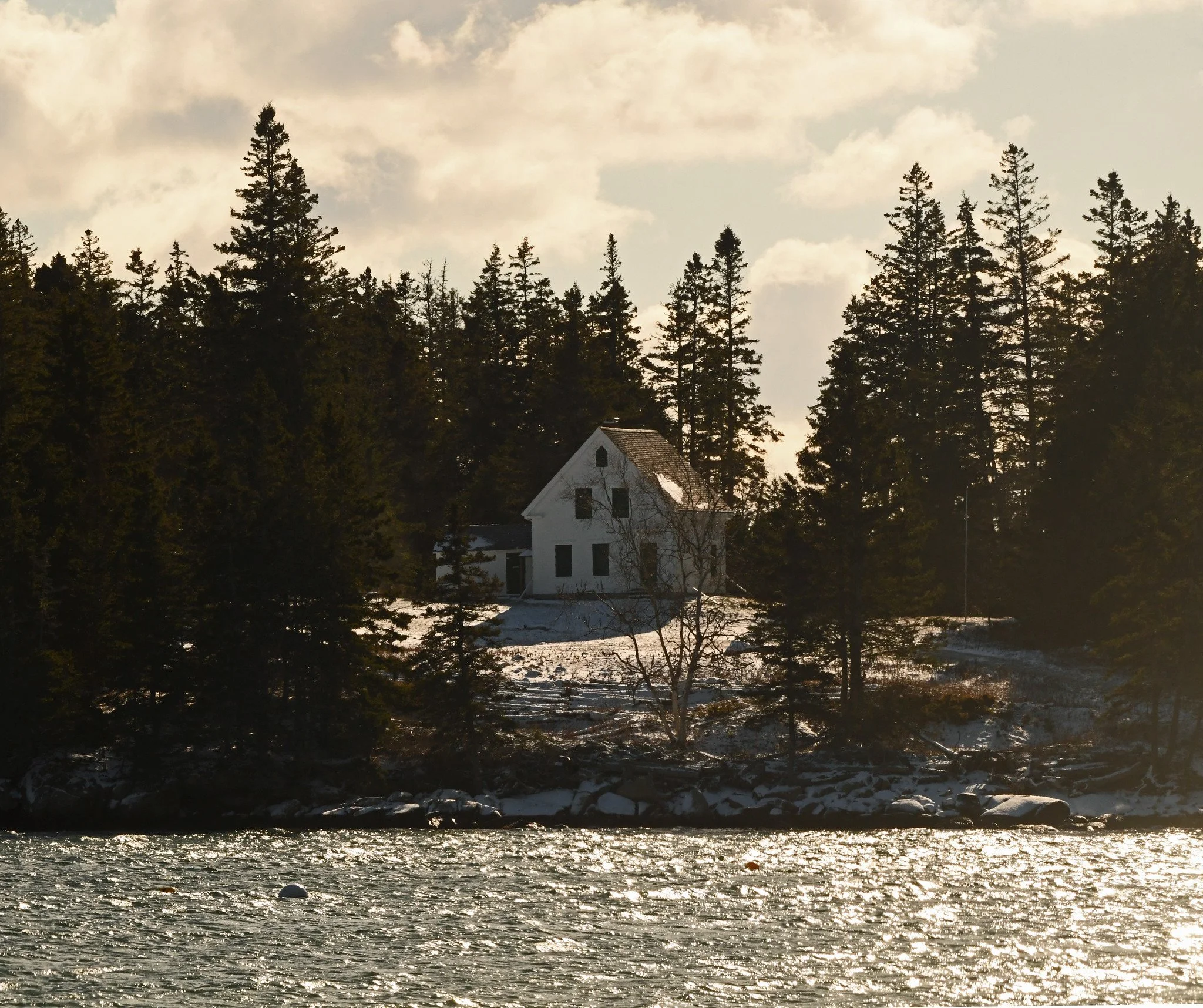
Congratulations to all those who contributed to and helped construct Brooklin’s annual Holiday Trap Tree, especially Sarah Havener for her organization and inspiration.

Finished yesterday, the tree is now an eye-catcher made mostly of lobster catchers, local ones at that. It also may be a motivator for Brooklinites to create Holiday cards – at least one Brooklinite, anyway, as you see.

The trap tree is located on the Town Office lawn. Travelers of Bay Road won’t be able to avoid seeing it and thinking: “Buoy oh buoy, what a place!”

(Images taken in Brooklin, Maine, on December 6, 2025.)
Comment

Comment

In the Right Place: Life with Bernie & Bernice, IX

Here’s a video of Bernie & Bernice in a rare daylight outing on Tuesday. It was taken by our renowned neighbor David Porter, who was in the right place at the right time and (as usual) knew what to do when doing had to be done. Thanks, David.

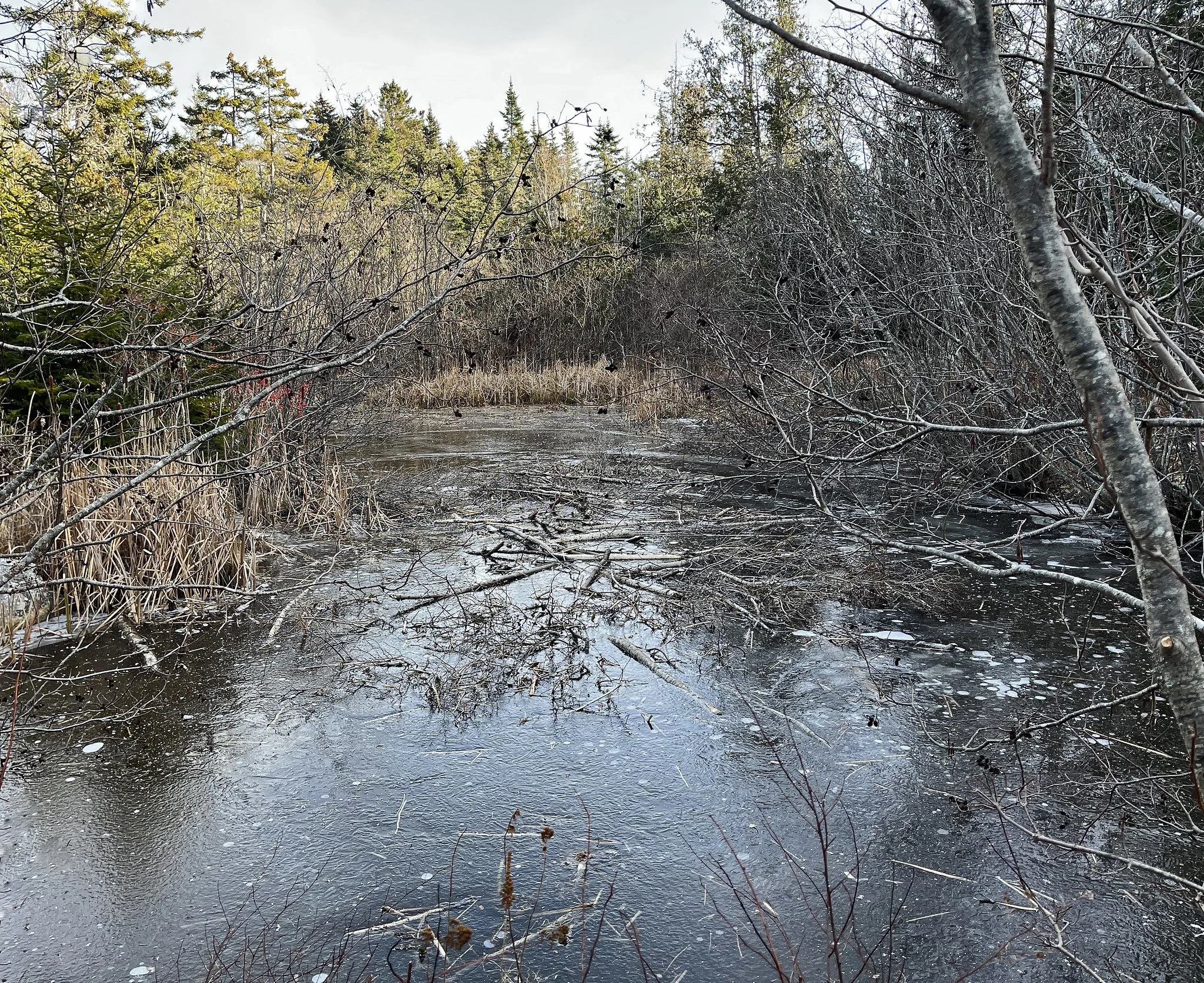
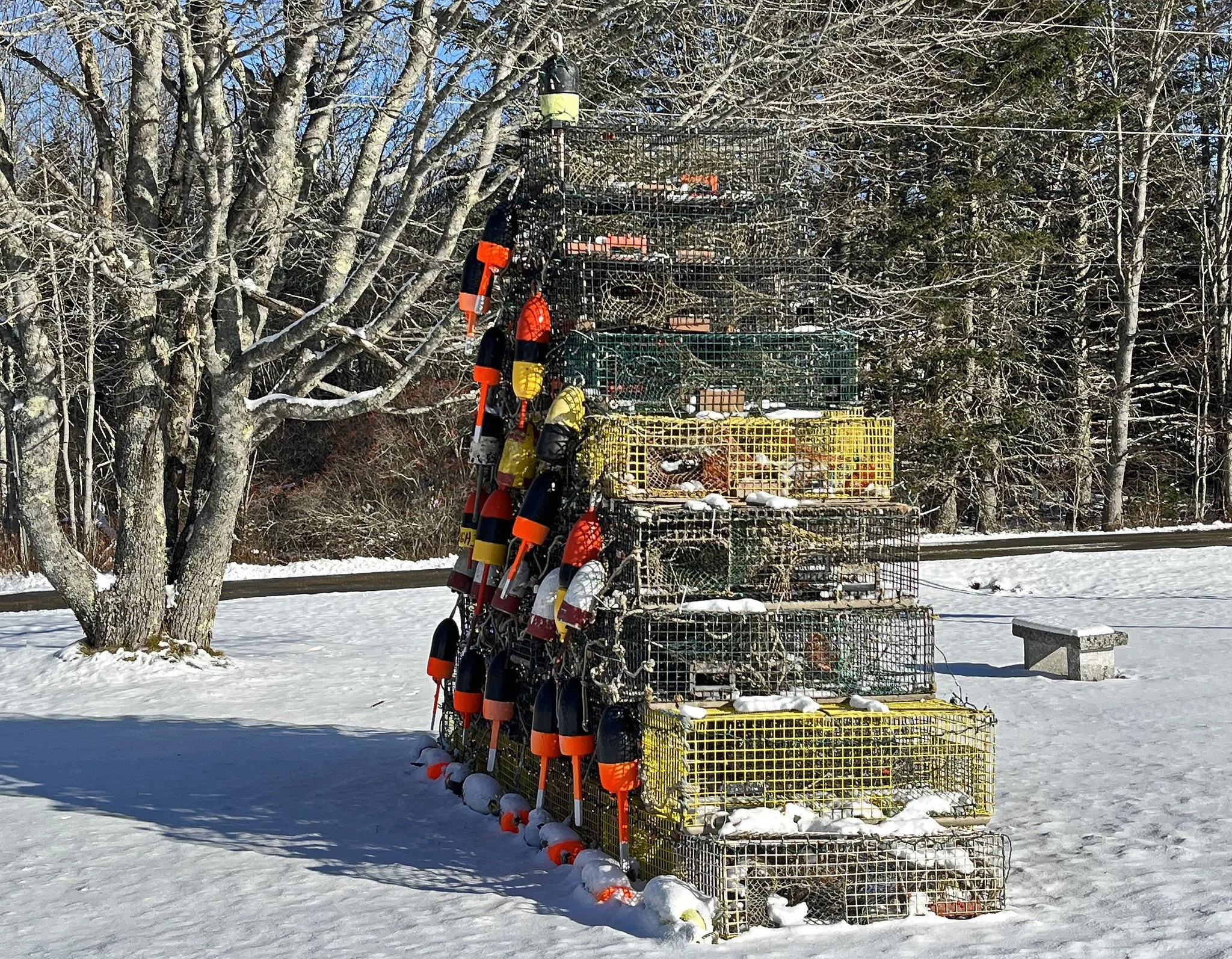
Our favorite American beavers may have been working overtime Tuesday to get more done before the pond iced up. If so, they didn’t make it, as you’ll see from the image below of the pond yesterday. Yet, B&B’s beaver building mess keeps getting bigger and messier.

As of yesterday, their construction site looked like an ice-encased tornado target. I suspect that B&B have a snug burrow on the island in the middle of this pond as their headquarters. It’s going to be interesting to see how the ice affects their lodge-building.

By the way, apparently a beaver home is only called a lodge when the beaver moves up in life from a burrow to a larger domed, two-level model made of surrounding trees, branches, mud, and rock, with entrances below the water line – and with or without a beaver ballroom.

If Google is correct, the word “lodge” originated from an ancient word meaning "shelter of foliage" and evolved to describe a small, temporary building or hut. Over time, its meaning expanded to encompass various types of specific-purpose and, later, grand structures. (Images taken in Brooklin, Maine, on December 2 [video] and 5 [still], 2025.)
Comment

Comment

In the Right Place: Moonlight Department

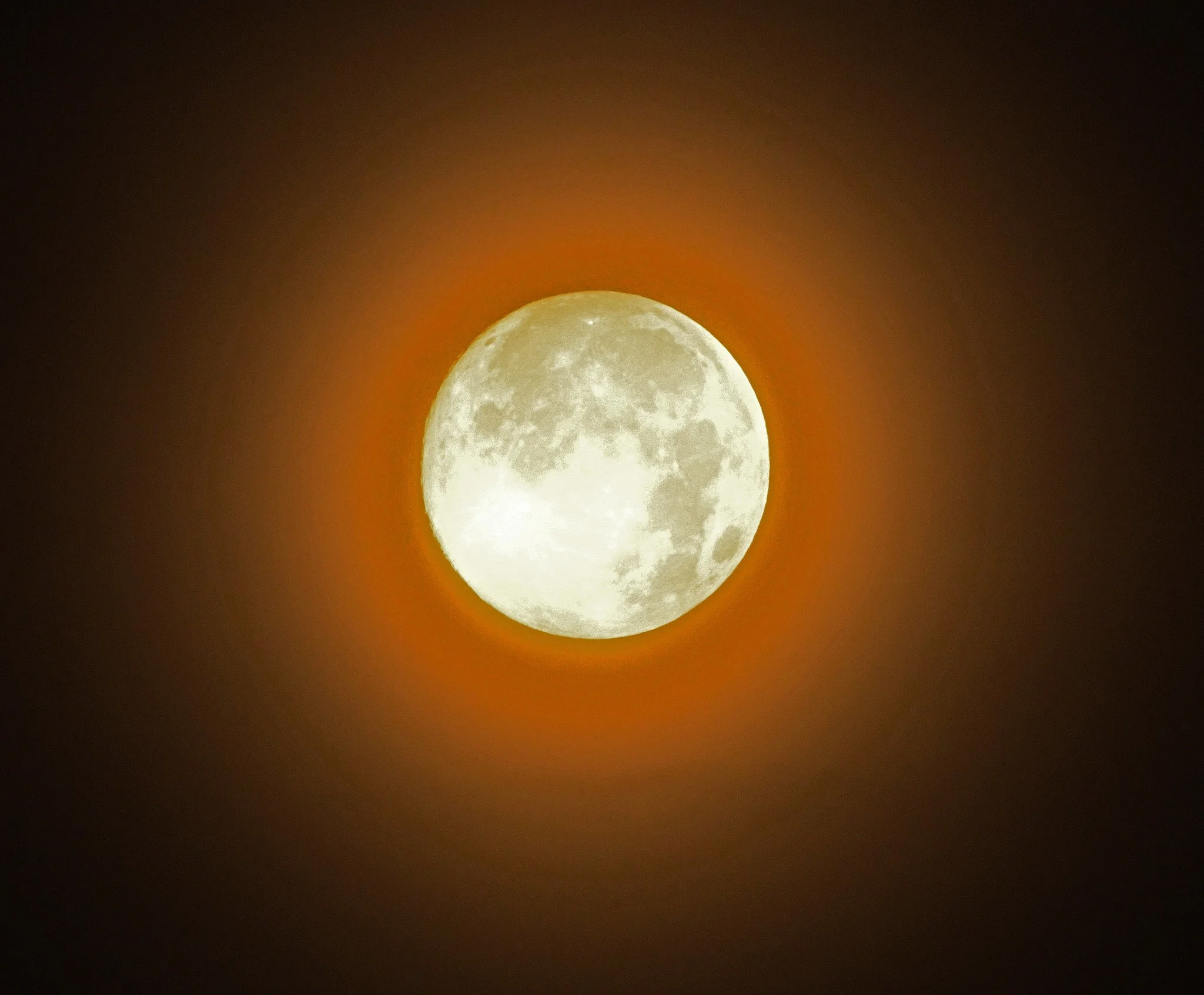
Here you see yesterday’s full supermoon moon with a wonderful lunar halo rising over Eggemoggin Reach at about 6 a.m. Such halos apparently are caused by the moon's reflected light bending out (“refracting”) through prism-like ice crystals in high-altitude cirrus clouds. Those clouds are somewhat visible in this longer shot:
The subsequent evening full moon rose into a clear sky and did not have a halo:

The December full moon is mostly called the Cold Moon. The name originated from Northeast Native American traditions of naming the full moon with a description of the season in which it rises. Among others, the Mohawk people called it the Cold Moon.

The Mohicans called this moon the Long Night Moon because it comes in the time of year when the winter solstice brings us the longest night and shortest day. The Western Abenaki people, in what is now western Maine and other parts of New England, called the December moon the Winter Maker Moon for obvious reasons. (Images taken in Brooklin, Maine, on December 4, 2025.)

Comment