
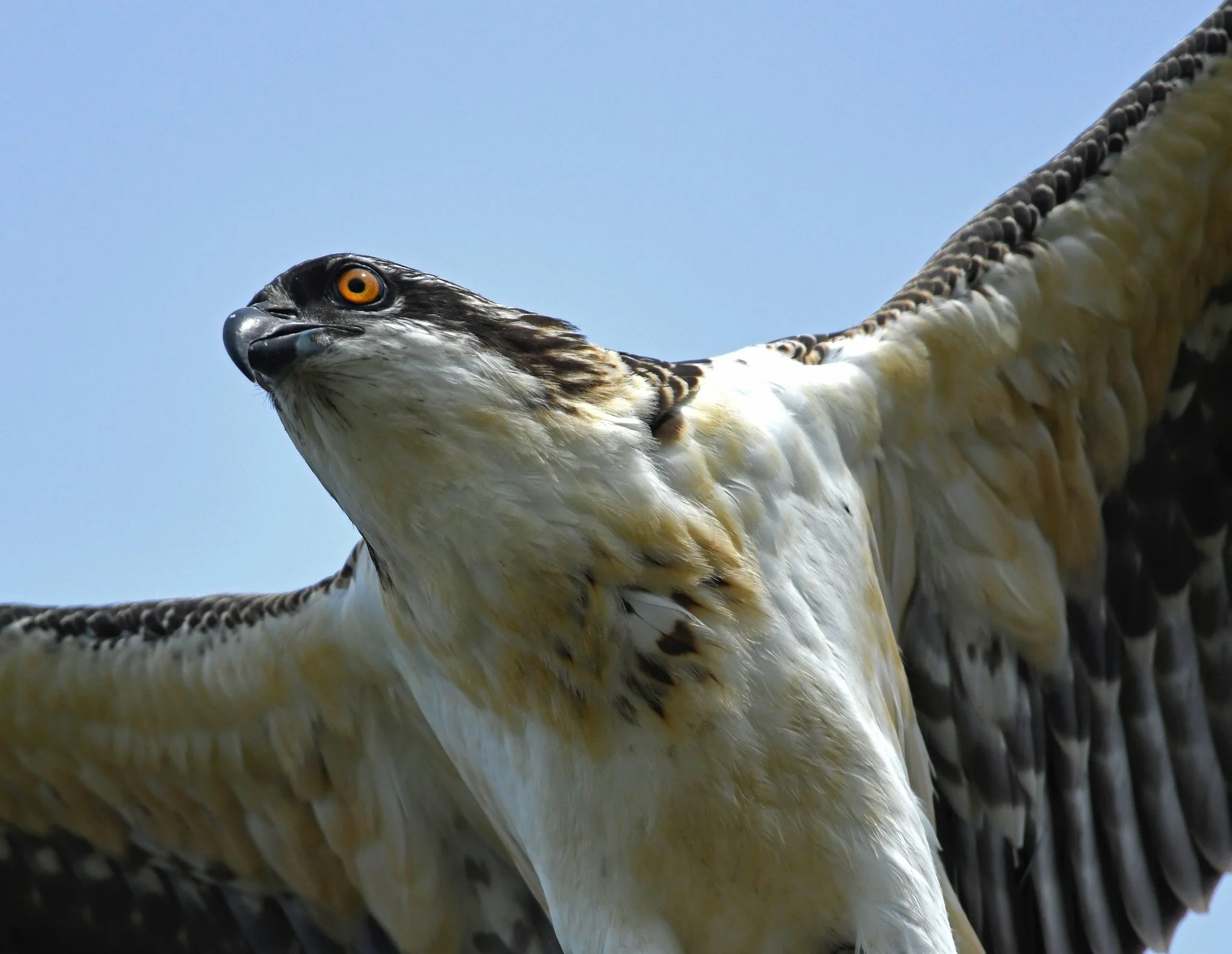
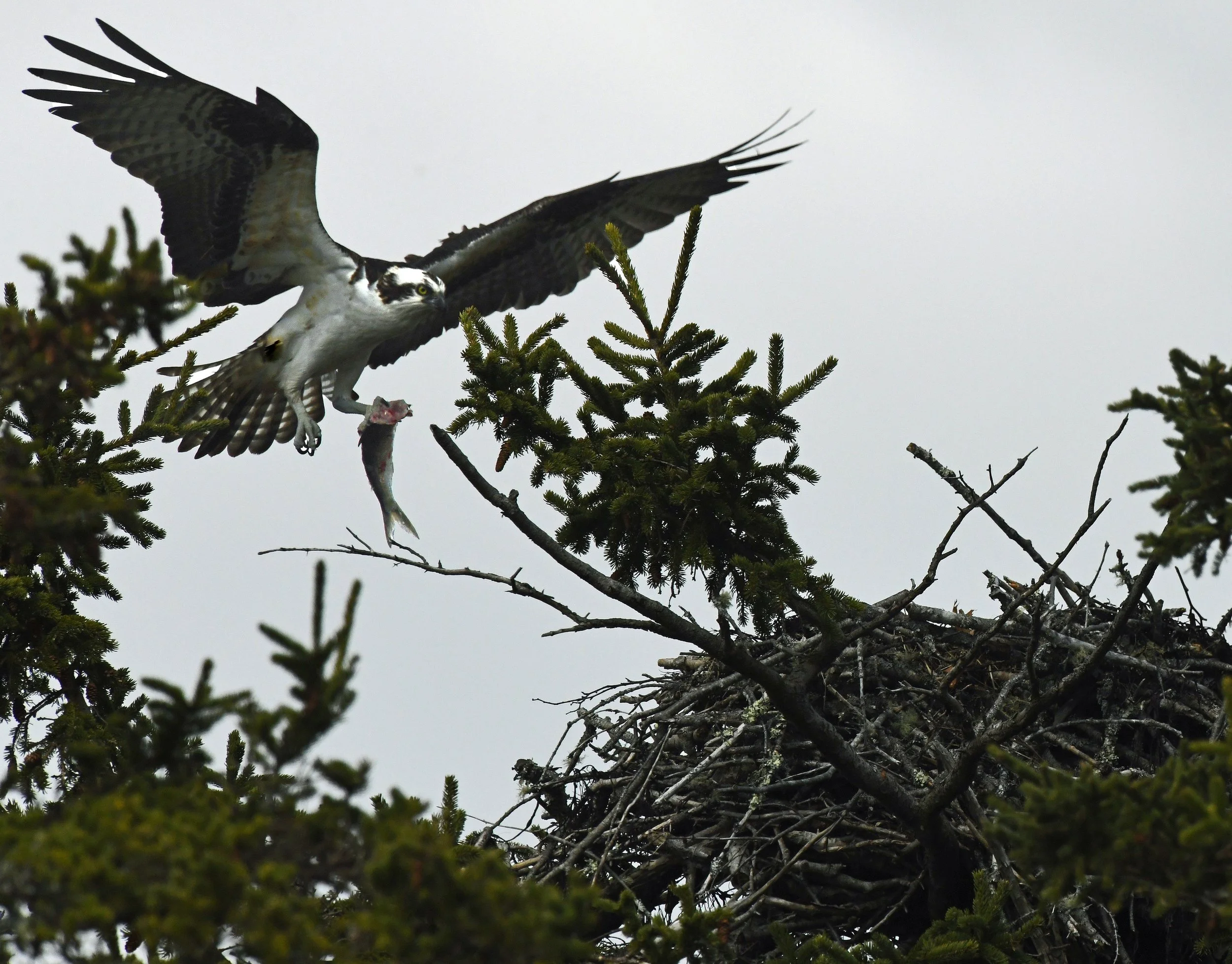
This image of a fledgling Osprey learning to fly appears with my monthly column in the current Ellsworth American. Click on the image to enlarge it. To read the column about the problems ospreys are facing along the east coast, use this link: https://www.5backroad.com/montly-column
Here’s a quick update on two of the boats-in-progress that we’ve been monitoring at the renowned Brooklin Boat Yard. It’s a pleasure to see expert craftsmanship making something elegant and grand out of so many rough and functional parts.
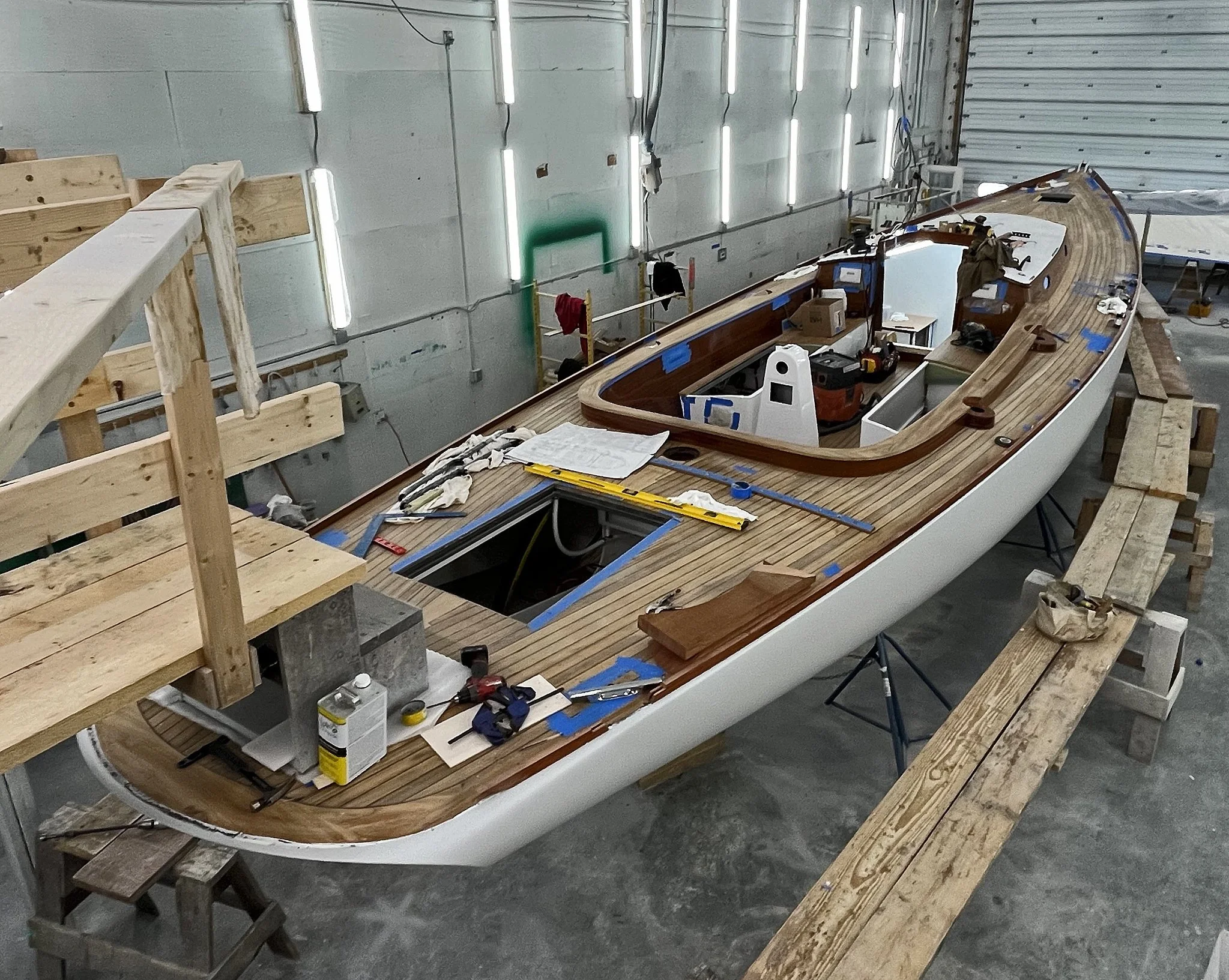
DYLAN, shown above, has been moved from the main shop to the paint shop, where she can be sanded and have details worked on simultaneously. As you know, she’ll be an Eggemoggin 47+ (47’6” overall) type racing sailboat.
The powerful, unnamed 47’ (overall) Express Cruiser, shown below, remains in the main shop, where she’s looking more like her drawings every day. I bet there’ll be many a wonderful cruise in her.
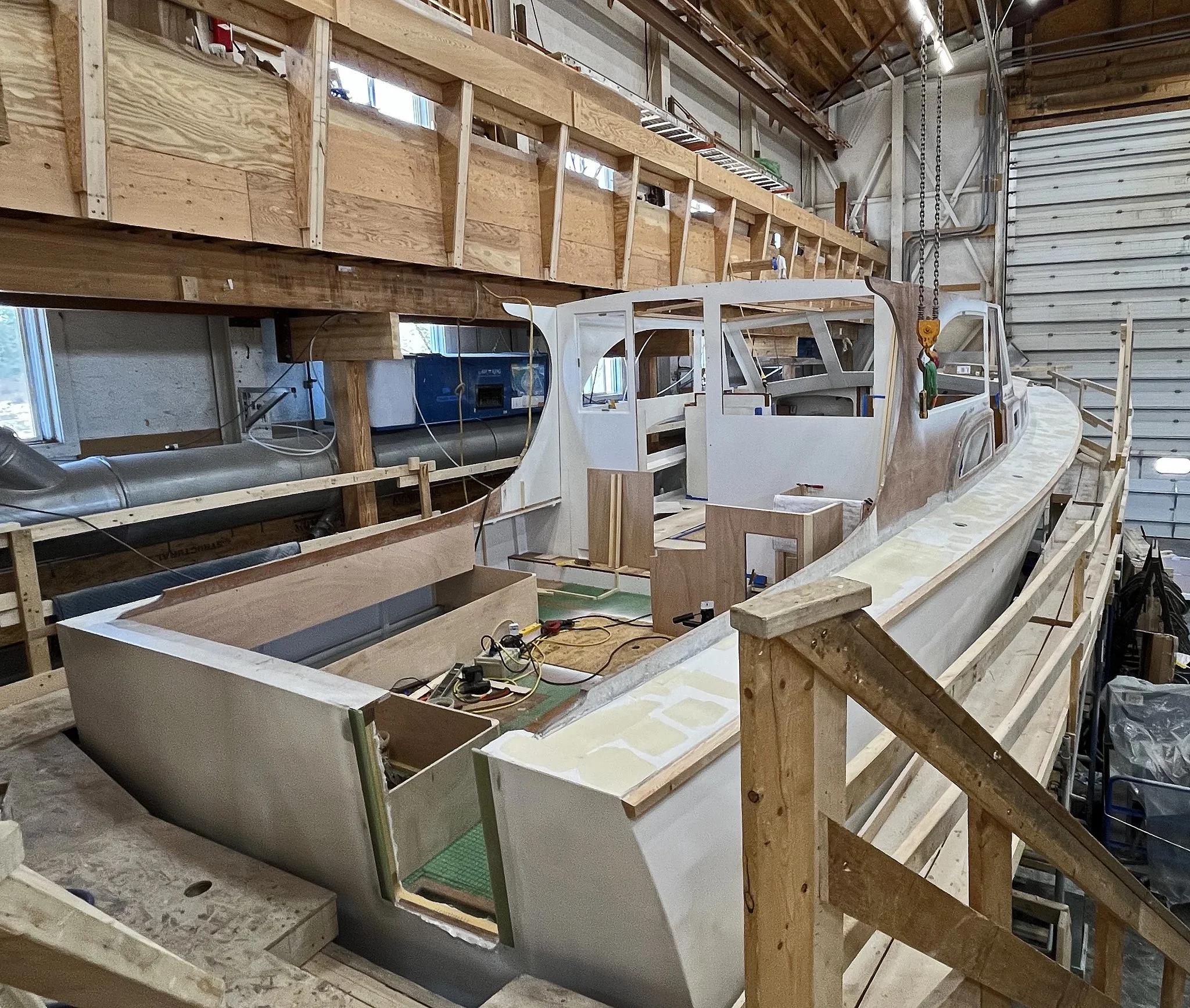
(Images taken in Brooklin, Maine, on May 11, 2026.)
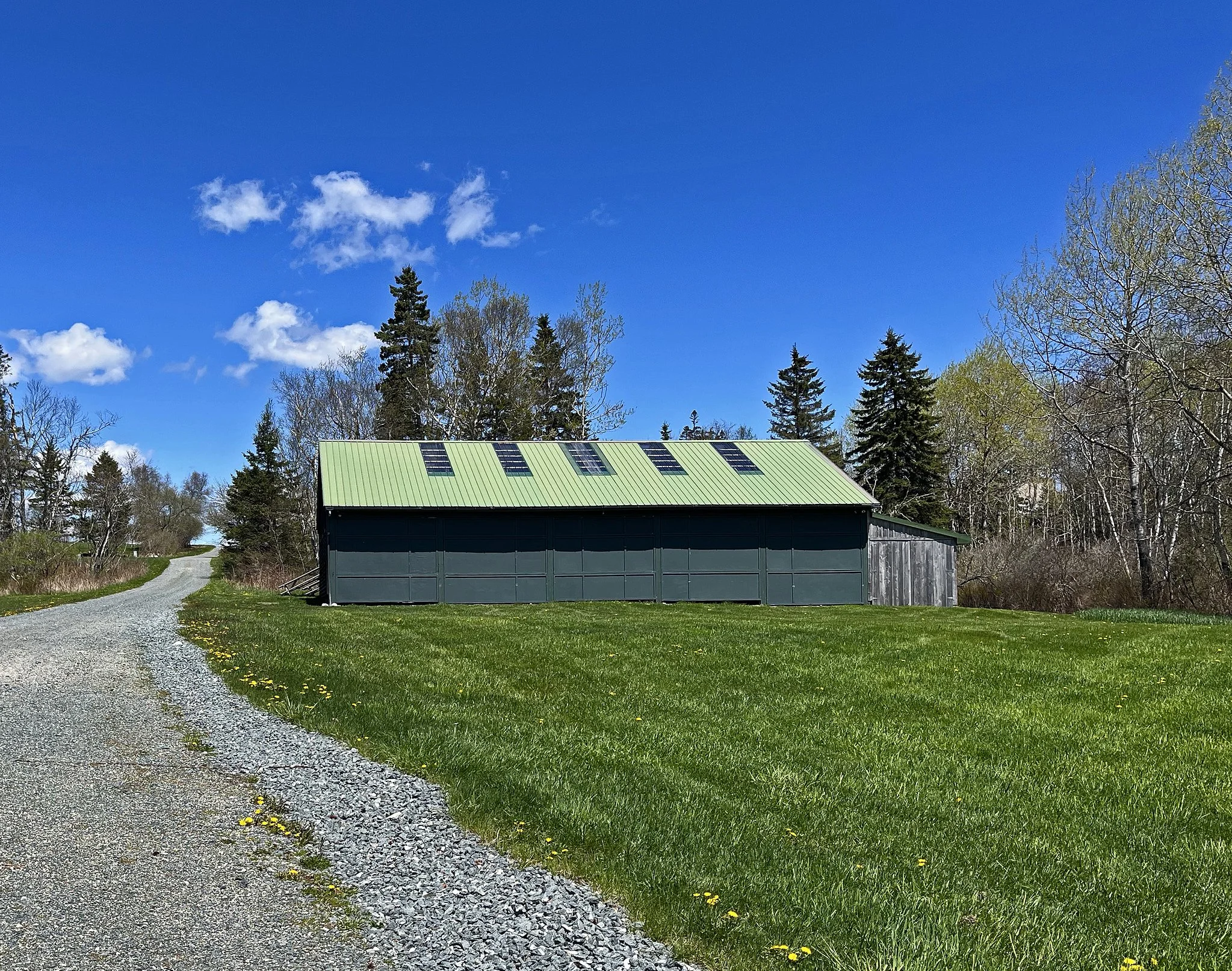
Here, you the viewer are on the campus of renowned Wooden Boat Publications and School. That’s Great Cove Drive coming down the hill right at you. It ends immediately behind you with a ramp into the waters of Great Cove.
The building in front of you probably is not the most beautiful you have seen; perhaps it’s even boring for you to look at, certainly (and thankfully) it’s not Trumpian. Yet, as they say in architecture school, form follows function. And, this building is beautifully functional.
In a way, this building is a jewel box in the late fall and winter and a place to feel good during the late spring through early fall. The jewels that it protects are finely-crafted WBS boats that sometimes even are gilded in gold by sunlight dollops dripping through the skylights:
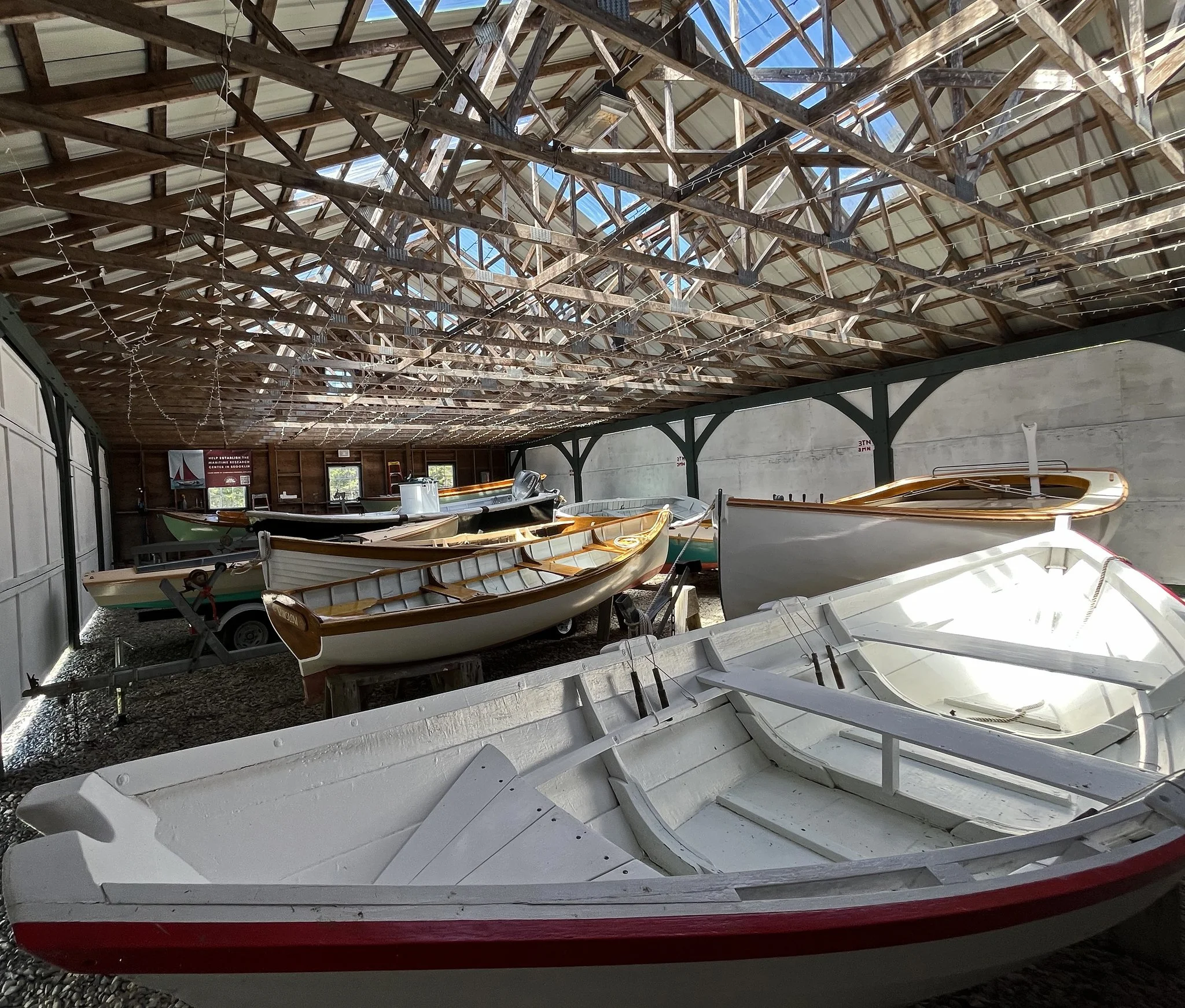
It’s a post-and-panel structure and soon all of those green panels on this side and the opposite side of the building will be taken away. The boats will be led eagerly into Great Cove and the plain building will become a lovely pavilion between green woods and blue waters.
Sea airs will waft through the pavilion while classes are taught to students at tables there, or while food is being served there to visitors, or while theatrical performances are being given to local residents, or while people are hanging out, waiting for a spring shower to stop and hoping to see a rainbow over the Cove.
(Images taken in Brooklin, Maine, on May 11, 2026.)
Many of you shared our ups and downs last year with Bernie and Bernice Beaver. They dammed our three ponds, took down at least 50 trees and large shrubs and generally were a pleasurable problem. Then they disappeared and peace returned.
Well, two beavers are now back in those ponds and, therefore, we’ll also be reporting on them as Bernie and Bernice – if they decide to stay and lay claim to our ponds. They seem to be mostly scouting out the area now::
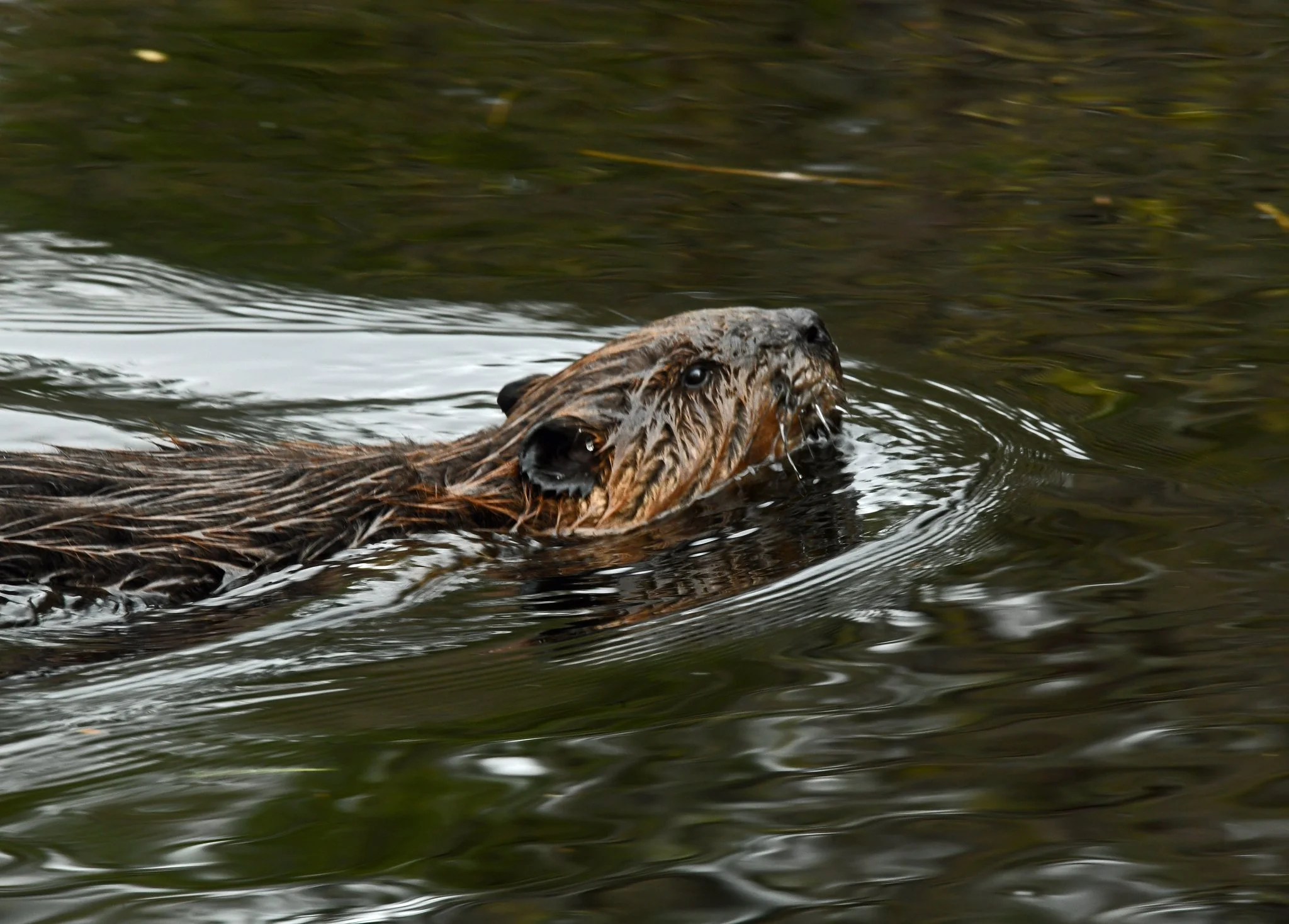
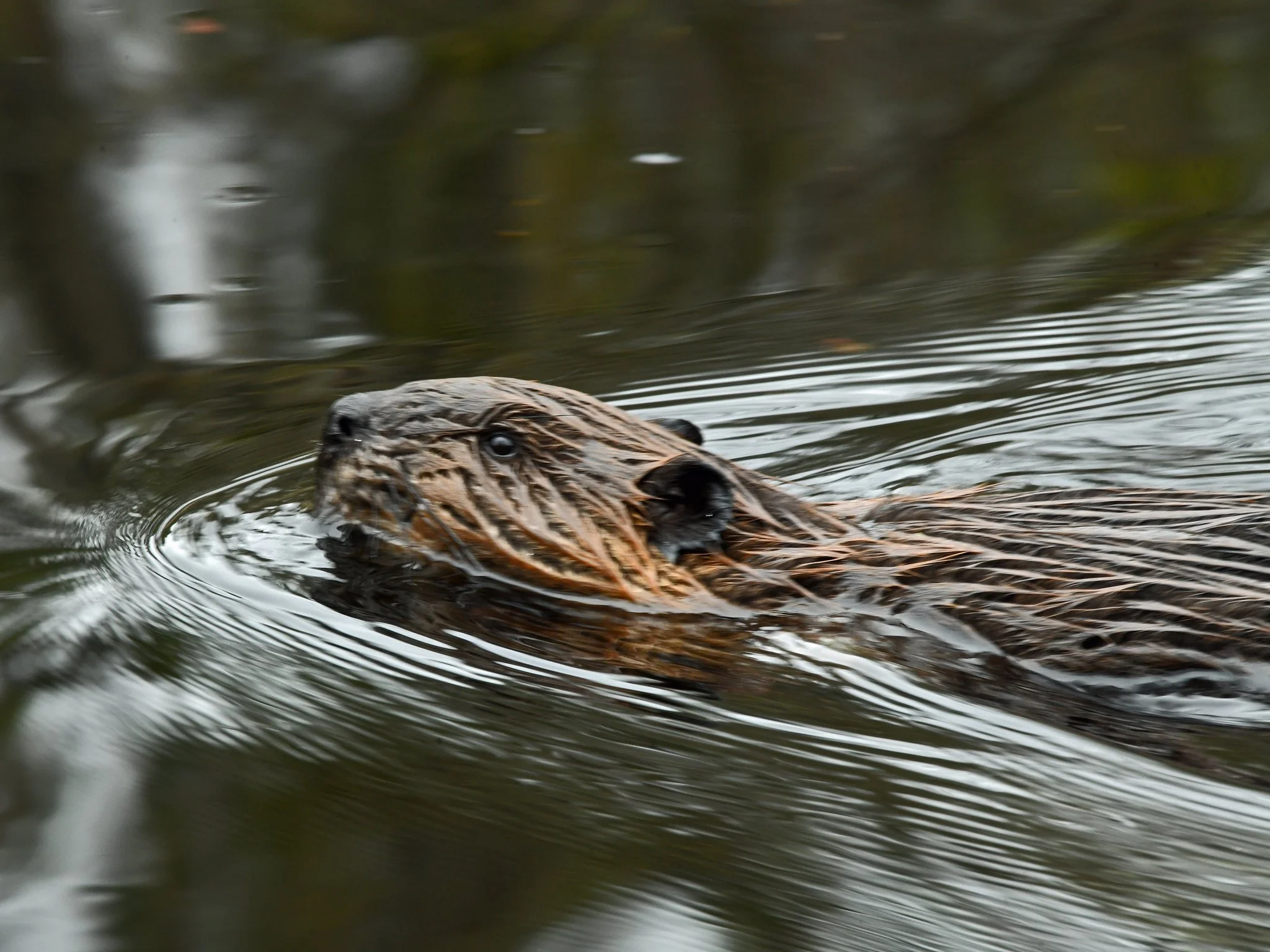
However, being beavers, they can’t resist closing up the gurgling channels I dug to keep the pond waters from flooding due to the original B&B dams. And I, being human, can’t resist re-digging those channels almost daily. It’s like the war with Iran; neither side is winning; disparity in resources doesn’t matter, and we can’t figure out a suitable compromise. Here we go again; stay tuned.
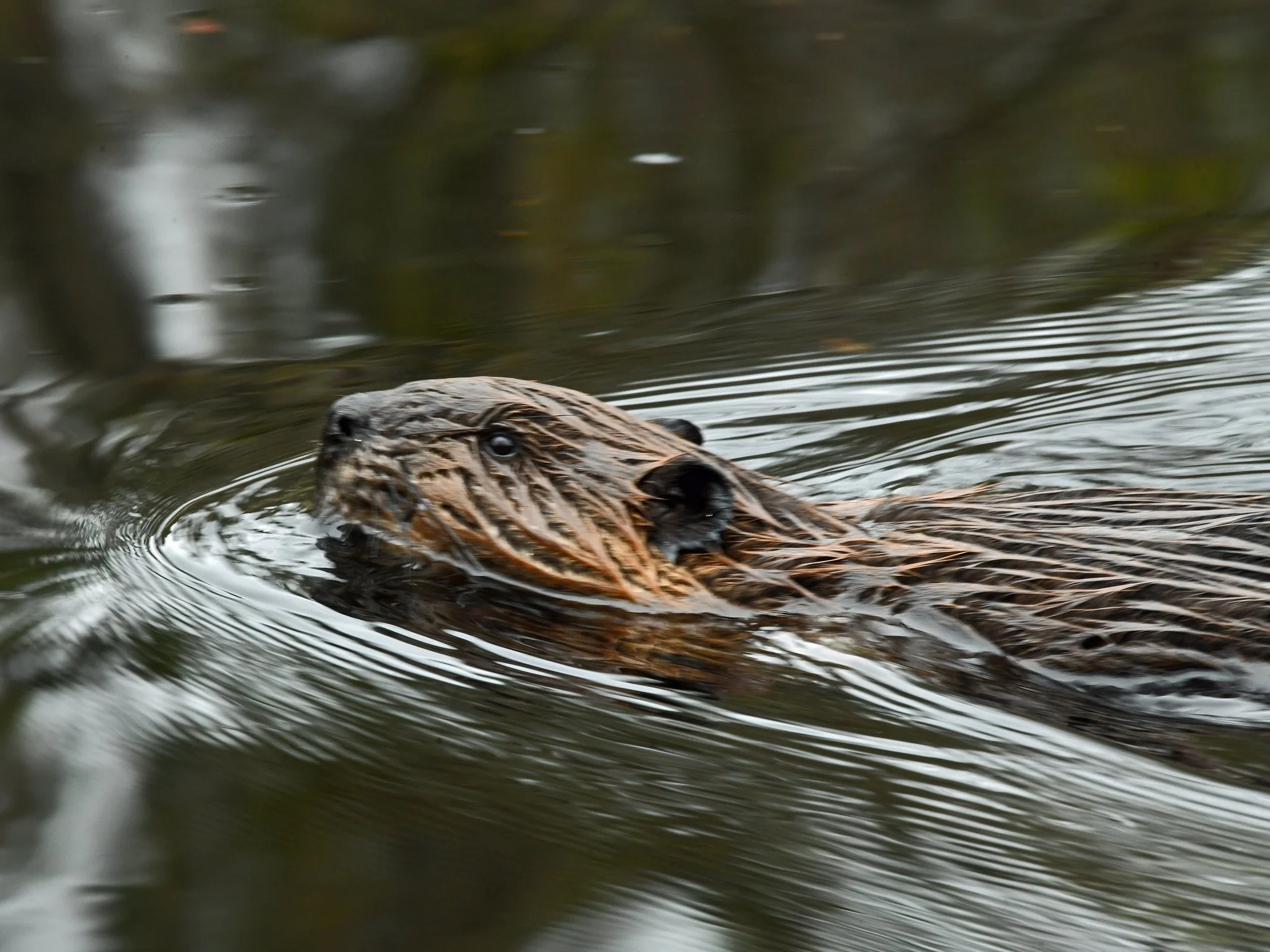
(Images taken in Brooklin, Maine, on May 10, 2026.)
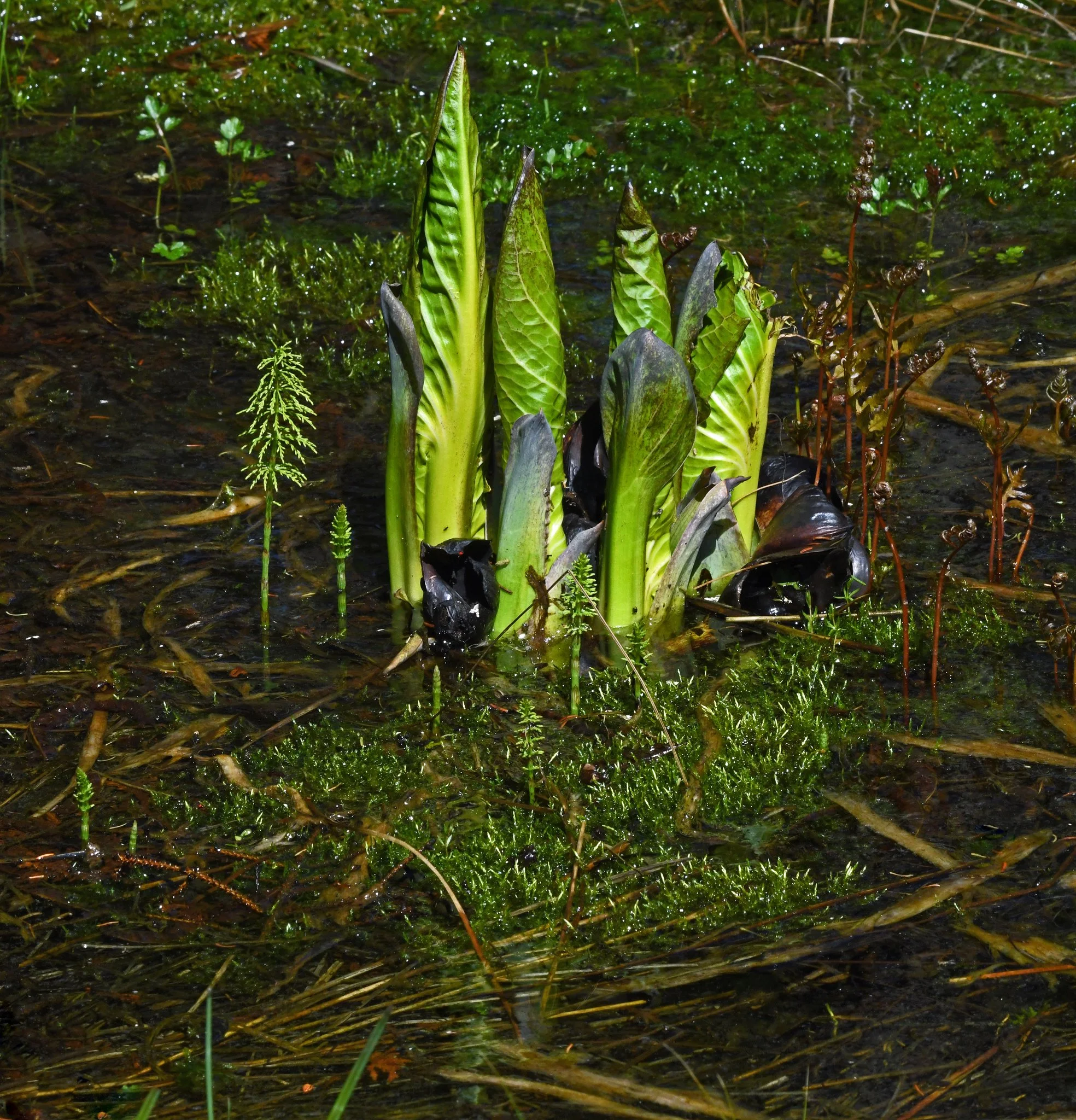
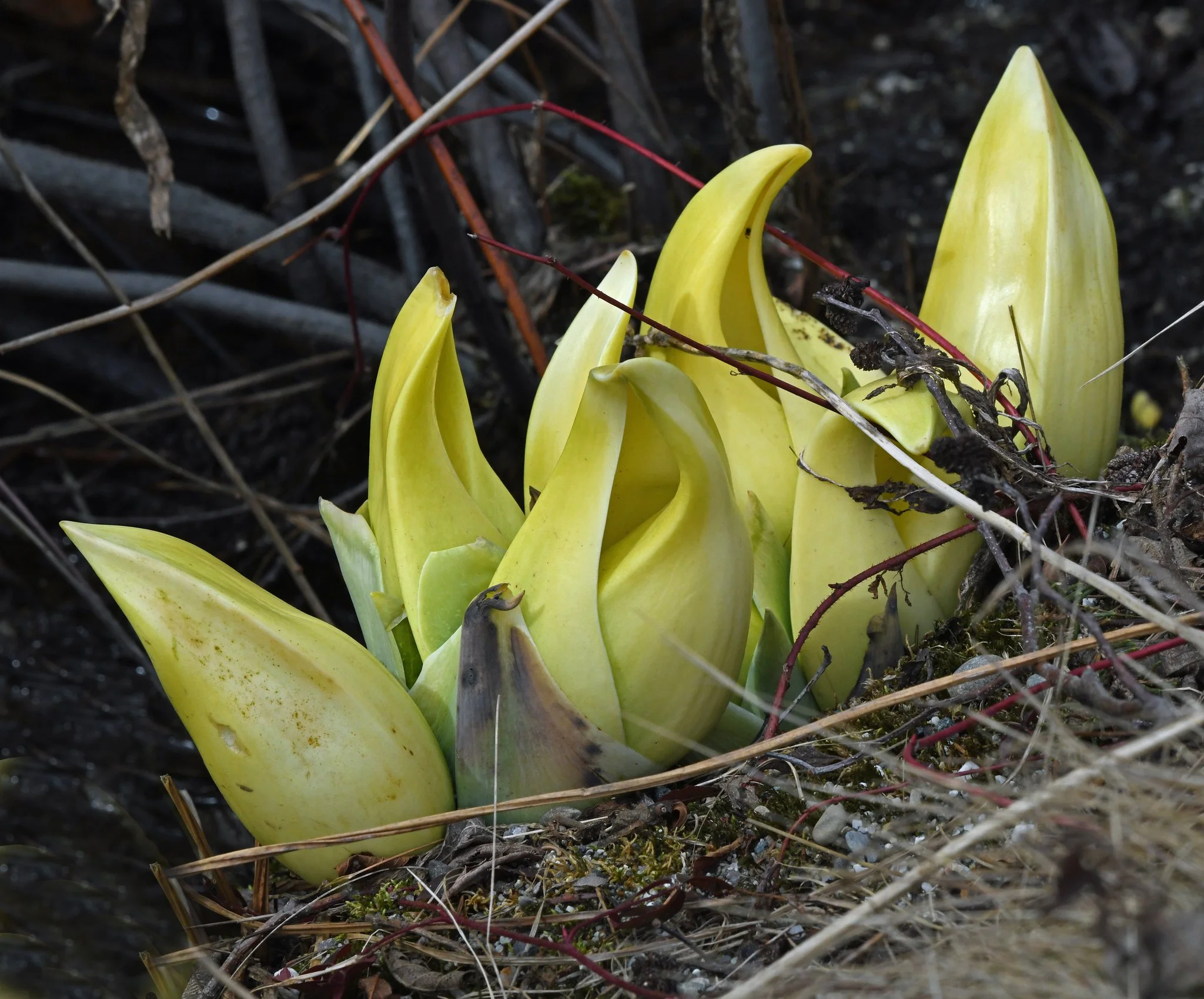
Most skunk cabbage plants in the bogs have shed their colorful, jester-hatted spathes and are sprouting what will become their glorious leaves. As you see here, some of these plants’ leaves are still twirled tightly like rockets on the launch pad:
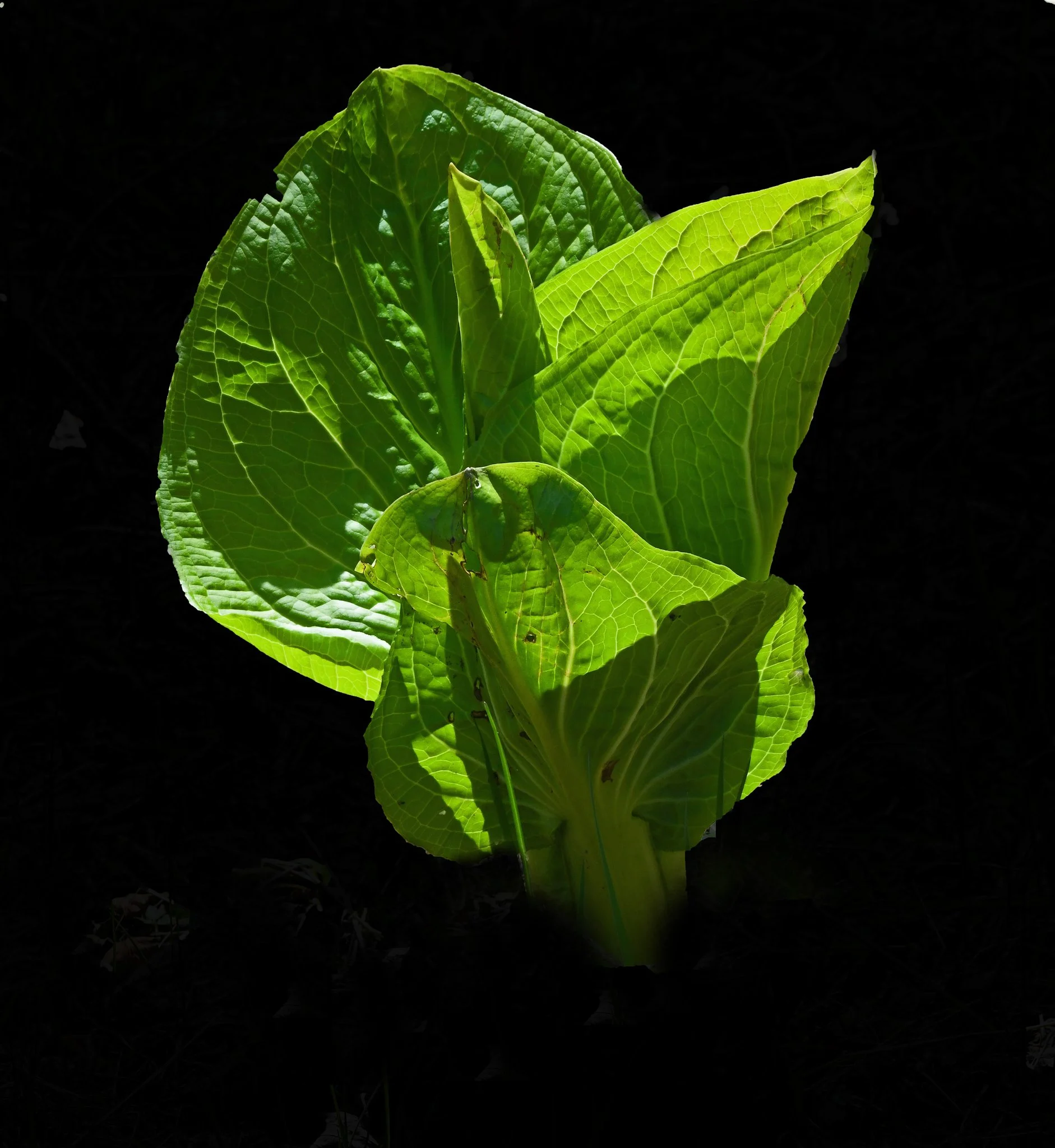
Others are beginning to fling their leaves open, causing a series of green explosions in the wetlands:
Skunk Cabbage is a paradoxical plant – gorgeously pleasing to the eye, not so much to the nose. (Imagine Grace Kelly or George Clooney with very bad breath.) Nonetheless, I’m a big fan of theirs. (Images taken May 9, 2026.)
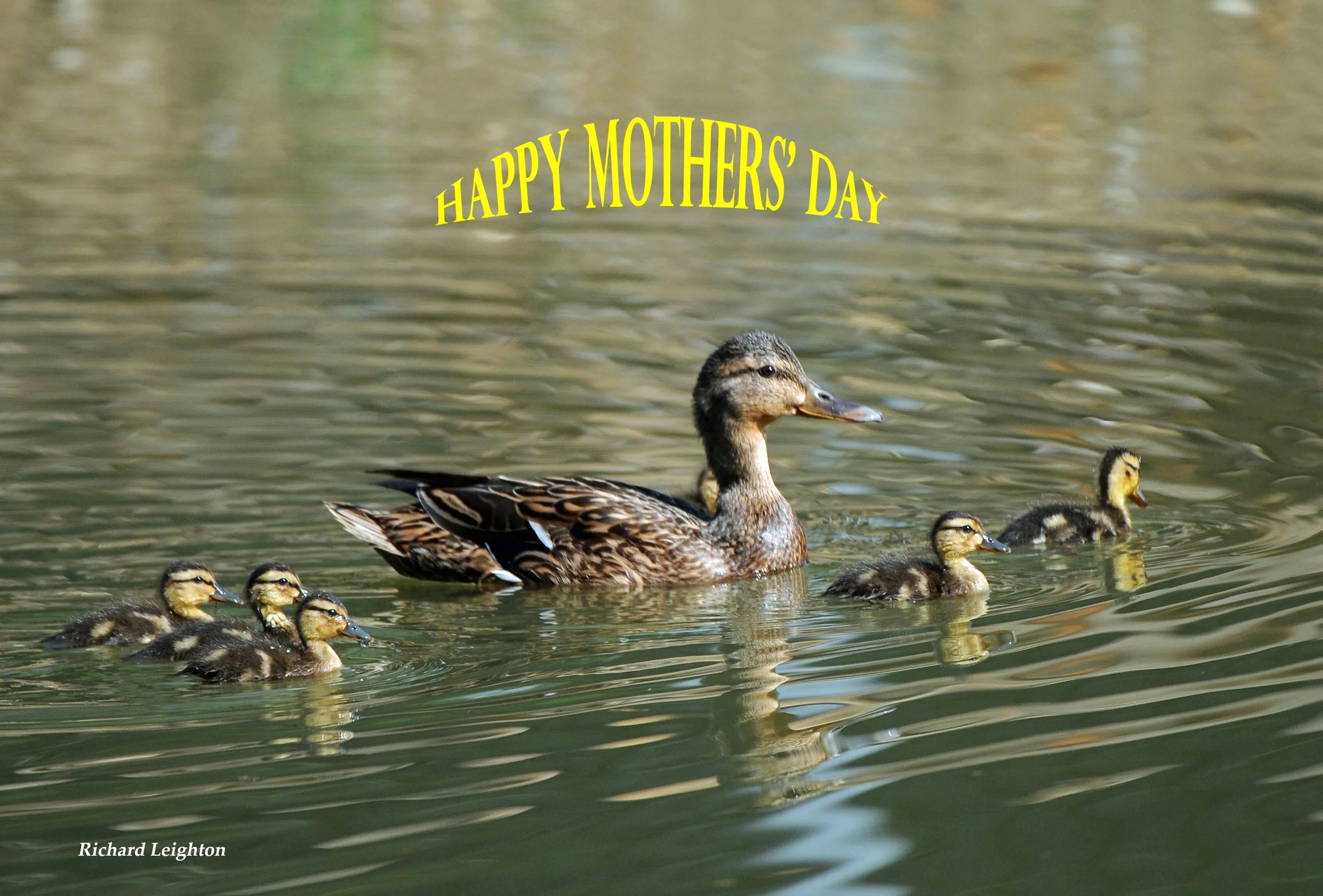
My mother taught me to be curious, so I did a little research on her day. It turns out that about 50 countries celebrate some form of Mother’s Day and most of them designated the second Sunday in May as its date.
In the U.S., Anna Jarvis get’s most of the credit for convincing President Woodrow Wilson to sign a bill designating that Sunday as a national holiday for mothers in 1914. Anna wanted to honor her mother, Ann Jarvis Reeves, who created the concept of “Mother’s Day Work Clubs” for healthful activities and who also was a peace activist during those war times. Anna later came to criticize Mother’s Day as being too commercialized. Click on the Leighton Archive image to enlarge it.
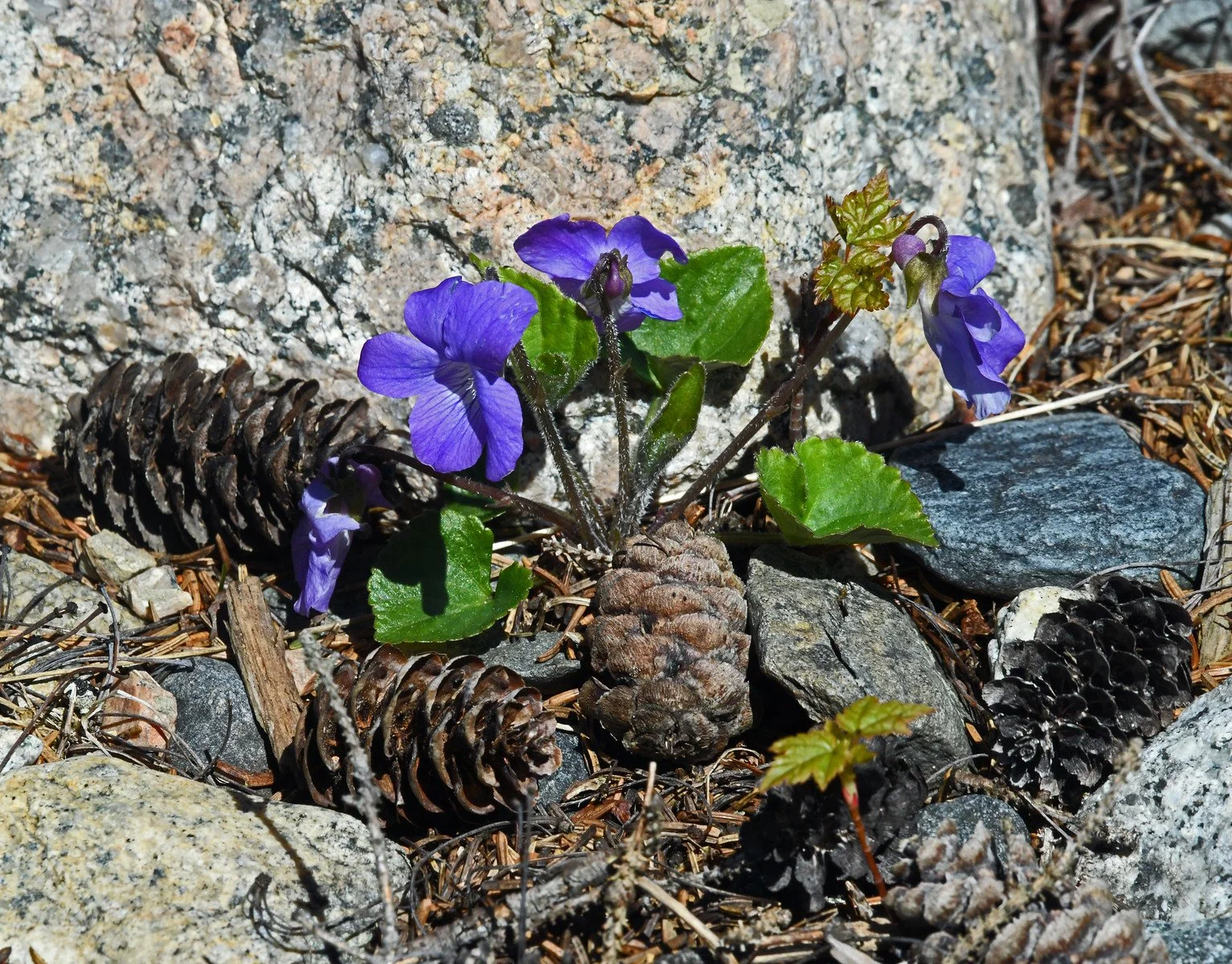
Here, I think, are some volunteer hookedspur (aka “dog”) violets that are so small they would be easy to overlook -- except for their bright purple glow among the riff-raff they like to hang out with. If they are hookedspurs, they’ll host the caterpillars of the many fritillary butterflies that we hope soon will be fluttering in Barbara’s garden. (Image taken in Brooklin, Maine, on May 8, 2026.)
The scenic route to and from Blue Hill, Maine, is on a winding road that has been given an uninteresting name that’s mostly the number 175; Route 175, that is. But don’t let that fool you.
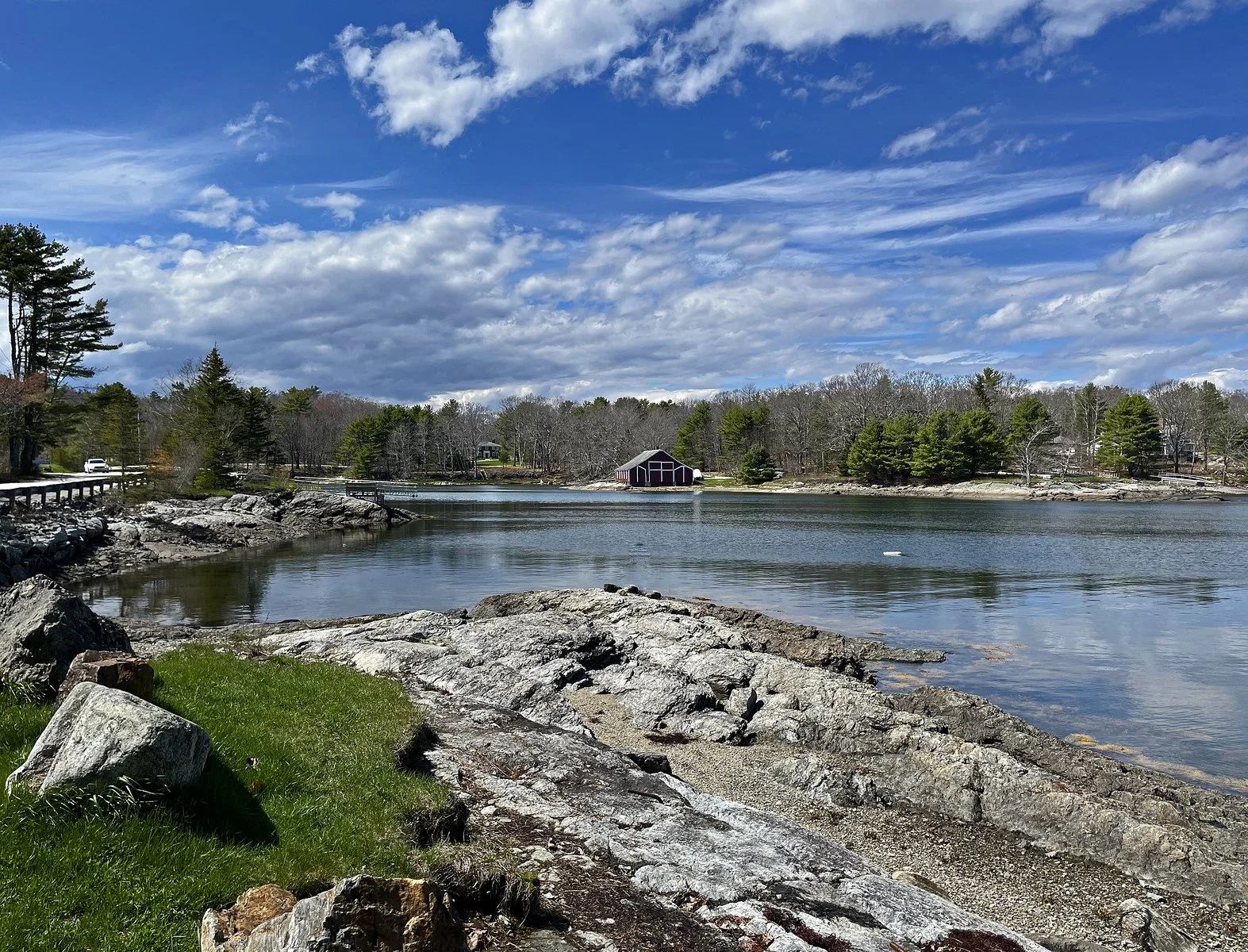
The road bridges over a reversing falls where tidal white water rushes in and out of Salt Pond. It traverses a causeway that sometimes is about a foot above that Pond. And, it twists and turns around the rockbound shores of Conary Cove, which hosts the old red boat house that you see here.
It’s a road for all seasons with ever-changing performances of spring, summer, fall and winter; in sun, overcast, rain, snow and fog; at high, low, ebb and other attitudes of the waters of Blue Hill Bay, where there often are interesting boats and birds (and, rarely, a lost seal or two). At one time, the owner of the boat house even took off and landed in Conary Cove as travelers on the road watched.
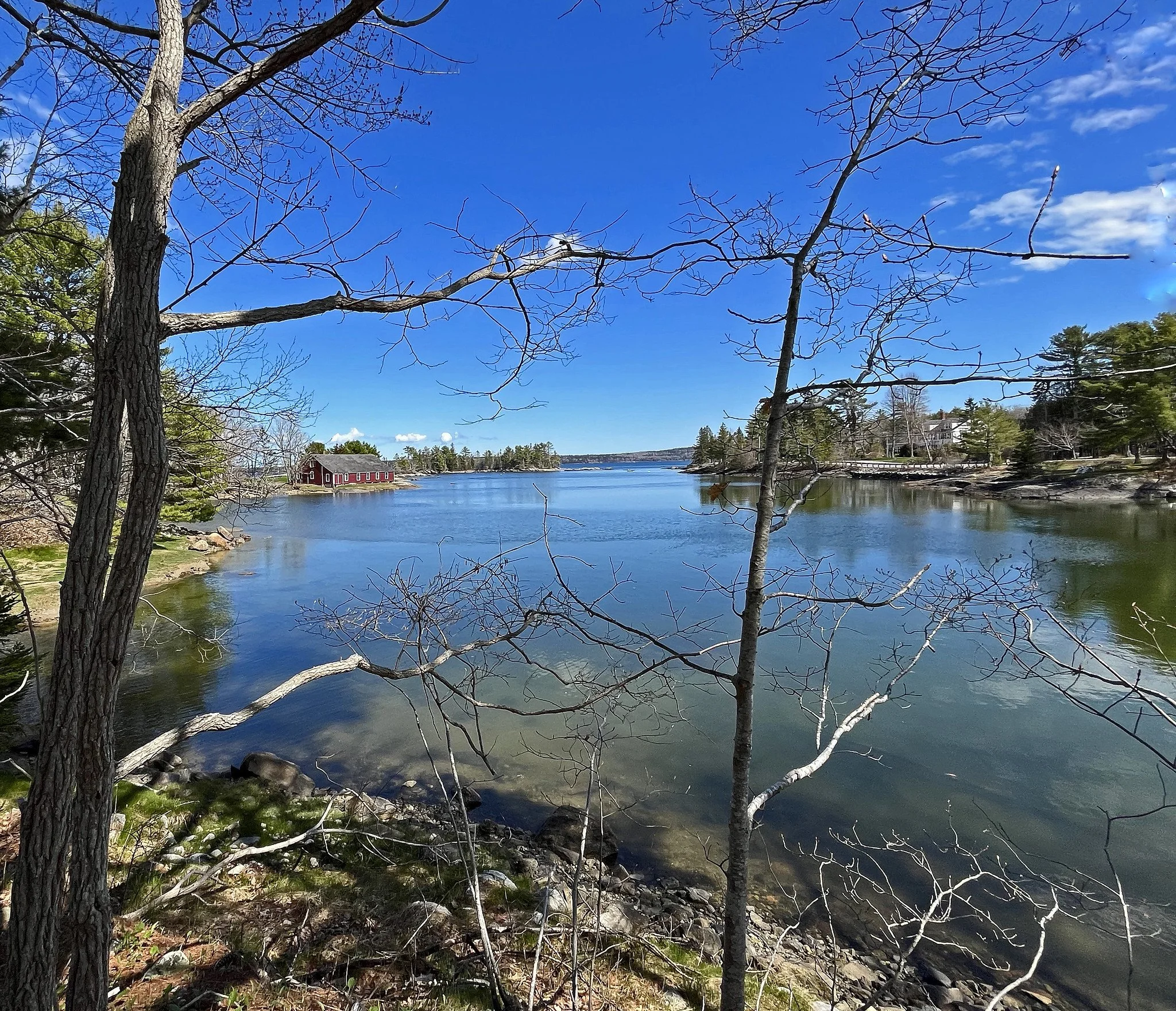
It’s a good place for motorists to forget the costs of the gas they’re using and their other passing problems. (Images taken in Blue Hill, Maine, on May 7, 2026.)
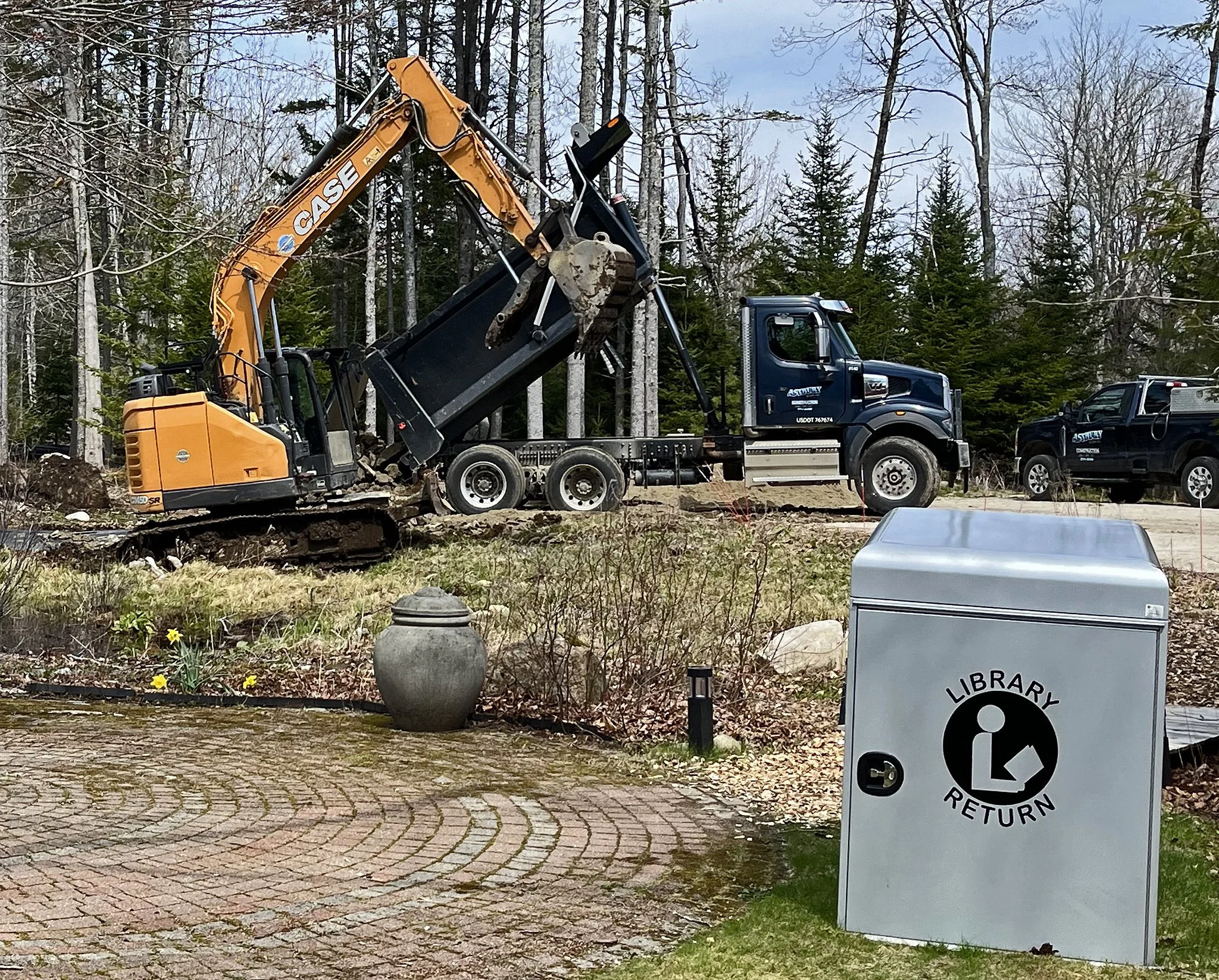
The traditional warnings about keeping quiet around libraries don’t apply these days to Brooklin’s Friend Memorial Public Library. As you see, heavy machinery is busy excavating a foundation for another expansion and revitalization of our Library.
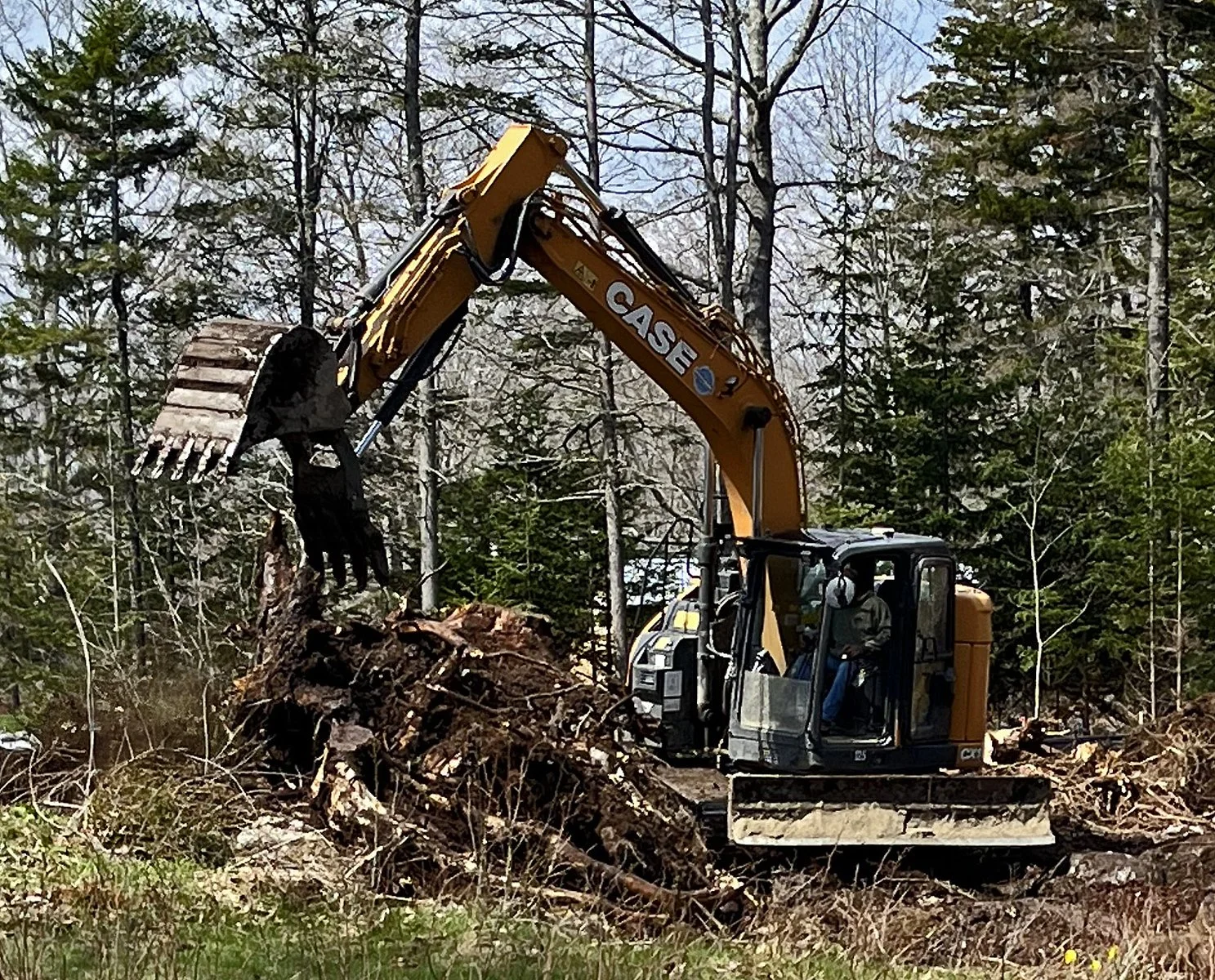
Libraries have been important community centers in New England for centuries and the FMPL is no exception. A small library was located in Brooklin during the 19th century. It was enlarged primarily through efforts of summer residents in the 1890s. The current building was constructed in 1912 and funded primarily by Leslie, Robert and Victor Friend, who ran a successful baked bean business.
New Yorker editor Katherin Sargent White and her author husband, E.B. White, were among Brooklin residents who were instrumental in significantly improving the FMPL in 1940. The building was again expanded and renovated in 1998 and reportedly had some architectural work done in 2000.
It’s hoped that the current expansion will be completed by early 2027, when there again will be all quiet on the library front. (Images taken in Brooklin, Maine, on May 4, 2026.)
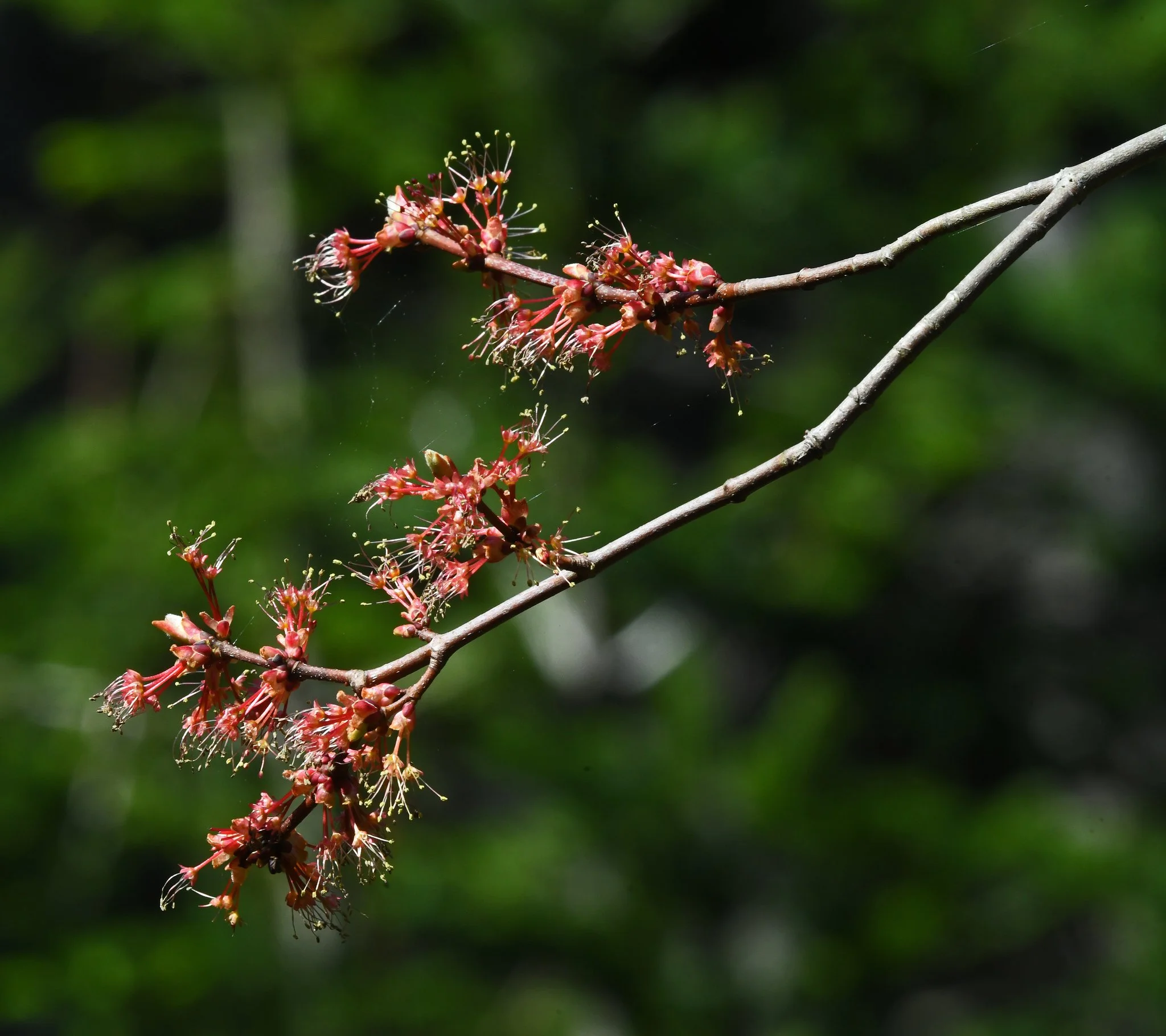
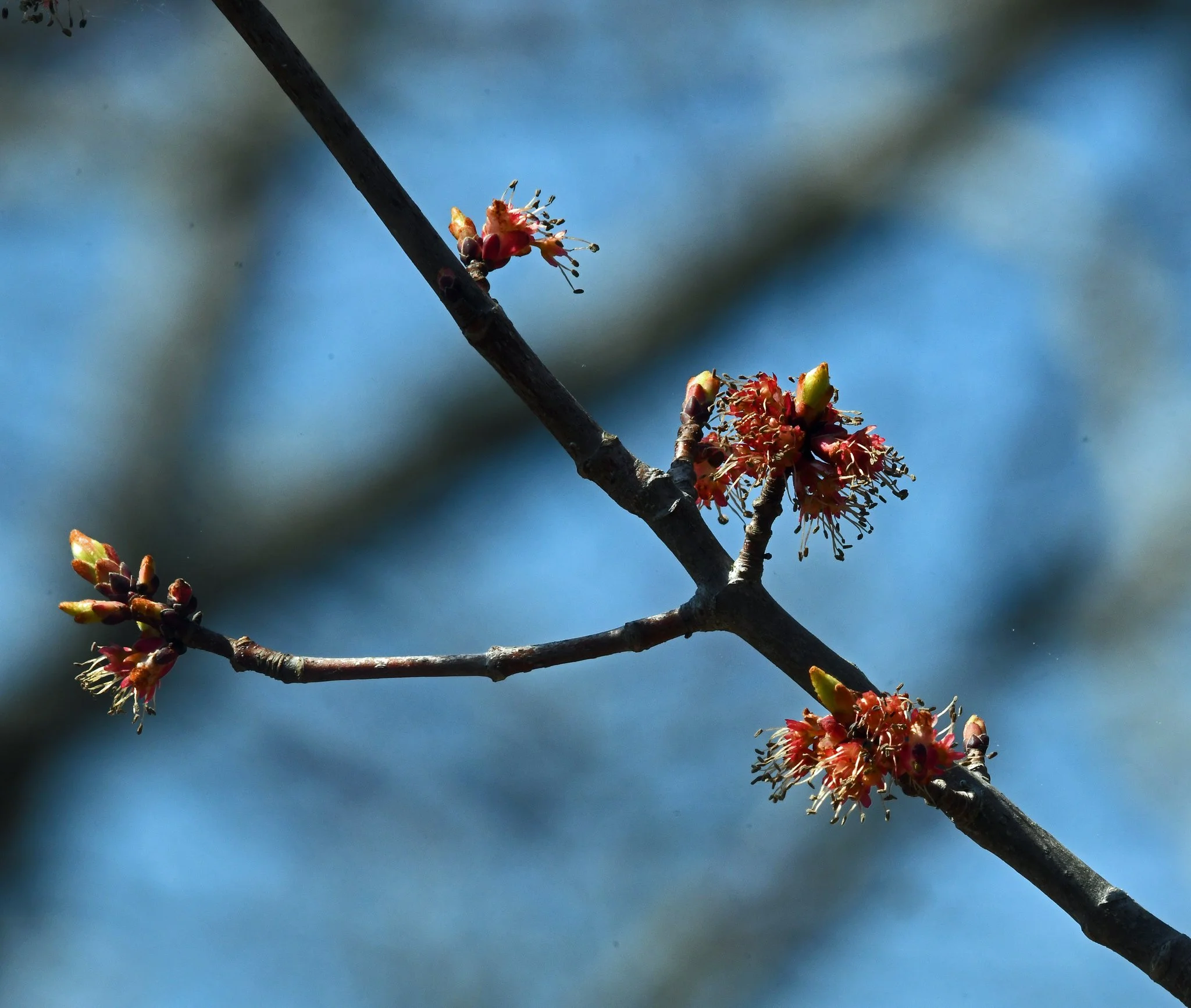
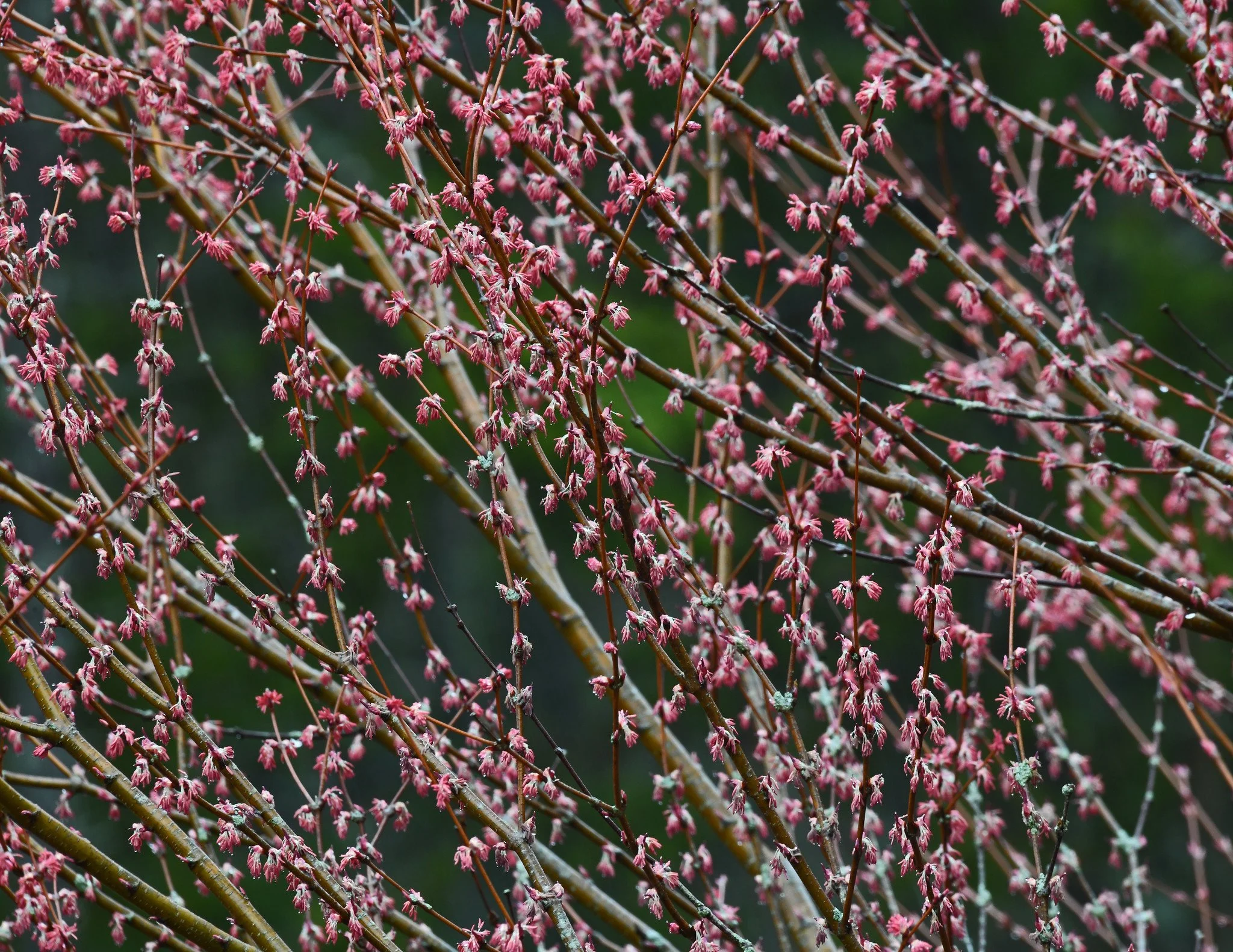
Our red maple trees are blooming before their own leaves appear, as usual. Here you see two images of the male red maple flowers:
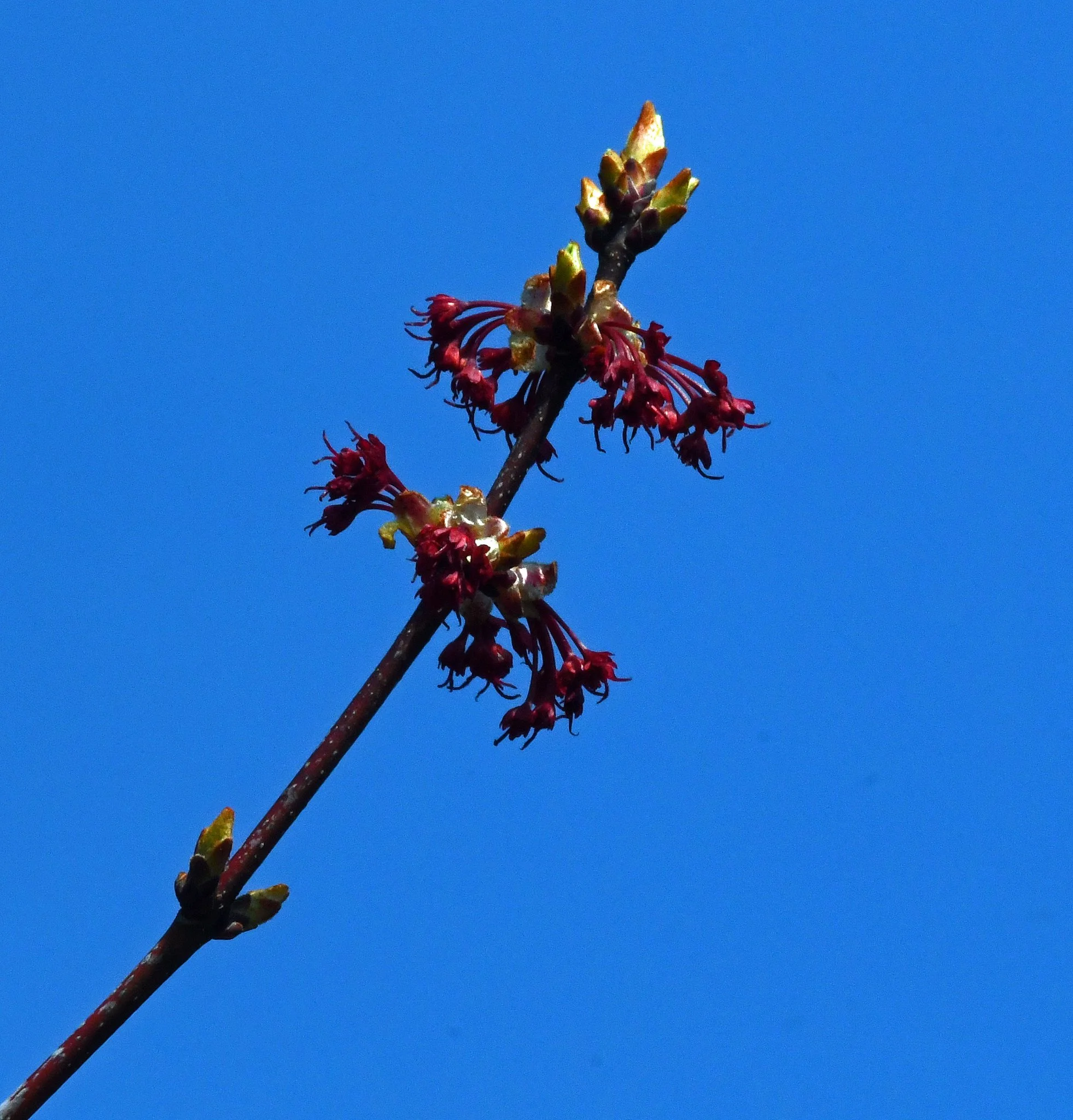
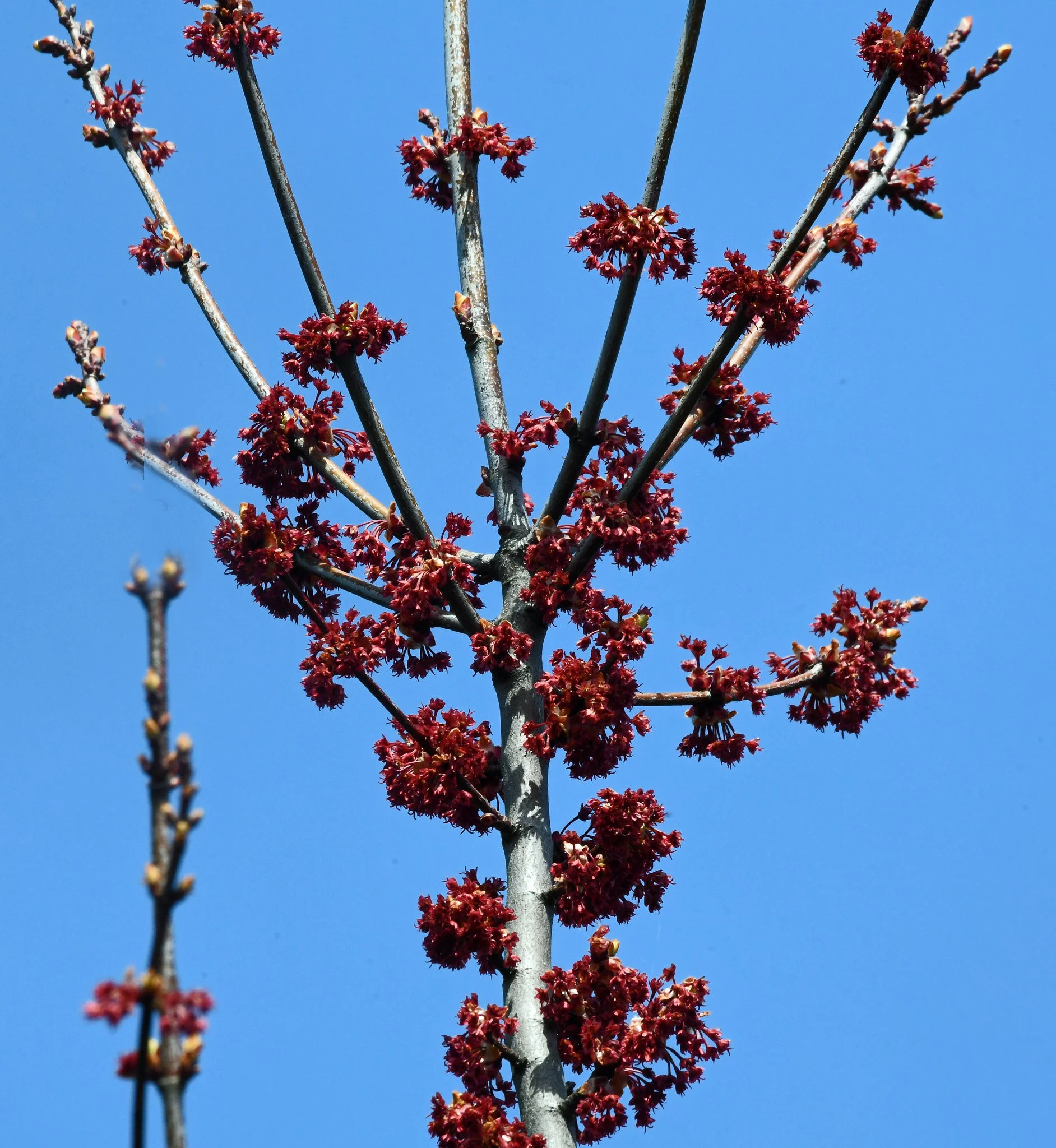
Below, you’ll see two images of the tree’s female flowers:
Red maples are -- don’t try to pronounce it -- "polygamo-dioecious." That merely means that some red maple trees have only male flowers, some only female flowers, and some both male and female flowers.
The male flowers have long anthers with beads of pollen at their ends; they look a bit like small pin cushions. The females have clusters of flowers with "Y-shaped" stigmas sticking out of them, a bit like a snake’s tongue. The females try to catch the pollen that is cast into the wind by the males.
(Images taken in Brooklin, Maine, on May 5, 2026.)
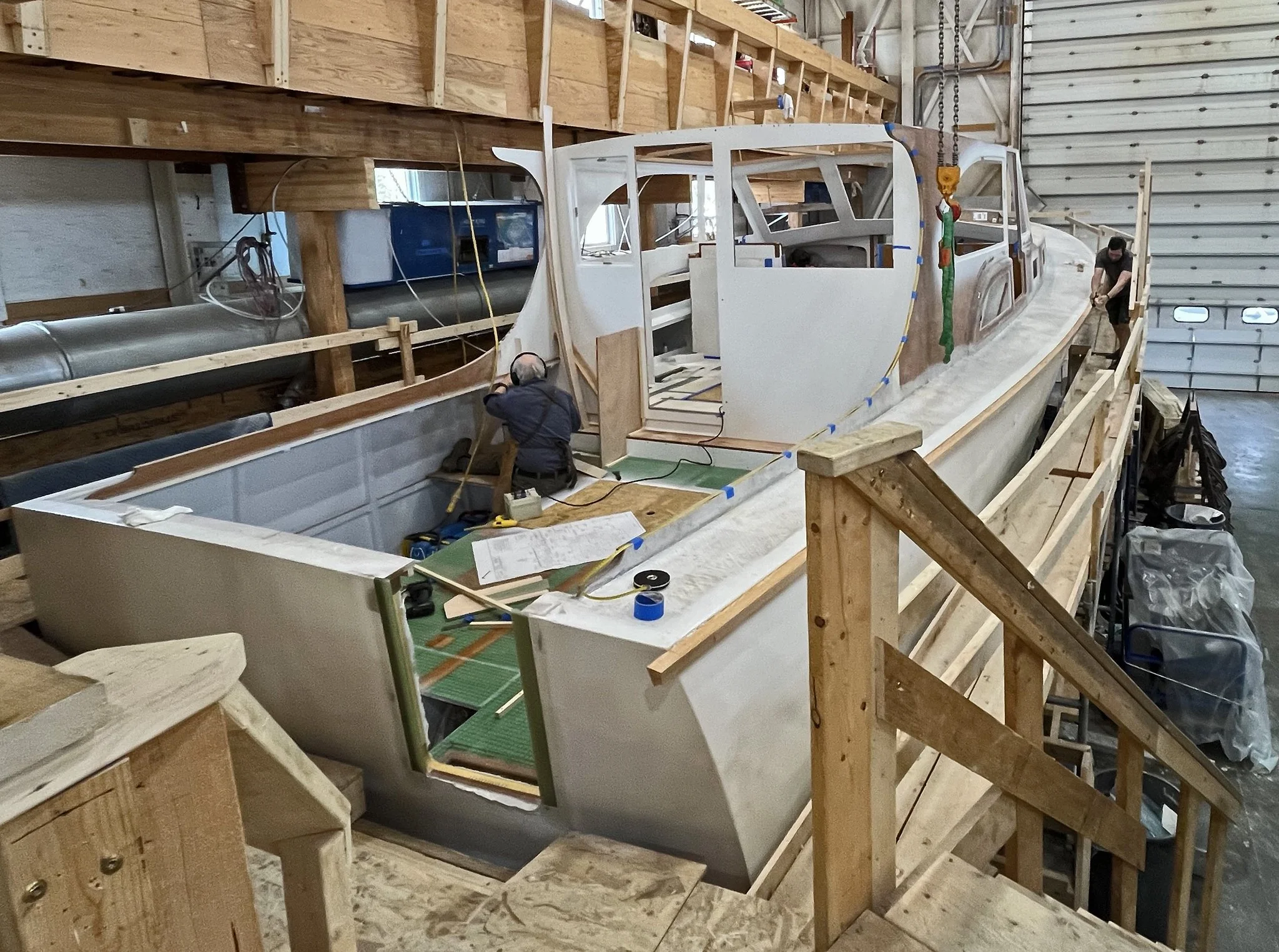
The power boat being constructed in Brooklin Boat Yard’s main shop is progressing nicely, as you see. She’s a BBY 47’ Express Cruiser designed by Will Sturdy that apparently is unnamed as of now. It looks like she’ll be finished this spring or early summer at the latest. Here’s BBY’s illustration of the expected finished vessel:
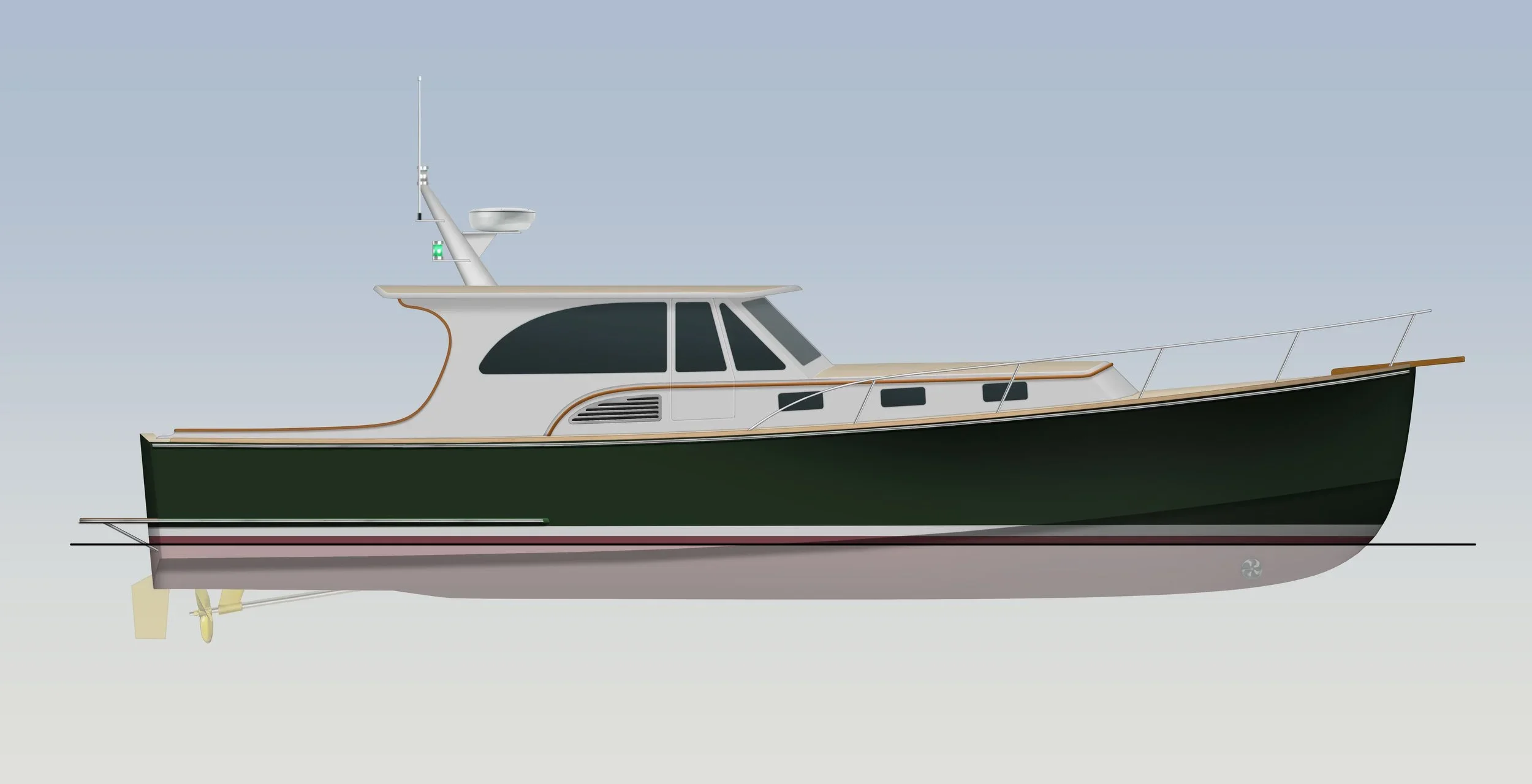
Some of her details found on the BBY website: “[W]e decided on a hull with a length of 47’ and beam of 14’ at the sheer. Generous hull flare and moderate overhang forward yields a bottom with a waterline aspect ratio of 3.7. Highly engineered wood-composite construction keeps weight low despite high safety factors on all scantlings and a full cruising outfit. “
“A single 850hp MAN i6 will give her a top speed in the low 30s and an efficient cruise in the mid to upper 20s. The propeller is tucked up into a carefully sculpted tunnel that reduces draft and maximizes propulsive efficiency. *** Typically, the owners will cruise just the two of them, but do like to entertain larger groups for day trips. We decided … that a second cabin would be a poor use of space. The result is a spacious arrangement that will be as comfortable for the two of them as for a dinner party of six. “
DYLAN, the 47+ Eggemogin racing sailboat that we’ve been following, has progressed to the BBY paint shop as of yesterday, whe she was being sanded:
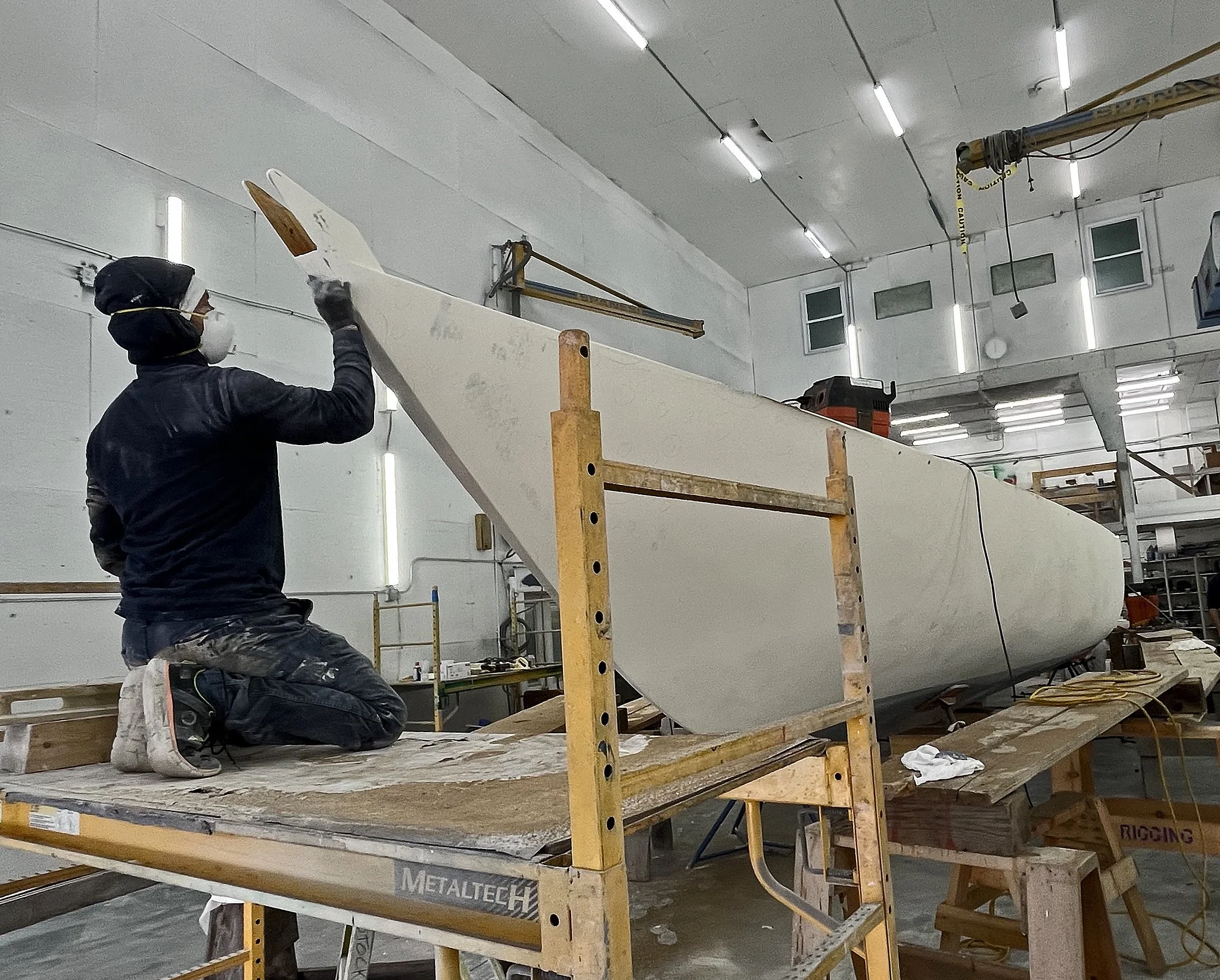
(Photograph taken in Brooklin, Maine, on May 4, 2026.)
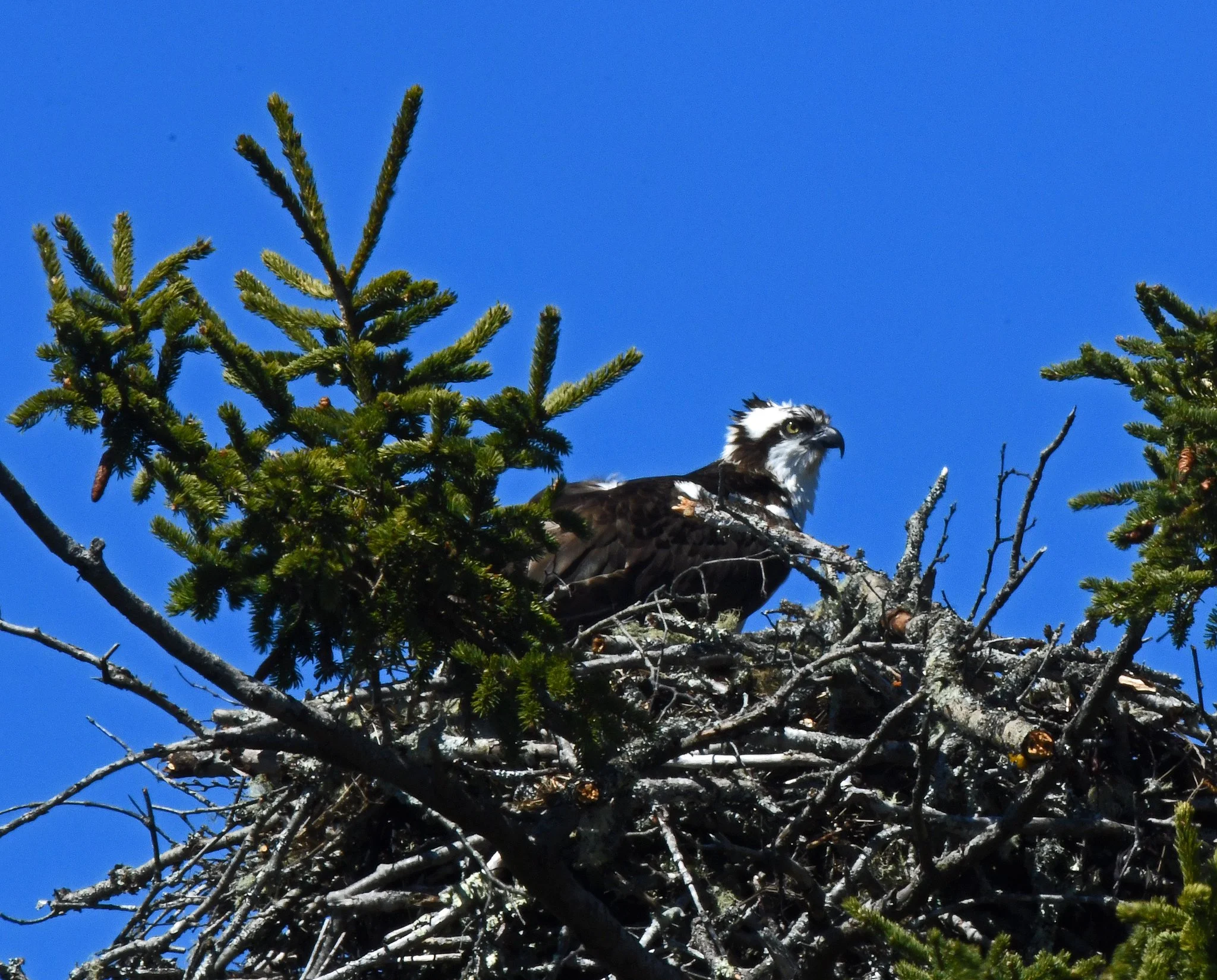
There was literally high drama at the osprey nest last week. Harriet was waiting calmly for Ozzie to return with lunch and I thought I saw him appear high on the horizon. But, Harriet didn’t utter her usual welcoming chirps as that osprey approached, She became agitated.
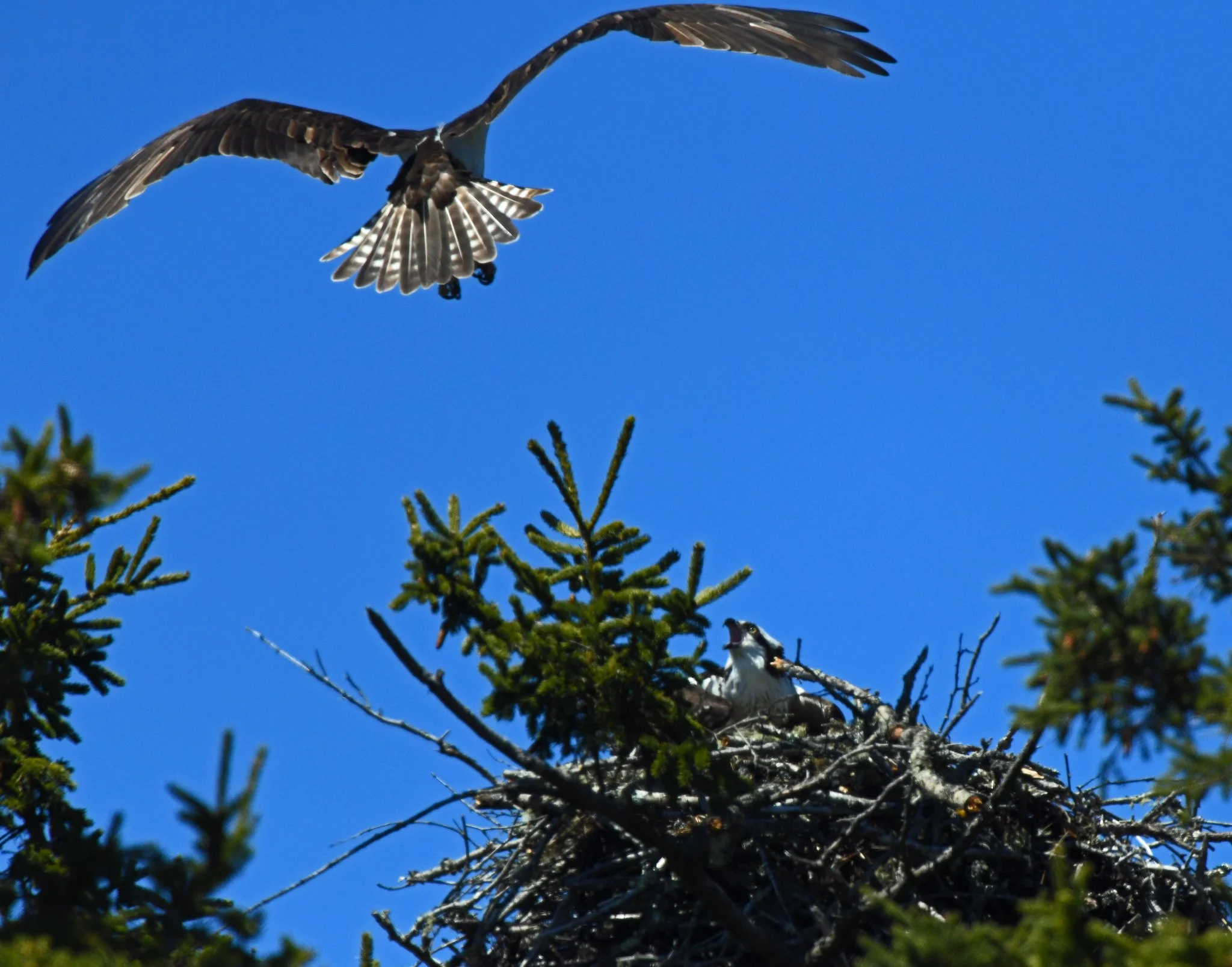
The incoming osprey apparently was one of our rogue bachelor males looking to take over prime coastal real estate by home invasion. Let’s call him Putin. (See the images here and in the Comment space.) Soon, Putin started a long, increasingly fast dive at the nest, while Harriet screamed bloody murder.
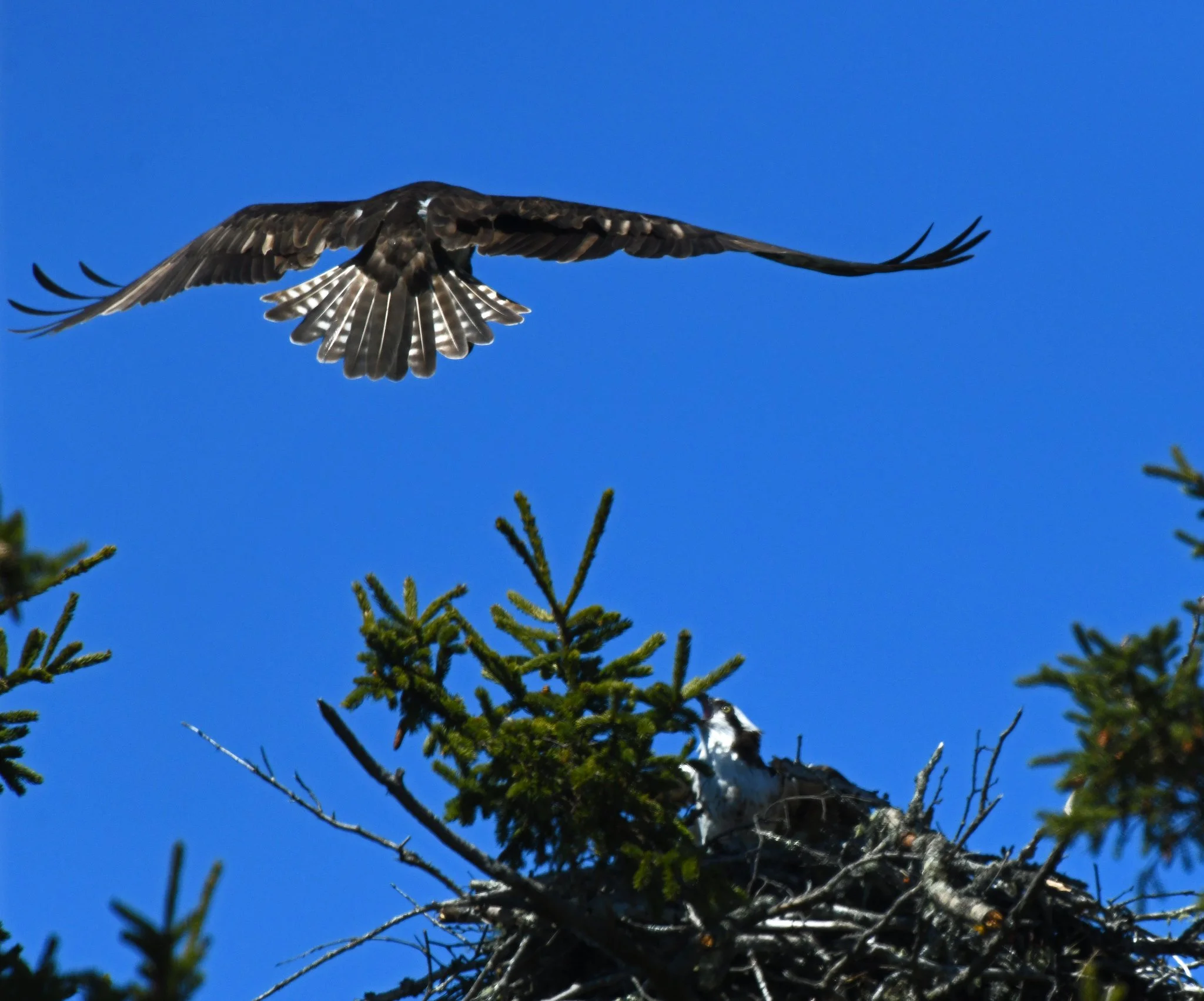
He strafed, Harriet ducked, and his talons missed her by about six inches as she screamed and snapped viciously at him. He didn’t try a second swoop and was gone by the time that Ozzie arrived a minute or so later.
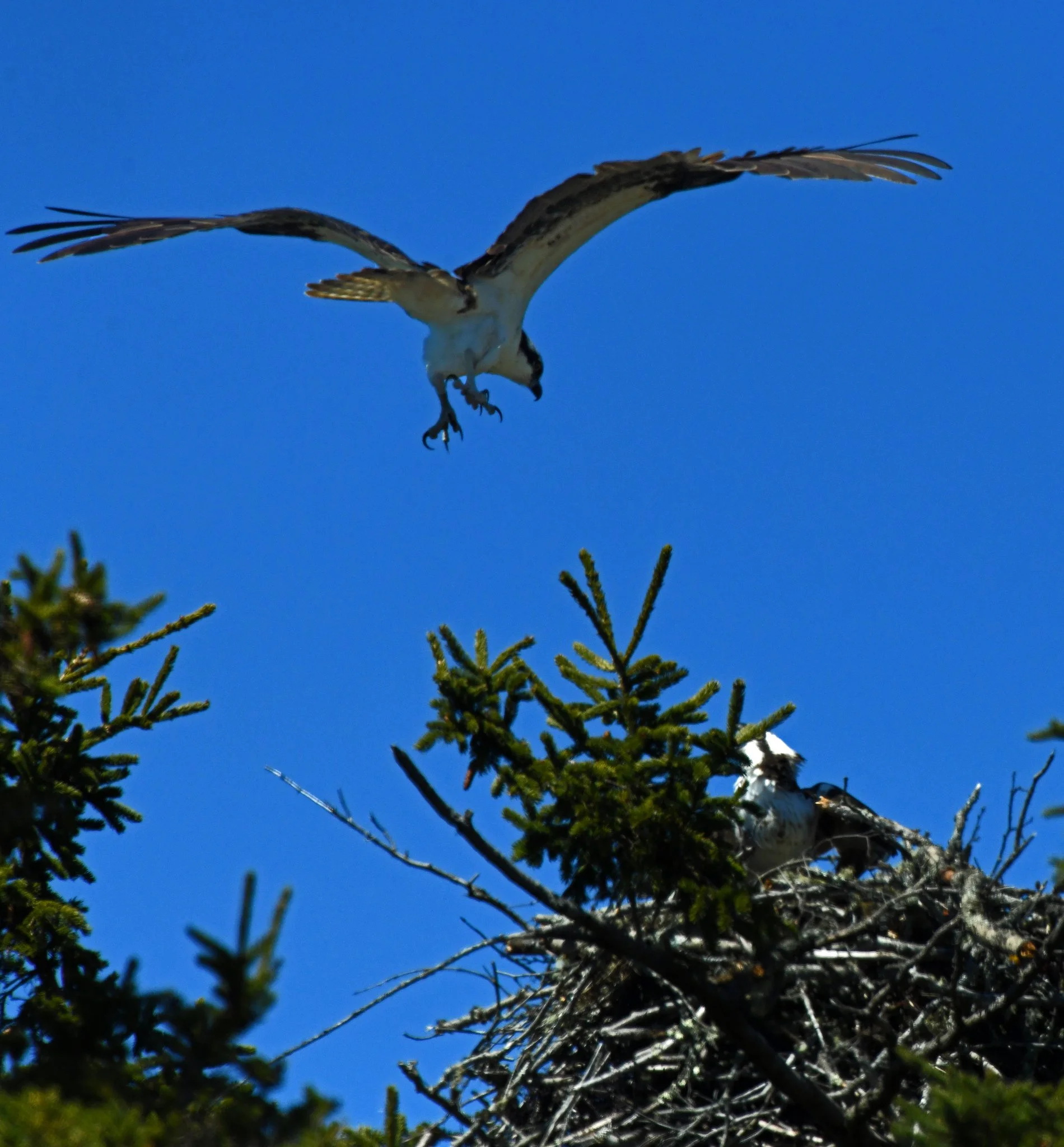
This is serious. Last year, Ozzie and another Putin had several fights over the nest that resulted in Ozzie being wounded, Putin losing at least his tail and maybe his life, and Harriet leaving the nest for parts unknown before laying any eggs.
There always has been osprey fratricide by rogue males. But recently, there also has been a reported increase in bald eagles invading and taking over osprey nests along the Maine coast. This is becoming concerning. Among raptors, there is no golden rule and they can be almost as stupid as humans when it comes to attacking their fellow-species. (Images taken in Brooklin, Maine, on May 1, 2026.)
It occurs to me that getting to know more about common garter snakes might be a good way to treat snake phobias. This fellow shown here is the Eastern subspecies; there also is a Maritime subspecies in Maine, which is darker and often lacks that yellow stripe.
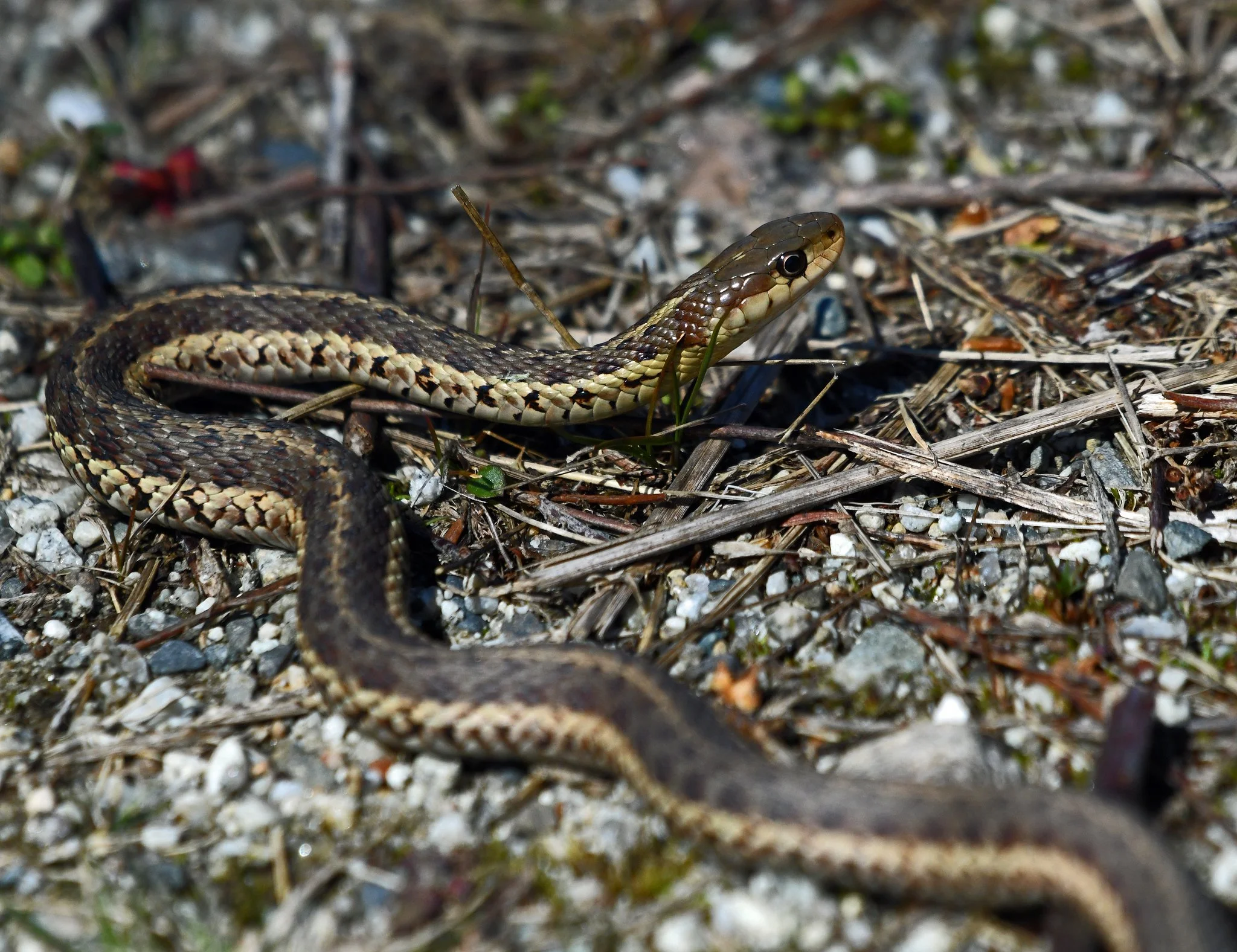
Garter snakes are bright-eyed; seem to have a slight smile on their faces; aren’t harmful to humans and can help get rid of nasty things in the garden. They’re also fun to watch when they disappear amazingly fast by repeatedly coiling into an S and uncoiling. (One report says garter snakes have been clocked at 4 miles-per-hour.) But, of course, just that slithering can give some people the creeps.
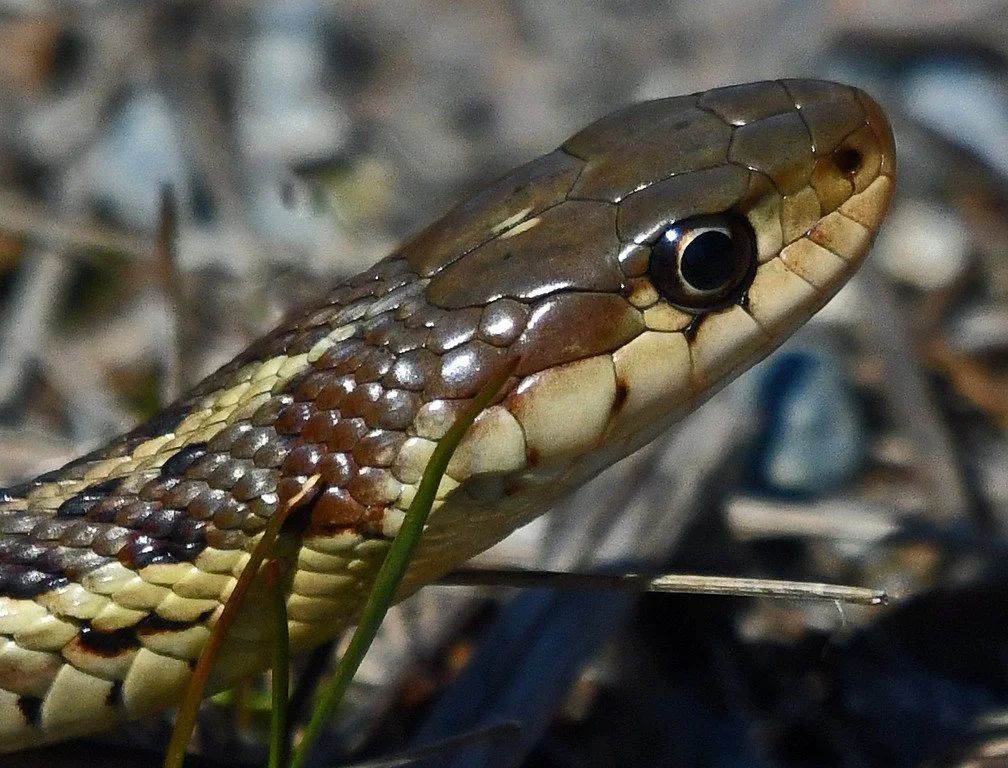
Reportedly, at its most extreme, snake fear develops into ophidiophobia, an irrational and harmful condition that can cause panic attacks at the mere thought of a snake. Others, perhaps a majority of western hemisphere people, just have an inexplicable aversion to snakes. (And maybe to spiders, but that’s a slightly different story.)
The research suggests that many humans fear snakes due to a combination of evolved survival instincts, cultural conditioning and the snakes’ non-mammalian habits, including slithering and rearing up and striking at those the snake, itself, fears.
Our earliest ancestors apparently learned the hard way that some snakes could be deadly and that it often was difficult to distinguish between the killing kind and the kindly ones. Practicality dictated that it was safest to avoid all of them in those days (unless you were starving).
This avoidance response allegedly created a fear instinct that may have become virtually “hard-wired” in many primate descendants. As societies developed, religious and cultural portrayals of snakes as embodiments of evil, danger and damnation reinforced the aversion.
But, take another look at this amazing fellow who was slithering out of fear as fast as he could to get away from me. Do you really think he’s destined to harm us or be the devil’s messenger?
I don’t suggest that you try to pick up the next garter snake you stumble over. (If you did, you’d likely get harmlessly bitten and smeared with an awful-smelling musk discharge.) My thought is maybe you could try not to worry about yourself when you see one. You and that snake have far more important things to worry about.
(Images taken in Brooklin, Maine, on May 1, 2026; sex assumed.)
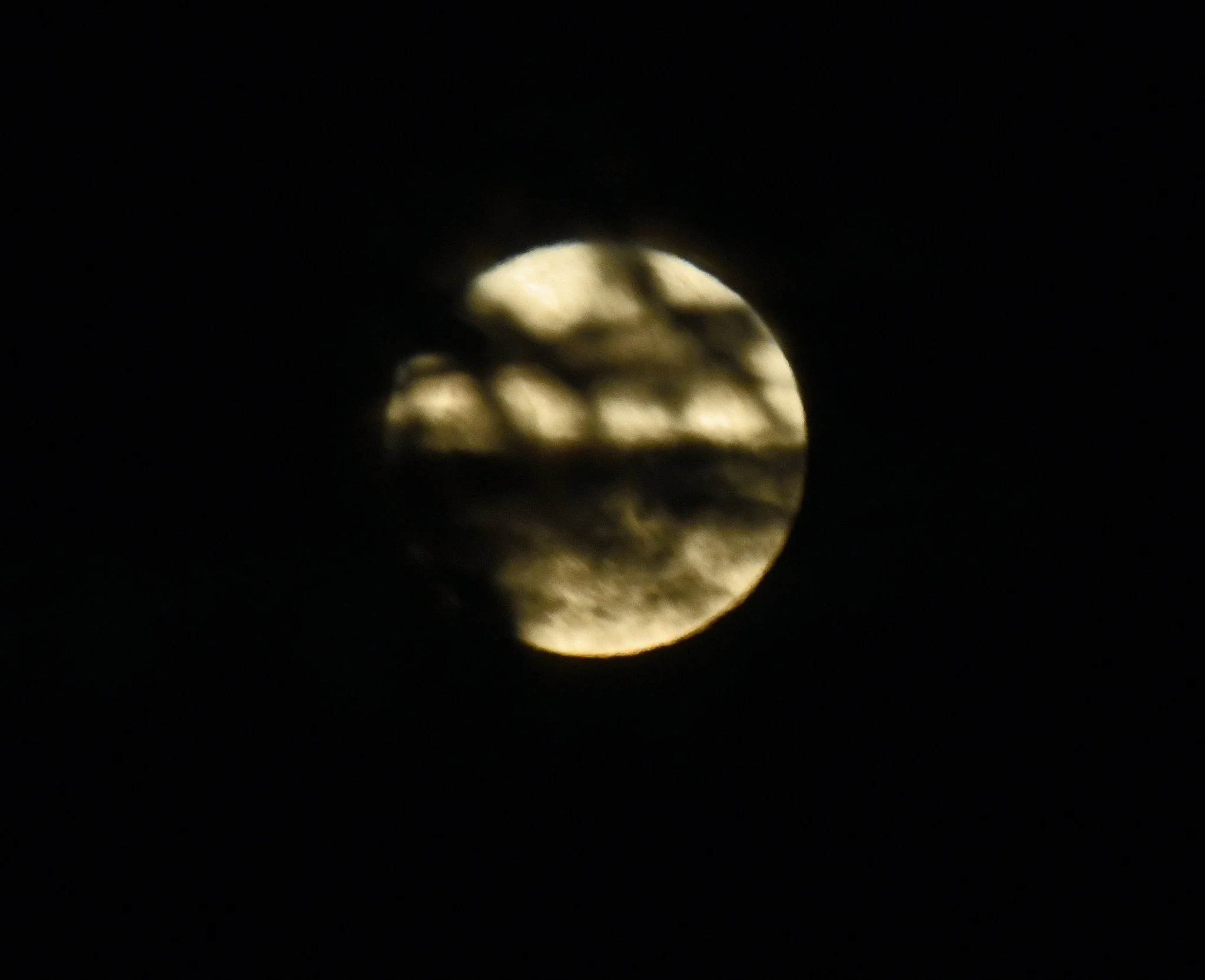
Above, you see last night’s full moon rising behind a spruce ridge. Bdelow, you’ll see it riding high above Great Cove. This May full moon is known traditionally as the Flower Moon, a name used by the Algonquin people because it rises when early blooms are appearing.
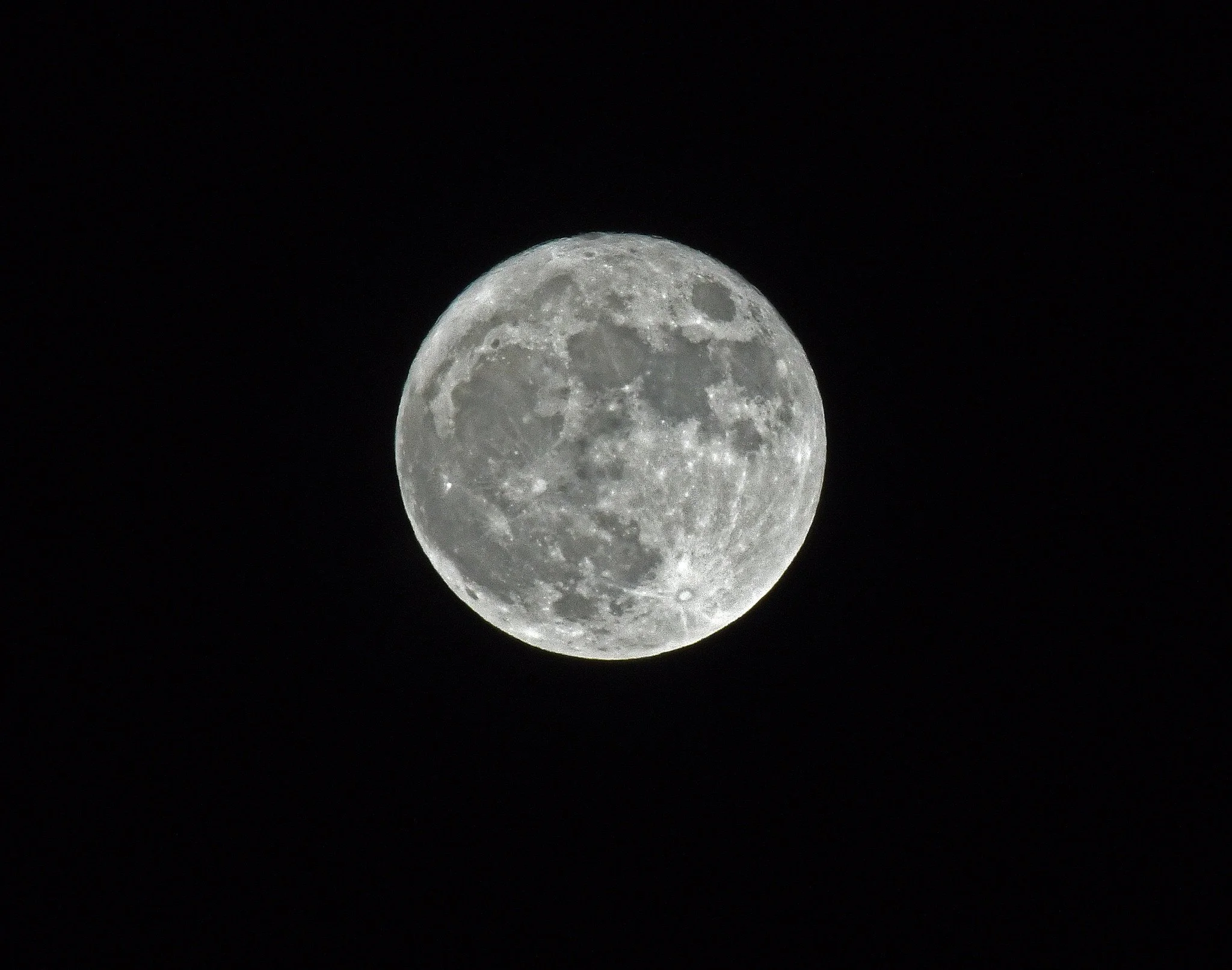
European colonists here reportedly also called it the Milk Moon and Mother’s Moon because it rises when the cows were taken to summer pastures, which was also the time of spring fertility.
This 2026 May moon is special for two reasons. First, it’s a micromoon (or “apogee moon”) because it is at its farthest distance from Earth (almost 250,000 miles). Second, it’s part of an uncommon double-ender as far as full moons go: There will be a second May full (“blue”) moon on May 31. (Images taken from Brooklin, Maine, on May 1, 2026.)
April of 2026 here on the Down East Coast of Maine started off by chilling us with below-average temperatures, which we didn’t need. It ended by showering us with above-average precipitation, which we did need. In between, there was the slow, sometimes dreary, sometimes beautiful, always interesting overture to spring.
As usual, we begin these Postcards with the four iconic scenes that we monitor for local records — the view from Brooklin of Mount Desert Island; the view of the summer house on Harbor Island in Brooklin; the long view of Conary Cove in Blue Hill, and two views of the near-mountain called Blue Hill:
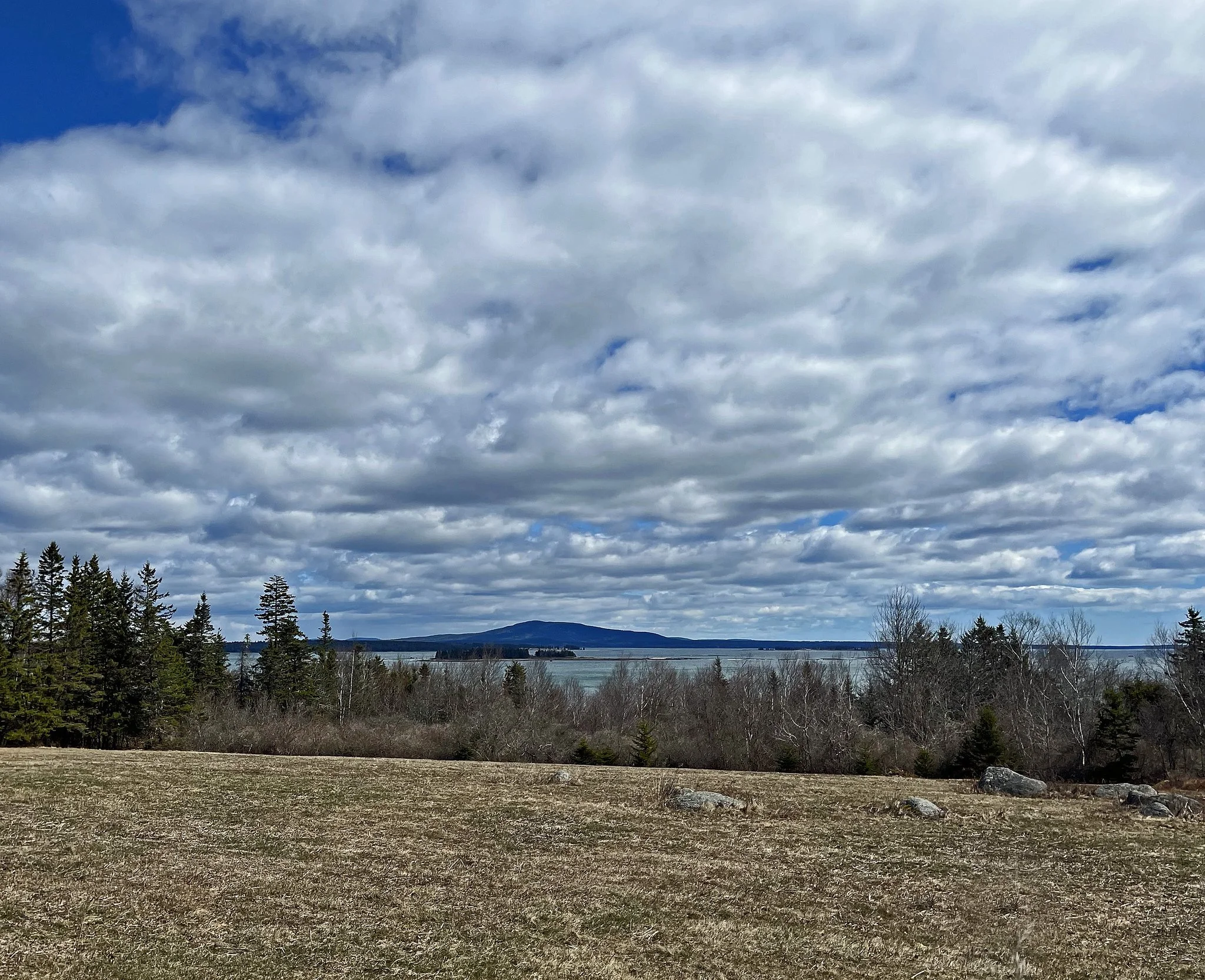
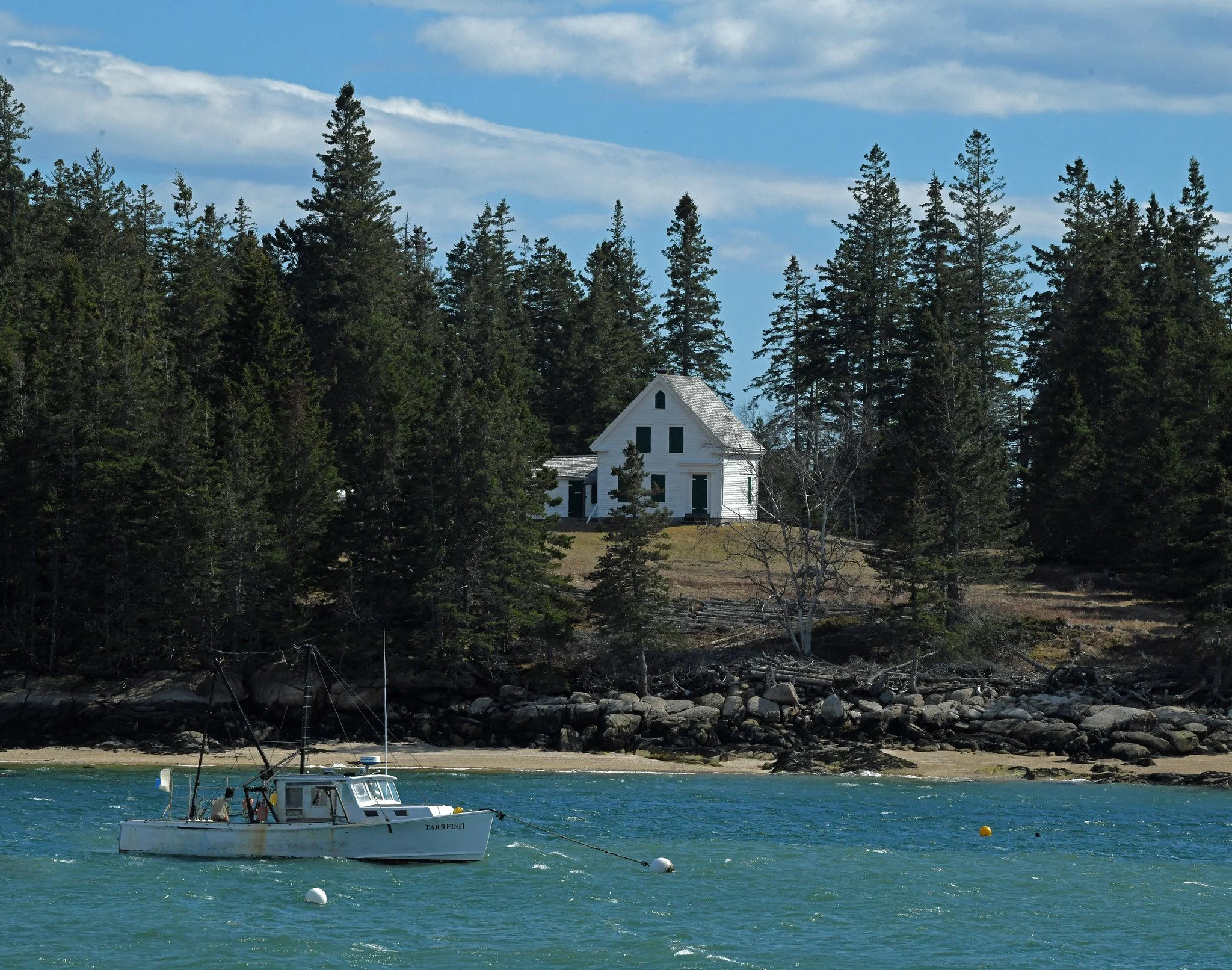
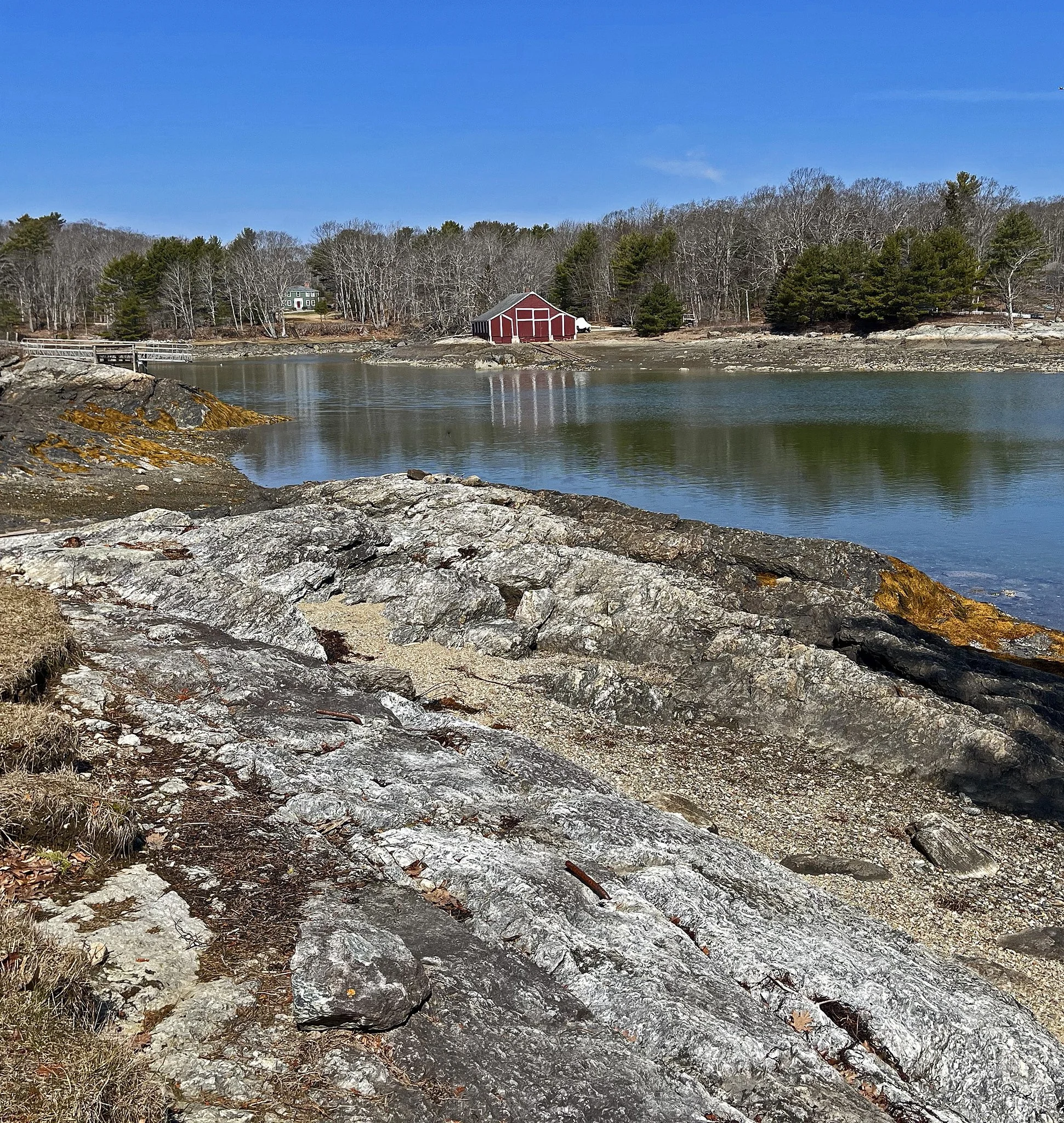
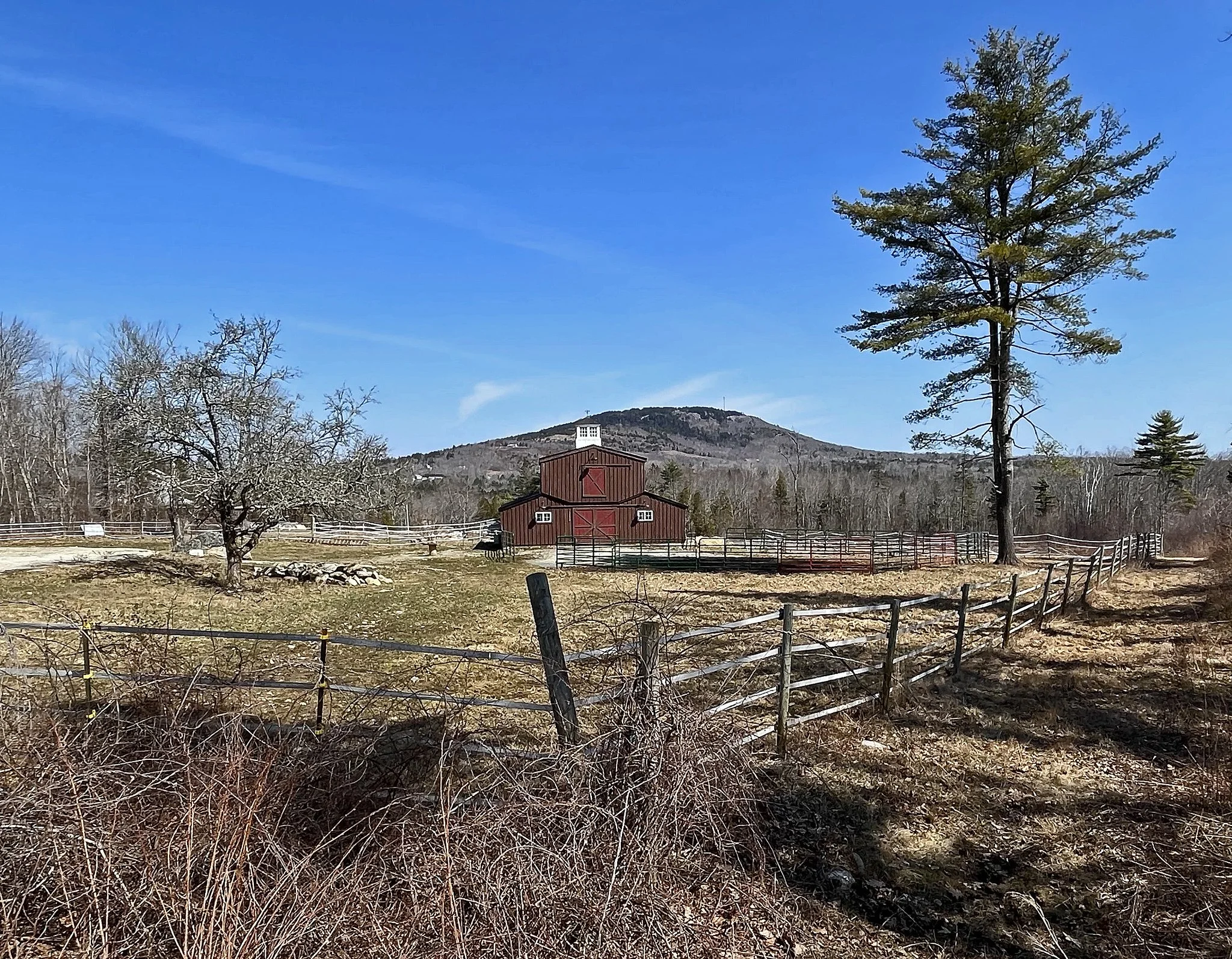
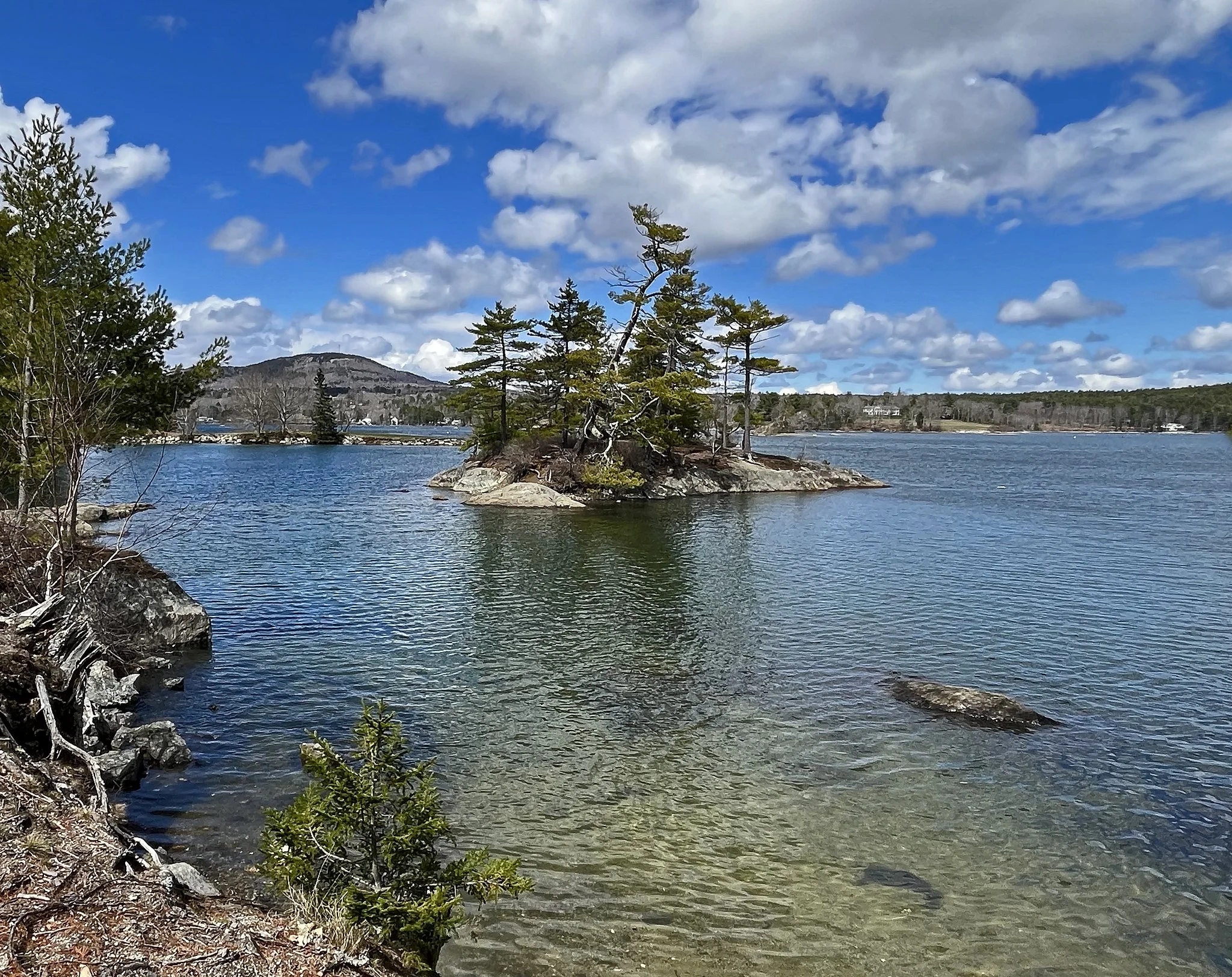
April’s only snow was a sprinkle during its first week that powdered the fields and disappeared after the sun came riding onto the scene. The April woods, although a bit dry at times, remained easy to roam all month.
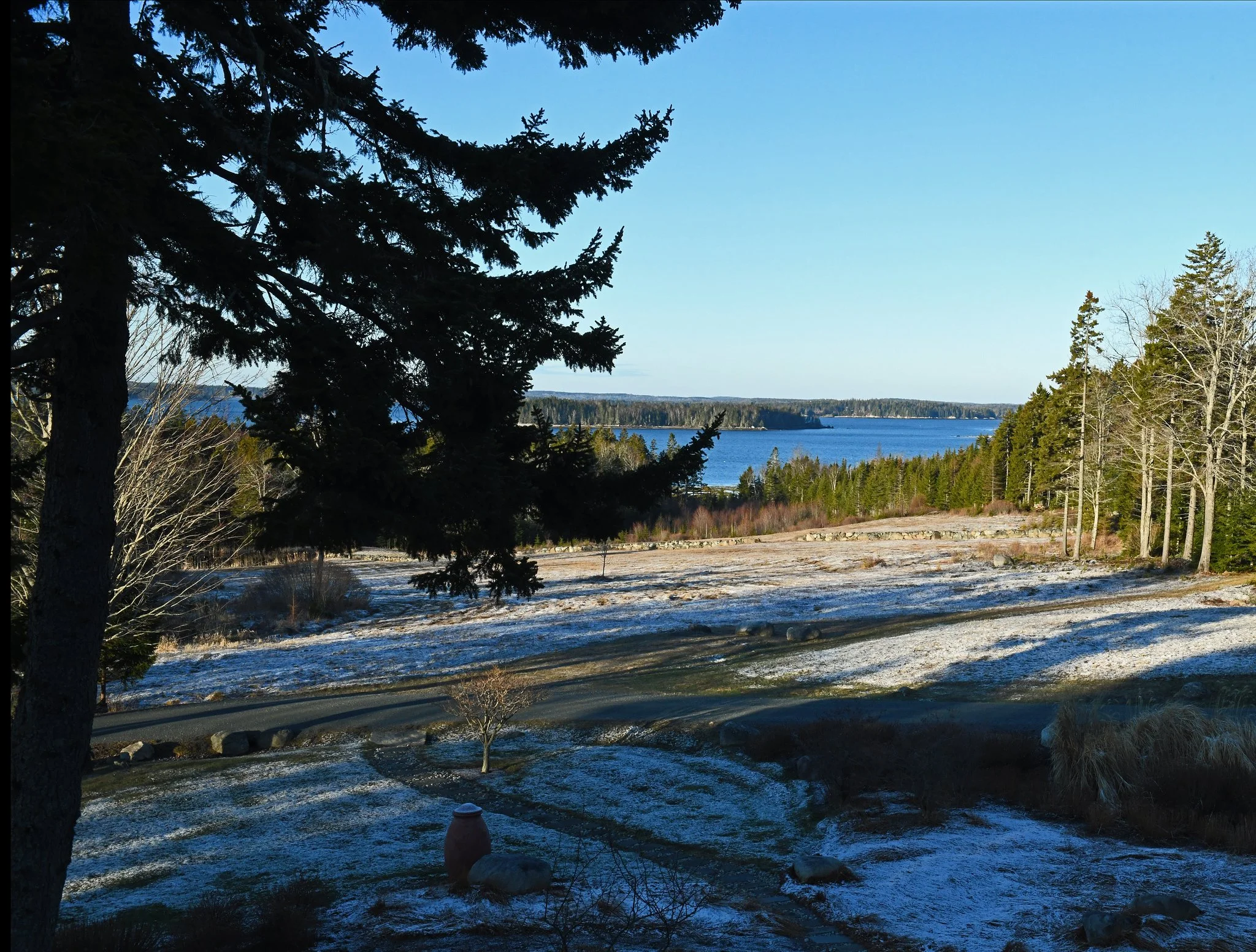
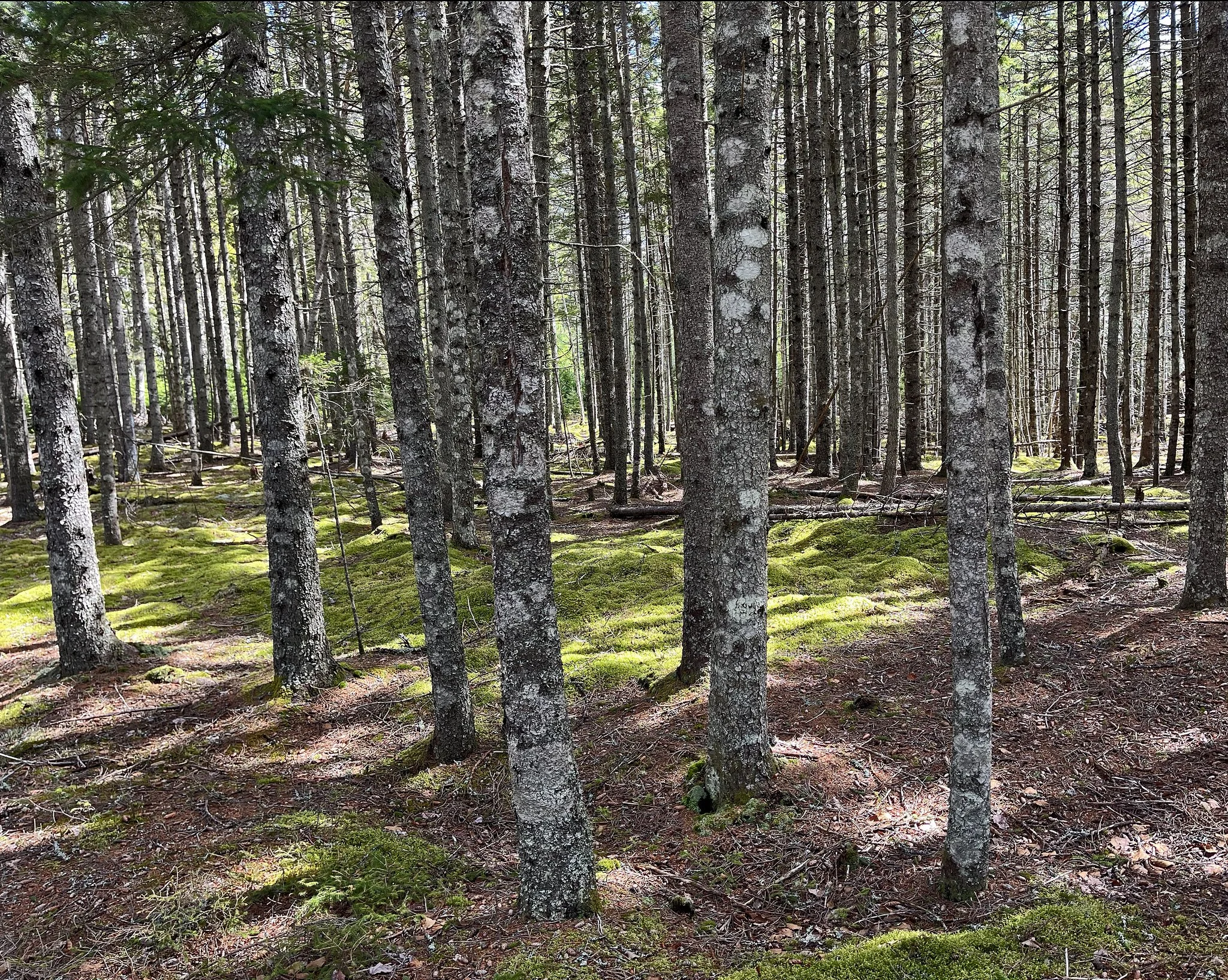
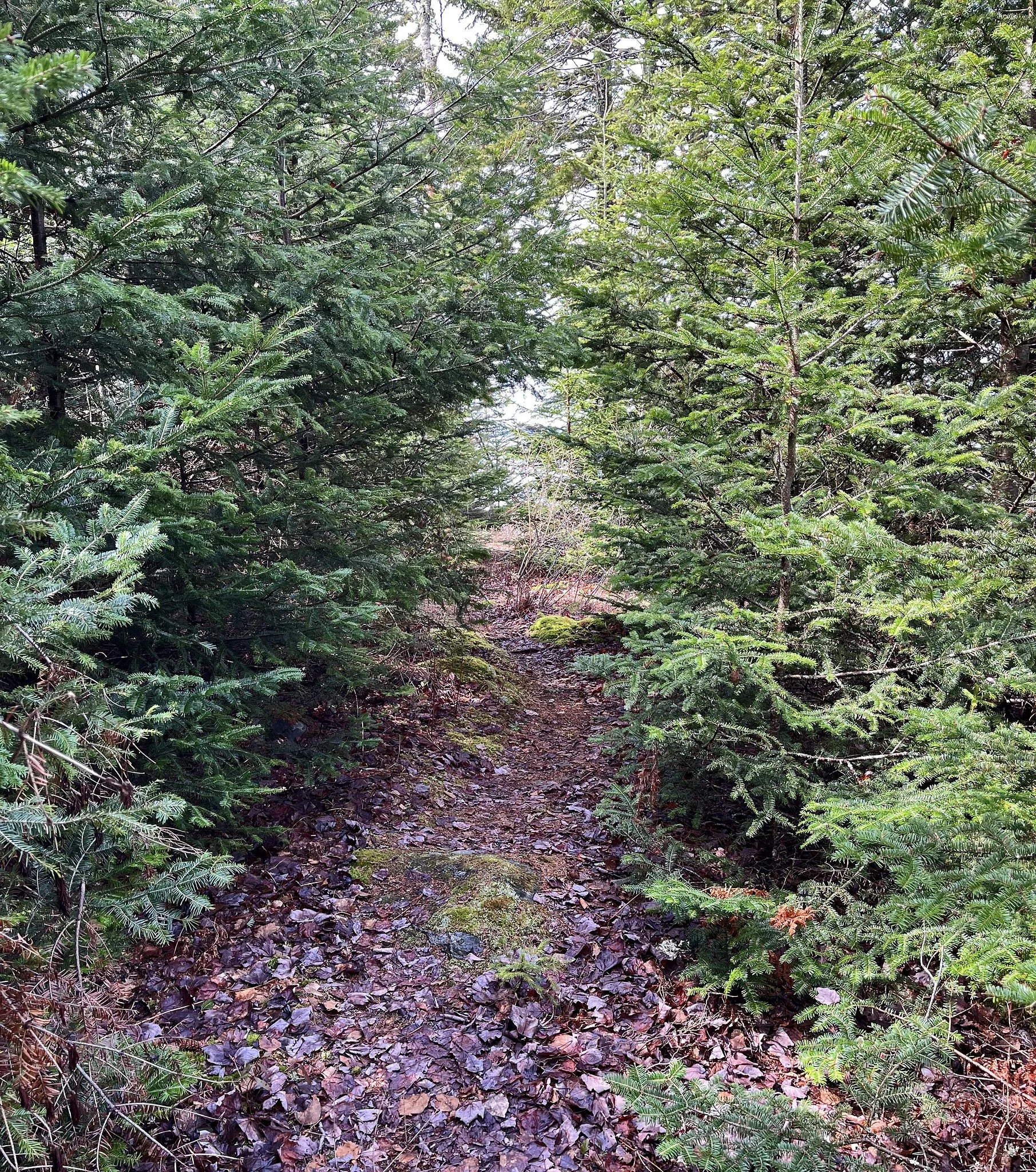
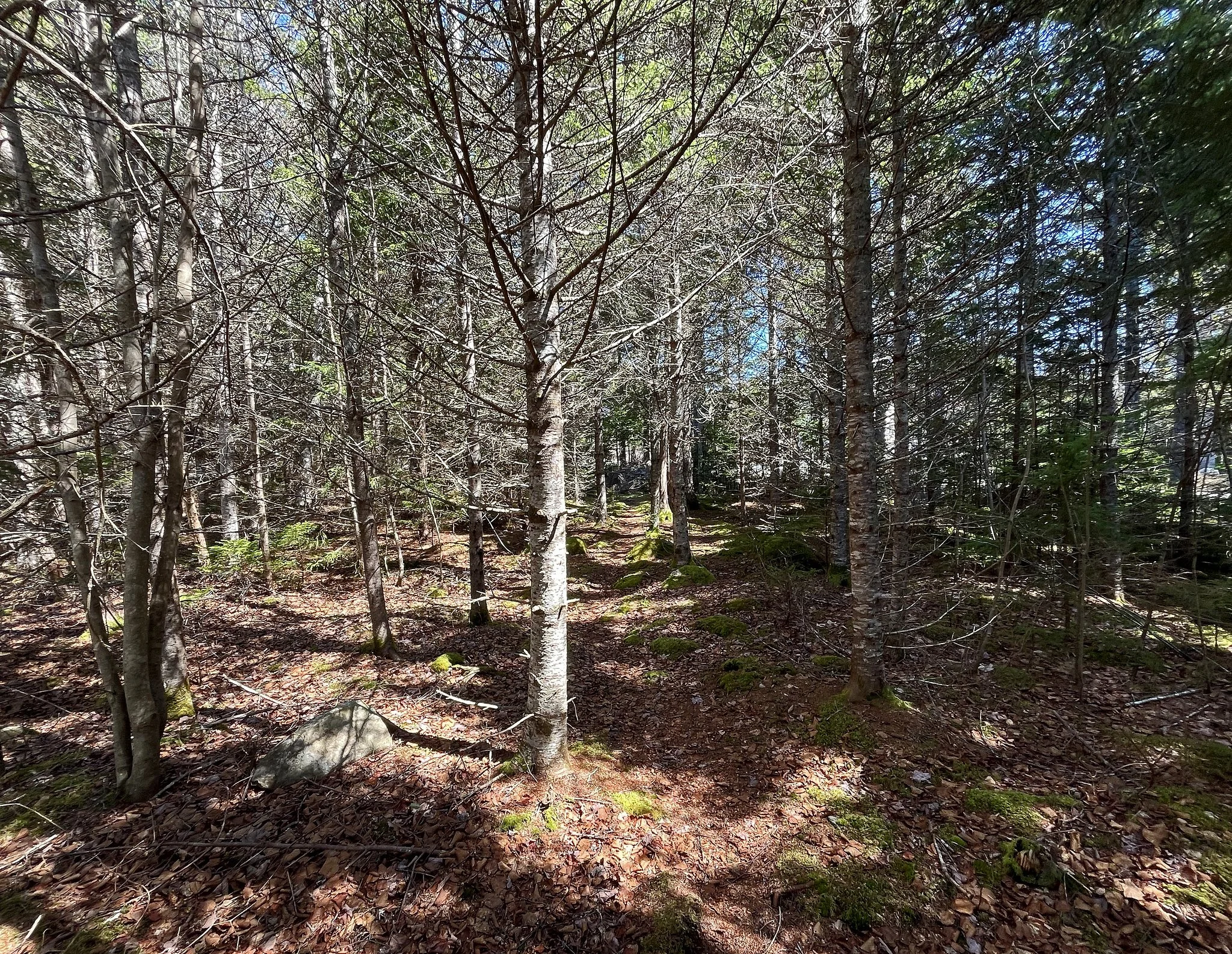
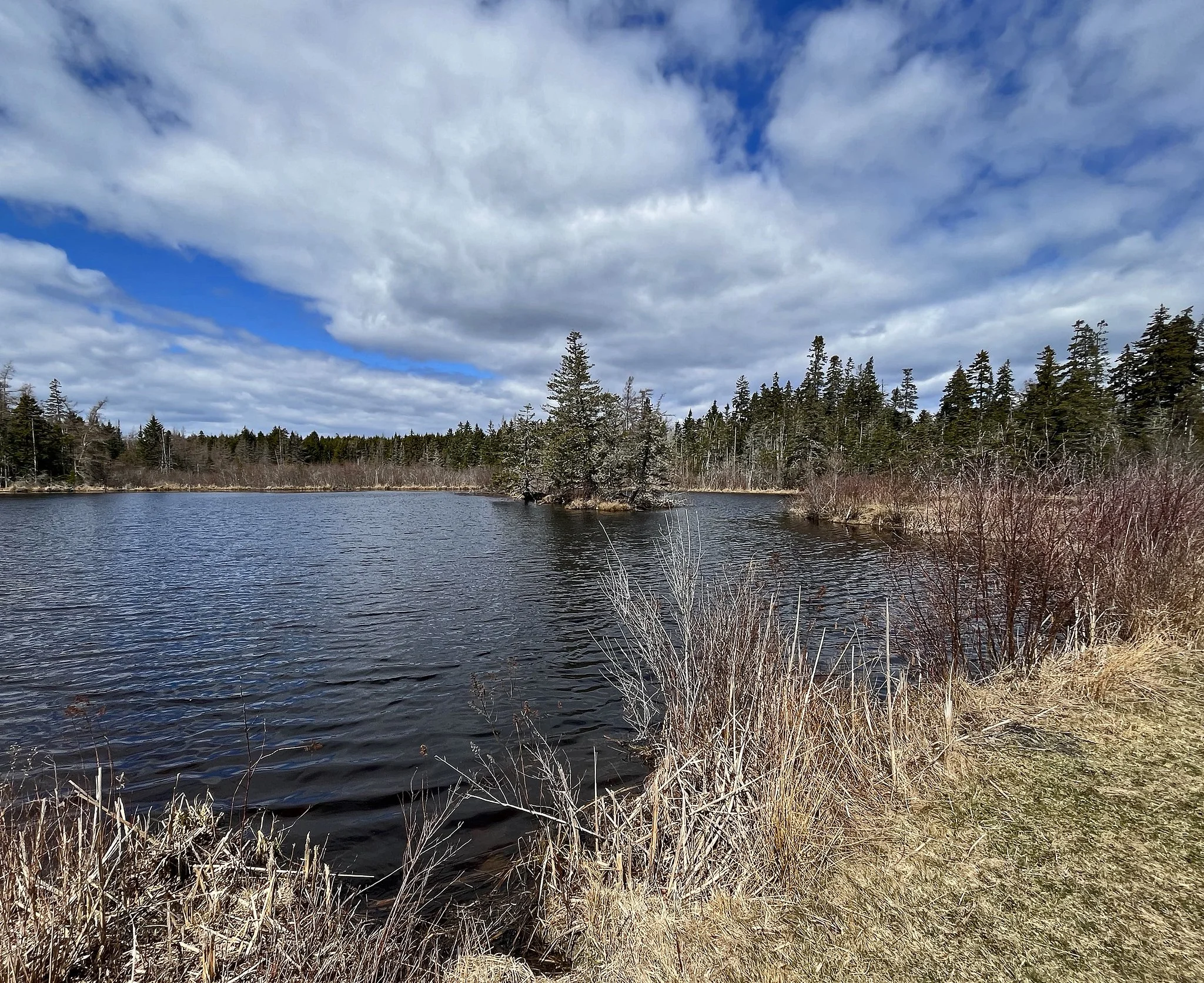
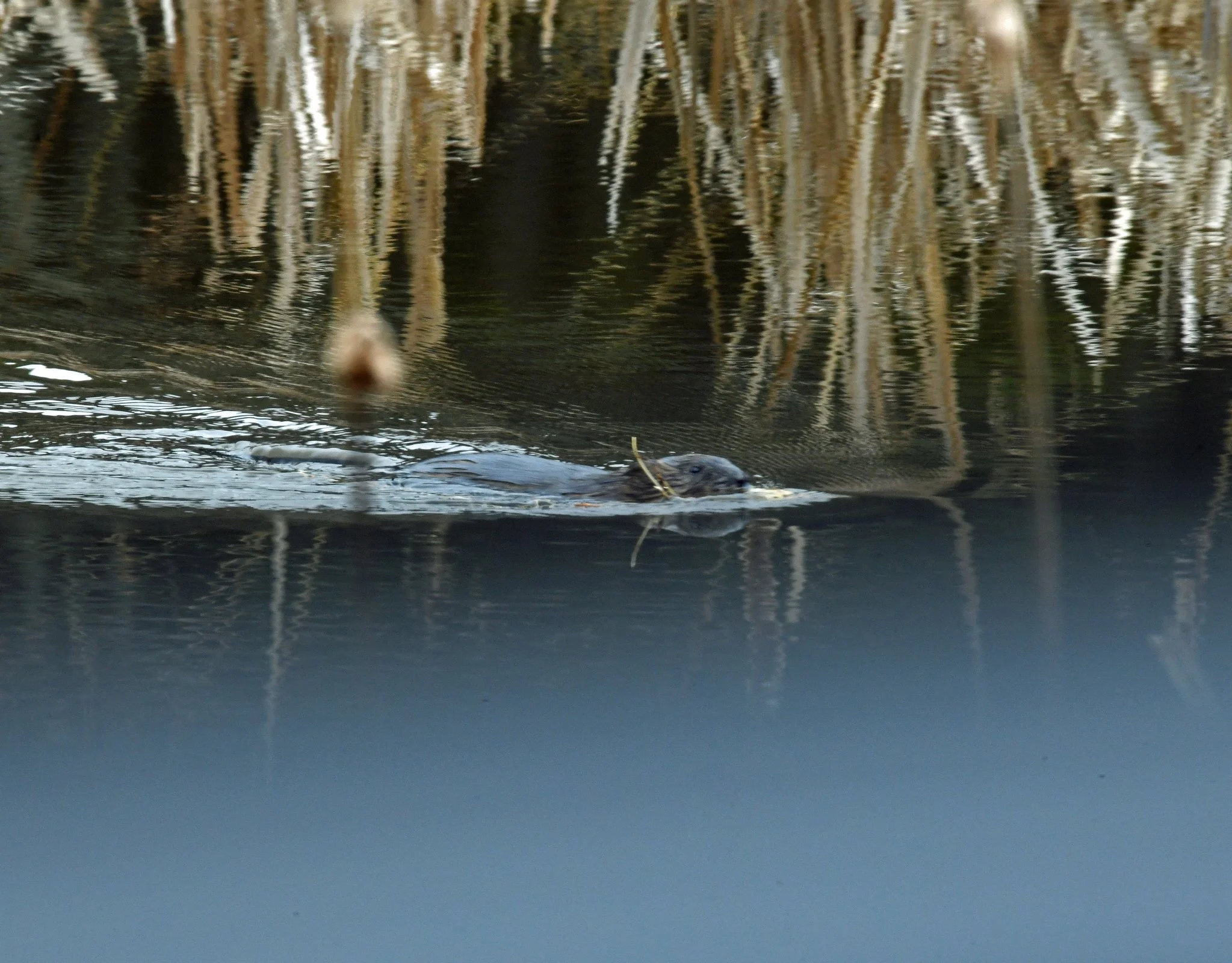
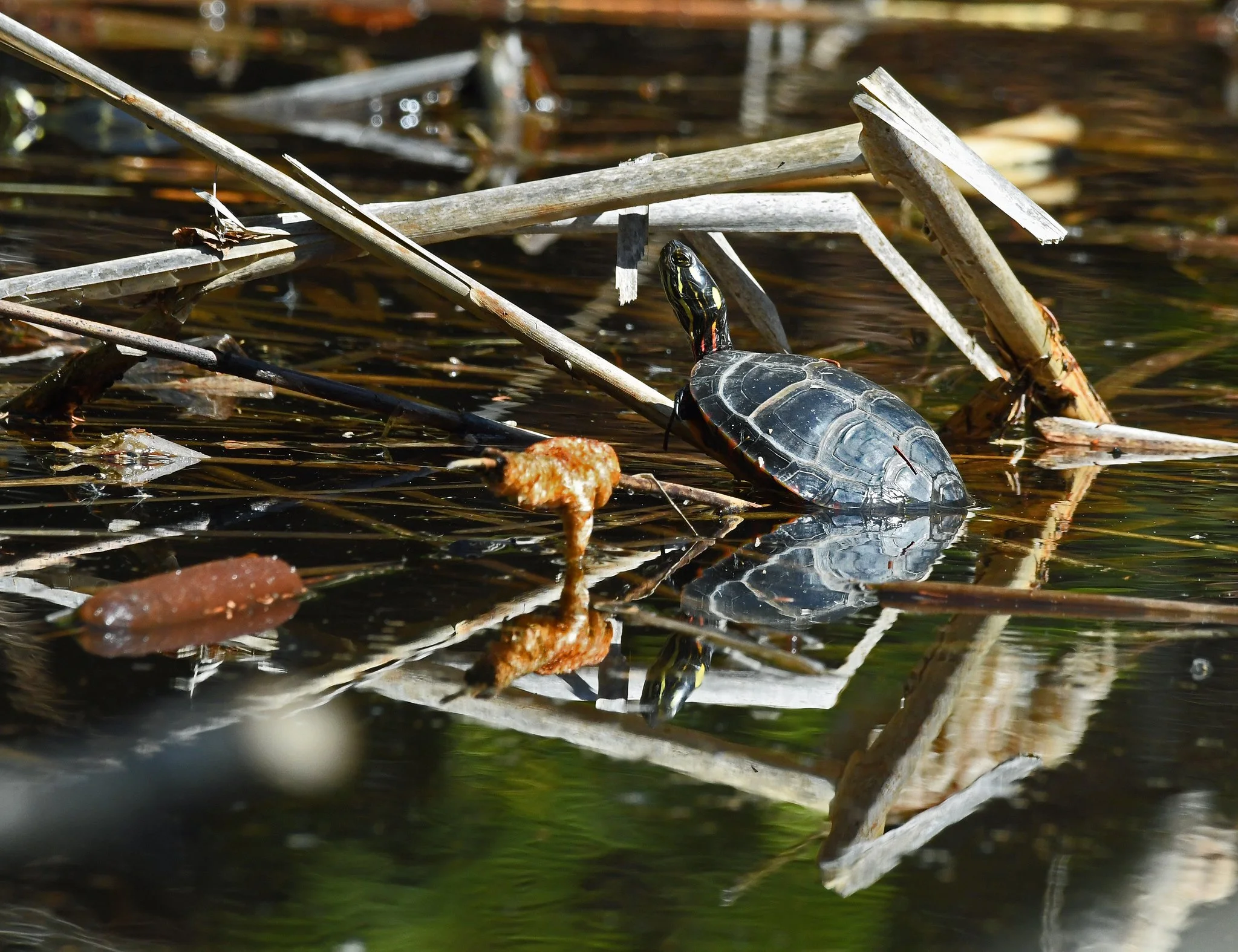
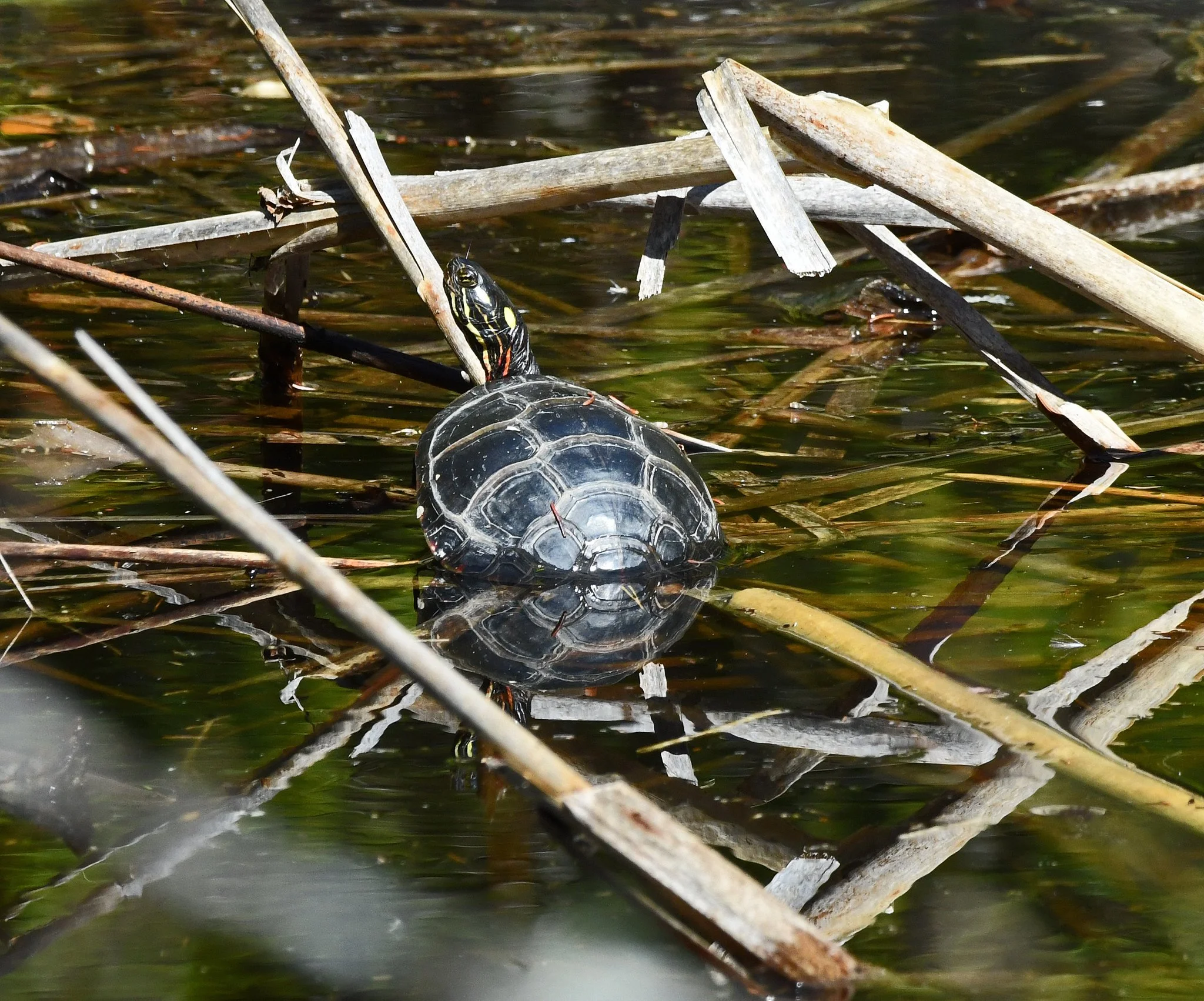
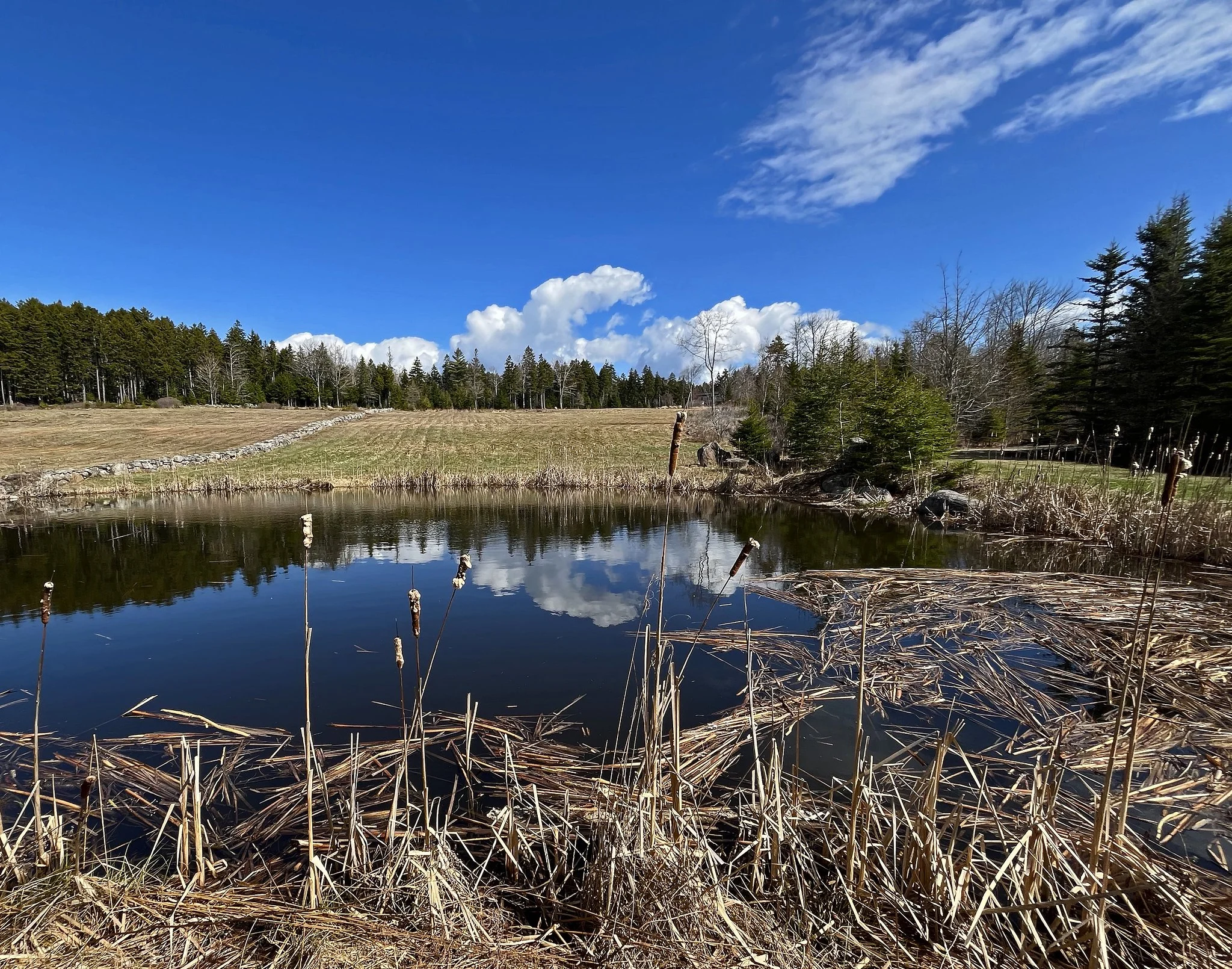
The ice disappeared from the ponds in April and river otters came to play in them, while the first painted turtles rose from their muddy sleeping quarters on the pond bottoms to bask when the sun shone:
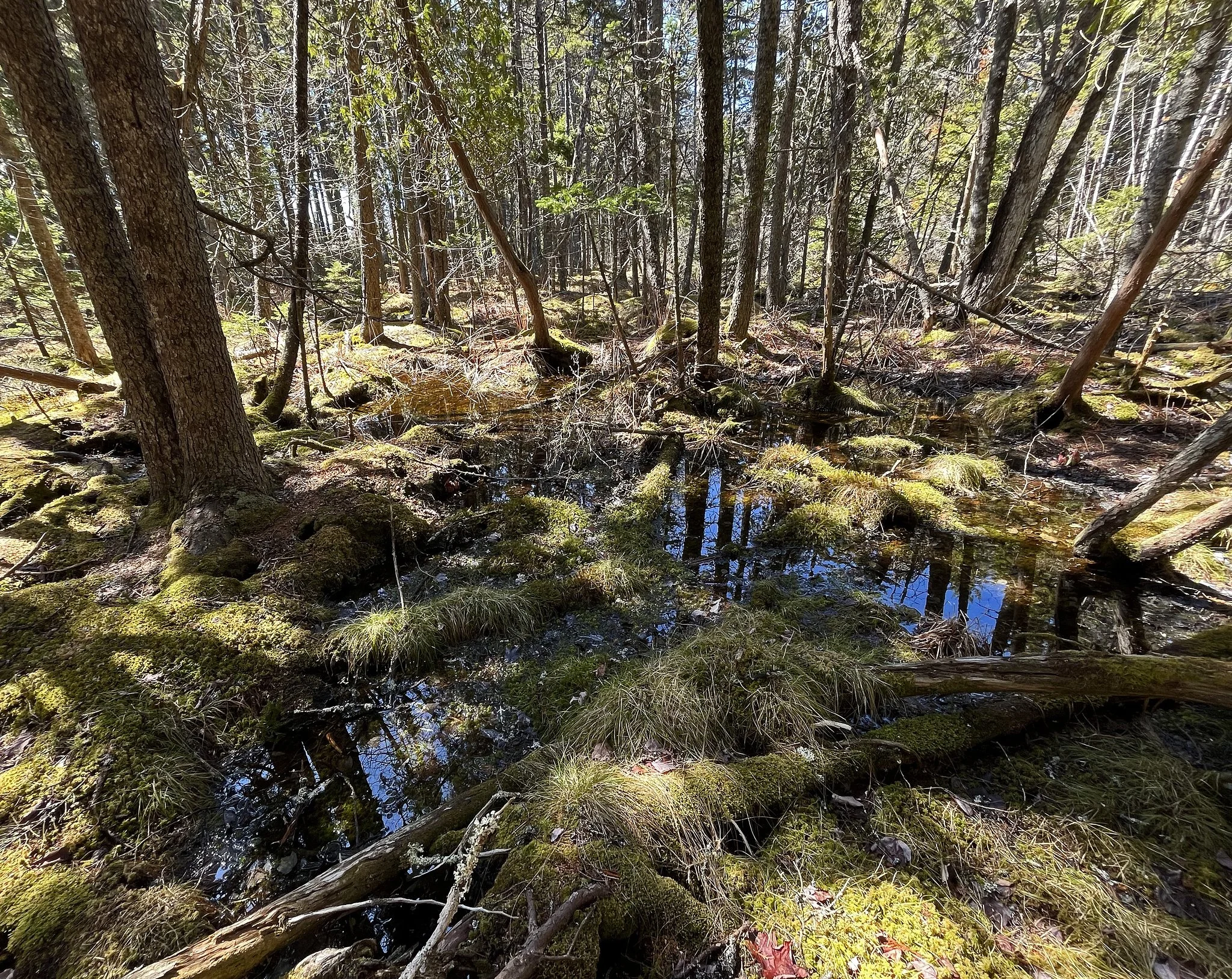
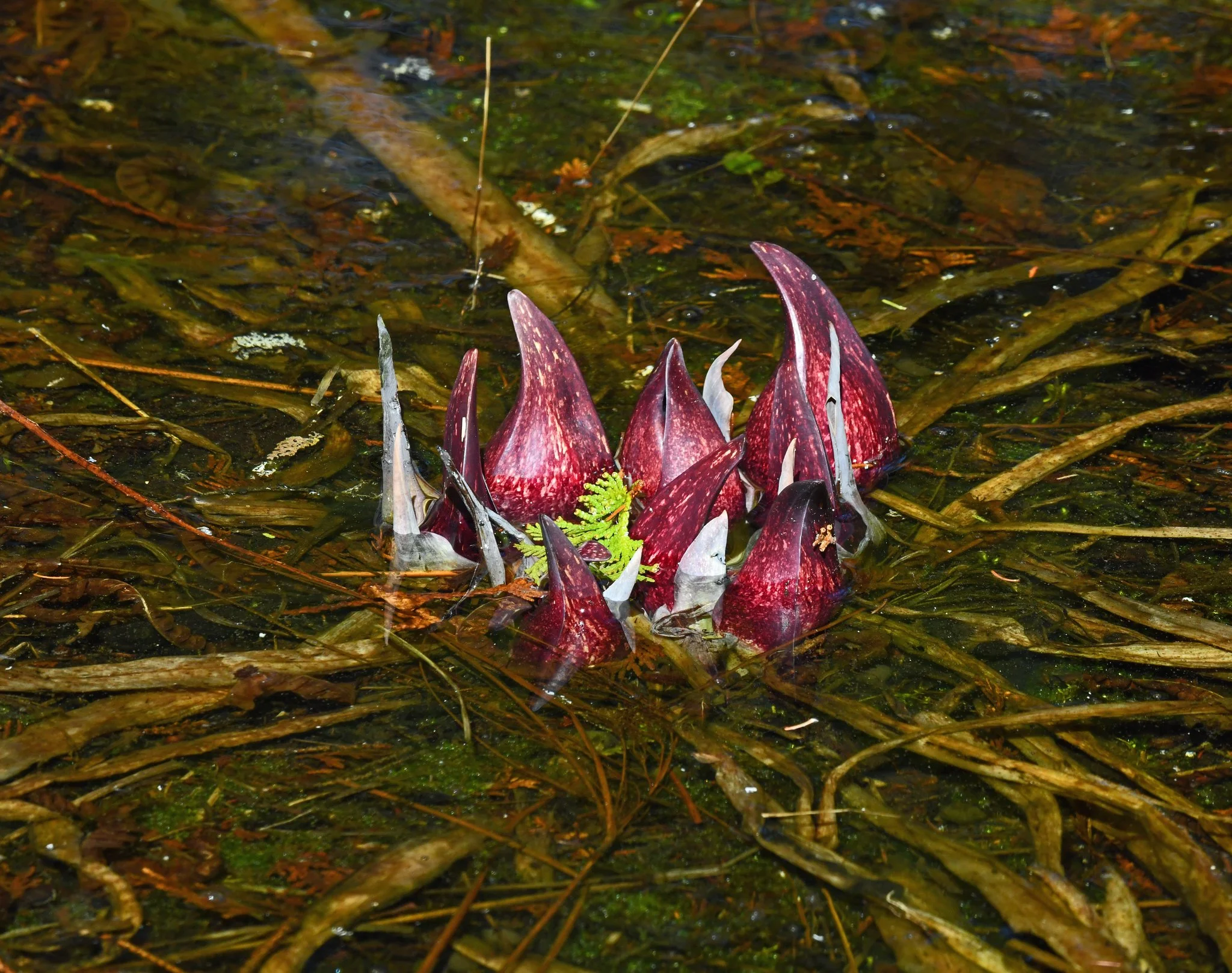
During the month, vernal (spring) pools appeared in the bogs where skunk cabbage spathes rose like painted dolphins and unseen amphibians covorted at night:
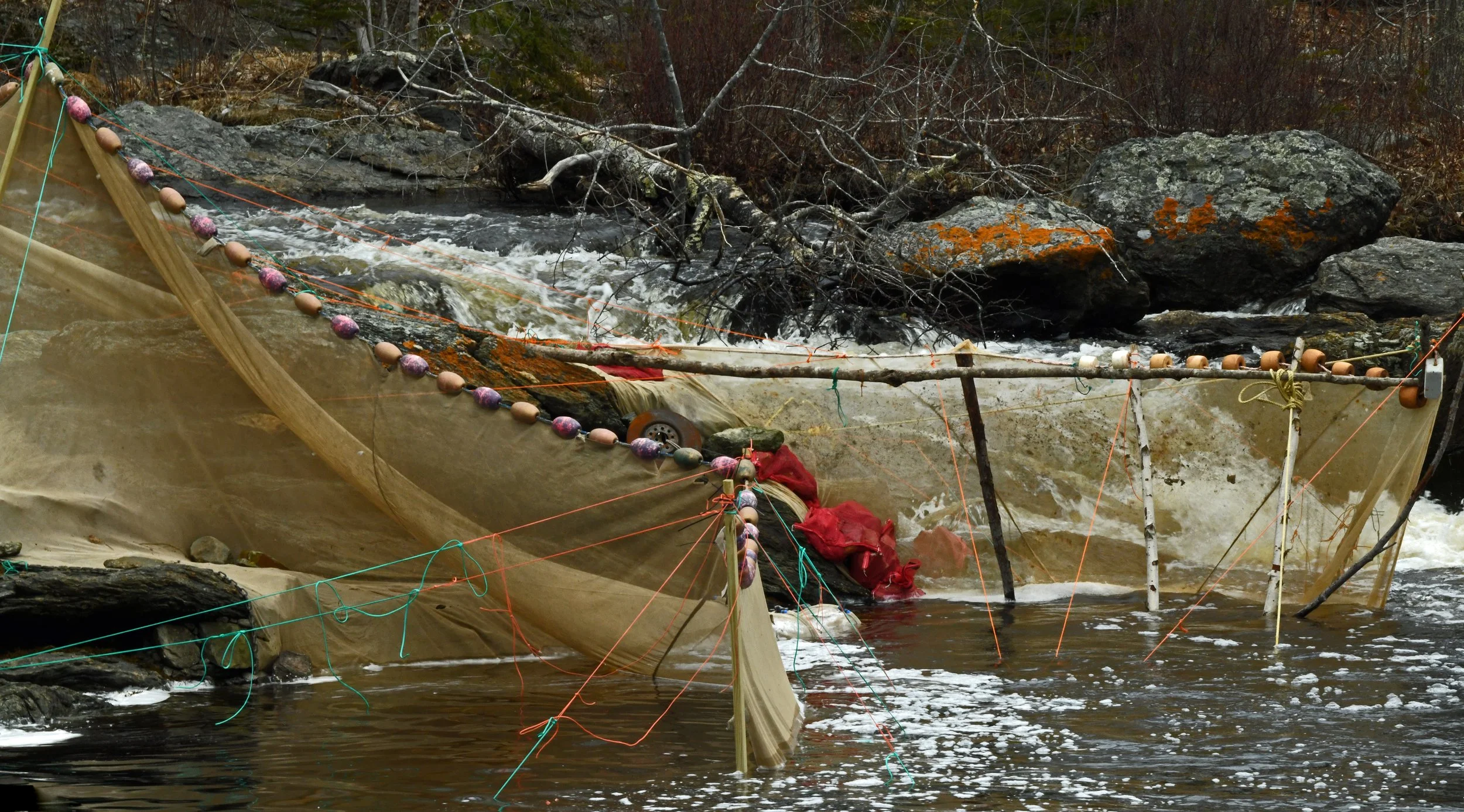
Our streams managed to keep good waterflows most of April, but the month is in the middle of glass eel (baby American eel) season. The mouths of the streams often were draped with Fyke nets trying to catch the little migrating eels:
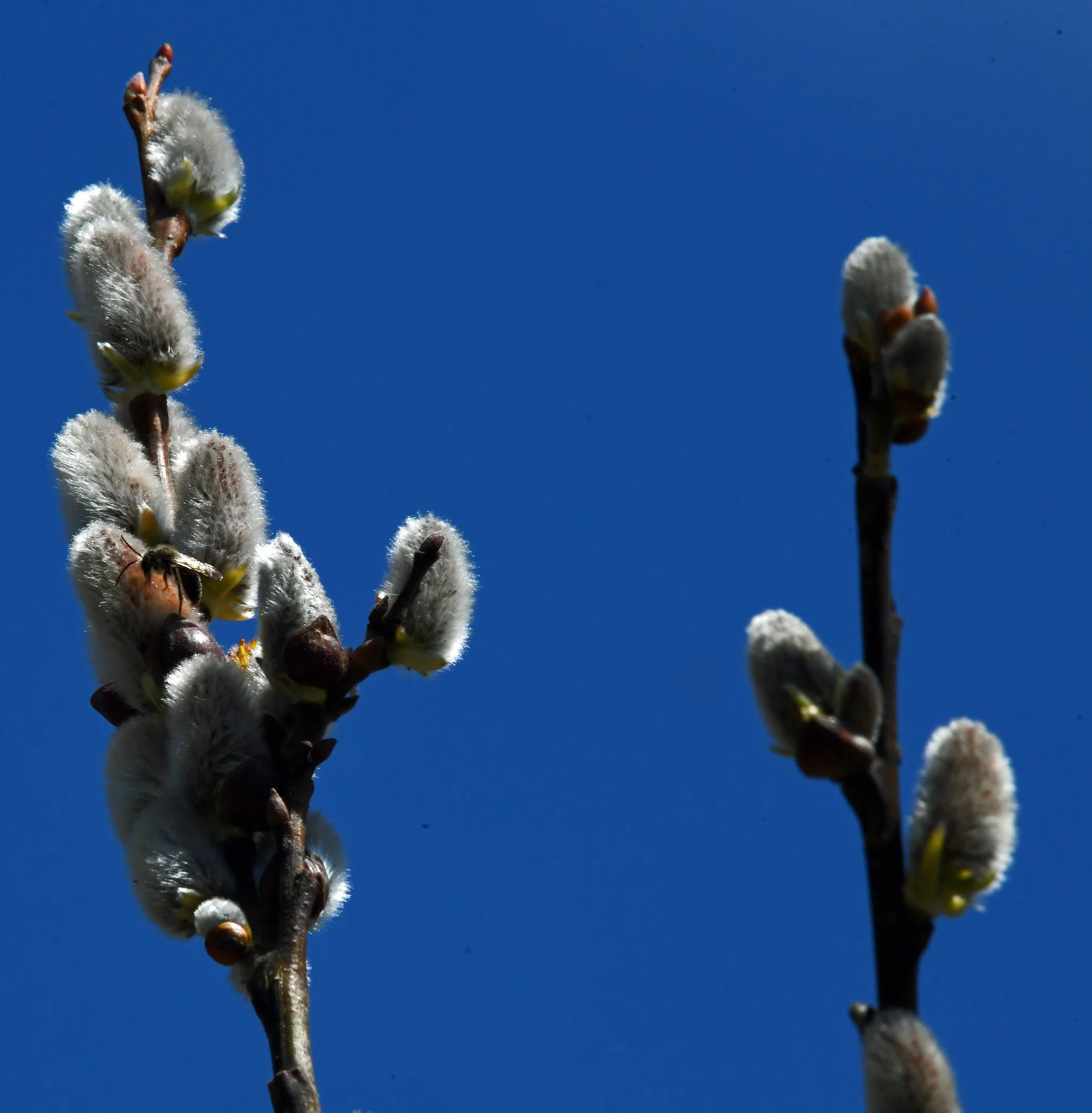
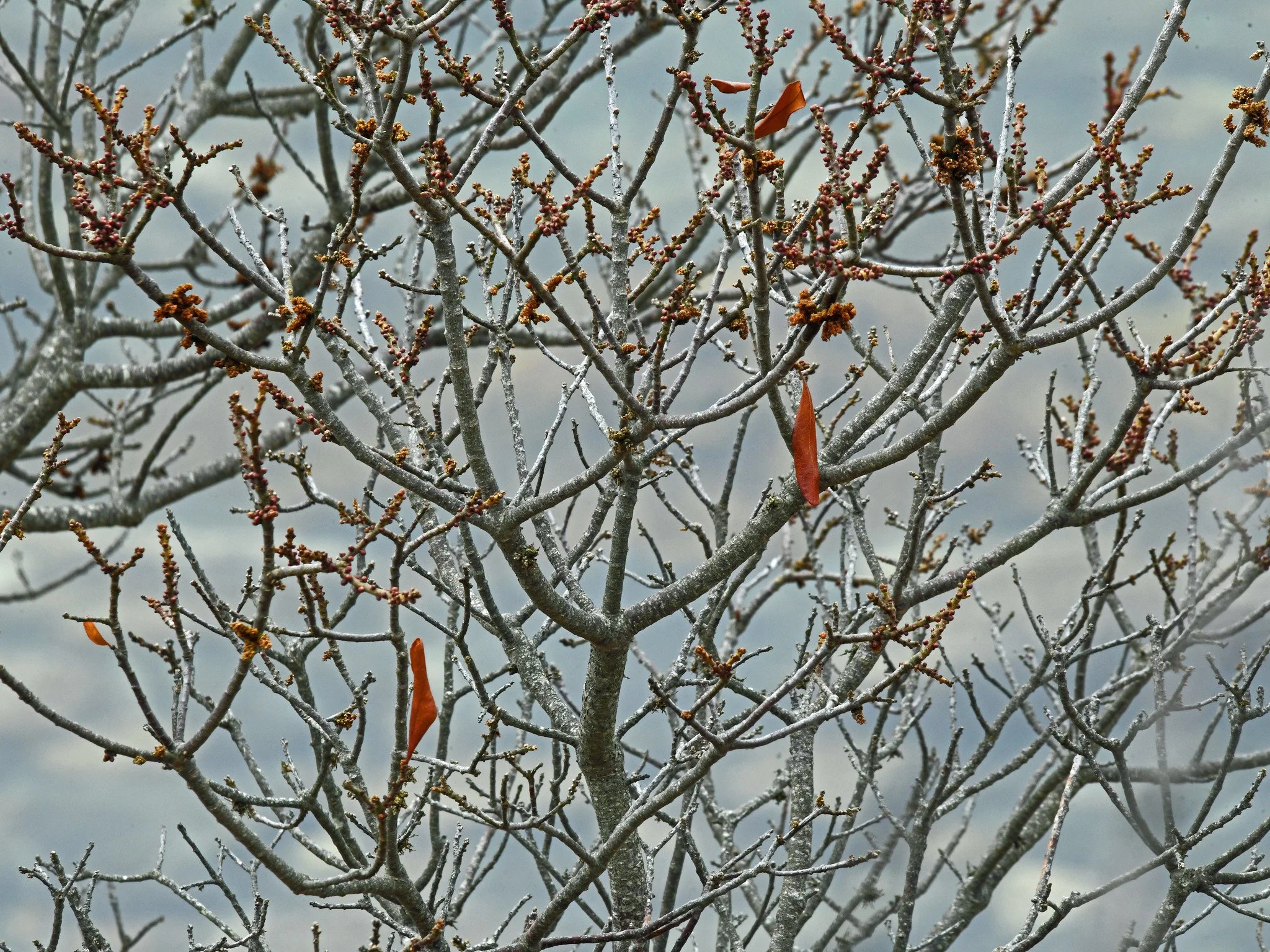
With a few exceptions, the April flora wrere mostly in the formative stages, including pussy willow catkins and sproutings of all kinds.
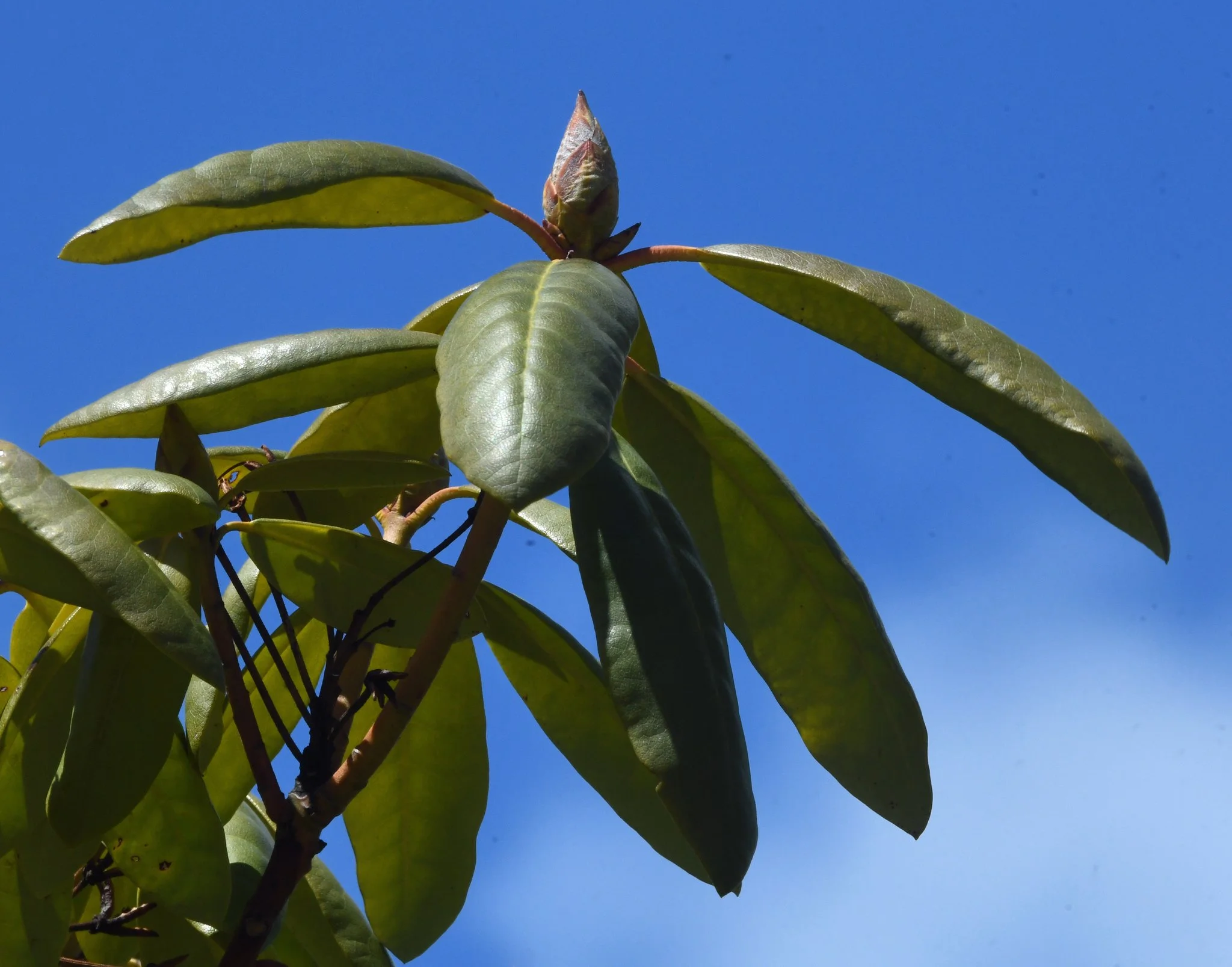
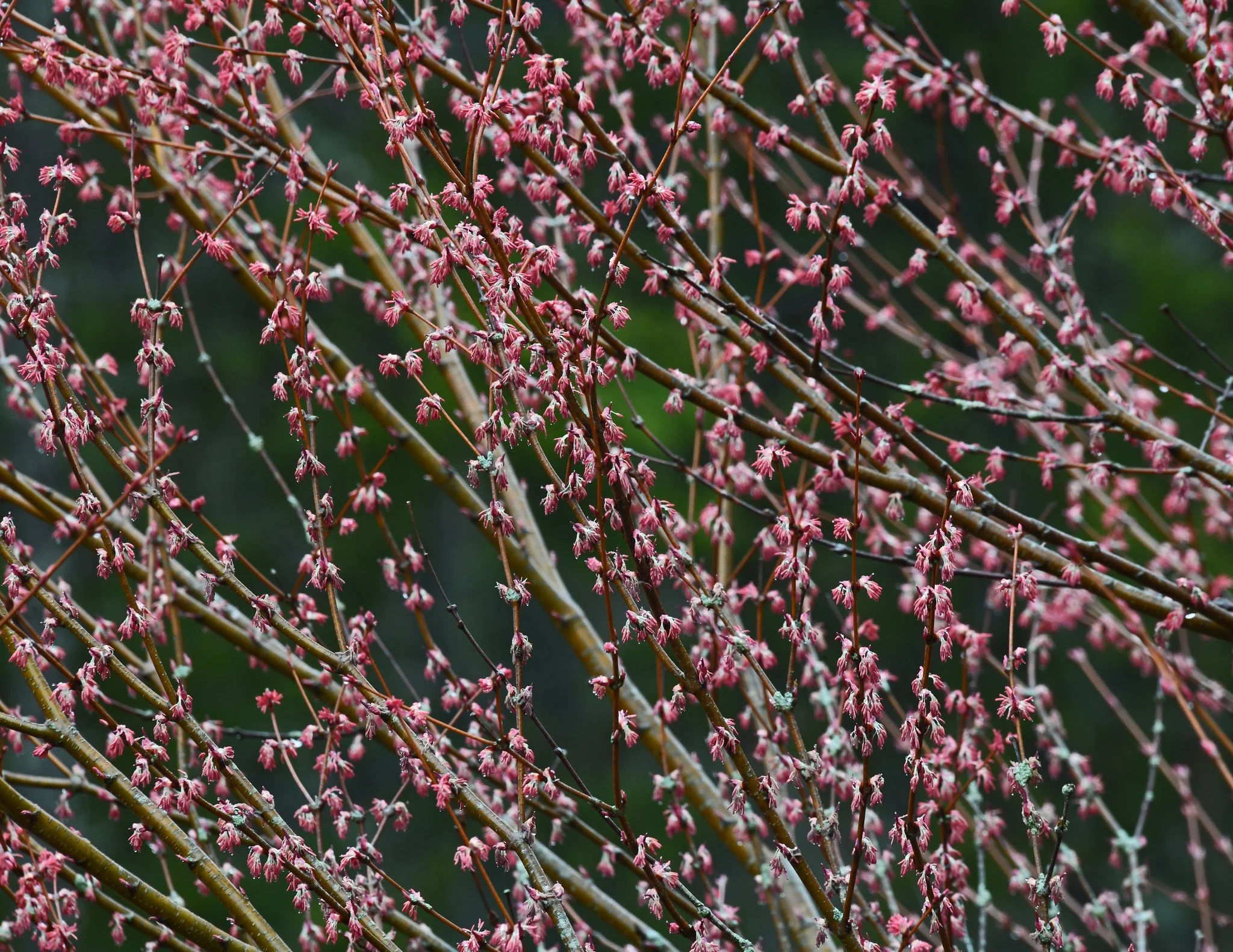
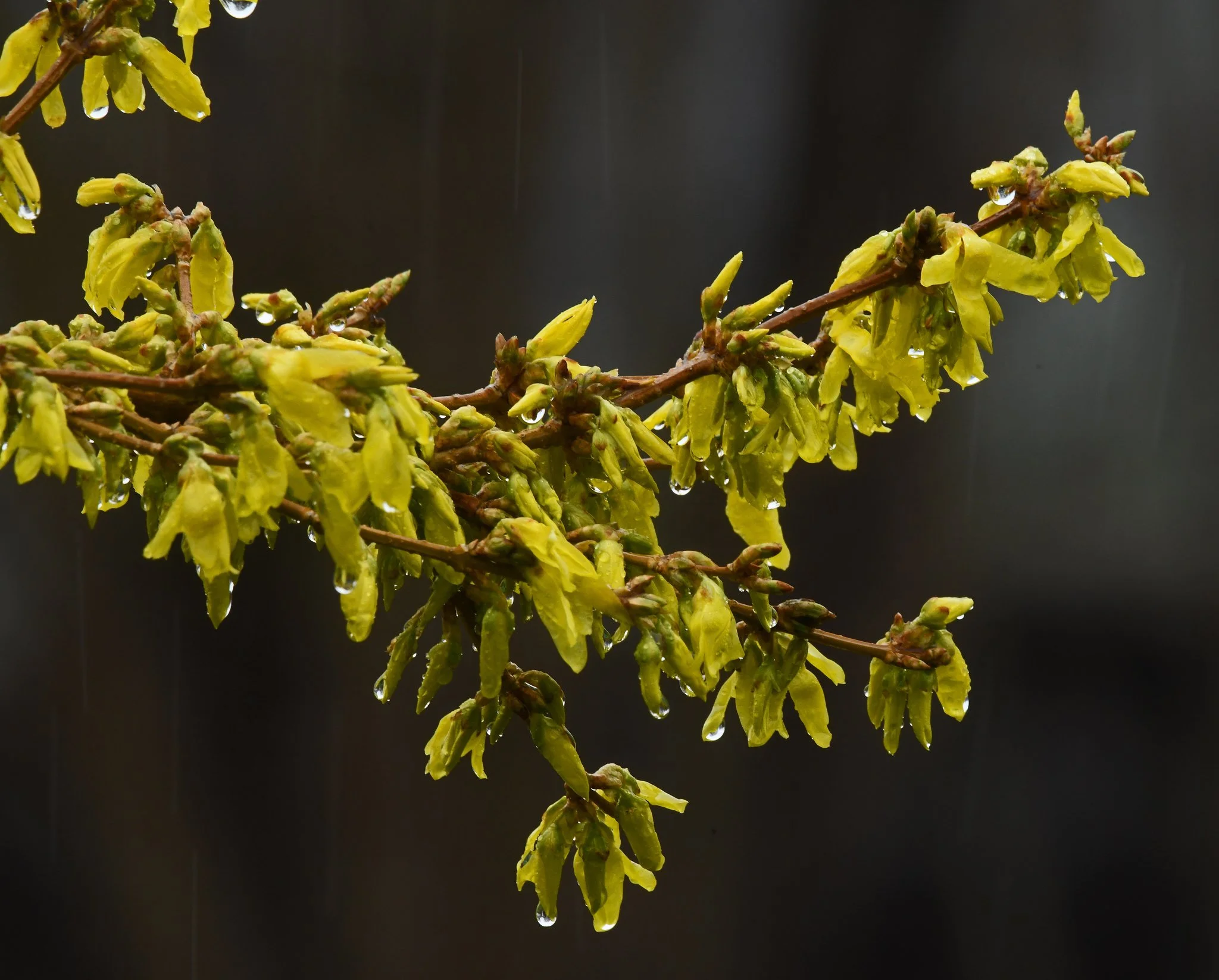
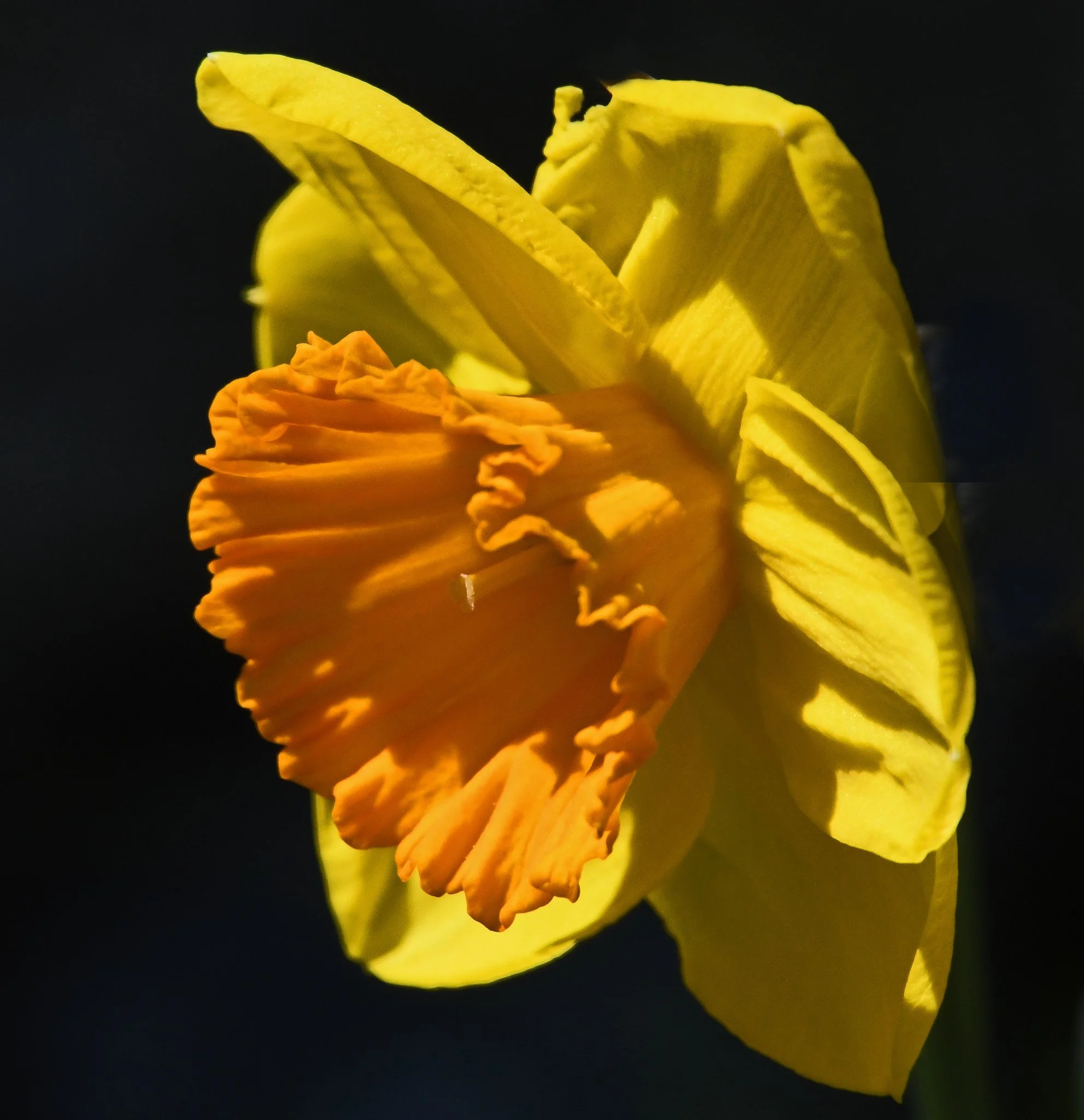
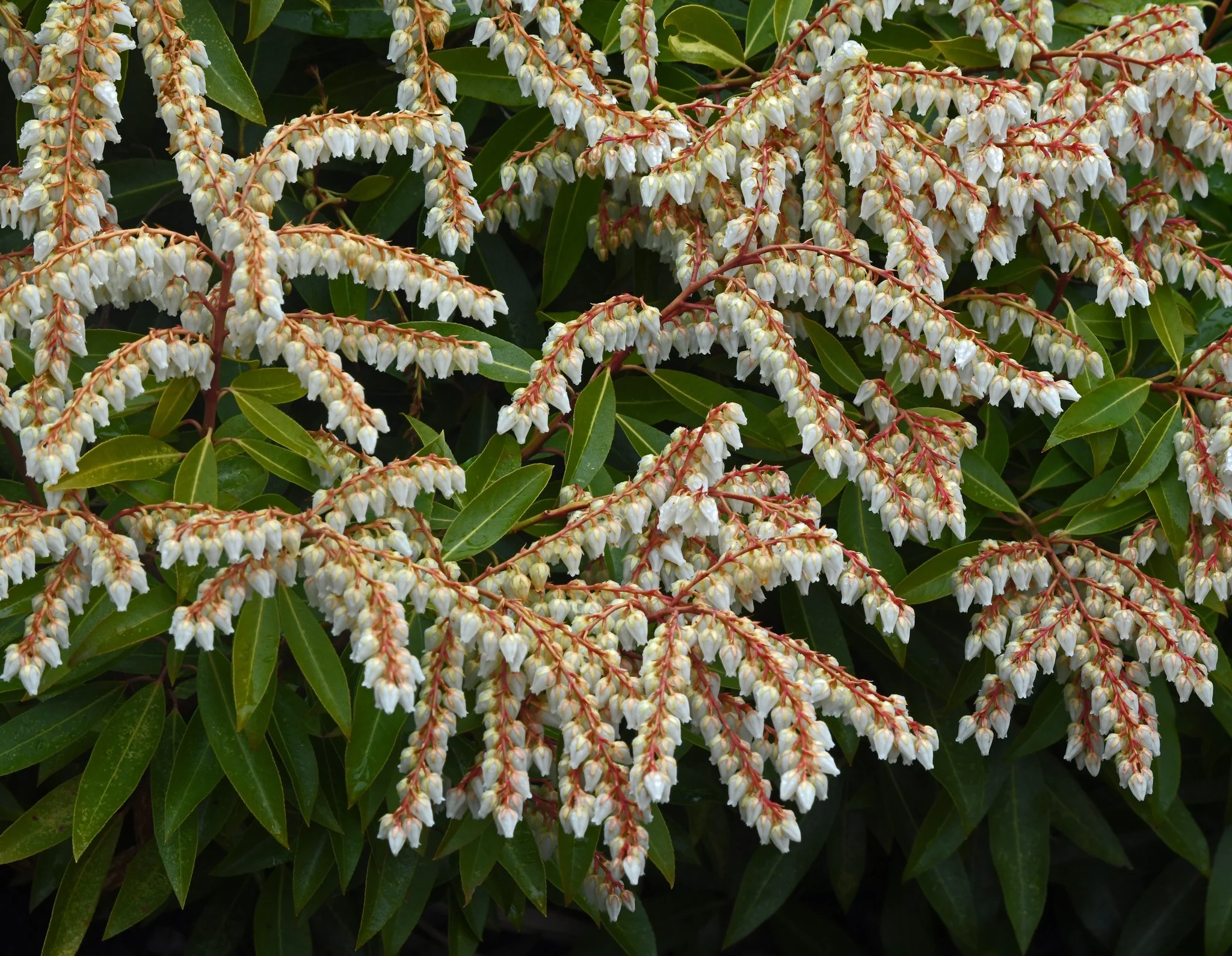
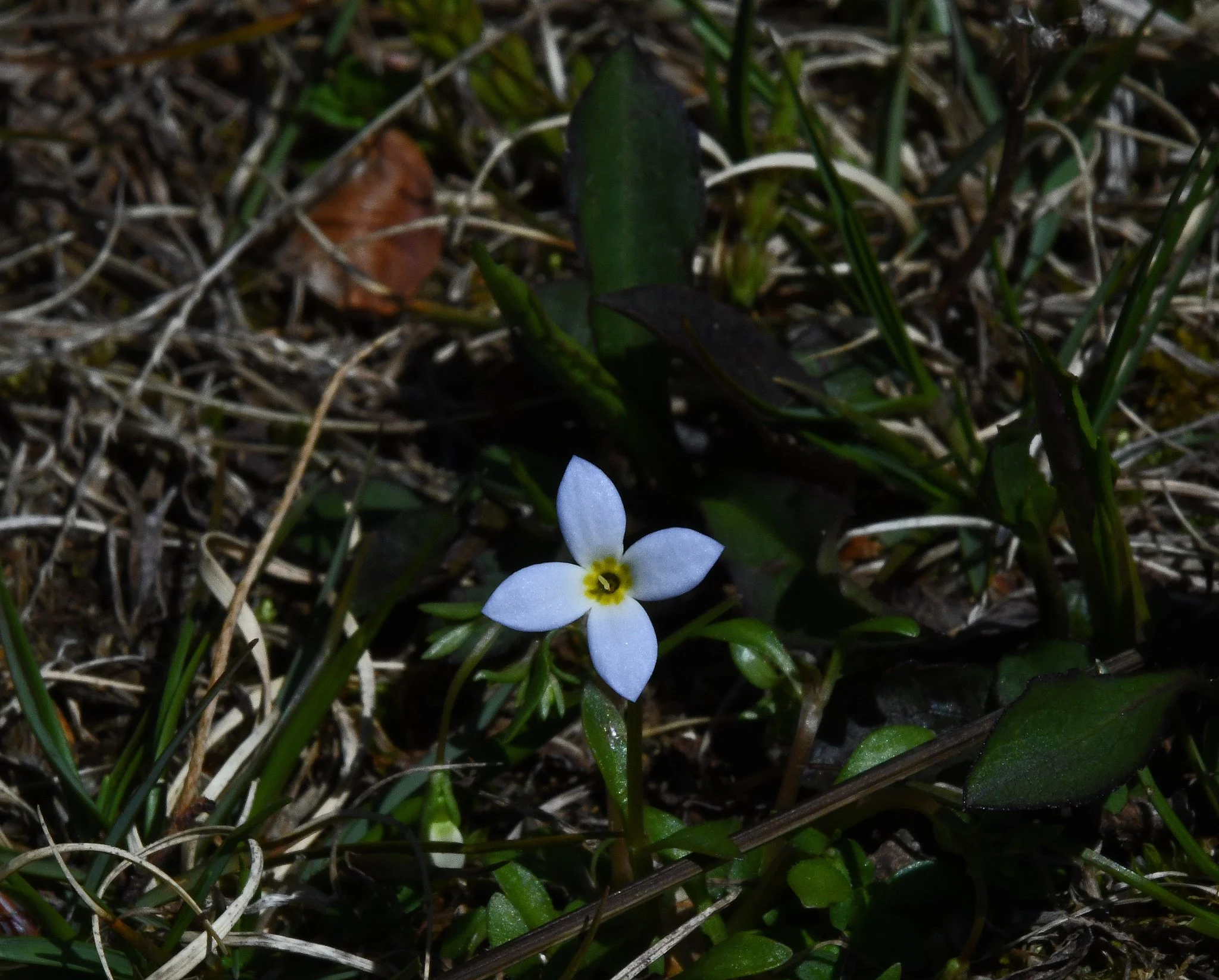
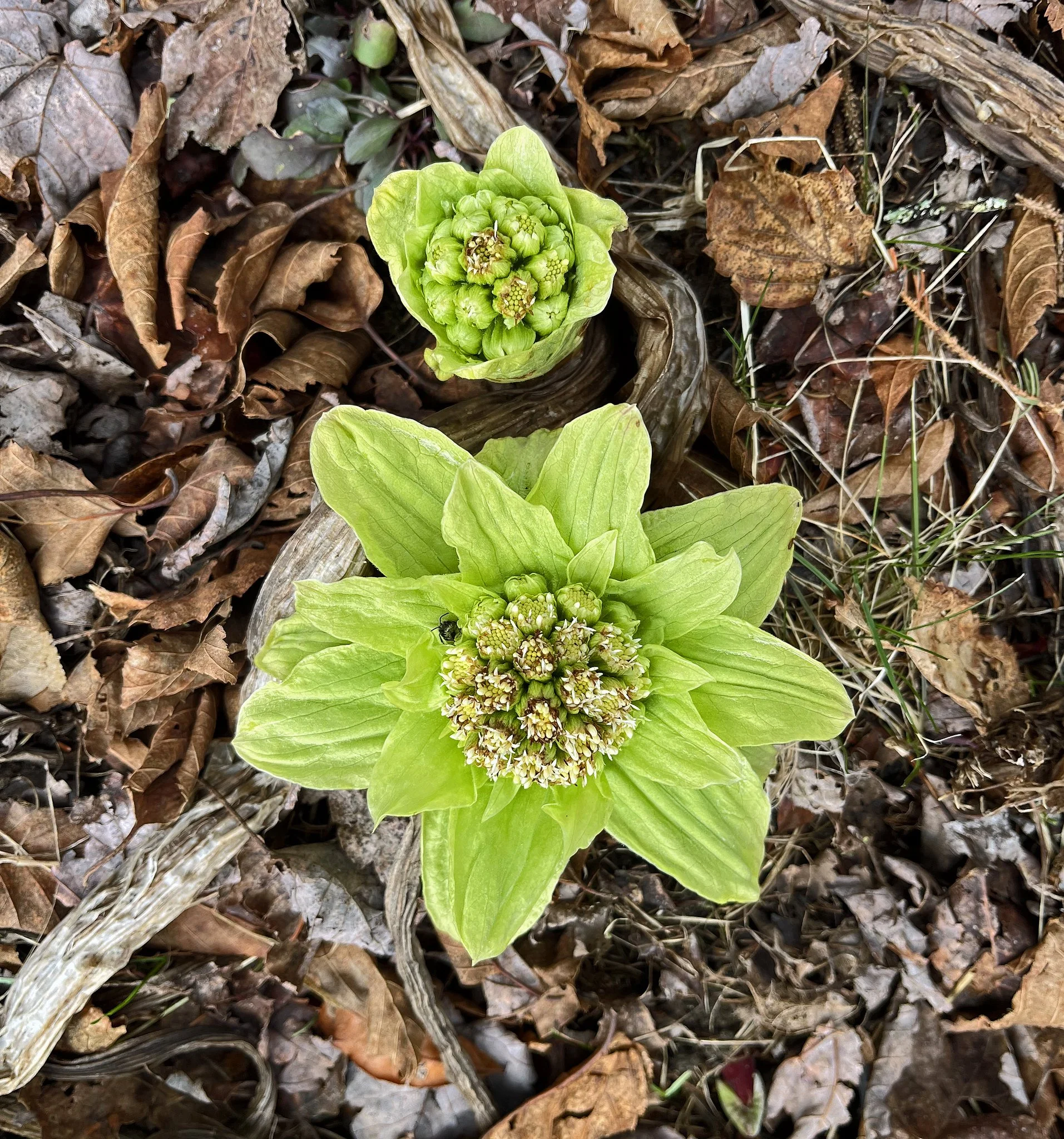
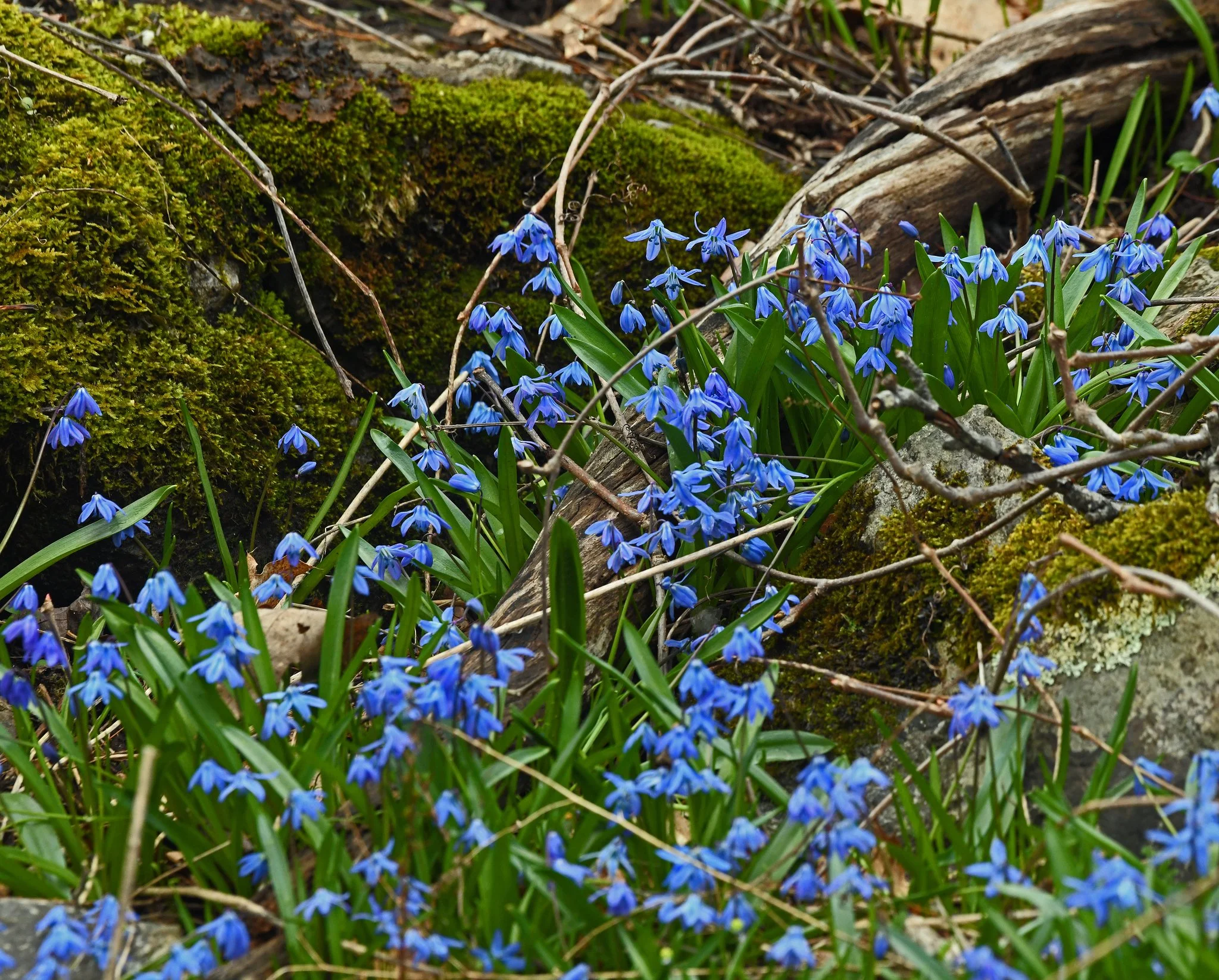
There were the usual early showoffs, including forsythia, daffodills; andromeda; bluets; Japanese coltsfoot, and Siberian squill:
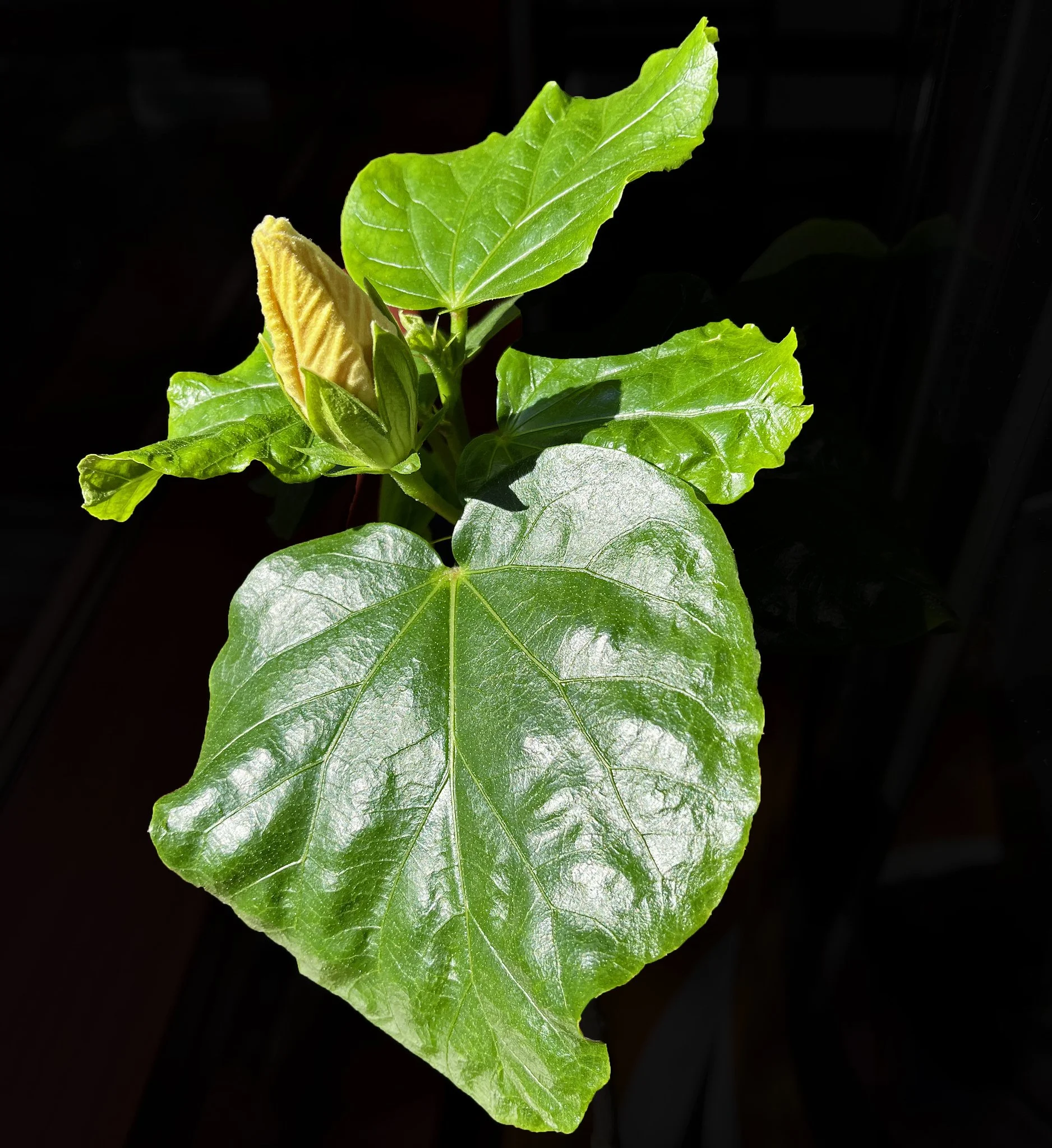
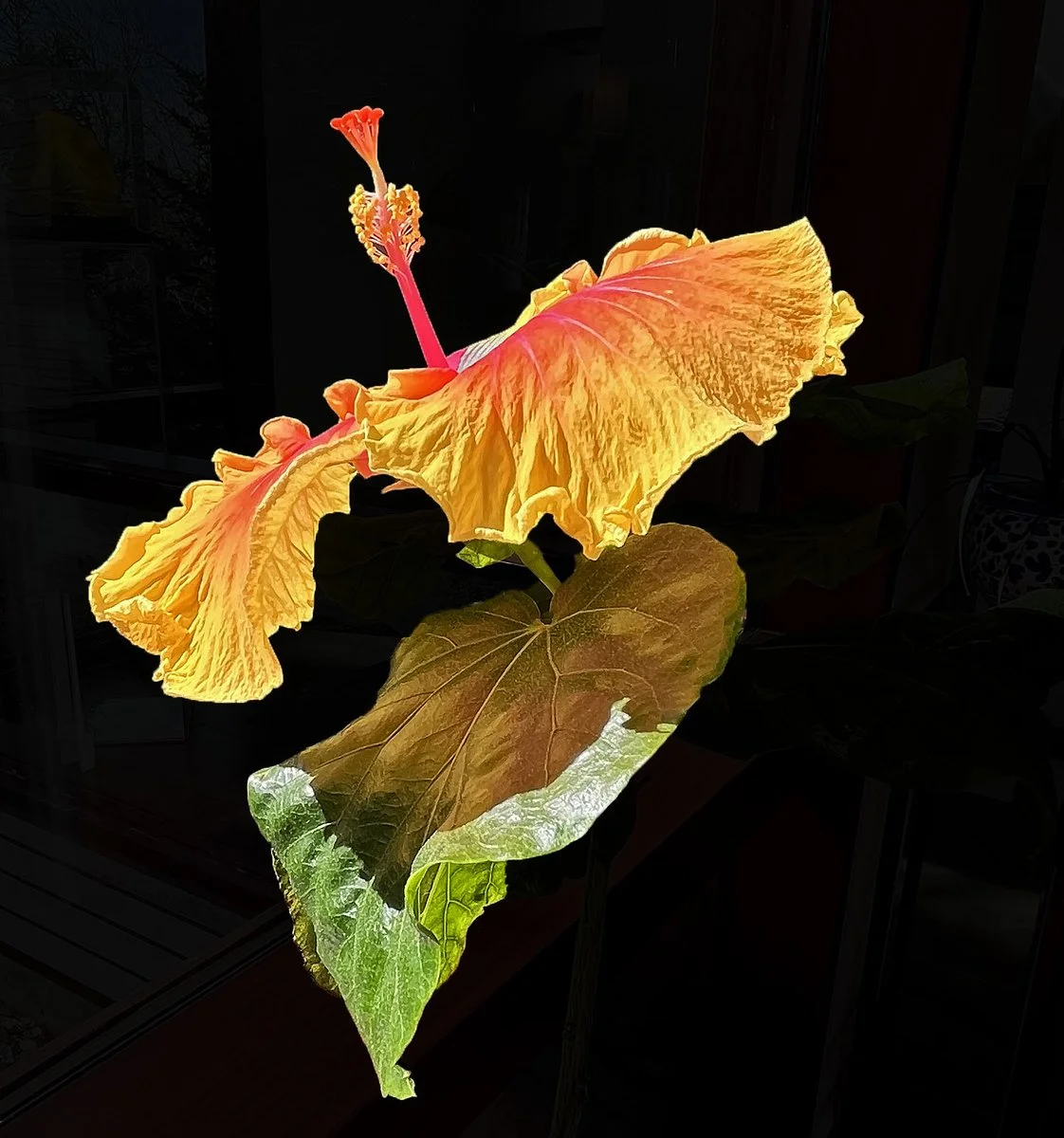
When it comes to flora, April is not just about the outdoors. It’s a time when tropical house plants also bud and bloom in Maine, including this magnificent hibiscus:
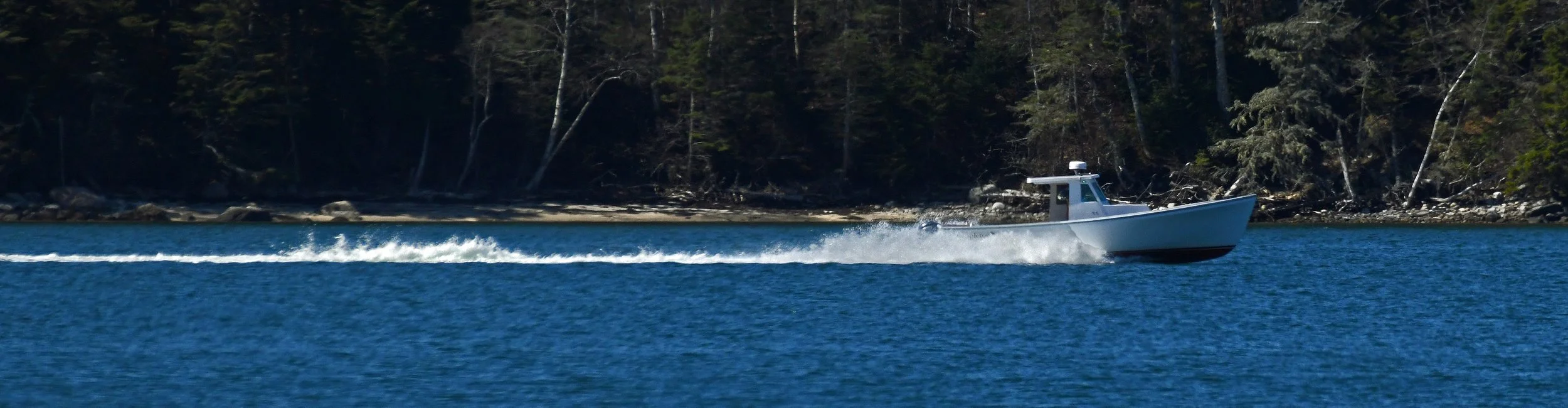
But, of course, for many of us, Down East Maine in April is mostly about the outdoors, especially the sea coast. Here you see Great Cove before the summer’s sailboats arrive. All was calm during the month, except for the occasional fishing vessel that took a fast shortcut through the Cove.
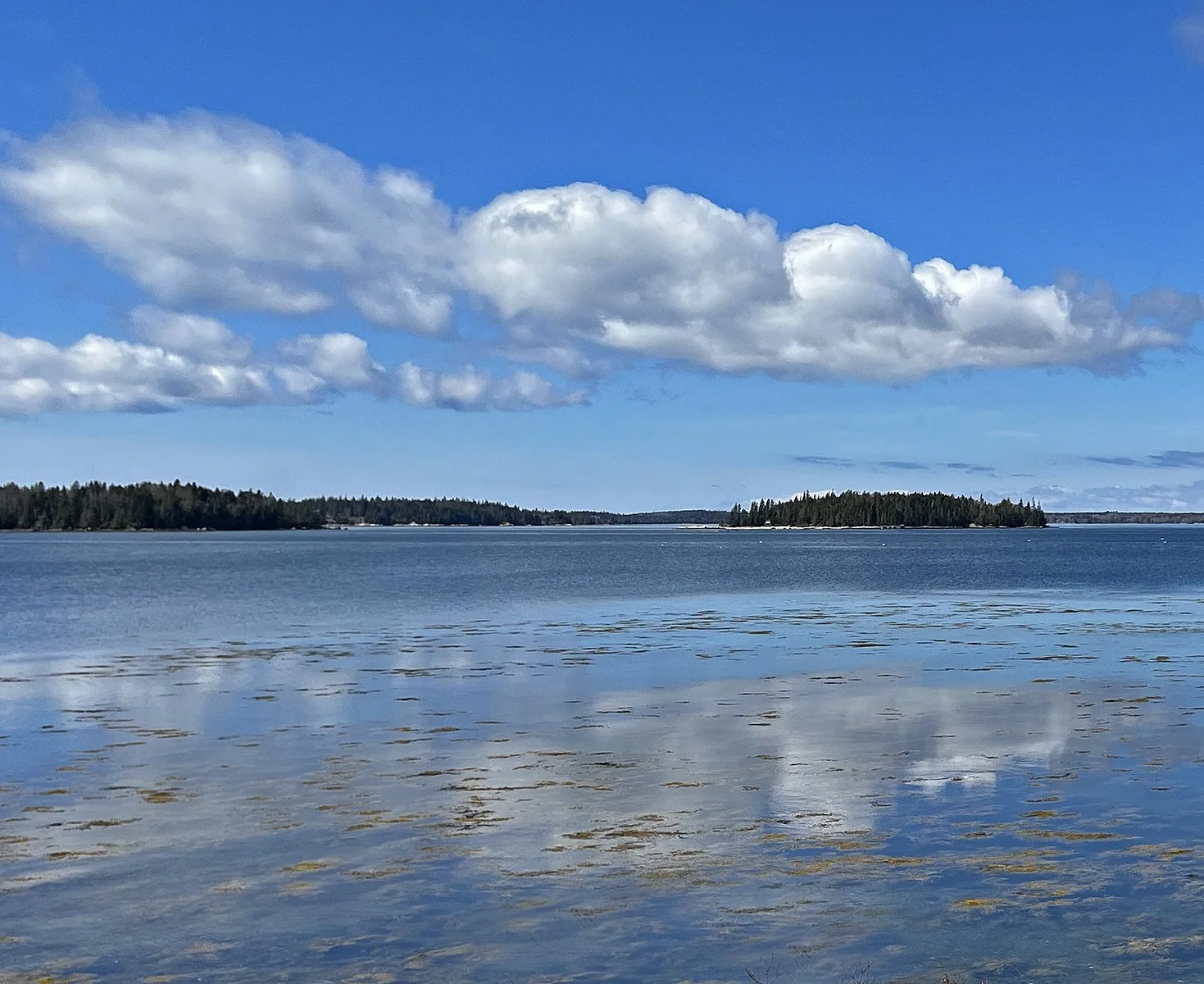
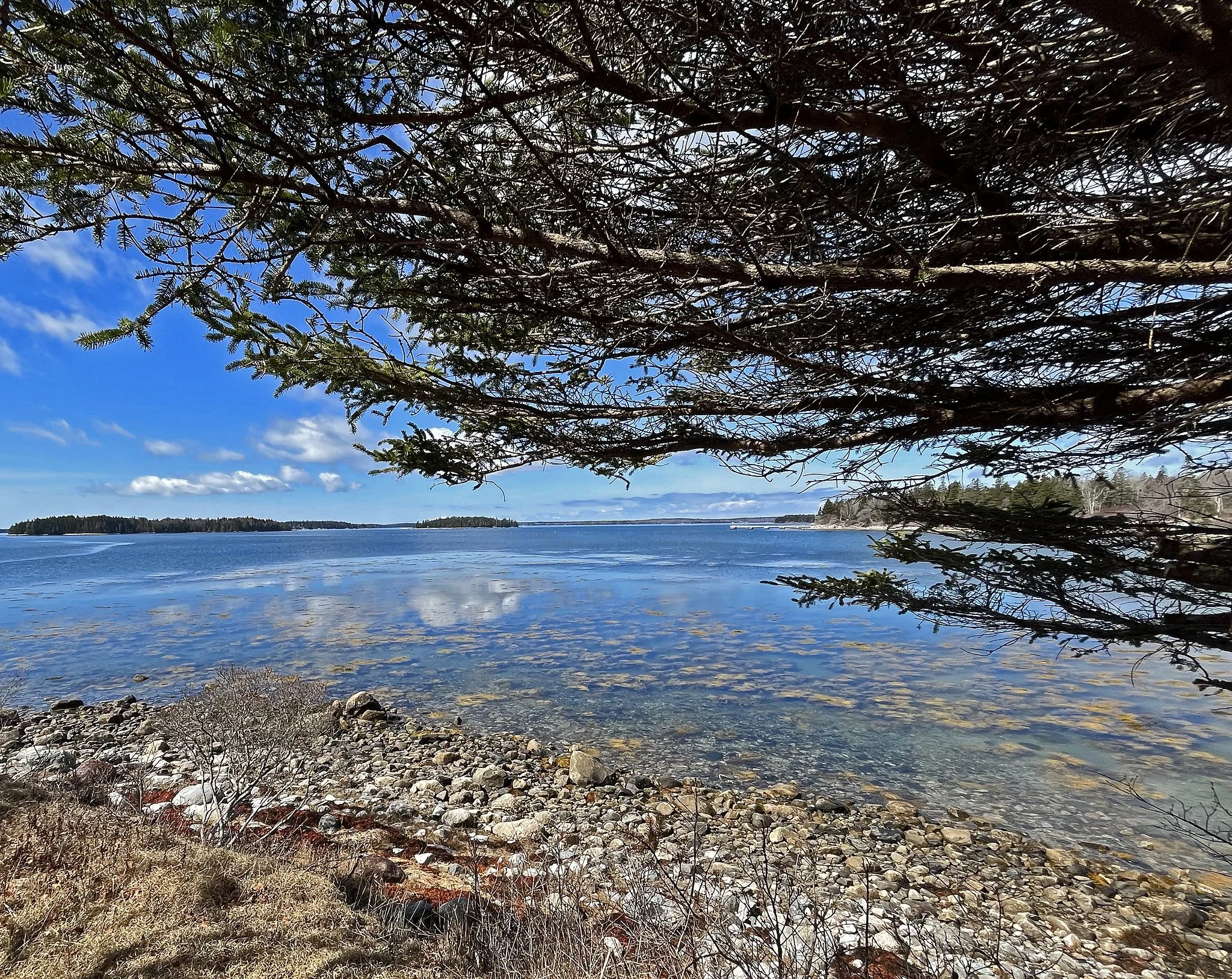
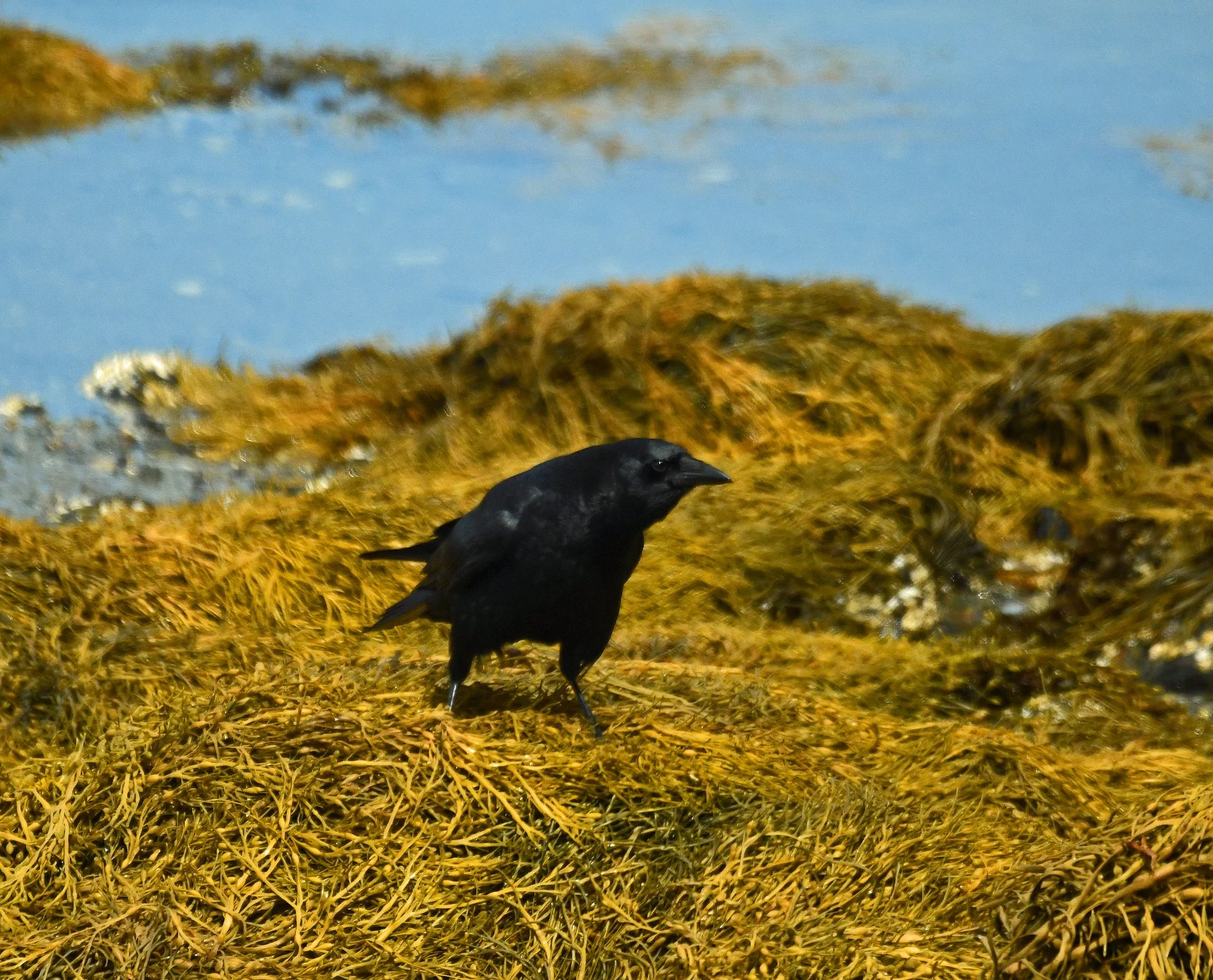
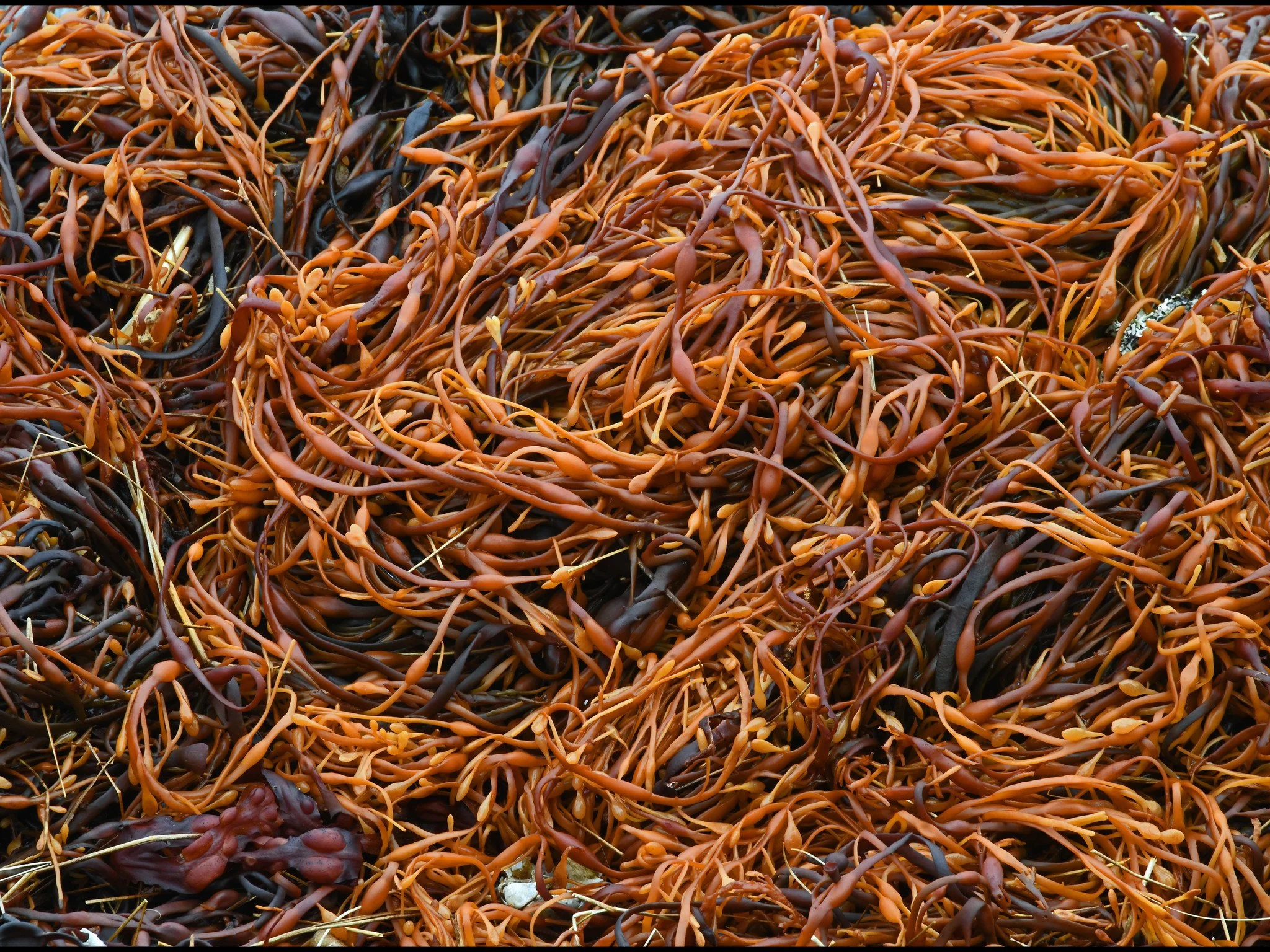
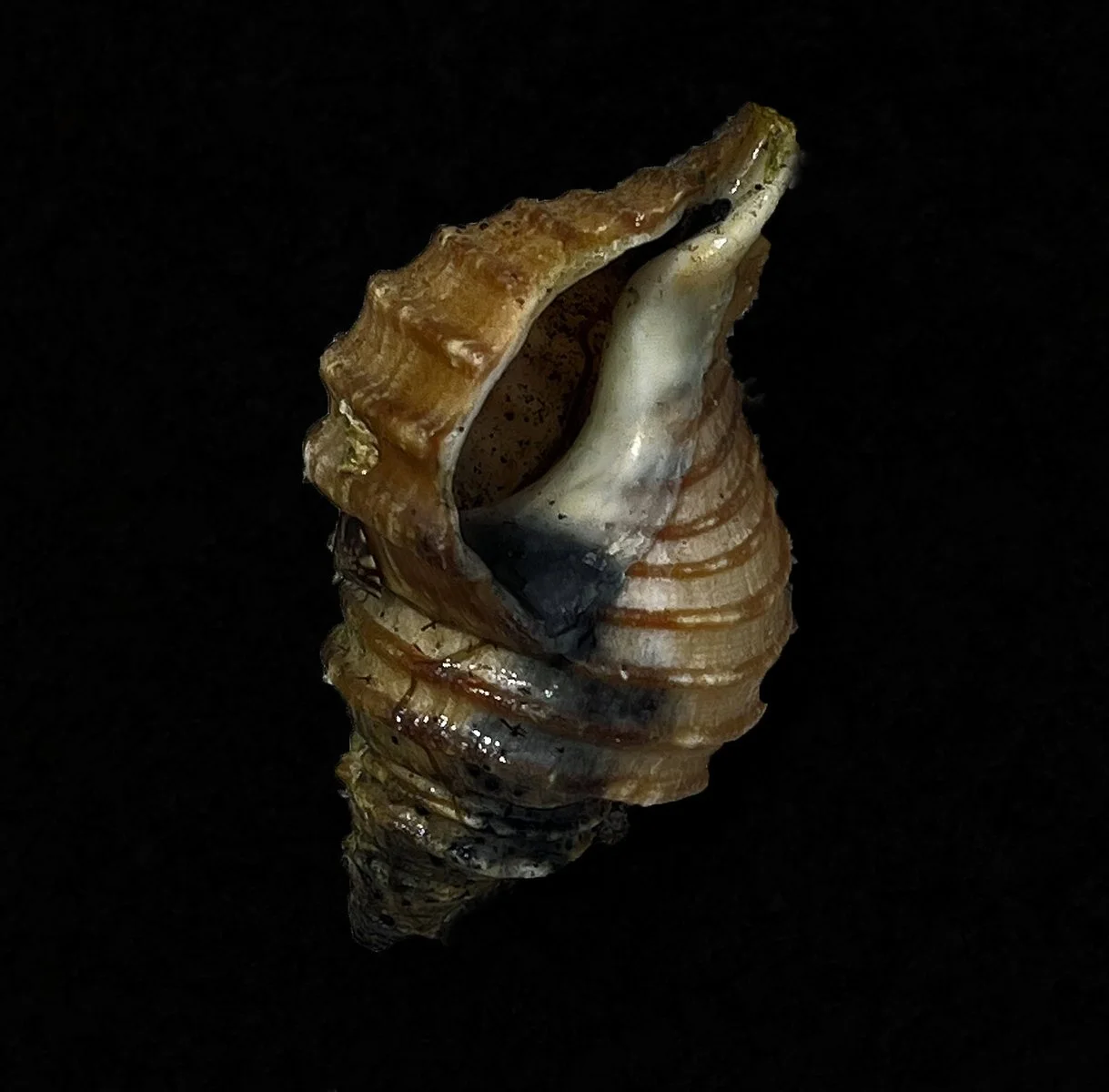
The tops of rockweed bouquets start to appear in Great Coveat about mid-tide. At low tide, this algae becomes a jungle that hides sea life (which can become sea food for some). Common whelk sea snails are sometimes among the tidal pool fauna; their shells are valued by human beachcombers and their bodies are valued by sea gulls.
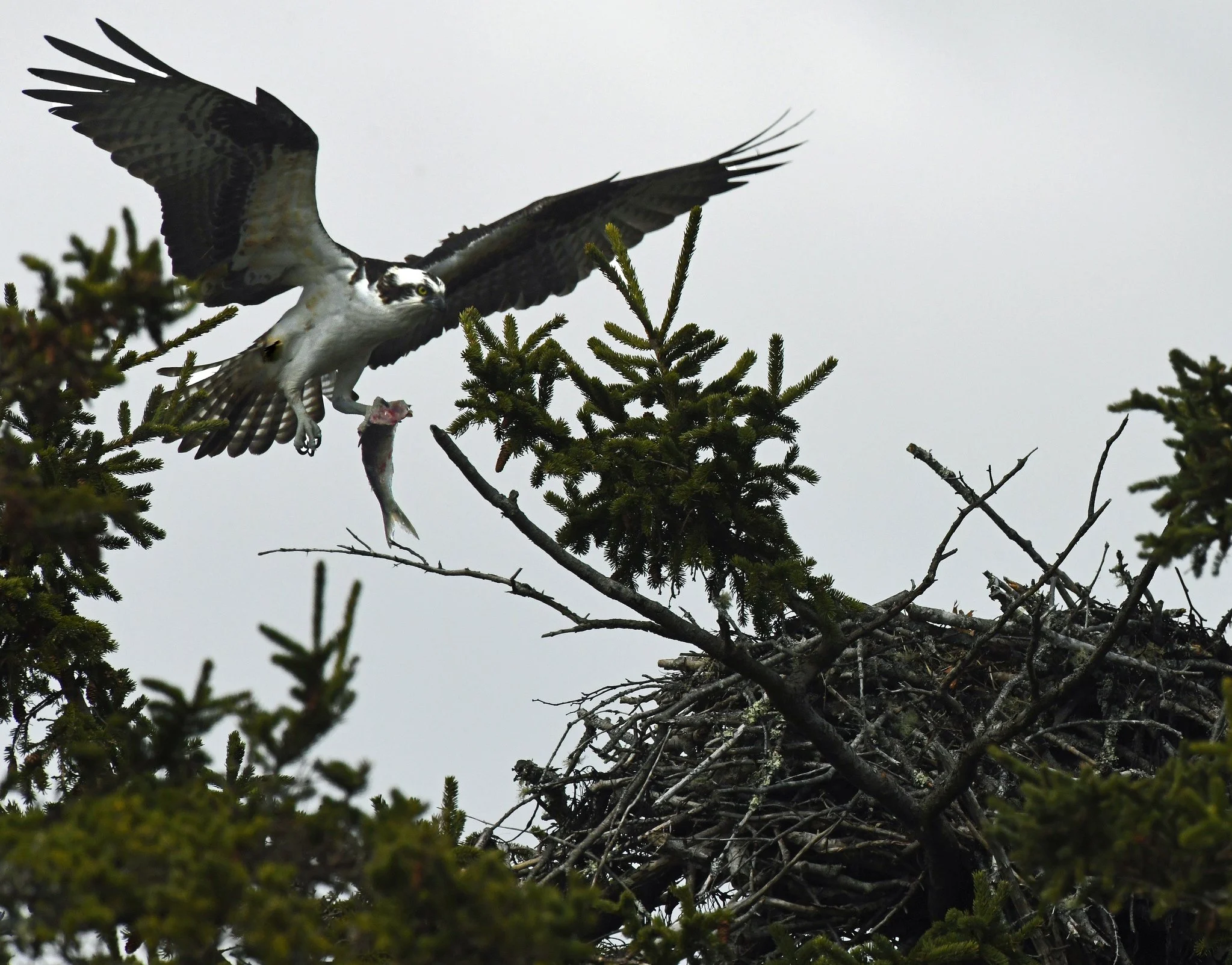
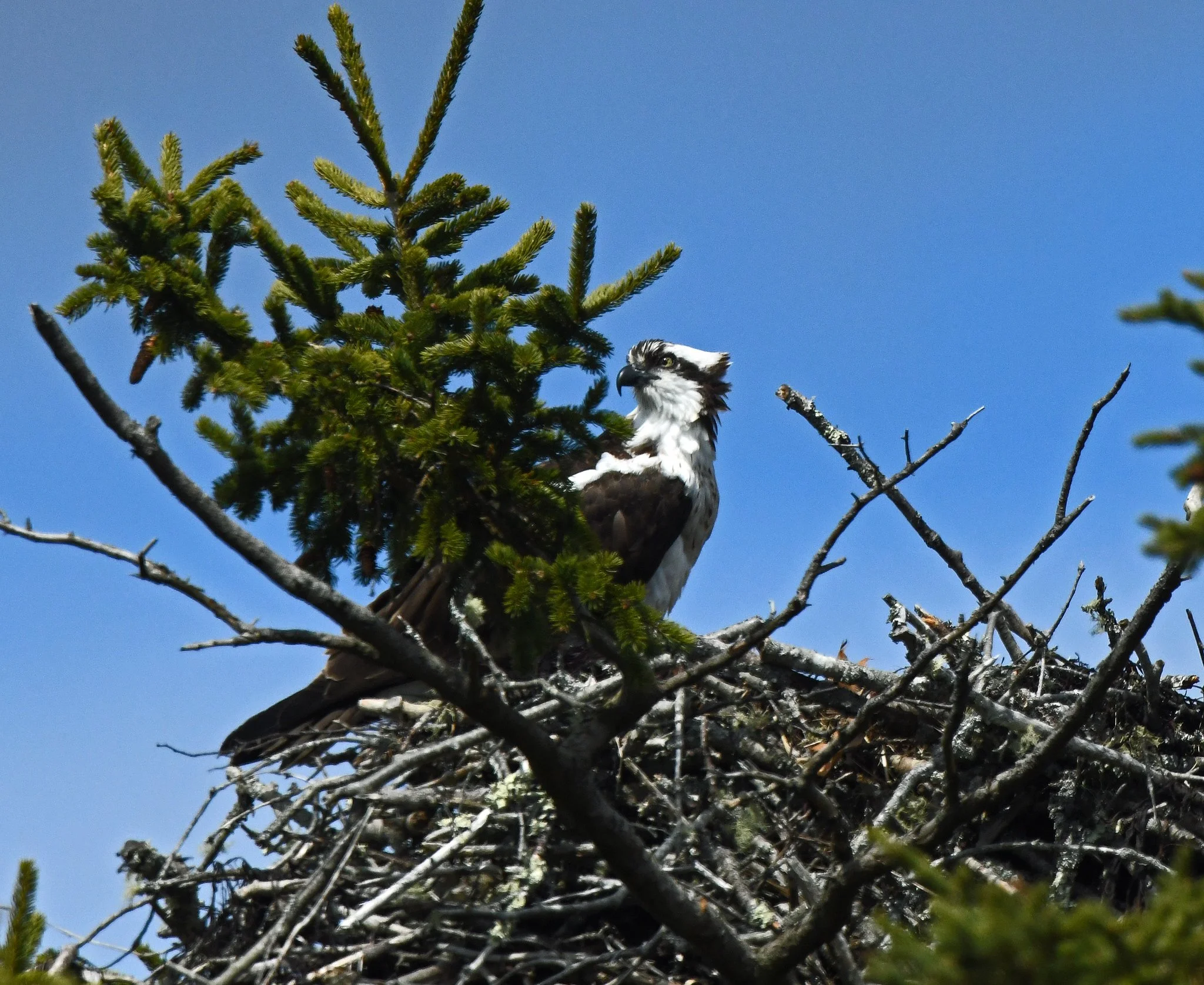
There are much bigger fauna in the trees overlooking Great Cove. I monitor an osprey nest there every year and its feathered owners always have returned in April. Below, you’ll see the male (Ozzie) bringing a fish to the female (Harriet) in the middle of a significant rain storm. Below that image, you’ll see Harriet reigning supreme in her big nest on a sunny day.
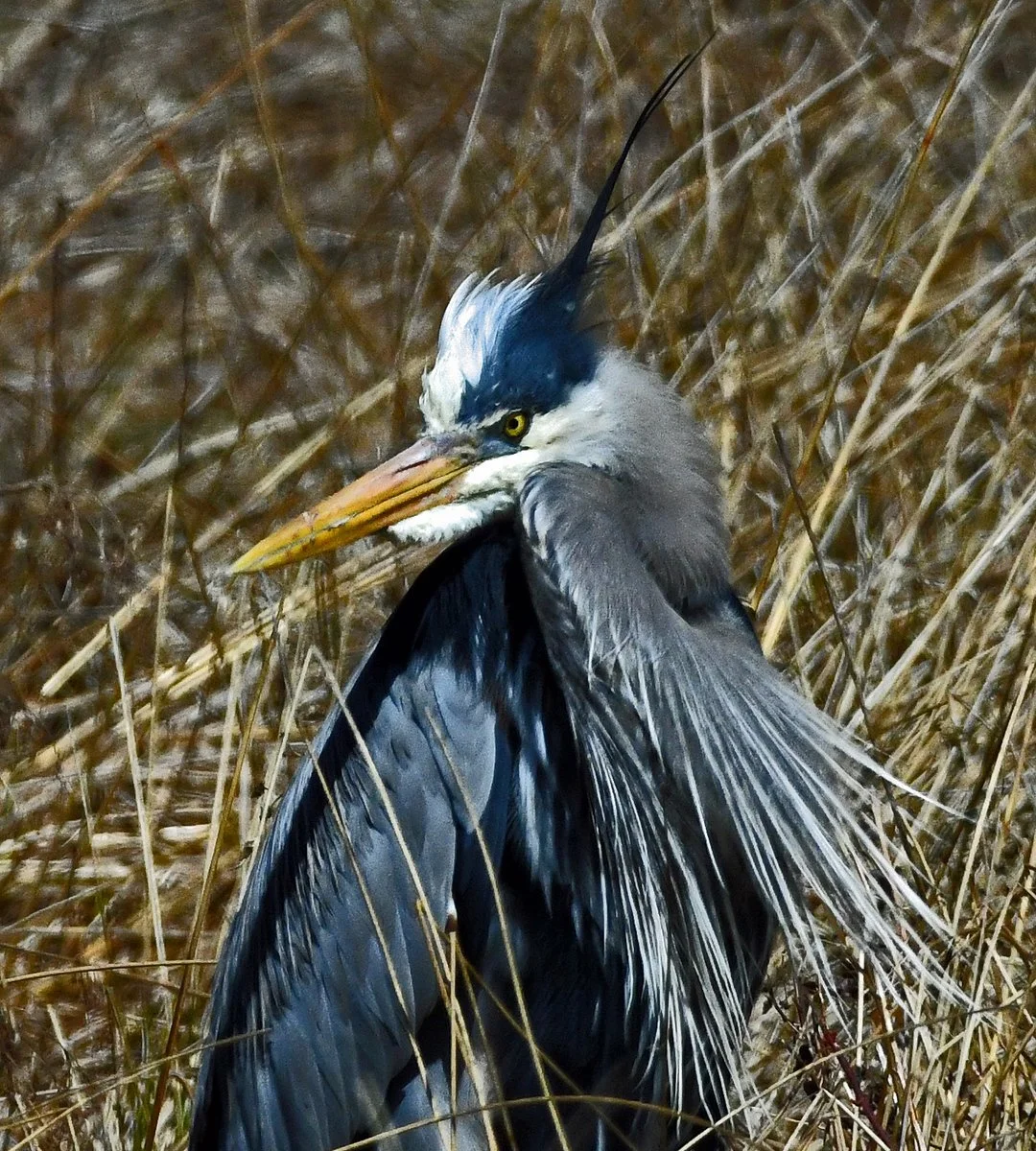
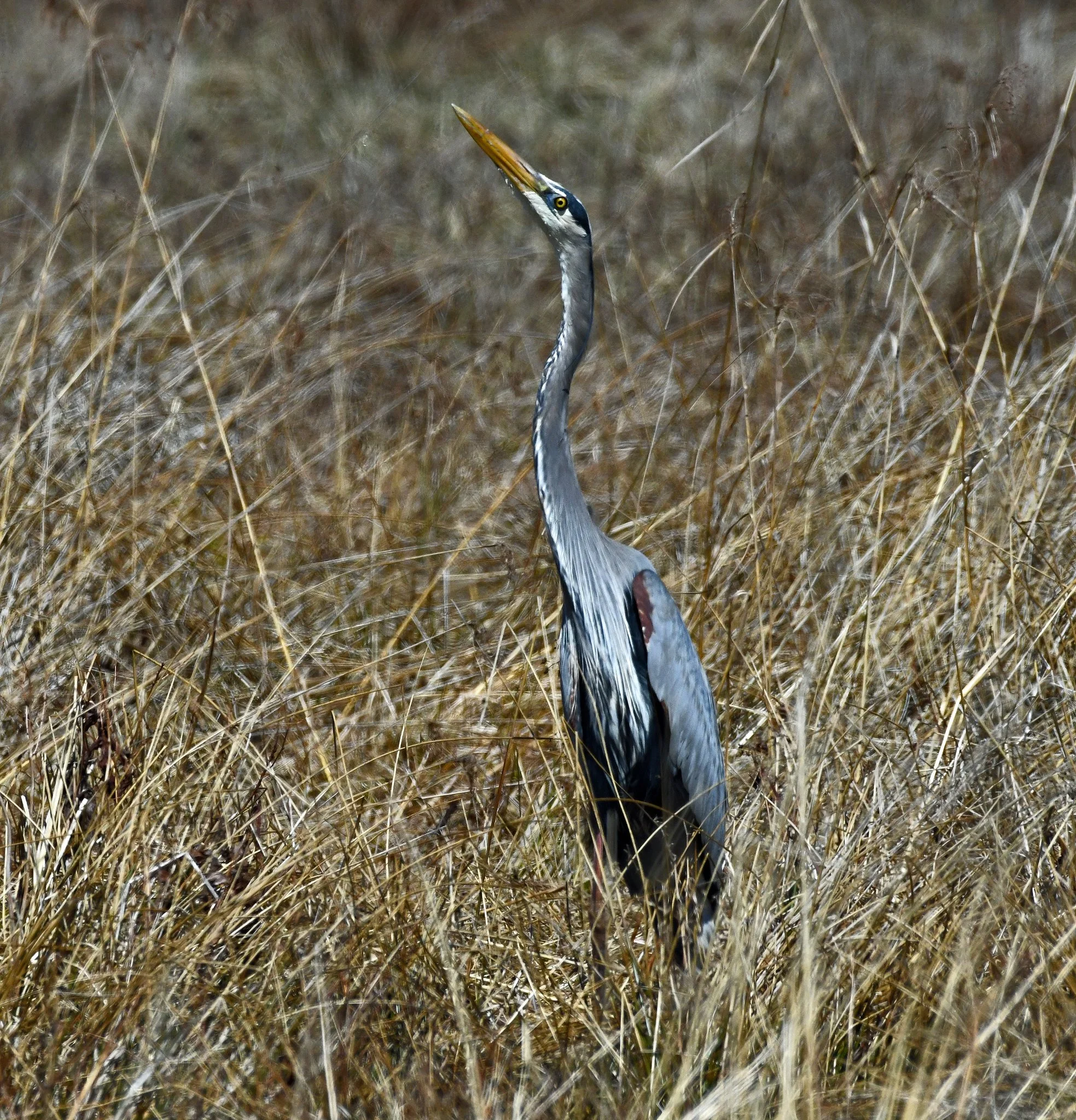
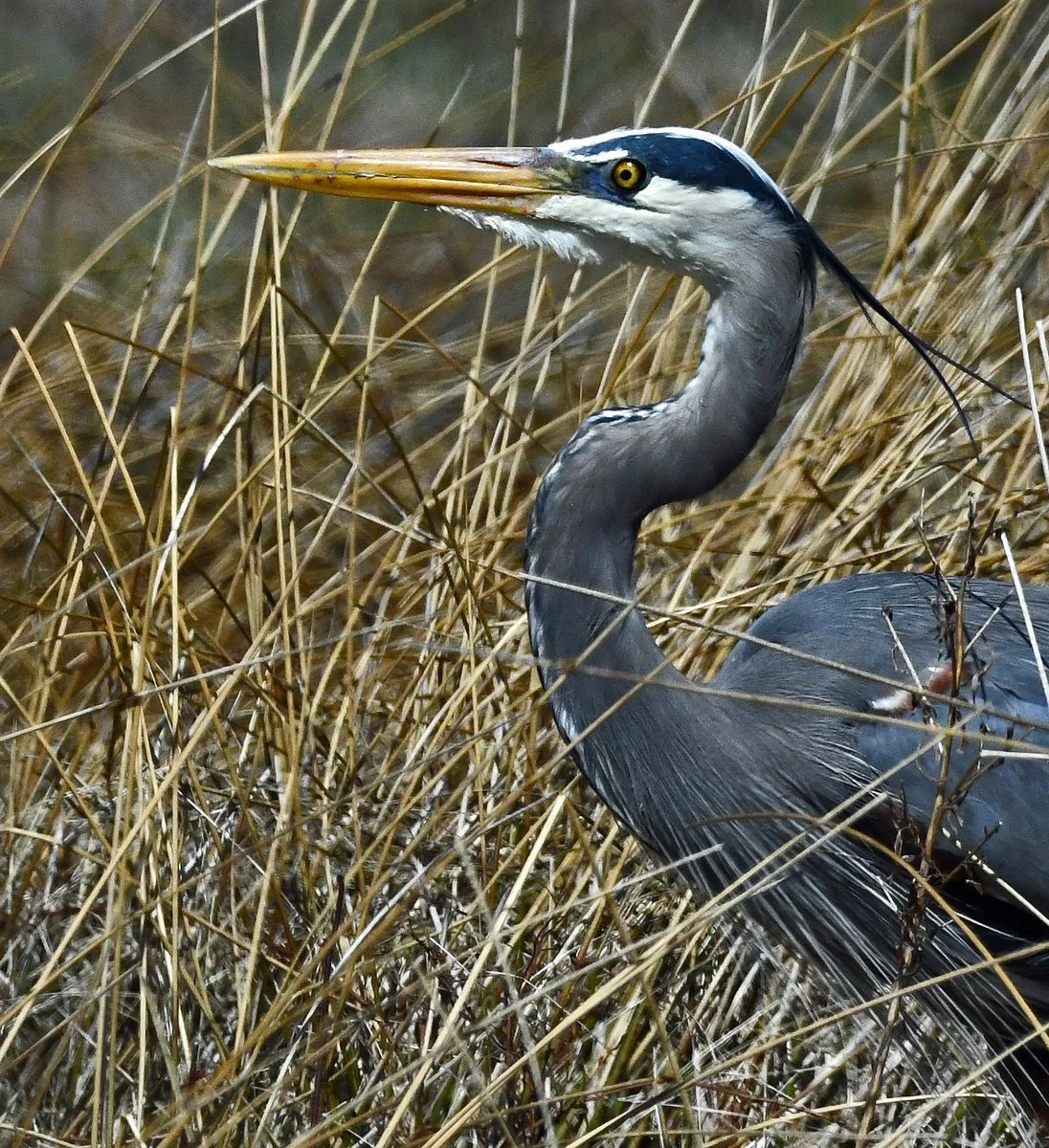
A great blue heron, another returning migrant, regularly waded in Great Cove at low tide and hunted in the nearby marshes during April. He’s a creature of many guises:
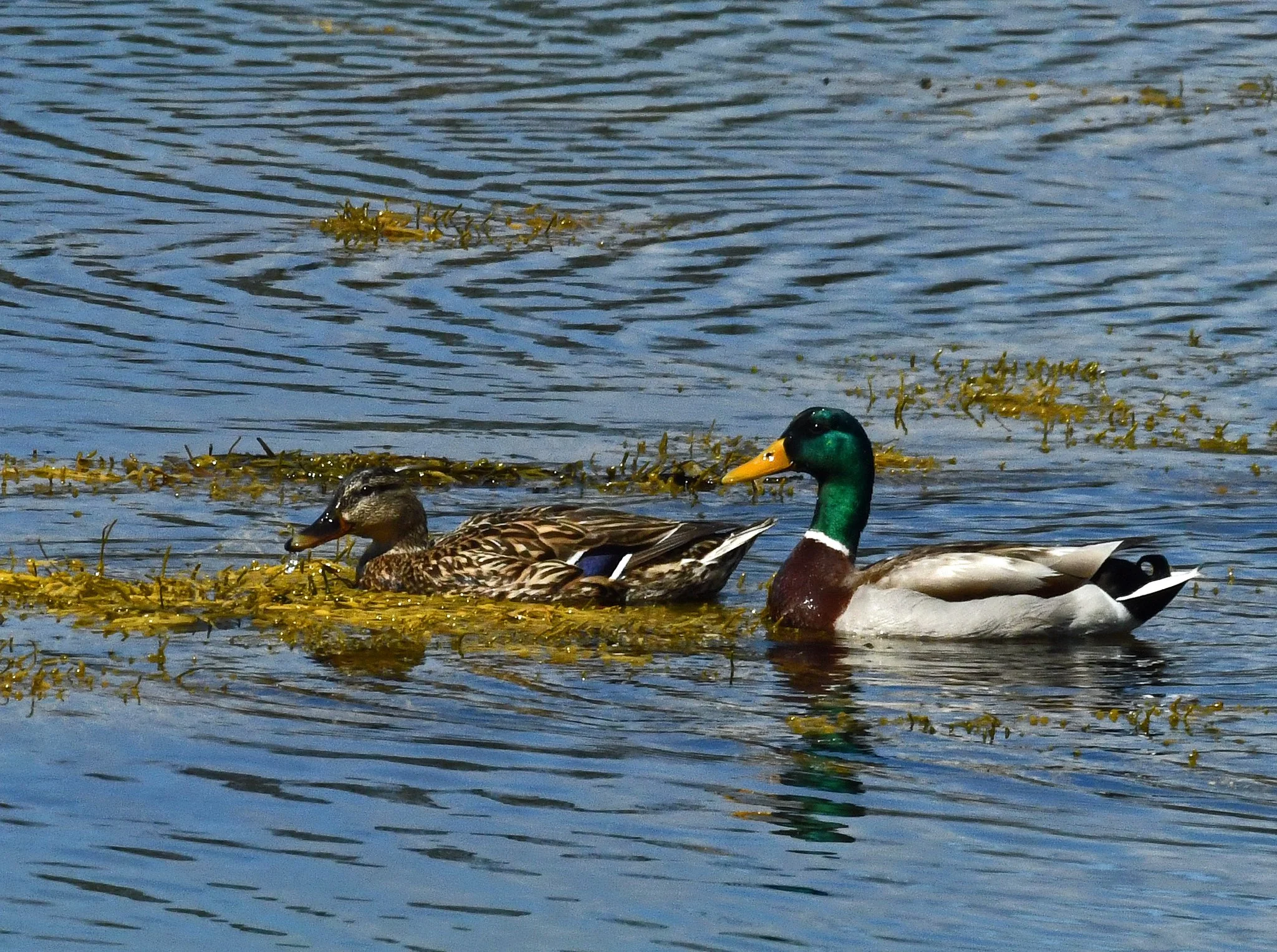
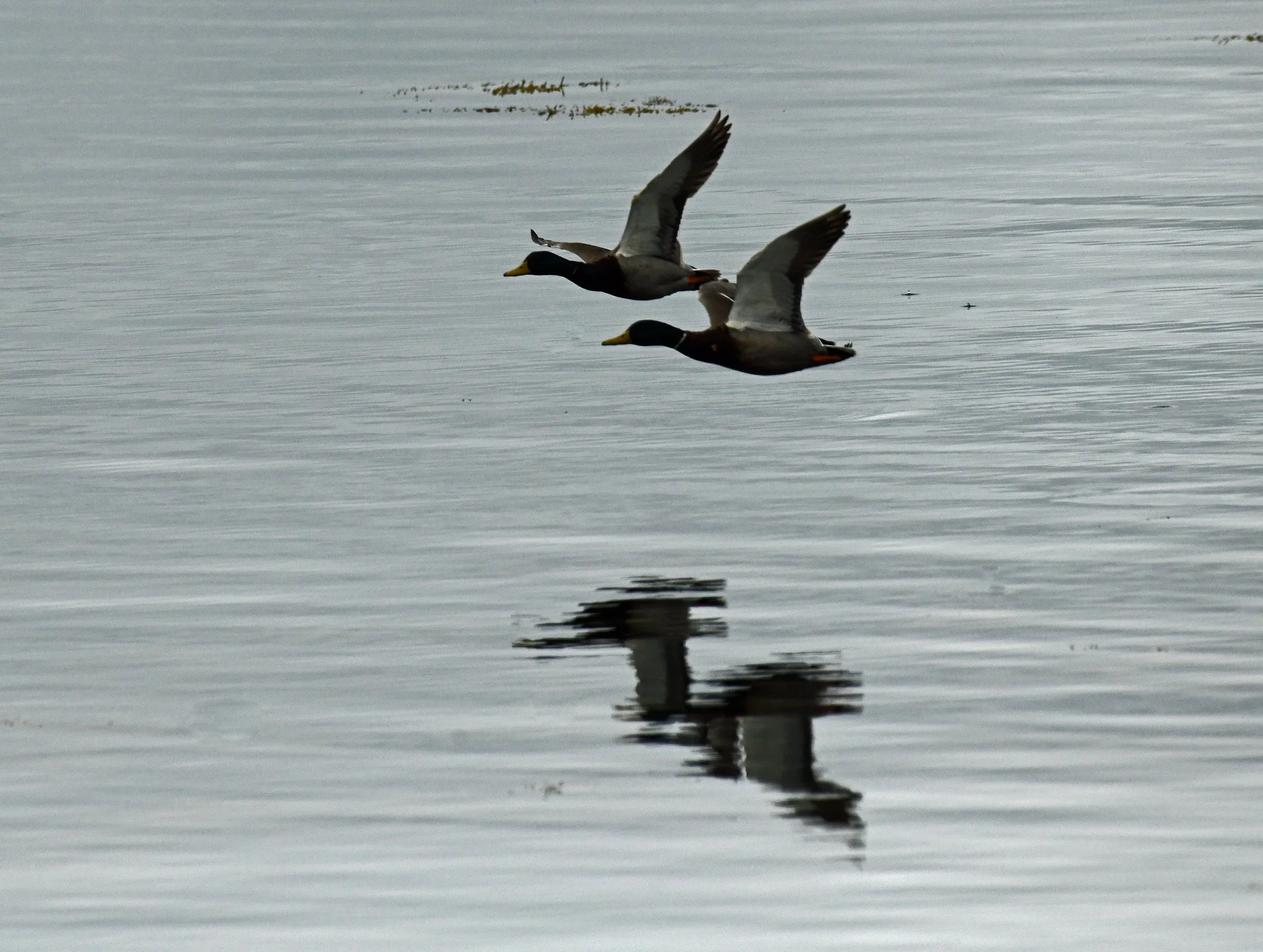
We also have a pair of nesting mallard ducks that arrived in the Cove during April; we hope to see ducklings there in May,
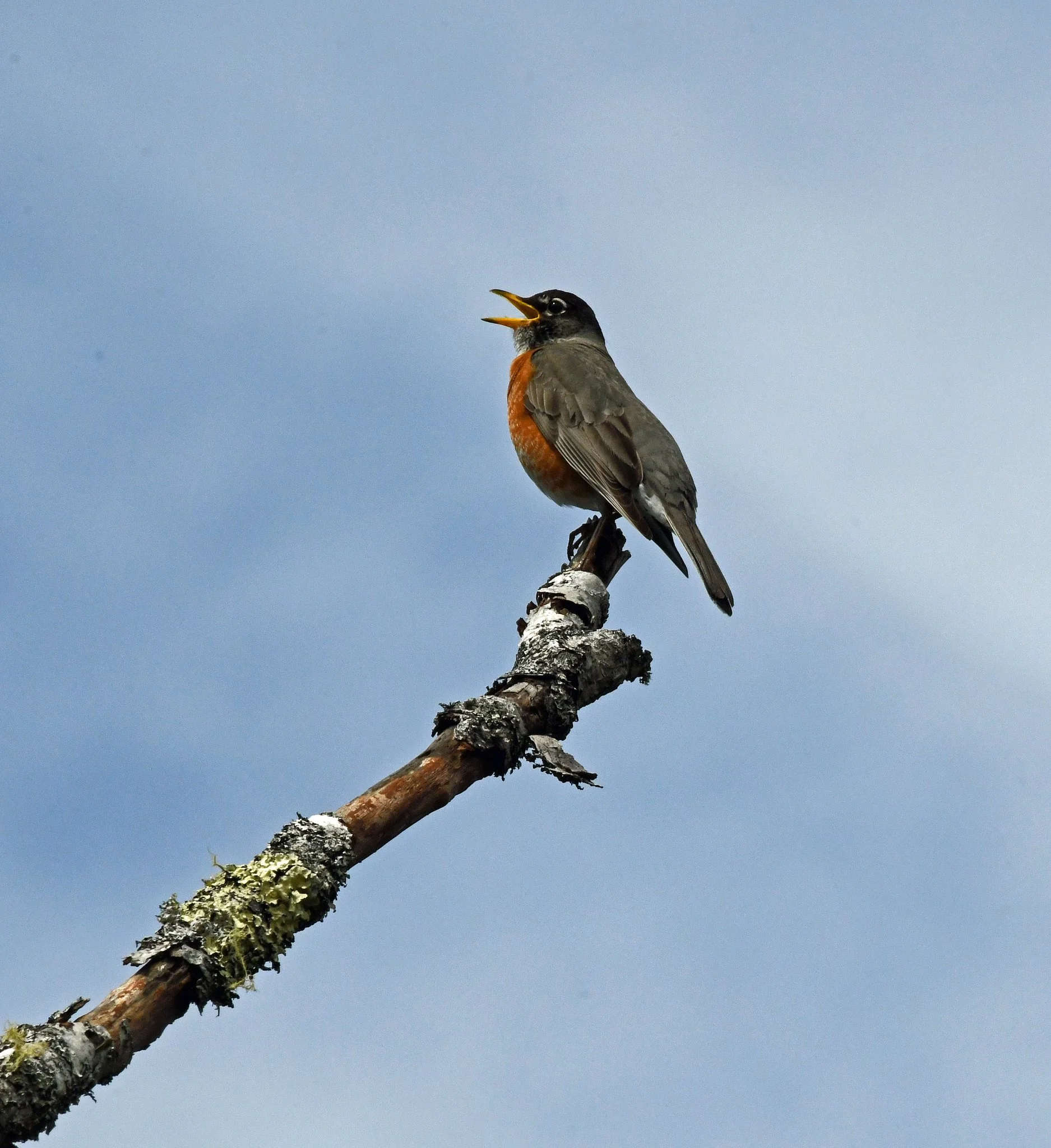
There are too many other spring birds in our coastal area to show here. But I must show one more: This American Robin was singing his little heart out most of the month, hoping for a spring romance.
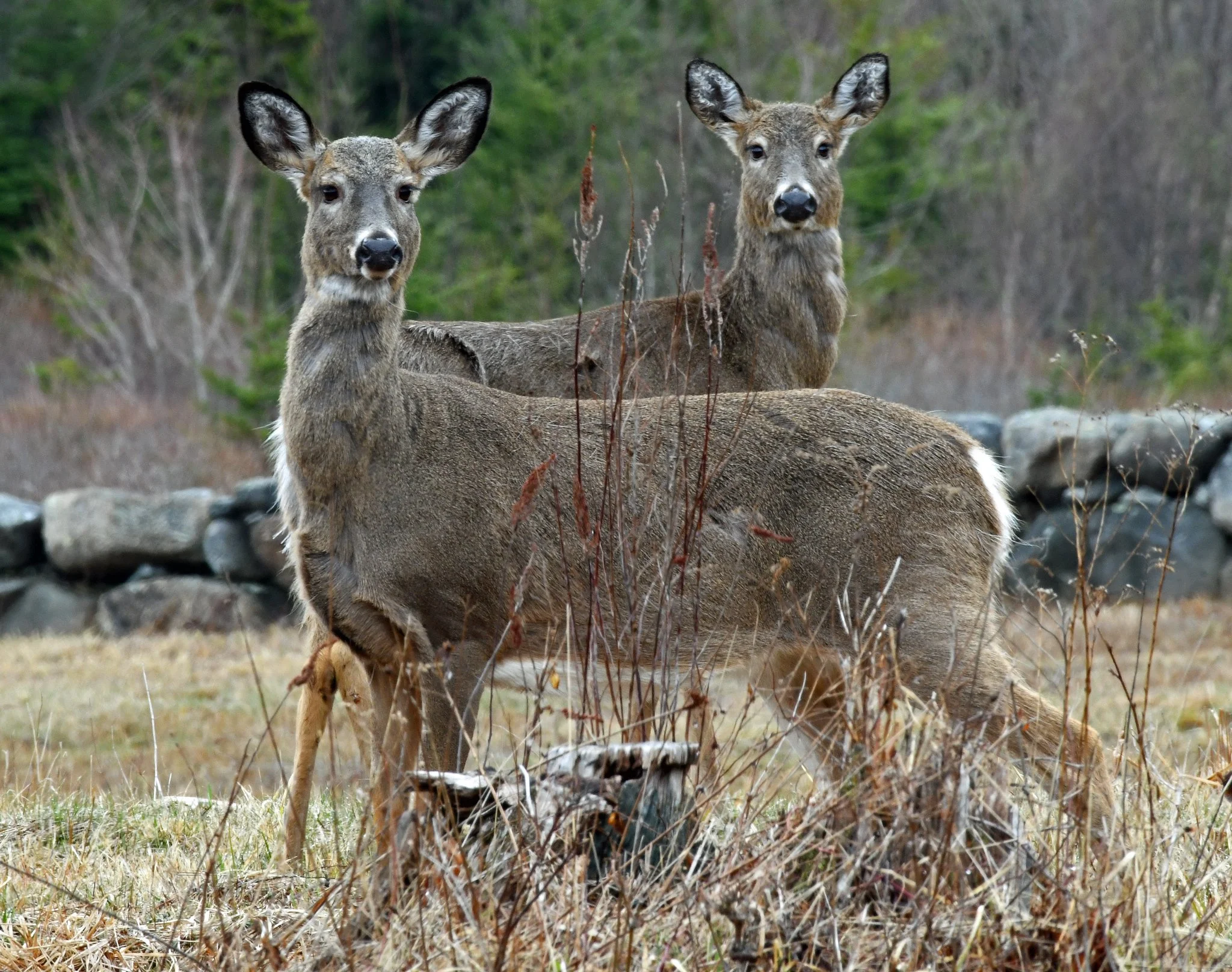
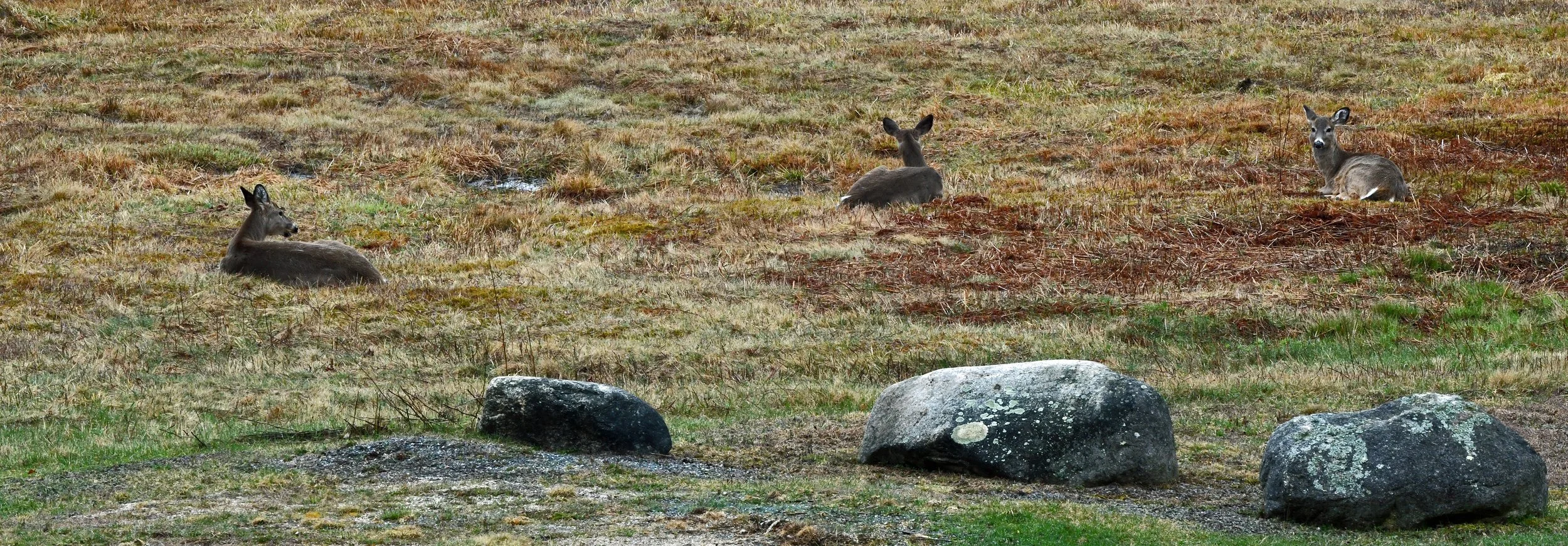
Before we say fairwell to the fauna, I should report that our white-tailed deer were still in their fully-insulated winter coats during April and even took naps during April showers.
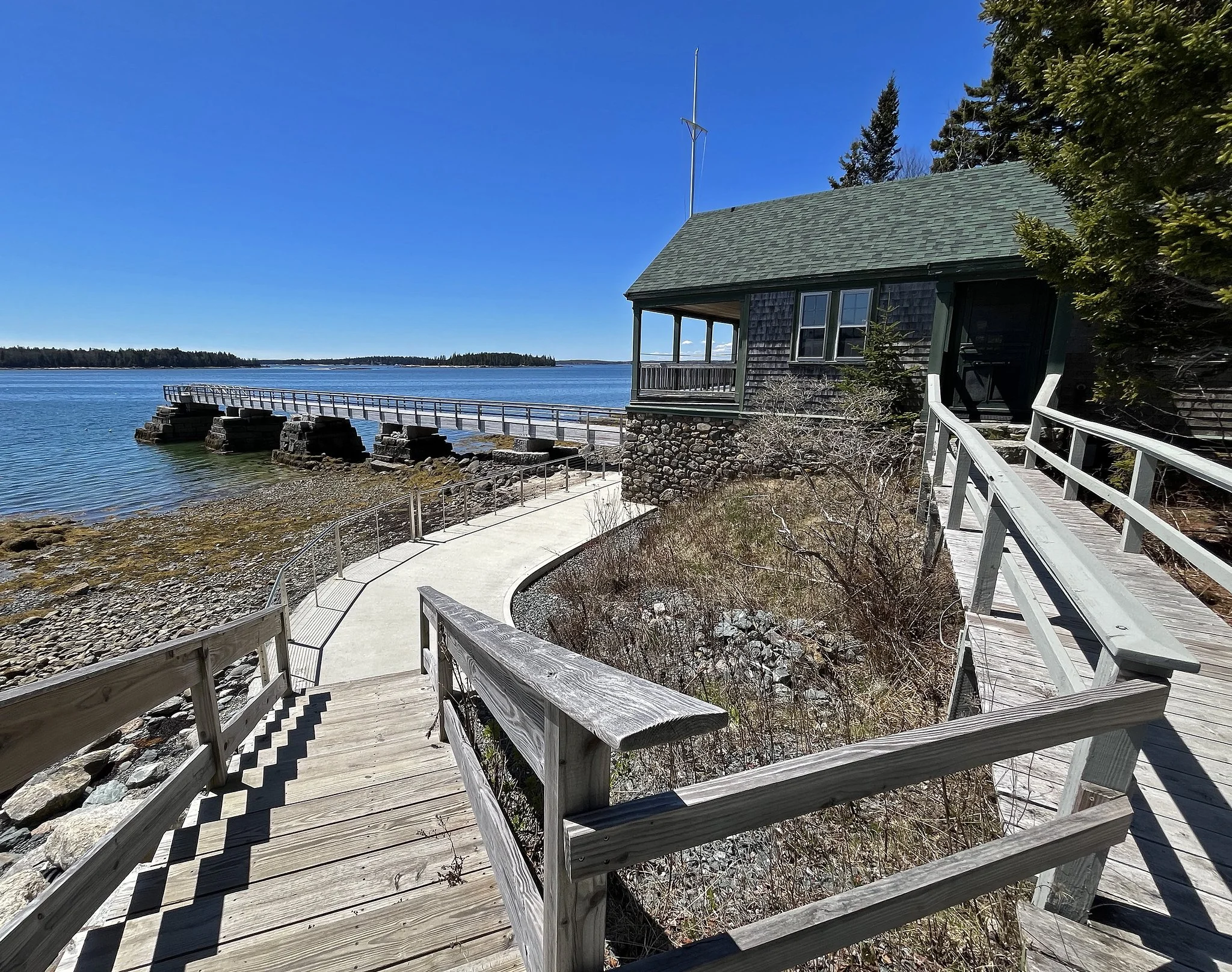
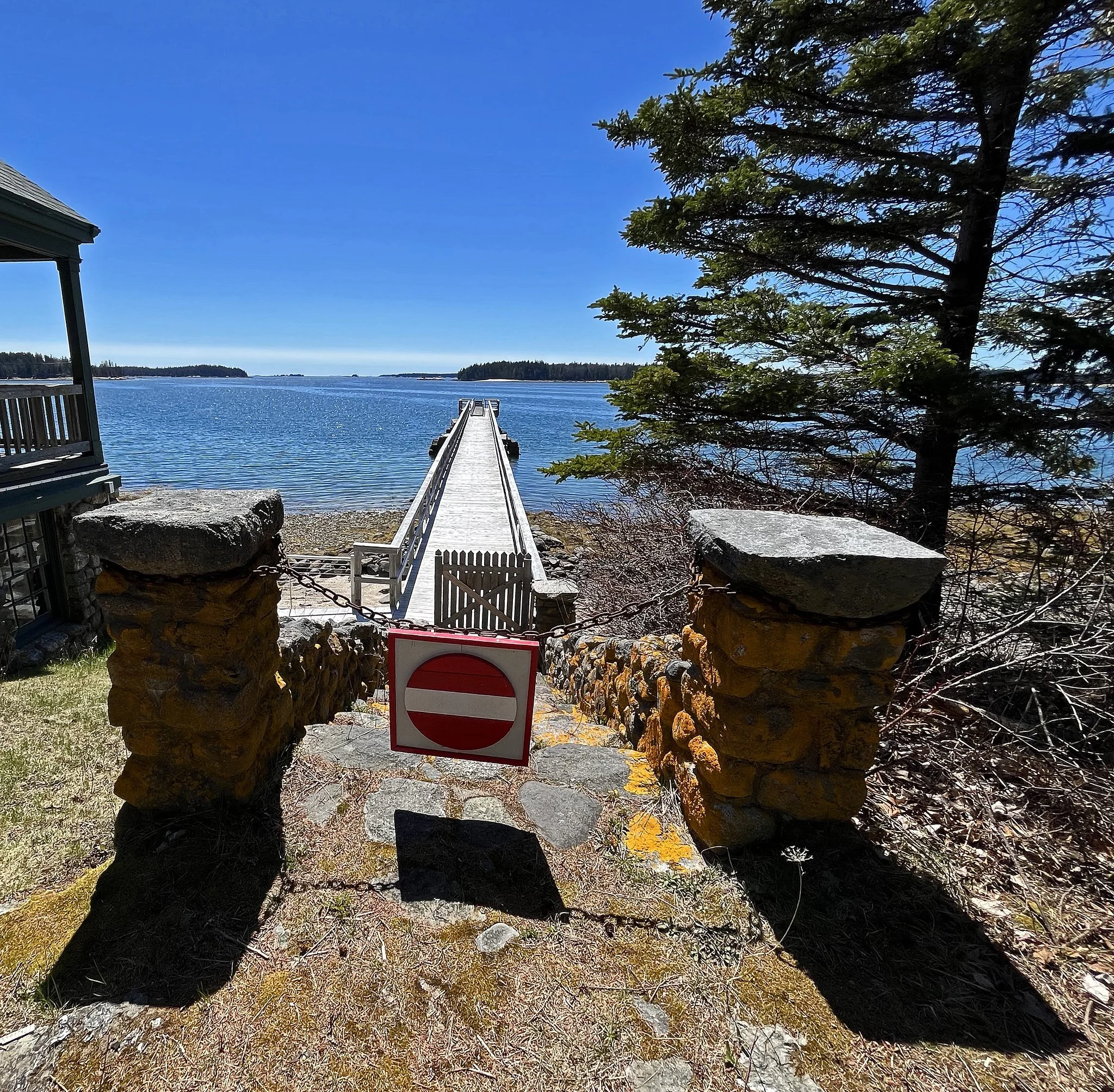
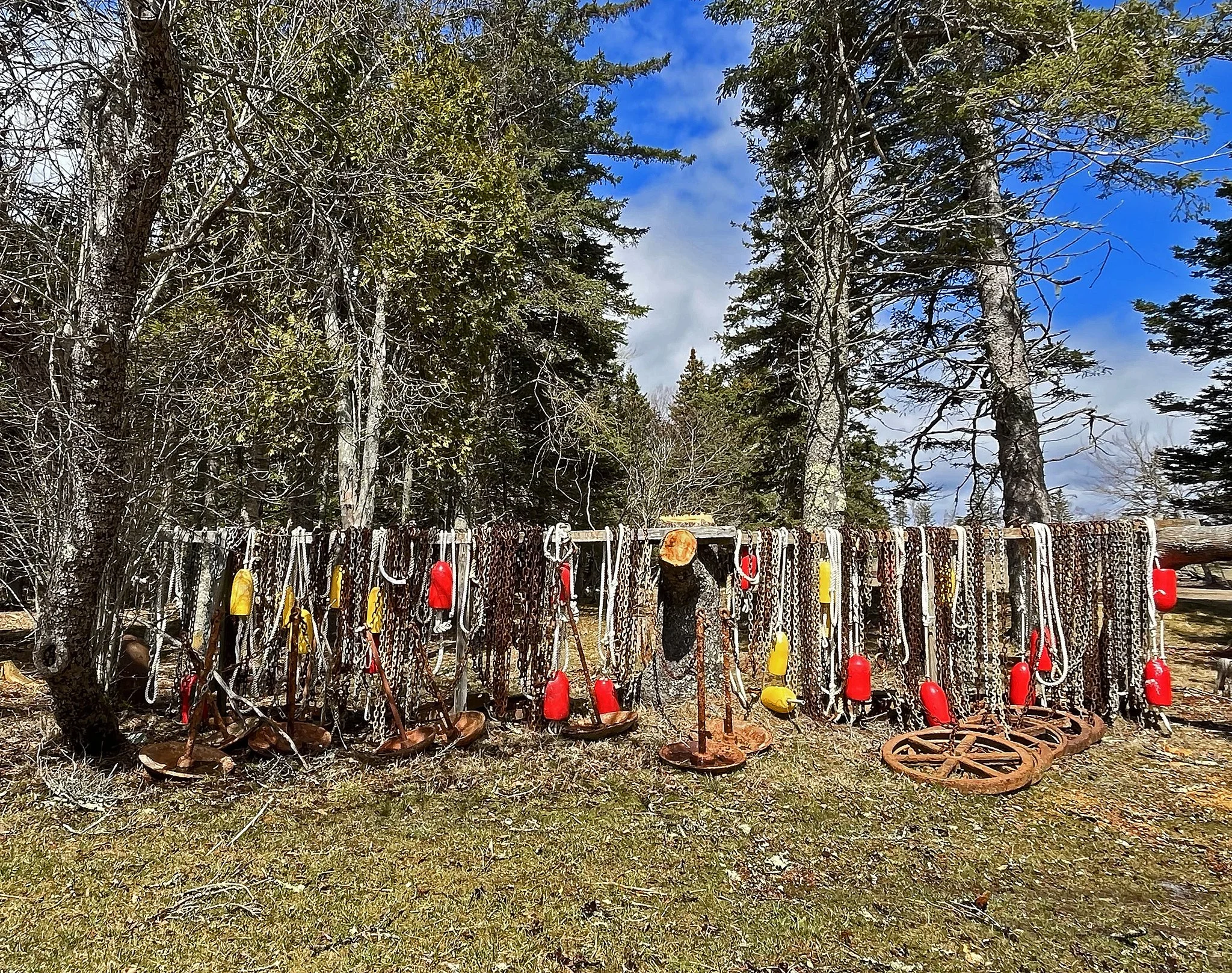
WoodenBoat School’s pier on Great Cove doesn’t get its docking float attached until May or June. But the mooring gear for the renowned school’s fleet of small boats seems to be eager to get back into the Cove.
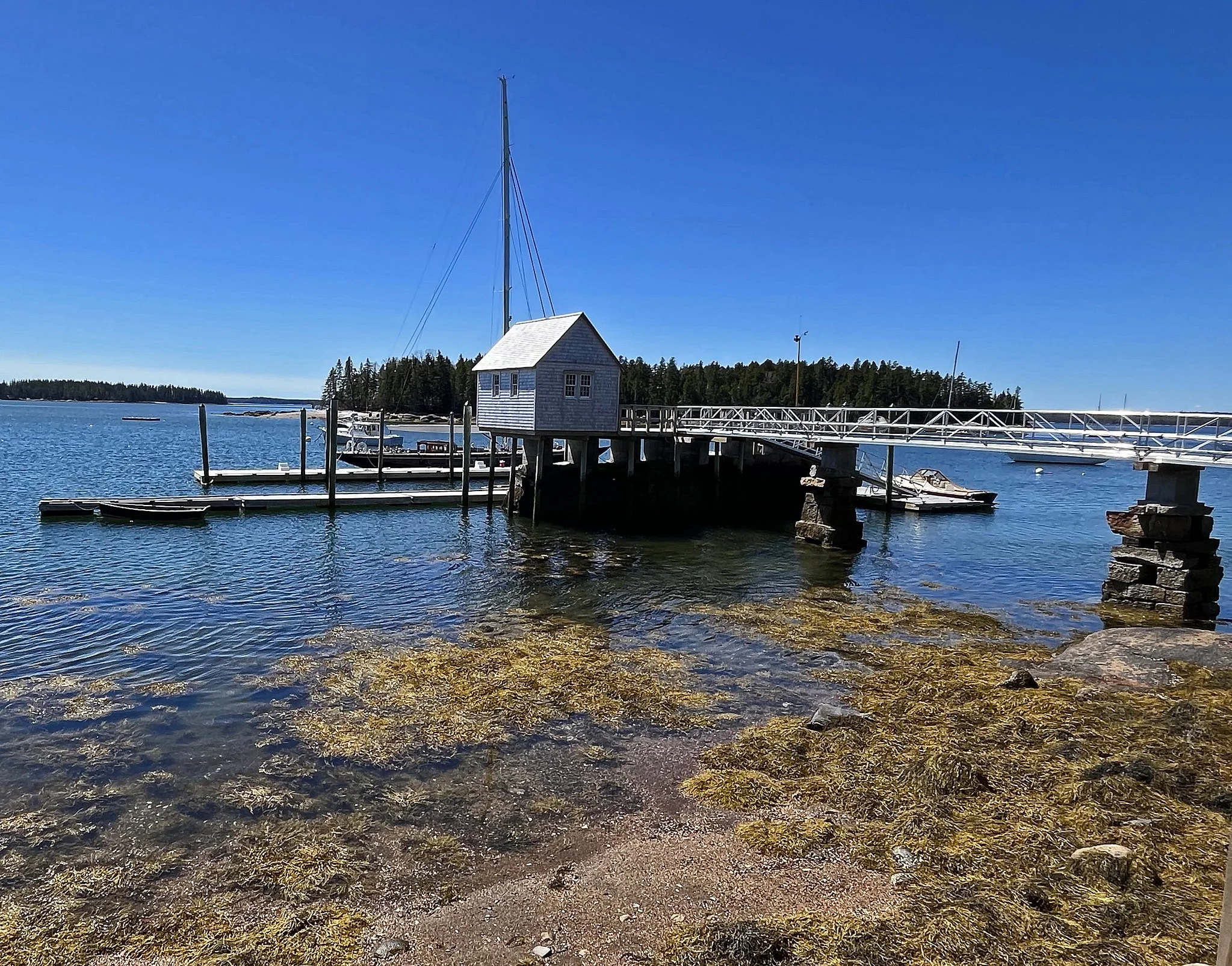
Just north of Great Cove, the Brooklin Boat Yard’s pier in Center Harbor had its docking floats installed in early April. The renowned Yard is busy all year, but in April it starts taking large and small boats out of winter storage there and returning them to where they belong.
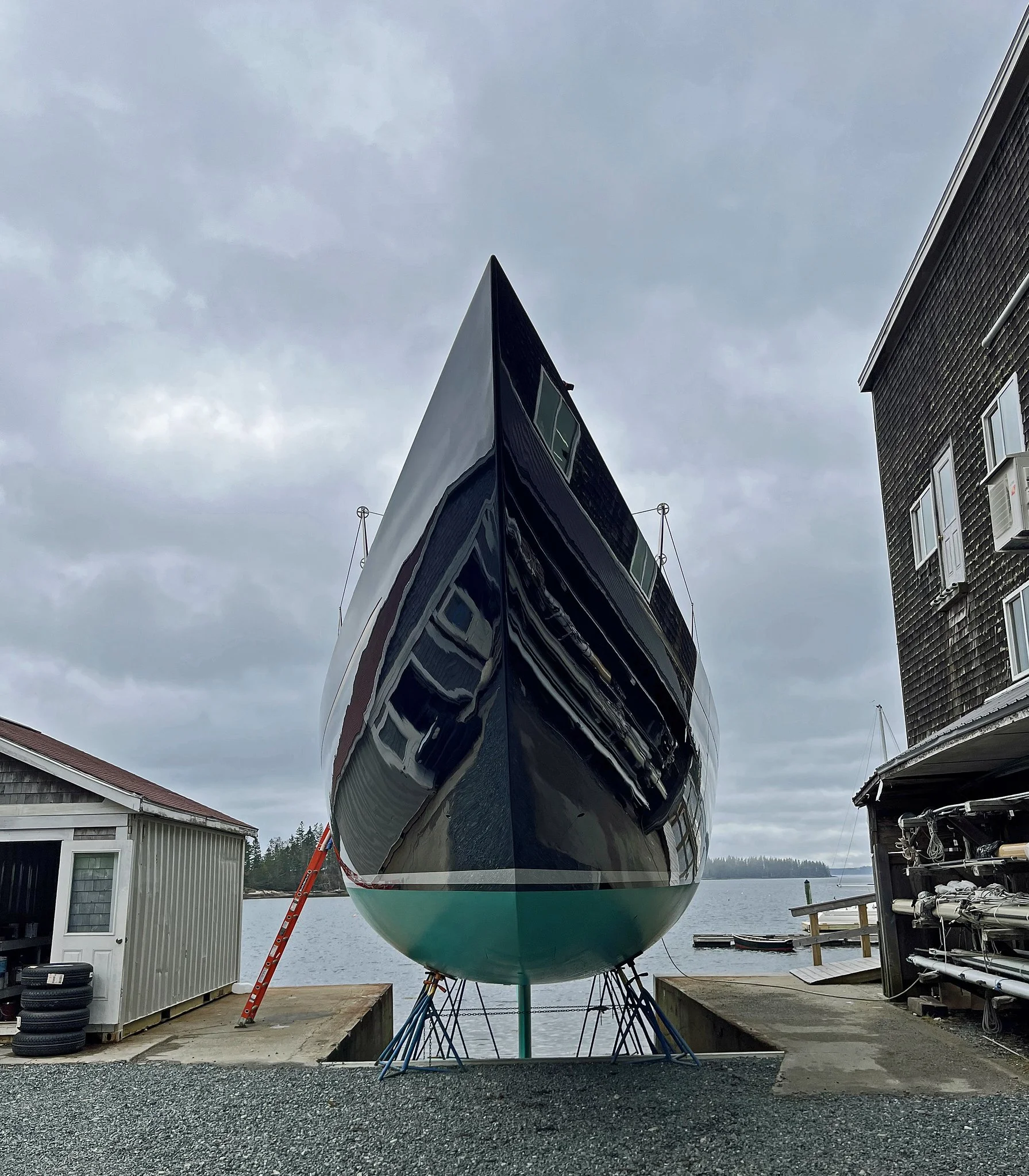
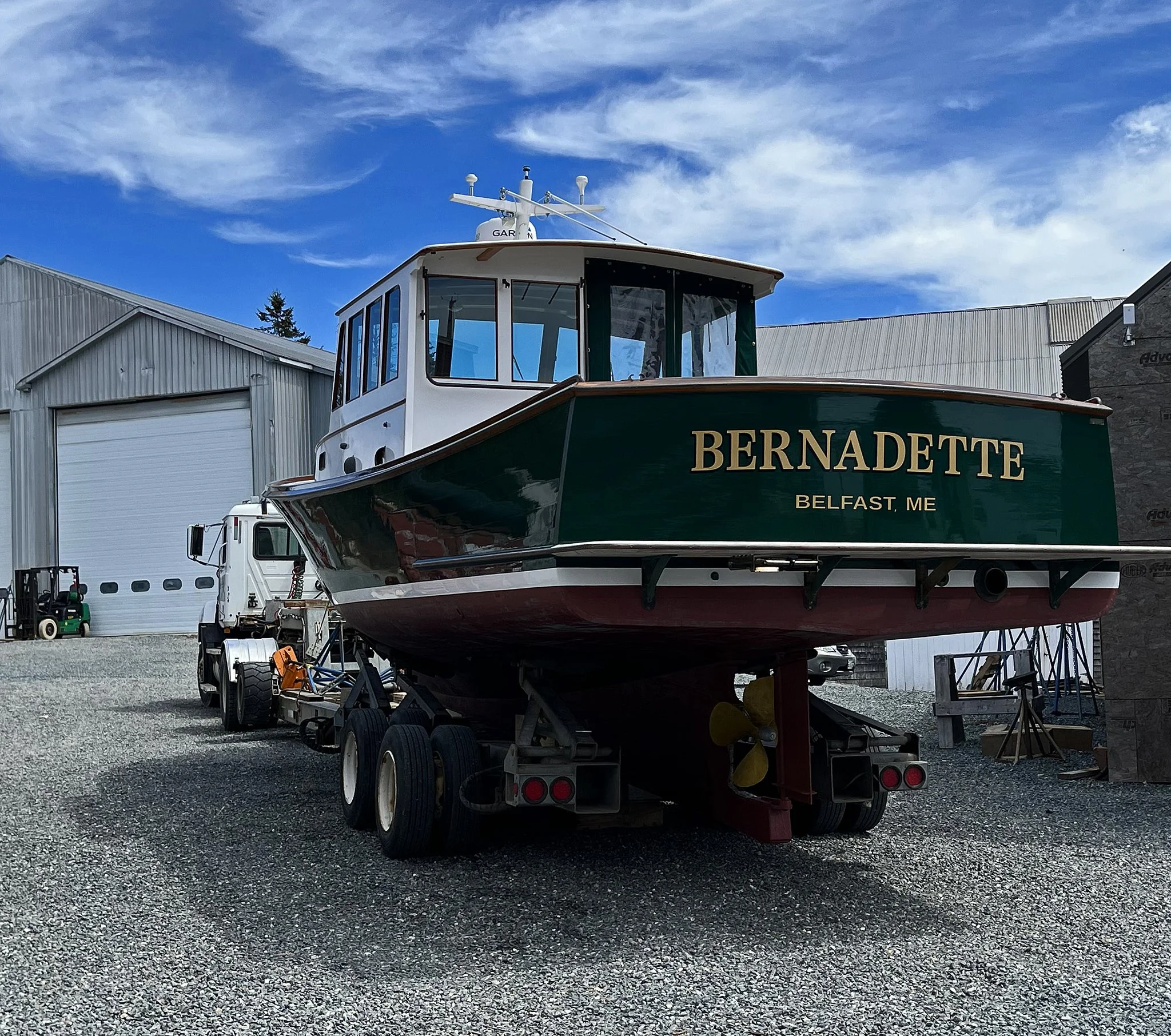
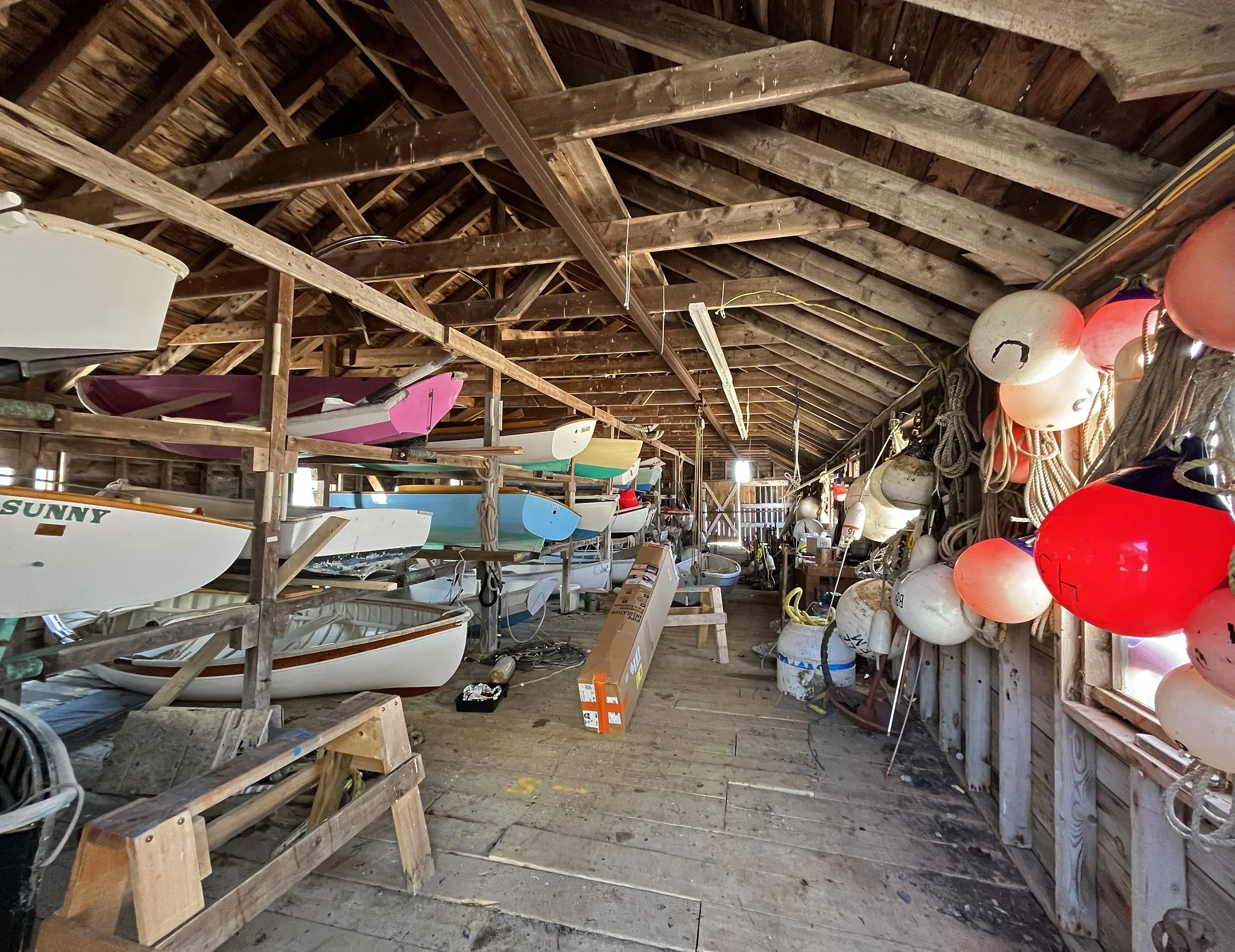
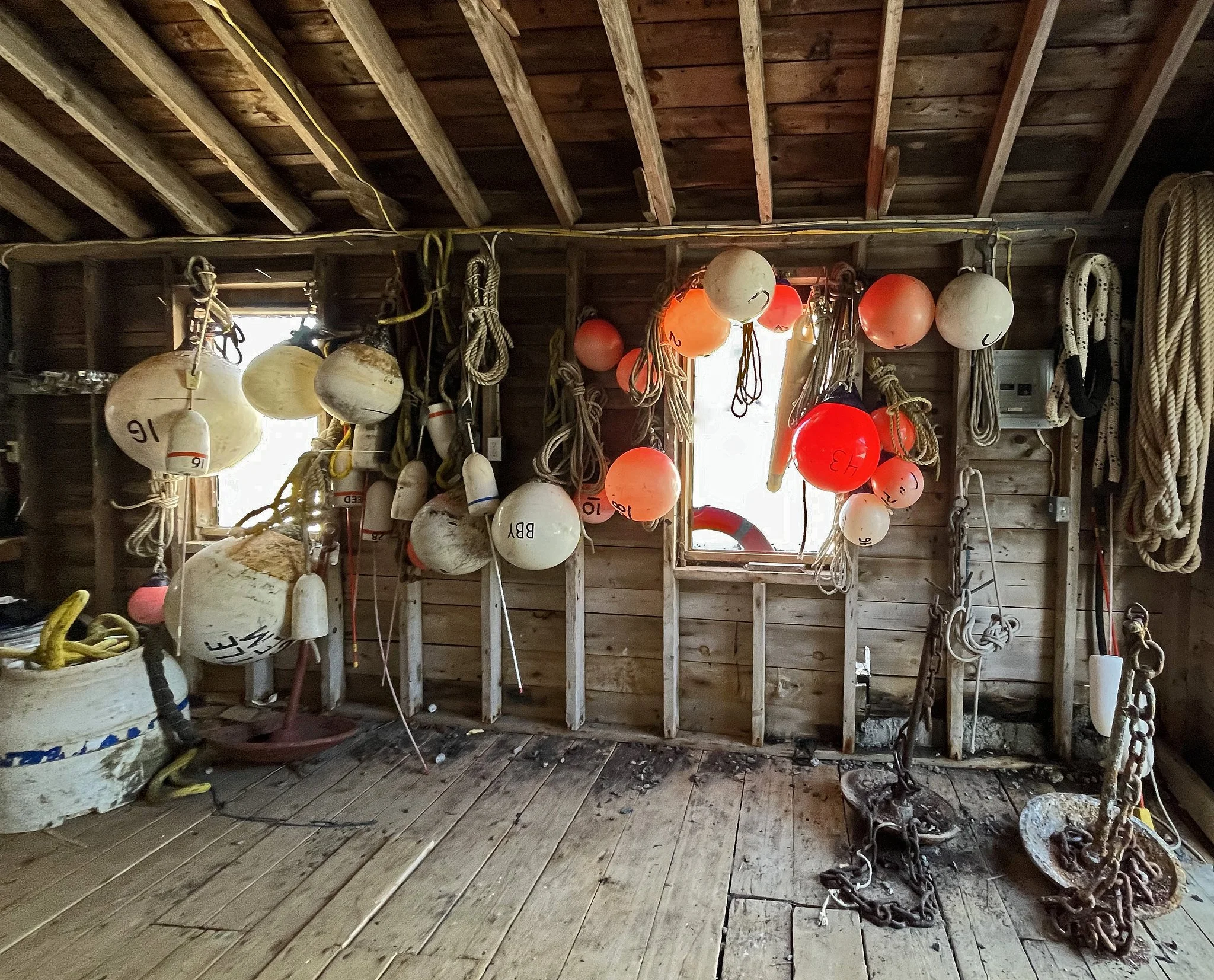
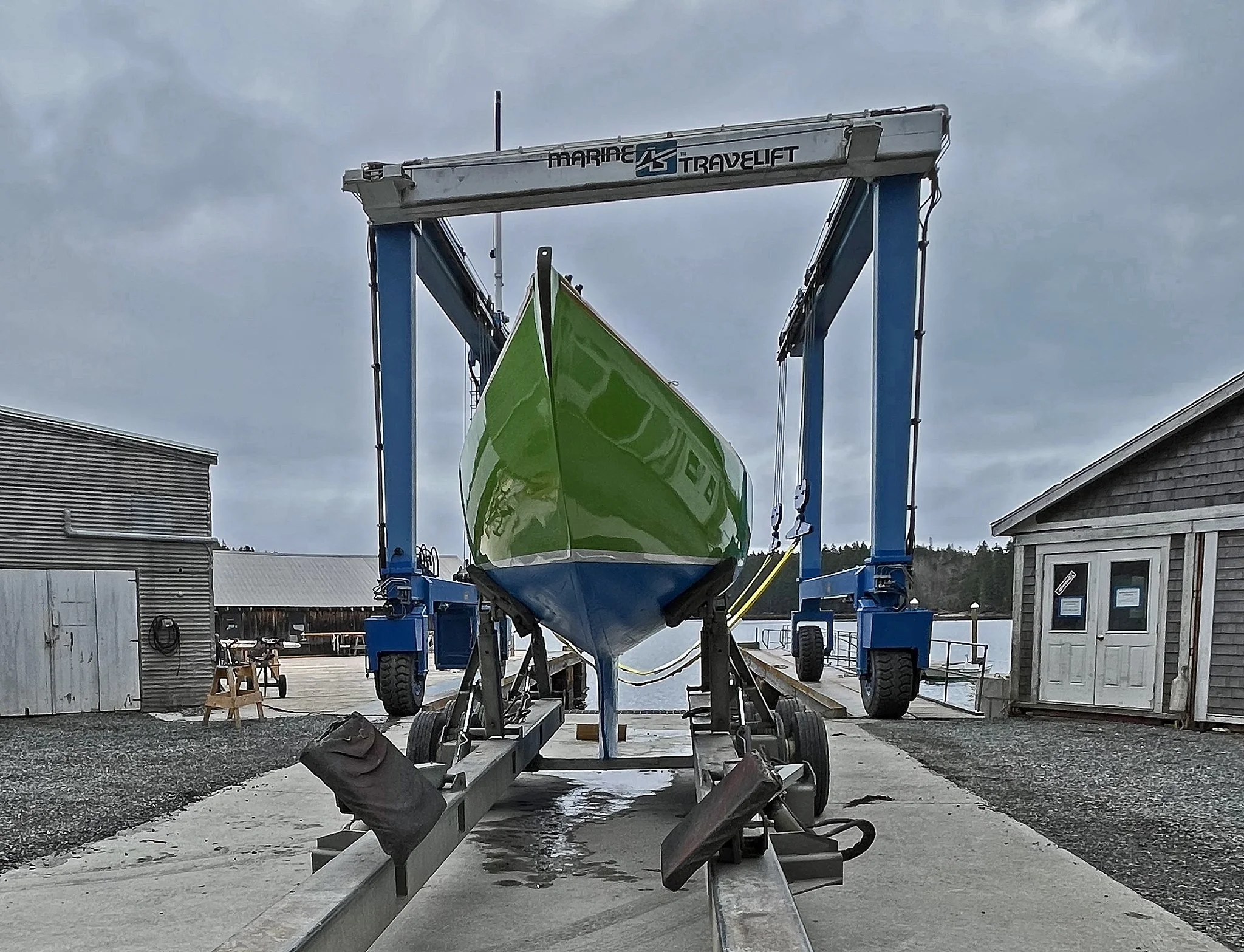
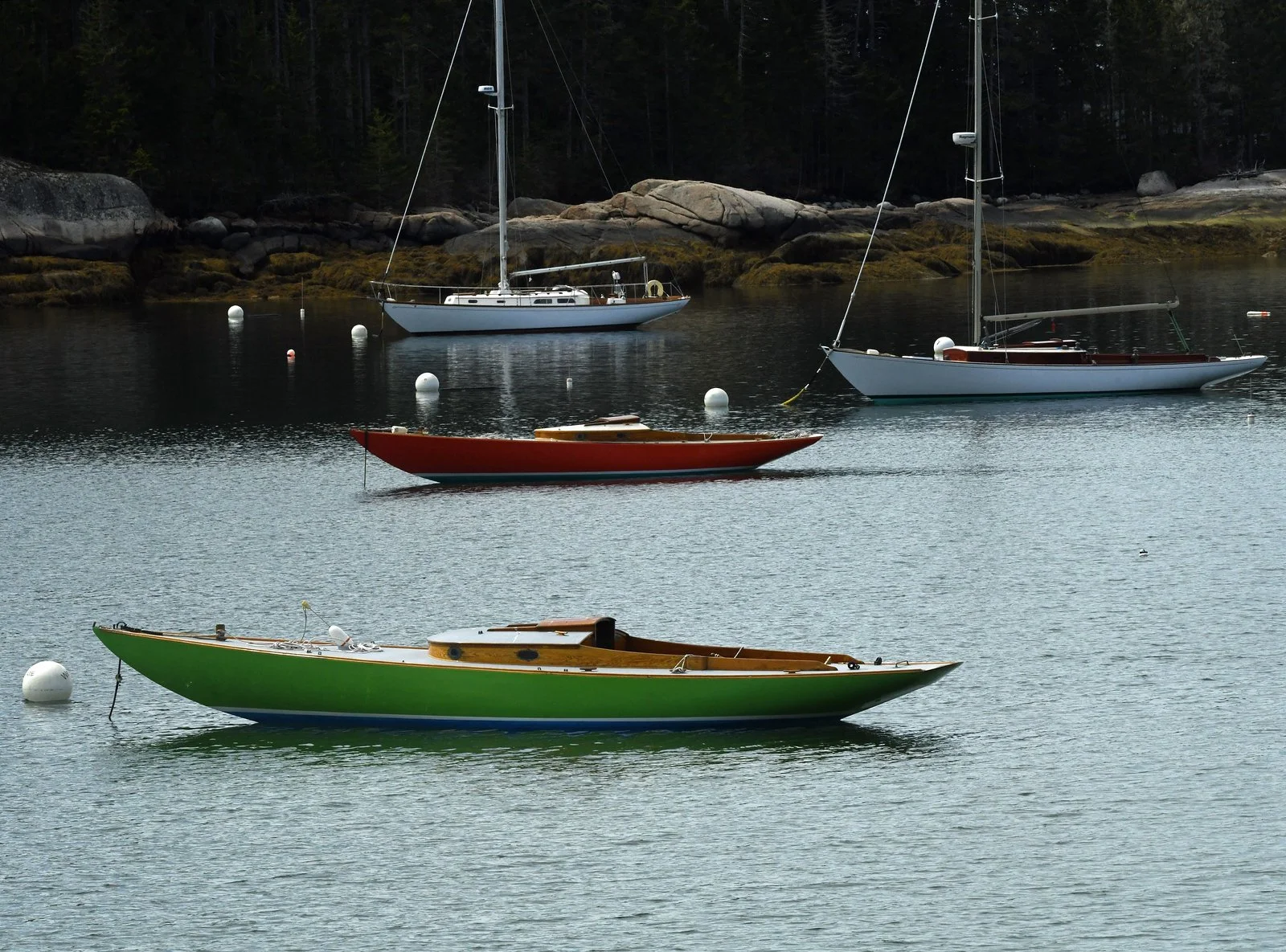
Inside its shops, however, is where the BBY earns its world-wide reputation for expert and imaginative navel archetecture and craftsmanship. Things were busy there in April:
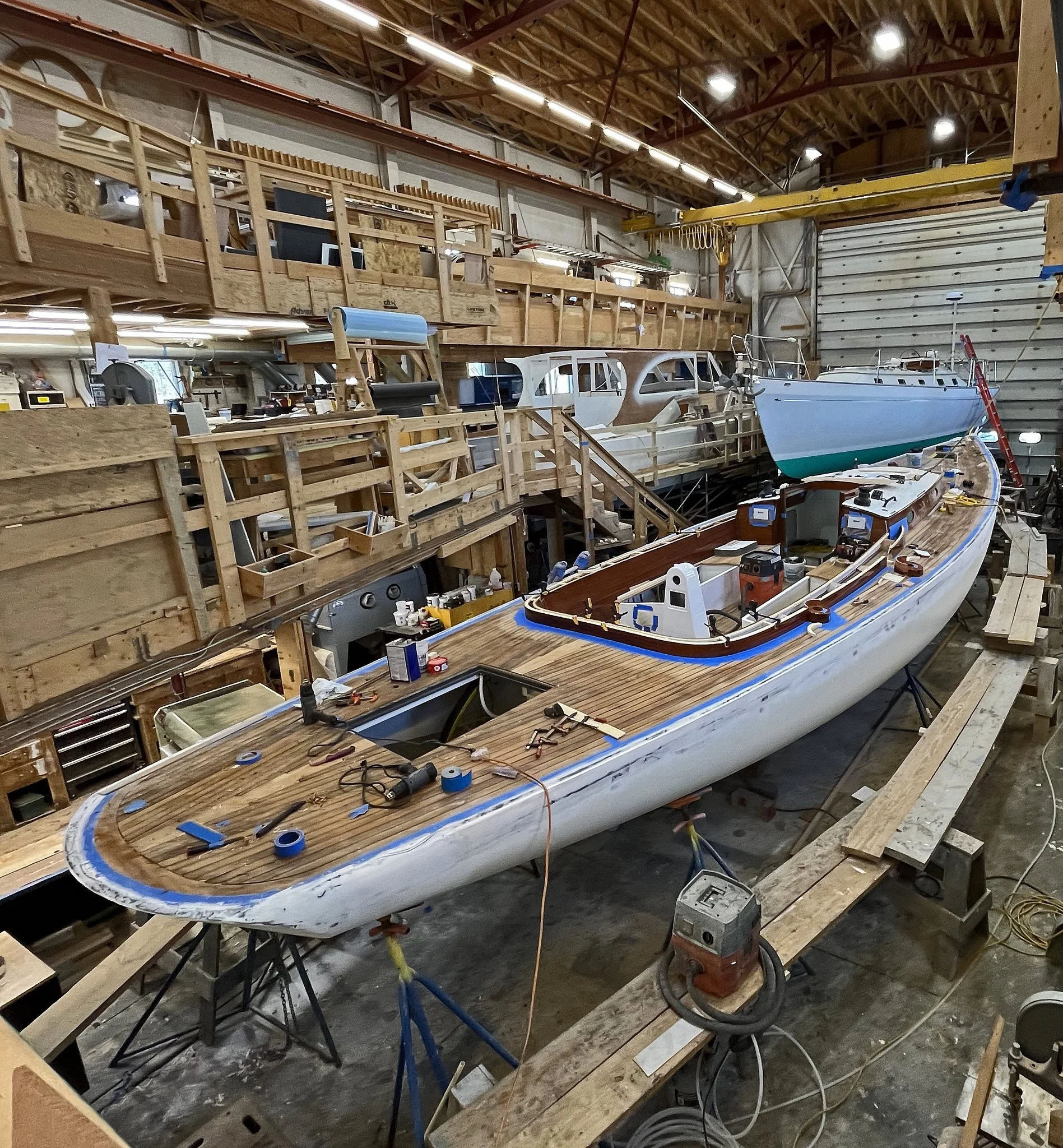
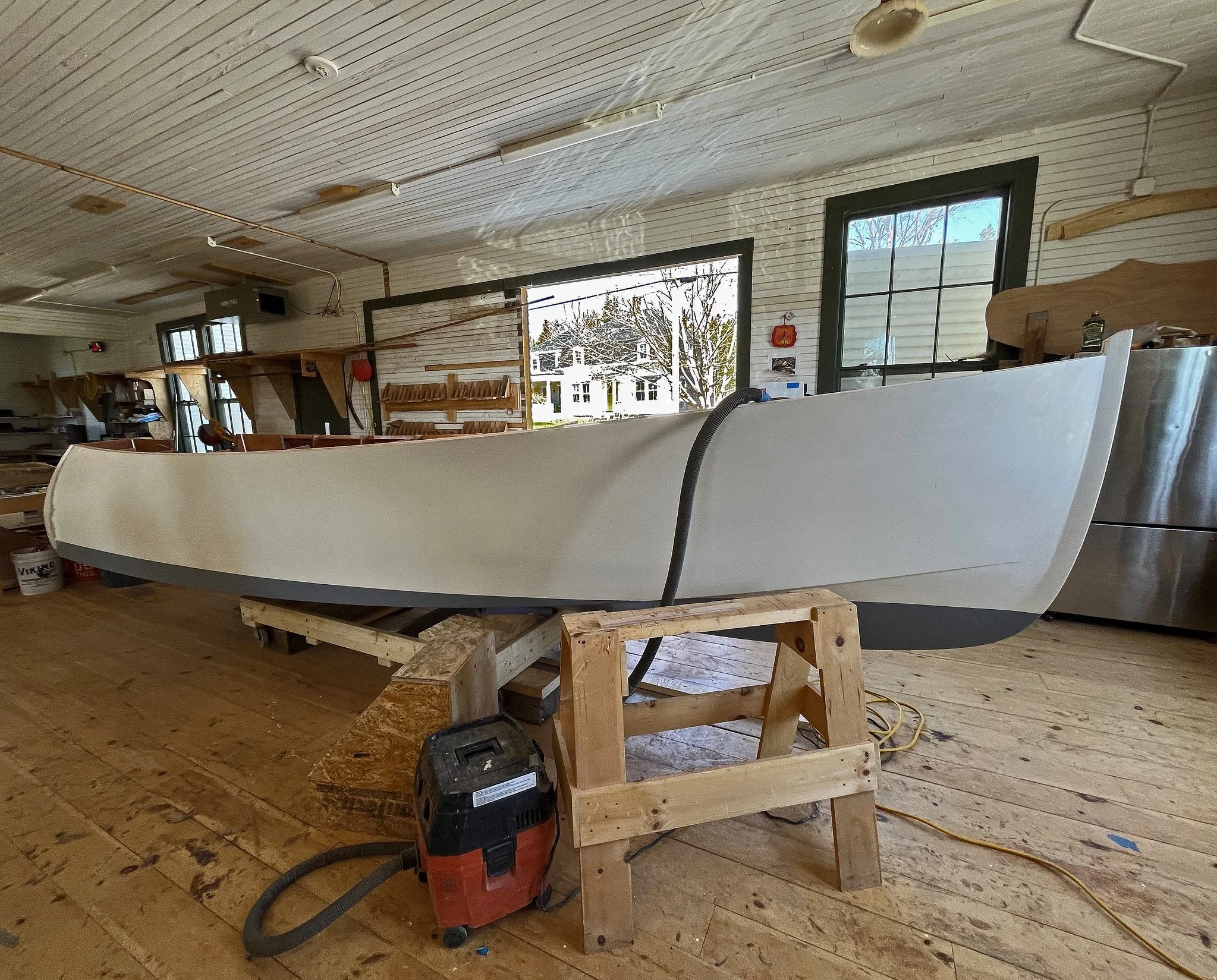
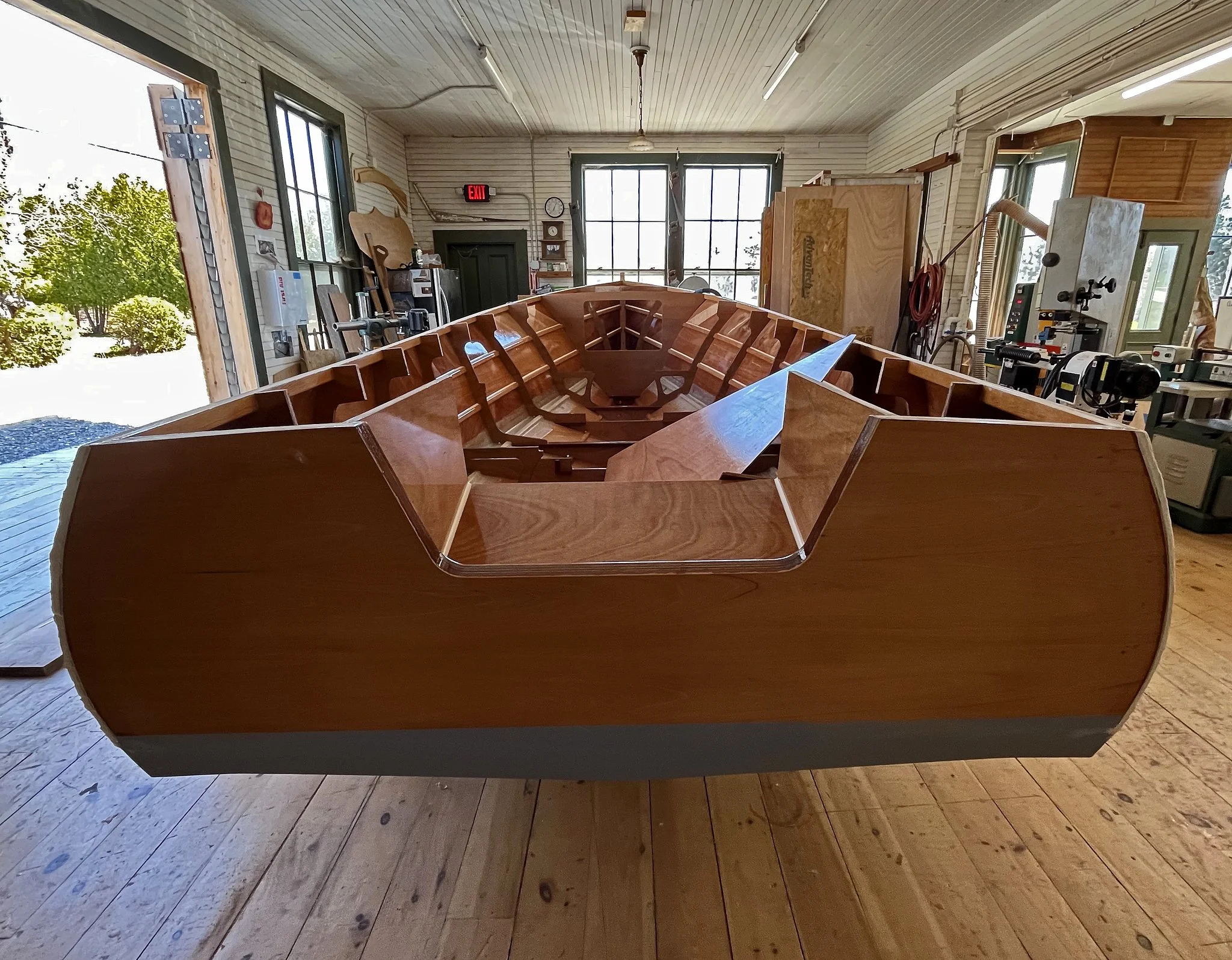
Just south of Great Cove, a few local fishing boats were undergoing rest and repair this A[pril after a tough scalloping season; they have to get ready for summer lobstering. Who said all lobster boats look alike?
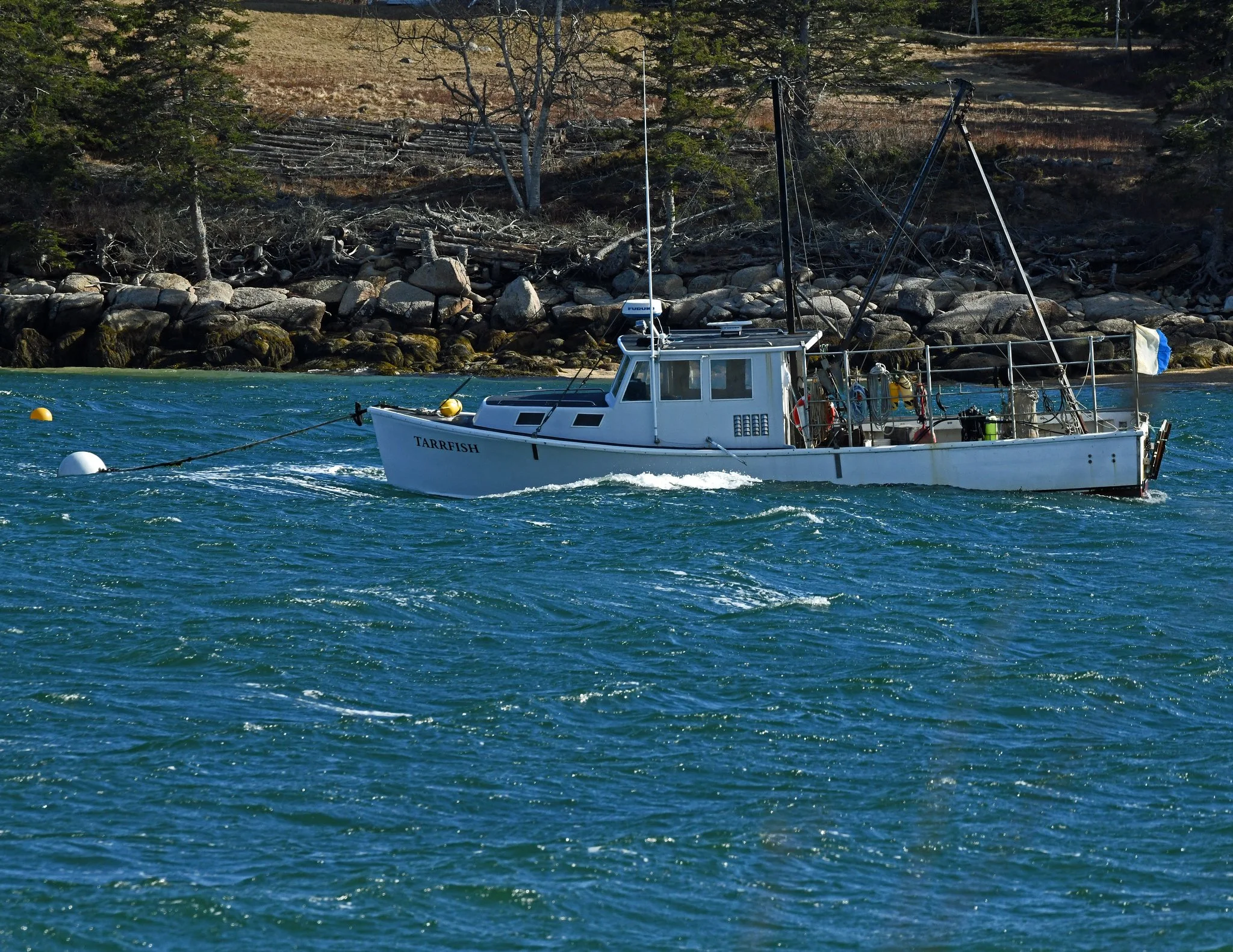
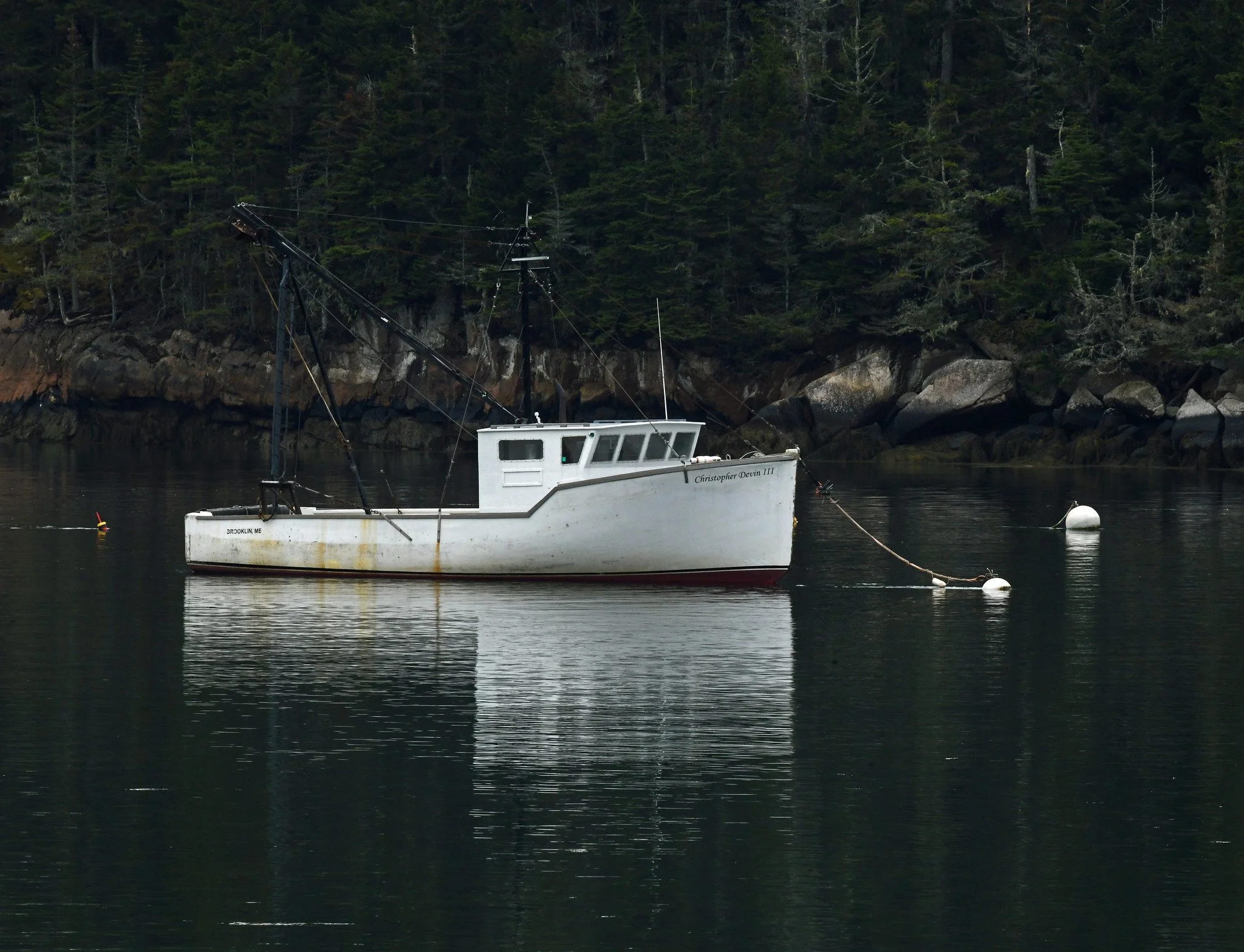
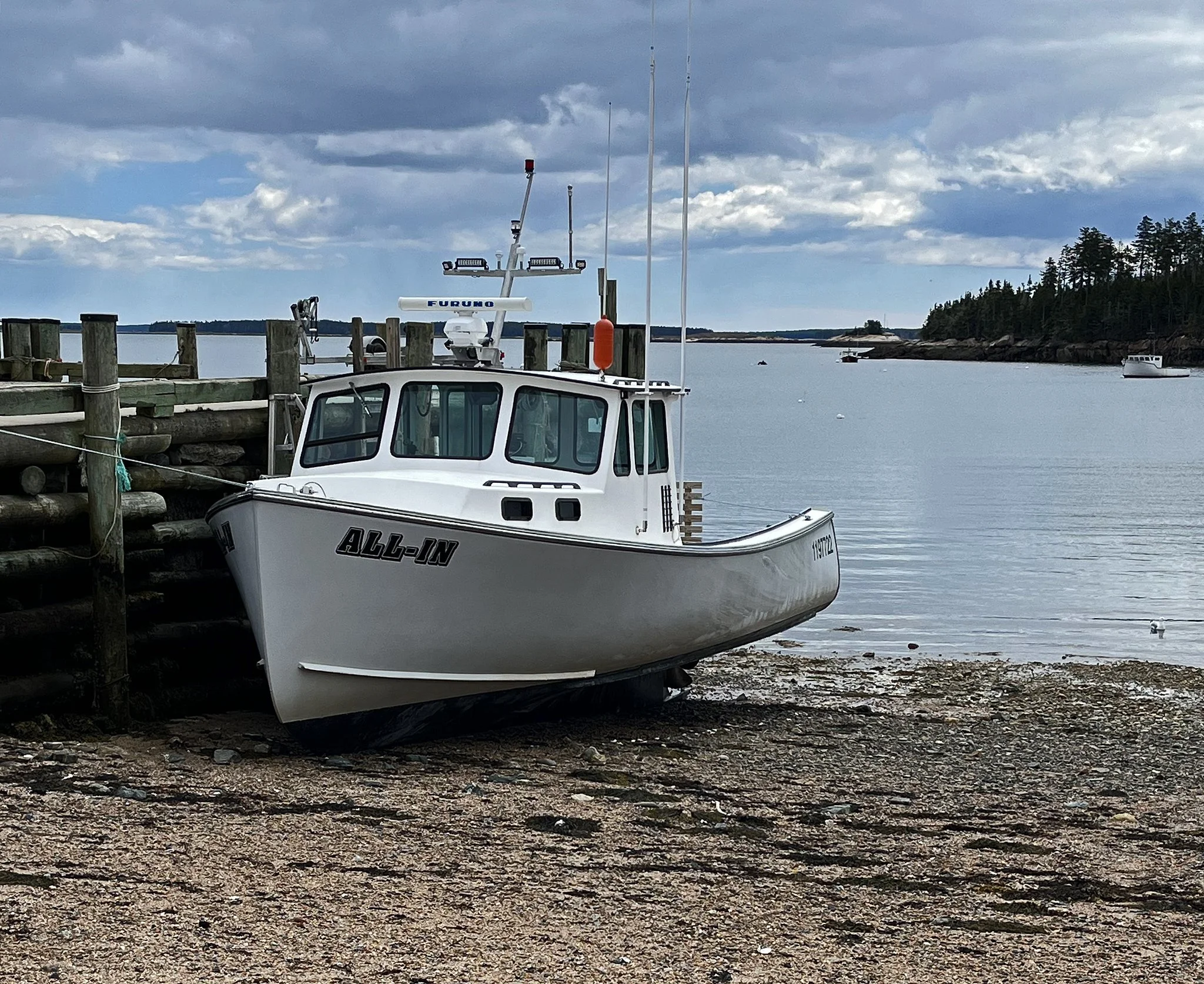
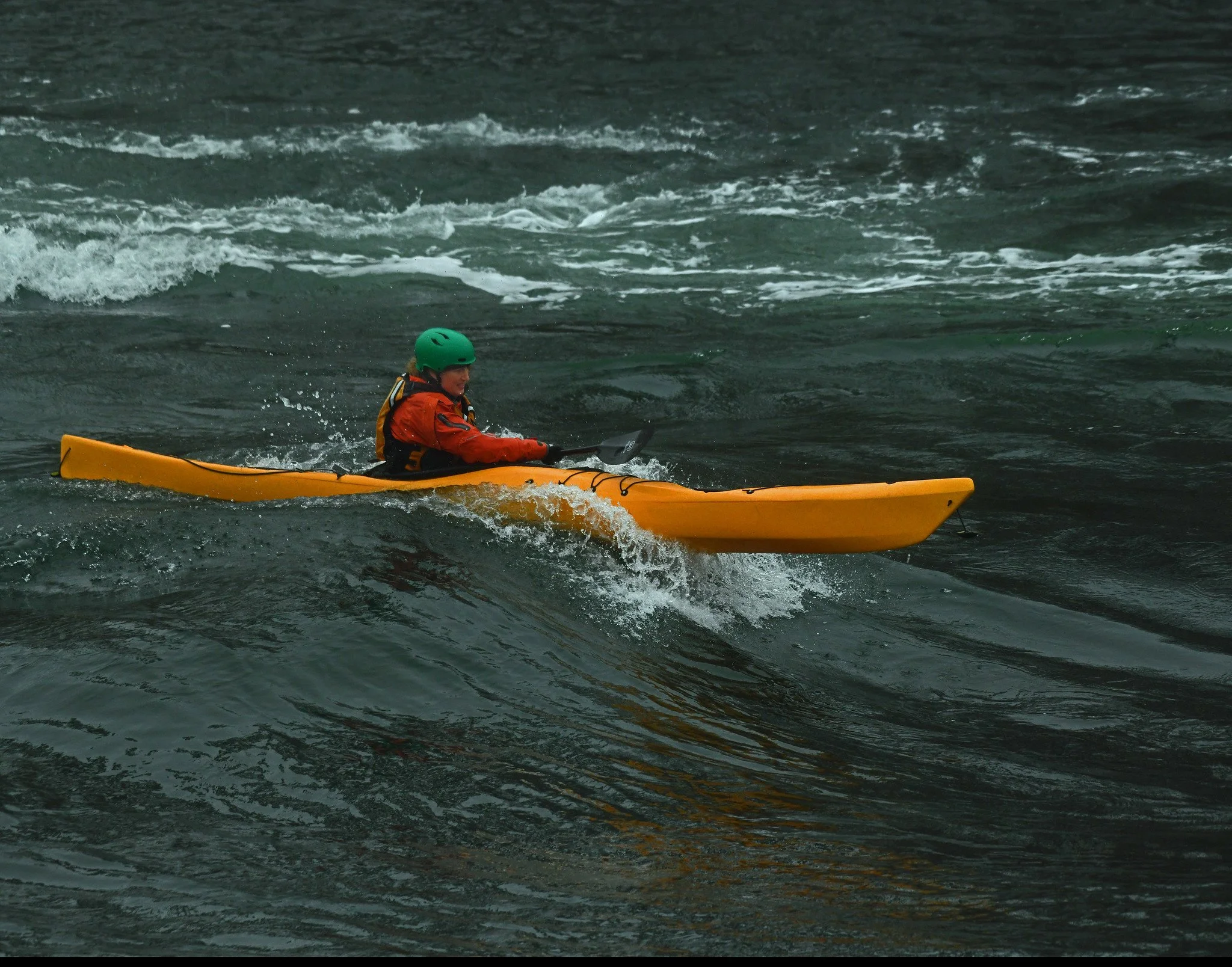
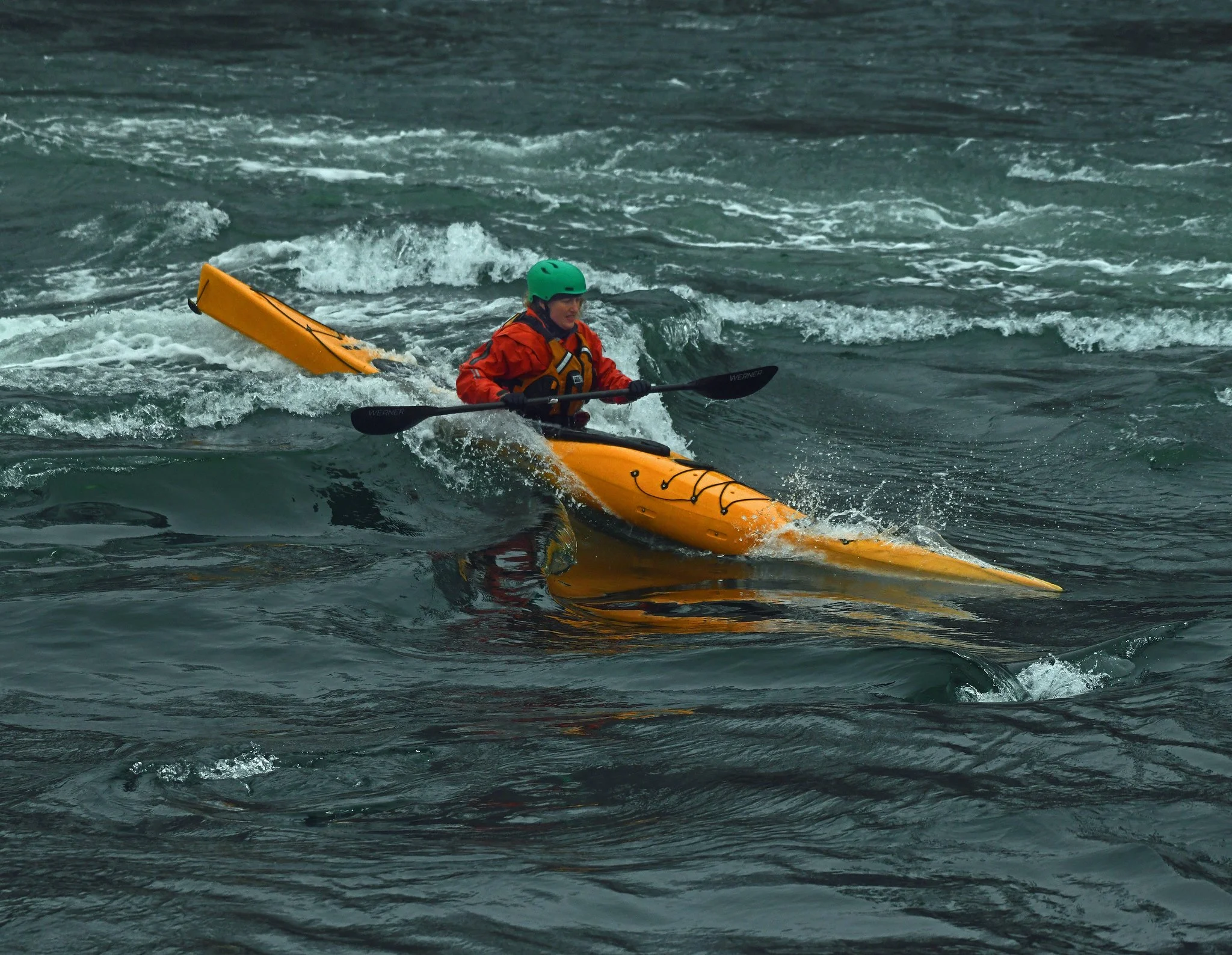
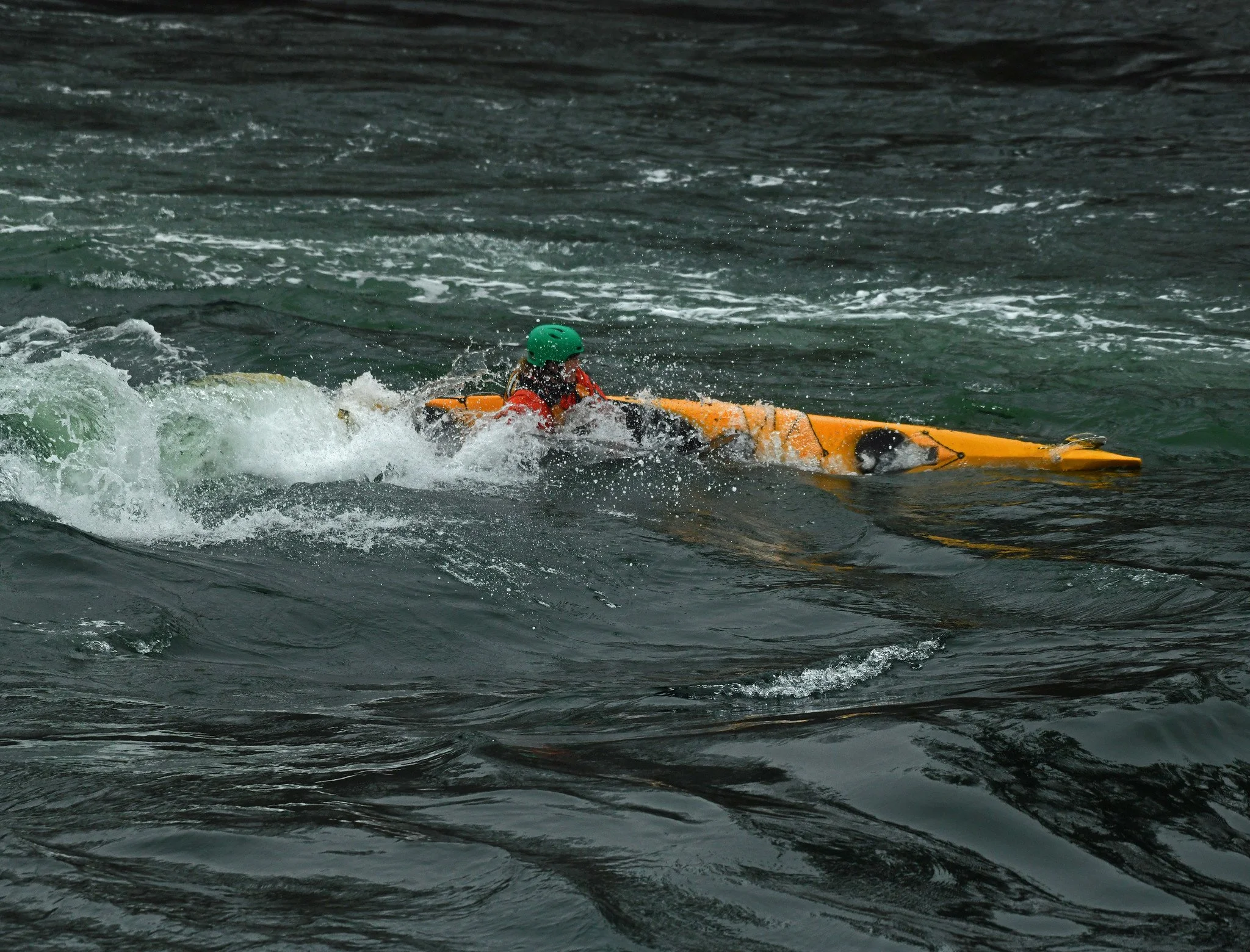
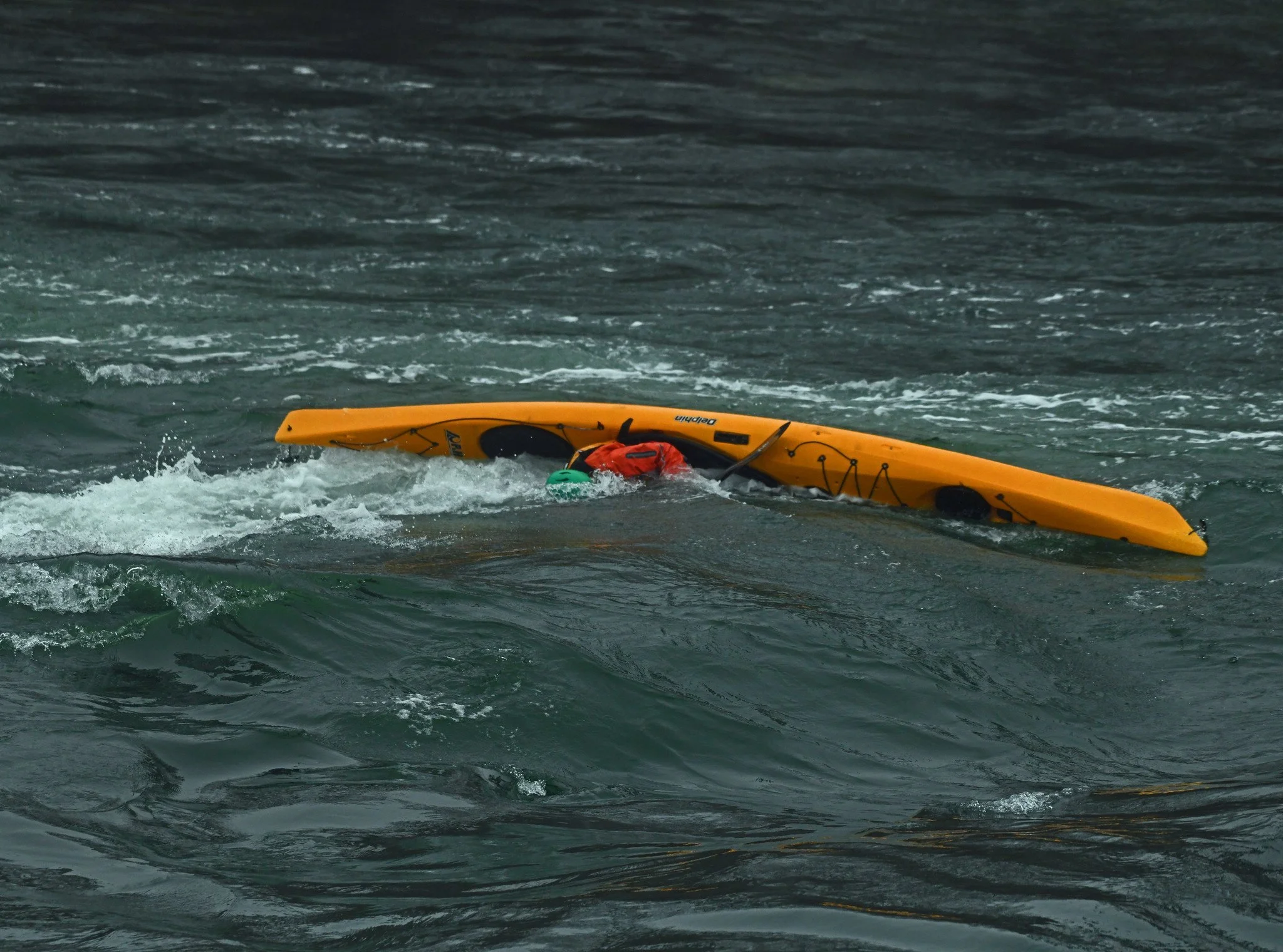
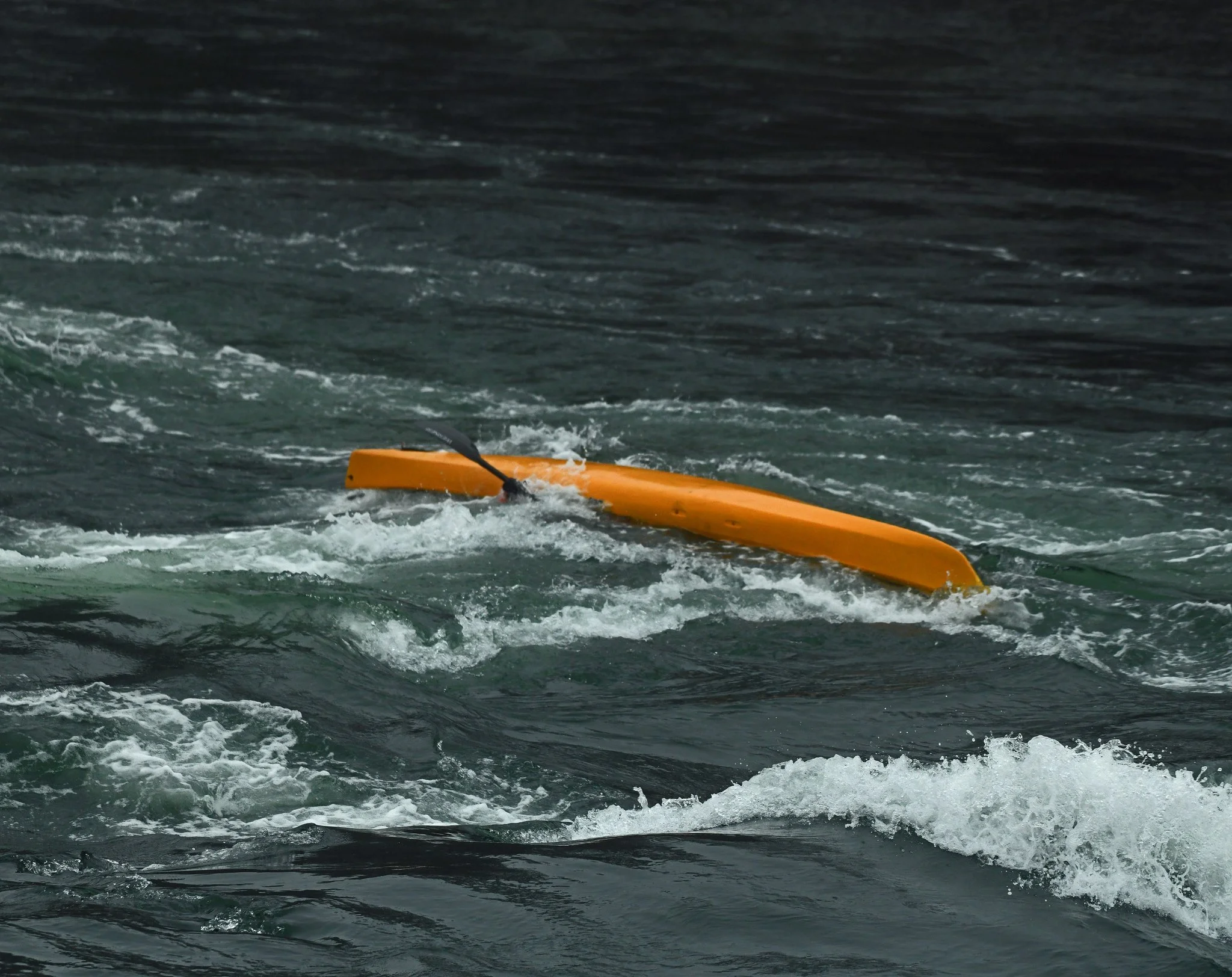
Up the peninsular a few miles, there’s a reversing falls with raging white water that attracts courageous mariners in special kayaks and attire. They test themselves in the numbingly cold April waters even during rain showers. And, sometimes the kayaker wins; sometimes the water does. But there never has been a fatality there.
Let’s end with our eyes to the sky. Although it might not be appropriate to create a Postcard from Maine about the Artemis II trip around the moon this April, I can’t help myself. It was such a wonderful, prideful event, that I edited one of the Orian crew’s official images of Earth to show (approximately) where I was while the multi-day trip was happening:
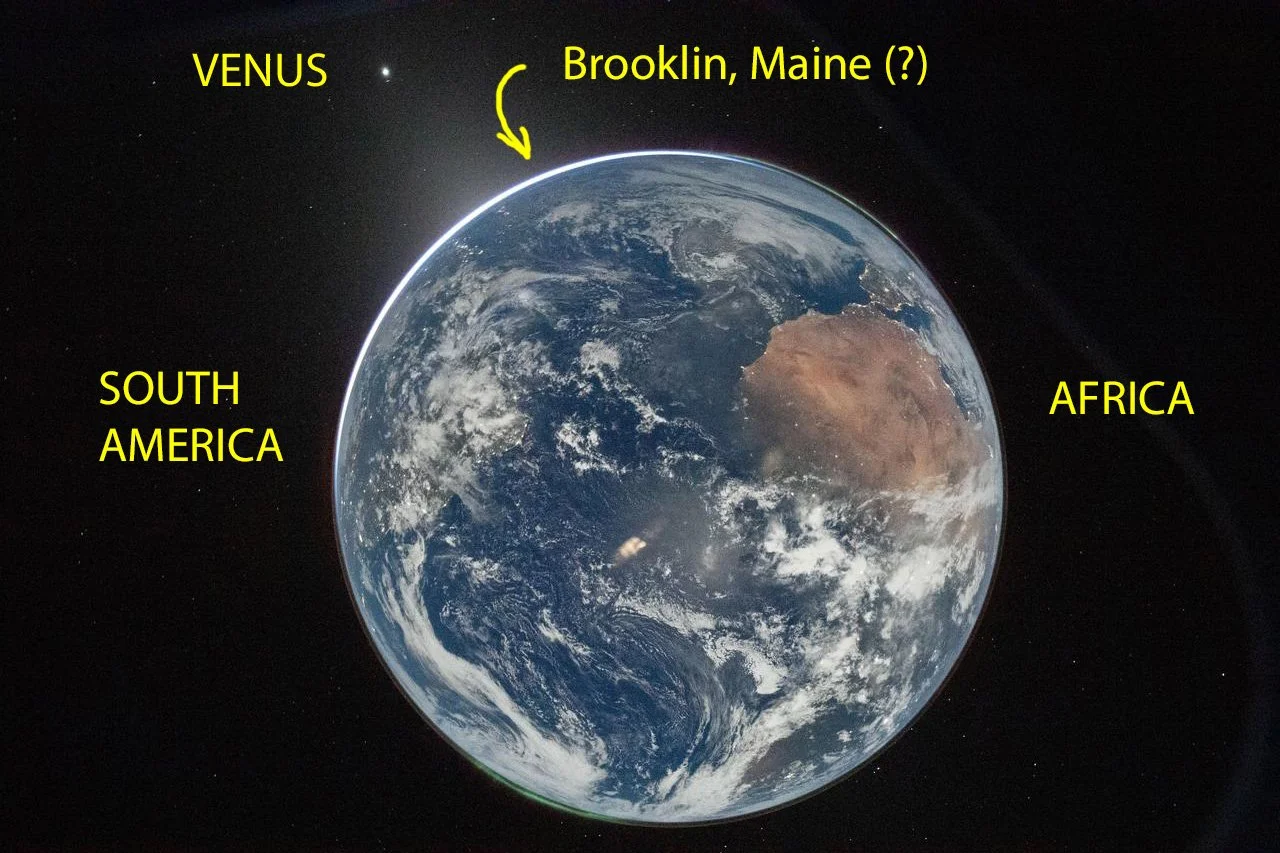
National Aeronautical Space Agency image that was rotated and annotated for this illustration.
Nonetheless, we did see the April moon in several phases by looking up from Maine. The full moon was cloudy here this year. It’s called the Flower Full Moon because it rises when pink flox appears in many places (but not here yet).
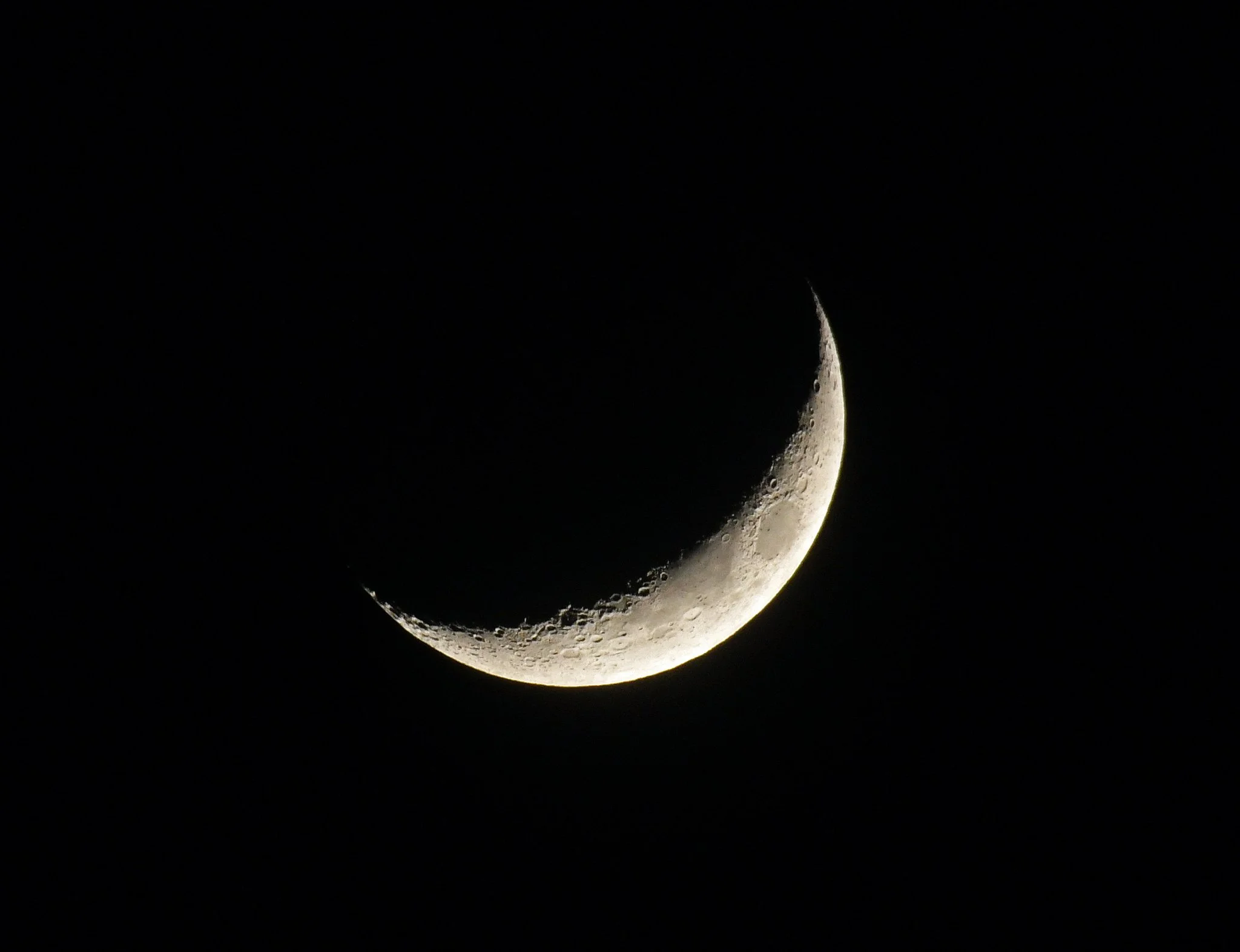
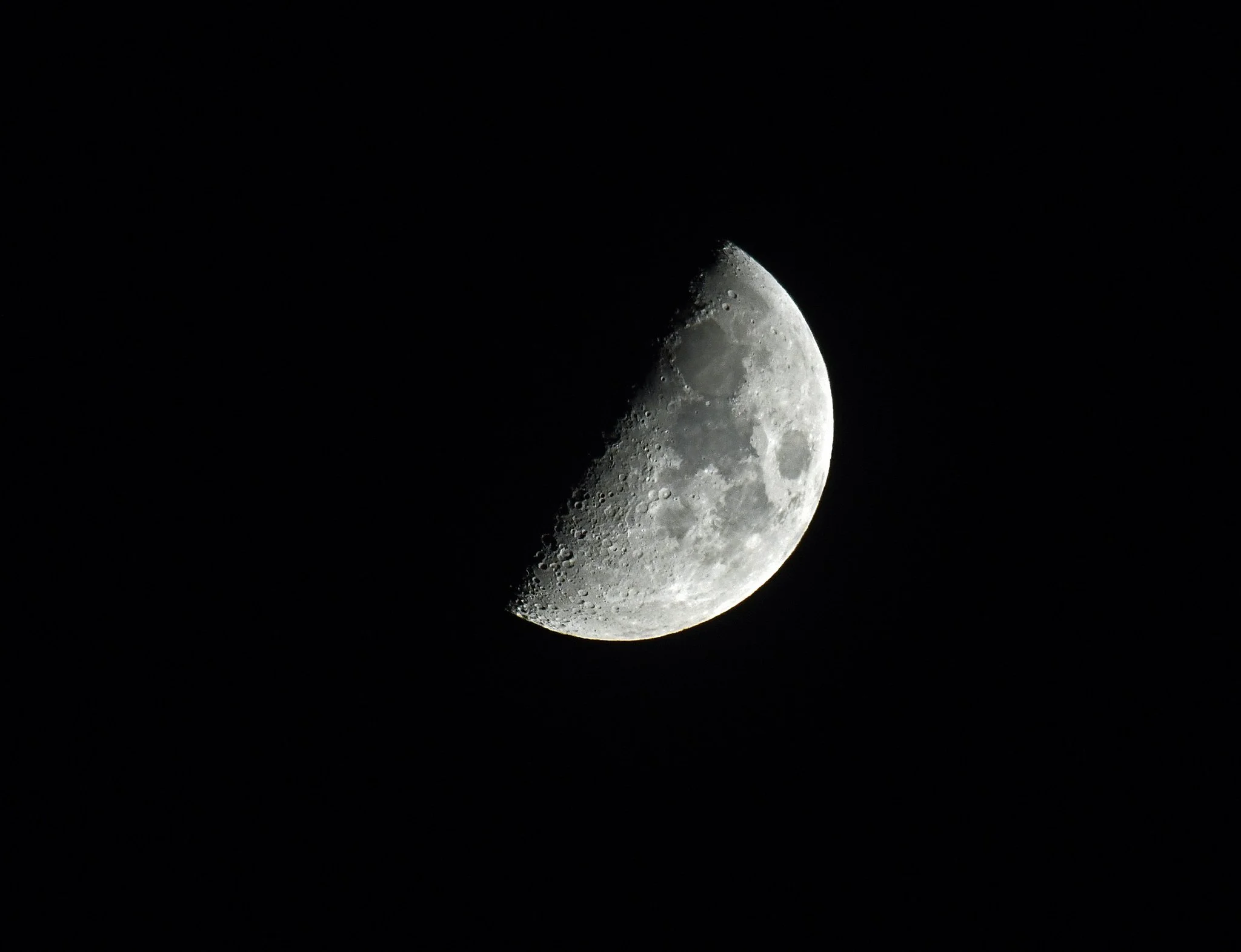
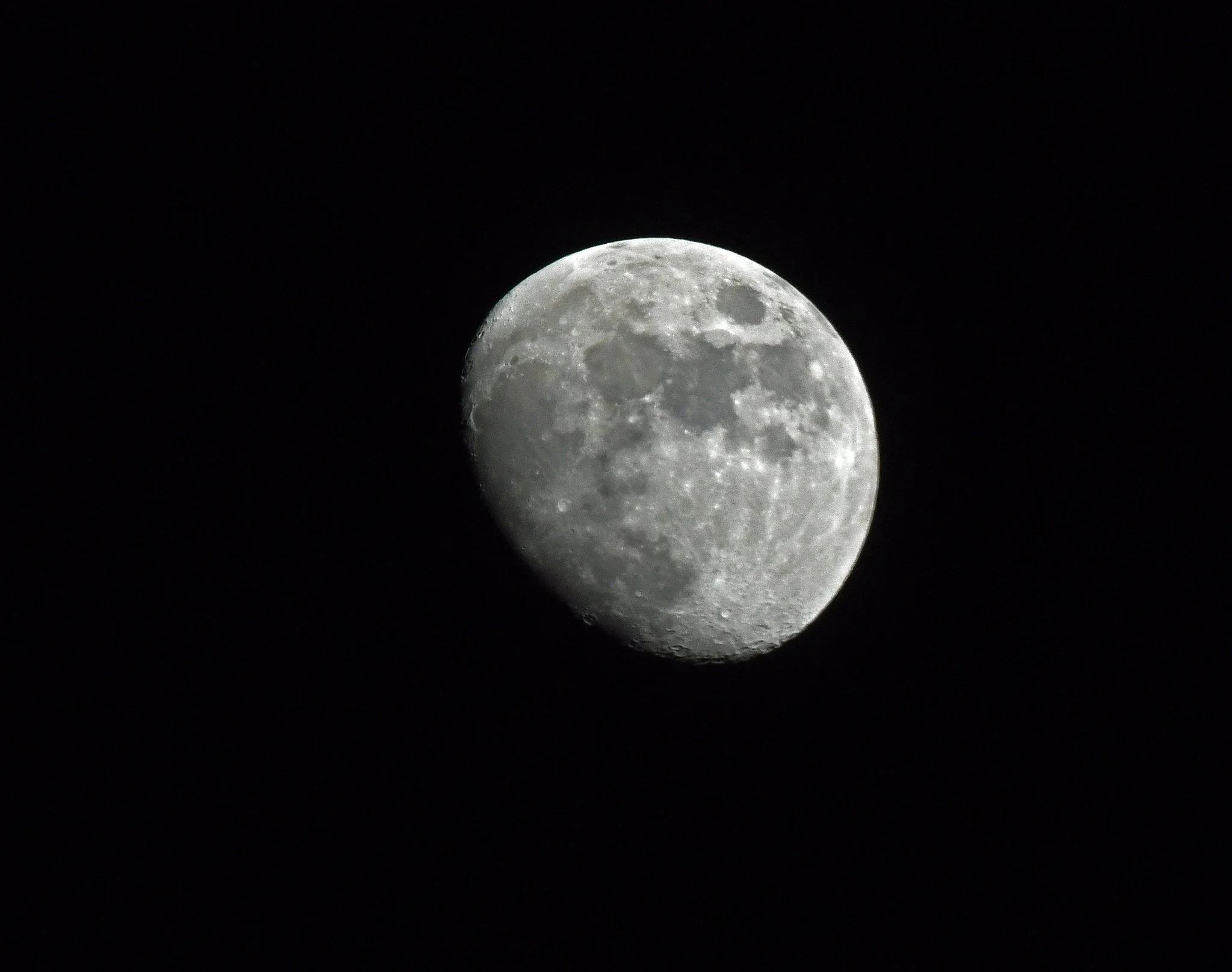
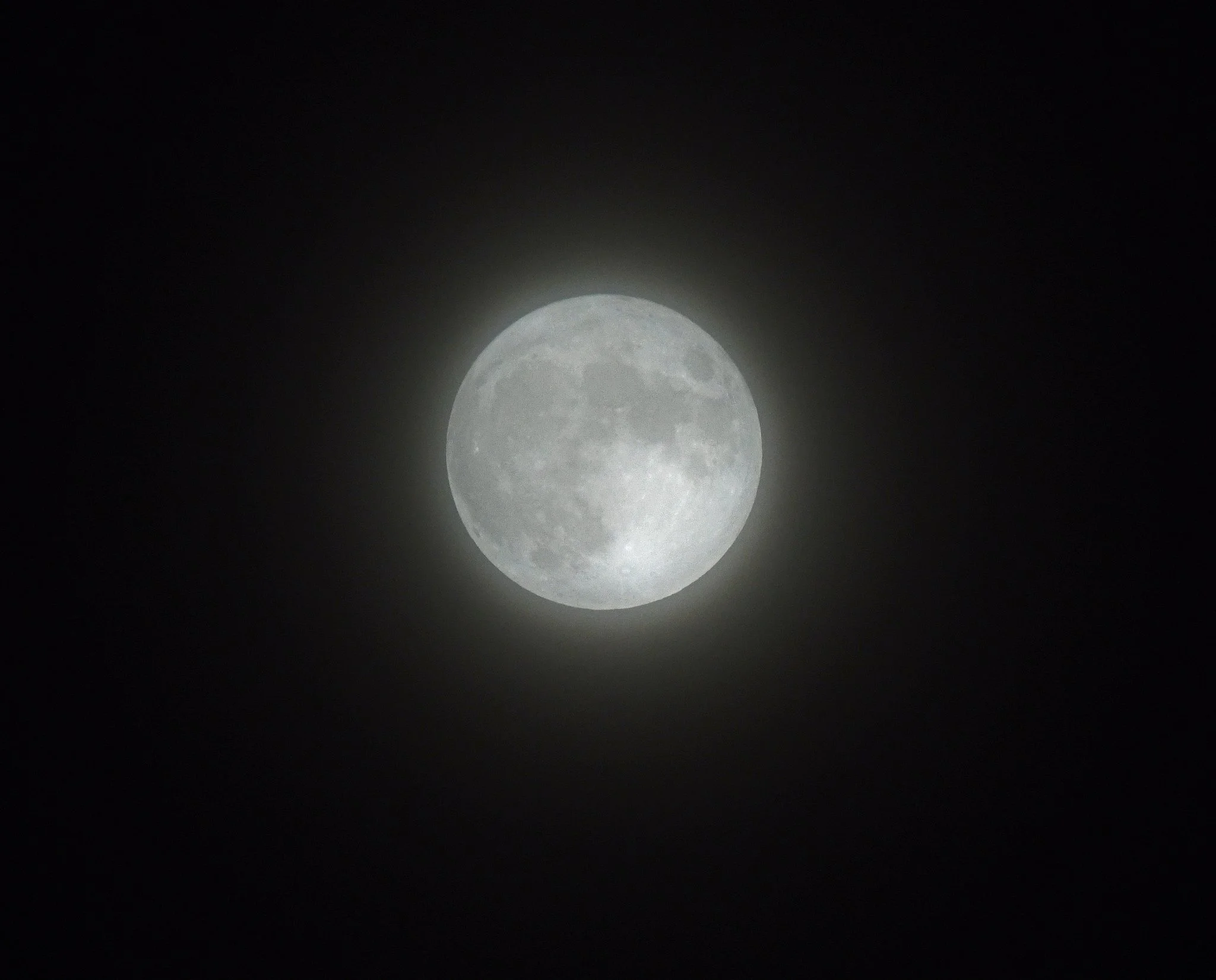
Well, folks, we’re having a wonderful time and wish you were here!
(All images in this post were taken during April of 2026; all were taken from Down East Maine except for the indicated NASA image.)
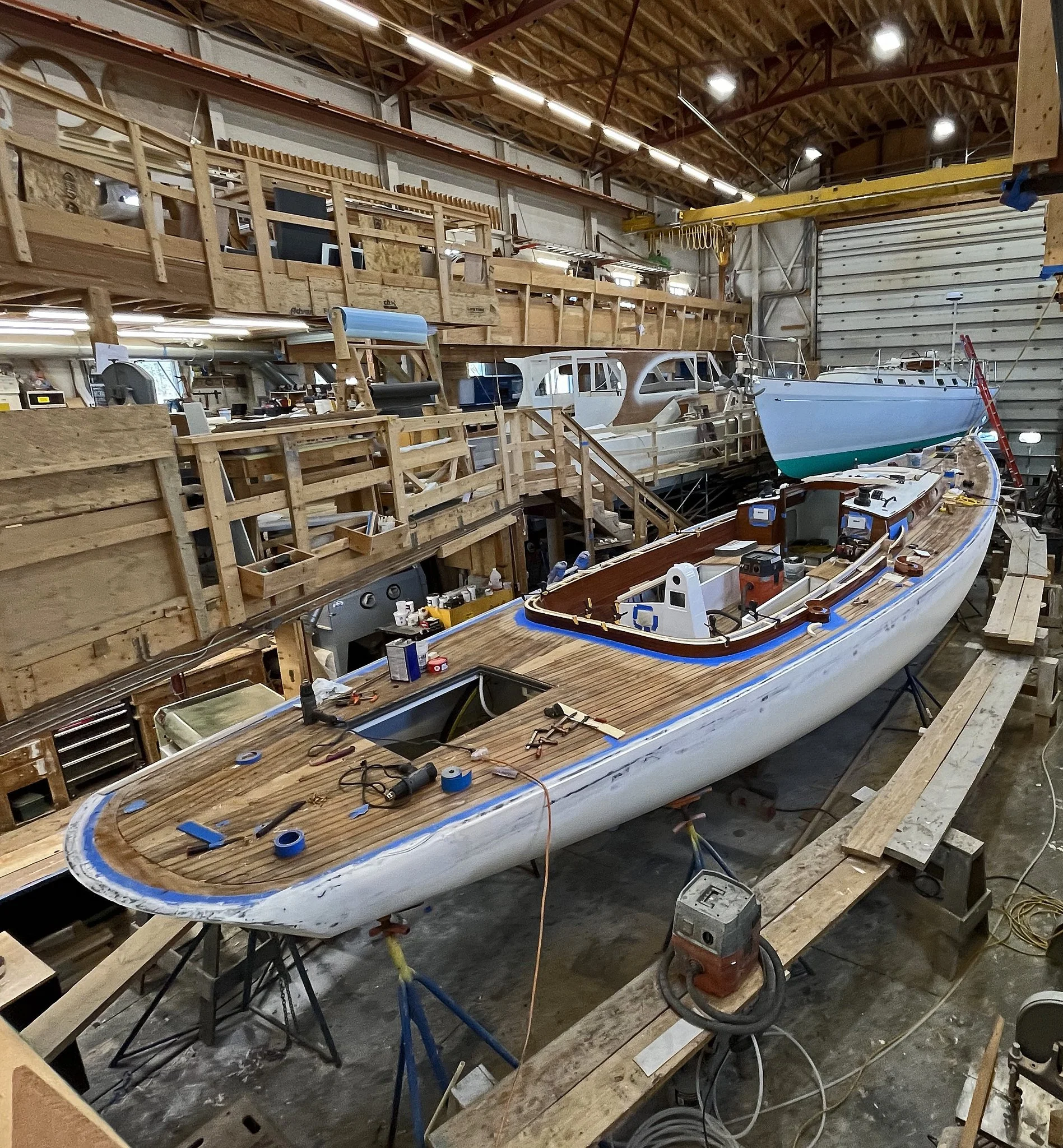
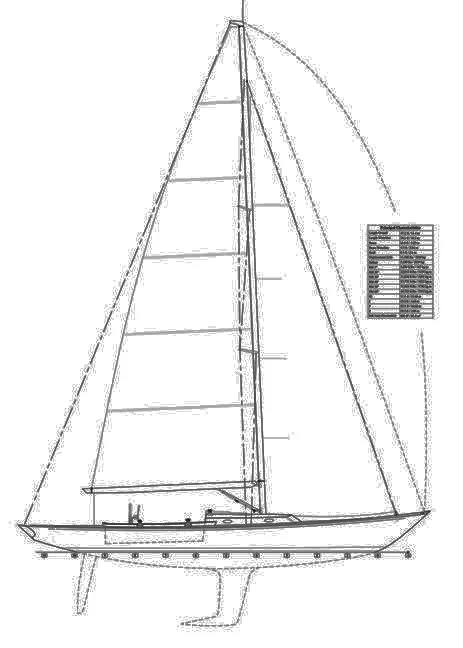
DYLAN, in the foreground here, is coming into being nicely in the Brooklin Boat Yard’s main shop. By summer, she’ll be an exquisite Eggemoggin 47+ (overall length 47’6”), the latest and most advanced racing sailboat in that BBY-designed class. A plan of the basic E-47+ is shown below. Note the apparent “foils” (hydrofoils) instead of a keel to generate lift and decrease drag.
Her type is named after Eggemoggin Reach, the renowned sailing water that runs by Center Harbor, where BBY is located. The Boat Yard has been sliding its winter- stored boats into the Harbor recently, providing a welcome sight of sleek boats swinging with the tides. (Photograph taken in Brooklin, Maine, on April 27, 2026.)
This lovely, but annoying, image of that miracle called Earth was taken during the flight of the Orion spacecraft earlier this month. It drives me crazy to look at it because the southern Atlantic and South Pole are on top; the Northern Atlantic, North Pole and Venus on bottom; Africa is on the left, and South America on the right. I get disoriented looking at it.
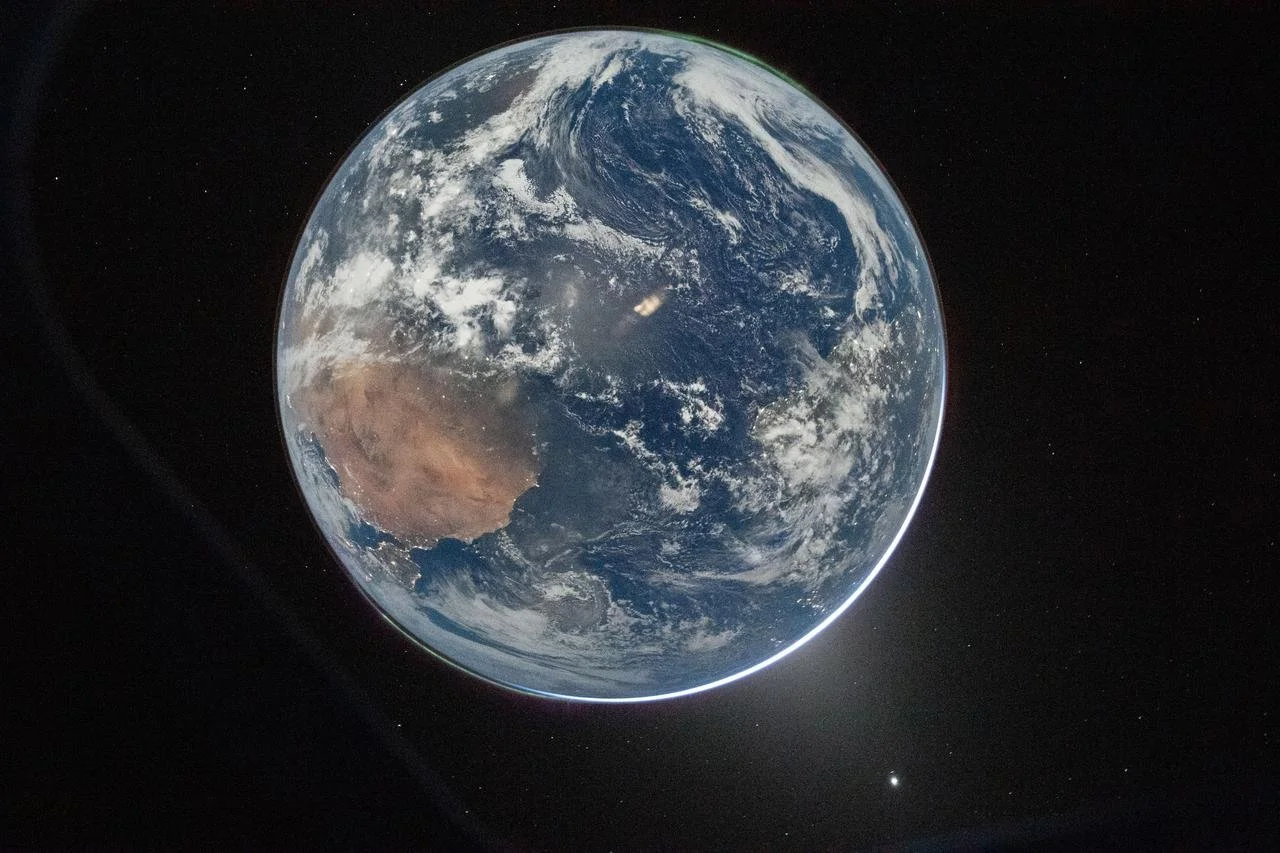
My problem is that I suffer from a northern hemisphere bias of what a geographic representation should look like. I’ve been raised with the myth that there’s a physical, geographic up, down, right and left with a corresponding north, south, east and west. These concepts were invented eons ago for 2-dimensional thinking and communicating. They don’t apply in the 3-dimensional vastness of “outer space” that can be without enough gravity to keep a good man or woman “down.”
The literature indicates that the concept of east-west likely developed thousands of years ago through observations of the sun rising and setting. The north-south concept apparently developed later from observing the path of the sun at midday and the rotation of stars around the object now called the “North Star.” All of this was before the invention of the magnetic compass, which doesn’t point to “True North,” anyway. In fact, for a while, some cultures reportedly drew their maps with the east or south on top.
Nonetheless, my confusion due to this official (“upside-down”) National Aeronautics and Space Administration image was easily rectified by copying the image, rotating it 180° and labeling locations for posterity:
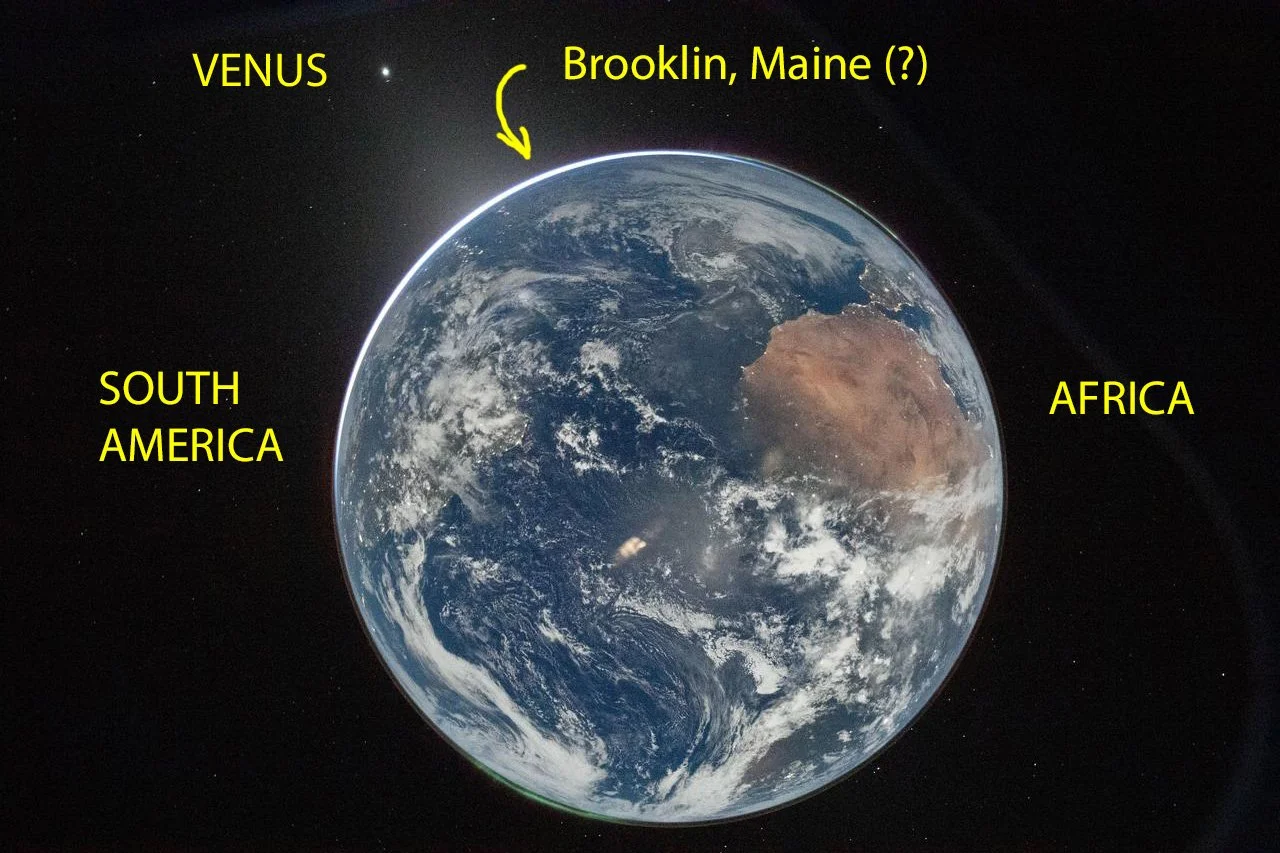
(The unedited NASA image was taken through a window of Orion on April 3, 2026, during its translunar injection burn.)
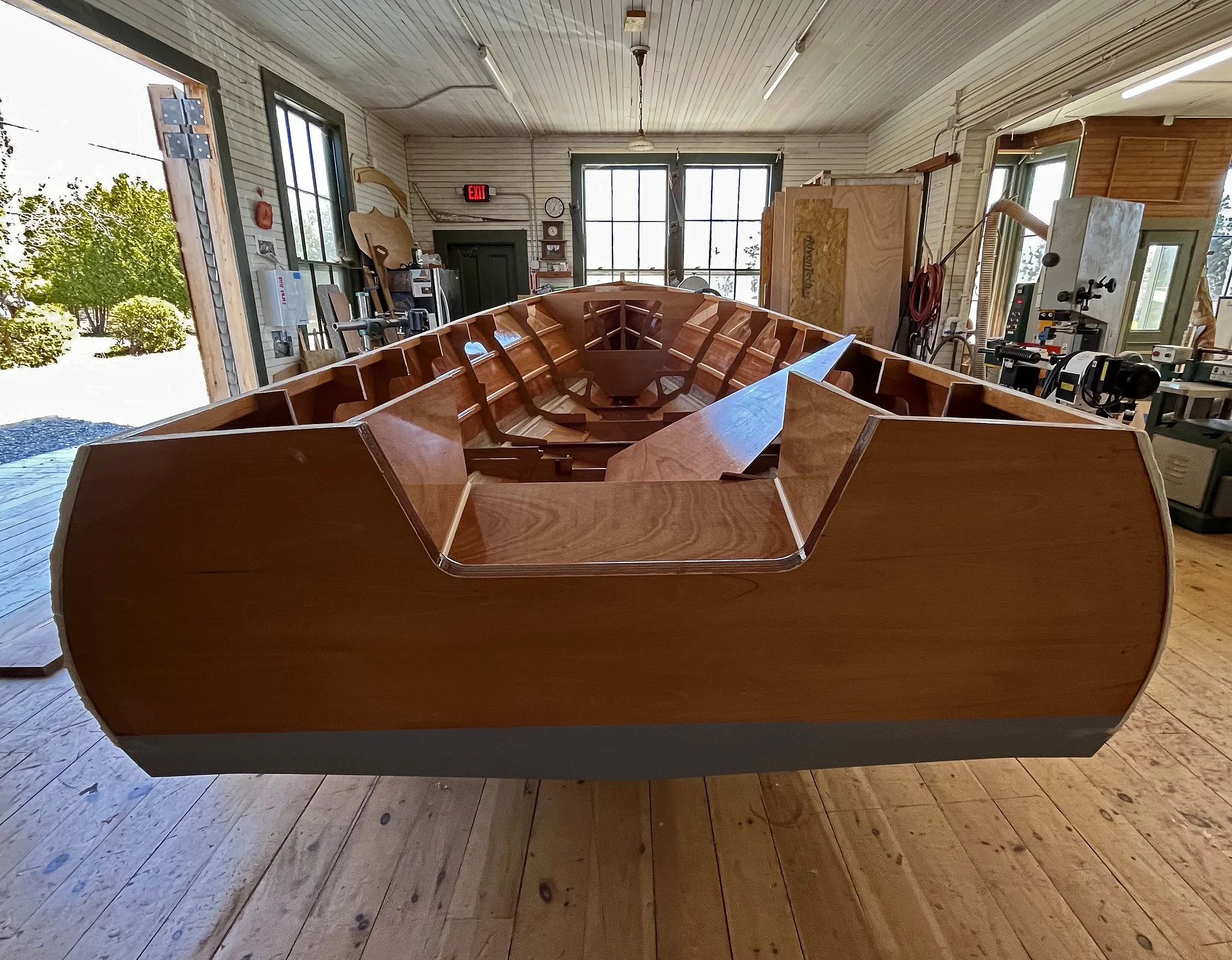
The 18-foot runabout being built in the Brooklin Boat Yard’s auxiliary shop is coming along nicely. Her interior is being inlaid carefully with fine woods and we’re beginning to get a sense of how special she’ll be.
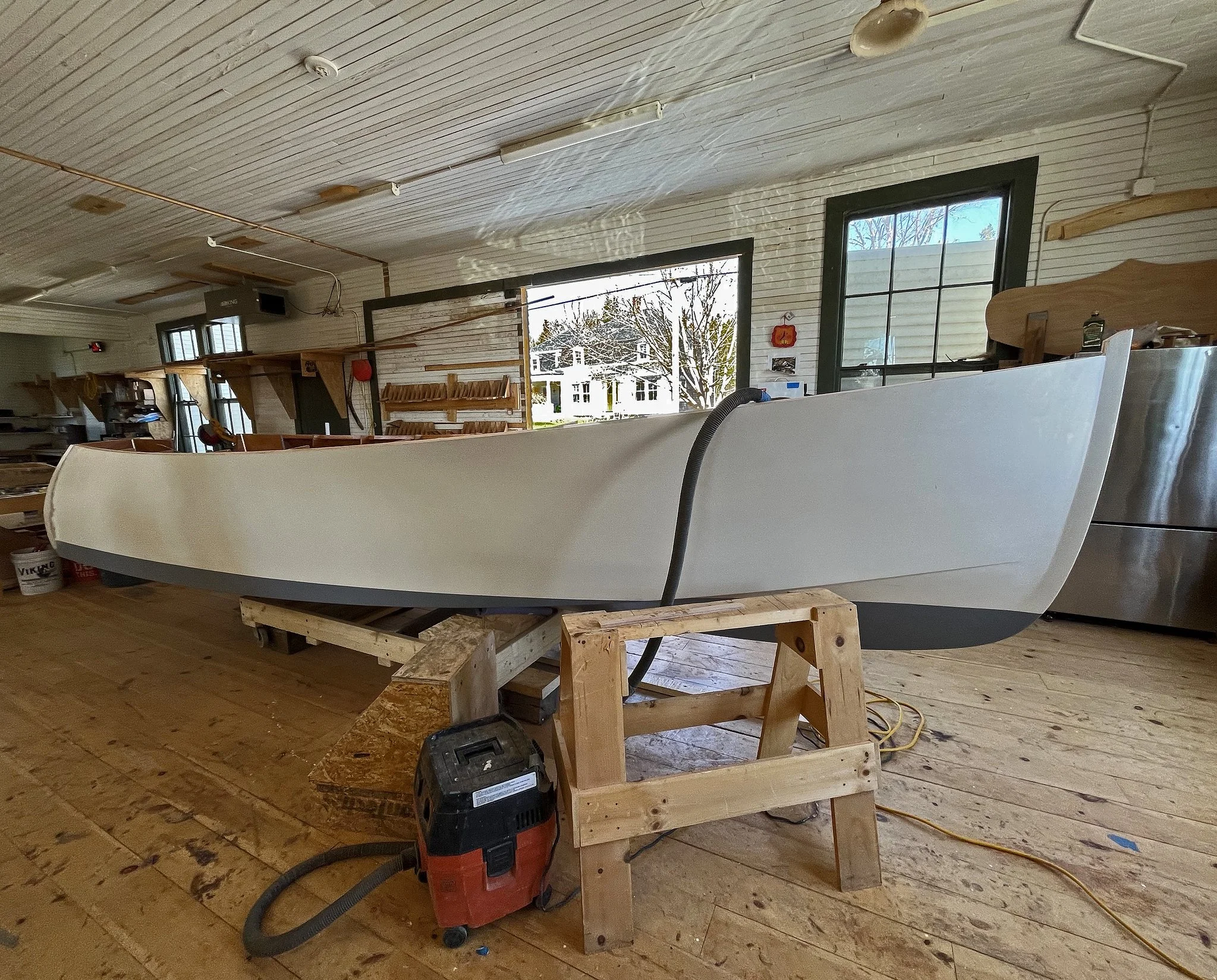
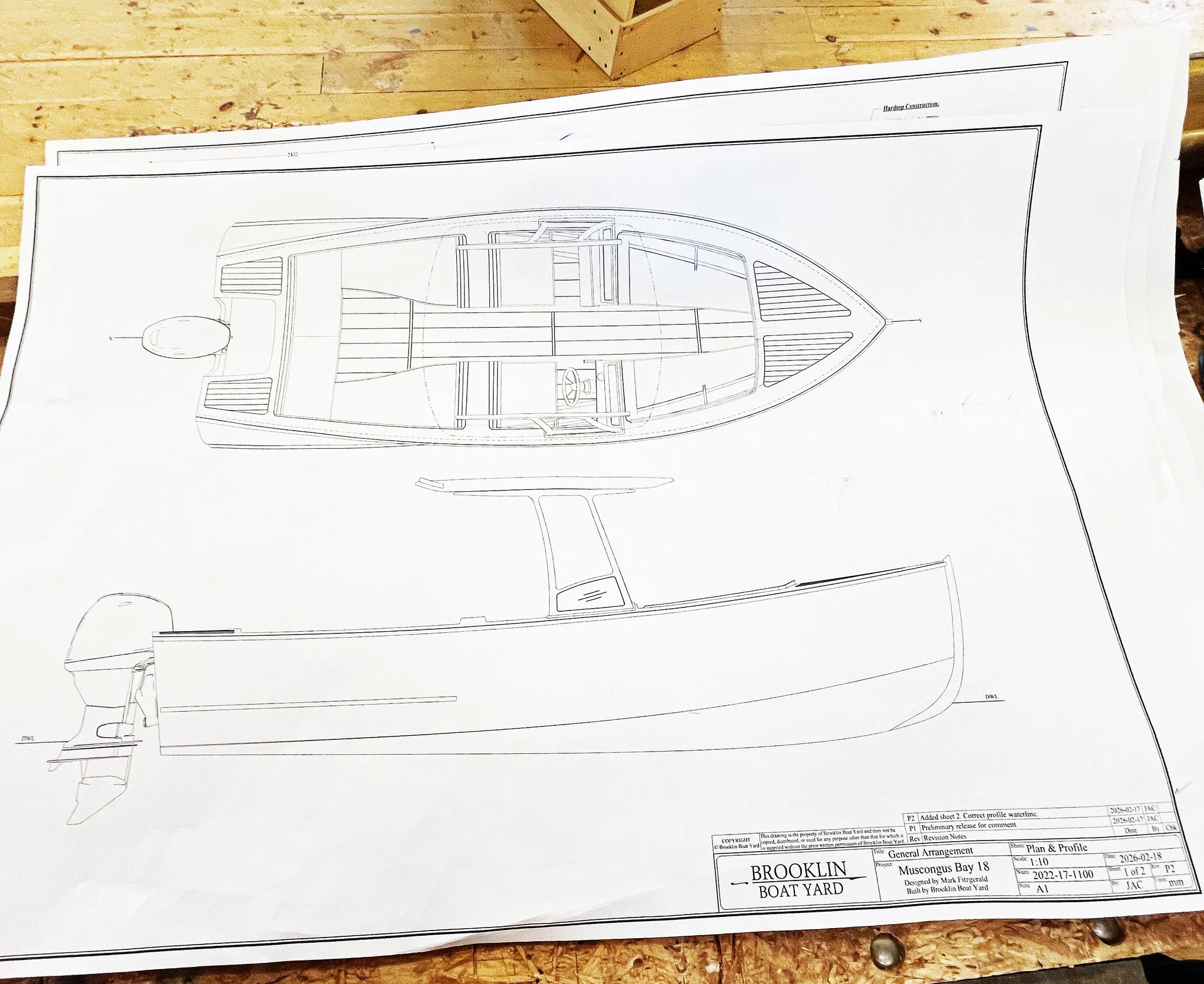
By summer, this Muscongus Bay 18 designed by Mark Fitzgerald will be a speedy, center-consoled runabout with T-top and comfortable perimeter seating. Here’s another look at her plans:
Note that spring weather allows this “BBY shop on the hill” (aka “Odd Fellows’ Hall shop”) to open side doors, which creates a lovely working atmosphere.
(Images taken in Brooklin, Maine, on April 27, 2026.)
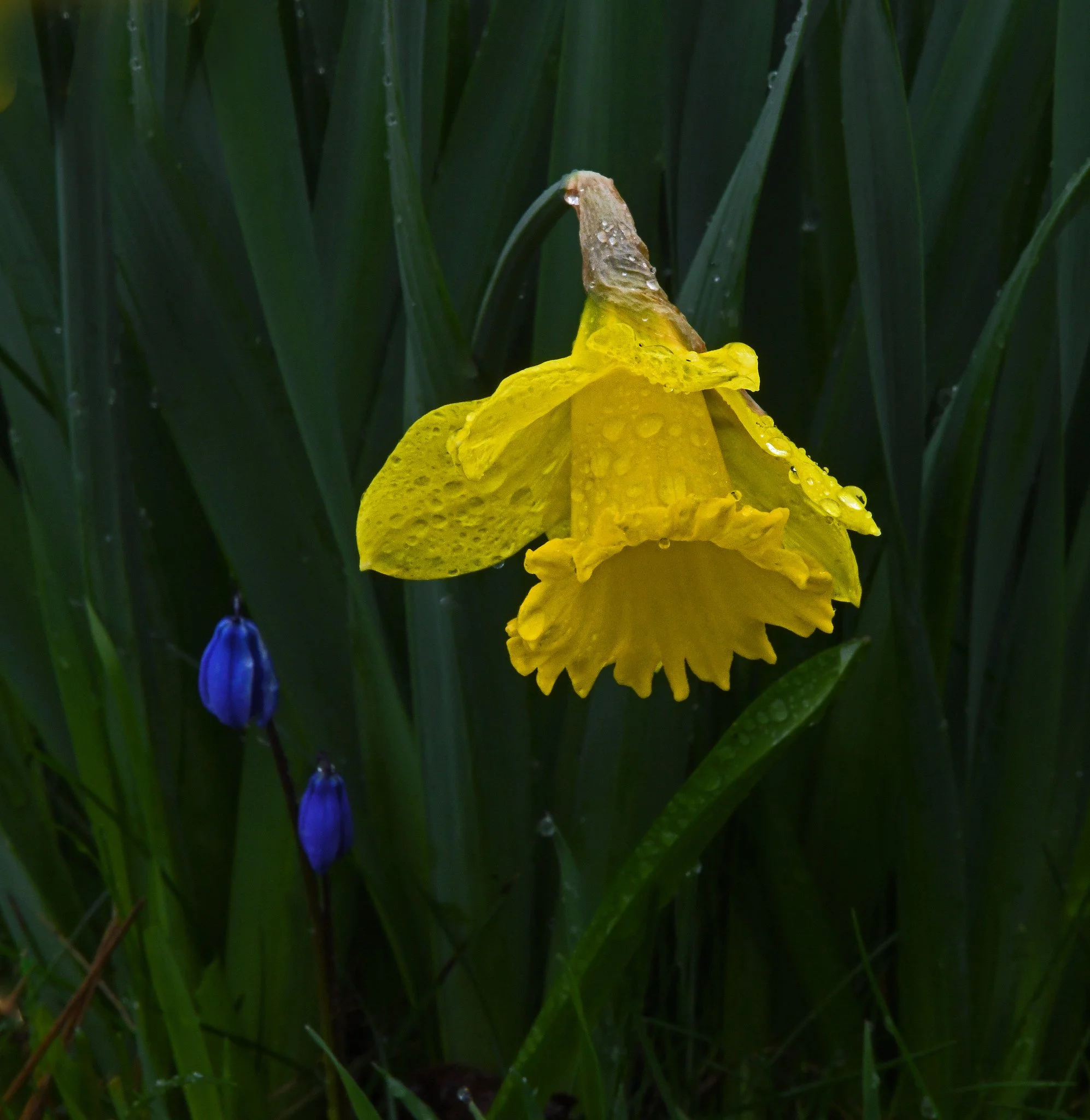
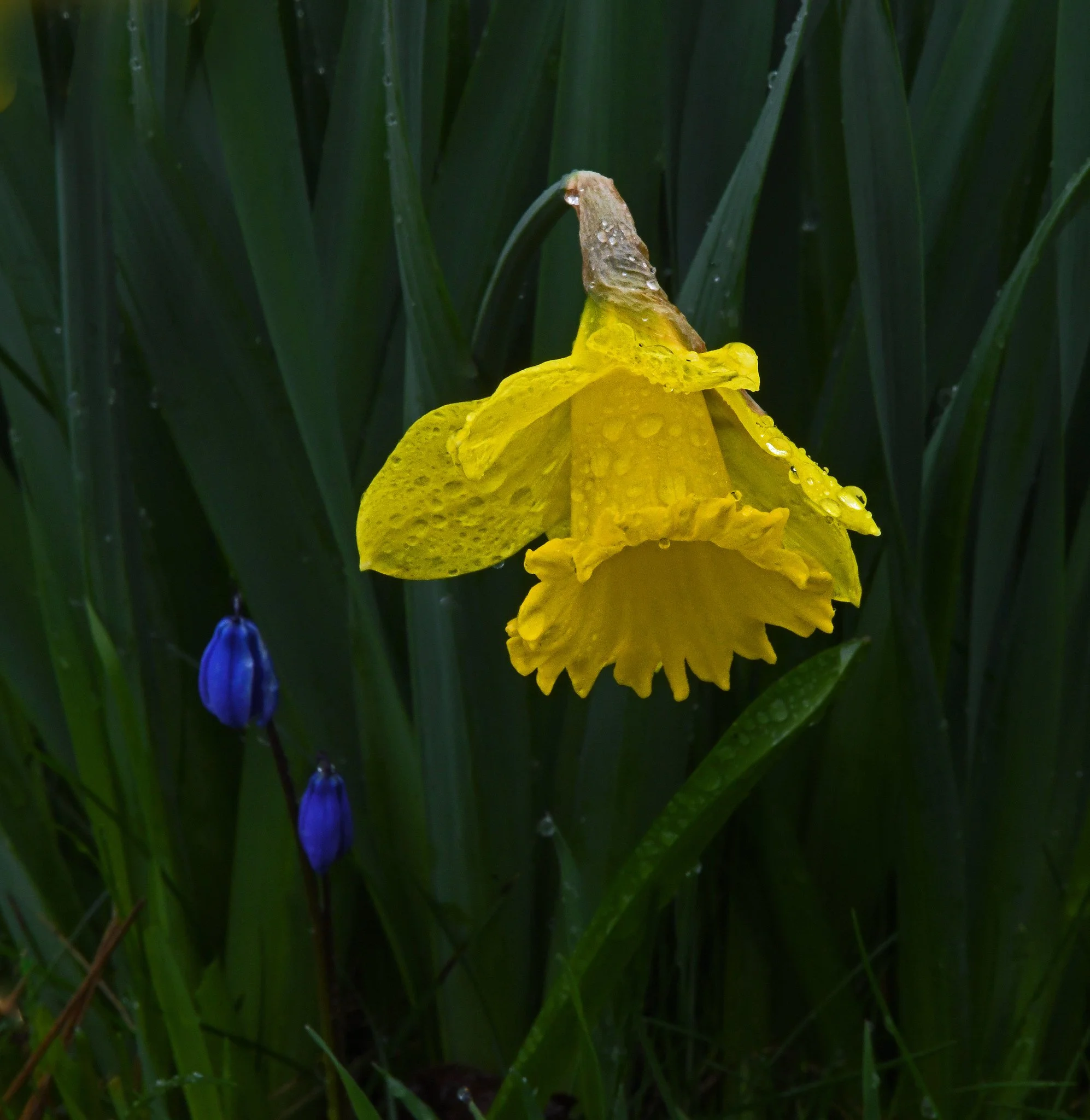
Here’s a bejeweled daffodil and her blue squill admirers with their petals down, thoroughly enjoying a recent gentle shower here.. The scene symbolizes the recent improvements in Maine’s drought situation, although we still have a way to go to get back to normal:
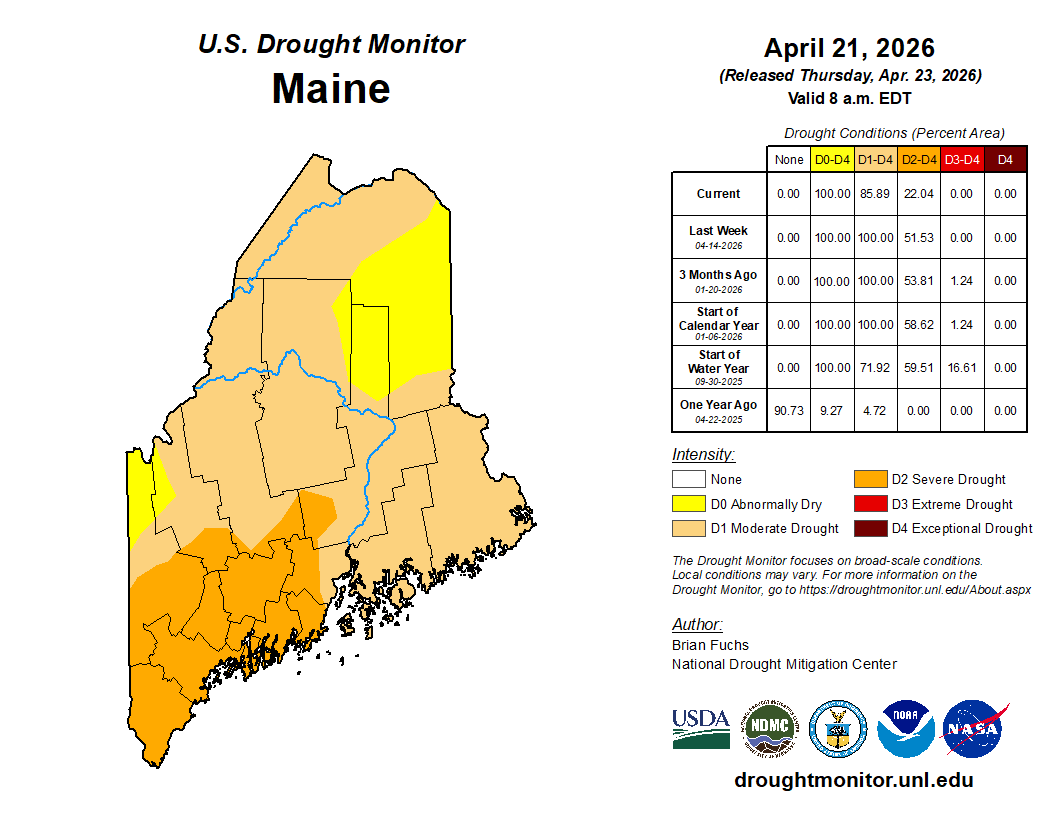
The weekly USDM narrative report for the Northeast included these comments: “Rainfall occurred but was largely confined to northern areas, from western Pennsylvania and New York through northern Vermont and New Hampshire into Maine, where many locations recorded 150% or more of normal precipitation. This wetter pattern led to improvements in abnormally dry and moderate drought conditions across northern Vermont, New Hampshire, and Maine. Severe drought was removed in northern and reduced in southern Maine.”
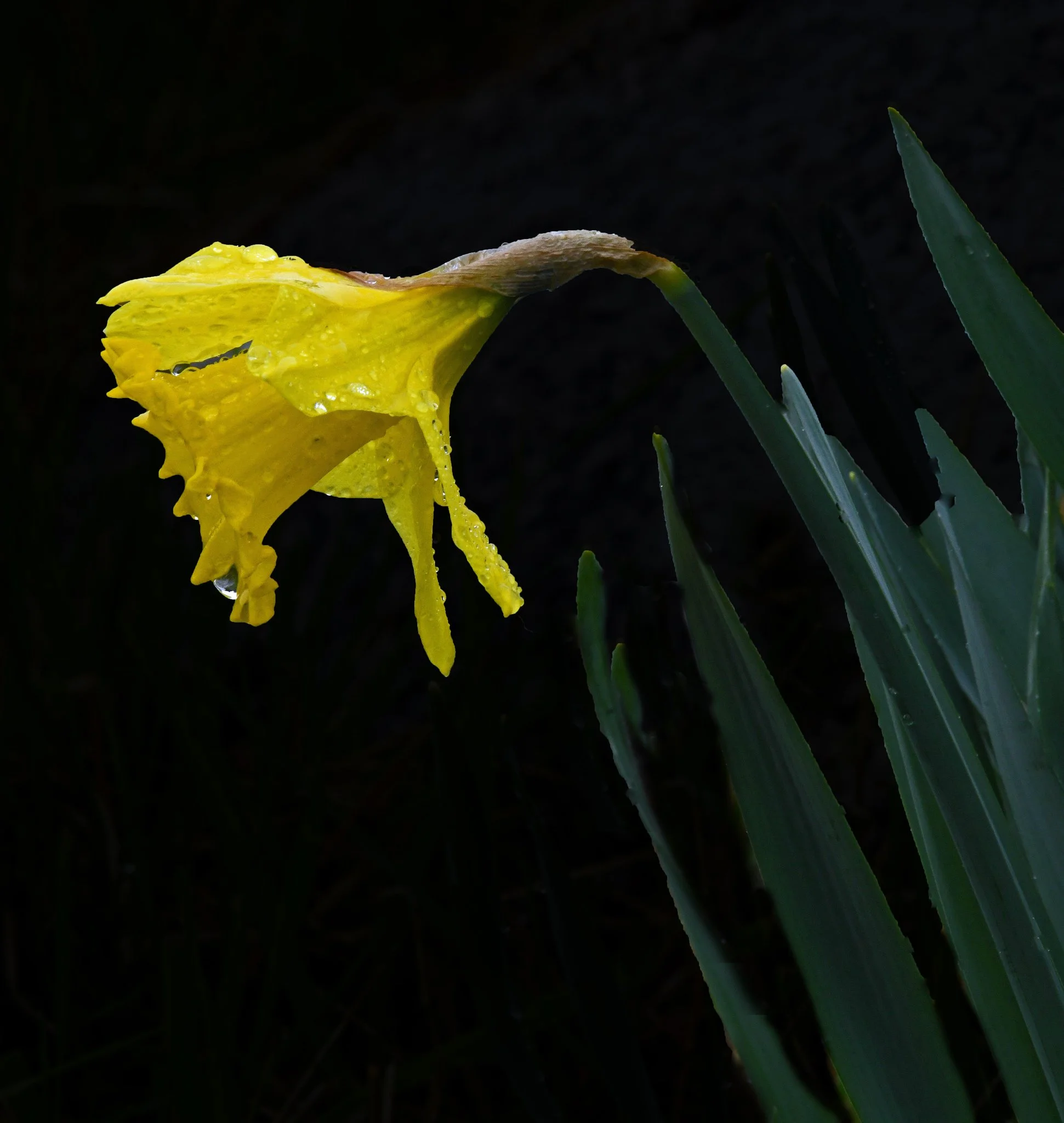
(Photos taken in Brooklin, Maine, on April 23, 2026.)
Yes, it’s time for the Ozzie and Harriet show again. Ozzie returned to their nest at least by April 17, when I first saw him. This year, he didn’t have to wait long for Harriet. I saw them together in the nest on April 20. We’ll be following this osprey family until they (and hopefully their offspring) migrate back to a southern state or beyond in the fall.
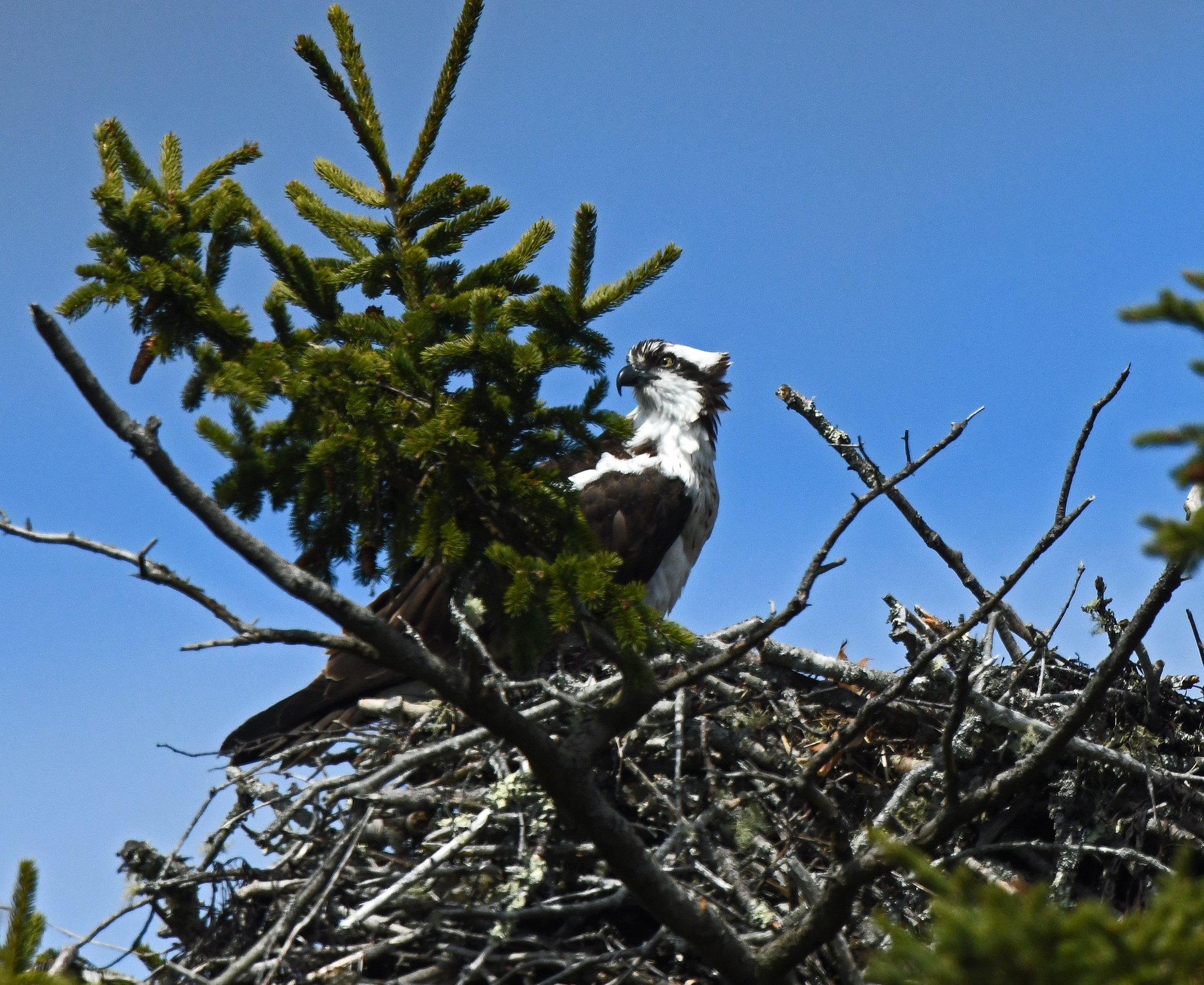
The images here are from yesterday, which started off sunny when I saw Harriet alone on the nest, as you see in this first image. It was gray and drizzly by the time Ozzie brought lunch home. Note that Ozzie is up to his old tricks: He eats the heads off the fish before giving the rest to his mate. (The brains of fish may be their most nutritious parts.)
Their nest is almost 100 feet above Great Cove in a topless spruce. Unfortunately, the surrounding branches are encroaching on it and restricting my view. It’s difficult to get clear shots of them together. (I shoot from a car window at a considerable distance to avoid making the birds nervous.)
Nonetheless, I can see that the usual fish hawk antics have resumed. Harriet spends most of her time on the nest. She often engages in loud “begging,” issuing the characteristic, high-pitched female osprey pleas for attention and food. Ozzie spends most of his time elsewhere.
But, at least once a day, Ozzie flies in with a scaly meal, which Harriet often tears apart with gusto. They’ll often copulate once or twice before and/or after mealtime. Ozzie will return several times a day, apparently just to copulate. He’ll also return immediately if Harriet issues an alarm call due to such things as being threatened by a bachelor osprey or a bald eagle. They both defend the nest ferociously, seemingly without regard for their own safety.
Ospreys work hard at propagating the species. Copulation to assure fertilization will occur many times a day with increasing frequency until egg-laying time in late April or early May. (One report zealously noted 338 copulations by a pair before egg-laying.) Ozzie and Harriet have not been shirking their duty in that regard, but I don’t tally their efforts.
(Images taken in Brooklin, Maine, on April 24, 2026.)