Comment

In the Right Place: Windjammers, VI

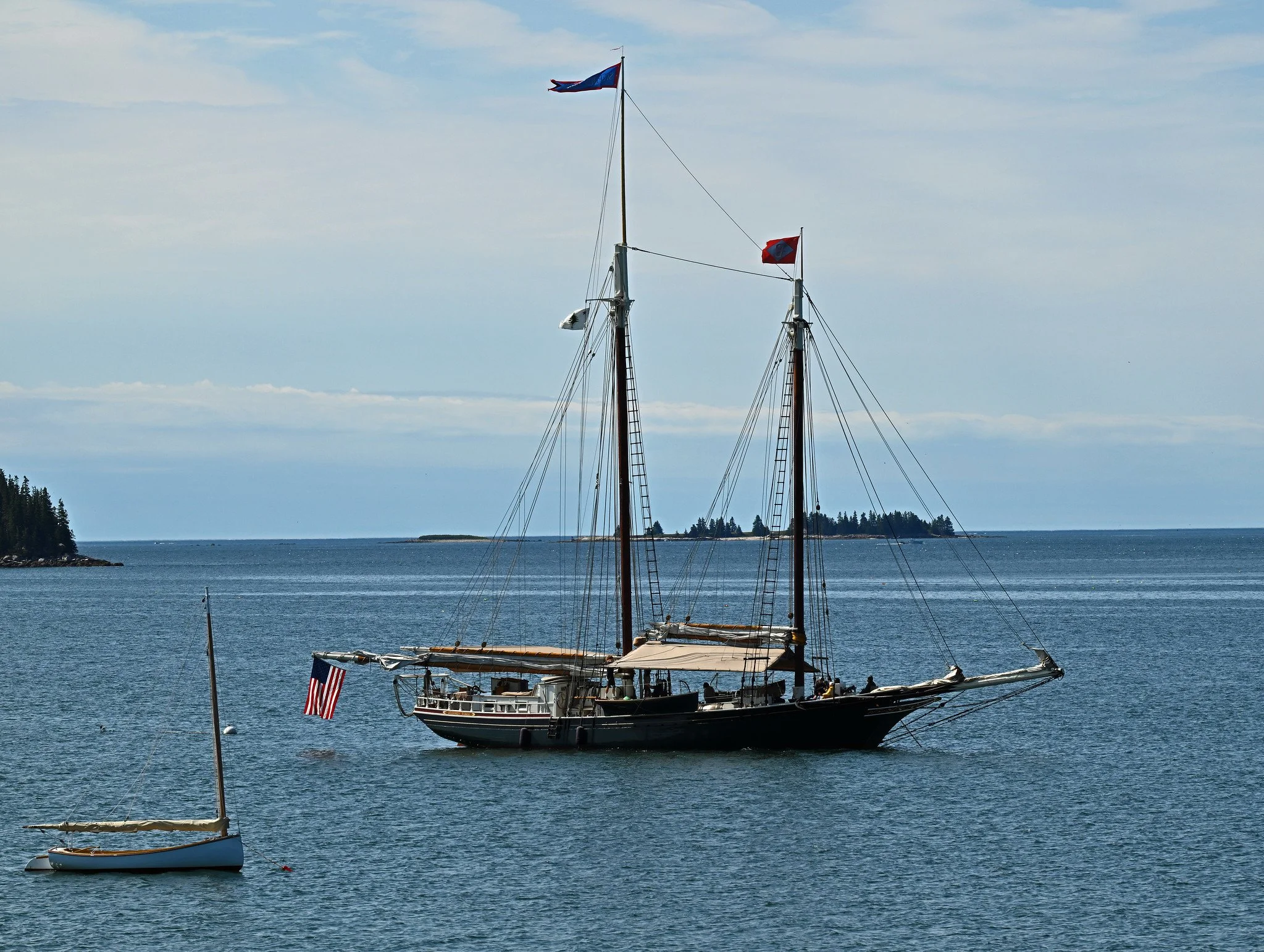
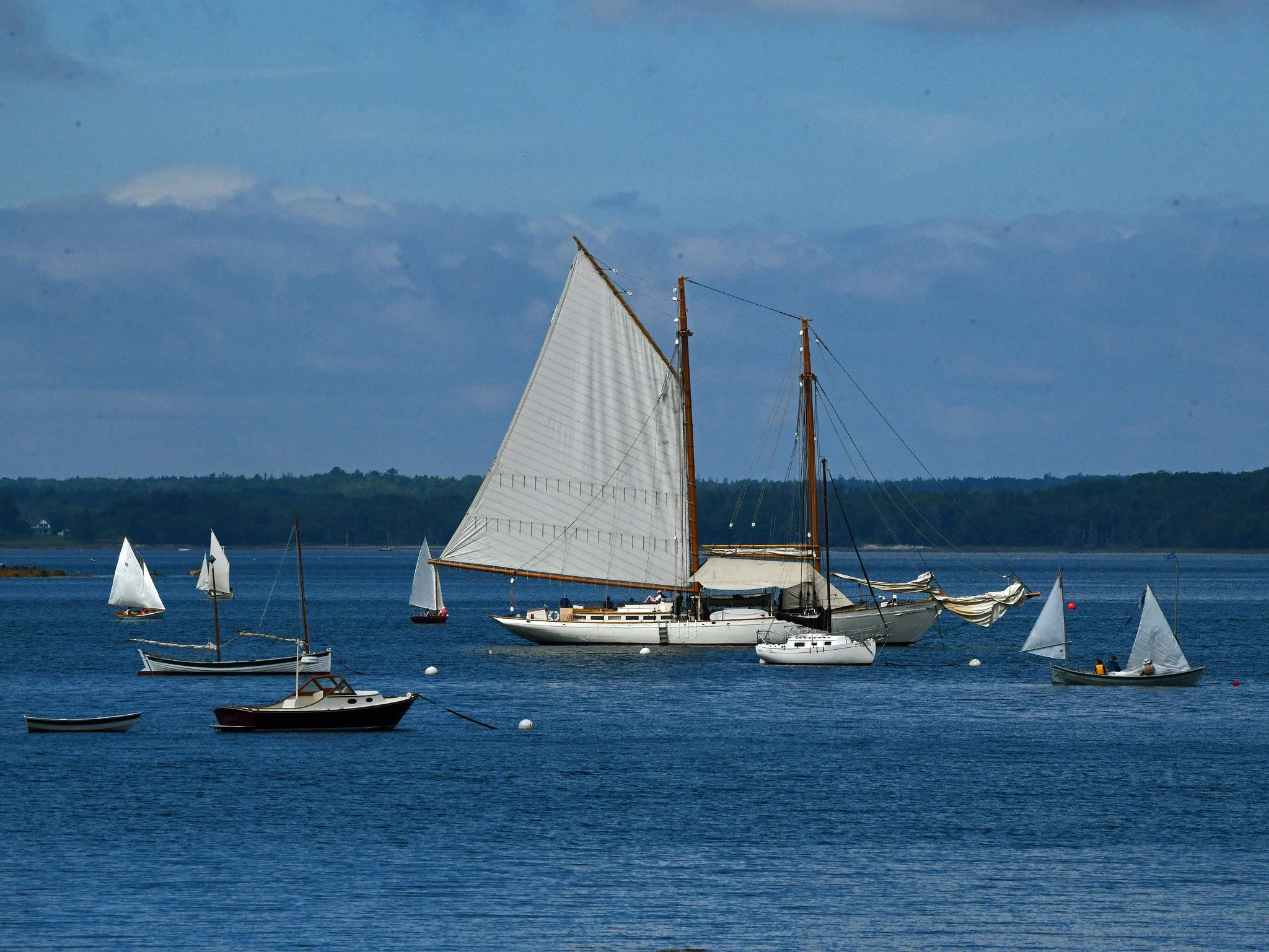
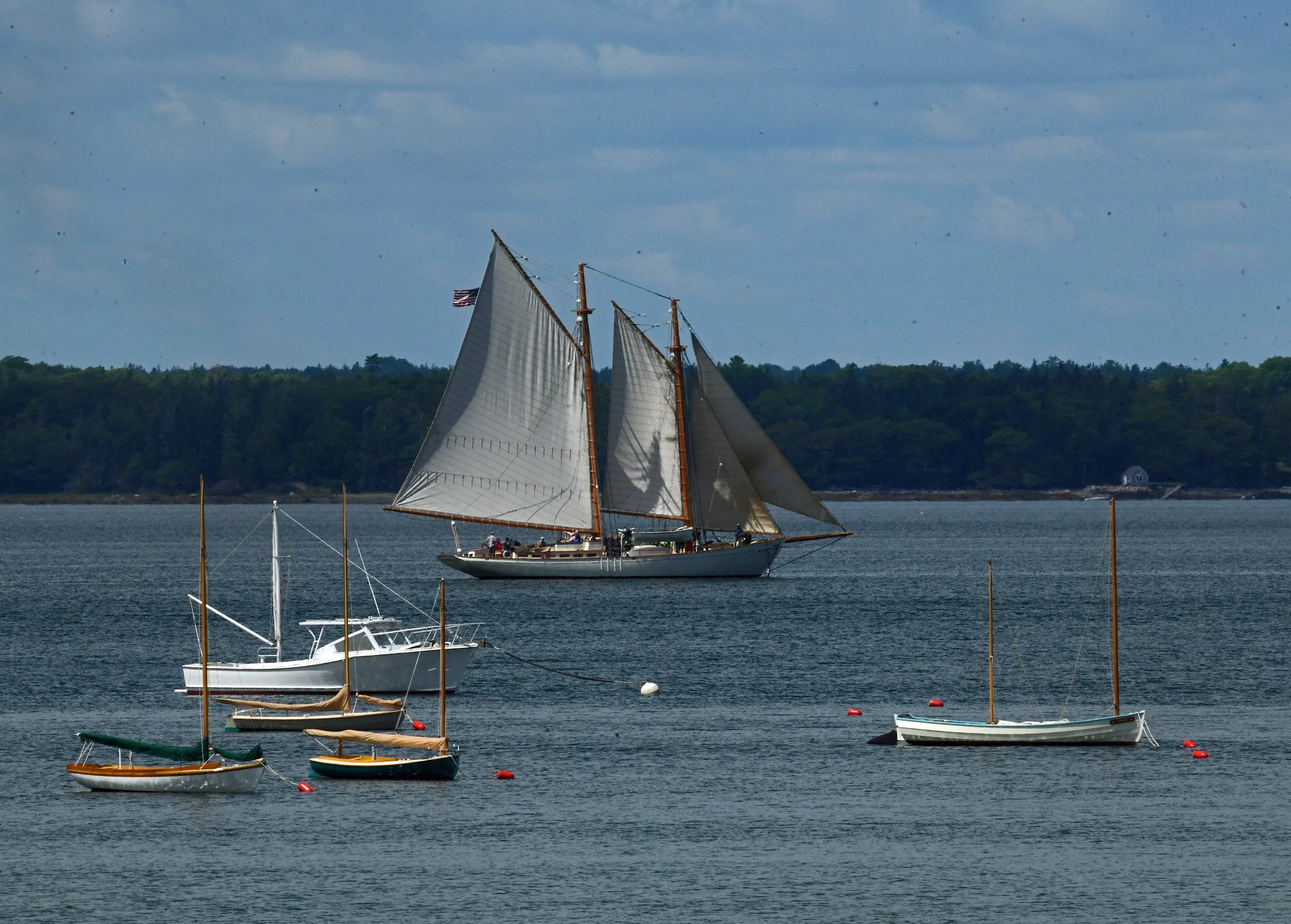
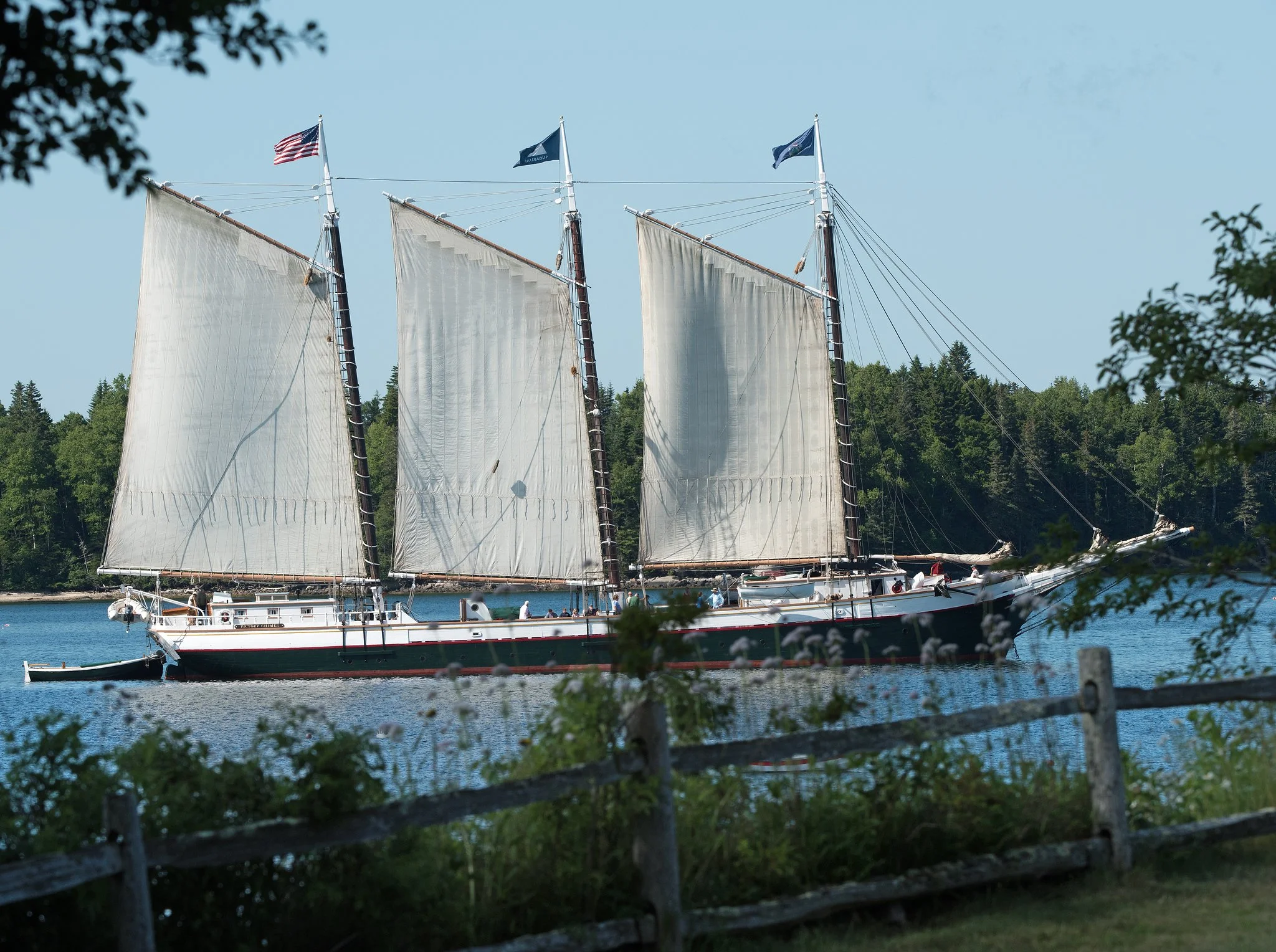
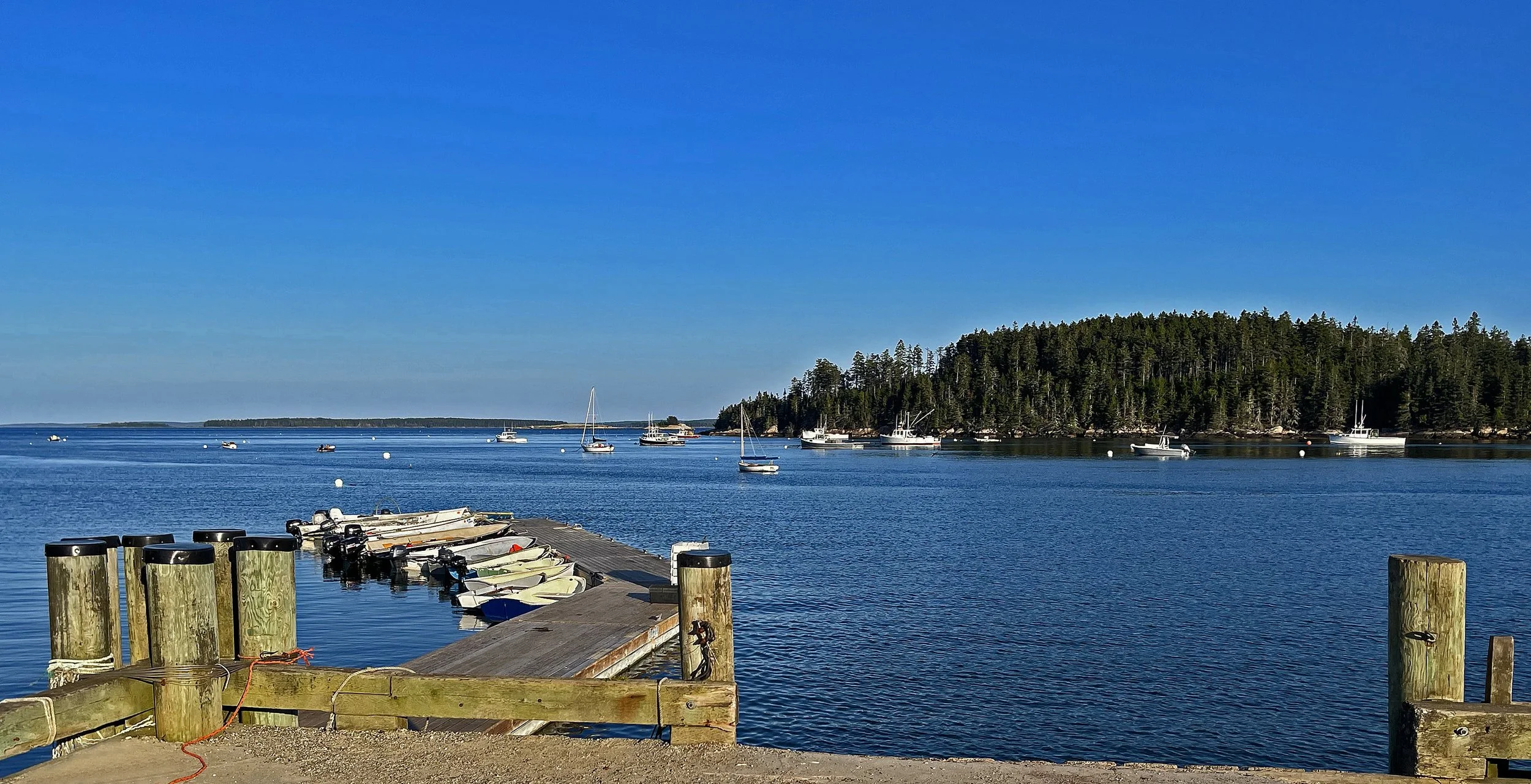
Here you see the STEPHEN TABER waking up in Great Cove early yesterday and moving a short distance to transport her passengers to the WoodenBoat Publications and School campus for a tour. There also were WBS sailing classes to watch. She was on a 5-night private cruise, according to her schedule.
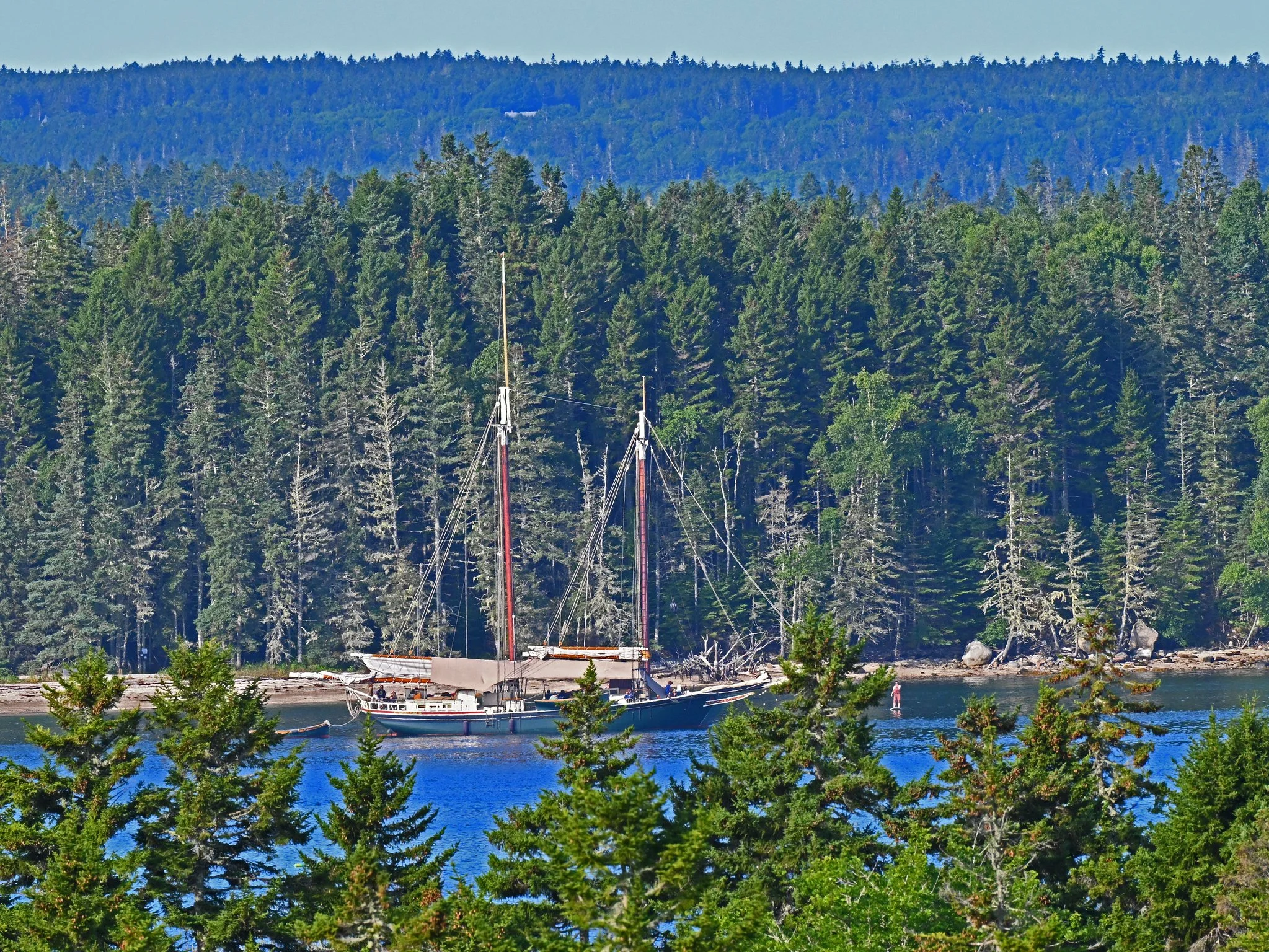
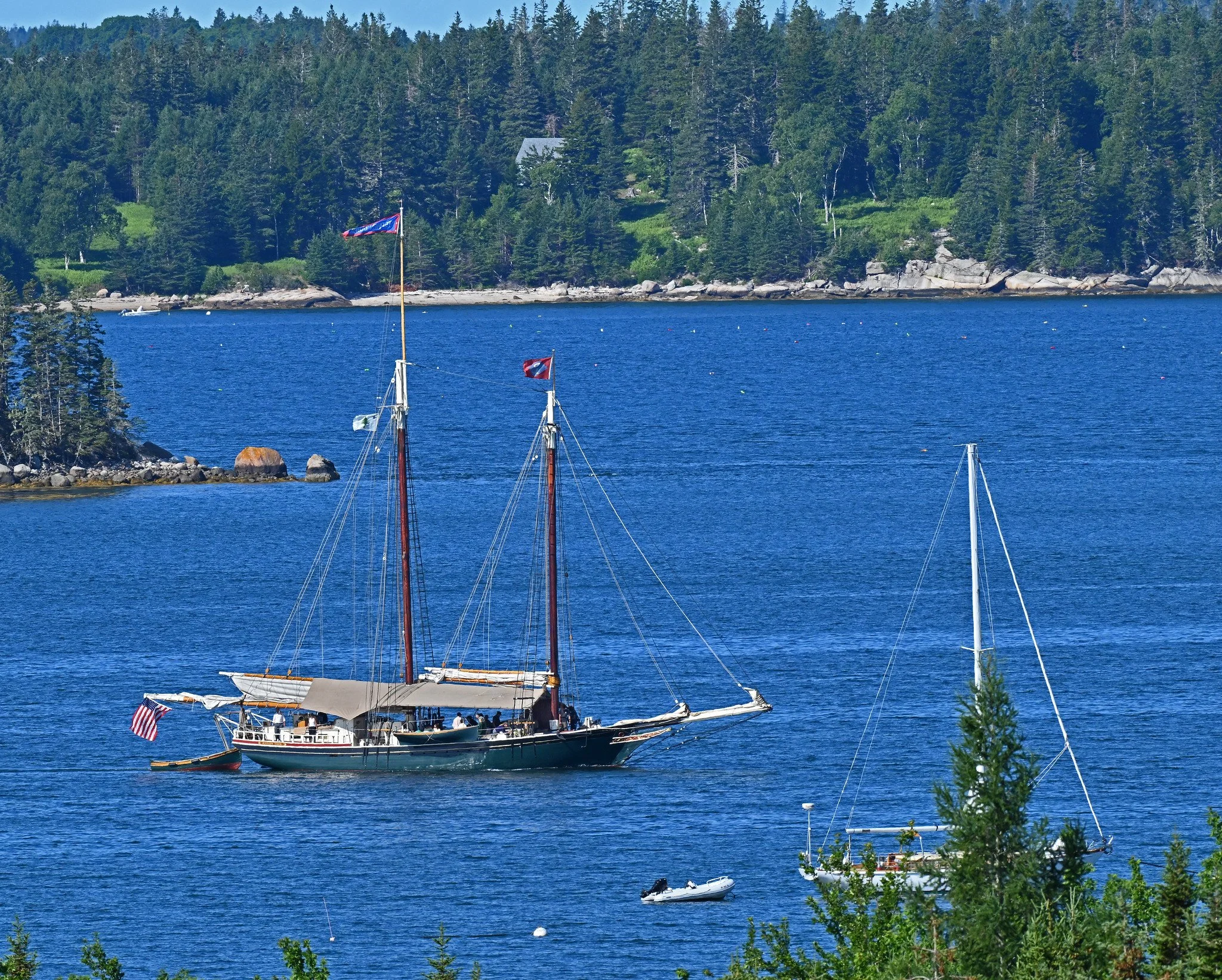
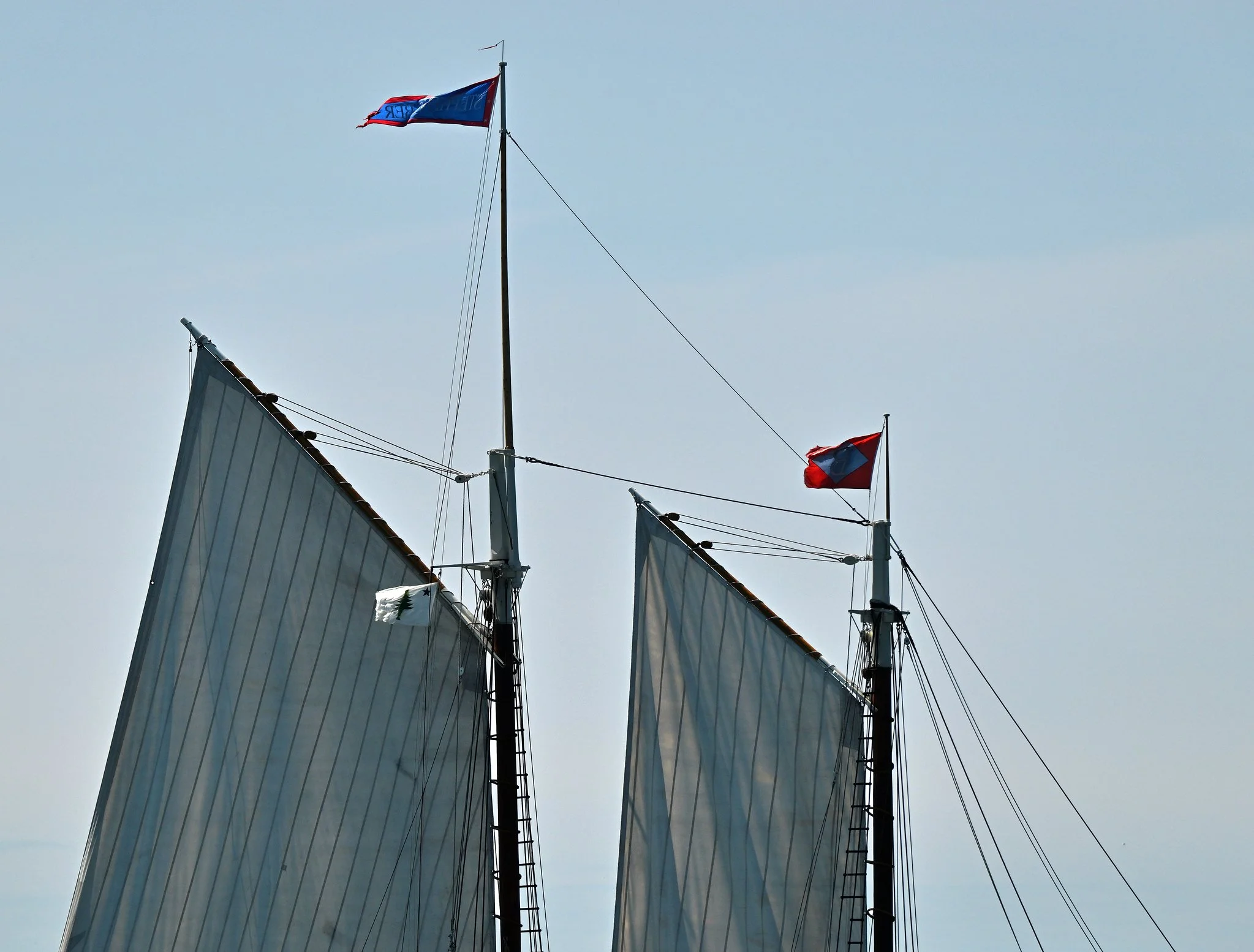
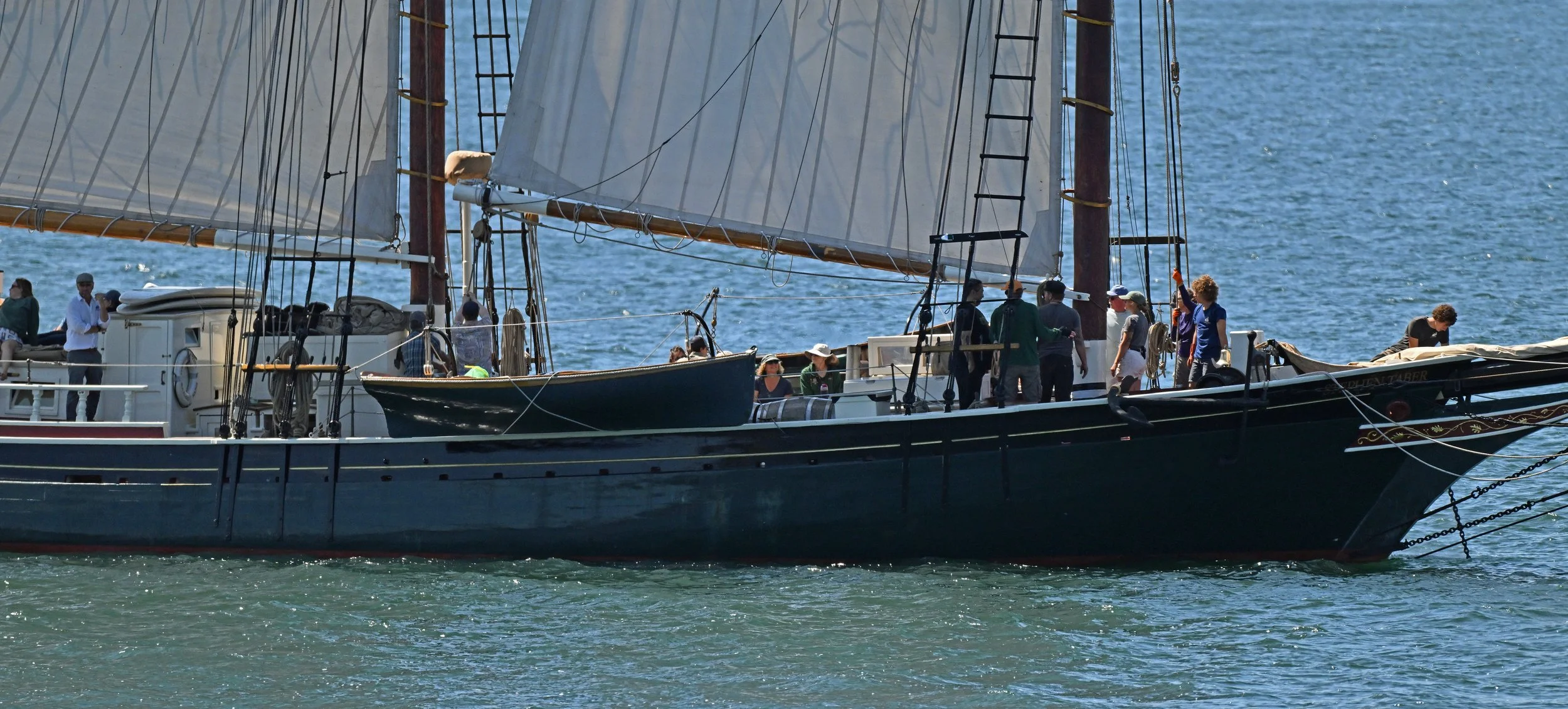
Se soon put up sails and departed before noon, as you’ll see in the images below.
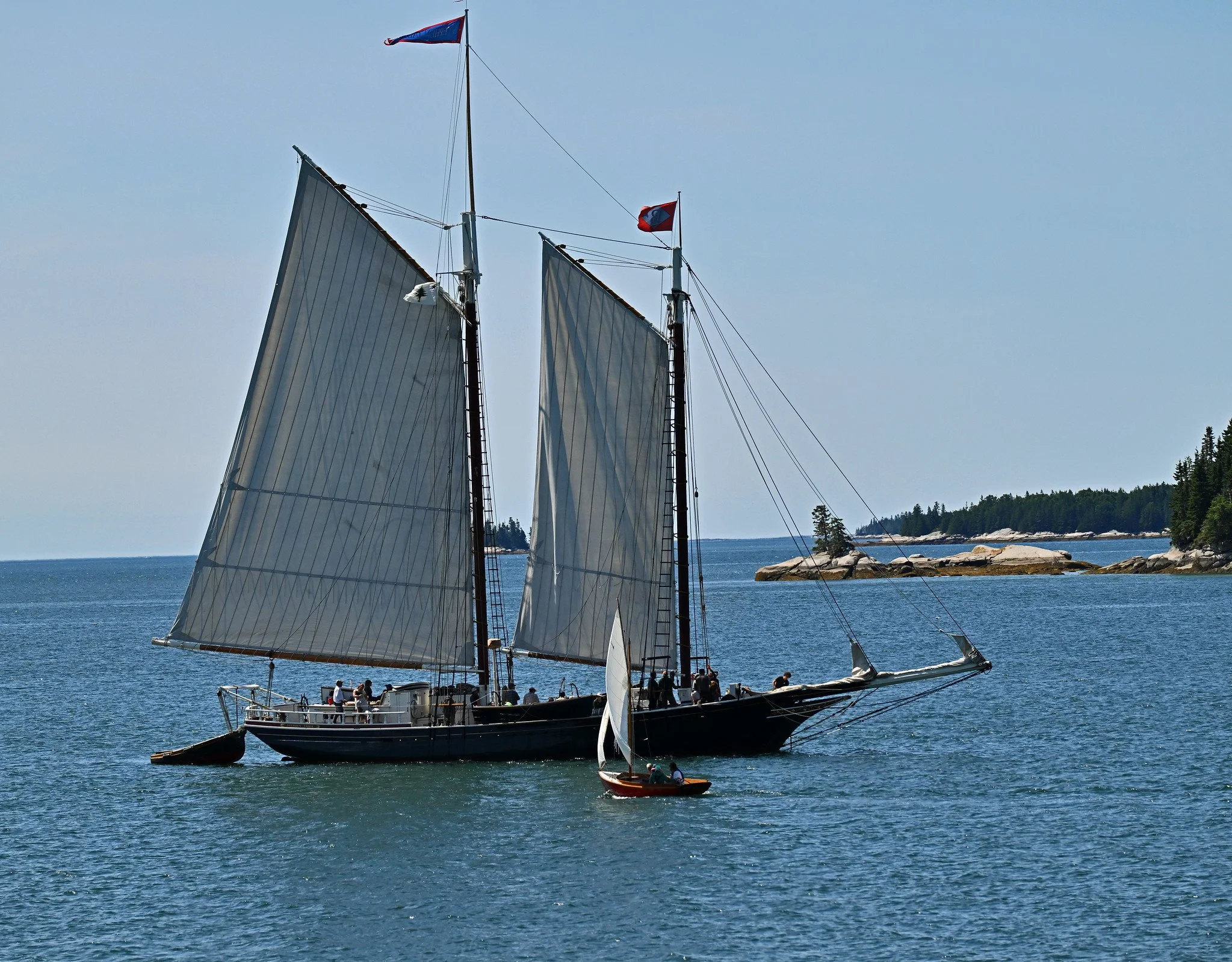
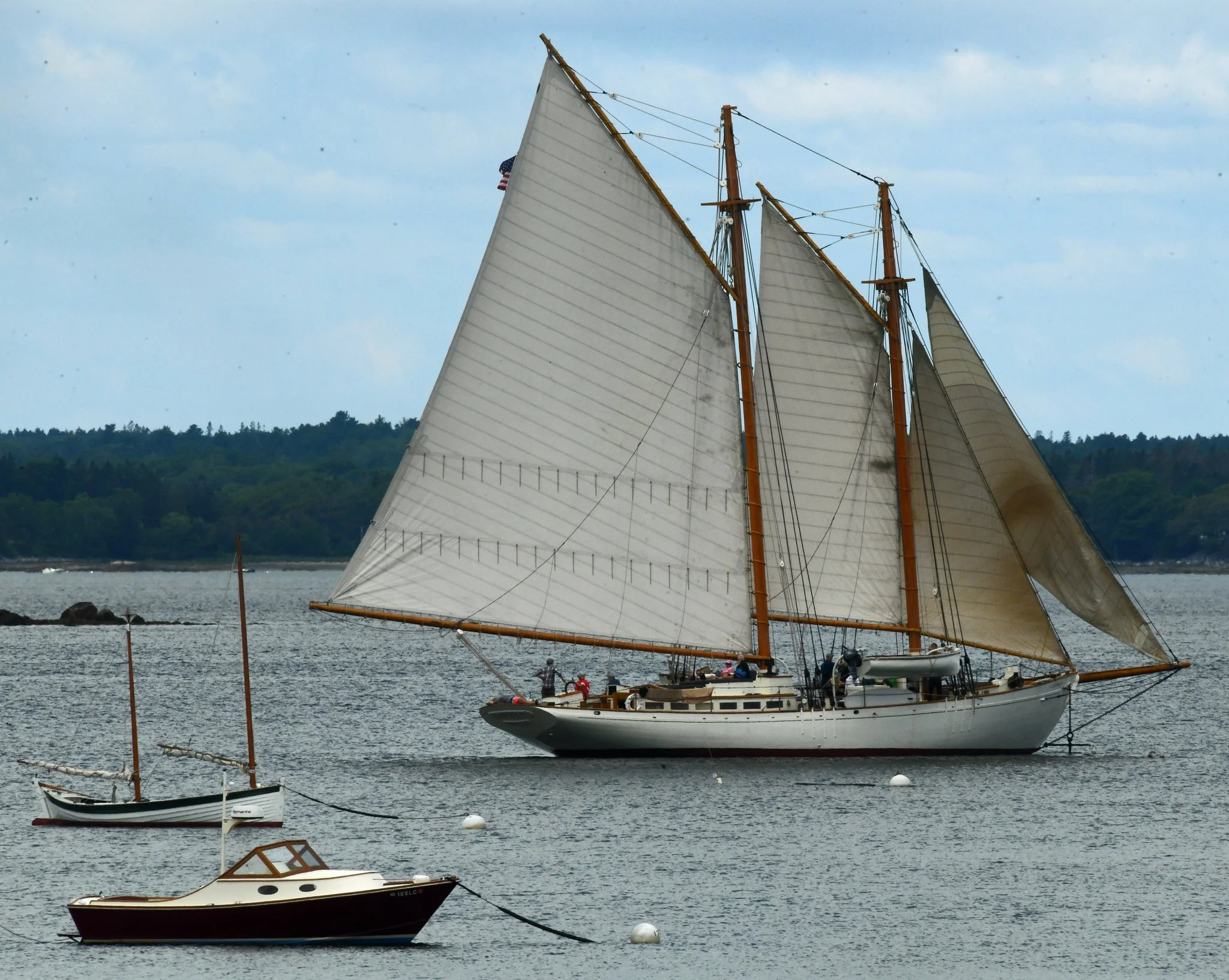
This classic schooner reportedly is the oldest documented sailing vessel in continuous service in the United States and is a National Historic Landmark. She was built and launched in Long Island, New York, in 1871. As was often done, she was named after a prominent and wealthy member of the community who could help when needed. Stepen Taber was a financier, lawyer and a U.S. Congressman.
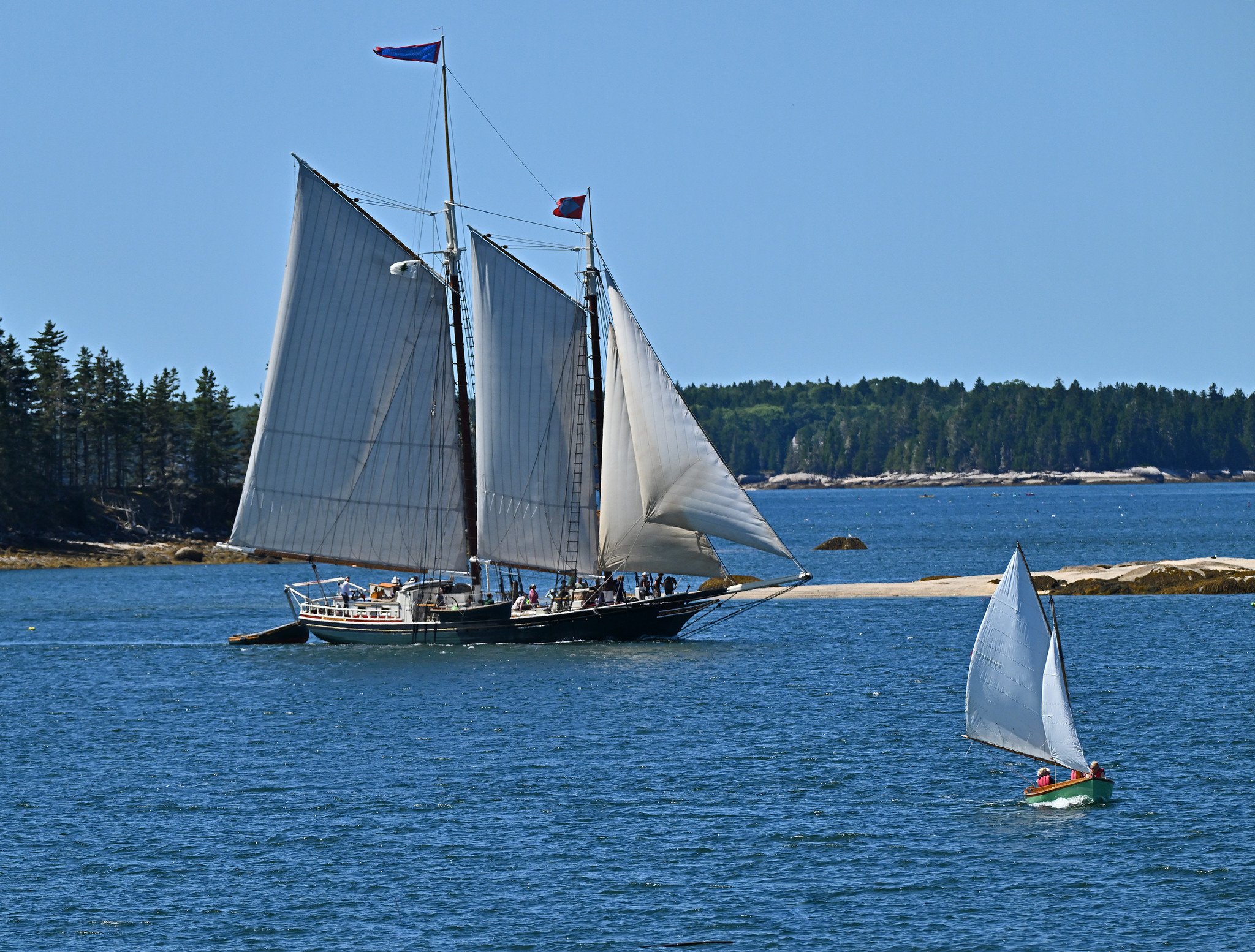
The TABER was built to haul heavy cargo (e.g., bricks, lumber, coal) in New York Harbor and around Long Island, although she did some passenger work in the early 1900s when the freight business fell off.

She moved to Maine in 1920 where she continued to carry heavy cargo until she was converted into a coastal tourist cruiser in 1946. She’s 110 feet long overall (68 feet on deck) and now hails from Rockland, Maine.
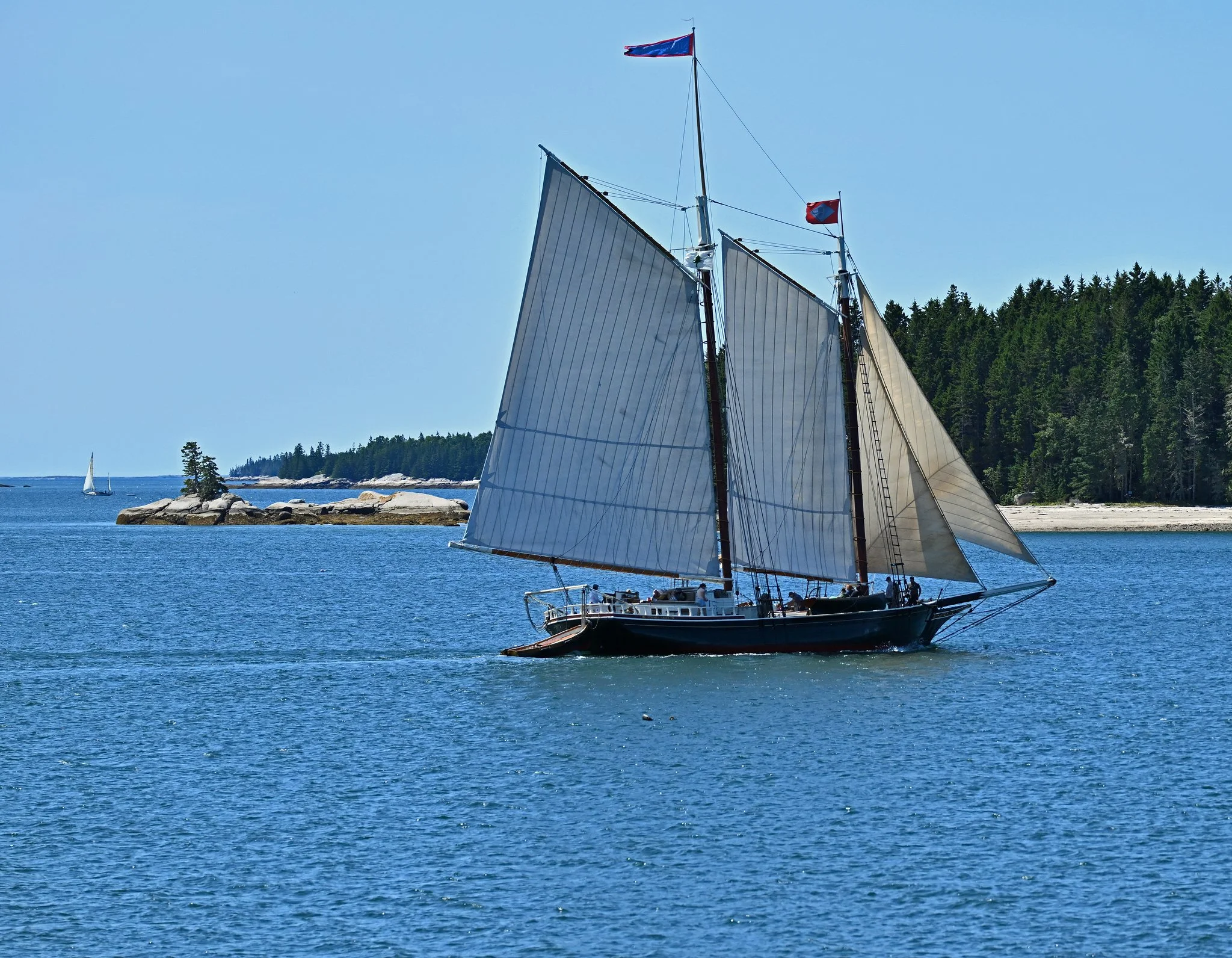
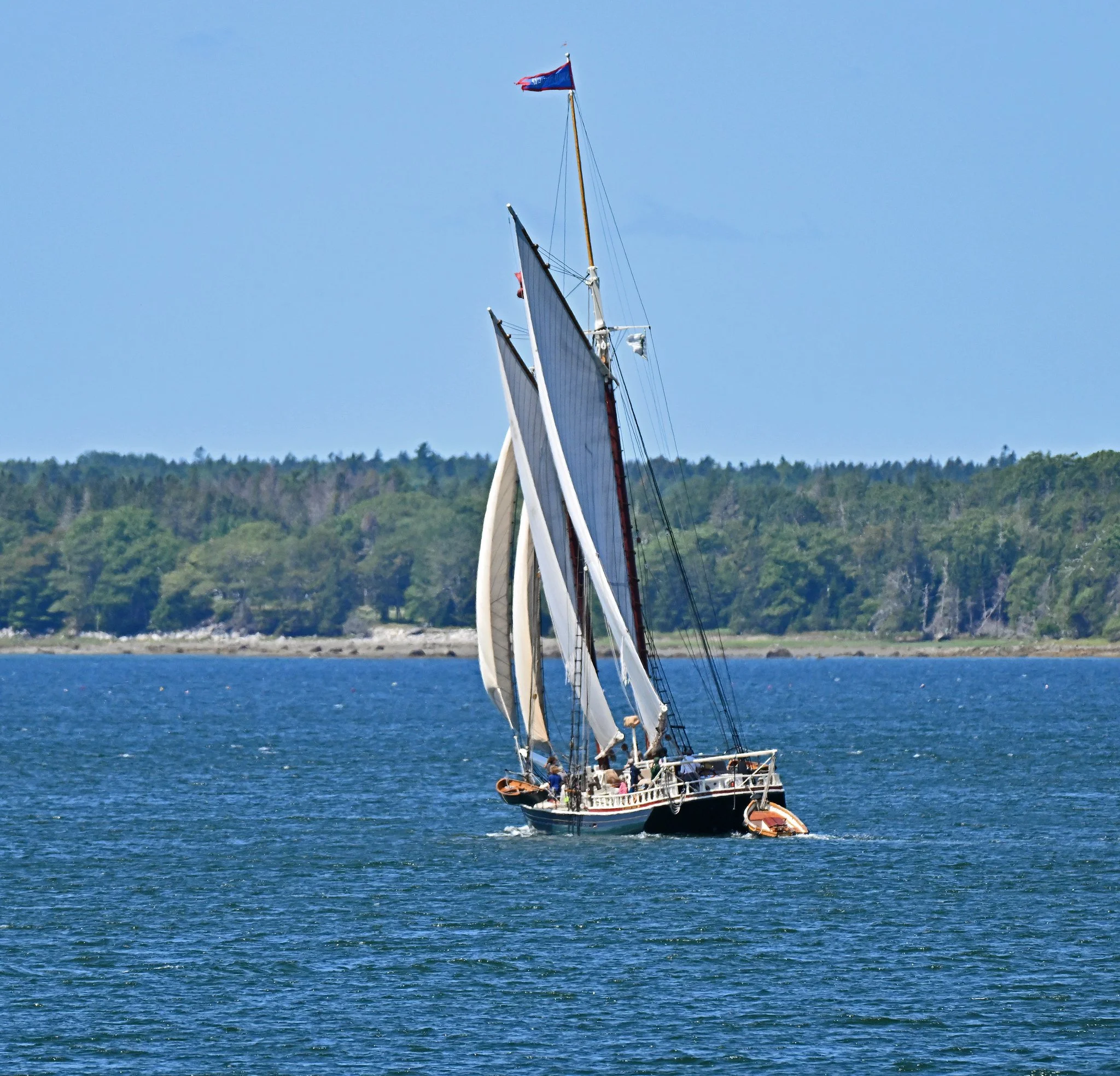
(Images taken in Brooklin, Maine, on July 23, 2026.)
Comment

Comment

In the Right Place: Berry, Berry Nice

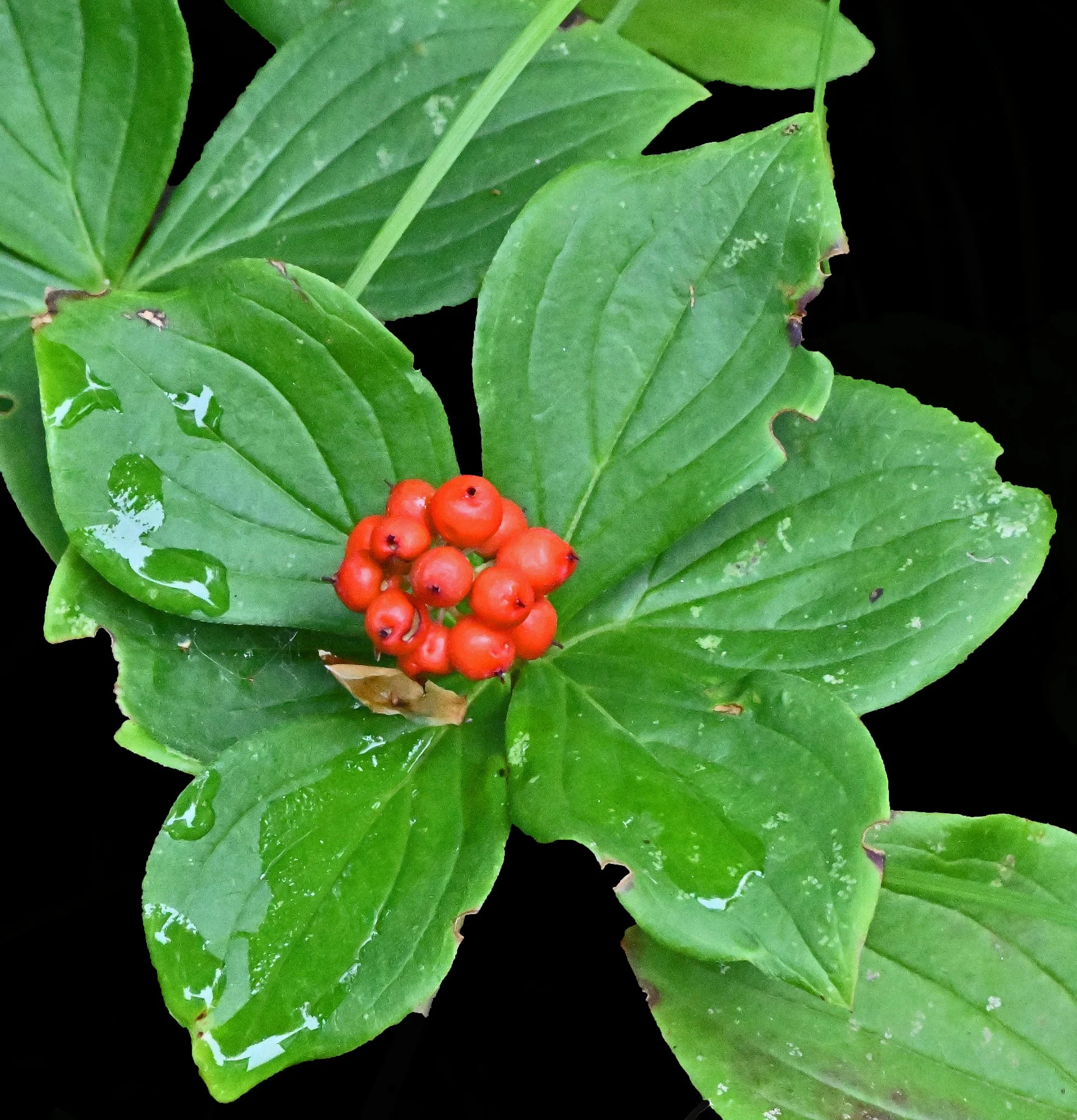
Two of our quick-change artists are at it again. Both are white-flowering spring flora that are changing into their red-berry stages as we speak.

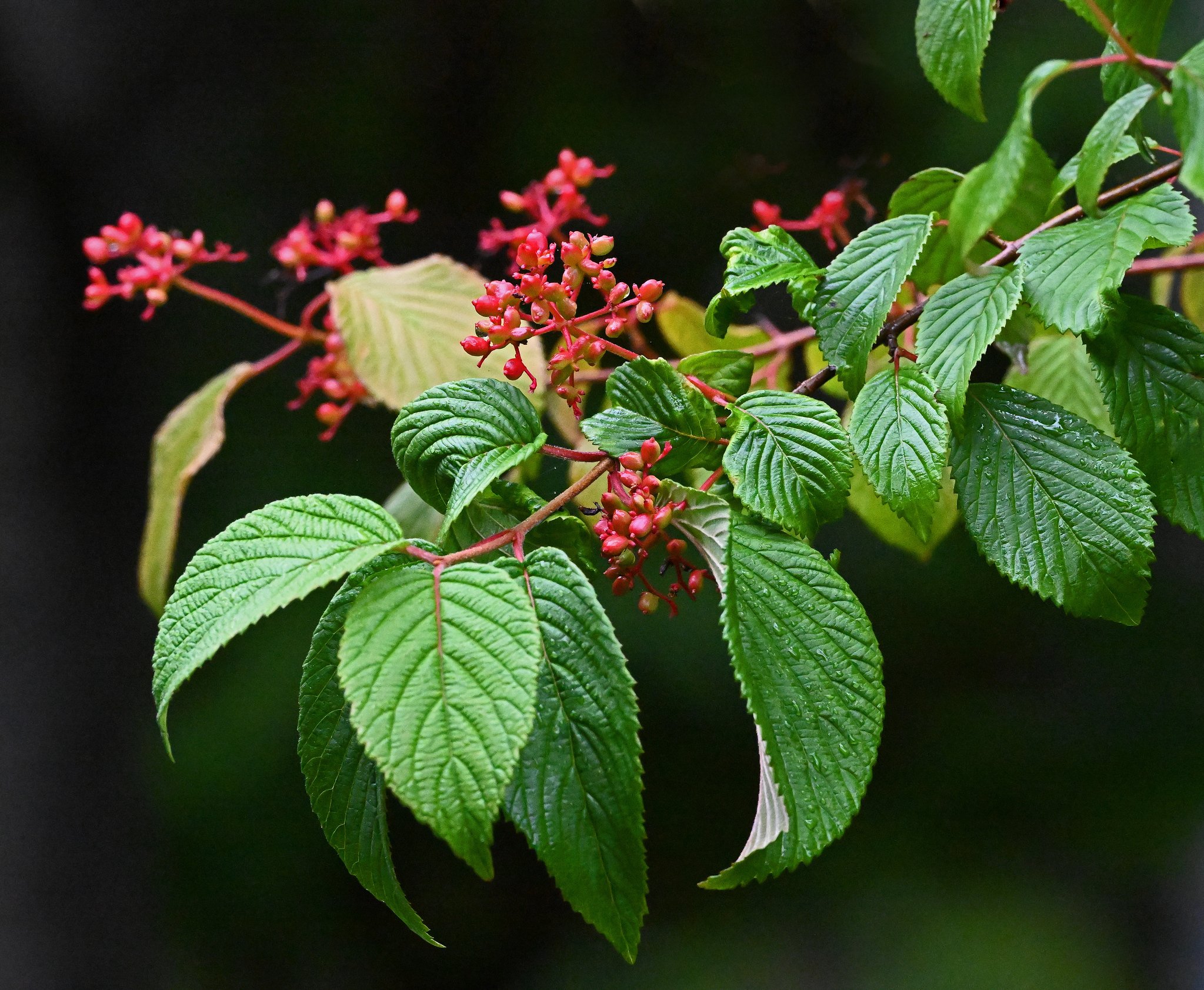
Above, you see Doublefile Viburnum (Viburnum plicatum f. tomentosum). Its red berries will turn shiny black starting in late summer and be swarmed by flocks of birds, while its beautifully-veined leaves will turn burgundy in the fall.

Below, you’ll see Bunchberry (Cornus canadensis), the smallest member of the dogwood family. Its clustered (“bunched”) berries are rich in pectin, making them good thickeners for jams and jellies. Its leaves turn brilliant reds and purples in the fall. Strange as it may seem, black bears are among the wildlife that love the tiny berries.

(Images taken in Brooklin, Maine, on July 22, 2026.)

Comment

Comment

In the Right Place: Of Ping Pong Balls and Peanuts

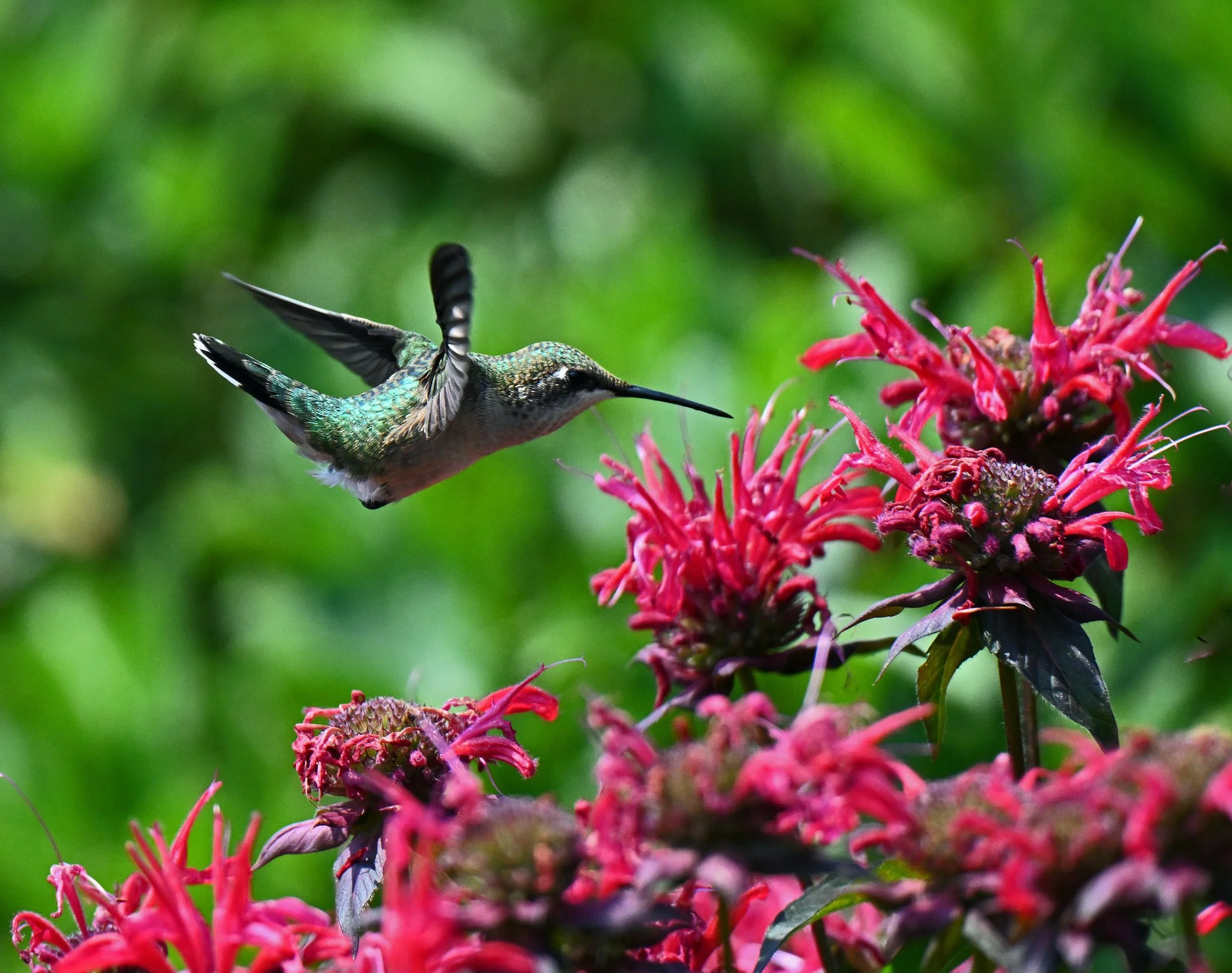
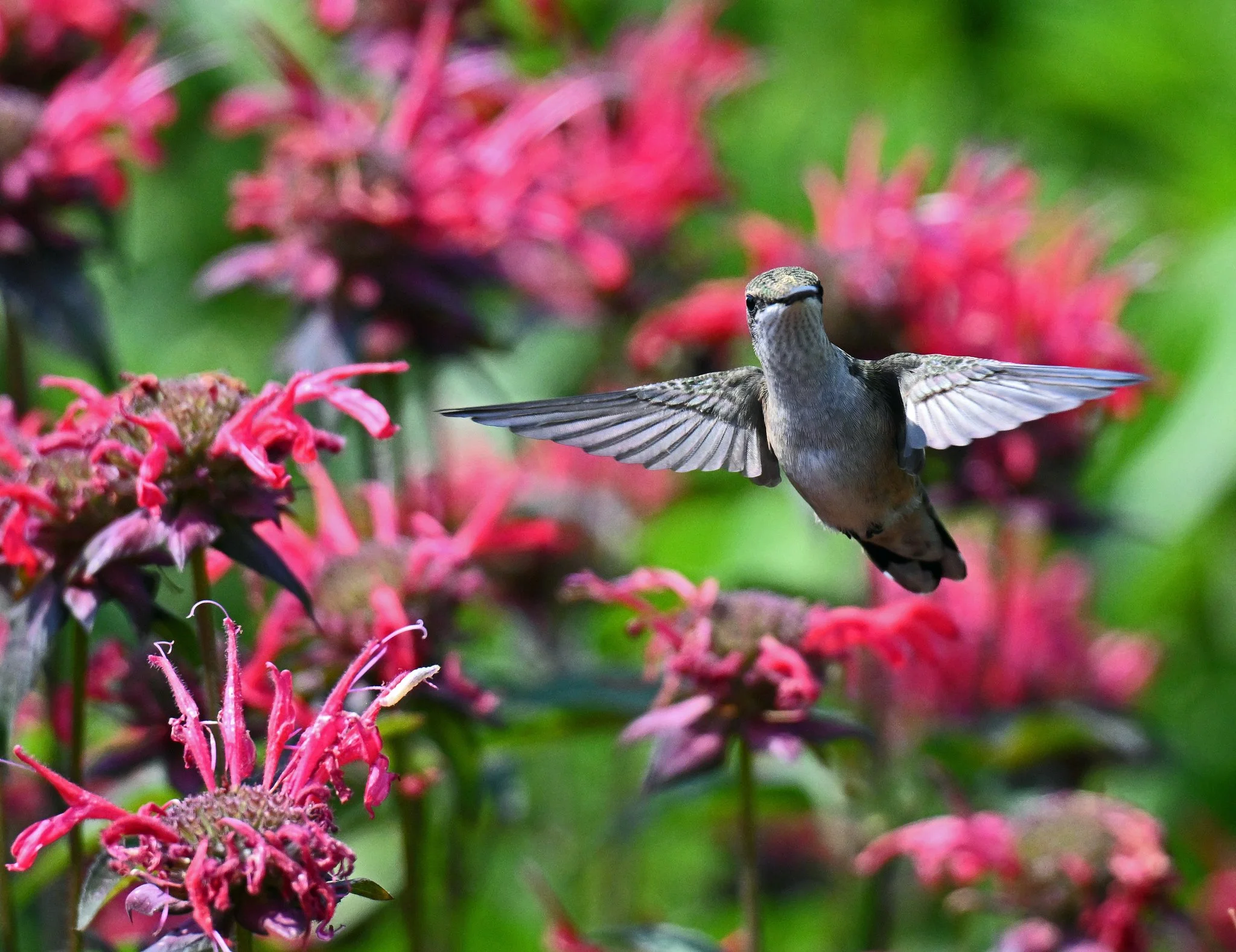
This is a female ruby-throated hummingbird about to feed on bee balm. These females are “ruby-throated” only because their species name says that they are; only the males wear those spectacular iridescent red and purple necklaces called “gorgets.”

Here in Down East Maine, the males impregnate the females and usually start their migration back south in July, leaving the females to build nests and raise the progeny as single parents. That means that these mothers need plenty of energizing nectar.

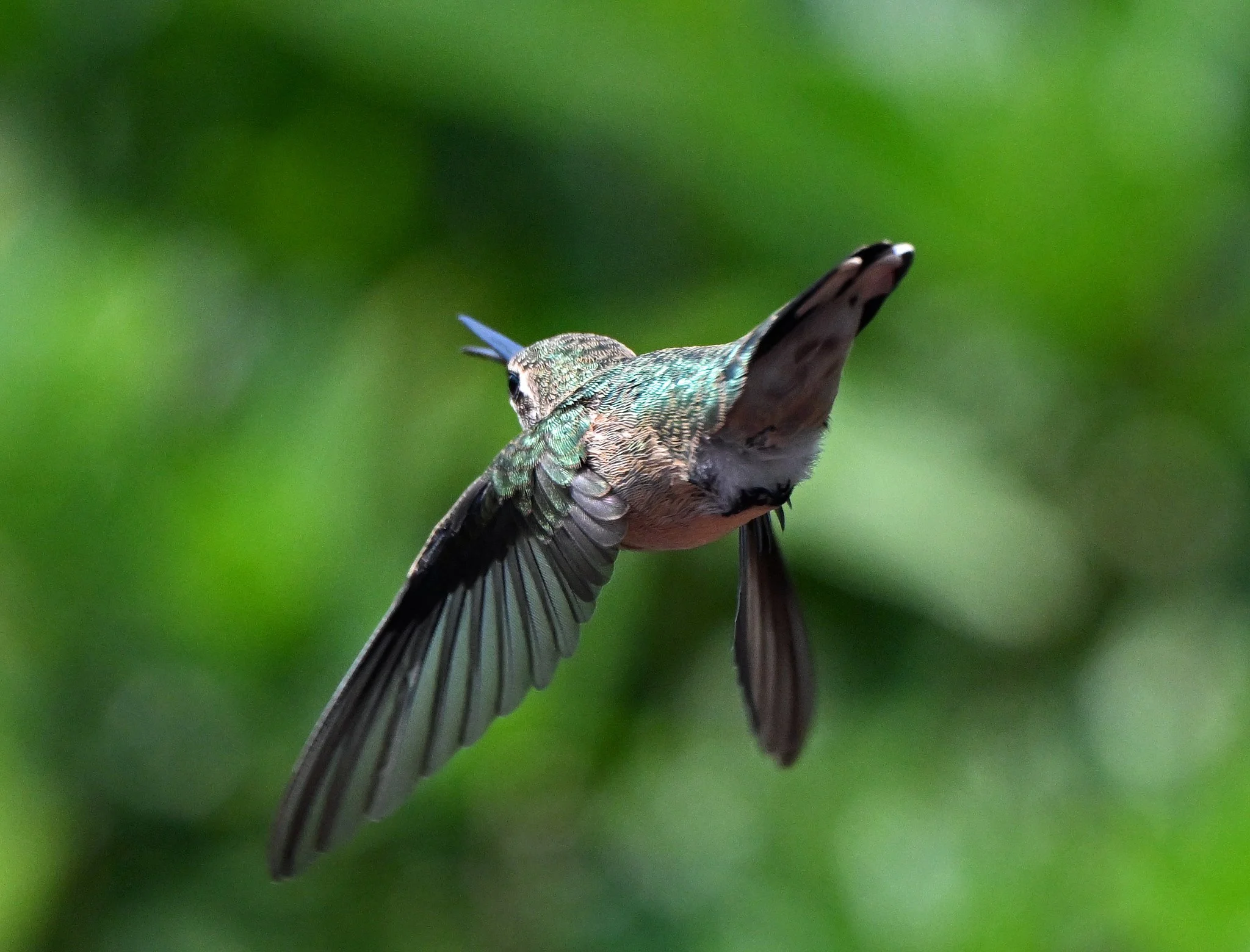
Ruby-throats are among wildlife’s best fliers. They reportedly beat their wings between 50 and 80 times per second depending on activity – too fast for the human eye to see more than a blur. They can fly forward, backward and even upside down, and can reach forward speeds of up to 60 mph during courtship dives, according to researchers.

Most adult ruby-throats weigh about three grams and are about three inches long overall, but their bodies (not counting long beak and stubby tail) are only about 1.5 to 2.0 inches long, according to taxonomist measurements.

Stated another way, these birds have the weight of a ping-pong ball and the body length of a roasted peanut pod.  Yet, on their migrations from and to Central America and southern Mexico, they can fly nonstop 500 or so miles across the Gulf of Mexico.

(Images taken in Brooklin, Maine, on July19, 2026.)

Comment

Comment

In the Right Place: Me, Too

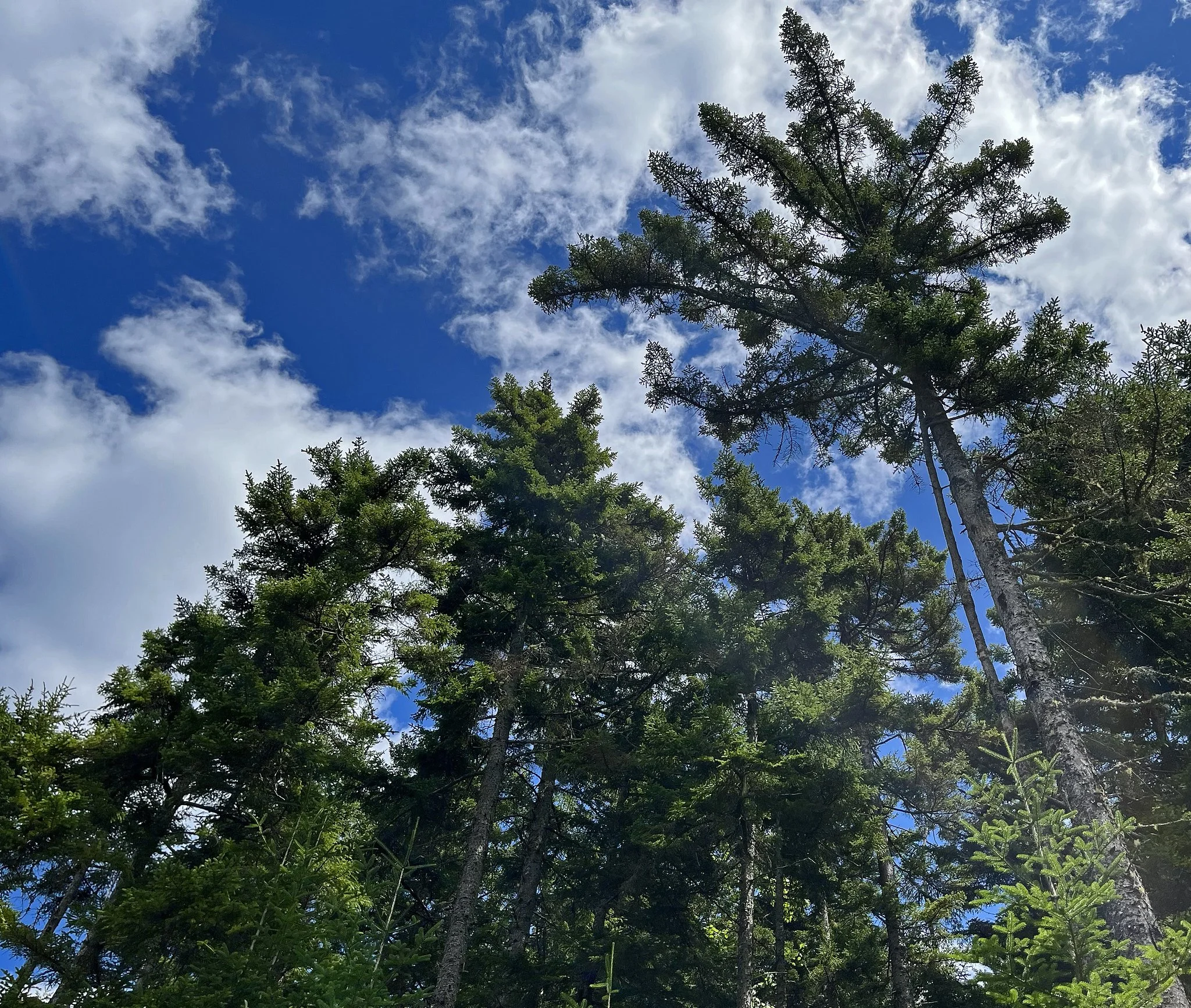
“Ordinarily I go to the woods alone,
                                  ***
I don’t really want to be witnessed talking to the catbirds
or hugging the old black oak tree.
I have my ways of praying,
as you no doubt have yours.”

— Excerpts from "How I Go to the Woods" by Mary Oliver (2012)

Oliver (1933-2019) wrote sensitively-observant poems about nature and life. She suffered an abusive childhood in which she would escape to the woods to find solace, spiritual strength and, eventually, poetry, which she credited with saving her life.

She would explore the outdoors alone with a small notebook and jot down floods of impressions. She famously challenged her readers by asking a haunting question: "Tell me, what is it you plan to do with your one wild and precious life?" She won the Pulitzer Prize in 1983 and the National Book Award in 1992.

(Images taken in Brooklin, Maine, on July 20 and 19, 2026.)

Comment

Comment

In the Right Place: Handstands and Bombing Runs

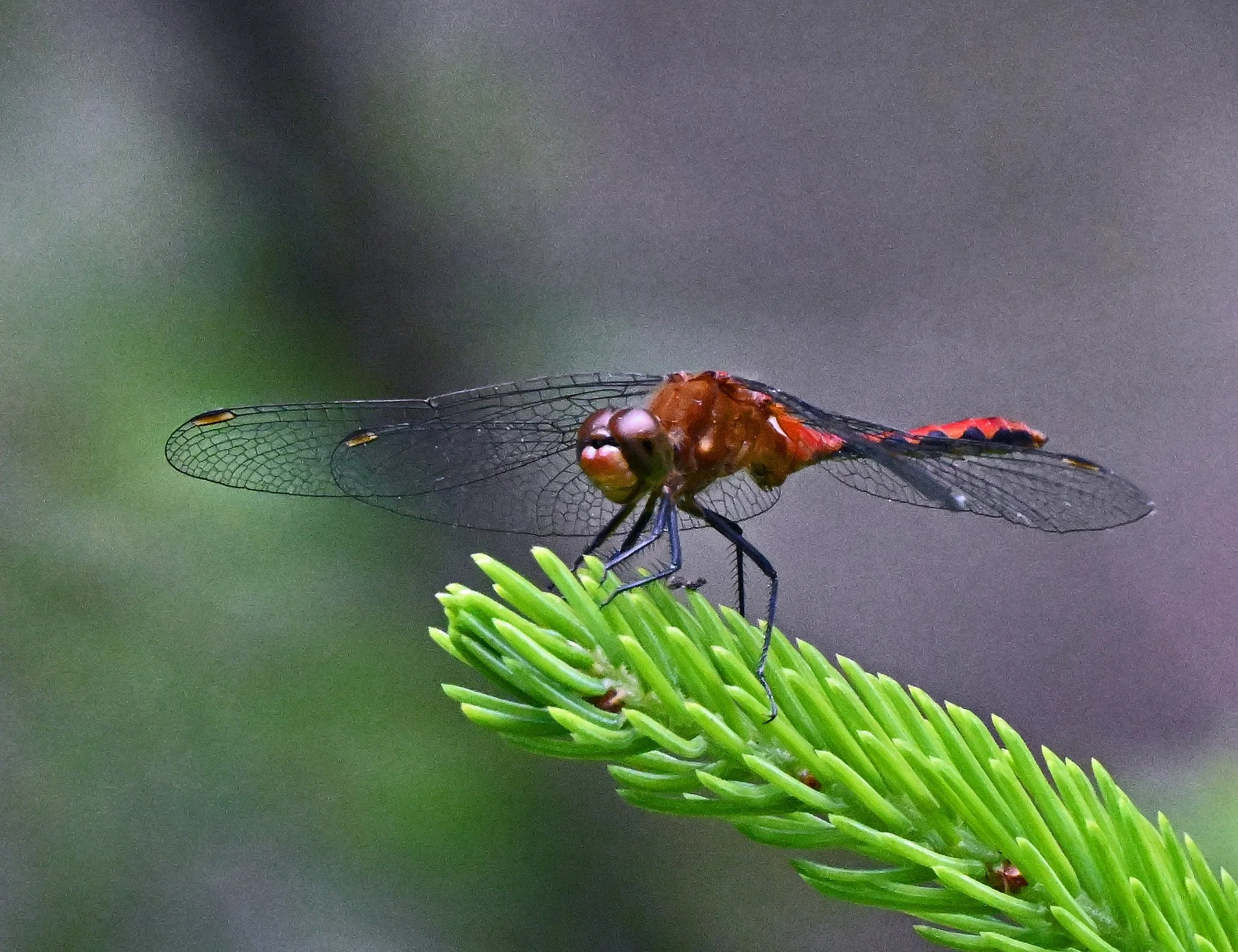
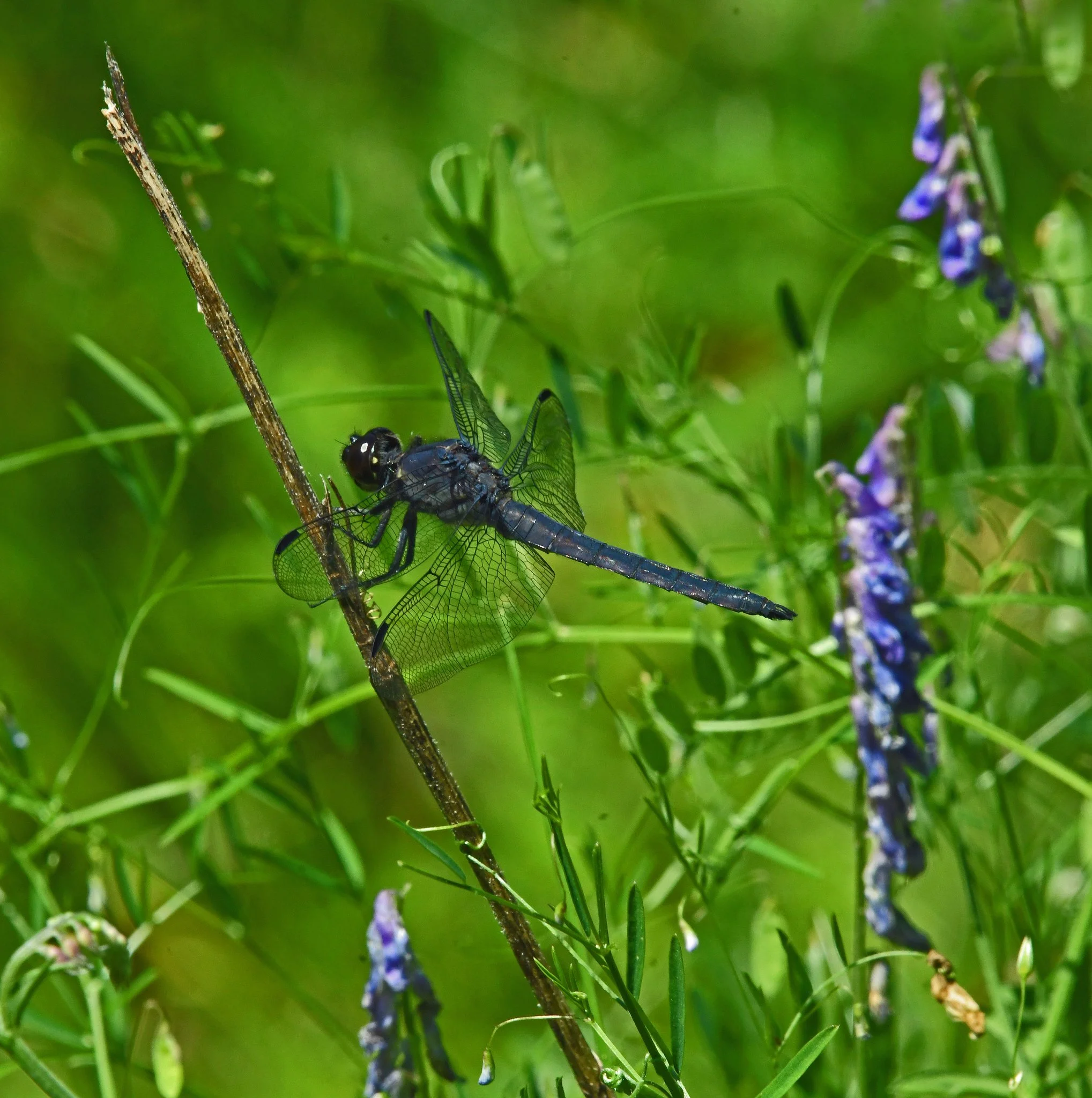
Despite their name, dragonflies are not harmful and they’re not flies. They don’t sting or bite and they’re more efficient at pest control than your Orkin man. But they do have quirks. Here are a few words about two of our native dragonflies that are winging it around here now.

Above, you see what appears to be a mature male white-faced Meadowhawk dragonfly (Sympetrum obtrusum). Their females are yellowish-brown or burnished orange with black triangles down the sides of the abdomen. One of the unusual habits of this species is that they do handstands on perches with their abdomens pointed straight up to stay cool. The position apparently minimizes the surface area exposed to the sun.

Below, , you’ll see what appears to be a mature male Slaty Skimmer (Libellula incesta). Their females are brown with a dark stripe down their back. Unlike most other species, female slaty blues lay their fertilized eggs like bombers – they hover over ponds and lakes and drop the eggs.

(Images taken in Brooklin, Maine, on July 15 and 12, 2026.)

Comment

Comment

In the Right Place: Red River Revery

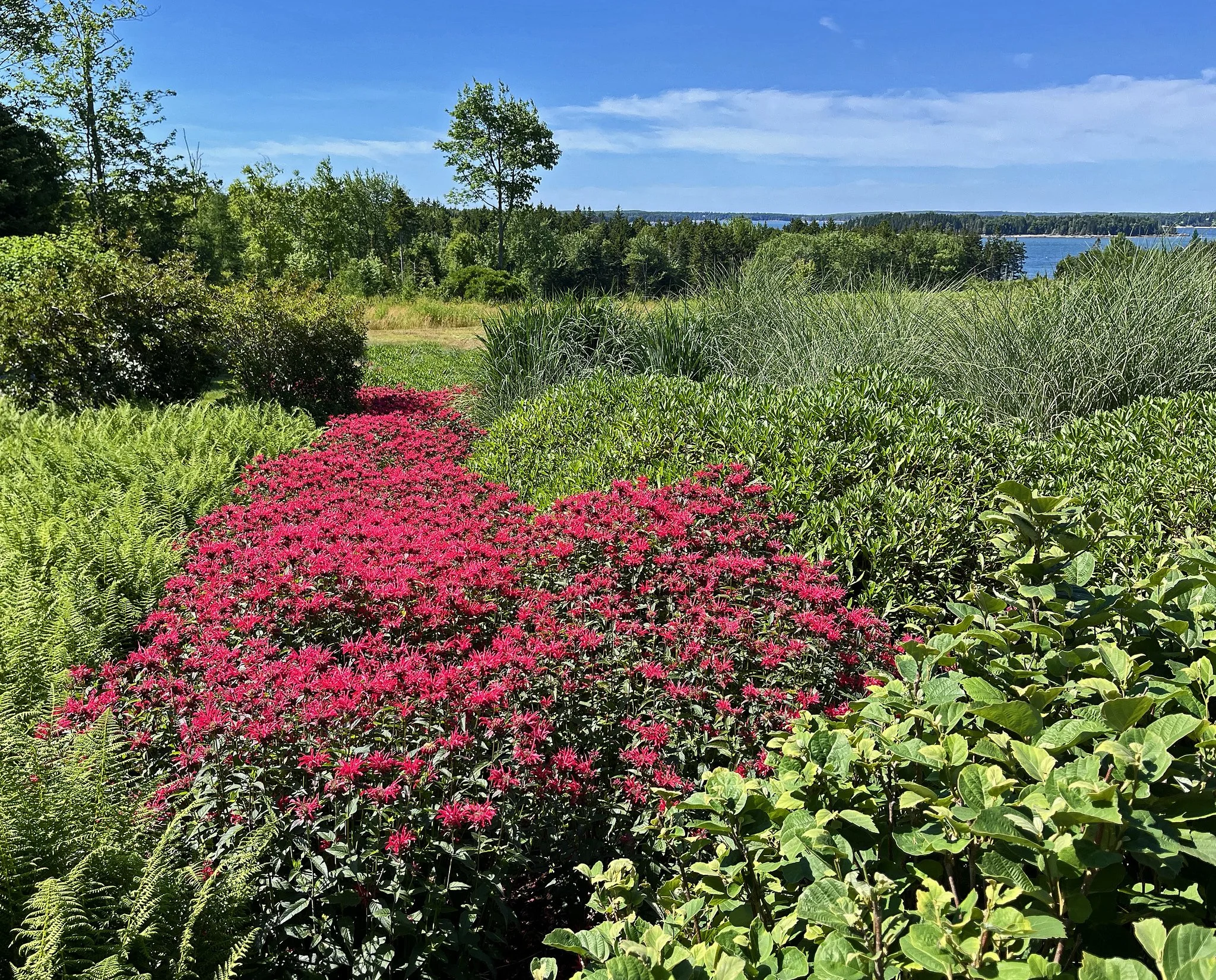
There are three famous Red Rivers in the U.S. There’s the 550-mile Red River of the North that flows north from North Dakota to Minnesota; there’s the 1290-mile Red River of the South that flows southeast from Texas to Oklahoma, Arkansas and Louisiana, and there’s this approximately 40-foot red river of Brooklin, Maine, that runs southwest from near the top of Barbara’s garden to near the bottom.:

There may be a few carpers who want to point out that the Brooklin river is famous only to hundreds of nectar-loving little creatures and maybe a handful of people. But those few admirers of the Brooklin flow know that scented serenity is better than silty sediment every time.

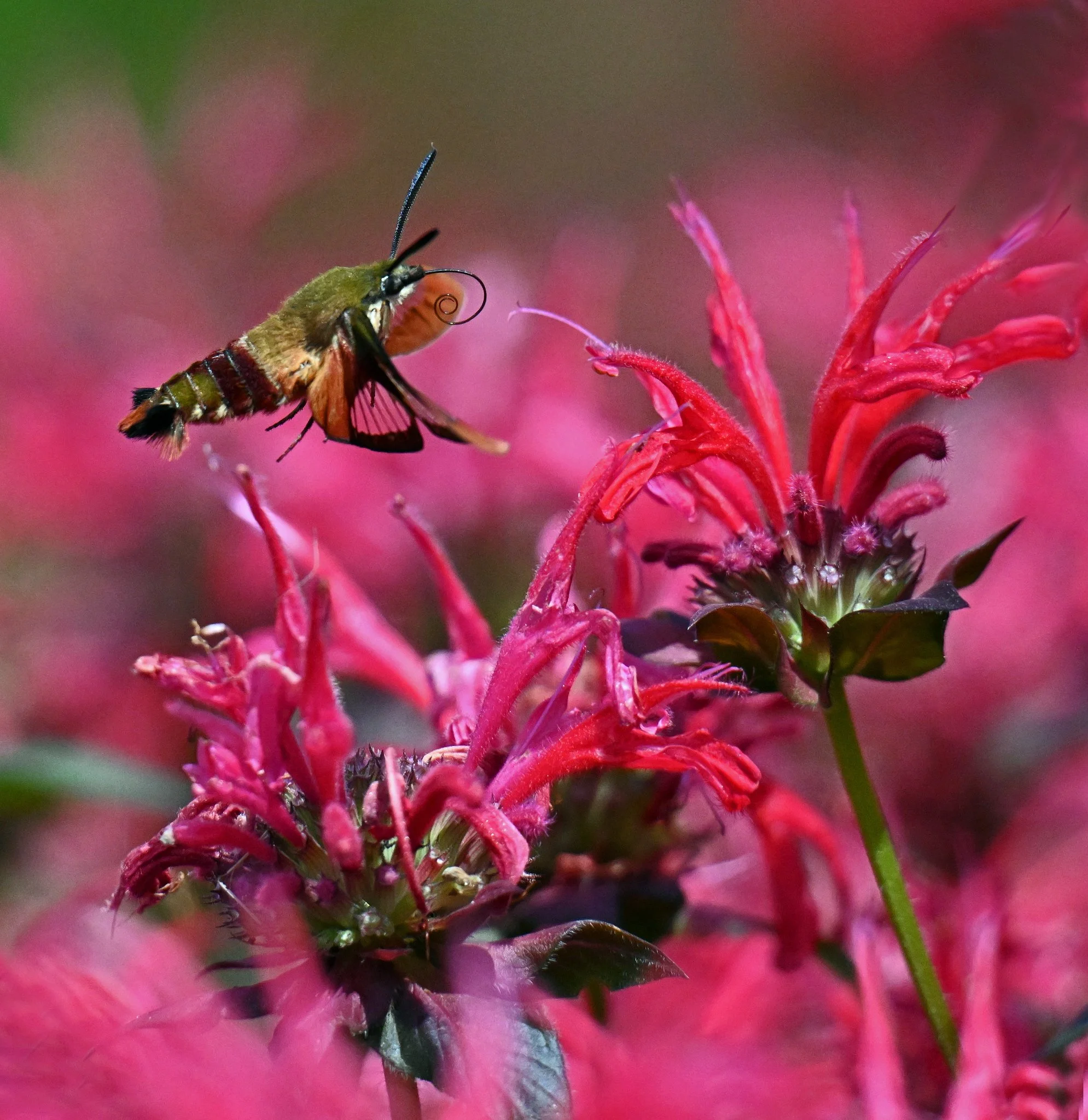
Yes, the first two imposing rivers were named for their reddish silt, which harms fish and sometimes is disgusting just to look at. The third, more demure, flow gets its very local name from fresh and fragrant scarlet bee balm, which is a paradise for clean-living, hard-working  humming birds, butterflies, bees and (as shown below) clearwing hummingbird moths.

(Images taken in Brooklin, Maine, on July 17 and 15, 2026.)

Comment

Comment

In the Right Place: Luther’s Gift

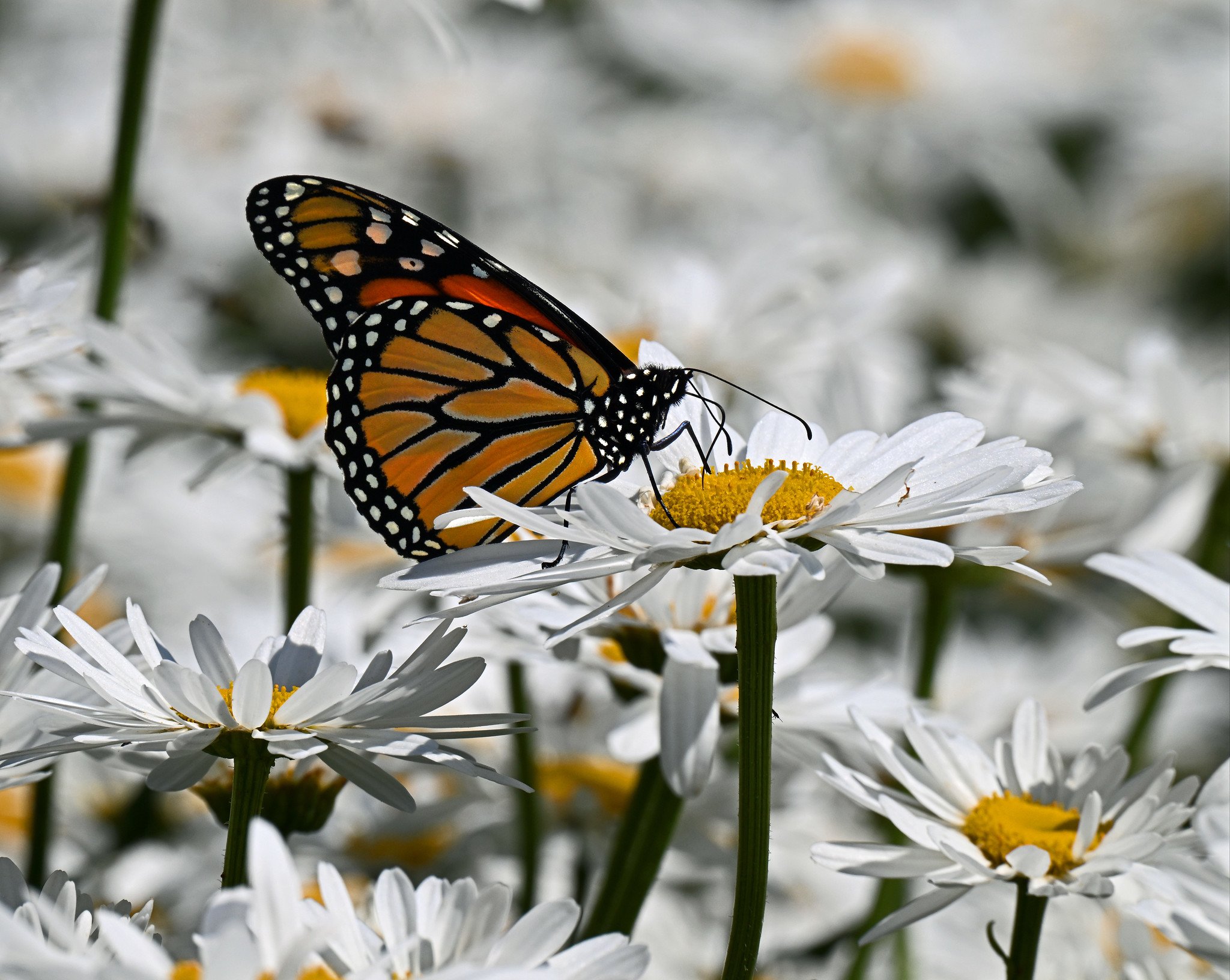
Big, bright Shasta daisies are peaking now like mounds of pure, gold-dusted summer snow. They attract large and little pollinators, including monarch butterflies.

We can thank the renowned California horticulturist Luther Burbank for his painstaking efforts to create these beauties, according to what I’ve read.

He developed these hybrids (Leucanthemum x superbum) in the 1890s to resemble the snowcap of nearby Mount Shasta, according to the literature. To do so, he reportedly cross-bred daisy species from North America, Europe and Japan to obtain a larger, sturdier, and longer-blooming daisy with glowing white petals.

(Images taken in Brooklin, Maine, on July 13 and 17, 2026.)

Comment

Comment

In the Right Place: Fowl Play

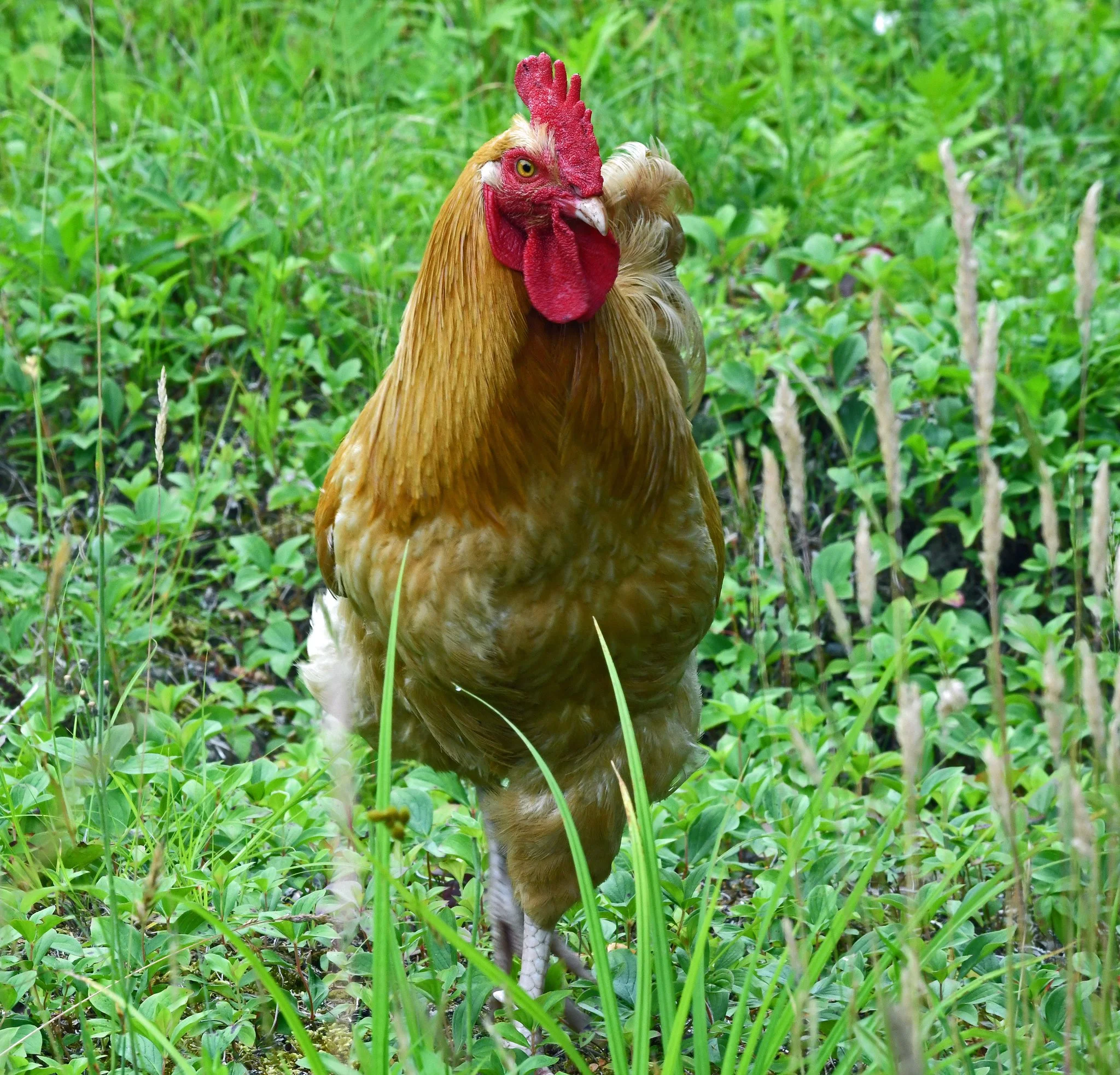
Strange, but true: I saw movement at the woods’ edge, with flashes of tawny and red moving parts in the grasses. There was a liveliness there bigger than a basketball. My immediate thought was that a bobcat had one of our snowshoe hares by the bleeding neck.

I got downwind, slowly moved closer and put a big lens on the spot. In a minute, a head popped up – a beady-eyed head wearing bright red wattles on top of a neck of golden feathers. I had painstakingly stalked a rooster chasing bugs! On a hot day. In the open sun.

This trespasser apparently belonged to a neighbor who keeps chickens about a quarter of a mile down the road. The big rooster obviously was imbued with a sense of adventure and an expansive interpretation of “free range.”

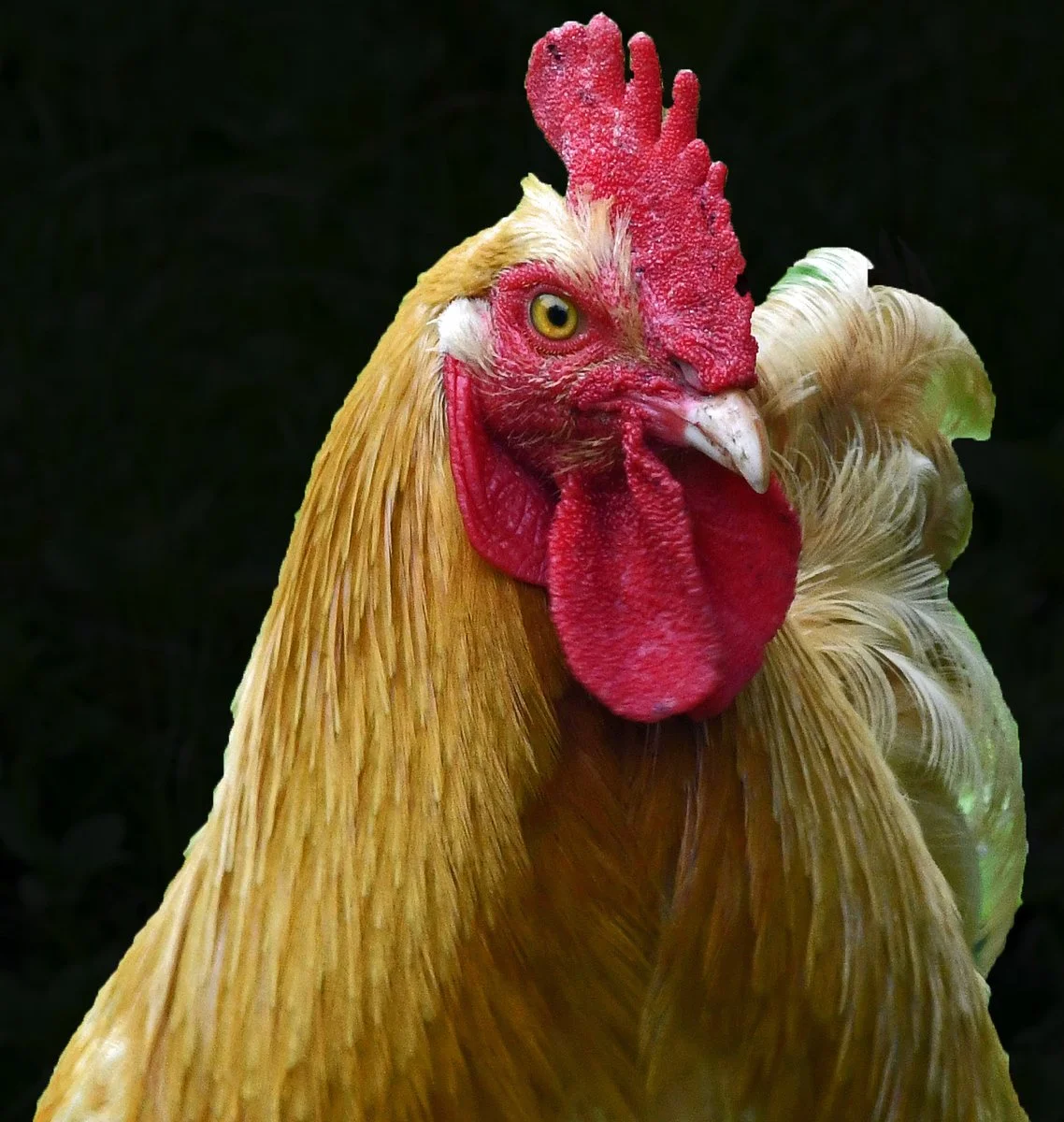
I certainly don’t mind him eating “our” insects, but I hope he got back to his roost before dusk. He was in an area where coyotes and bobcats and, sometimes, bears roam, and eagles, hawks and owls fly. Nonetheless, he was a handsome devil, so I did his portrait as a memento to the joys of folly:

I also goggled his image and was told that he was a Buff Orpington rooster, a breed originally developed in the United Kingdom for their large size, tasty meat and good egg production. The report didn’t mention anything about them having a wanderlust trait.

(Images taken in Brooklin, Maine, on July 14, 2026.)

Comment

Comment

In the Right Place: Brooklin Breakthrough

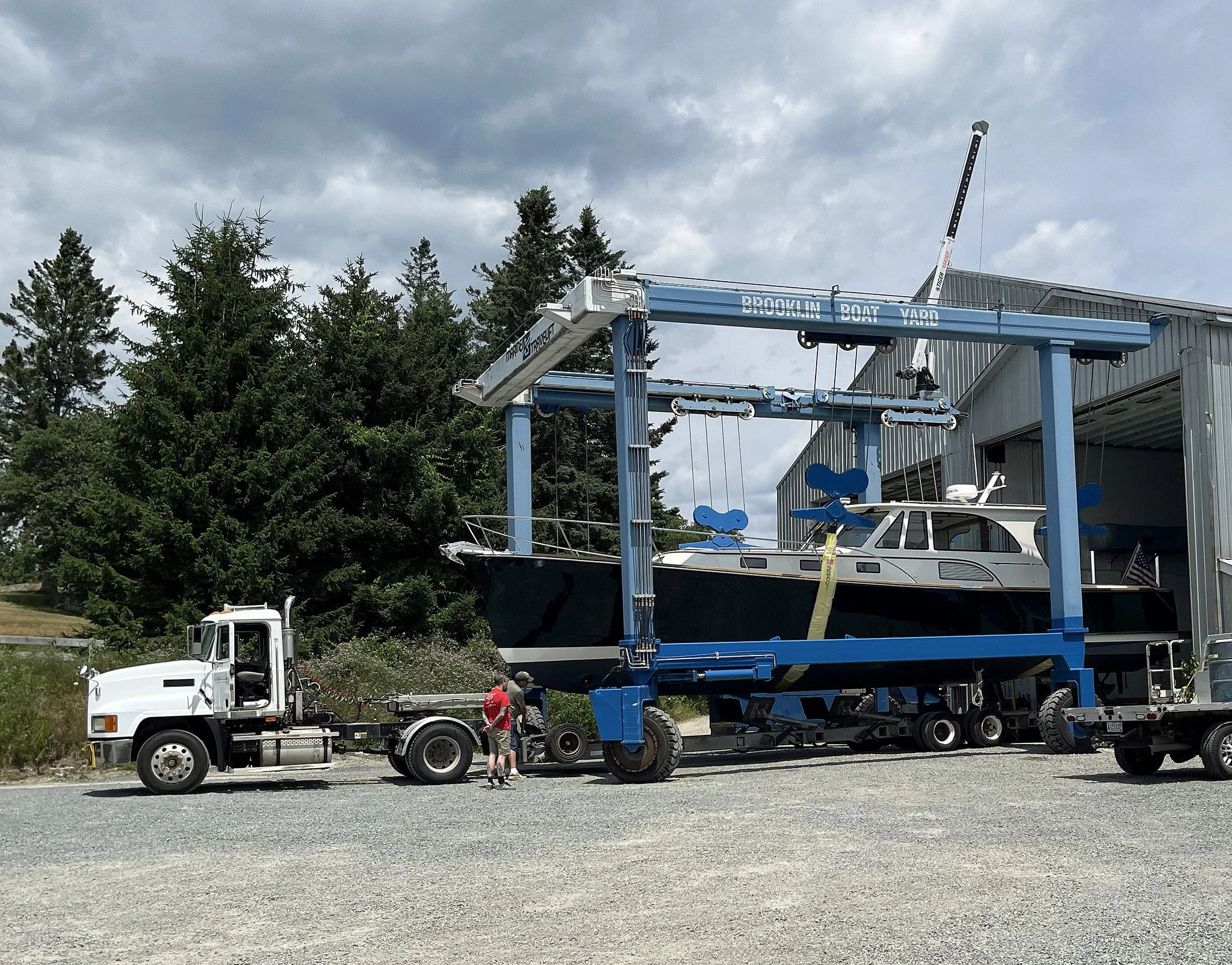
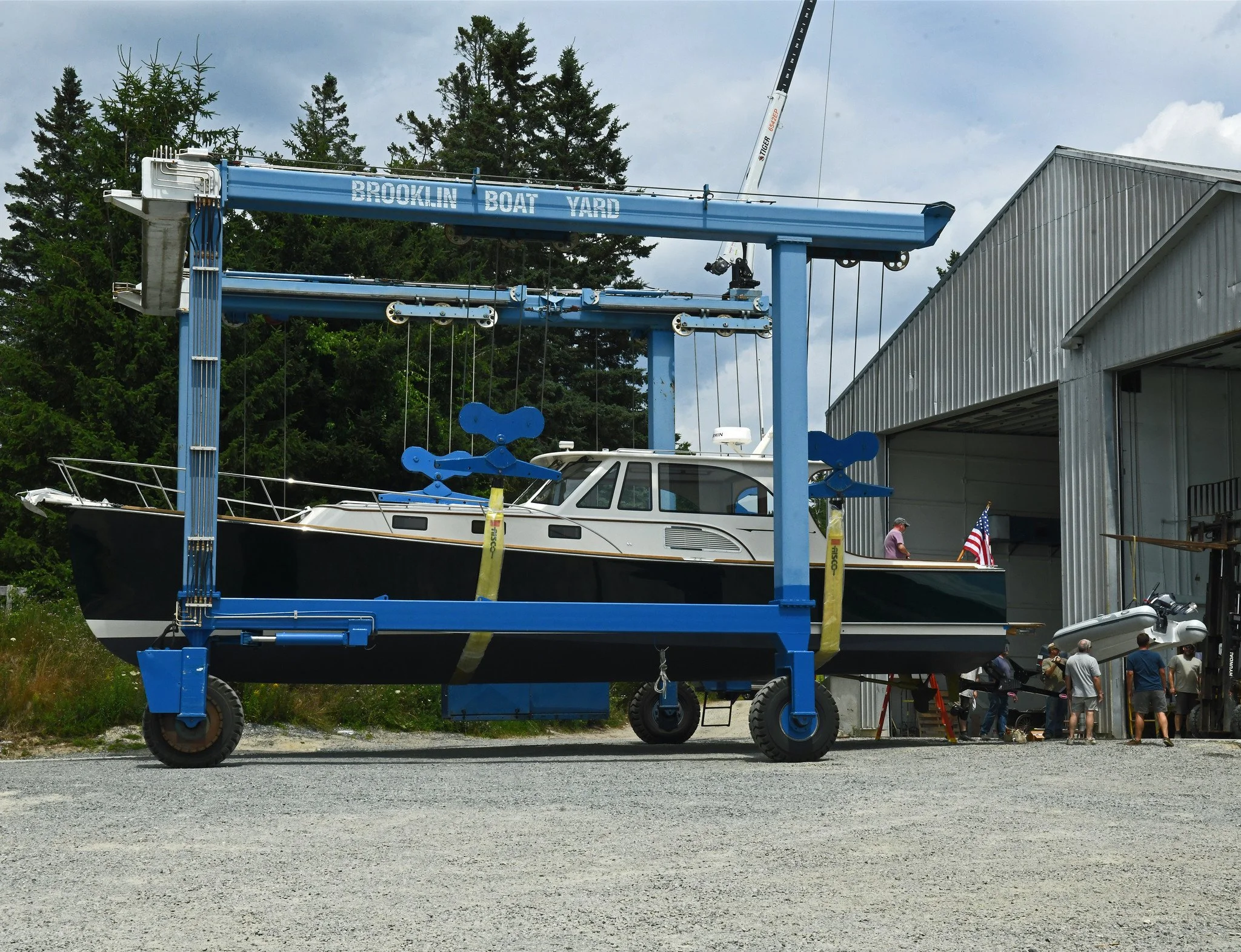
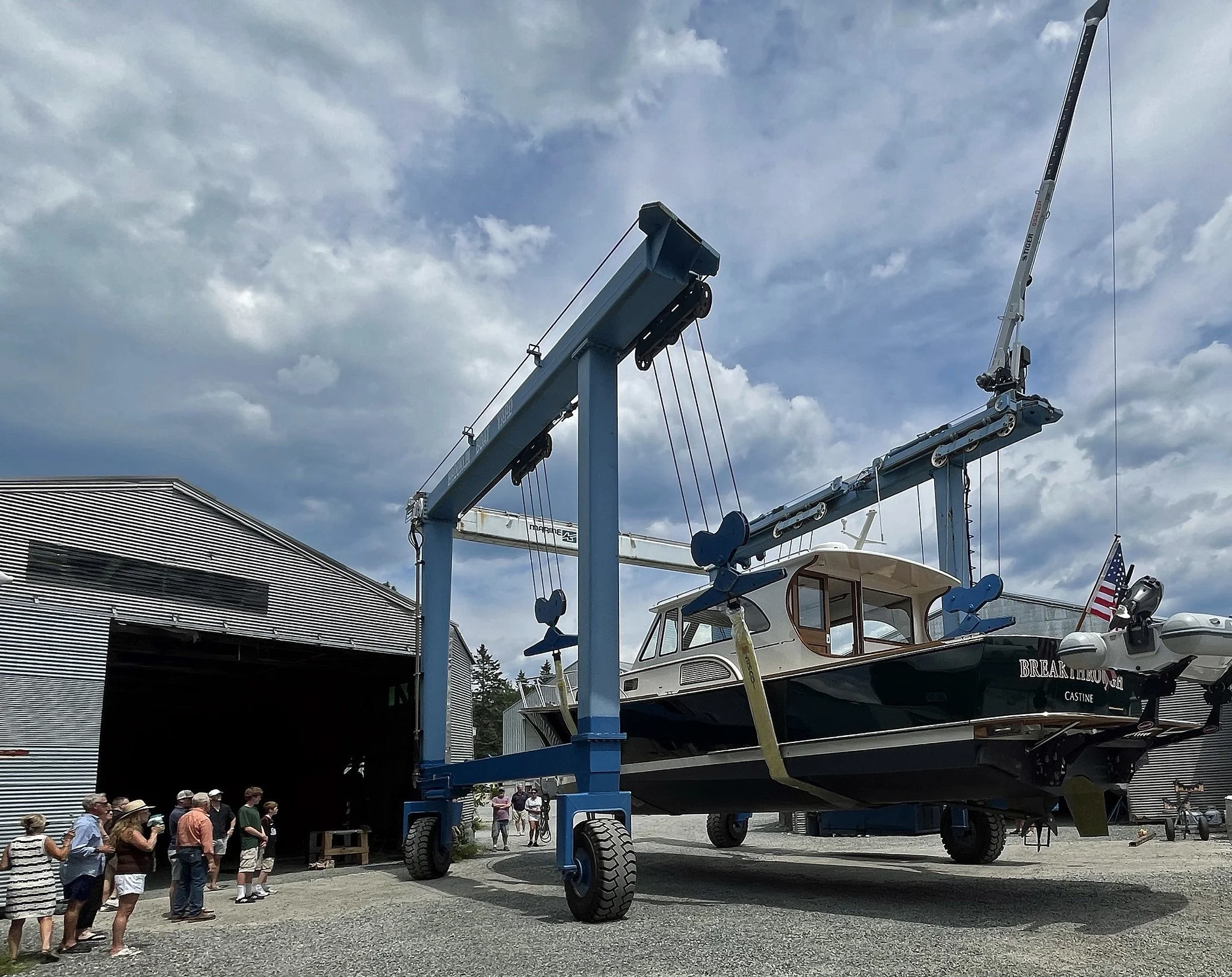
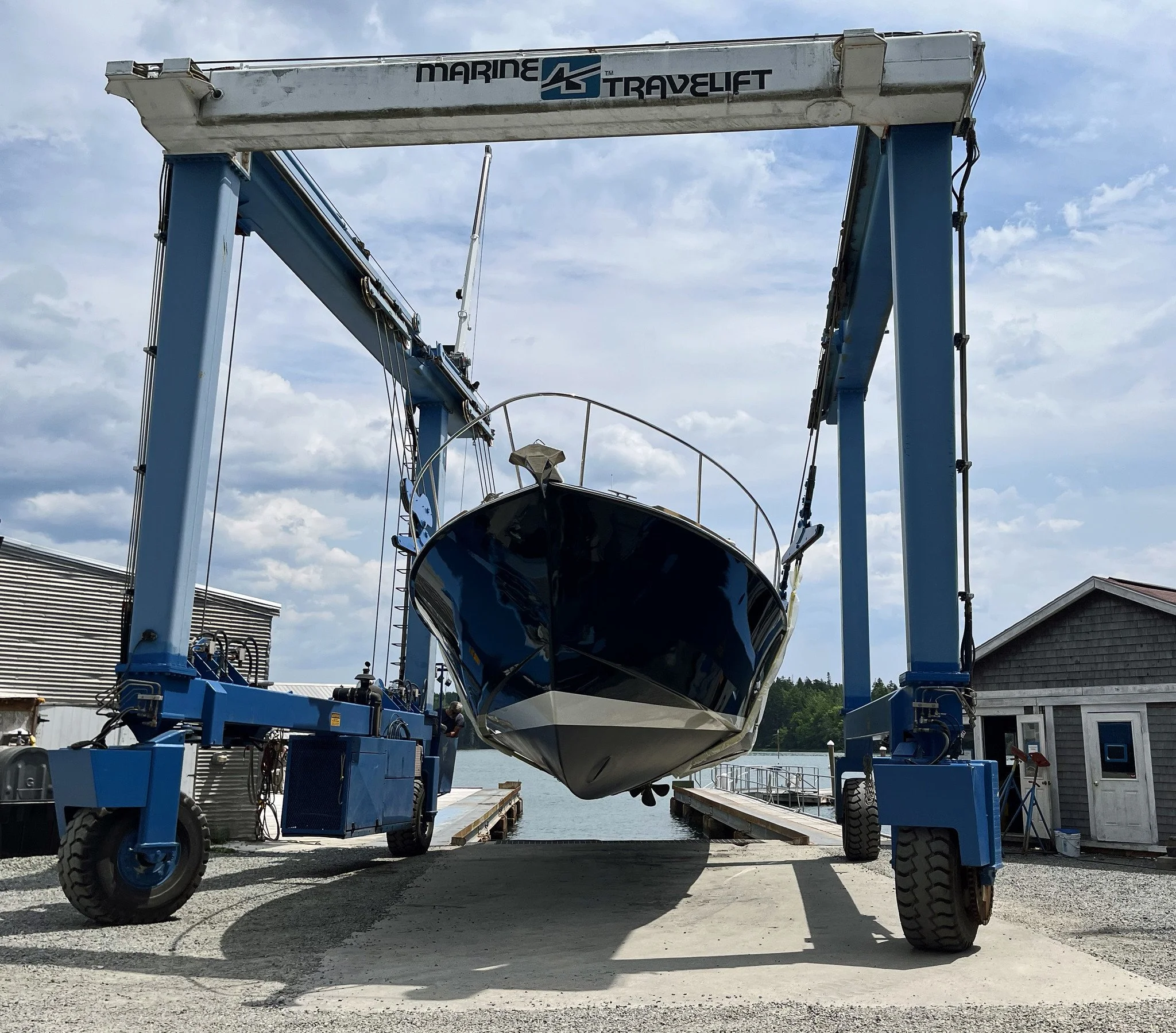
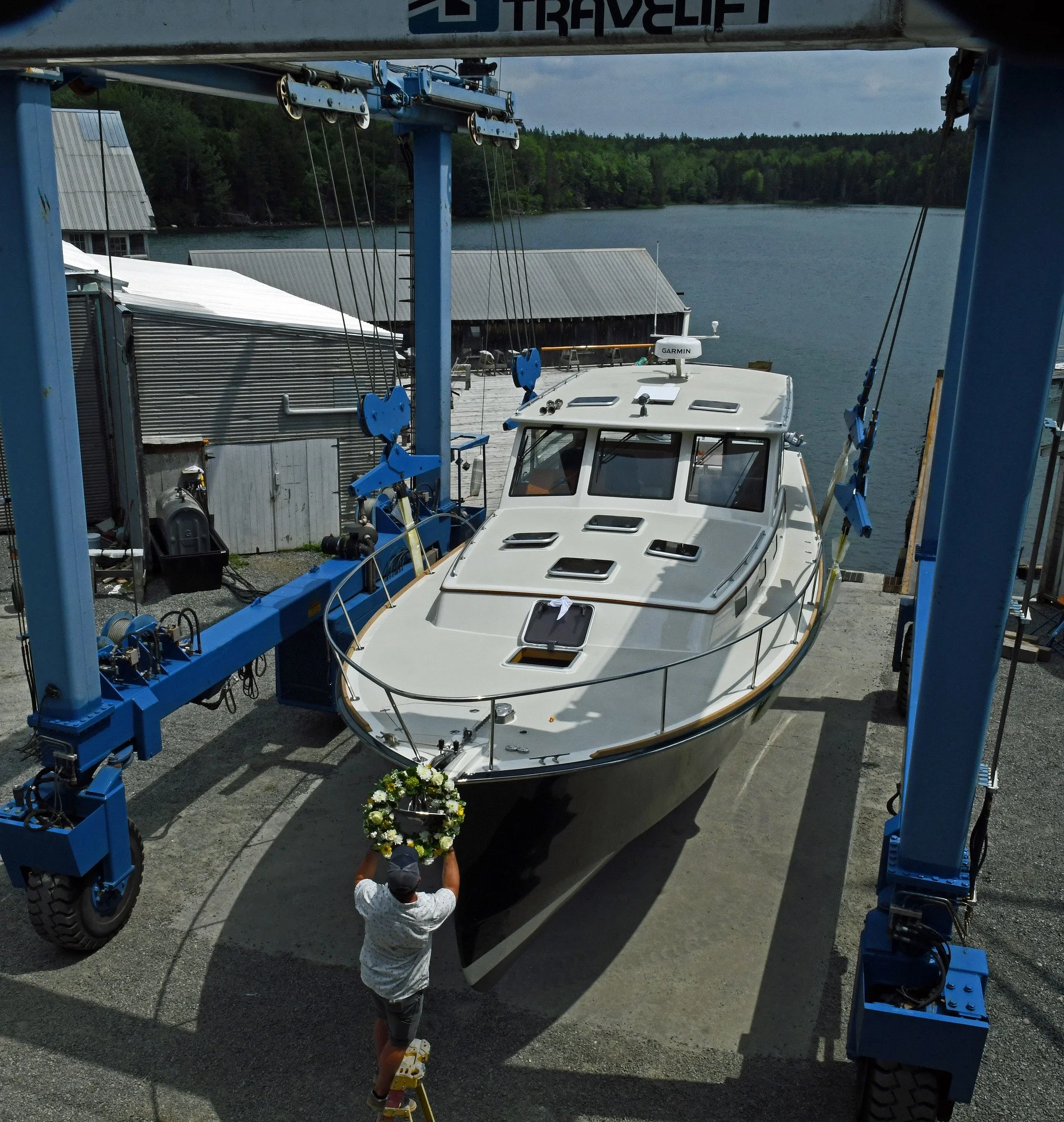
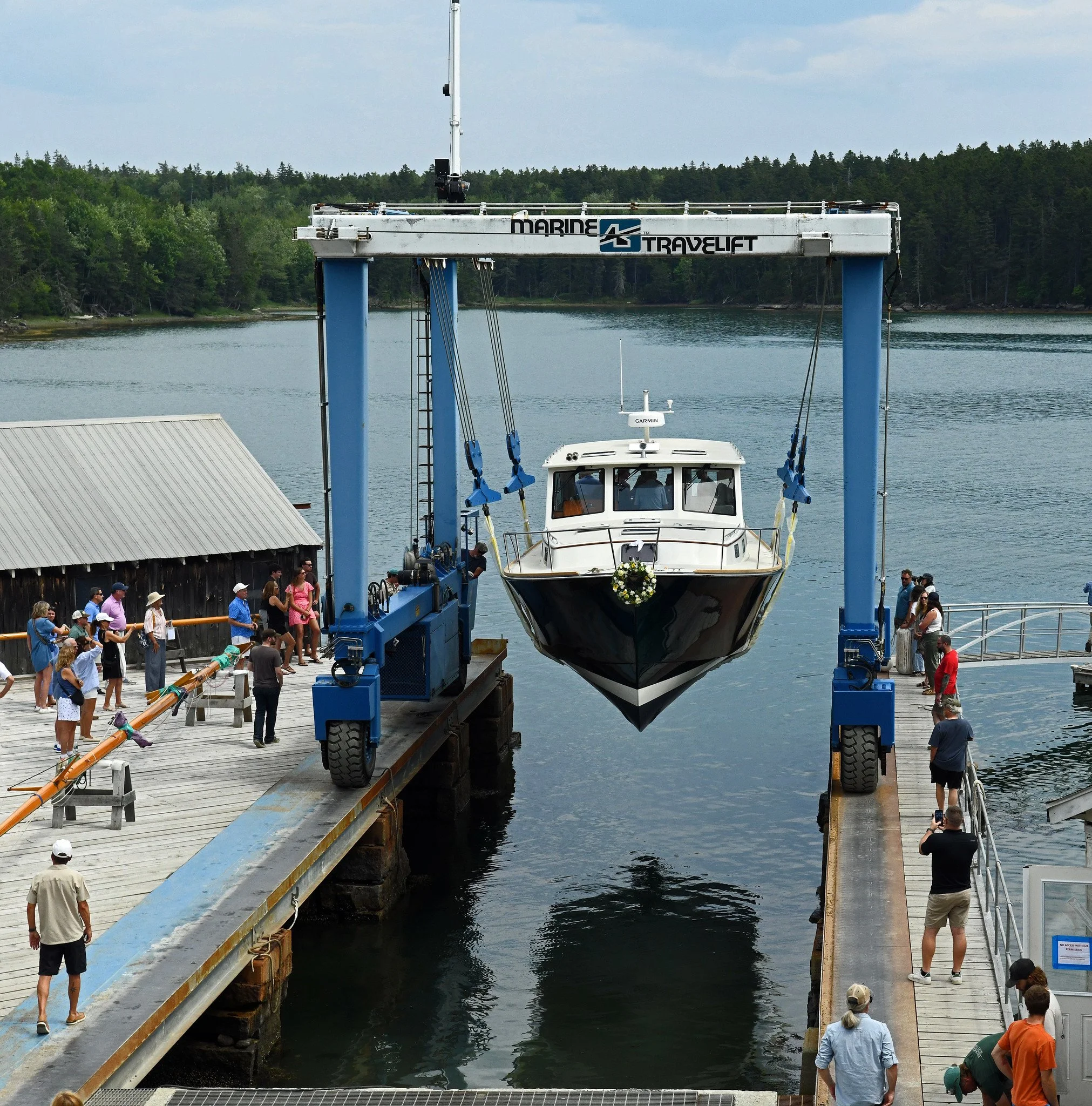
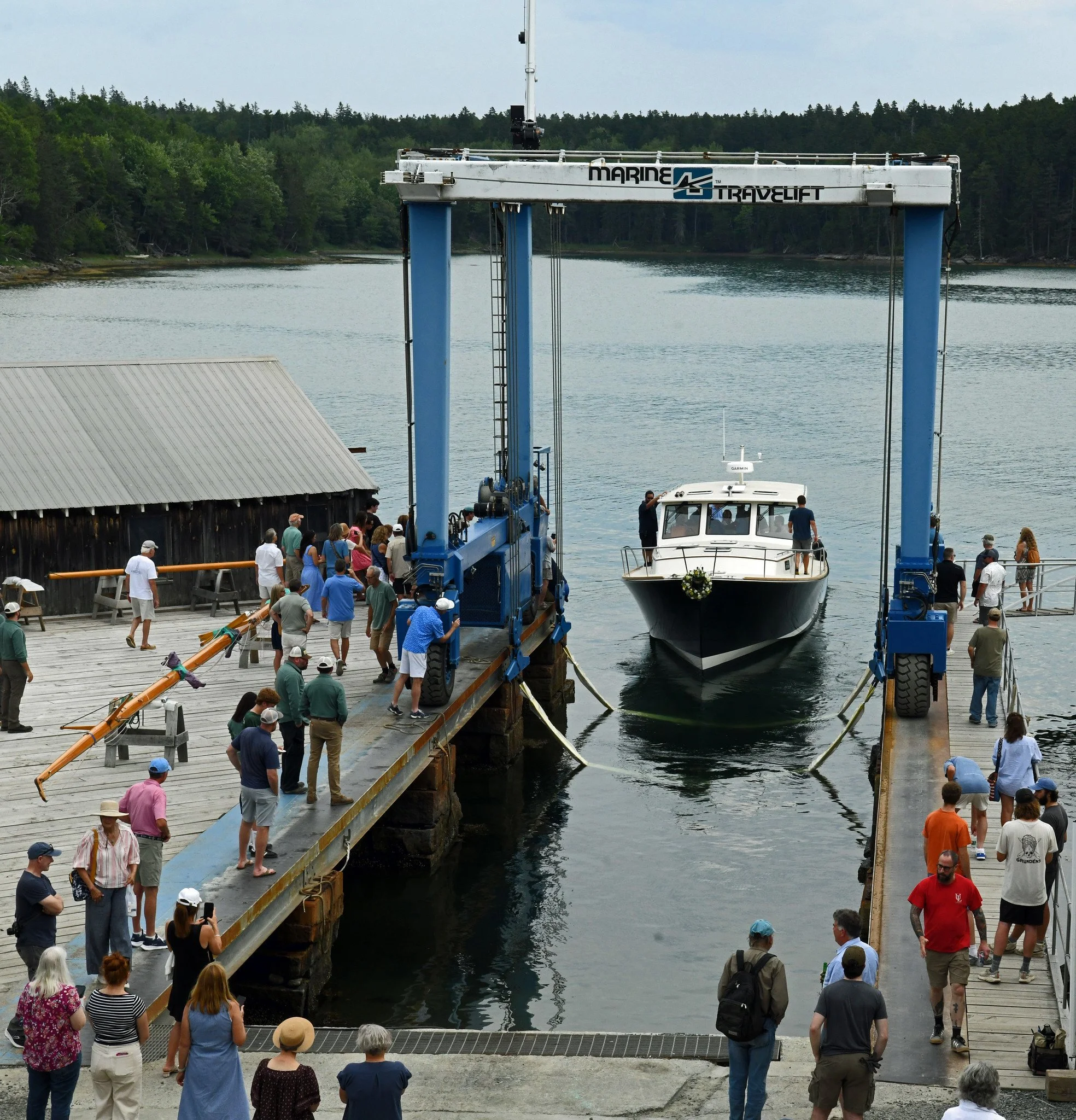
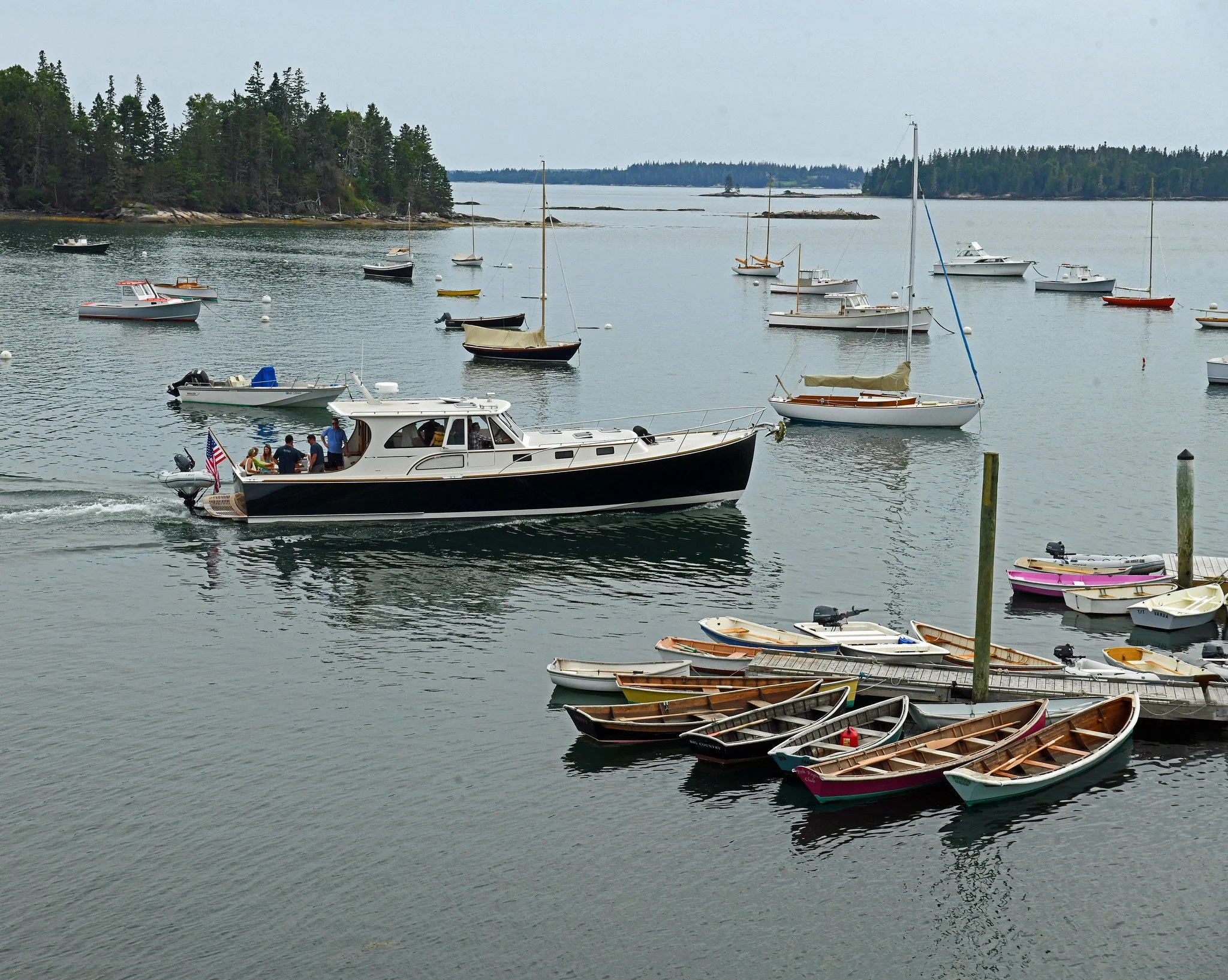
BREAKTHROUGH was given a traditional seafaring christening and launching by the renowned Brooklin Boat Yard iyesterday. She’s the 47-foot Down East cruiser with a bit of a lobster boat flare that we’ve been watching being built at BBY all year. Here’s how the day went.

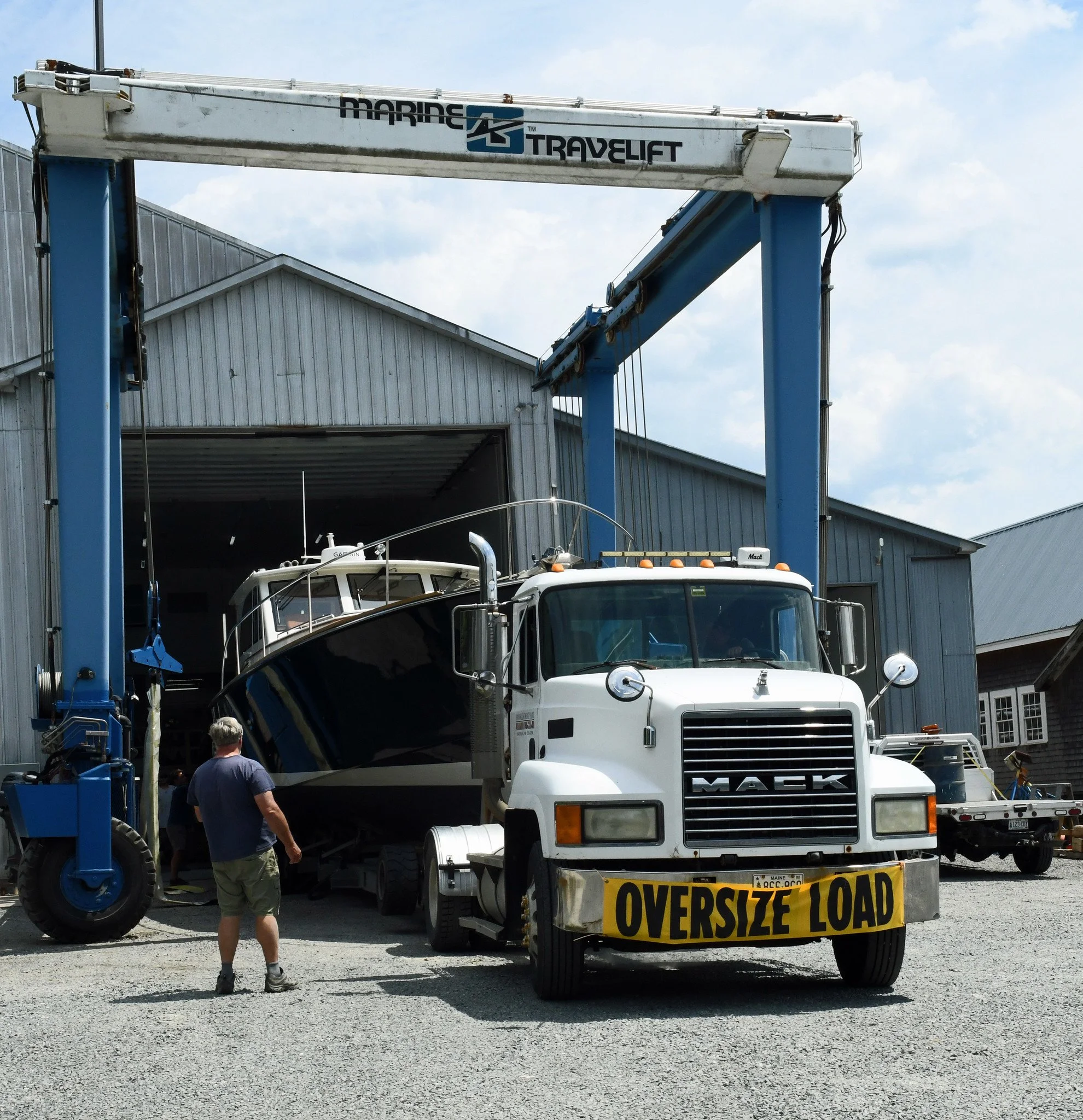
The cruiser was loaded onto BBY’s flatbed boat truck and carefully moved out of the paint shop. She then was positioned by the truck within the mobile hoist, where she was put in slings and her inflatable dinghy was attached to its stern mounting.

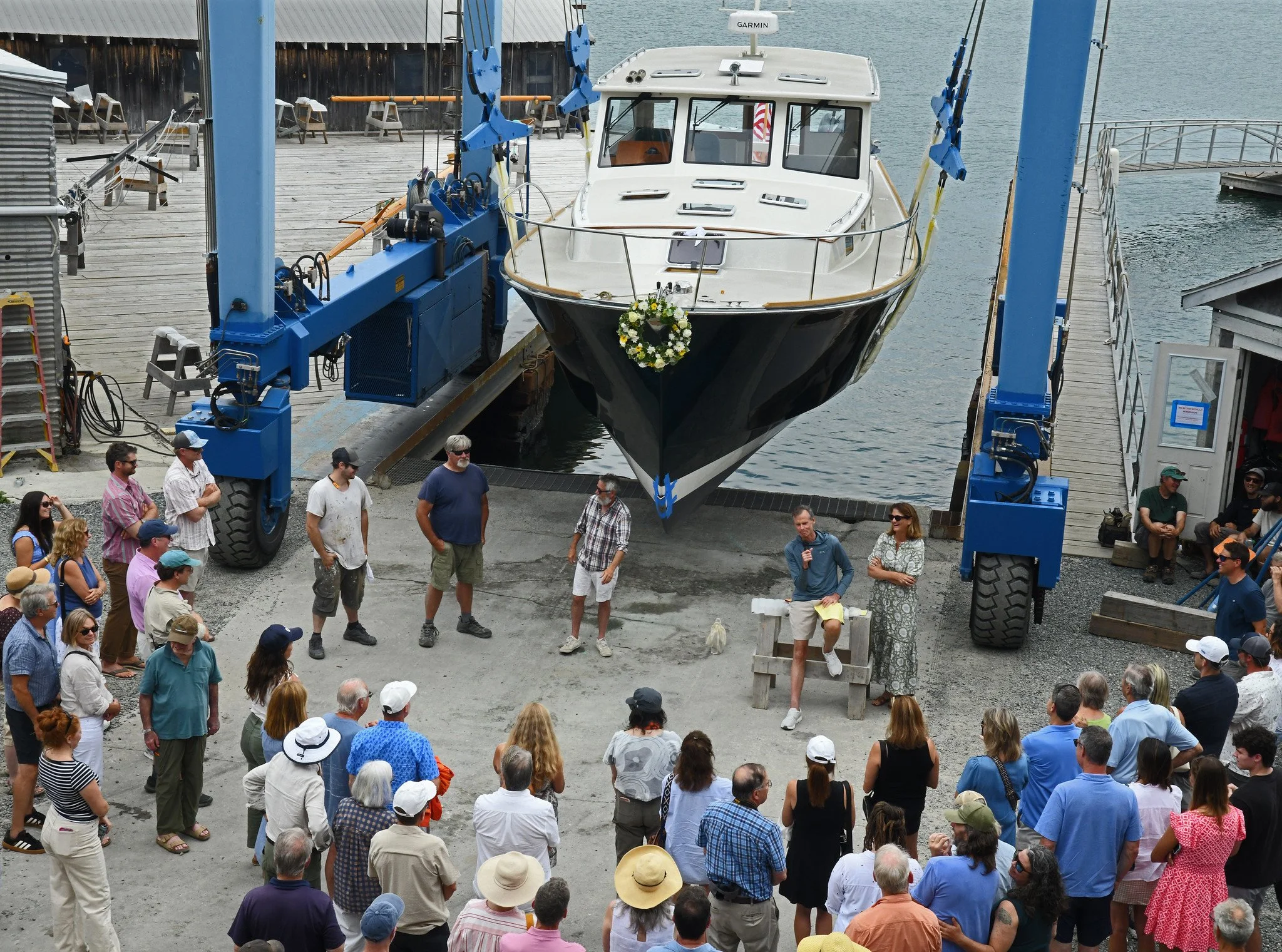
The hoist turned her around and motored her stern-first to BBY’s launching channel. Her christening/launching wreath was tied to the bow then.

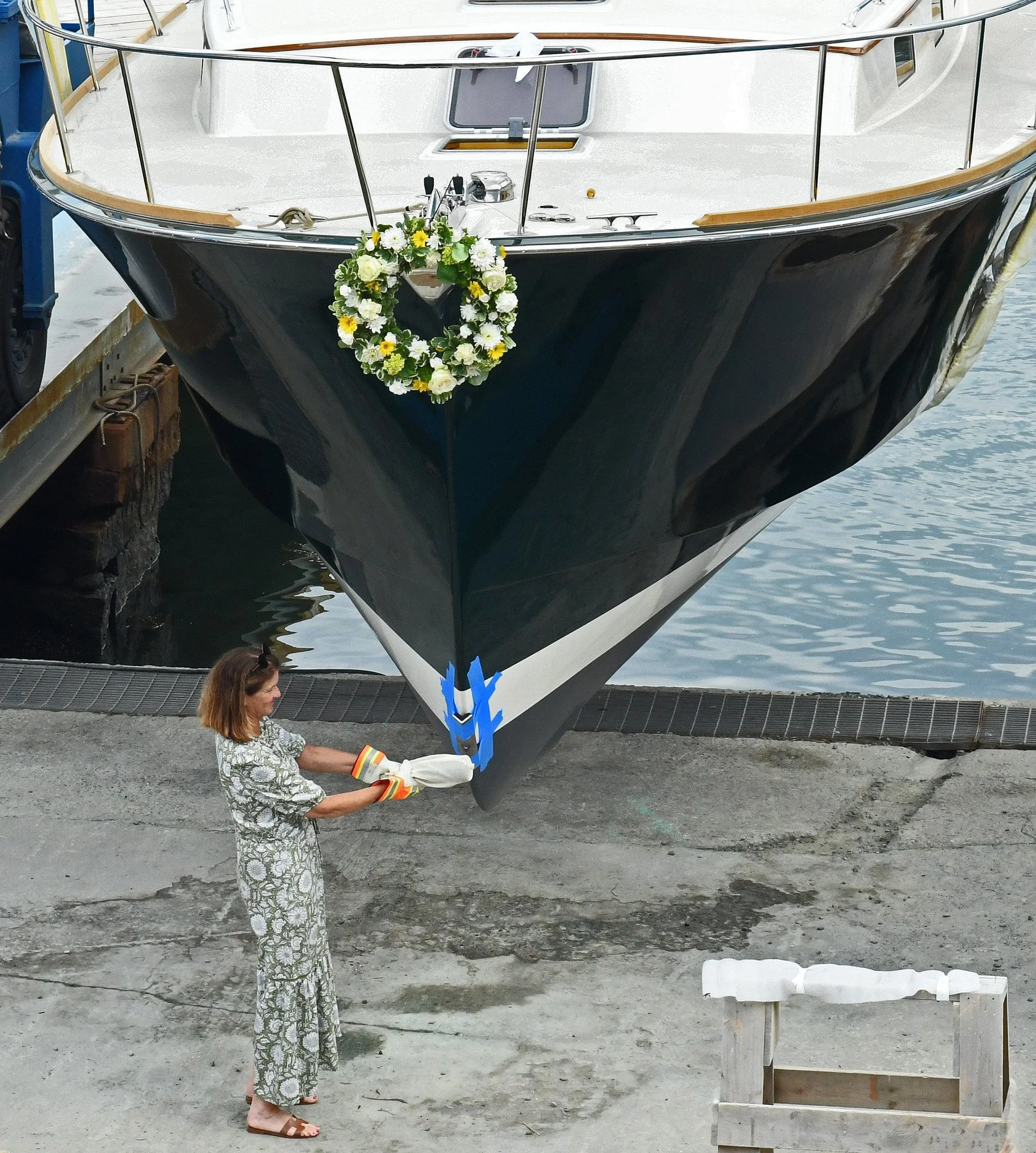
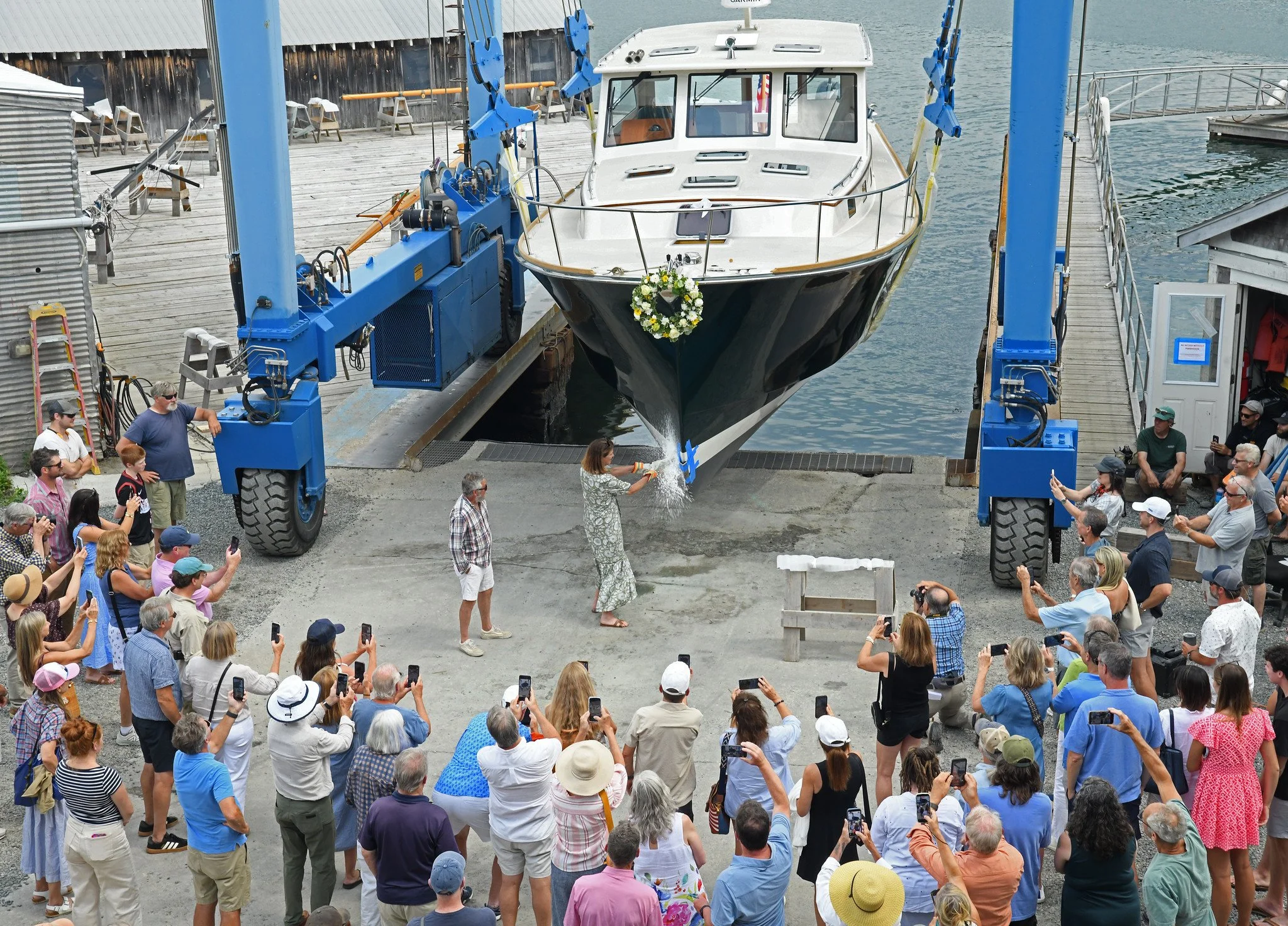
Speeches full of pride and thanks were given by a BBY representative and the owner of BREAKTHROUGH. Then, the ownrer’s heavily-gloved wife took a homerun swing with the wrapped champange bottle, which exploded impressively on BREAKTHROUGH’s tape-and-pad-protected nose. The crowd roared and clapped and recorded everything on their phones.

Guests for BREAKTHROUGH’s first voyage boarded her while she was at the launching ramp. Then, the hoist backed her into the end of the tide channel and lowered her into the Harbor waters. The yacht’s powerful engine was engaged and she glided gracefully through Center Harbor and out into Eggemoggin Reach — a beautiful sight, especially for those of us who watched her being born.

As readers of these posts know, the cruiser was designed by BBY Chief Designer Will Sturdy, who deserves a lot of credit. The vessel was named BREAKTHROUGH because of her innovations in design and her state of the art systems, according to BBY craftsmen.

By the way, this inspired me to do a little on-line research: Smashing a bottle on a ship's bow apparently evolved from an ancient ritual of appeasing the sea gods with splashed drink on a new vessel’s prow as an offering for safe travels. (Images taken in Brooklin, Maine, on July 15, 2026.)

Comment

1 Comment

In the Right Place: Windjammers, V

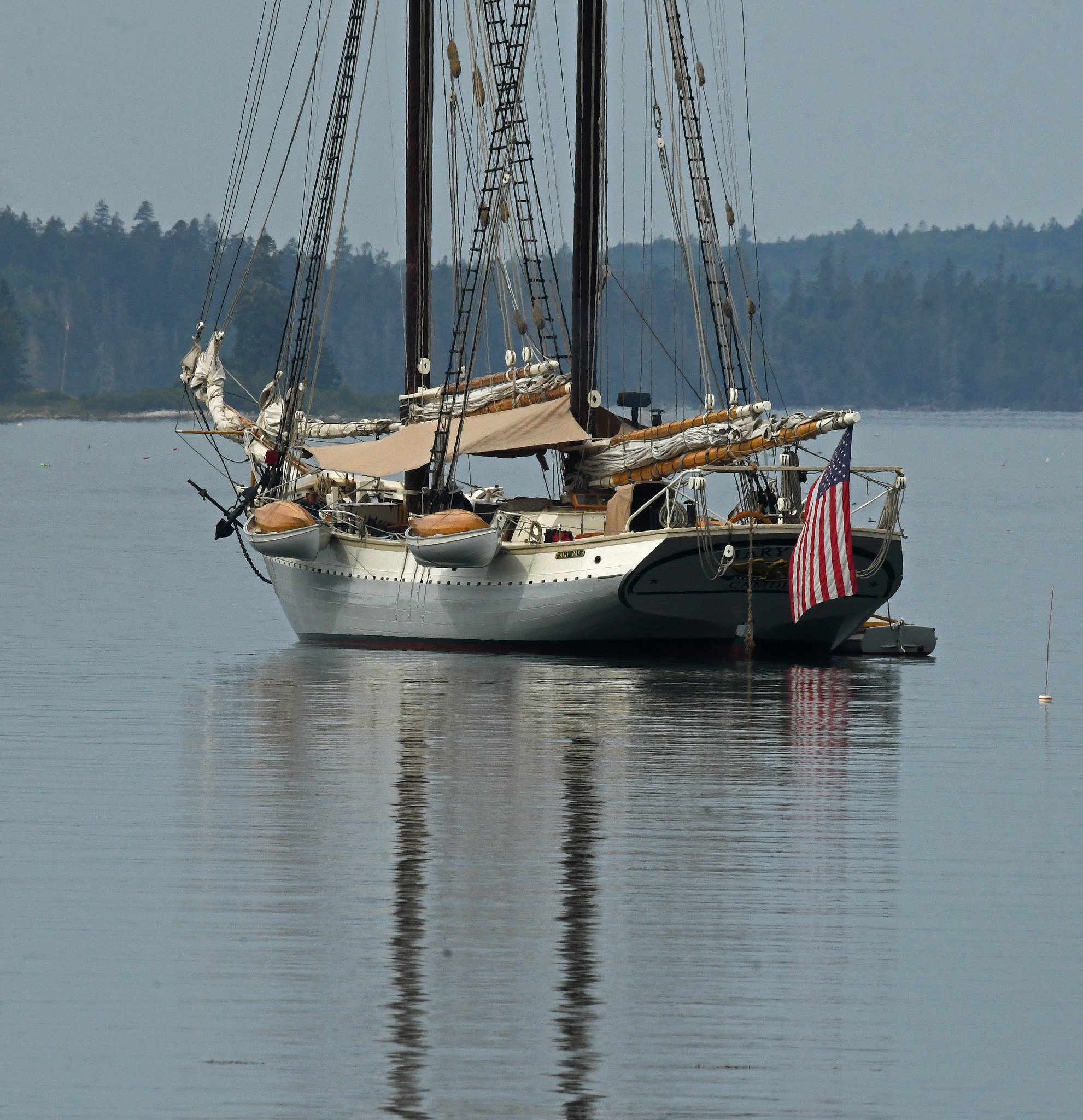
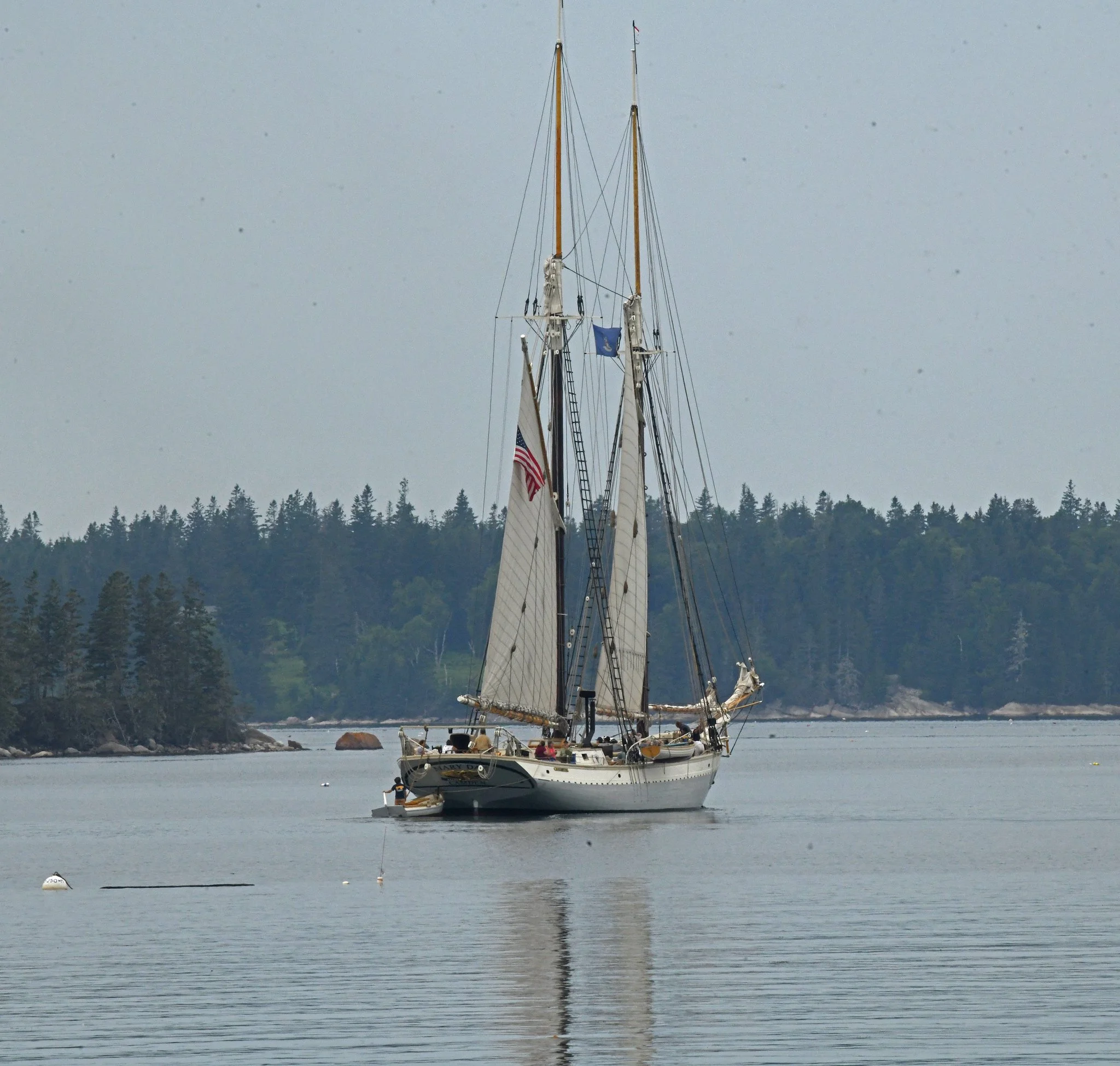
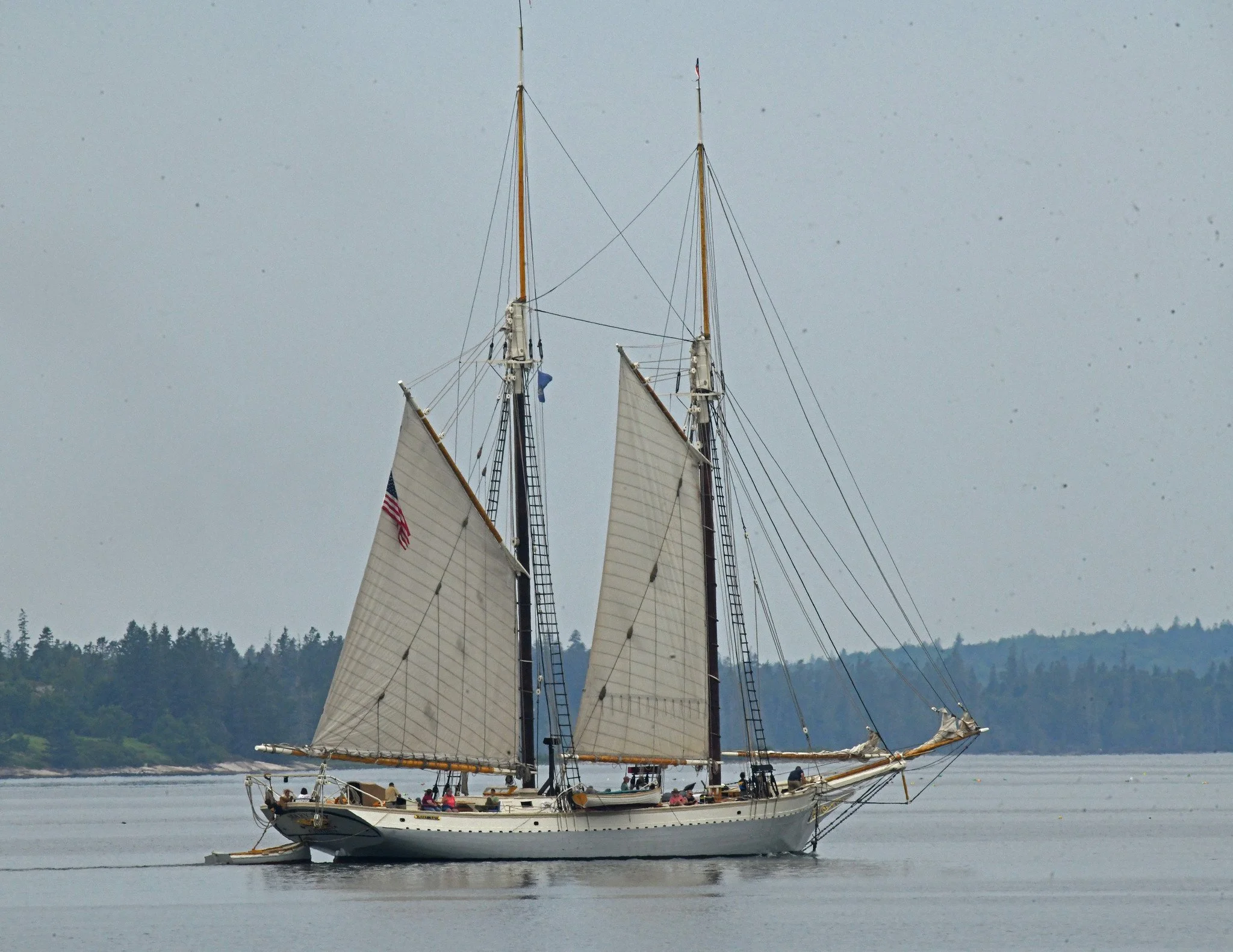
I walked down to Great Cove yesterday morning and discovered classy MARY DAY like this – dozing there with her shelter tarp pulled up. She awakened, but there was no wind and she has no in-board motor. So, she put on a little two-sail outfit and was pushed out of the Cove by her yawlboat:

I was hoping to see her get all dressed up, including topsails and jibs. She looks magnificent in formal dress and a fair wind. But, she and the weather weren’t in the mood yesterday. She was on a four-day “no itinerary” cruise of “true escape—savoring unhurried sailing, peaceful exploration, and deep relaxation,” according to her schedule.

MARY DAY was built in South Bristol, Maine, in 1962 specifically as a tourist-cruising schooner. She’s now out of Camden, Maine. She’s 125 feet in overall length and 90 feet in deck length. She usually has a crew of 7 and can accommodate 28 guests. Although she doesn’t have an in-board engine, she has something that many guests think is better: heat in every cabin. It can get chilly off our coast.

1 Comment

Comment

In the Right Place: The Day of Rest

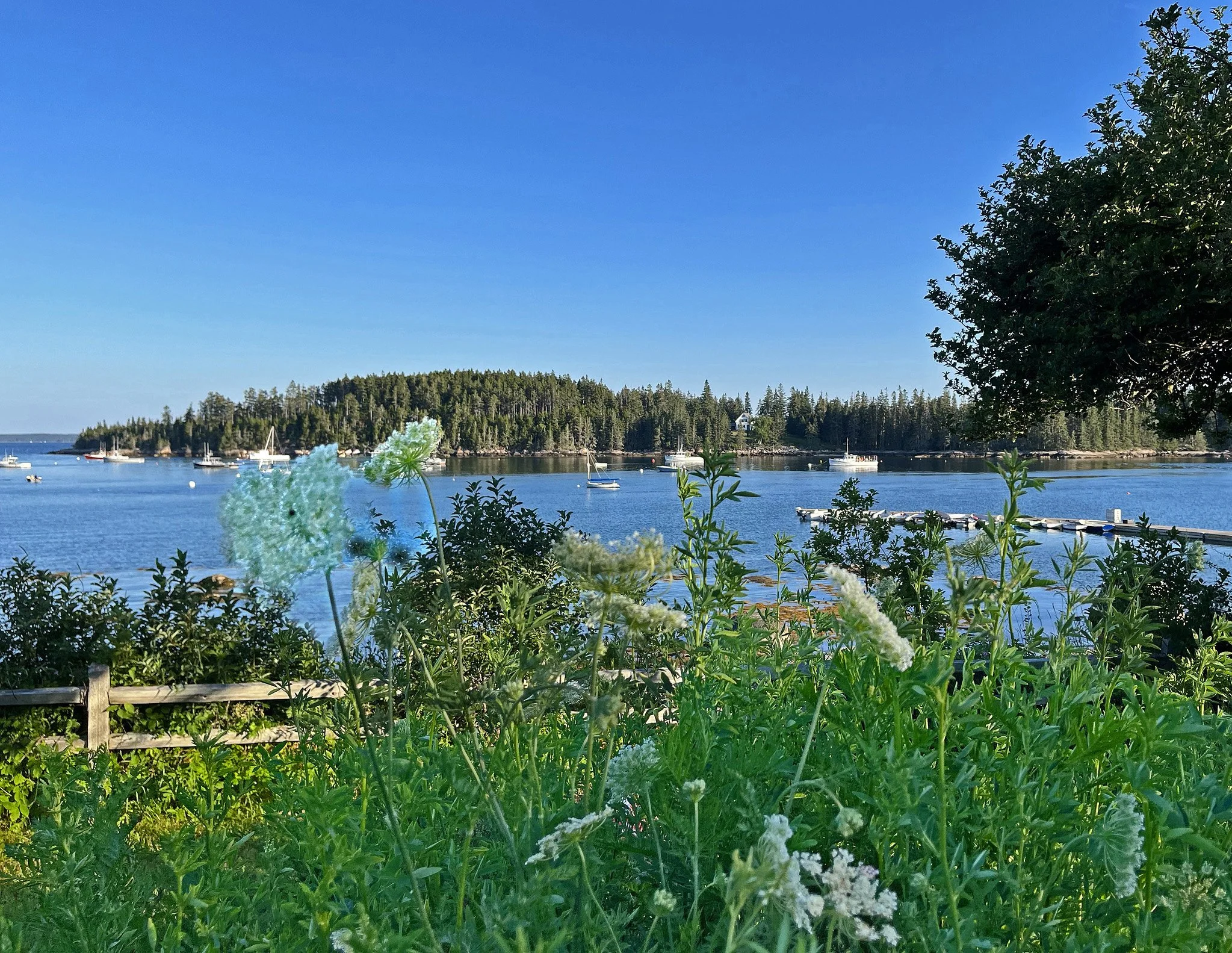
Here you see Naskeag Harbor’s working waterfront at rest on Sunday as the sun set on that fine day. This is where most Brooklin fishing vessels find safe moorings, but it also is a favorite place for many to visit.

You can picnic in a small park here or on the beach; swim in clear, cold water; search for sea shells and sea glass, and even let your dog cavort in the water. For many of us, however, it’s mostly a place to find that primal feeling that can come when you just stay still and allow the salty-breezed calmness to ease its way into you and give you a soft mental massage.

In the summer, the resident fishing boats leave here to tend their lobster traps in the surrounding coastal waters. Some of them remain in the winter, add masts and booms and “drags” (net dredges) and drag for Atlantic scallops in that season. (One or two of the winter fishermen also dive from their boats to hand-harvest the more expensive “divers’ scallops.”)

When Brooklin was the home to several fishing canneries in the 19th and 20th centuries, one of them was located here. The Mayo Company reportedly canned clams and later sardines on the shore of Naskeag Harbor from 1902 to 1929. (I bet that the air in the Harbor was not as calming when that was going on.)

(Images taken in Brooklin, Maine, on July 12, 2026.)

Comment

Comment

In the Right Place: Balms Away!

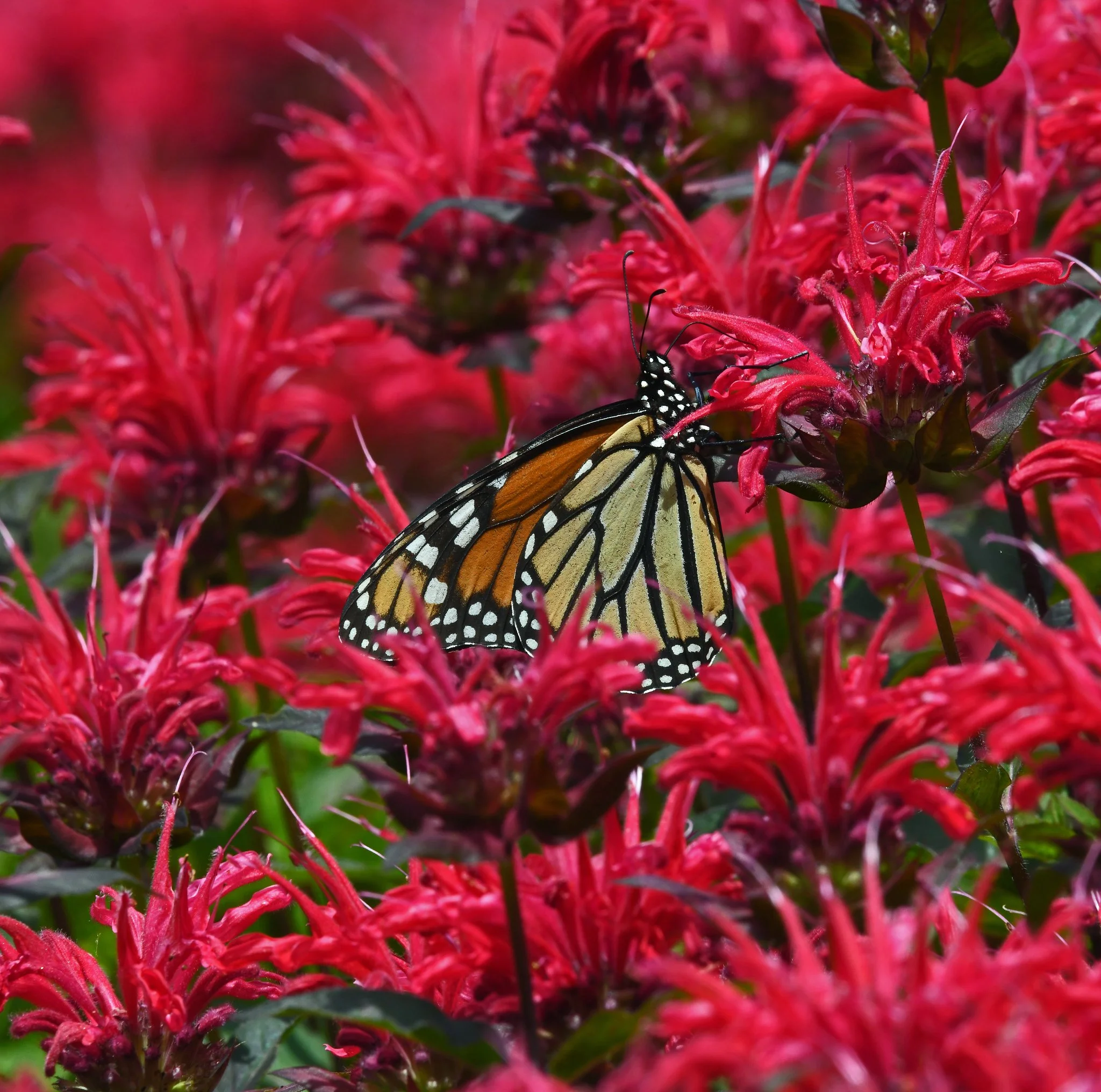
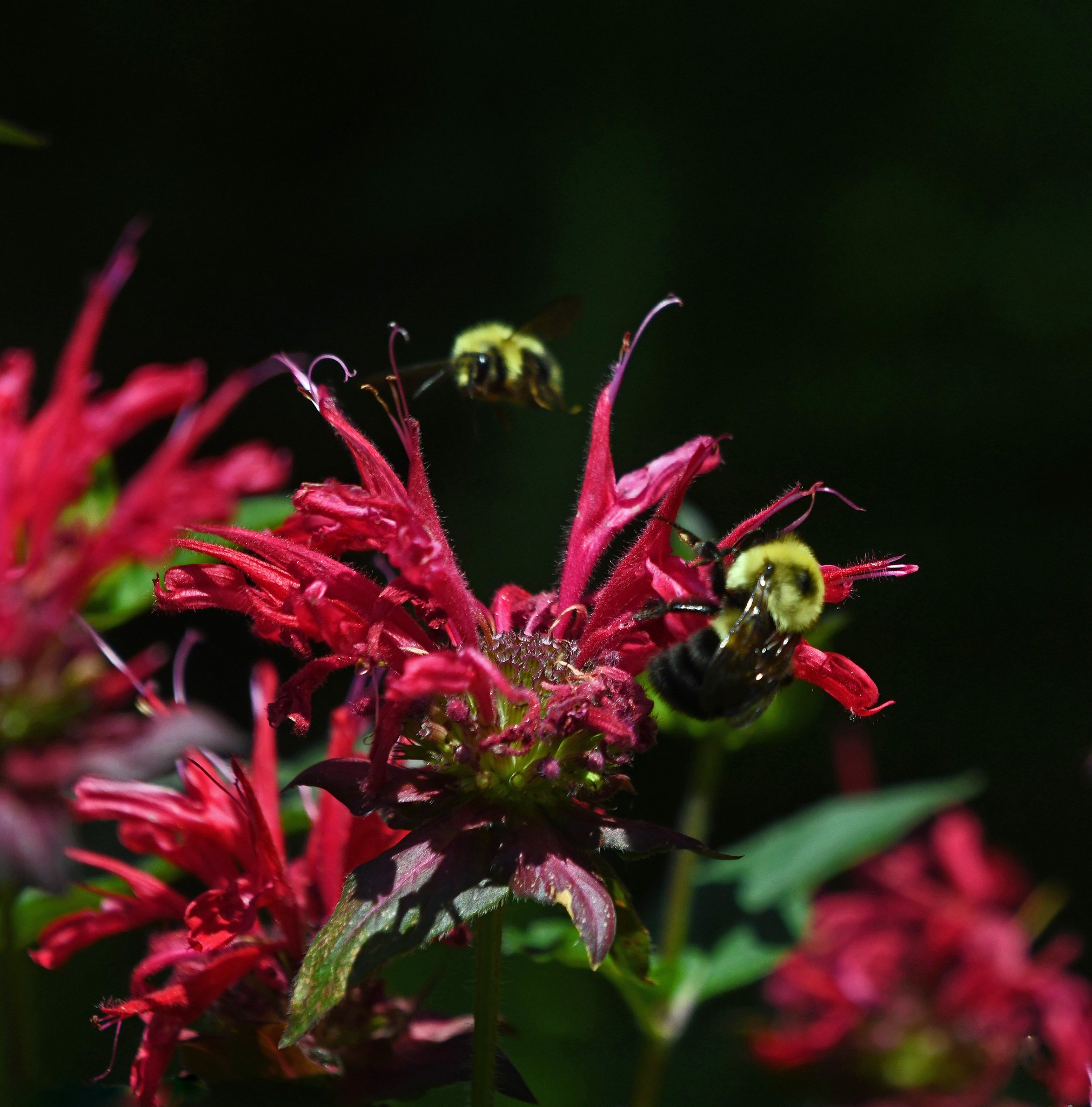
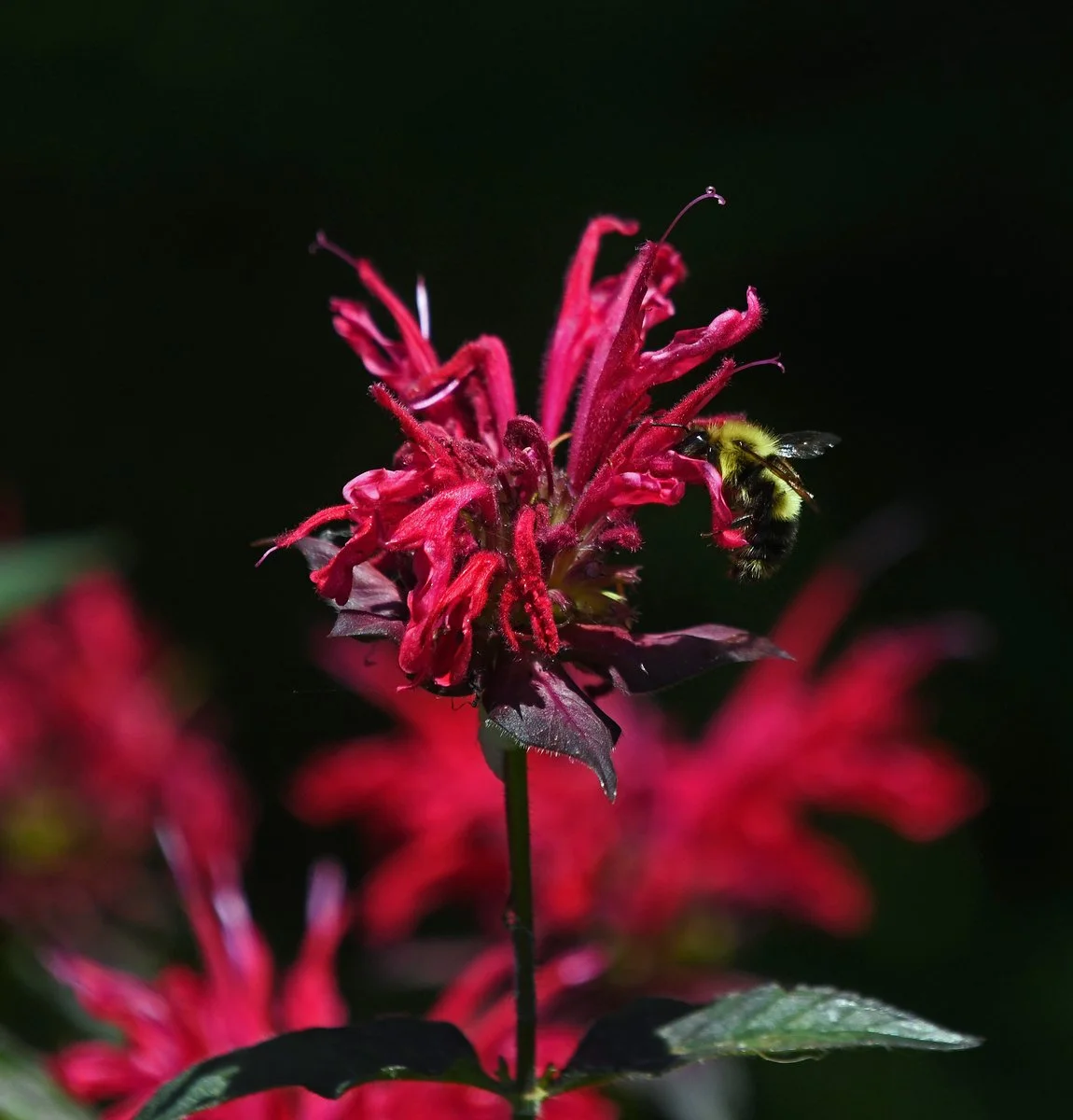
Bee balm is peaking and its fans are freaking. It not only attracts long-tongued bees and butterflies, it is loved by hummingbirds. Here you see a two-spotted bumblebee on scarlet bee balm. Below, you’ll see one of our first arriving Monarch butterflies sipping nectar from one of the flowers’ long, red straws:

Bee balm (Monarda) is a native herb that is in the mint family and comes in several species: wild bee balm (Monarda fistulosa), spotted bee balm (Monarda punctata) and scarlet bee balm (Monarda didyma). Cultivated versions also are readily available at plant nurseries.

It seems to be more of a balm to soothe humans than wildlife, which can get excited about it. The plant is a source of thymol, a powerful antiseptic. Native Americans and early settlers reportedly crushed bee balm leaves and rubbed them directly on bee stings and insect bites to reduce pain and swelling.

(Images taken in Brooklin, Maine, on July 10 [Monarch] and 12, 2026.)

Comment

Comment

In the Right Place: Windjammers, IV

Here you see LADONA lazing Friday morning in Great Cove with her sheltering tarp up and most of her sails down. Sailing classes from the renowned WoodenBoat School there flit around her like small butterflies around a big flower that is about to open. The beautiful schooner soon took down the tarp, raised her sails and left the Cove before noon:

LADONA (usually pronounced “Lah-DOE-nah” here) is a relatively small schooner with a relatively big history and a mysterious name. She runs 105 feet from the end of her bowsprit to her stern (82 feet long on deck) and can accommodate 16 or 17 guests. She reportedly was designed as a racing yacht by the prolific naval architect William Hand and launched out of East Boothbay Harbor, Maine, in 1922.

Her original owner is said to have named her after the Union ship on which his father had served during the Civil War. That ship apparently was the captured British iron-hulled vessel LODONA, named after an ancient river-nymph in a popular Alexander Pope poem. She was converted into the USS LODONA, a gunship, after which the schooner LADONA (note the different spelling) reportedly was named.

We may have here a historic maritime typo. As far as I can tell, the name LADONA is meaningless, except as the name of a single, beautiful schooner that has an interesting past and has had several names, according to the many reports on her.

During World War II, the schooner LADONA was a U.S. Navy submarine patrol vessel out of New York Harbor. After the war, she was renamed JANE DORÉ for some unreported reason and repurposed as a fishing vessel out of Stonington, Connecticut. In 1971, she was renovated as a training vessel for sailors and named NATHANIEL BOWDITCH, after the famed 18th century navigator. Thereafter, she entered the Maine windjammer fleet to take tourists cruising under that name.

From about 2014 to 2016 new owners restored her to her original glory and original enigmatic name, LADONA. She now hails from Rockland, Maine. (Images taken in Brooklin, Maine, on July 10, 2026.)

Comment

Comment

In the Right Place: Ditched Again

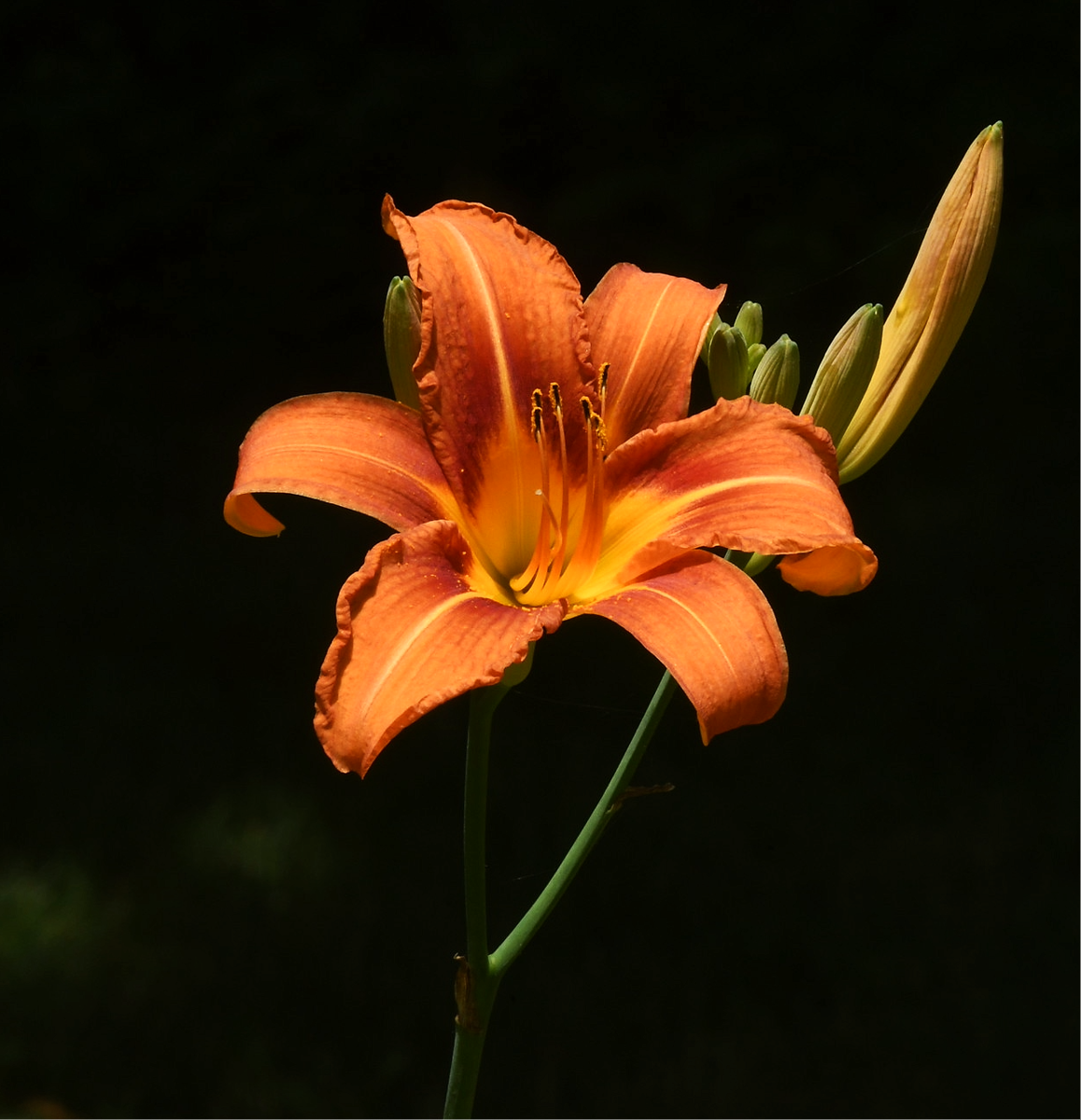
You know it’s high summer when the common, tawney day lilies (Hemerocallis fulva) line the roadsides and waive to passing cars. Theirs is a poignant task: The dramatically beautiful individual flowers live only a day. Yet, each plant produces many stems (“scapes”) that contain many buds that open in succession.

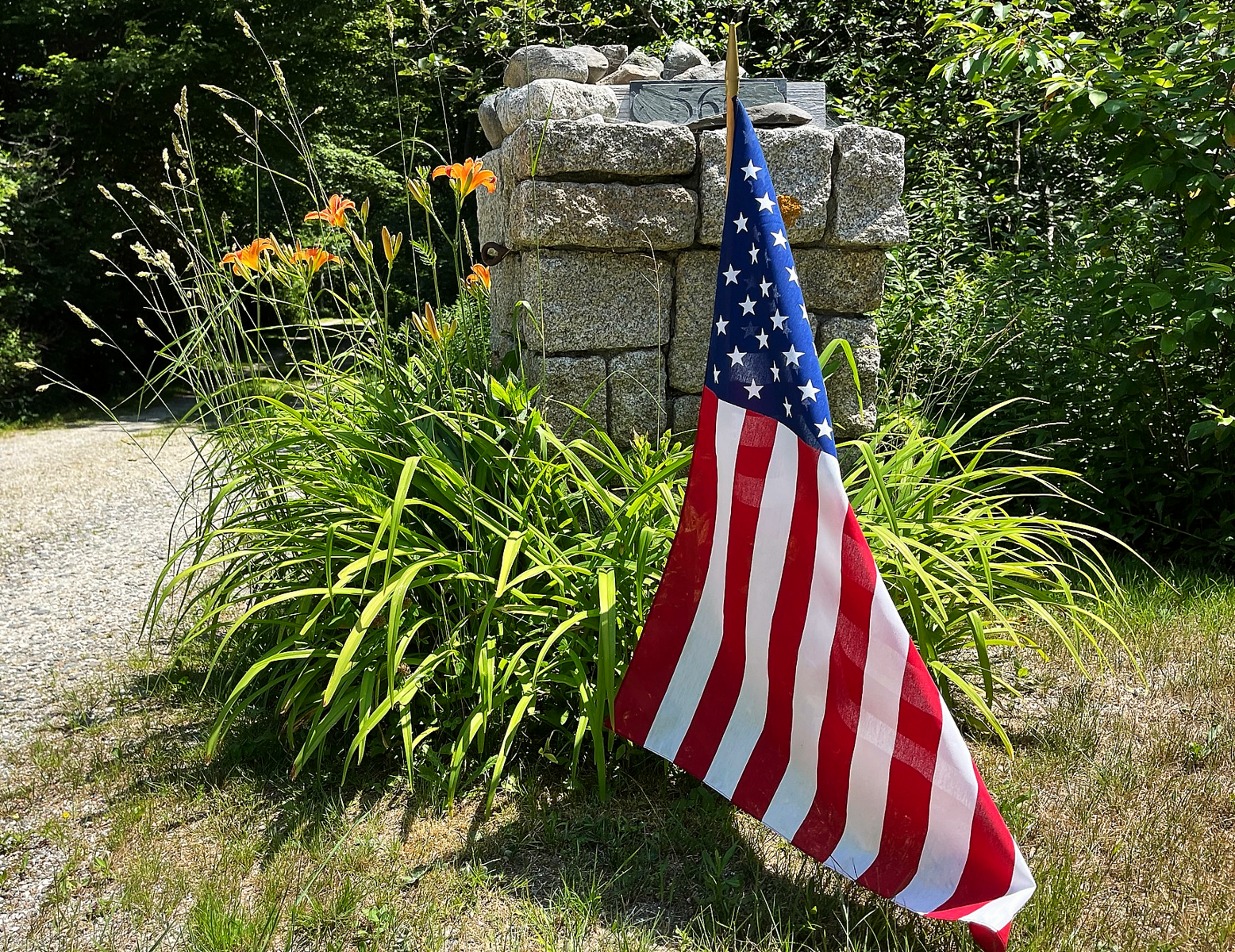
Thus, these nonnative plants are known as daylilies. They also are known as “ditch lilies” because they thrive in neglected areas, especially damp roadside ditches. Speaking of neglected areas, at one time they also were known as “outhouse lilies” (often pronounced  “s**t house lilies”) because they were a preferred plant to prettify outdoor “facilities.” We have some around here that might be called “patriotic lilies”:

(Images taken in Brooklin, Maine, on July 6 and 11, 2026.)

Comment

Comment

In the Right Place: At BBY, XVI

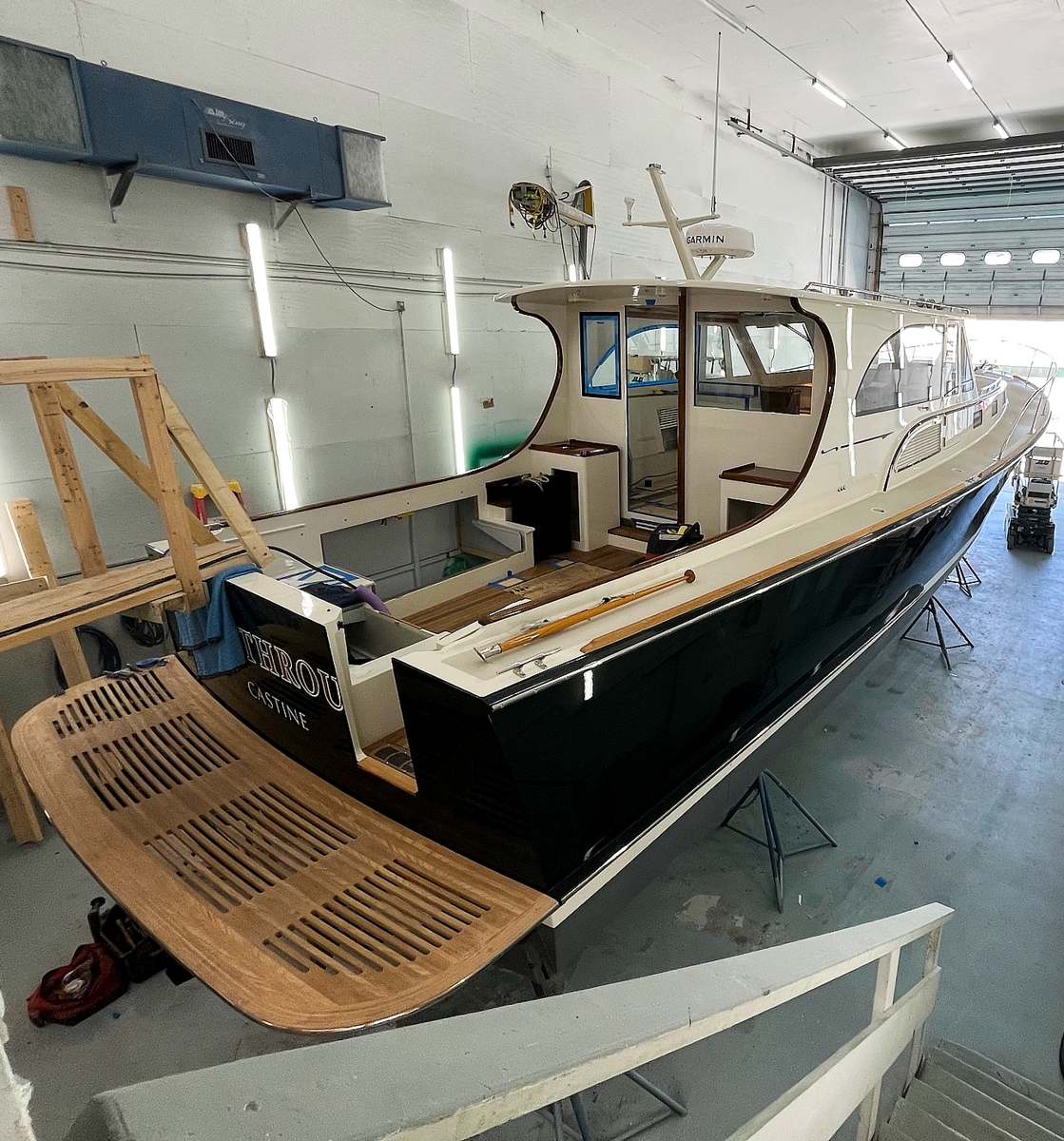
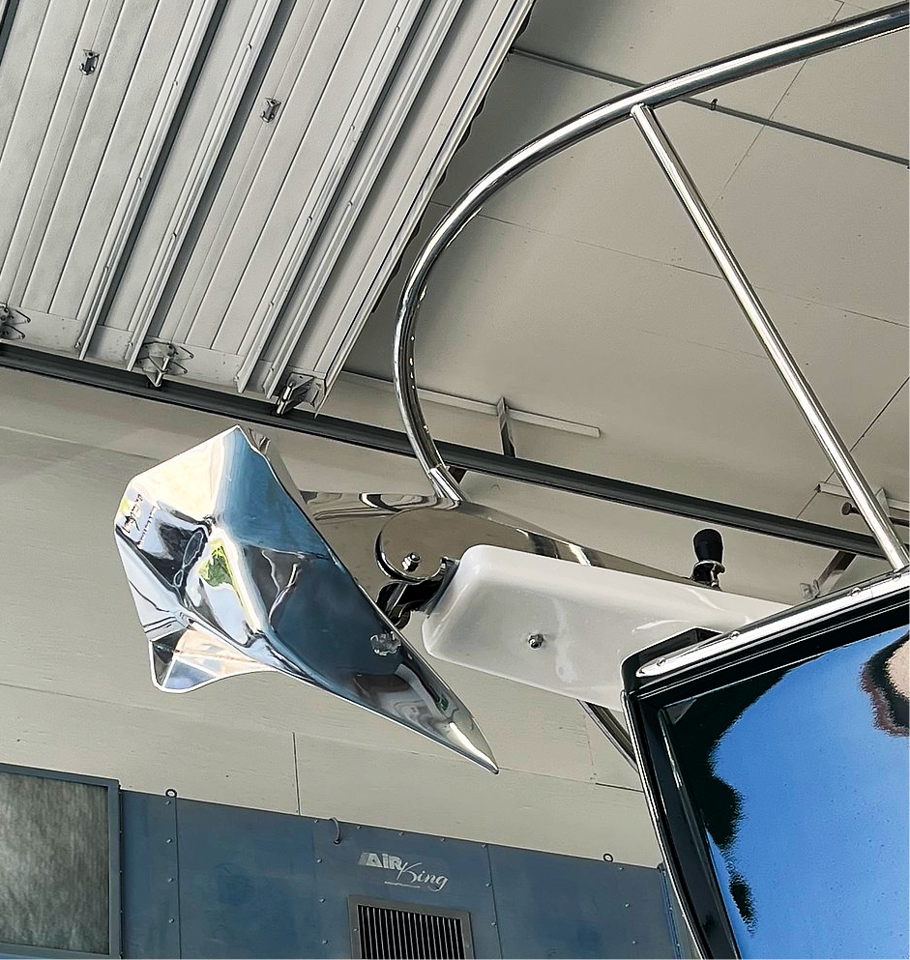
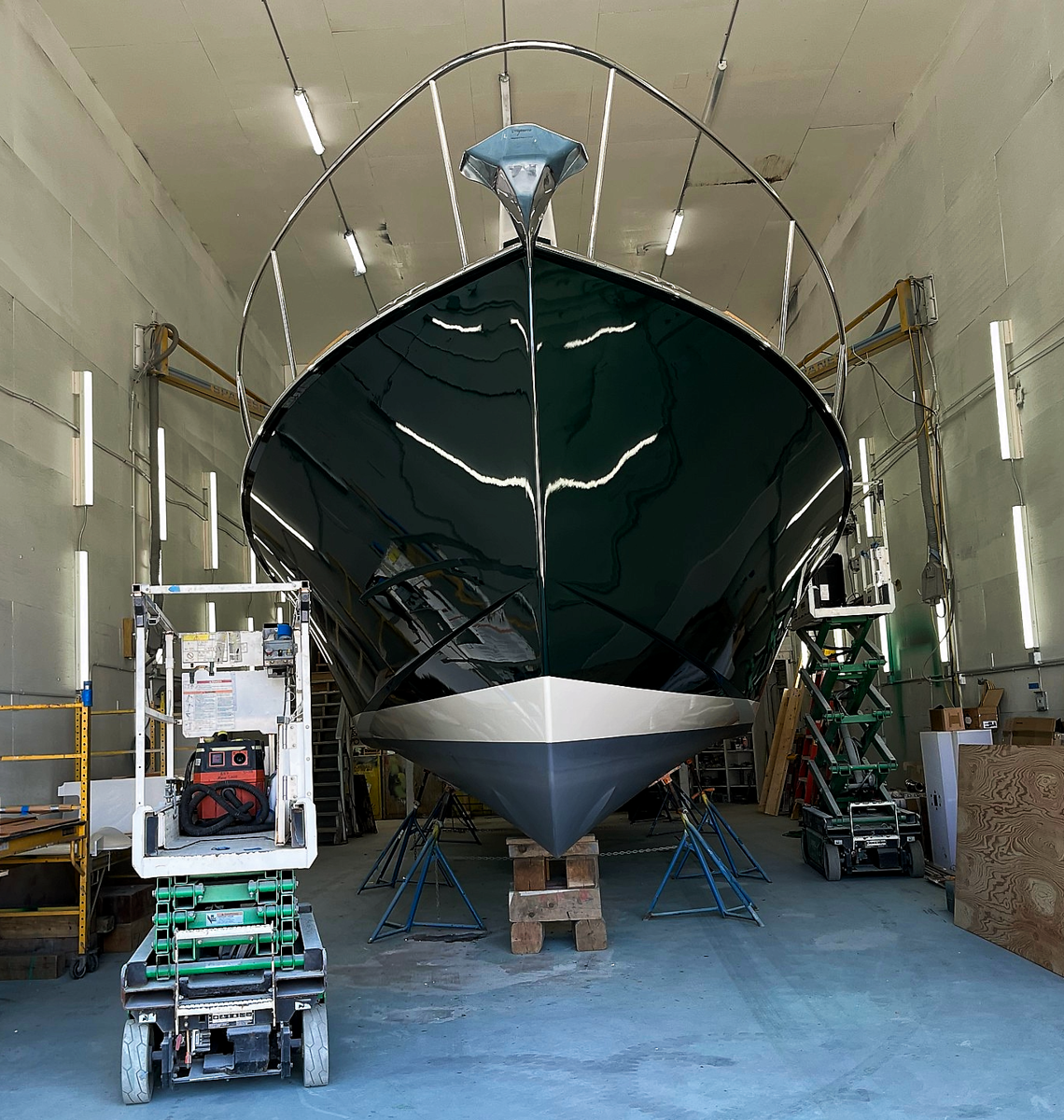
Here’s the 47-foot Down East cruiser that we’ve been monitoring at the renowned Brooklin Boat Yard, as she appeared Wednesday. Important new features and finishes are being added daily, it seems. For example, she now sports a large stainless steel anchor in her bow roller:

Most cabin cruiser anchors are made of galvanized steel, according to sales data. Stainless steel anchors typically cost three to five (or more) times the cost of the galvanized steel ones. However, stainless steel anchors reportedly are much better at resisting corrosion and they present a sleeker, polished appearance. They’re also prized (by those who can afford them) for their low-maintenance and smooth deployment over bow rollers, according to reports.

This cruiser is named BREAKTHROUGH reportedly because of her innovative design and latest marine features. It looks like she’ll be in the water before the end of July. (Images taken in Brooklin, Maine, on July 8, 2026.)

Comment

Comment

In the Right Place: To Have Bees or Not to Have Bees?

That is the disturbing question in Maine and other areas where the decline of bee populations may have profound consequences.

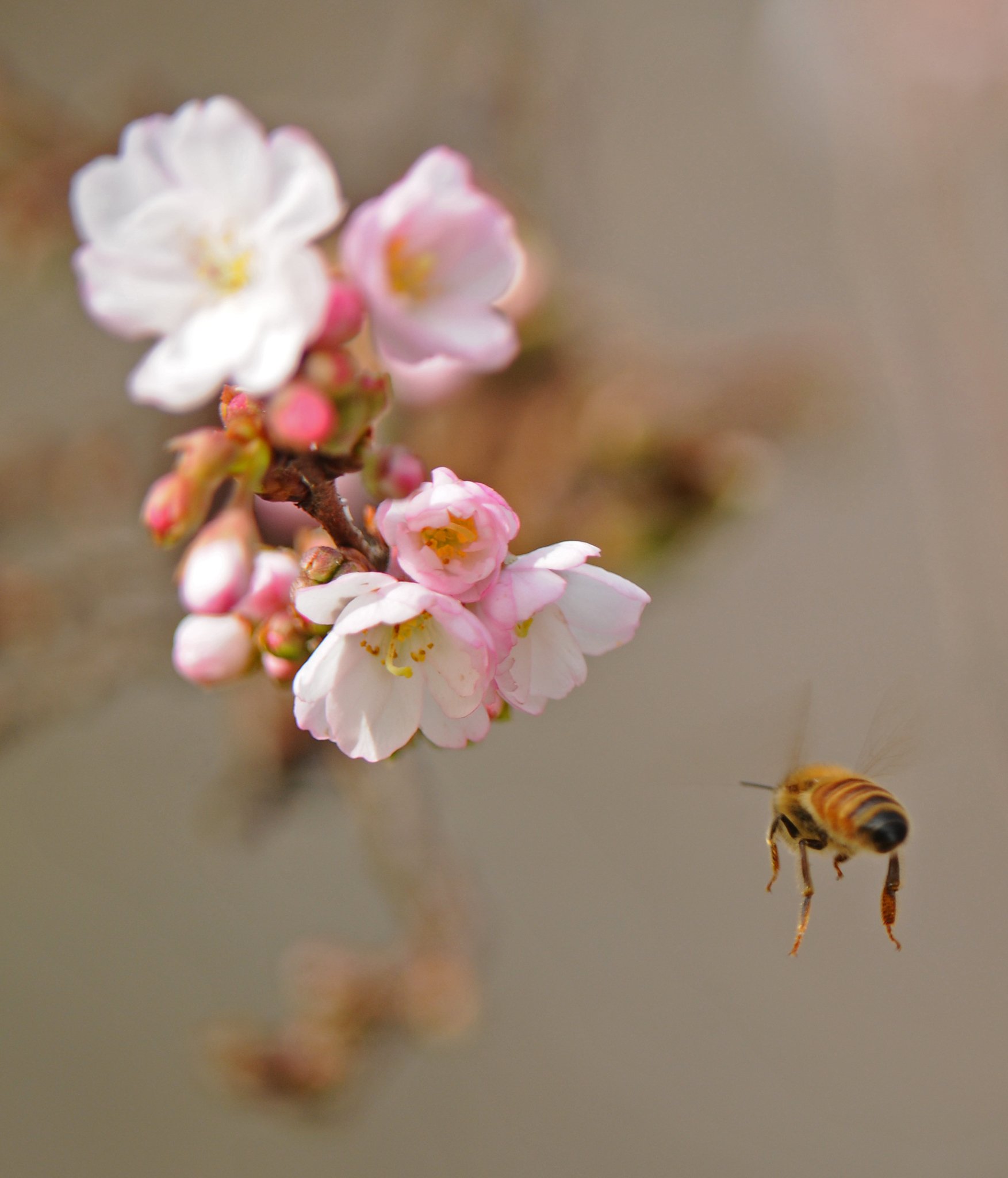
It also is the subject of my monthly column in the current edition of the award-winning Ellsworth American newspaper. This image of a honeybee searching for nectar appears with the column. Click on the image to enlarge it. To read the column, use this link: https://www.5backroad.com/montly-column

Comment

Comment

In the Right Place: Mourning Chimes

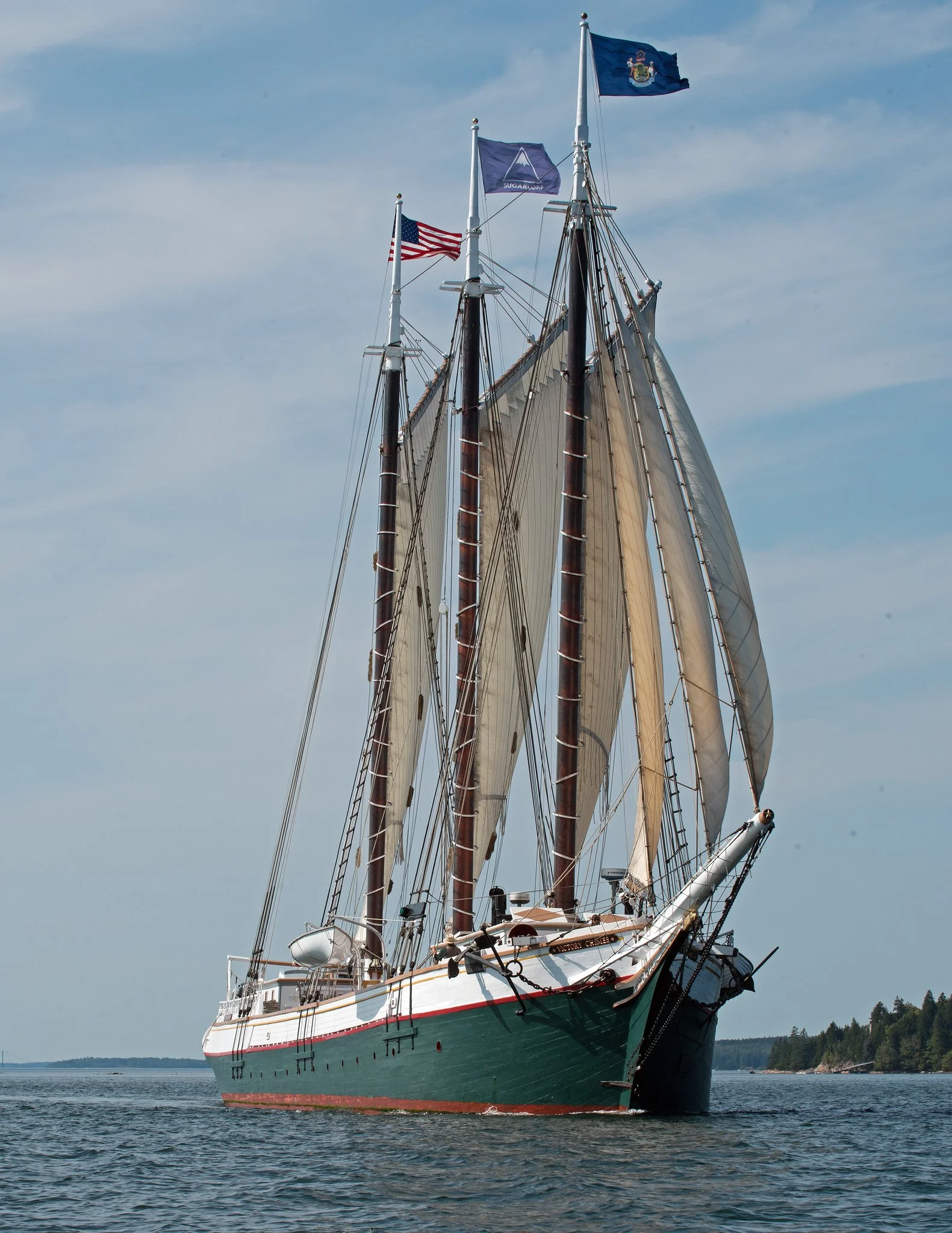
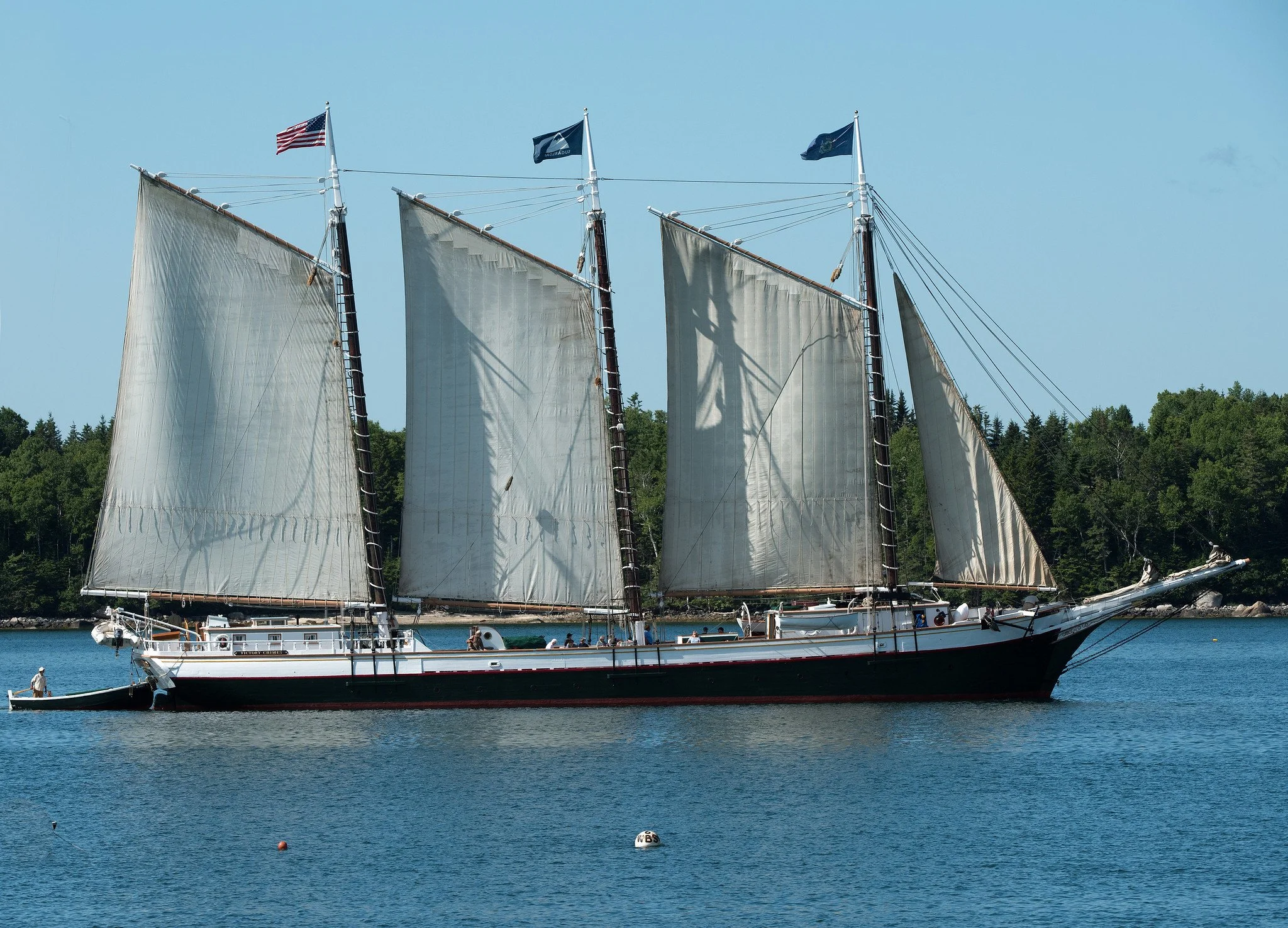
The former grand old lady of Maine’s coastal windjammer fleet has suffered yet another indignity, perhaps a fatal one. VICTORY CHIMES, shown above in her glory in Great Cove, sank in New York City during a squall over the July 4 weekend.

The schooner’s current owners, who have been less than credible in prior statements about this historic vessel, reportedly are saying that they hope to salvage and restore her as a restaurant. That means, at best, she’ll never sail again.

Yet, the CHIMES had a varied and memorable sailing life for well more than a century. She was a frequent visitor to Great Cove during fleet sail-ins and on individualized cruises when her passengers toured the renowned WoodenBoat campus. I last photographed her in the Cove in 2022. I’ll try to memorialize her long life’s highlights from published sources.

The CHIMES is the gaff-rigged, three-masted schooner featured on the 2003 commemorative “Maine quarter” (25-cent piece). She was the last surviving Chesapeake Ram schooner and was a registered National Historic Landmark. She was a “sails-only” vessel: She never had an internal engine; her motorized yawlboat pushed her when there was no wind or when the sails were not raised:

She was built in Bethel, Delaware, in 1900 as a 127.5-foot general cargo carrier. They  christened her the EDWIN AND MAUD, the names of the children of her first captain. She hauled such varied goods as lumber, fertilizer and coal in the mid-Atlantic coastal waters until 1945. Then, she was converted and re-launched as a passenger ship in 1946.

She was first christened VICTORY CHIMES in 1954 when she was brought to Maine for coastal cruising charters. Thirty years later, she was purchased by a Minnesota banker, who took her up to his state as a floating classroom for high-schoolers. In 1988, she was bought again and restored by the owner of Domino’s Pizza, Inc.; he re-named her the DOMINO EFFECT and used her for employee incentive cruises and business promotion.

In 1989, the old schooner was bought by two Maine captains, returned to the Pine State and re-christened VICTORY CHIMES. She was homeported in Rockland and became the icon of Maine coastal cruising and the largest ship in the windjammer fleet.

The present owners bought her at auction in 2023 when she was having difficult times. They said that they were going to fit her out as a dockside restaurant in New York City. She was towed north and eventually moored under tarps at a desolate area on the Brooklyn waterfront. The closest she ever came to being a restaurant was when she was misused to promote a pizza chain.

I bet many here on the Maine coast have trouble envisioning the VICTORY CHIMES as anything less than a long, three-masted beauty flying under full press of sail through our beautiful waters. (Images from the Leighton Archives taken in Brooklin, Maine.) See also the image in the Comment space.

Comment

Comment

In the Right Place: Summer Sipper

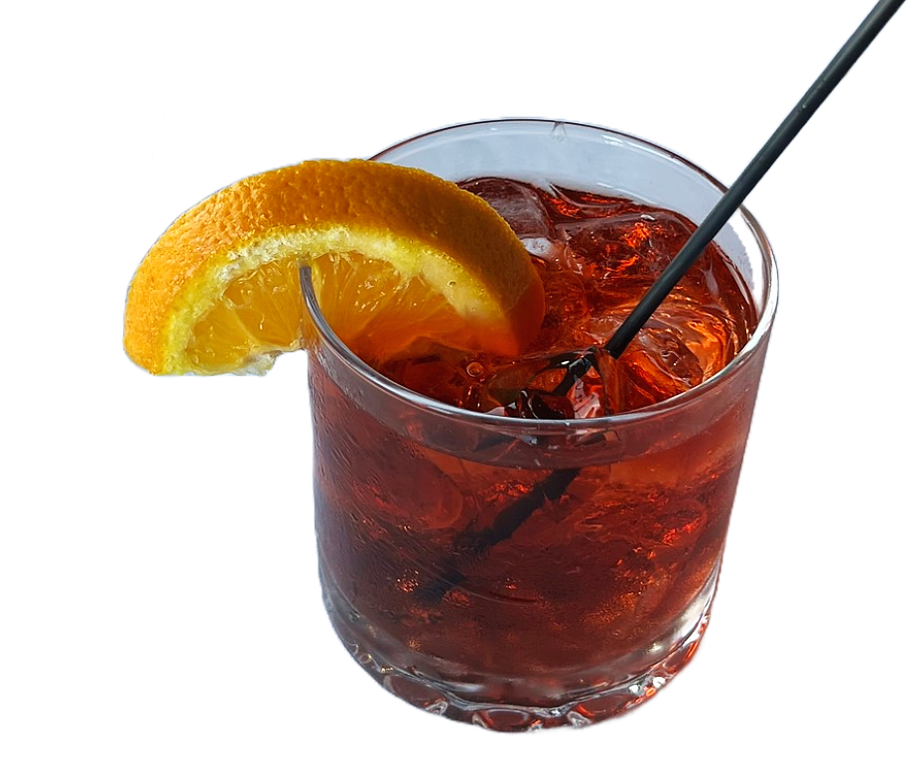
This tasted as good as it looked. So, I thought I’d change pace and post something for those few who also like a bittersweet apéritif before dinner.

This is a classic Italian Negroni, made by Marcia at The Lookout for Barbara. It’s 1 oz. Campari, 1 oz. sweet vermouth and 1 oz. dry gin. It’s mixed with ice in a mixing glass (stirred or shaken until well-chilled), strained into an old-fashioned glass over ice, and garnished with an orange slice or peel. It’s best when sipped slowly while watching the summer’s evening coming and talking softly about good things.

The folklore says that this famous drink was created for the aristocratic adventurer Count Camillo Negroni in 1919 at the Caffe Casoni on Via della Spada in Florence, Italy. (The restaurant is still there under the name Giacosa 1815.)

The Count reportedly told the bartender that he wanted his favorite cocktail, the Americano (Campari, vermouth, and club soda), but with more character: replace the soda with gin, per favore! A star was born. (Image taken in Brooklin, Maine, on July 3, 2026.) Click on the image to enlarge it.
Comment

Comment

In the Right Place: Seeing Spots

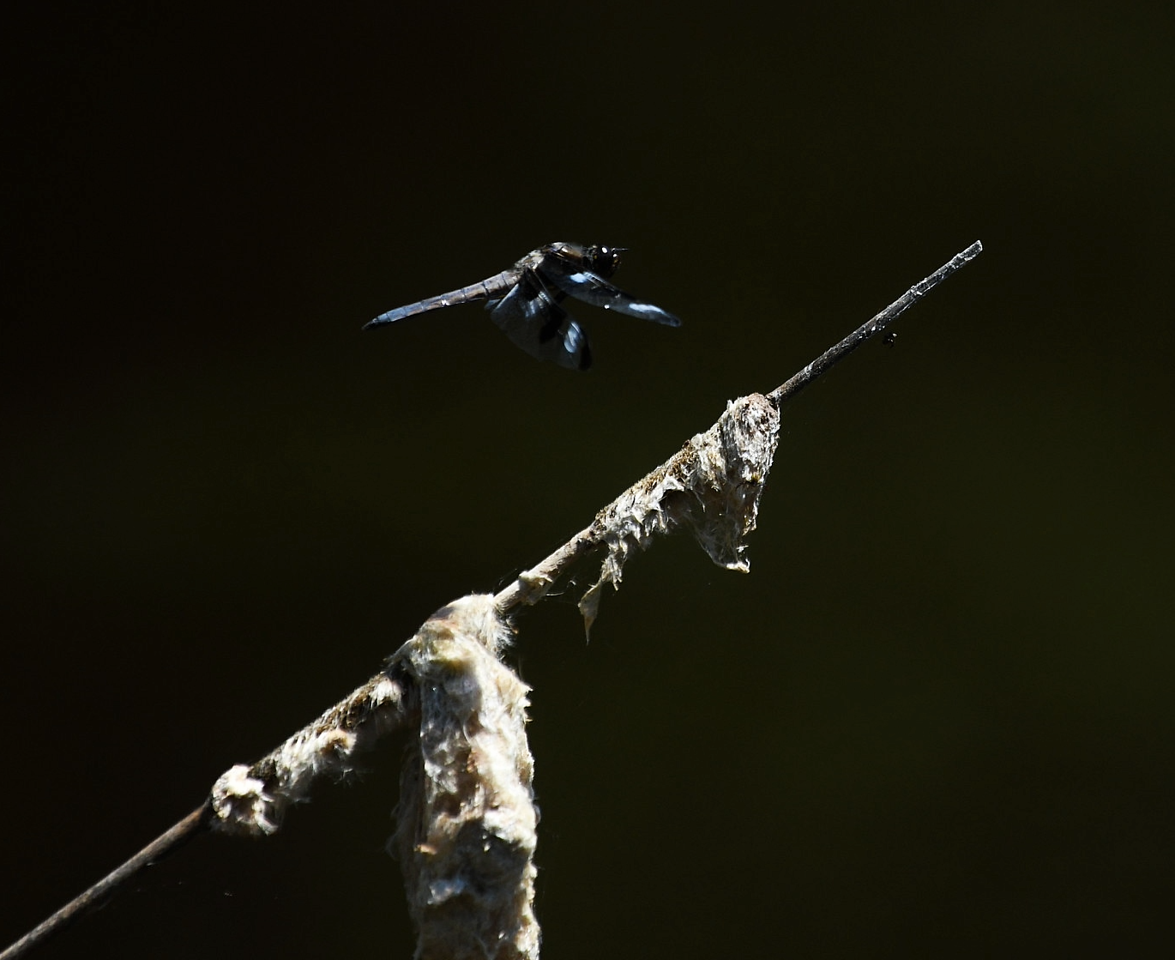
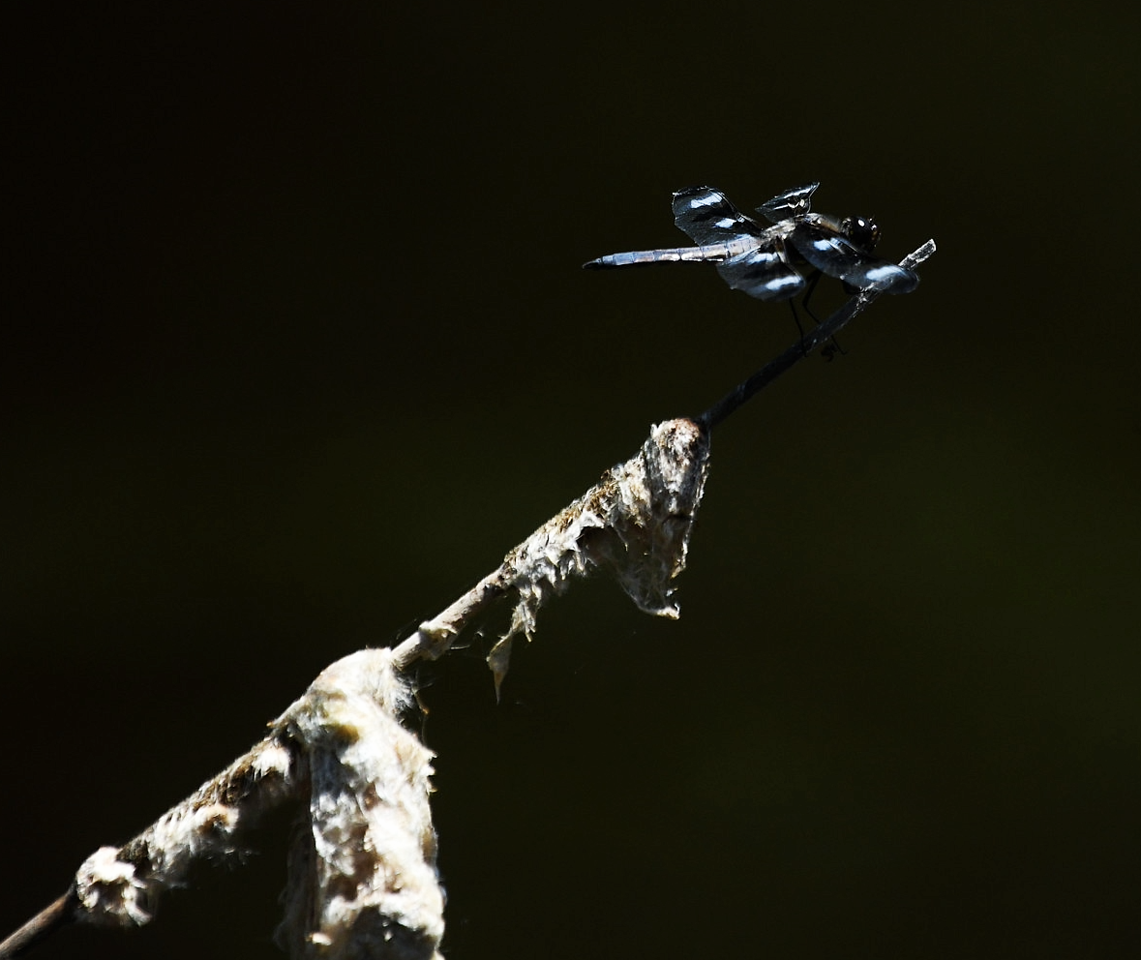
Twelve-spotted skimmer dragonflies are now flying in force. The local name of these fast-flying hunters sometimes varies depending on whether there’s a dark or light spot counter involved.

Both male and female 12-spots have three dark spots on each of their four wings (3 x 4 = 12). However, the males (such as this one) develop 10 bright spots between the dark ones and often are called 10-spotted dragonflies, although that name is not officially recognized by bug big shots.

Both 12-spot sexes are fierce mid-air pest predators. A single one of them reportedly eats from 30 to 100+ mosquitoes and other soft-bodied insects daily, such as gnats, midges, flies, mayflies, and small moths. These dragonflies digest food and expel waste so fast that they’ll often consume their own body weight in prey during the day.

(Images taken in Brooklin, Maine, on July 5, 2026.)
Comment

Comment

In the Right Place: Strange Name Game

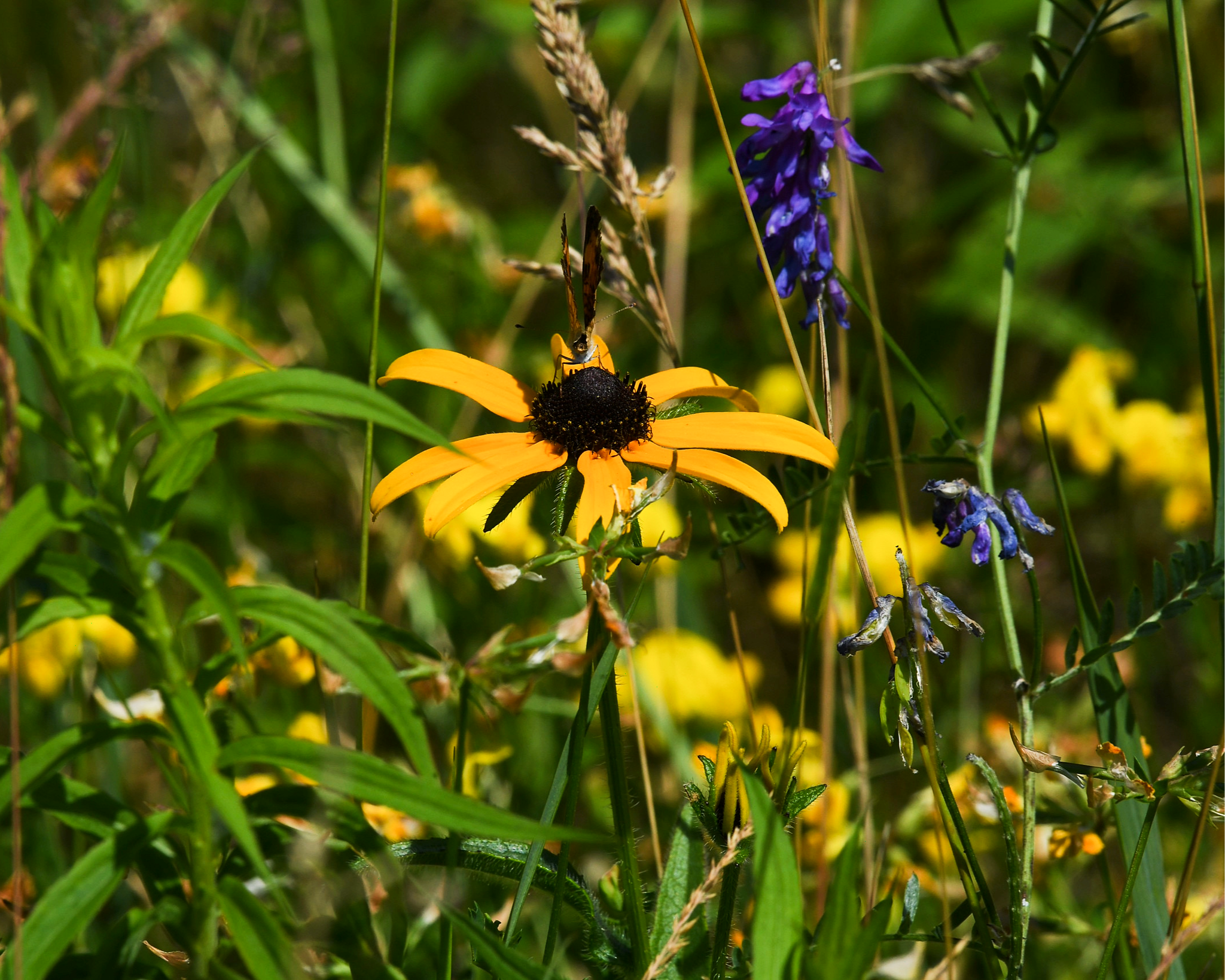
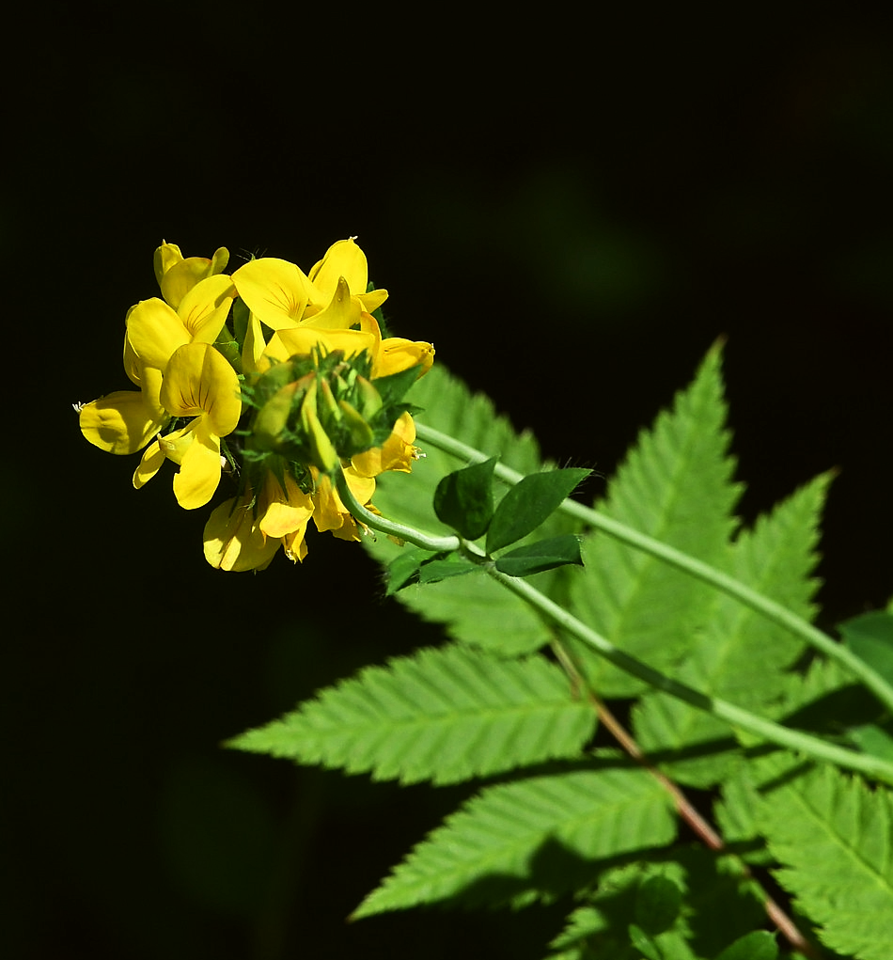
Unblinking black-eyed Susans are starting to congregate in our sunny meadows, while countless orders of butter-and-eggs are being served along the woods’ edges. These are two of our most interestingly-named wildflowers.

The name for the black-eyed Susan, shown above, reportedly was inspired by an 18th Century English ballad titled “Sweet William’s Farewell to Black-Eyed Susan.” Curiously, humans don’t have black eyes. Neither do the flowers named after Susan, their eyes are dark brown and consist of hundreds of tiny disk flowers. Susans are natives.

The name for butter-and-eggs wildflowers, shown below, is more accurately descriptive for those with a little imagination. The flower has two upper yellow “lips” that arguably look like butter, while it is orange like an egg yolk at its center. These flowers were introduced from Europe hundreds of years ago and were thought to have the ability to repel bewitching curses.

(Images taken in Brooklin, Maine, on July 4, 2026.)
Comment