
This is last night’s first sunset of the New Year here: The North Field and Great Cove darken as the sun begins to slide behind Deer Isle; it’s reluctant to let go of the tassels on the switchgrass.
(Brooklin, Maine)
JOURNAL
This is last night’s first sunset of the New Year here: The North Field and Great Cove darken as the sun begins to slide behind Deer Isle; it’s reluctant to let go of the tassels on the switchgrass.

(Brooklin, Maine)
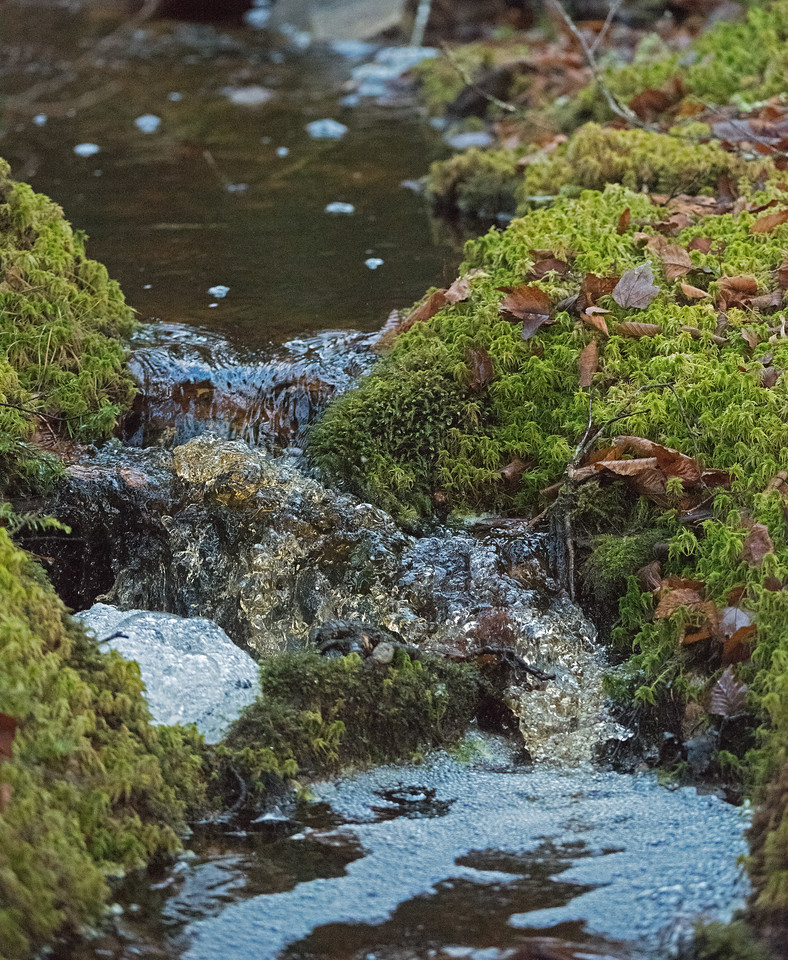
December of 2017 began relatively balmy and then the snow and cold came, transforming moss-lined streams to ice sculptures and fields to fairylands.


The freezing winds blew across the warmer ocean creating sea smoke from dawn to dusk.


Celestial events included full and crescent moons sailing over the sea and red sunsets, the sailor's delight.


Occasional new snow flurries sugared the waterfront.


There was, however, a calamity involving the Matilda Bay, shown immediately below in one of the flurries. A few days after this image was taken, she sank, apparently having been swamped during heavy night winds. That's a heartbreaking event, but our fishing community takes care of its own. In bitter weather, a group of fishermen recovered the Matilda Bay and she was towed to a repair facility. That recovery was a proud moment and is the subject of a special Journal edition earlier in the month.


In between flurries earlier in the month, the snows would melt and the deer would play. At the time, it was a little early for the red-nosed variety to browse.

In the end, however, December is a month for celebrating religious and secular holidays. Our neighbor Judith Fuller displays road banners to remind us of that and brighten our days. One of the highlights of the entire year is the December concert of festive music by the Bagaduce Chorale, which performed an excellent program with a large orchestra this year in nearby Blue Hill.


For larger versions of the above images, as well as many additional images of special moments in this January, click on the link below. (We recommend that your initial viewing be in full-screen mode, which can be achieved by clicking on the Slideshow [>] icon above the featured image in the gallery to which the link will take you.) Here’s the link for more:
https://leightons.smugmug.com/US-States/Maine/Out/2017-in-Maine/December-Postcards-From-Maine/
(Brooklin, Maine)
Big Foot Found Buried Alive in Small Maine Town! Or, perhaps we found a snowy old stump with a Red-Belted Polypore mushroom hanging on it.

(Brooklin, Maine)
December 30, 2017
Here we see the loneliness of a Maine summer residence in a winter snow flurry. However, when the sun comes out and the sky is blue and the house is reflected in the icy water, the mood changes to one pleasant expectation.

This house is on Harbor Island, one of the islands that shelter our Naskeag Harbor. (Brooklin, Maine)
We take a trail that shows no sign of humanity since it snowed; we crunch along for a while, stop, and stand still to join the silence; we turn around and see our alien footprints chasing us; it’s then that we remember that we sometimes need to defile untouched beauty a bit to enjoy it: the eternal dilemma.

(Brooklin, Maine)
Our first significant sea smoke wafted across local waters early this morning. Here we see Naskeag Harbor as the sun and the smoke rise.

Here we have smoke in Great Cove a little later in the day:

Sea smoke is not fog. Sea smoke is an atmospheric reaction between very cold winds flowing over significantly warmer (albeit also cold) waters. (Fog, basically, is a low-flying cloud.)


As of mid-morning, the recorded temperature increased to 1 degree Fahrenheit, the wind was gusting at 18 miles per hour, and the water temperature at the surface was 46.4 degrees, according to local reports. As of dusk, Great Cove was still smoking:

(Brooklin, Maine)
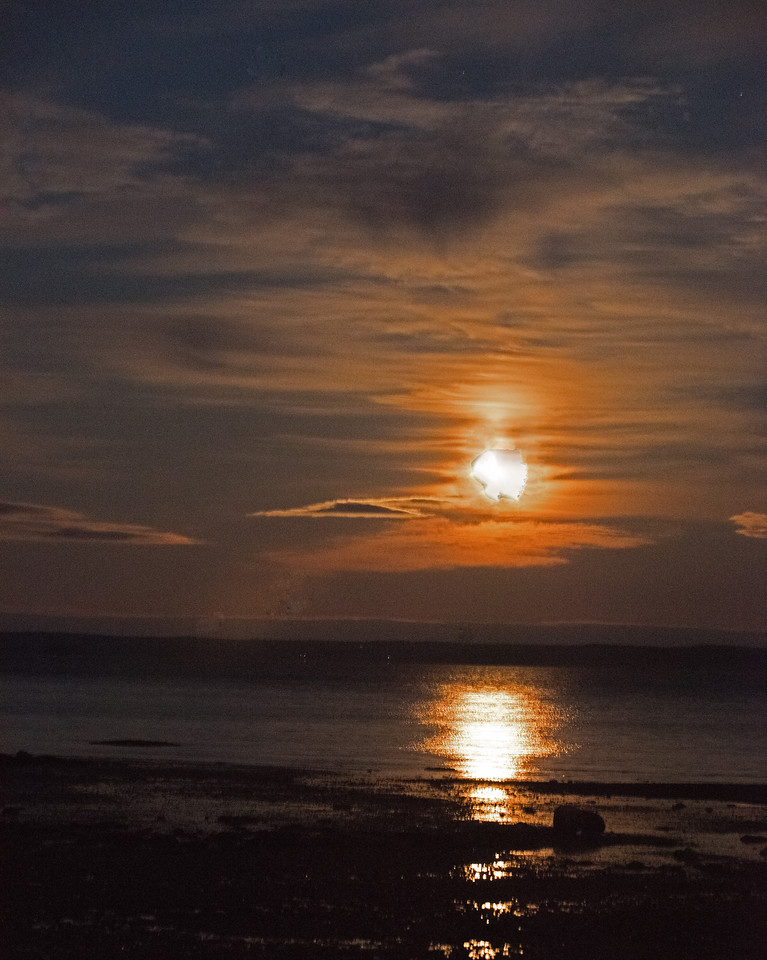
Here we have last night’s red sunset, which signaled that today would be clear. (“Red sky at night, sailors’ delight/Red sky at morning, sailors take warning.”)

The forecast was correct: Today dawned clear, sunny, cold, and windy. As we speak, according to the North Brooklin weather station, it’s 9 measured degrees (F) and the wind is gusting at 17 miles per hour, creating a wind chill of (“feels like”) 1 degree. Great Cove is slate blue, edged with ice, and full of whitecaps. Bracing! (Brooklin, Maine)
We had a small, powdery snowstorm yesterday, the kind that’s good for holiday party-going over a thick, white carpet under coated trees. Even better, the morning dawned sunny blue and white and brisk.

The loud crunching of our boots in the silent, snow-covered woods and marshes seemed profane. But, when we stood still, the silence poured back onto us, almost liquid, freeing us to feel alive without the need to wonder why. (Brooklin, Maine)
MERRY CHRISTMAS TO ALL!

It's snowing as we speak.
Thanks to neighbor Judith Fuller for this. She displays ever-changing banners with seasonal themes at the entrance to her driveway. It’s a bright spot when driving down Naskeag Road to the Harbor. (Brooklin, Maine)
It’s a sunny 31 degrees as we speak; there are patches of snow in the woods; sea ice is forming along the shore, and snow is predicted for tonight. But, the snow is gone from our North Field, where this doe and her yearling fawn are frequent browsers.

We haven’t seen a red-nosed deer yet, but it’s several hours early for one. (Brooklin, Maine)
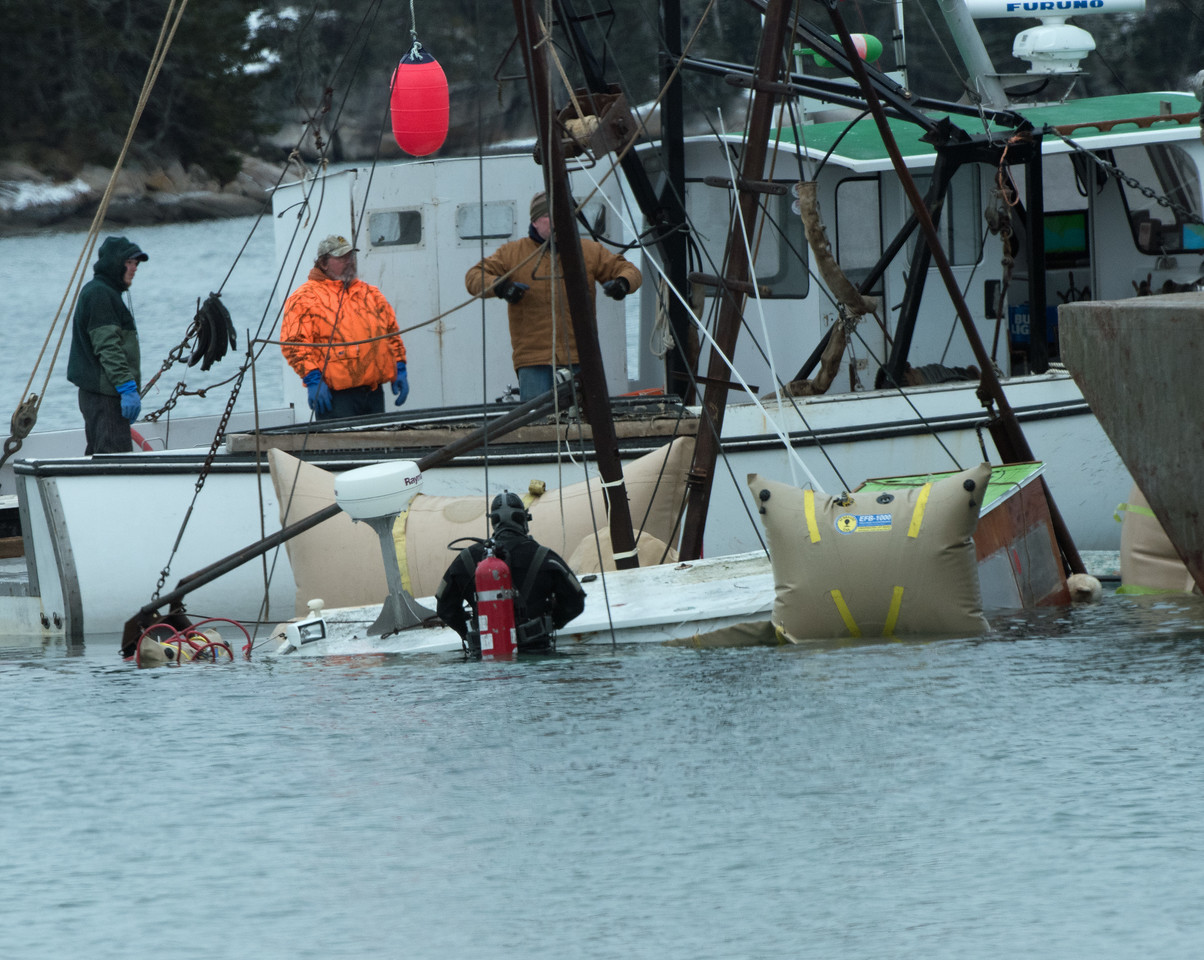
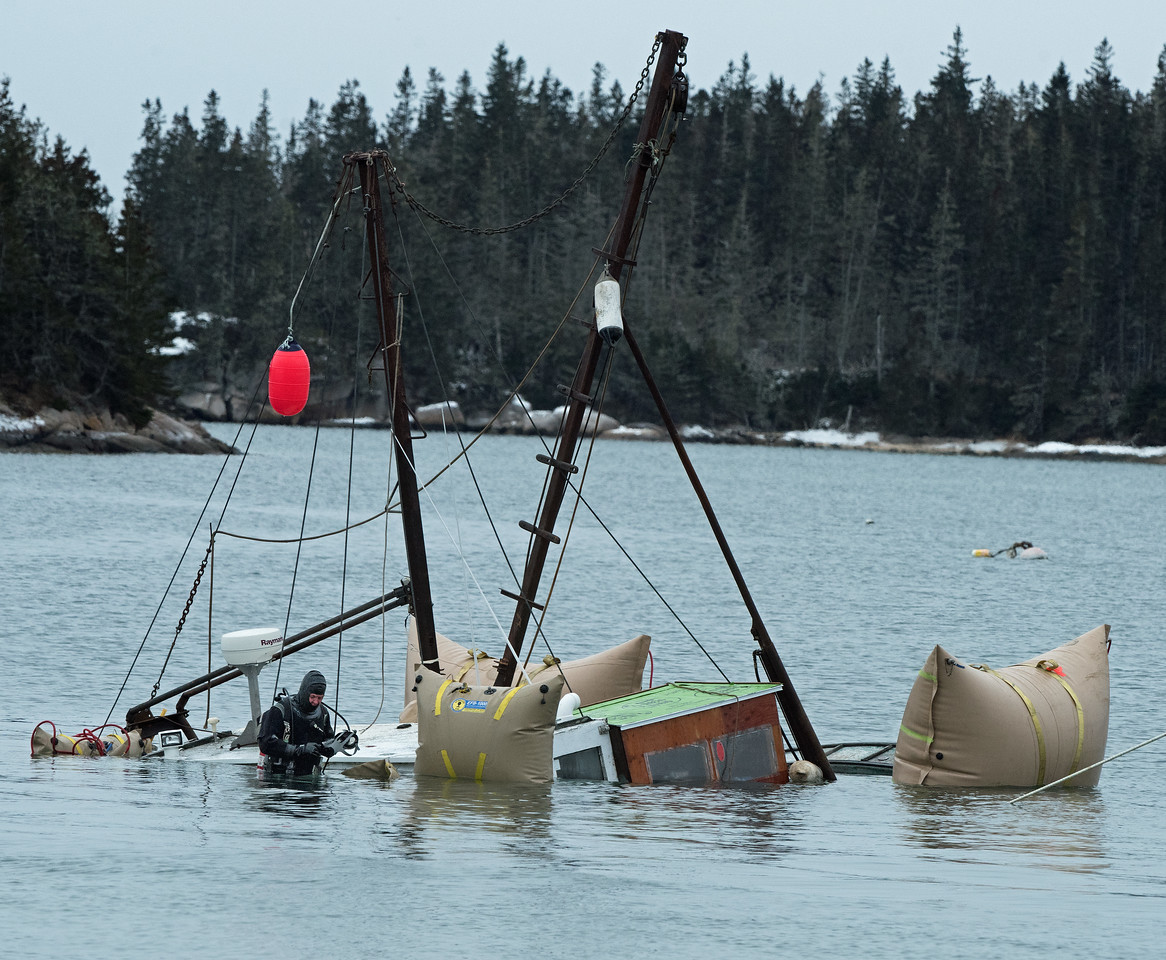
The Matilda Bay, a fishing vessel out of nearby Blue Hill, sank in the cold waters of Naskeag Harbor Wednesday night or early Thursday, possibly having been swamped during high winds. Here we see Matilda Bay as she was being brought up off the bottom yesterday afternoon:

For reference, here's an image of her moored picturesquely in the Harbor during a snow flurry four days ago (December 19):

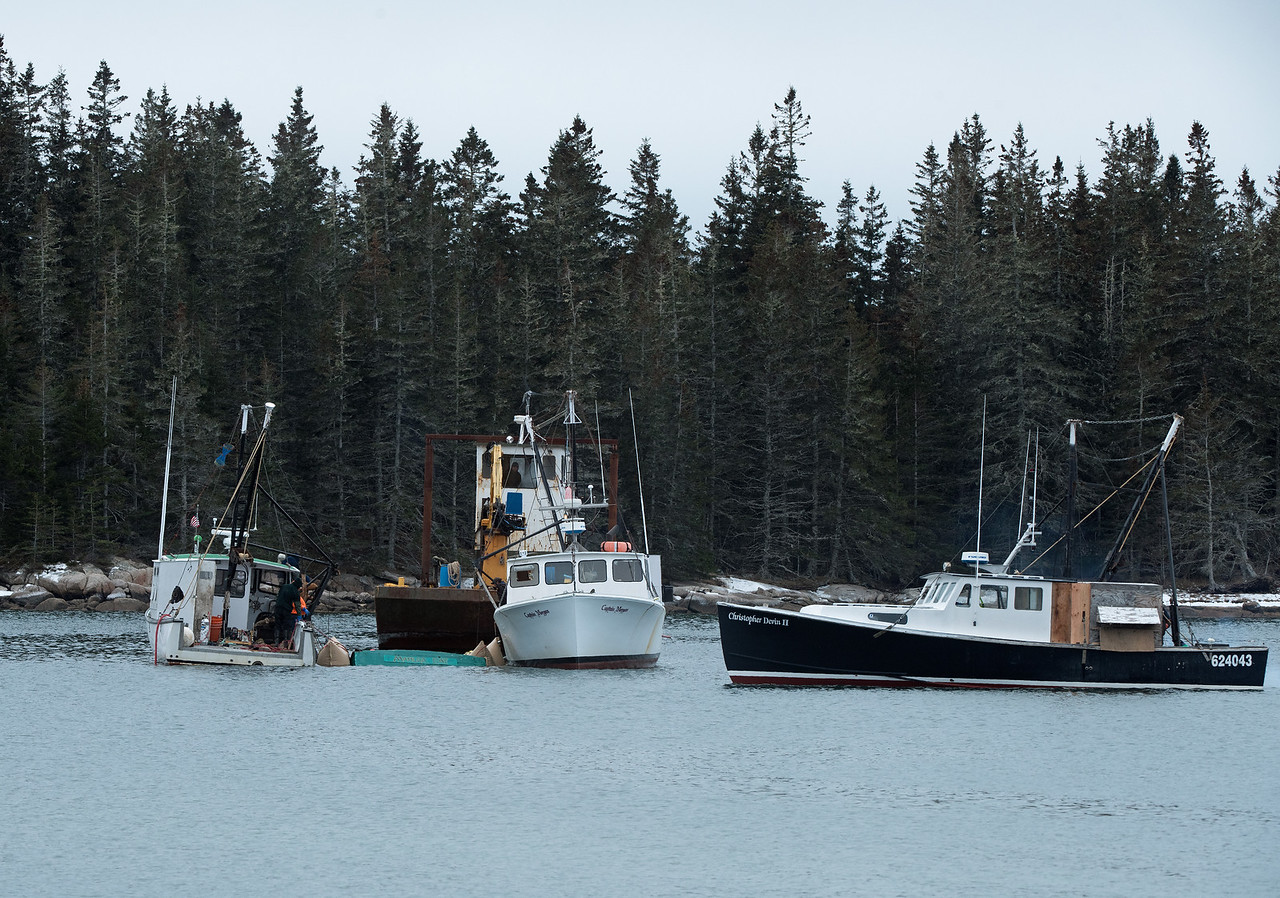
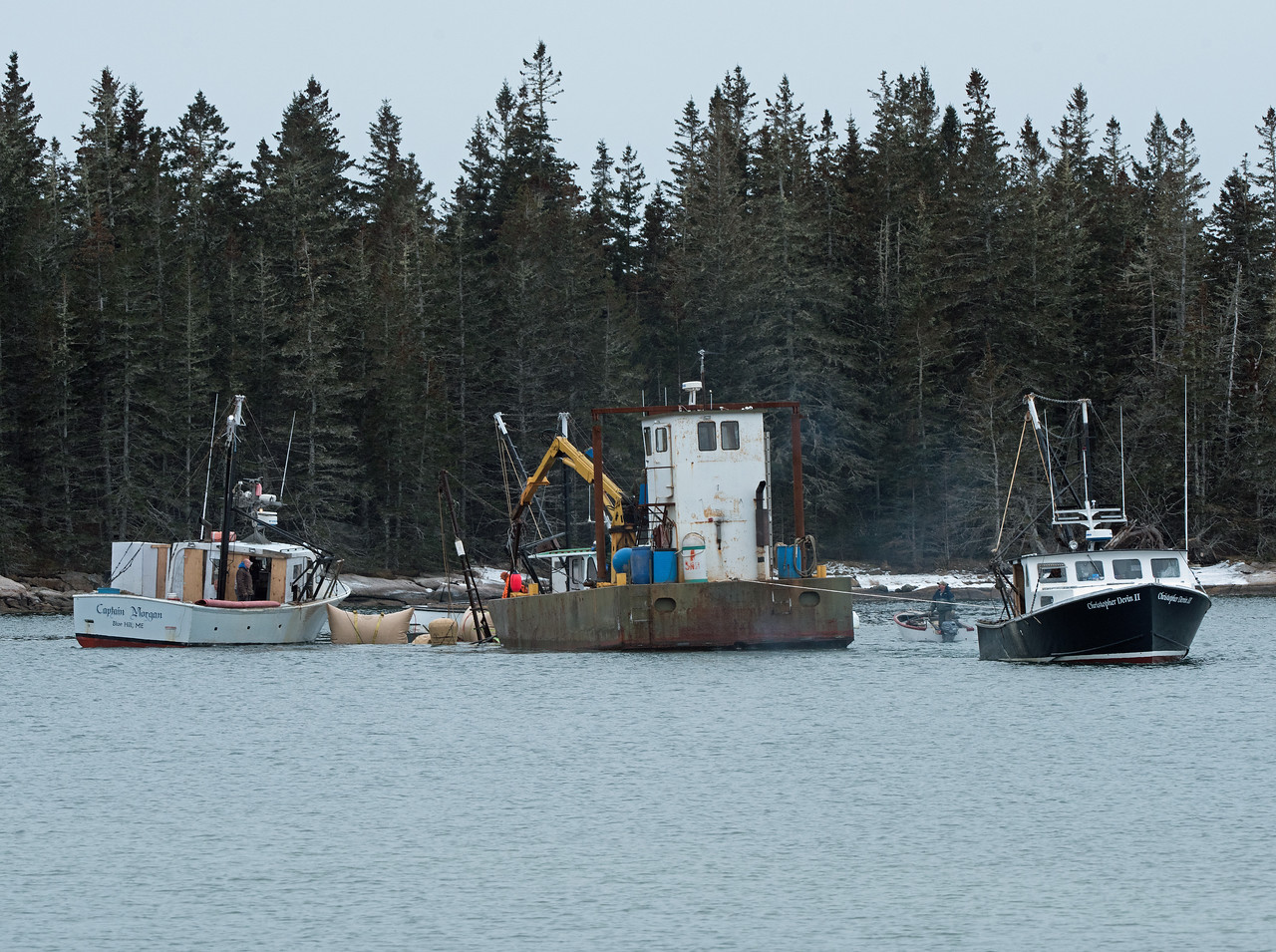
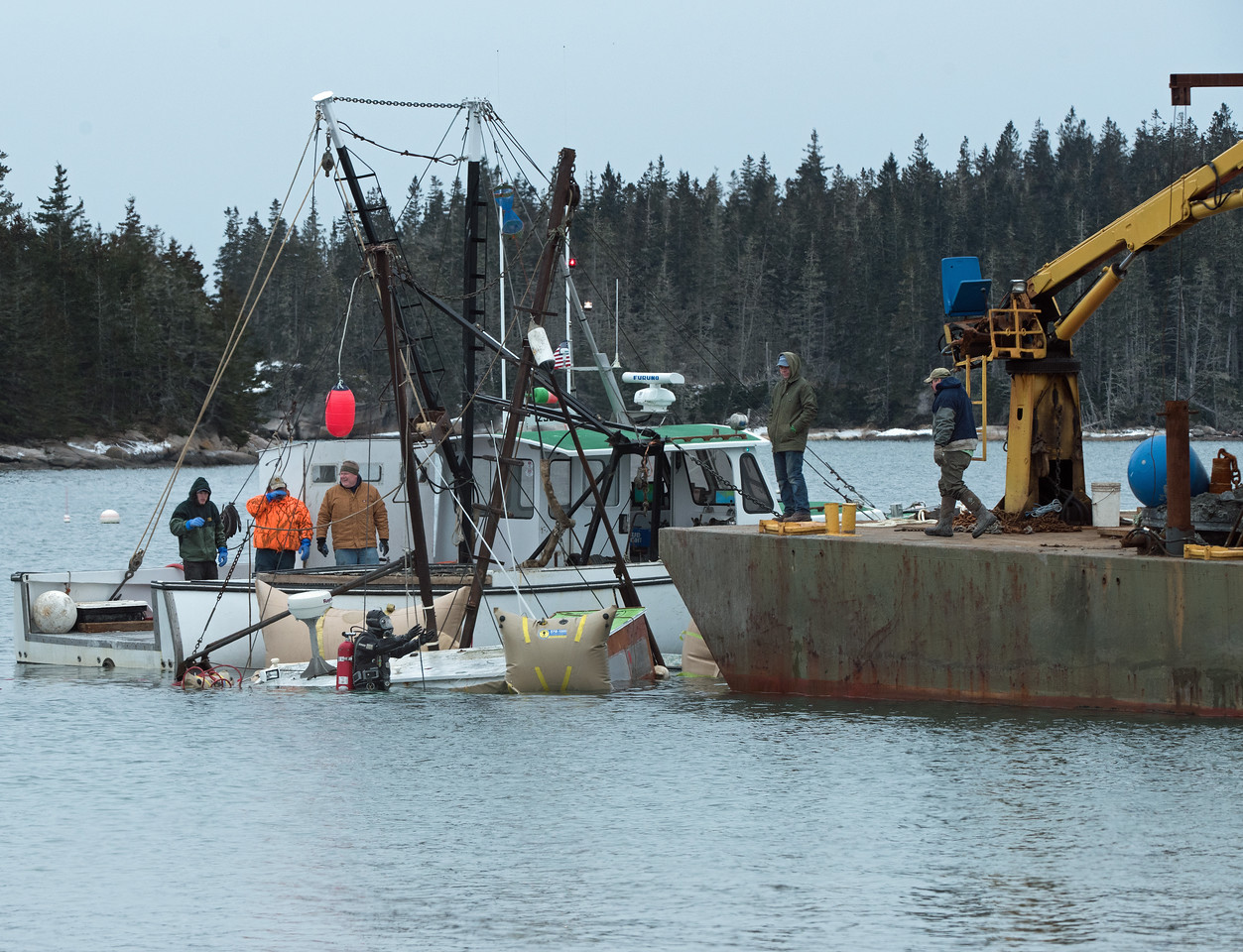
A significant local effort was made to raise her and tow her to shallow waters for pumping and inspection. Hours of bitter cold labor were endured by, among others, the crews of the fishing vessels Captain Morgan, Christopher-Devin II, and Dear Abbie:, as well as Al Hutchins on his derrick barge and professional diver Greg Canders, who braved the 38-degree water.
Above, we see a red float marking the location of the Matilda Bay and Canders surfacing after an inspection and positioning of air bags. Then, as the air is pumped, she begins to rise. Below, Hutchins' derrick gets hold of Matilda Bay's mast and starts the lift:
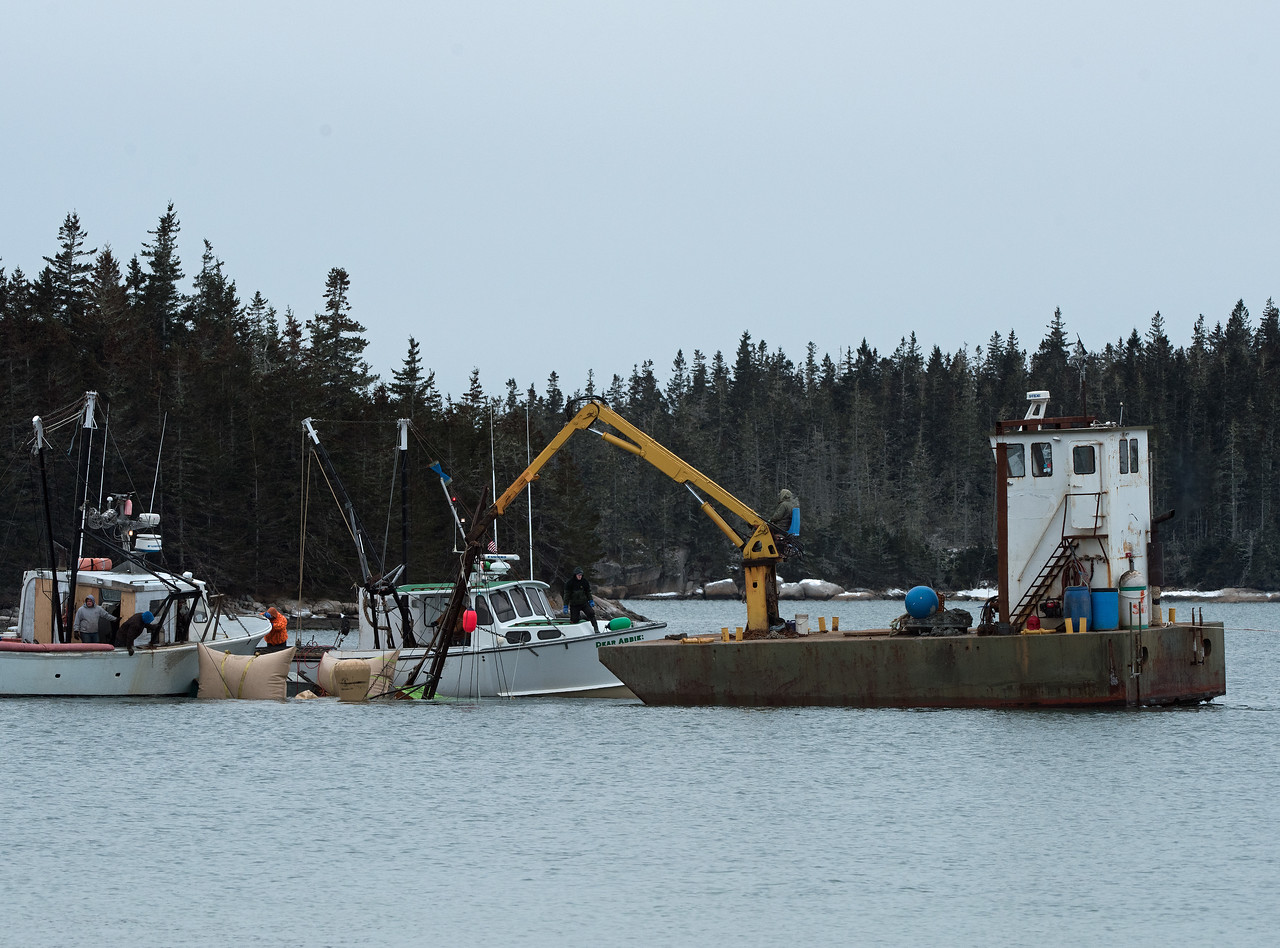
Part of Matilda Bay's cabin breaks the surface:
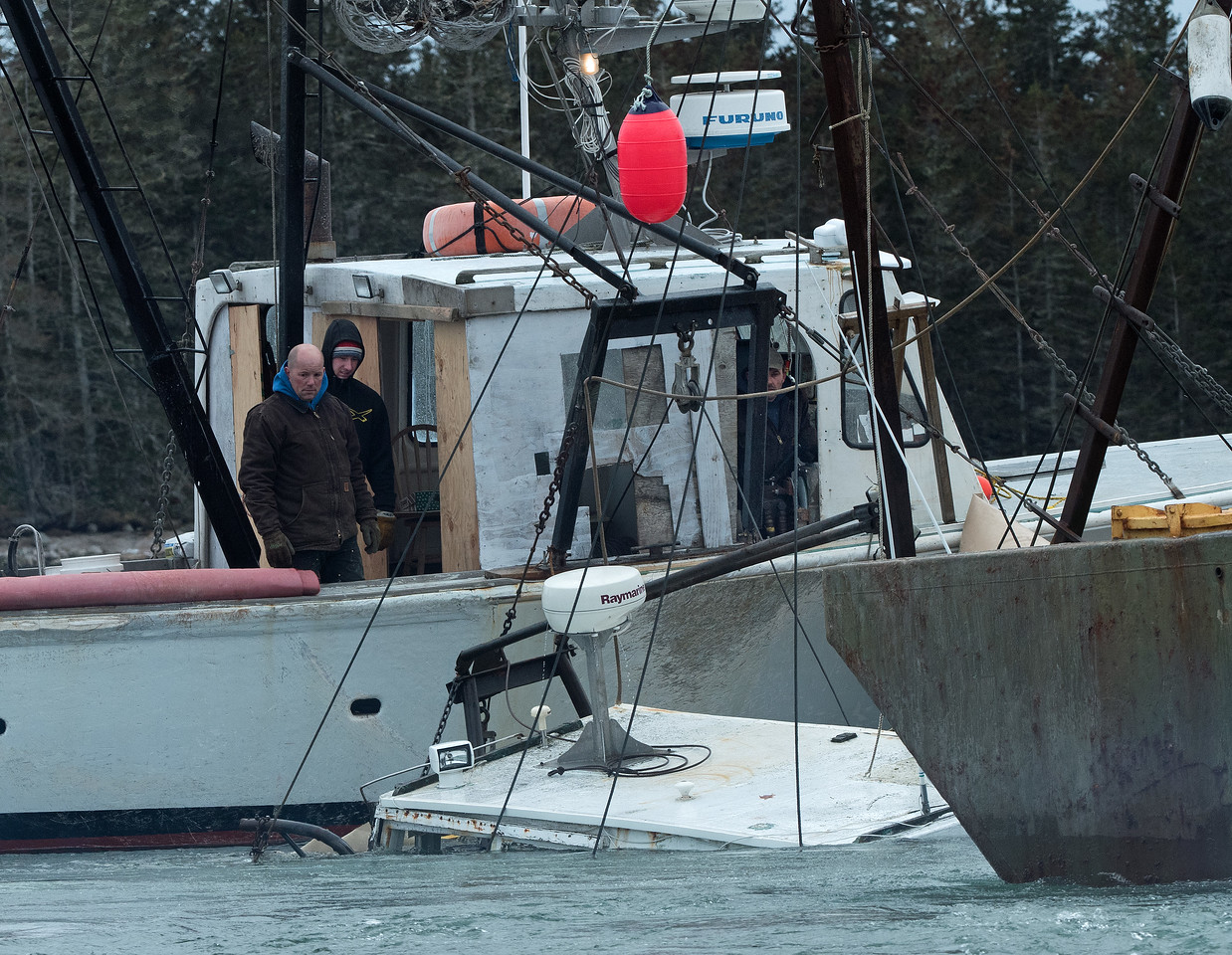
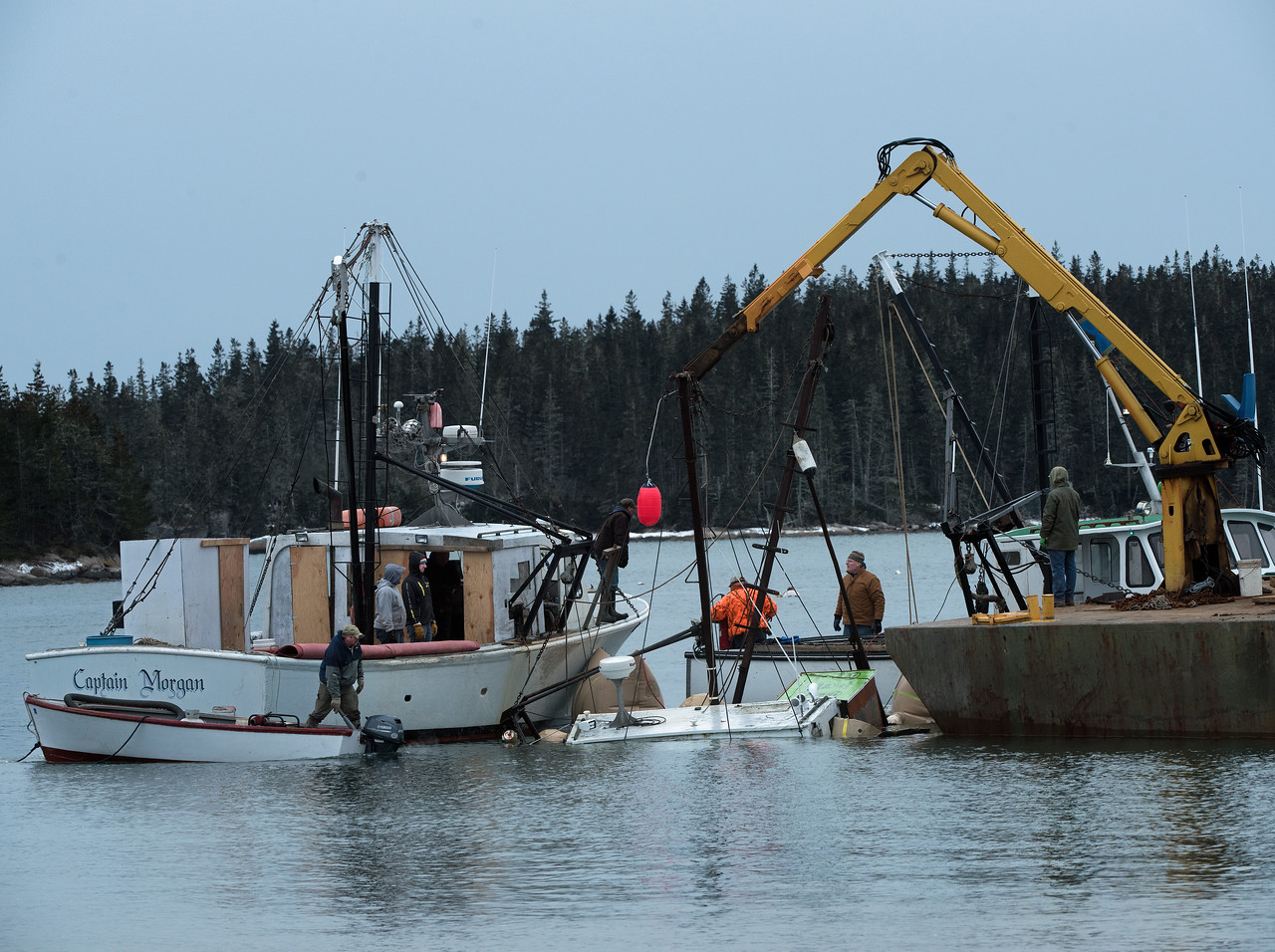
Towing lines are attached, and she's brought into shallow water to await a low tide pumping, inspection, and movement to a repair facility
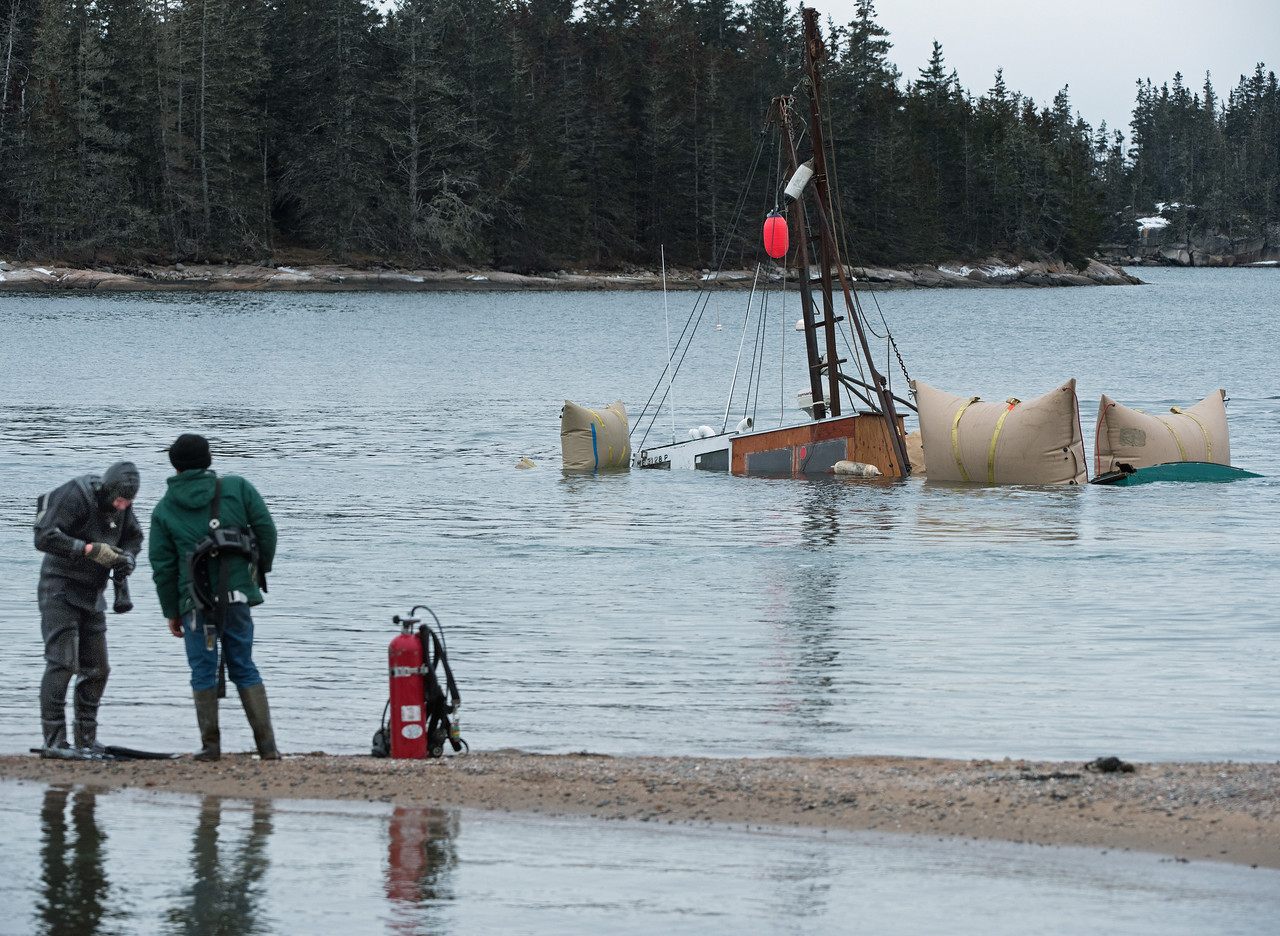

At low tide early this morning, Matilda Bay suffered the further indignity of being caught in this snow and sleet storm:

For larger versions of the above images, as well as a few additional images of this operation, click on the link below. (We recommend that your initial viewing be in full-screen mode, which can be achieved by clicking on the Slideshow [>] icon above the featured image in the gallery to which the link will take you.) Here’s the link for more:
(Brooklin, Maine)
This is a mobile home lot that won’t open until spring. Now, it’s a cemetery of washed-up shells once owned by Periwinkles that have gone to snail heaven.

In the spring, Hermit Crabs will arise out of their “crab torpor” (hibernation within the ocean bottom) and come into the shallows looking for a place like this. Some of the crabs will need to trade in their tight, old shells for bigger ones. Here's one from the summer:

Periwinkles are non-native sea snails that were introduced here from Europe centuries ago on the rocks used as ballast in the old sailing ships. Now, they occupy rocks along our shore:
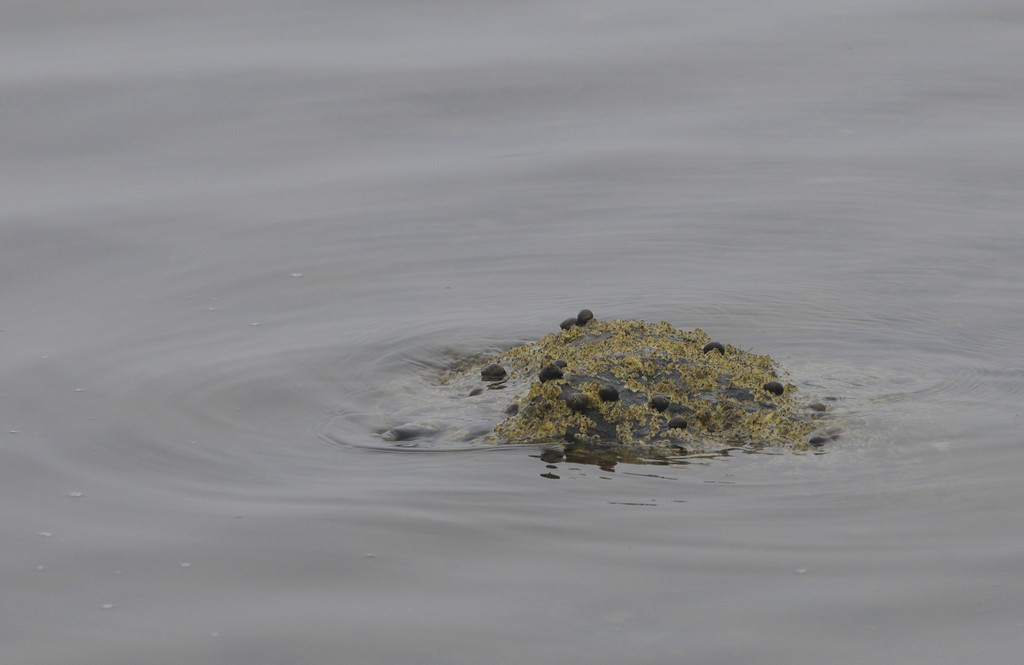
Periwinkle shells often are collected and made into jewelry. The snails, themselves, can be cooked and eaten as appetizers. (Brooklin, Maine)
Here we have last night’s Waxing Crescent Moon sailing over Great Cove at dusk. At that time, the whole orb can be seen, but most of it is in shadow. “Waxing” is archaic English for “growing” or “expanding.”
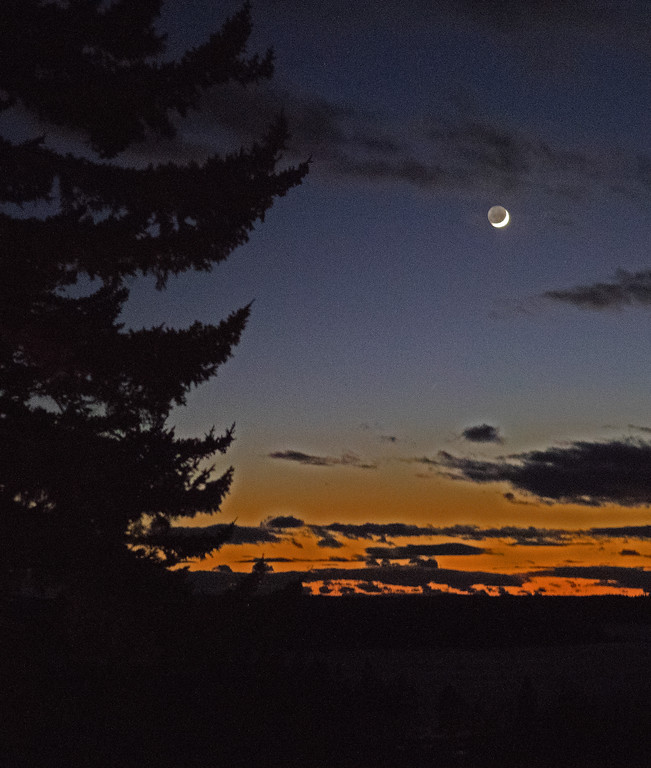
The illuminated part of a waxing moon grows in crescents from the right, getting larger each day until the Moon’s First Quarter, when half the orb will be illuminated by the sun. We’ll see the First Quarter on December 26 of this year and a Full Super Moon on January 1, 2018. By the way, a “waning” (decreasing) moon opens from the left. (Brooklin, Maine)
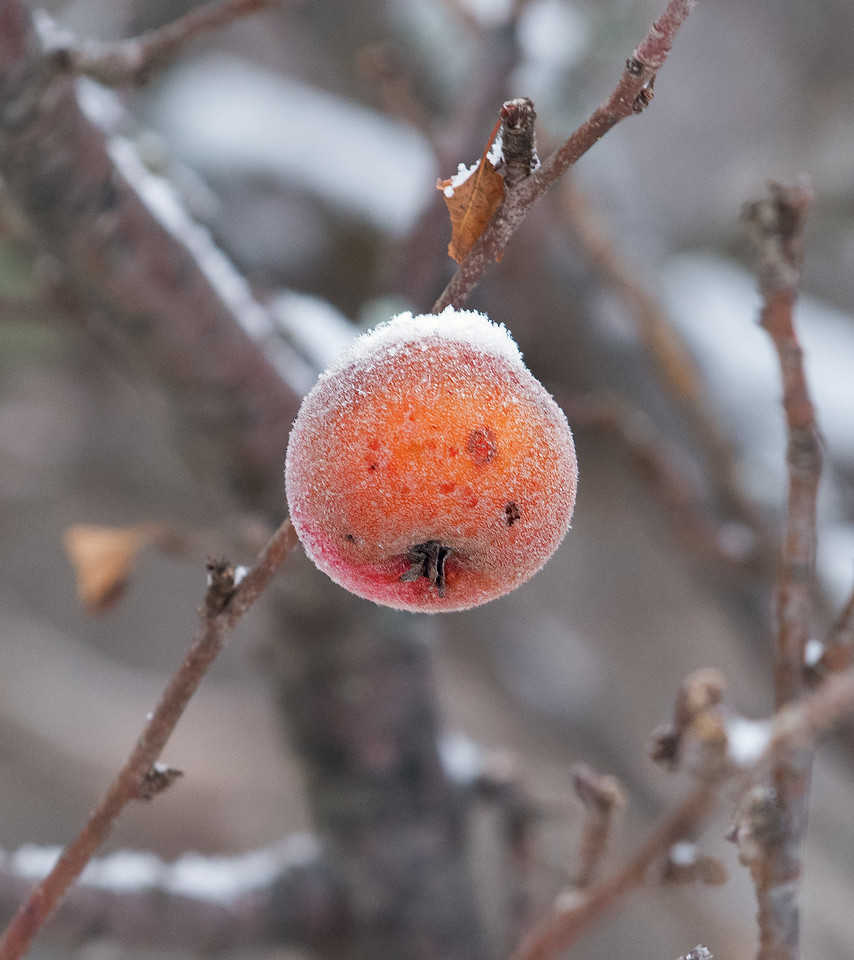
As you know, we’ve been monitoring some of the old, gnarly, and long-abandoned apple trees that simply won’t let go of some of their apples – despite several snow storms, a fair amount of wind, and the year’s end being near.

Scientifically, it may be an enzyme deficiency that keeps the fruit glued. Imaginatively, it’s Mother Nature getting the Christmas Spirit and creating ornaments for her old trees.

(Brooklin, Maine)
It snowed yesterday afternoon, complicating this commuter’s life. Wild Turkeys are big birds that need plenty of food, but the “servings” that they eat often are small. In the winter, they eat nuts, berries, buds, seeds, mosses, fern spores, and peck fallen apples, among other things.

The snow continued through part of the night. It wasn’t much, but it was enough to sugar the trees out back, which always is a nice wake-up sight.

(Brooklin, Maine)
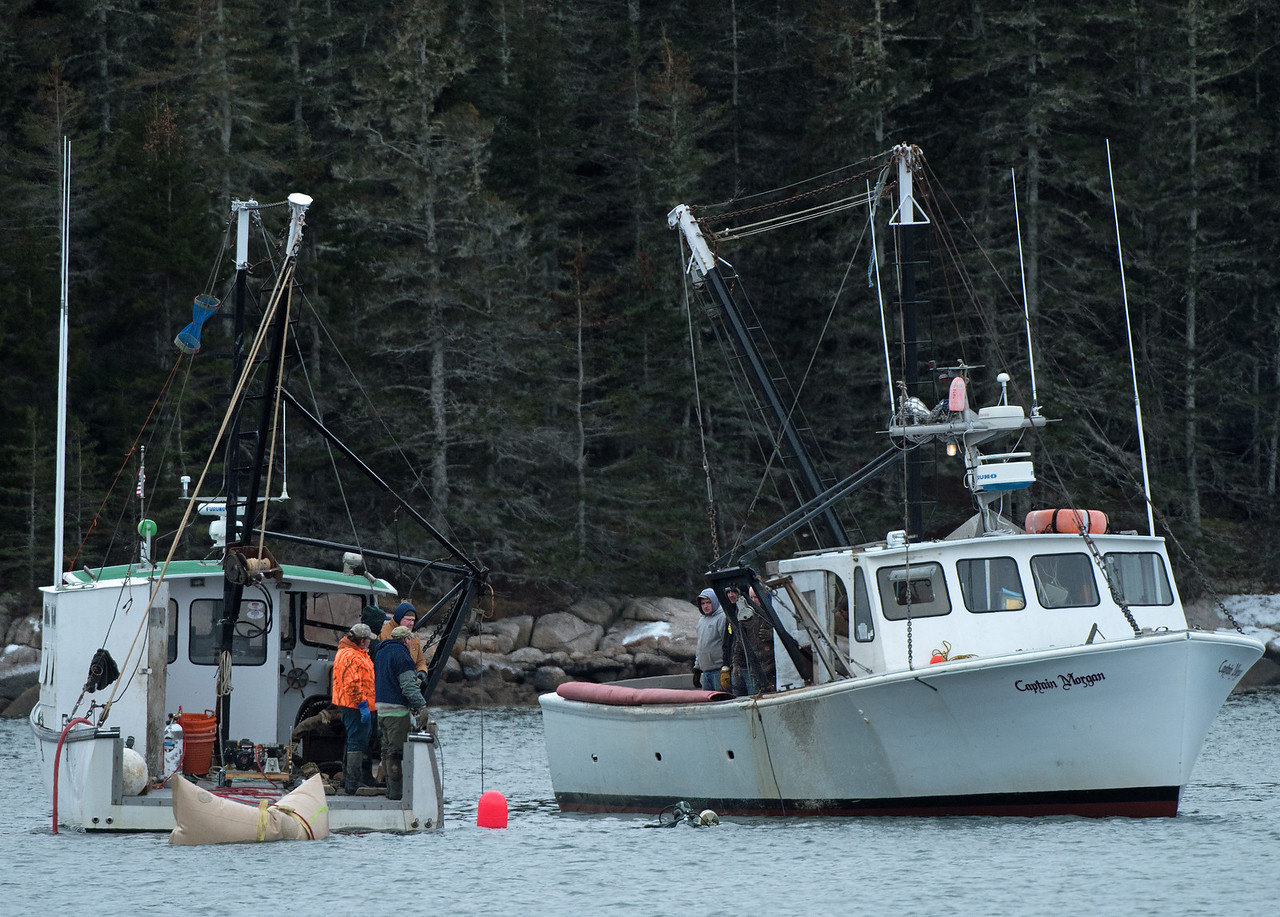
Here we see Captain Morgan in Naskeag Harbor yesterday. She and most of the other “lobster boats” that remain in the water have been rigged as trawlers and have been dredging for scallops. Some boats also are platforms for SCUBA divers to hand-harvest “Diver Scallops” in certain areas.

Scallop fishing is highly regulated in Maine, where the season lasts 60 or 70 days, depending on zone. Those fishing days are spread out a few days each month from December into April. The daily limit is 15 gallons, shucked. (Brooklin, Maine)
Downy Woodpeckers are year-long residents here. They’re our smallest woodpeckers, usually growing to between six and seven inches. Yet, they’re tough; the red patches on their heads were considered by Native Americans to be badges of courage.

Downeys also are monogamous and often travel in playful pairs. They’re among the woodpeckers that can extract larvae and other hibernating insects out of wood by spearing them with their barbed bony tongues. They also gulp down berries ferociously and can be bullies at home feeders.

(Brooklin, Maine)
As we speak, it’s brilliantly – squintingly – clear and 19 degrees (F). Last night’s light snow decorates parts of the fields and stones like powdered sugar. Slow-moving shafts of sunlight are probing the newly-cleansed woods. There is no wind; Great Cove is an unblinking blue eye.

The image of a nearby wooded trail, above, was taken about this time on a similar day, December 10. With the posting of this report, we’ll boot-up and enter the day. (Brooklin, Maine)
This is a good looking woodshed designed and owned by our neighbor.

An estimated 50 percent of Maine homes use wood for supplemental heat and about 14 percent use it as their primary heating source, according to the latest Census data we’ve seen. This creates tradeoffs.
Firewood is an inexpensive, renewable resource, which is good. But, burning wood produces potentially harmful emissions, especially if burned in a fireplace or old stove that does not meet Environmental Protection Agency standards. That’s not good.

Nonetheless, we regretfully confess that, for us, one of the more satisfying things in this short life is being in front of a wood fire on a snowy day and rediscovering what “cozy” means. See second image. (Brooklin, Maine)
We have many beautiful country roads, and some of the most beautiful are hidden and privately maintained.

The hidden ones usually are of “rotten rock” gravel and often wind sinuously through woods, where they’re intersected every now and then by driveways that lead to houses deep within the trees or out on the shore.

It’s a joy to walk along these roads after (or during) a green summer shower or after (or during) a white winter snow storm. Here, we’re walking on a nearby lane earlier this week. (Brooklin, Maine)

