Comment

In the Right Place: Holiday Trappings

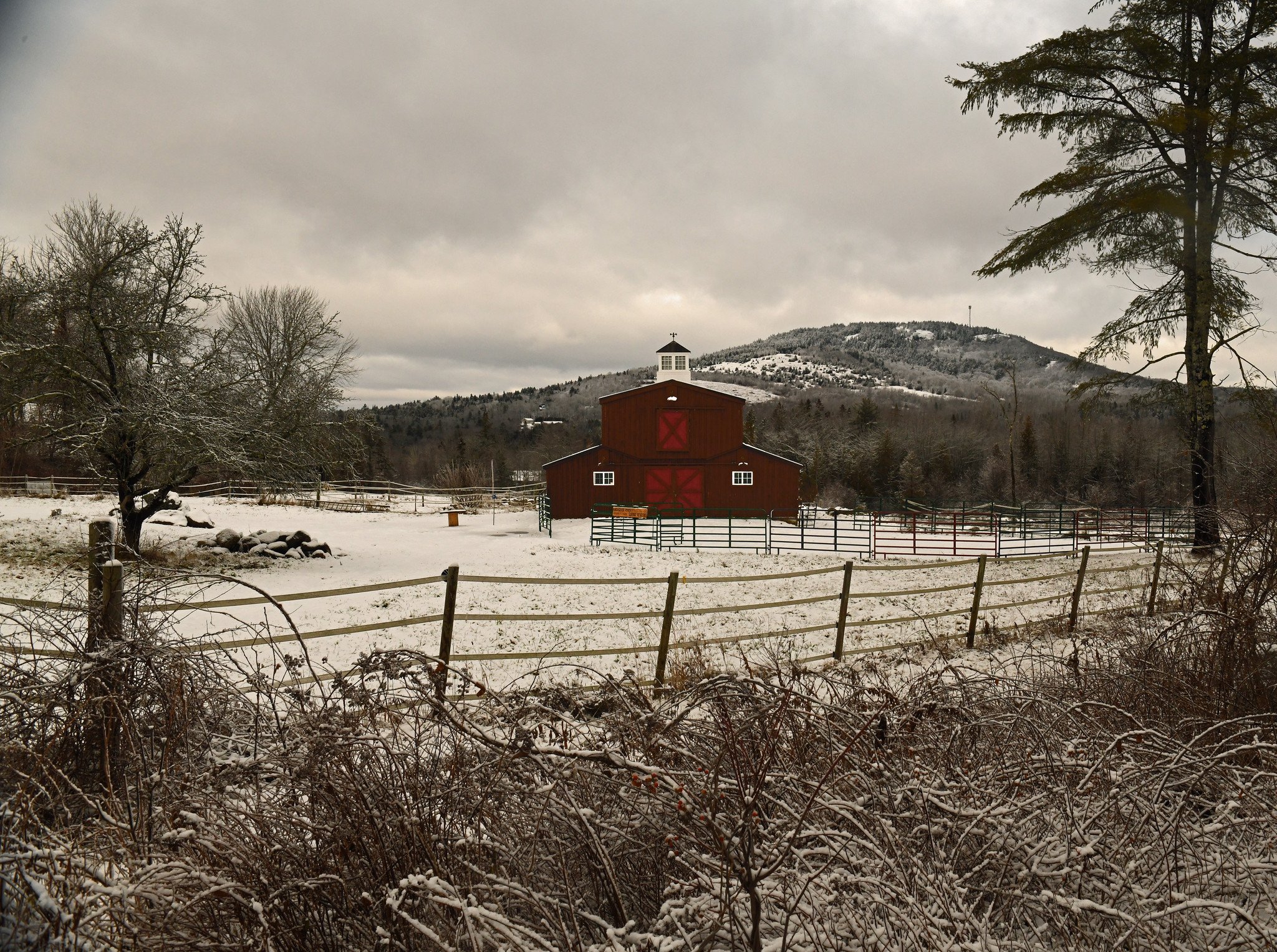
Congratulations to all those who contributed to and helped construct Brooklin’s annual Holiday Trap Tree, especially Sarah Havener for her organization and inspiration.
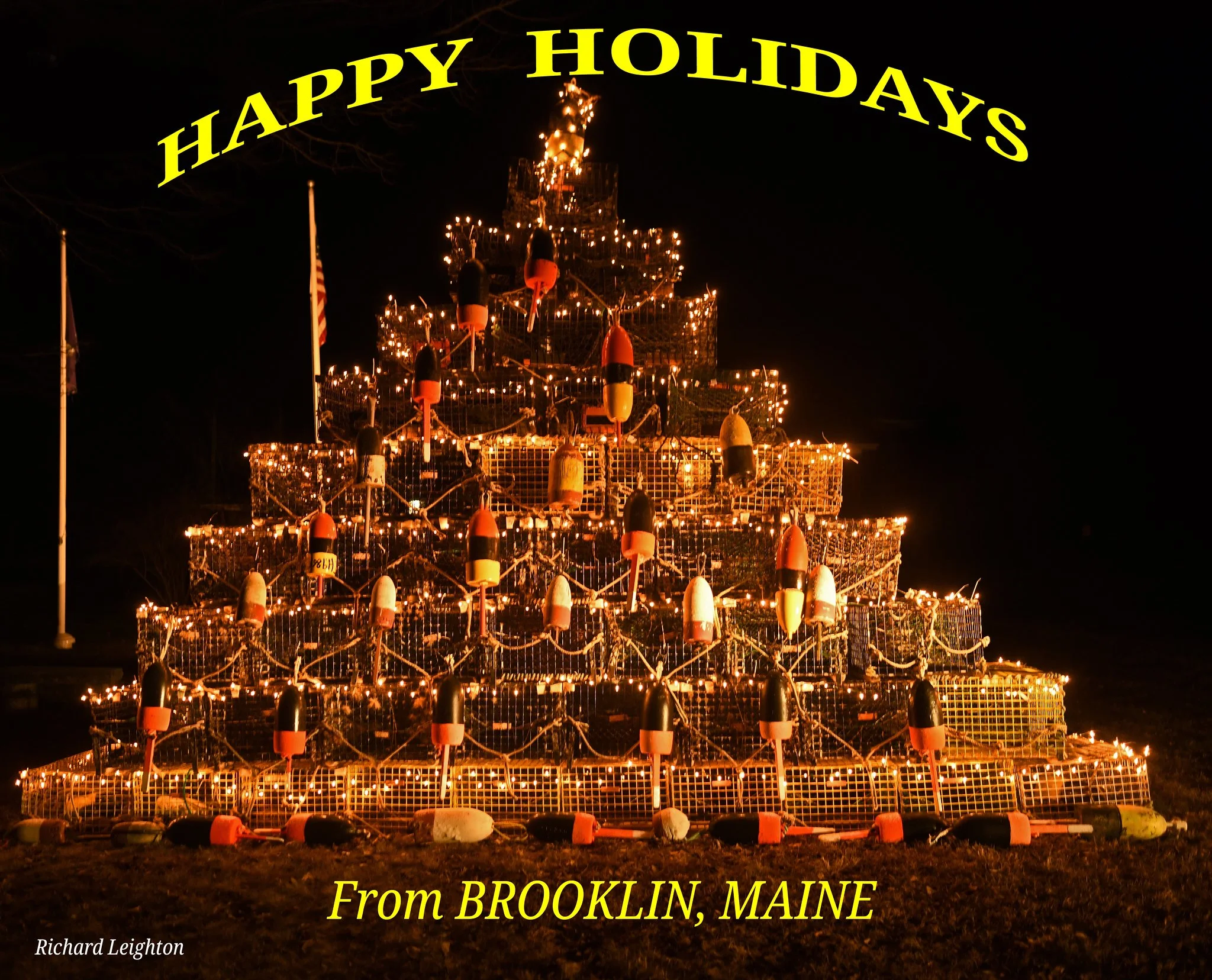
Finished yesterday, the tree is now an eye-catcher made mostly of lobster catchers, local ones at that. It also may be a motivator for Brooklinites to create Holiday cards – at least one Brooklinite, anyway, as you see.

The trap tree is located on the Town Office lawn. Travelers of Bay Road won’t be able to avoid seeing it and thinking: “Buoy oh buoy, what a place!”
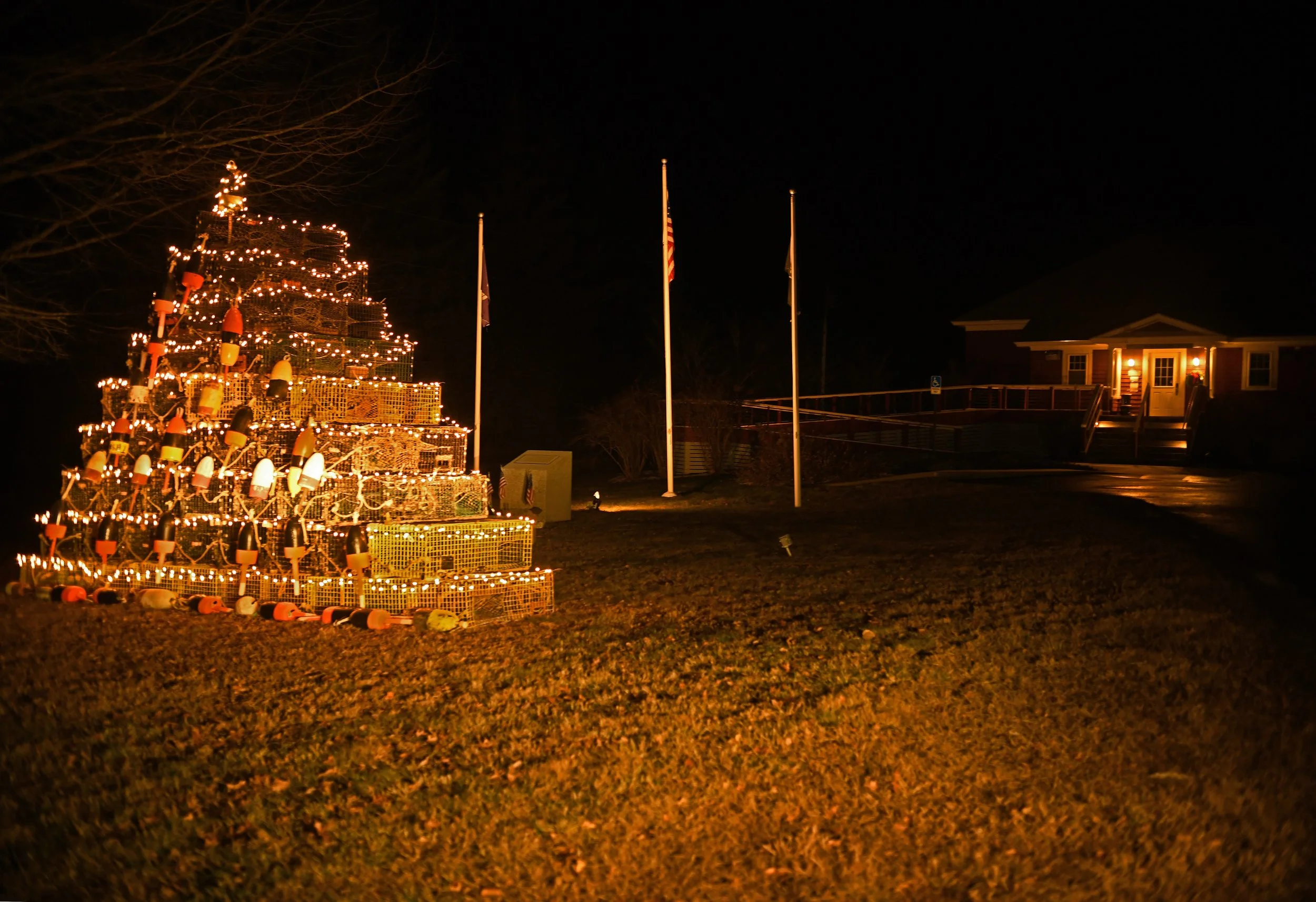
(Images taken in Brooklin, Maine, on December 6, 2025.)
Comment

Comment

In the Right Place: Life with Bernie & Bernice, IX

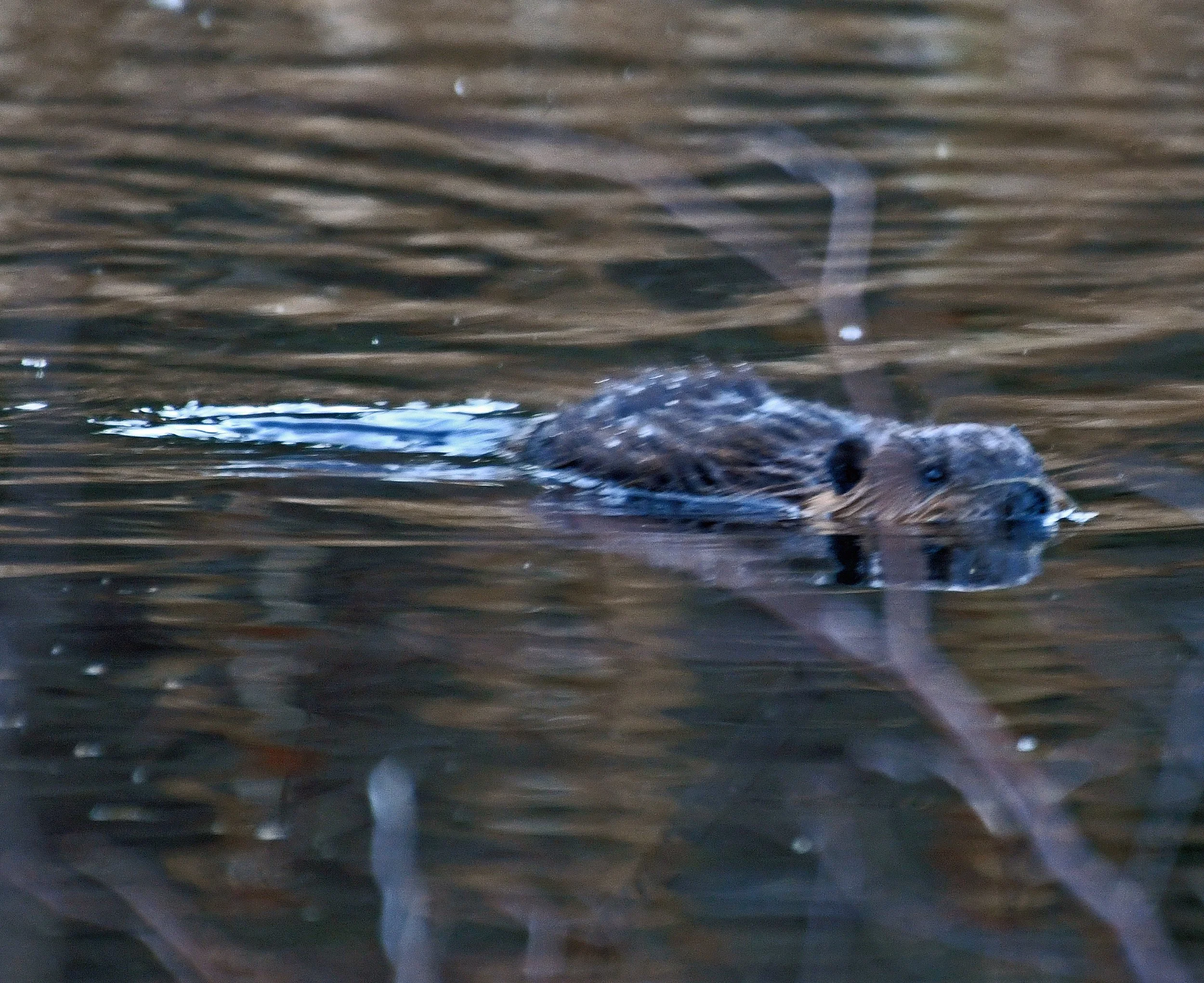
Here’s a video of Bernie & Bernice in a rare daylight outing on Tuesday. It was taken by our renowned neighbor David Porter, who was in the right place at the right time and (as usual) knew what to do when doing had to be done. Thanks, David.

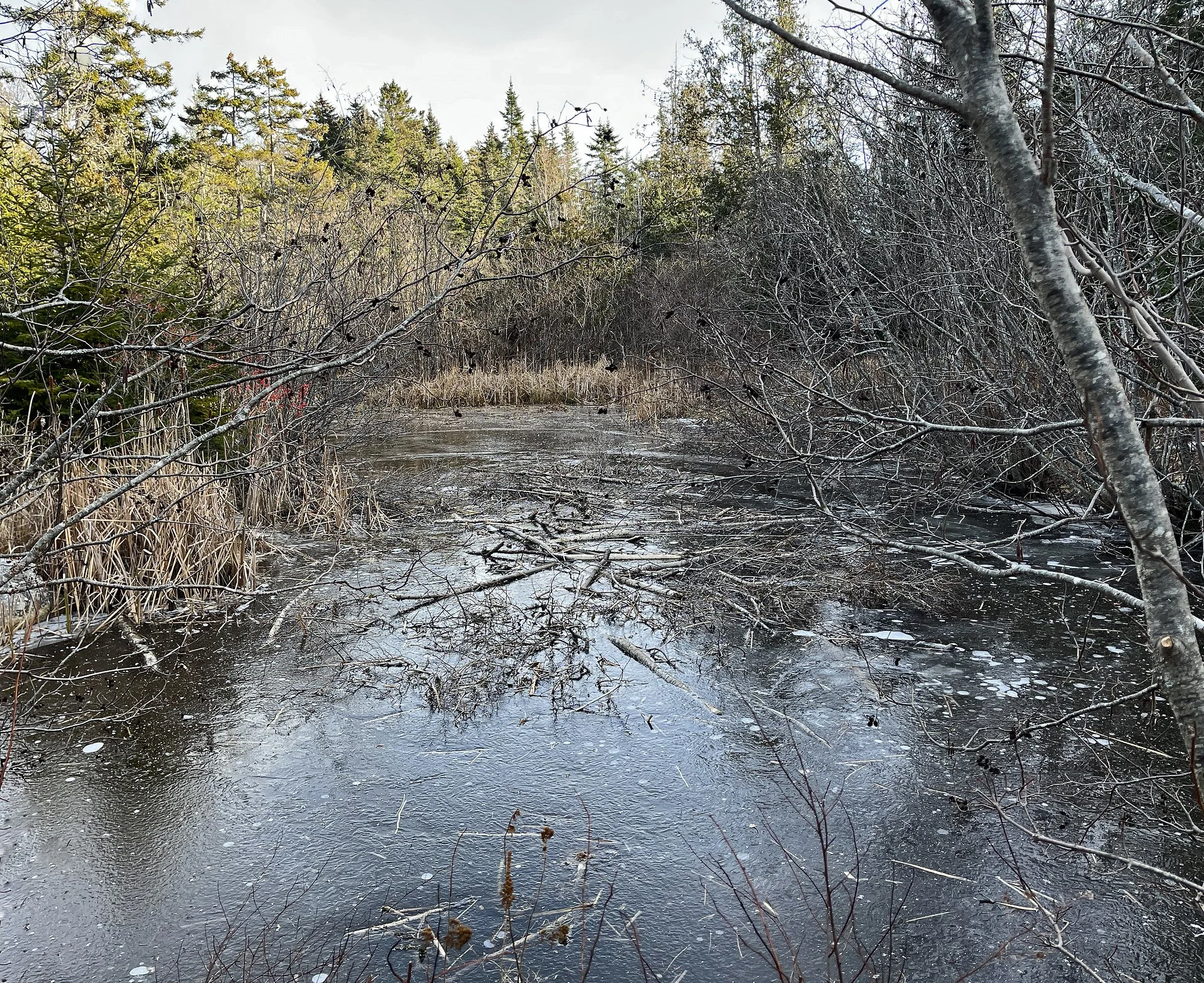
Our favorite American beavers may have been working overtime Tuesday to get more done before the pond iced up. If so, they didn’t make it, as you’ll see from the image below of the pond yesterday. Yet, B&B’s beaver building mess keeps getting bigger and messier.

As of yesterday, their construction site looked like an ice-encased tornado target. I suspect that B&B have a snug burrow on the island in the middle of this pond as their headquarters. It’s going to be interesting to see how the ice affects their lodge-building.

By the way, apparently a beaver home is only called a lodge when the beaver moves up in life from a burrow to a larger domed, two-level model made of surrounding trees, branches, mud, and rock, with entrances below the water line – and with or without a beaver ballroom.

If Google is correct, the word “lodge” originated from an ancient word meaning "shelter of foliage" and evolved to describe a small, temporary building or hut. Over time, its meaning expanded to encompass various types of specific-purpose and, later, grand structures. (Images taken in Brooklin, Maine, on December 2 [video] and 5 [still], 2025.)
Comment

Comment

In the Right Place: Moonlight Department

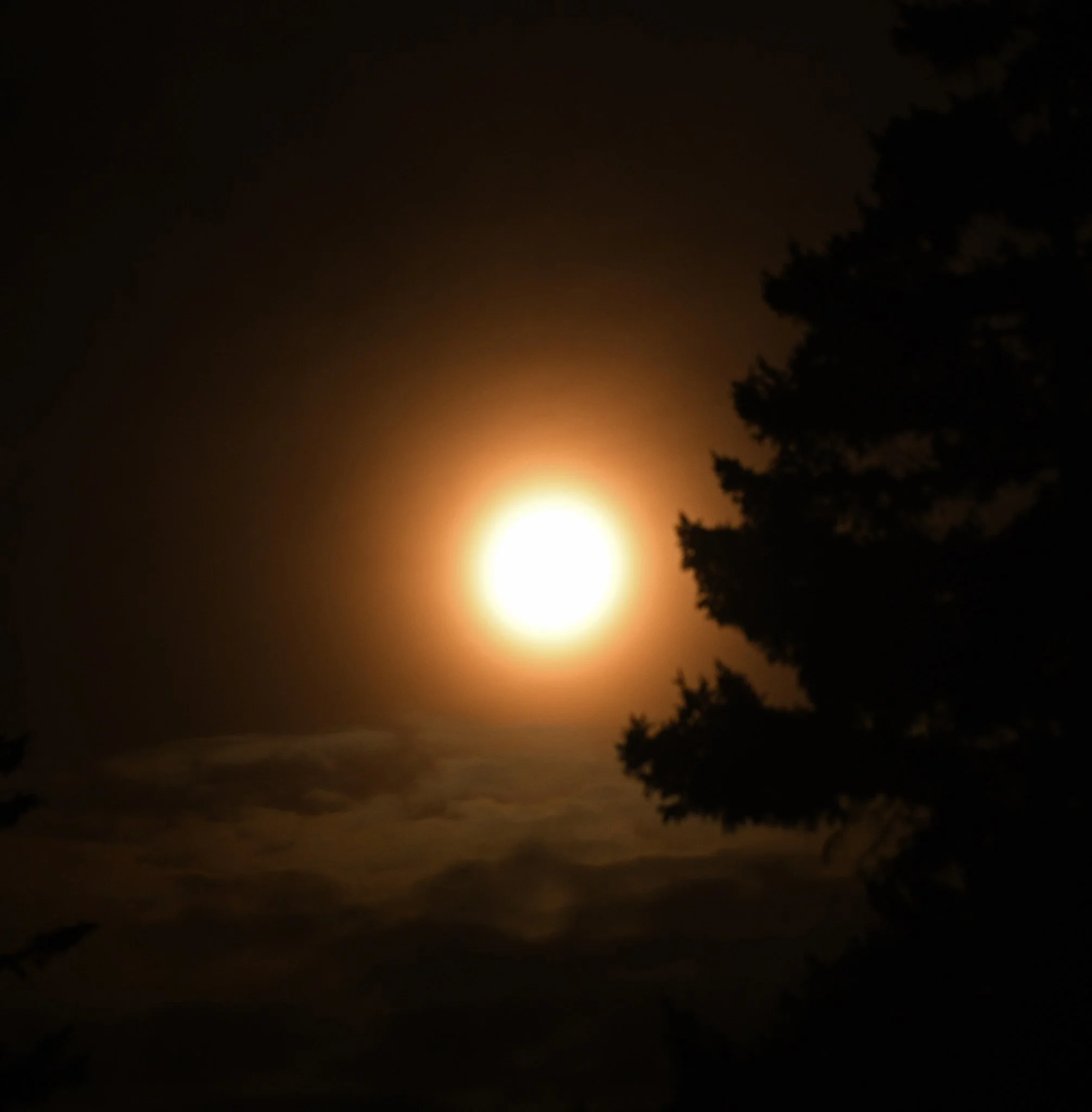
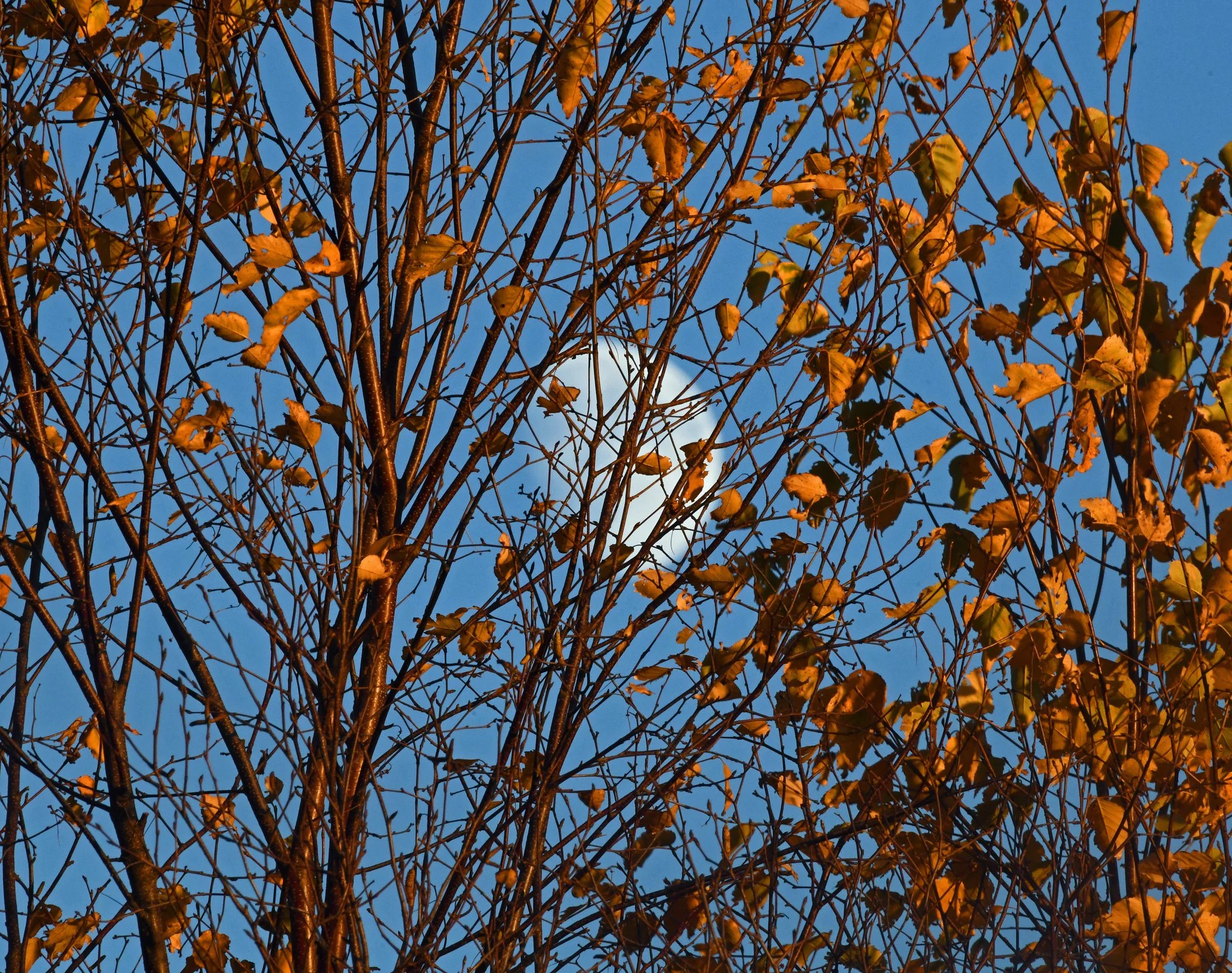
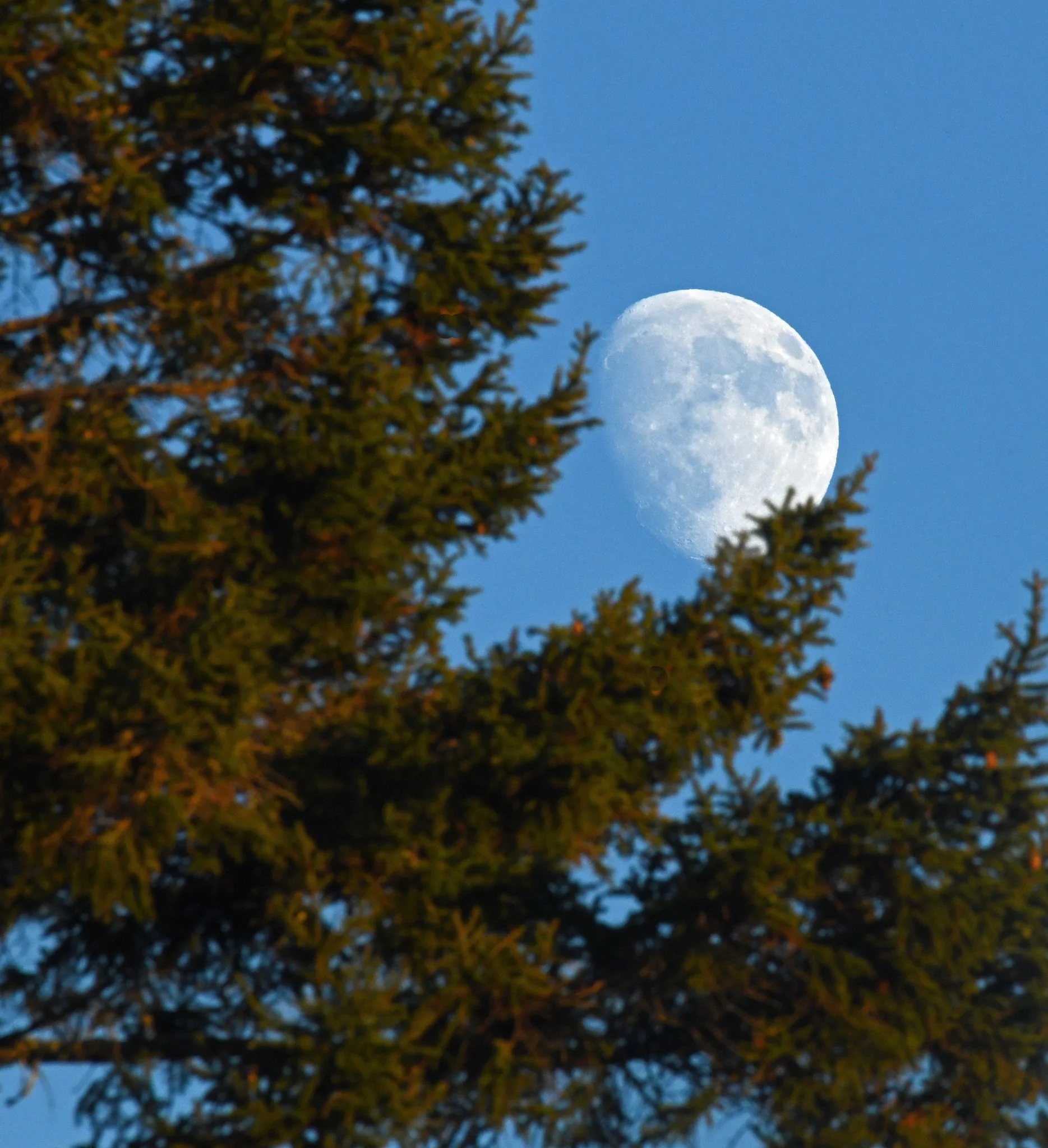
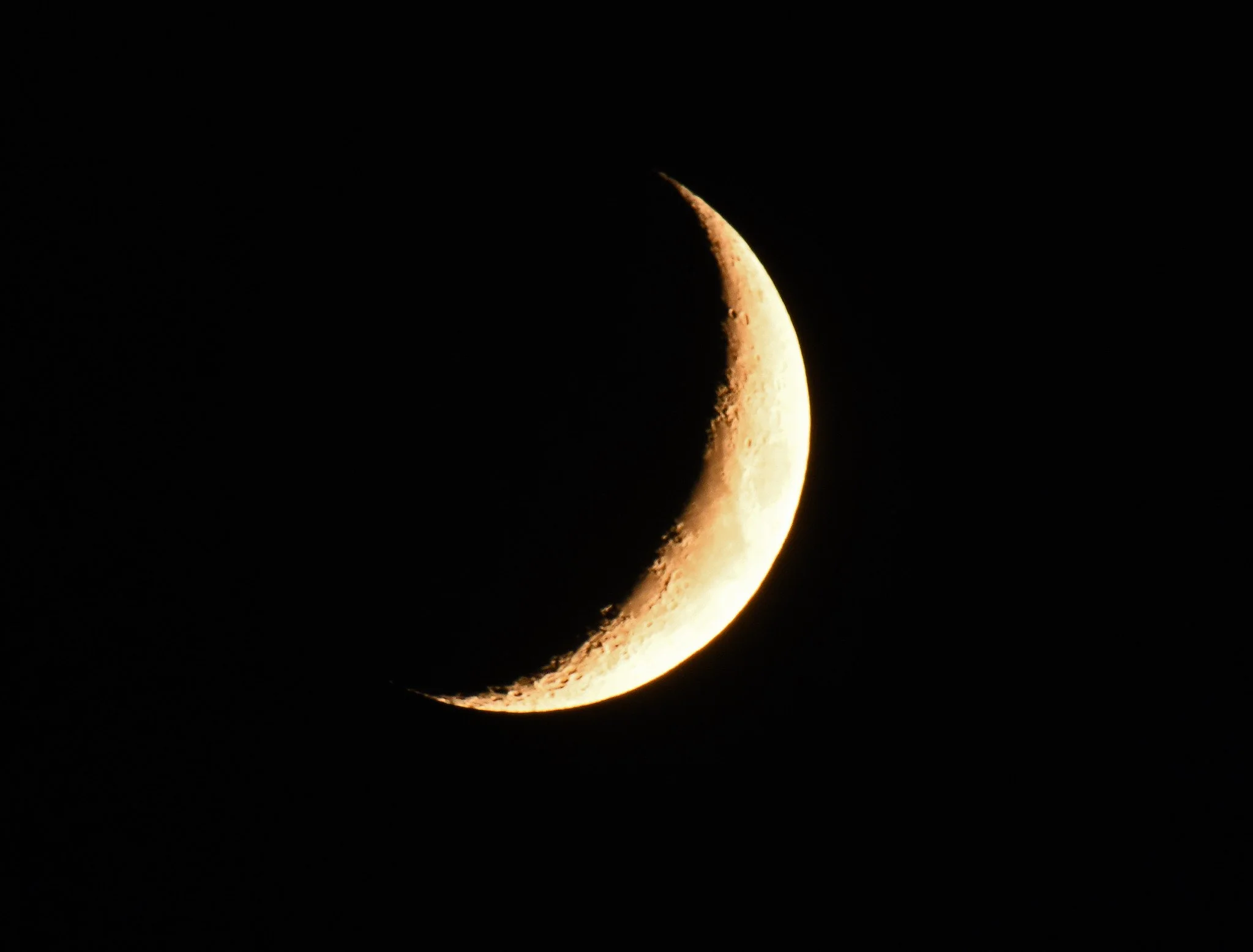
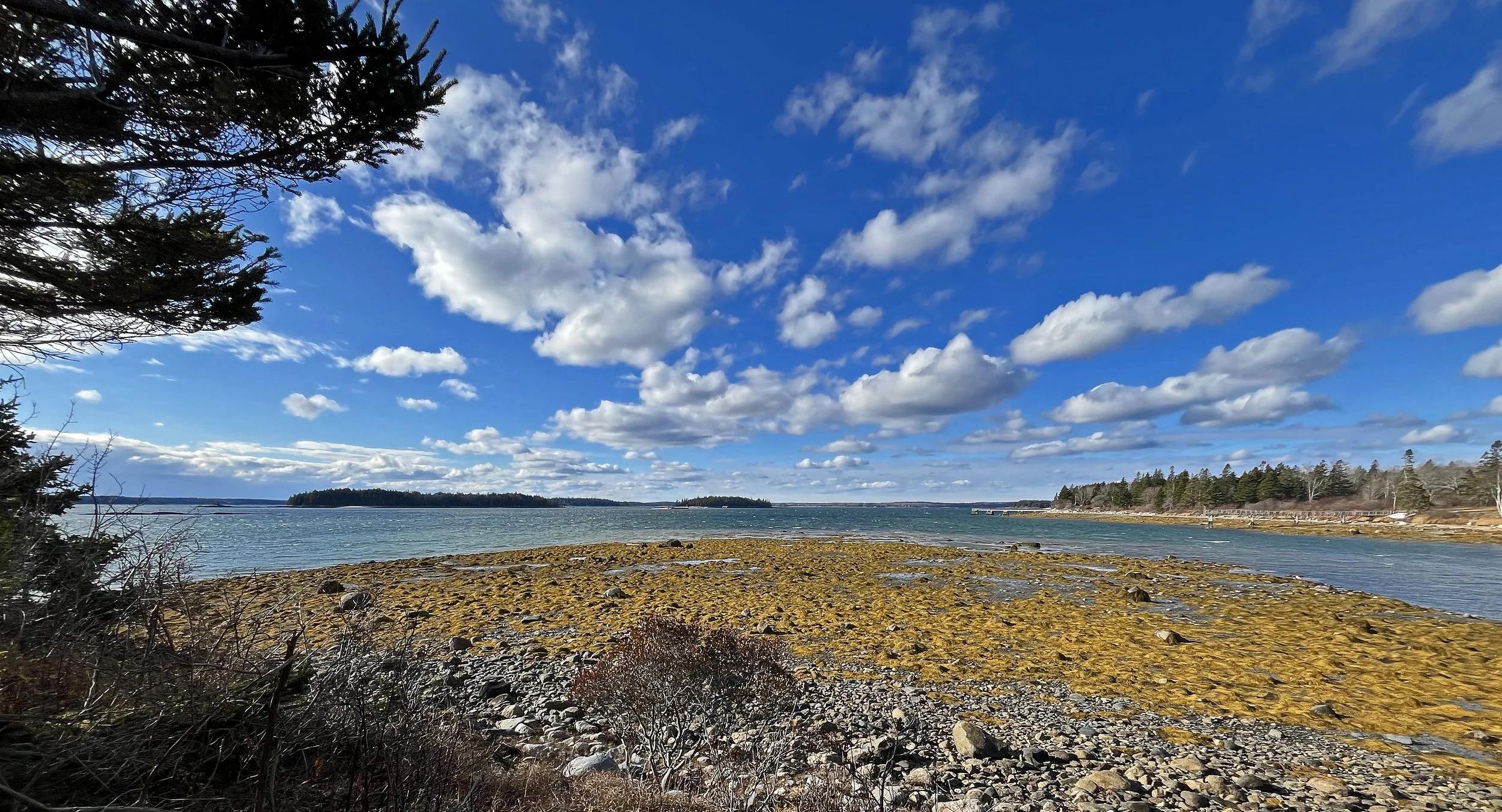
Here you see yesterday’s full supermoon moon with a wonderful lunar halo rising over Eggemoggin Reach at about 6 a.m. Such halos apparently are caused by the moon's reflected light bending out (“refracting”) through prism-like ice crystals in high-altitude cirrus clouds. Those clouds are somewhat visible in this longer shot:

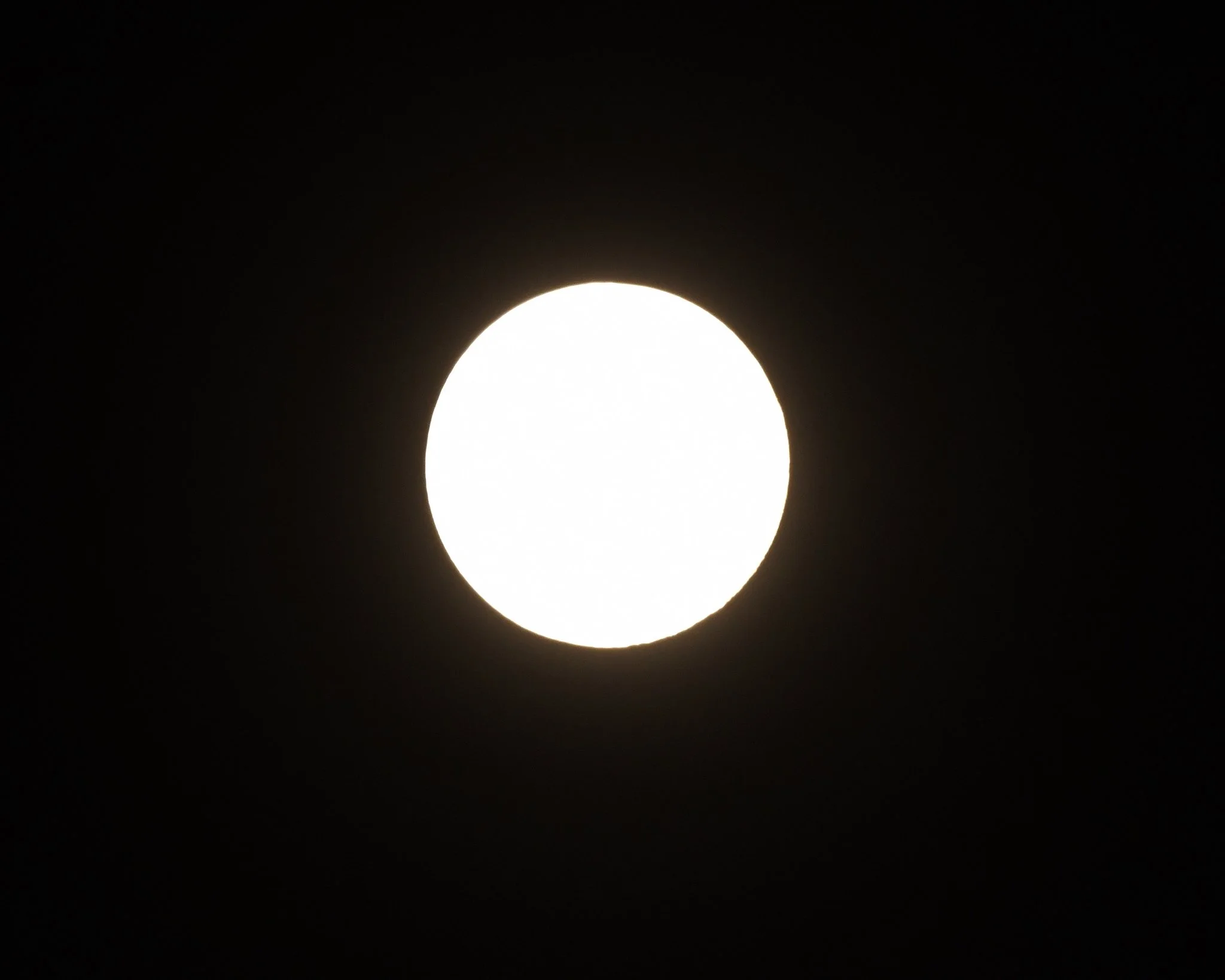
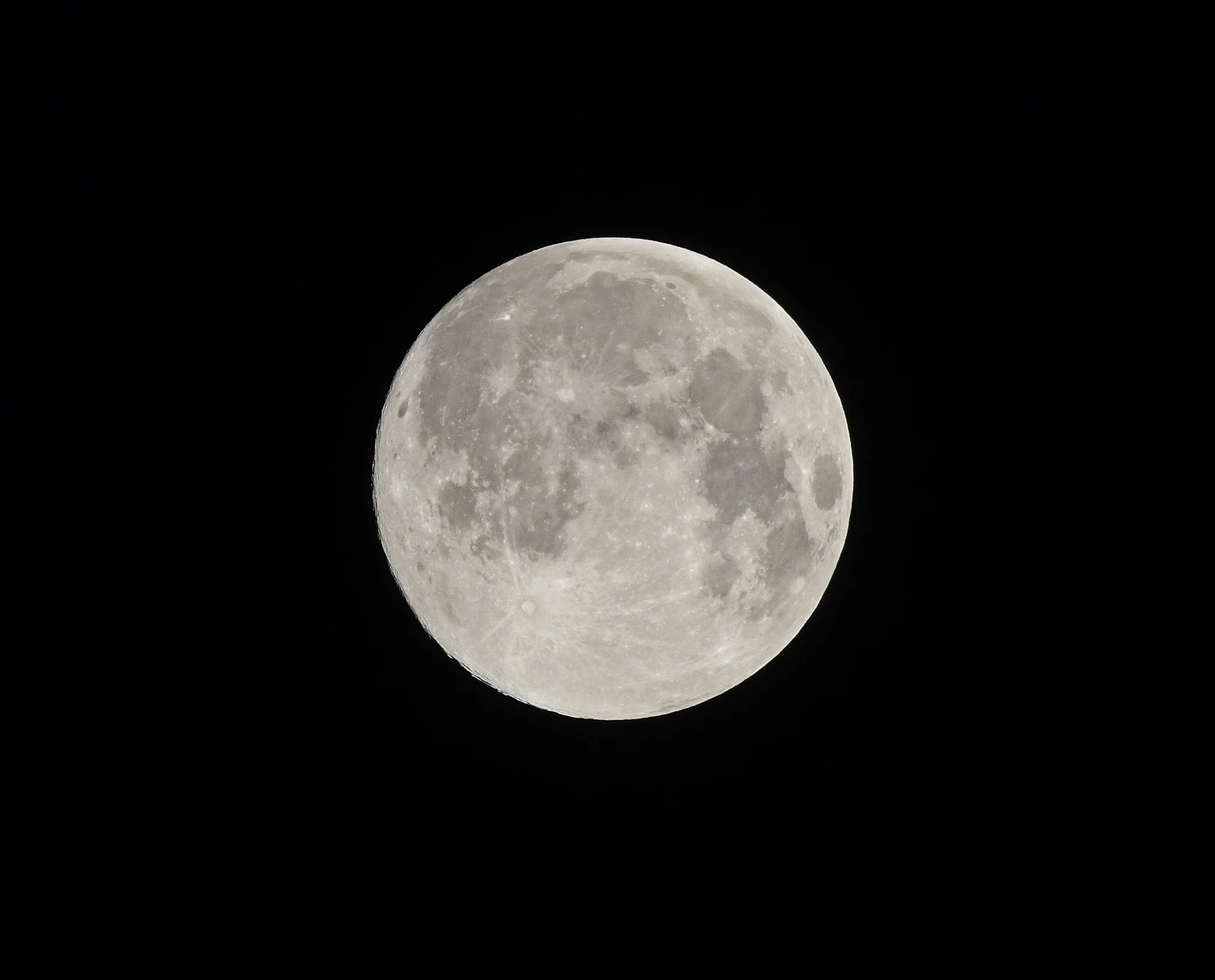
The subsequent evening full moon rose into a clear sky and did not have a halo:

The December full moon is mostly called the Cold Moon. The name originated from Northeast Native American traditions of naming the full moon with a description of the season in which it rises. Among others, the Mohawk people called it the Cold Moon.

The Mohicans called this moon the Long Night Moon because it comes in the time of year when the winter solstice brings us the longest night and shortest day. The Western Abenaki people, in what is now western Maine and other parts of New England, called the December moon the Winter Maker Moon for obvious reasons. (Images taken in Brooklin, Maine, on December 4, 2025.)
Comment

Comment

In the Right Place: So Long, Edgar Allan Poe

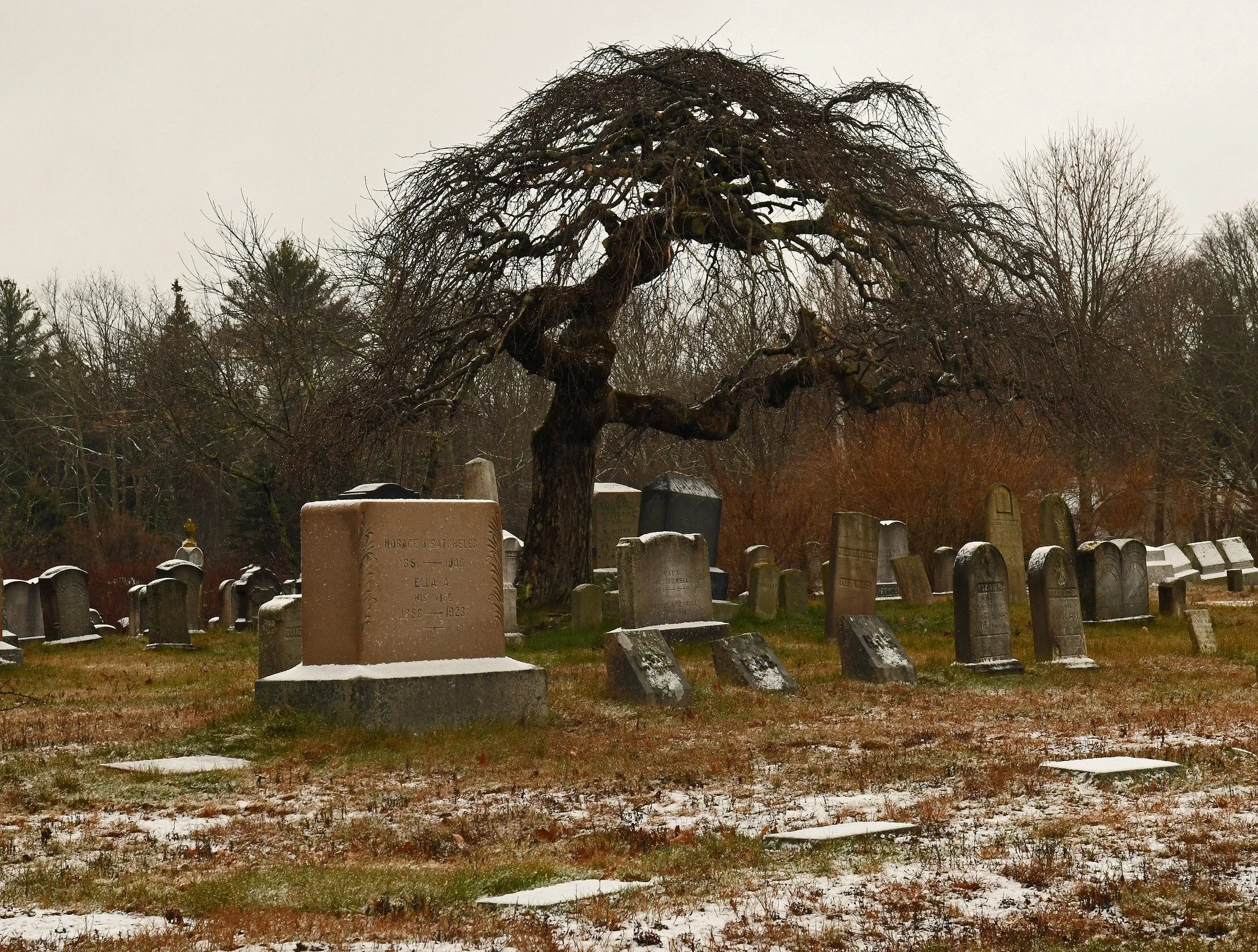
It's not always bright and cheery here. Yesterday was a somber day and nowhere was it more somber than at the Brooklin Cemetery. But days like that are needed by some of us to put the many bright and cheery ones in perspective.

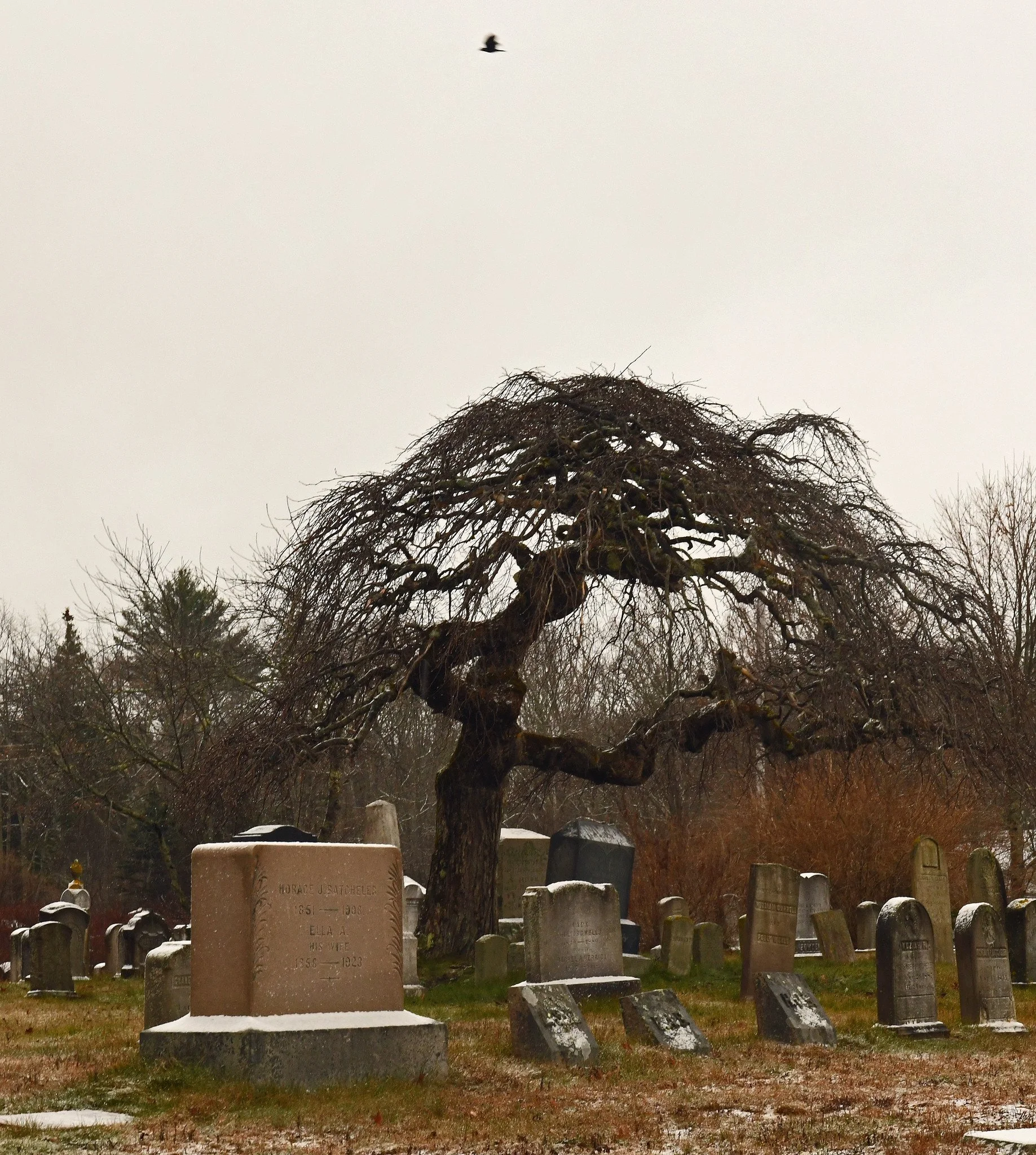
Yesterday, the Camperdown elm stretched her now-bare arms hopelessly, seemingly trying to shelter her assigned souls from a mix of fine snow and rain that was coming out of a silver-gray sky. Overhead, a raven circled high above, a historic sign of the death of a loved one:

A time to be reminded of the realities of life and death. (Images taken in Brooklin, Maine, on December 2, 2025.)
Comment

Comment

In the Right Place: ‘Tis the Season

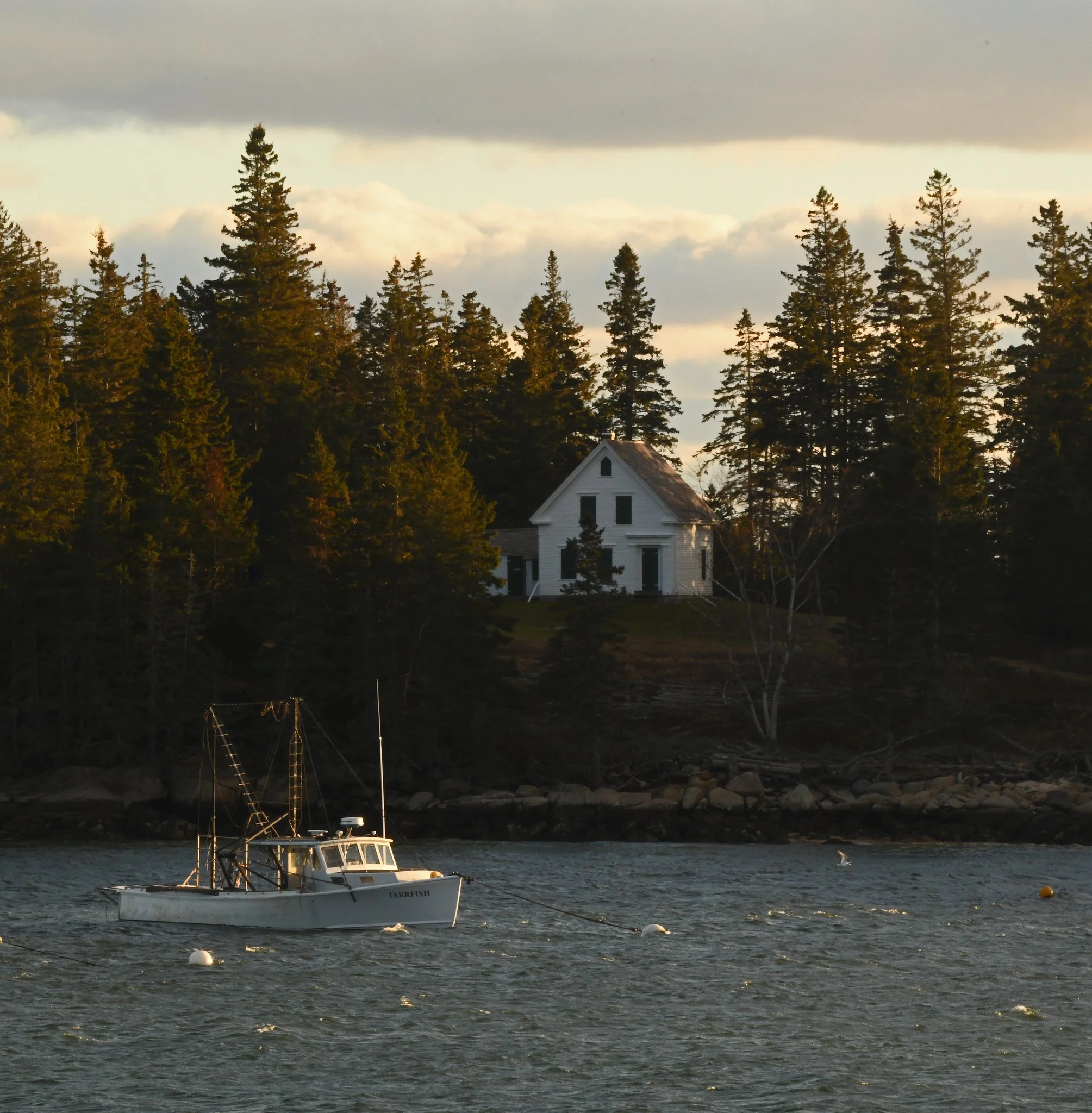
The scallop-dragging season began yesterday in Maine Zone 2, where Brooklin is located. The season for diving in a wetsuit and hand-harvesting the more expensive “diver’s scallops” began in our Zone on November 18.

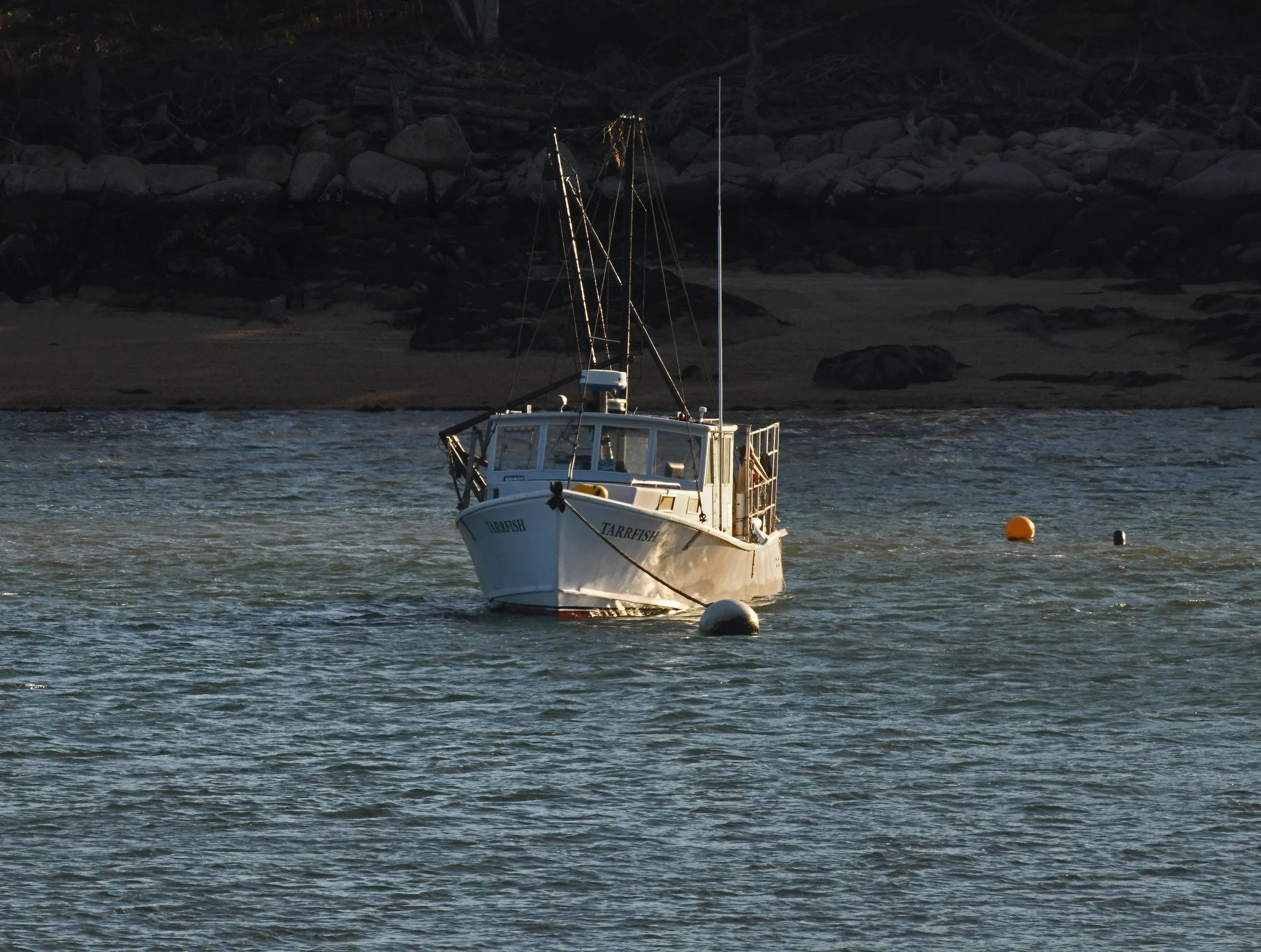
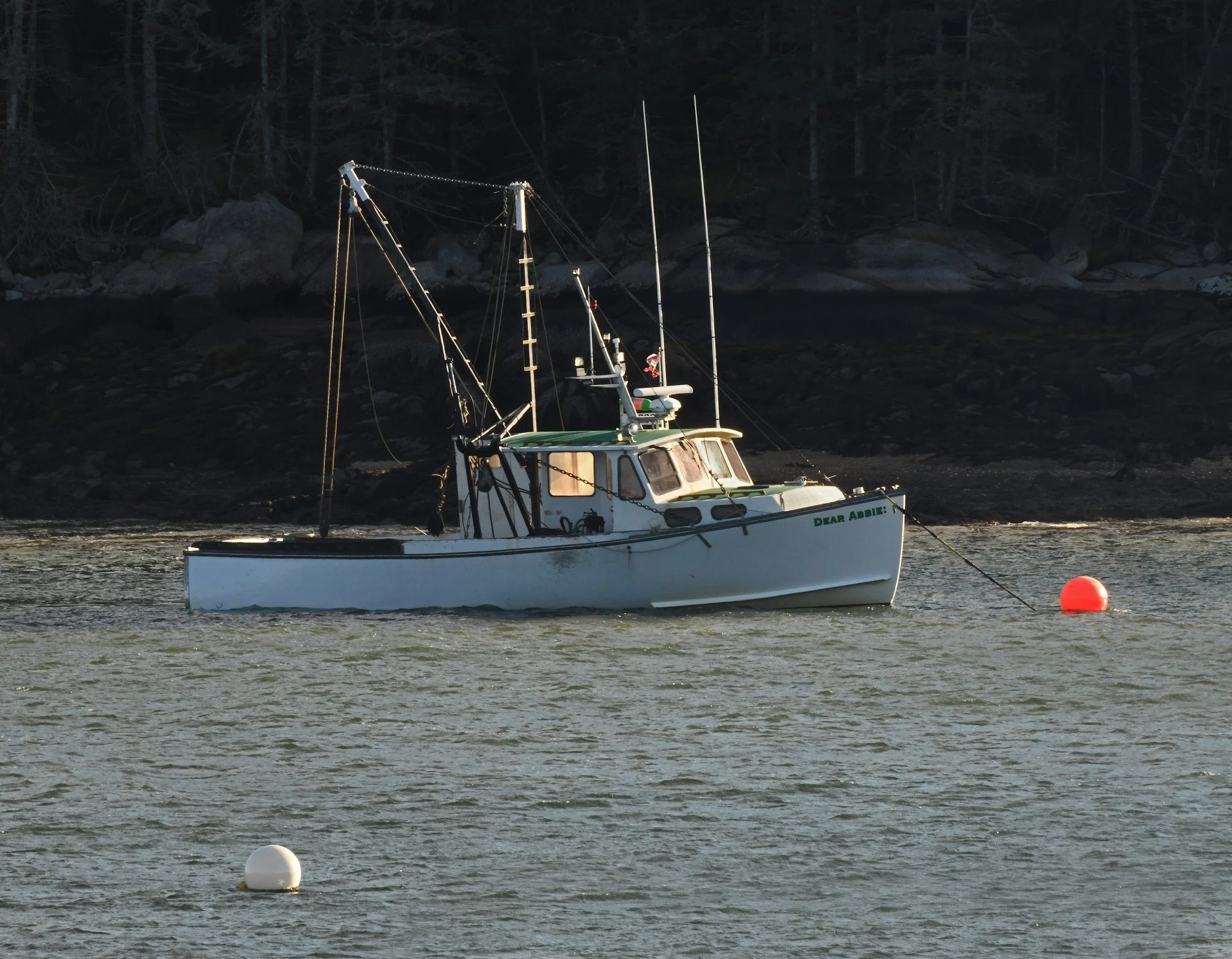
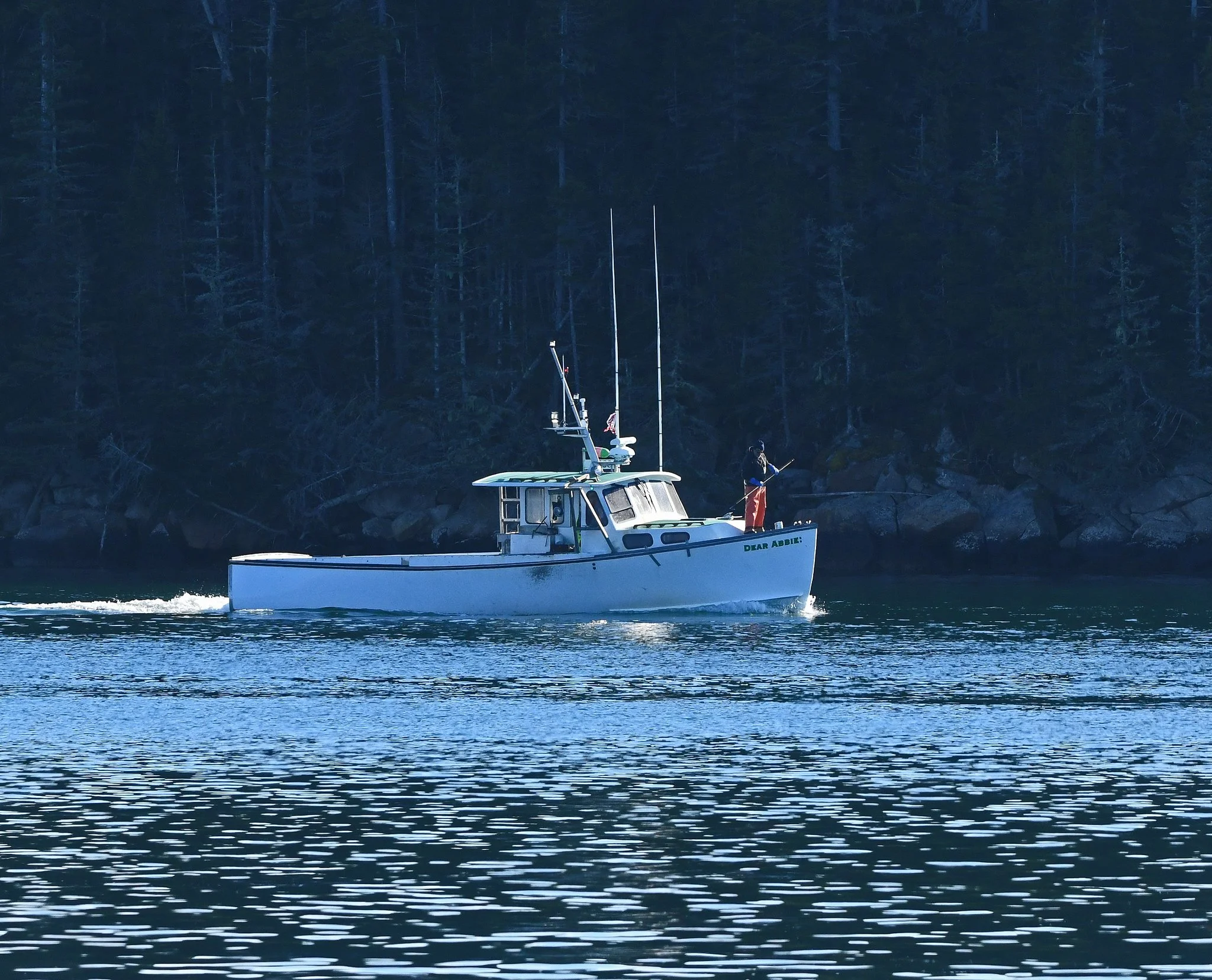
Above, you see Fishing Vessel TARRFISH rigged for scallop-dragging, with a mast, boom, winch, and “drag” (a pursenet dredge that scoops scallops up from the sea bottom). The boat’s owner, David Tarr, also dives for scallops. Below, you’ll see FV DEAR ABBIE: also newly rigged for scalloping.

(Images taken in Brooklin, Maine, on December 1, 2025.)
Comment

November Postcards From Down East Maine

2 Comments

November Postcards From Down East Maine

November is when we ease from the colorful autumn into the darkening winter. Some of October’s colors and golden light leave here late and brighten the shorter days and some of December’s chilling winds and brilliant skies arrive here early to make the transition easier.

There are fewer people here in November, which can make it a time of increasing closeness and introspection – such as being grateful for family and friends at a crowded table on Thanksgiving, yet enjoying walking alone along a deserted water’s edge. It's also a time to send postcards to family and friends to tell them that we “Wish You Were Here” or are “Glad You Were Here” in November.

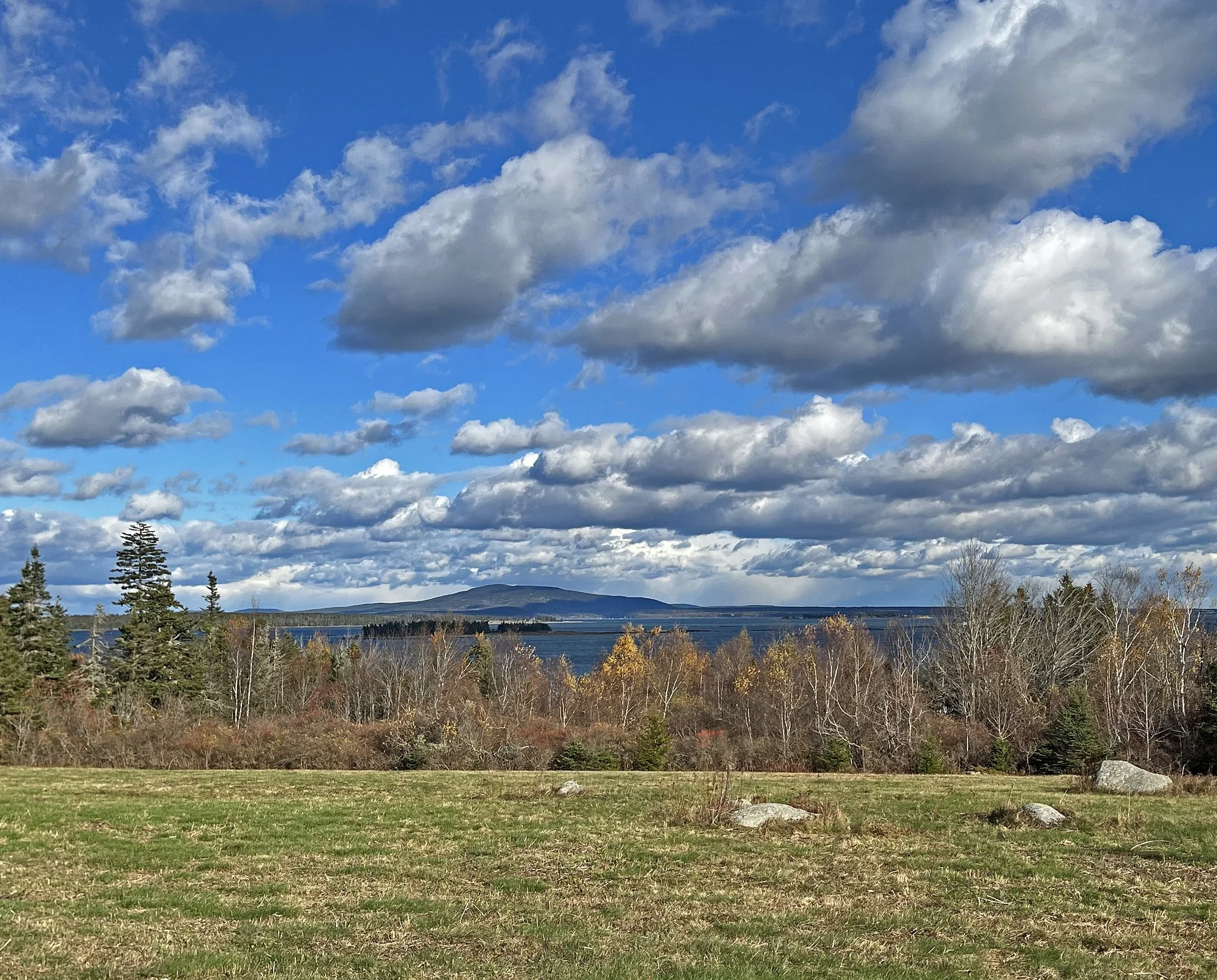
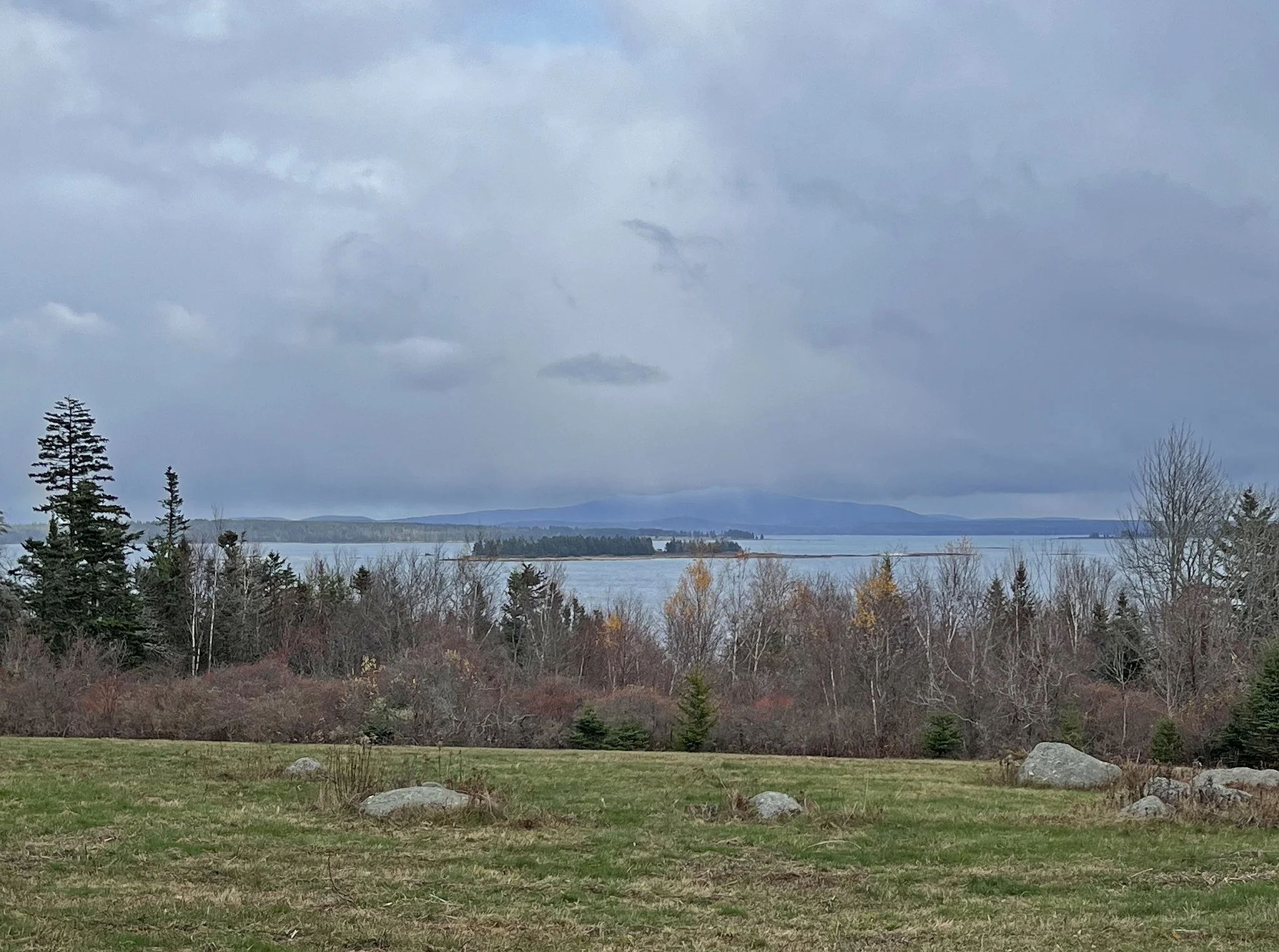
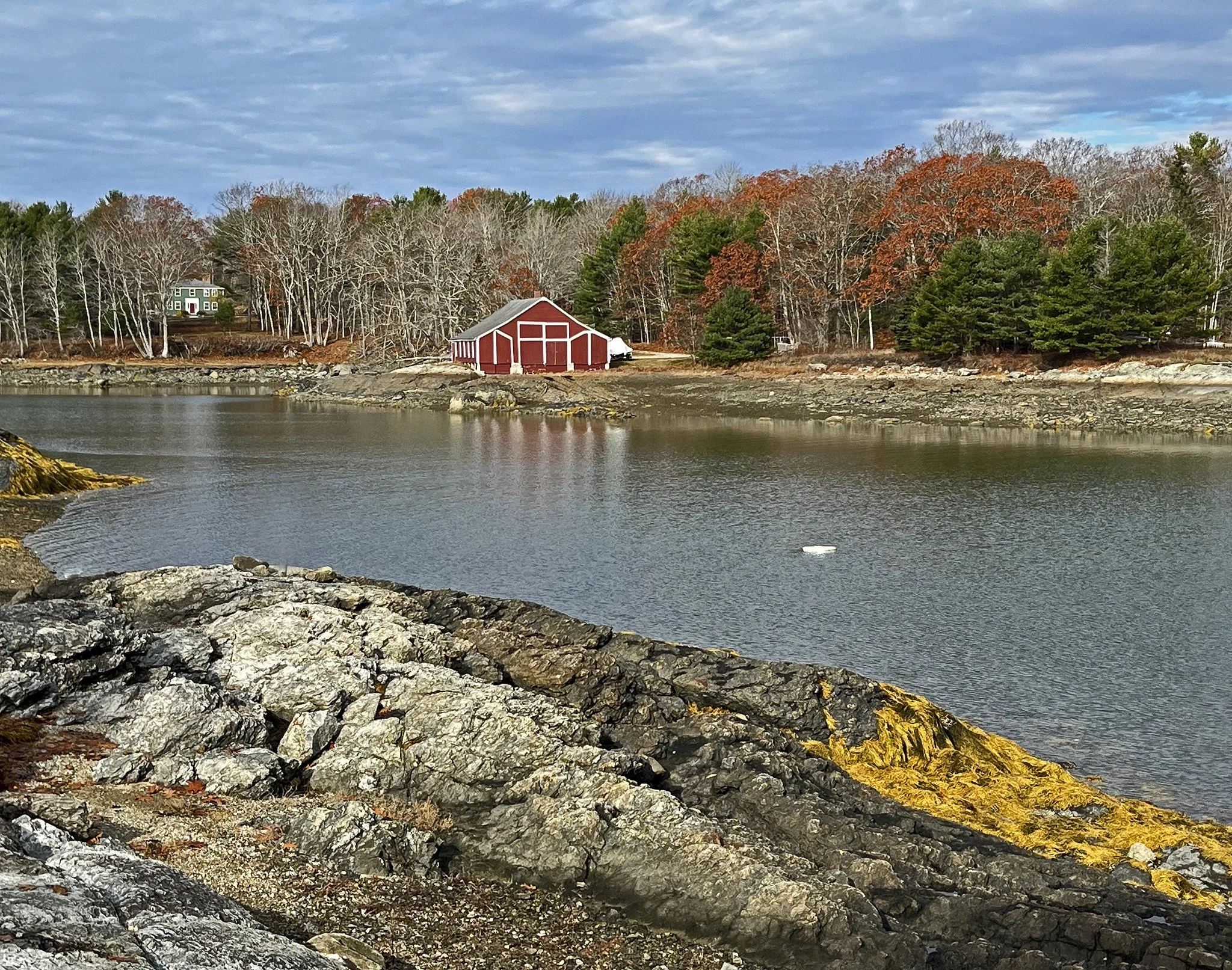
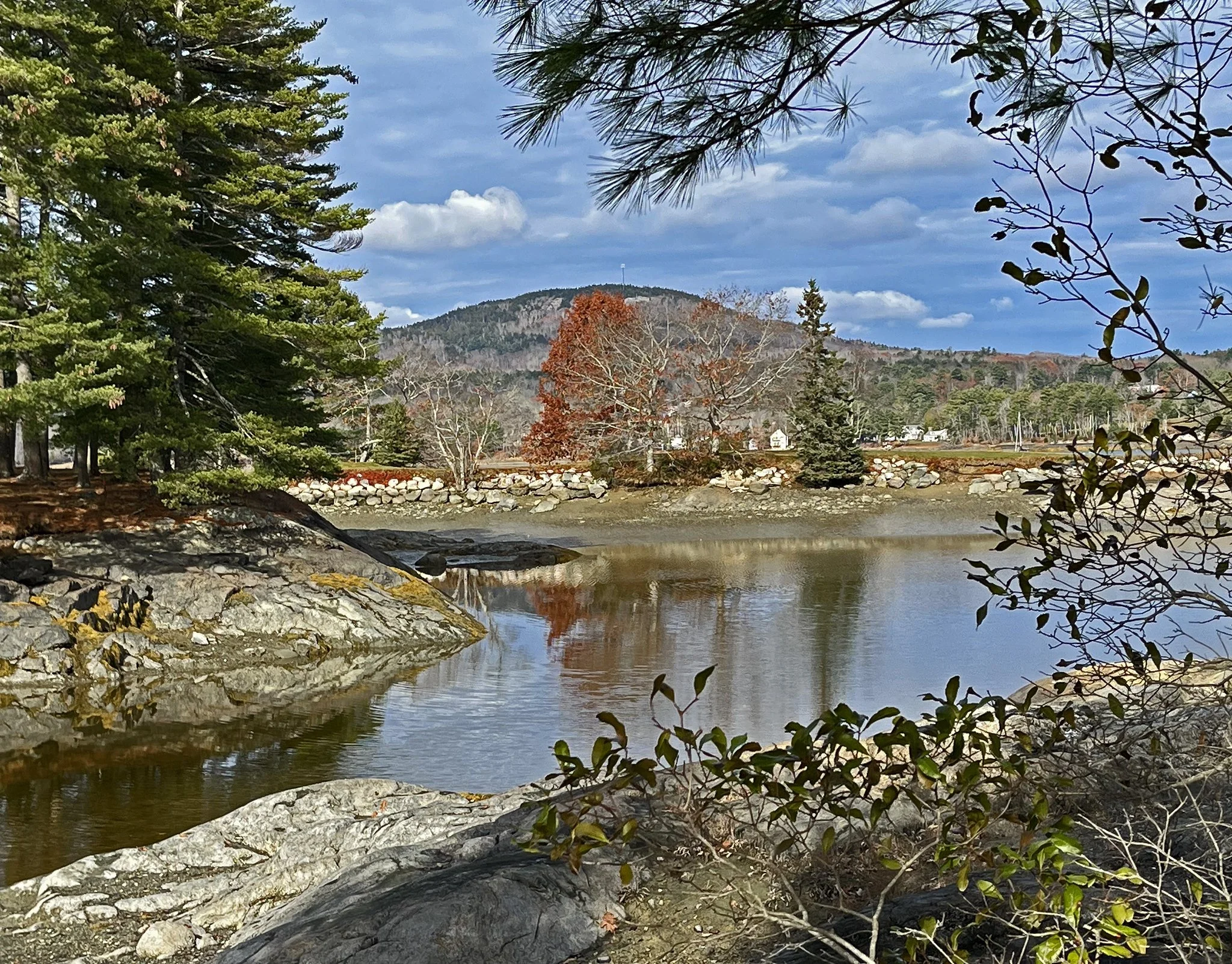
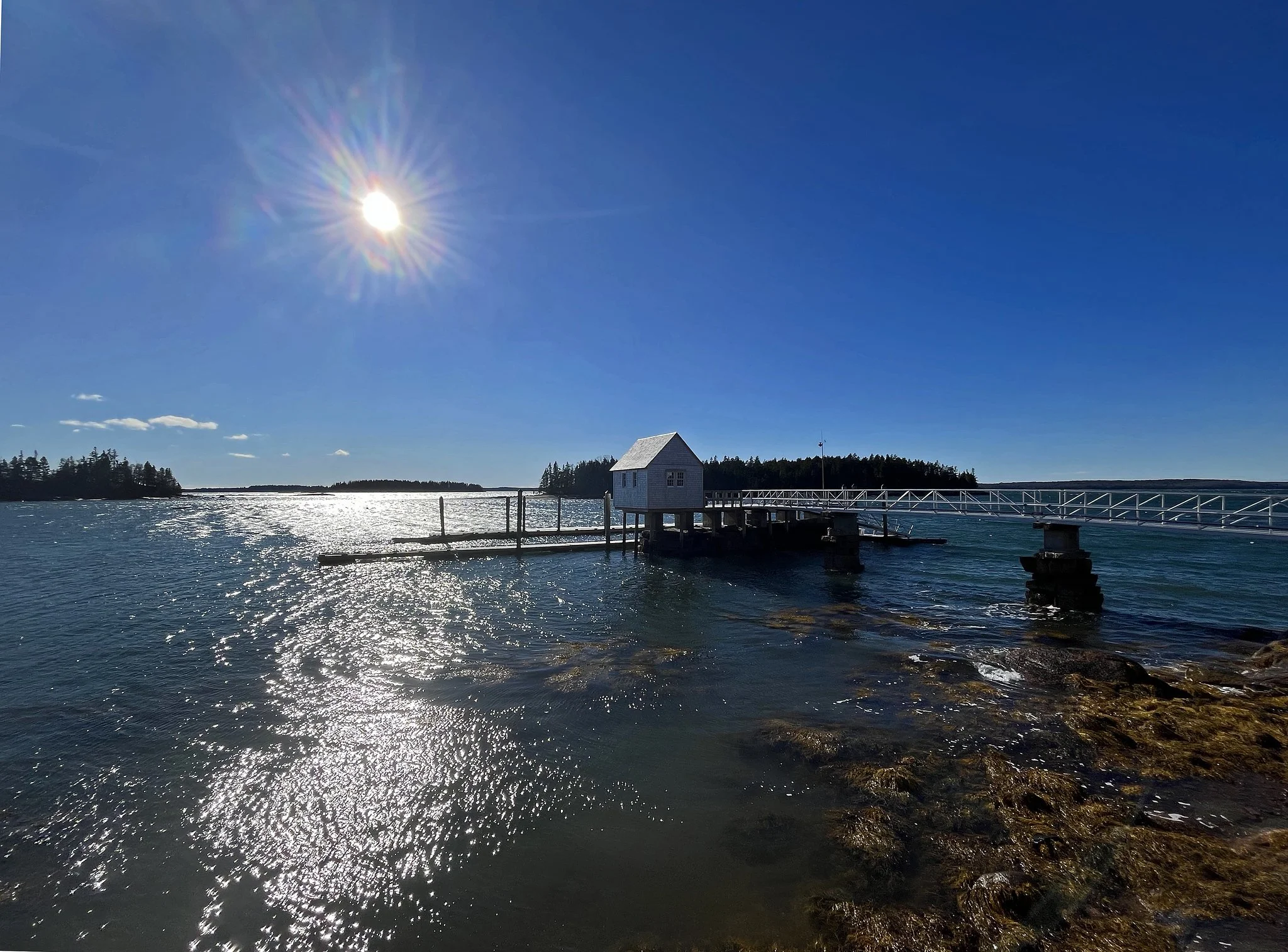
As usual, we’ll start with images of the four iconic scenes that we monitor monthly for you: The Harbor Island summer house overlooking Naskeag Harbor; the western mountains on Mount Desert Island (in sun and fog this month); the old red boathouse at Conary Cove, and the near-mountain called Blue Hill looming above Blue Hill Bay:

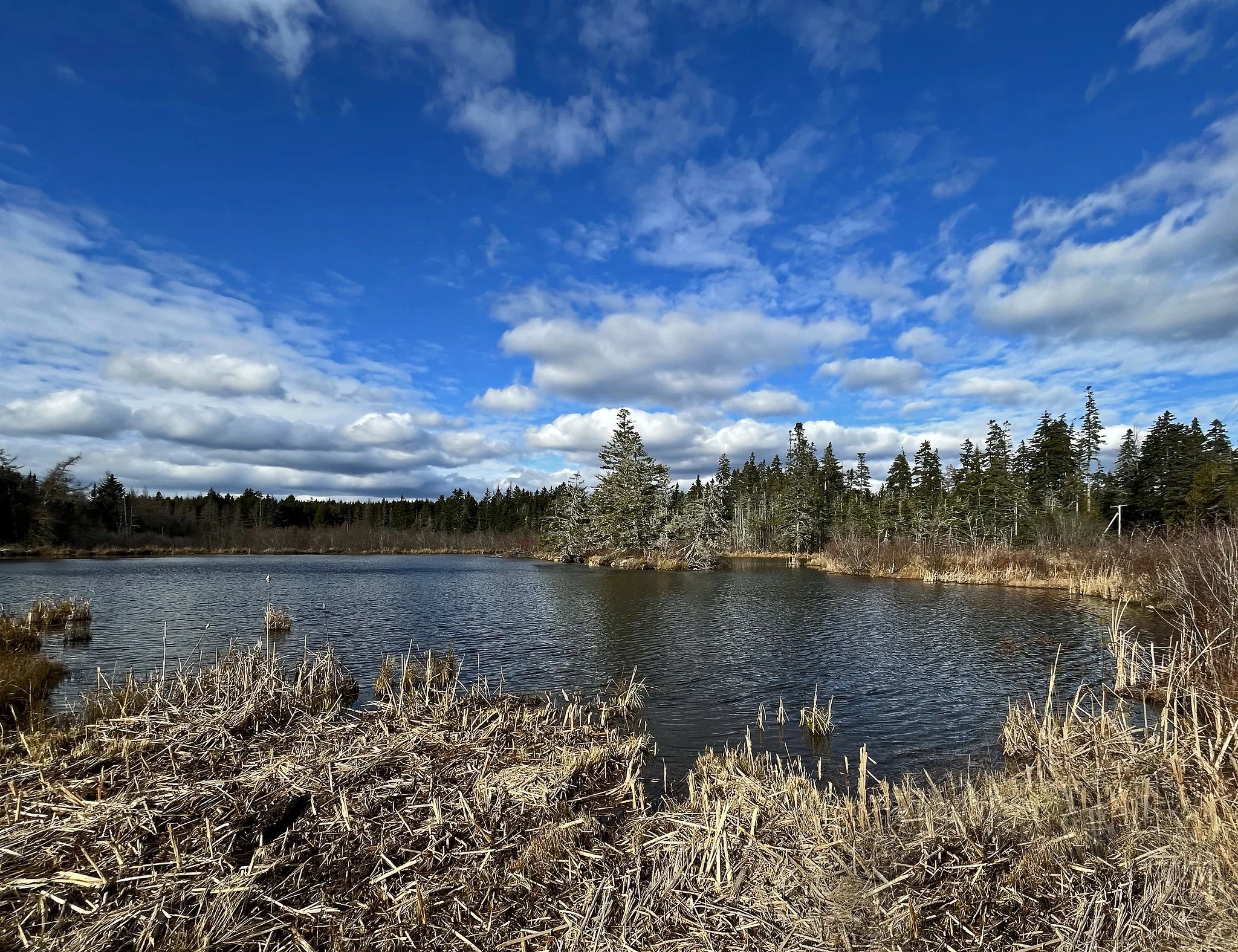
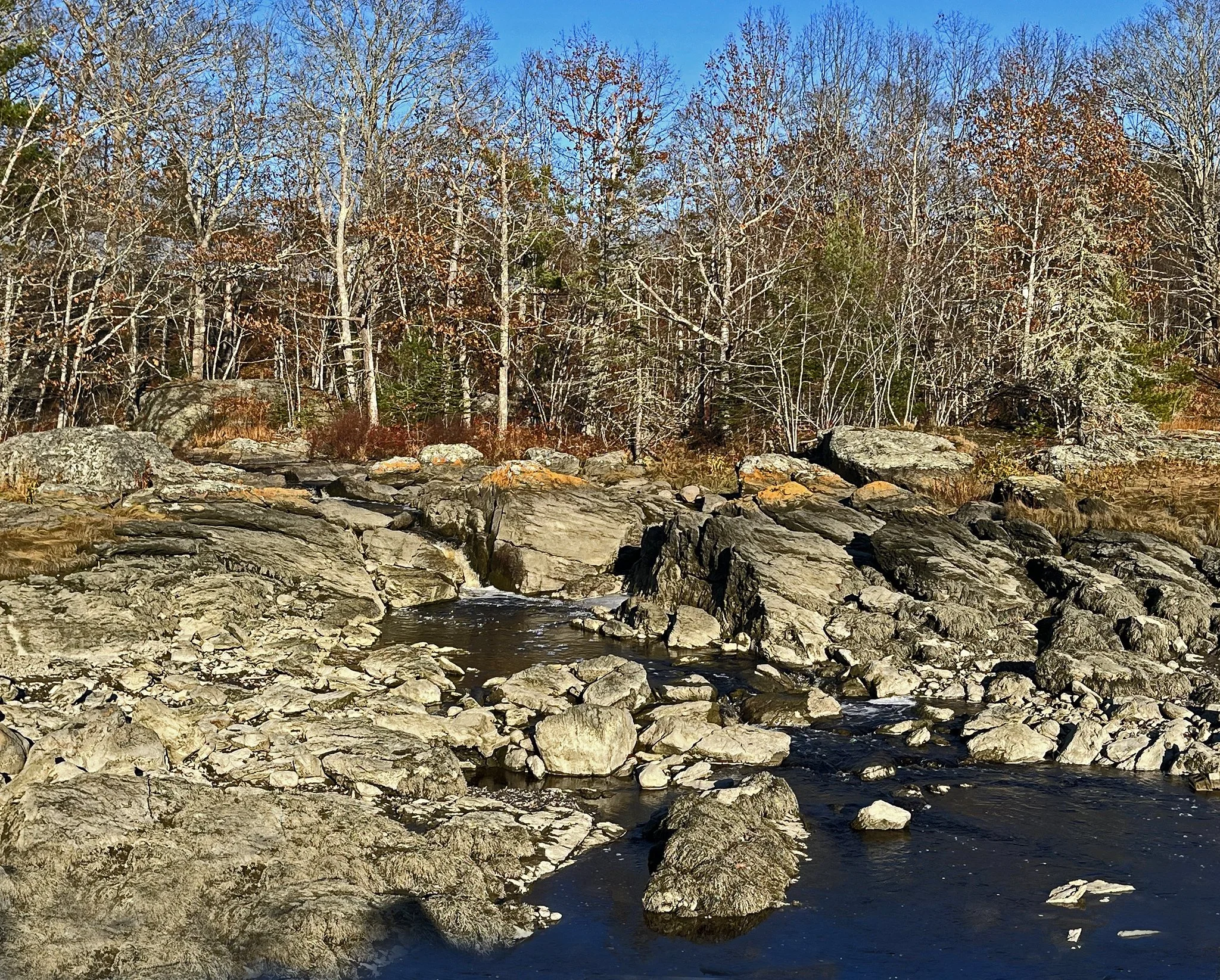
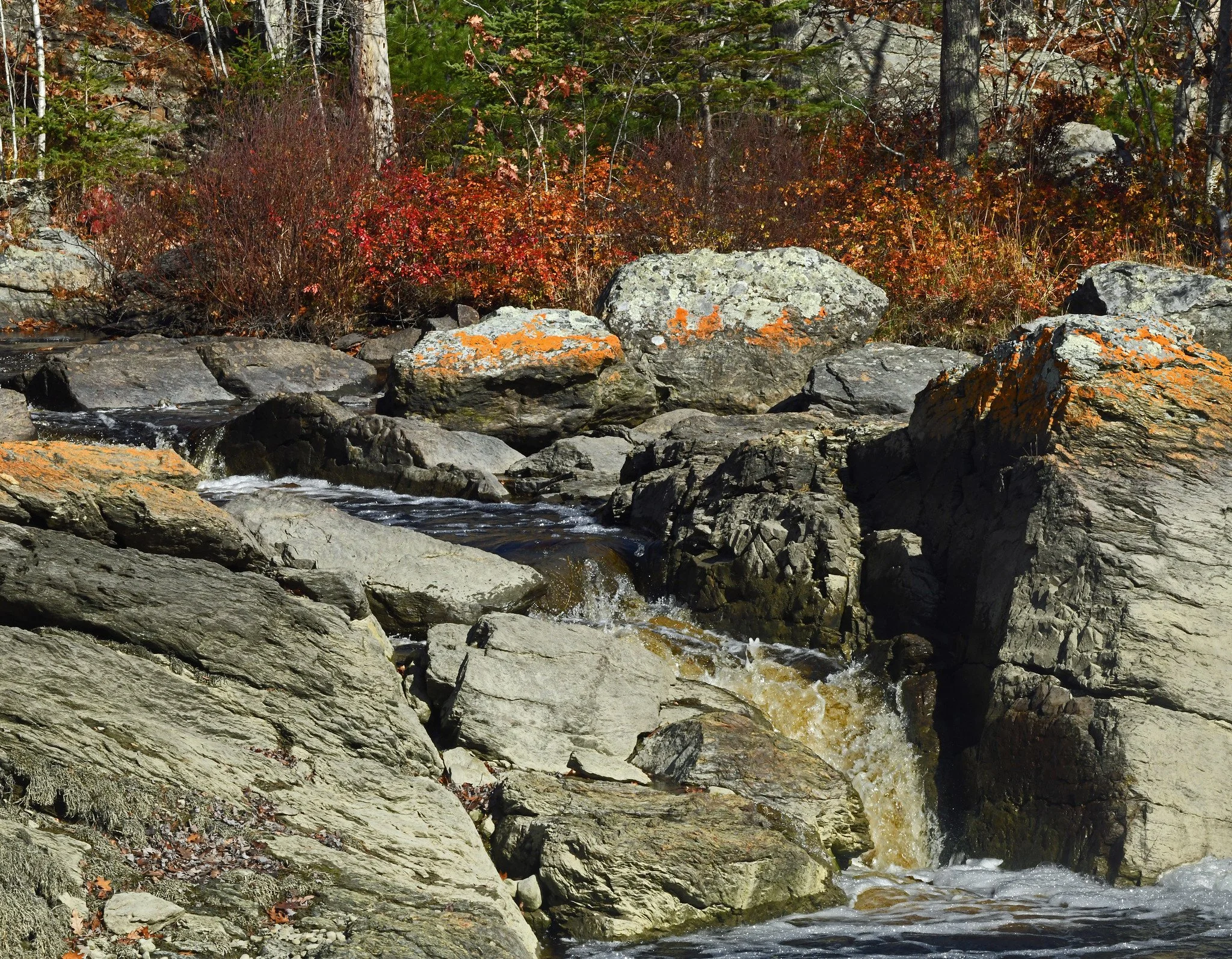
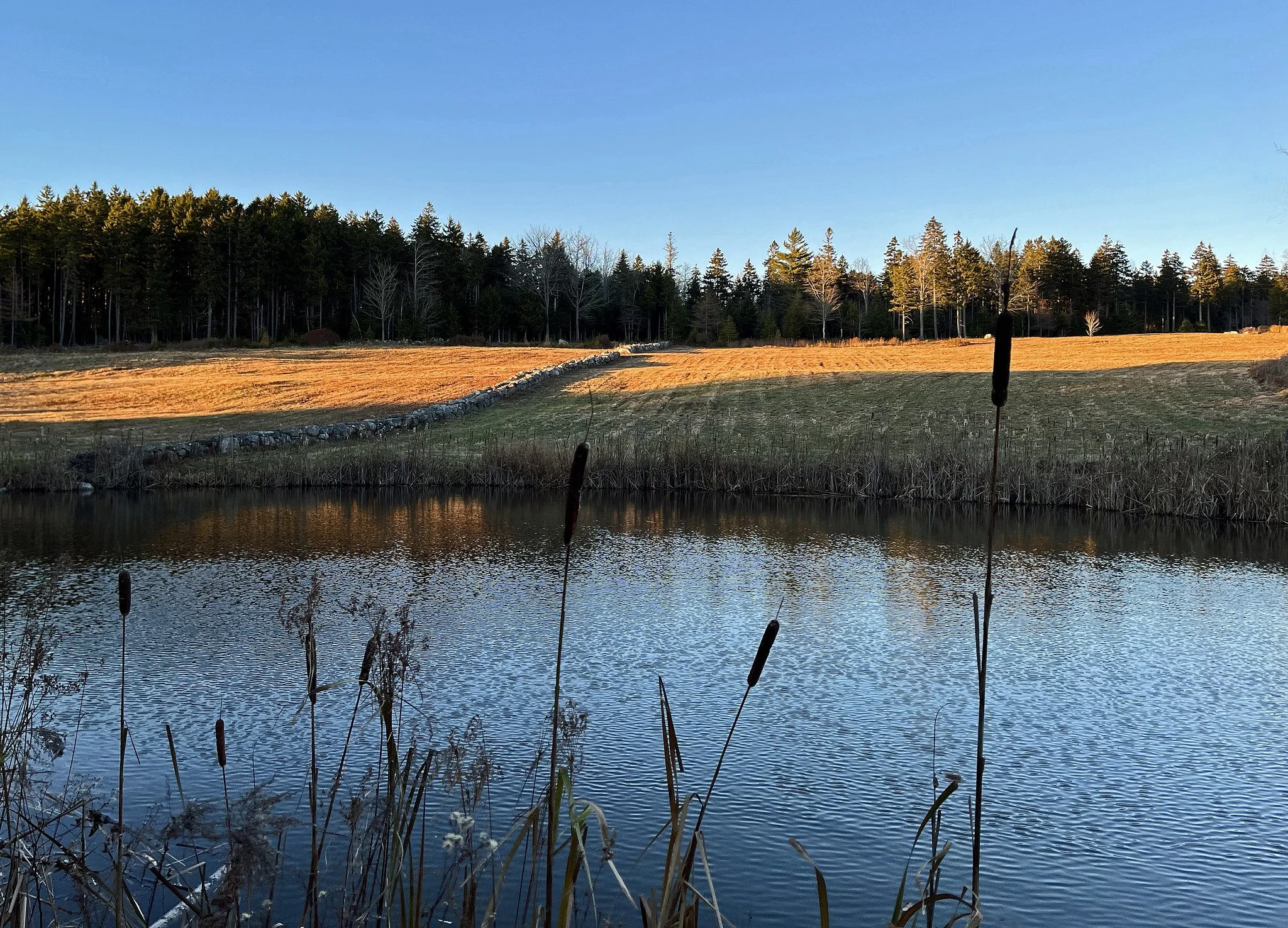
The November woods and fields were dry, the ponds lower, and the streams slower. We’ve been suffering from a drought for months, but there was beauty almost everywhere:

As for November’s flora, that drought and climate warming apparently contributed to one of the most colorful winter months that we’ve ever had, including the blood-red Japanese maple in the title background. Let’s begin with the trees.

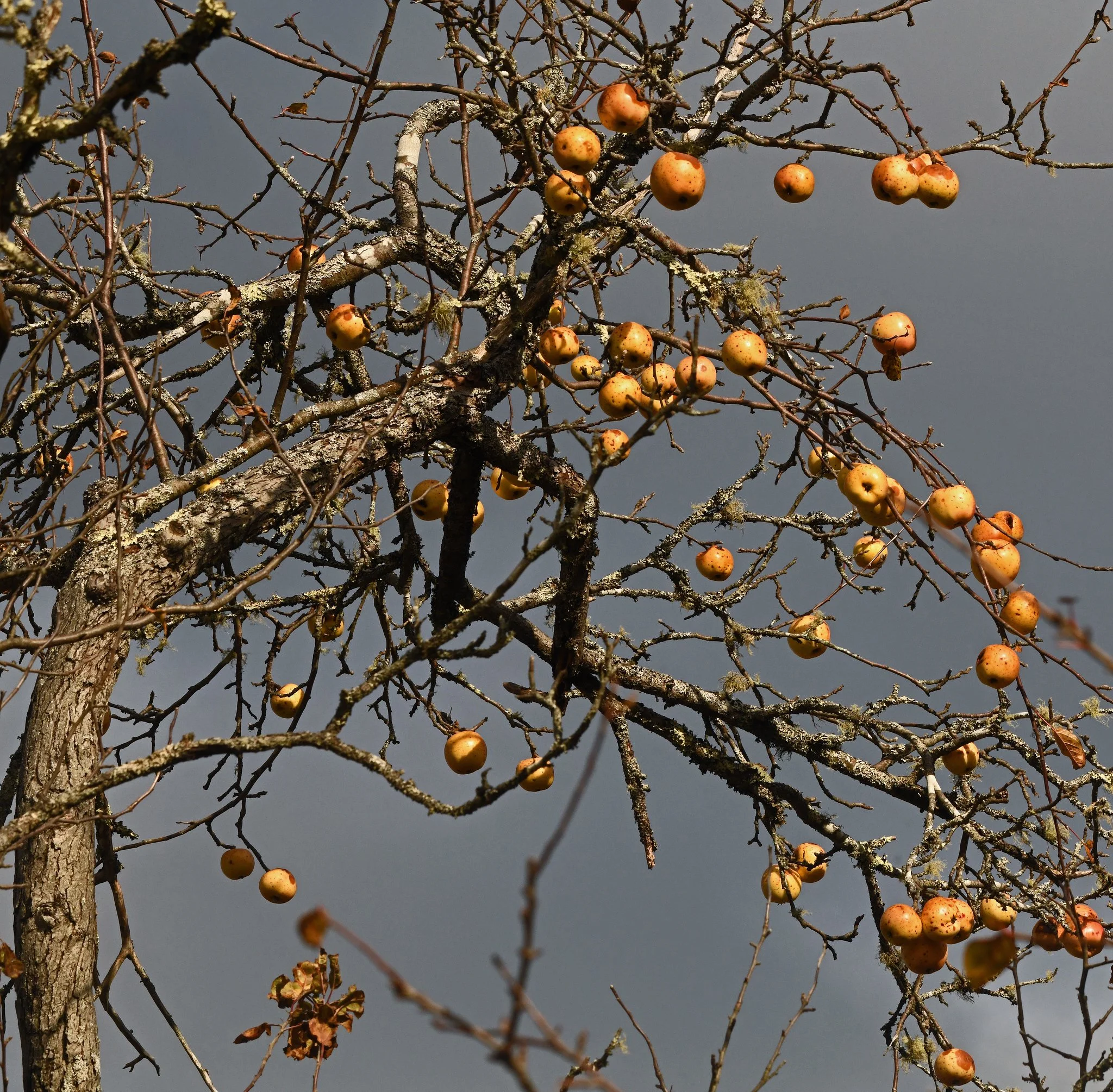
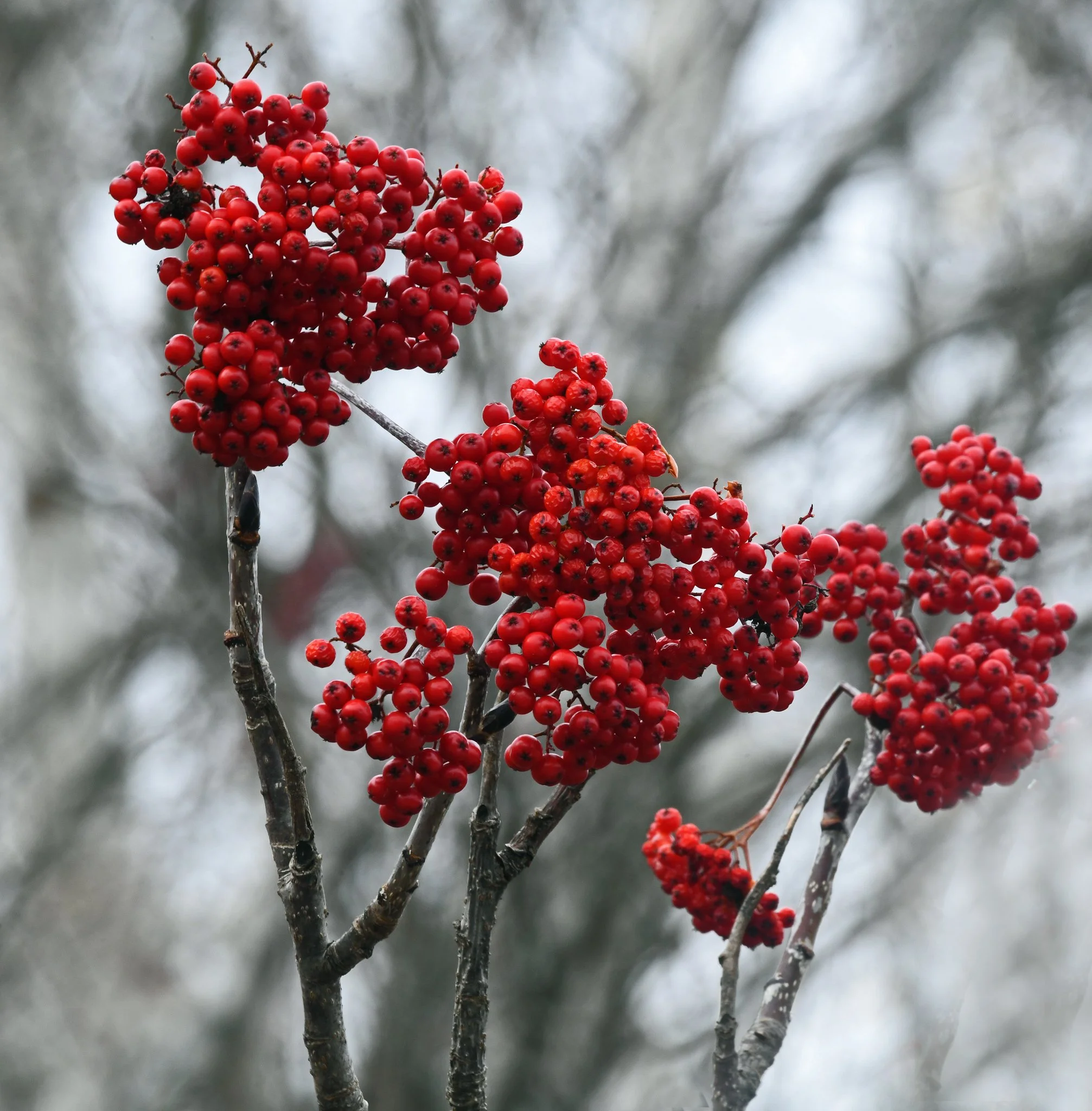
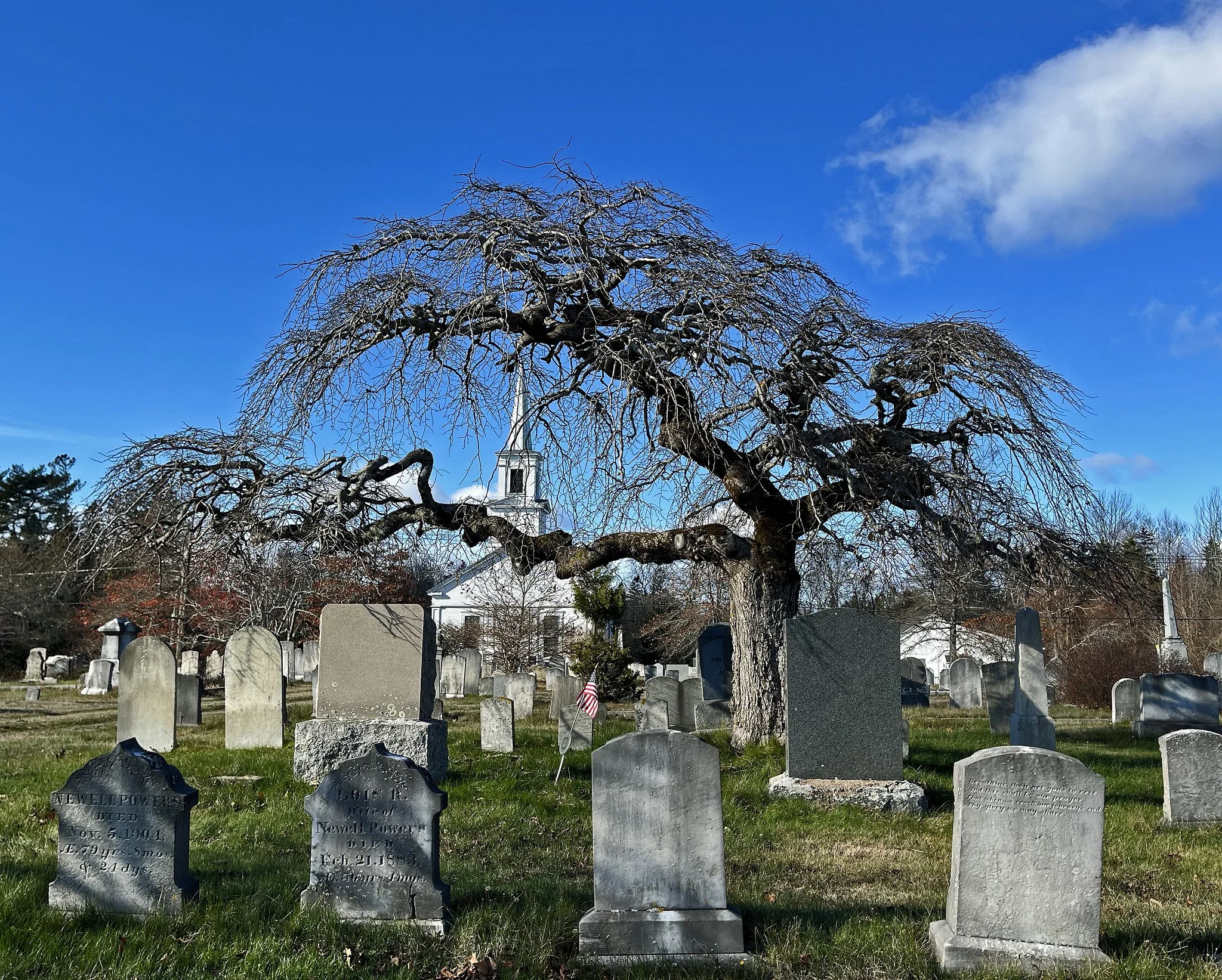
Many of the apple and mountain ash trees retained their fruit throughout the month, while the ancient Camperdown elm in the cemetery lost all of its leaves early.

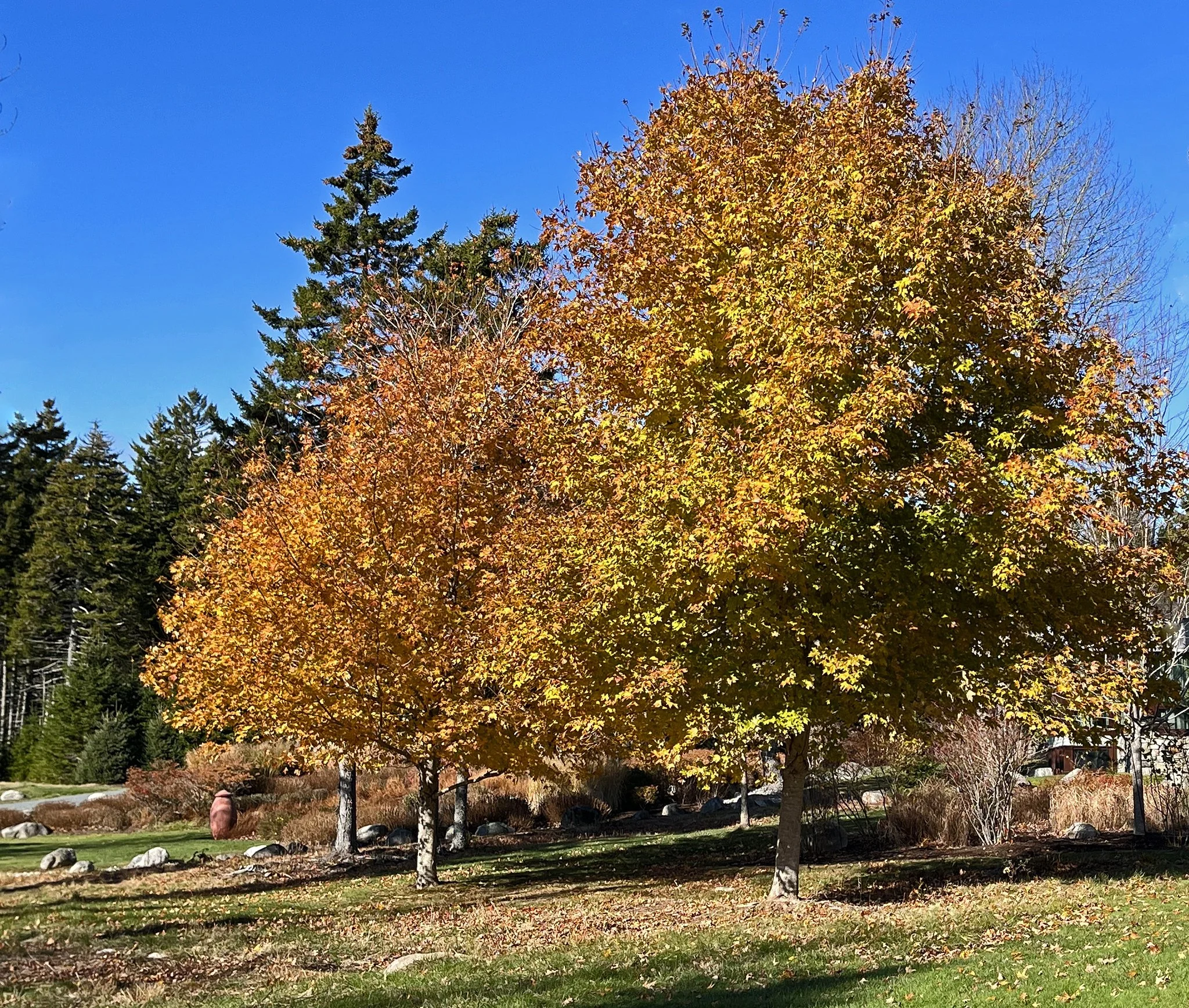
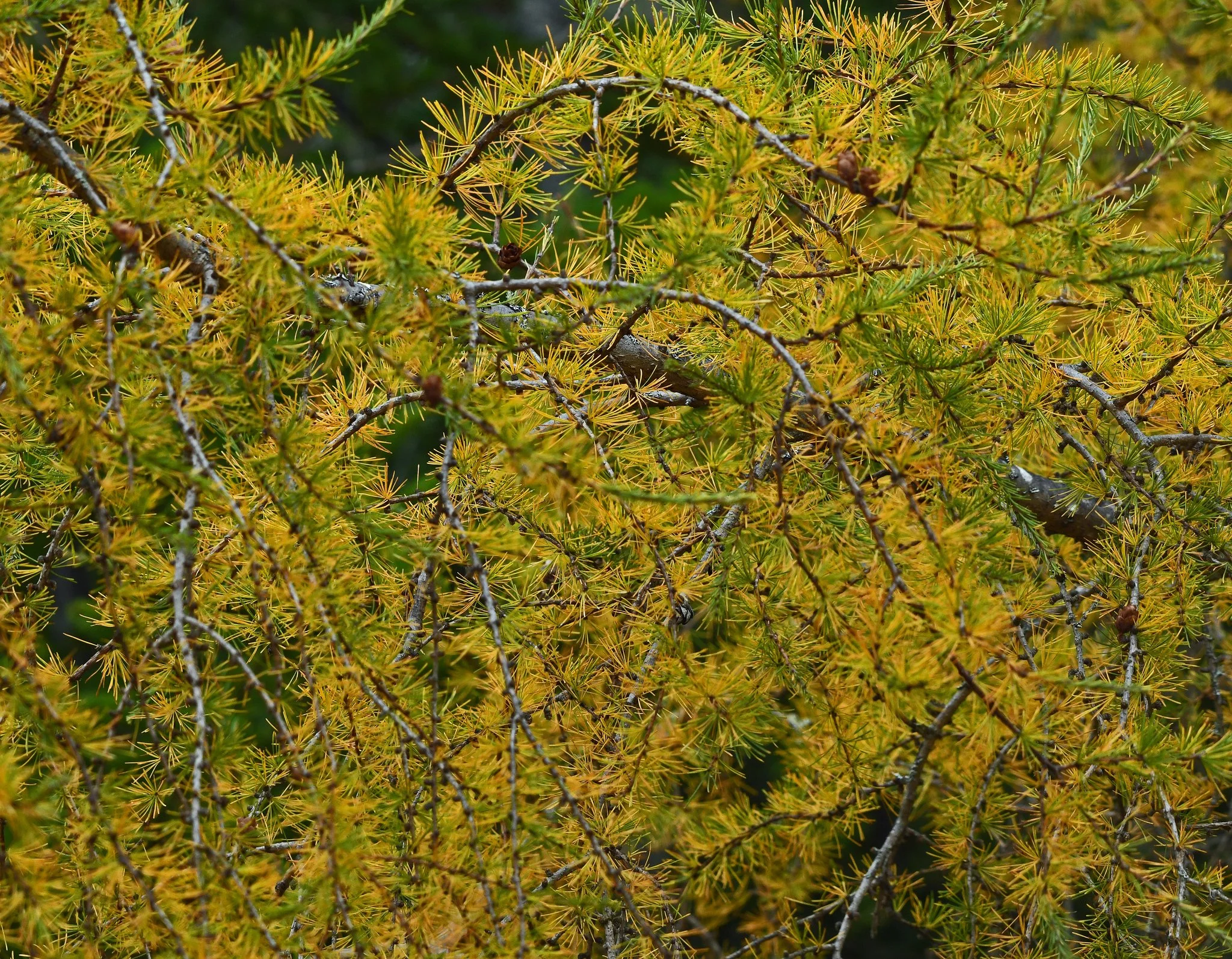
Many sugar maples retained their leaves longer, while the needles on the tamaracks (larches) turned yellow earlier and lasted longer.

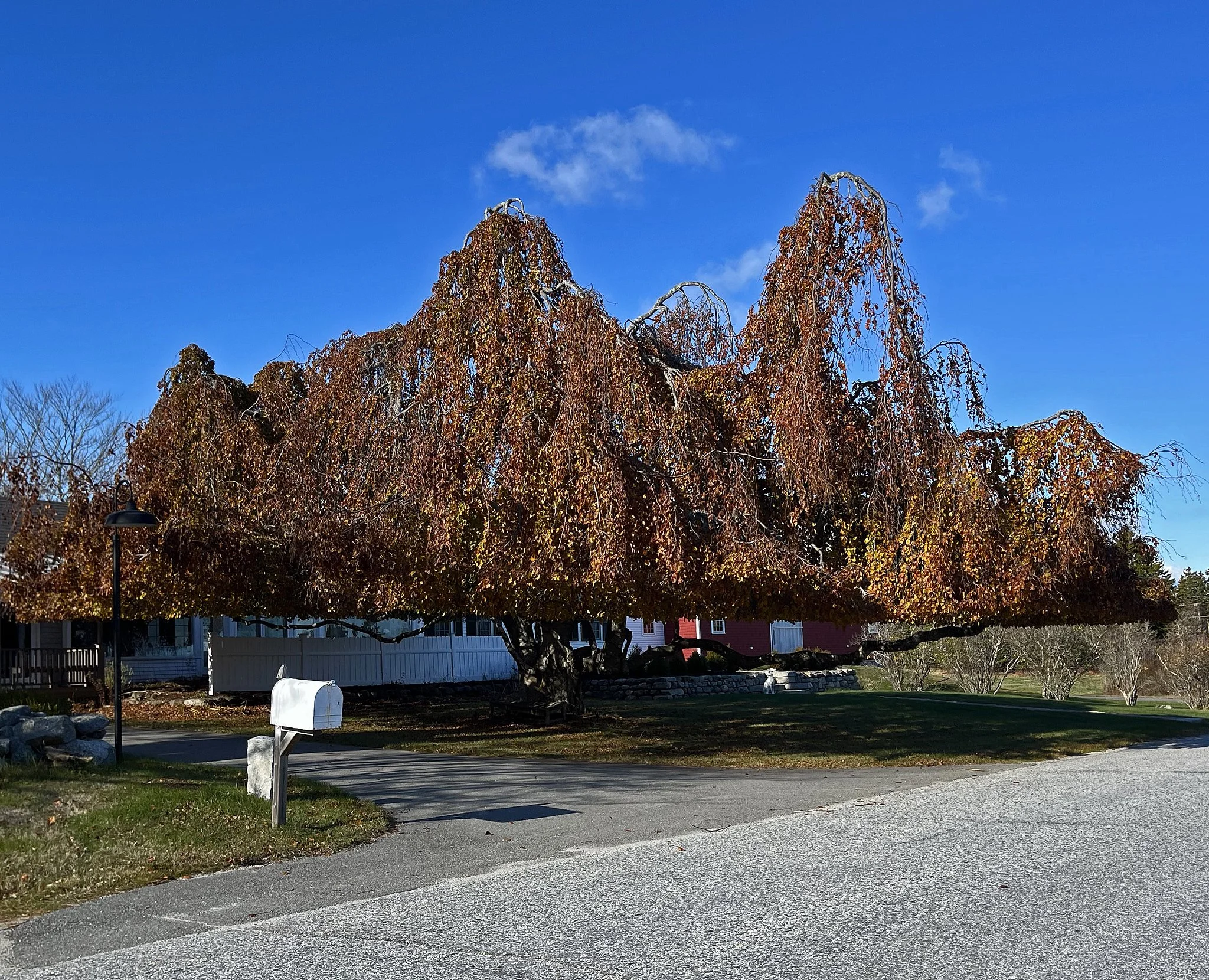
But, as usual, most leaves on the weeping beech at Amen Farm turned bronze and refused to drop until later in the winter.

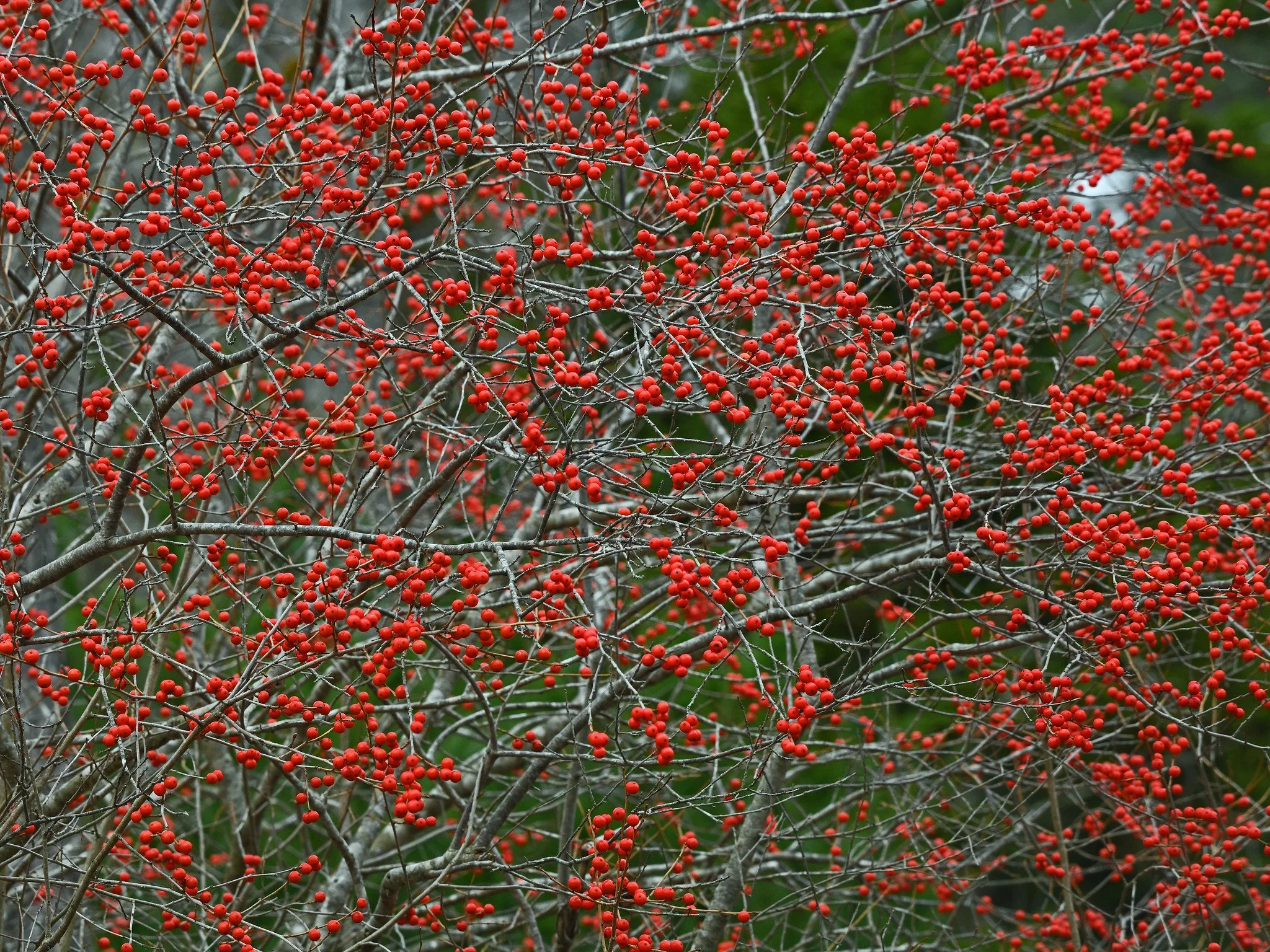
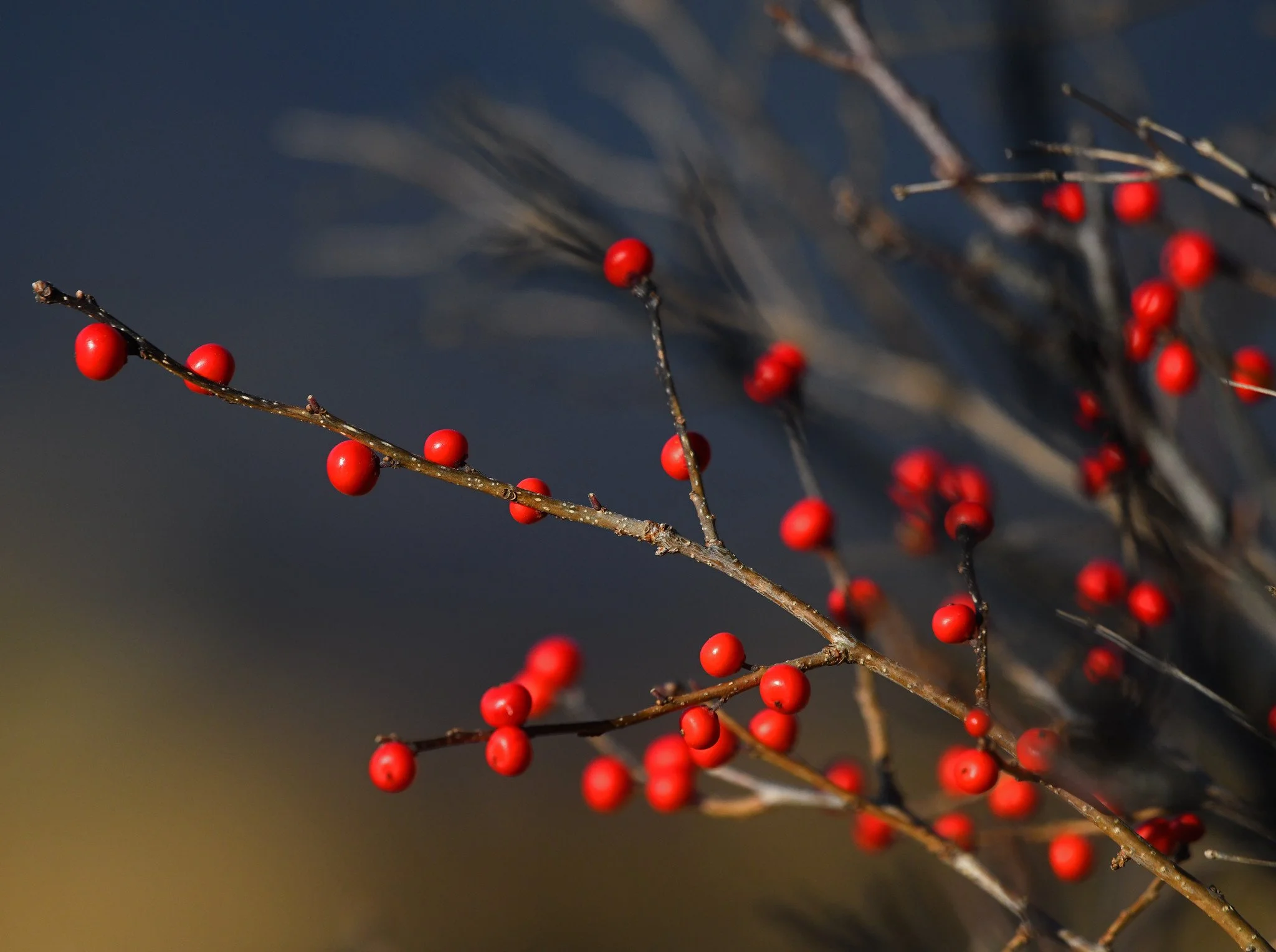
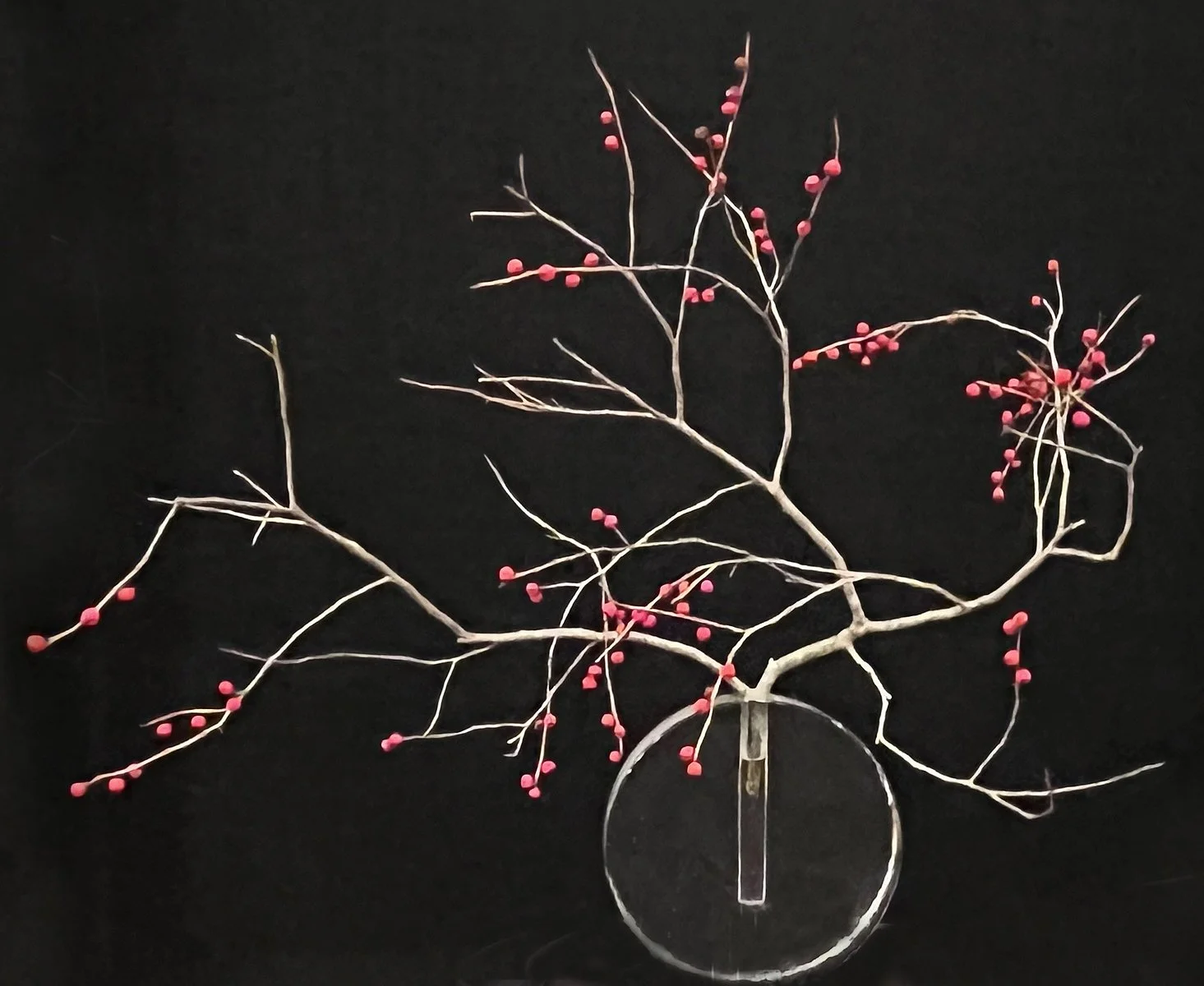
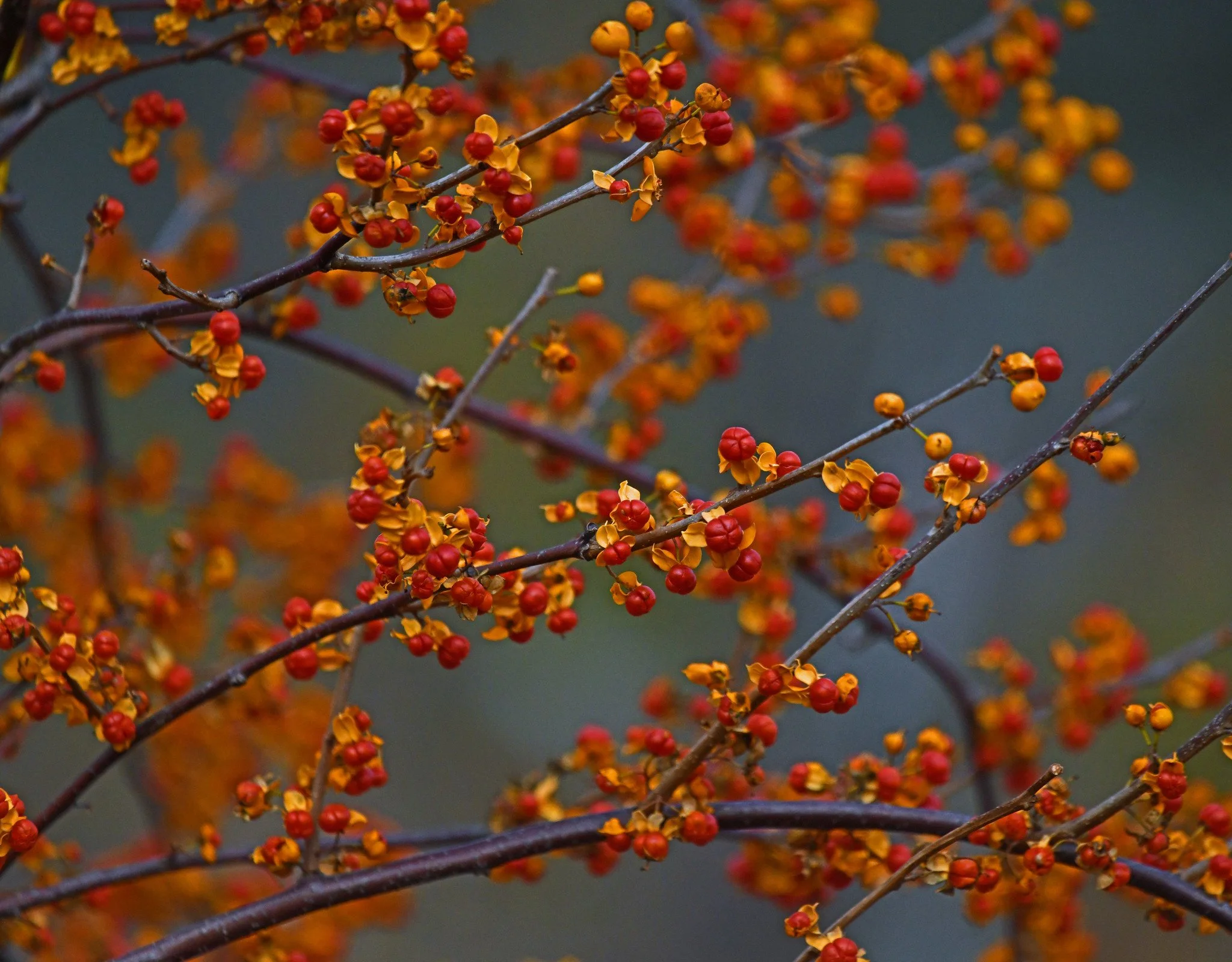
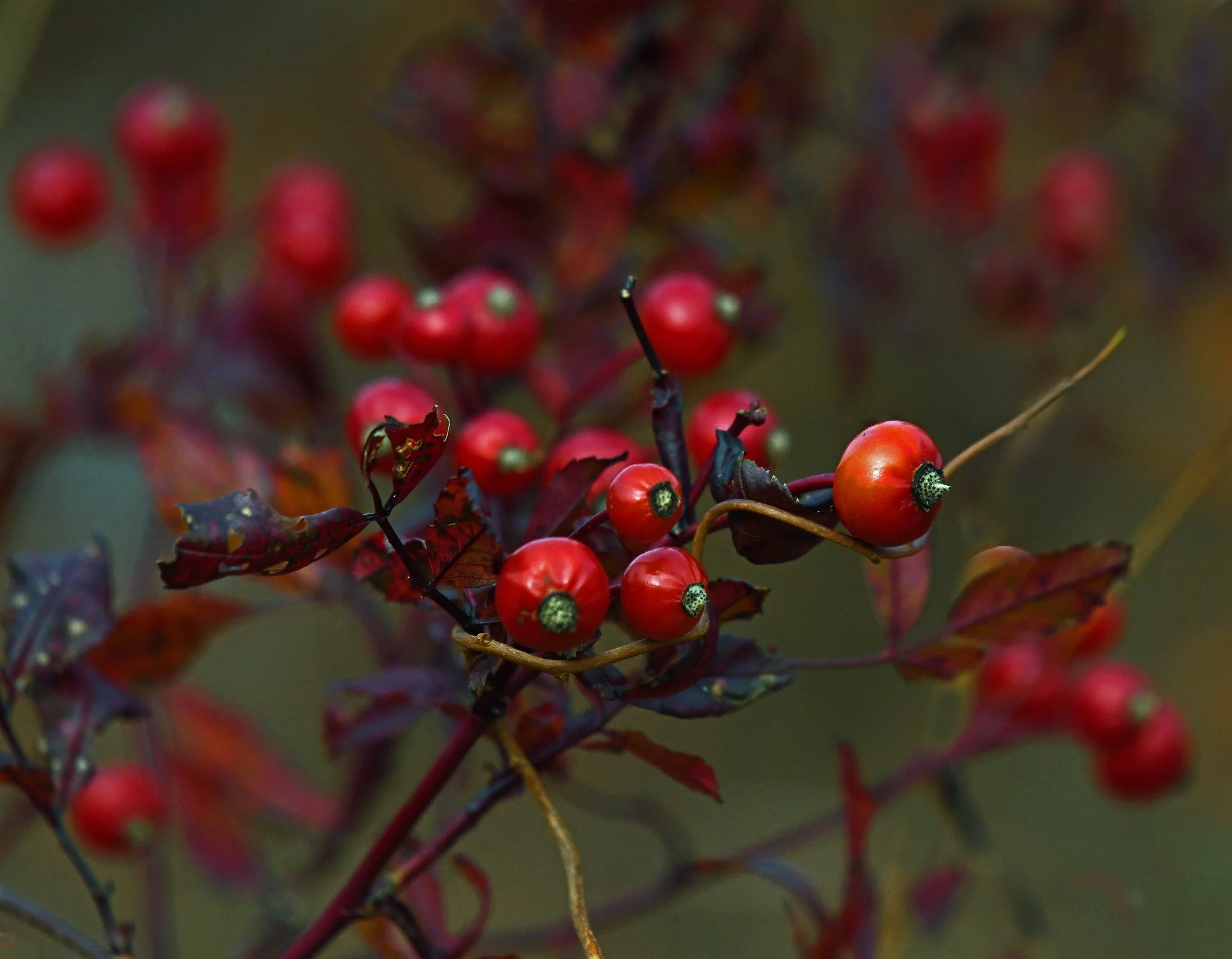
It was a bonanza month for berries and seed pods. The red winterberry (a benificial native plant) was abundant and tempted Barbara to do one of her exotic arrangements. Unfortunately, the red and yellow Asian bittersweet and the scarlet hips of multiflora rose (invasive non-natives) also were abundant, albeit beautiful, assasins.

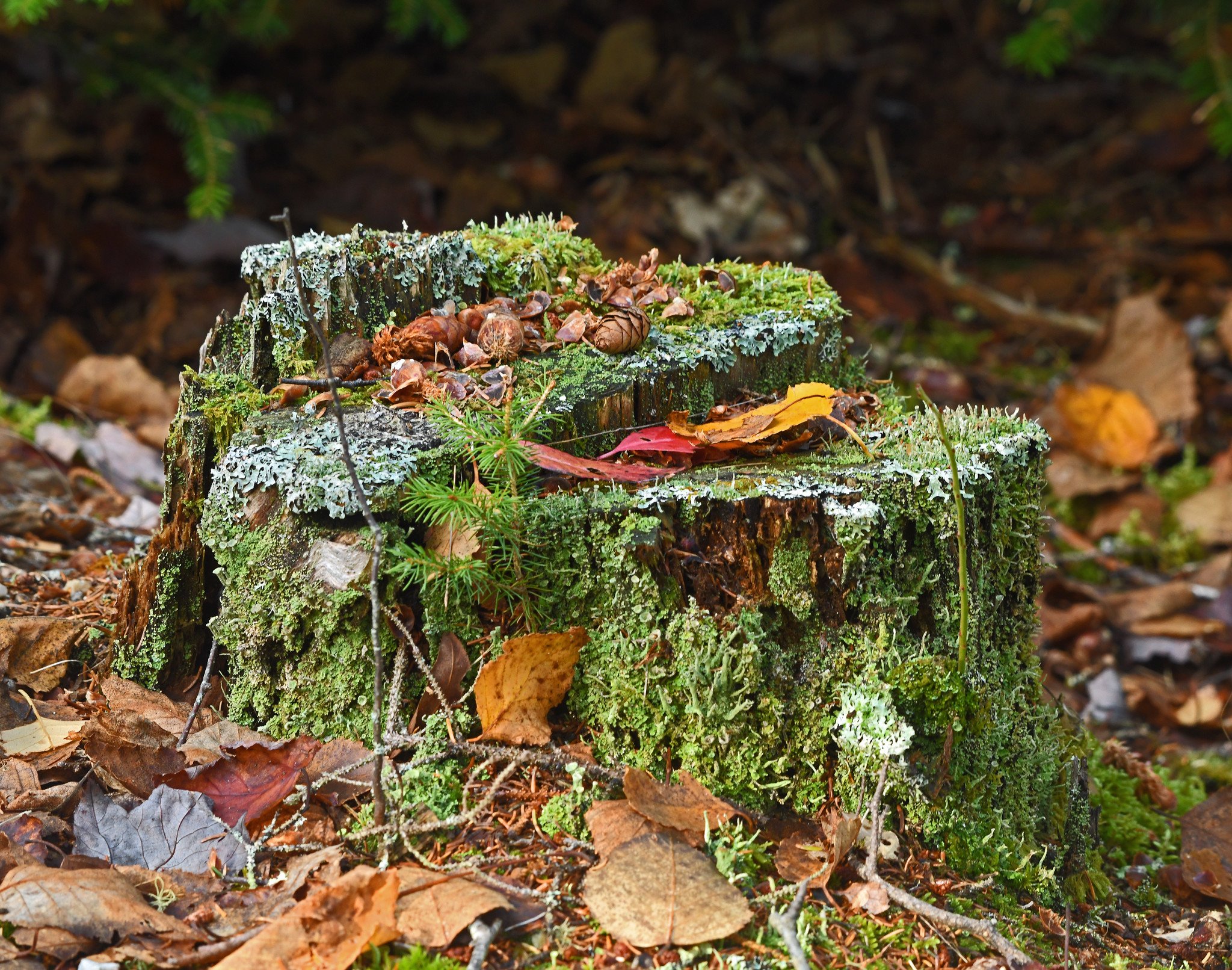
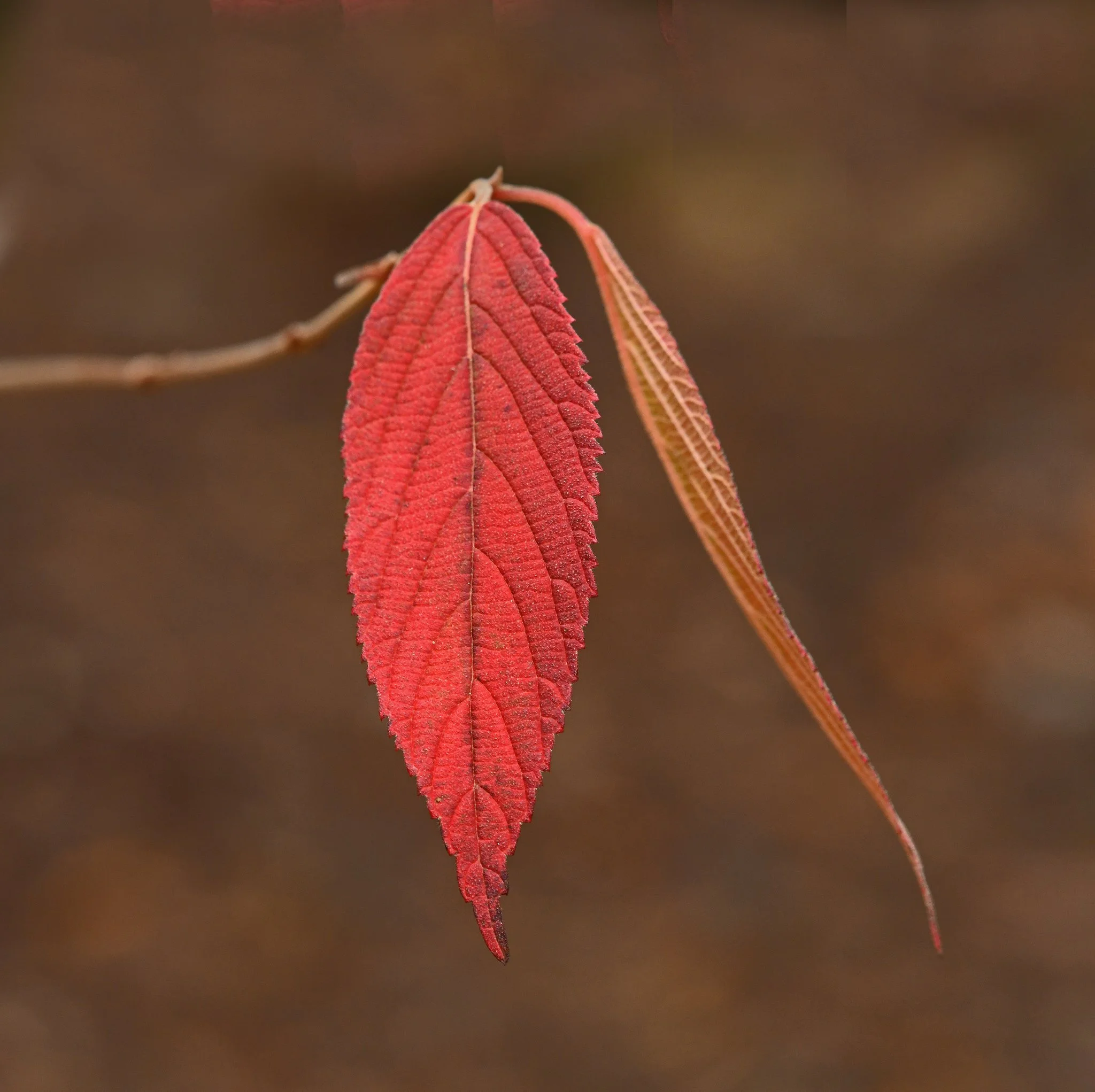
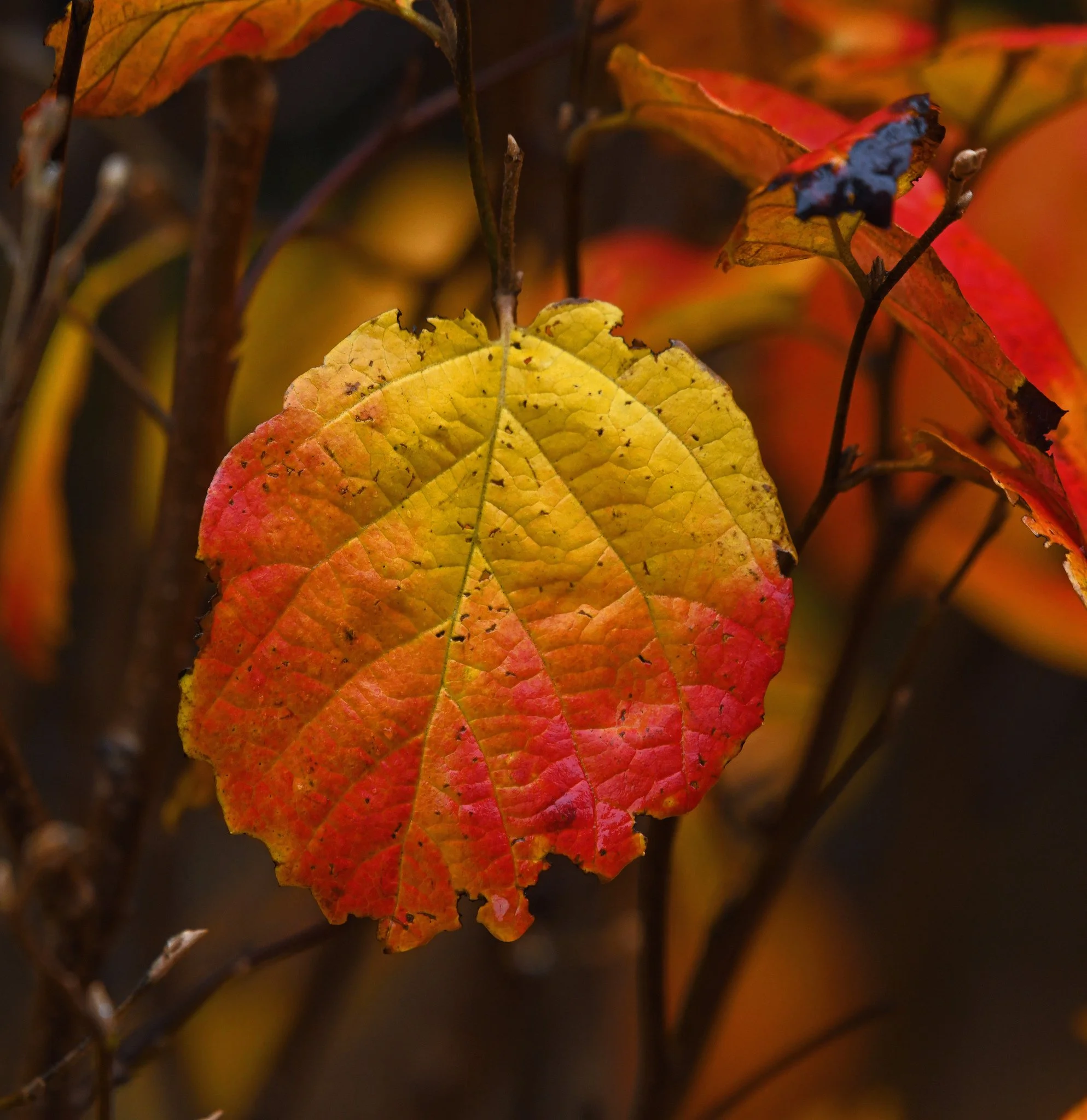
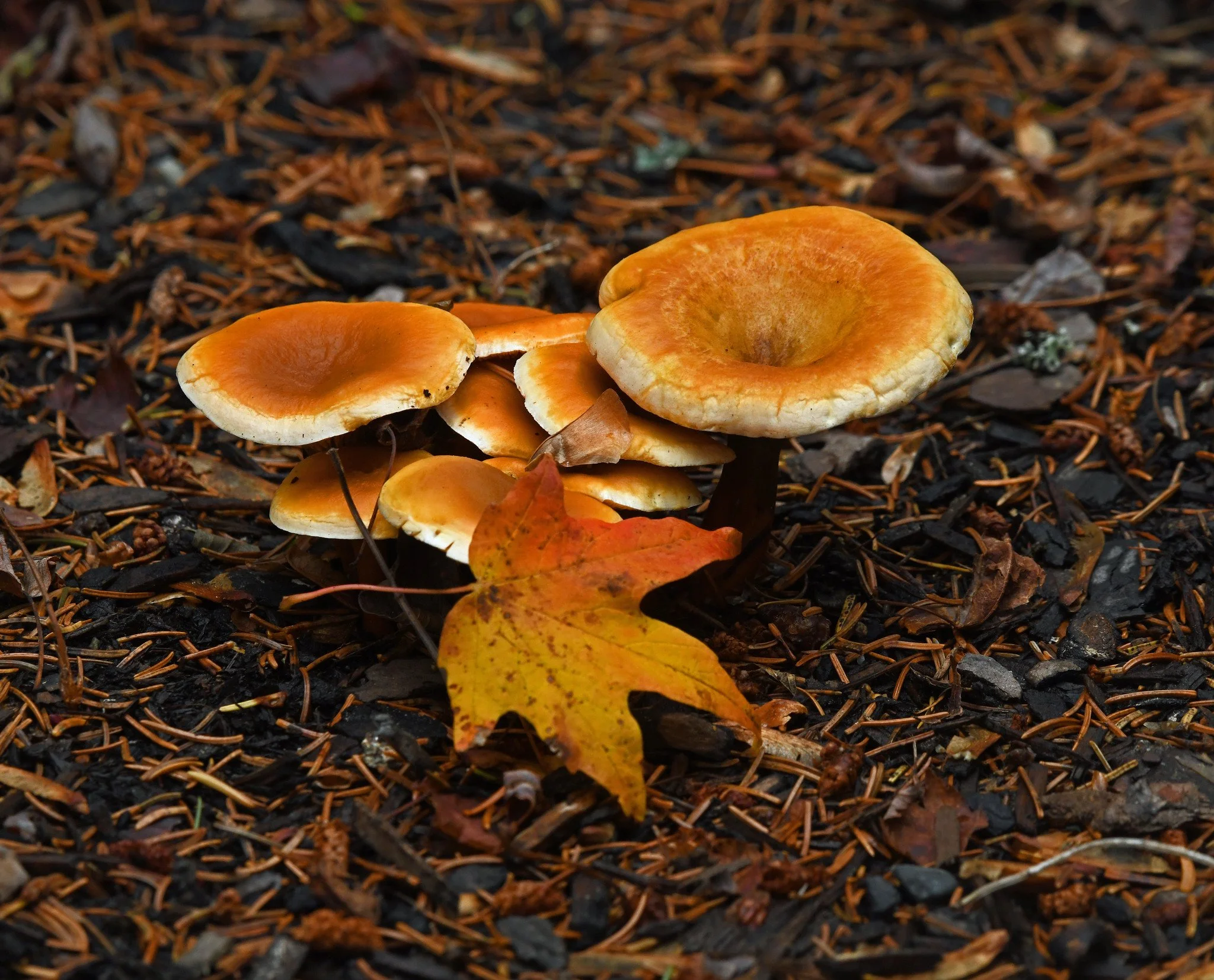
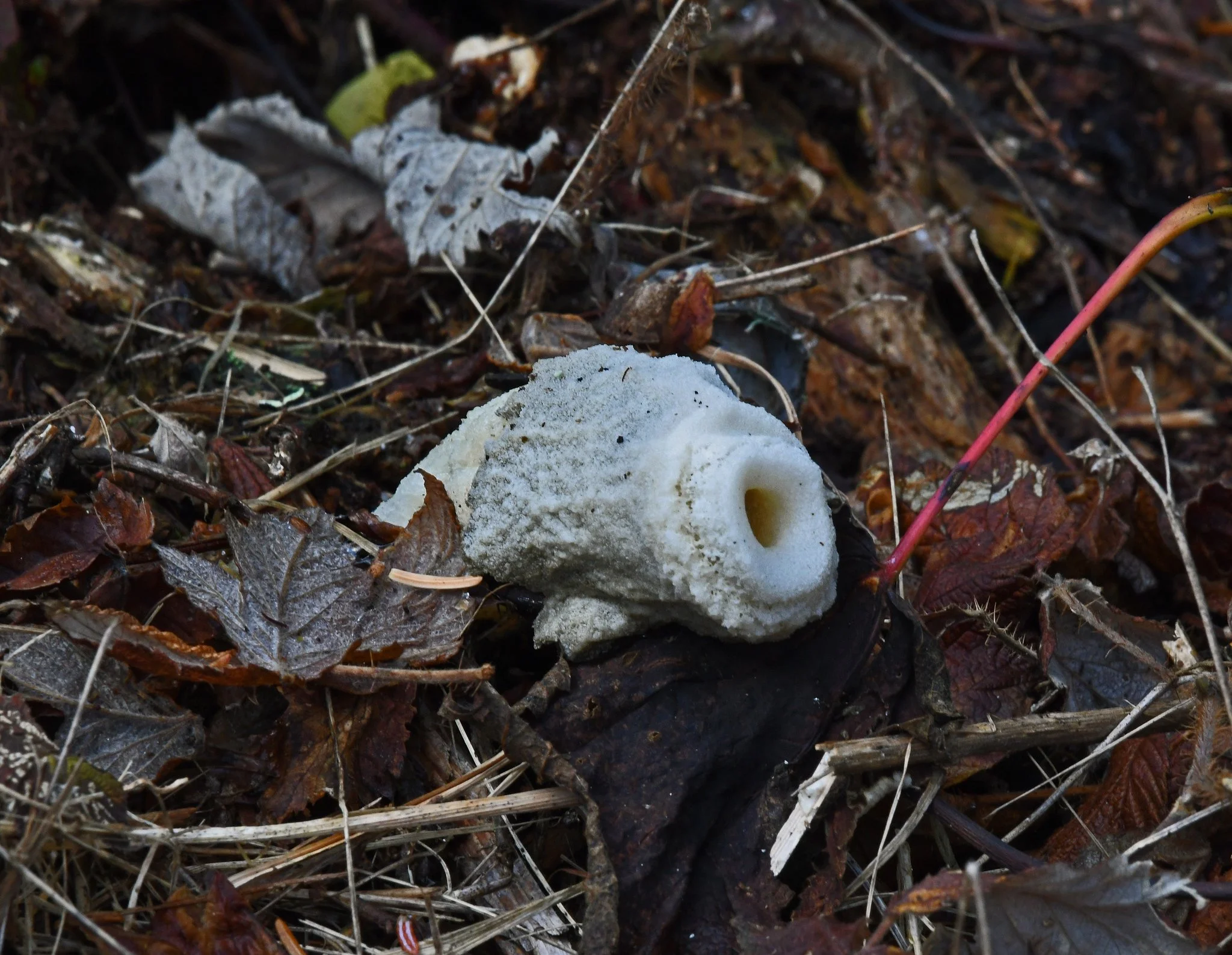
For a flora finale, there were the eye-catching dead and dying leaves and the multi-colored moss, lichen, and fungi, including lonely red viburnum leaves, boastful fothergilla leaves, toasty false chanterelle mushrooms and even marble-like stinkhorn fungi.

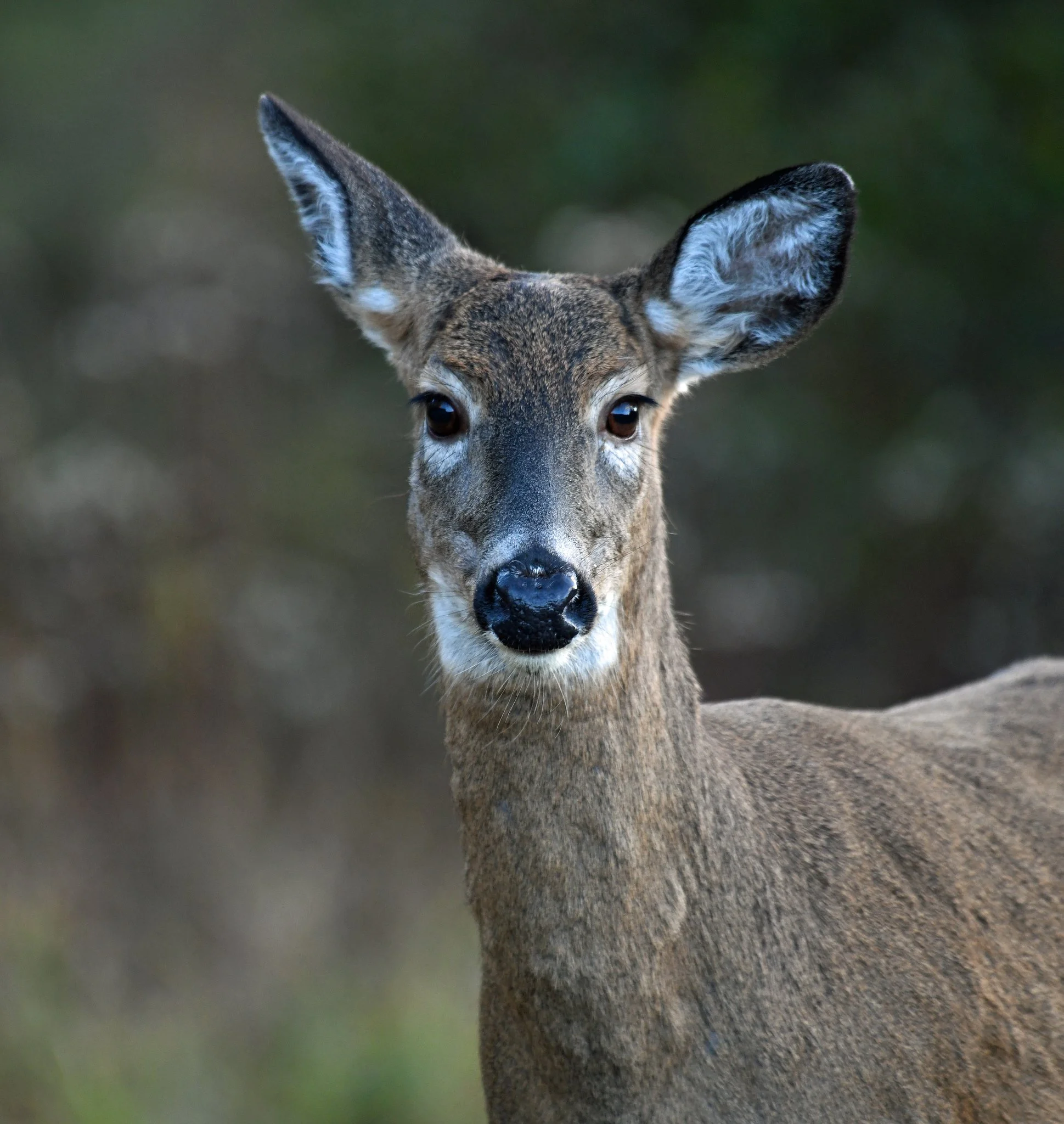
As for the November fauna, it included residents as well as widlife that were just passing through on their way to warmer climes. Fauna of the furry kind included resident white-tailed deer sporting their new darker winter coats:

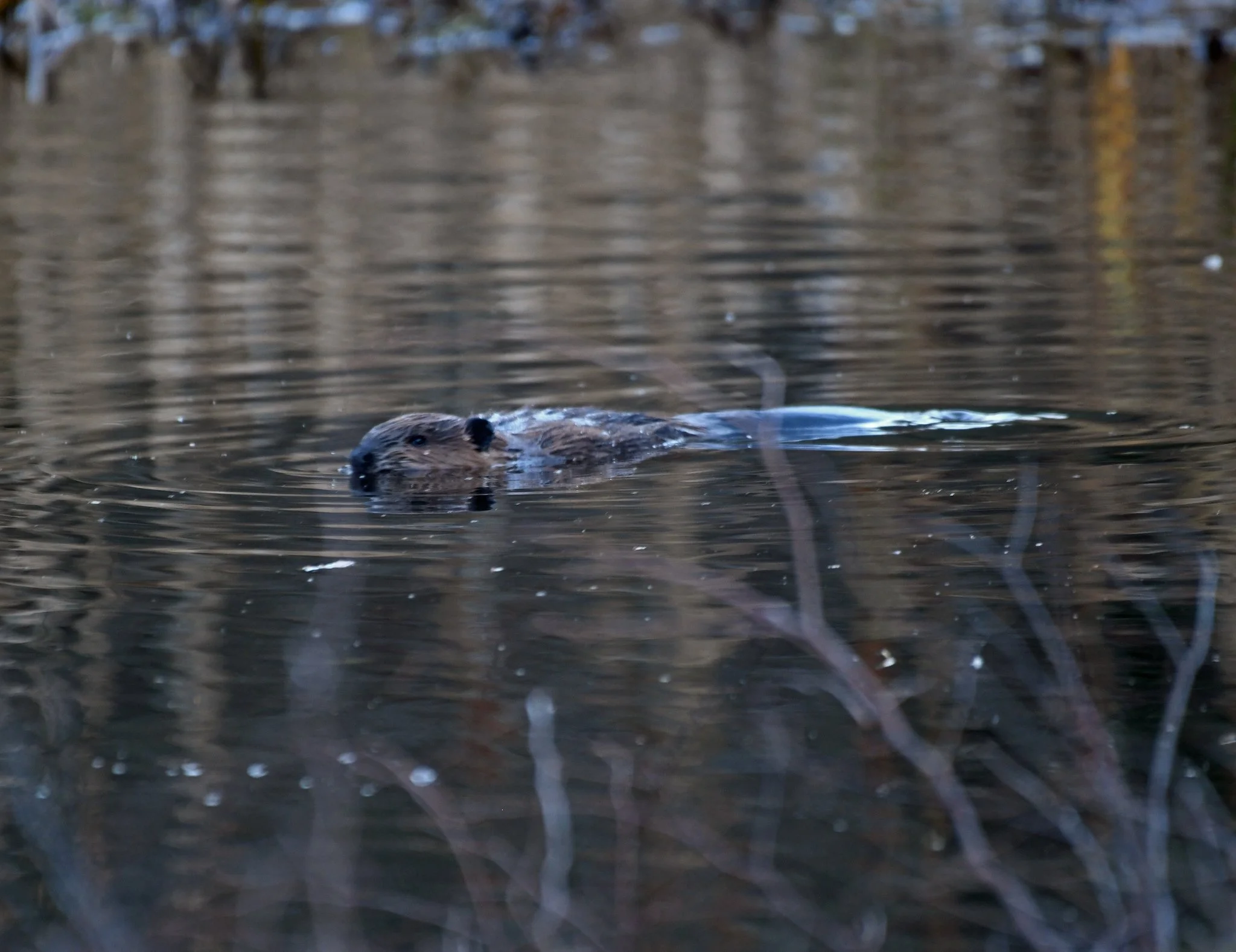
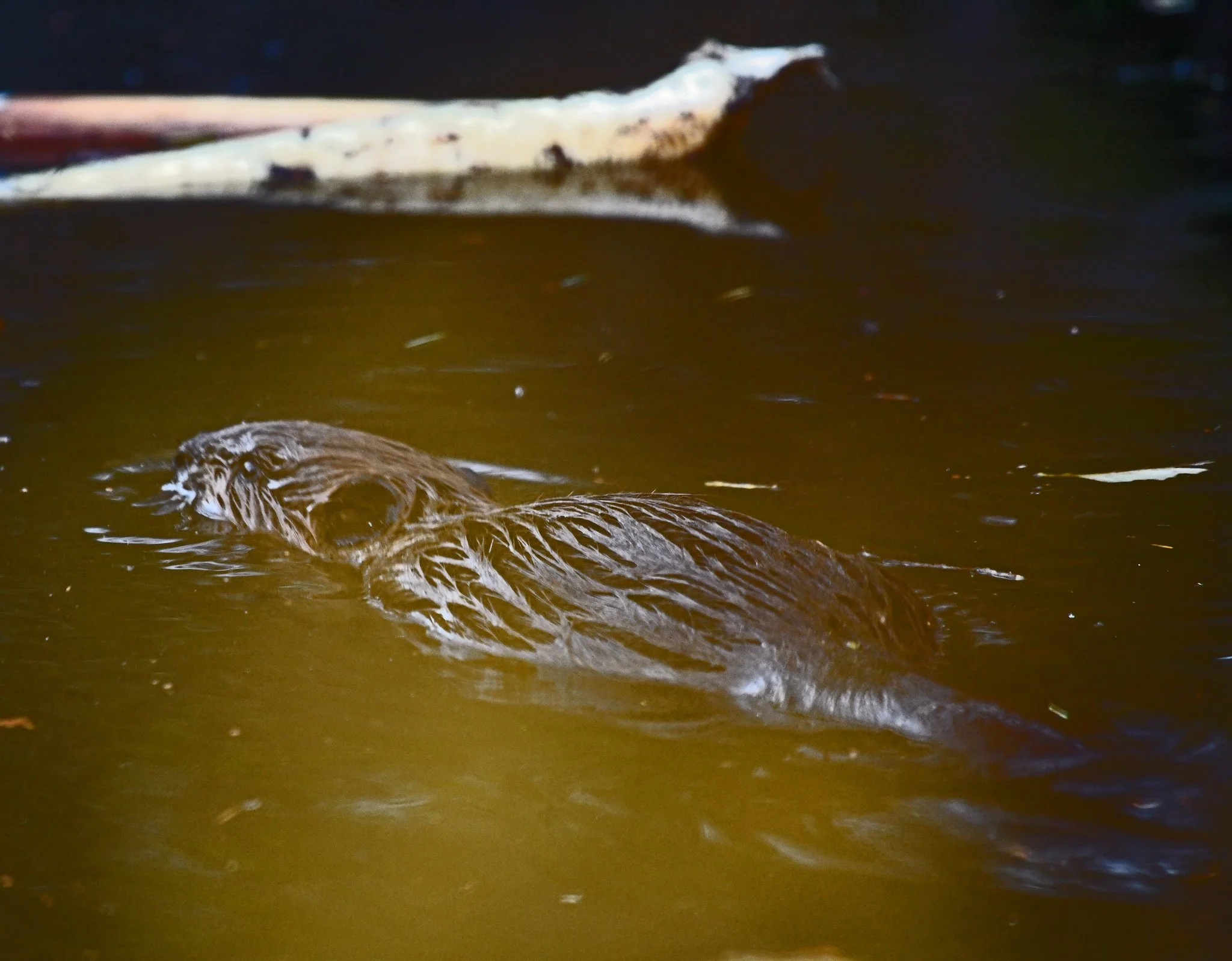
The most dramatic (and potentially disasterous) of our furry fauna experiences was the arrival of a pair of claim-jumping American beavers that are building dams and a lodge in our ponds and toppling trees to do so. We’ve named them Bernie and Bernice and they work the night shift, so these images of them are not great:

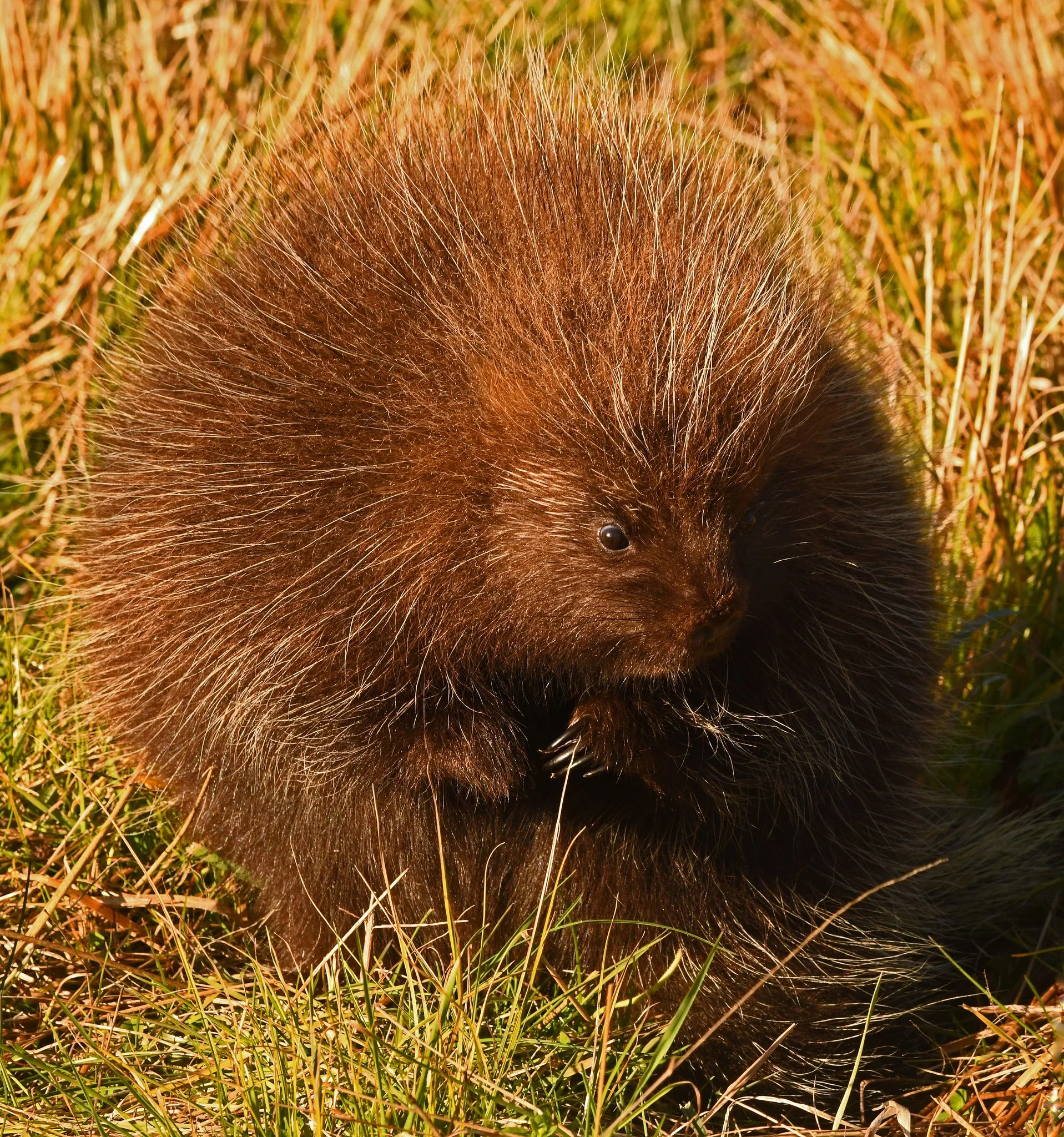
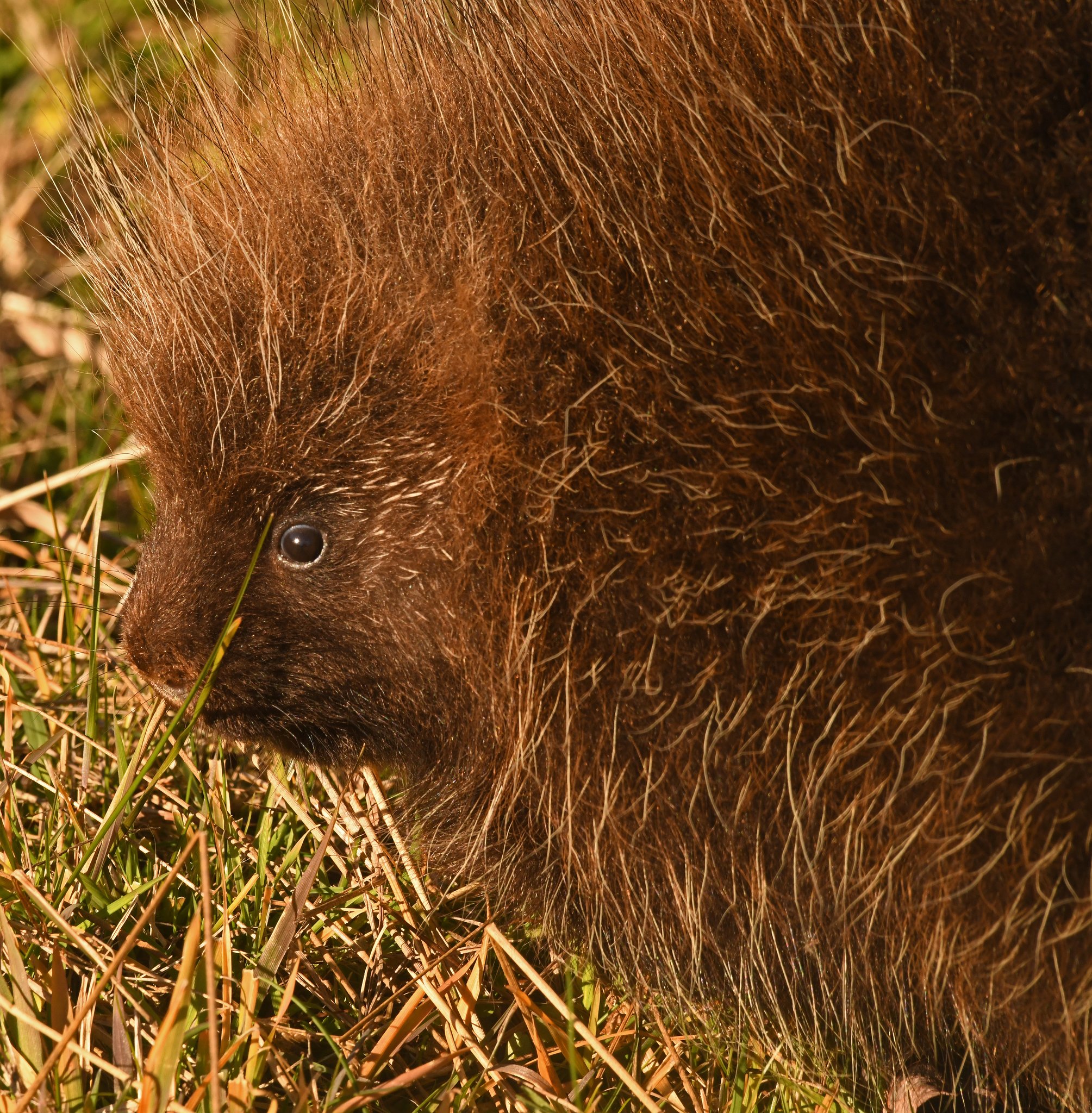
We also have a resident porcupine who we see regularly, but we’re also not gleeful about him because he eats tree bark. He’s furry, but also spikey, and we call him Harry:

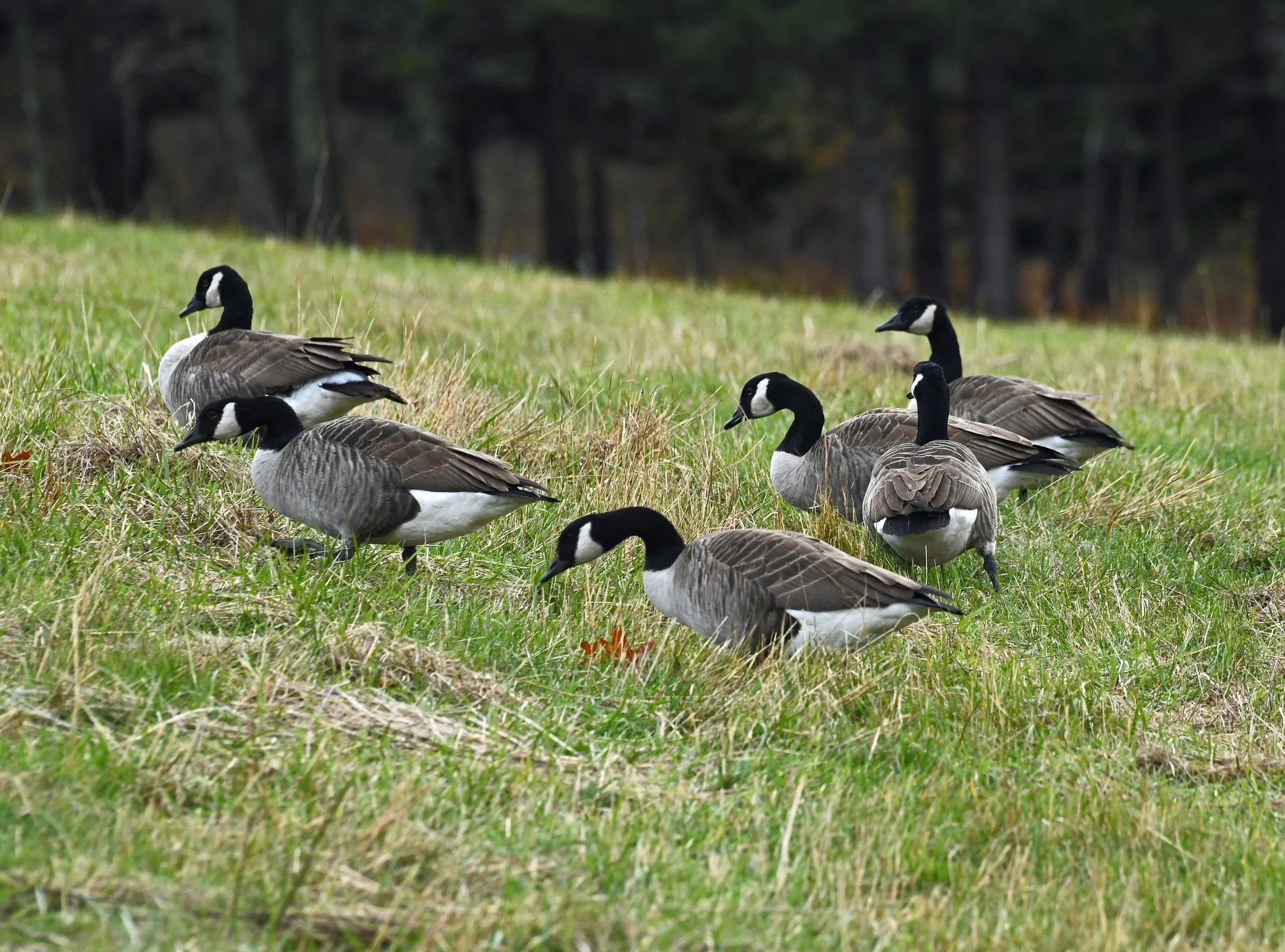
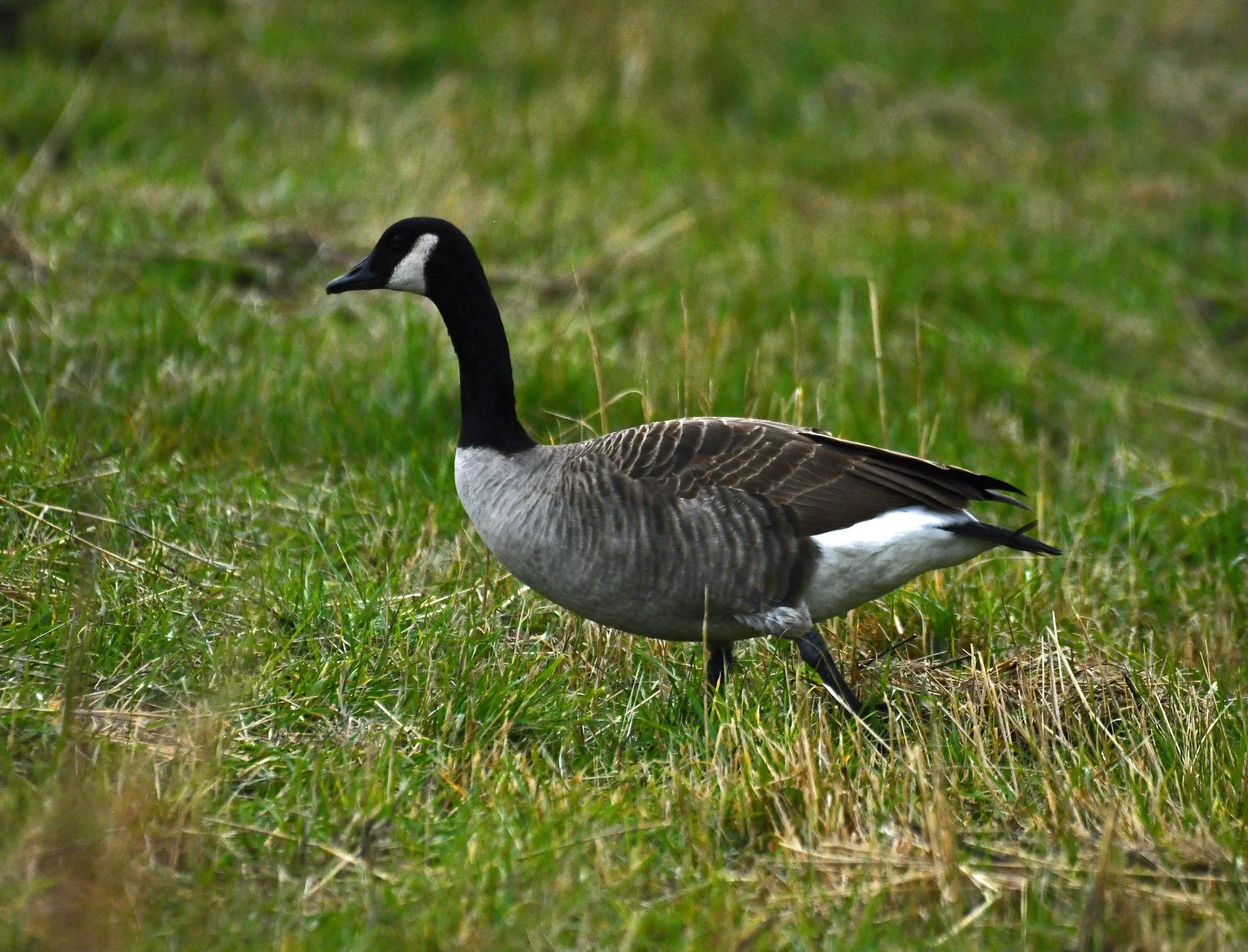
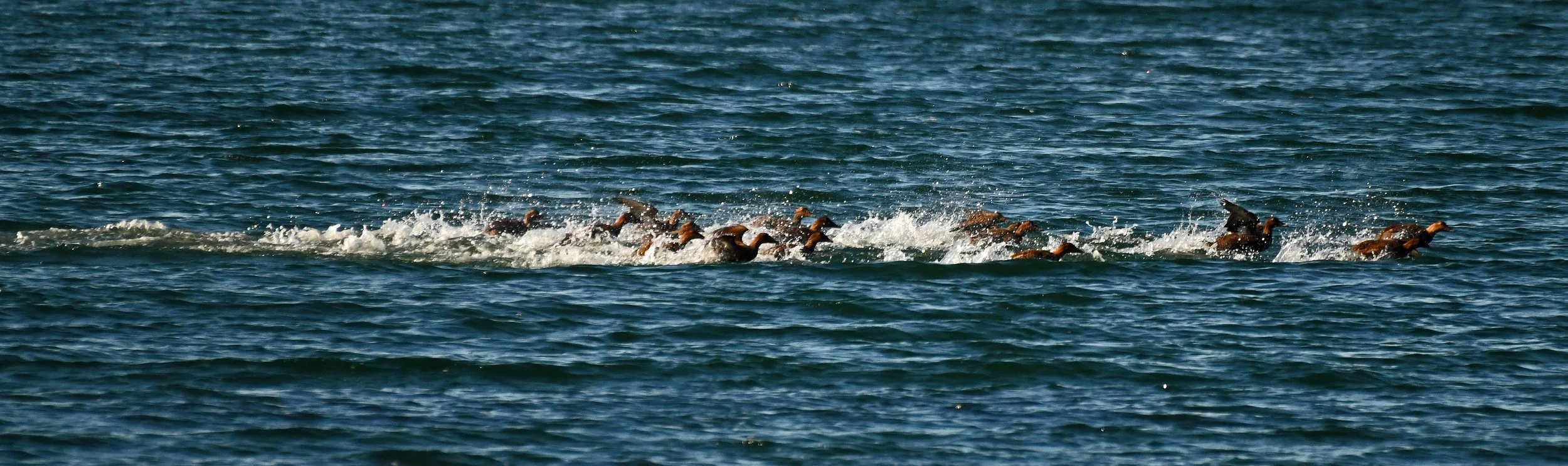
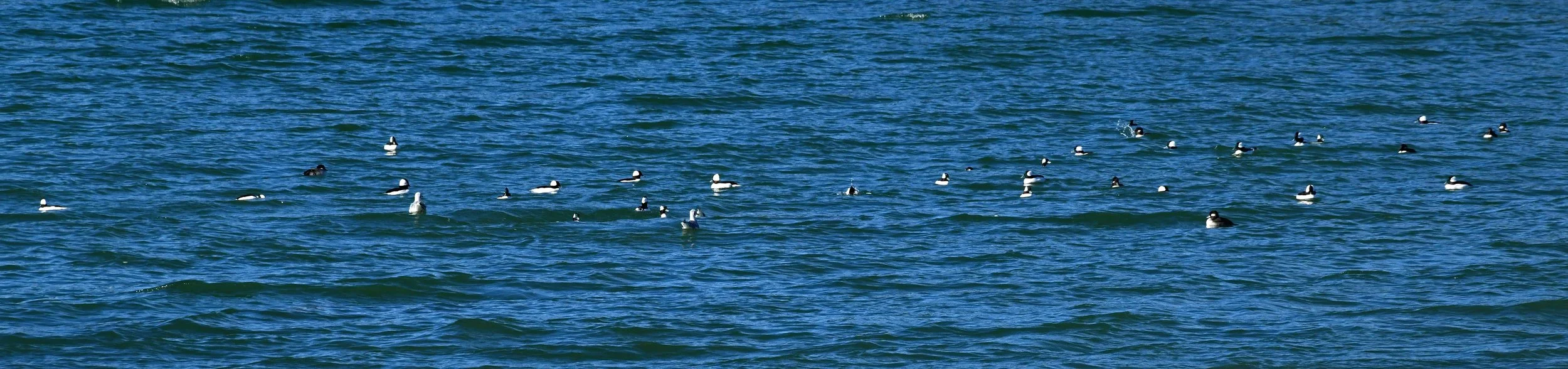
As for feathered fauna, we’re on Route 1 South for Canada geese. They’re mostly overnight tourists that stop for dinner and breakfast, then continue on. On the other hand, we have flocks of waterflowl from Canada that will enjoy our now-boatless coves all winter. They include splashing eiders and content buffleheads.

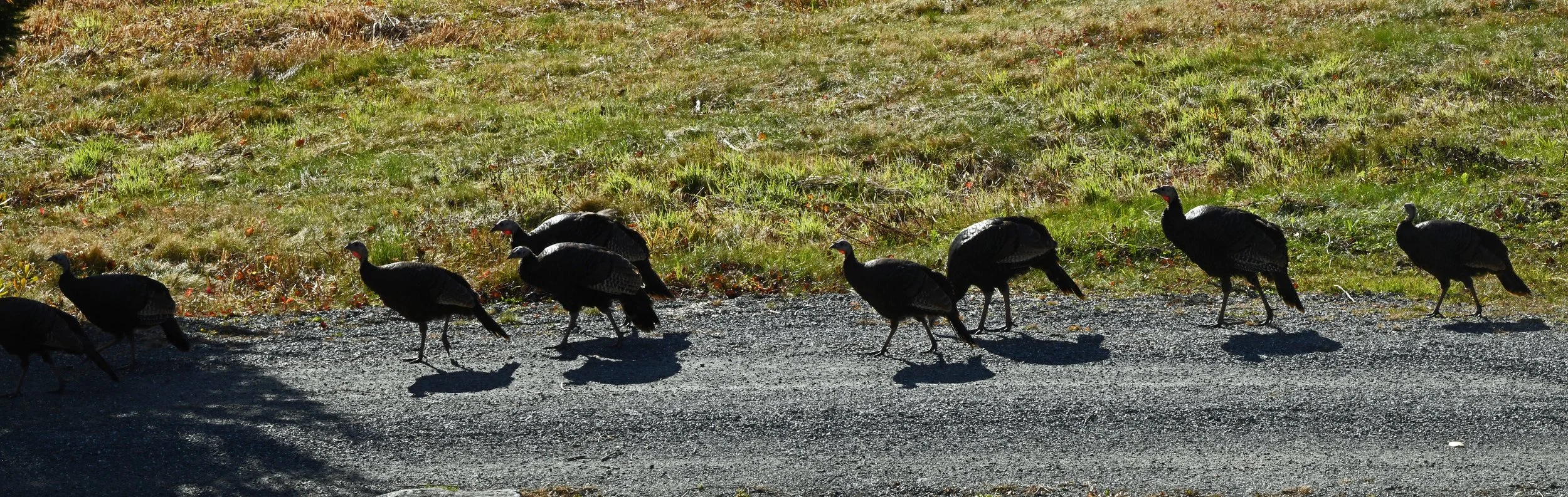
Not to be outdone, our resident wild turkeys parade along driveways as well as fields during November. And, of course, our resident ring-billed and heron gulls also are a constant and pleasing presence throughout the winter.

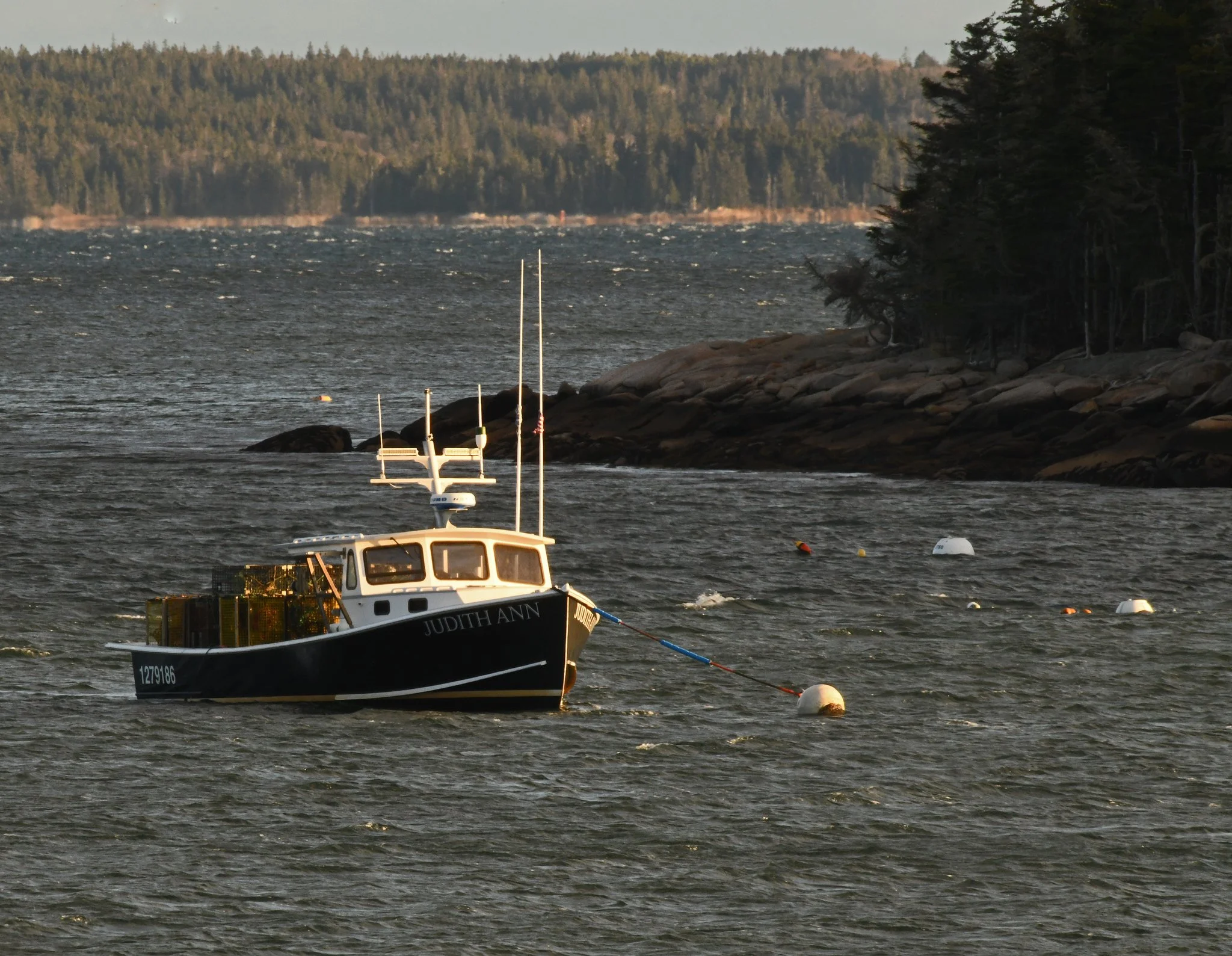
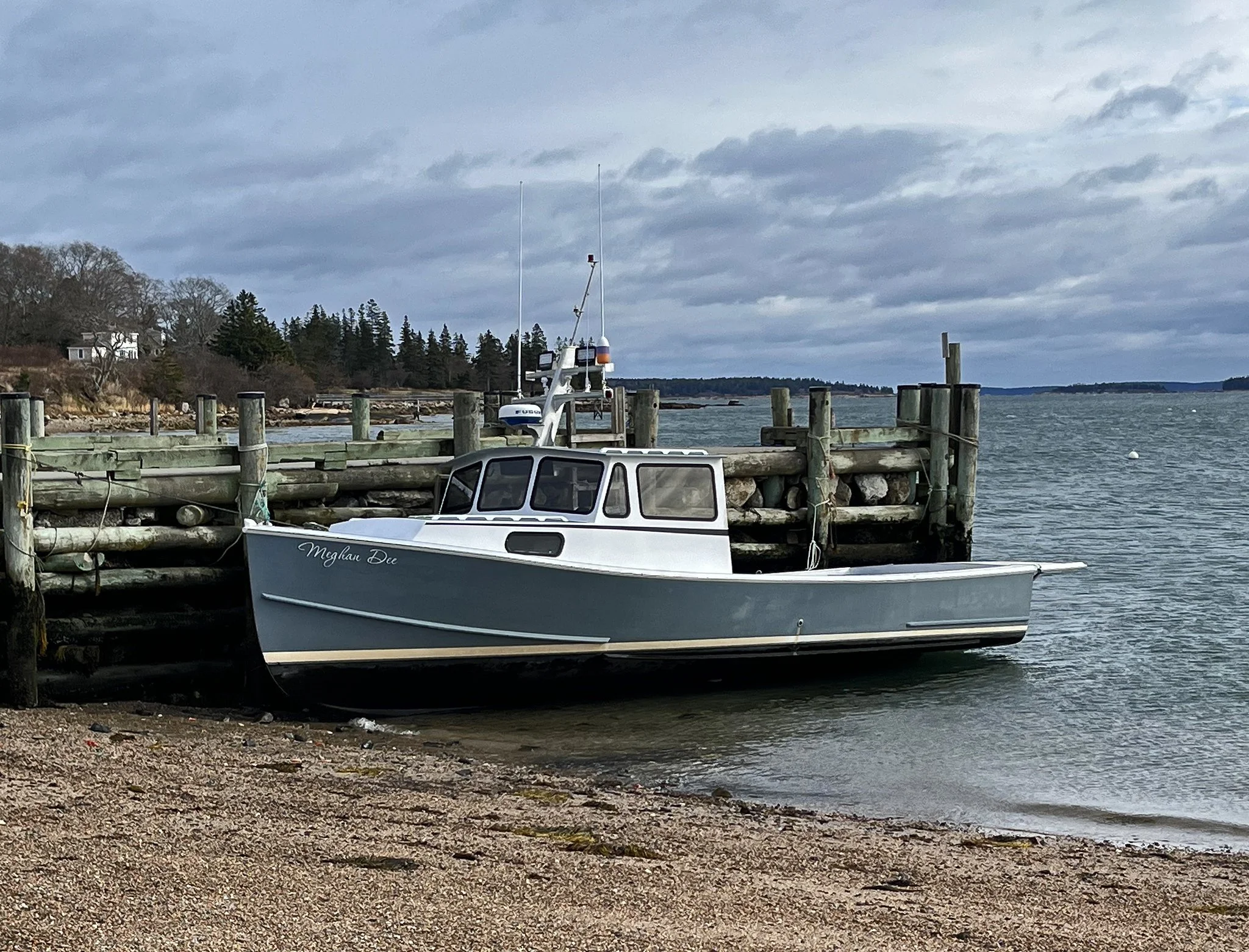
On the working waterfront, November is the time when most coastal lobster fishing ends here. Lobster traps are hauled into the harbors and trailered to storage, while the fishing vessels are prepared for winter.

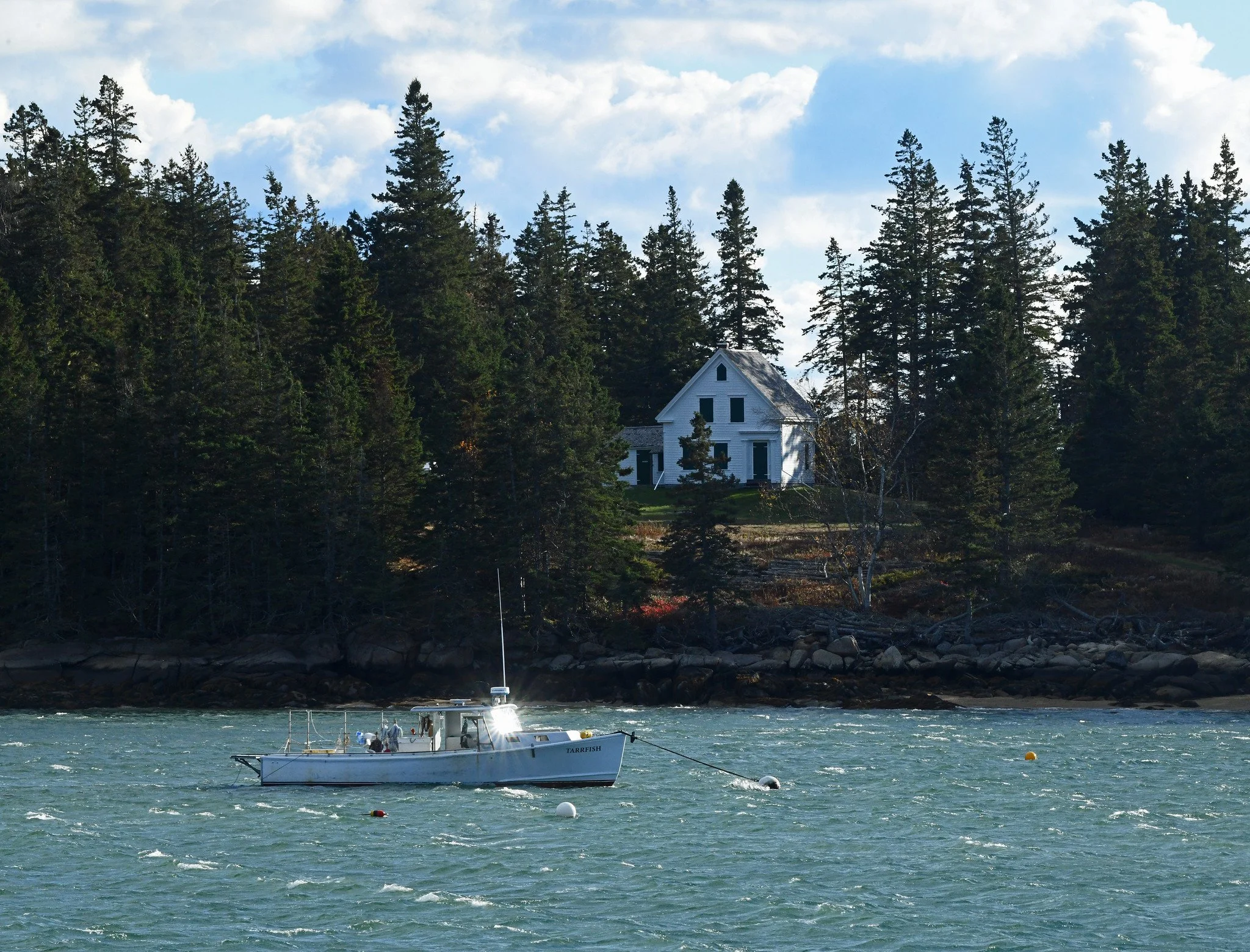
Some lobster fishermen will rig their vessels with masts, booms, and “drags” (pursenet drredges) for dragging the sea bottom for scallops when the season opens in December. A very few will use their boats as platforms for diving underwater in wetsuits to hand-harvest the more expensive “diver’s scallops” from the sea bottom. Fishing Vessel TARRFISH, below, was one of the first lobster boats to be drag-rigged in November and her owner, David Tarr, also will dive for them:

In November, some working boats and virtually all recreational boats and their moorings are hauled out of the water for winter storage under plastic wrap, boat shed roof, or even spruce trees. Piers, once filled with eager recreational sailers, become lonely places during the month.

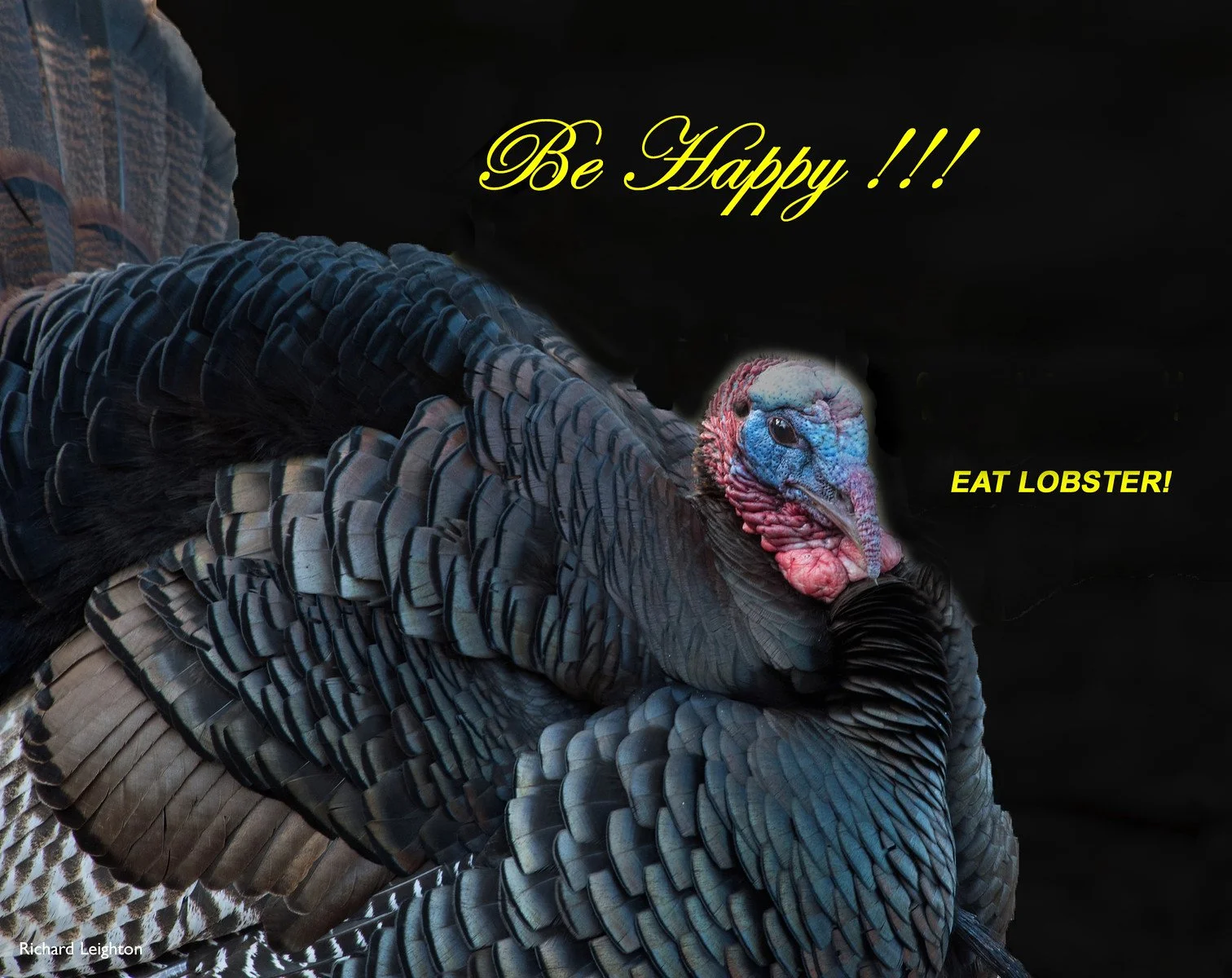
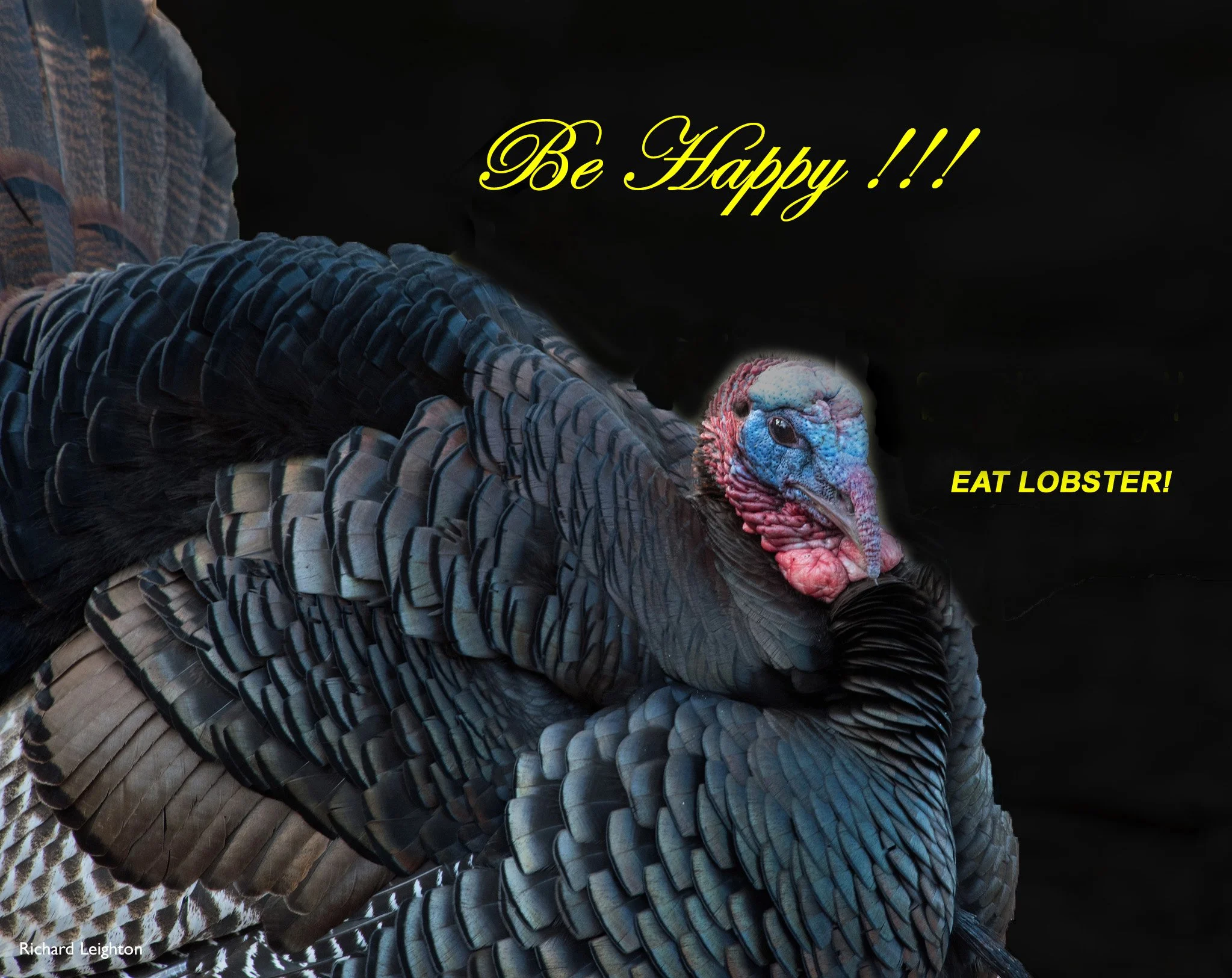
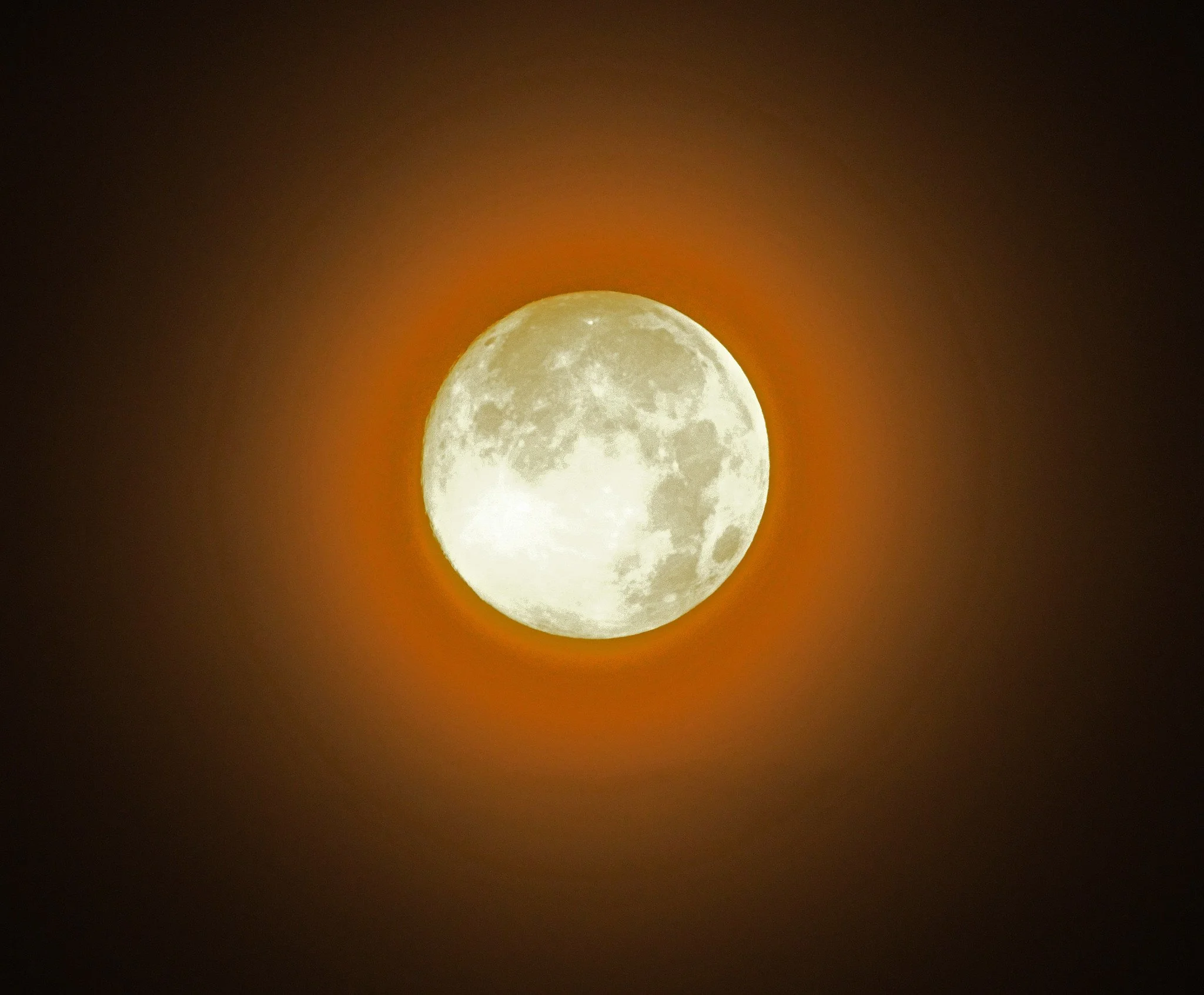
Of course, November is perhaps most famous in this country as the month for a Thanksgiving turkey (for which we created a greeting card) and a beaver moon (which was a supermoon this year that reminded us of our invading beavers):

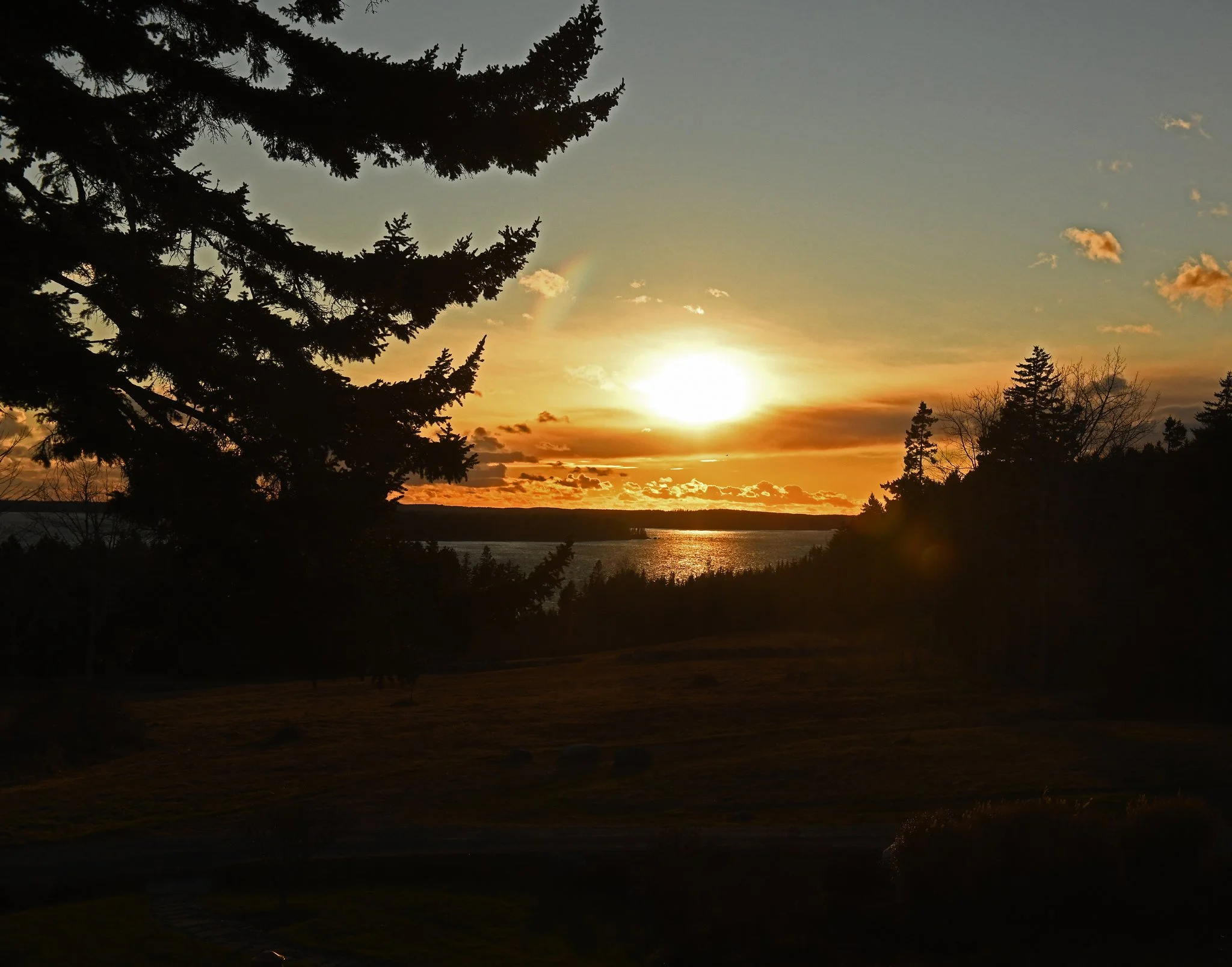
Finally, we leave you with a memory of the sundown over Great Cove at the end of a clear, crisp November day:

(All photographs in this post were taken in Down East Maine during November of 2025, except the turkey image in the Happy Thanksgiving card, which was taken previously here.)

2 Comments

Comment

In the Right Place: Goodbye My Lovely

We say goodbye to November today with images of Great Cove. Above, the Cove is still in her rockweed pajamas at an early morning low tide. Below, she’s in one of her high-fashion outfits at sundown, preparing to go out for the night:

All things considered, November was a lovely month. (Images taken in Brooklin, Maine, on November 28, 2025.)
Comment

Comment

In the Right Place: Harry, II

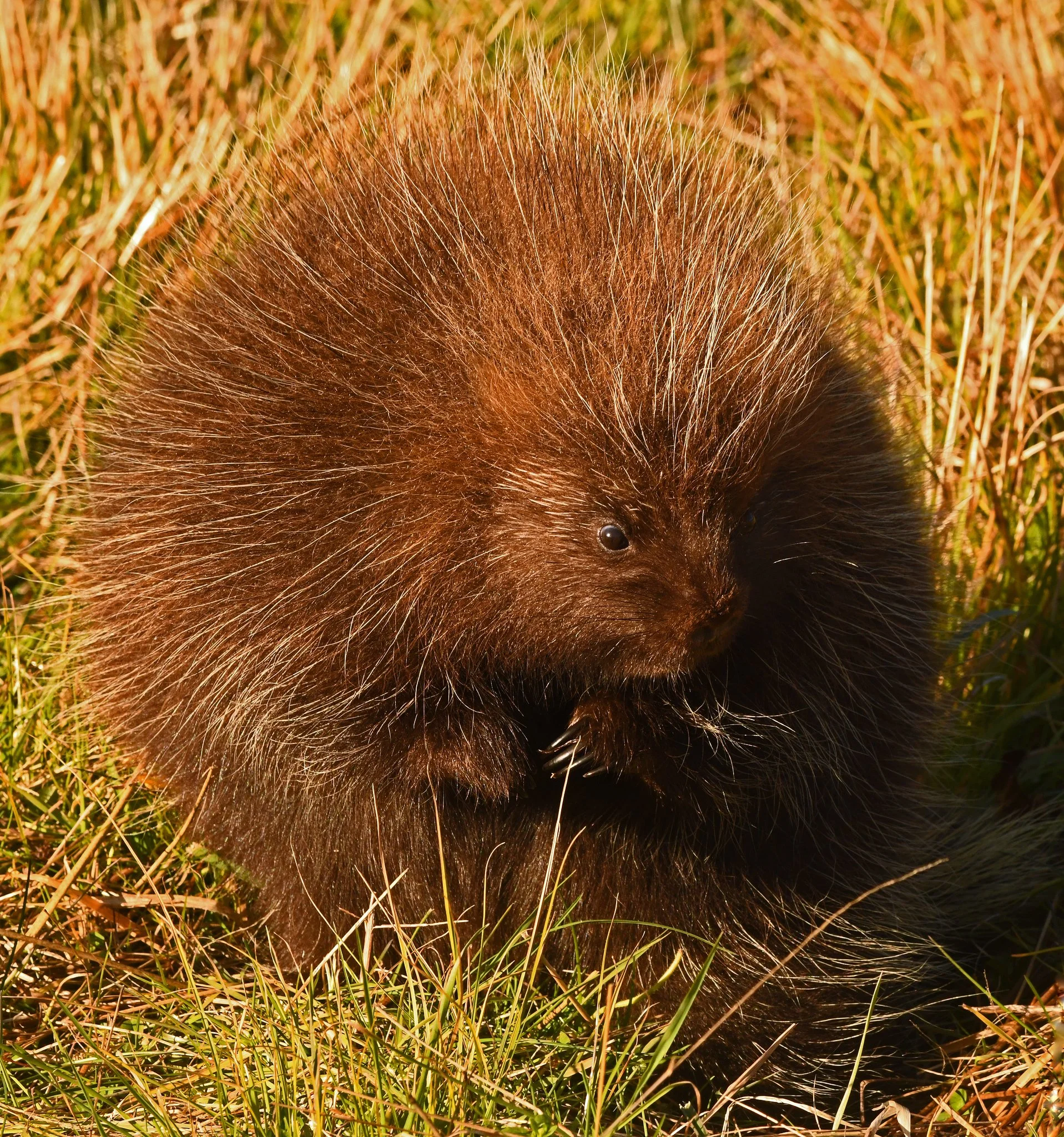
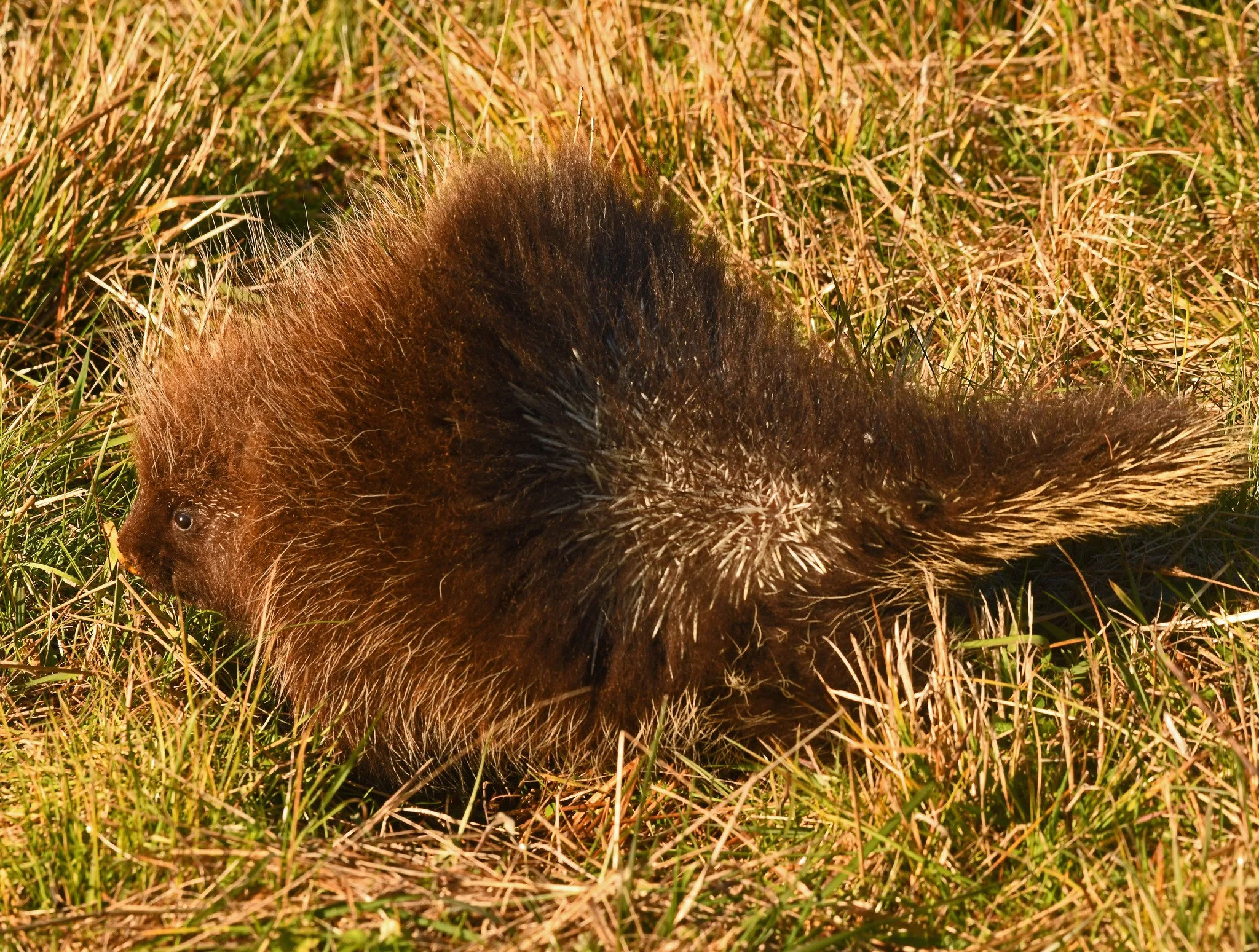
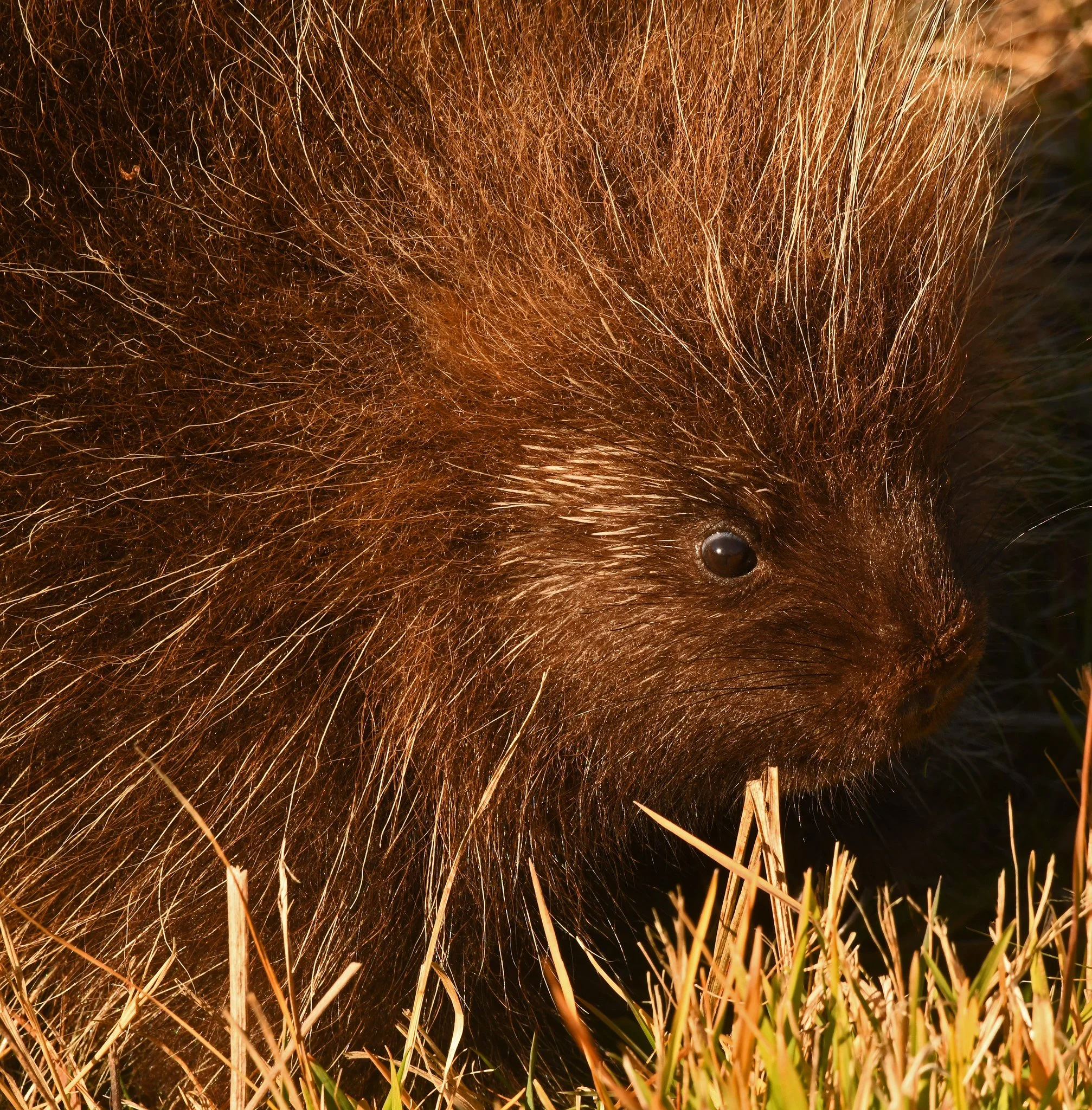
Here you see Harry out in the open again yesterday morning. I met him in the usual place, the lower part of the North Field. Most porcupines sleep during the day and come out of their shelters to climb and roam at dusk and during the night. But not Harry; he’s a morning porcupine.

Porcupines don’t hibernate or build nests or other structured shelters; they hide and rest in naturally convenient places, such as tree crotches, hollow logs, caves, rock crevices, and various wild tangles. They’re mostly solitary animals, but they will huddle together – carefully – at very cold times.

You get a glimpse of one of Harry’s front paws above. All four feet are adapted for climbing and gripping vertical surfaces, but porcupine front paws have a vestigial thumb opposing four long, clawed “fingers.” This configuration makes them dexterous climbers and allows them to hold food in their “hands” while eating. They can sit up and eat that food in a high tree like squirrels by using their tail and its quills for support.

Porcupines like to snack on the inner bark of trees, especially in winter; this can kill or maim a tree. Although cute and interesting, some people (including me) believe that there aren’t enough natural porcupine predators around here to allow nature to balance the damage that they do.

The fisher weasel (aka fisher cat) is just about the only predator that will take on a mature and healthy porcupine and virtually always win. Some domestic dogs seemingly can’t resist the urge to chase and snap at porcupines, no matter how many times the unfortunate canines have been taken to the vet to have painful quills removed from their face.

On the other hand, porcupines do less tree damage than beavers. But that’s another story with a mostly-redeeming ending. (Images taken in Brooklin, Maine, on November 28, 2025; sex assumed.)

Comment

Comment

In the Right Place: Mummy Dearest

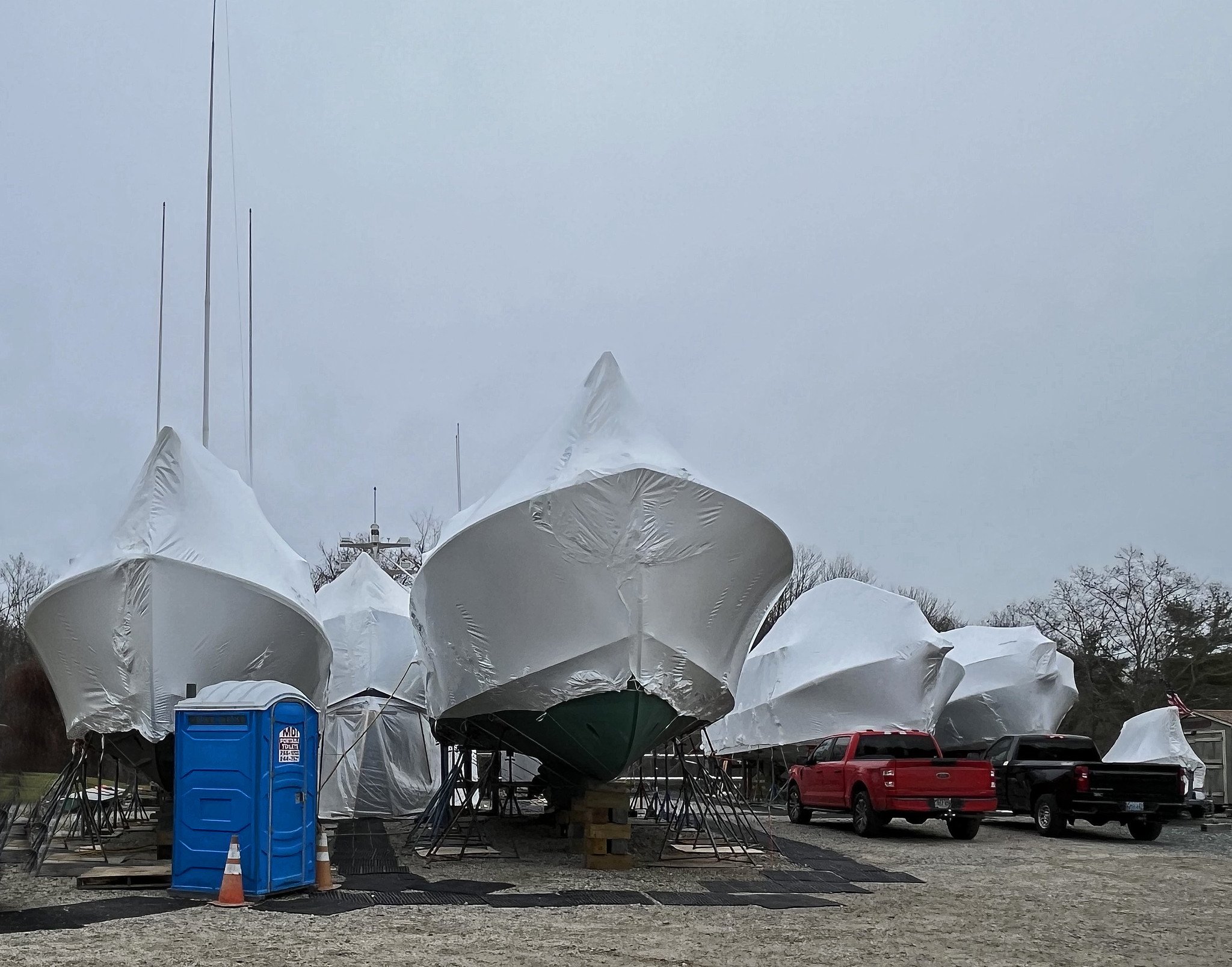
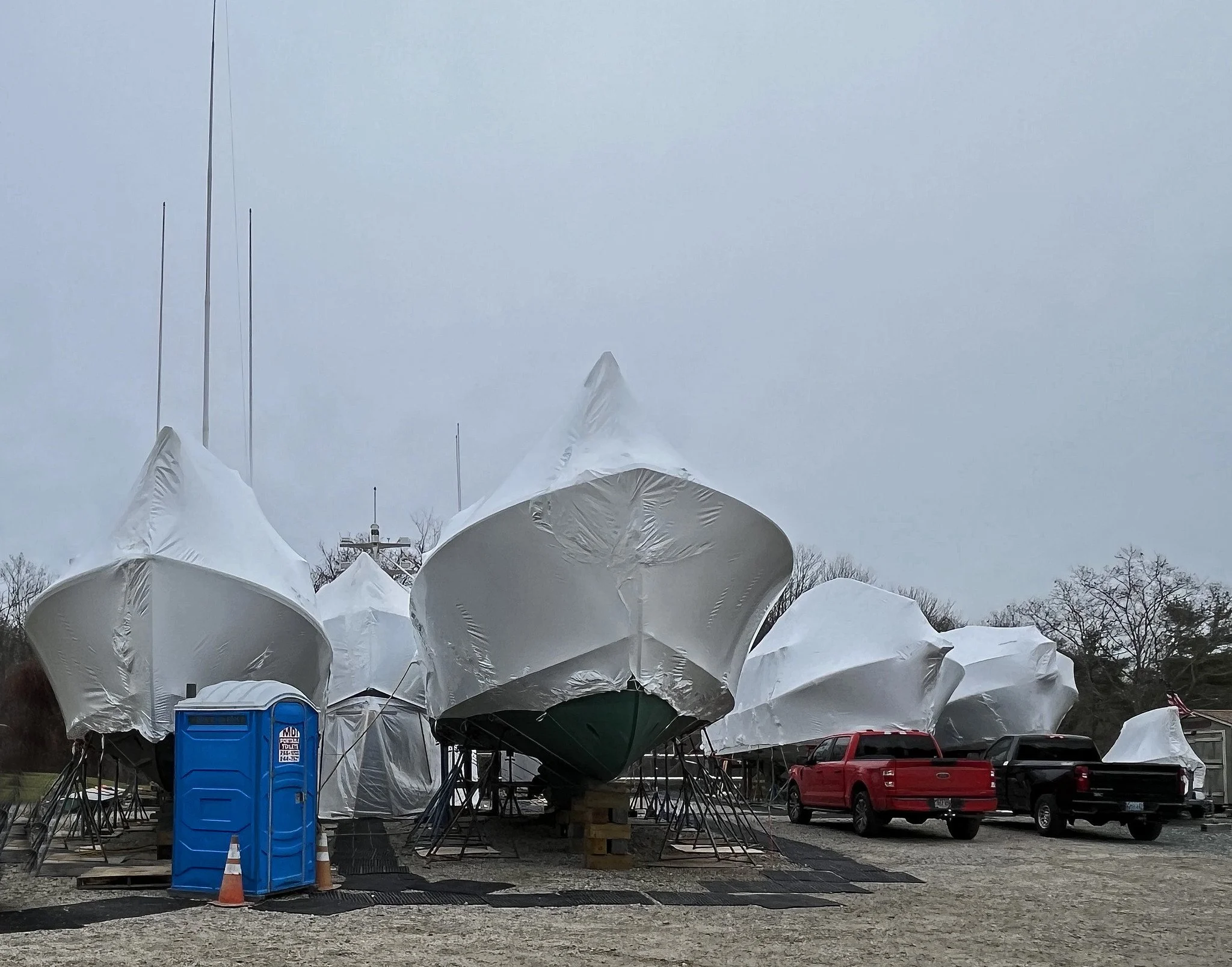
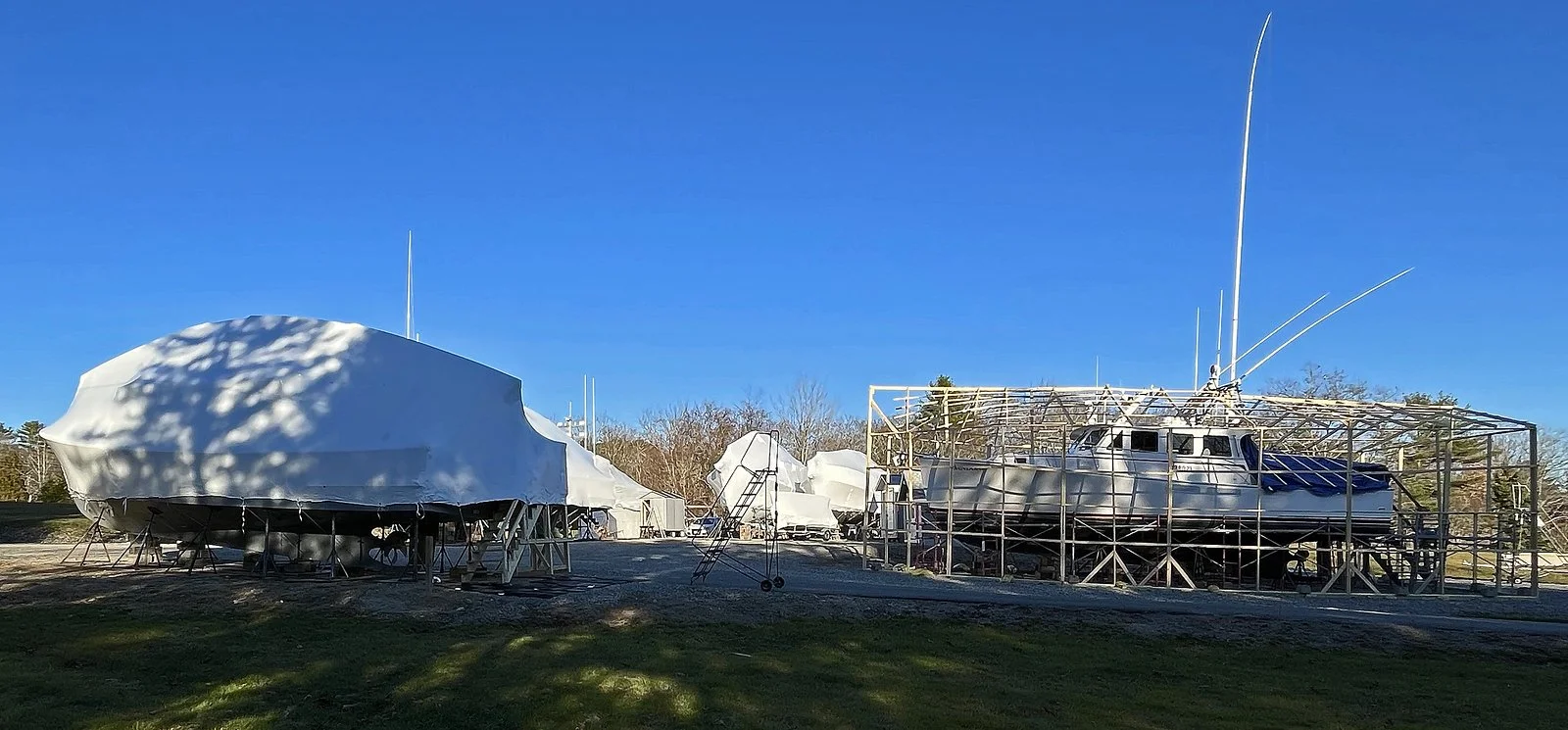
One of the common ways to protect a beloved boat during the Maine winter is to bring her up “on the hard” and mummify her in shrunken plastic. Here you see some larger vessels in such a state, a few of which seem to be making disapproving faces at being blindfolded and wrapped:

As I understand it, the basic steps of such shrink-wrapping start with cleaning and otherwise putting the boat in order, then building a scaffold-like frame around it:

Next, the plastic film is draped carefully over the vessel with precise allowances and fittings for such things as antennas; it’s then secured with straps and other devices. Finally, the wrap is tightened with the straps and shrunk with a heat gun. Vents are added and seams and endings are sealed with tape or another mechanism.

(Images taken in Surry, Maine, on November 15 and 25, 2025.)
Comment

Comment

In the Right Place: Pumping Heat

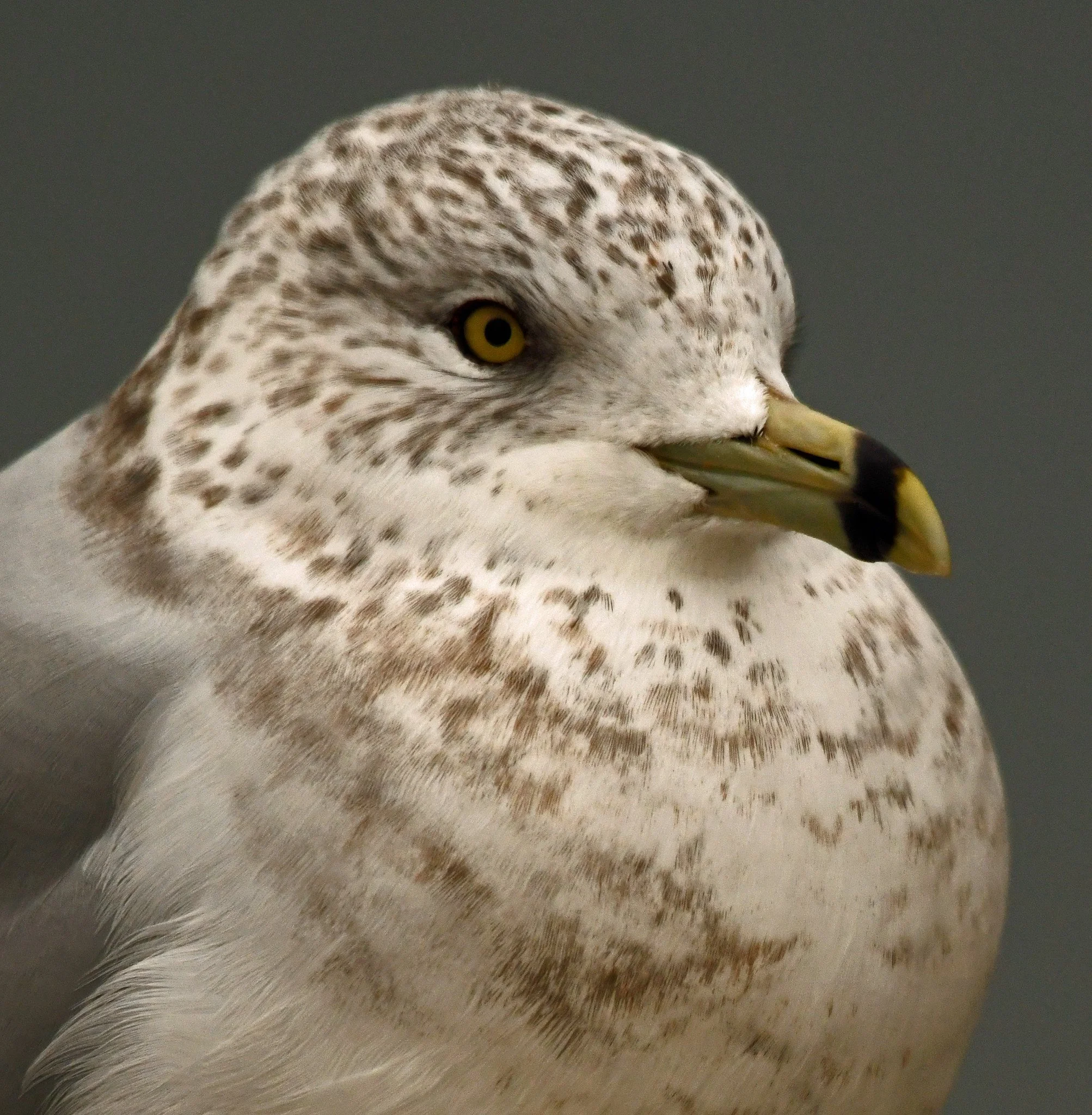
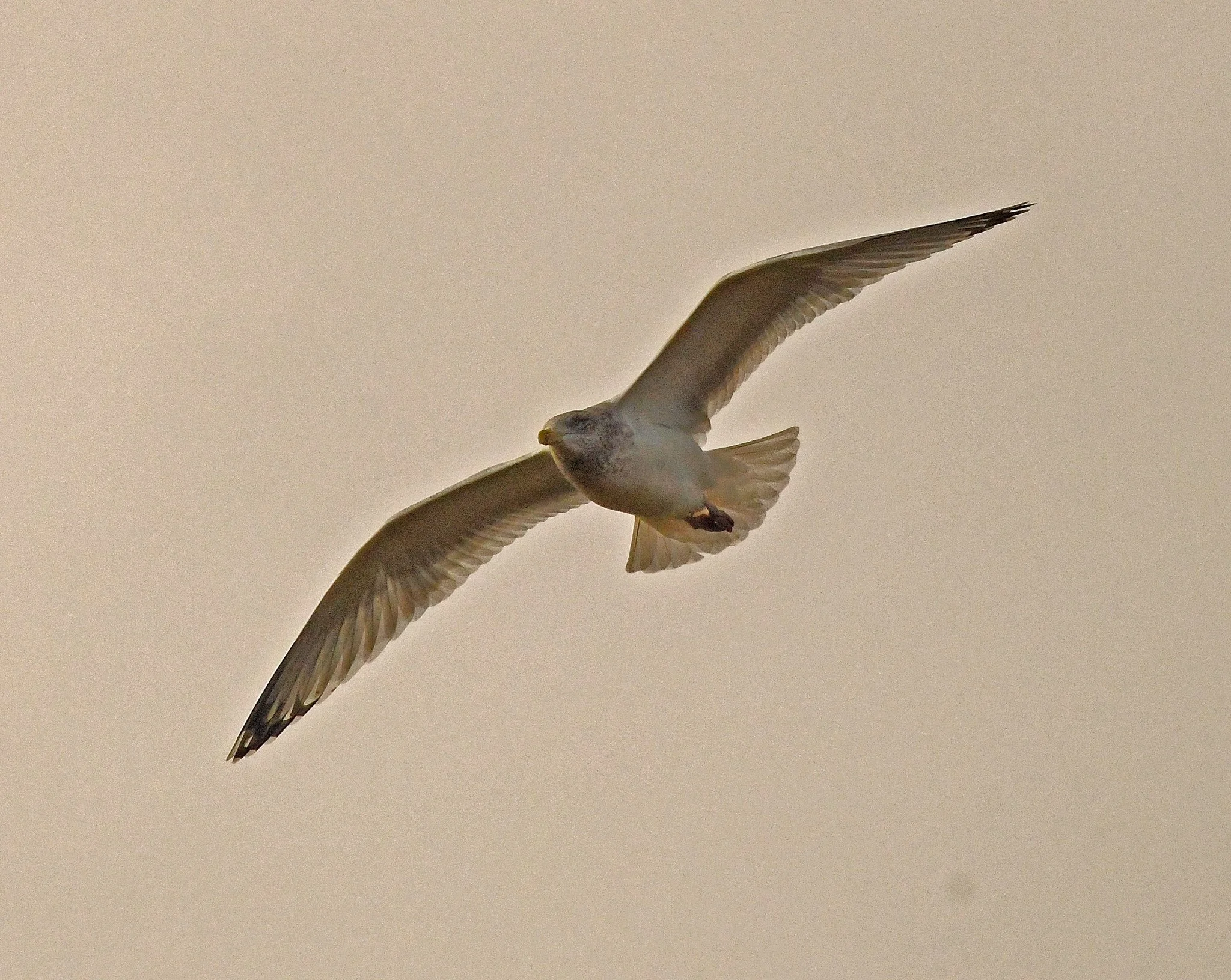
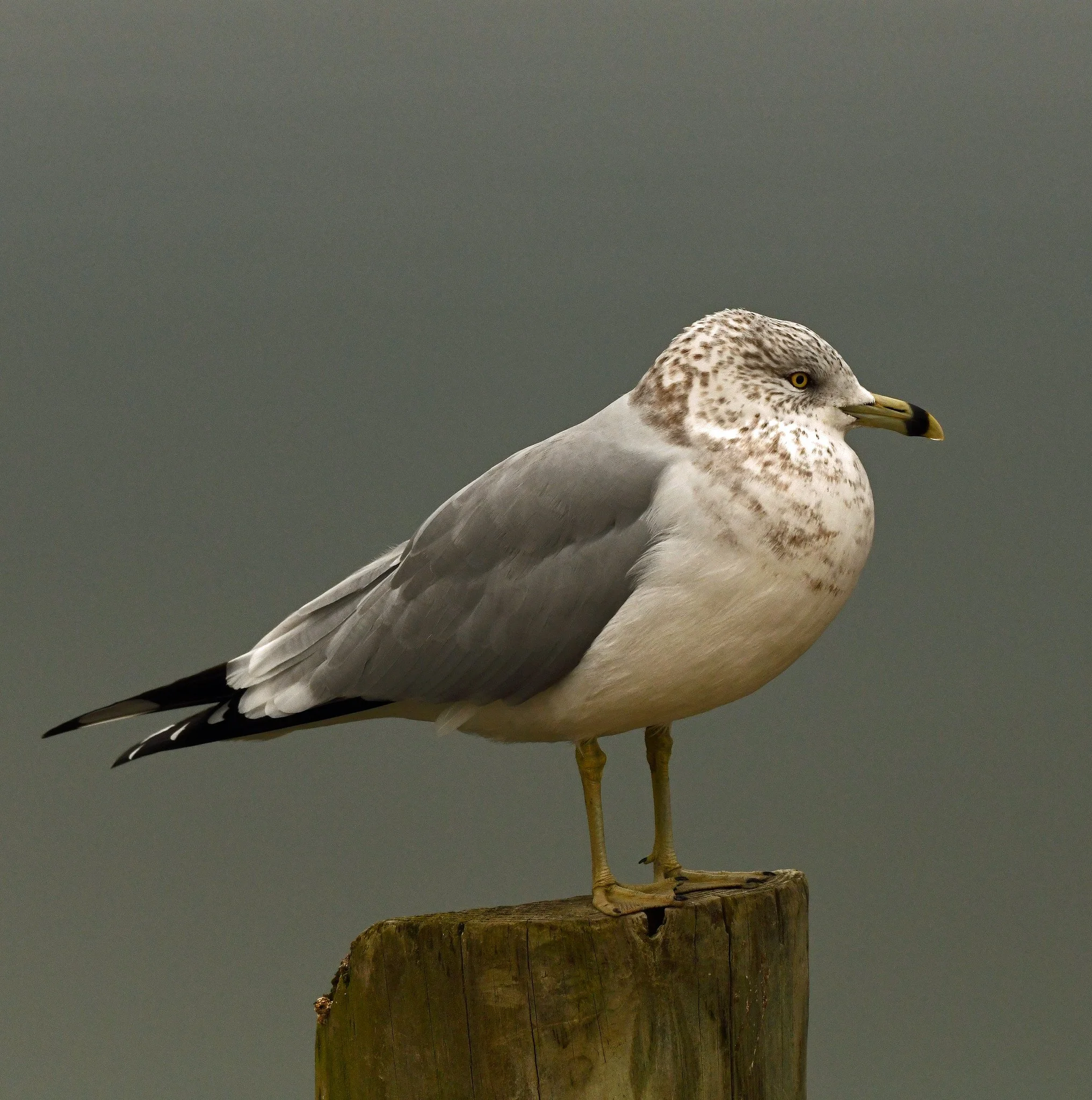
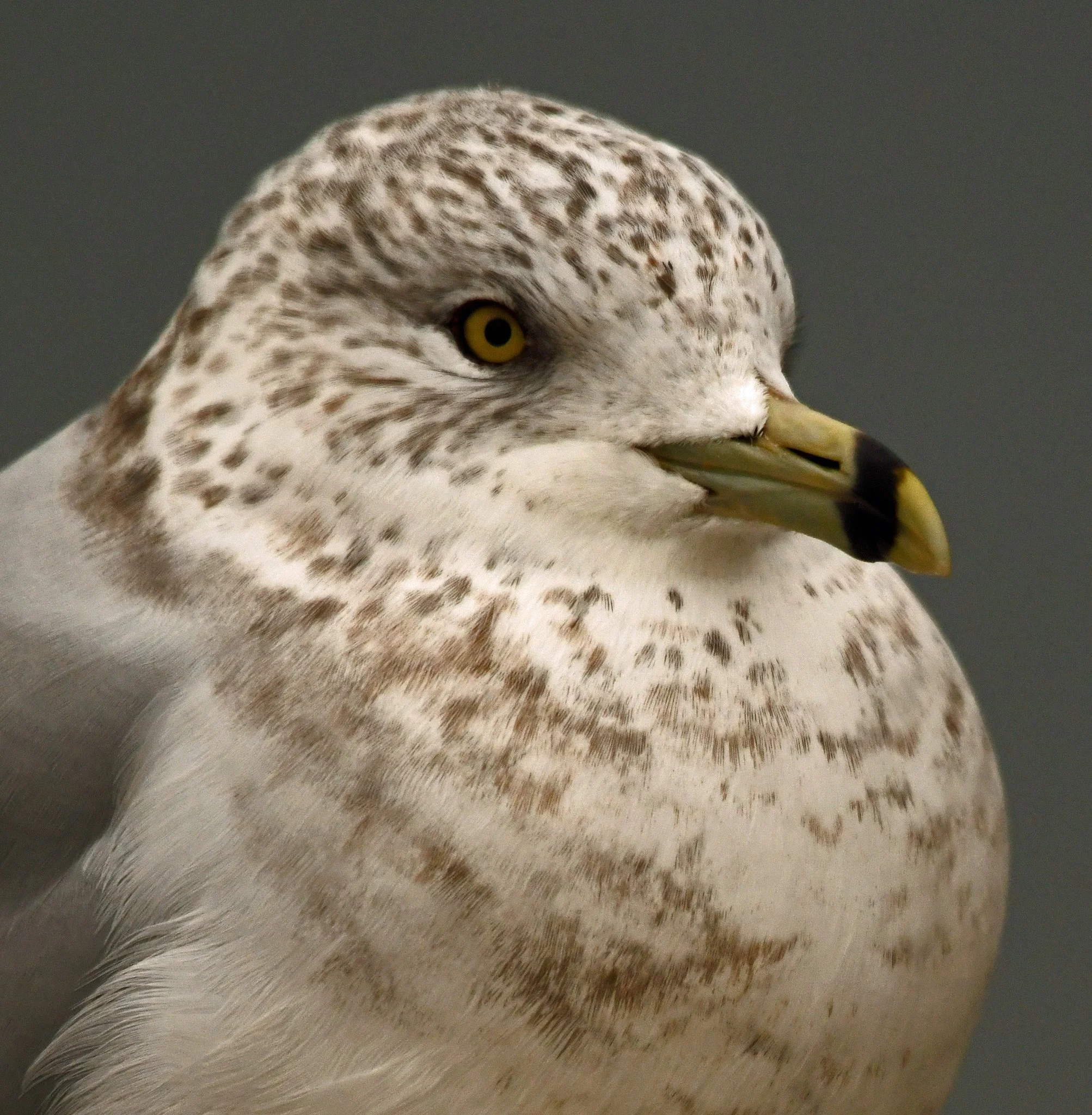
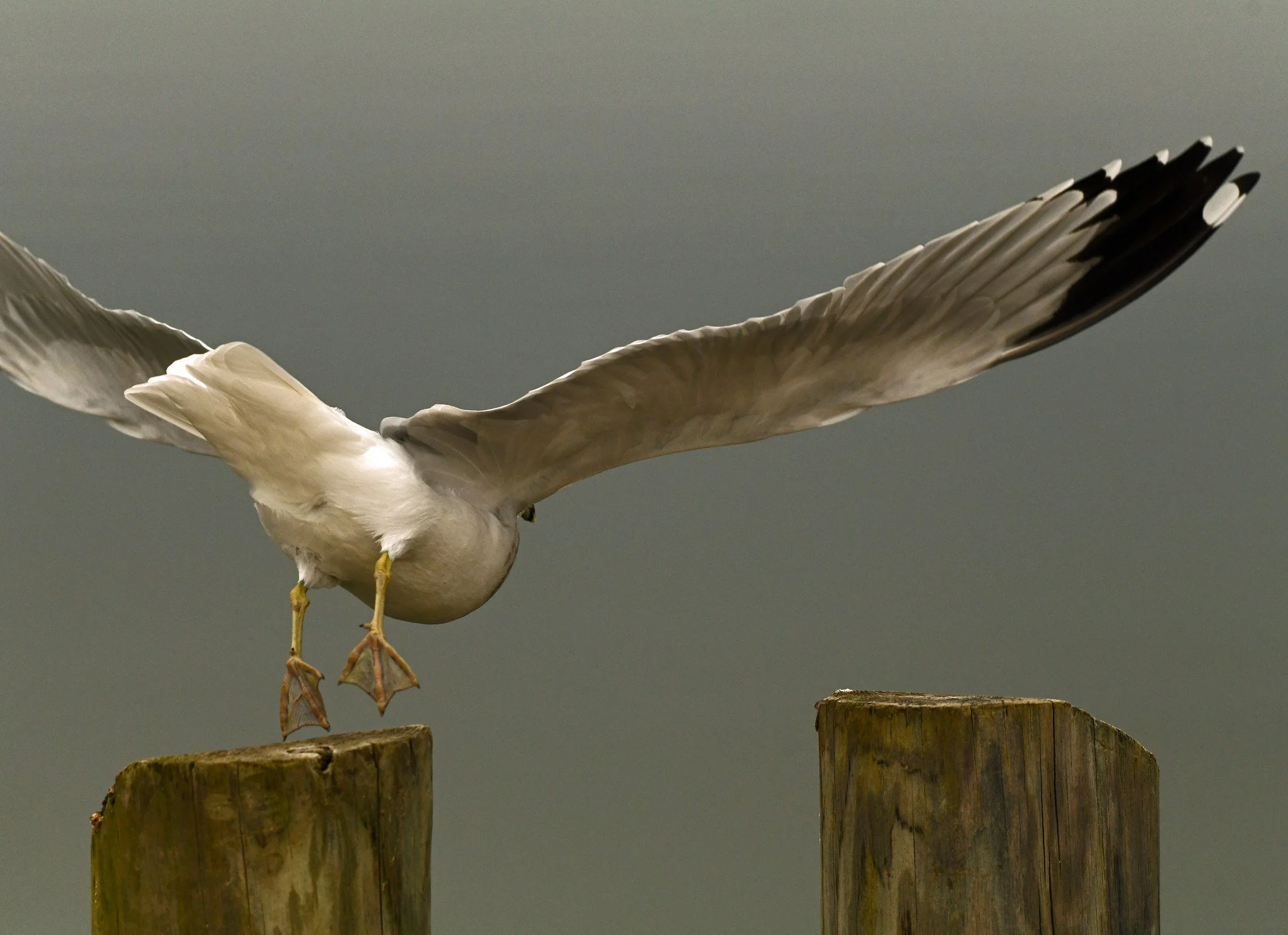
It’s no mystery why this common bird here is called a ring-billed gull. It’s as plain as the nose on his face. What is a mystery is how he can stand the winter cold without pants and socks on those skinny legs and wide webbed feet.

It turns out that, basically, seagulls have a heat pump system that uses the blood running up and down their legs and into their feet. As I understand it, warm arterial blood flows down to the feet and passes heat to the chilled venous blood returning to the body.

This mature ringbill (Larus delawarensis) is in his spotted, non-breeding winter plumage. The yellow or greenish-yellow legs of adult ringbills help differentiate them from other gulls at a distance. They also have fully-webbed feet. These allow them to swim well in our cold winter waters, which sometimes are warmer than the ambient air (but still brrrr).

(Images taken in Blue Hill, Maine, on November 25, 2025; sex assumed.)
Comment

Comment

In the Right Place: Pier Review

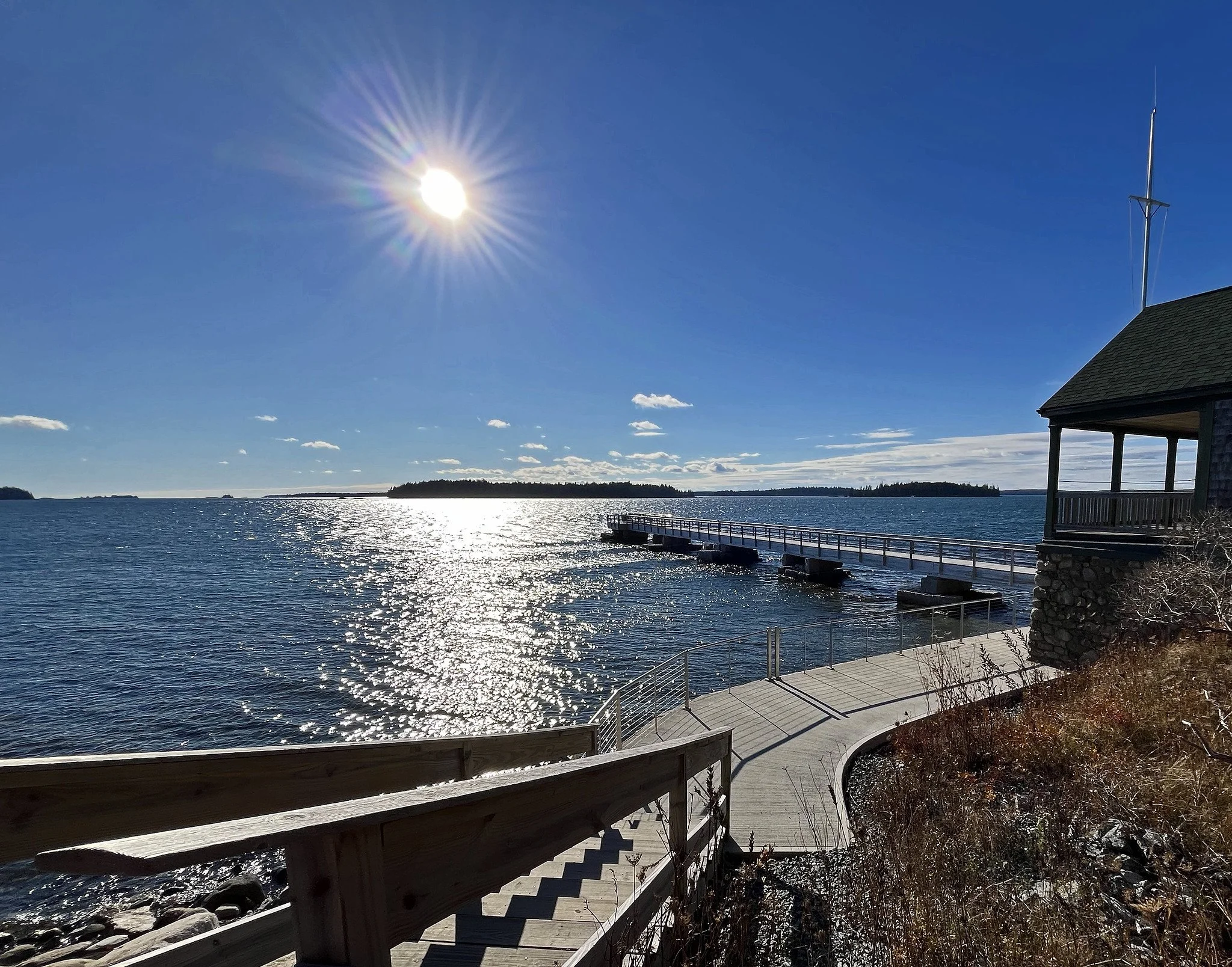
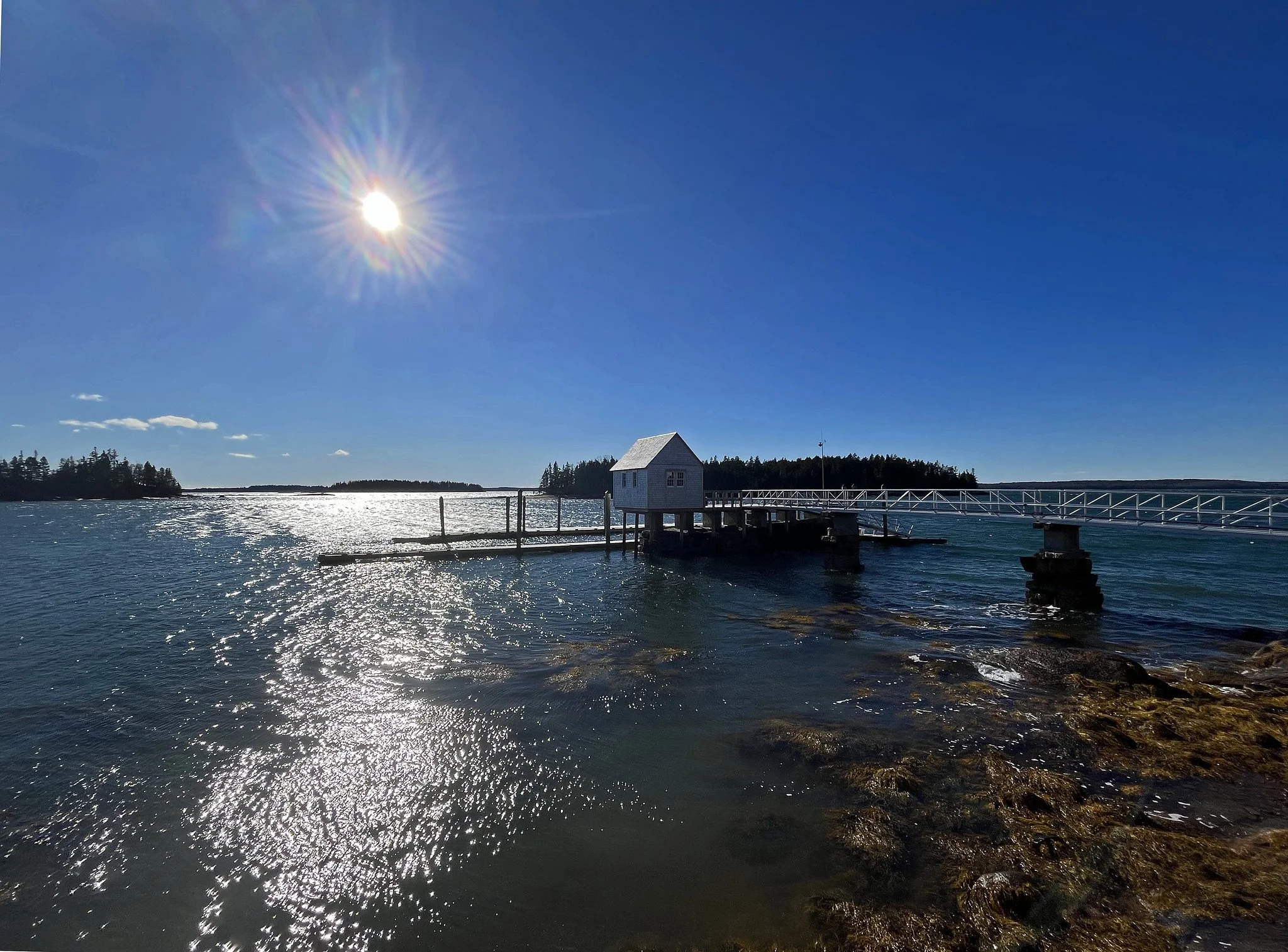
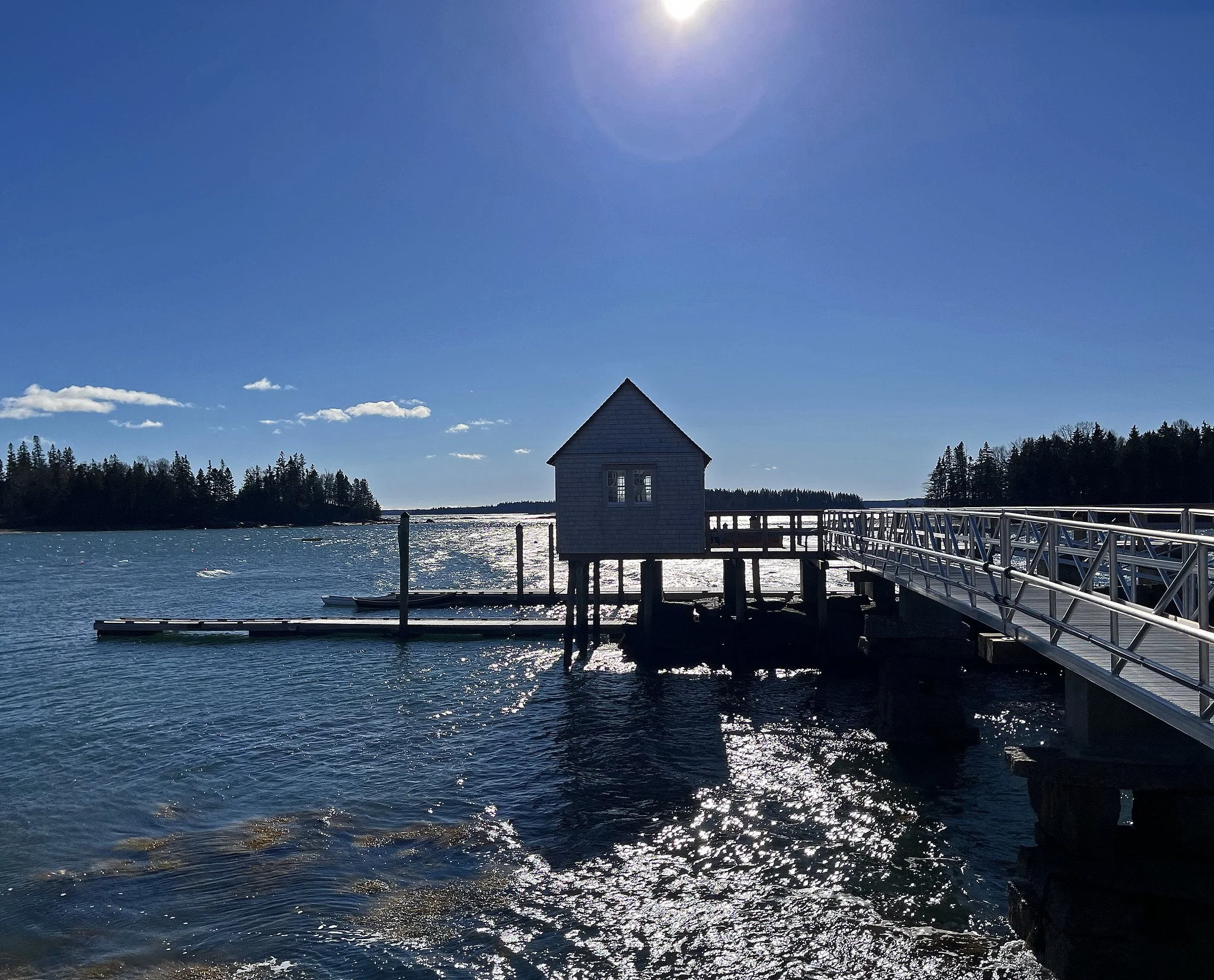
No matter how brightly the sun is shining, Maine piers usually are lonely places in November. But the two of them in Brooklin shown here are dramatic all year long.

Above, you see a pier that is often crowded in summer and early fall: the WoodenBoat pier that extends from near its boathouse into Great Cove. Below, you’ll see the other pier, which also often is crowded in summer and fall: the Brooklin Boat Yard pier at Center Harbor.

Both piers have 20th Century granite block pilings with walkways that have been repaired and replaced over the years, sometimes after major storms. Both lead to docking floats that are removed in winter. (The BBY floats were removed shortly after this image was taken.)
As far as I can tell, the original WB pier and boathouse were built in 1916-1917 as part of the creation of a new summer estate for Alexander S. Porter, a Bostoner. His estate was purchased from a subsequent owner by WoodenBoat Publications in 1977, which was founded in 1974 by Jon Wilson. (The WoodenBoat School was founded there by him in 1981, I believe.)

The original pier at Center Harbor apparently was constructed in 1957 at the Arno Day Boat Yard, three years before that boatyard was purchased and expanded into the BBY by Joel White. The pier’s walkway and shed were replaced entirely after being destroyed by a historic storm in January of 2024.

(Images taken in Brooklin, Maine, on November 18 [BBY] and 24 [WBS], 2025.

Comment

Comment

In the Right Place: Life with Bernie & Bernice, VIII

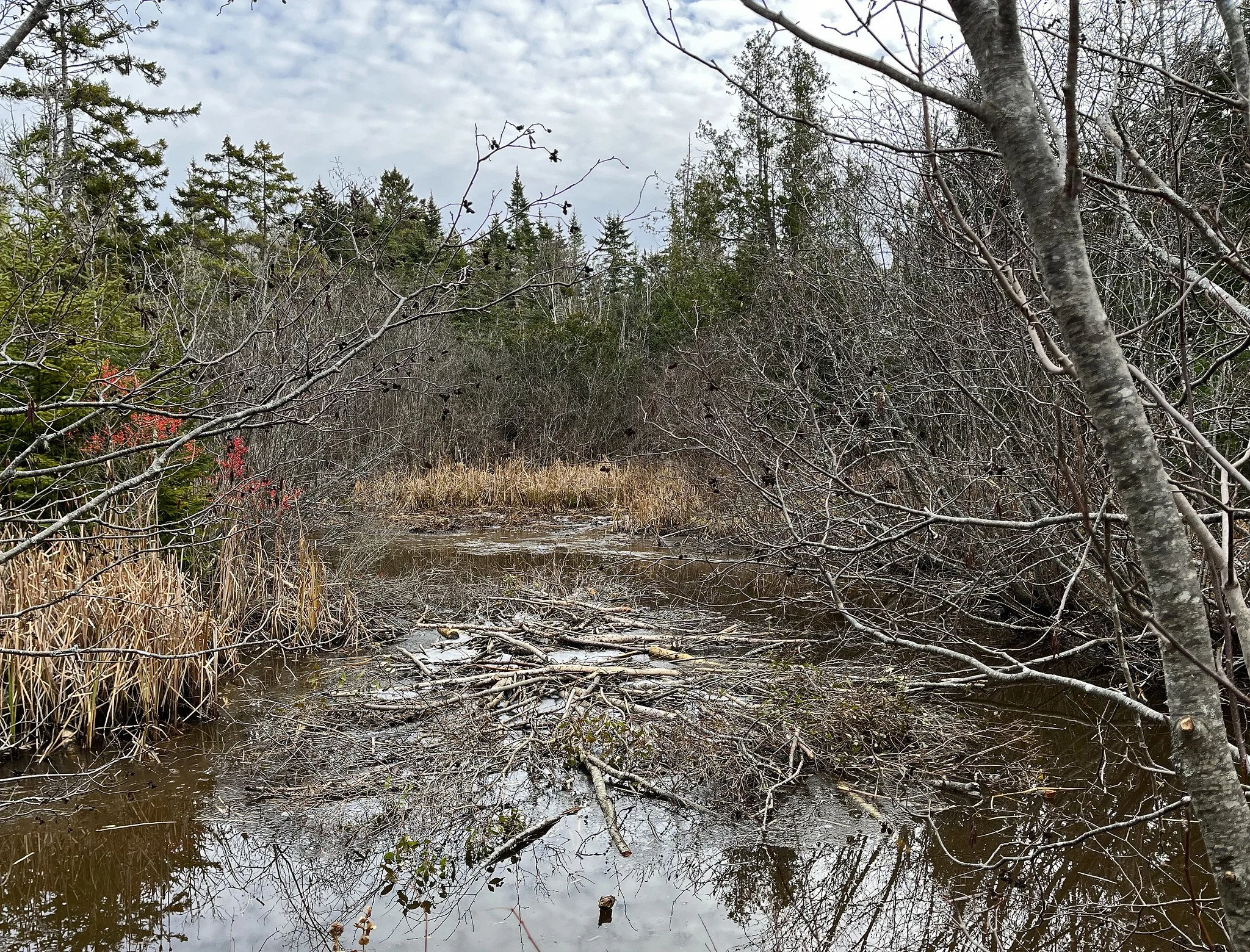
I’m still not sure whether living with claim-jumping American beavers is a privileged educational opportunity or a deserved penance for my many sins. Time will tell. So far, there have been no damaging floods and no special trees toppled. Our fingers are crossed.

Above is an image taken yesterday of the pond that Bernie and Bernice have claimed for their home, since Bernie staked it out in late September. Ice is forming there now from the cold and the water level is lowering due to lack of rain or snow. Yet, our honeymooners continue to spend their nights joyously gnawing down bushes and tree trunks and piling them on the water and ice in a seemingly haphazard manner to create a lodge for themselves and their eventual family.

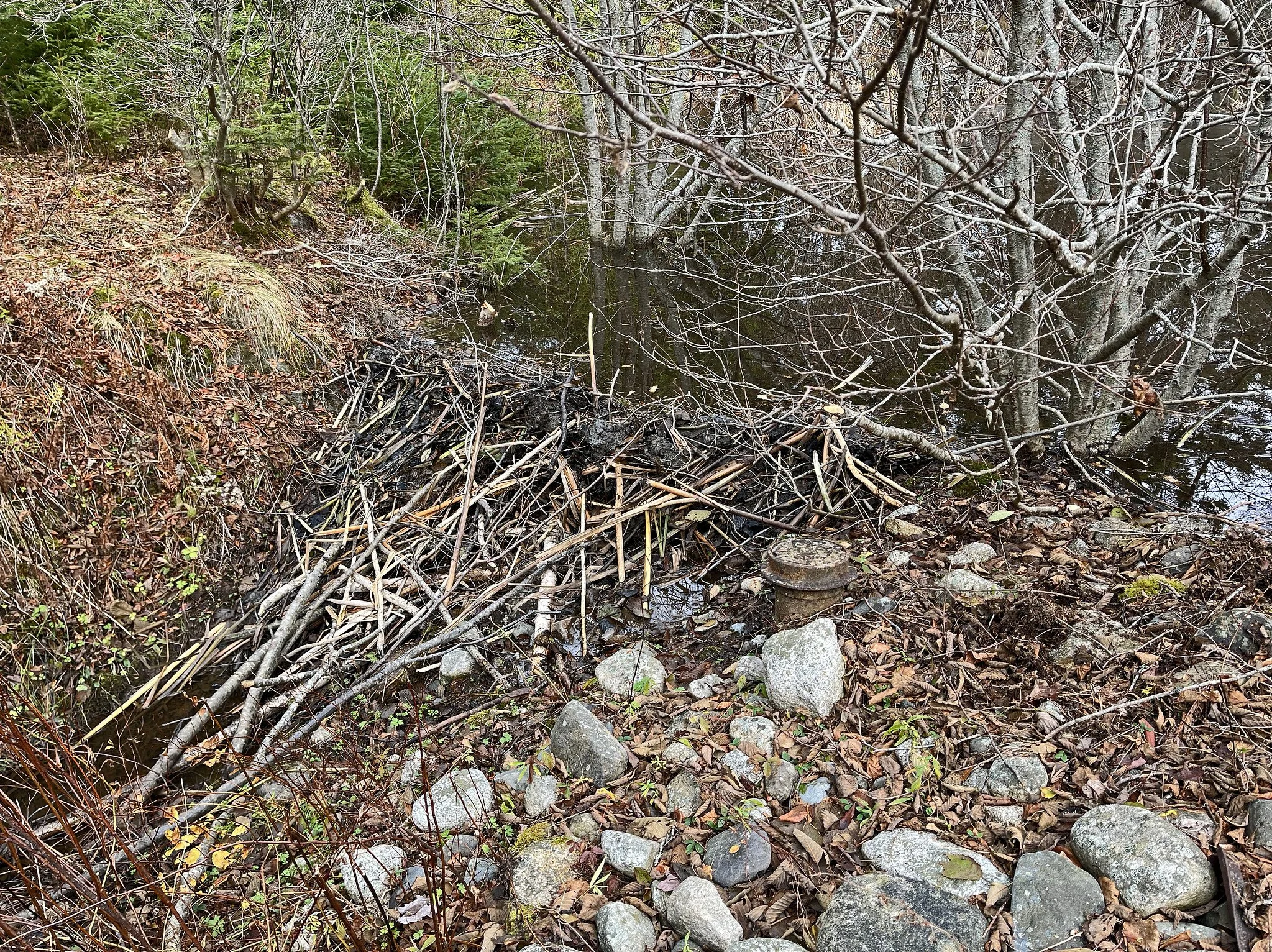
The result so far is that B&B have made a mess and are making it a bigger mess nightly. Below is another image taken yesterday of the largest of the three dams made by the beavers; they all leak:

One of the surprises of this experience (and a little research) has been to see how sloppy and imprecise beavers can be in constructing dams and permanent homes. Most birds are much neater in making even temporary homes.

Of course, beavers can’t fly (thankfully!) and they undergo threats of home invasions here from bobcats, coyotes, and bears (and lynx, cougars, and wolves in other beaver territories). Strong and jagged homes that are accessible from under water are better for beavers than intricately woven and beautiful nests high above.

Beavers also are specially-equipped for building homes in wintery waters. Their fur coats are two-layered and extraordinarily dense, making them warm, waterproof, and luxurious. Their outer guard hairs are coarse and come together to repel water, while the thick, oily underfur is soft and contains tiny barbs that help the “hair” strands interlock. Take a look at the protective thickmess of Bernie’s coat after surfacing out of the water :

(Images taken in Brooklin, Maine, on November 22 and October 22, 2025.)
Comment

Comment

In the Right Place: On Winter Coastal Sunsets

Sundowns come early now for us on the watery edge of the eastern time zone.  When they come to a meadow, the sun sometimes reaches a golden arm out and languorously embraces the field before departing.

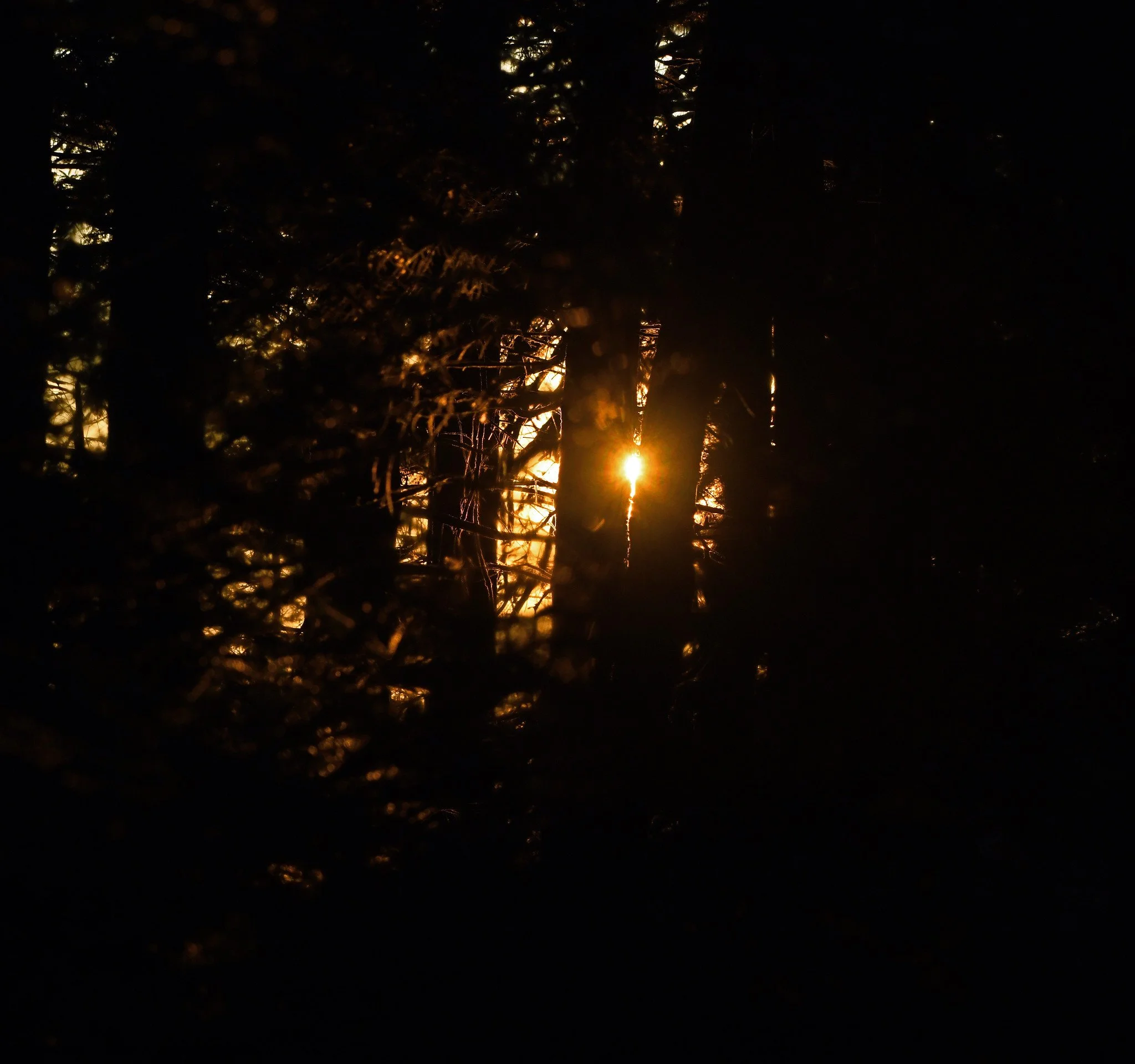
There also can be a playful, hide-and-seek aspect to the sun going down behind a spruce and balsam fir woods:

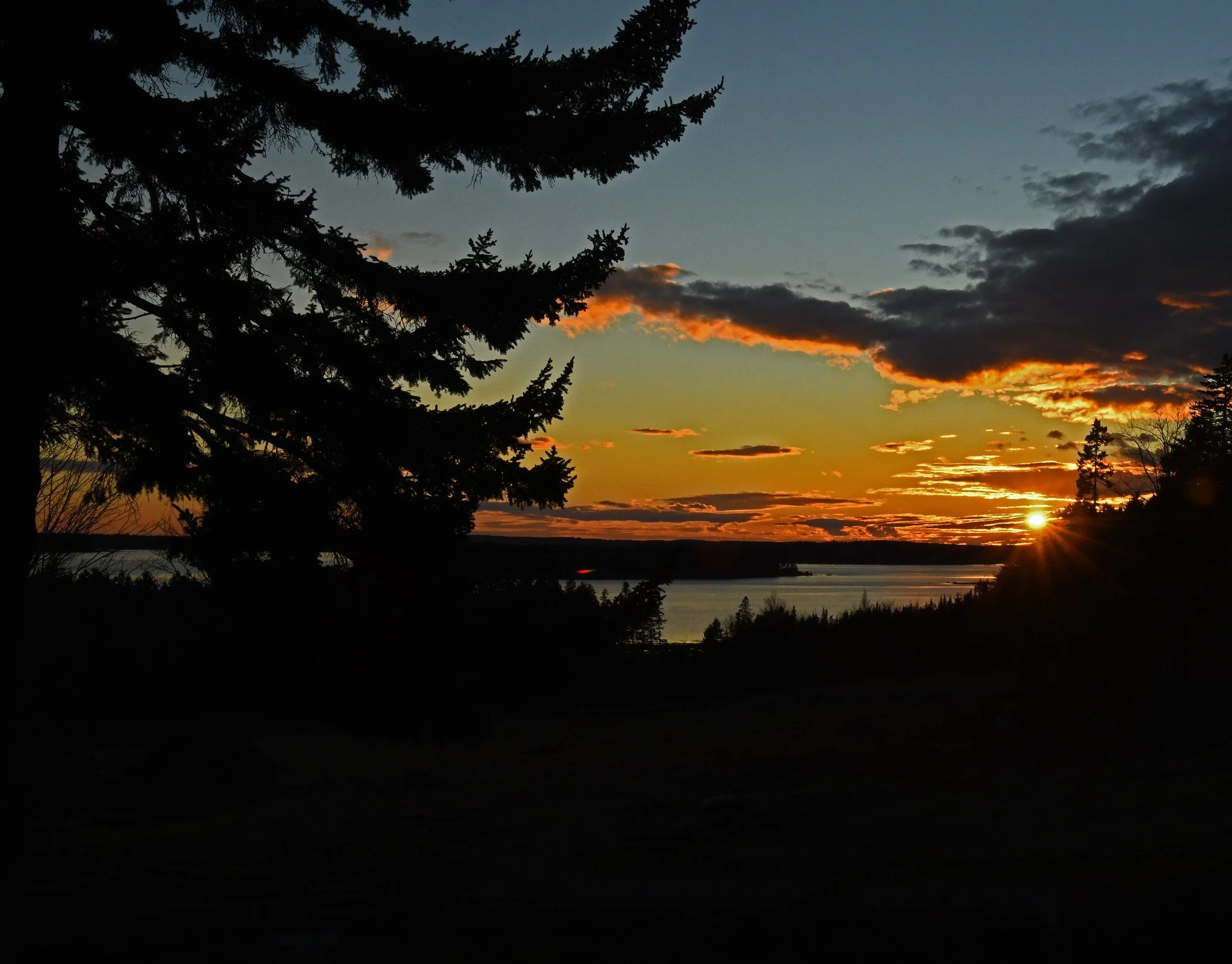
Just before it departs, the sun often performs a visual drum roll and is gone, leaving behind a short-lived afterglow to ease us into night.

Sometimes, as night’s blackness is just arriving, the clear, cold winter air wafts in off the ocean and seems to mix with the dwindling warm light, giving it a salty, intoxicating tang that makes you wish you could drink the day’s end down before it goes away. (Images taken in Brooklin, Maine, on November 10 and 22, 2025.)
Comment

Comment

In the Right Place:  Ups and Downs

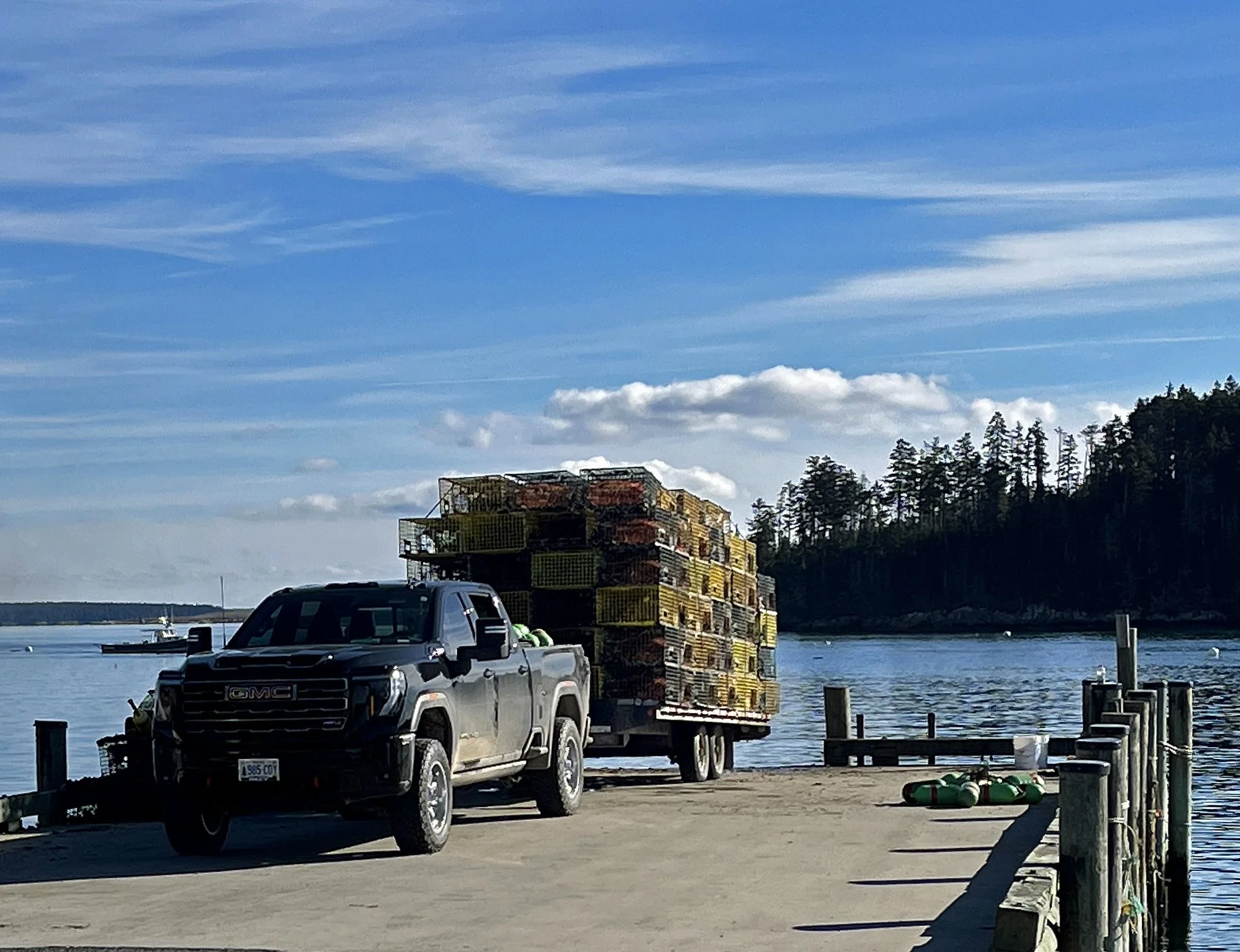
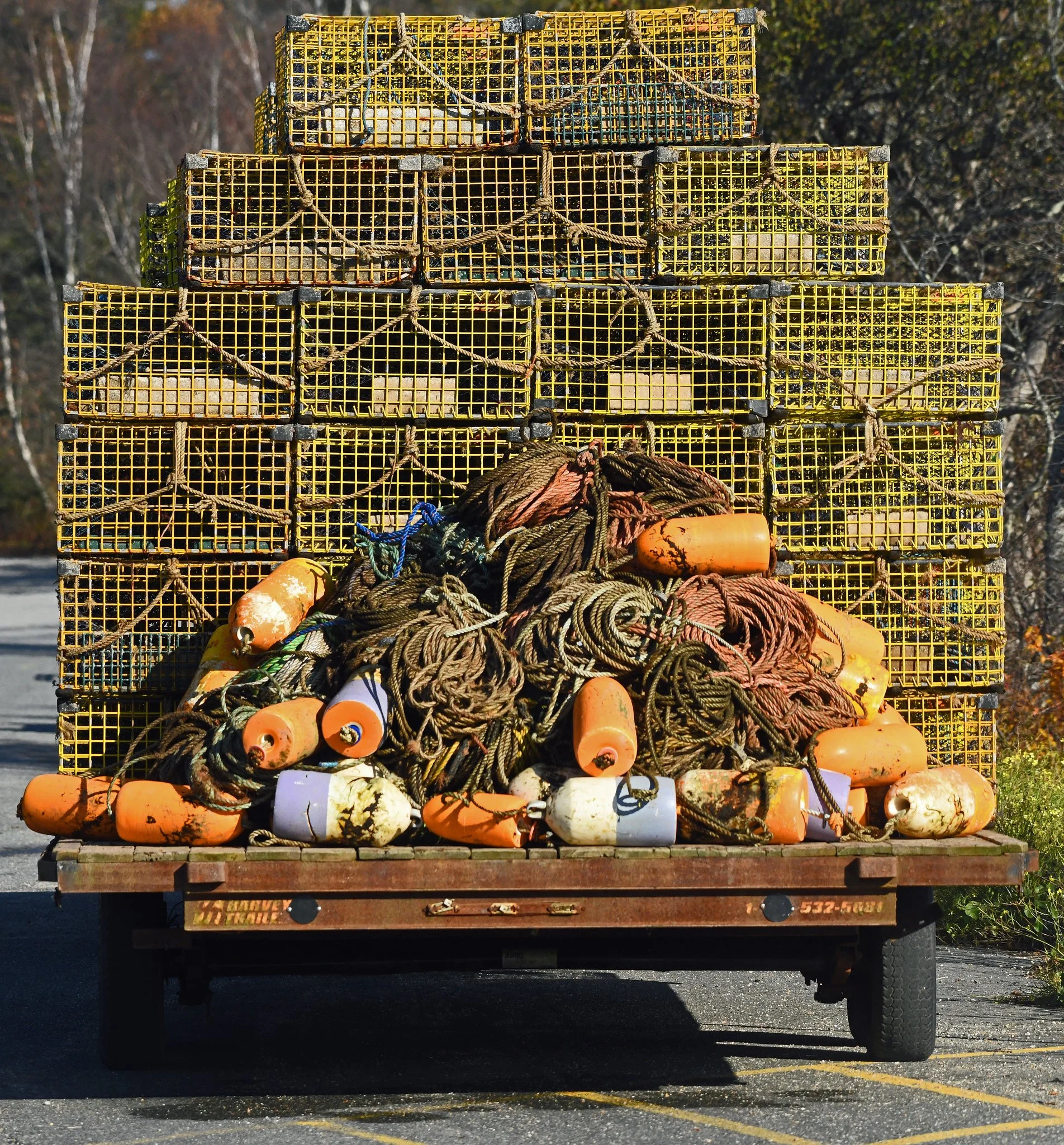
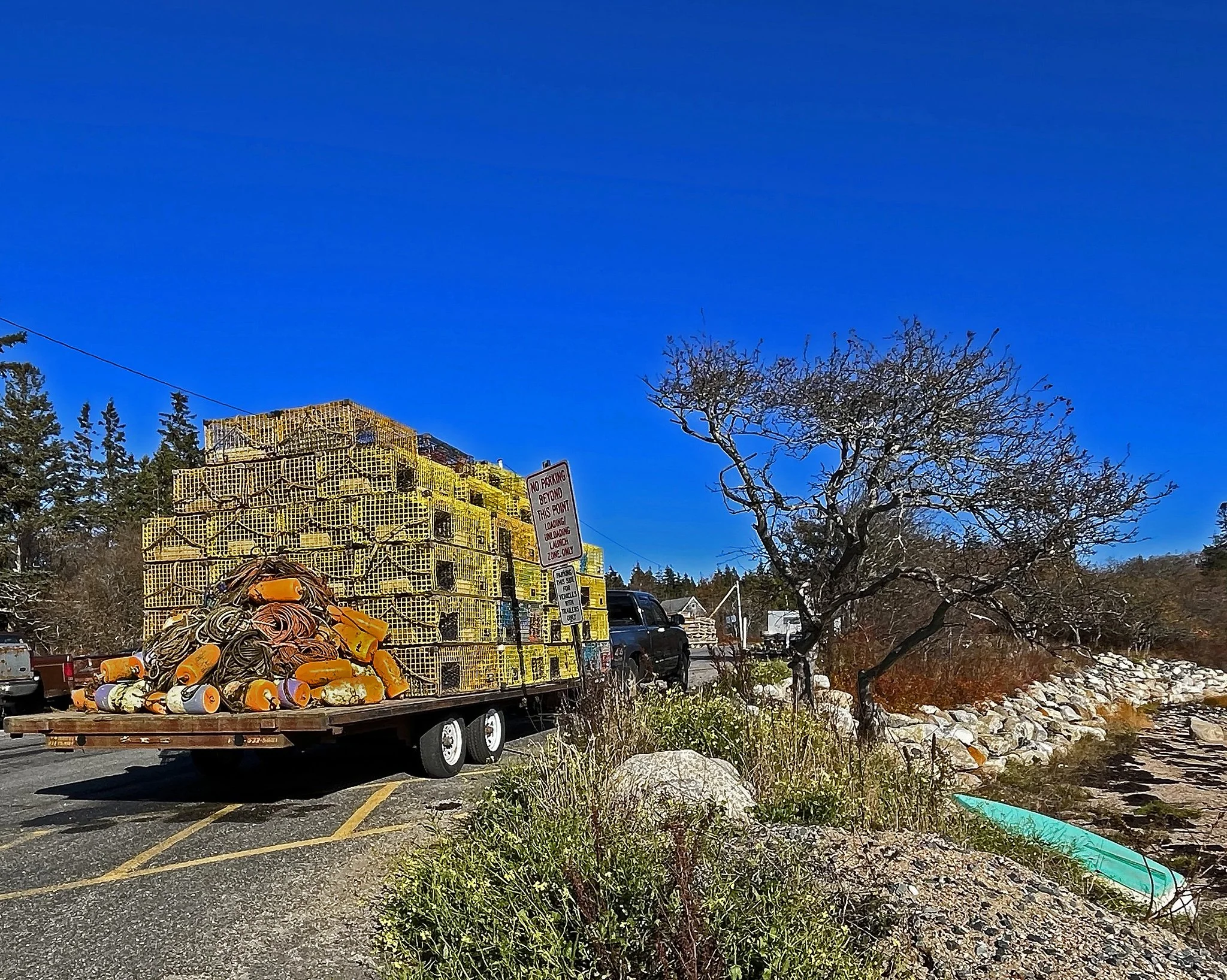
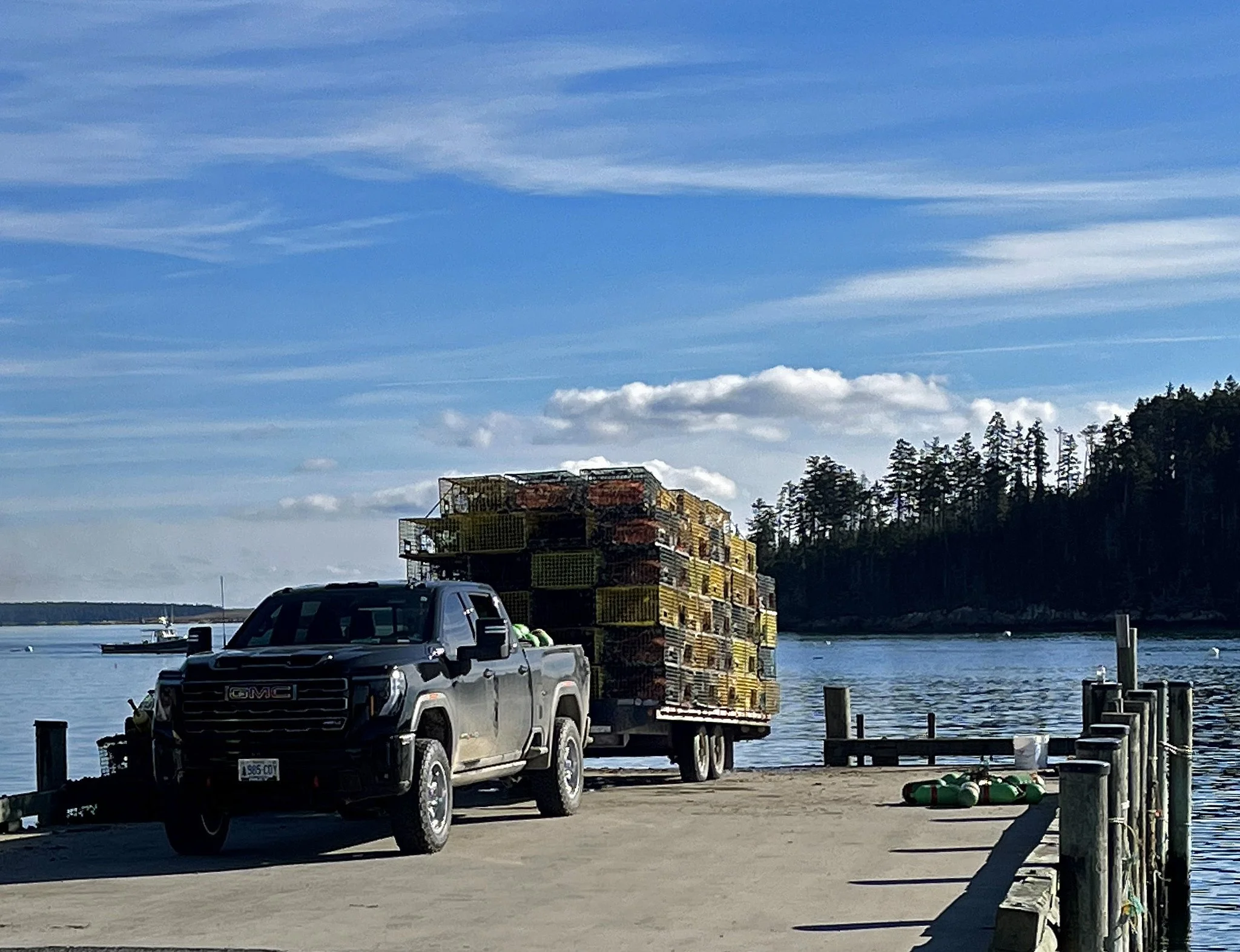
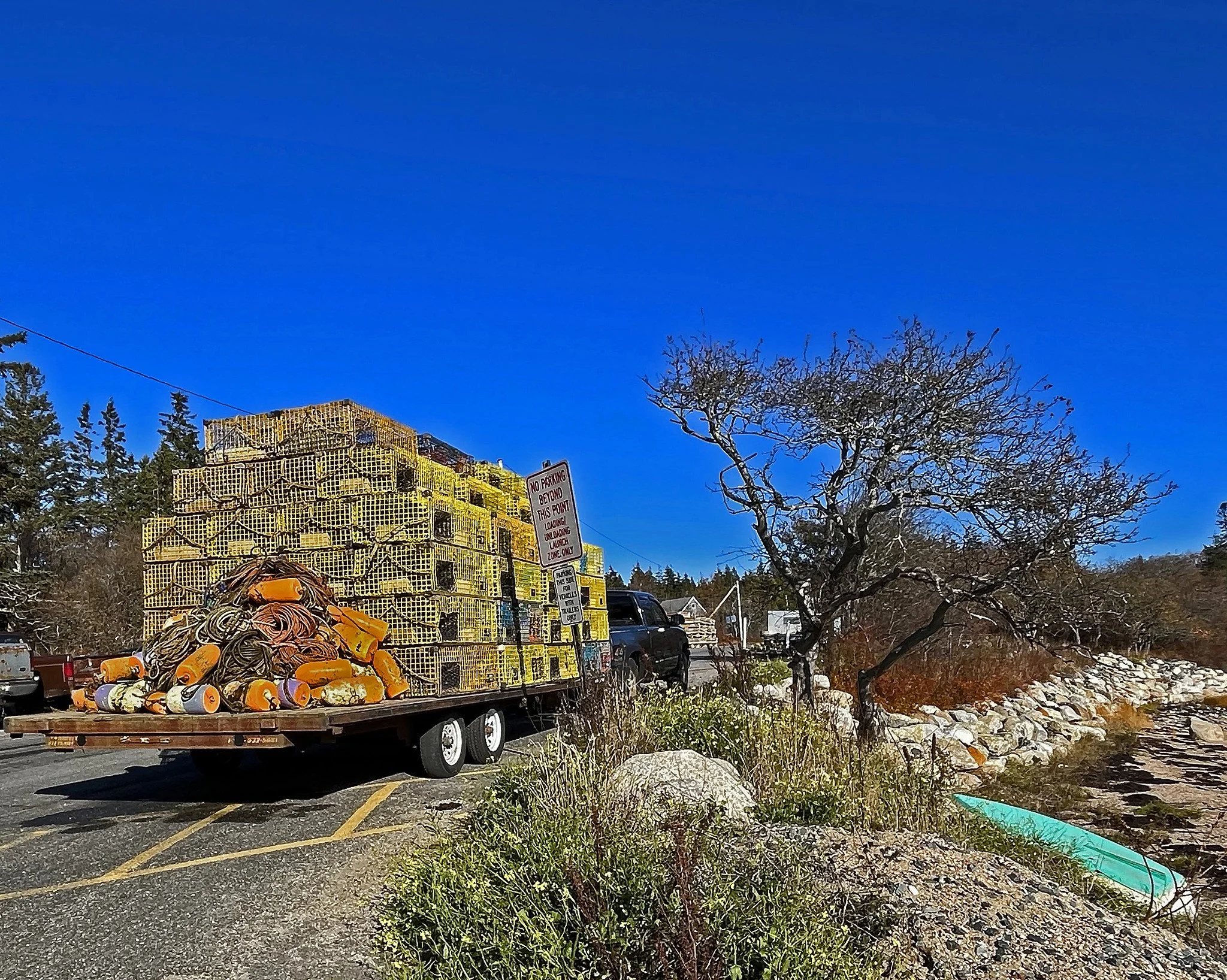
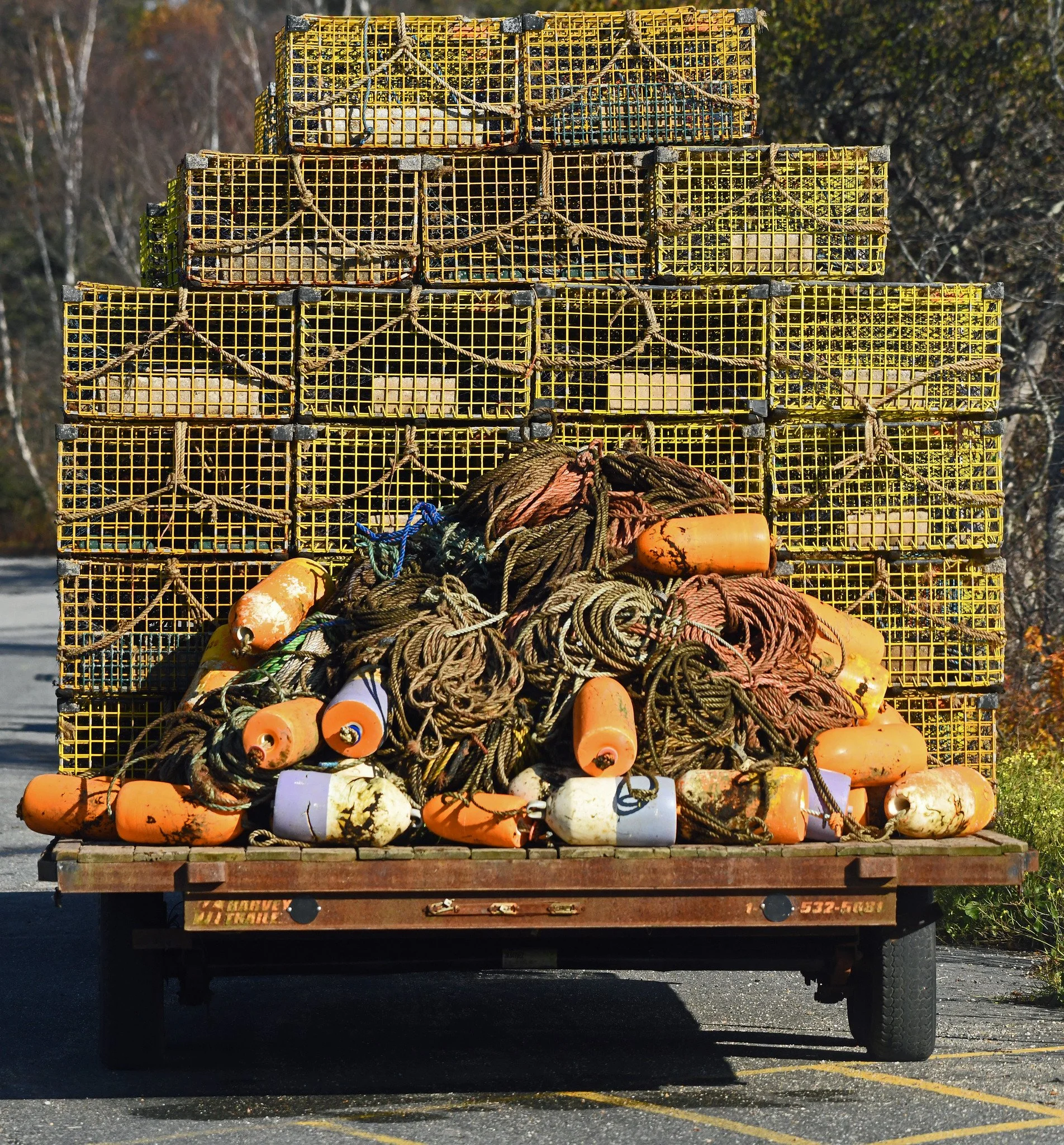
Here you see that the coastal lobster season is winding down and lobster traps and their gear are being brought up and stacked at Naskeag Harbor to be trailered to storage. I hear that it has been a good (albeit not great) summer and fall for lobster fishing. 

Some fishermen soon will be reconfiguring their vessels into scallop-dragging boats with booms, masts, winches, and “drags.” (A drag is an ingenious contraption in the form of a purse-netting dredge made of wood, chain, and rope for scooping scallops off the sea bottom.)

(Images taken in Brooklin, Maine on November 20, 2025.}

Comment

Comment

In the Right Place: Face Time

Here you have a long view of the south face of that near-mountain called Blue Hill, as it looms over a lowering tide in Blue Hill Bay:

There are three good trails along that rocky south face, one of which will give you a grand view from near the summit of the Hill. The rocks there mostly are local bedrock schist and volcanic rocks, scattered with glacially-deposited granite boulders. On the reverse side of the Hill, its north face has a continuing trail that’s a bit more difficult to reconnoiter.

Which reminds me of an interesting fact: The North Face Company that produces stylish weatherproof clothes was created by two outdoors enthusiasts and named to reflect what usually is the hardest part of a mountain to climb – the weather-beaten north face. Curiously, the idea for the North Face Company, itself, reportedly began at a much lower altitude – on a San Francisco beach. But that’s another story.

(Images taken in Blue Hill, Maine, on November13, 2025.)
Comment

Comment

In the Right Place: Winter TLC

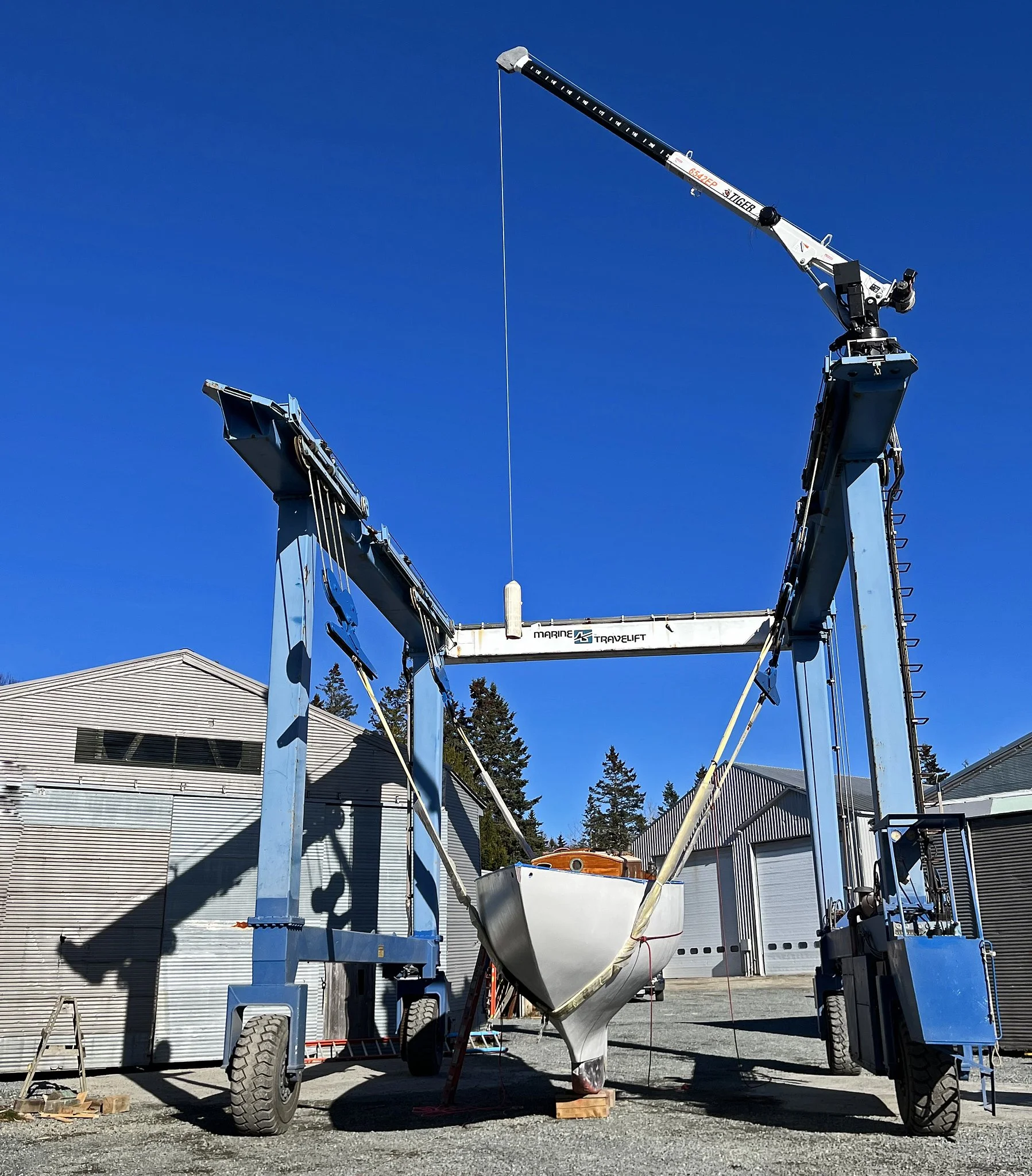
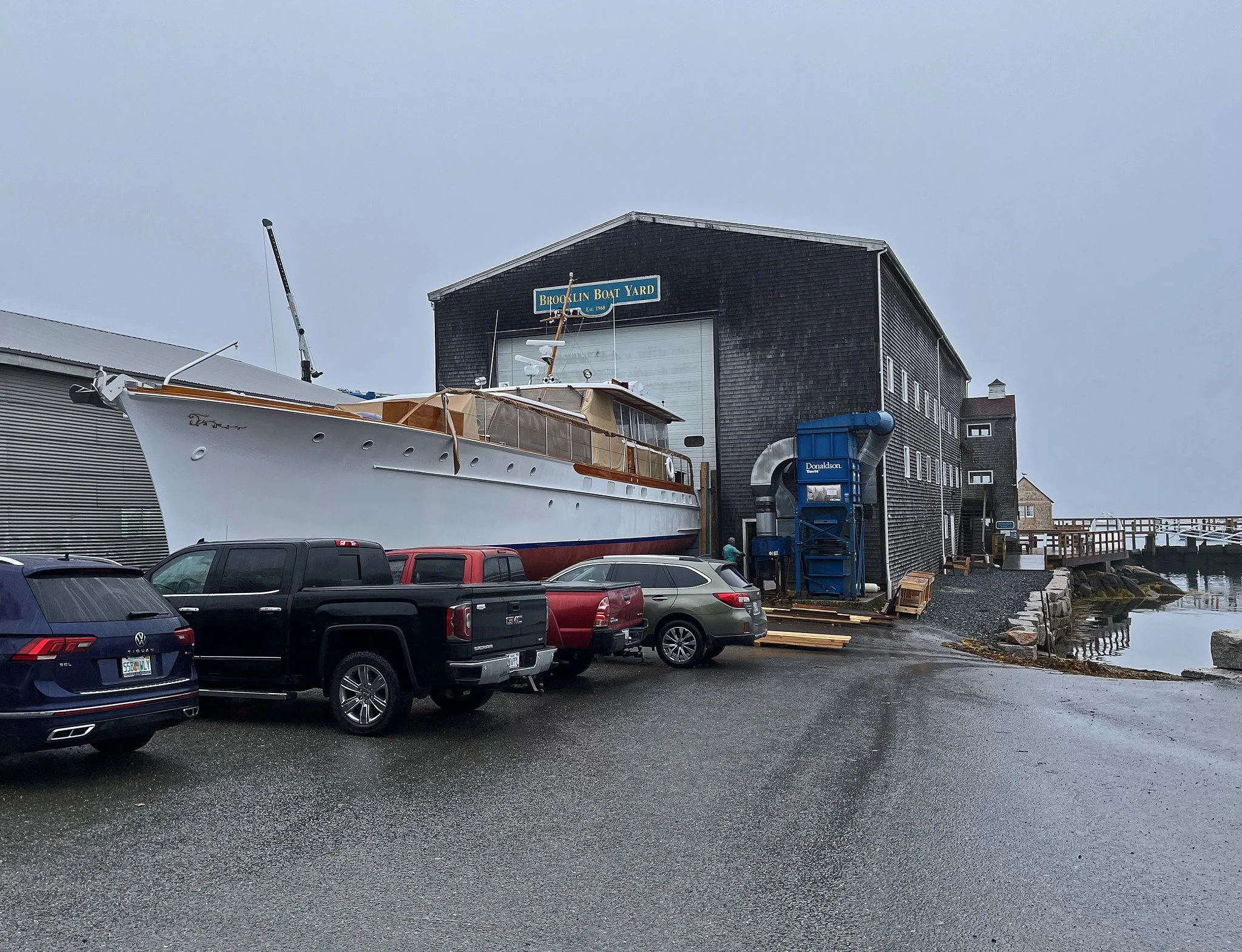
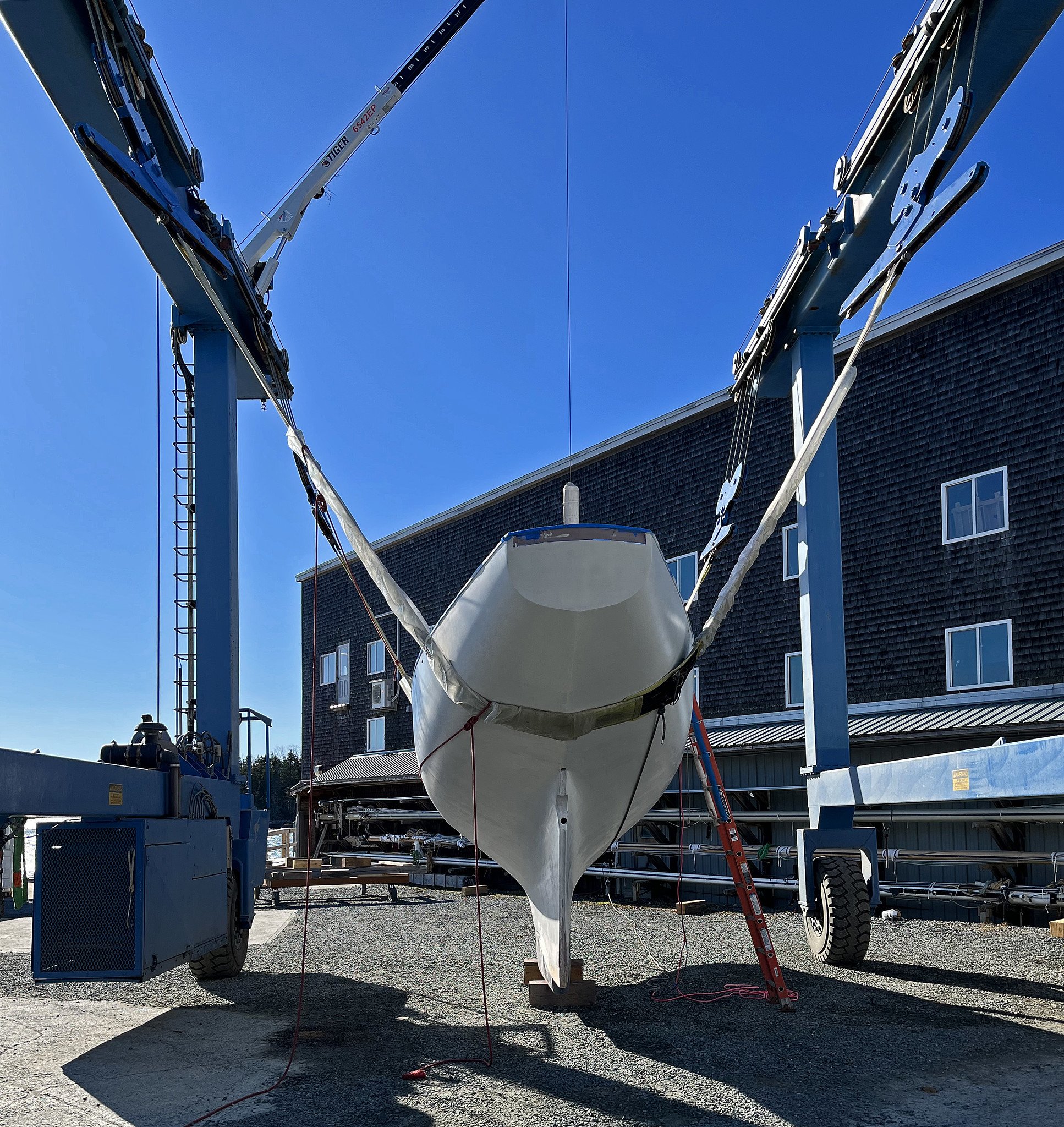
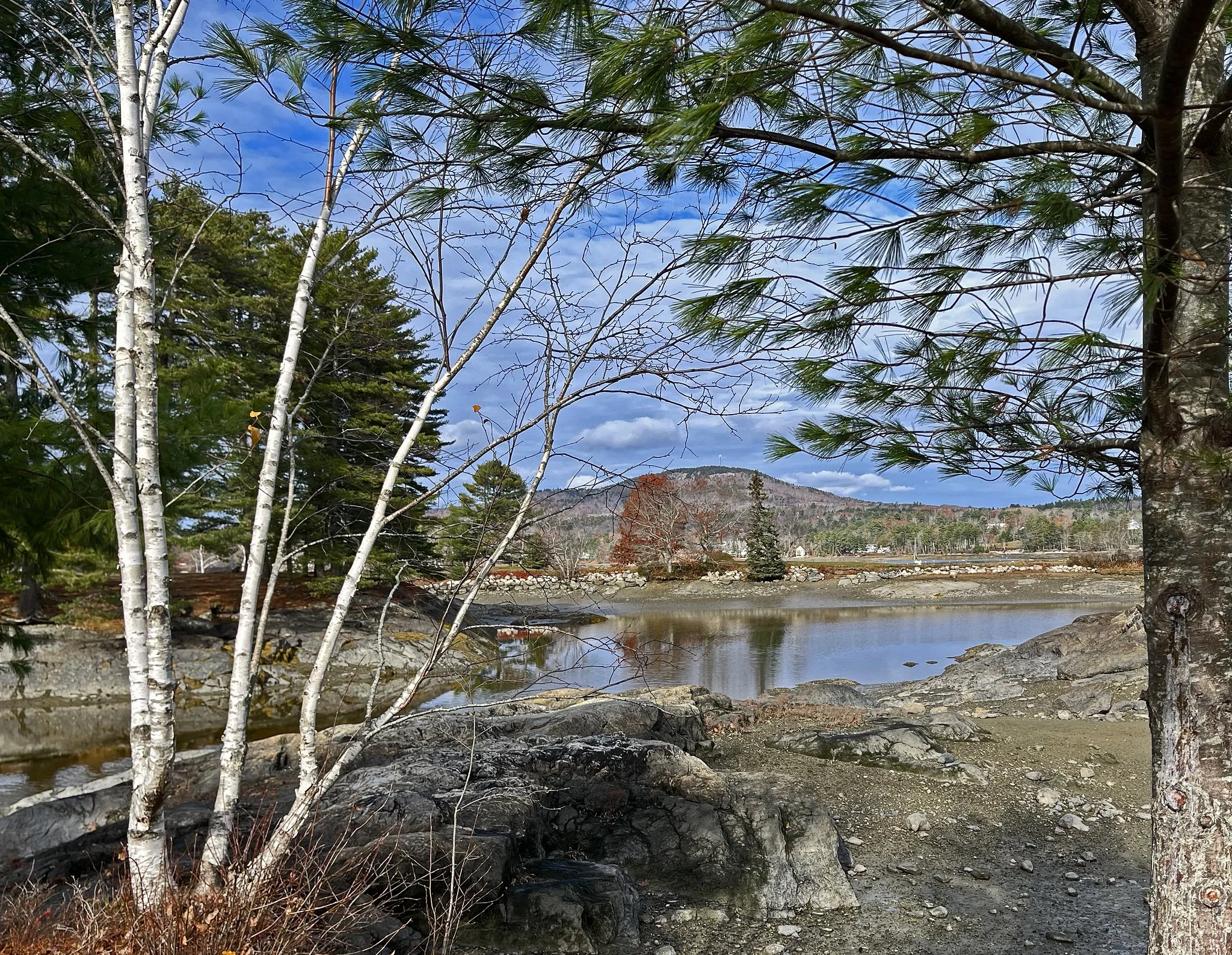
Beloved boats need tender loving care when they’re put “on the hard” in the winter. Here you see a de-masted sailboat in the gentle grip of a heavy-duty mobile boat hoist at the renowned Brooklin Boat Yard Tuesday. She’s being helped to balance temporarily on her keel like a ballerina student learning to pose en pointe.

Boats like this are eased at high tide into a high-sided channel landing from Center Harbor up to the BBY. The hoist is driven astride the channel, where its sling can be spread below the boat to hoist it and motor it slowly to a place for stabilization and eventual storage, usually undercover.

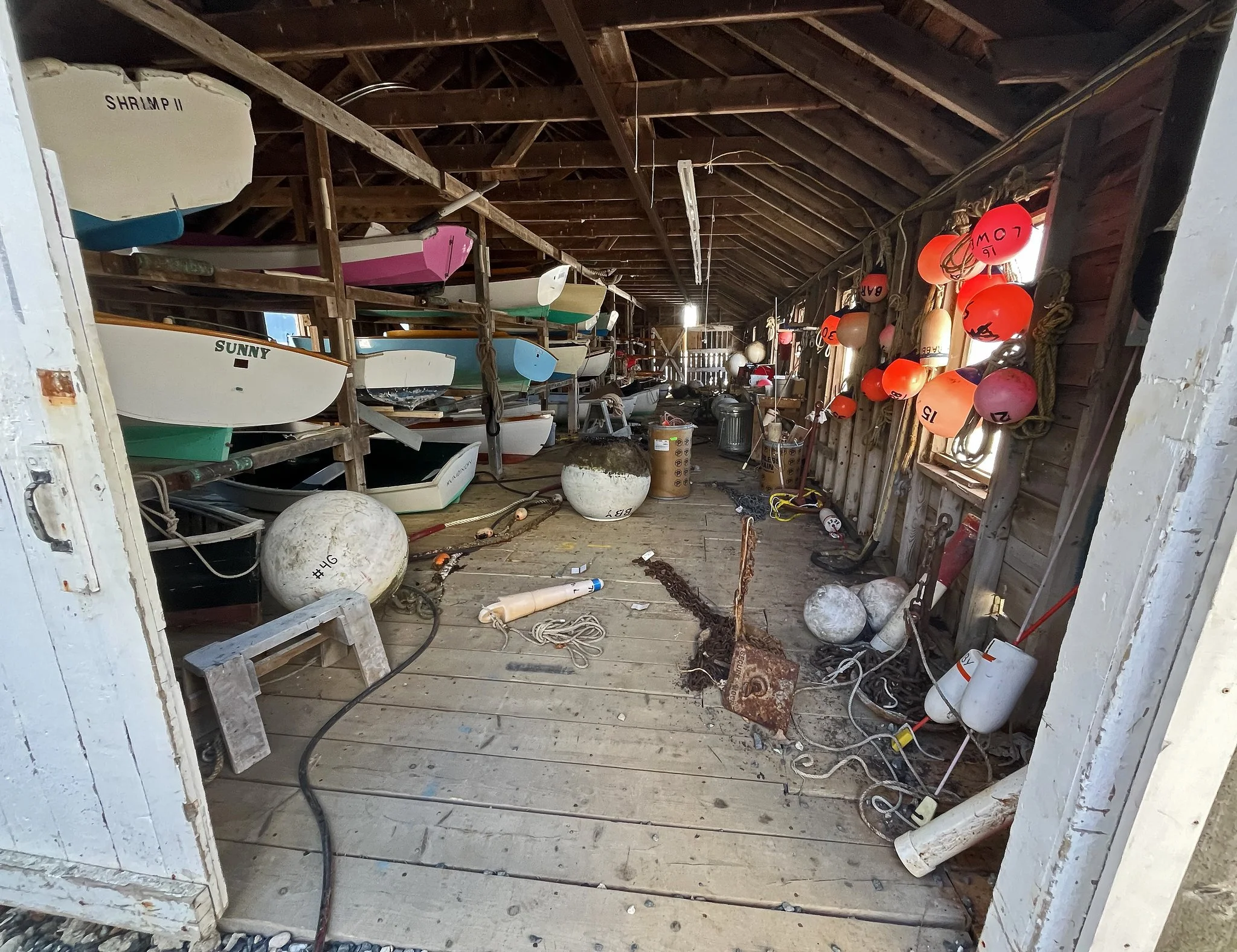
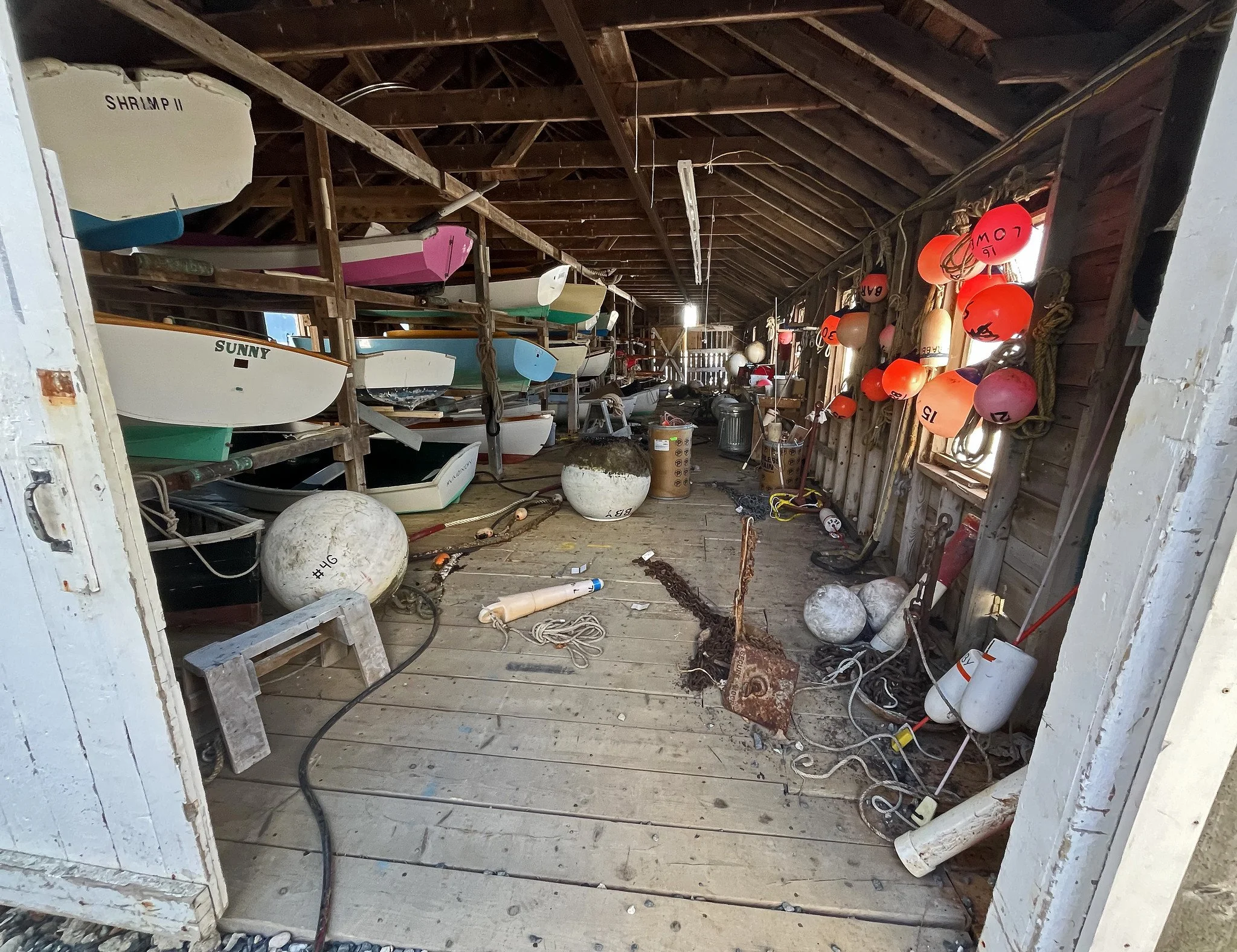
On the other hand, skiffs and other small vessels and mooring gear are hauled onto  land in most-any convenient way and snuggled in an attractive jumble inside BBY’s old boat shed, near the channel landing:

(Images taken in Brooklin, Maine, on November 18, 2025.)
Comment

Comment

In the Right Place: Bullet Proof

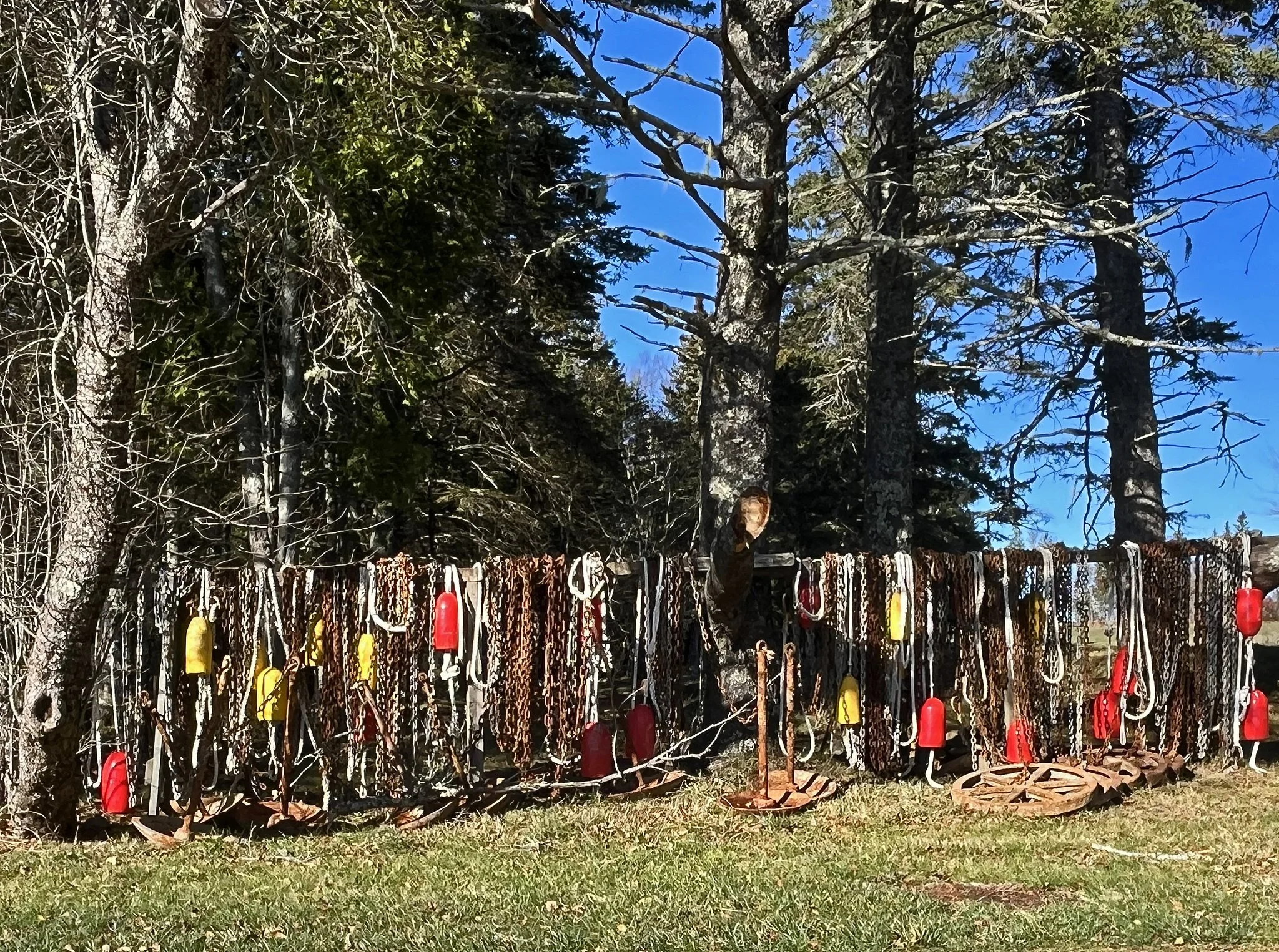
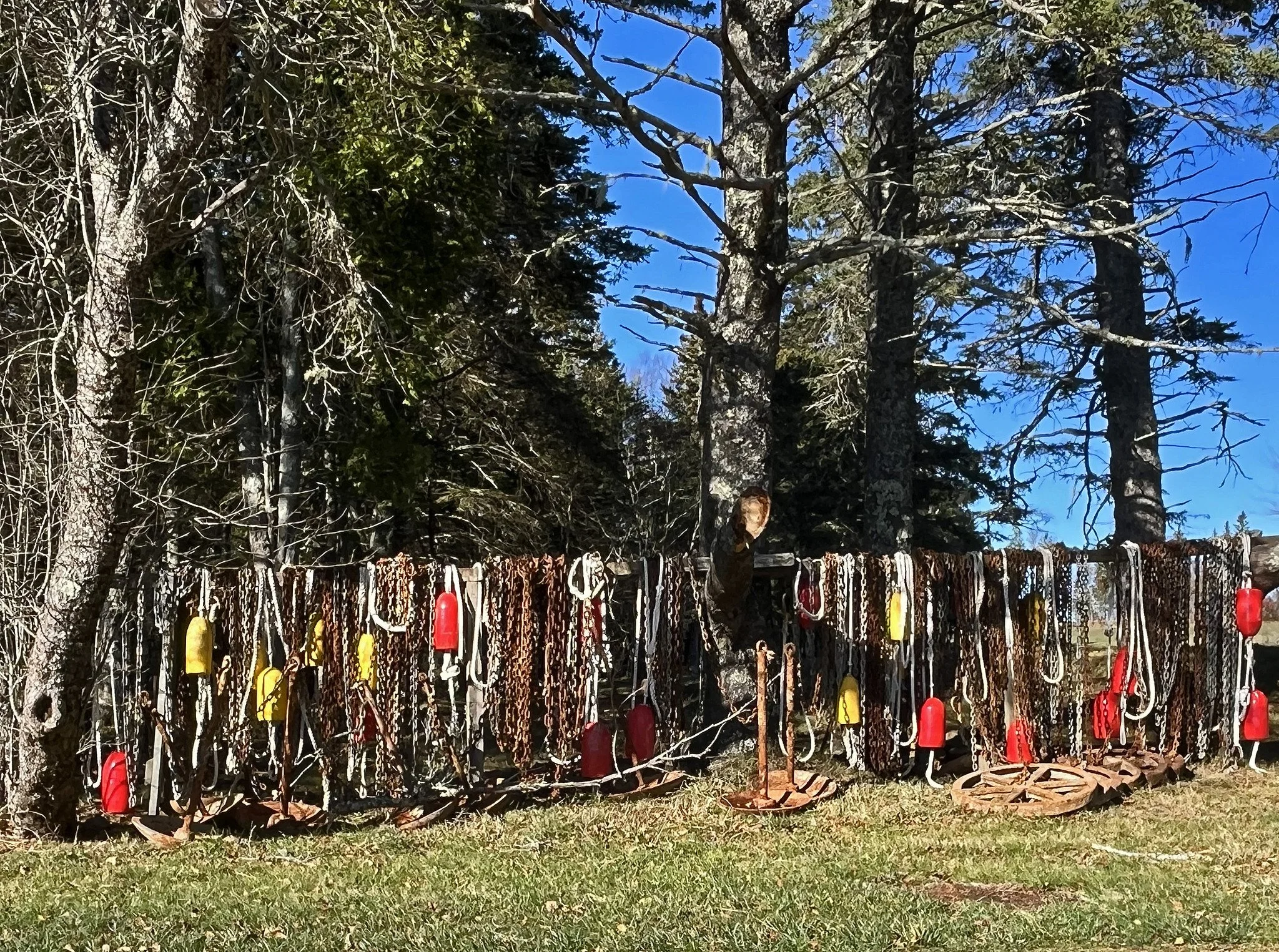
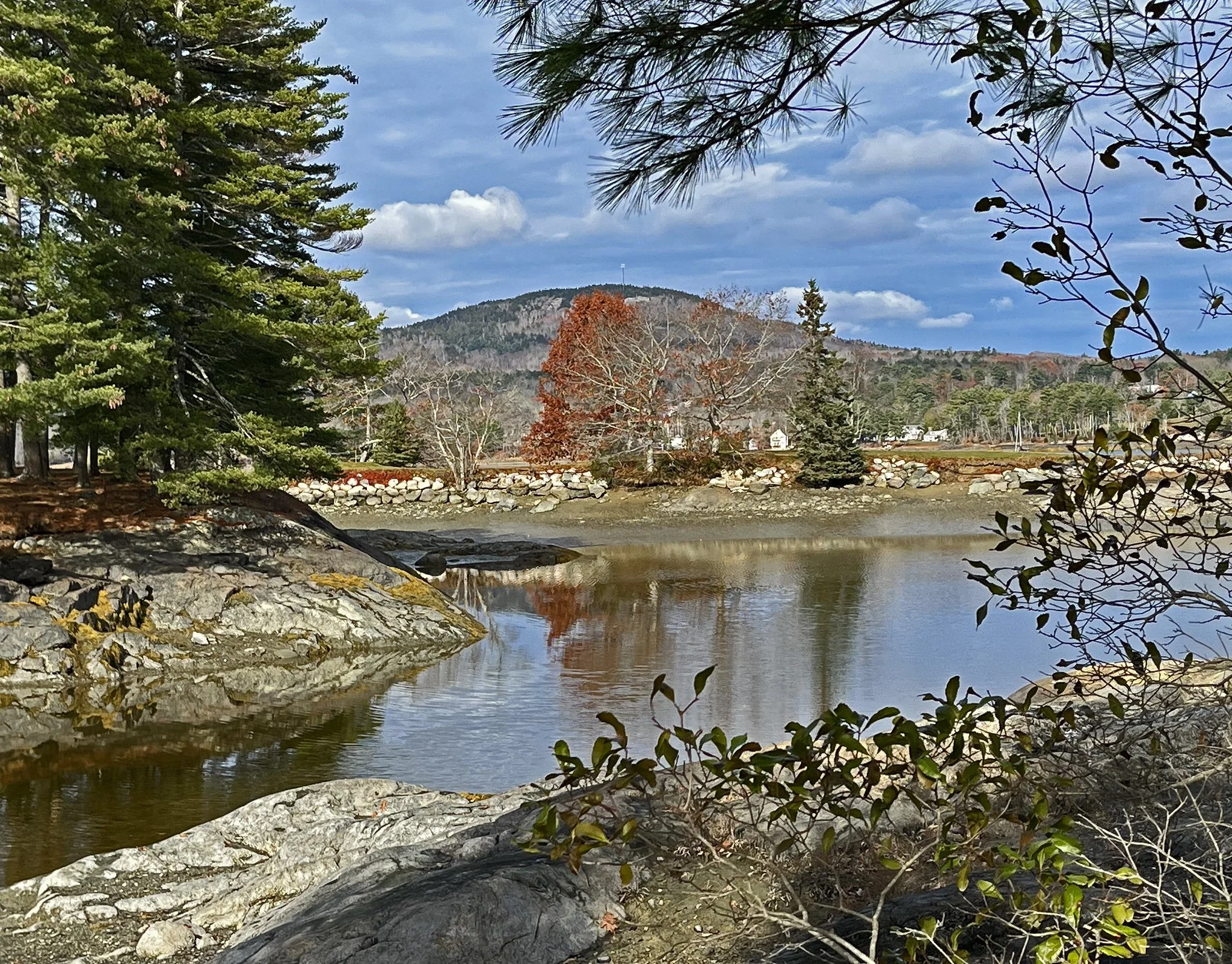
The WoodenBoat School campus has some colorful displays that show the differences among small boat mooring buoys, lobster trap buoys and boat bumpers (fenders) that protect boat hulls from scraping against things. Here you see the WBS moorings gear hanger with red and yellow bullet mooring buoys and mushroom and circular anchors:

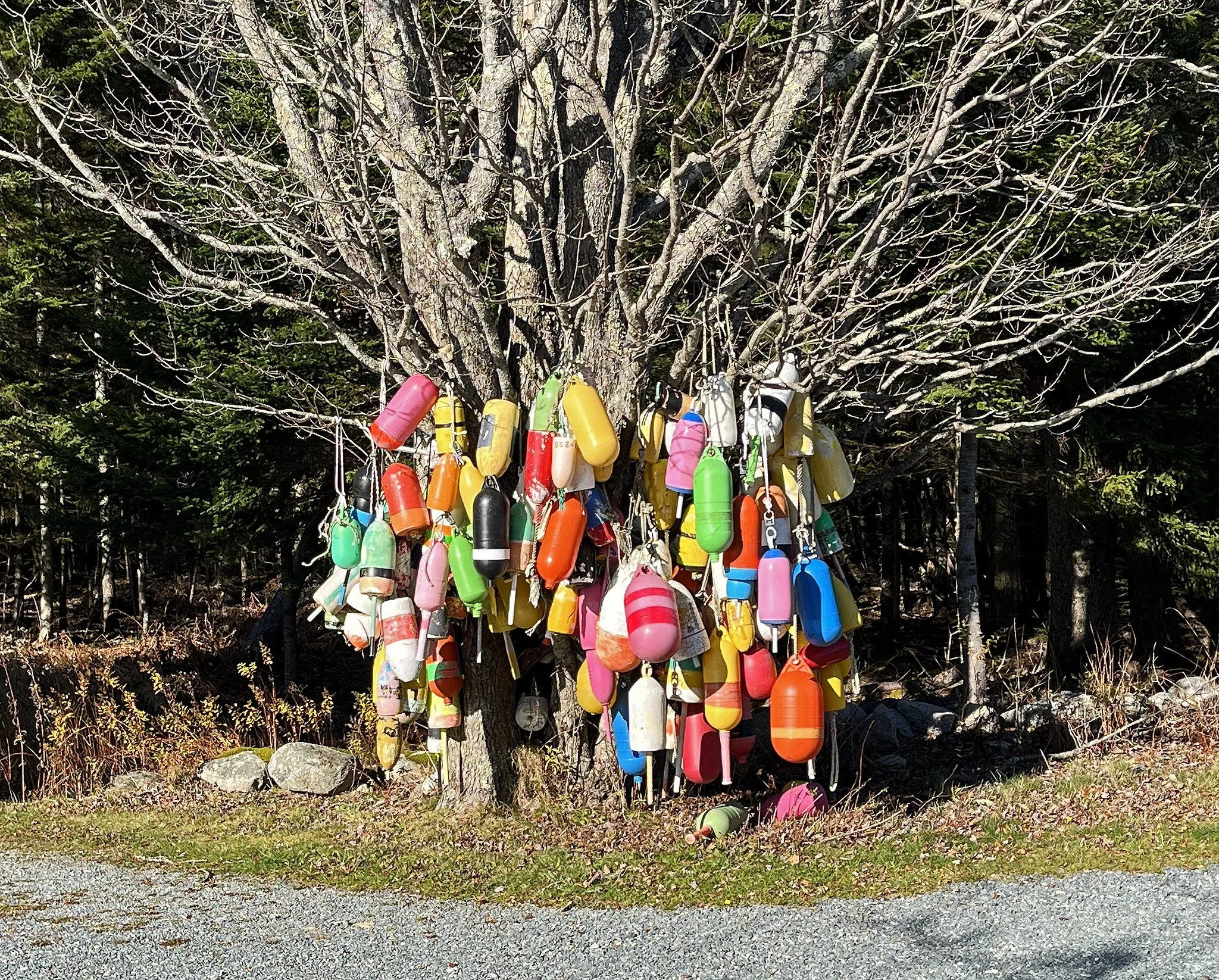
Below, you’ll see WWB’s iconic “Buoy Tree,” which contains lobster trap bullet buoys that are required to be a unique color combination for each licensed lobster fisherman, as well as a few bumpers:

(Images taken in Brooklin, Maine, on November 18, 2025.)
Comment

Comment

Breaking News: It’s a Girl!

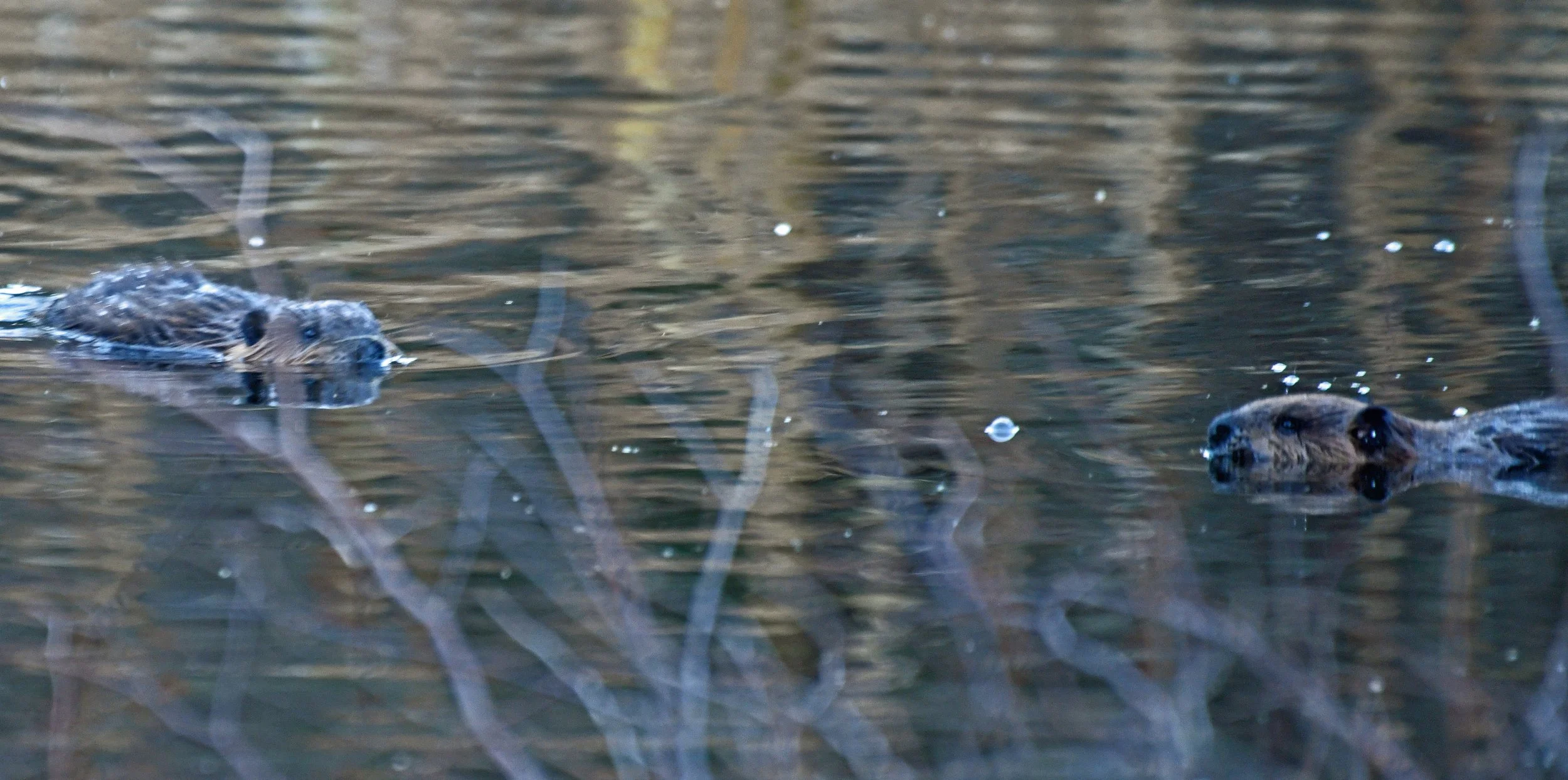
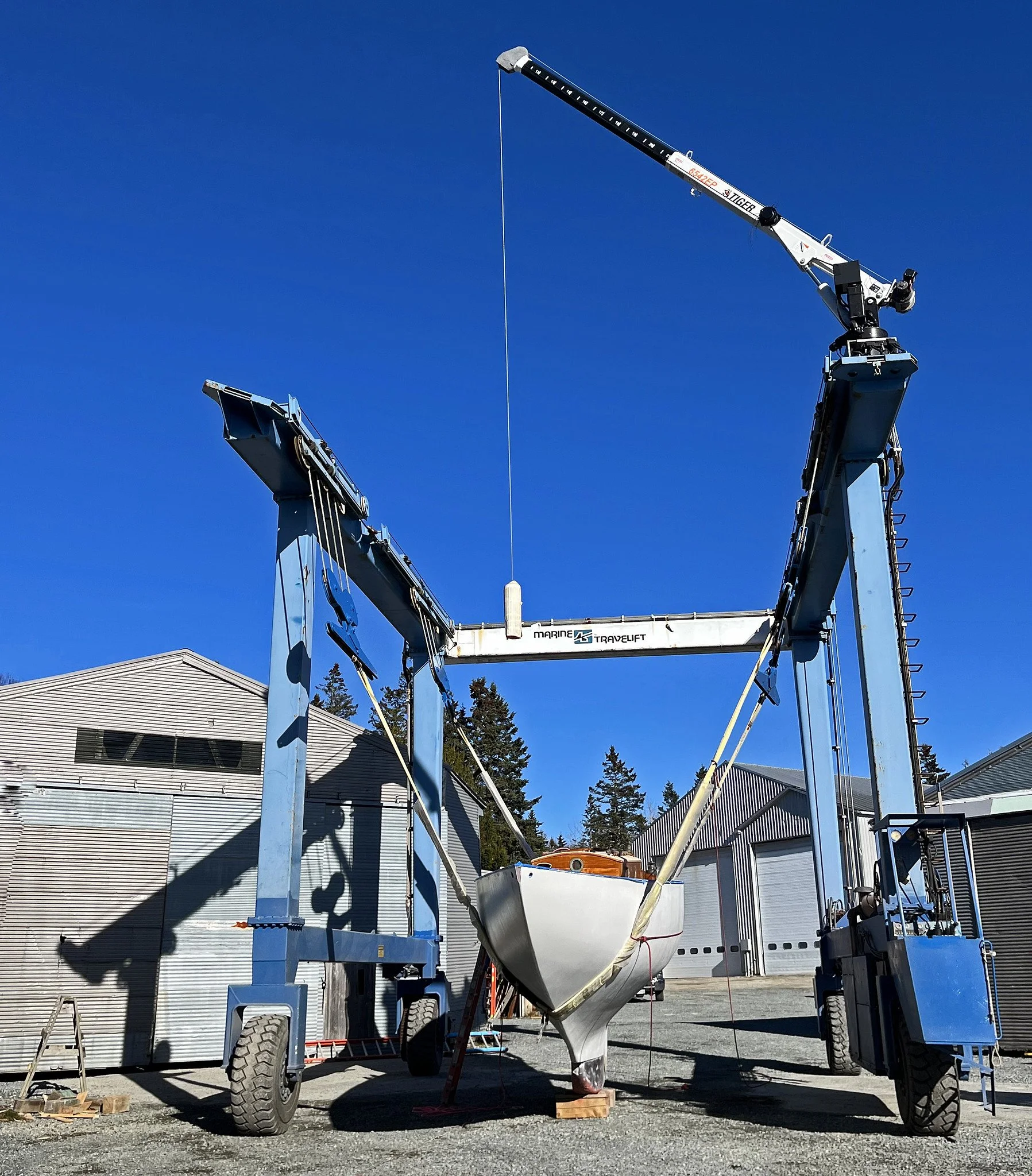
For those of you who have been following our “Life with Bernie” series: The visitor mentioned in our last report turns out to be a sexy female American beaver. I just witnessed a courtship swim in “Bernie’s pond” from a concealed position in near-dark conditions on this cold night. (Yes, I’m definitely crazy.)

Thus, the images aren’t great, but there is no doubt that Bernie (on the right, above,I think) has a serious playmate who will help him topple trees that they think they own. God help us! (But it should be interesting.) The series now will become “Life with Bernie and Bernice.”

(Images taken at dusk in Brooklin, Maine, on November 18, 2025.)
Comment