Comment

In the Right Place: Happy Flag Day, Traditional or Wild

Today is traditional Flag Day in the nation at large. The day commemorates the June 14, 1777, resolution of the Continental Congress that adopted the first flag of the United States, which symbolized the union of the 13 colonies that had declared independence the year before.

That flag, as does today’s, contained 13 stripes of alternating red (7) and white (6), including red top and bottom stripes. In an upper left field of blue there were 13 white stars, which were described then as symbolizing the “new constellation” of self-declared states.
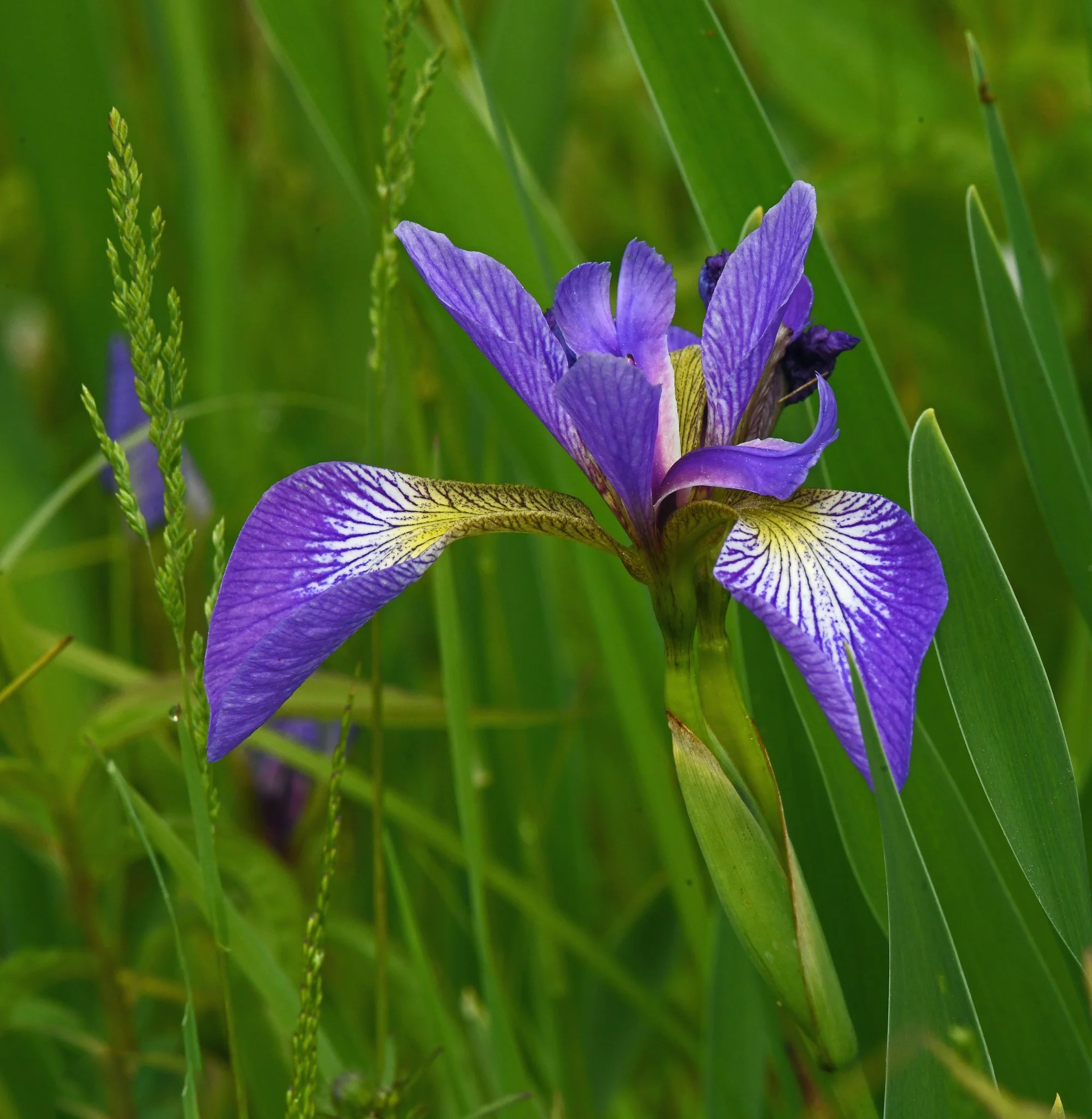
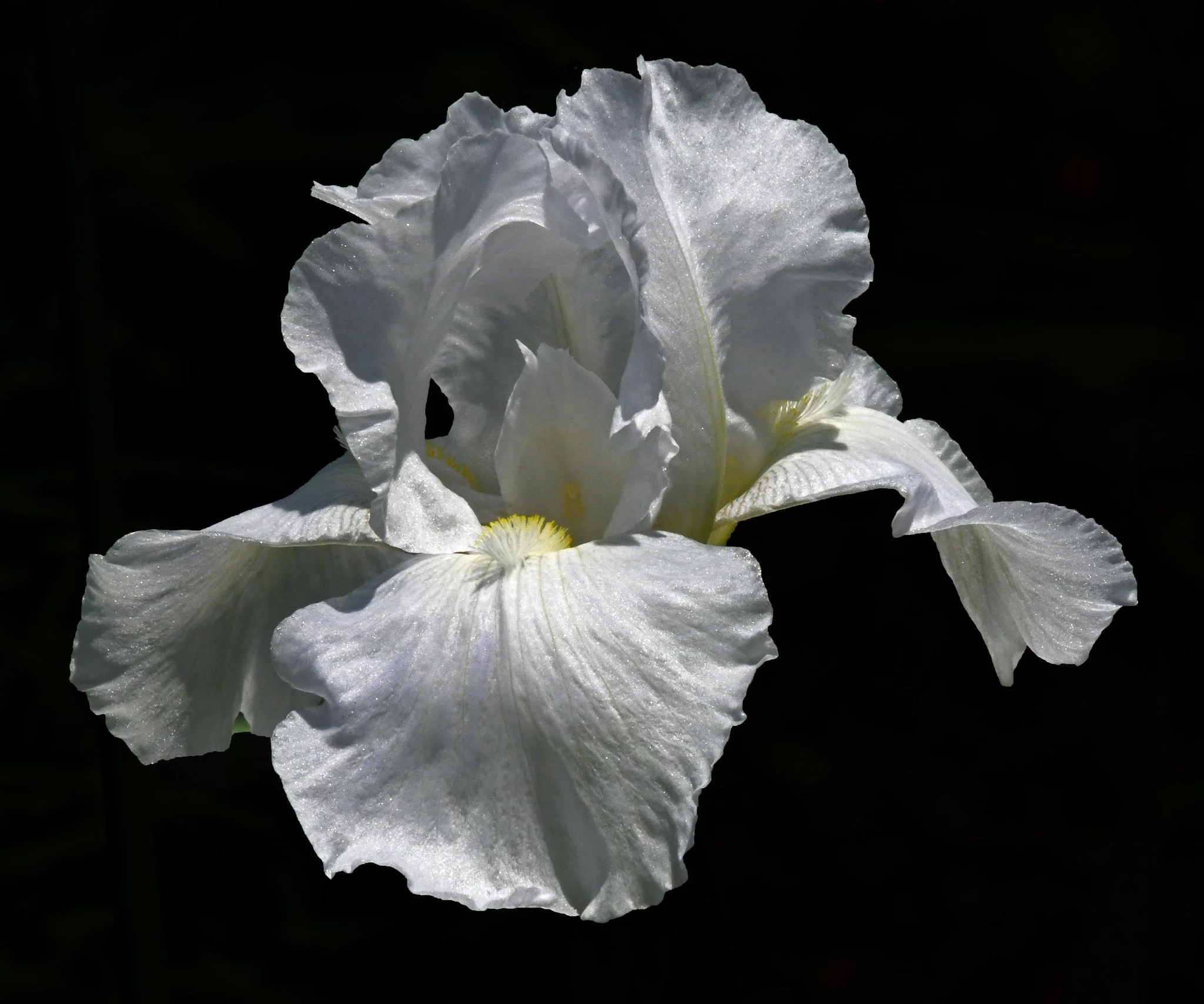
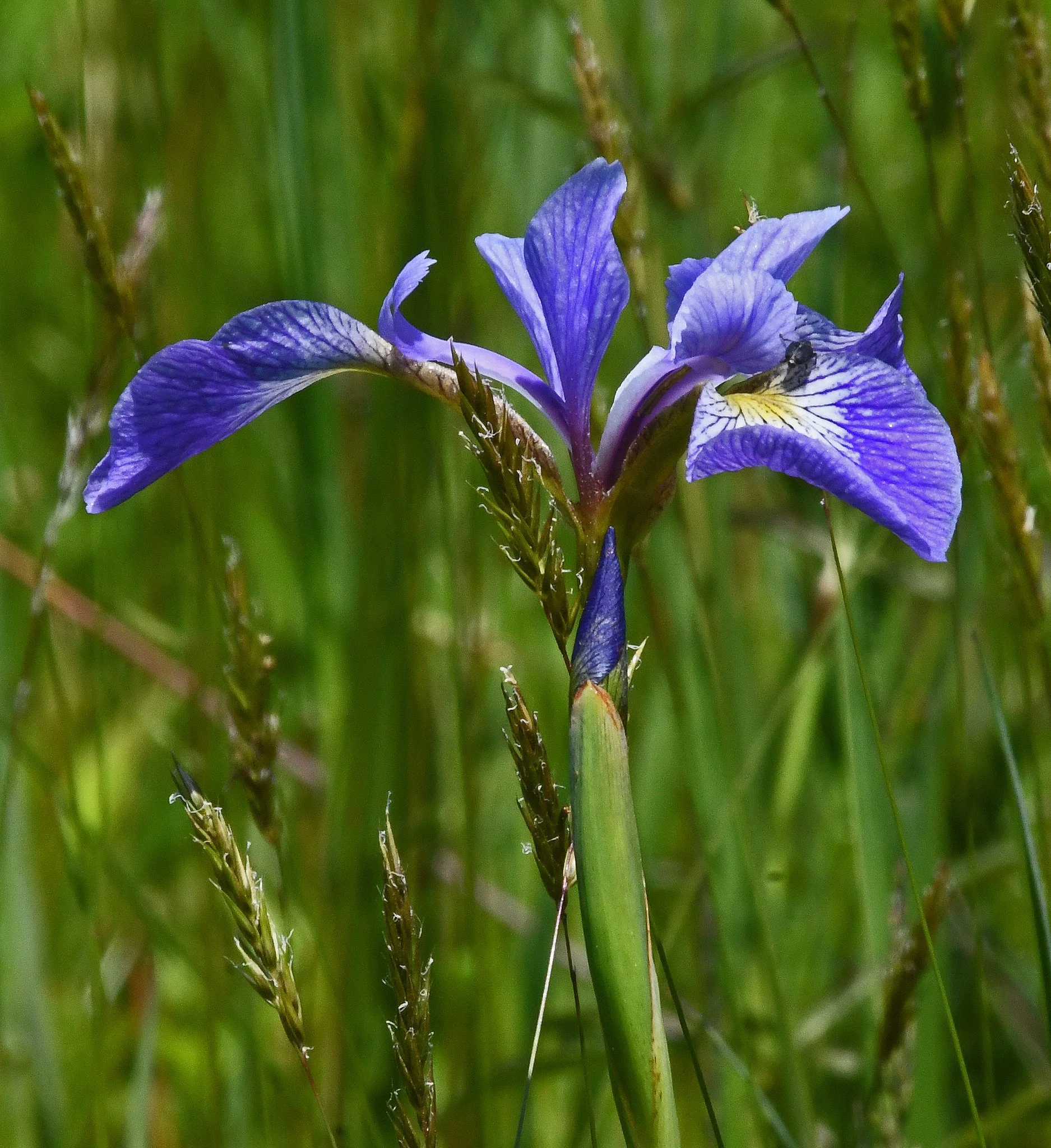
Today also is another kind of flag day for wildflower lovers in Down East Maine: Blue flag iris (shown above) and yellow flag iris (shown below) appear to be at their peaks. Yes, the blues are natives and their beauty is benign, while the yellows are foreigners and they can be beautiful troublemakers. But that’s a different story. Today, let’s let Old Glory, blue iris, and yellow iris wave beautifully.
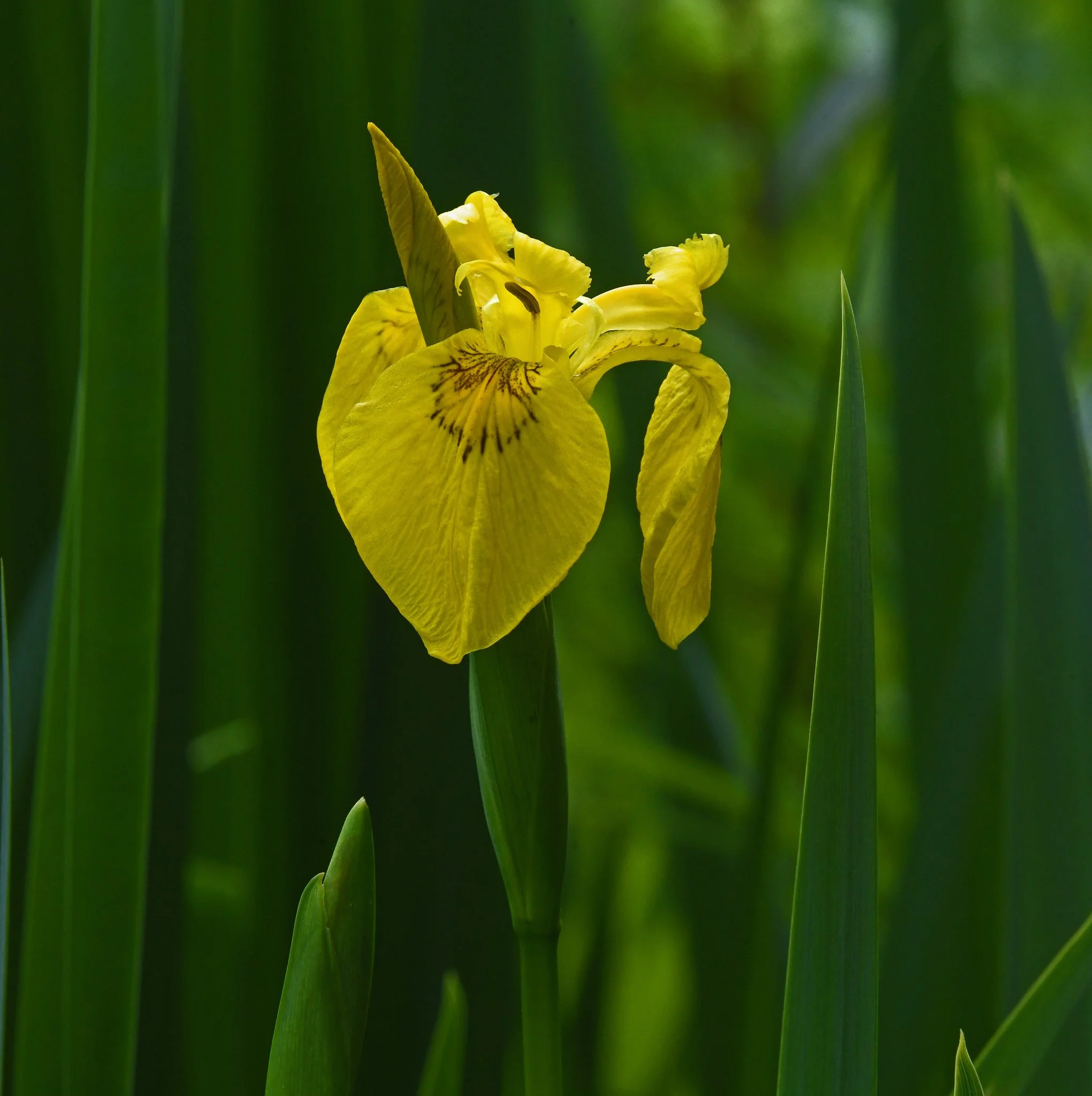
(Images taken in Brooklin, Maine, on June 12, 2026.)
Comment

Comment

In the Right Place: Pollination vs. Pestilation

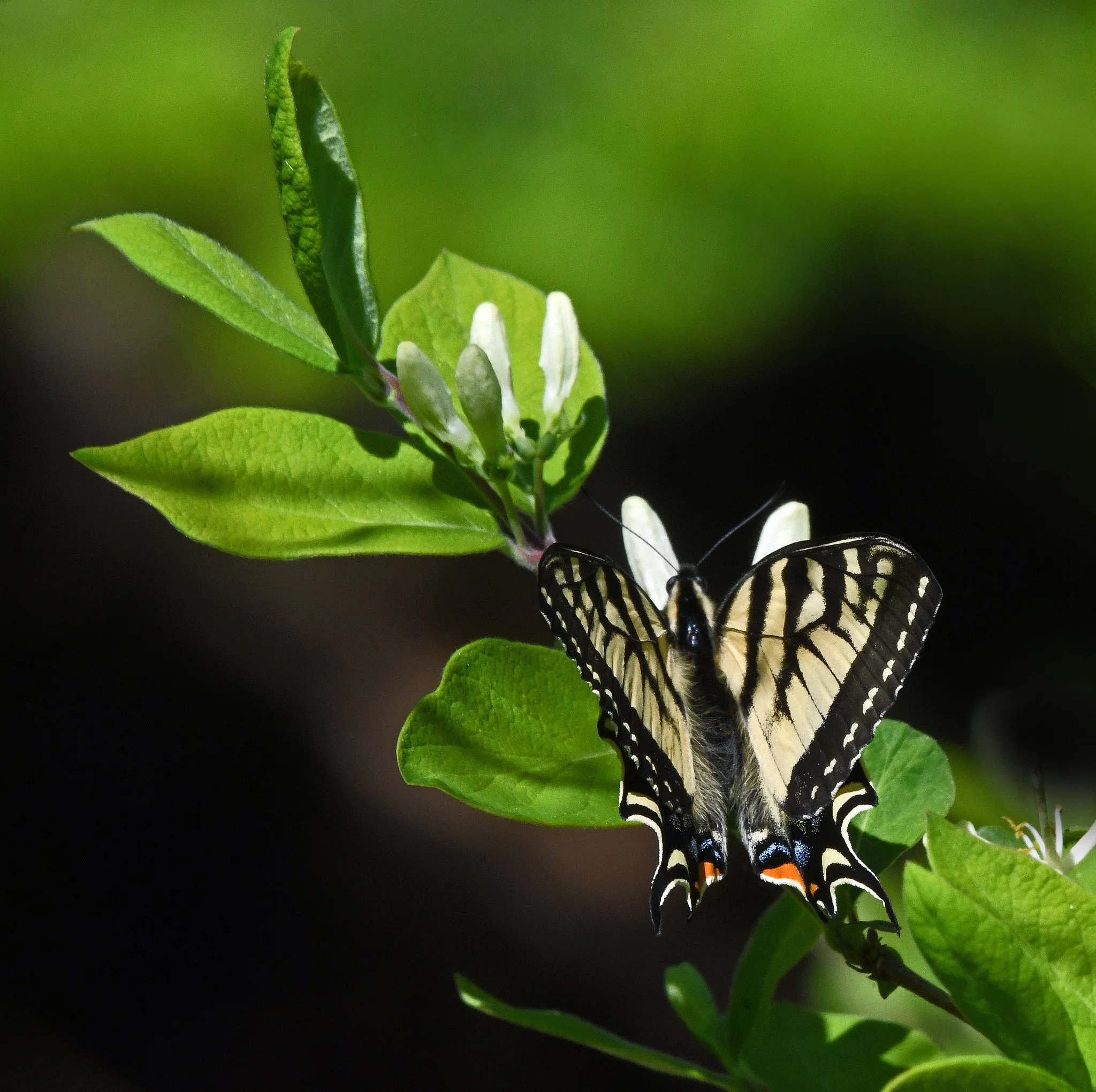
Above, you see a Canadian tiger swallowtail feeding on the deeply hidden nectar of wild honeysuckle. The flower’s pollen will stick to the butterfly’s hairs and probably be rubbed off on another plant to propagate the honeysuckle.

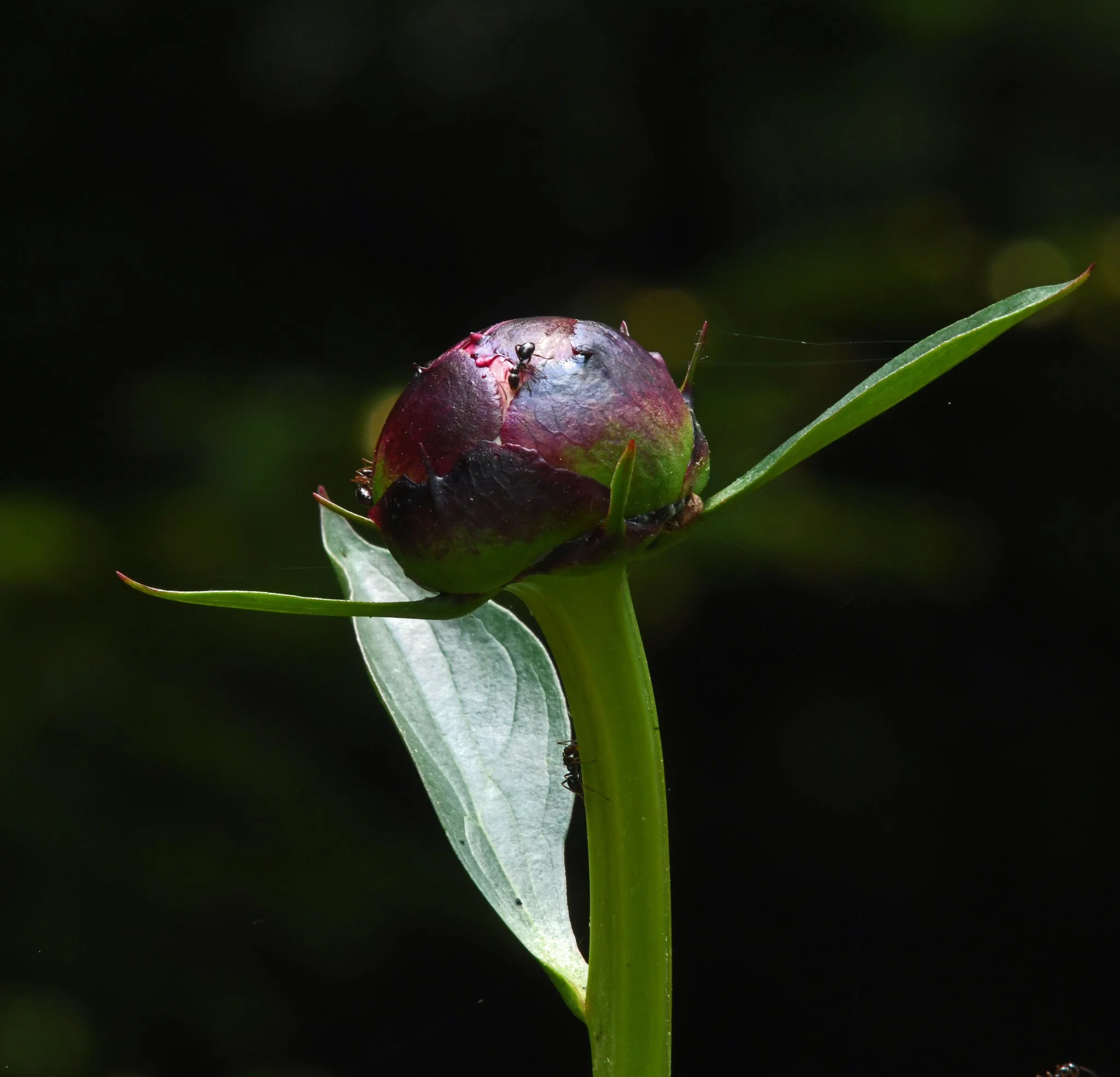
Below, you’ll see what appear to be black garden ants (Lasius niger) feeding on the oozing nectar from a peony bud’s "extrafloral nectaries" — special glands that secrete a sugary liquid. The ants aren’t engaging in pollination; they’re engaging in “biological mutualism.” That is, in exchange for the bud’s sweet sustenance, the ants perform pest control on it – they repel pests, such as aphids and thrips.

By the way, peonies don’t need this Orkin-like treatment to bloom beautifully, as many people believe. The pests usually don’t do lasting damage. The ants get the better part of the deal, but no one’s complaining except the aphids and thrips. (Images taken in Brooklin, Maine, on June 9 and 12, 2026.)
Comment

Comment

In the Right Place: Windjammers, I

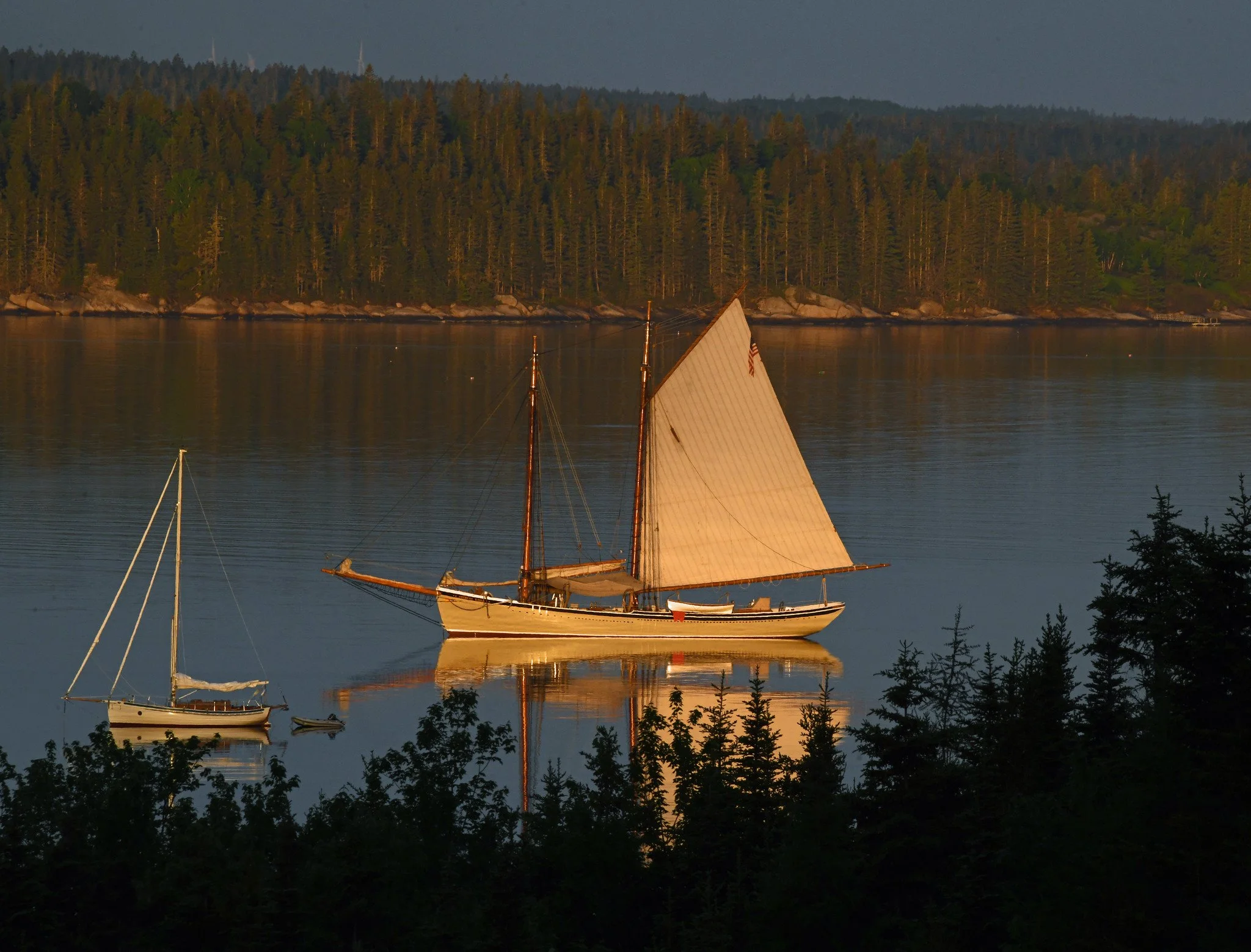
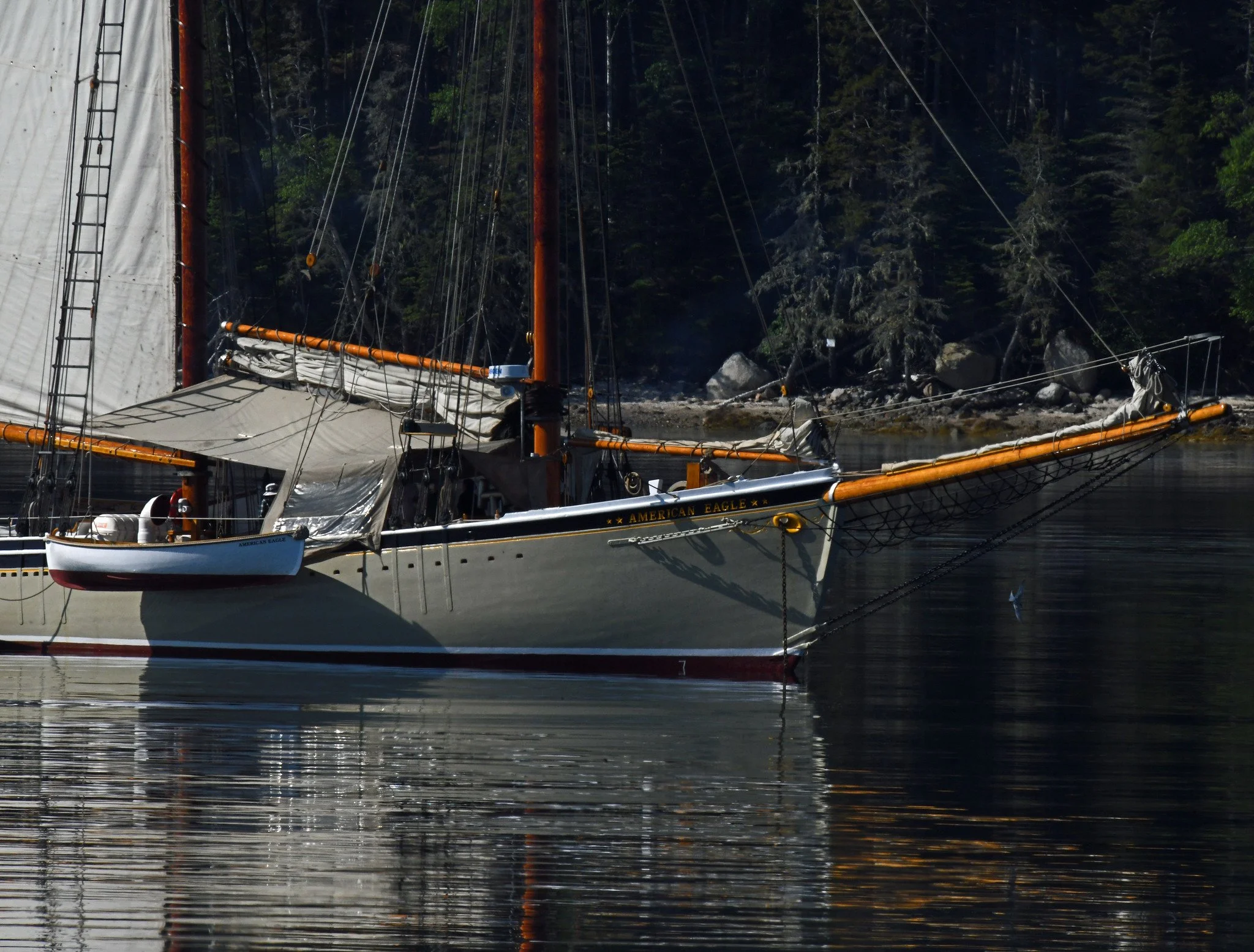
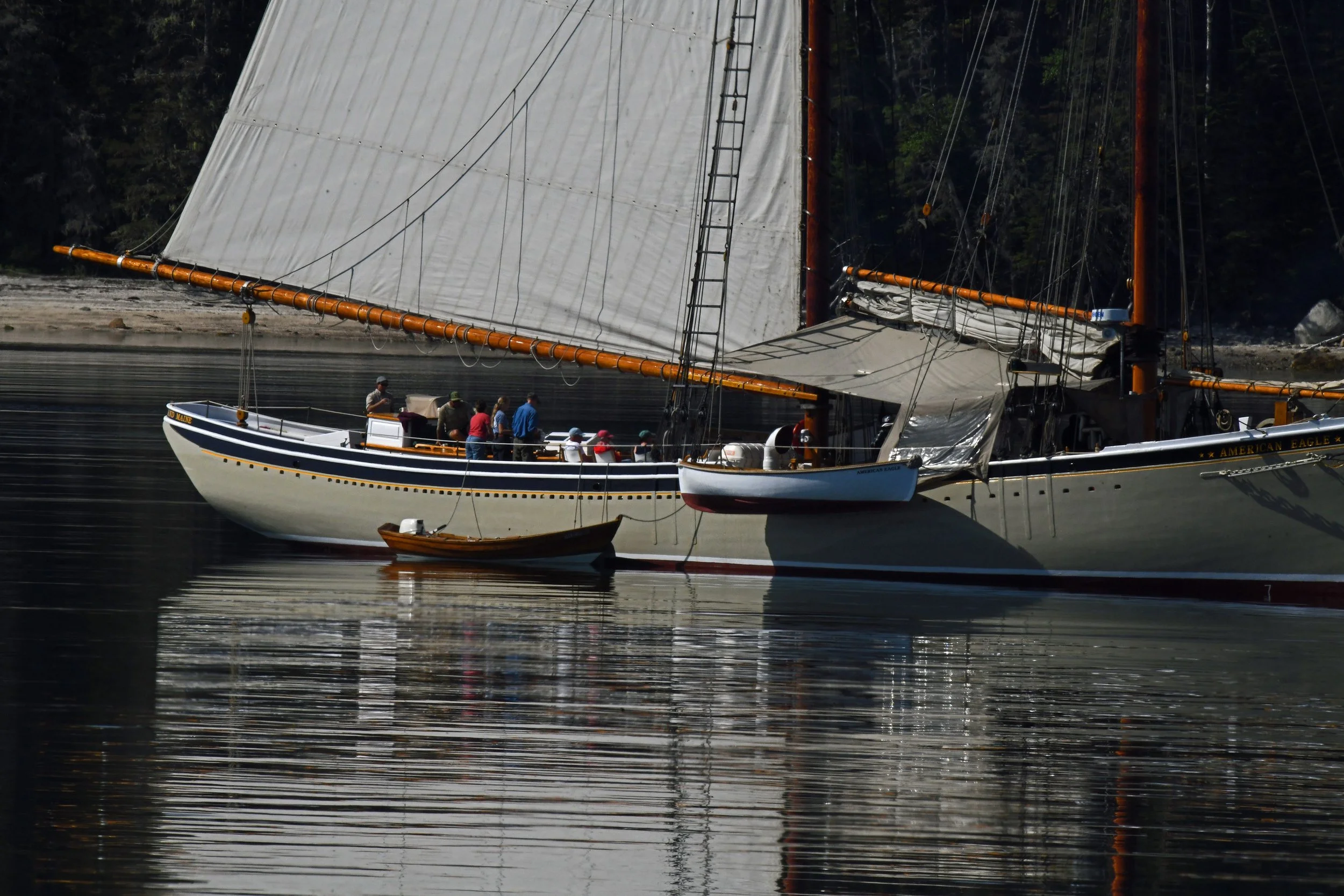
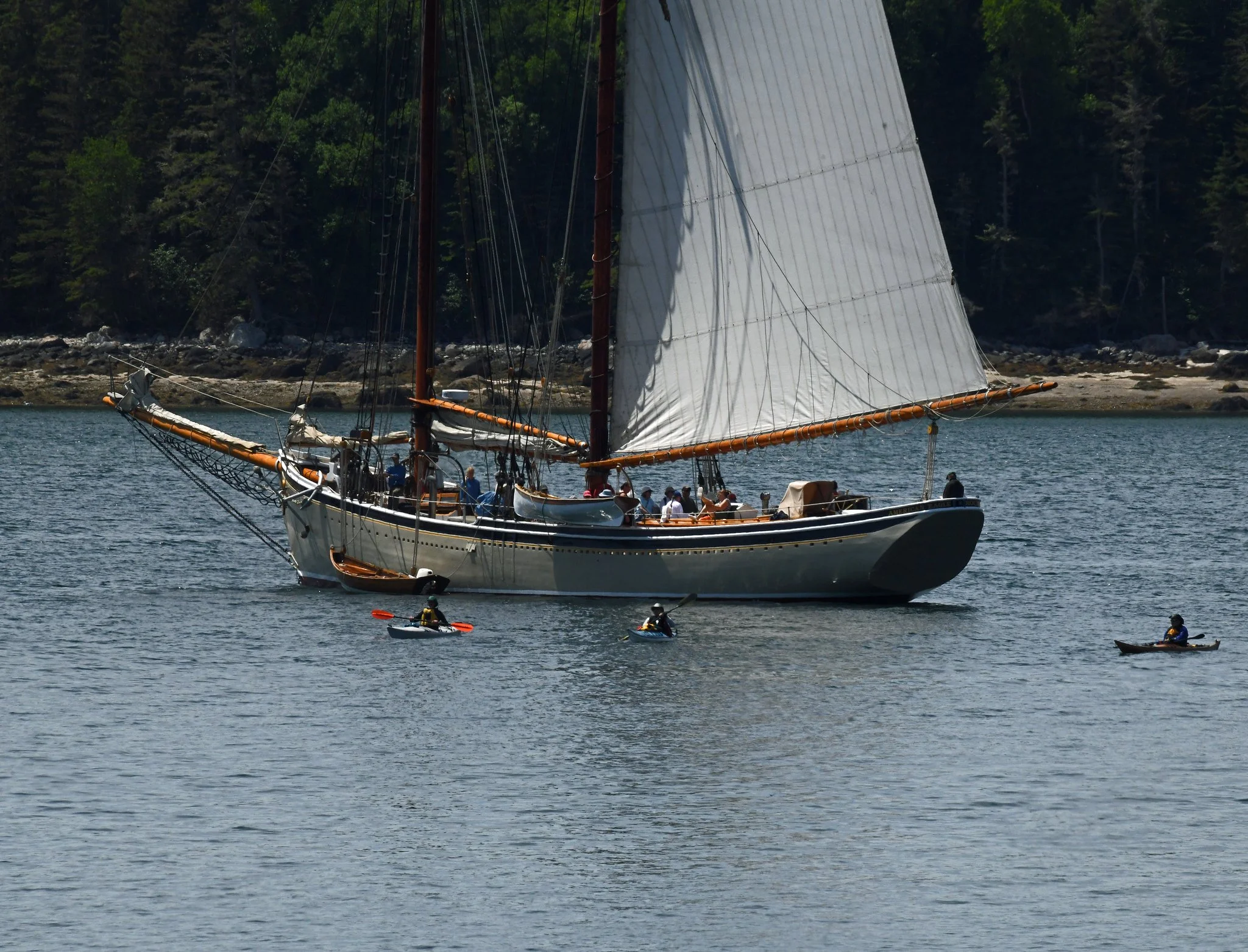
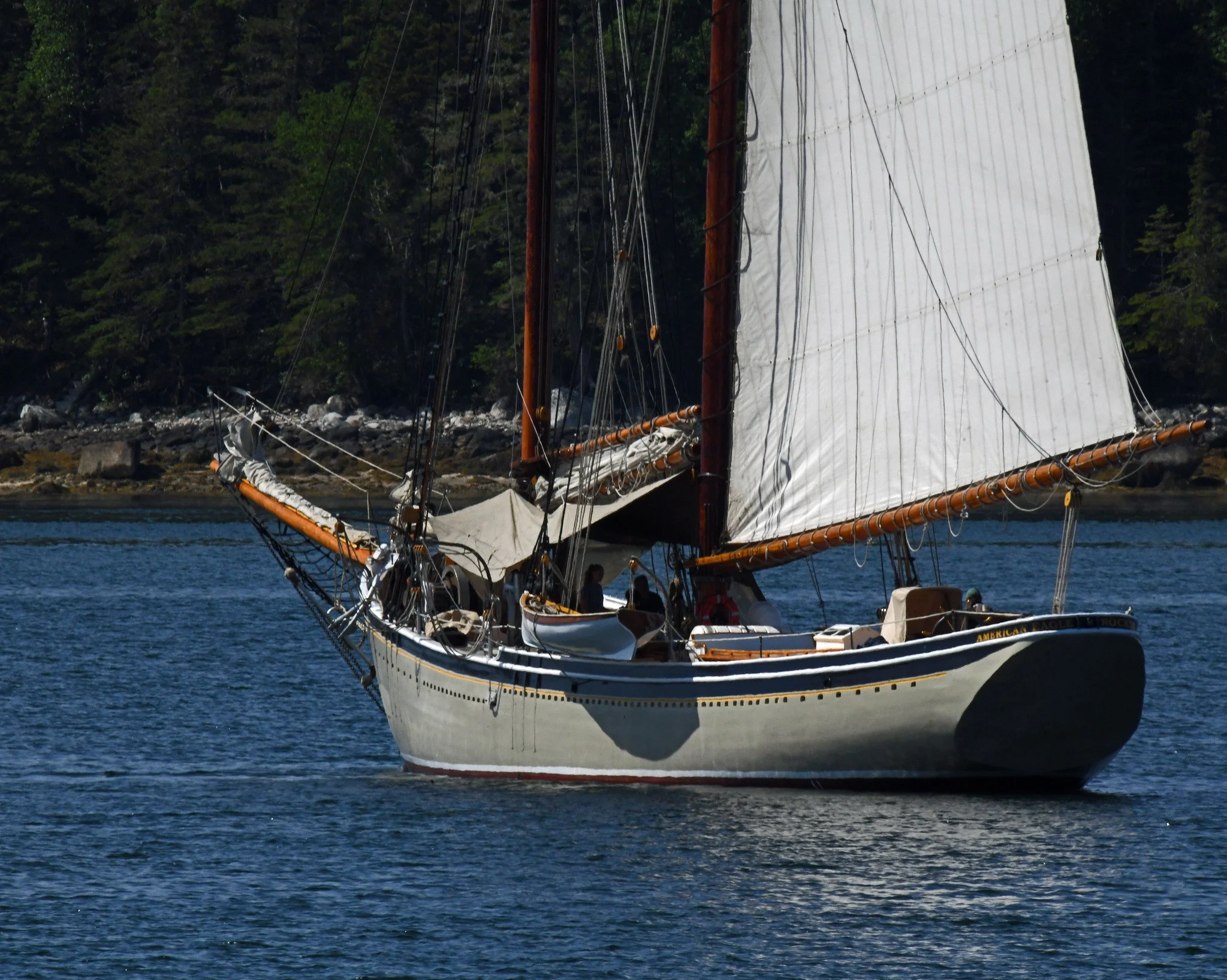
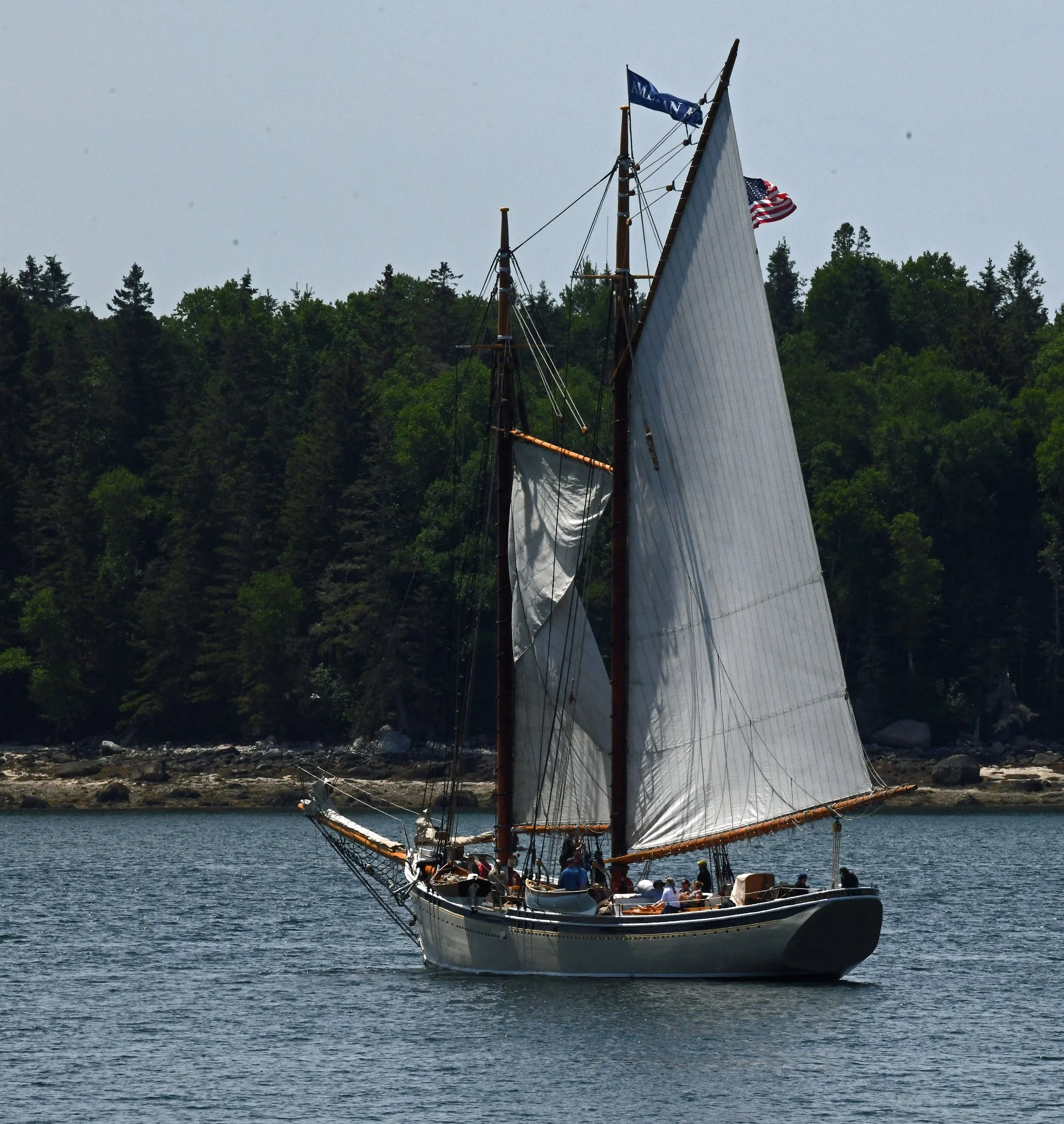
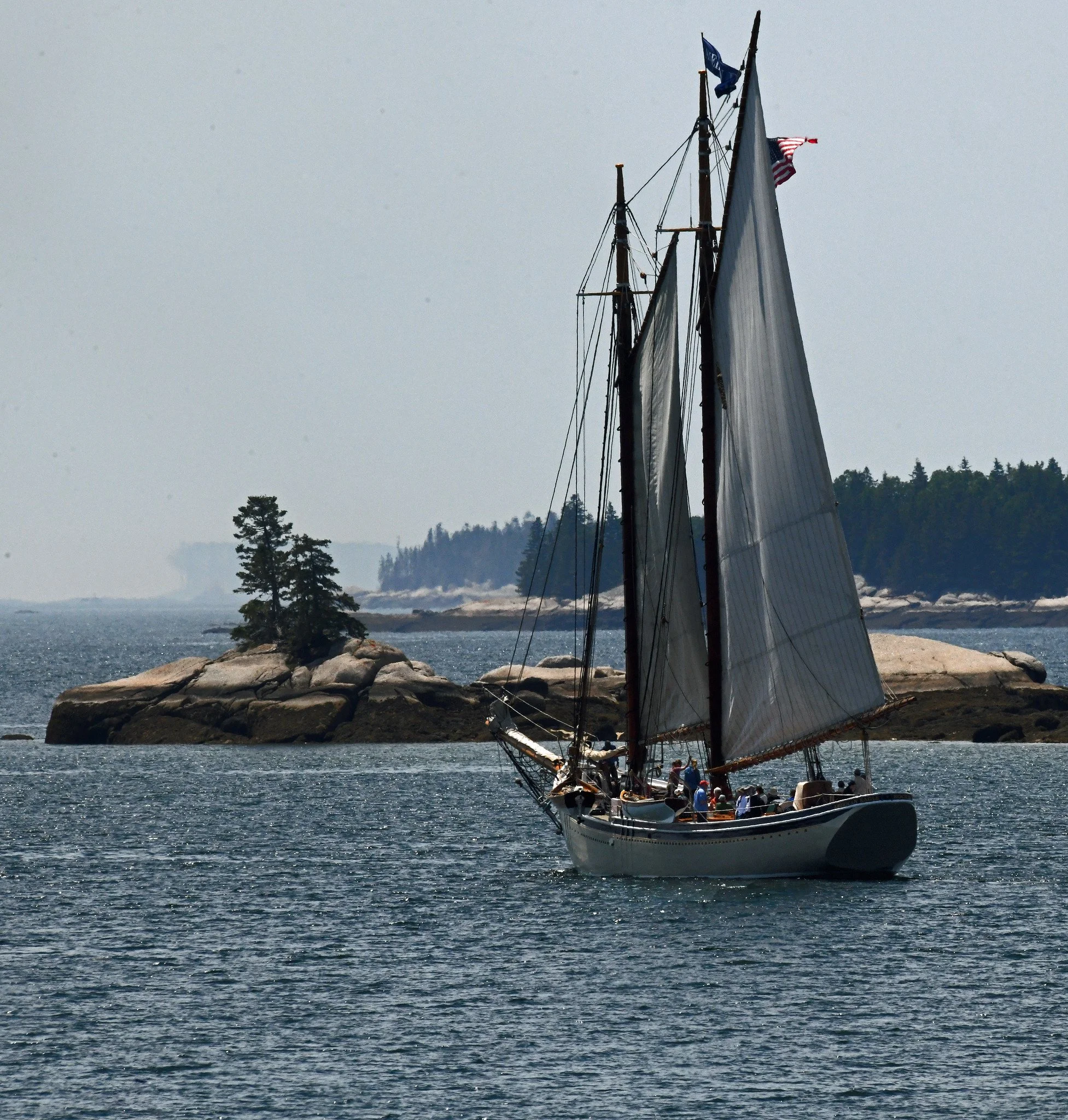
The prize for the first windjammer to overnight in Great Cove this year goes to – drum roll and trumpet fanfare, please – AMERICAN EAGLE! How appropriate for the nation’s 250th birthday.

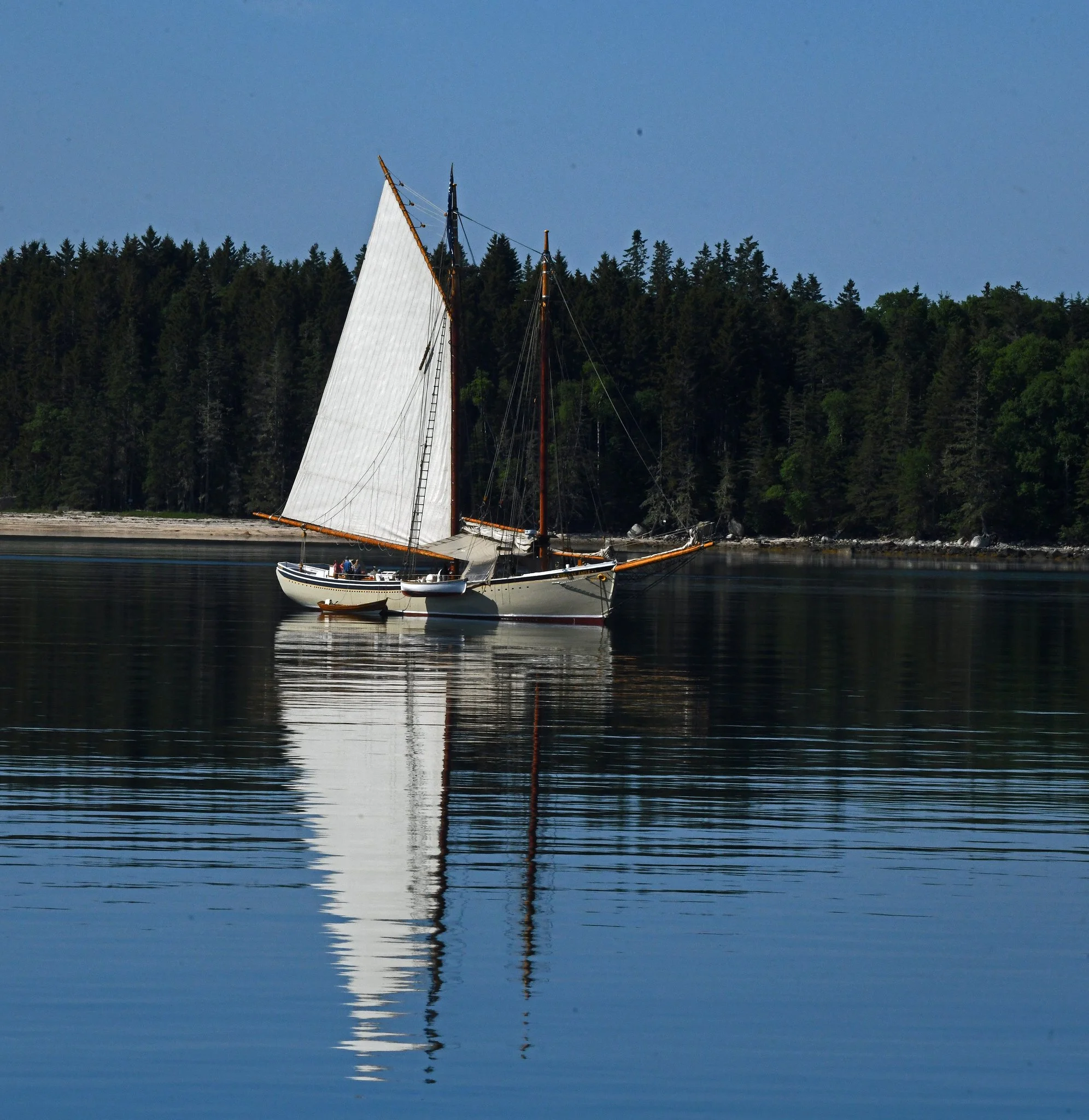
Here you see her yesterday morning at 5 a.m., just as the low dawn light reached the Cove and gilded her gold. Several hours later she was admiring herself in the mirror as her passengers awoke:

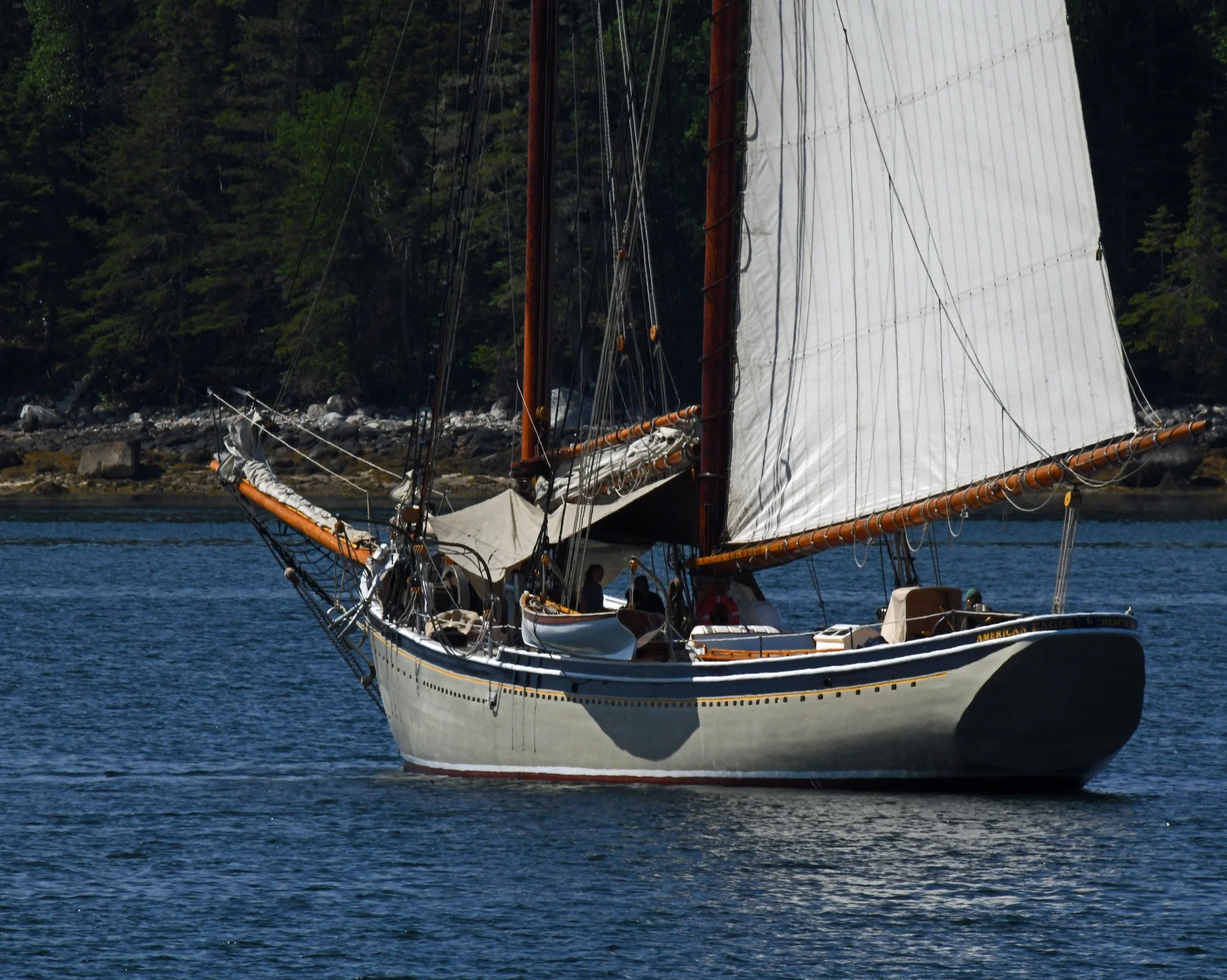
Below, you’ll see her resting and leaving the Cove in the haze of mid-day. Between those times, there was a special moment for me.

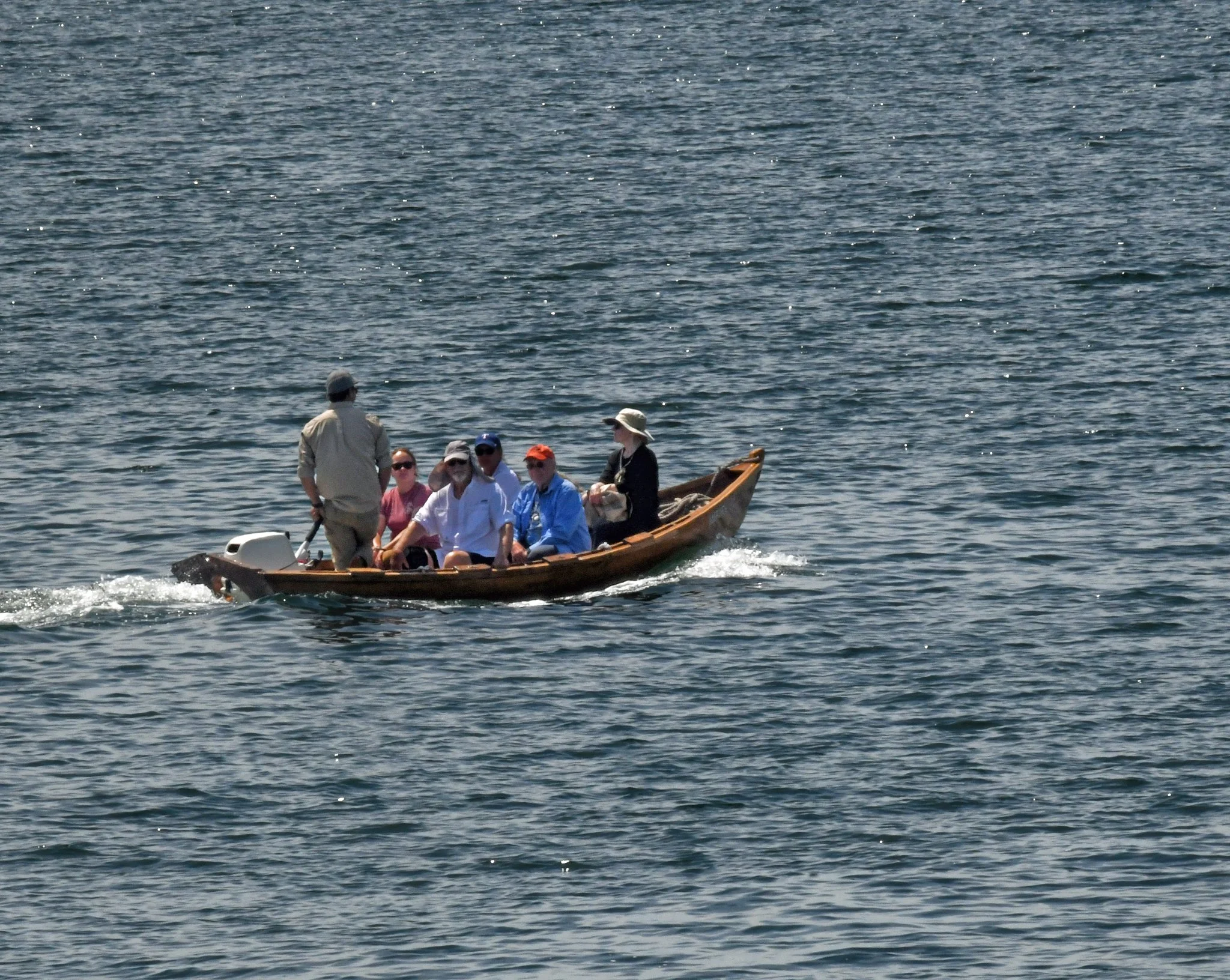
After breakfast, most of the EAGLE passengers were ferried ashore to explore the campus of the renowned WoodenBoat School; a few people remained on deck. This is not unusual for visiting coastal cruisers. However, while I was sitting on the Cove’s green bank watching the sun-lit schooner swing slowly around her anchor in a nice salty breeze, I heard something unusual.

Then the mystery made itself clear: someone was stumming and plucking a banjo and the notes were wafting off of her deck over to me. It nicely completed a moment of maritime nostalgia. It seems that the EAGLE is on a 5-night cruise ending June 12 that features onboard modern folk music, among other things, according to her schedule.

The EAGLE was launched in 1930 out of Gloucester, Massachusetts, under the name ANDREW & ROSALIE, according to the literature. Her name was changed out of patriotic sympathy during Worl War II. She’s a tidy 122 feet long overall and a high rider. She now homeports in Rockland, Maine. (Images taken in Brooklin, Maine, on June 10, 2026.)

Comment

Comment

In the Right Place: Iris, U-Ris, We All Ris

Bearded iris are revealing all in the gardens and wild blue flag iris are waving like crazy in the meadows. It’s a good time for those who like their flowers complicated and sexy and don’t distinguish much between foreign and native beauty.

Bearded iris, shown above, are native to the Mediterranean area, including southern Europe. They get their name from the fuzzy, caterpillar-like “hairs” that guide pollinators to their nectar. Blue flags, shown below, are native to Maine and like wet feet and sun-warmed petals, although they’re hardy enough to live in partial shade.

(Images taken in Brooklin, Maine, on June 9, 2026.)

Comment

Comment

In the Right Place: At BBY, XIII

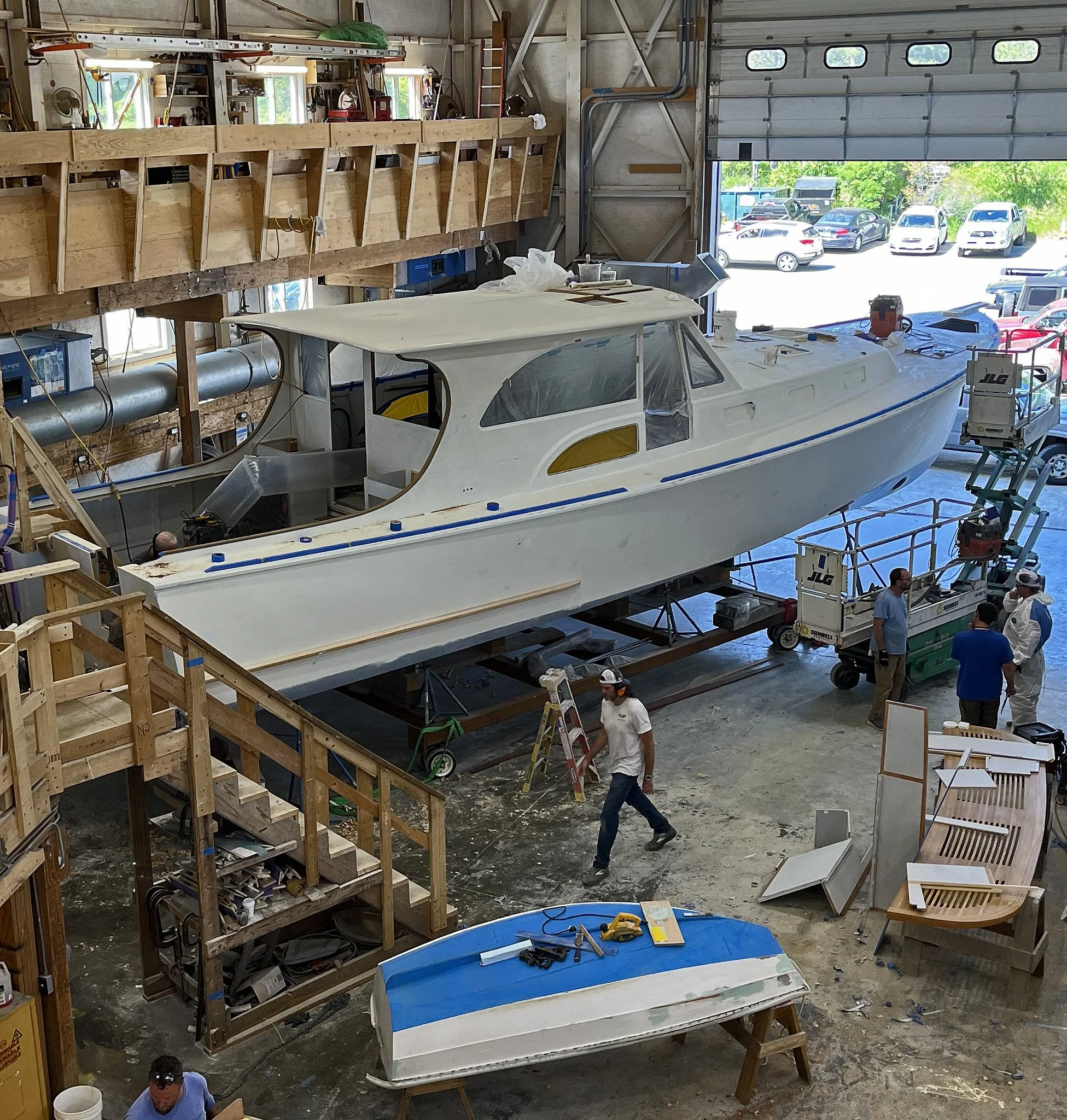
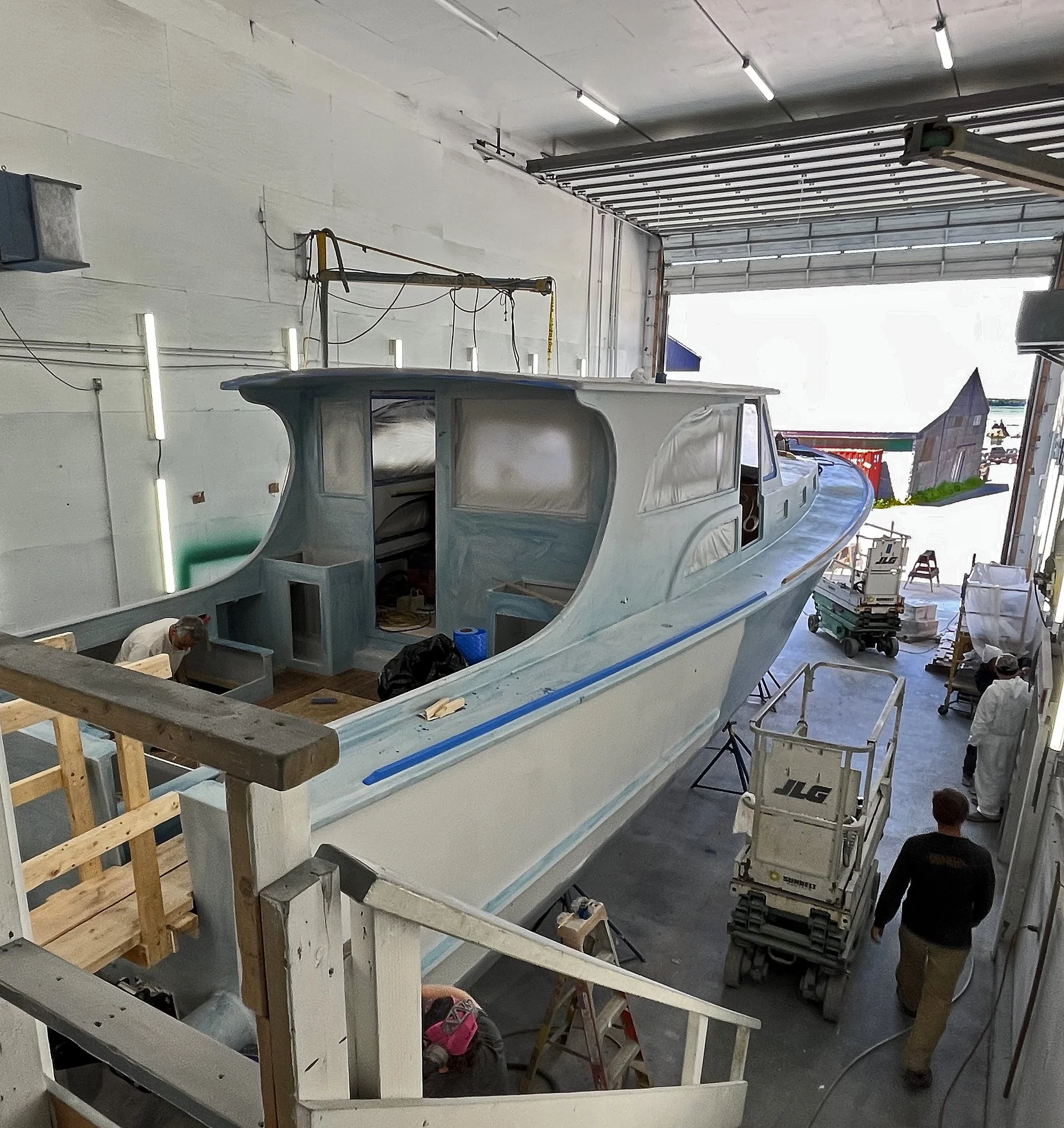
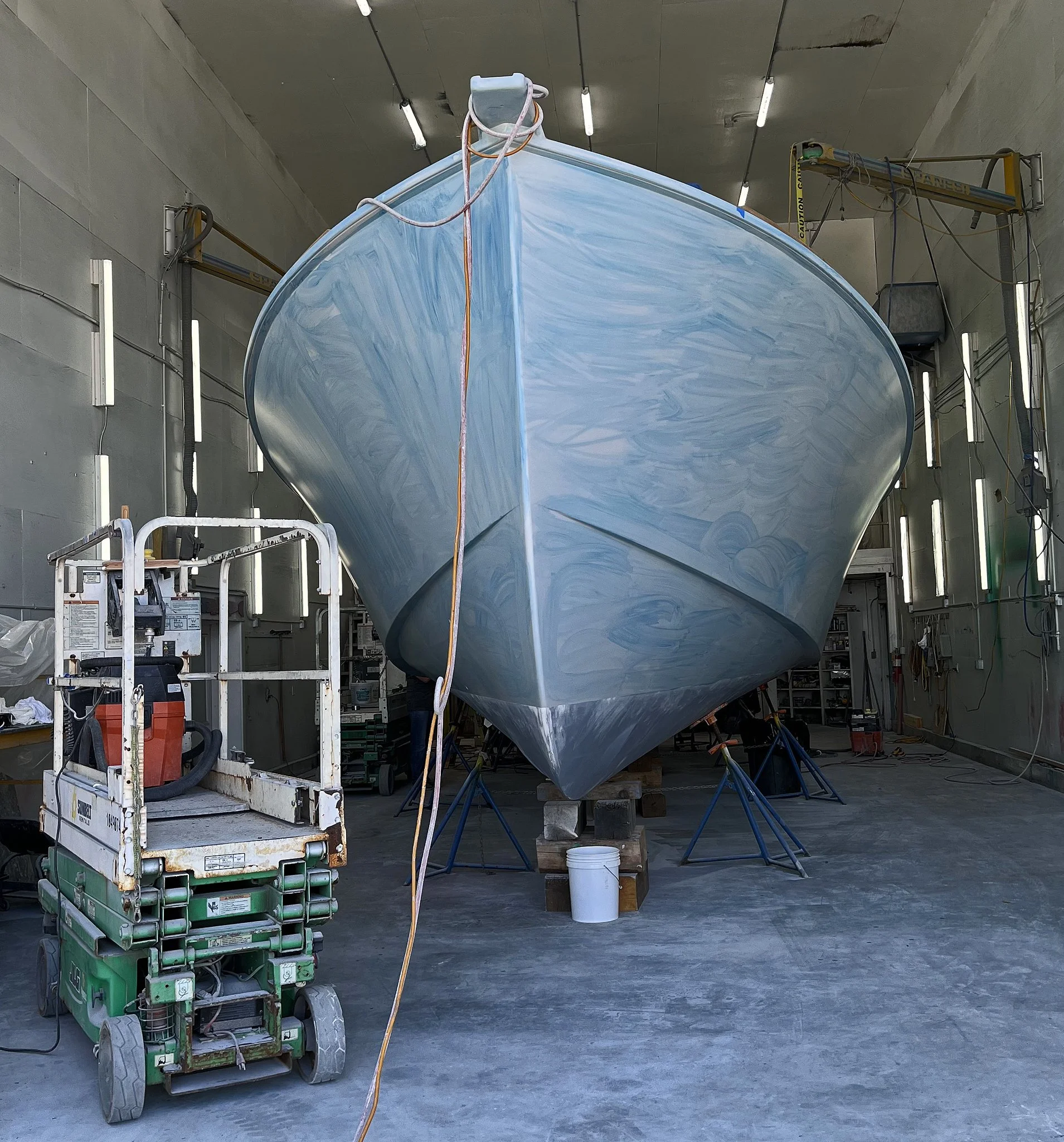
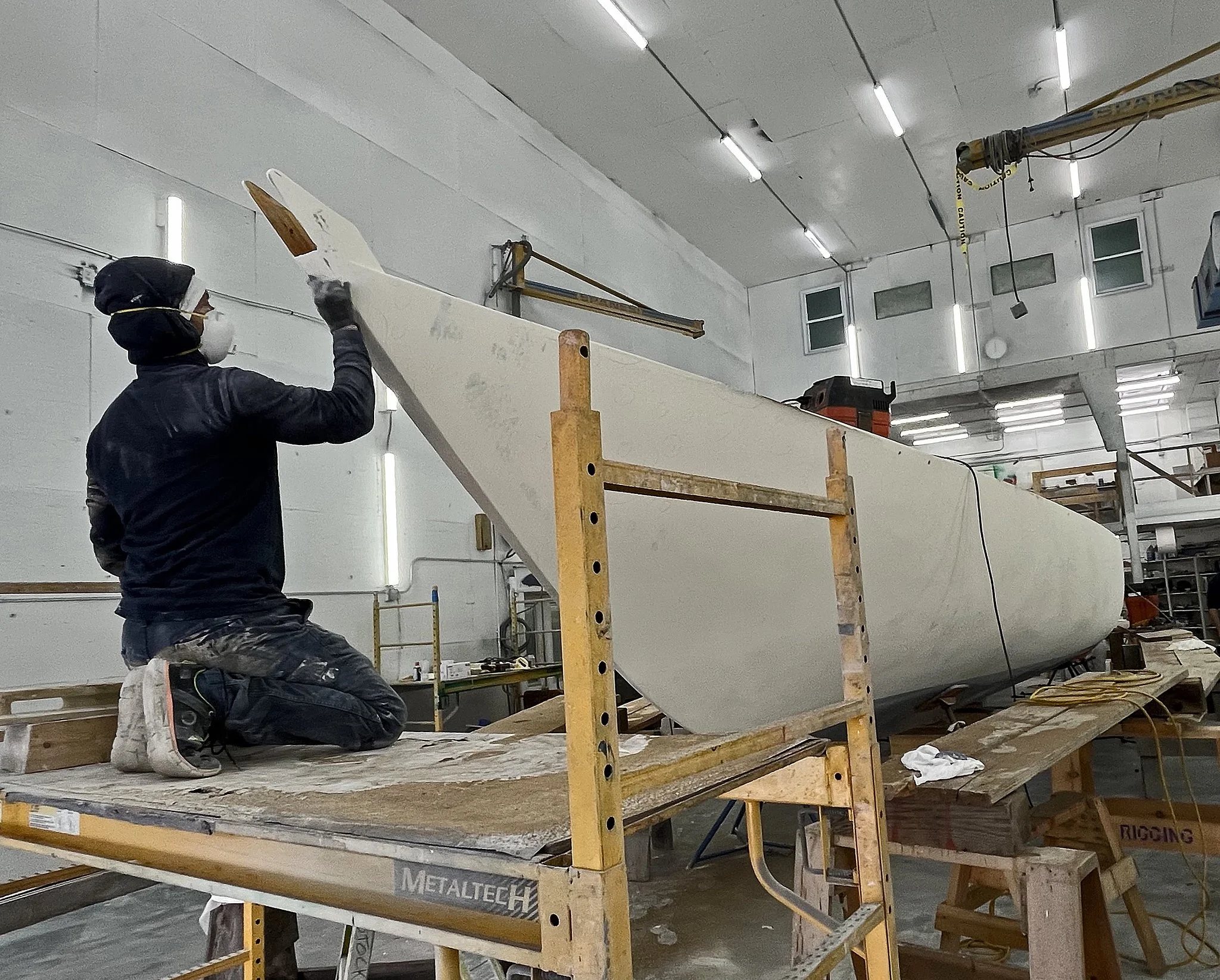
Today is Primary voting day in Maine and among my choices for potential winners is this express cruiser. As some of you know, we’ve been watching this beauty being built at the Brooklin Boat Yard for months. She’s recently been moved to the paint shop, as you see here. She was being primed yesterday:.

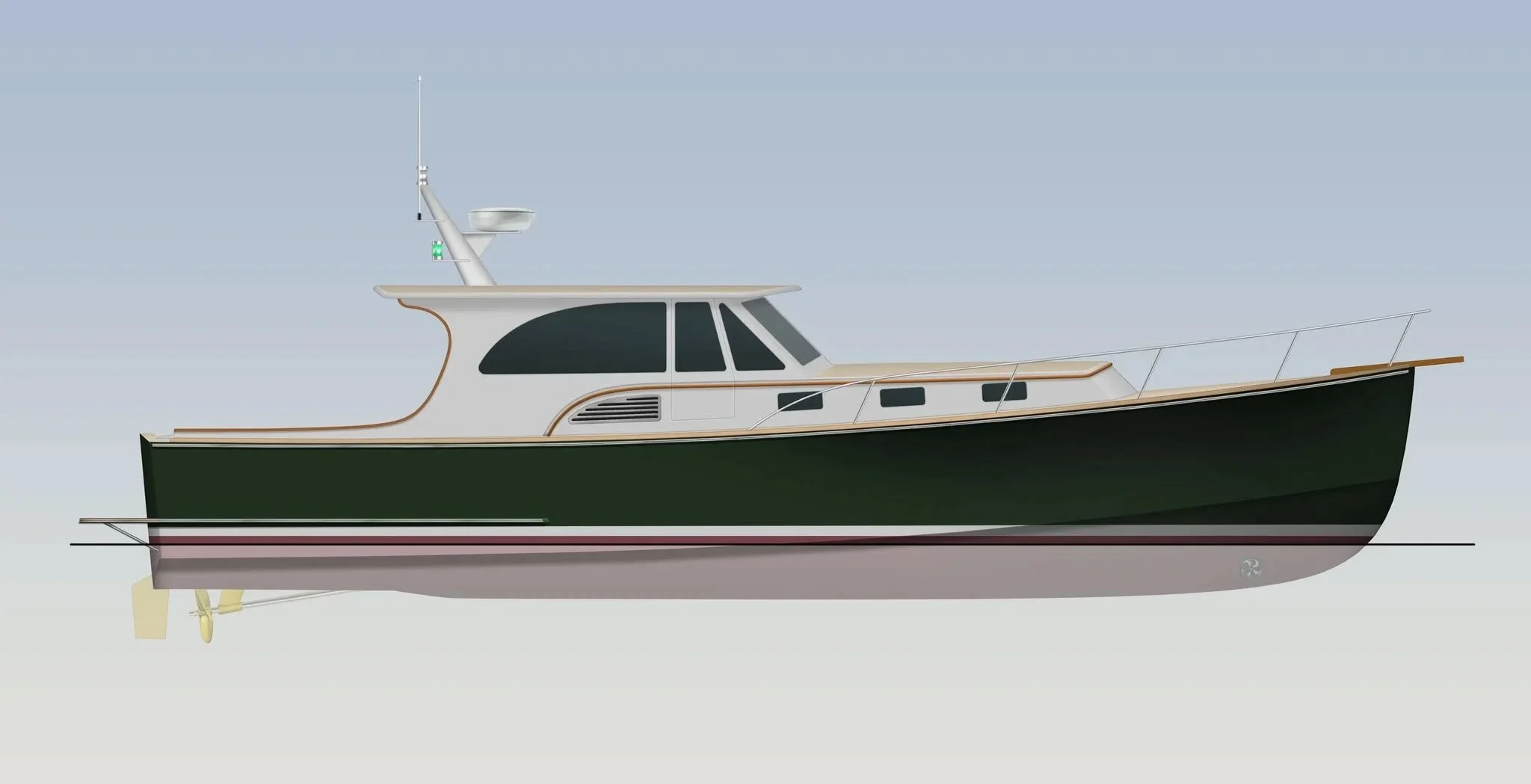
As you may remember, this cruiser was designed by Will Sturdy, BBY’s Chief. Designer. She’ll be 47 feet long overall, with a 14-foot beam (widest part), according to the Yard’s sheet on her. She’s scheduled to have an 850-horsepower diesel engine that powers a propeller in a funnel-like enclosure to reduce draft and maximize propulsion. Here’s BBY”s drawing of the finished boat:

(Images taken in Brooklin, Maine, on June 4 and 8, 2026.)

Comment

Comment

In the Right Place: Yesterday Morning

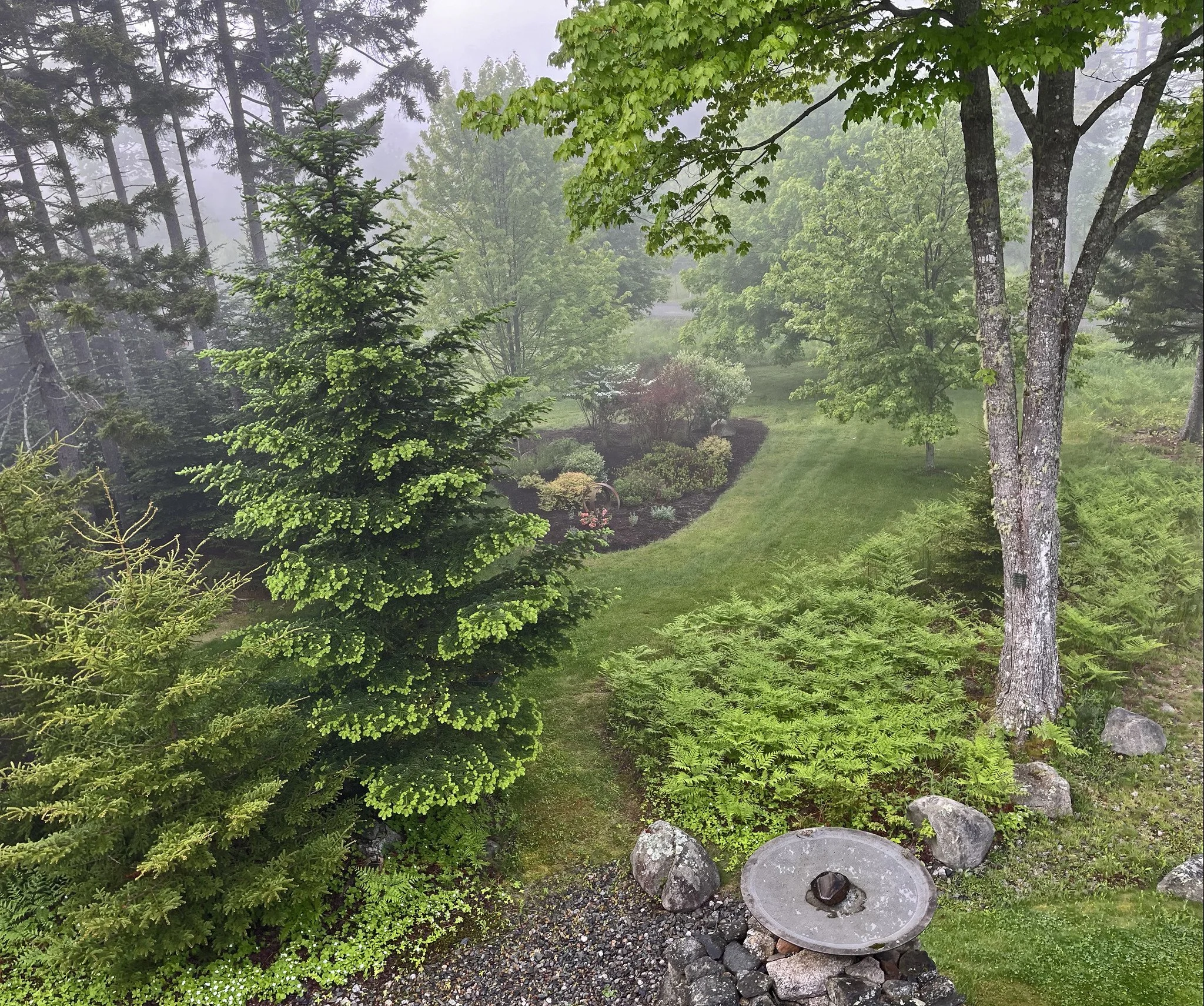
A weak dawn light eased through the overcast skies and came probing through the woods from the east,

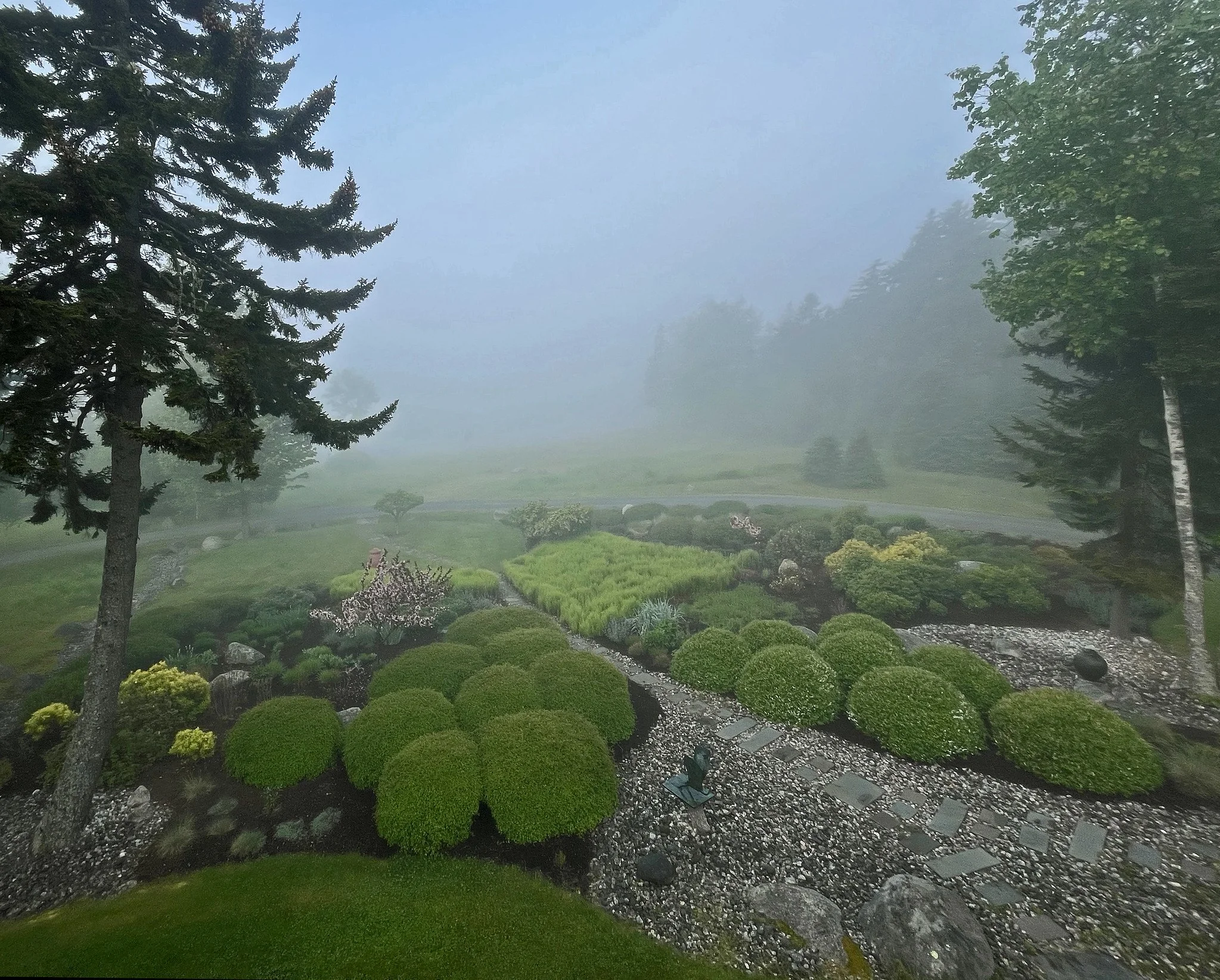
As a smothering fog emerged from Great Cove in the west and sidled up the north meadow,

As an advance party of raindrops descended from above and plinked an arpeggio in the bird bath.

They converged on the lushening garden, which never says no.

 (Images taken in Brooklin, Maine, on June 7, 2026)

Comment

Comment

In the Right Place: Watching Paint Dry

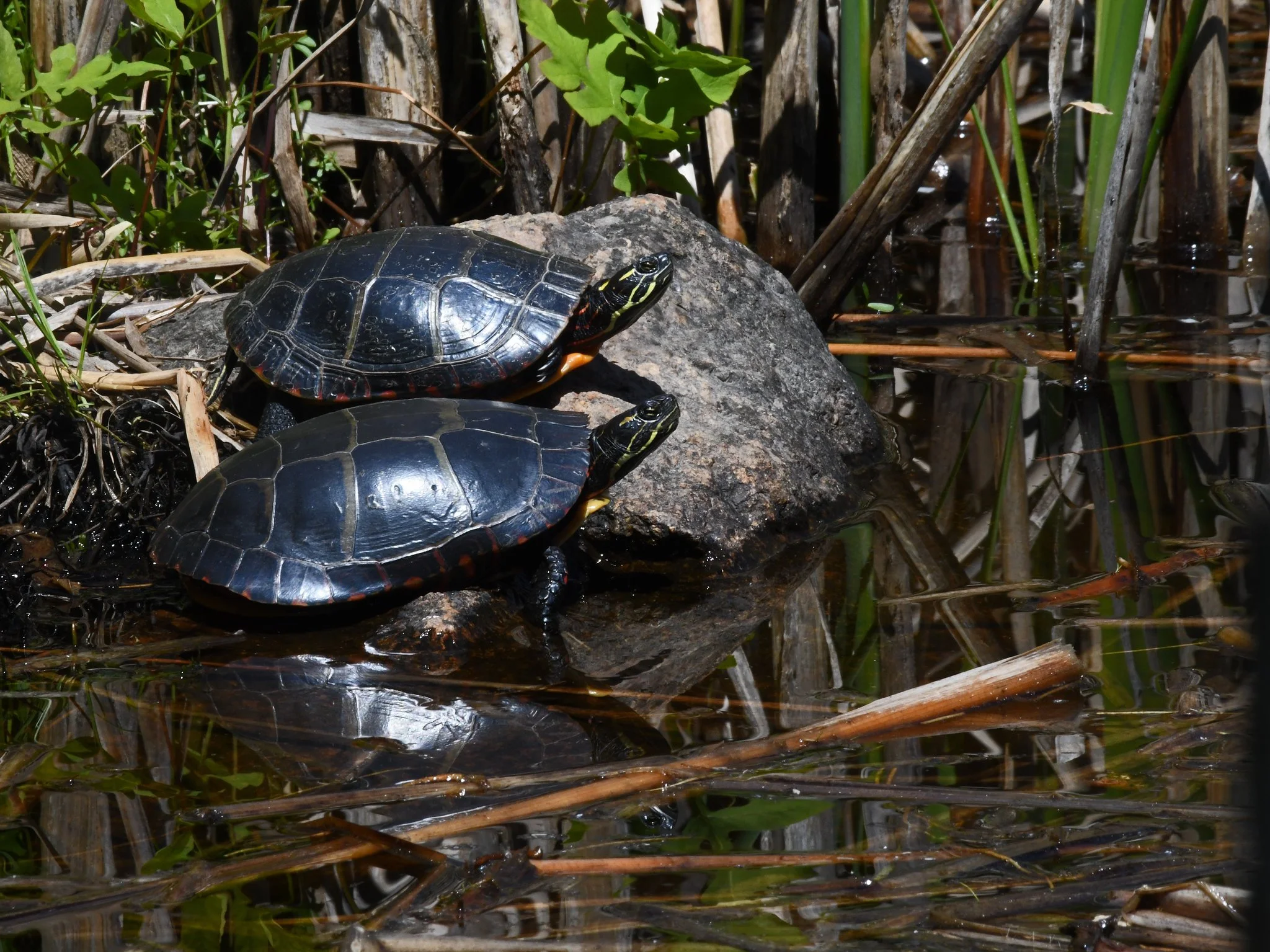
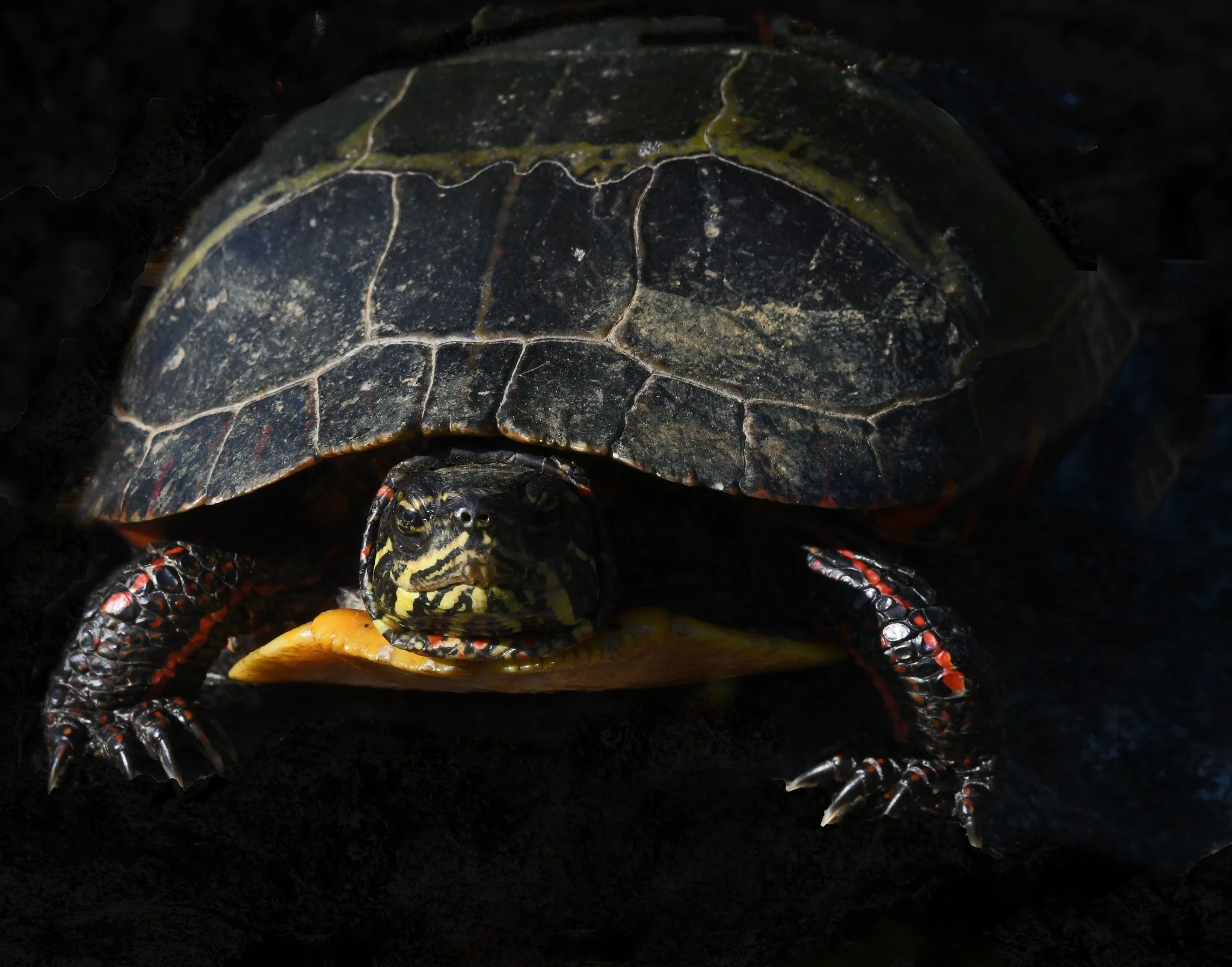
Here and below you’ll see a few of our resident painted turtles. Their spiffy paint jobs are not to impress passers-by, according to the literature – quite the opposite. Their markings are functional and have been inspirational to Native Americans.

At one level, the random, bright markings and the irregularly outlined shell plates (“skutes”) are evolved camouflage. They break up the turtles’ familiar profiles and make them harder to be noticed by predators when the reptiles are still, which is frequently. (However, apparently no one has informed these sun worshipers that, when they bask, their shells often give off a distinctive dull reflection that allows a practiced eye to detect them at great distances.)

While meant to deter predators, their decorations can be enticing and informative to other painted turtles. Male painted turtles flash their distinctive yellow-and-red markings to attract a mate. The brightness of a turtle’s markings signals its age and health, factors that females apparently value when deciding to accept a suitor.

Native Americans also valued the markings of painted turtles, we’re told. Our first settlers, especially the eastern forest and Great Lakes peoples, reportedly depicted these turtles’ patterns in face paint, decorative art, jewelry, and clothing. In some Native American legends, painted turtles were tricksters that used their bright colors to entice and outwit humans, especially women.

(Images taken in Brooklin, Maine, on June 1 and 3, 2026.)

Comment

Comment

In the Right Place: Paul & Anne

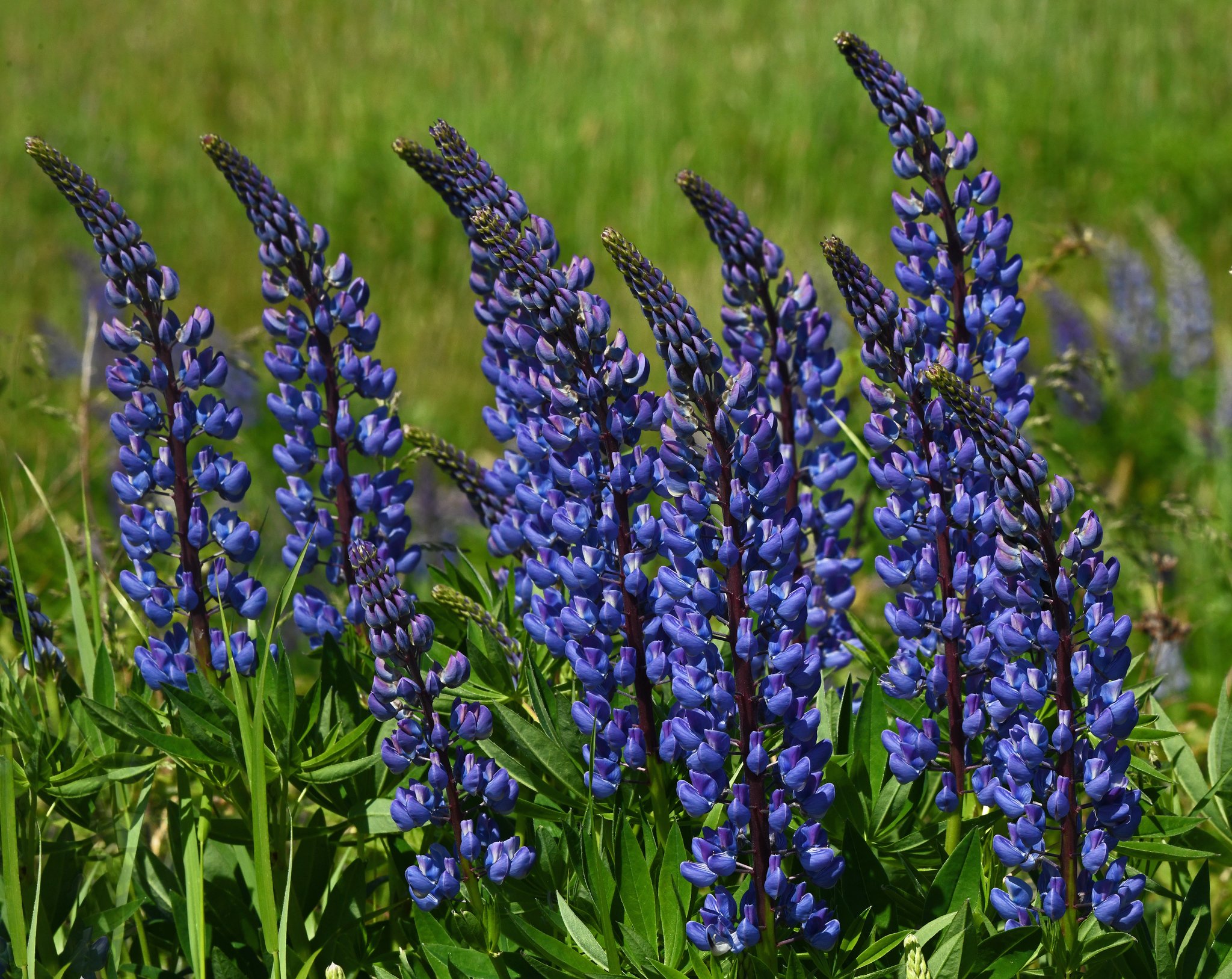
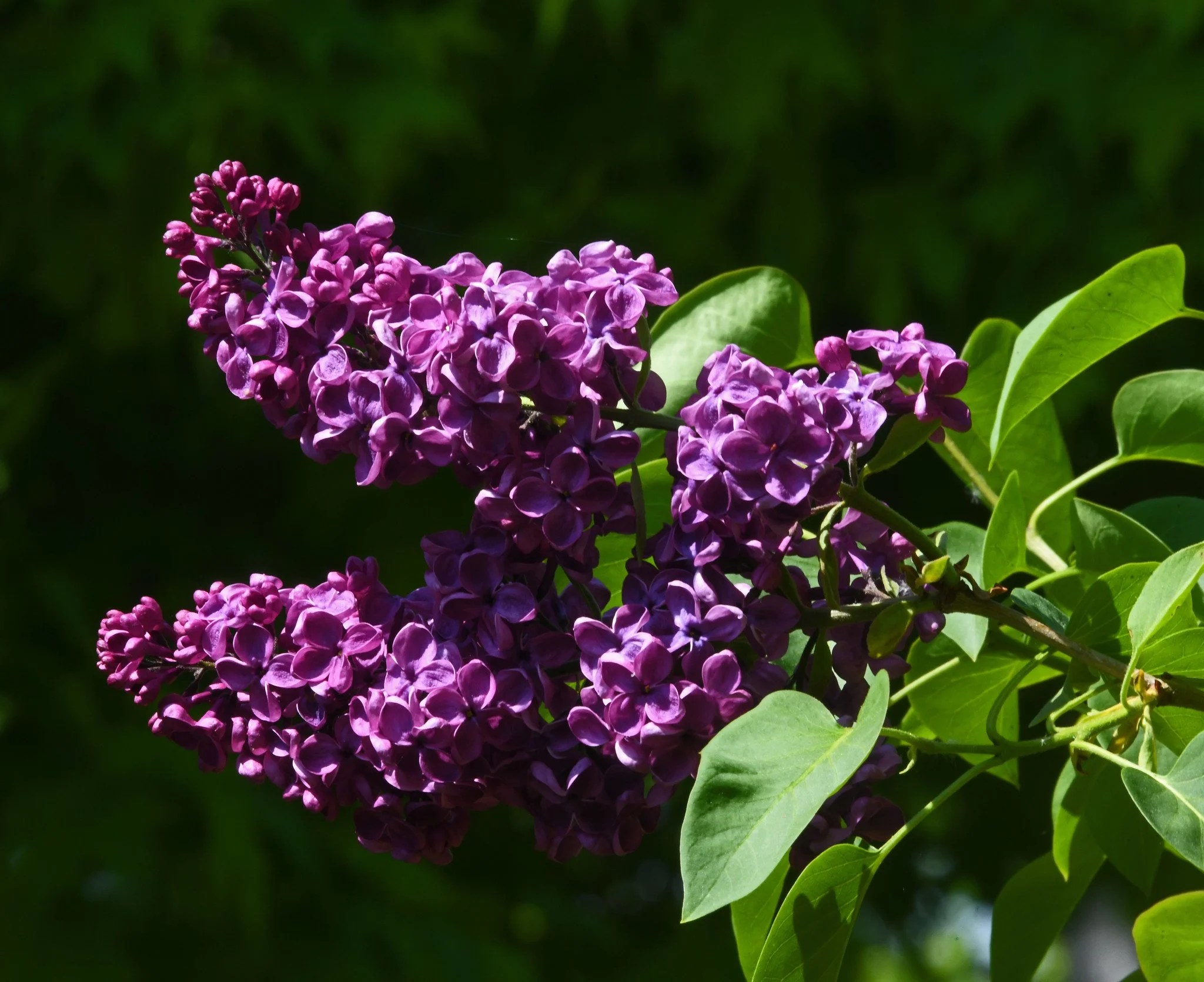
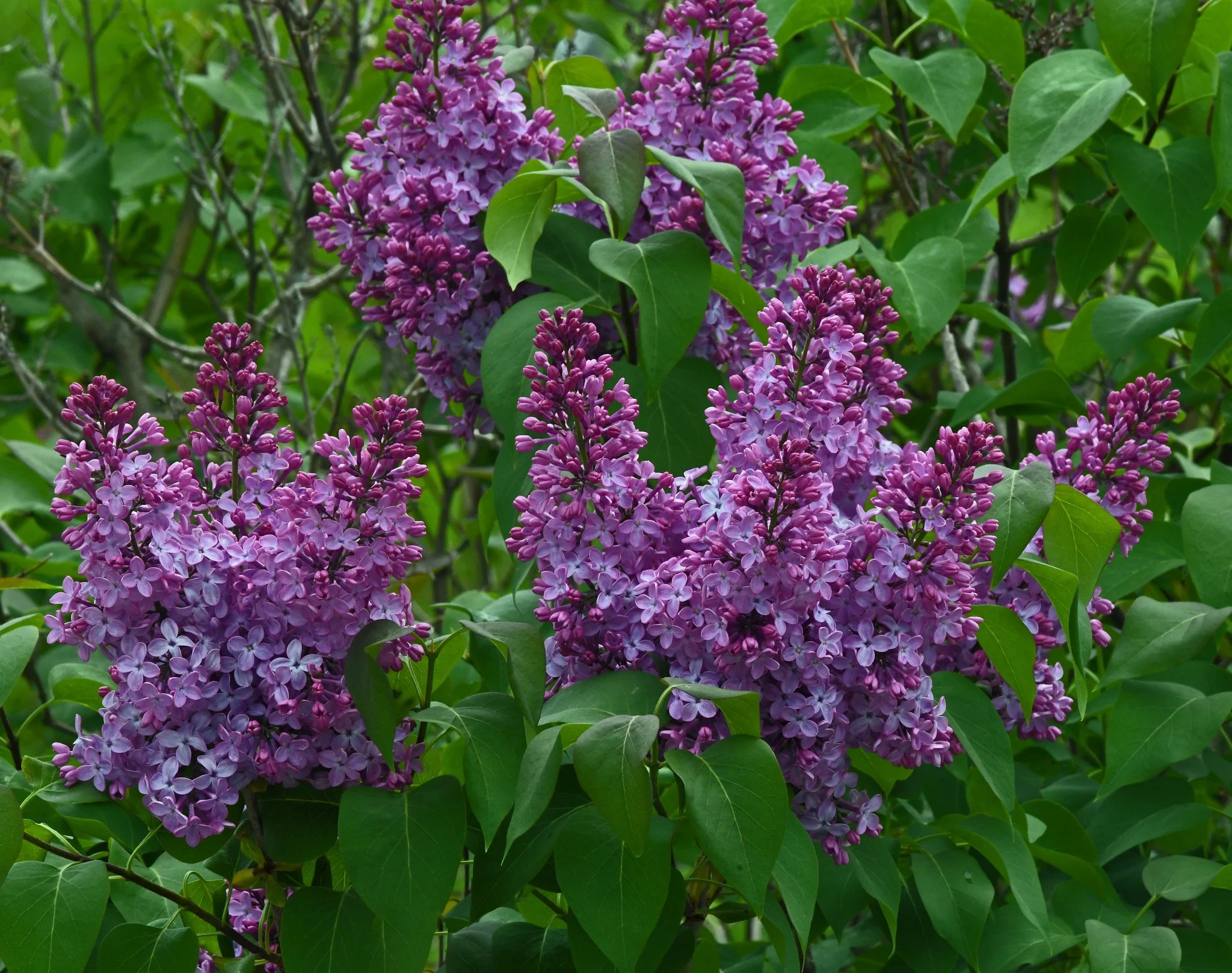
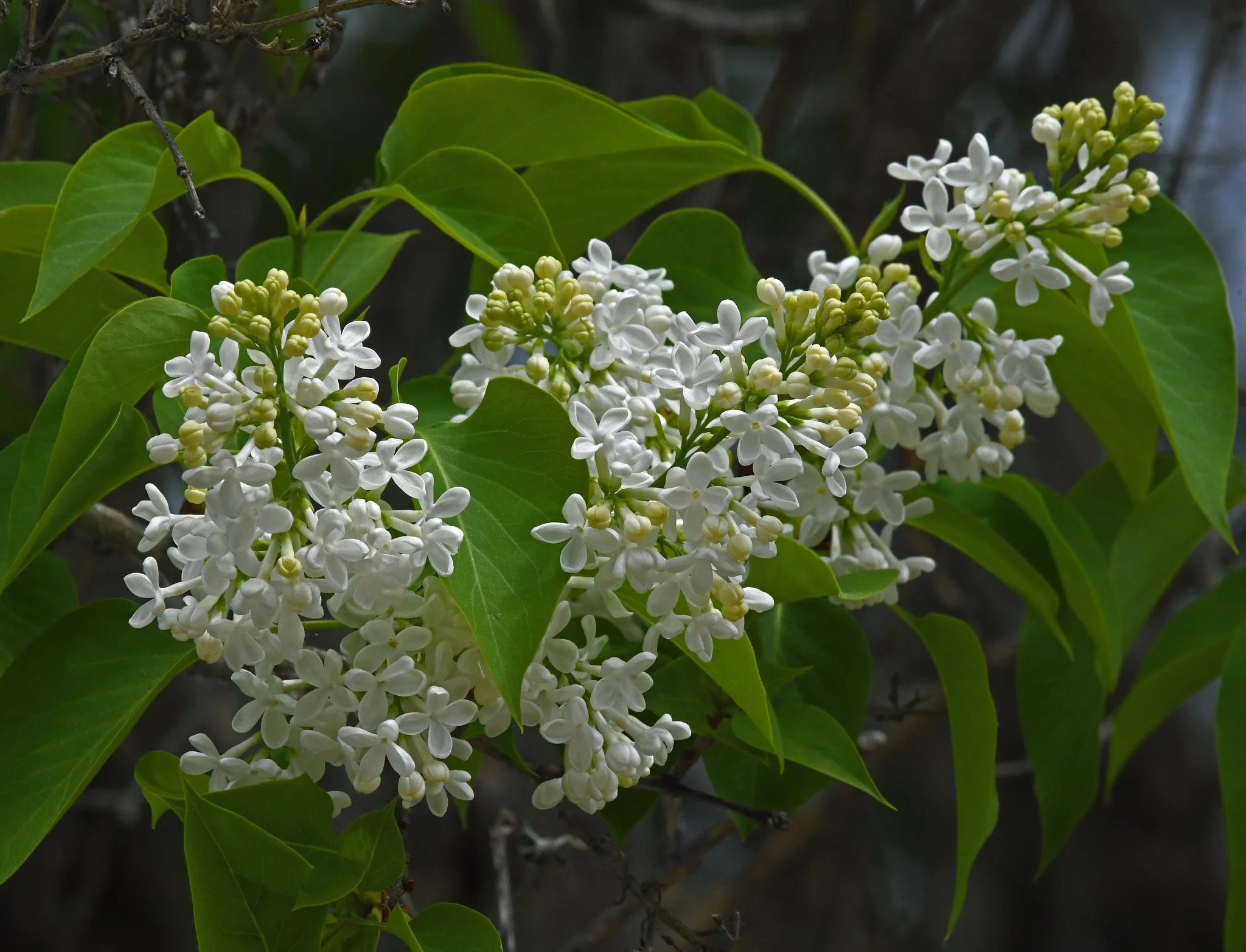
It’s that time when the lupines and lilacs are doing their best to make us feel good to be alive in June. Both plants like to sleep in the northern cold, perfume the spring and early summer, and rejoice in colorful exuberance until they fade. However, they also have significant differences.

Lupines, shown above, are herbaceous, ground plants in the pea family that like to clear and take over wild land. Lilacs, shown below, are woody shrubs and trees that always seem resiliently optimistic about the summer.

(Imagine having the good fortune of the pioneering Paul Bunyon showing up in your area at the same time as the resilient Anne of Green Gables.)  (Images taken in Brooklin, Maine, on June 4 and 5, 2026.)

Comment

Comment

In the Right Place: Dock Tours Without Borders

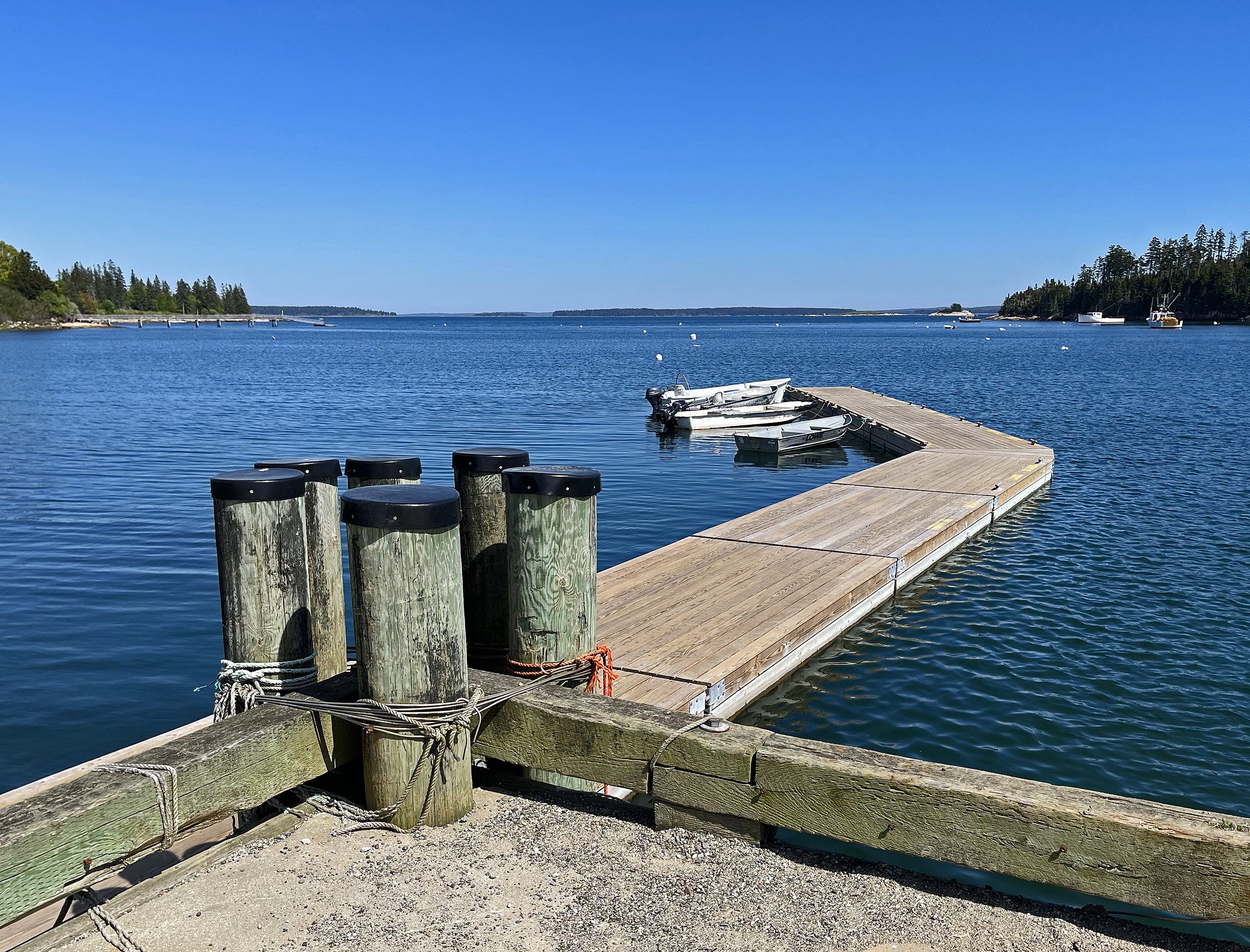
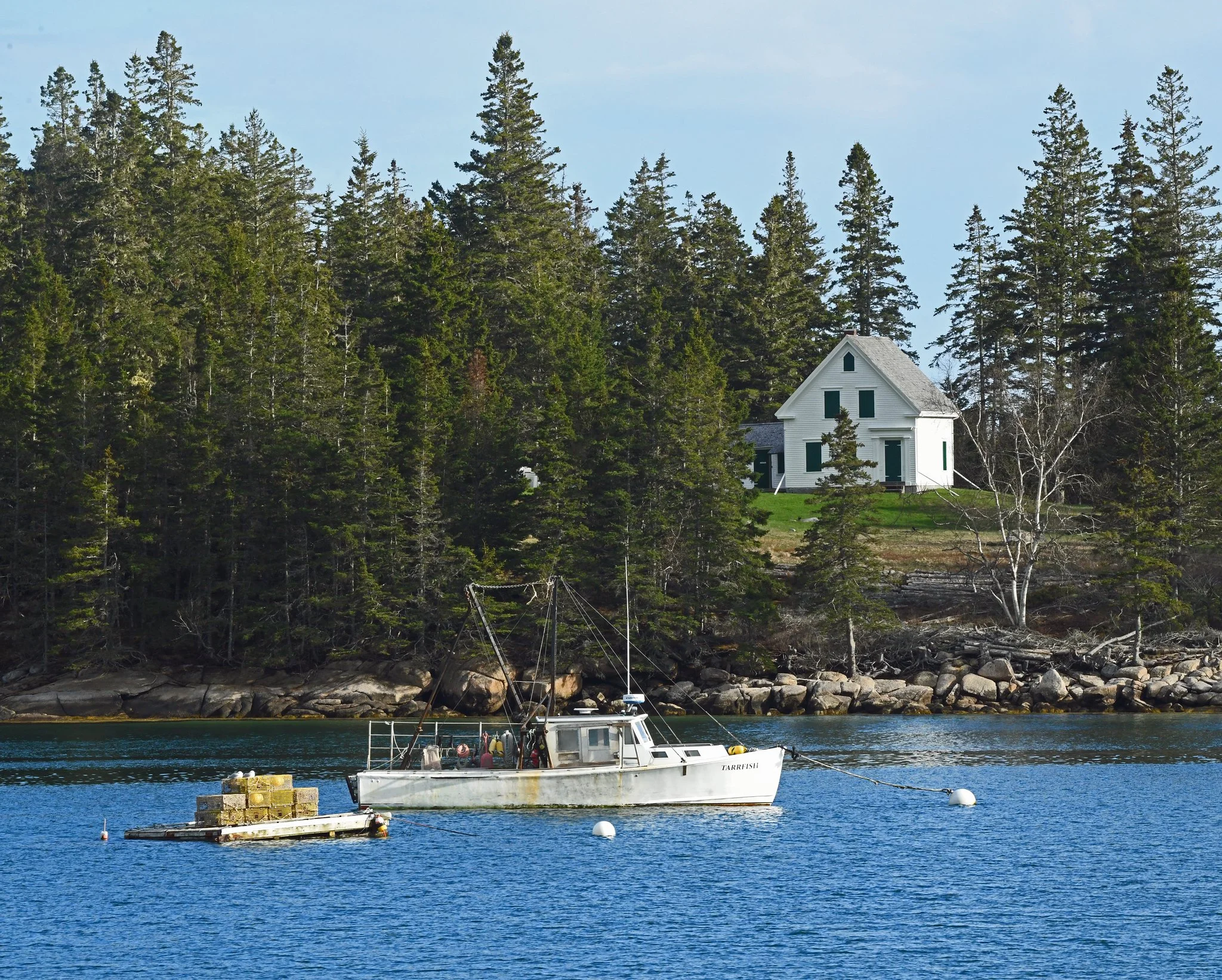
Now that the area’s docking floats are mostly in the water, we’ll take a look at the three major floats to tie up boats in Brooklin, each of which has a distinctive character. Below, you see the Town float at Nakeag Harbor, which mostly hosts the skiffs used by lobstermen to get out to their boats in the Harbor.

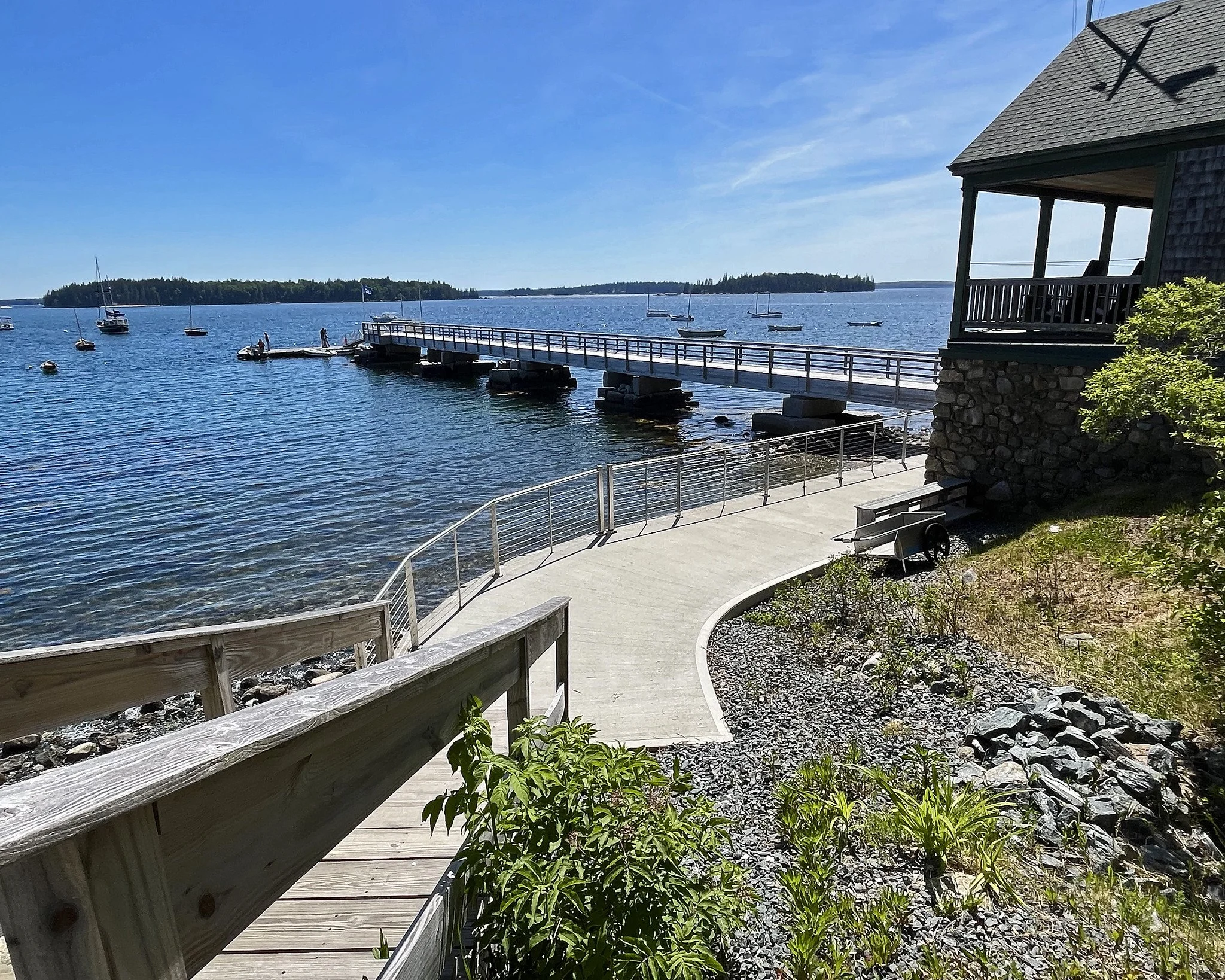
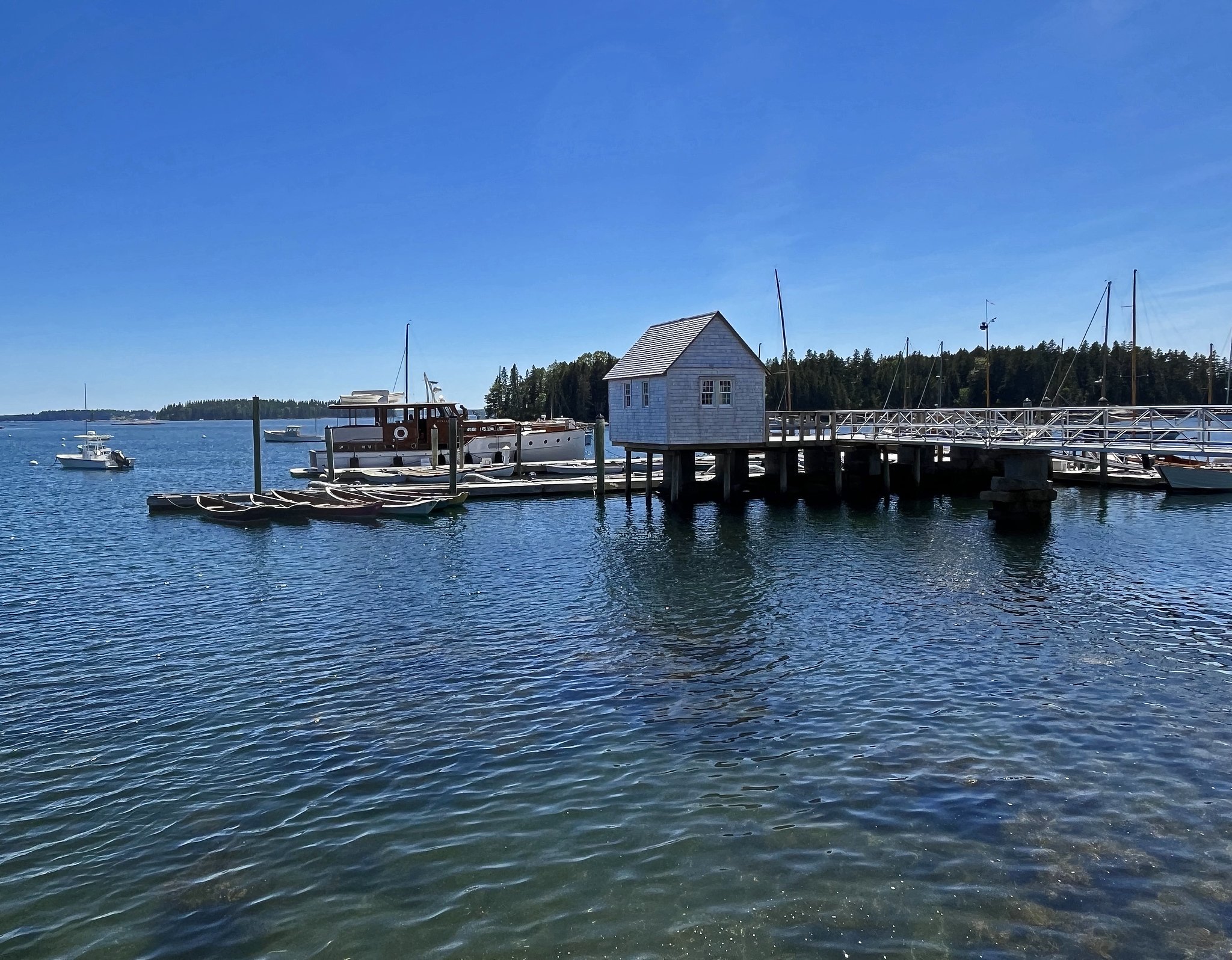
Up the coast about two miles in Great Cove is the docking float at the end of the sturdy and straight WoodenBoat School pier. It mostly is a platform for members of the School’s sailing classes to board runabouts that take them to and frow from their assigned sailboats:

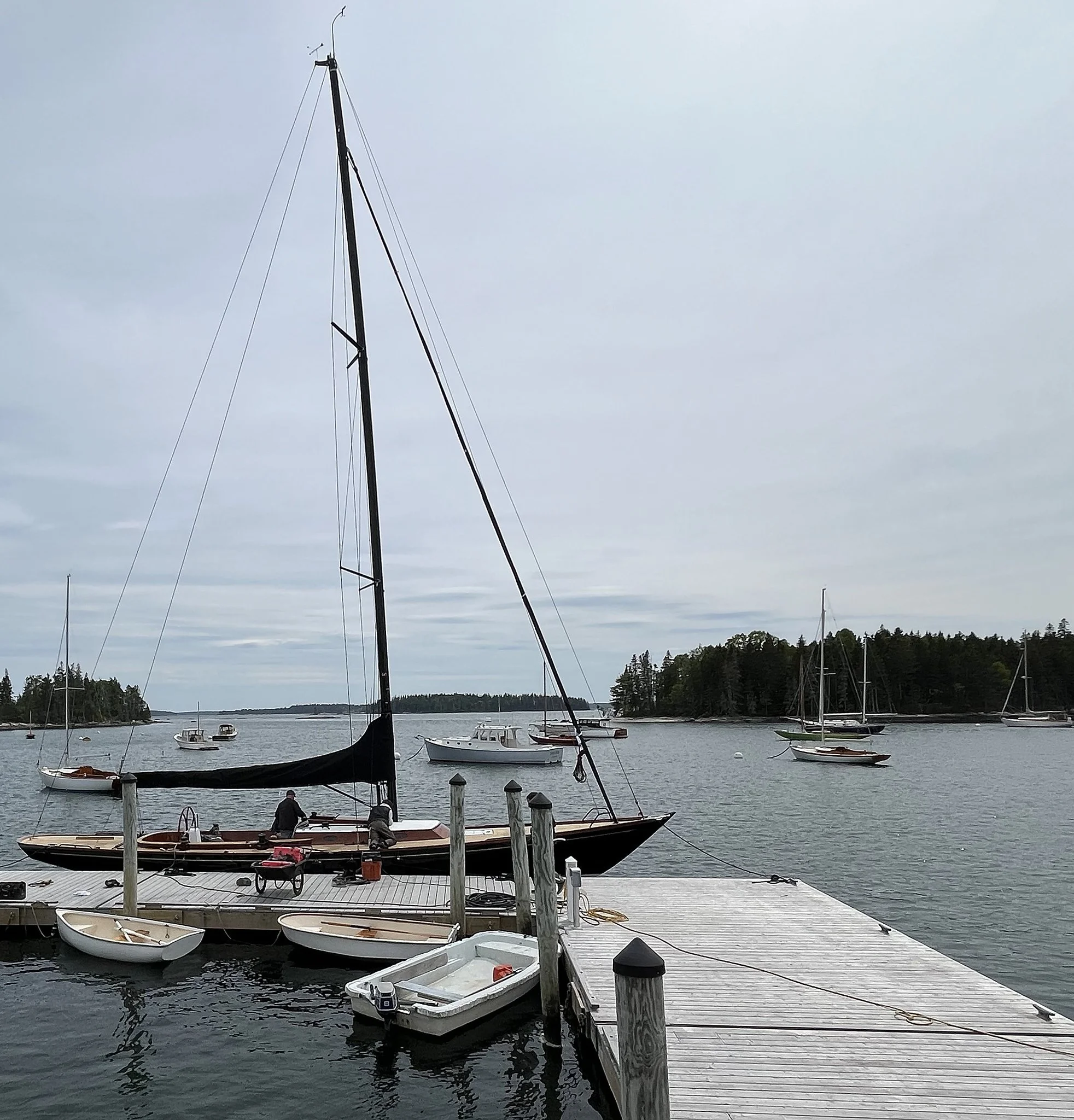
Further up the coast from Great Cove about a mile or two, in Center Harbor, are the docking floats below Brooklin Boat Yard’s pier and shed. Here you’ll see some exquisite boats that were built by BBY or are there for some other reason:

(Images Taken in Brooklin, Maine, on June 4, 2026.)

Comment

Comment

In the Right Place: What’s in a Name?

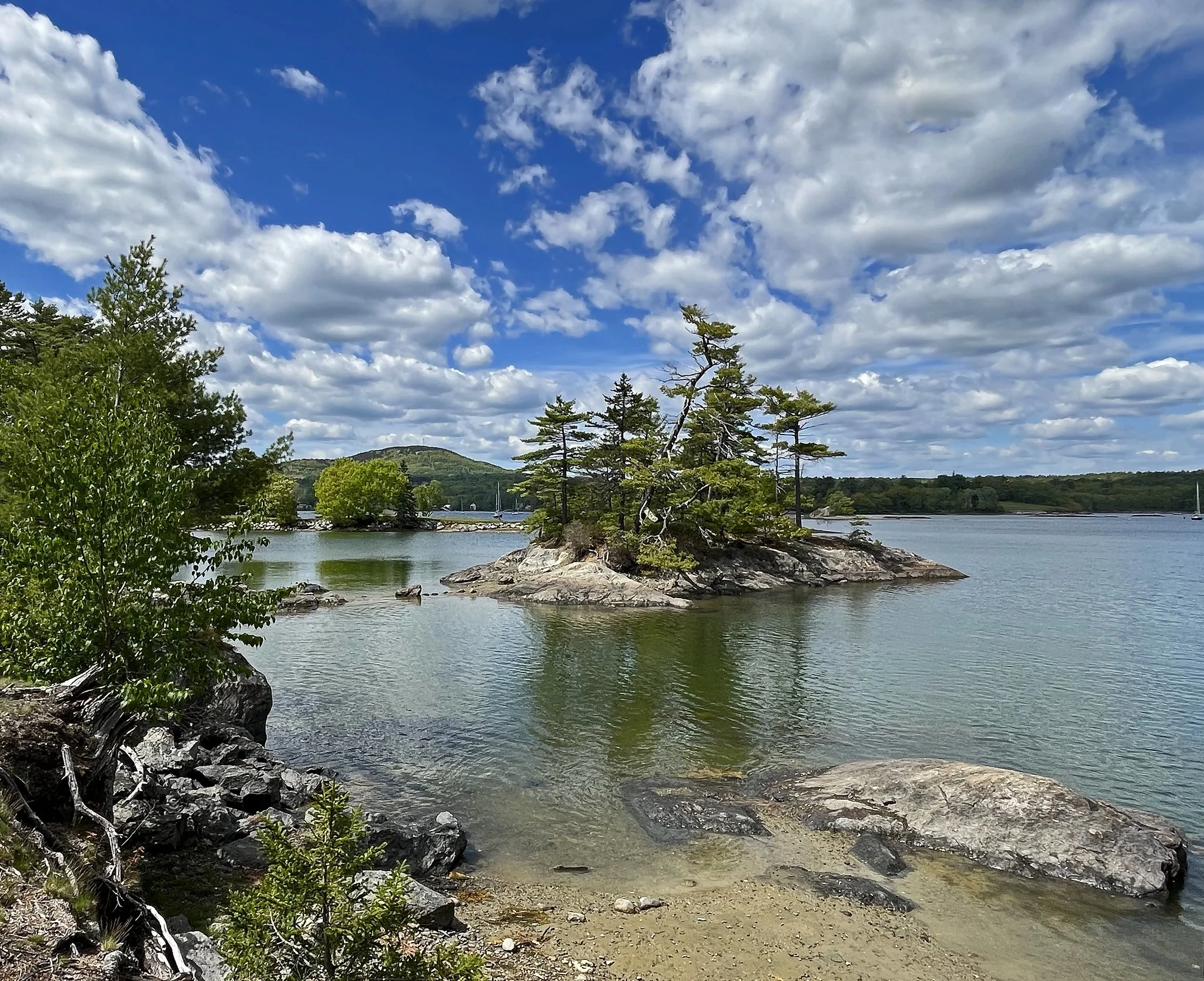
Here’s one of my favorite views of the near-mountain named Blue Hill, taken from one of my favorite unnamed Blue Hill Bay inlets, where one of my favorite unnamed islands can be walked to at low tide. The sight inspired me to do a little research.

Maine reportedly has more than 4600 offshore islands, including ones that are merely granite ledges, and 3166 of those islands are catalogued. Naming an island in Maine requires approval of the U.S. Board on Geographic Names, which standardizes geographic names for federal use. The key considerations are:

>Islands (or any geographic phenomenon) may not be officially named after a living person or anyone who was alive during the five years prior to application for an official name. (No Trump Island allowed.)

>A compelling reason why an island needs an official name must be given (e.g., honoring a historical figure or event or avoiding confusion).

>Names that already have widespread public usage and acceptance are favored.

(Image taken in Blue Hill, Maine, on June 1, 2026.)

Comment

Comment

In the Right Place: At BBY, XII

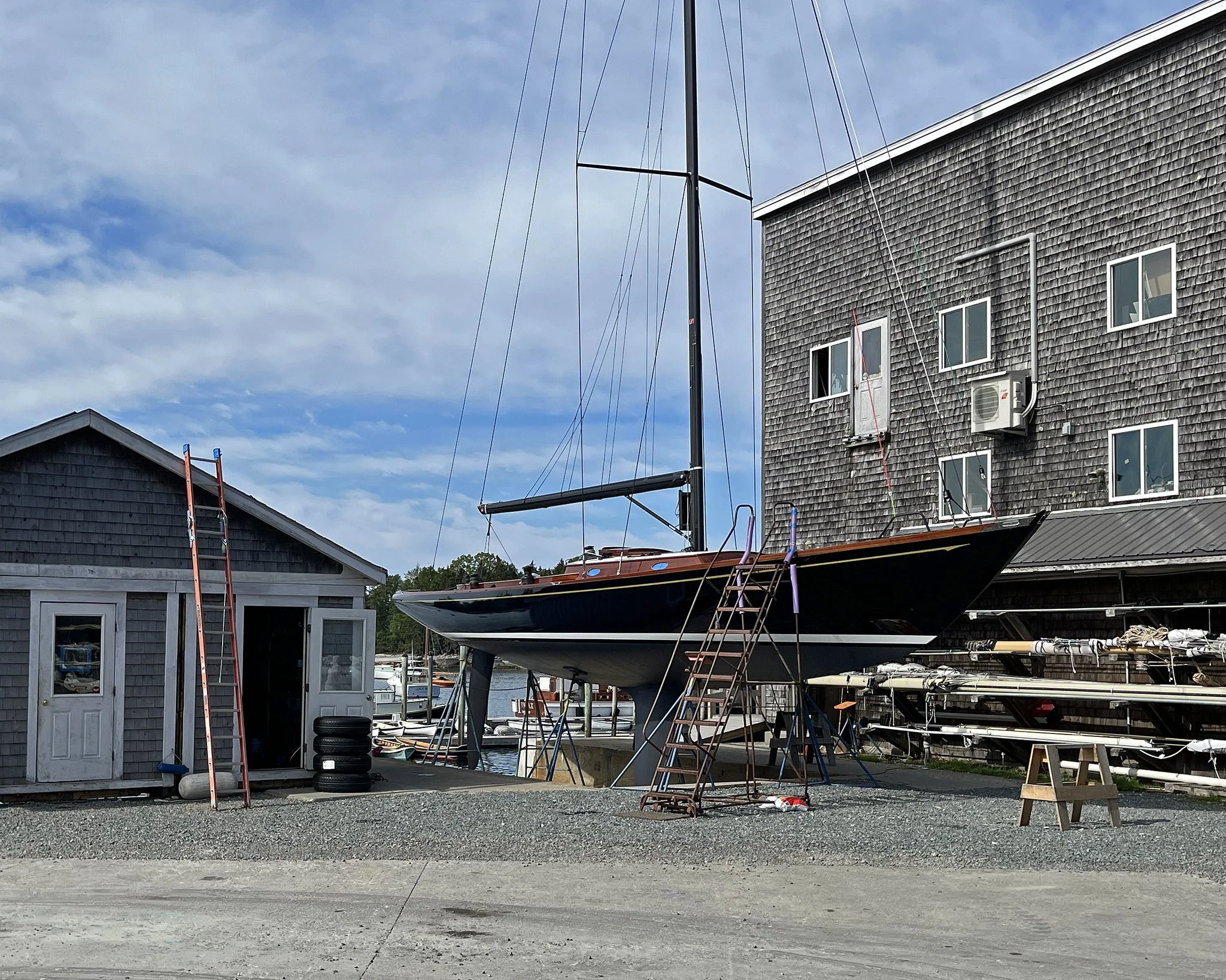
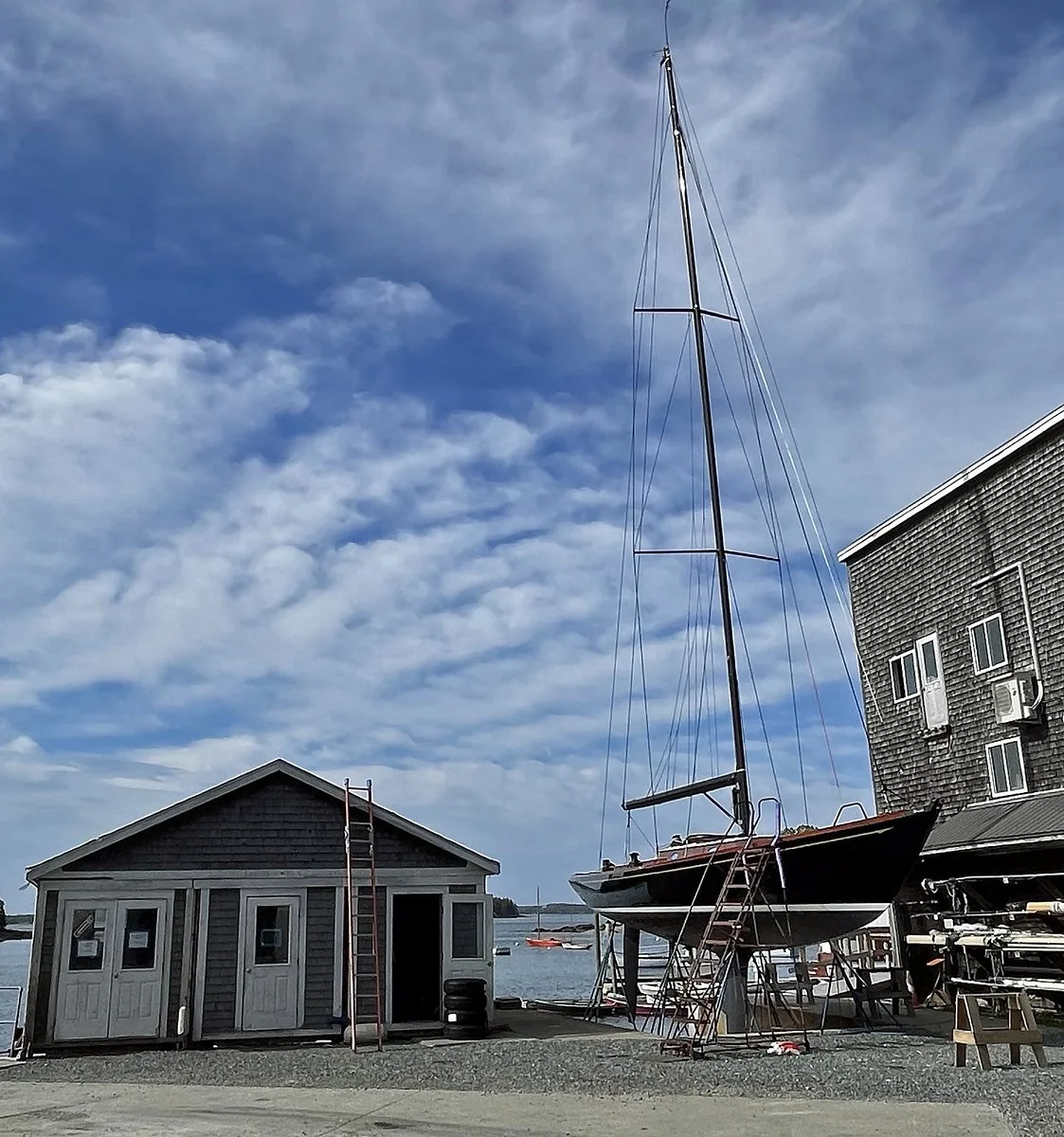
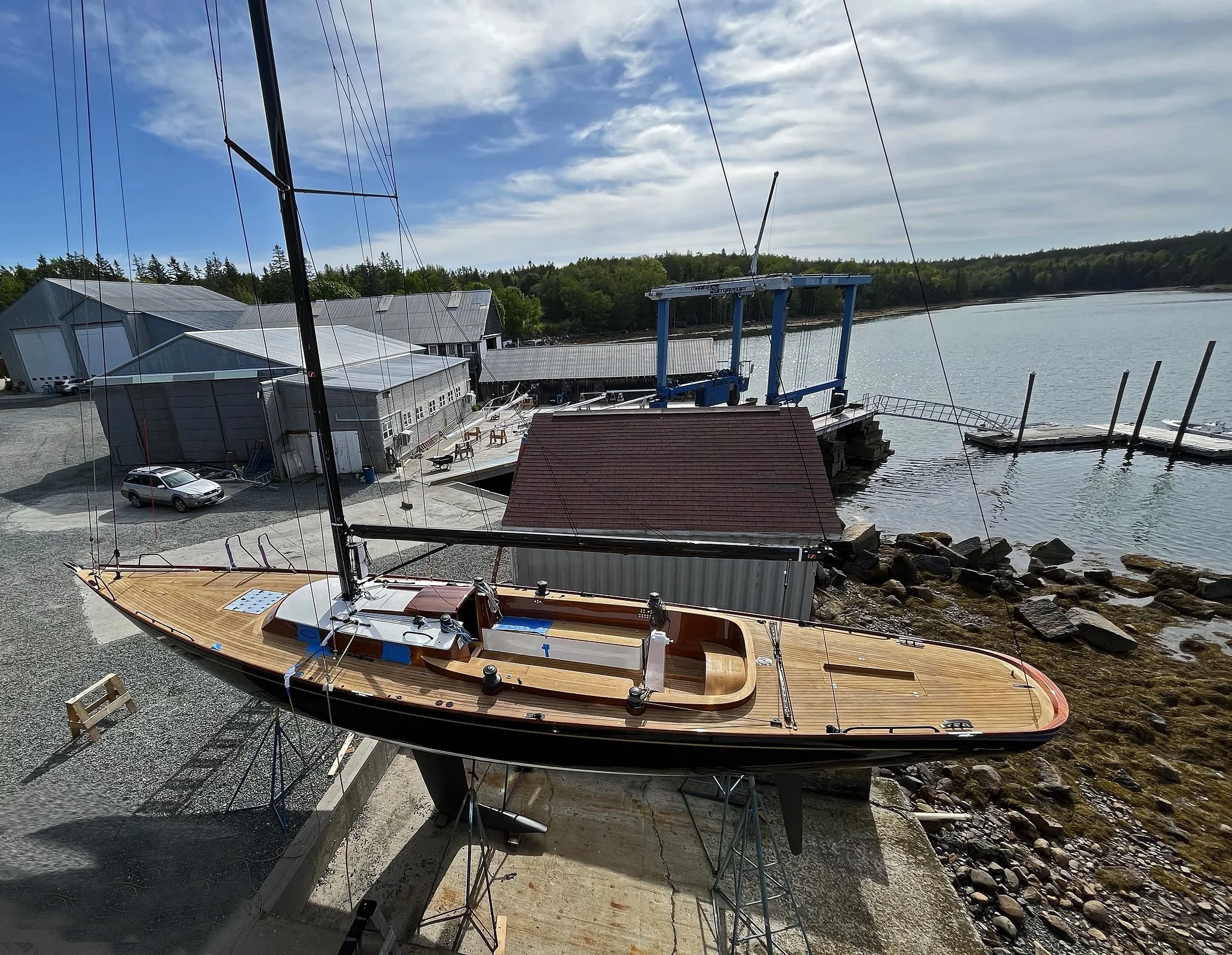
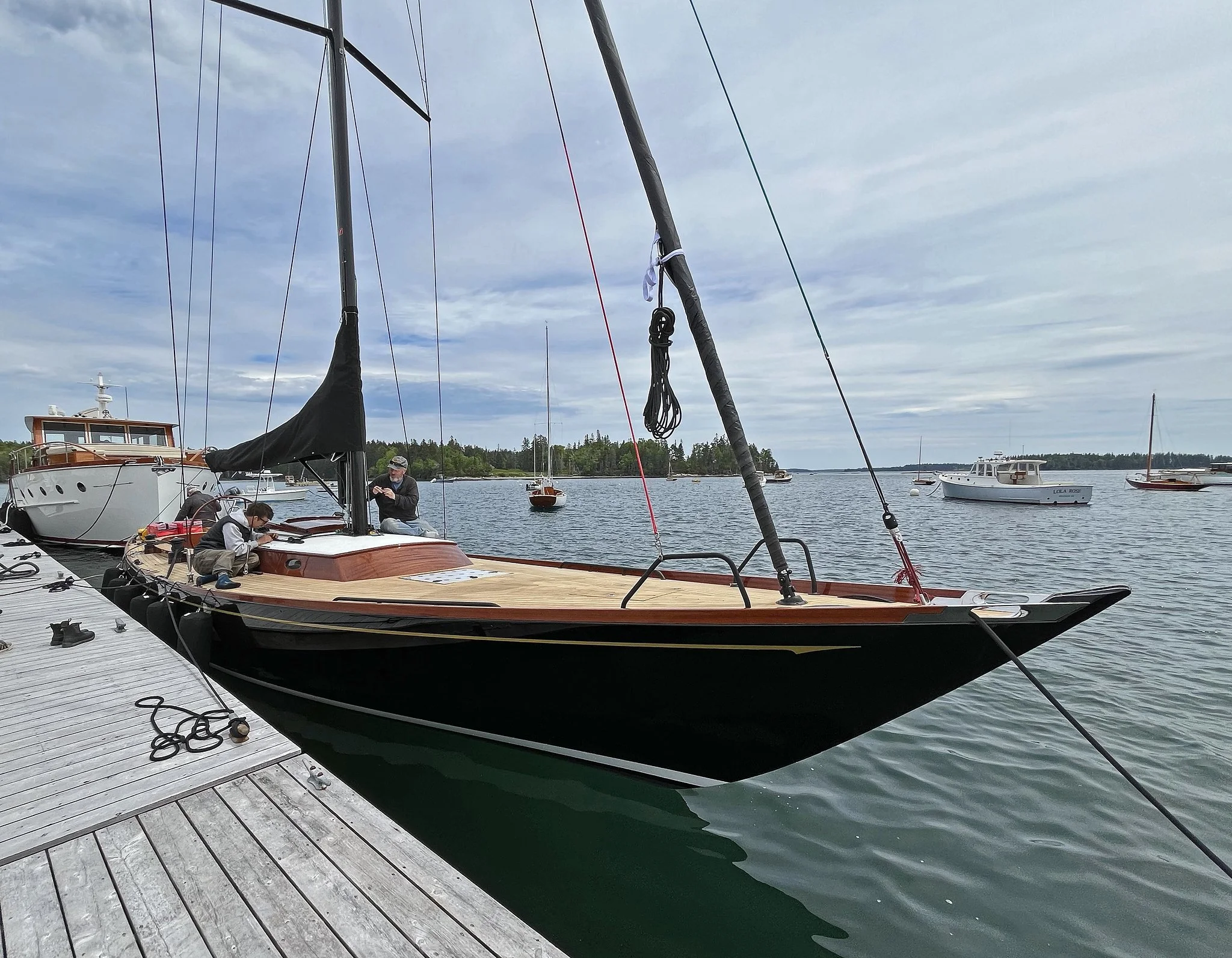
Here’s DYLAN, the sailboat that we watched emerge this winter and spring basically from a collection of wooden planks into a beautifully sleek racer. She’s finally where she belongs. As you may know, she’s a Brooklin Boat Yard-designed and built Eggemoggin 47+ (47’ 6” overall length). Although she reflects classic lines, she contains the latest in sailing systems and structures in a highly dynamic form.

Consistent with form following function, DYLAN presented quite a contrast yesterday with her dock neighbor SYNTAX, which was built by BBY in 2024. As you may know, SYNTAX is the 55’ Wheeler designed as a tribute to, and modern interpretation of, PILAR, author Ernest Hemmingway’s famous 1930’s fishing yacht.

DYLAN still has details that need attention, but she had her first sea trial Monday and did very well, according to the BBY staff. She’ll have more trials and, if all goes as expected, soon will be delivered to her future homeport of Newport, Rhode Island.

(Images taken in Brooklin, Maine, on June 2, 2026.)
Comment

Comment

In the Right Place: Reflections

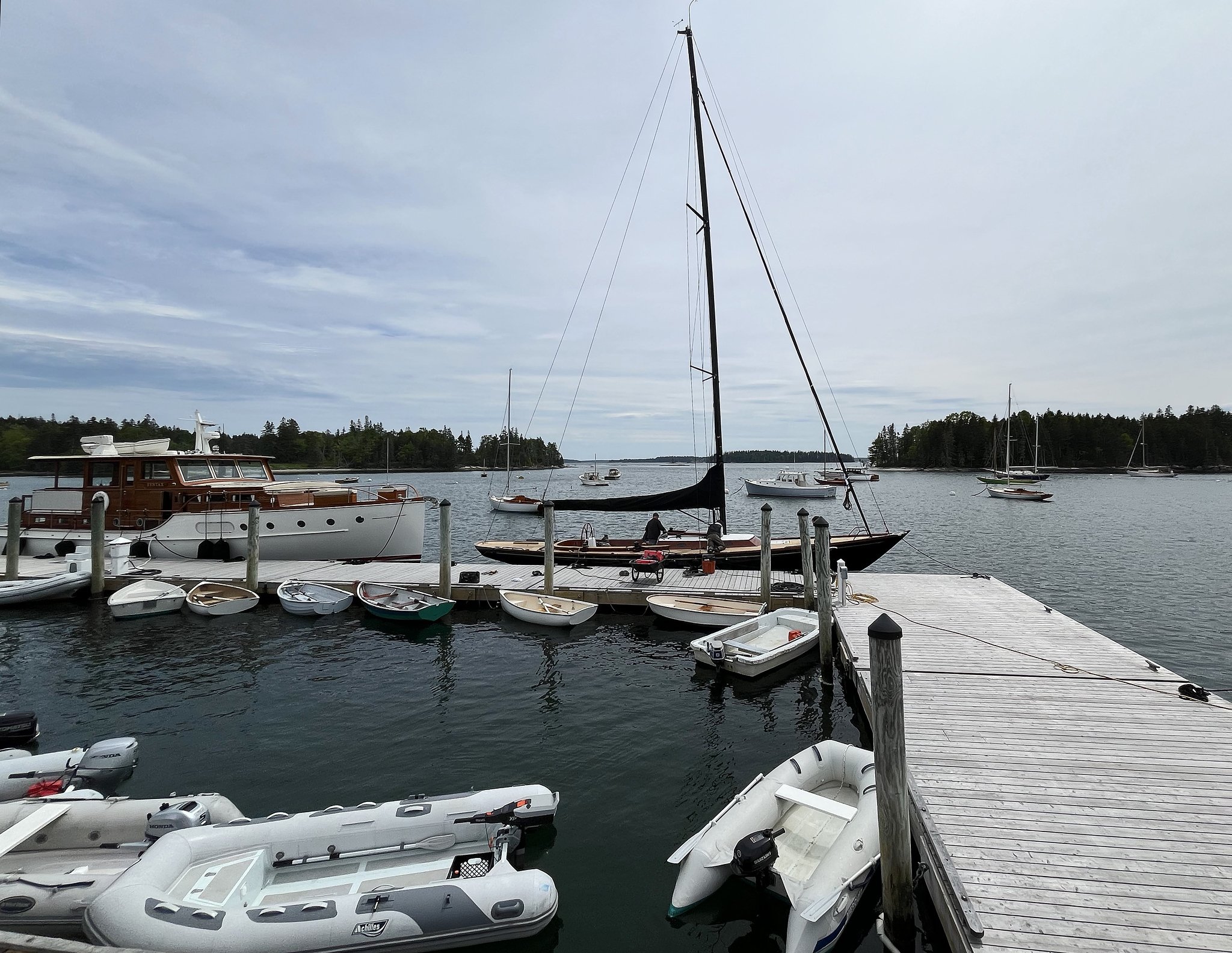
Here’s rockbound Conary Cove on the first day of June. The beautiful inlet always is changing, always interesting, always a source of wonder about how people experienced it over the many years that it has been a historic attraction.

In the 1600s, what did the Penobscot people see and think when they paddled into the Cove where there were no roads or houses, the woods were thick, and the same granite ledges appeared and disappeared twice a day in 10+-foot tides?

In the 1700s, what did Joseph Woods think of the Cove when he sailed into it and decided to build his house there, the first in the area and the beginning of the Town of Blue Hill?

In the 1800s, what did the workers think of the Cove as they rode and walked to work in the Tide Mill Sawmills that used the tides there to power the saws that would process the area’s timber into ships’ masts, cordwood, and shingles?

In the 1900s, what did Leslie Leveque, a prosperous Ohio businessman, think of his view as he came in low in his sea plane, landed in the Cove, and taxied up the ramp to park the plane next to his boathouse there?

In the 21st Century, what do tourists from the coast-less and tide-less mid-west think of the Cove as they drive along the curves of Route 175 and see that now-red boathouse being reflected on the rising and lowering waters?

(Image taken in Blue Hill Maine, on June 1, 2026.) Click on the image to enlarge it.
Comment

May Postcards From Down East Maine

5 Comments

May Postcards From Down East Maine

The May weather was full of extremes. There were unprecedented temperature swings up into 80-degfree (F) afternoons and down into frosty mornings. There were sunny, blue-skied days, unusually heavy rainfalls, gusty winds and blanketing coastal fogs.

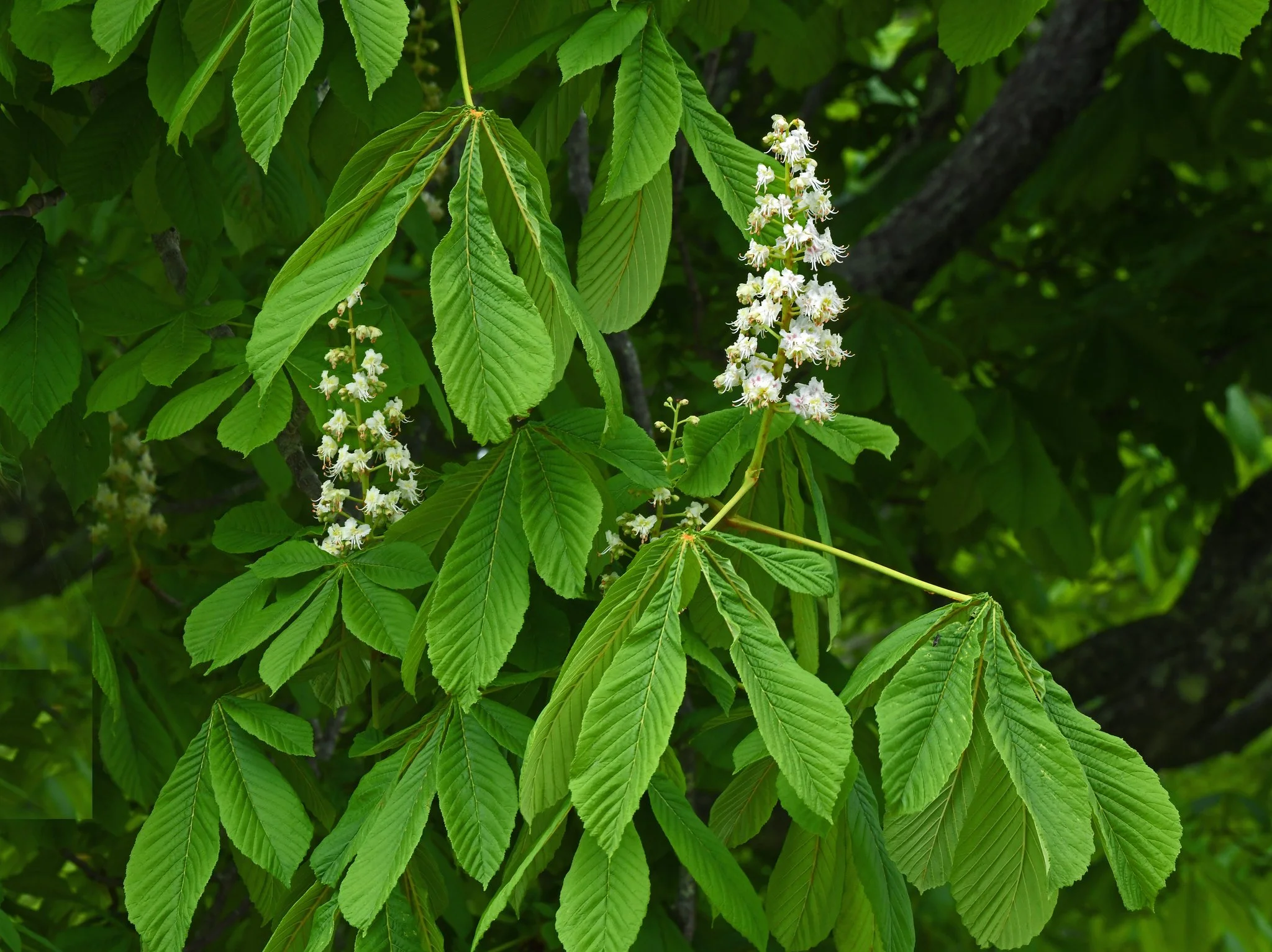
At the beginning of the month, the deciduous trees were bare. Then, May magic happened! Seemingly all at once, most trees were fully leafed and beautiful blossoms were popping up everywhere, including horsechestnut tree blooms.

As usual, we’ll initially share with you the month’s effects on the four iconic scenes that we track for local records: The views of the western mountains of Mount Desert Island from Brooklin’s Amen Ridge; the Harbor Island summer cottage across from Brooklin’s Nakeag Point; rockbound Conary Cove in Blue Hill; and land and water views of that near-mountain called Blue Hill:

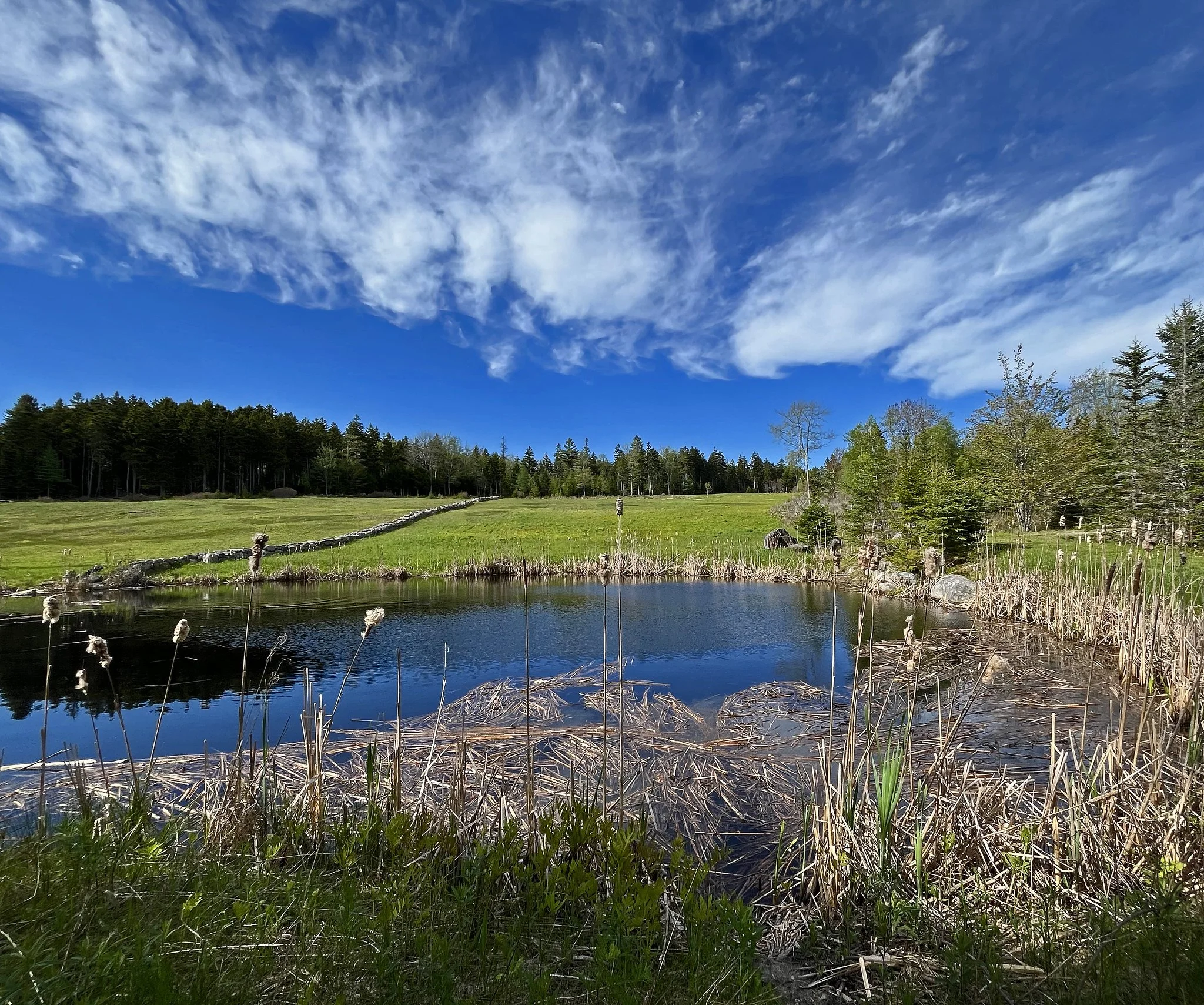
May’s substantial rainfall remedied our dangerously dry woods and filled our threatened field ponds:

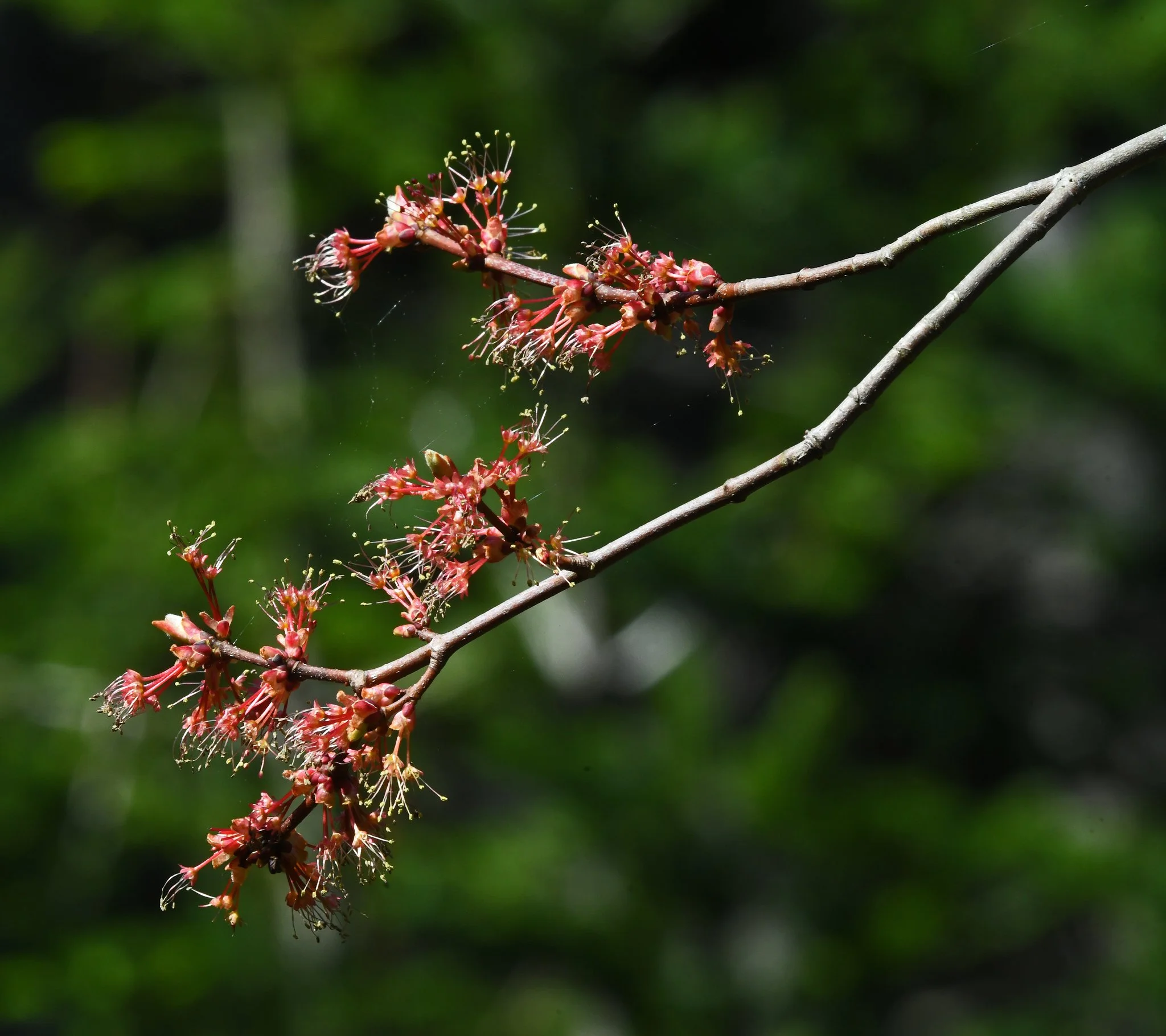
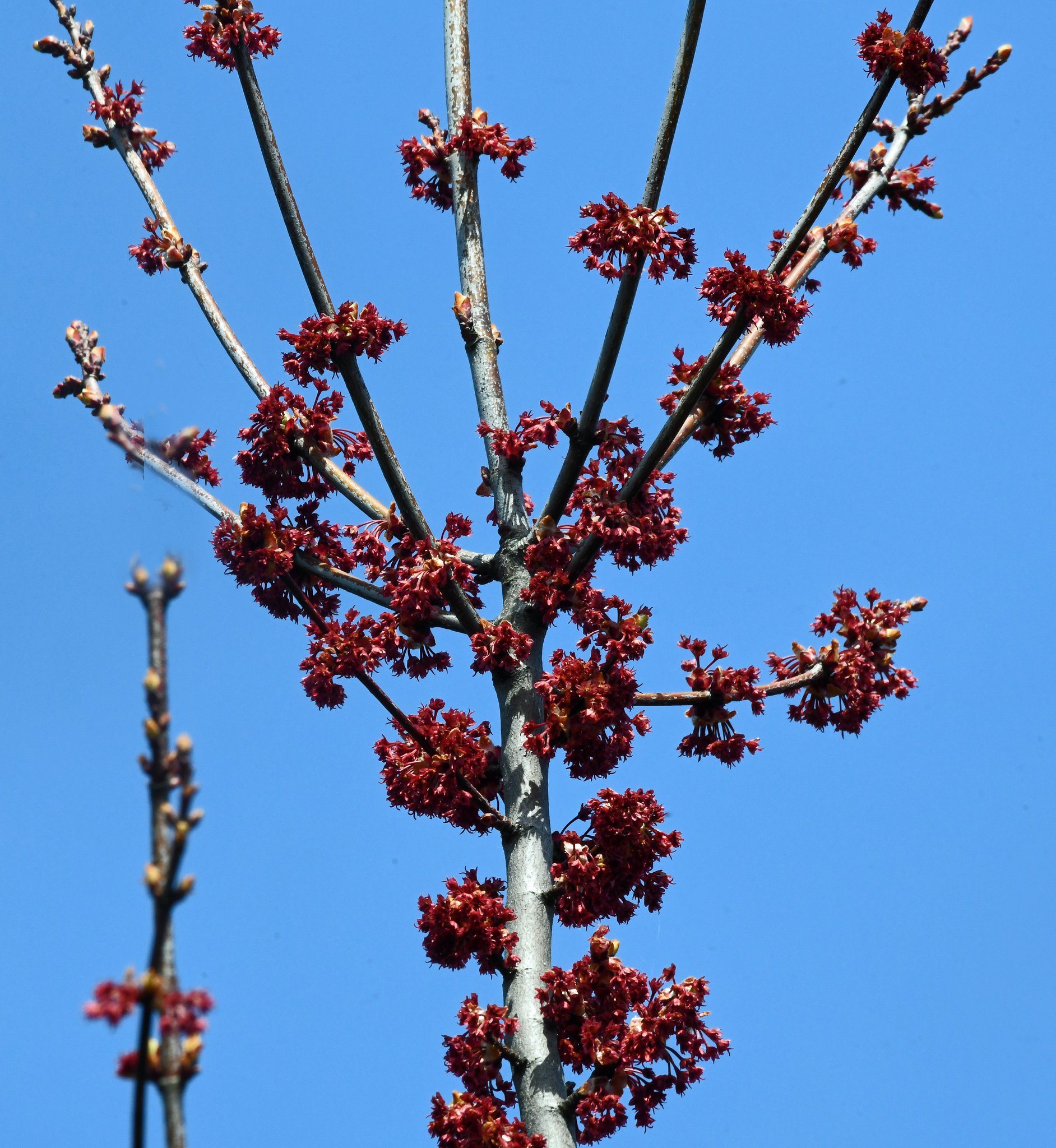
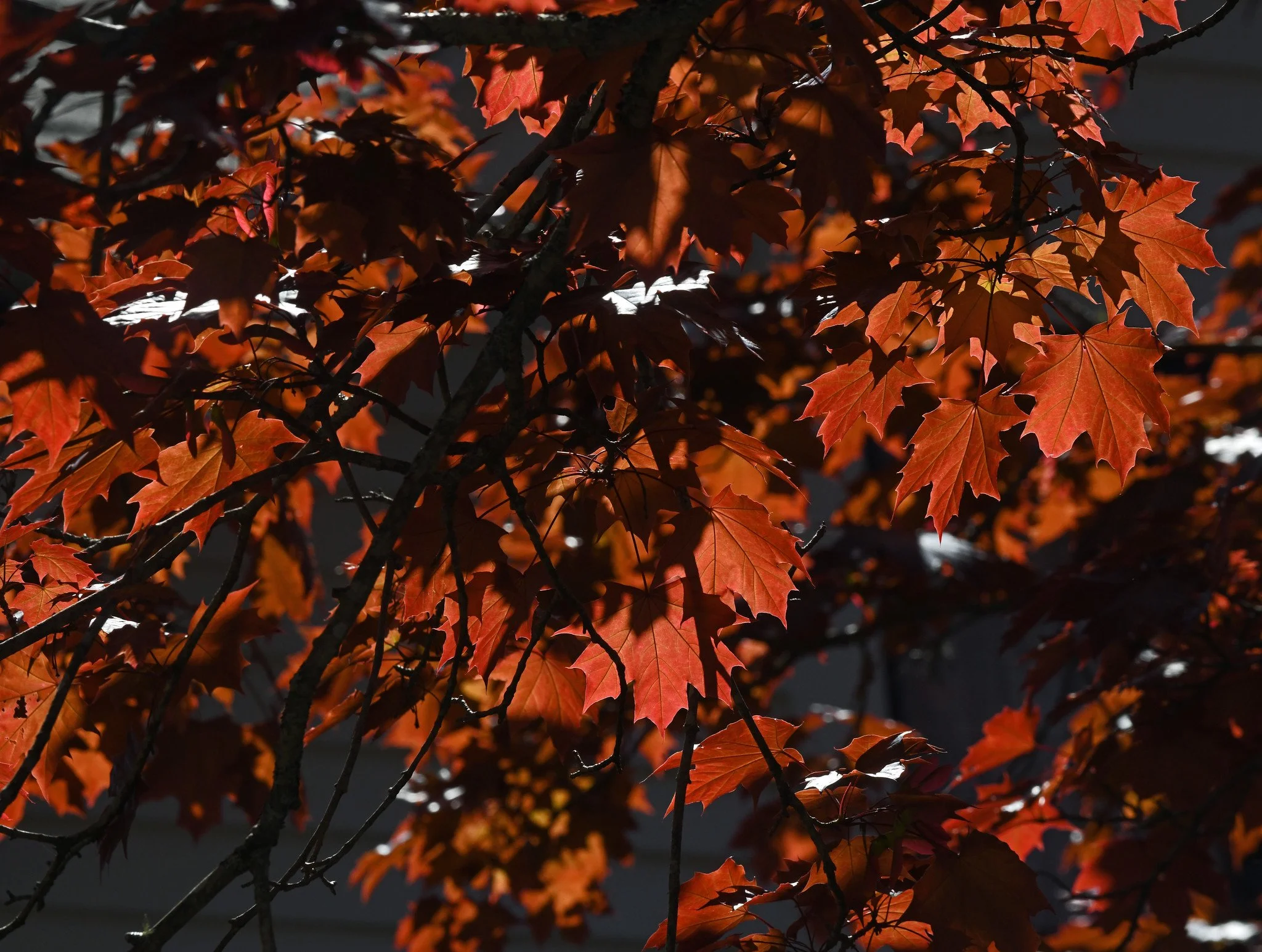
We highlight now some of the many spectacular May flora perfomances. First, the trees that came back to life after their big chill. Among the earliest spring arrivals were the male and female red maple tree flowers; their trees’ fanous leaves arrived several weeks later, including some already-red ones:

Our blossoming fruit trees got plenty of attention in May. Of particular interest wrere the apple blossoms on the old, abandoned apple trees along the old country lanes:

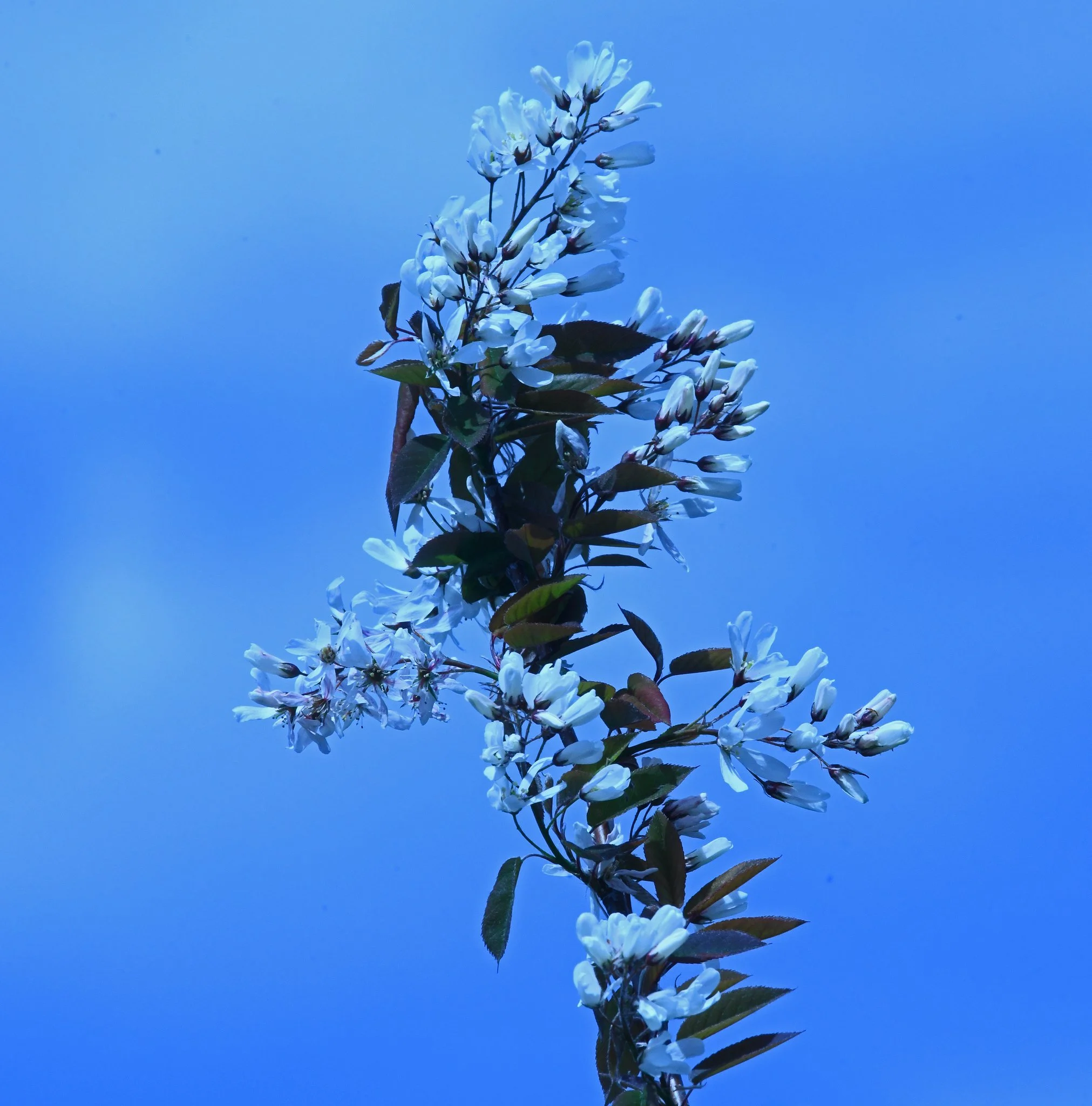
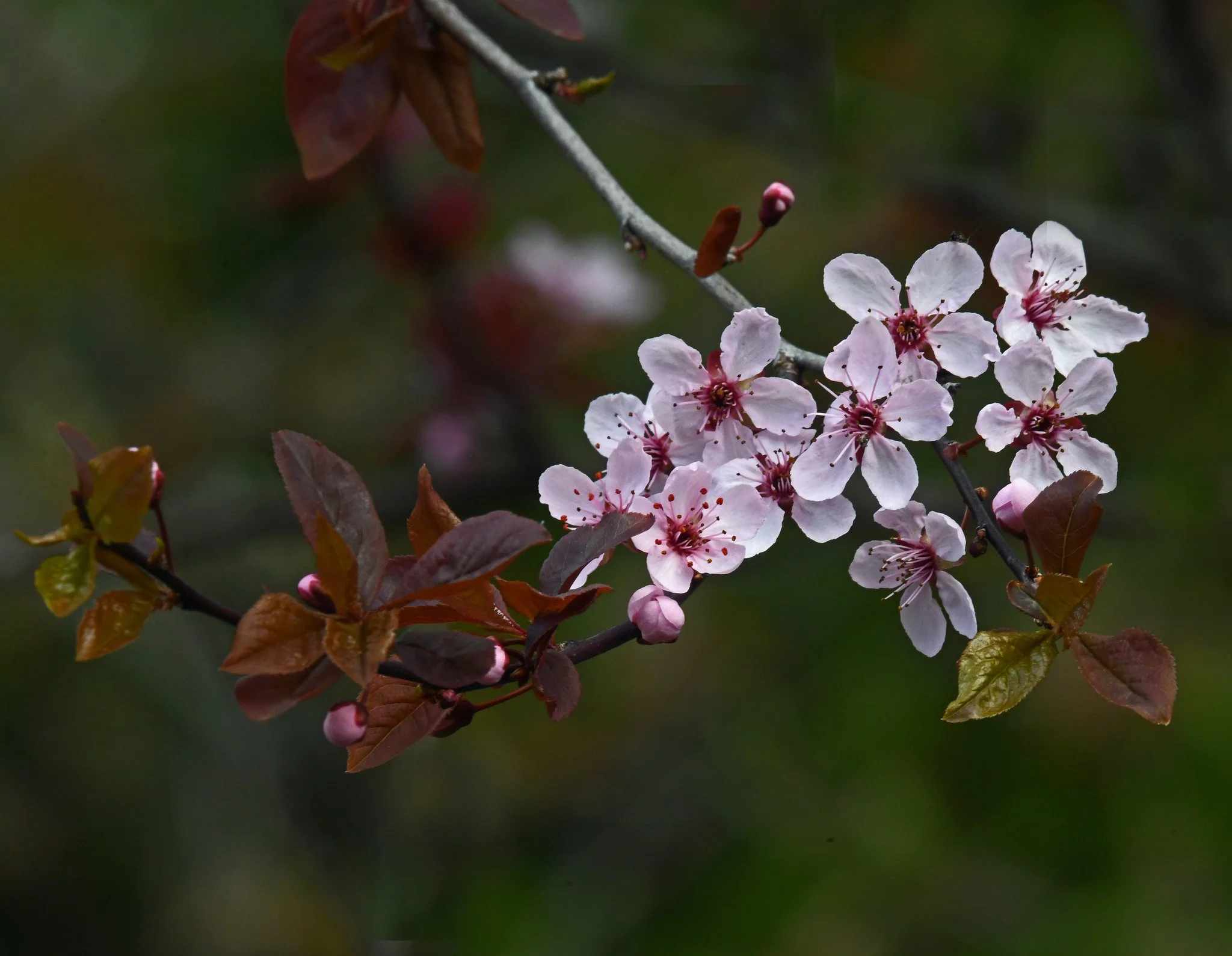
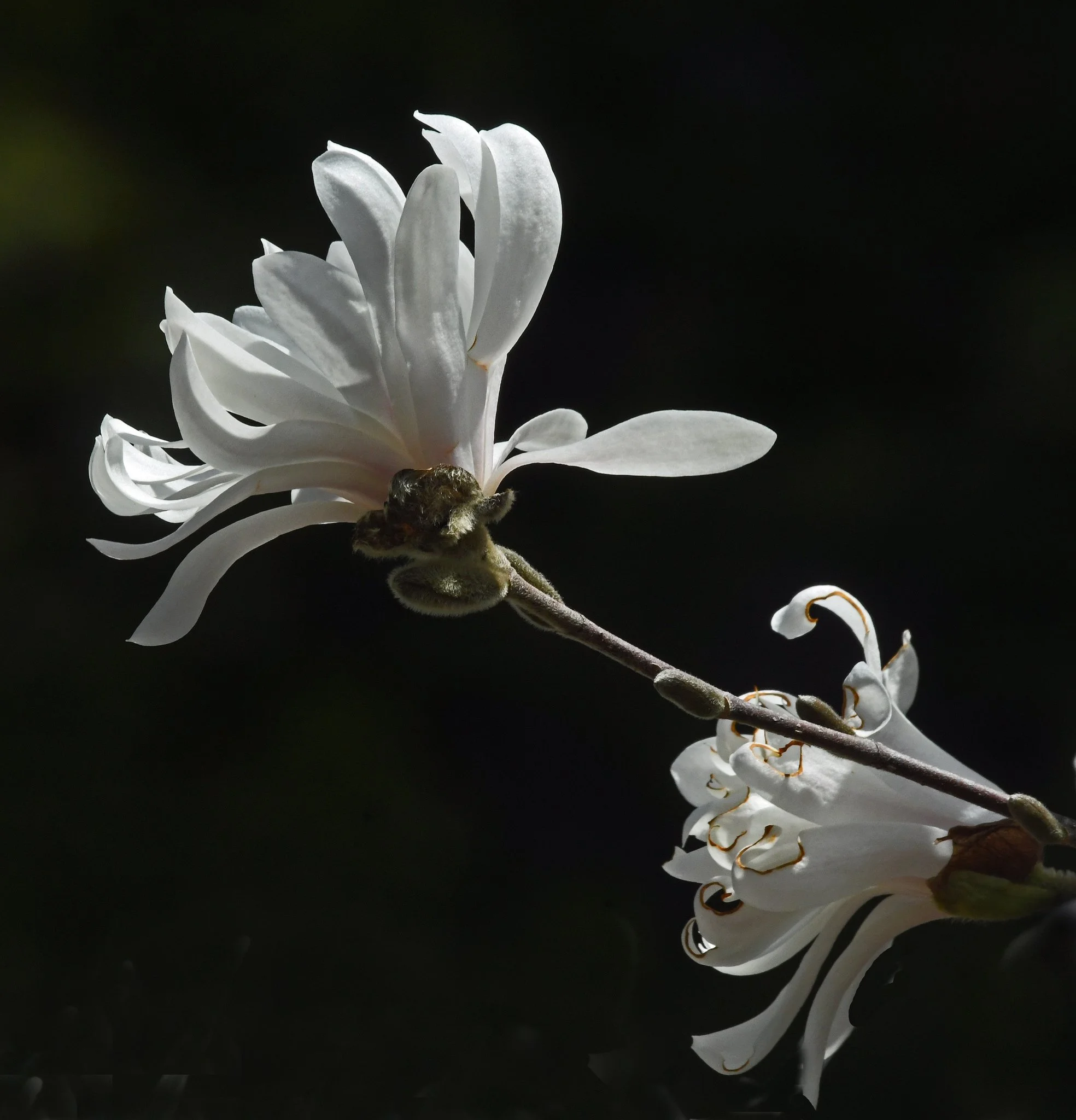
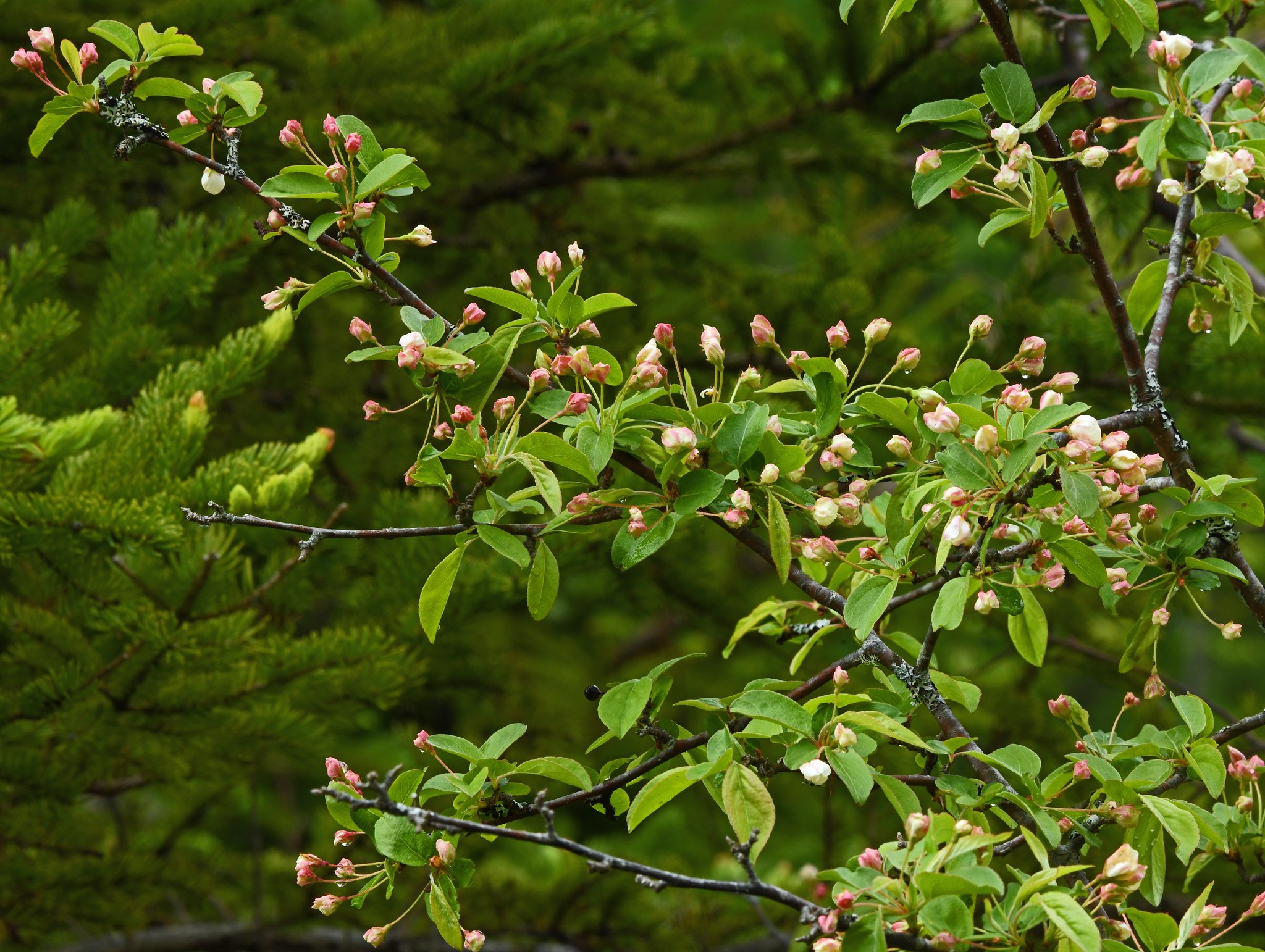
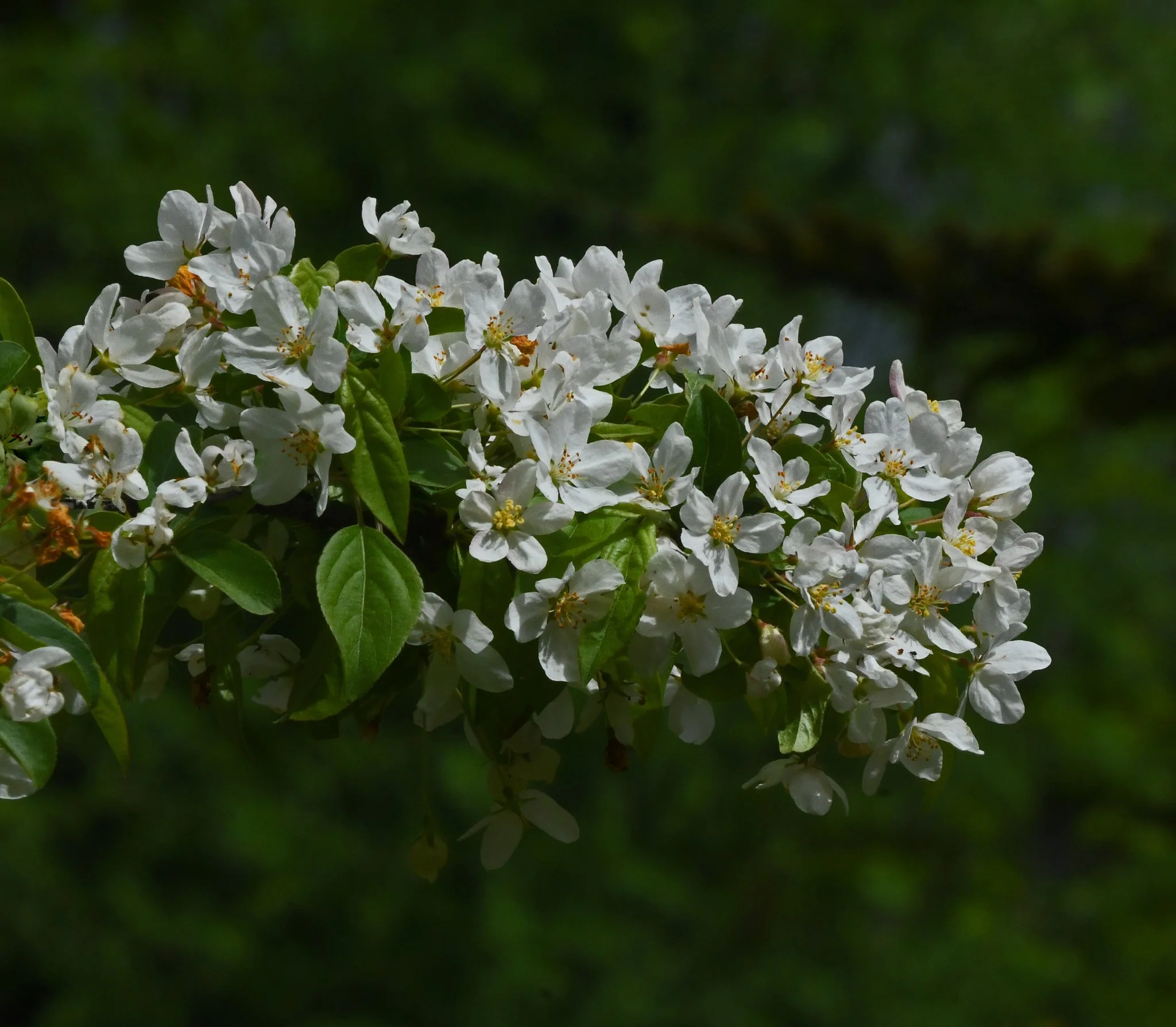
Other May-blossoming trees that turned heads were the crabapples, shadblows, plums and star magnolias:

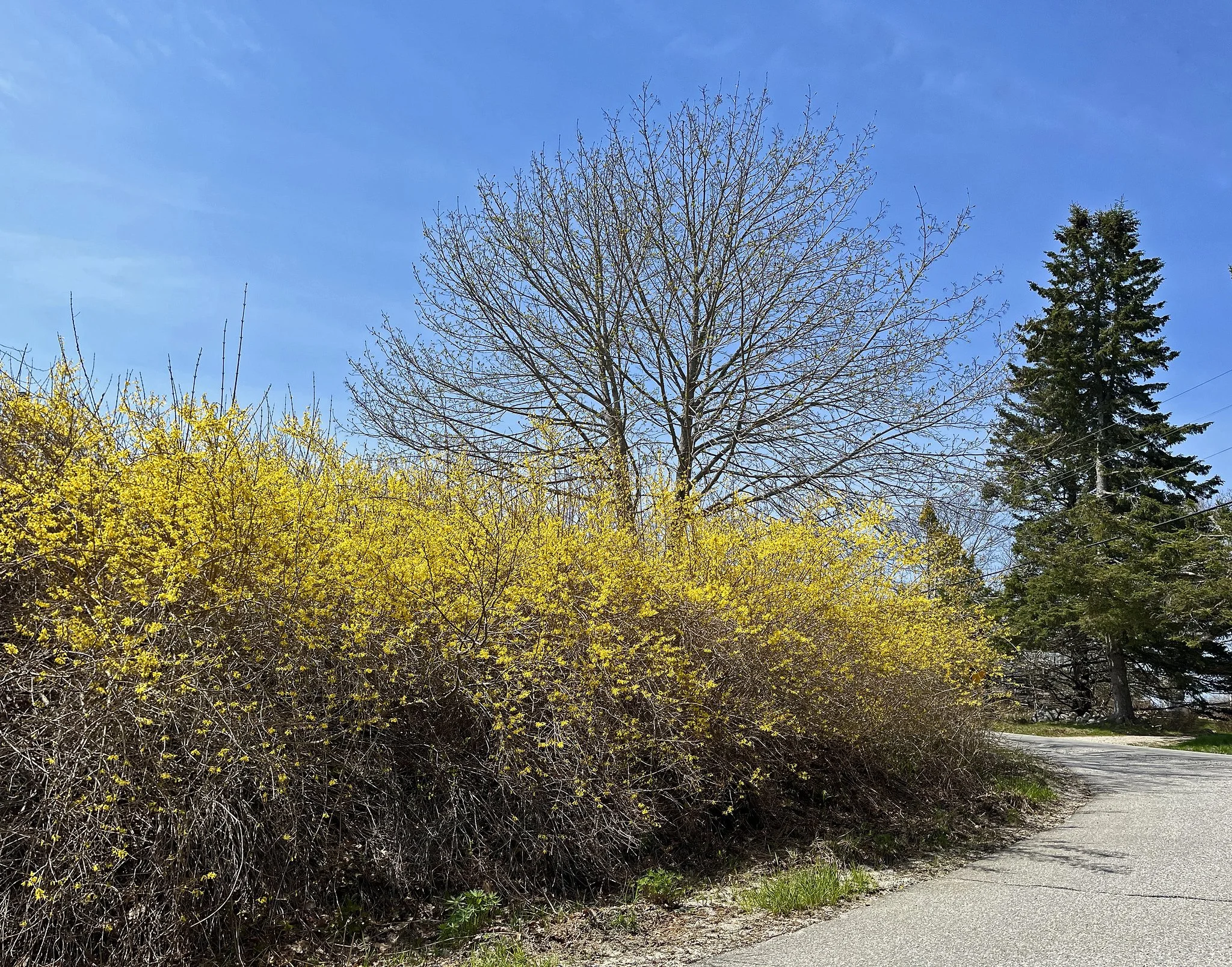
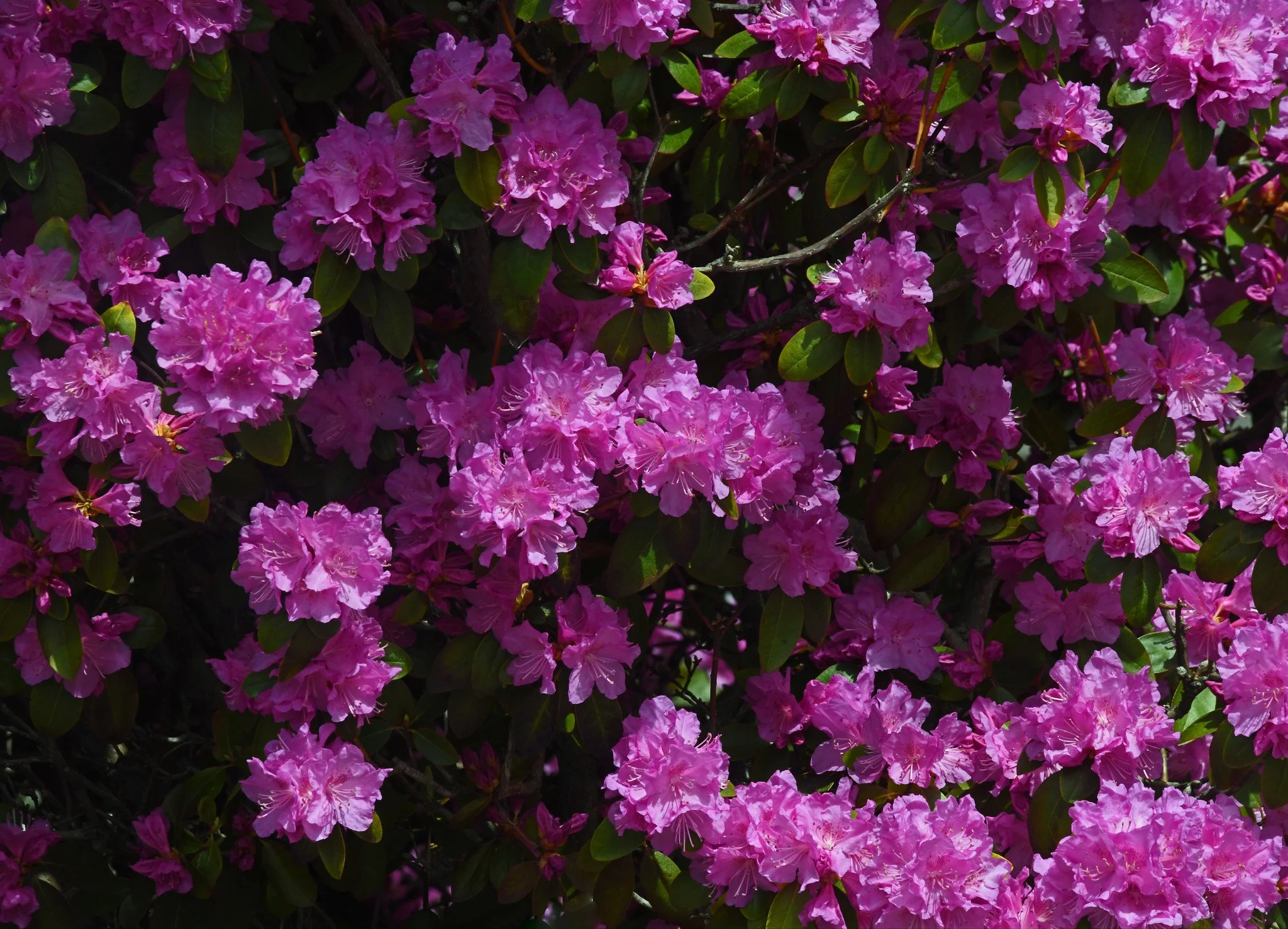
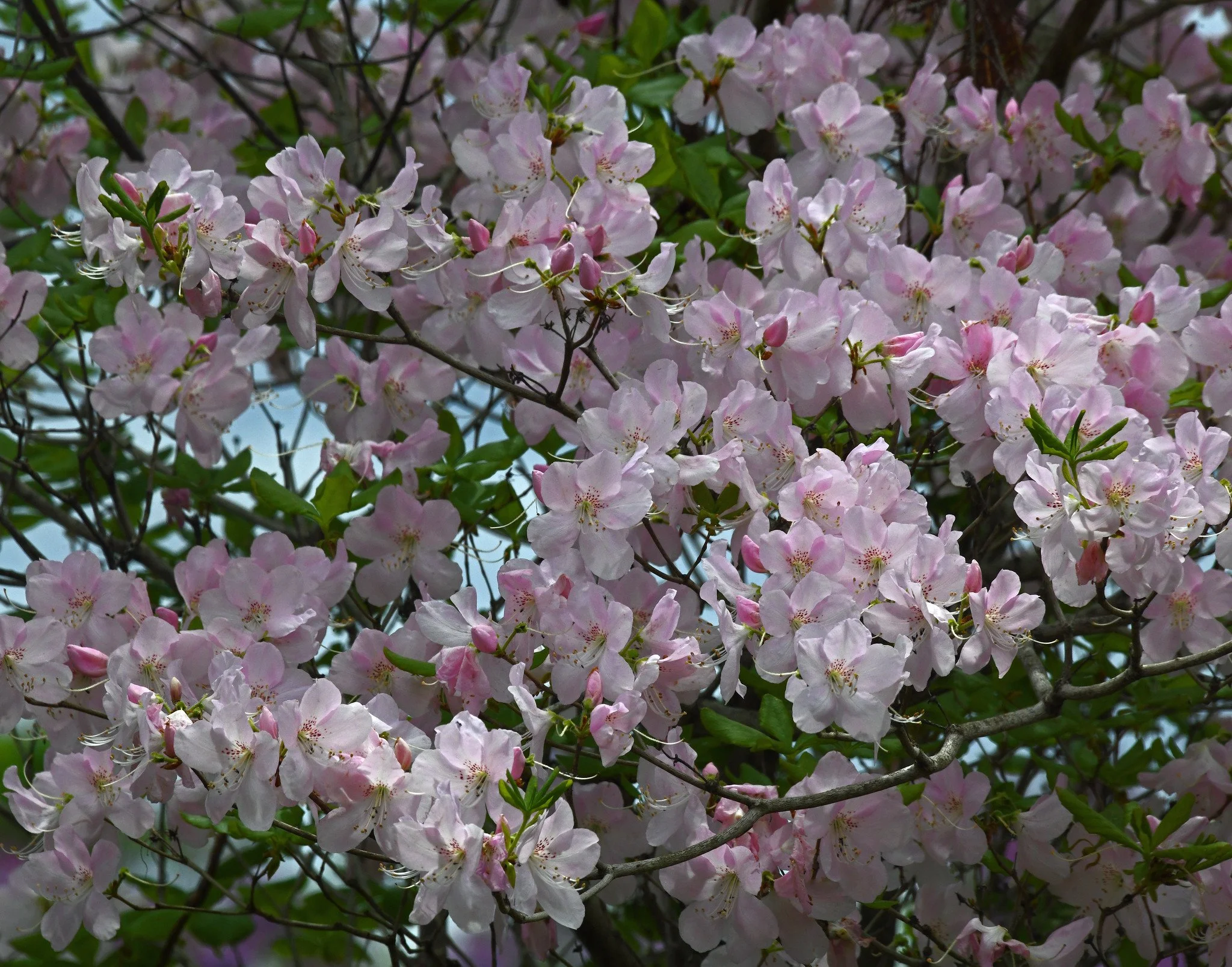
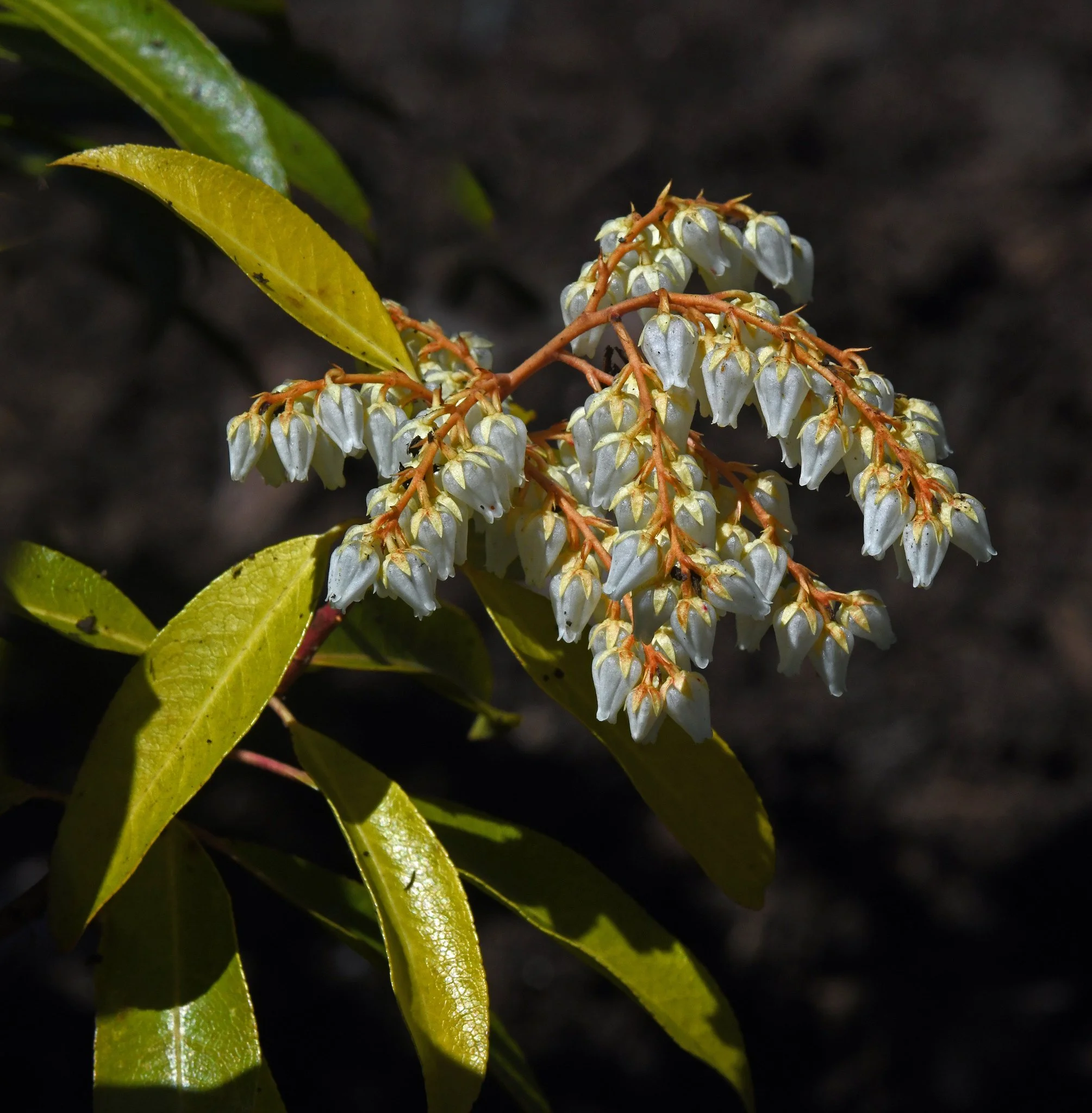
Not to be ignorred were the early flowering shrubs. As usual, the forsythias blossomed before the leaves appeared on the trees and on their own branches, as did some purple and white azaleas and the hanging lanterns of Japanese andromedas:

Chokeberry buds expoded into loaves of white blooms, but purple and white lilacs stole the show once they appeared:

Nonetheless, most rhododendron and vibernum flowers apparently decided to delay their spectacular performances until June:

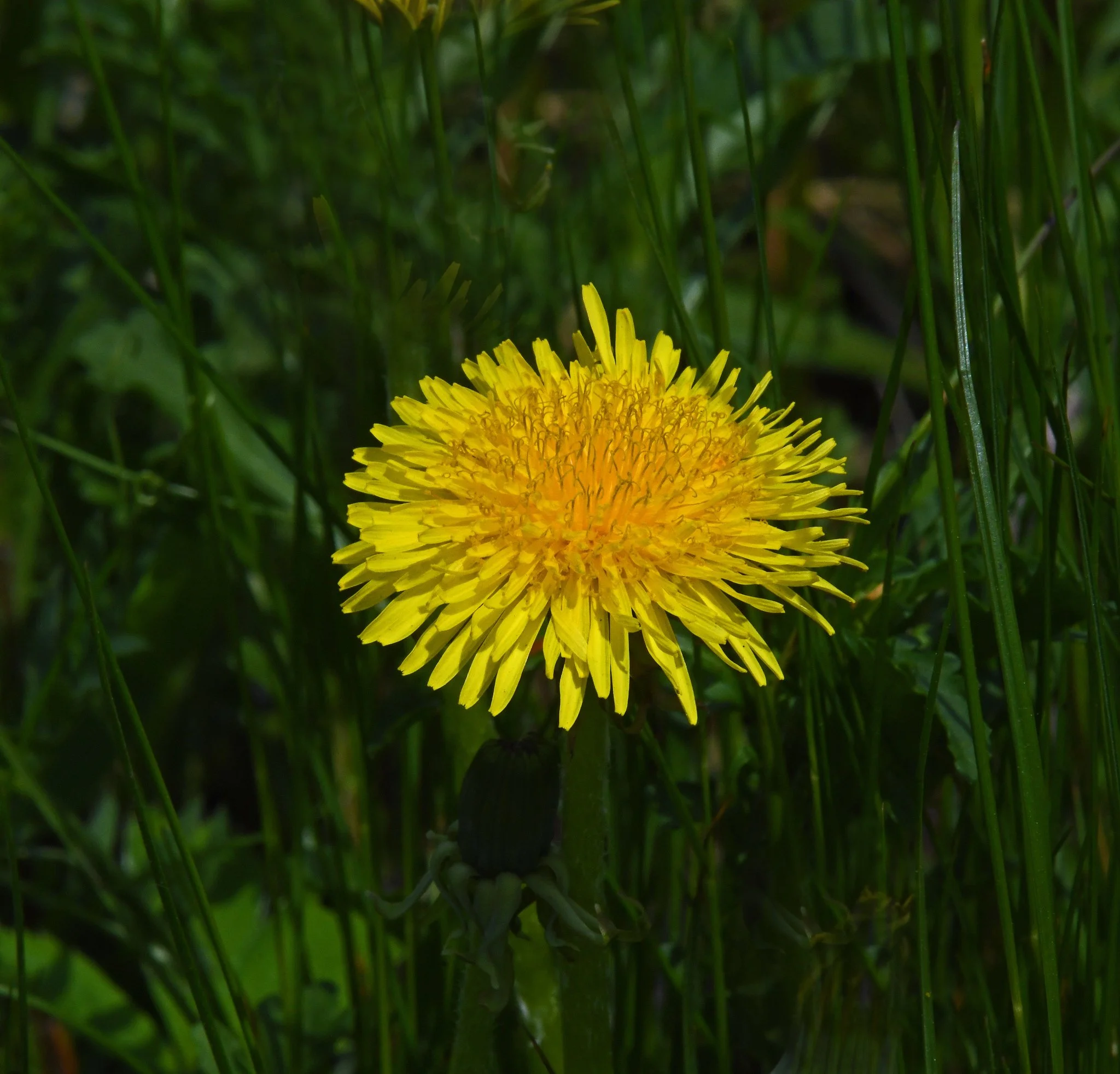
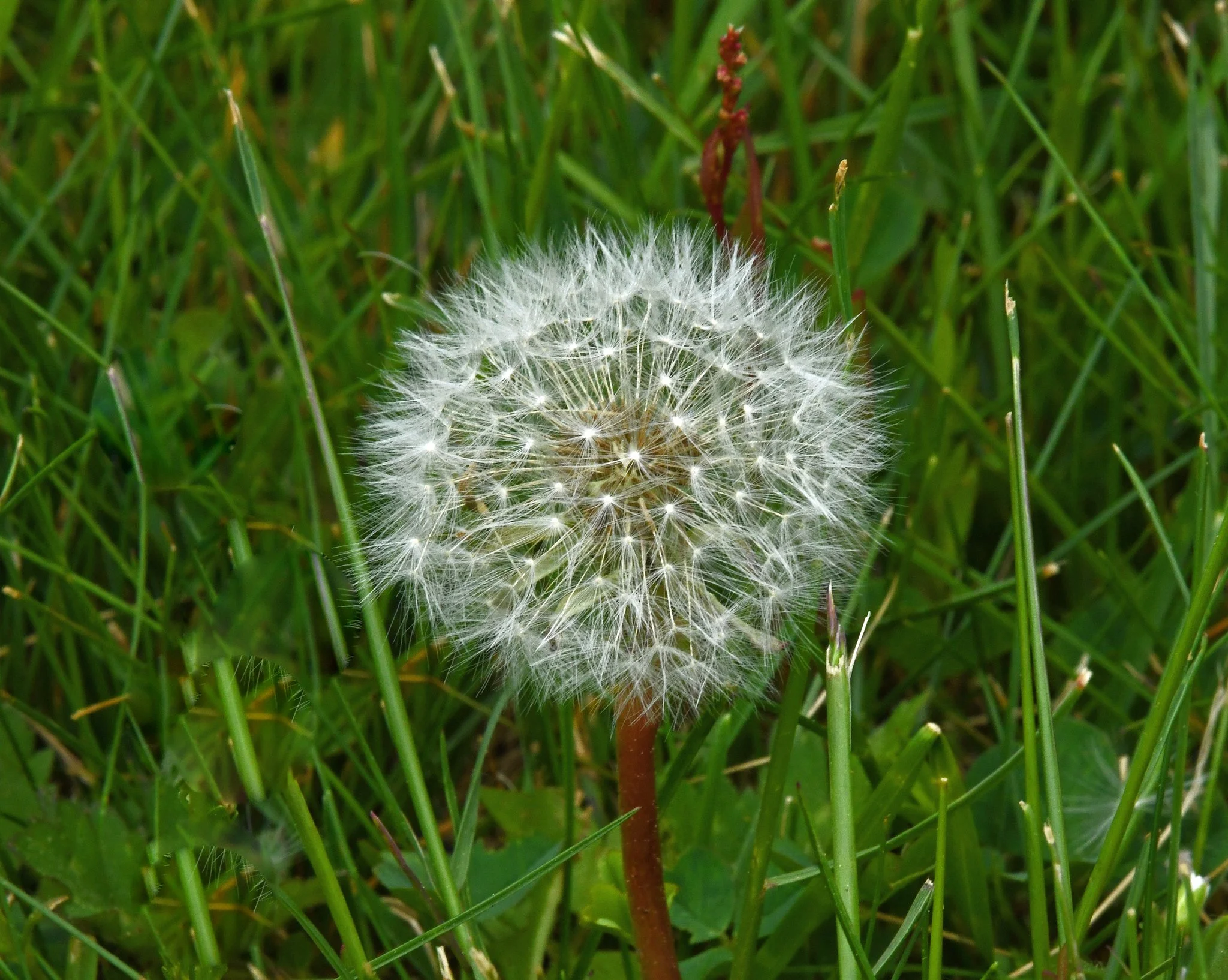
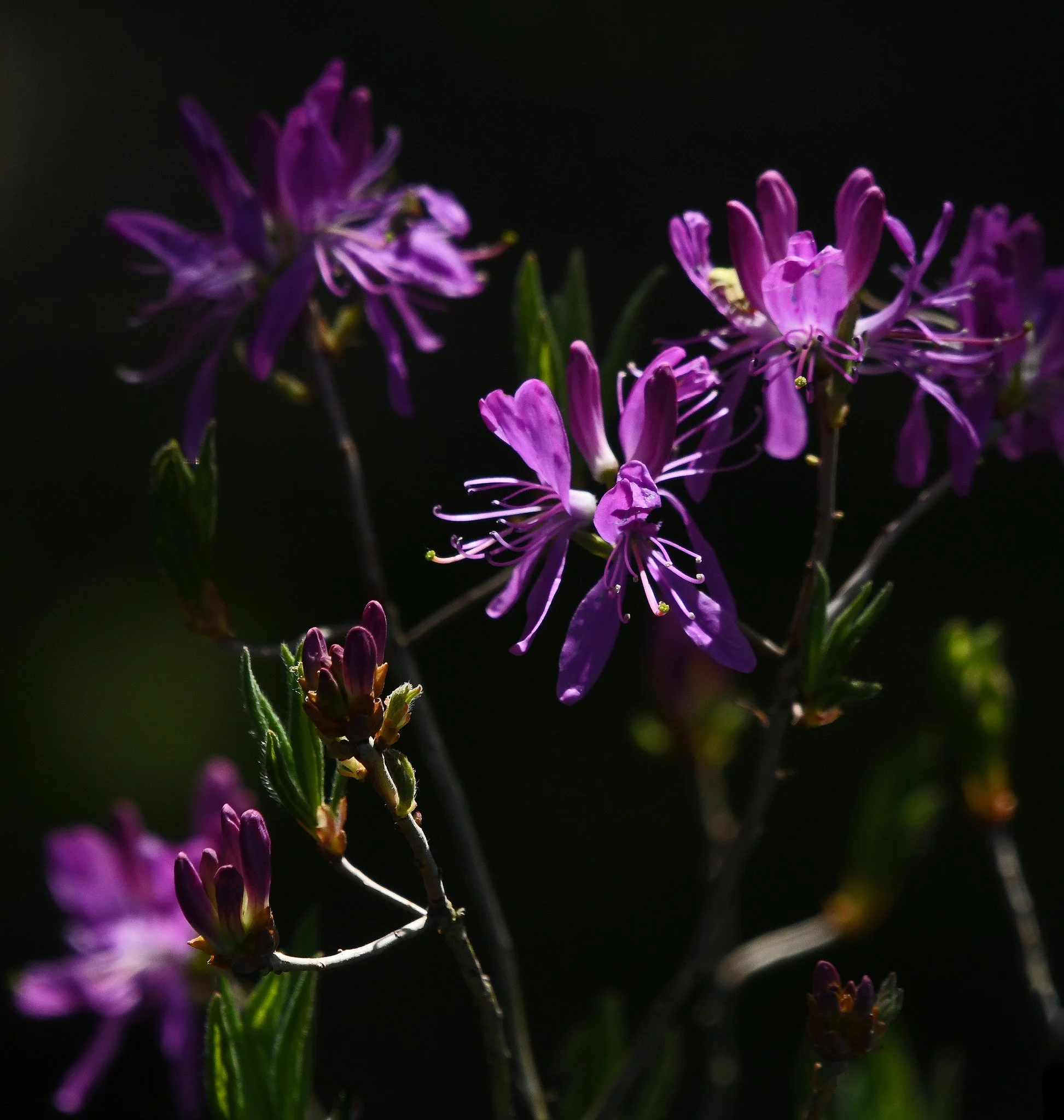
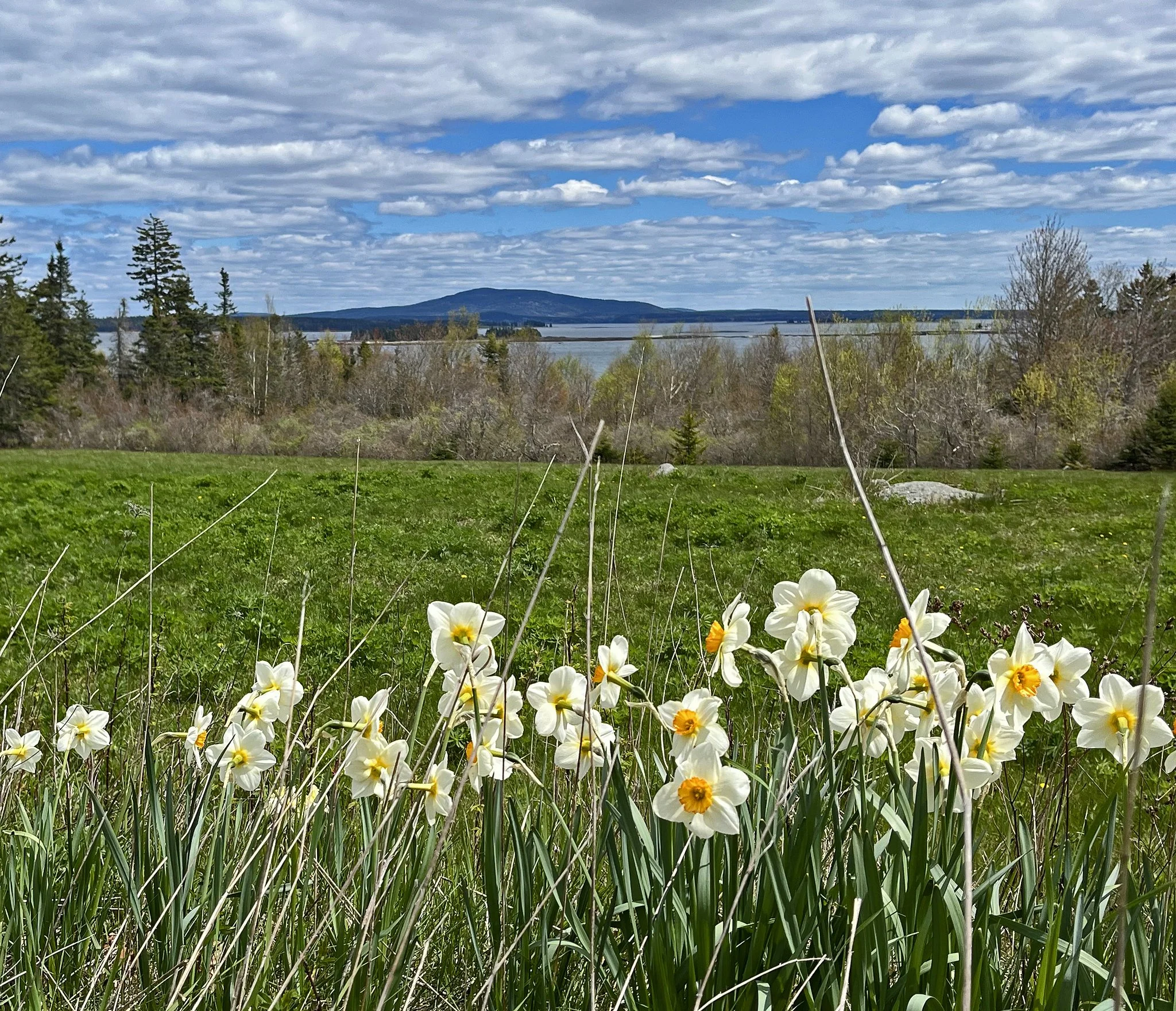
Golden dandelions and daffodils were among the earliest May flowers to bloom. Most of the daffodils died during the month while the dandelions continued to mass-produce themselves. Also, as usual, the ephemeral purple rhodora bog flowers came early and left early.

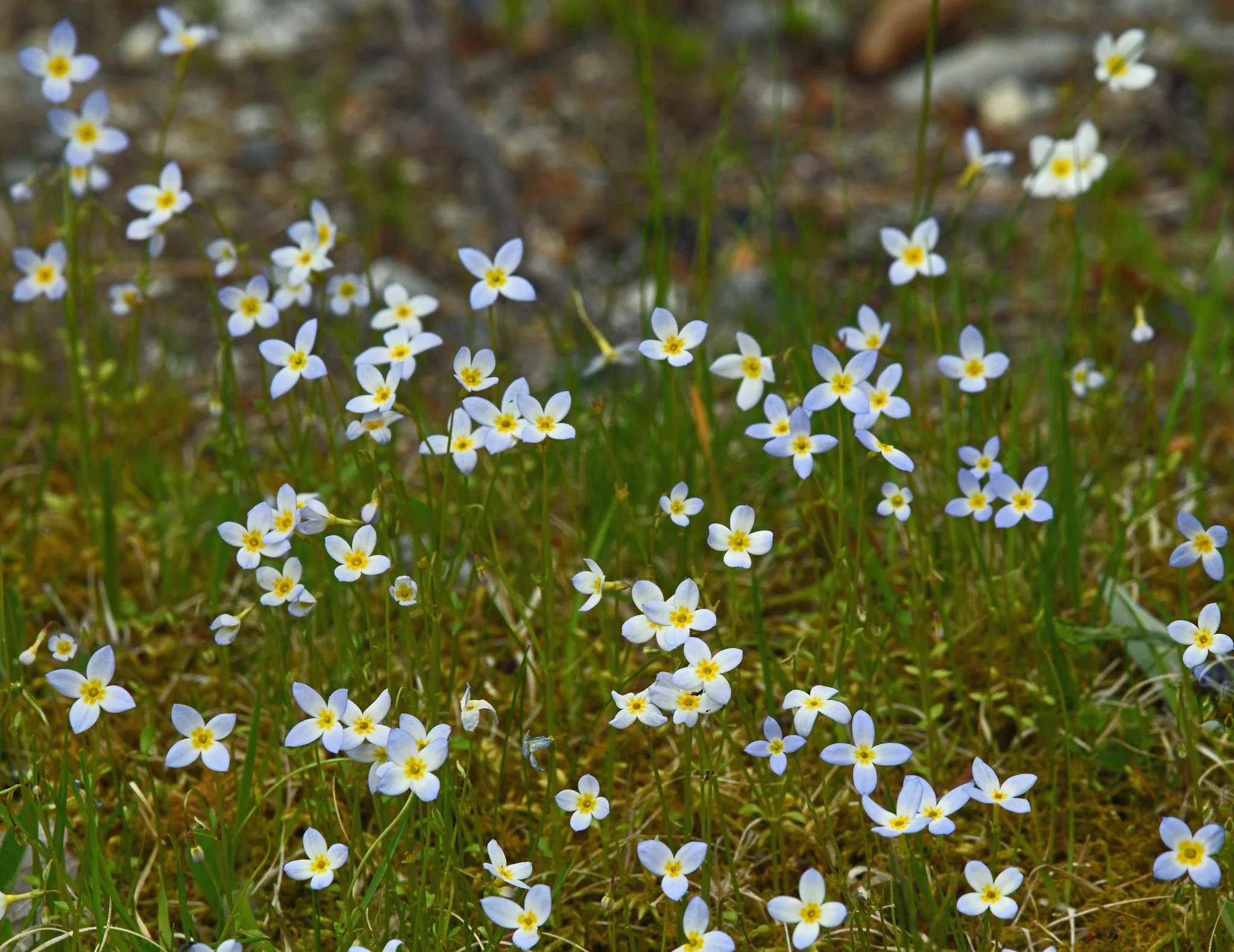
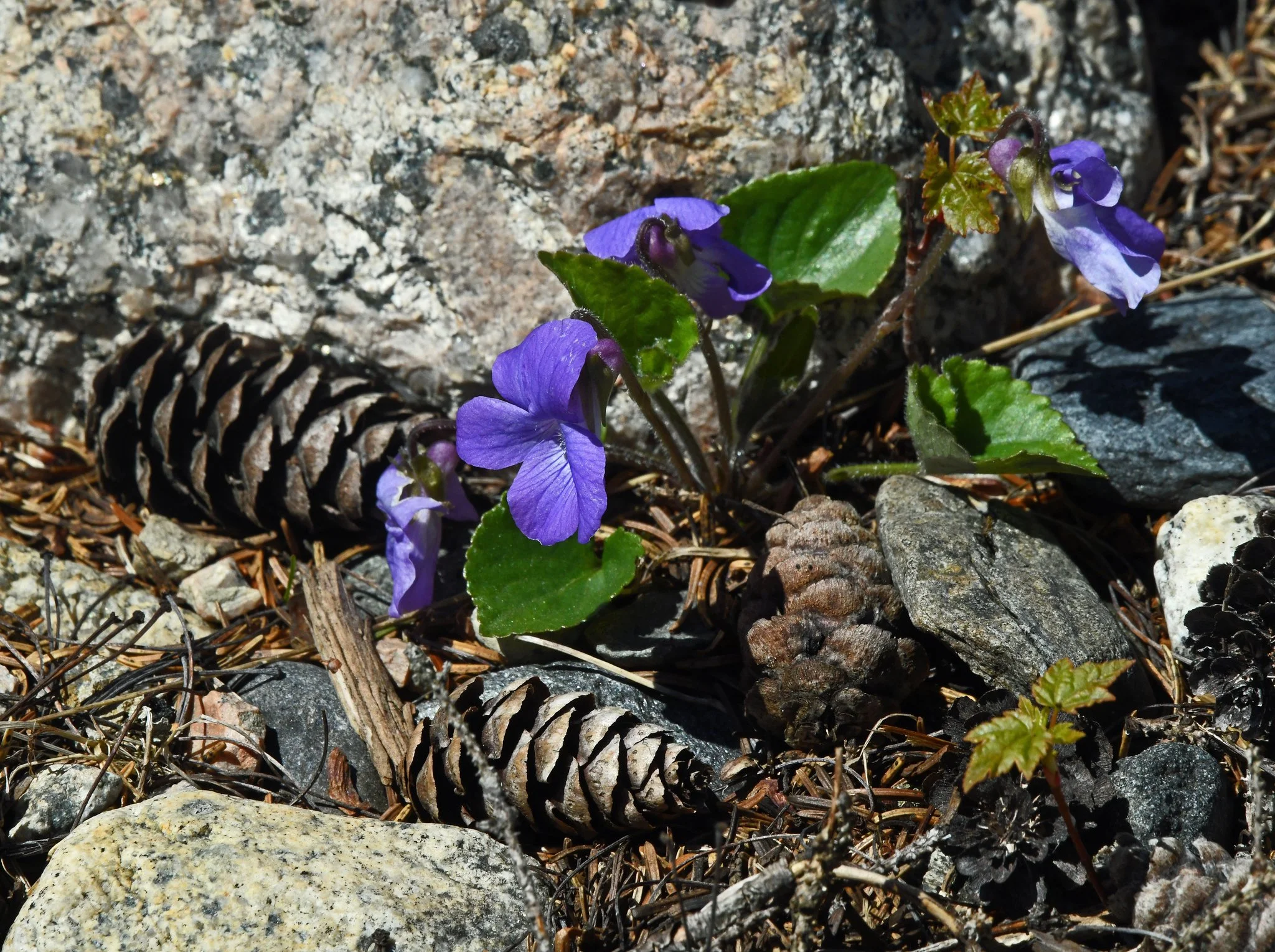
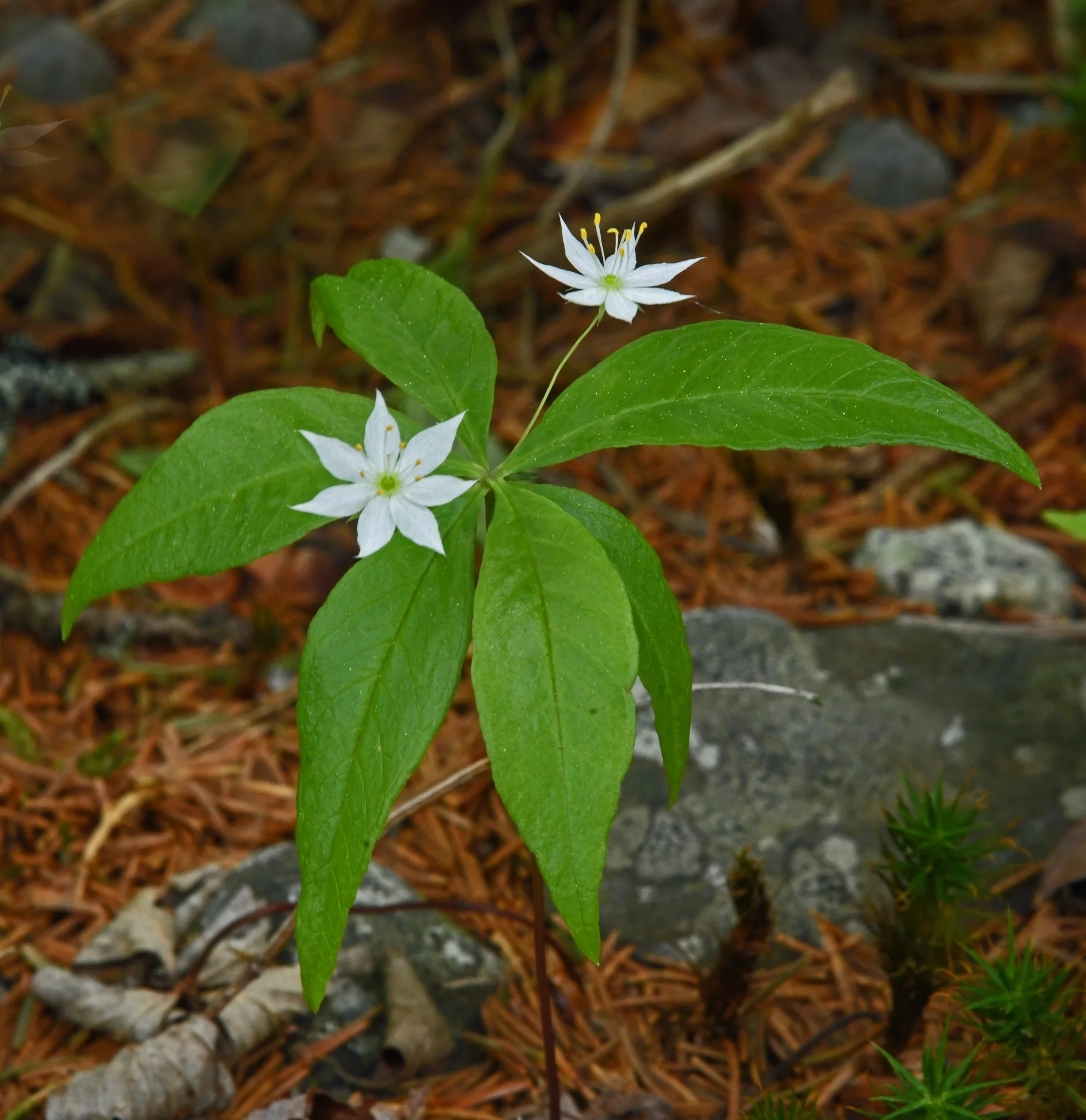
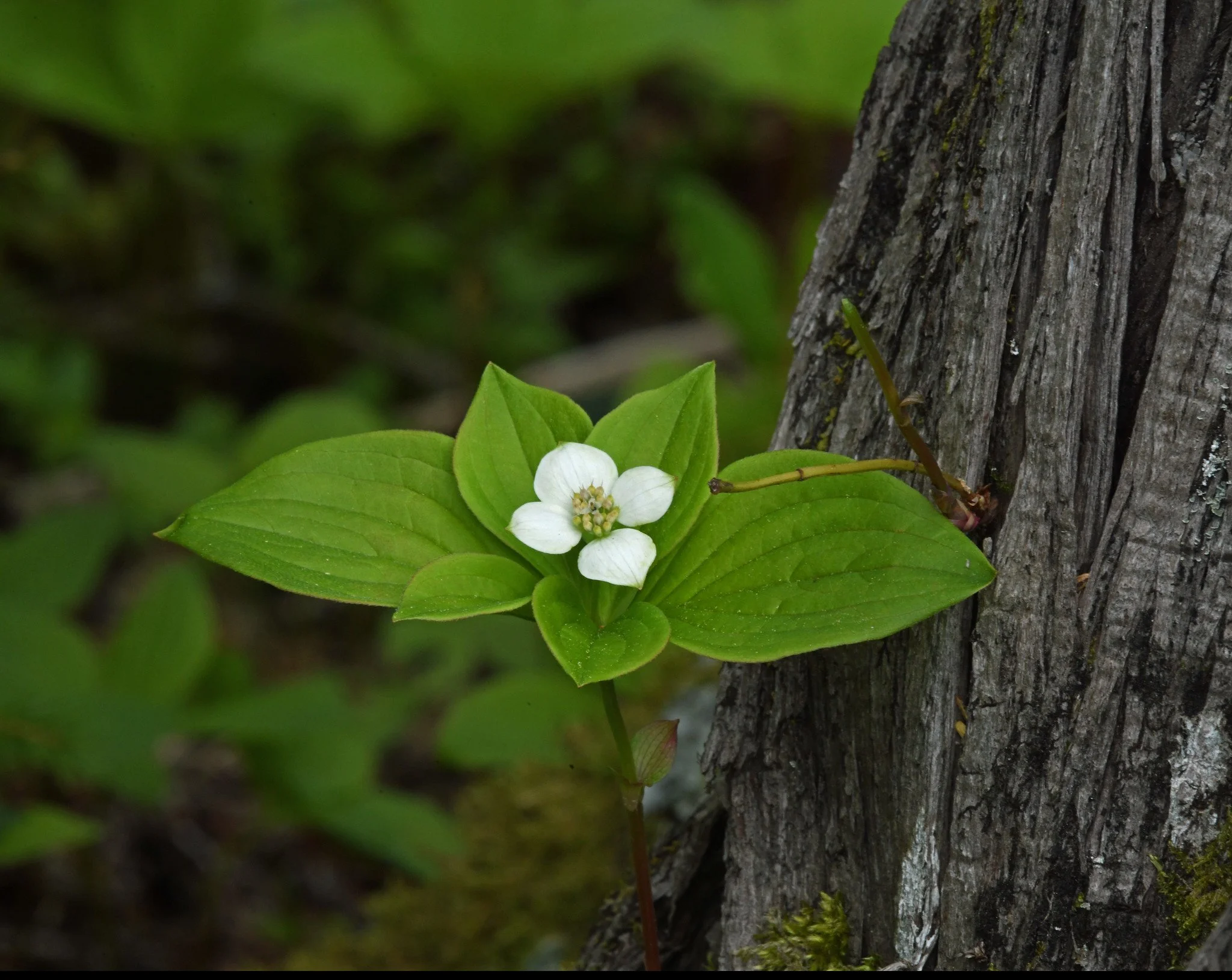
In May’s small world category, there were azure bluets (Quaker ladies), hookedspur violets (dog violets), star flowers, and bunchberry flowers:

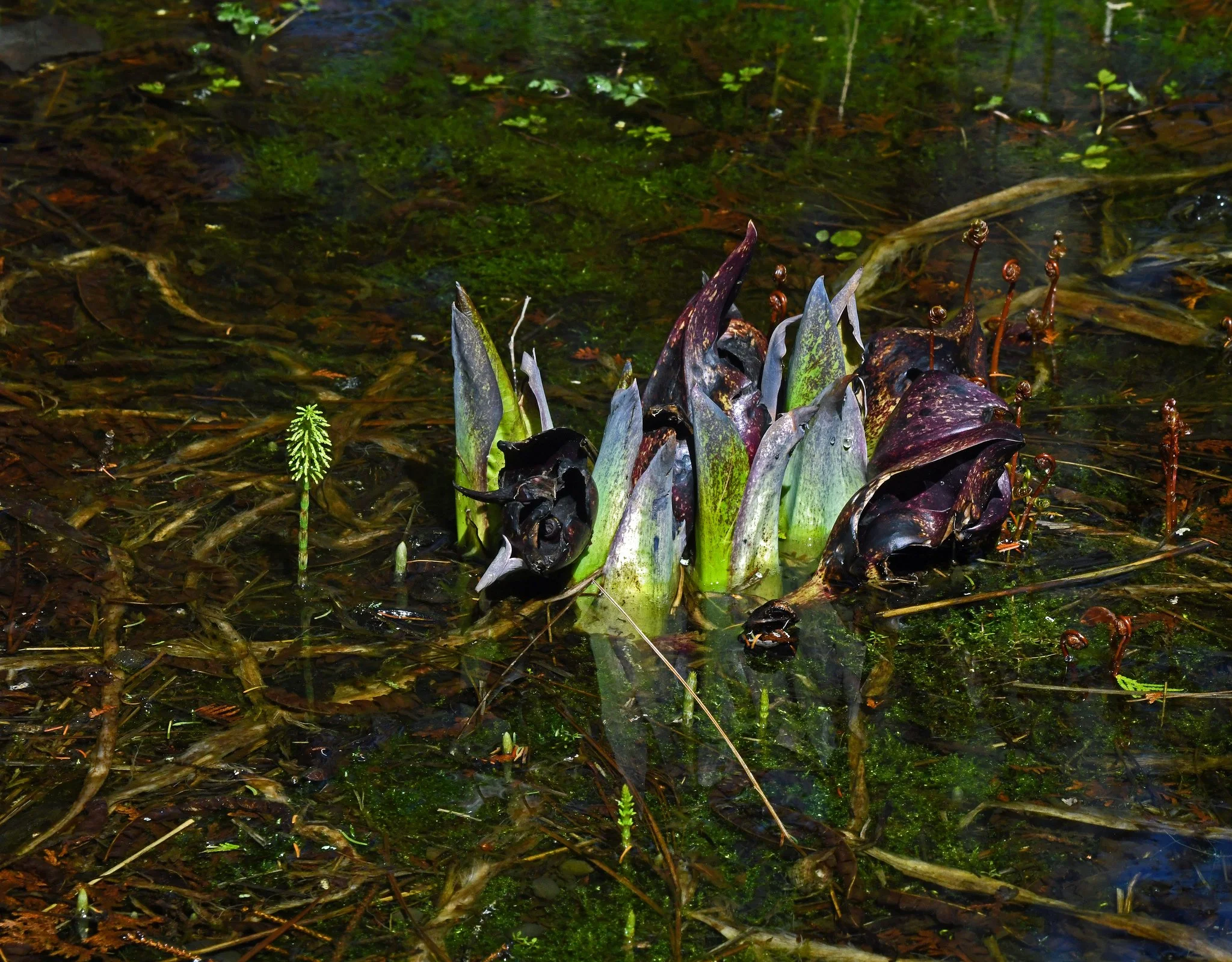
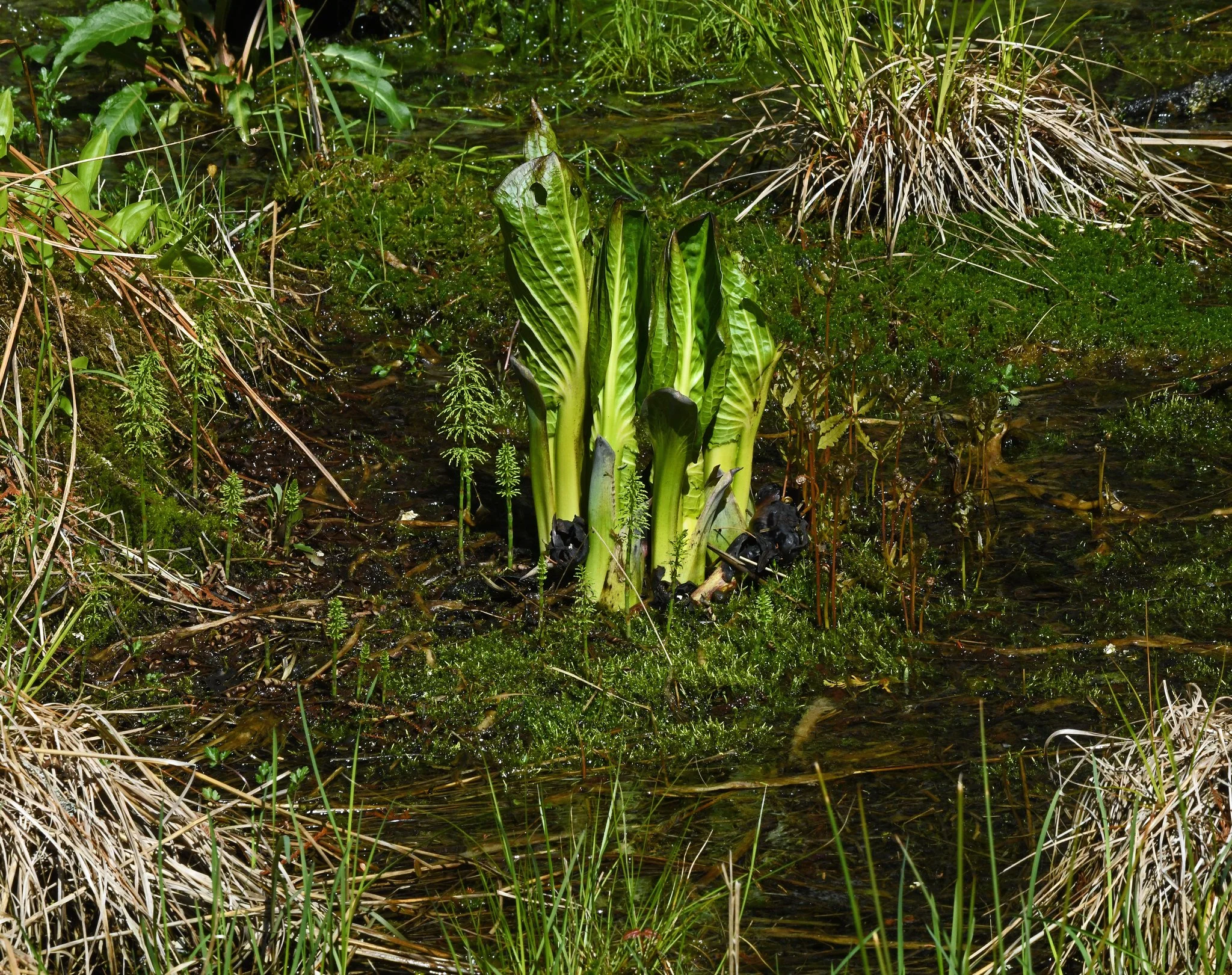
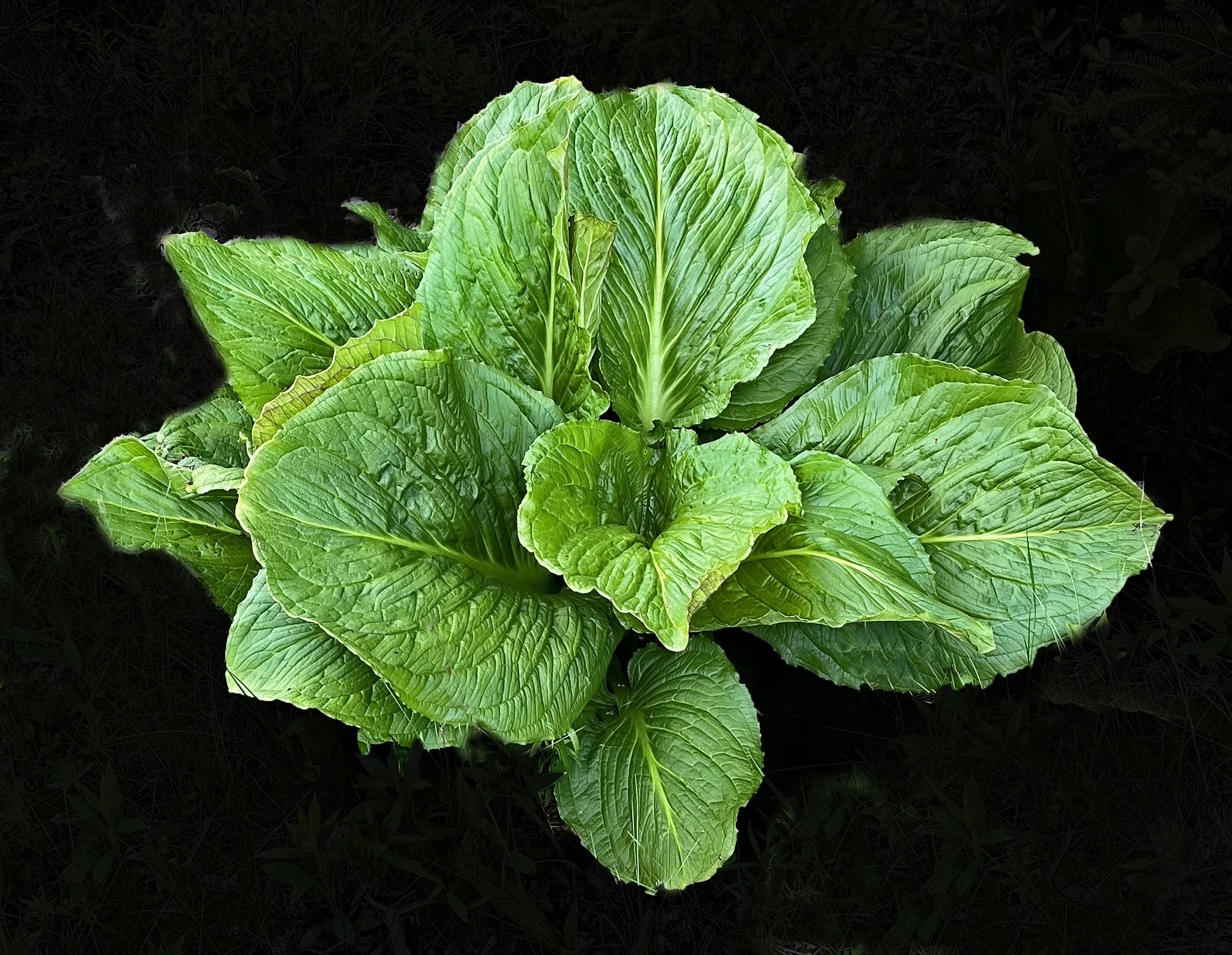
As usual, skunk cabbage, a spring signature plant, went through floral gymnastics in May until it reached its gloriously beautiful maturity. But, as it’s name implies, it has a hidden fault. (Imagine Grace Kelly with bad breath.)

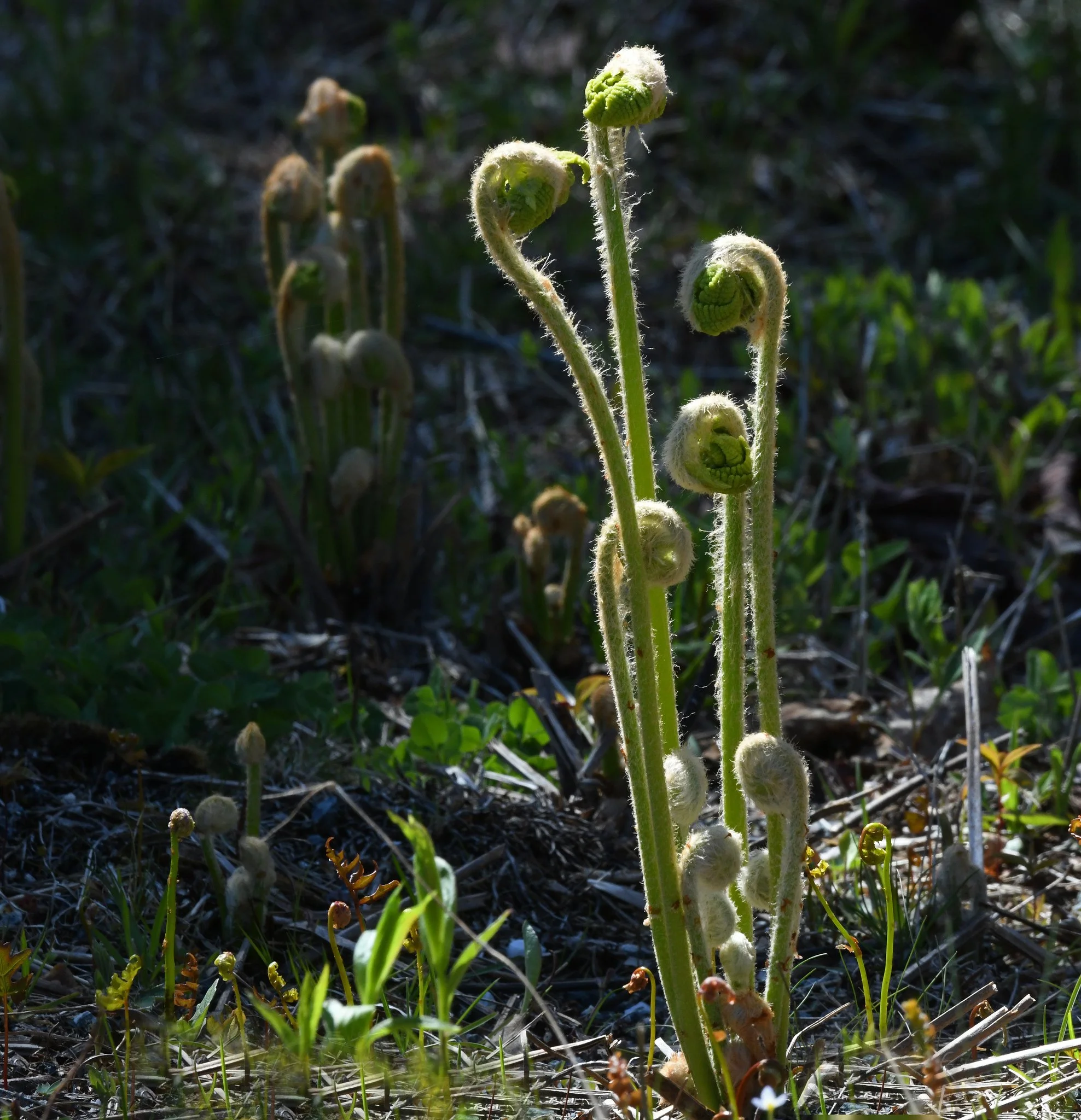
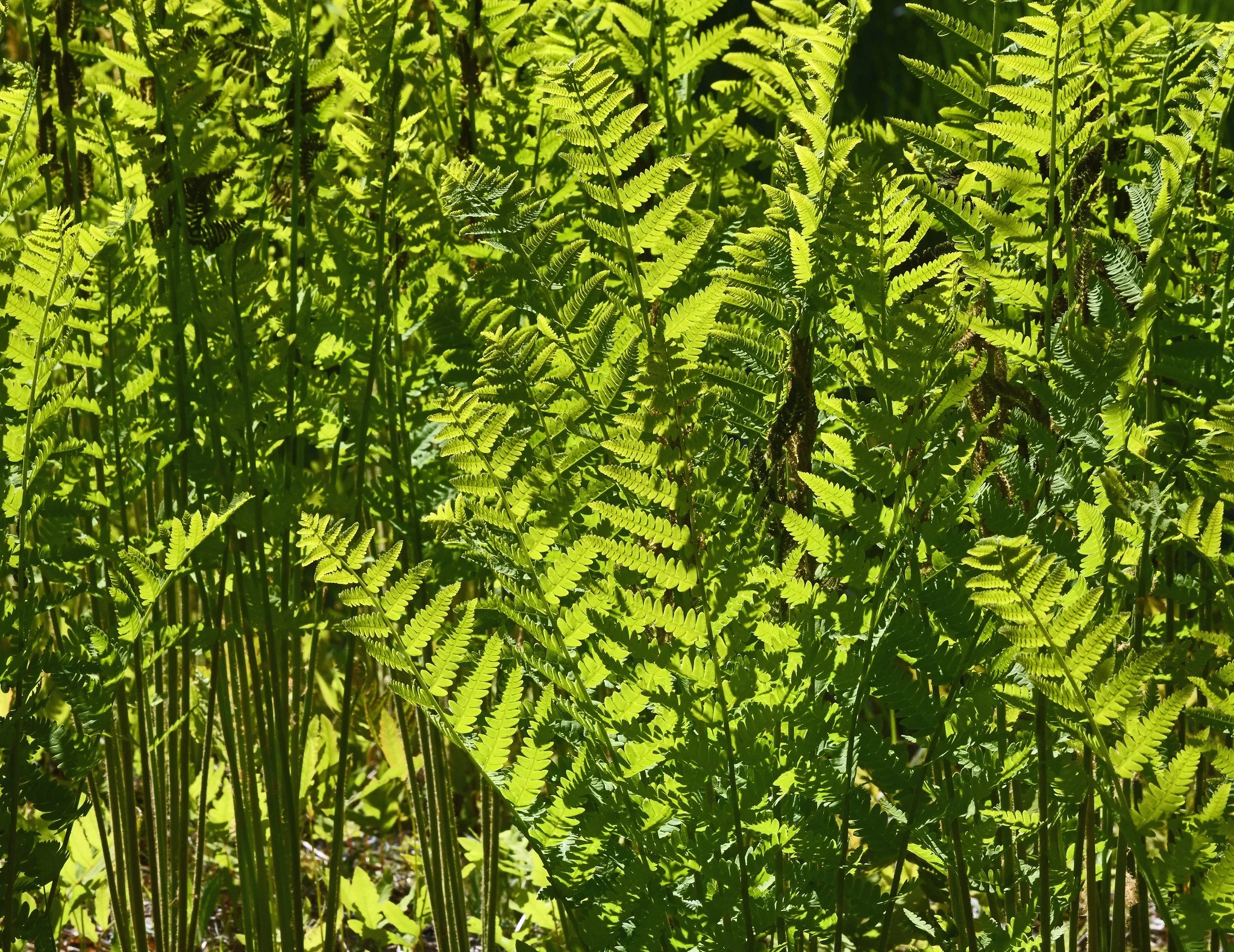
Also undergoing magnificent May transformations were the ferns,. As usual, many of them started with tightly-wound frond “fiddleheads” that unwind into lacy magnificence. (Note: The fiddleheads of some ferns should not be eaten.)

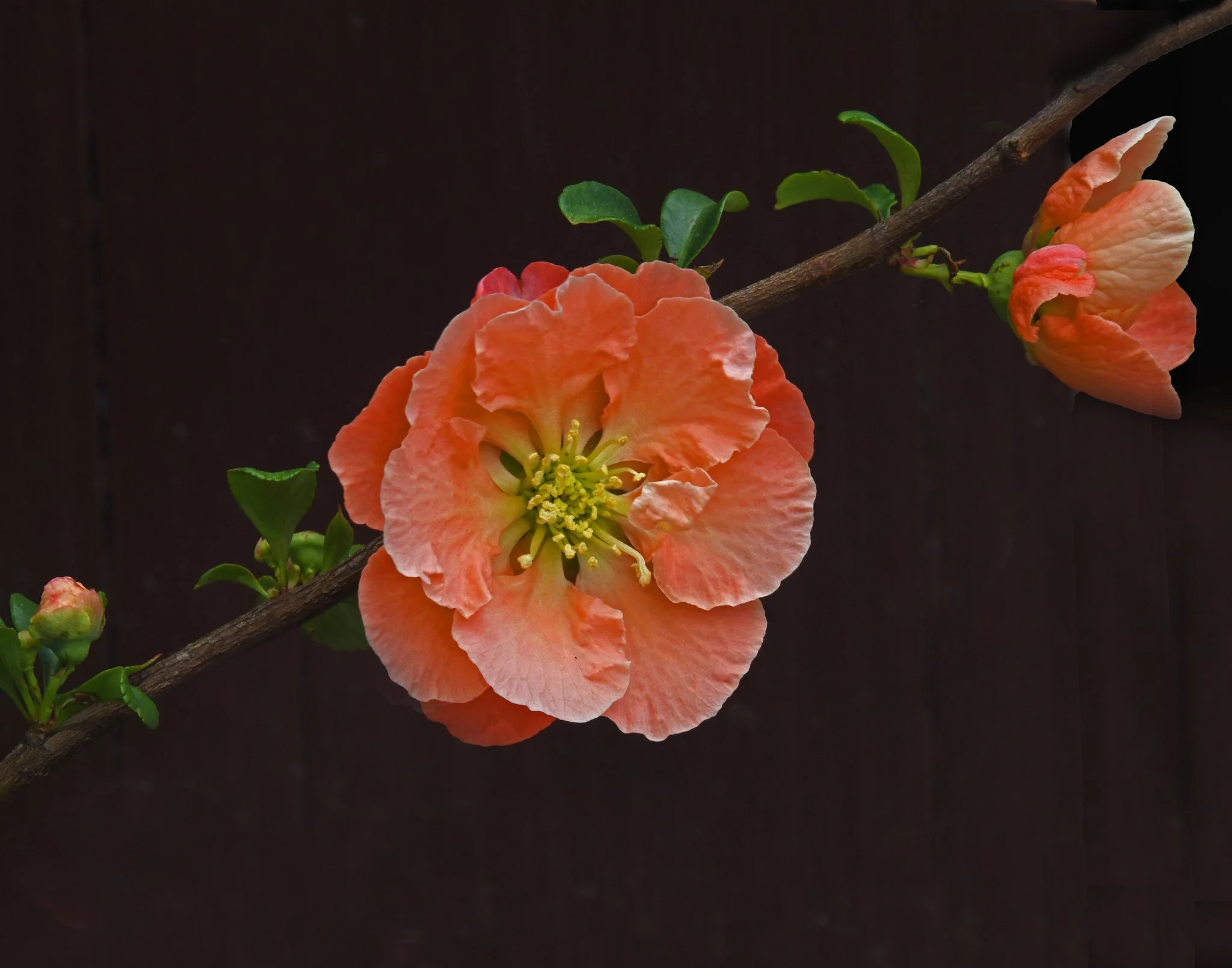
As for very early garden showoffs, the prize goes to quince:

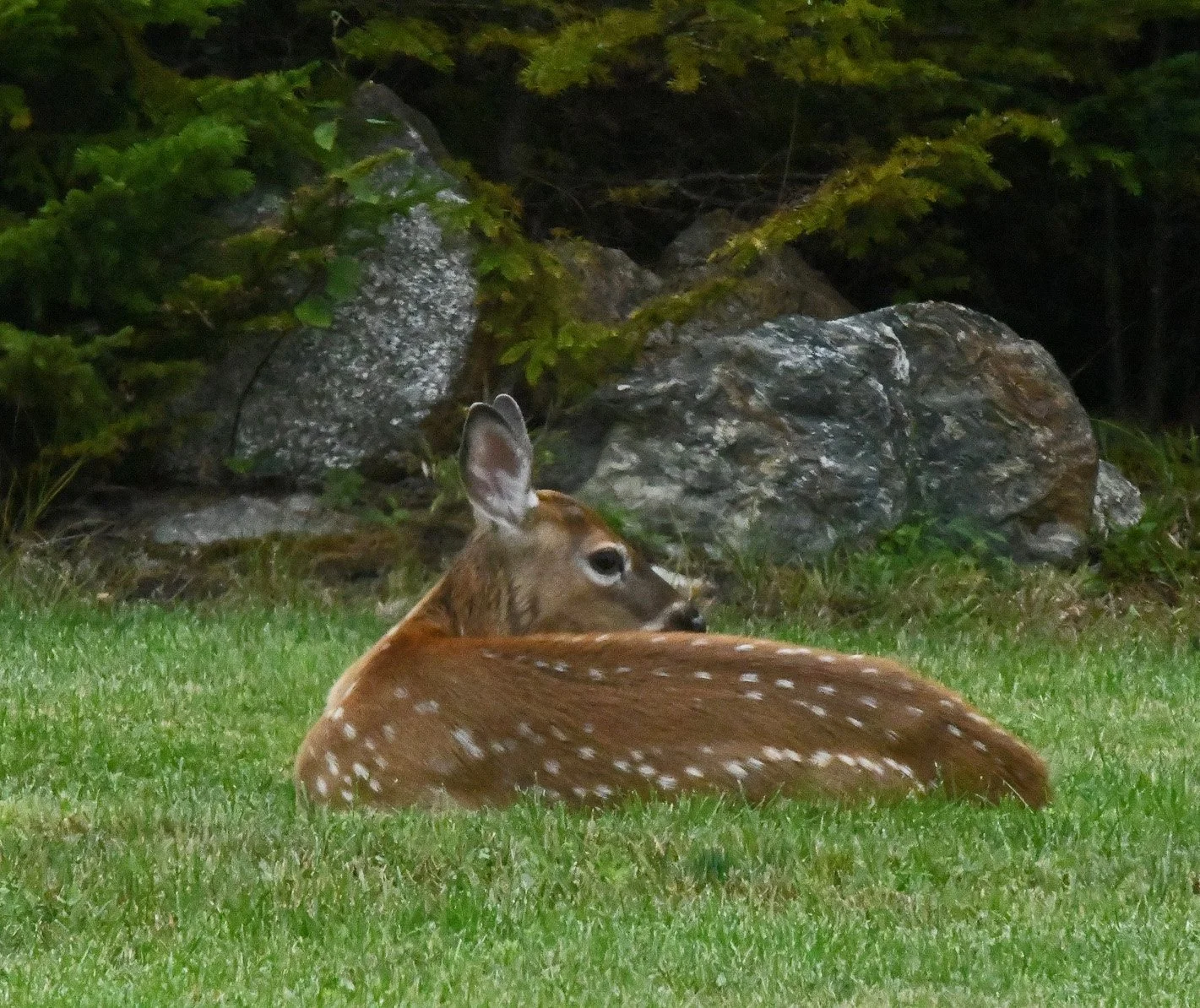
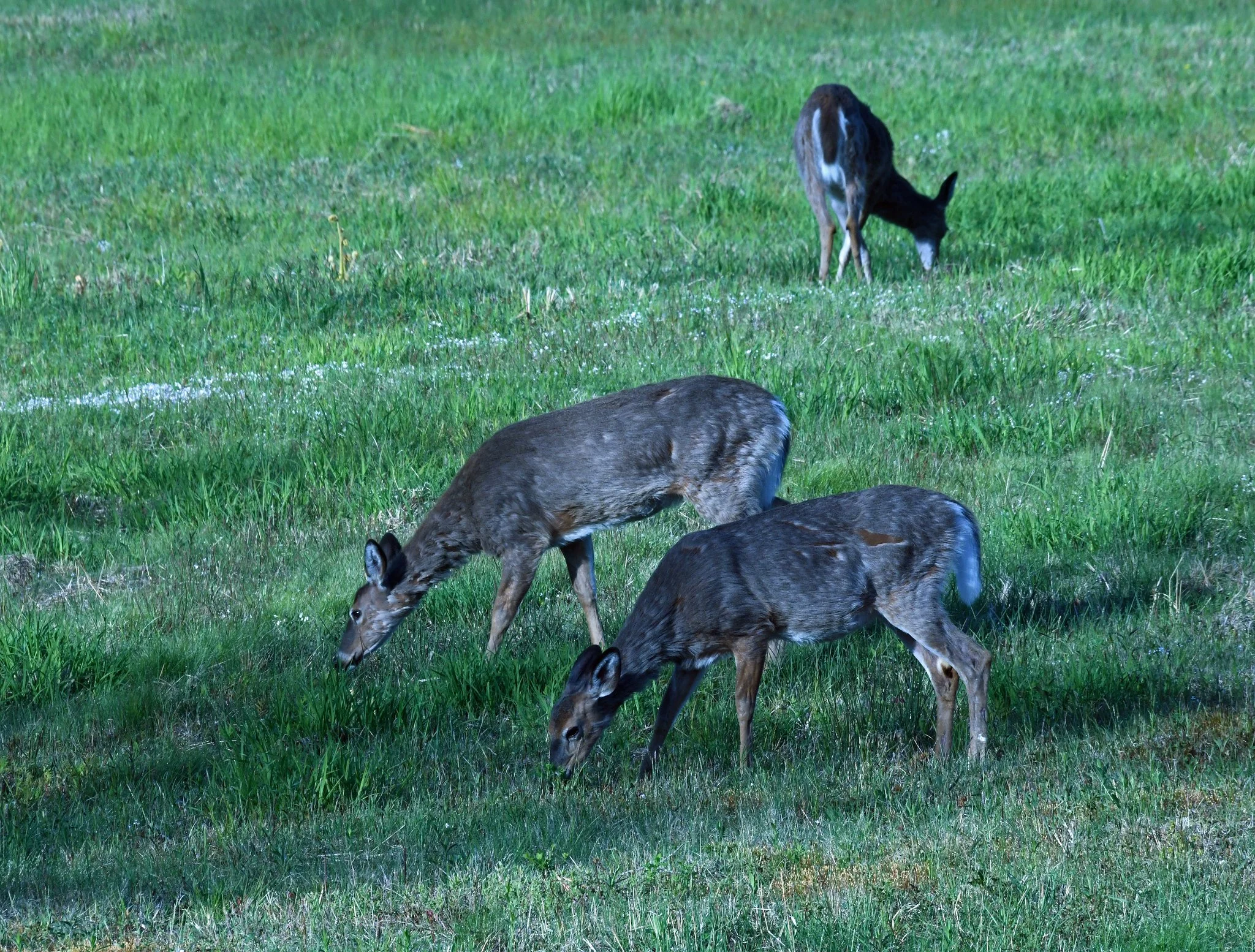
Among the May fauna of note were our browsing white-tailed deer. They started to shed their well-worn and scarred winter coats, while converting their menu from wood-based basics to grass-based delicacies:

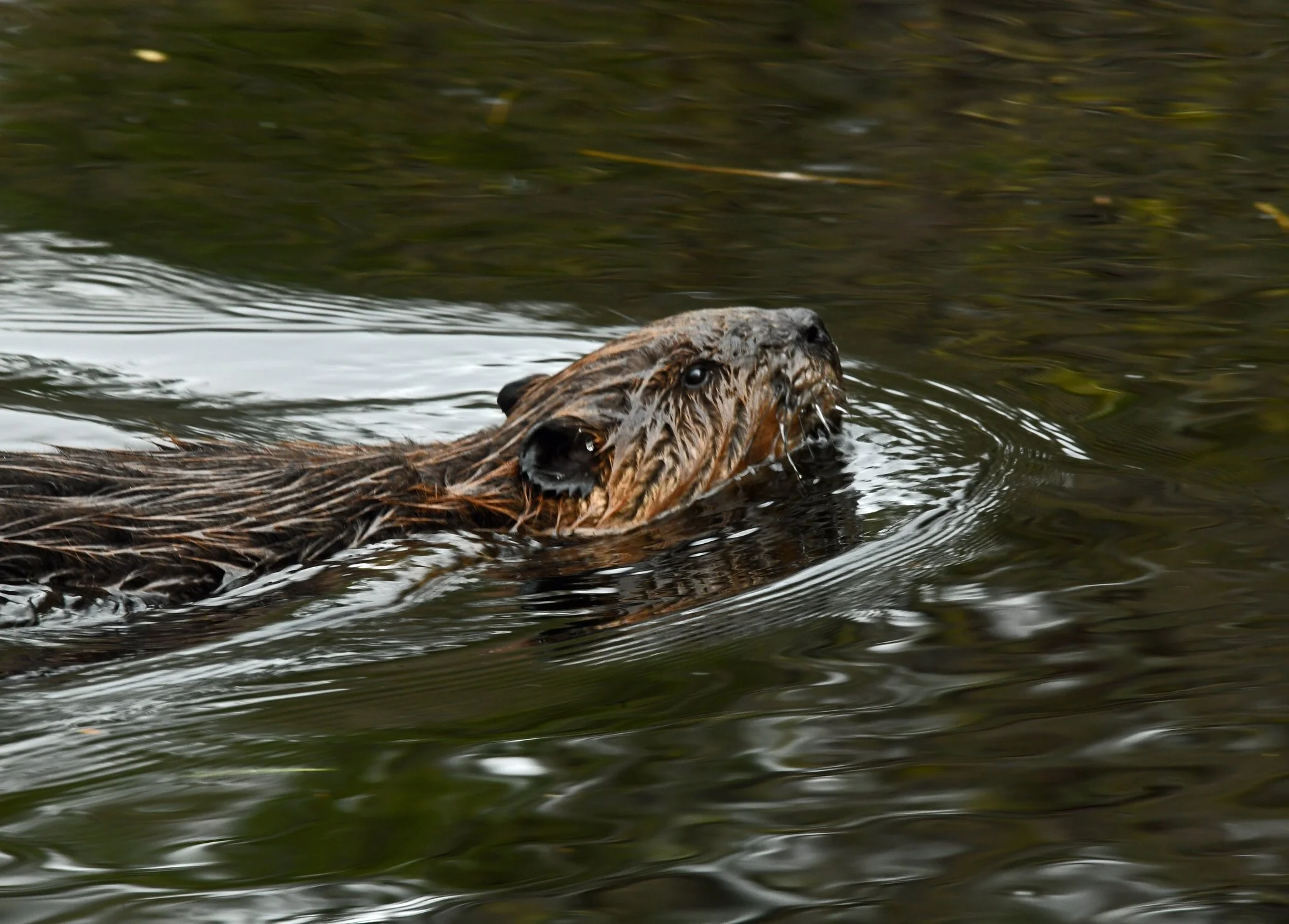
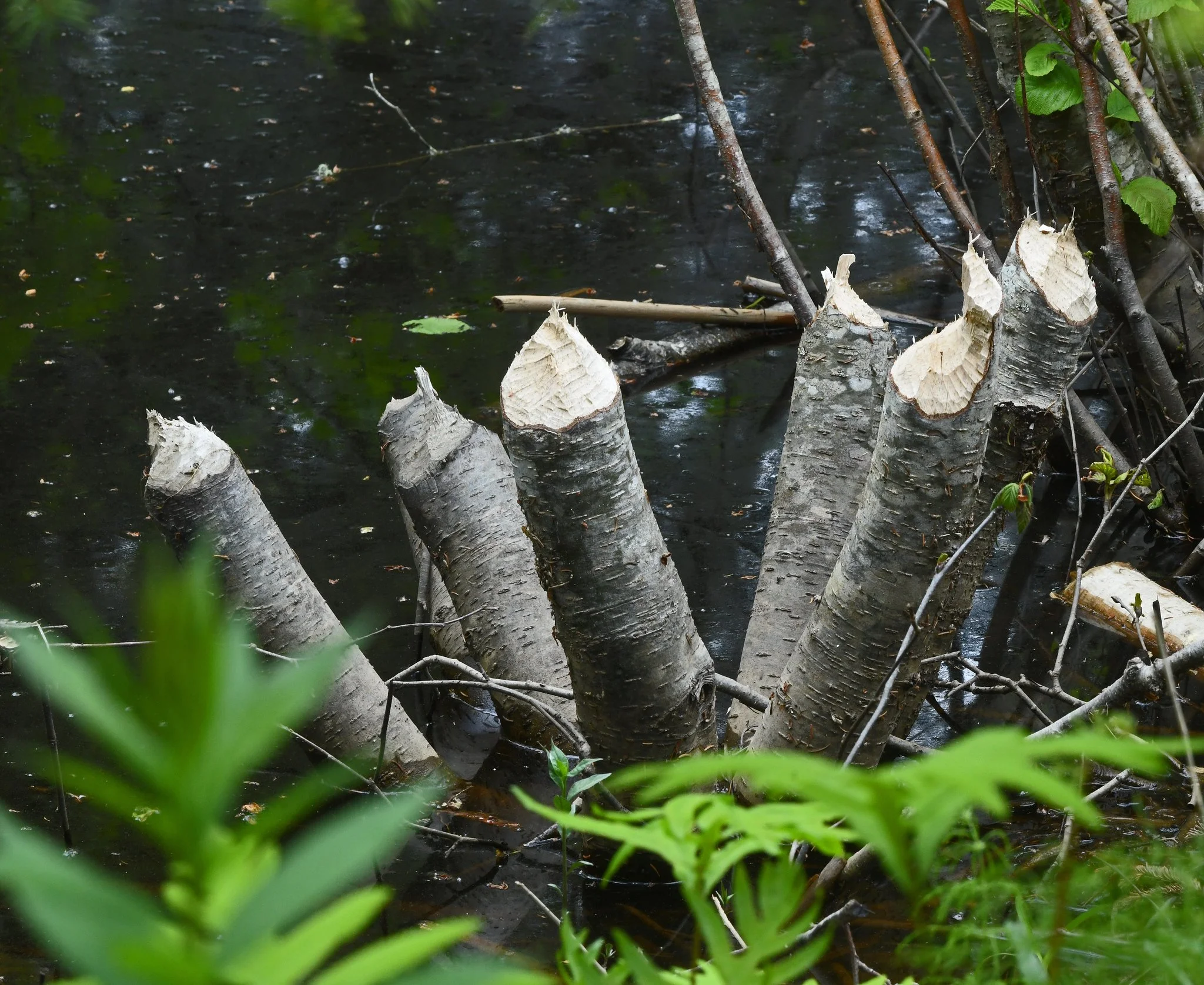
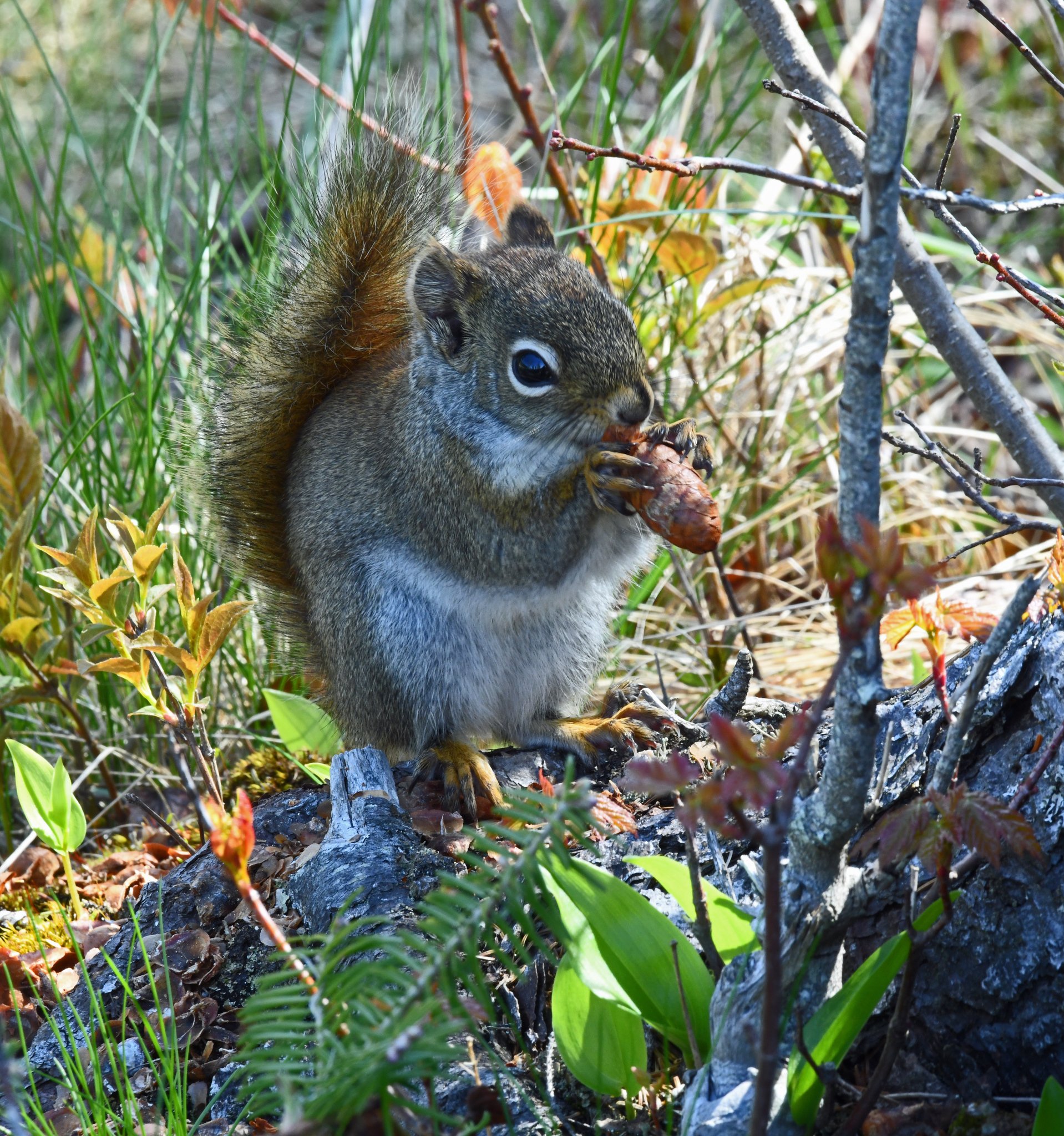
On the other hand, our beavers not only ate wood (inner bark), they toppled down trees and made dams with it , while our red squirrels ate the seeds that might have become wood:

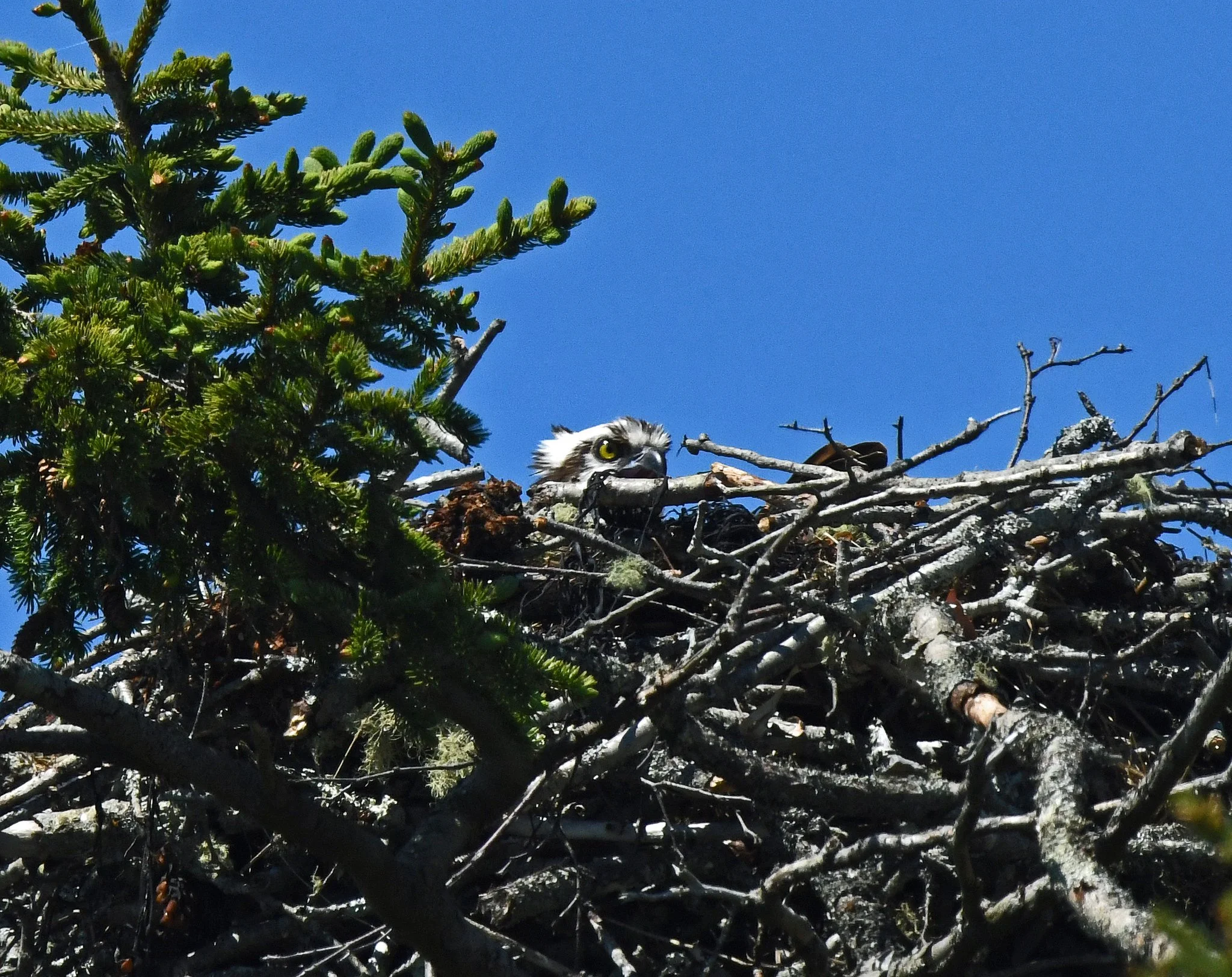
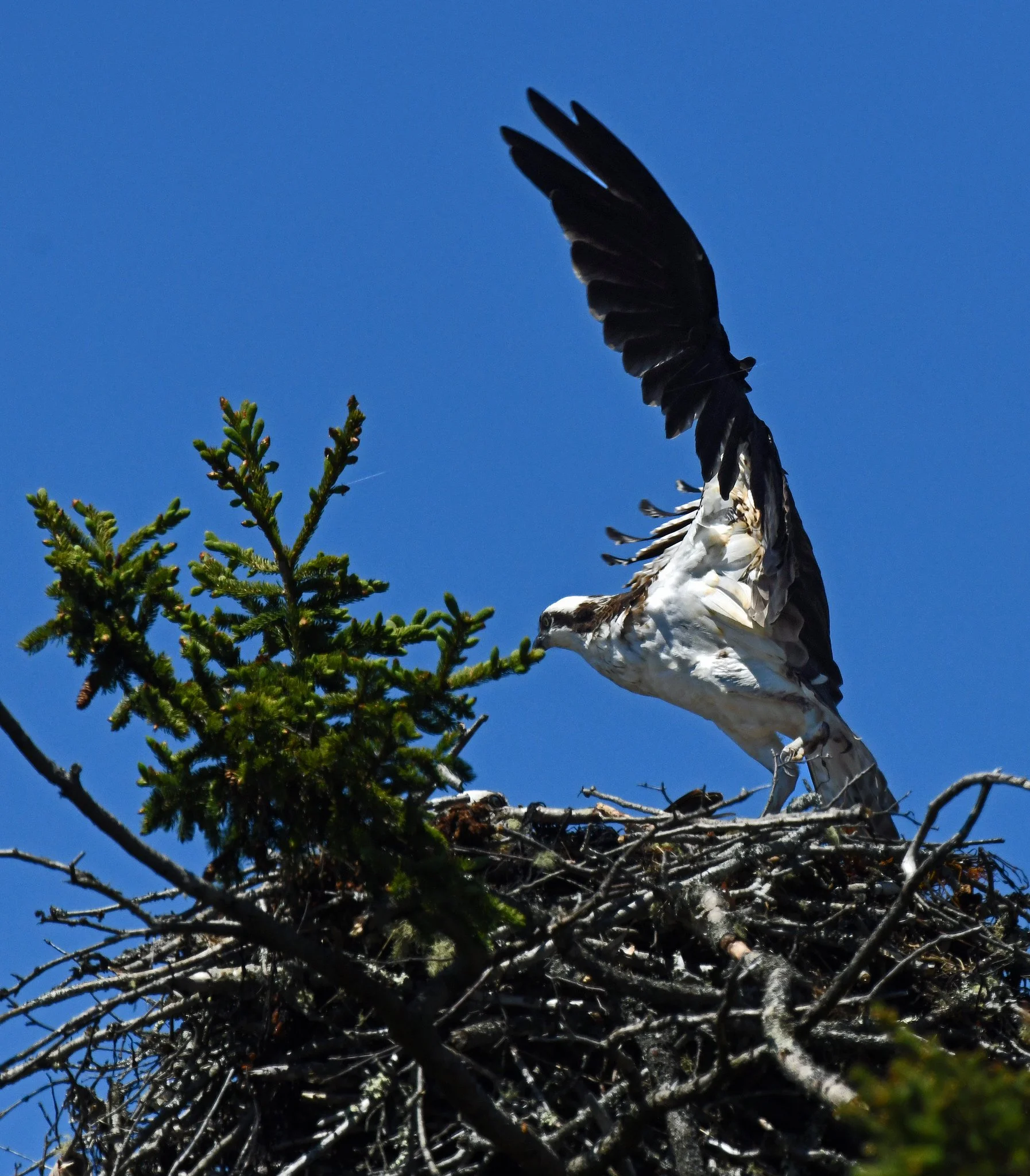
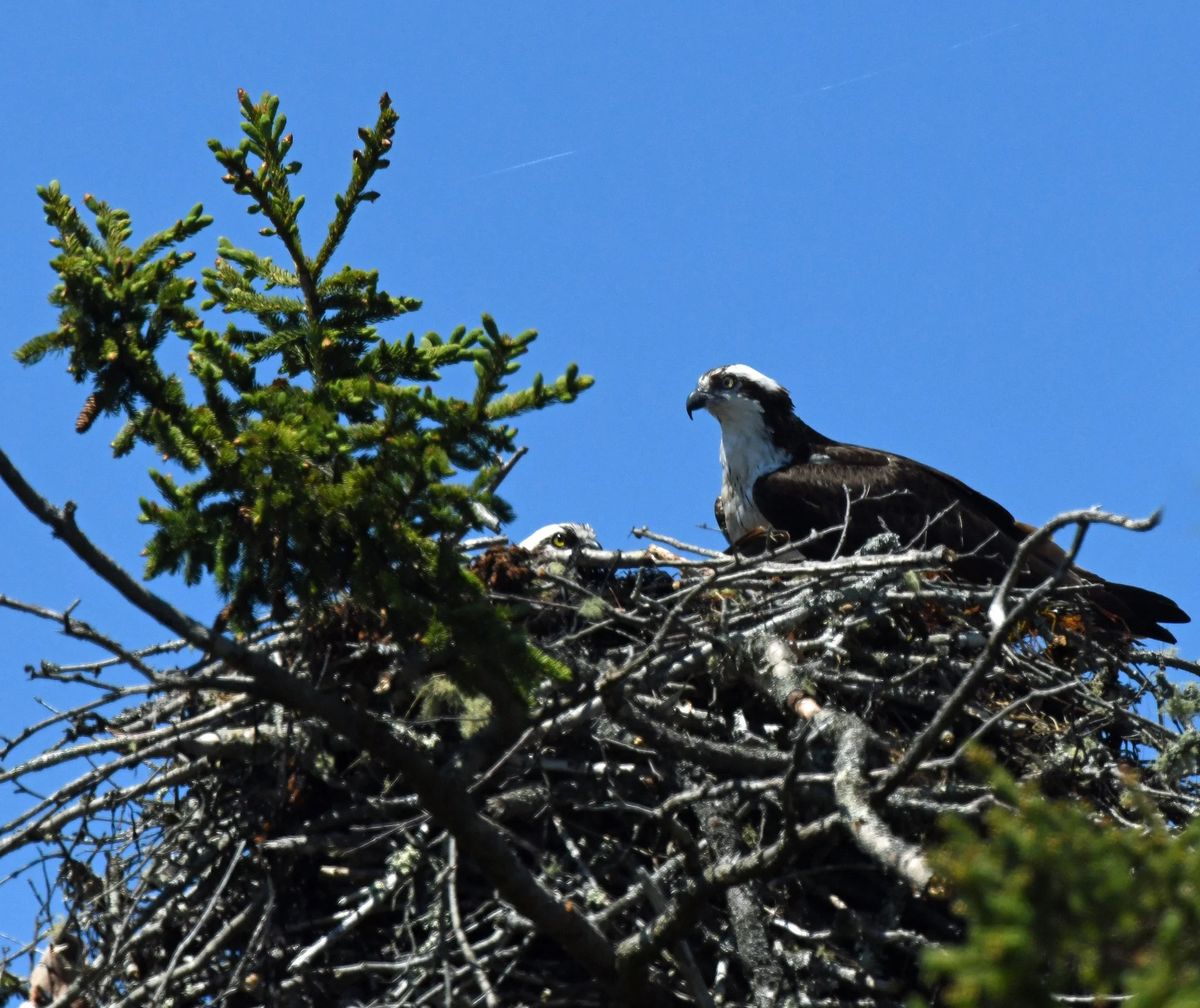
May’s most interesting feathered fauna included the return of Ozzie and Harriet, the osprey couple that nests nearby. Harriet appeared to be incubating her eggs most of May, while Ozzie would bring her meals and sometimes just sit with her:

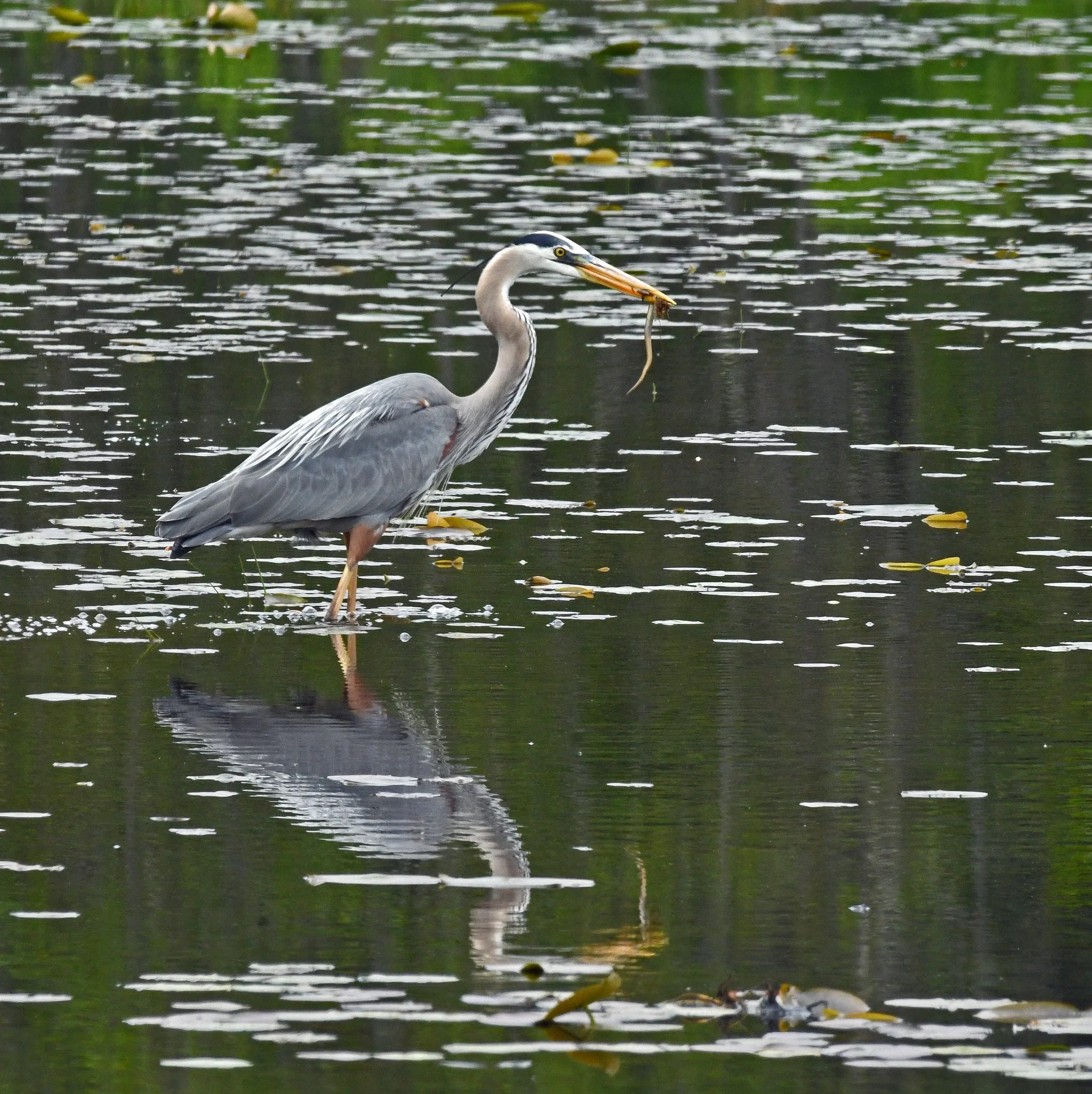
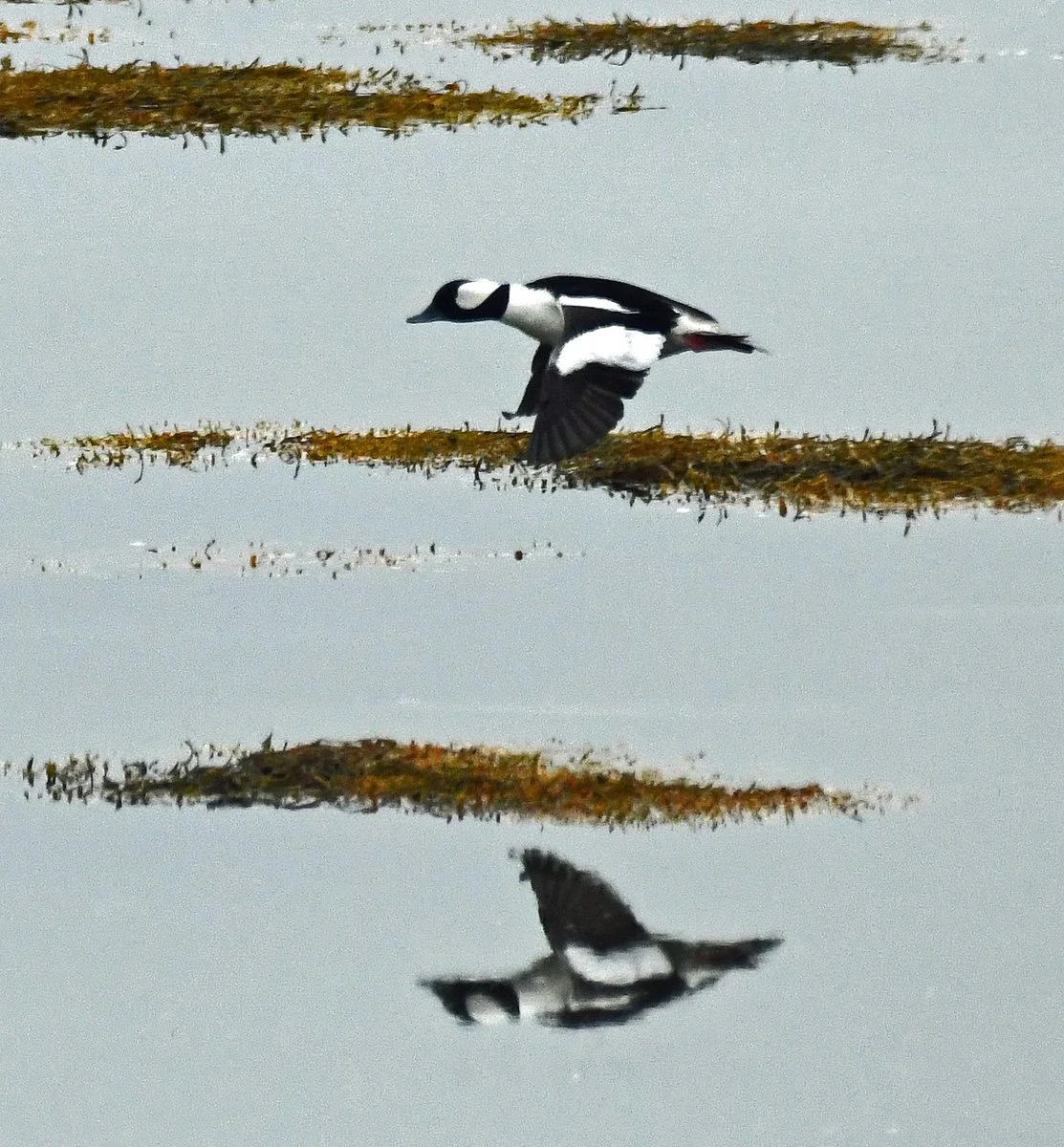
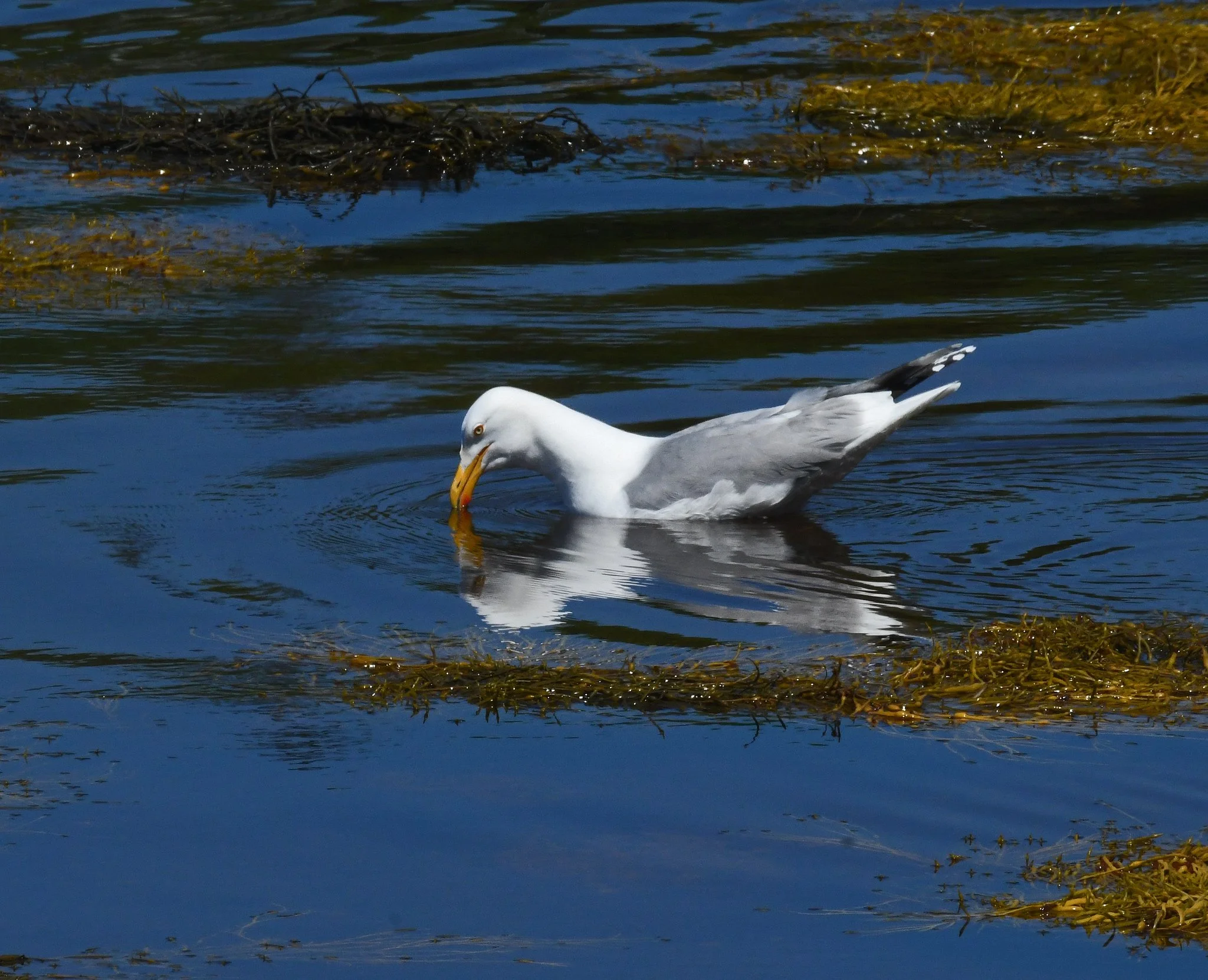
We also have to refect on our returning great blue herons, winter’s bufflehead ducks that stayed over until mid-May, and our full-time neighbors, the herring gulls:

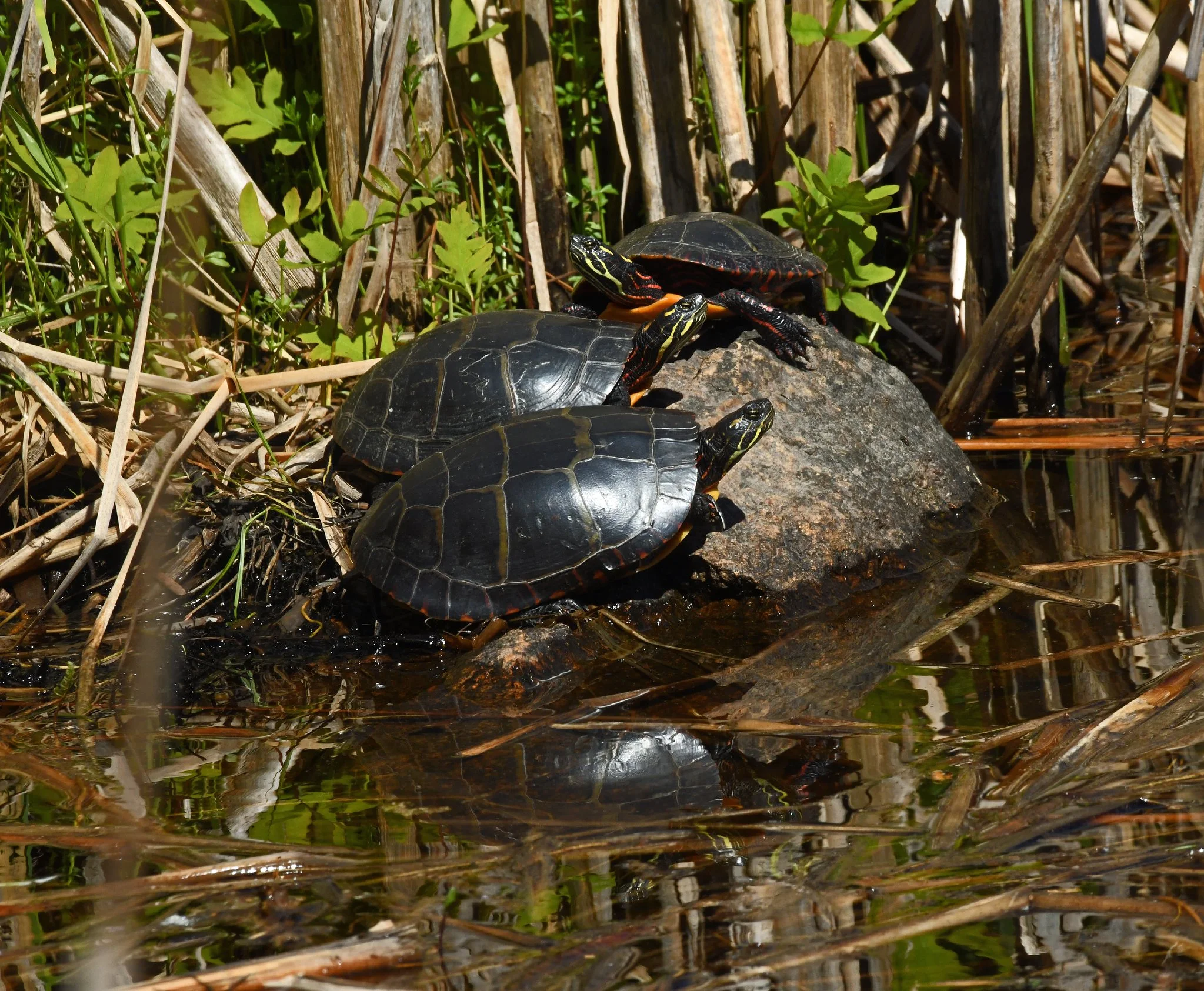
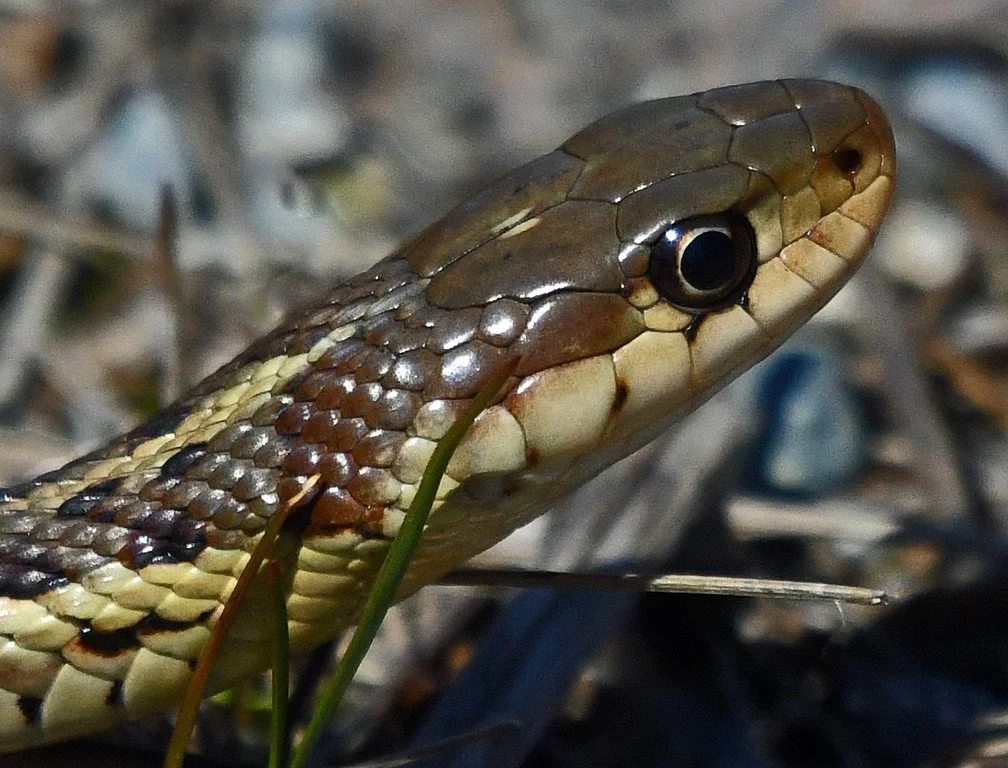
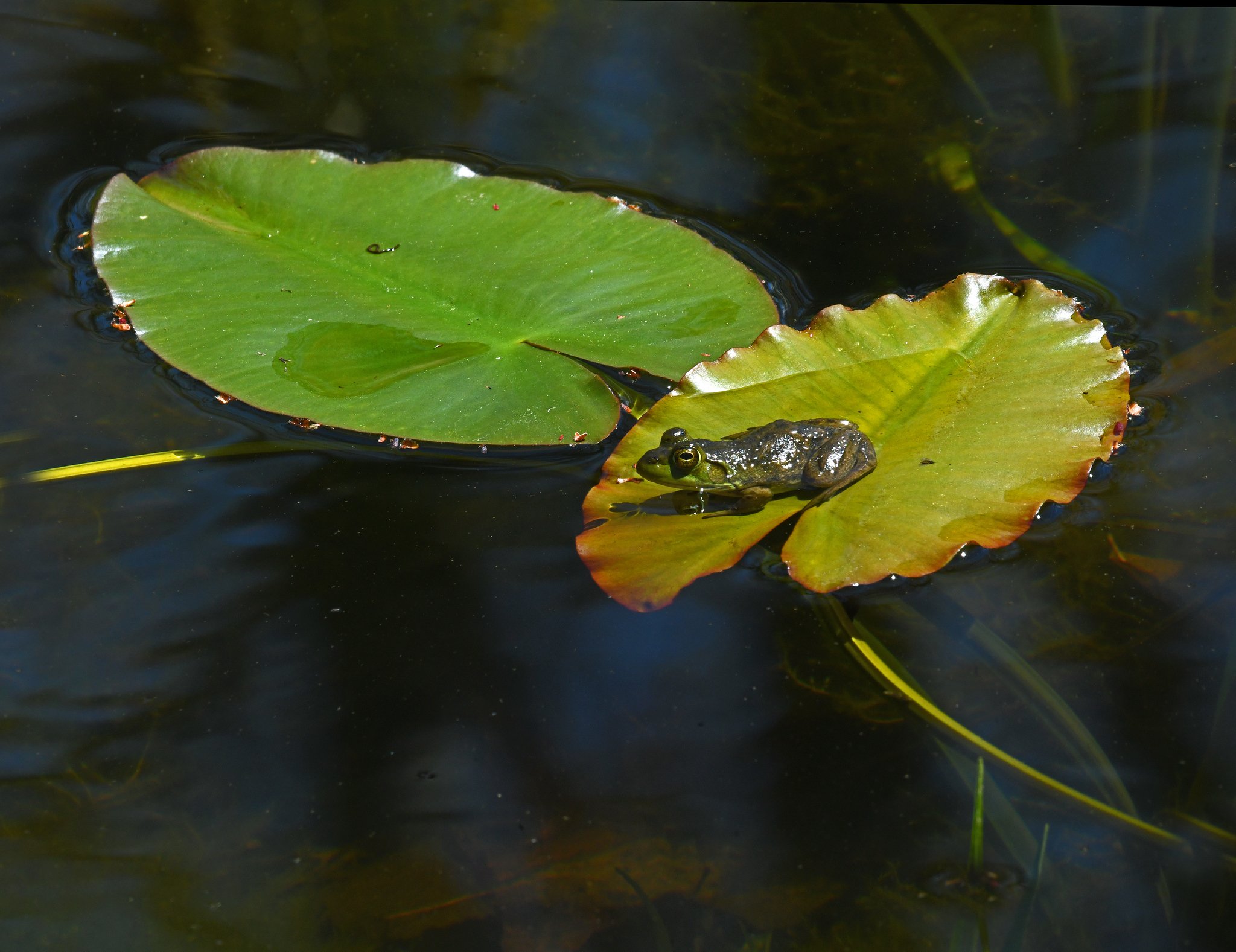
May also brought out our sun-seeking reptiles and amphibians, represented here by painted turtles, a garter snake, and a baby bull frog:

On the waterfront, the renowned Brooklin Boat Yard remained busy all throuigh May, when it installed its docking floats on its pier in Center Harbor:

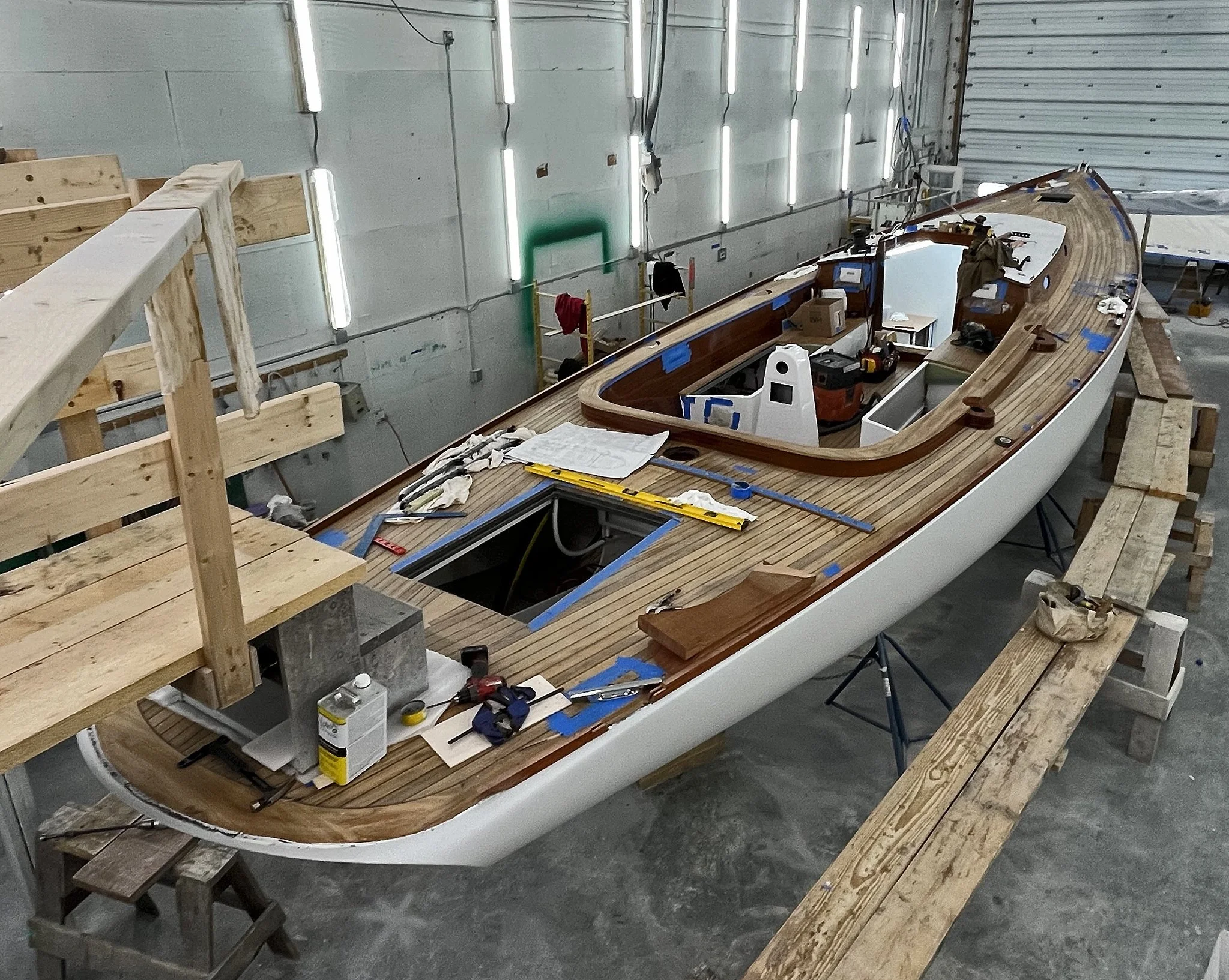
Among the boats that we watched being built at BBY during the month was the racing sailboat DYLAN, a BBY-designed “Eggemoggin 47+” (47’ 6” overall length). She was basically finished on the last day of May and reportedly was scheduled to enter the water for her sea trials in early June:

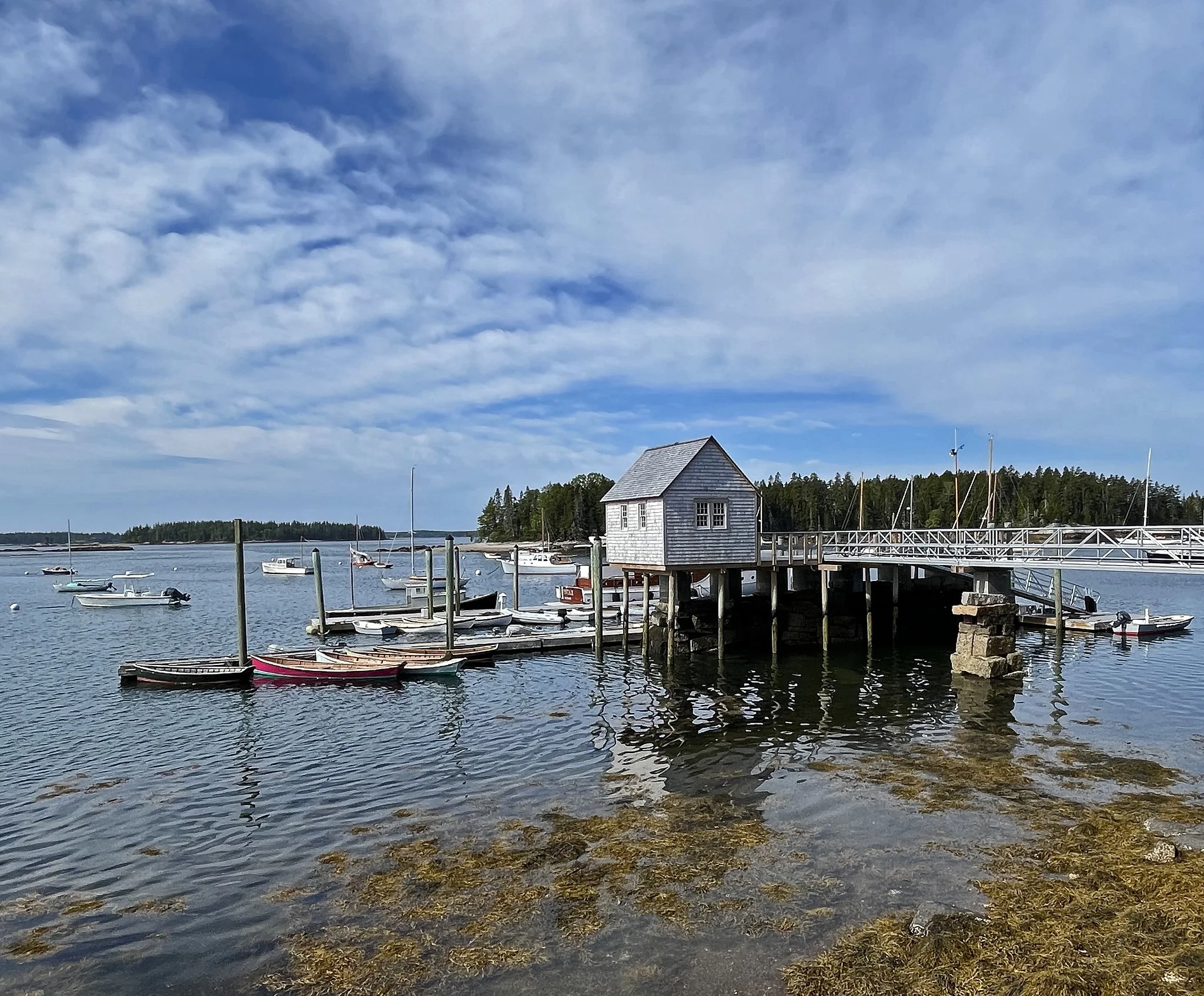
Down the coast a little, the also-famous WoodenBoat School was prepaing for its June opening by readying its boatbuilding classrooms and putting its fleet of small boats (that also operate as classrooms) back into Great Cove:

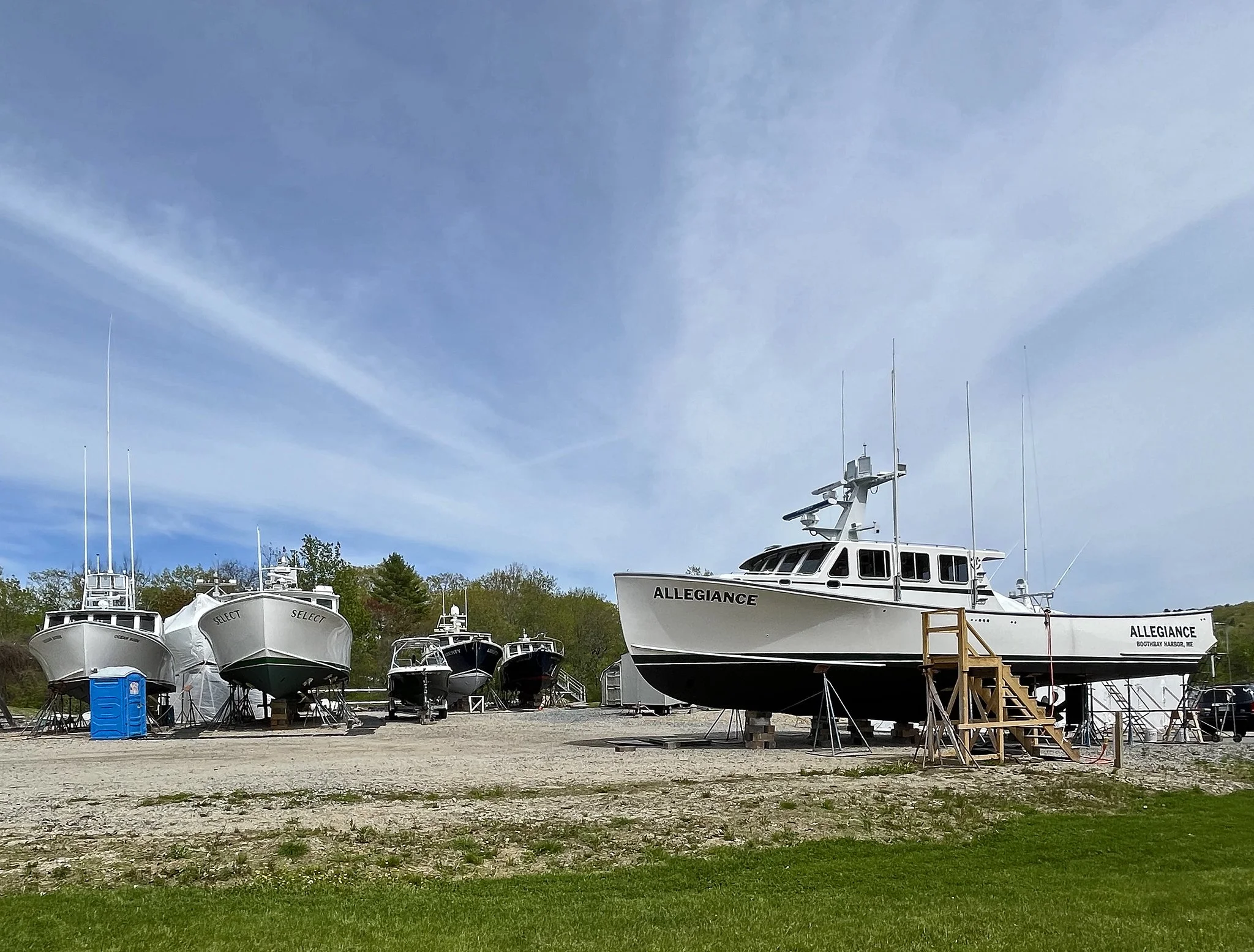
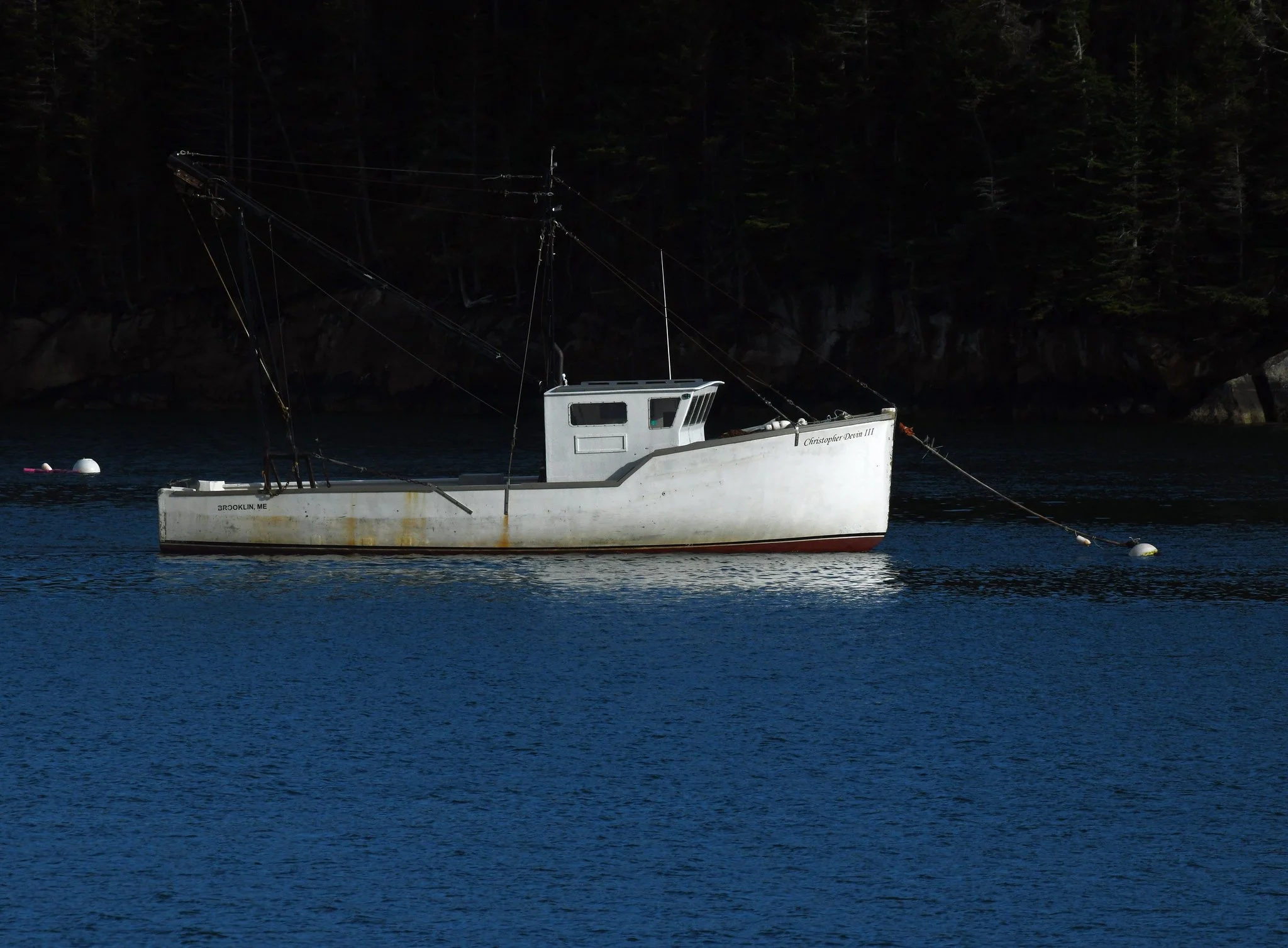
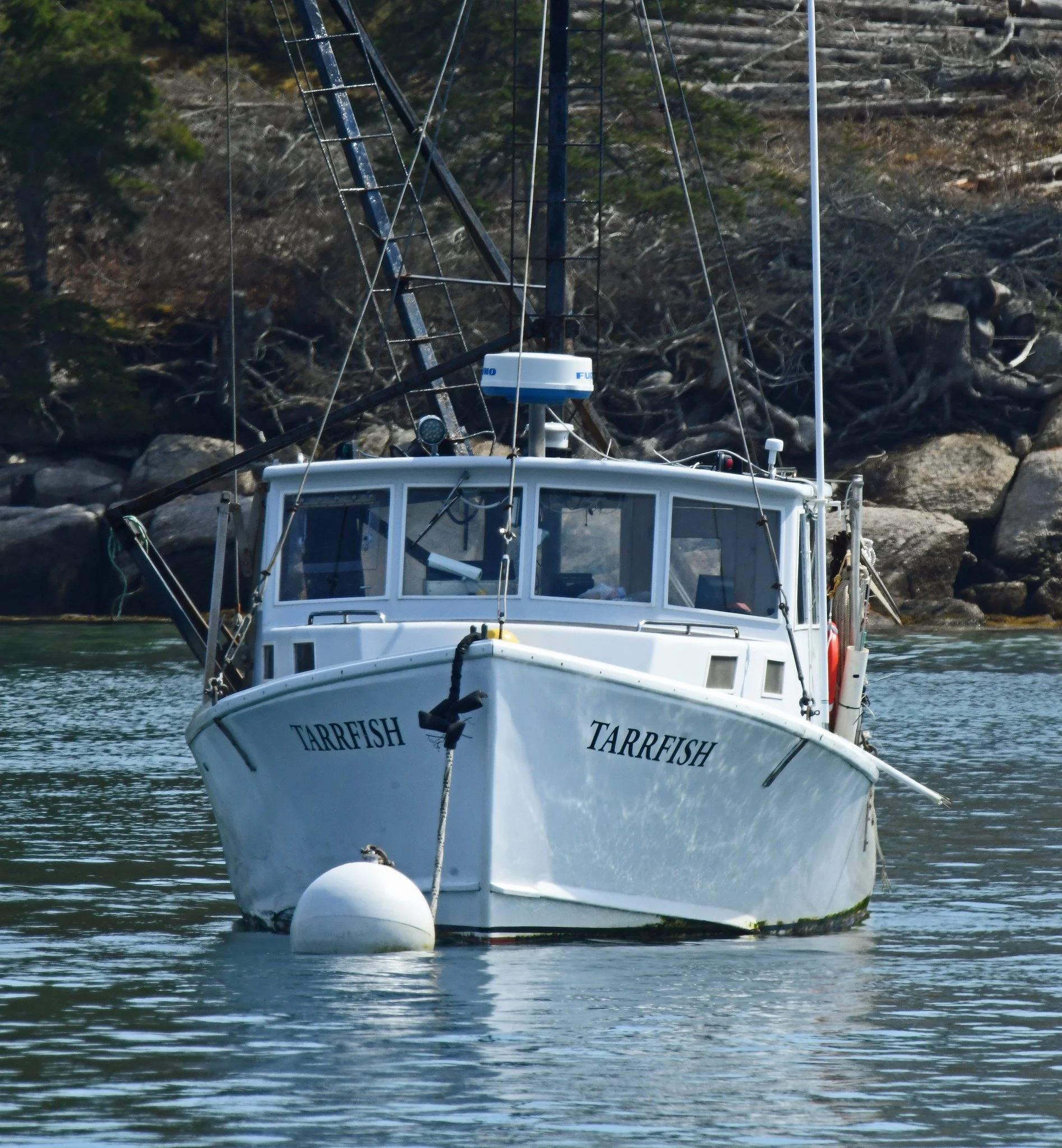
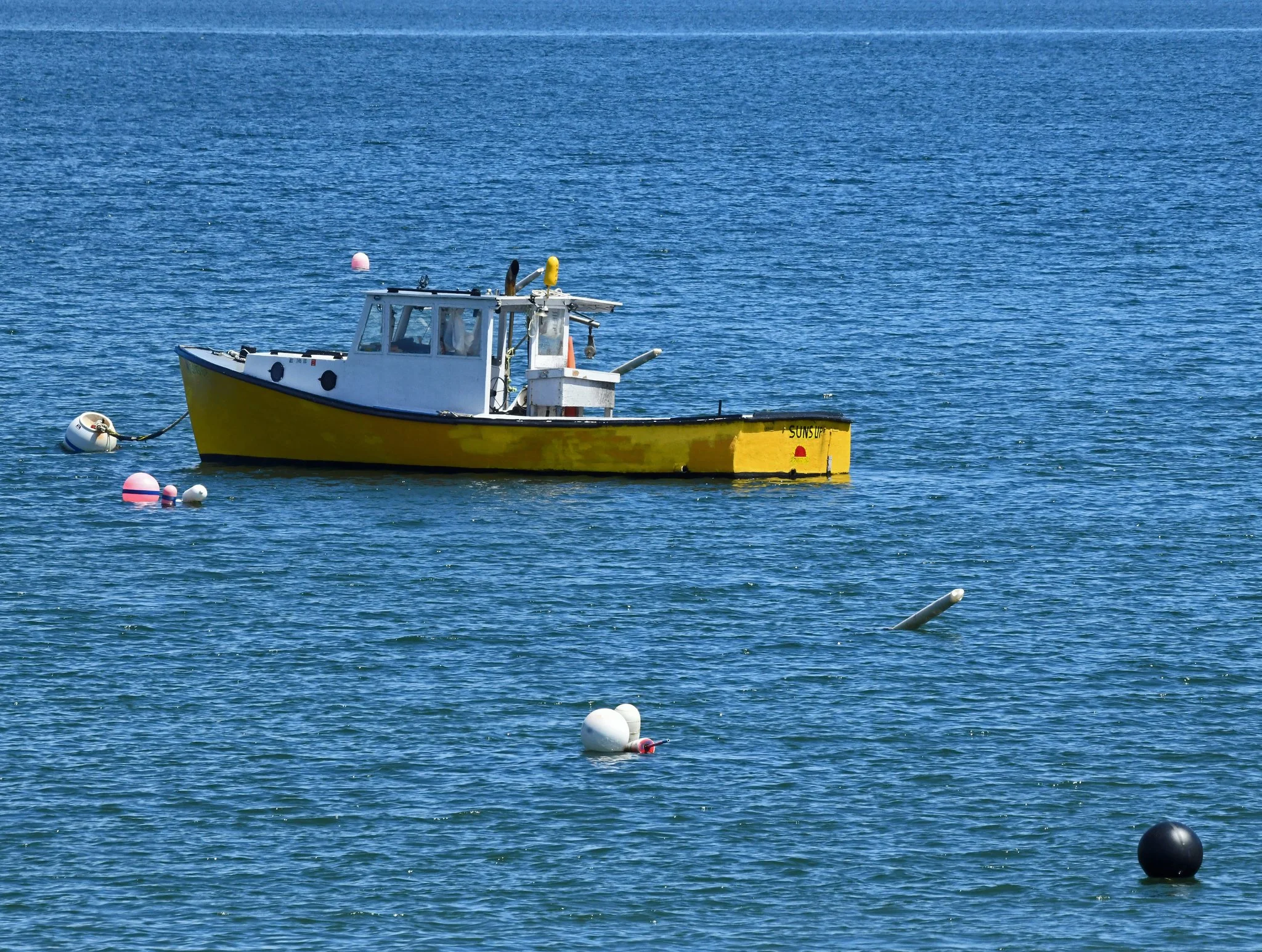
Commercial vessels that were “on the hard” all winter were unwrapped and returned to the water in May. Some fishing vessels that had worked all winter dredging for scallops were being rested before starting the lobster-trapping season in June:

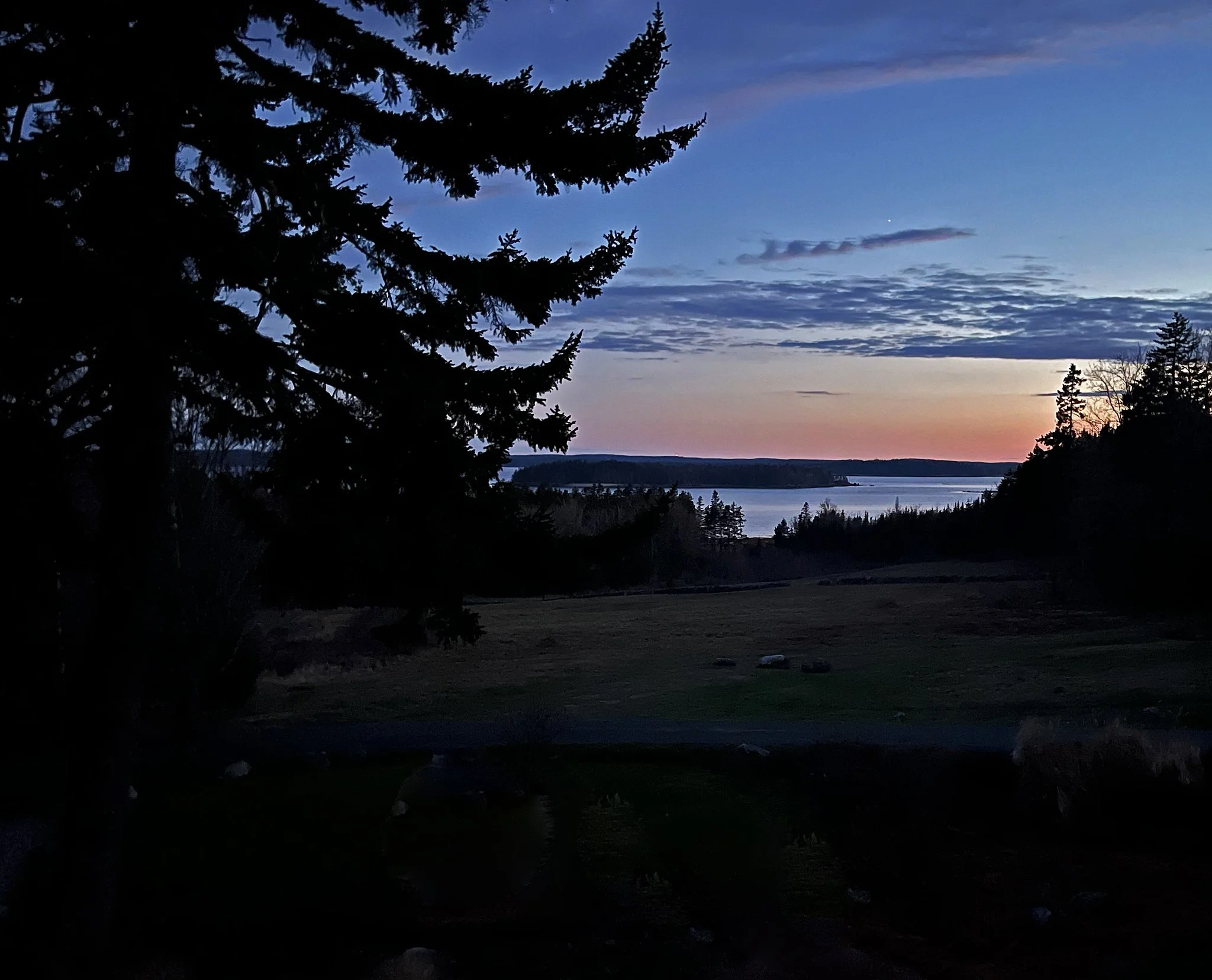
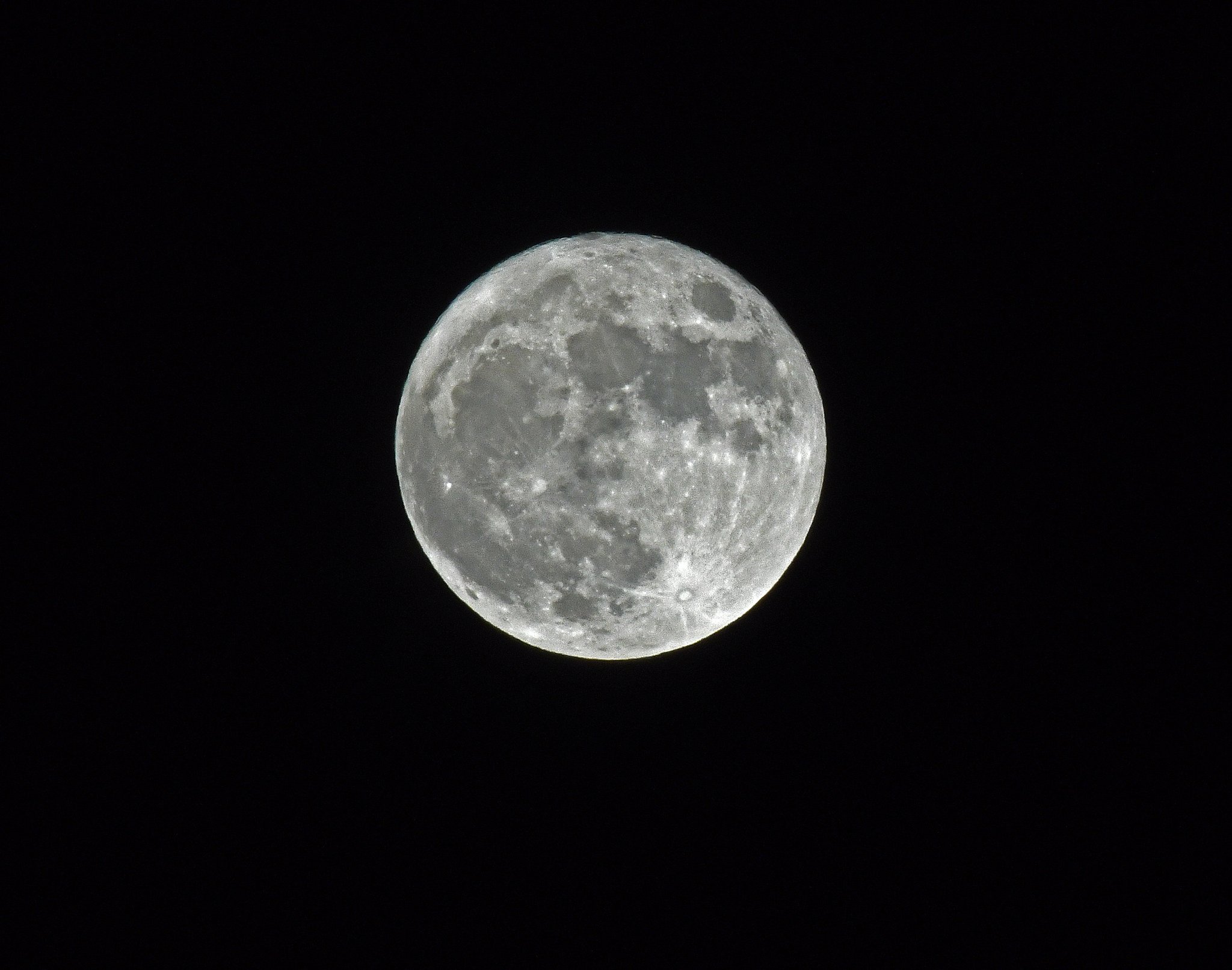
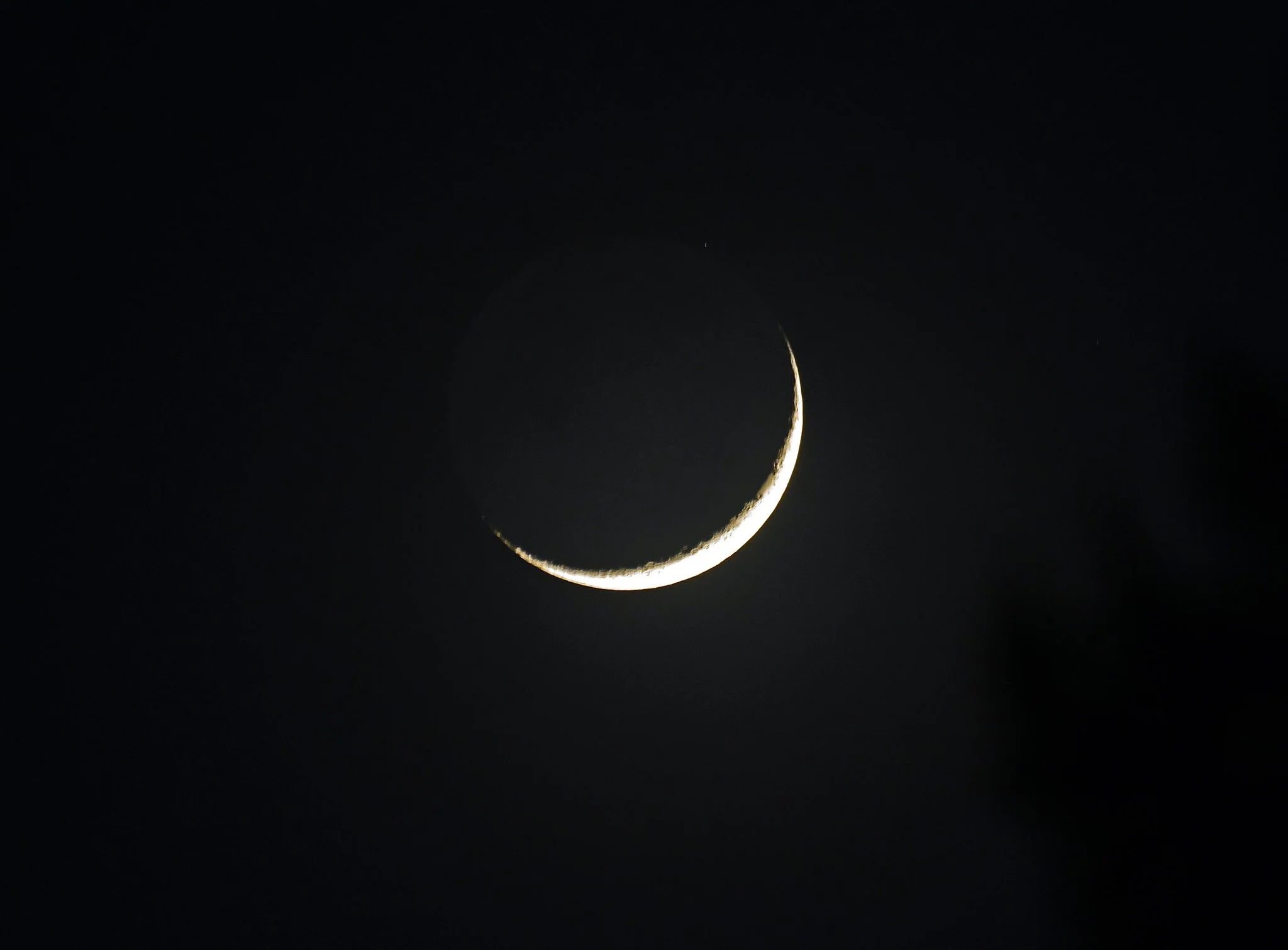
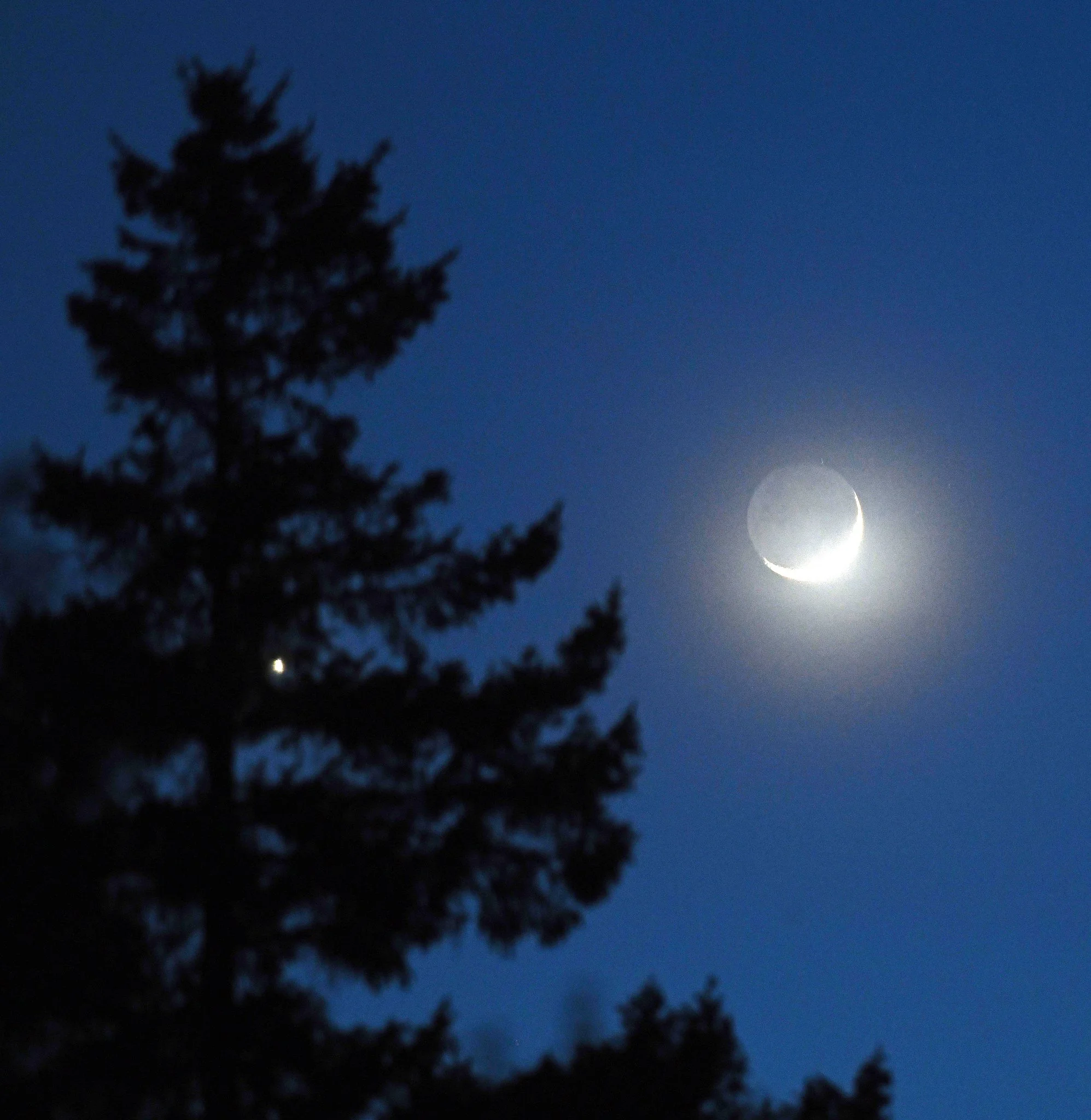
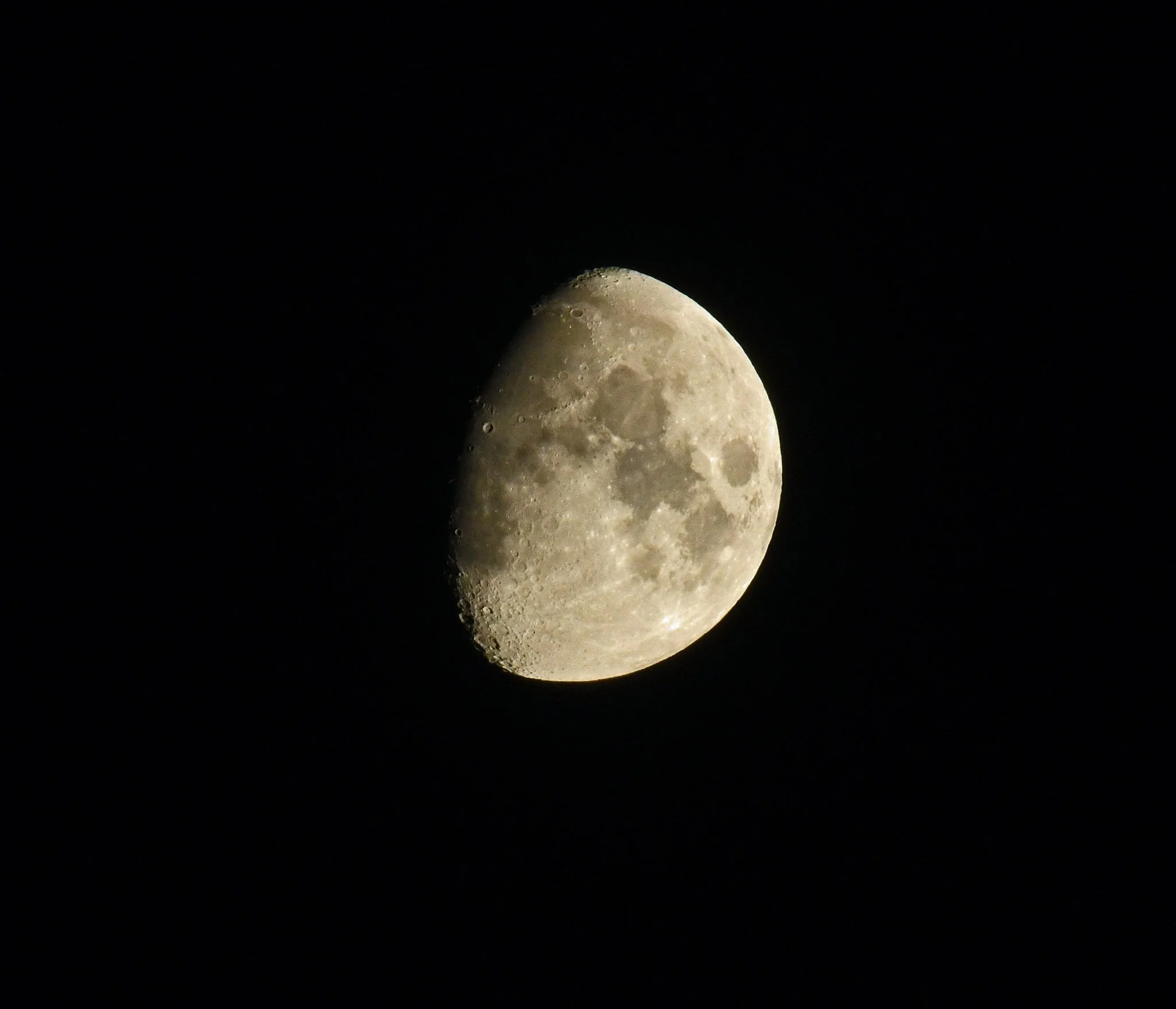
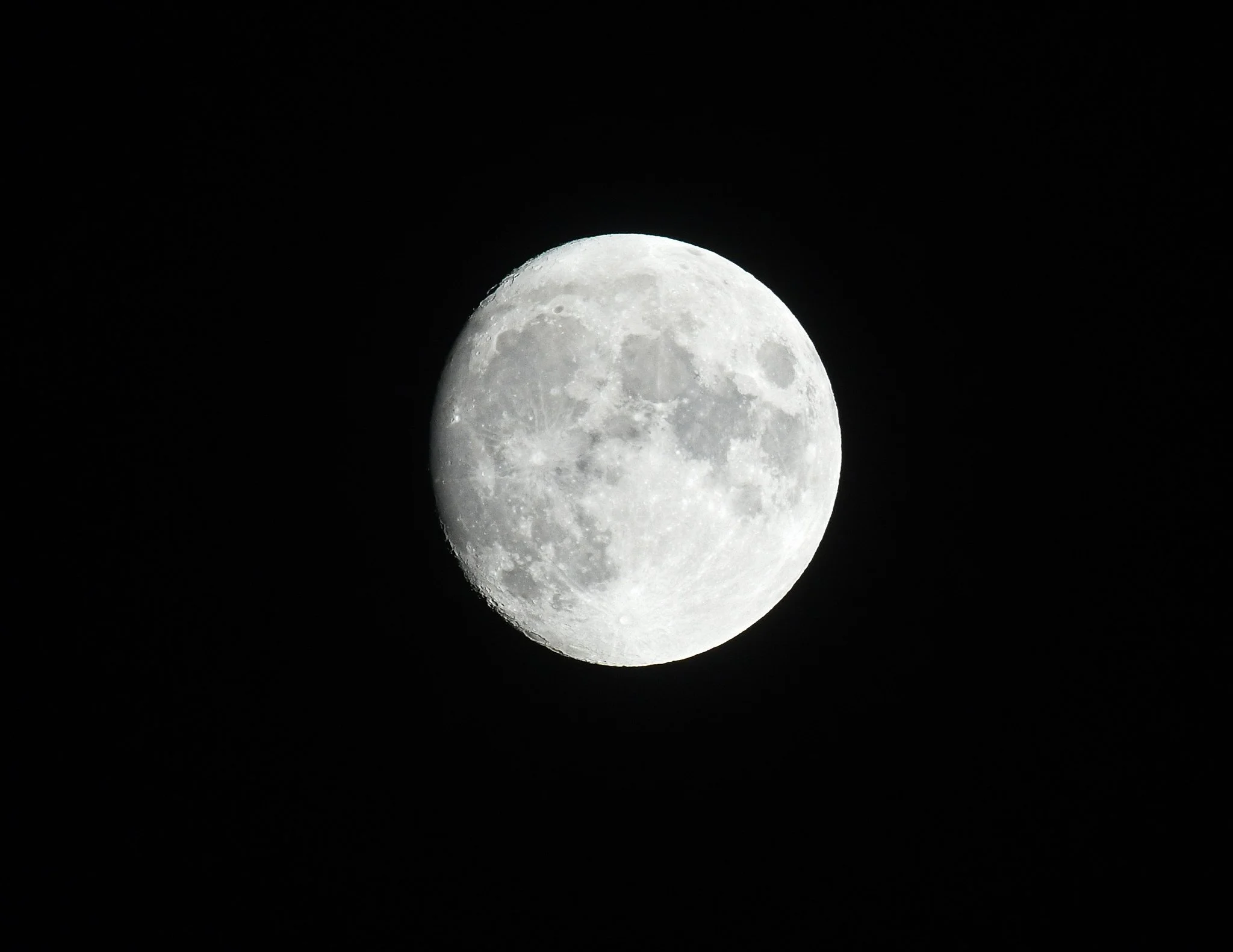
Finally, we look to the evening and night skies. Unusually, May had two full moons. The first, at the beginning of the month, was her traditional Flower Full Moon, a name she deserves for obvious reasons. The second, at the end of the month, was a so-called Blue Moon, as second risings are called. In between, there was plenty of variation:

(All images in the post were taken in Down East Maine during May of 2026.)
5 Comments

Comment

In the Right Place: Close Encounter of the Eel Kind

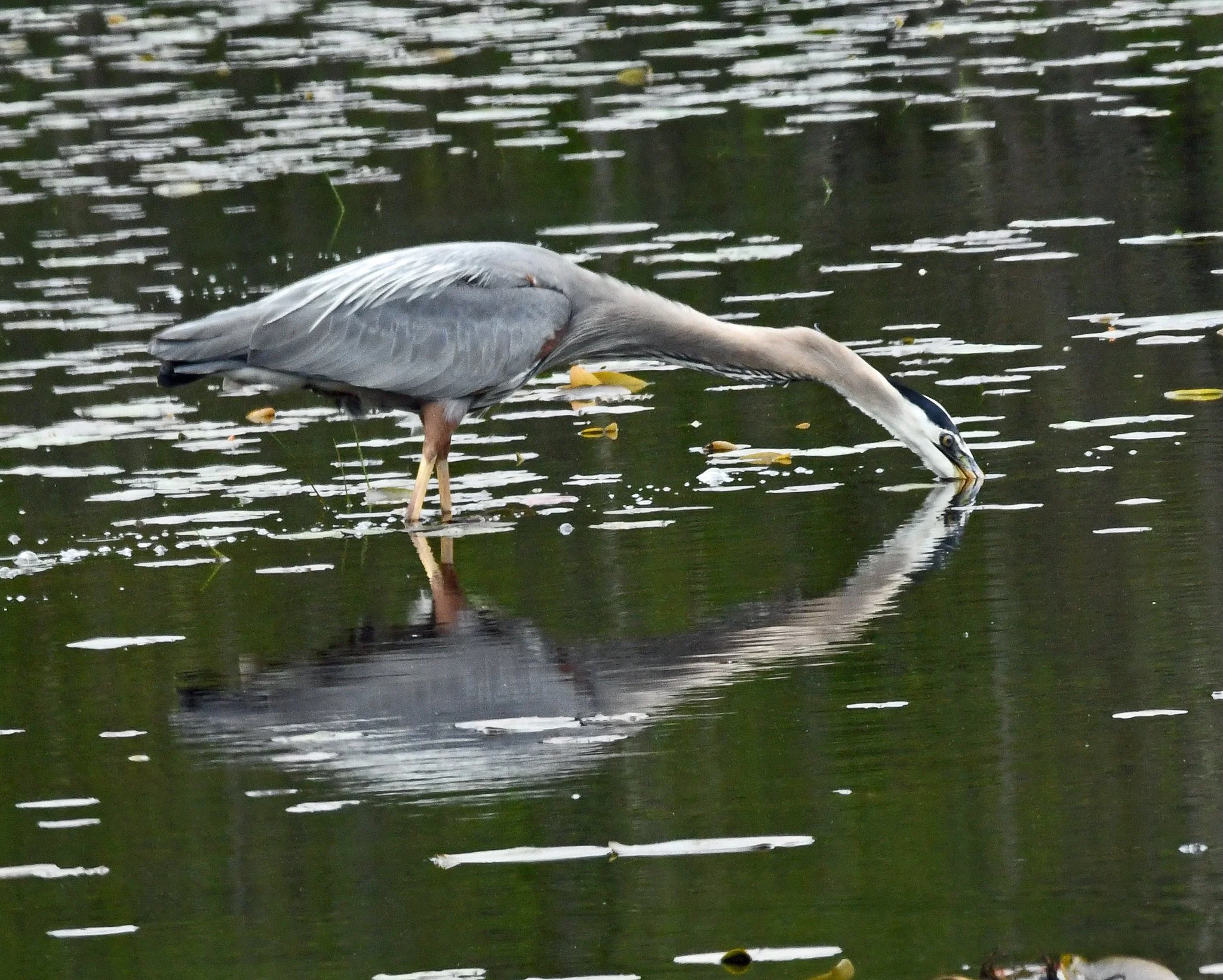
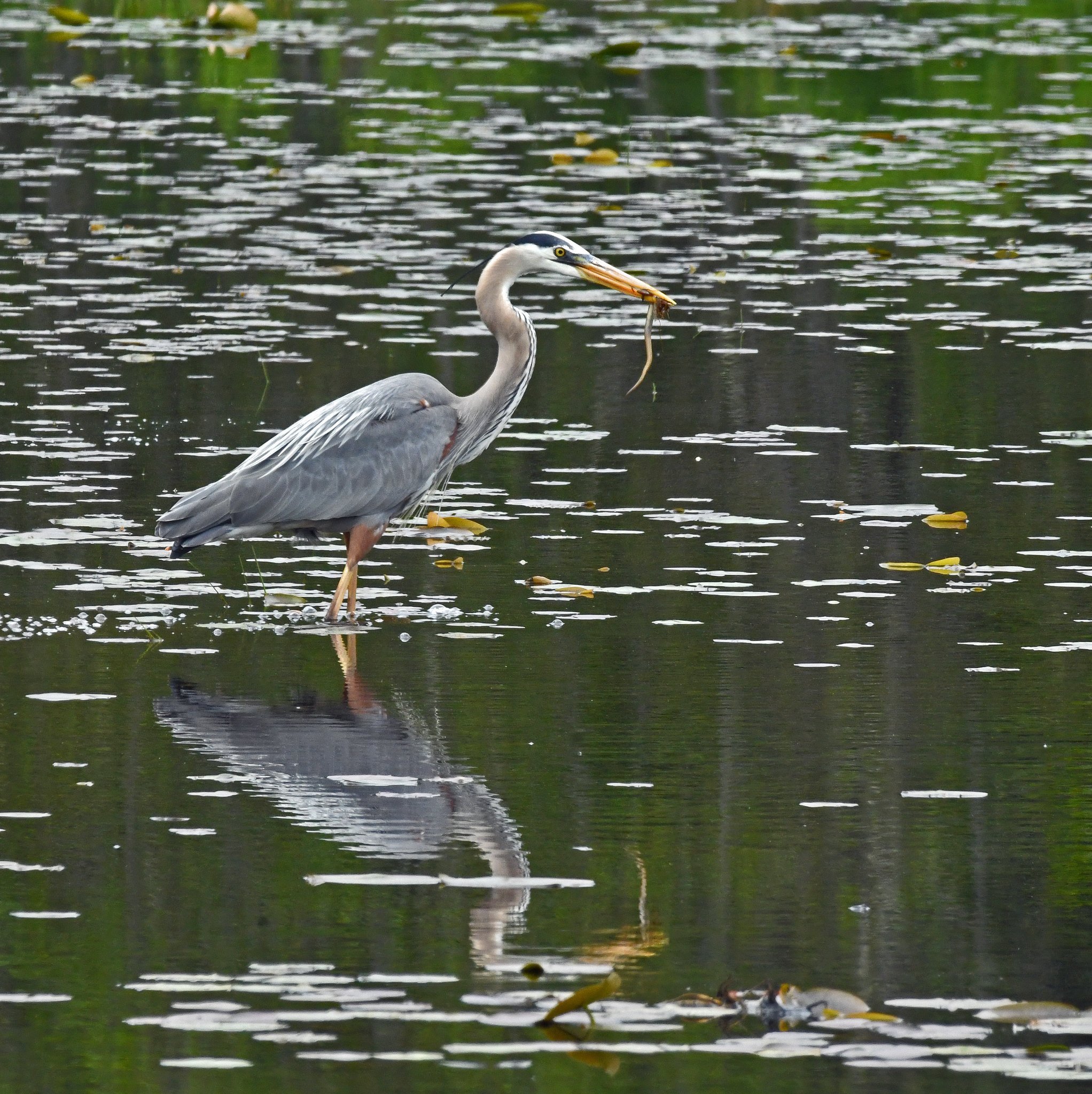
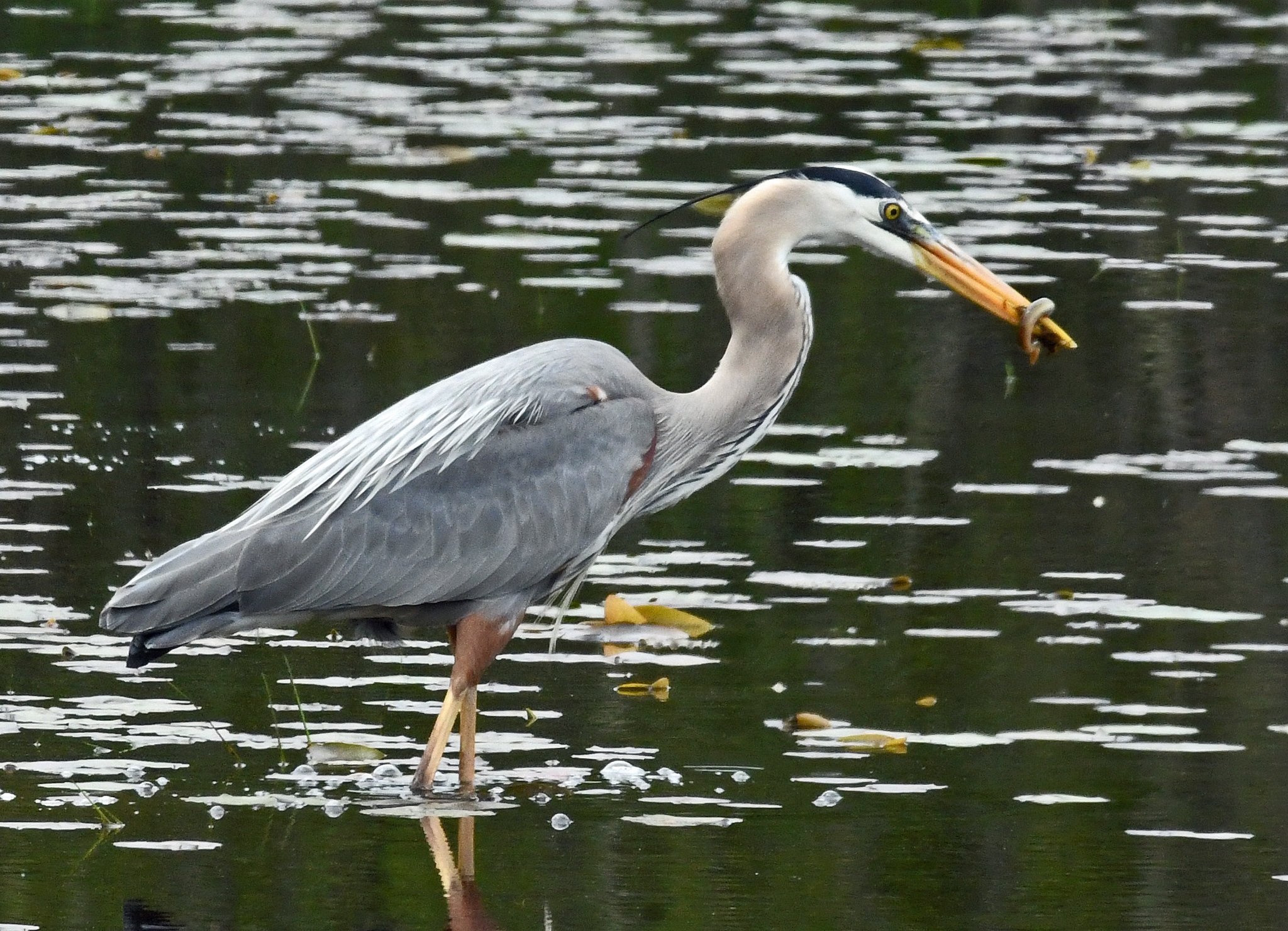
Here you see the beginning of an epic encounter that lasted about 20 minutes. This great blue heron hurls her spear-like head and neck deeply into the pond and comes up with an American (“yellow”) eel. These eels thrash wildly and can deliver nasty bites with their multiple rows of teeth.

The eel immediately coils around the heron’s beak, snapping and writhing. (See the image in the Comment space.) The heron repeatedly shakes the eel while slapping it against the water surface. This water torture goes on for about 15 minutes and the eel finally tires. Then, the heron swishes the dazed eel around in the water, apparently to make it more digestible.

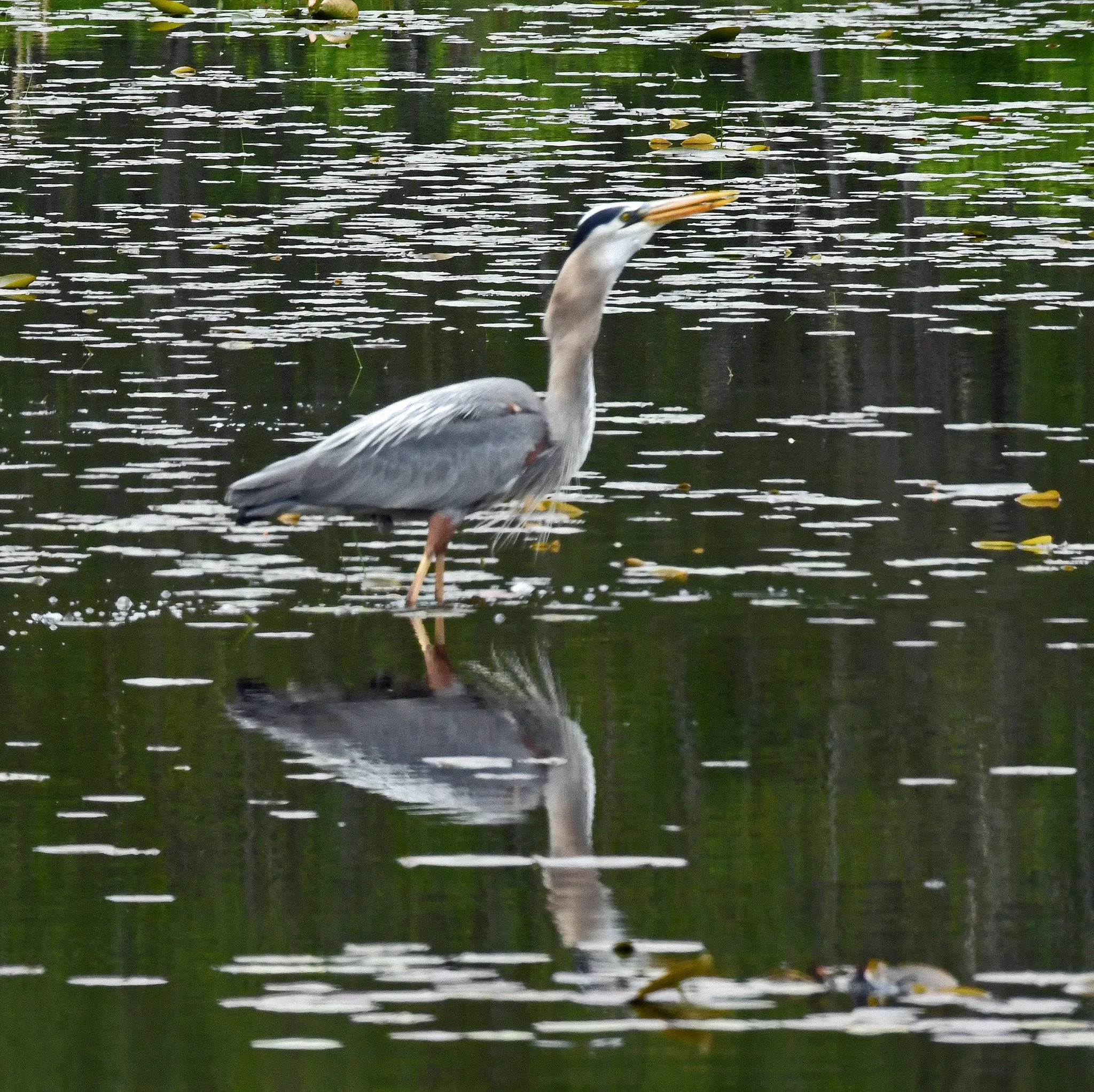
After that rinsing, the bird tilts her beak and juggles the slowly-resisting eel around until the eel is pointed headfirst toward her throat. (Apparently, an objecting eel is more safely consumed headfirst, a concept that might not be of much use to humans.) The heron points her beak to the sky, gulps several times and the eel disappears inside the bird’s expanding neck, a southward-moving, slightly wriggling bulge.

After a minute or two, there’s no sign of the unfortunate fish. (Yes, eels are fish.) The heron takes a long sip of water and slowly wades away as if nothing has happened.

(Images taken in Brooklin, Maine, on May 29, 2026; sex assumed.)

Comment

Comment

In the Right Place: Comparing Apples to Apples

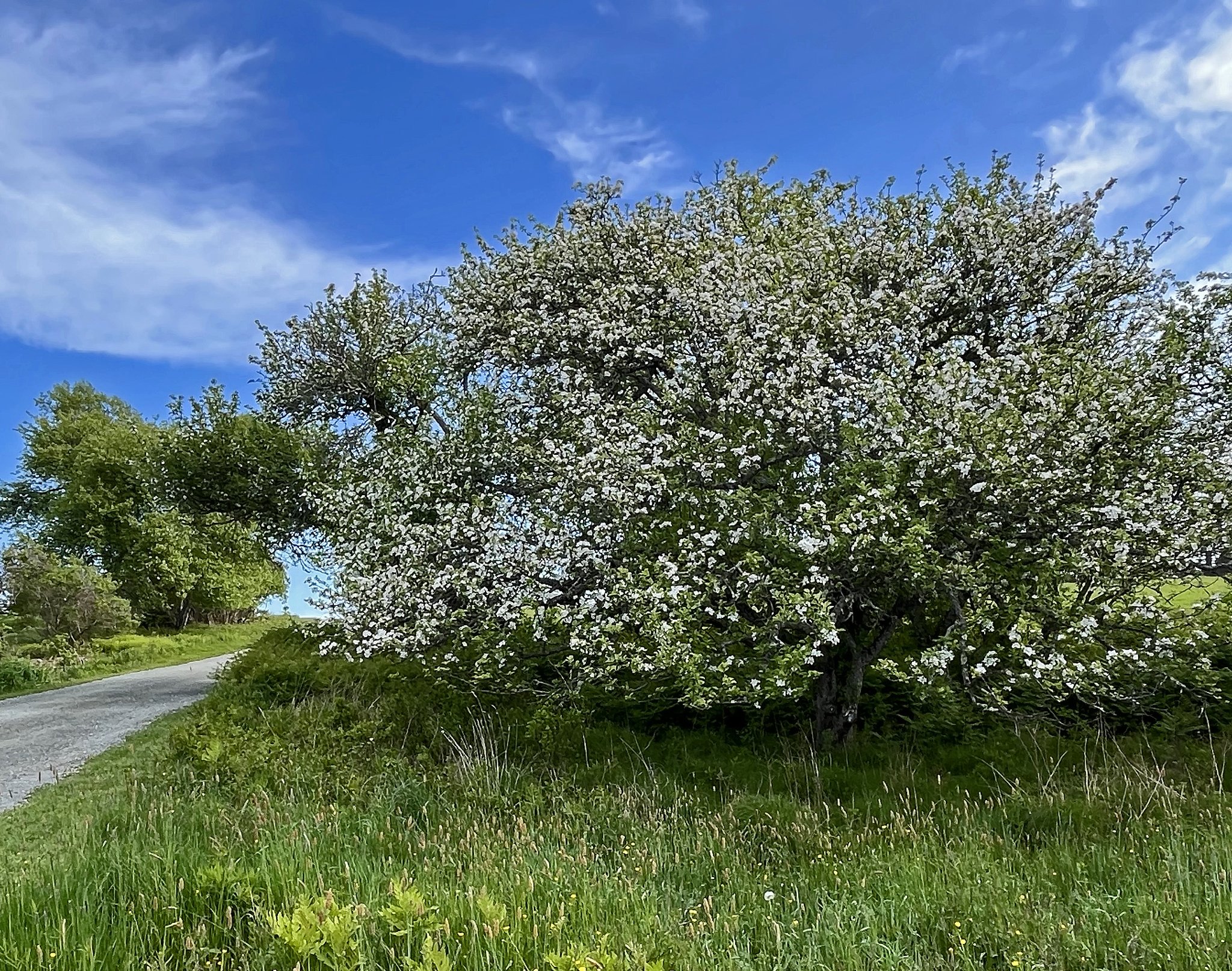
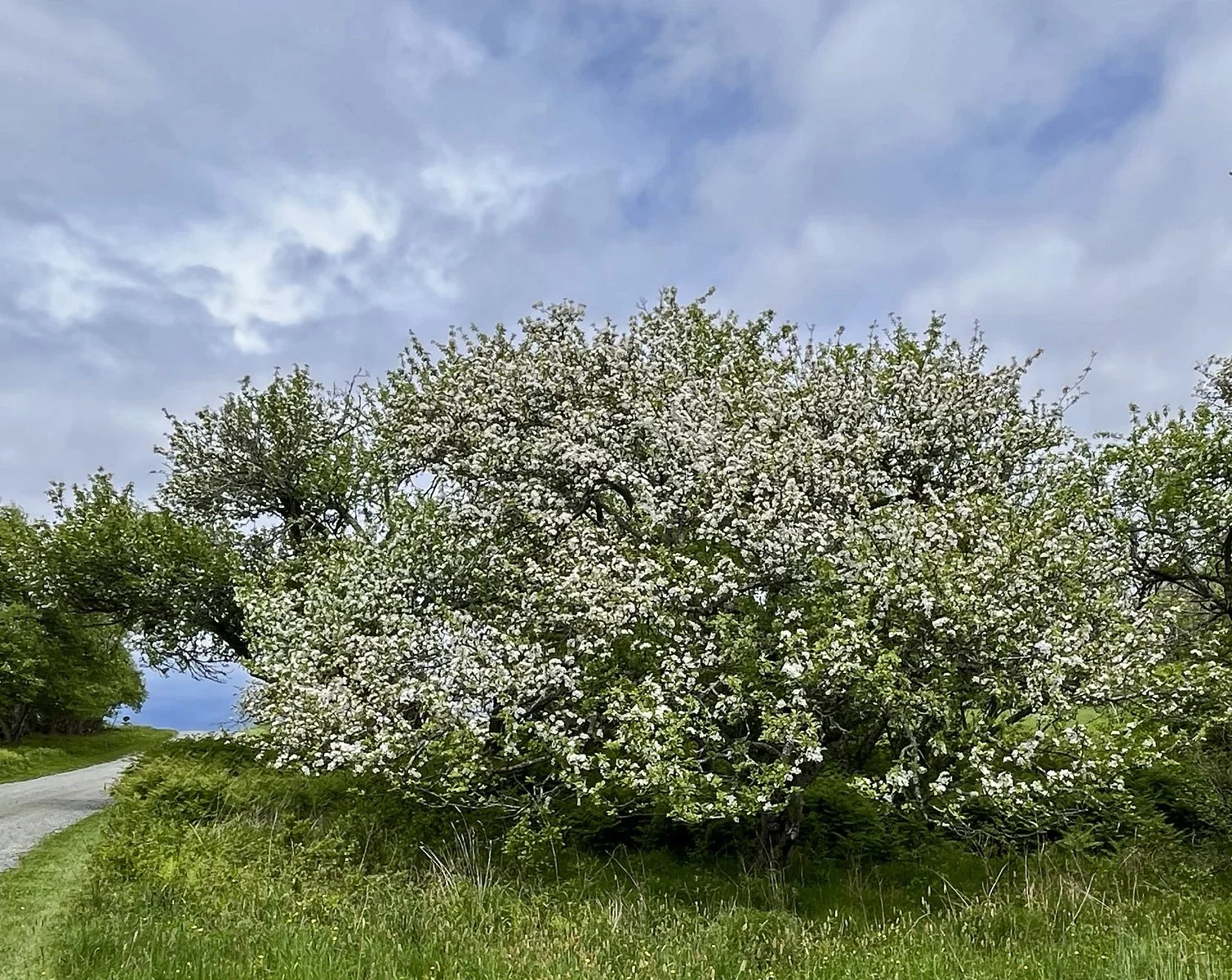
The 2026 apple season for both “wild”-cider and orchard-edible fruit looks like it might be even better than expected.  One reason is that apple trees usually alternate annually between light crops and bumper crops, and 2025 apparently was a light year.

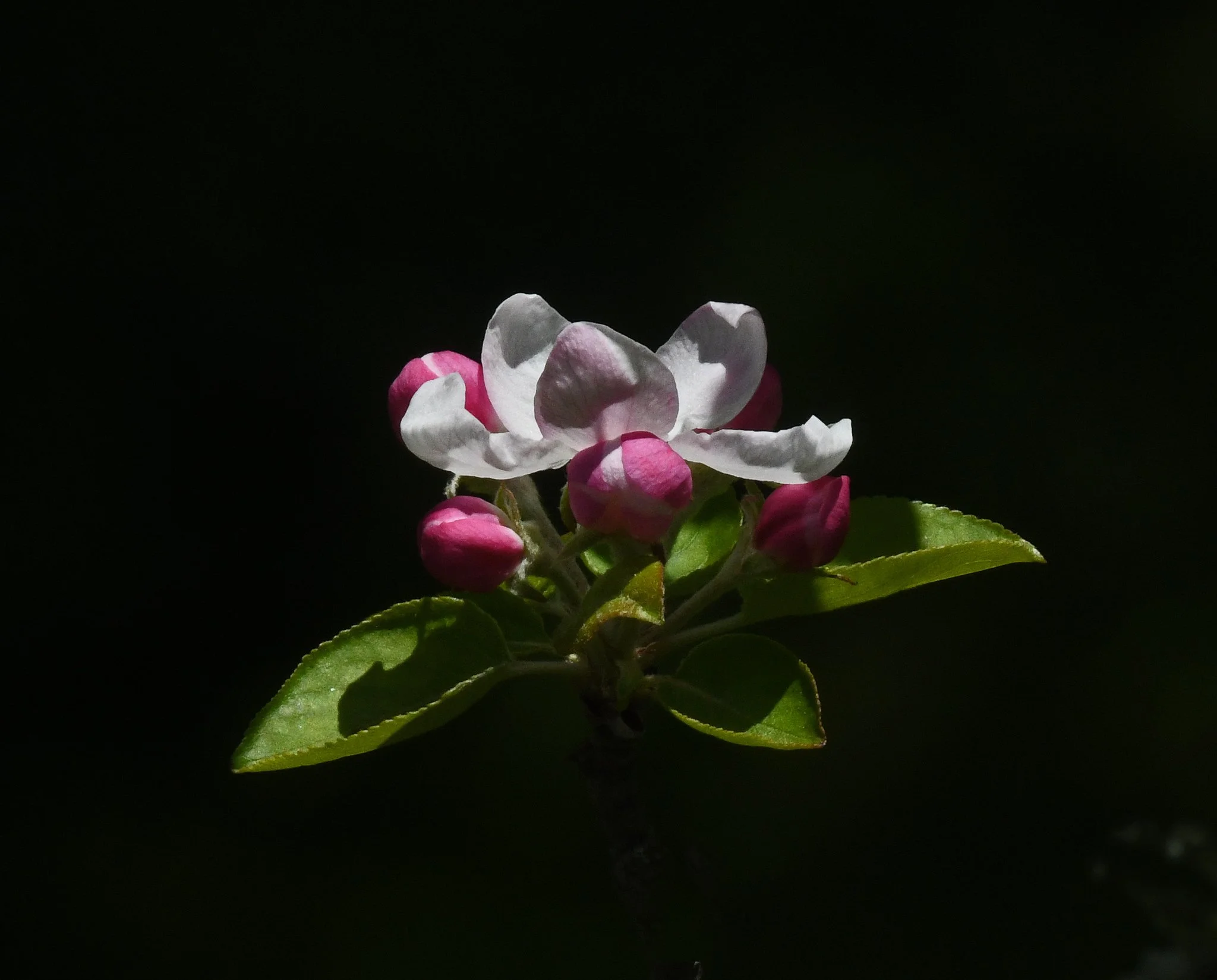
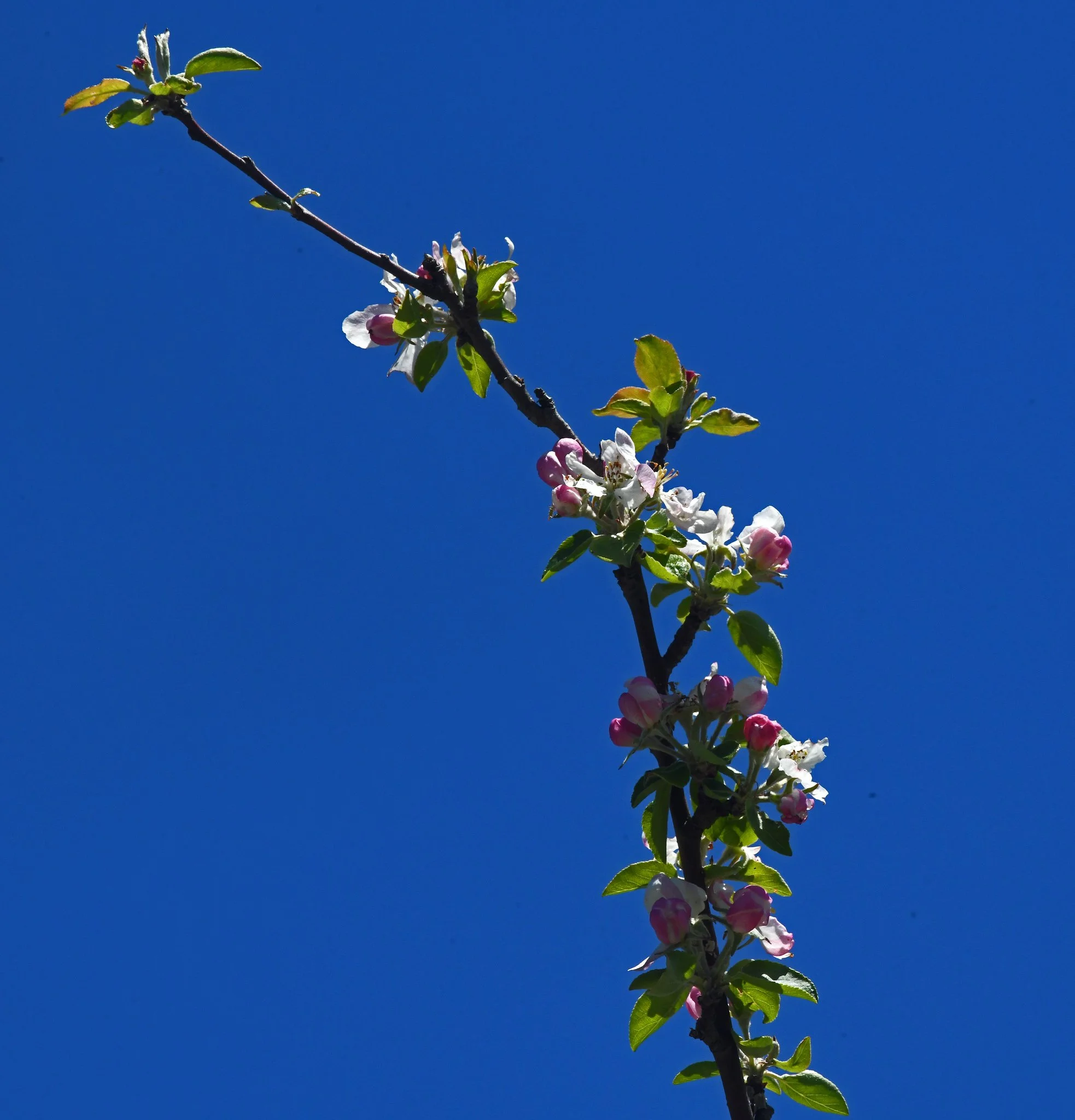
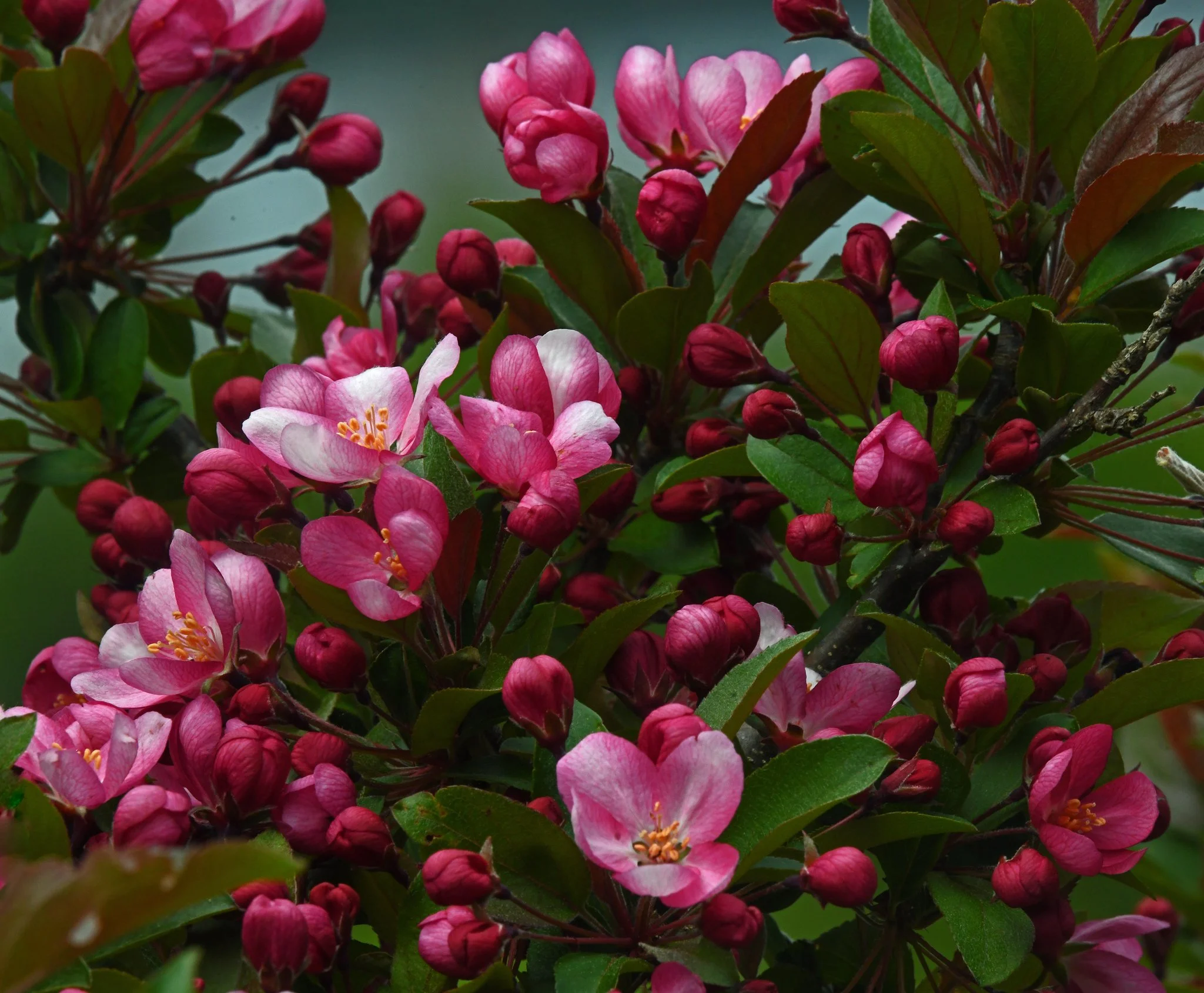
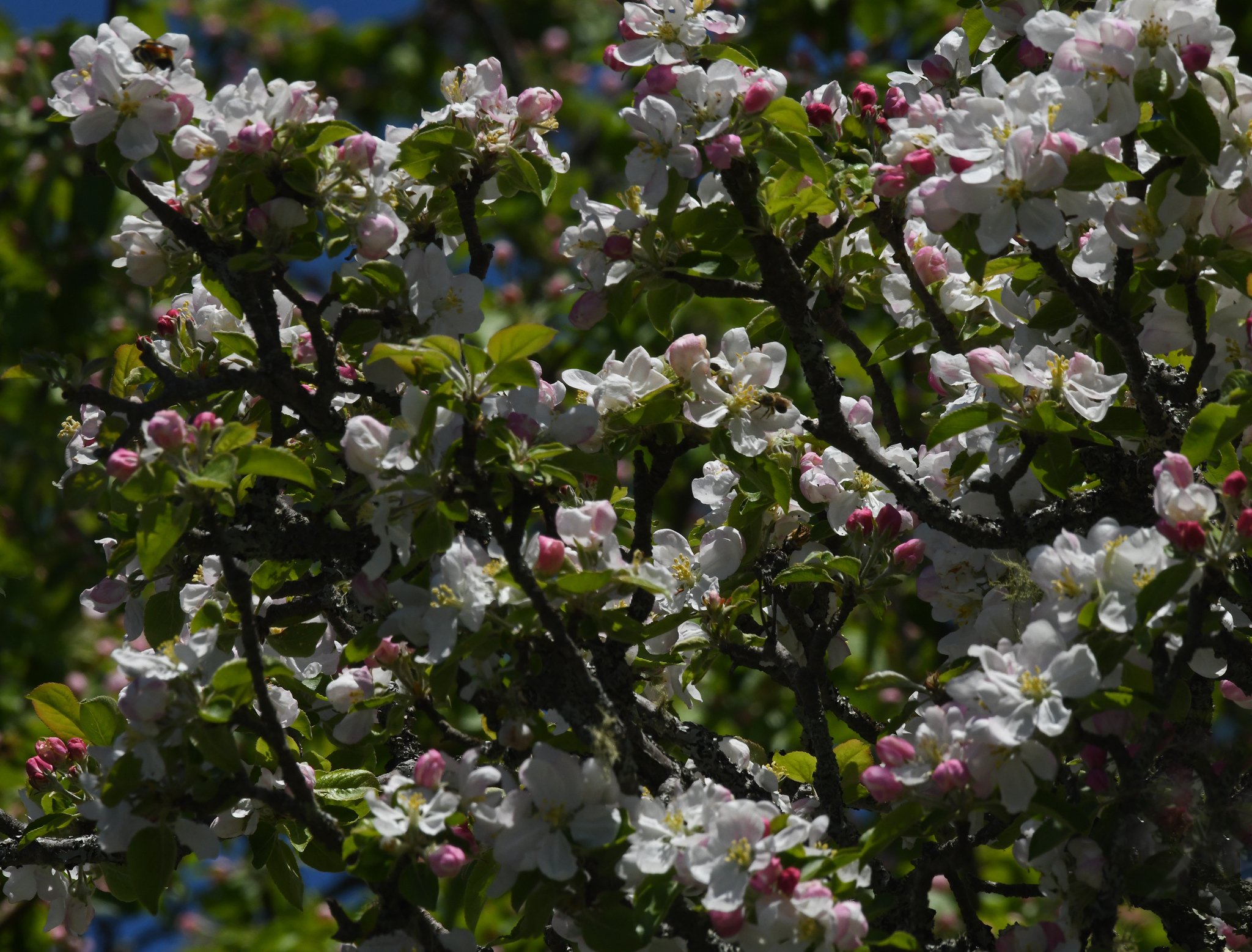
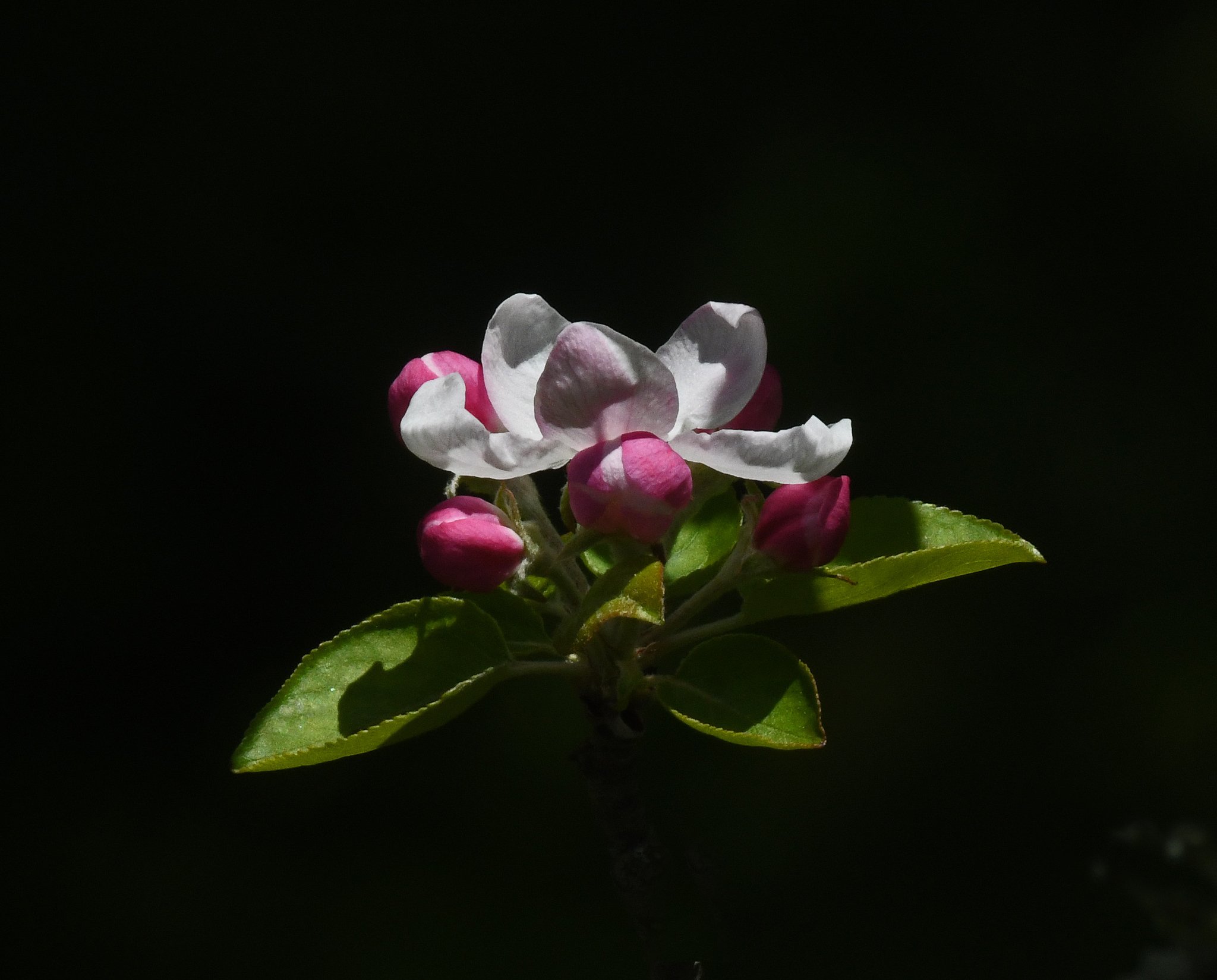
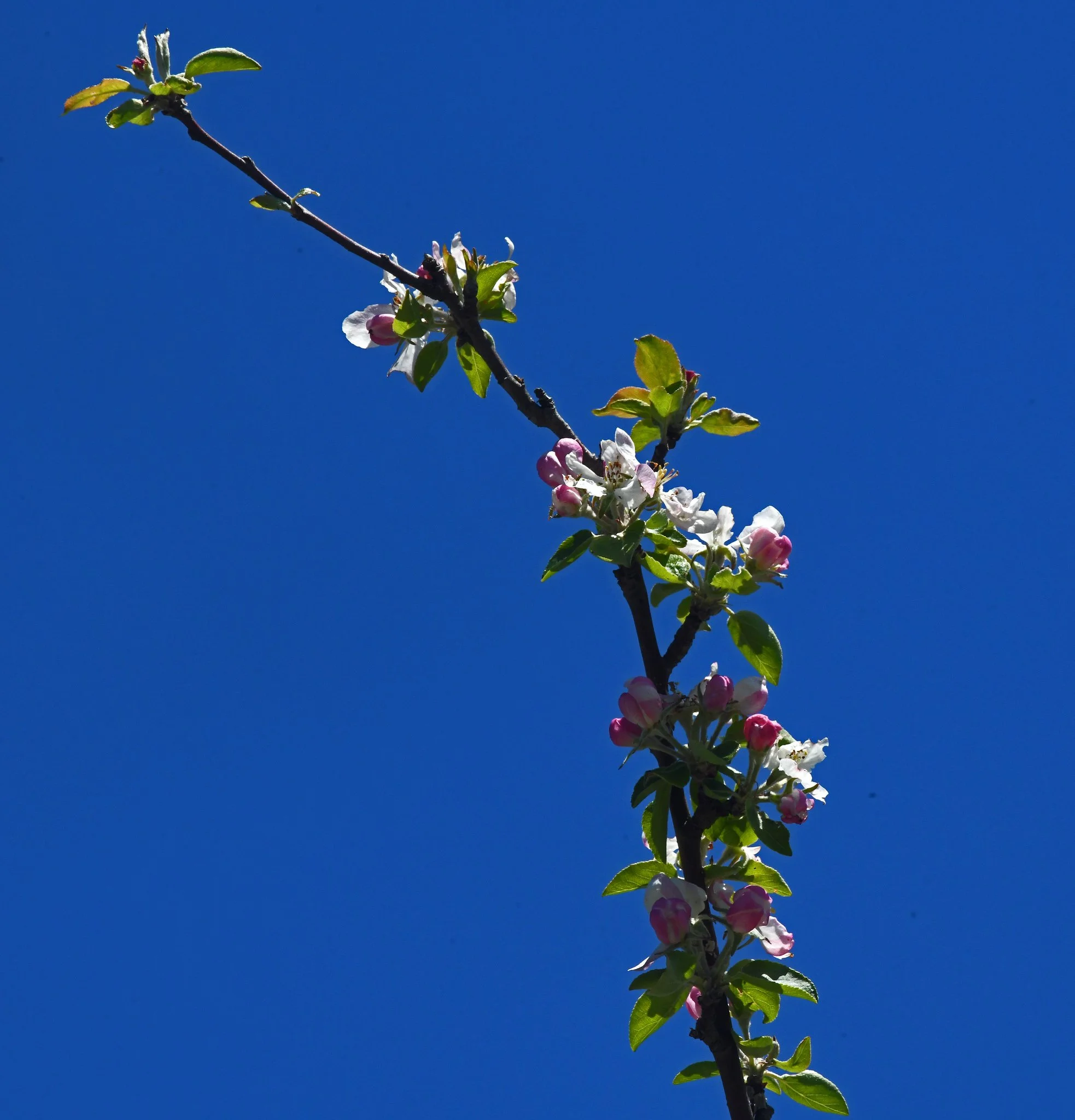
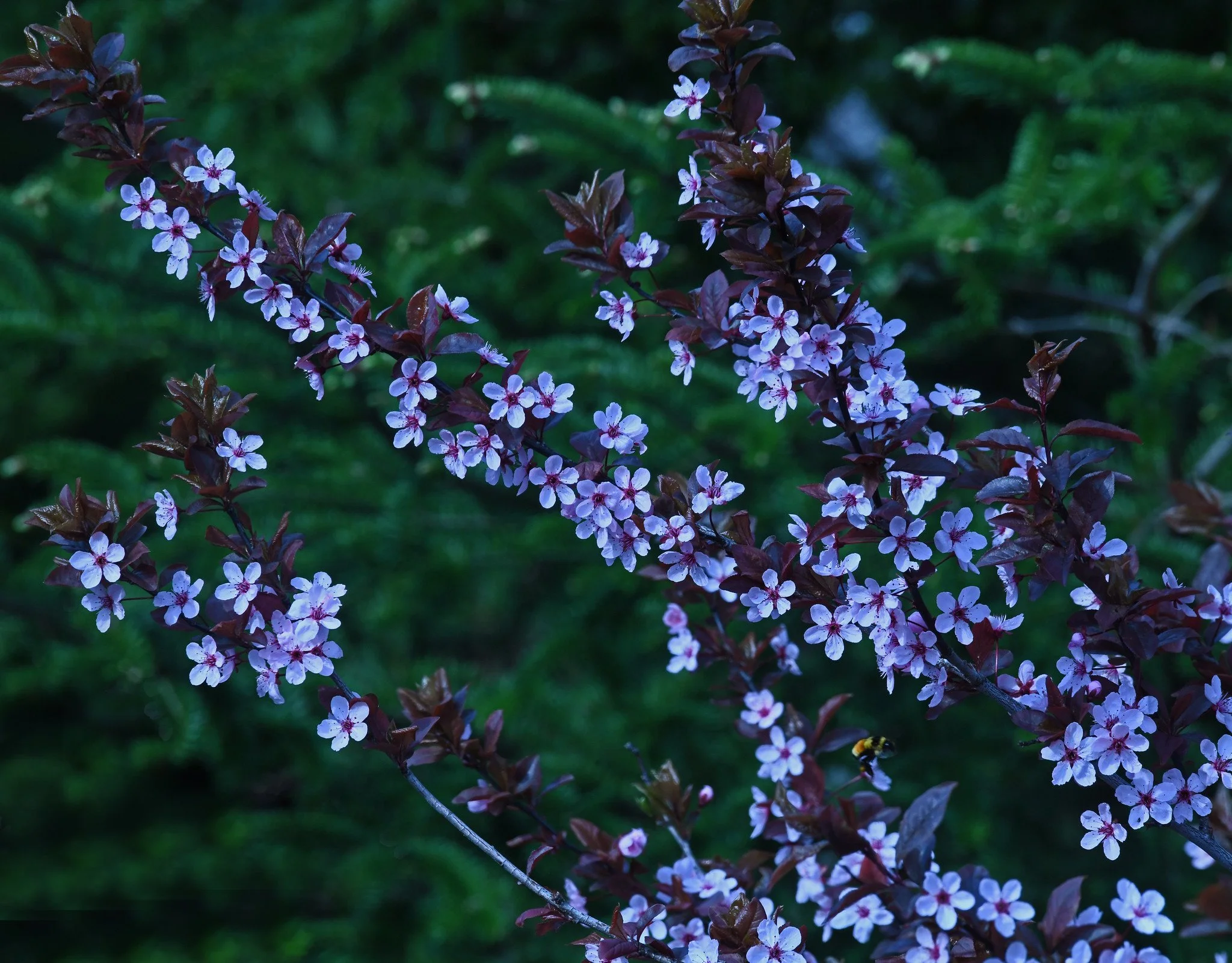
A more evident reason for optimism is what we’re seeing with our own eyes. The “wild” apple trees, such as this one, are flush with blooms. Yet, they were planted for cider over 100 years ago and their fruit hasn’t been harvested for human use within memory. In addition, the individual blossoms on those trees are plush and heavy:

When the delicate white and pink petals on the blooms drop, the base of the flowers will slowly enlarge into the apples that will fall in autumn and become wildlife food and fertilizer.

I tried an apple from this tree once; it tasted like turpentine smells. Although beauty might be in the eye of the beholder, it’s not always in his mouth. (Images taken in Brooklin, Maine, on May 26 and 29, 2026.)
Comment

Comment

In the Right Place: At BBY, XI

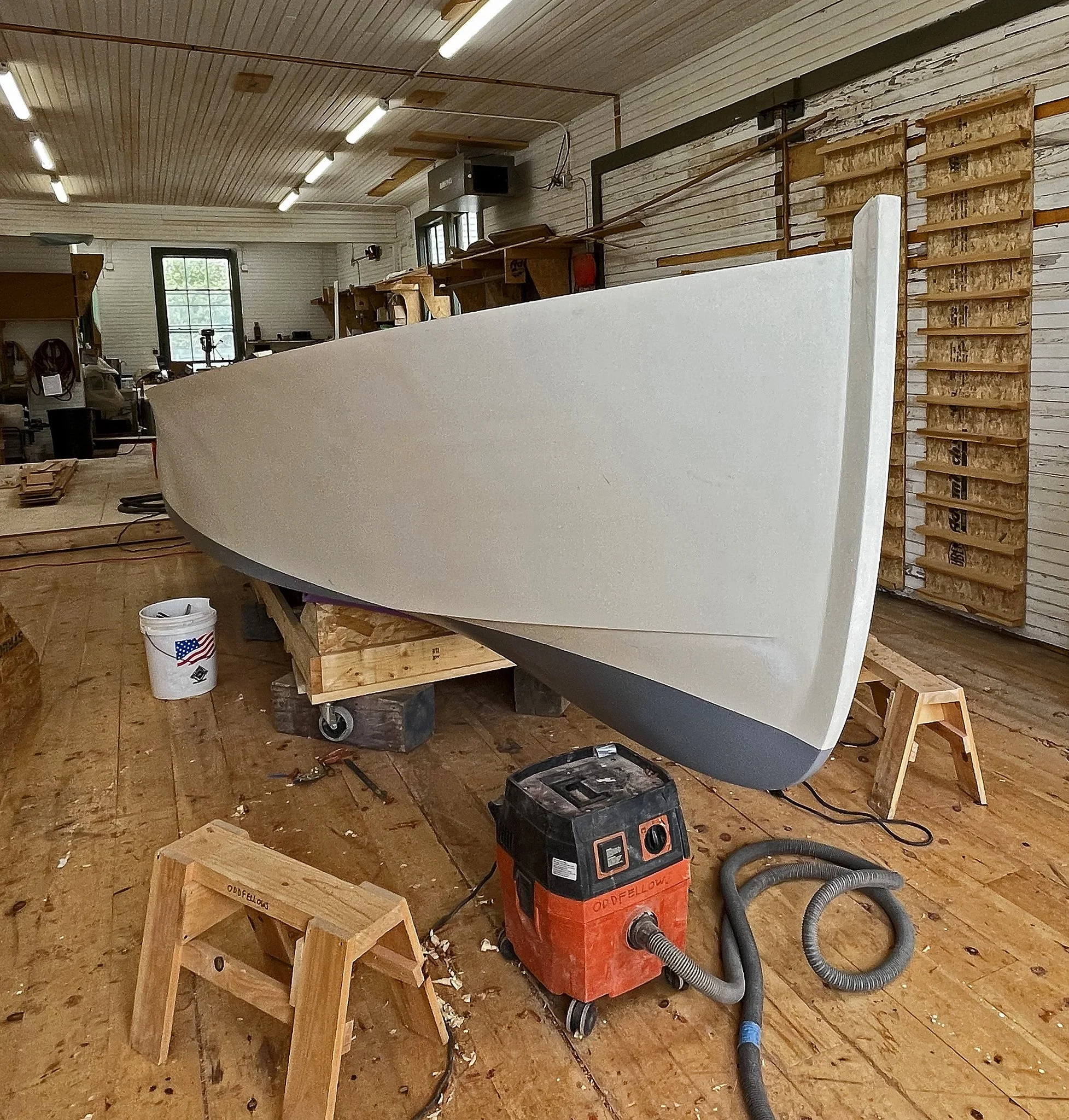
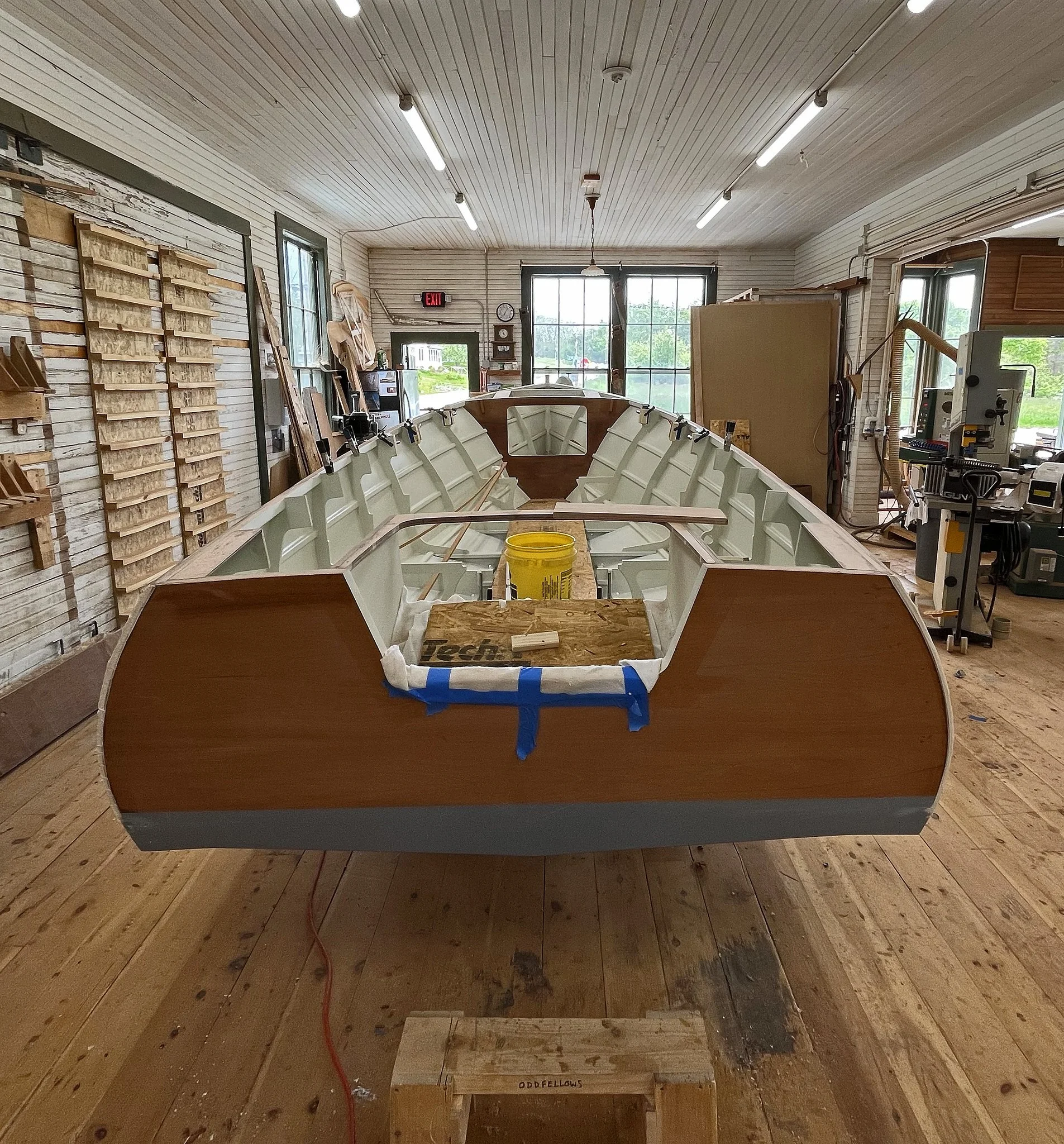
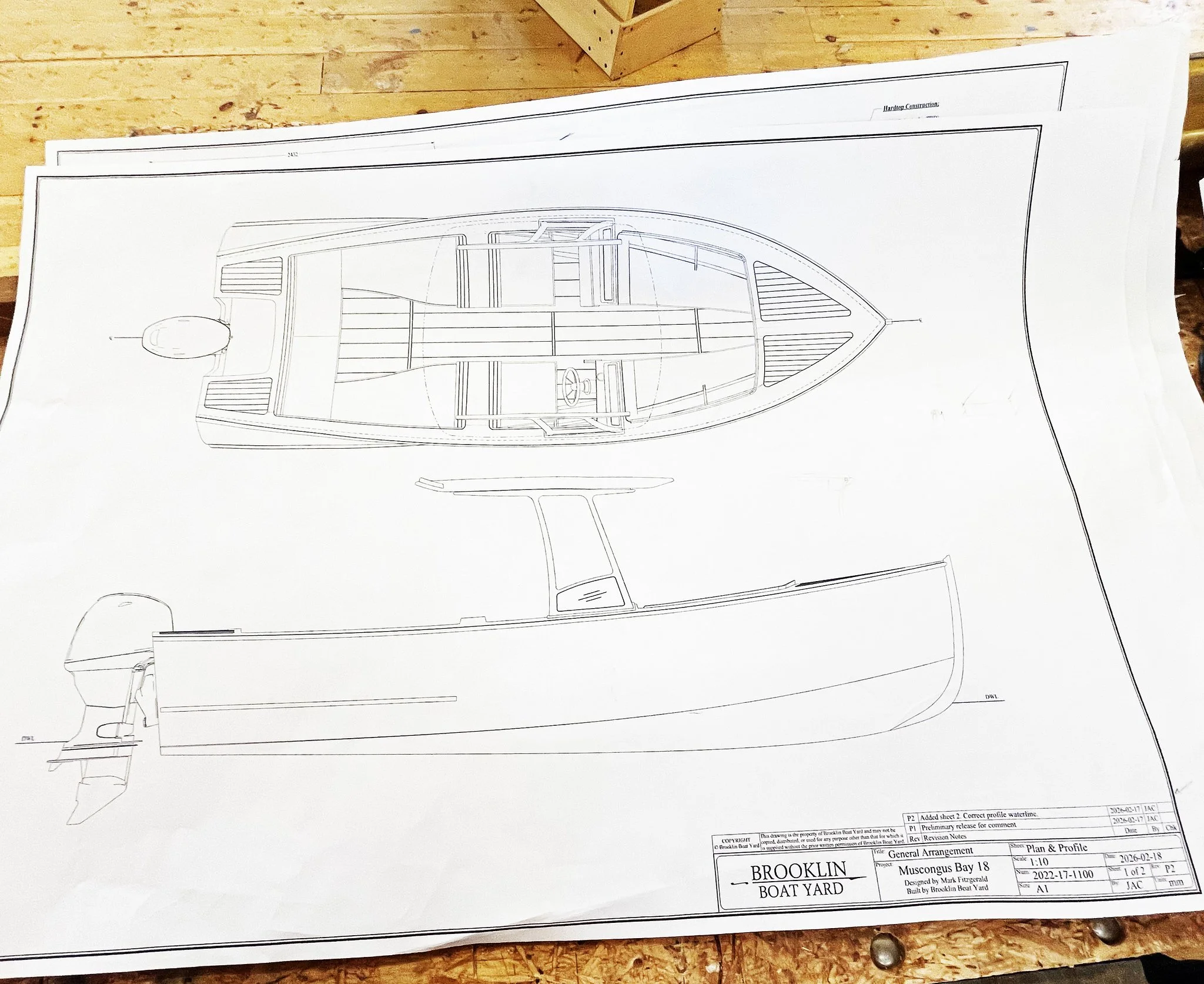
Here’s the Muscongus Bay 18 (-foot) runabout that we’ve been following at the Brooklin Boat Yard. She’s back in the auxiliary shop after being primed.

She soon will have some more woods applied and all of her special woods brightened. The Honduran mahogany on the boat’s transom (back/stern panel) and elsewhere will gleam like the finest furniture. The boat’s sole (finished inside floor) and other areas will be hard and handsome teak.

Here’s another copy of designer Mark Fitzgerald’s plans for the runabout i for reference:

It’s reassuring to be reminded that some extraordinarily good things still are being done by Americans who know what they’re doing. We are not all corrupt bunglers and craven holders-on who are trying to parasitically consume America from within.

(Photographs taken in Brooklin, Maine, on May 28, 2026.) 
Comment

Comment

In the Right Place: Is Beauty in the Eye of the Beholder?

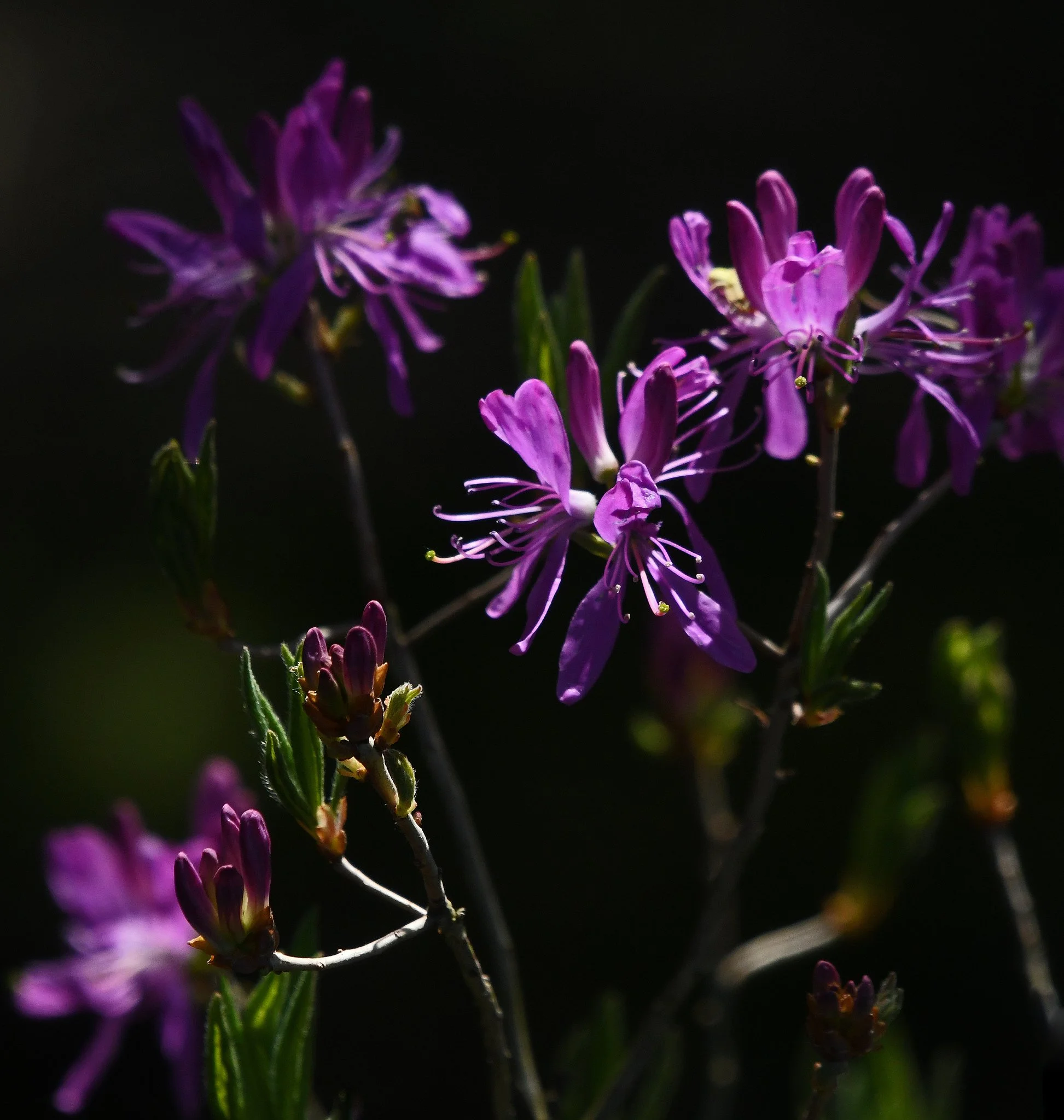
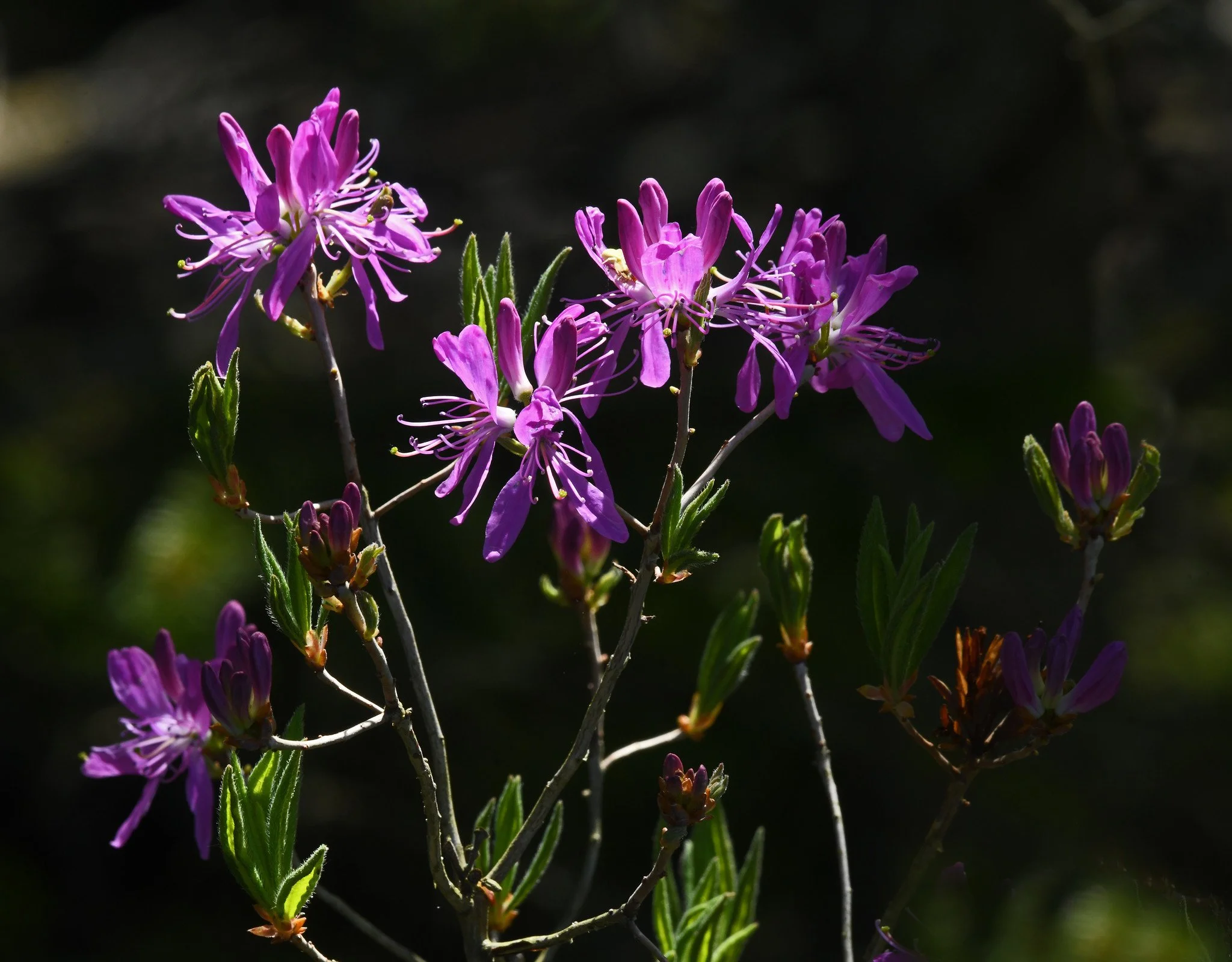
Elusive rhodora flowers are quietly brightening up the wetlands in out-of-the way places where butterflies and bees will find them, but where few humans trod. In his poem “The Rhodora” (1847), Ralph Waldo Emerson uses a poet’s sudden discovery of wild rhodora flowers to conclude that beauty doesn’t need a viewer: “beauty is its own excuse for Being.”

Botanically, rhodora (Rhododendron canadense) is native to the bogs of northeastern United States and Canada. It’s a slight, deciduous shrub that bursts into unusual, stunning purple flowers in the spring before its leaves emerge. The flowers don’t last long, but they do provide life-giving nectar to several rare pollinators. Once its beautiful flowers fade and its skimpy grayish-green leaves appear, rhodora becomes mostly unnoticeable floral background.

See also the image in the Comment space. (Images taken in Brooklin, Maine, on May 26, 2026.)
Comment

Comment

In the Right Place: Ozzie & Harriet, IV

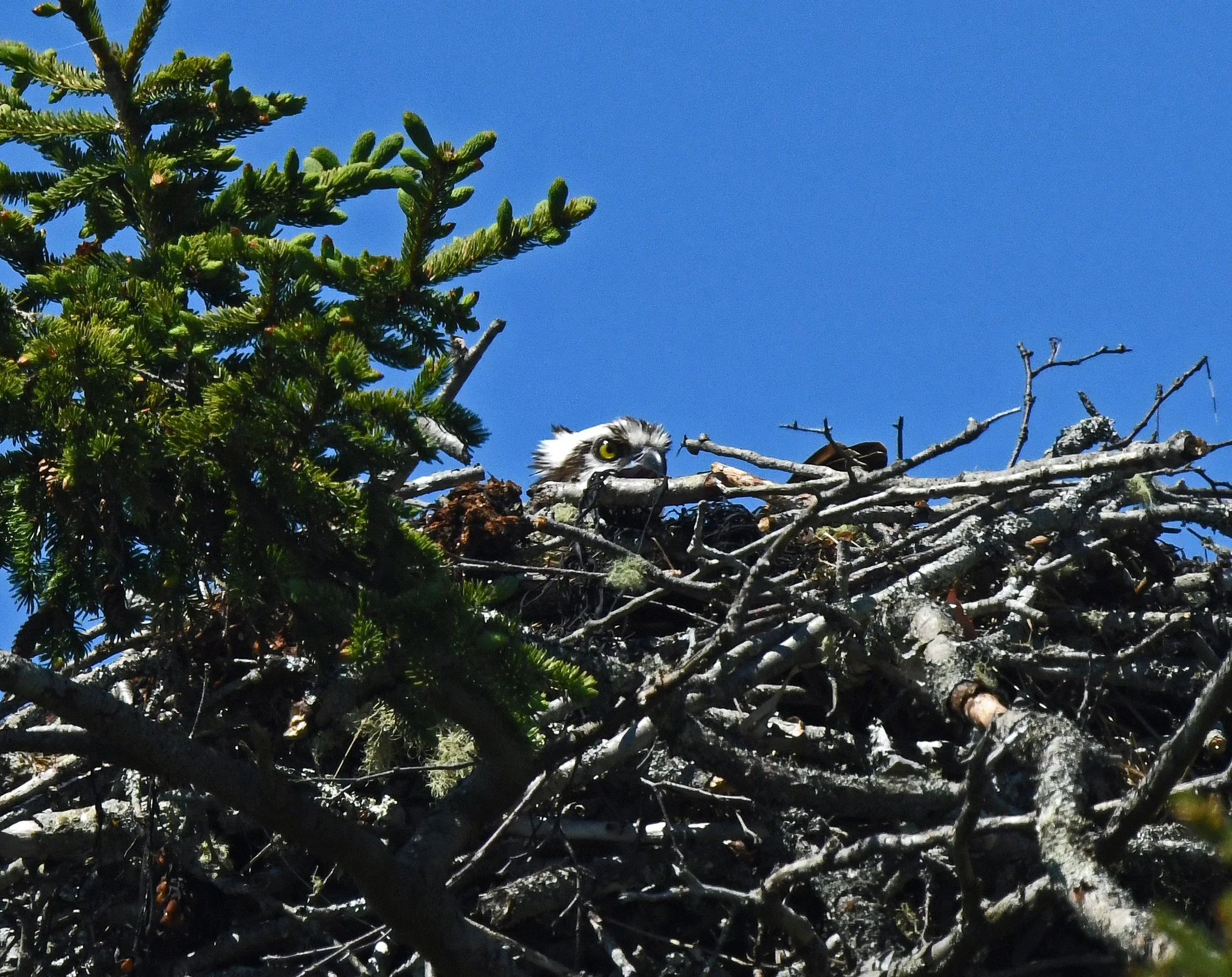
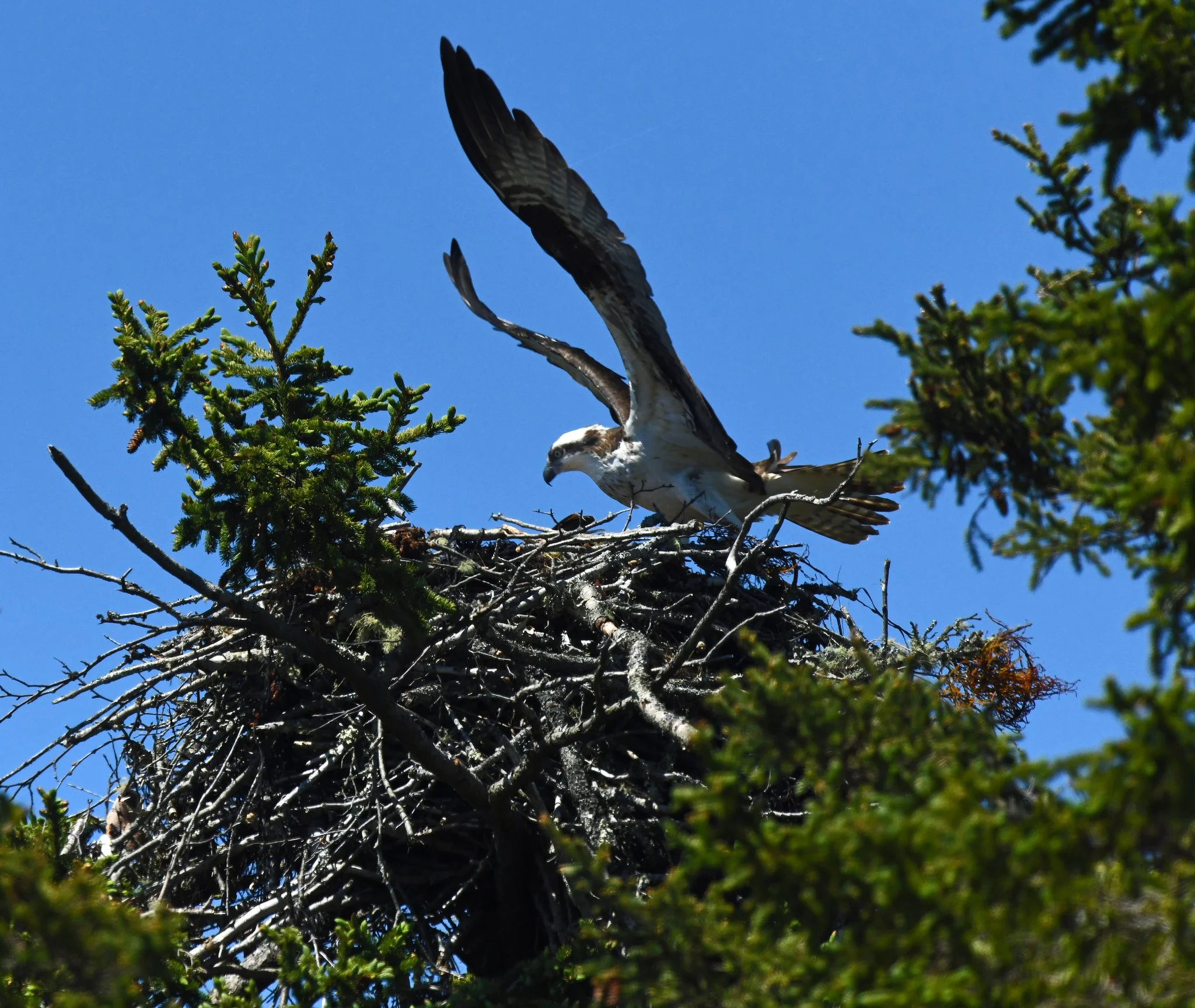
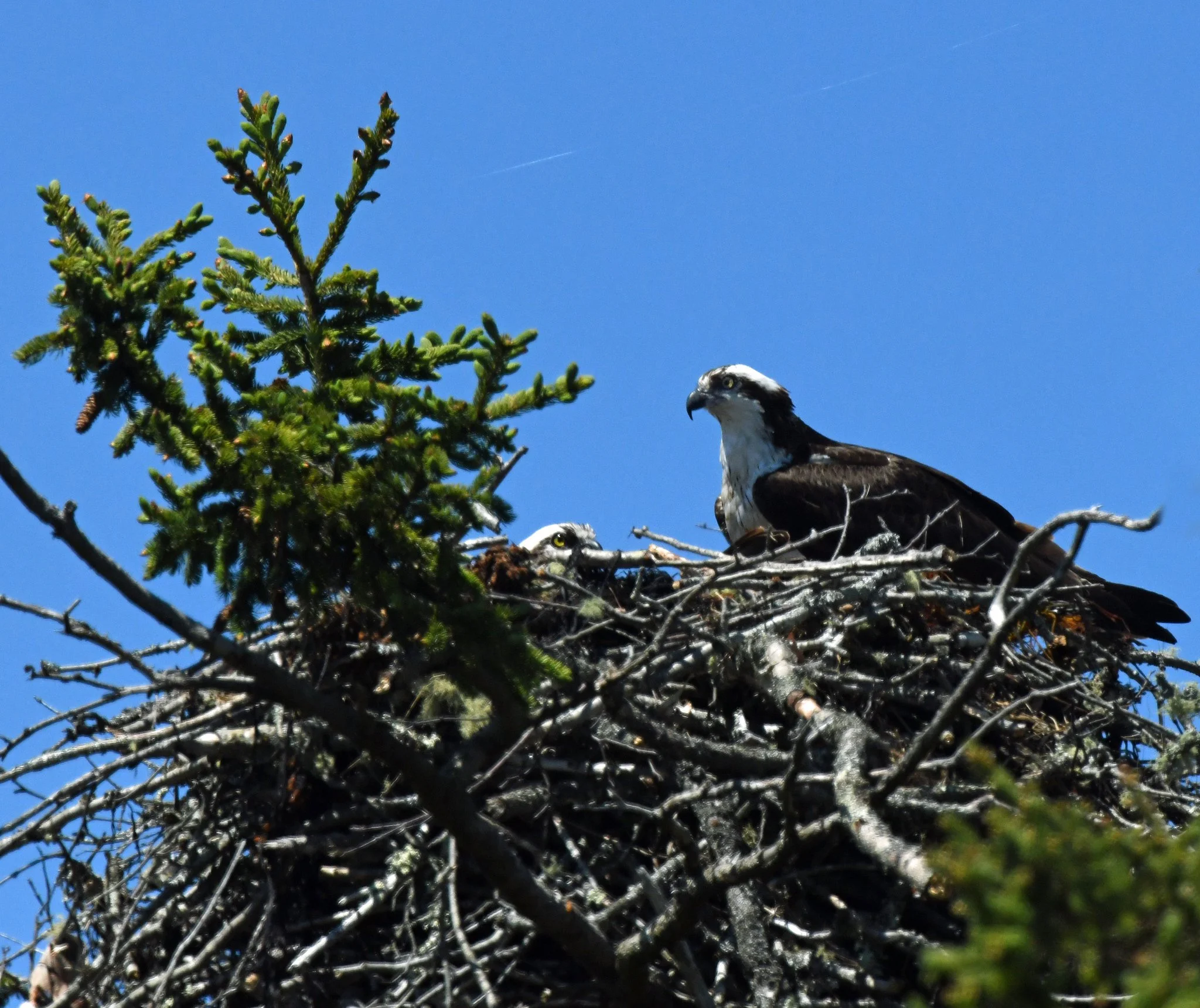
Look closely and you’ll see Harriet yesterday, laying and incubating eggs (I hope). She keeps her fierce head up to look around constantly for danger; her big wings are spread as cover from the elements; her soft underbelly is gently lowered over the eggs, keeping them at the right temperature; and, her tail is pitched up, seemingly just because she wants to look perky in her pregnancy.

Soon (I hope), Harriet’s sharp beak, which was designed to kill and rip fish, will be picking flecks of fish off a still-wriggling body and delicately placing them in the wide-open mouths of her insatiable, fuzzy, prehistoric-looking offspring.

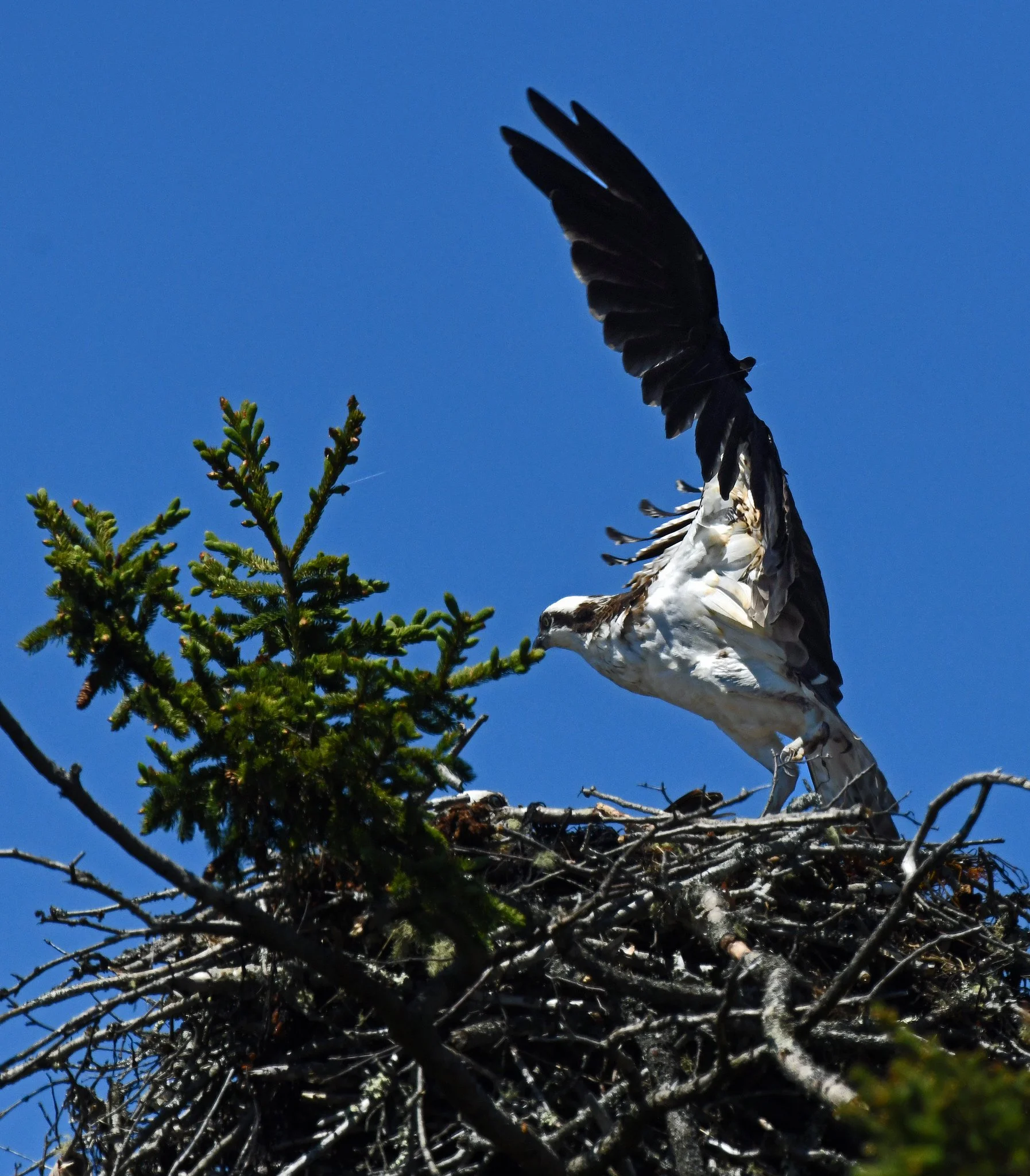
Below, you’ll see Ozzie returning to the nest yesterday, as he usually does several times a day. On at least one of those visits, he’ll bring a good-sized, but headless, fish for Harriet – they’re usually pogies (Atlantic menhaden) from which Ozzie has ripped out and eaten the nutritious brains for his own meals.

Sometimes, Ozzie brings a branch or moss to fix up the nest. Sometimes, he takes over the egg-sitting while Harriet takes a breather or drops down to a nearby pond for a drink or bath. At other times, Ozzie just stops by momentarily and exchanges chirps with Harriet, then flies off. There also are times when he’ll swoop in at great speed as Harriet shrieks an alarm about an intruder.

The literature indicates that ospreys usually lay 2 to 4 eggs about 3 days apart. They hatch in about 4 to 5 weeks in the same order that they were laid. In this nest, we usually see the youngsters in early June. They grow extraordinarily fast.  Within a month of hatching, they’re often 75 percent grown. (As you know, they have to be strong enough to migrate thousands of miles by fall.)

In this nest, we usually have three fledglings, but sometimes raptor life can be wrenching. Last year, the nest was attacked several times by rogue bachelor ospreys. Ozzie drove them off, but not before the last one of them gave him a significant chest wound. Harriet flew off then before finishing incubation, and the nest failed to produce fledglings.

As the numbers of Ospreys and bald eagles increase, the fights over large, established nests in prime fishing locations increase. But it’s not only intruders. Predator problem-solving can be chilling. One year when the fish were running low, Ozzie and Harriet had four hatchlings. During feeding one day, the oldest and largest hatchling attacked the youngest and smallest, grabbed it by the back and threw it out of the nest. Brotherly love is not big with birds of prey.

(Images taken in Brooklin, Maine, on May 26, 2026.)
Comment

Comment

In the Right Place: At BBY, X

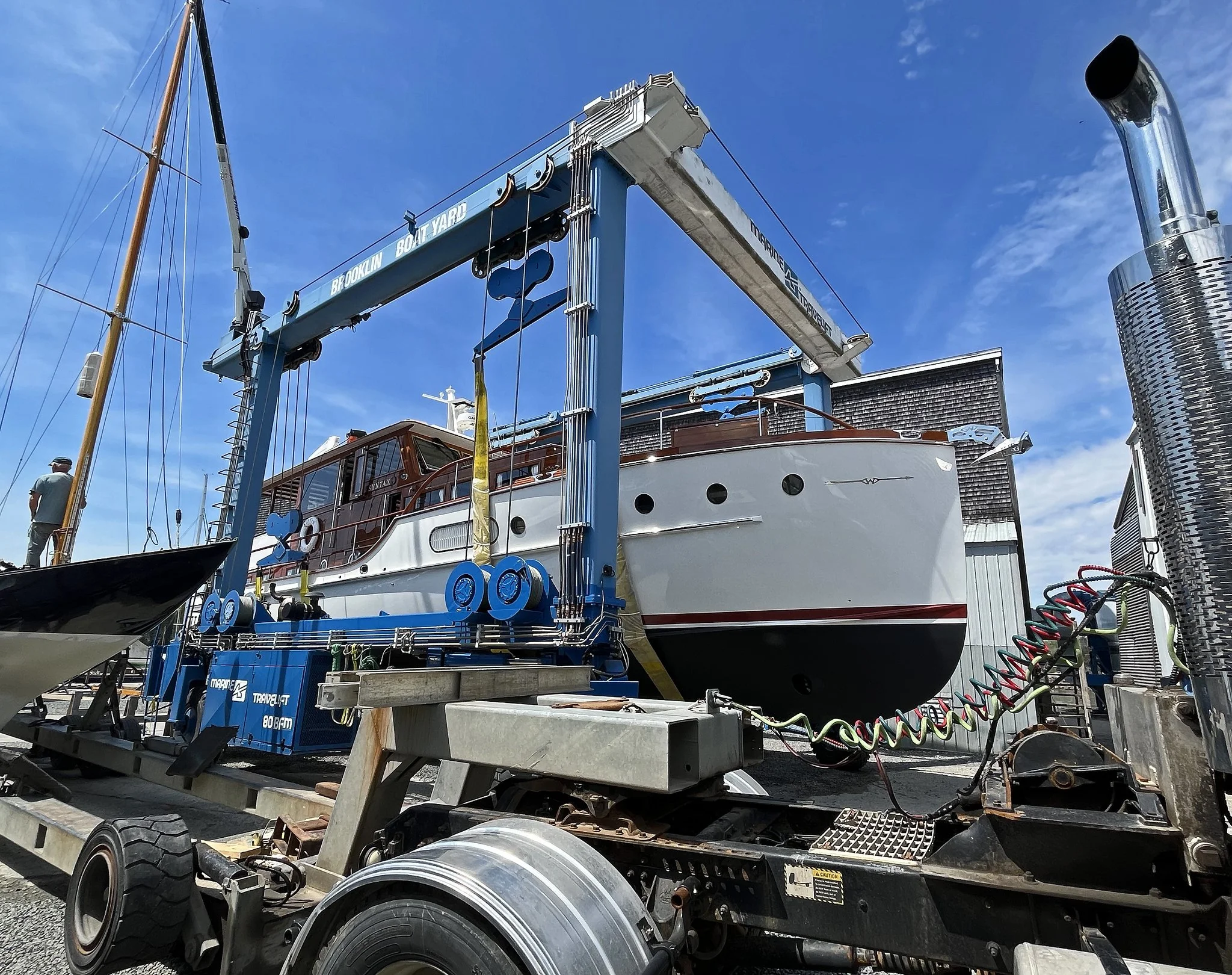
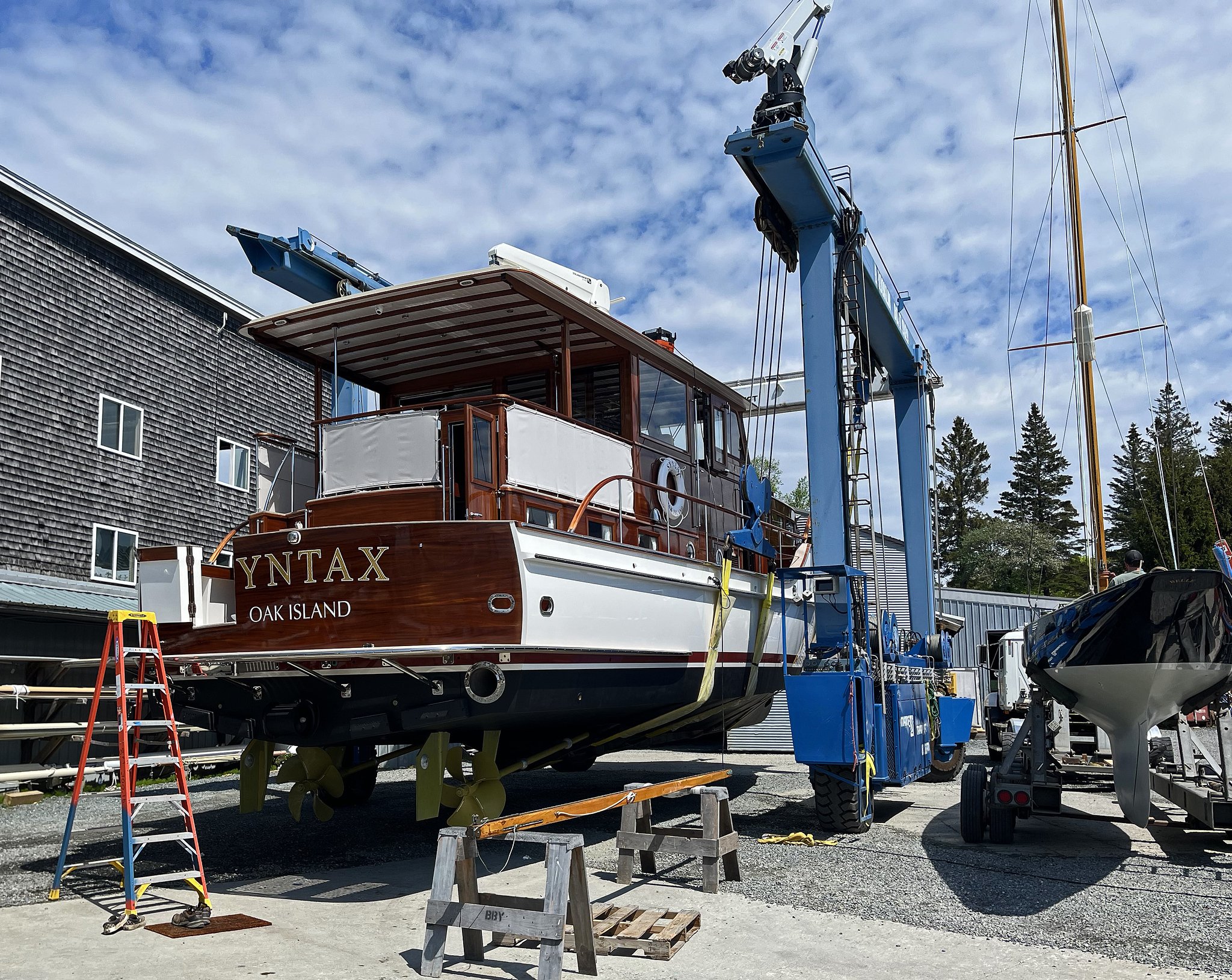
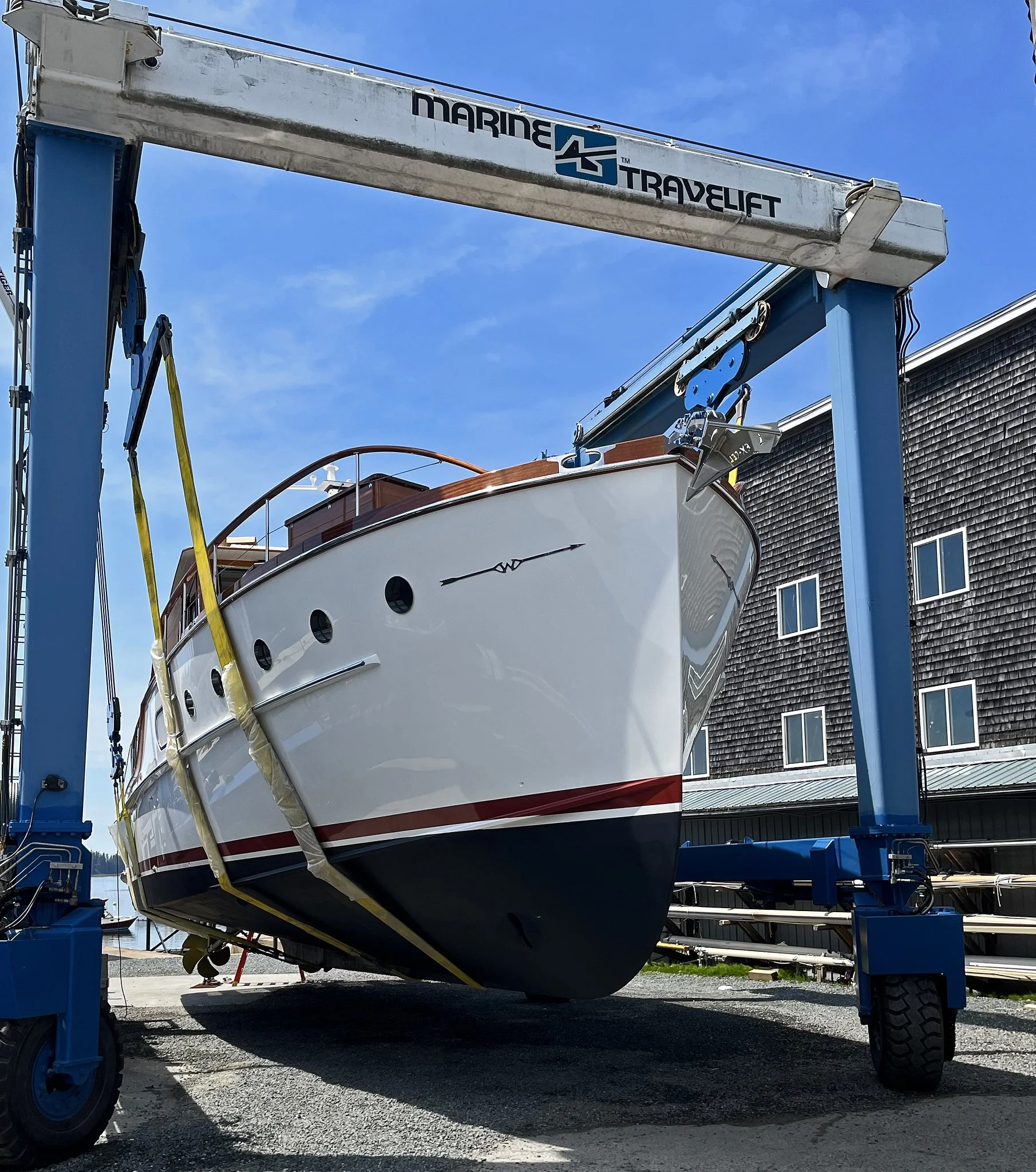
Here we’re watching SYNTAX being returned to the water at the Brooklin Boat Yard last week. Seeing her while US-Cuba relations had returned to front pages conjured up memories of prize-winning author Ernest Hemingway and his 1934, 38-foot Wheeler sportfishing boat, PILAR.

SYNTAX, a 55-foot Wheeler, reportedly was designed to capture the adventuresome look, luxury and performance of PILAR, as enhanced by today’s materials and mechanics. She was built by BBY in 2024 with the latest refinements.

Some research on Hemingway’s jaunty boat reveals that PILAR had immense fuel tanks and two gasoline-powered motors. She had a 75-horsepower engine for cruising and a 40-hp one for casting and trolling for the massive, big-game fish that Hemmingway loved to stalk and fight – especially swordfish, bluefin tuna, and blue and black marlin.

“Pilar” apparently was Hemingway’s pet name for journalist Pauline Pfieffer, his second wife. It’s also the name of the brave female guerilla leader in his heralded 1940 book “For Whom the Bell Tolls. PILAR, the boat, was last homeported in Cojimar, Cuba, a fishing village east of Havana.

SYNTAX reportedly is named as a tribute to Hemmingway’s distinctive and clear writing voice. It also seemingly reflects the boat’s natural blend of 1930’s brawny flair with modern technology. Among other updates, SYNTAX reportedly has twin 1000-hp V-8 diesel engines (2000-hp output), a 960-gallon fuel tank and a Starlink communications system. Her indicated home port is Oak Island, a small island in Boothbay Harbor, Maine.

(Images taken in Brooklin, Maine, on May 20, 2026.)
Comment