Comment

In the Right Place: At BBY, XV

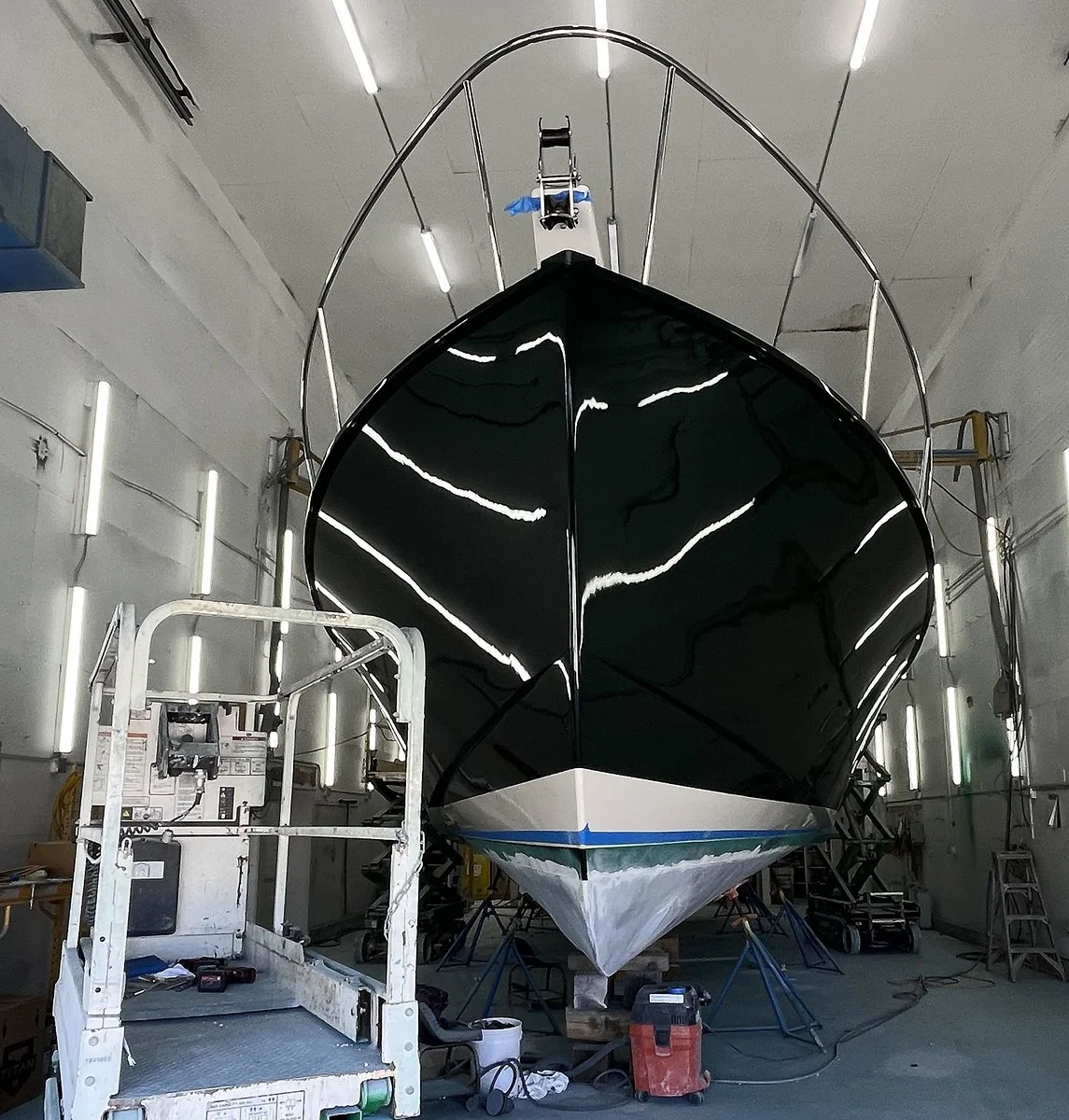
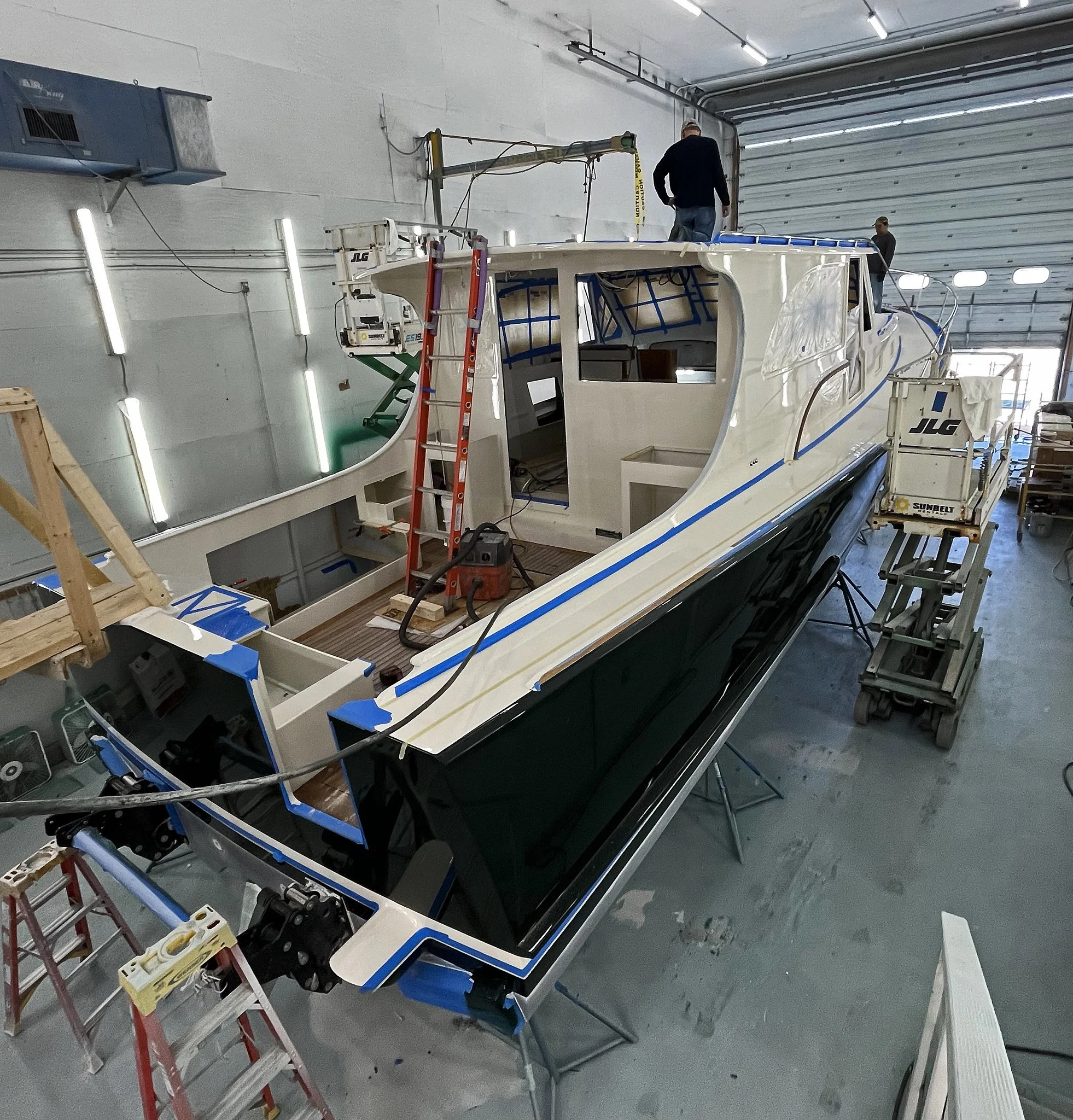
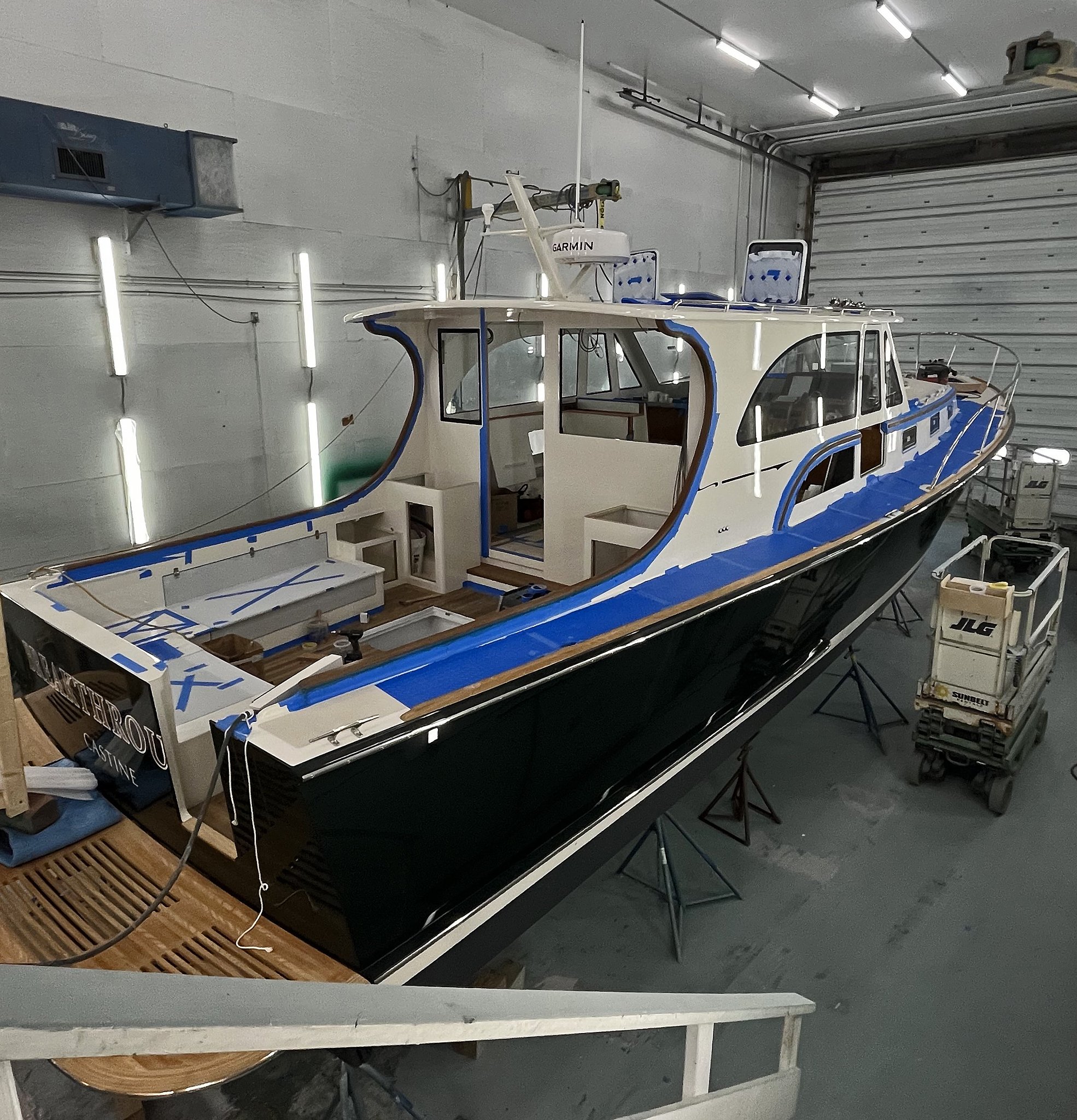
We finally have a name for this 47-foot Express Cruiser that we’ve been watching being built at the Brooklin Boat Yard. She’ll be christened BREAKTHROUGH, reportedly a reference to her innovative design and latest systems. She’ll be home-porting in Castine, Maine.
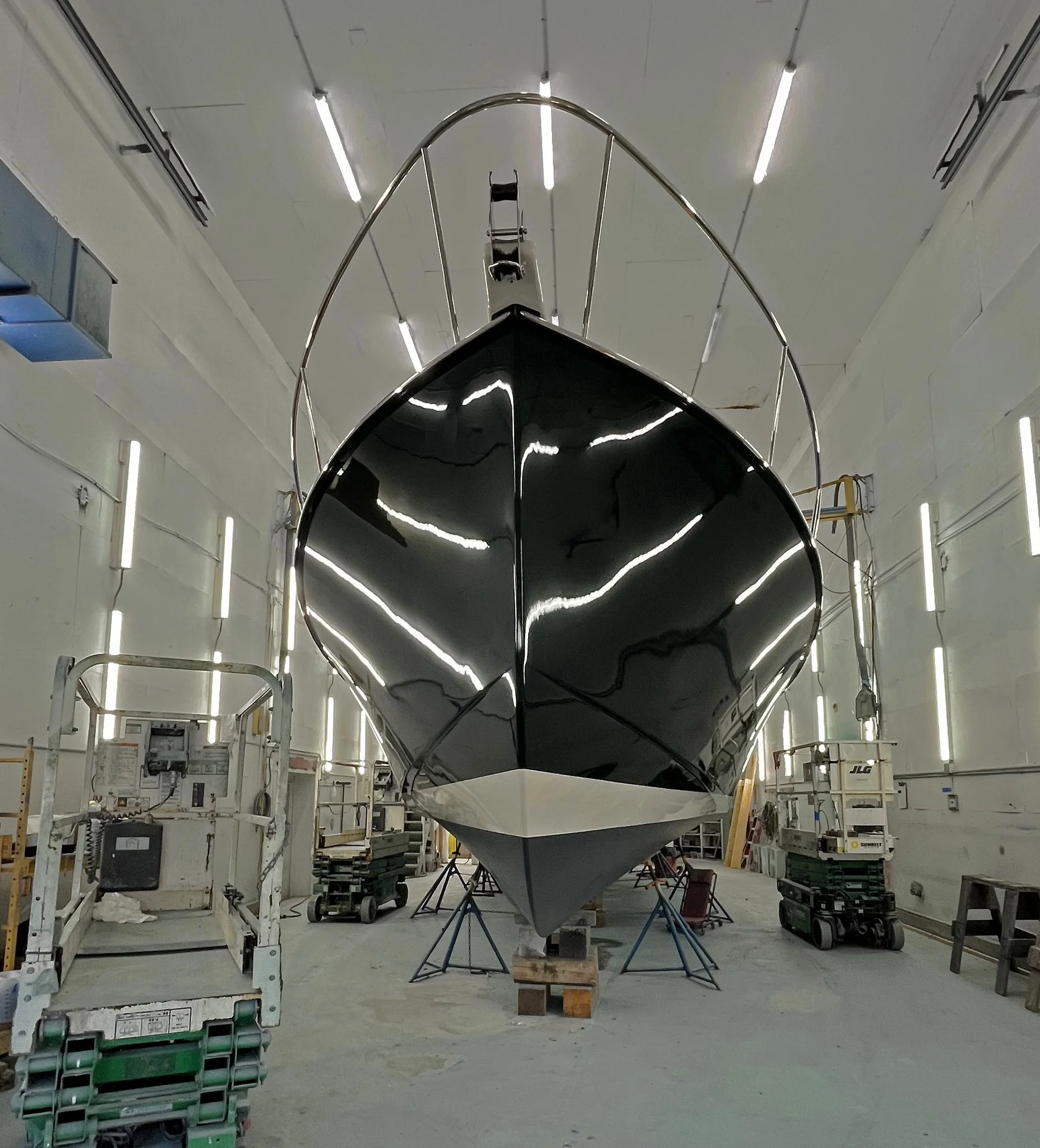
I’m told that BREAKTHROUGH will be undergoing her first trials in our waters on July 15, barring unforeseen circumstances. A hull detail:
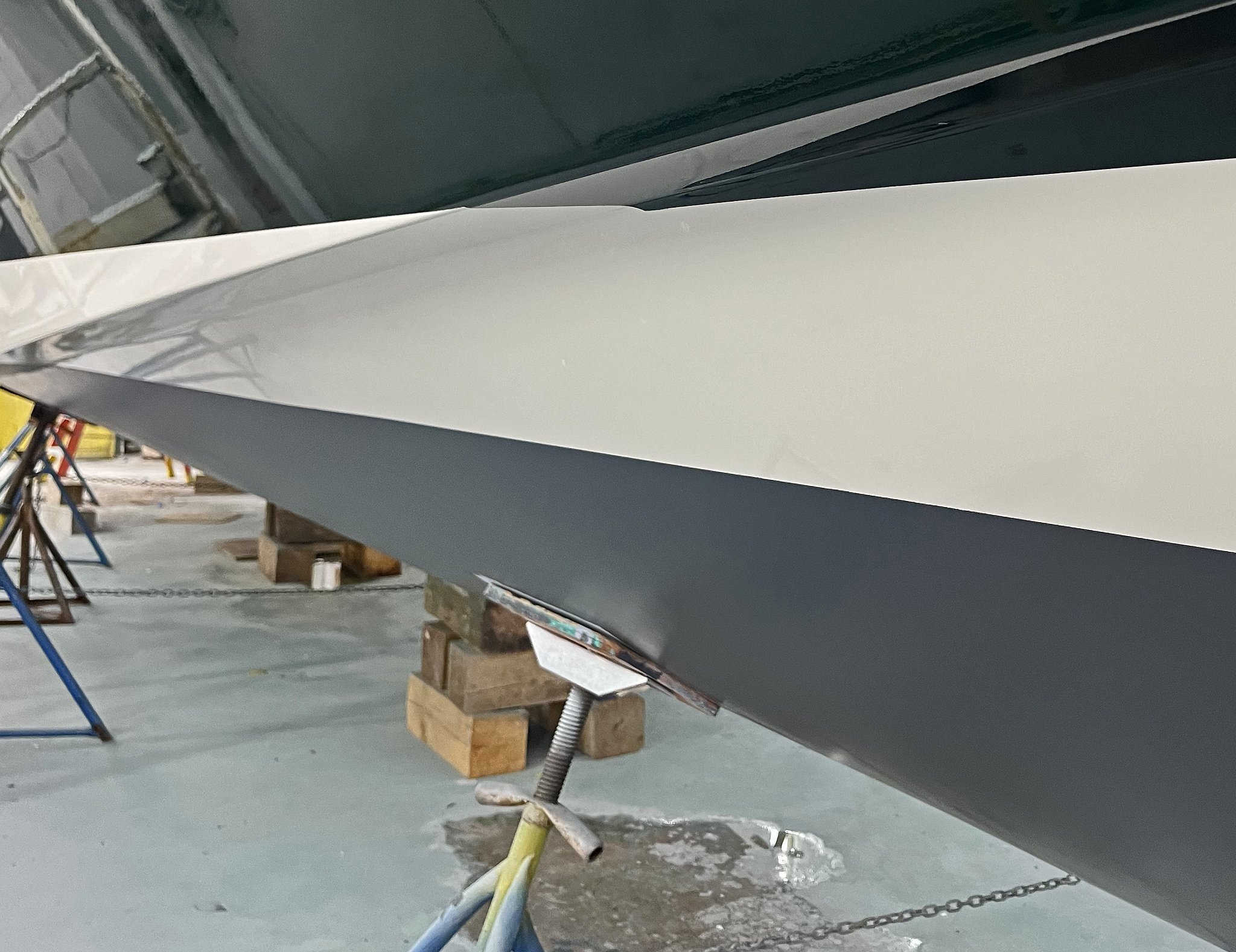
(Images taken in Brooklin, Maine, June 28, 2026.)
Comment

Comment

 In the Right Place: Passing the Tests of Time

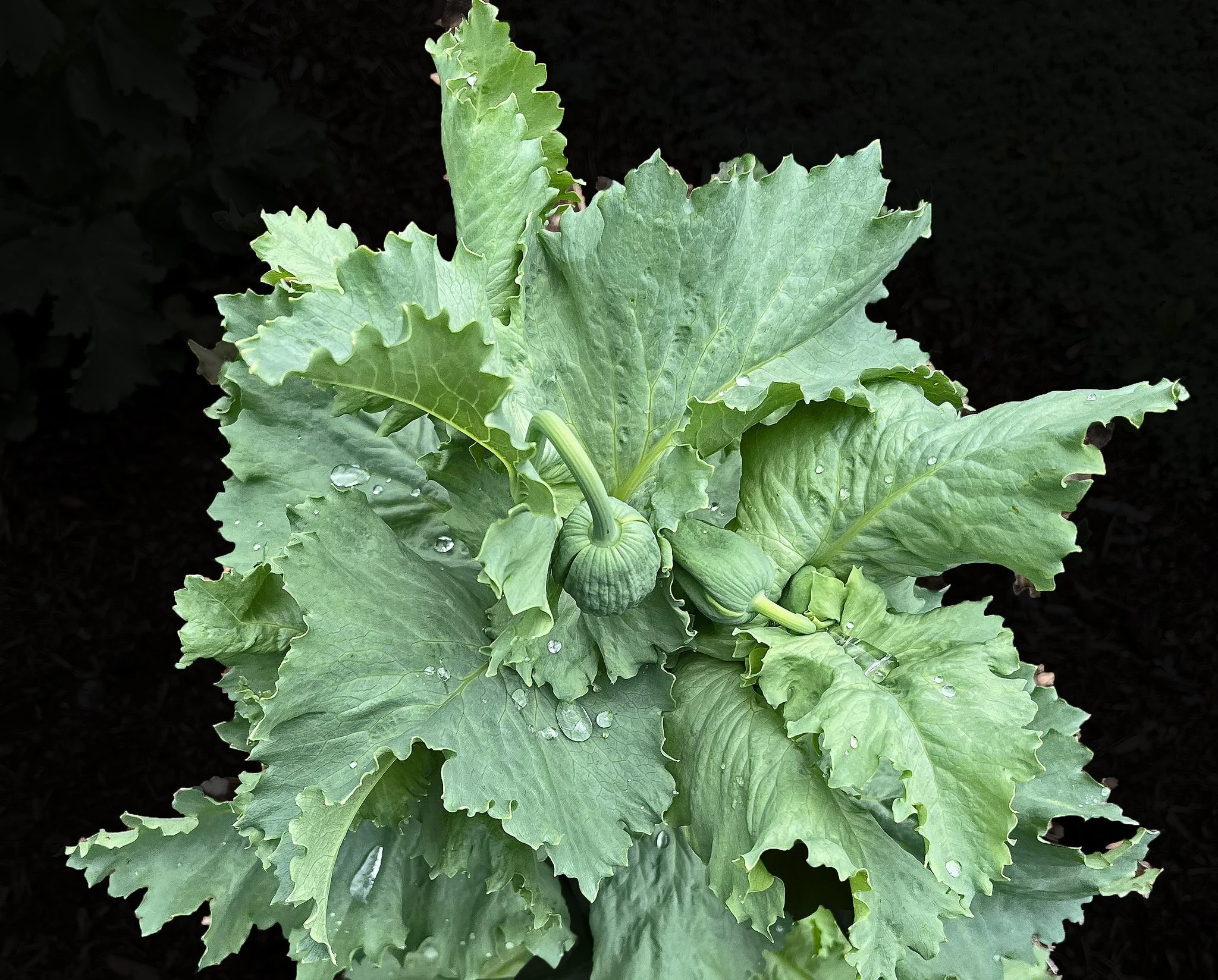
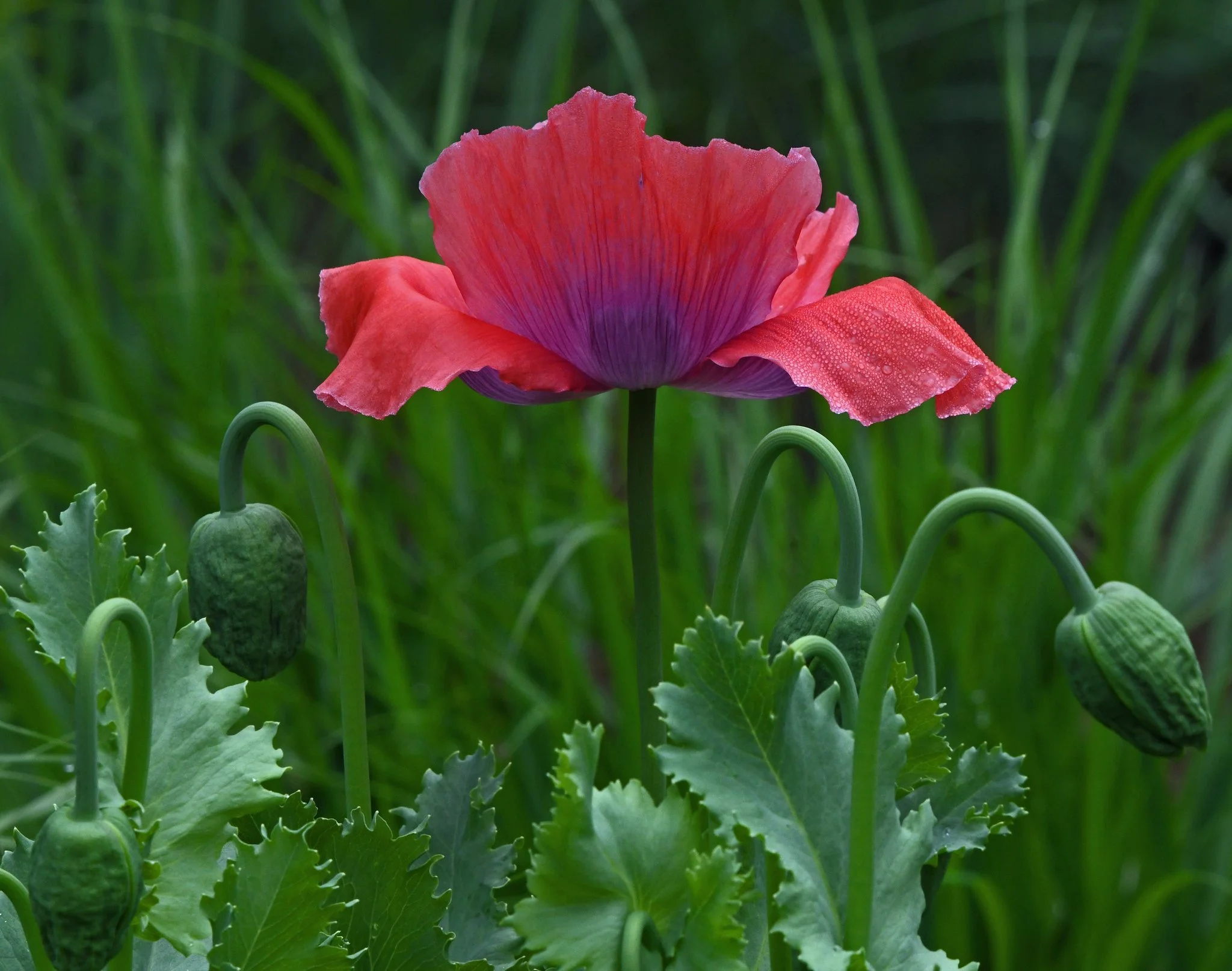
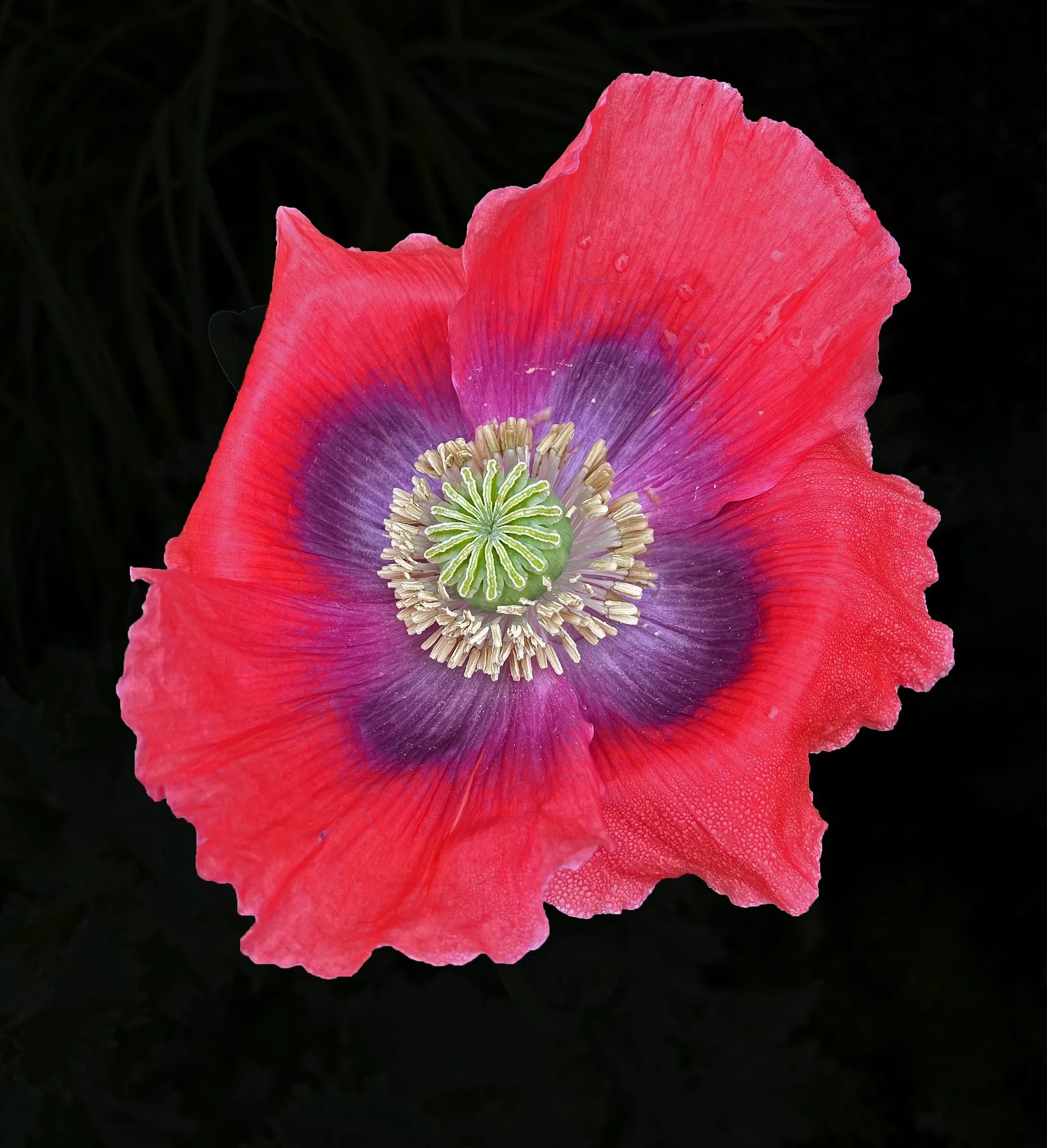
Guess what’s popping out all over now. Poppies add an ancient and mysterious beauty to the garden. Their large, crepe-like petals open and close the flower in slight breezes, revealing flashes of what – with a little imagination – looks like the creation of a small universe or a secret symbol for a sun-worshiping cult:

The popularity of these flowers has survived severe tests of time. The Minoans in Crete were cultivating poppies at least by 2700 BCE and the Egyptians entombed them with important personages, according to the ancient histories. And, the appearance of wild poppies on the bloody, death-strewn Western Front during World War I moved John McCrae to write his heart-twisting 1915 poem, “In Flanders Fields,” which inspired today’s recognition of red poppies as symbols of fallen members of the military.

Of course, some varieties of poppies contain calm-inducing and pain-reducing alkaloids such as morphine and codeine. These opium varieties are not sold in your local flower nursery – I hope. They’ve been extraordinarily beneficial in the right hands and extremely harmful in the wrong ones. (Morphine, as you may know, is named after the Greek god for sleep and dreams, Morpheus.)

(Images taken in Brooklin, Maine, June 27, 2026.)

Comment

Comment

In the Right Place: Stream of Consciousness

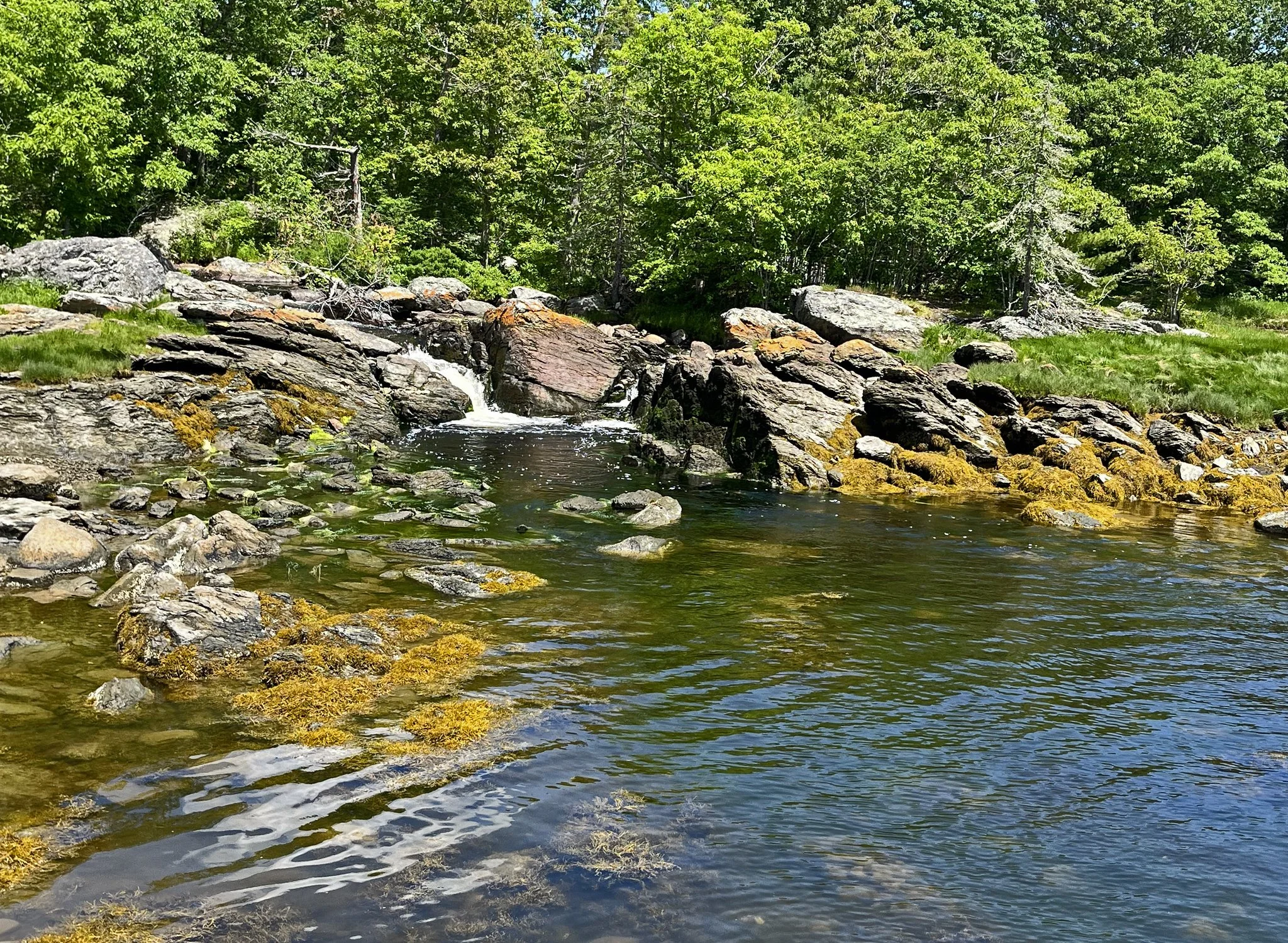
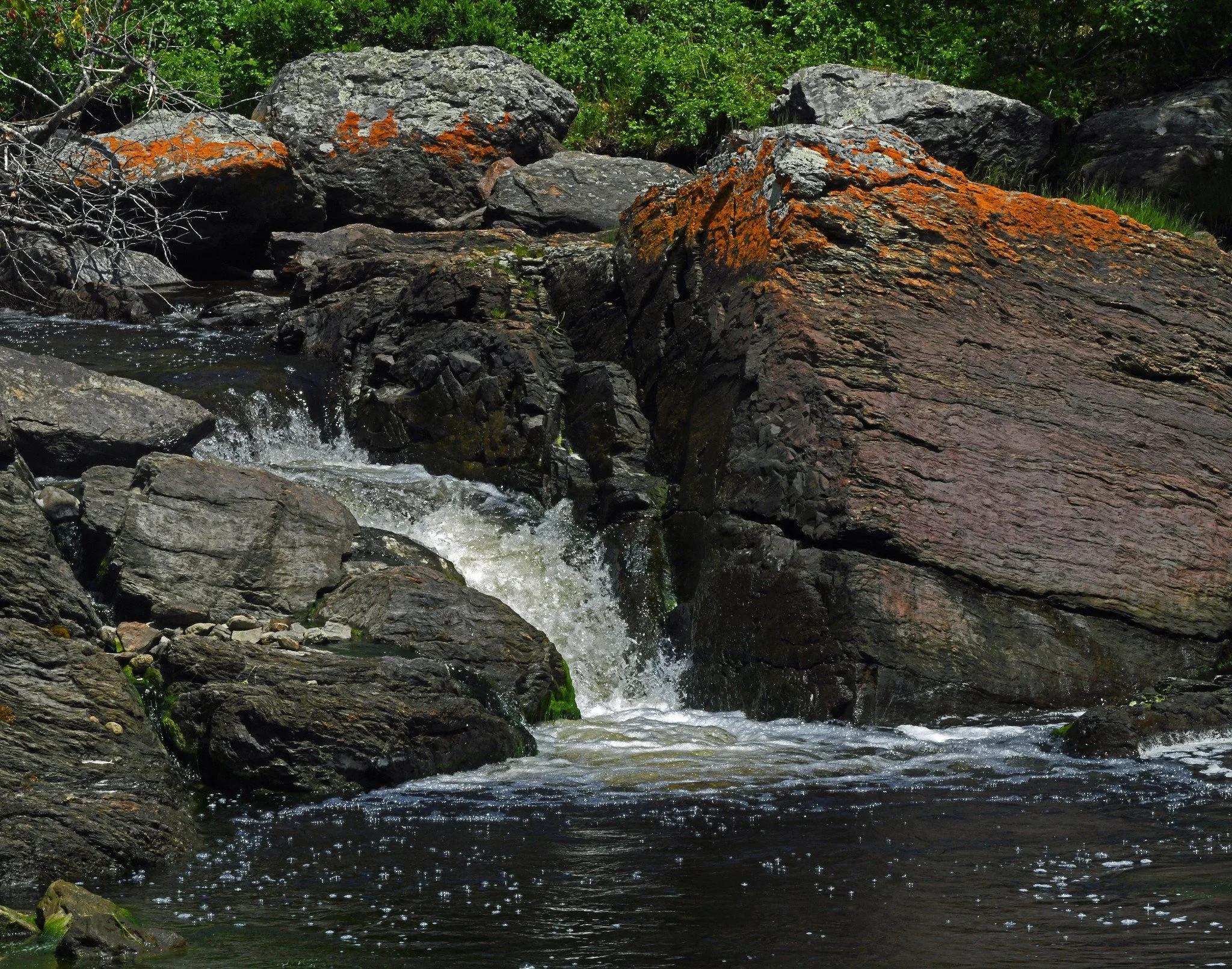
Here’s Patten Stream’s robust flow into Patten Bay Thursday. Heavy rain last week improved Maine’s dry and drought situations considerably.

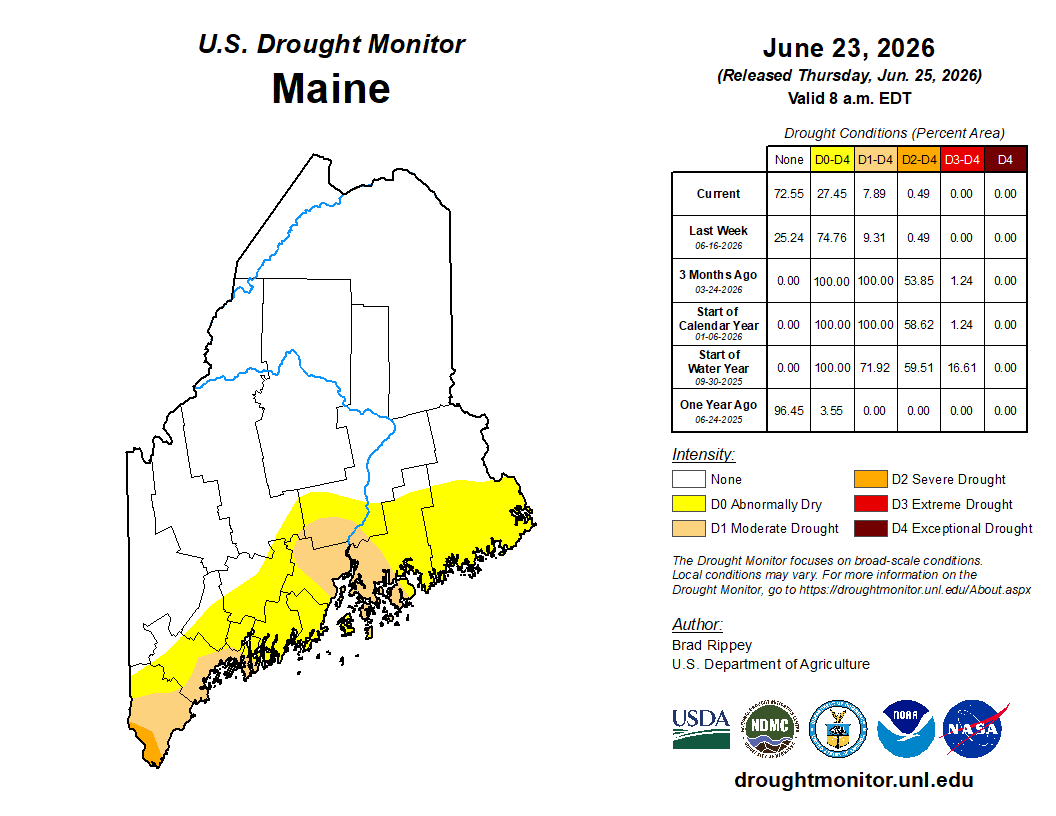
For example, through June 23, month-to-date rainfall in Portland, Maine, reportedly rose 4.98 inches and precipitation generally was good along the entire coast.  Nonetheless, as you’ll see on the official U.S. Drought Monitor map, our coastal areas remain at least abnormally dry, with two pockets of moderate drought (one here) and a small southern pocket of severe drought.:

Make sure those campfires are well-dug to begin with and well-out to end. And, while you’re at it, keep doing those rain dances! (Photo taken in Surry, Maine, June 25, 2026.)

Comment

Comment

In the Right Place: Mimics’ Gimmicks

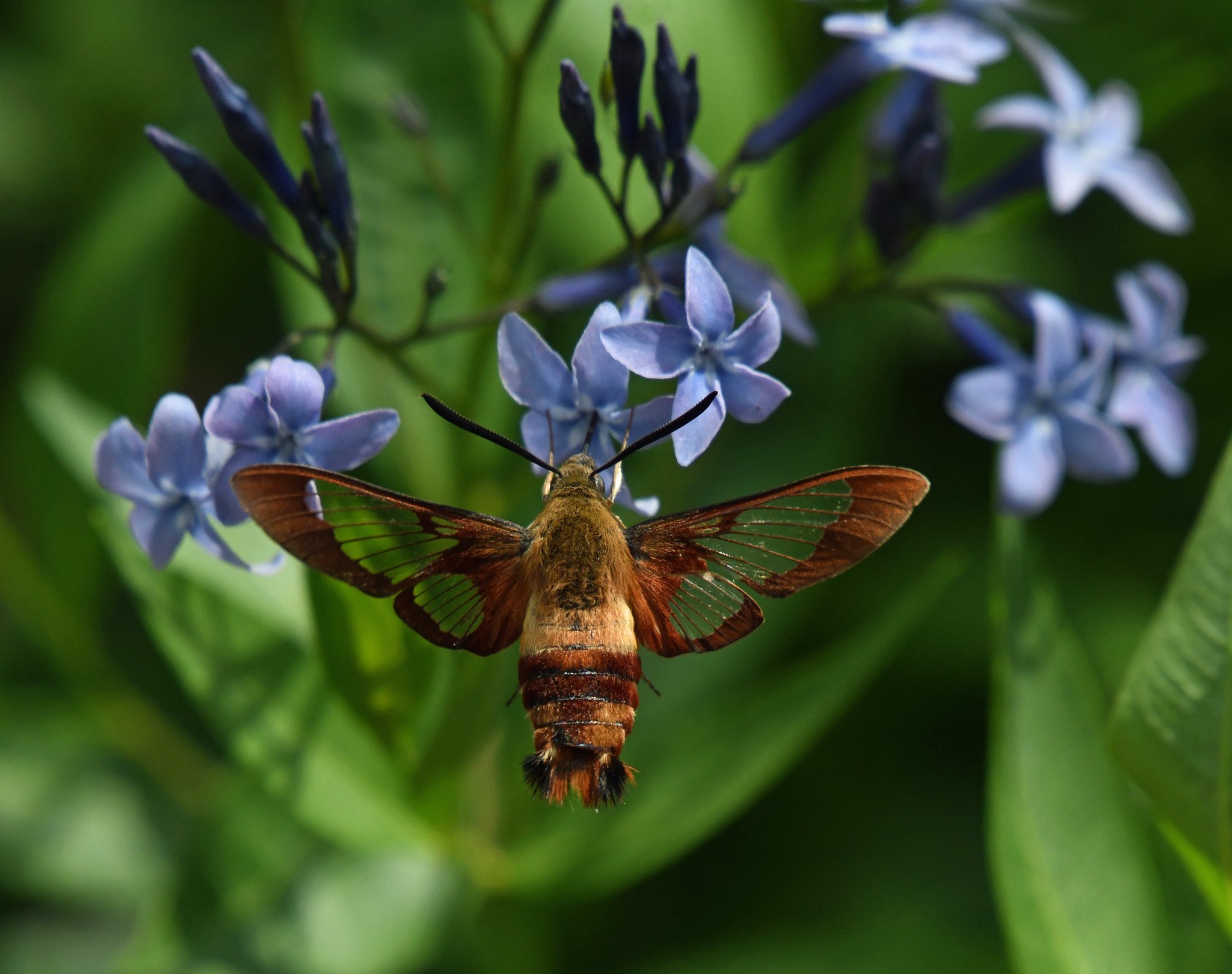
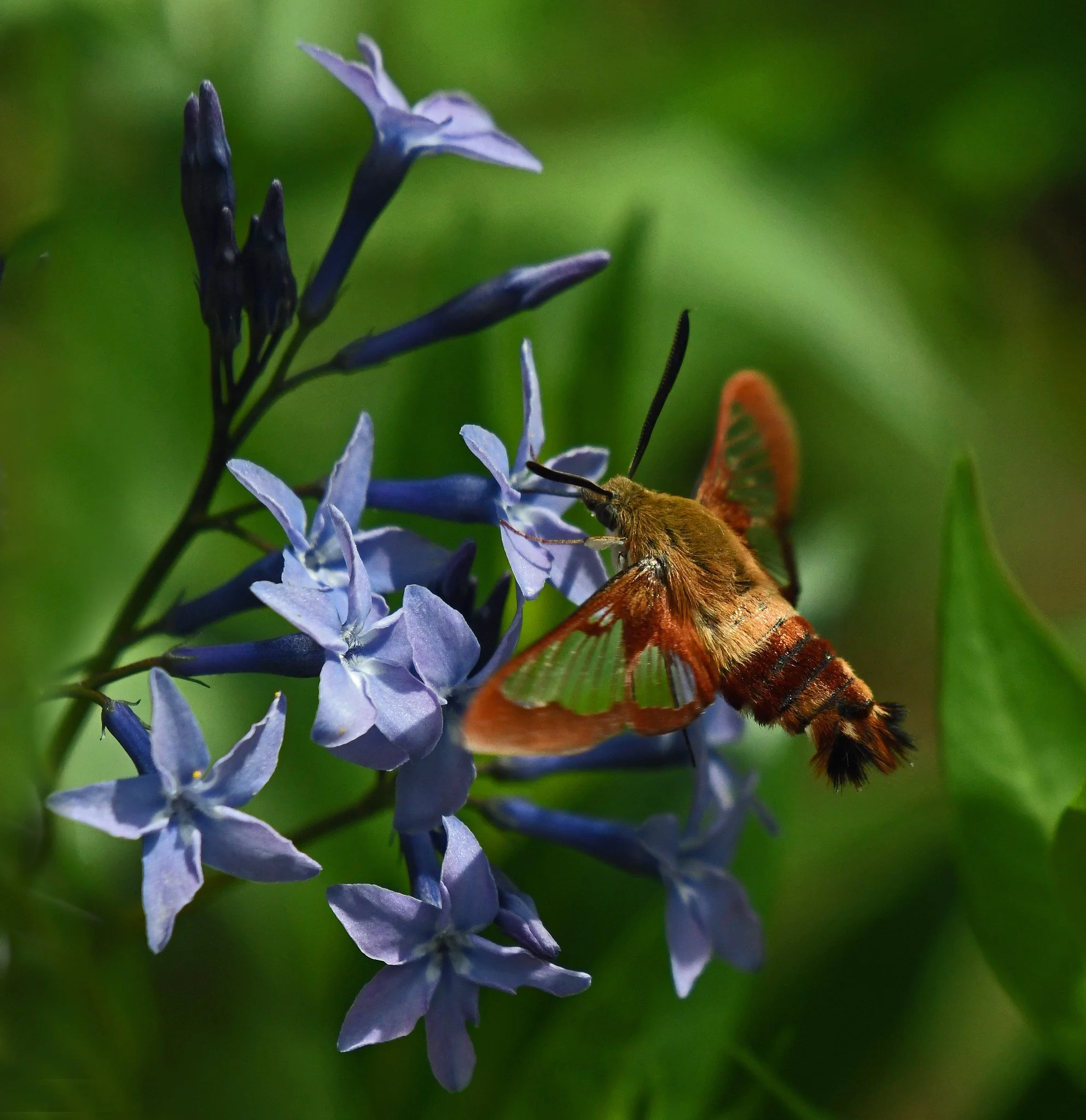
This is one of a pair of humming bird clearwing moths that came a-hovering in our blue stars (amsonia) yesterday, seemingly without fear of leaving a trace. I took that as a challenge to find a shutter setting that could stop them in their high-speed, always-whirring flight. It turned out that 1/5000th of a second did the job nicely. Herre’s the other clearwing:

Hummingbird clearwings (Hemaris thysbe) are unusual moths. For one thing, they fly during the day, not in the dark. For another, they’re born with full-scaled wings, as are virtually all moths, but they lose a good number of those scales on their first flight, due to the high-speed beating of their wings.

Researchers have concluded that these moths have evolved furry bodies and see-through wings as mimicry to avoid the many insect-eating birds. The moths reportedly appear to birds as forms of hummingbirds in some perspectives and bumblebees in another.

(Images taken in Brooklin, Maine, on June 25, 2026.)

Comment

Comment

In the Right Place: On Being Picky

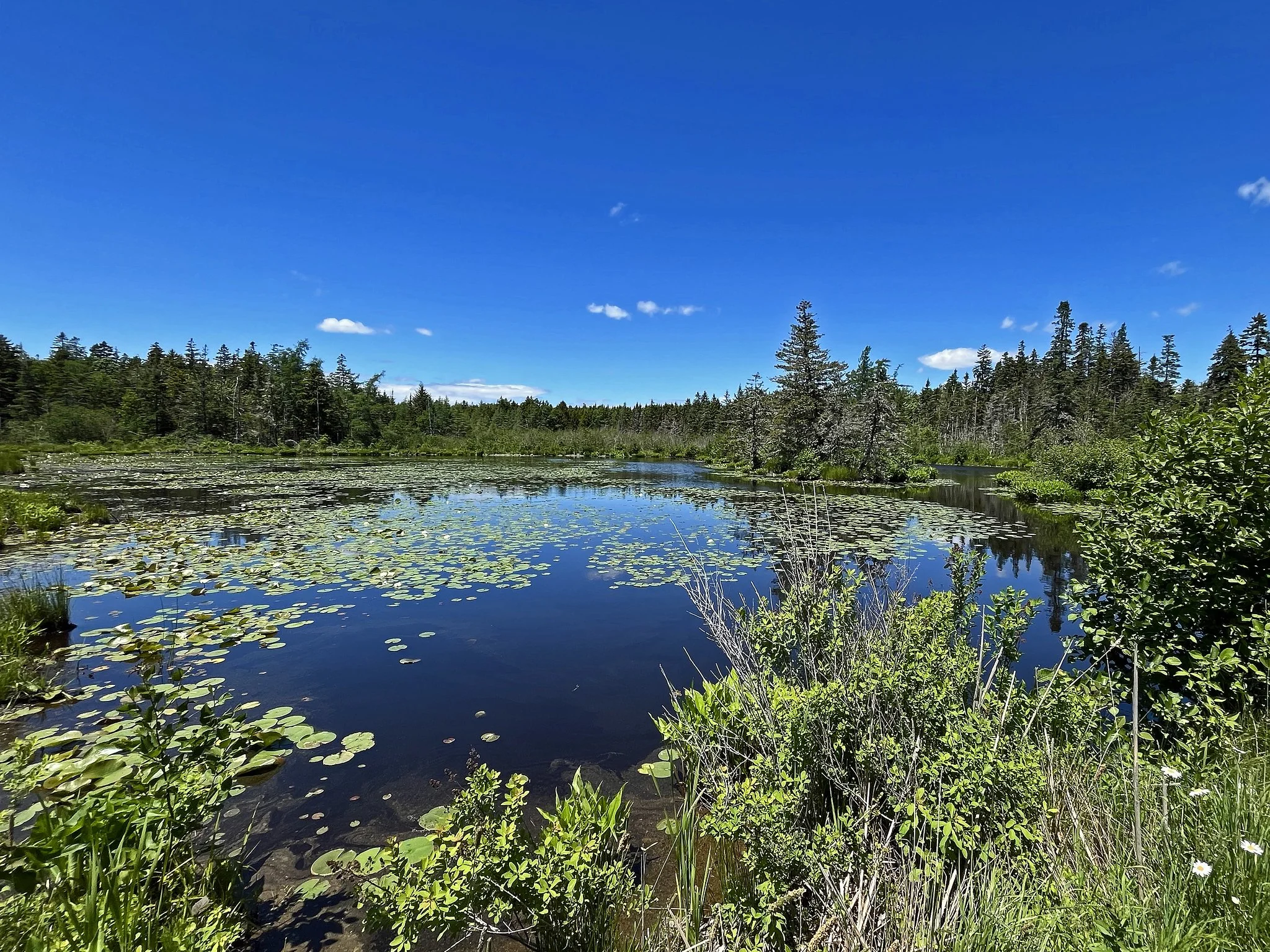
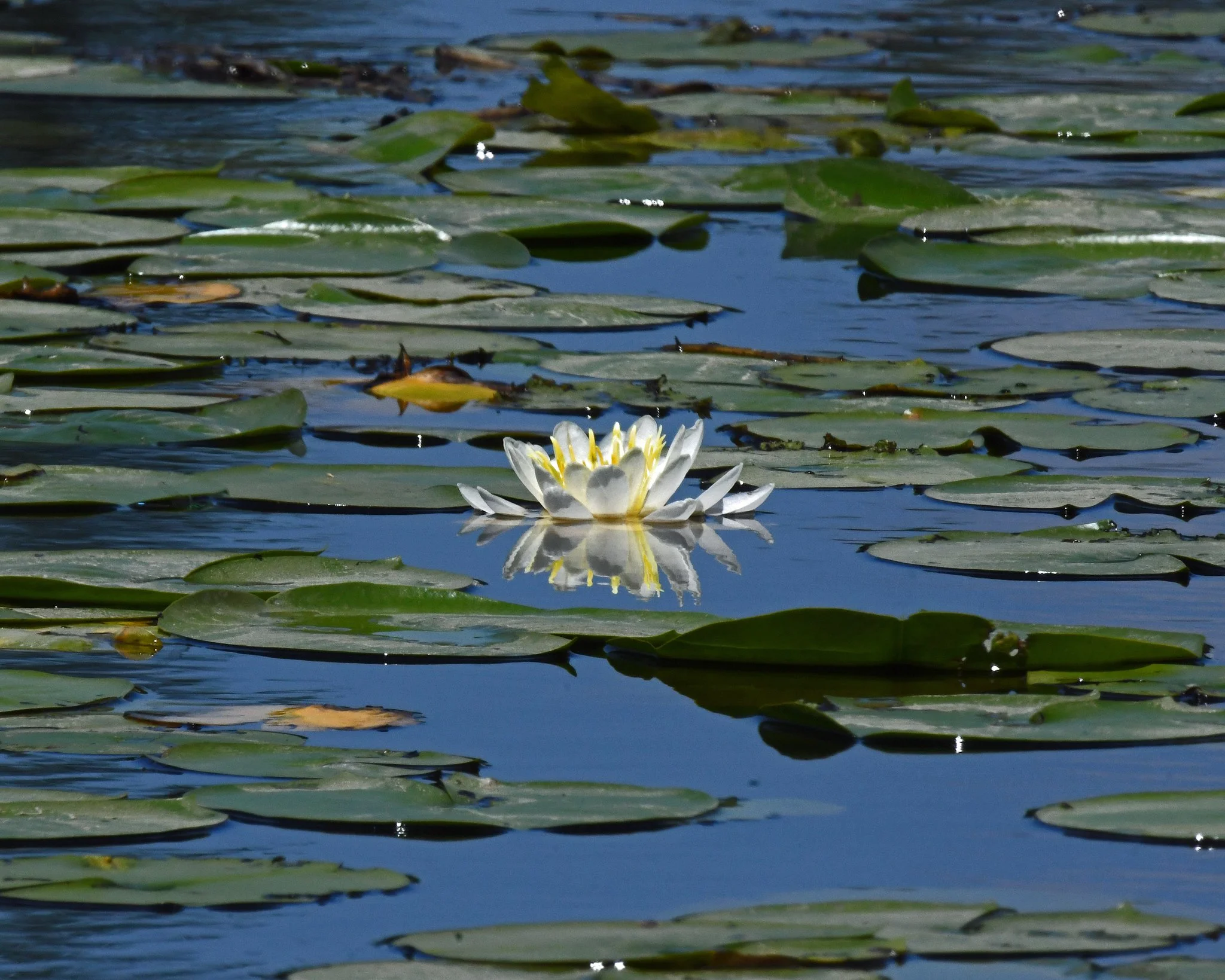
Our native fragrant water lilies (Nymphaea odorata) are rising in good number now and often filling their neighborhood with heaven-sent scents, as are these in the WoodenBoat pond:

These aromatic wildflowers are so different from the famous water lilies painted by Claude Monet that many of us saw in grade school art classes as our first examples of the plant.

Here, our native plants often are in naturally occurring ponds or still lakes that are fed by one or more small streams. We have one choice of the wildflower’s color: white with gold interior. Parts of the plants are eaten and left ragged by muskrats and other wildlife, the pads often are littered with nasty-looking little creatures and their leavings. But, still –  wild water lilies remain beautiful and smell nice and muskrats are fun to watch. There’s no sense being picky.

I learned later in life that the wealthy Monet meticulously designed and had his famous pond built and maintained as part of his pristine sanctuary at Giverny; he reportedly even had a river re-routed to feed it. Many of his colorful water lilies reportedly were rare and expensive hybrids that he installed and had individually cleaned daily by a crew that maintained the pond and tried to keep muskrats out. Now, that’s being picky!

(Images taken in Brooklin, Maine, on June 24, 2026.)

Comment

Comment

In the Right Place: The Pollinator-Predator Paradox

It’s Pollinator Week, which is a valuable international reminder of the importance of those creatures in our ecosystems and food supply. But it also raises a question: Why don’t we have a Predator Week?

I suppose that no politician would support memorializing facts that we like to forget: The world has far more predators than pollinators; they’re part of virtually all animal groups, and predation is still the world’s fundamental survival strategy. Predation is as important as pollination, if not more so, and usually takes more skill.

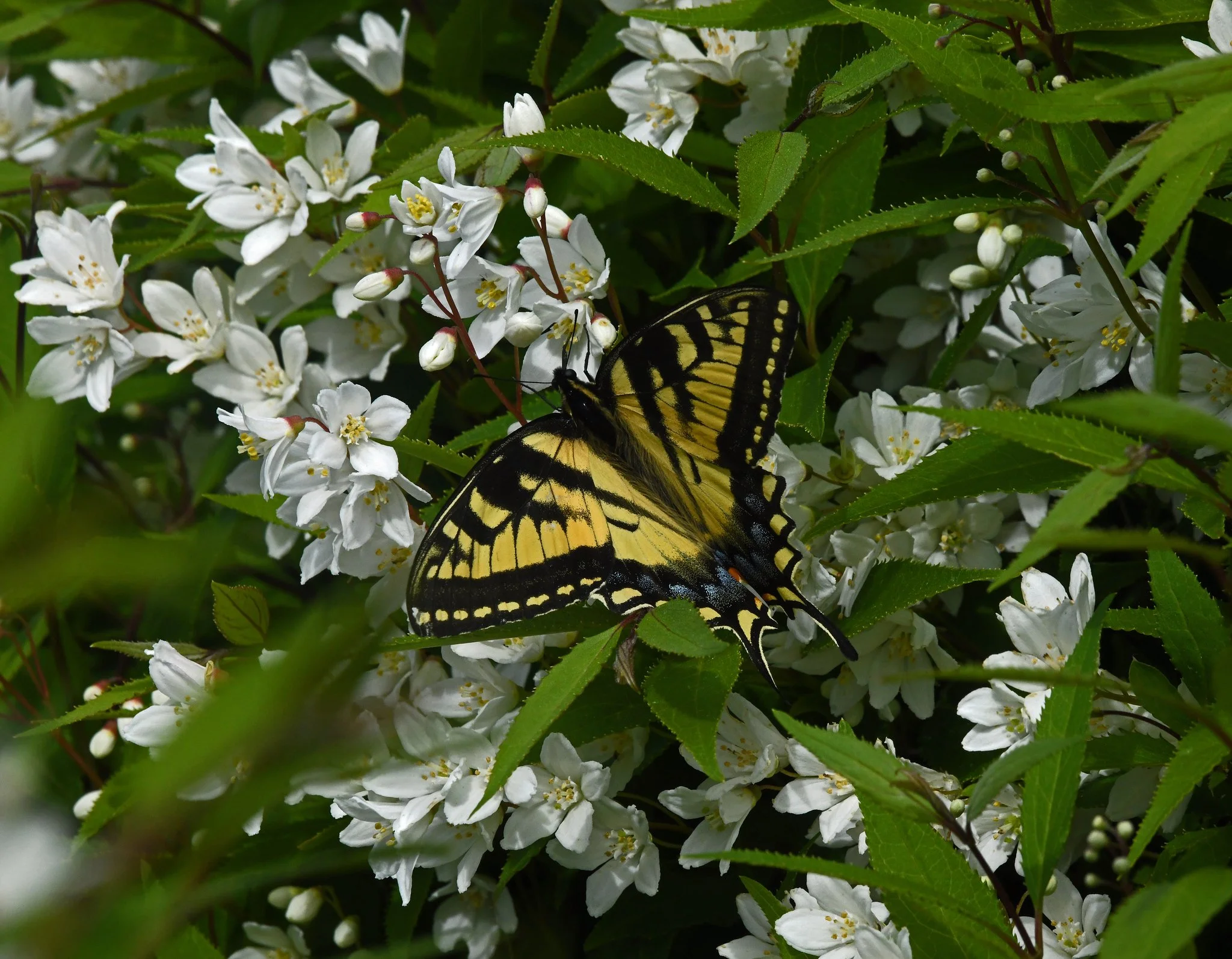
Nonetheless, here in celebration of Pollinator Week, I offer an image of a lovely eastern tiger swallowtail butterfly doing its best to pollinate deutzia blossoms while it accepts their gratefully offered nectar. Fluttering swallowtails seemingly like to flaunt their brilliant beauty.

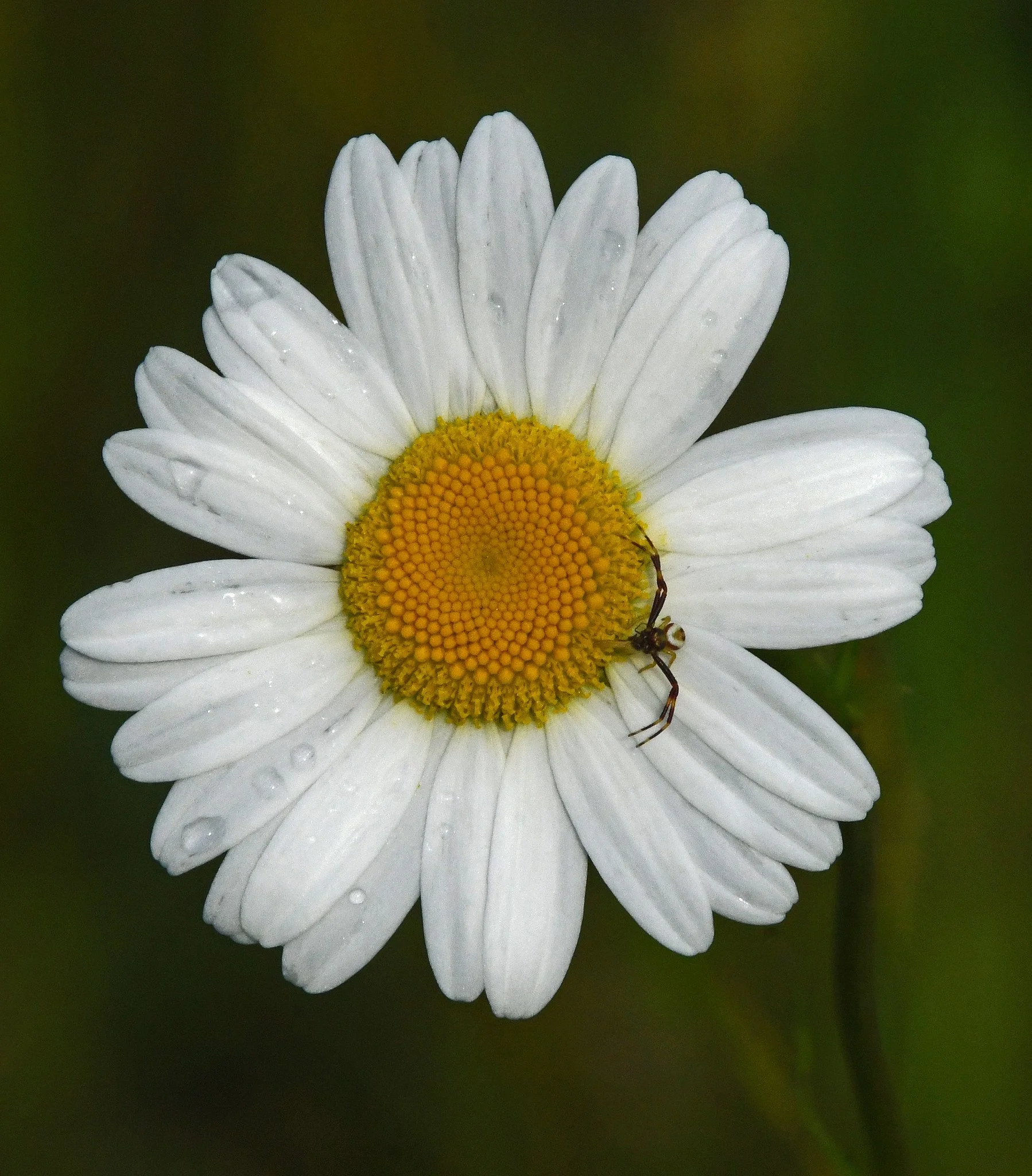
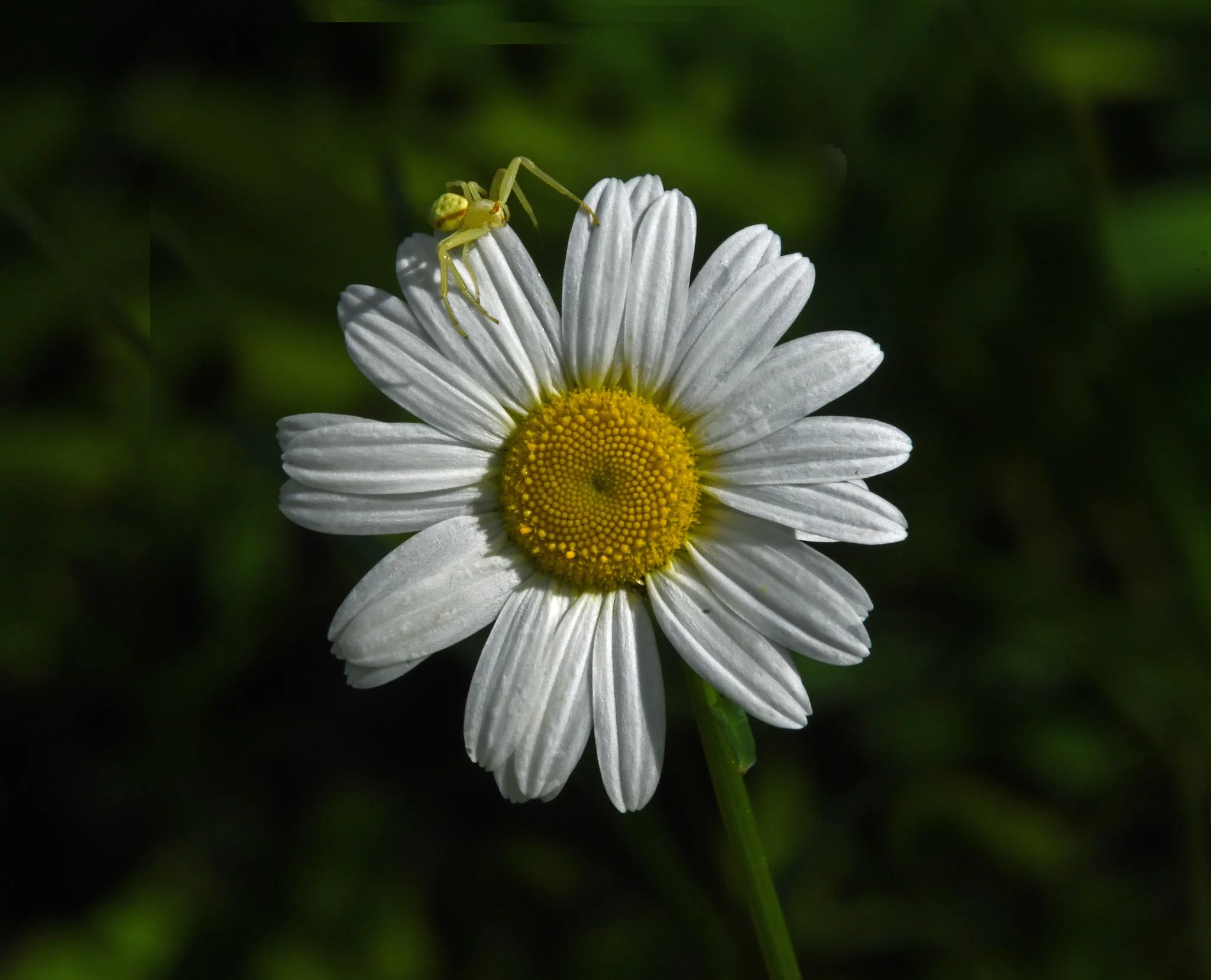
However, in celebration of shy unmentionables, I offer two images of little predators that hide their presence and eat pollinators.  Look closely:

Goldenrod crab spiders don’t spin webs; They sit patiently on flowers (such as oxeye daisies, as here), change color, and pounce on unsuspecting small pollinators. But, of course, even spider life has its ups and downs: These spiders are preyed upon by many other predators, including other spiders and hummingbirds that also pollinate flowers.

I’m tempted to extend this discussion into the metaphysical realm of human predation upon ourselves and other creatures, but I guess I’ll leave that to the daily news reports for now. (Images taken in Brooklin, Maine, on June 15, 21 and 23, 2026.)

Comment

Comment

In the Right Place: Seldom Seen Scenes

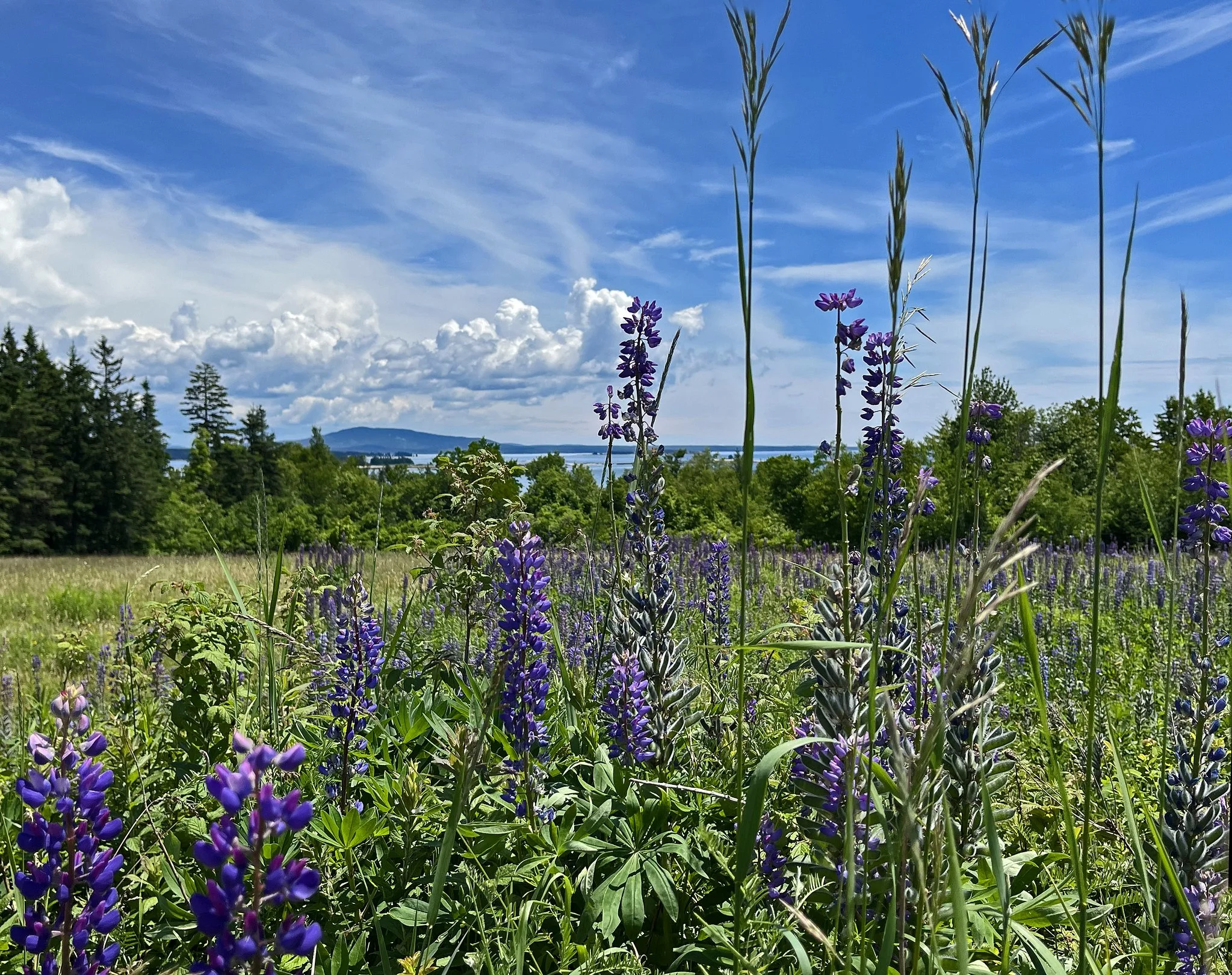
Here you get a grasshopper’s view of Mount Desert Island as seen from the fading lupines and rising grasses on Amen Ridge in Brooklin. MDI is Maine’s largest Island and contains most of Acadia National Park, as well as the tourist-popular Town of Bar Harbor. The puffy pillows above MDI’s western mountains appear to be cumulous clouds and the higher vapor trails appear to be cirrus clouds.

Below, you’ll see Great Cove at low tide, when its rockweed forest is laid to rest and its mud flats are exposed. At this time of day, there can be distinctive primal scents – fresh, briny air mingled with whiffs of fetid mud – that seem to awaken the old animal in me. The rockweed and mud will disappear under the rising tide, as will the scents, but they’ll be back.

(Images taken in Brooklin, Maine,on June 21, 2026.)

Comment

Comment

In the Right Place: Windjammers, IV

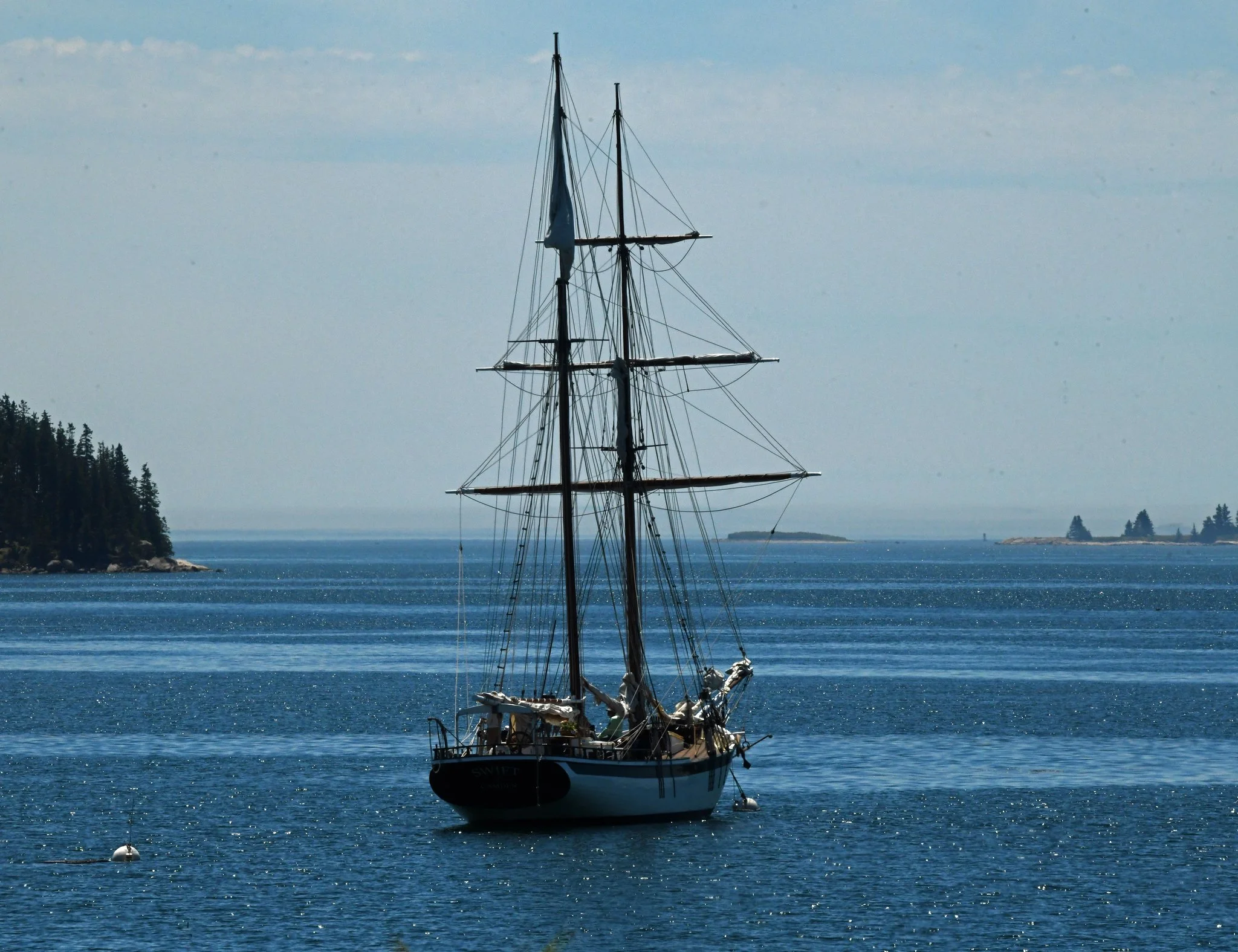
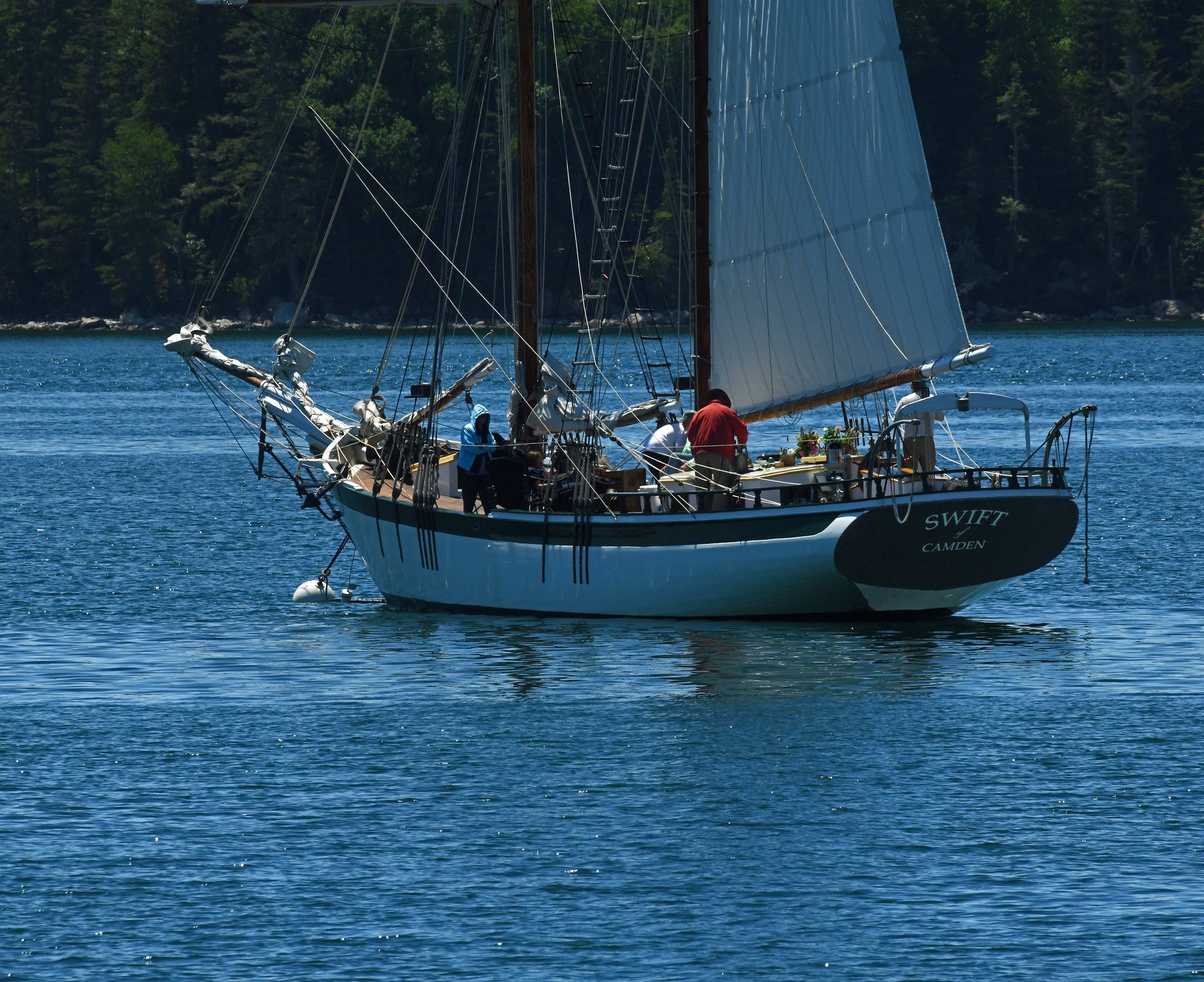
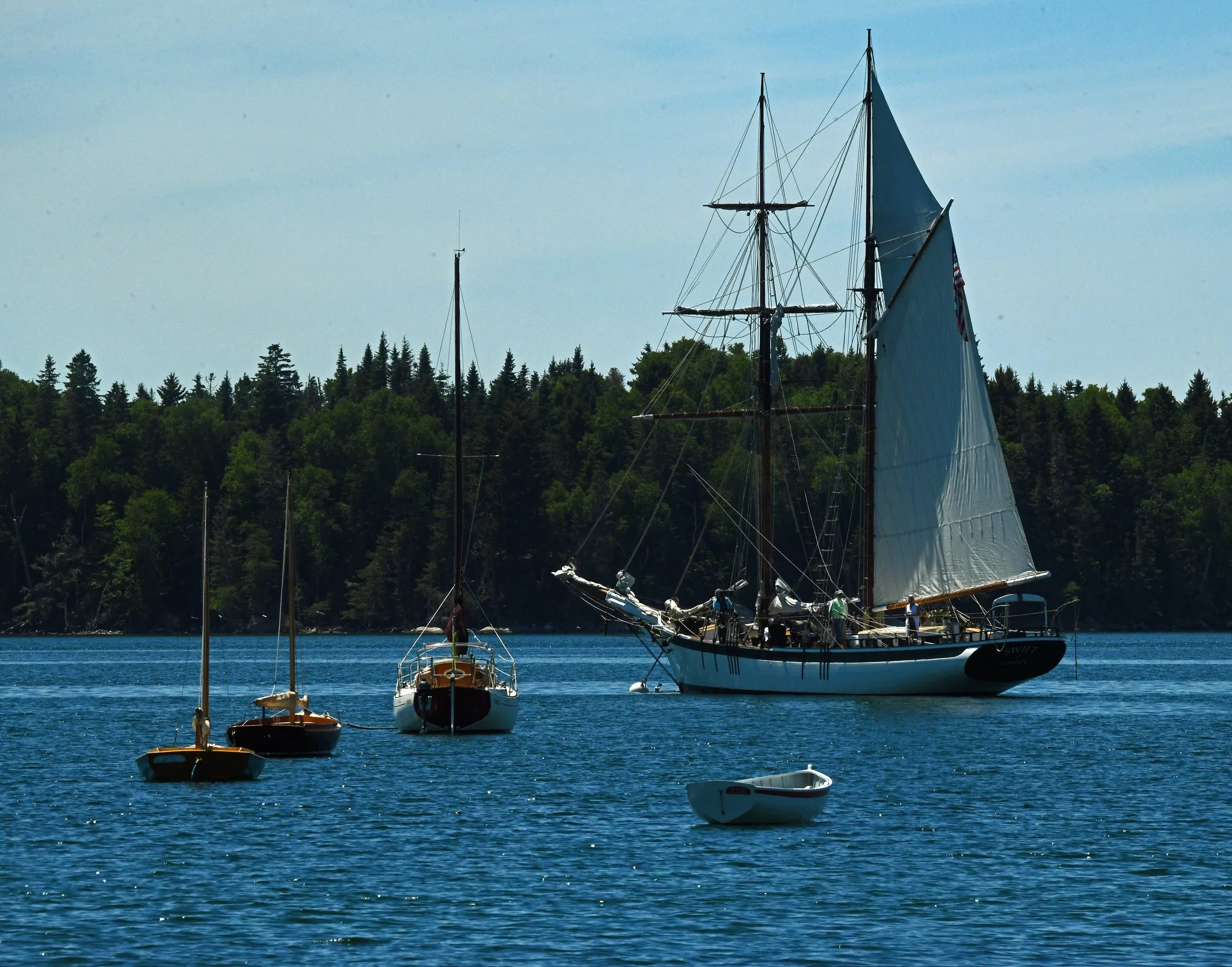
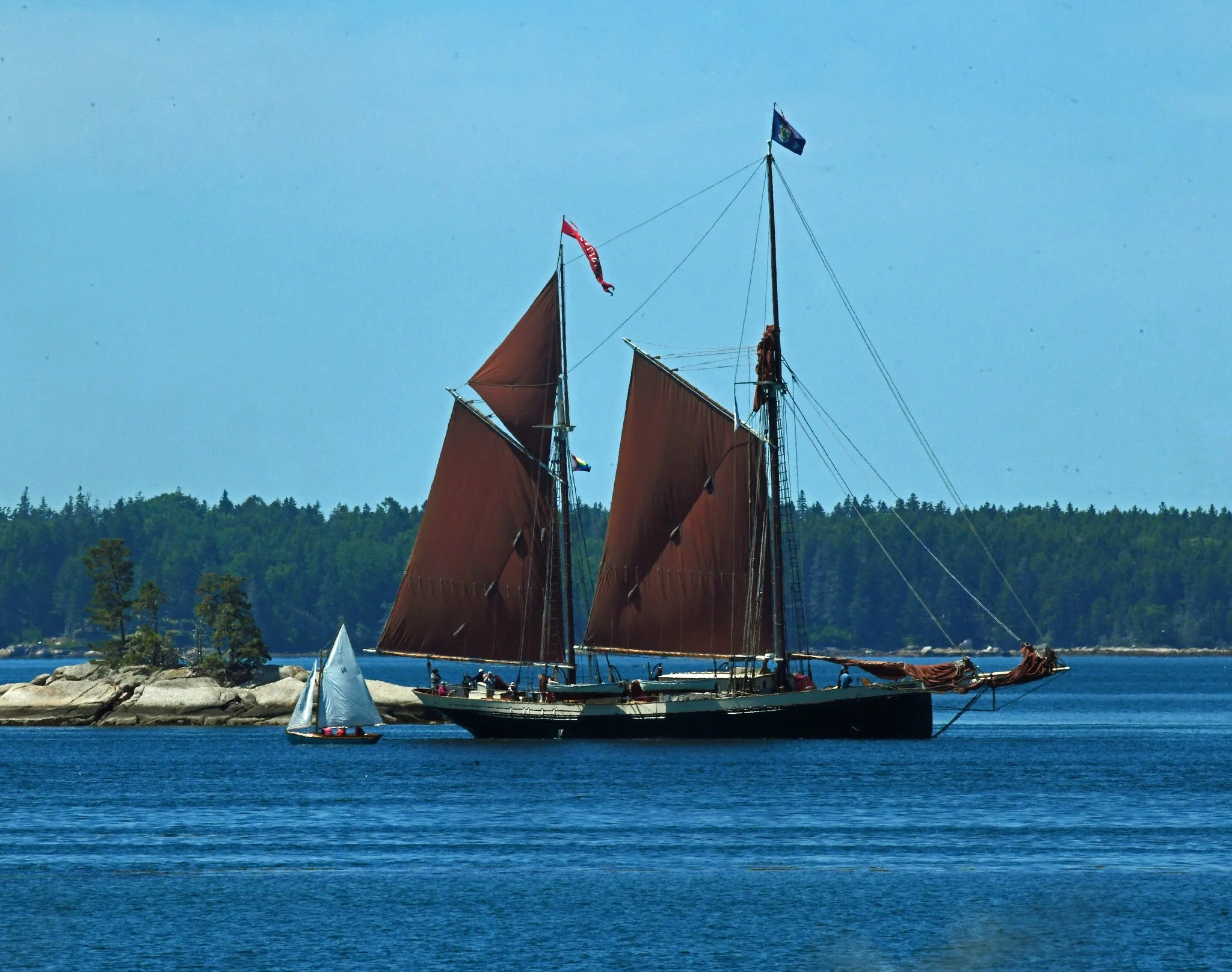
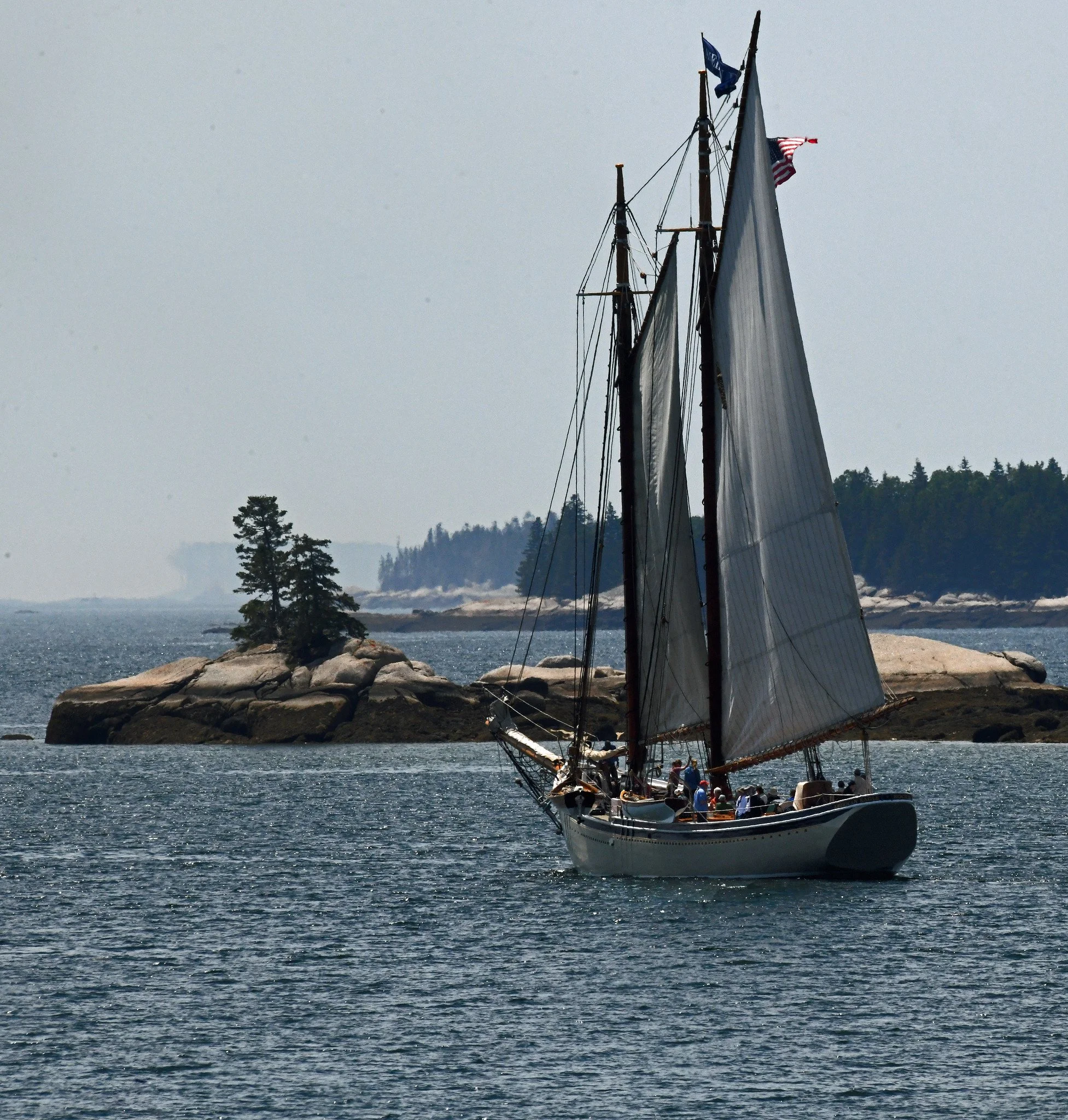
The little windjammer now known as SWIFT snuck into Great Cove last week and snuck out after a few hours without me seeing her intriguing sail configuration. But here she is showing her rigging:

She hails from Camden, Maine, and was on a four-night private charter when she visited, according to her schedule. Among other names, SWIFT was once named ACTRESS, then CAPT. FRANK SWIFT, and is now plain SWIFT. The latest names honor Captain Frank Swift, the person principally responsible for establishing the windjammer tourist trade in the state.

 She’s a relatively small windjammer at a reported  57 feet of overall length. She has room for about six passengers and usually has a crew of three.  In addition to private charters, she reportedly conducts sailing training and maritime education classes.

SWIFT is rigged as a hermaphrodite brigantine (aka half-brig). That is, when fully dressed, she’s got square sails on her foremast, but angular sails fore-and-aft on her main mast. This configuration reportedly was created to produce a vessel that had a good balance of speed and maneuverability, yet could be sailed by a much smaller crew than vessels with square sails on all masts.

(Images taken in Brooklin, Maine, on June 17, 2026.)

Comment

Comment

In the Right Place: Happy Fathers’ Day!

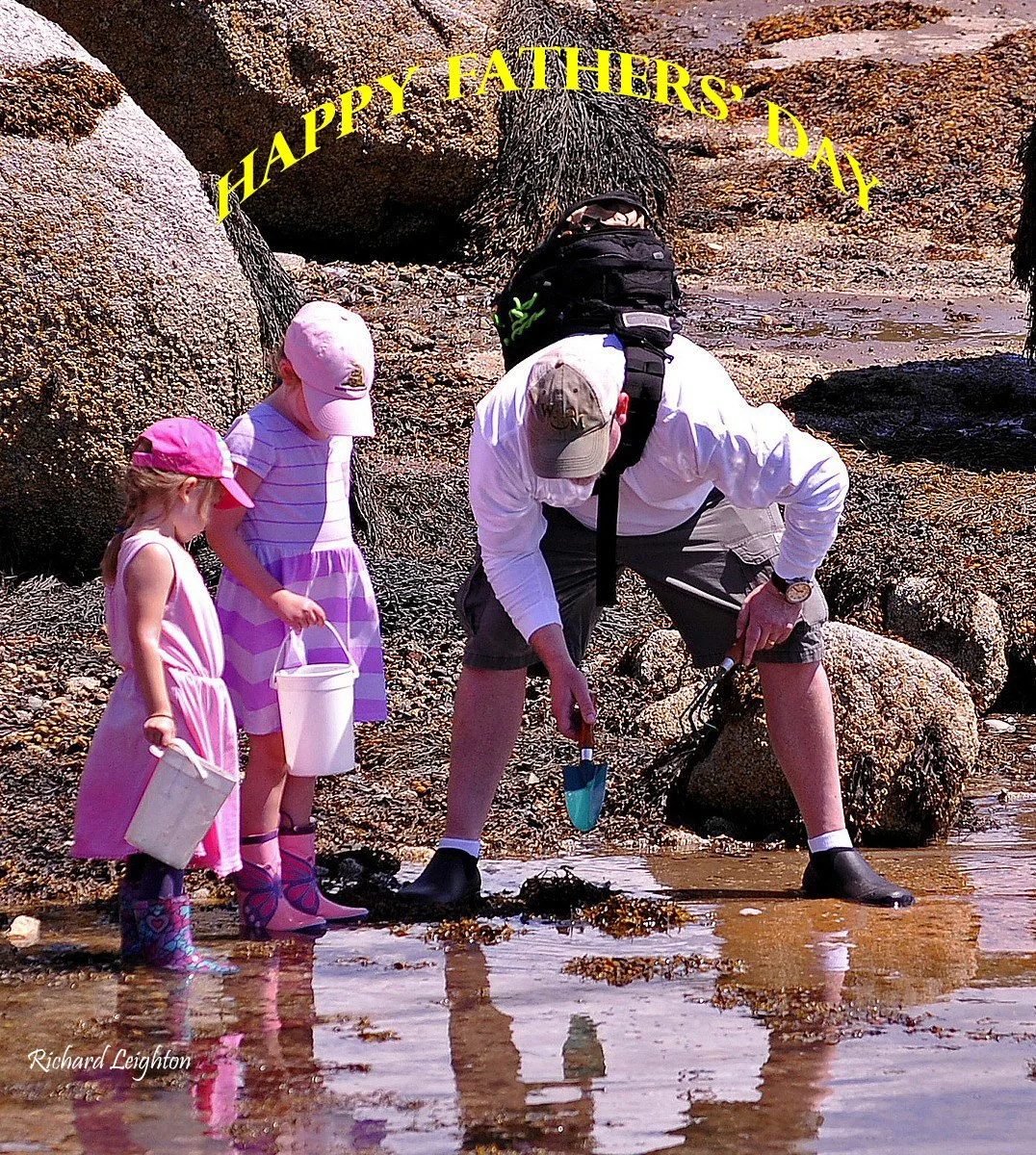
Let’s hope we have a pair of potential Rachel Carsons here with their Dad in Naskeag Harbor:

Rachel’s mother and father often are credited with making major contributions toward her eventual scientific and literary success. Her father, Robert W. Carson, reportedly took her on nature field trips beginning at a very early age and encouraged her to turn nature walks into scientific experiments and to keep a journal of her observations.

Unfortunately, Robert suffered difficulties that eventually led to another story that’s too sad to tell on this happy day when I get to reverse-celebrate our wonderful children who make me a proud father. (Leighton Archive image taken in Brooklin, Maine.) Click on the image to enlarge it.

Comment

Comment

In the Right Place: Peeking at Peaking Peonies

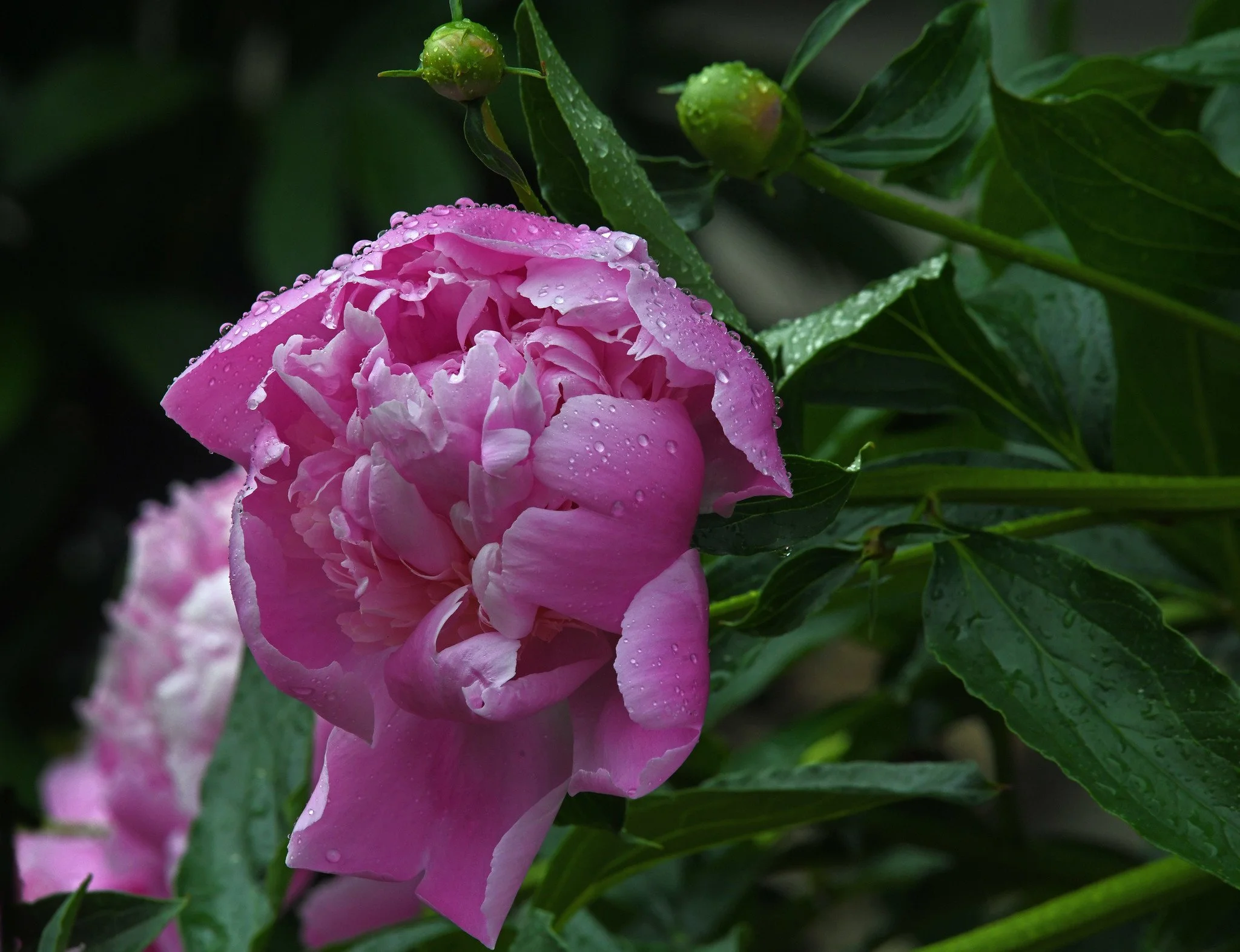
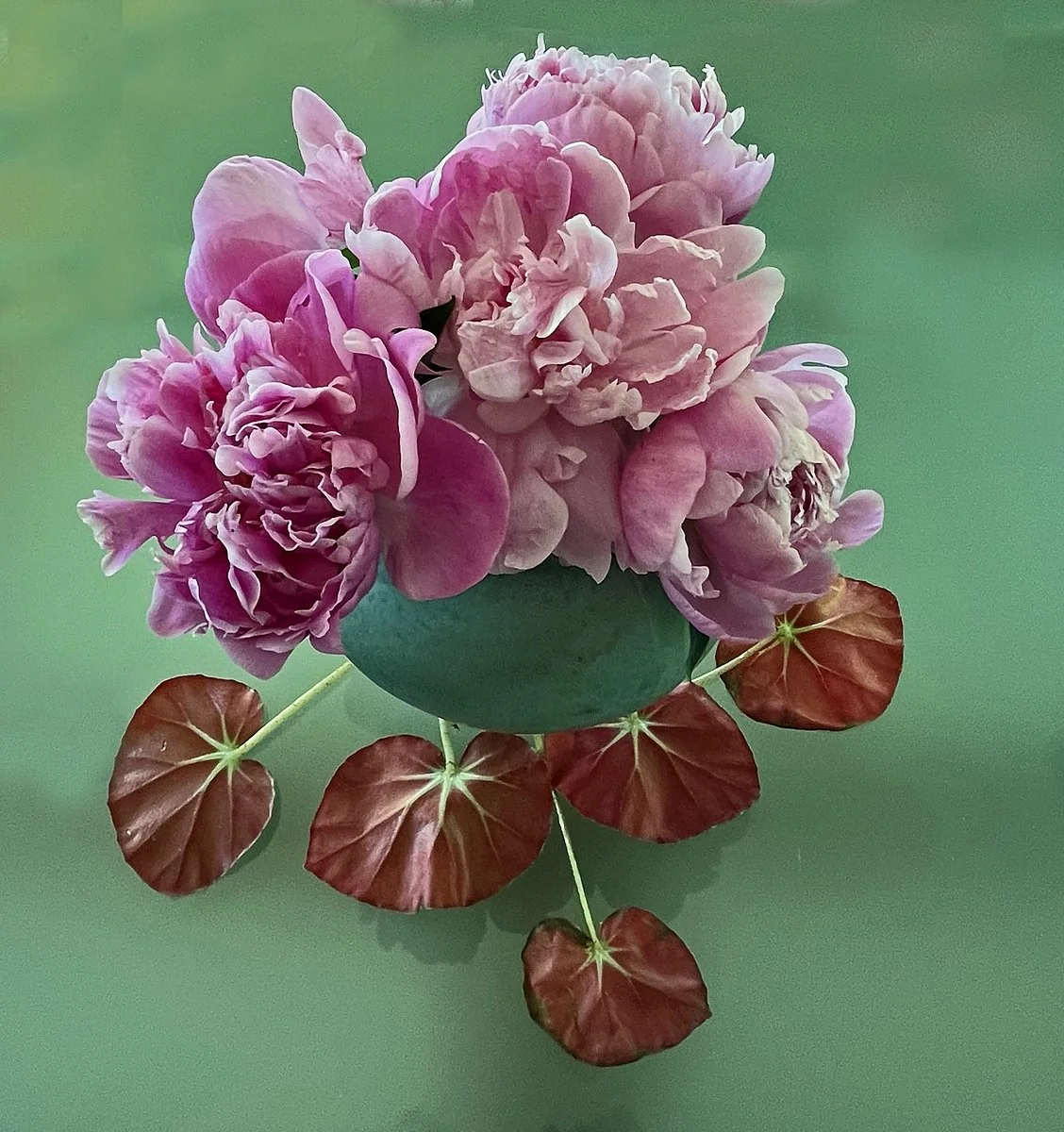
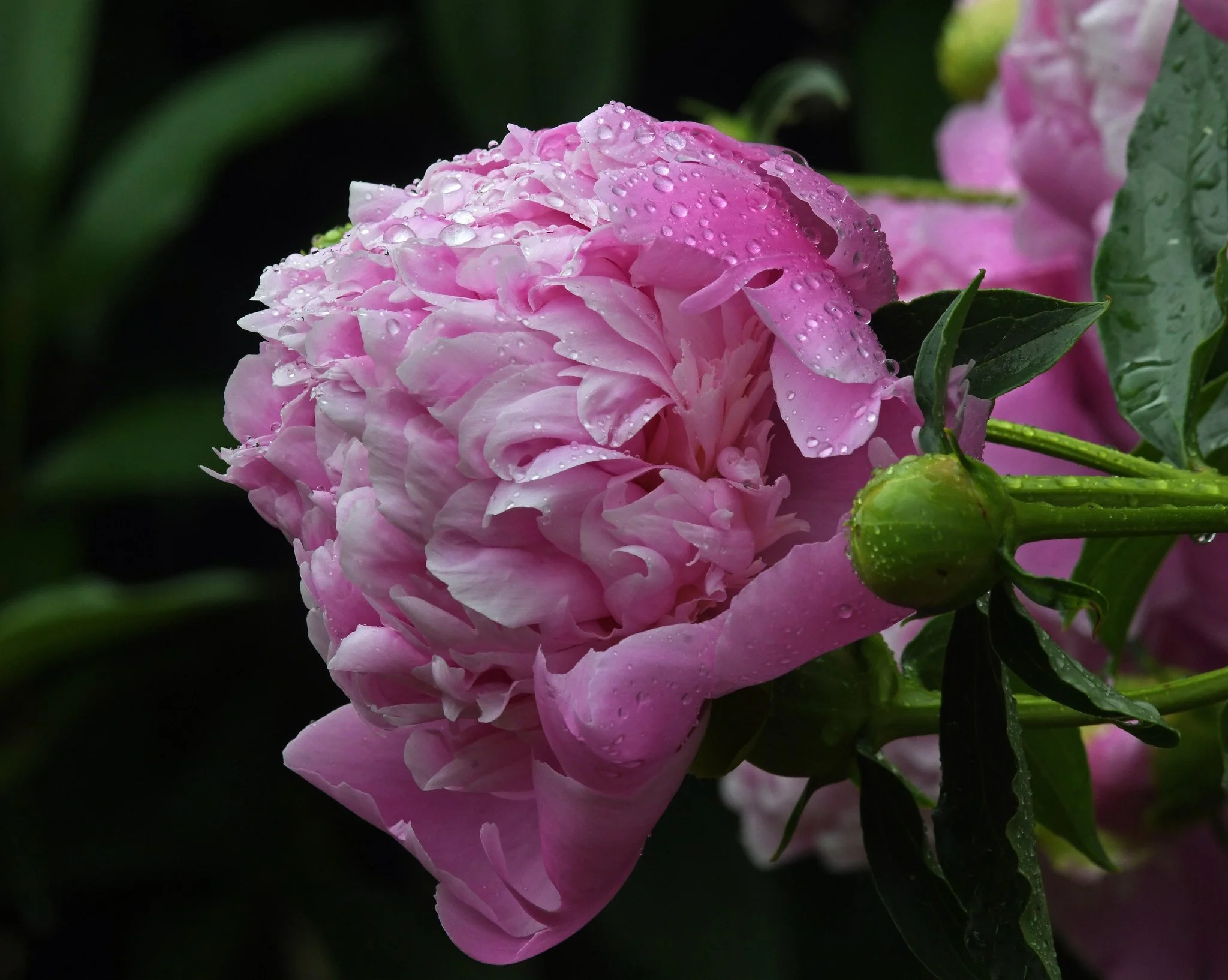
For those who like your beauty voluptuous and exuberant, above is a peony enjoying a shower. They’re starting to reach peak blossoming volume here. For those who like your flower arrangements lush and fragrant, here’s one of Barbara’s peony arrangements:

Peonies have been the subjects of legends for many centuries in Asia and some think that they were brought to Western civilizations by Marco Polo (who was said to be amazed at beautiful blooms that grew big as cabbages.)  Now, in East and West, they reportedly signify romance, happy marriage, prosperity and other good fortune – and all of these at once, if you are lucky enough to grow the right peonies and live in the right culture.

(Images taken in Brooklin, Maine, on June 14 and 18, 2026.)
Comment

Comment

In the Right Place: Windjammers, III

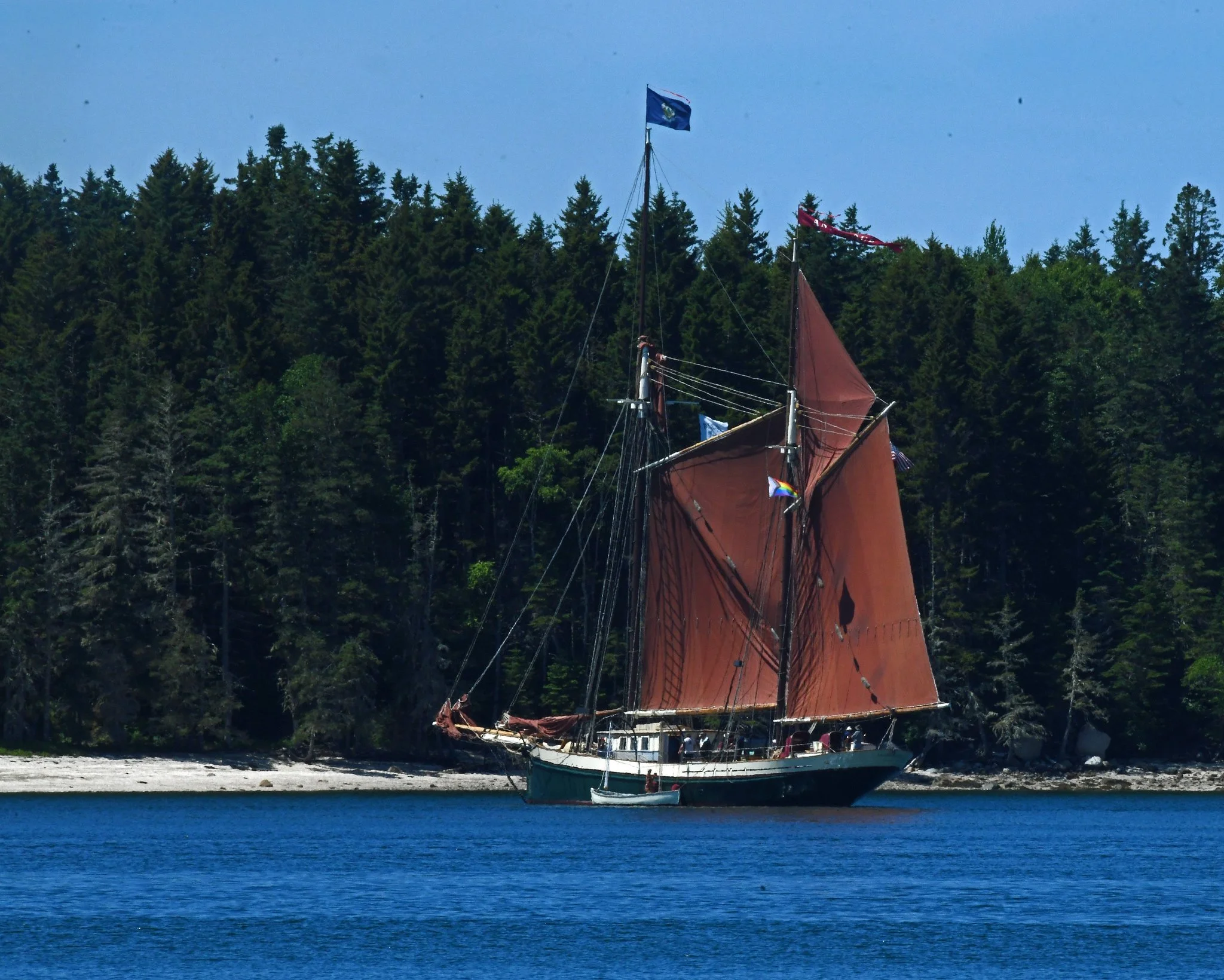
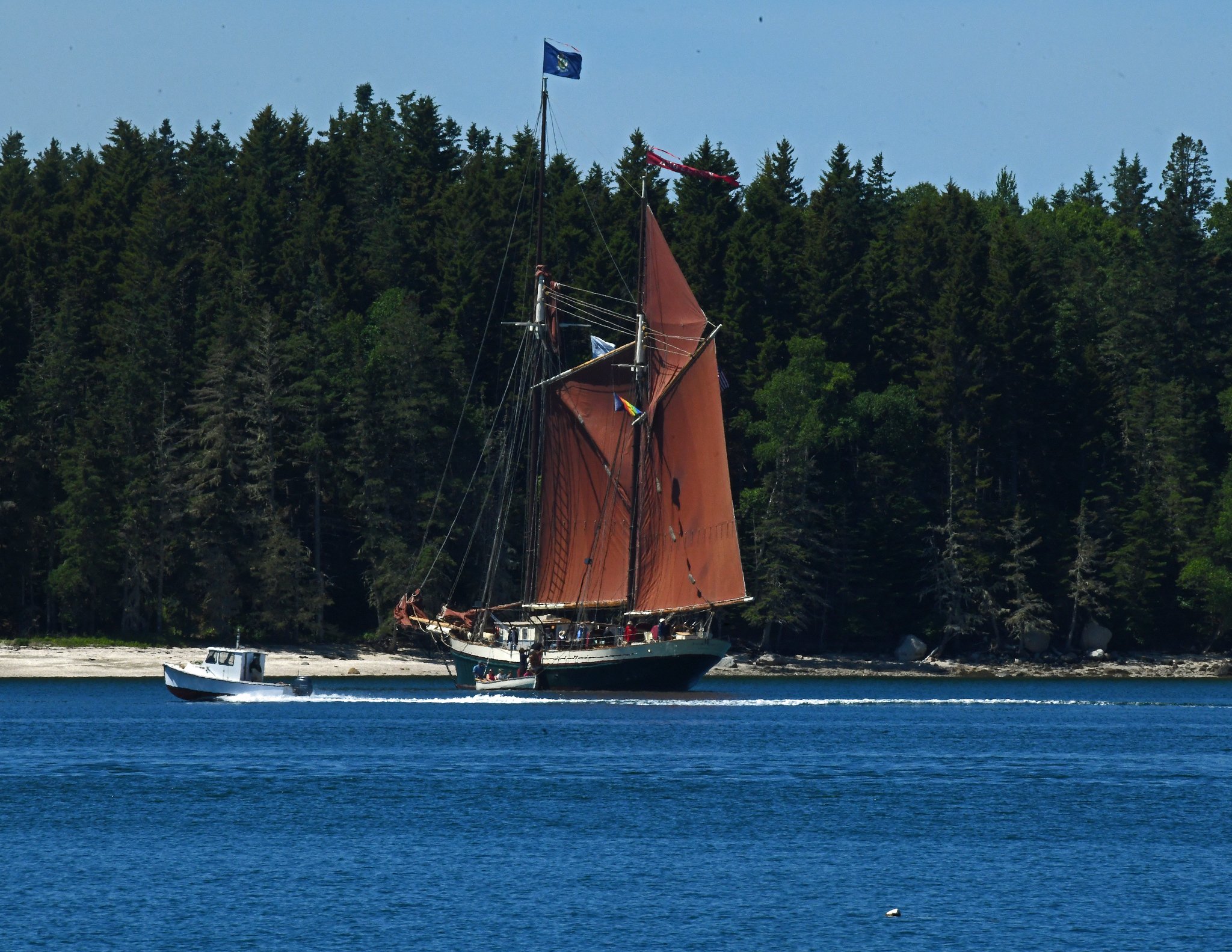
Here you see ANGELIQUE coming into Great Cove on Wednesday morning. She moored off Babson Island and her crew and passengers took to the long boats to have a luscious lunch on the beach there. Cove traffic continued with hardly a glance at this frequent visitor. She departed in the afternoon.

ANGELIQUE was on a 6-night “Photography and Nature Cruise,” according to her schedule. She’s certainly attractively distinctive. She’s the only gaff-rigged ketch in the windjammer fleet. (Note that her foremast is her main mast, unlike schooners.) She’s also the only windjammer with reddish, tan-bark-like sails and, I believe, the only one with a metal hull. 

ANGELIGUE was designed and built in 1980 specifically for tourist cruising. She’s 130 feet long overall and reportedly has a passenger configuration of between 27 and 31 people, depending on pairings. Her homeport is Camden, Maine. (Images taken in Brooklin, Maine, on June 17, 2026.

Comment

Comment

In the Right Place: Thinly Coated

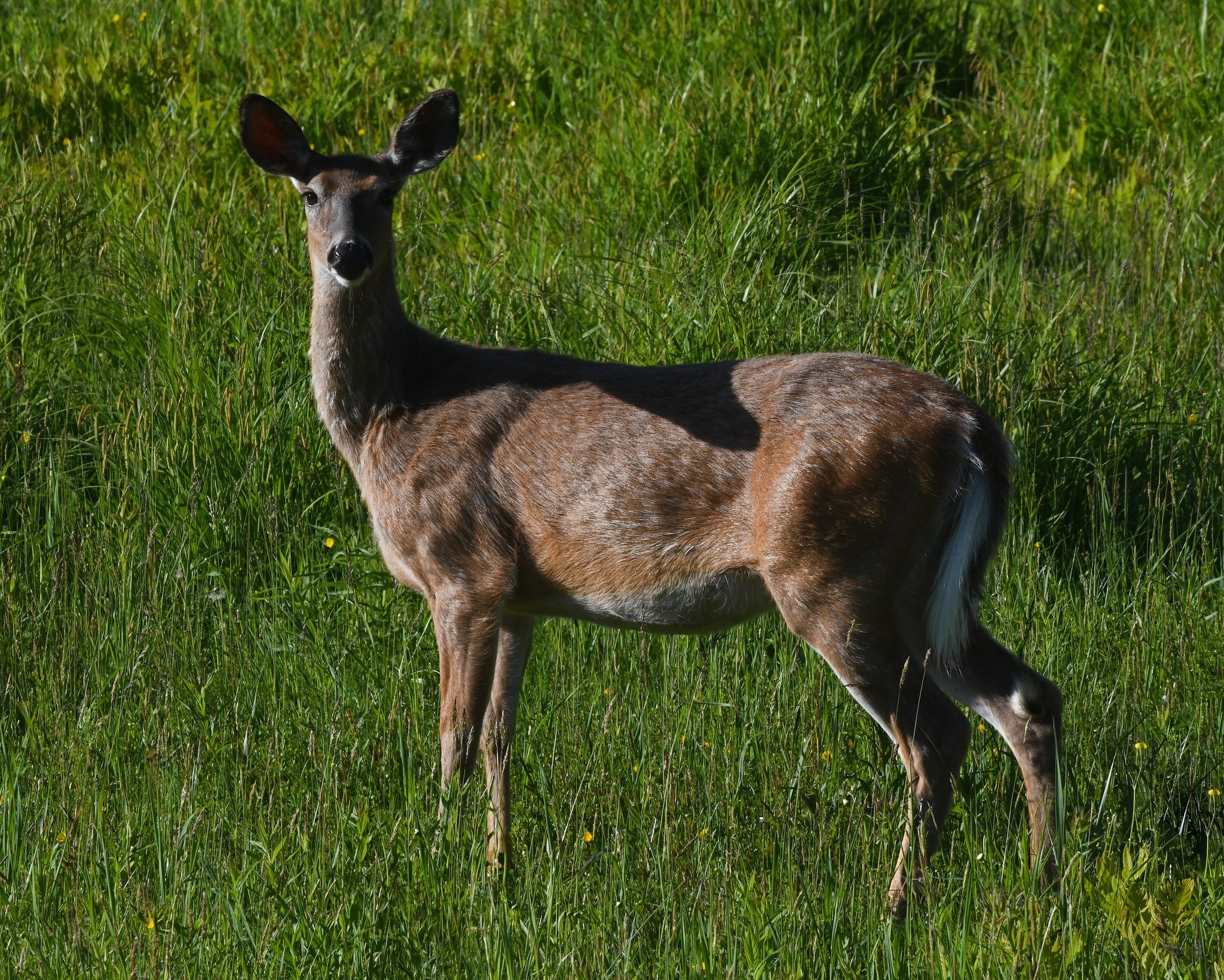
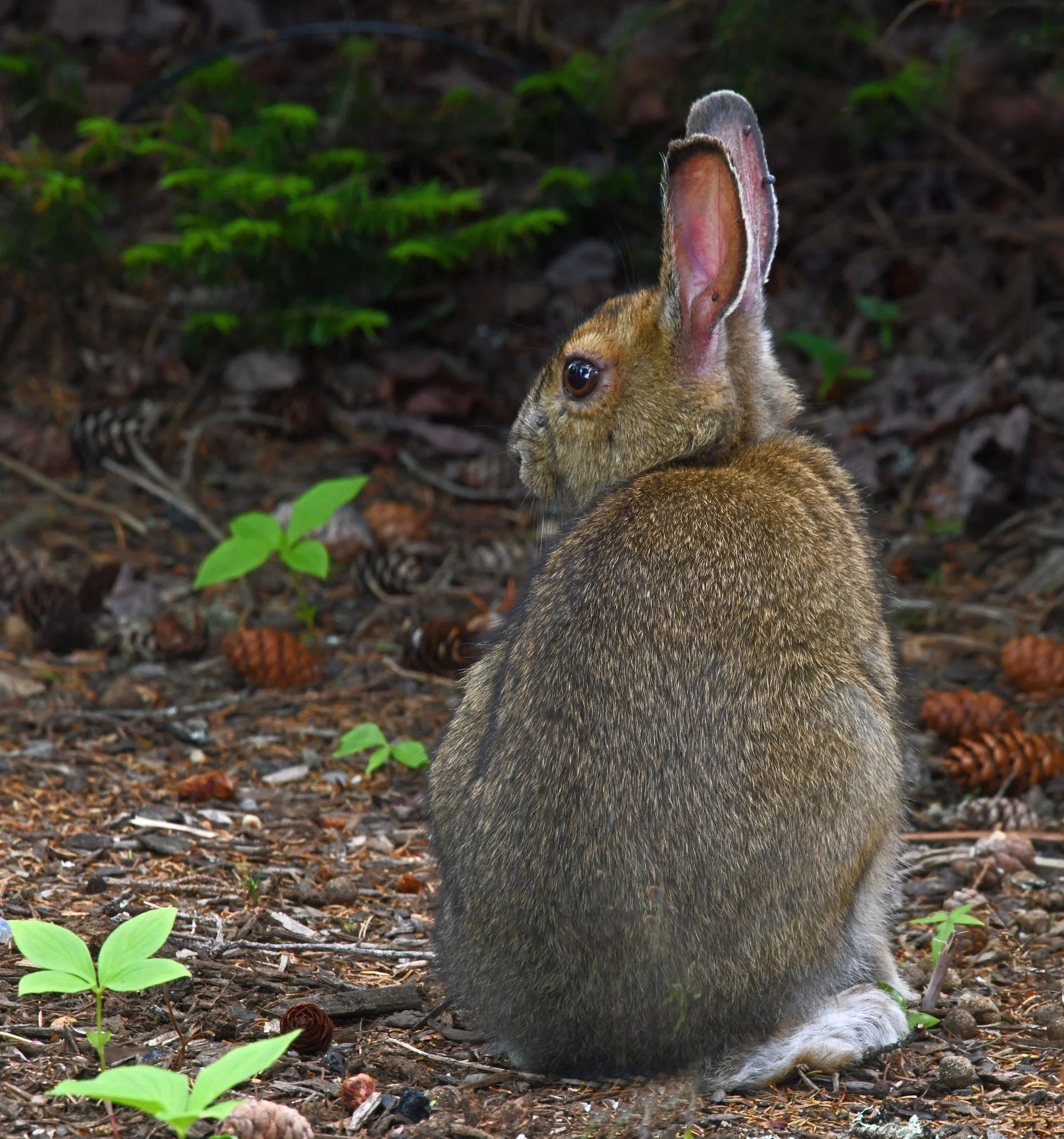
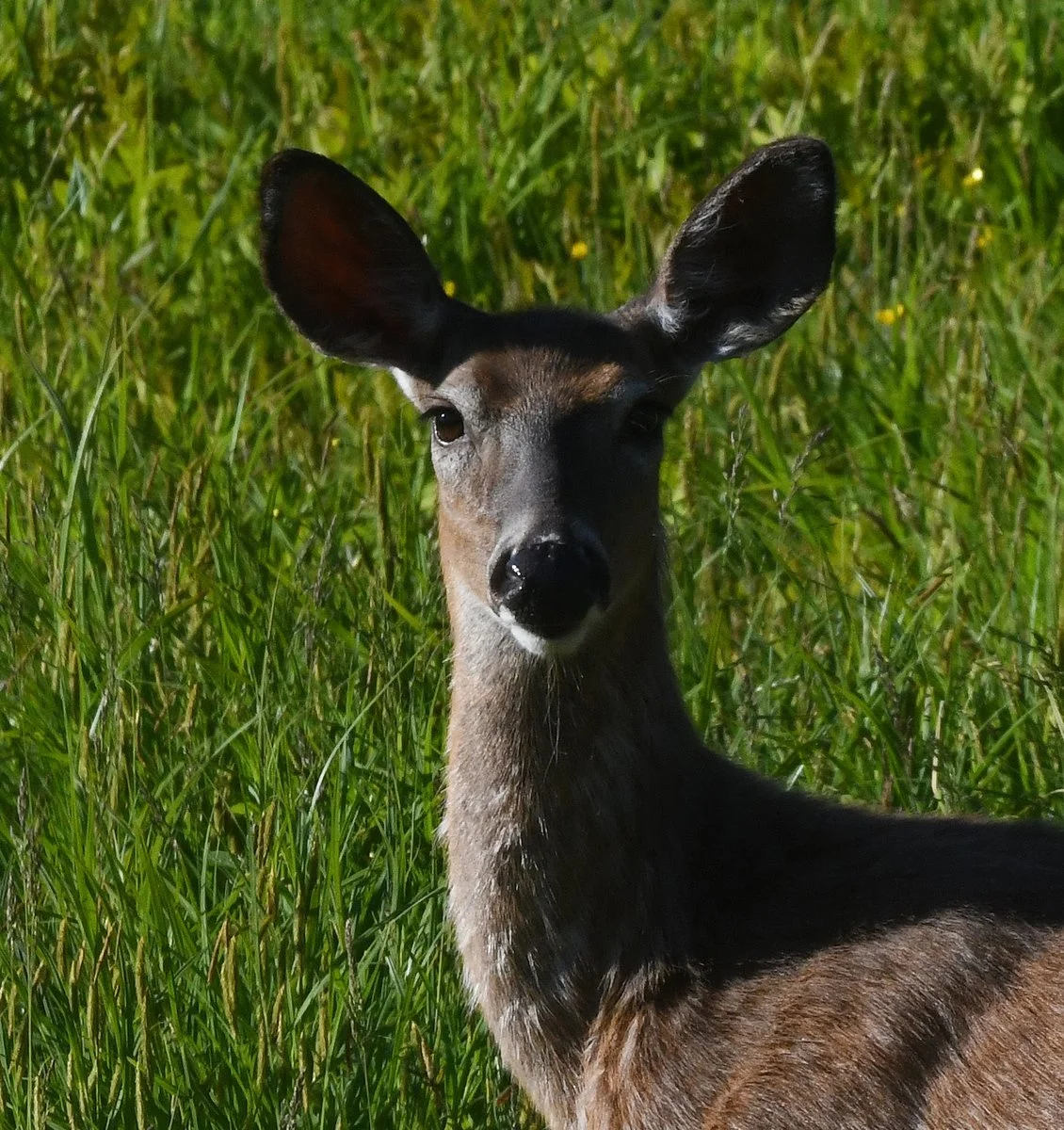
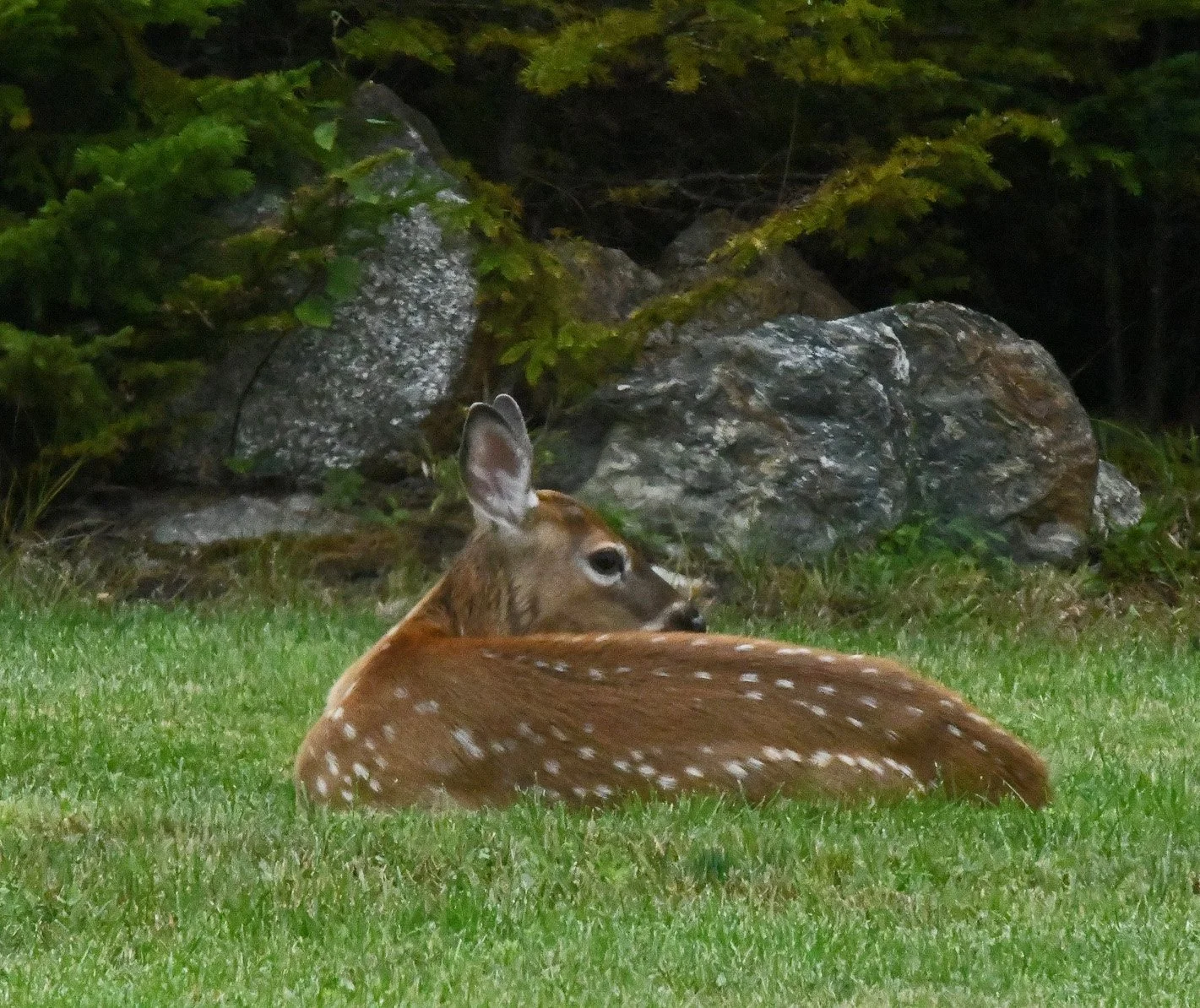
Our white-tailed deer and snowshoe hares are now sporting their summer attire. Above, you see a doe in her cool, thinner reddish coat. Below, you’ll see a hare in her thinner brown coat.

Their coats not only change density due to rising temperatures, the new colors provide seasonal protection against predators. The deer’s summer coat blends better with sunlit fields and sun-dappled woods. Its thick winter gray coat blends better with the woody grays of leafless vegetation.

The hare’s summer coat blends better with summer forest floors (although their big feet usually continue to have some white fur, as if they stepped in paint). The hare’s thick white winter coat, of course, blends with the snow.

If we continue to get fewer and fewer snow storms due to global warming, it’s going to be interesting to see how hares respond. Their coat color transitions reportedly are governed by the amount of daylight more than anything else. If less snow means more light, they may stay brown longer. Without snow on the ground, white hares seem spotlighted. This can be of special concern during the evening and night hours, when sharp-eyed owls, bobcats, lynx and coyotes are on the prowl.

The deer don’t have that problem.

(Images taken in Brooklin, Maine, on June 3 and 6, 2026.)
Comment

Comment

In the Right Place: At BBY, XIV

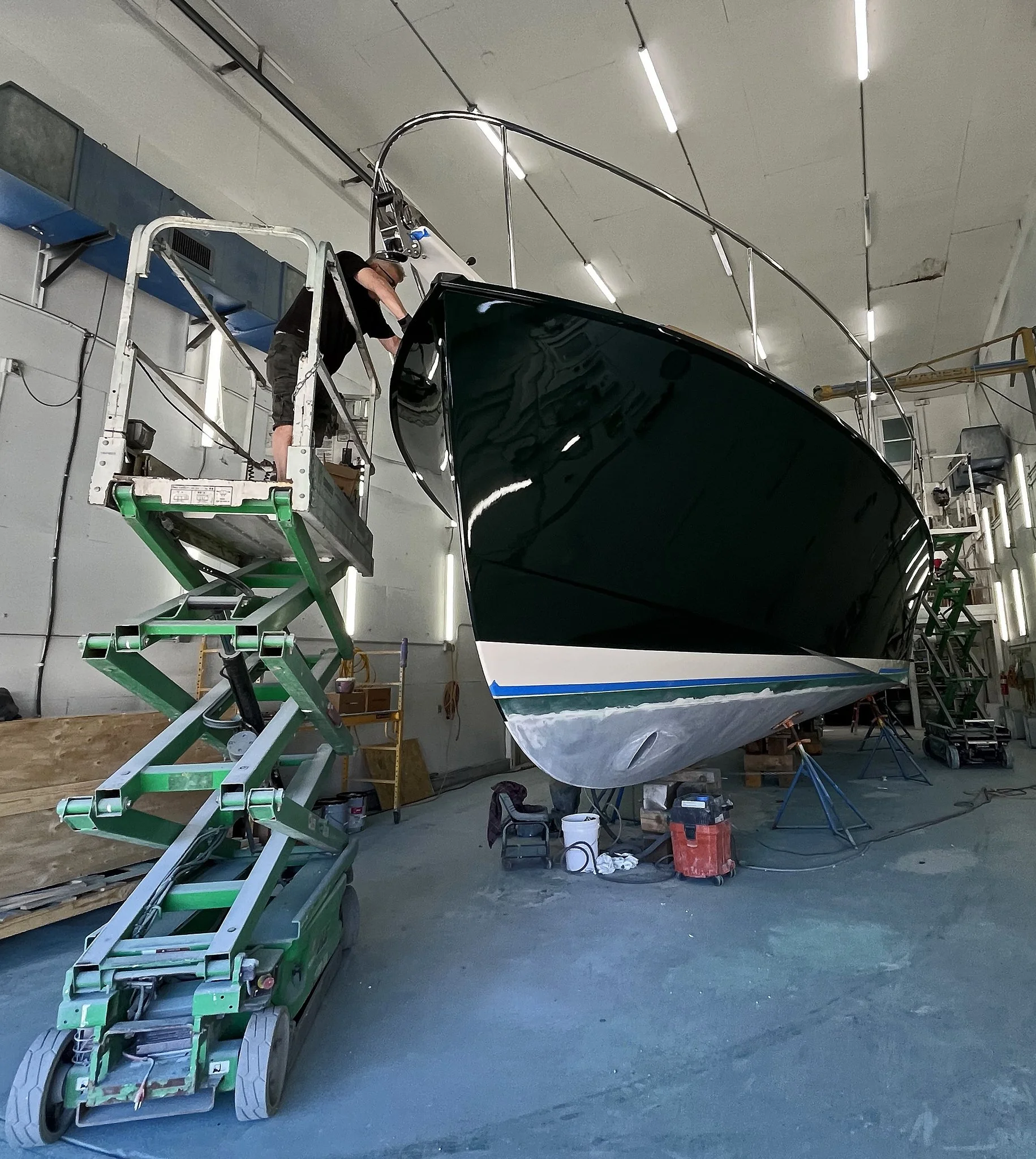
A good paint job is essential in fine boatbuilding. And, that’s what this no-name Express Cruiser that we’ve been following is getting at the Brooklin Boat Yard. She’s still in the paint shop and still being completed while the sanding and painting are going on. I wonder whether she’ll be in the water by Independence Day.

As you may remember, this cruiser was designed by Will Sturdy, BBY’s Chief. Designer. She’ll be 47 feet long overall, with a 14-foot beam (widest part), according to the Yard’s sheet on her. She’s scheduled to be powered by an 850-horsepower diesel engine that reportedly will give her a top speed in the low 30s and an efficient cruising speed in the mid- to upper- 20s. That’s knots, I believe; if so and if my top-of-mind math is working, the speed range in mph would be about high 30s to low 30s.

 (Images taken in Brooklin, Maine, on June 16, 2026.)
Comment

Comment

In the Right Place: A Shrub for All Seasons

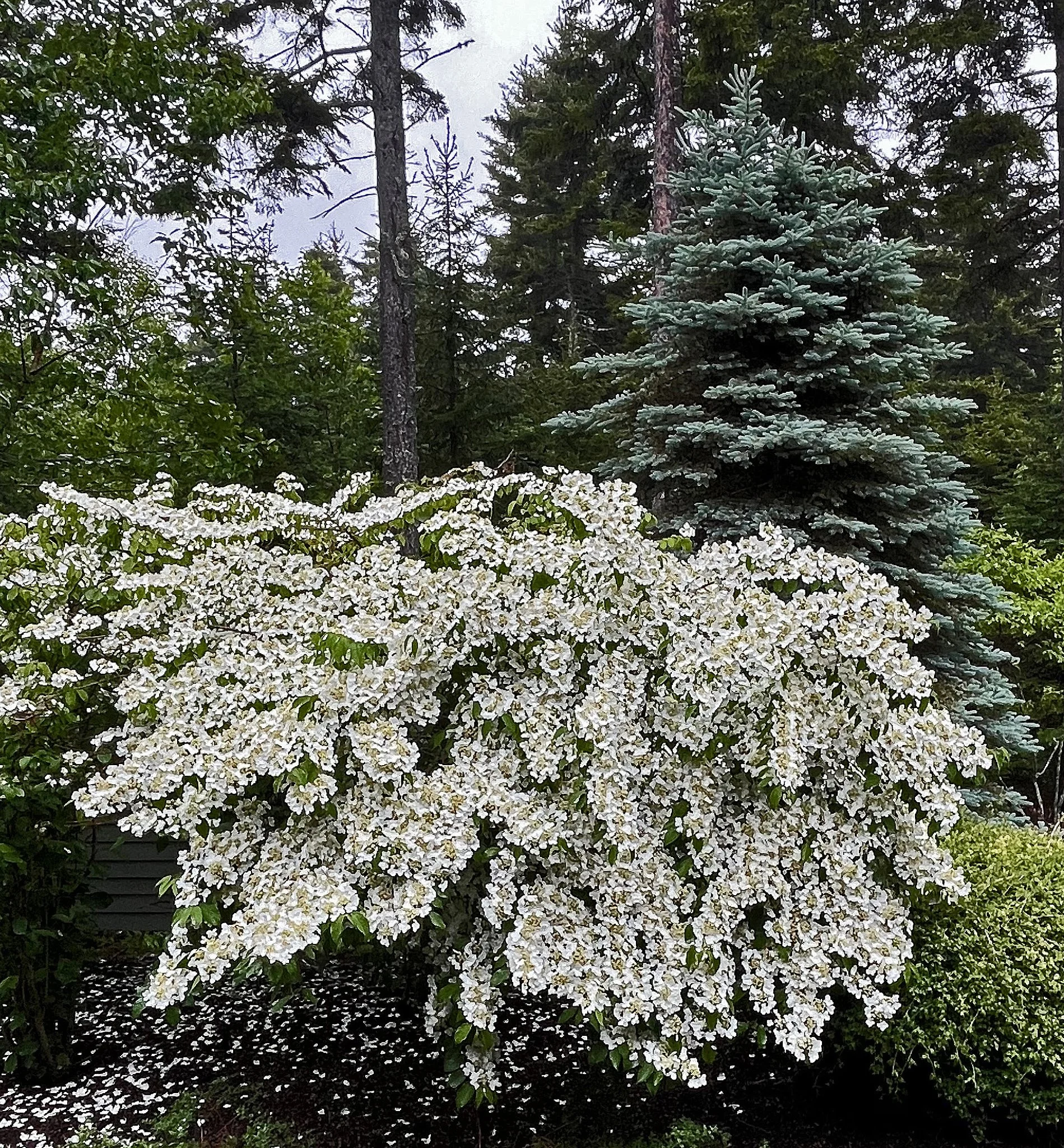
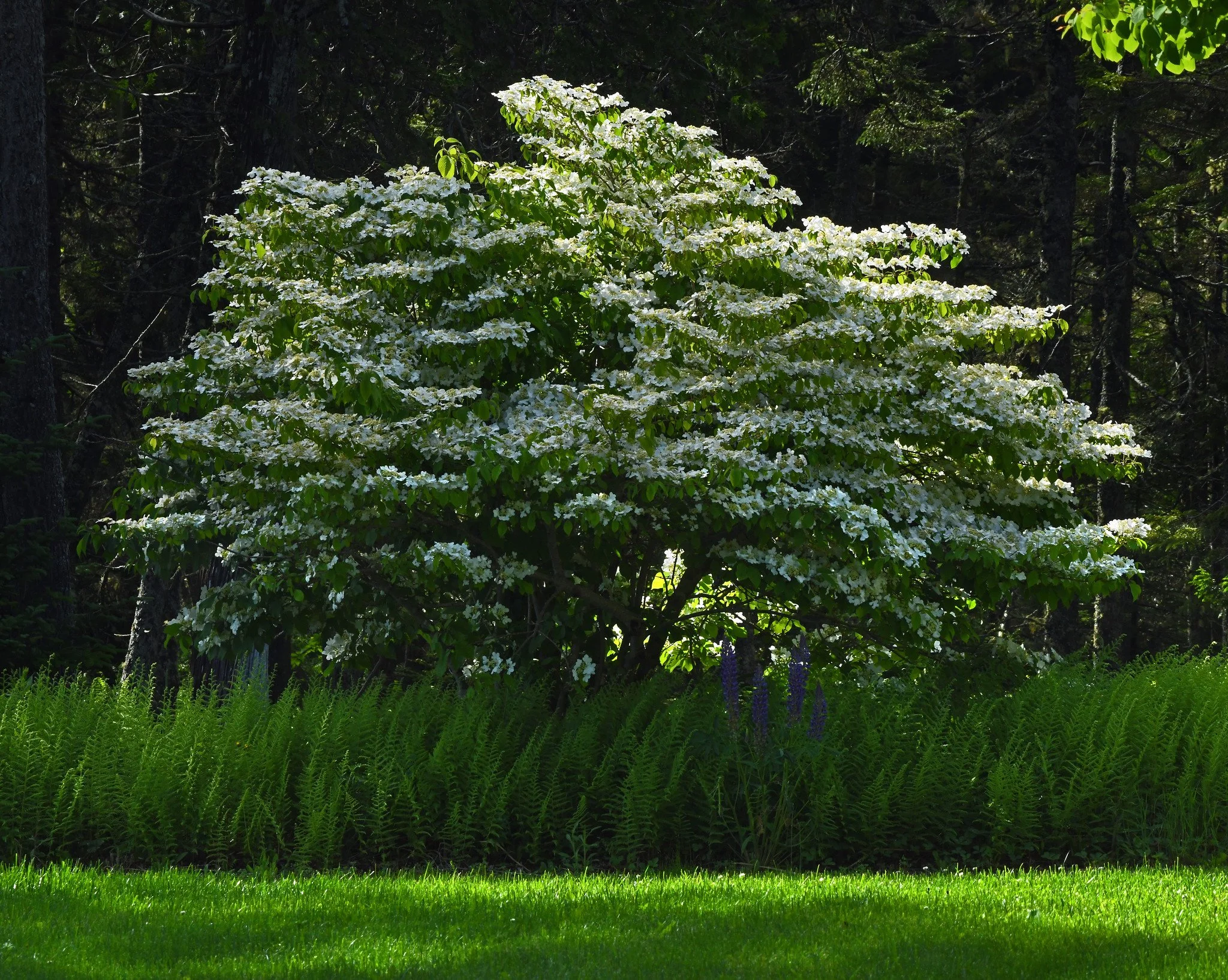
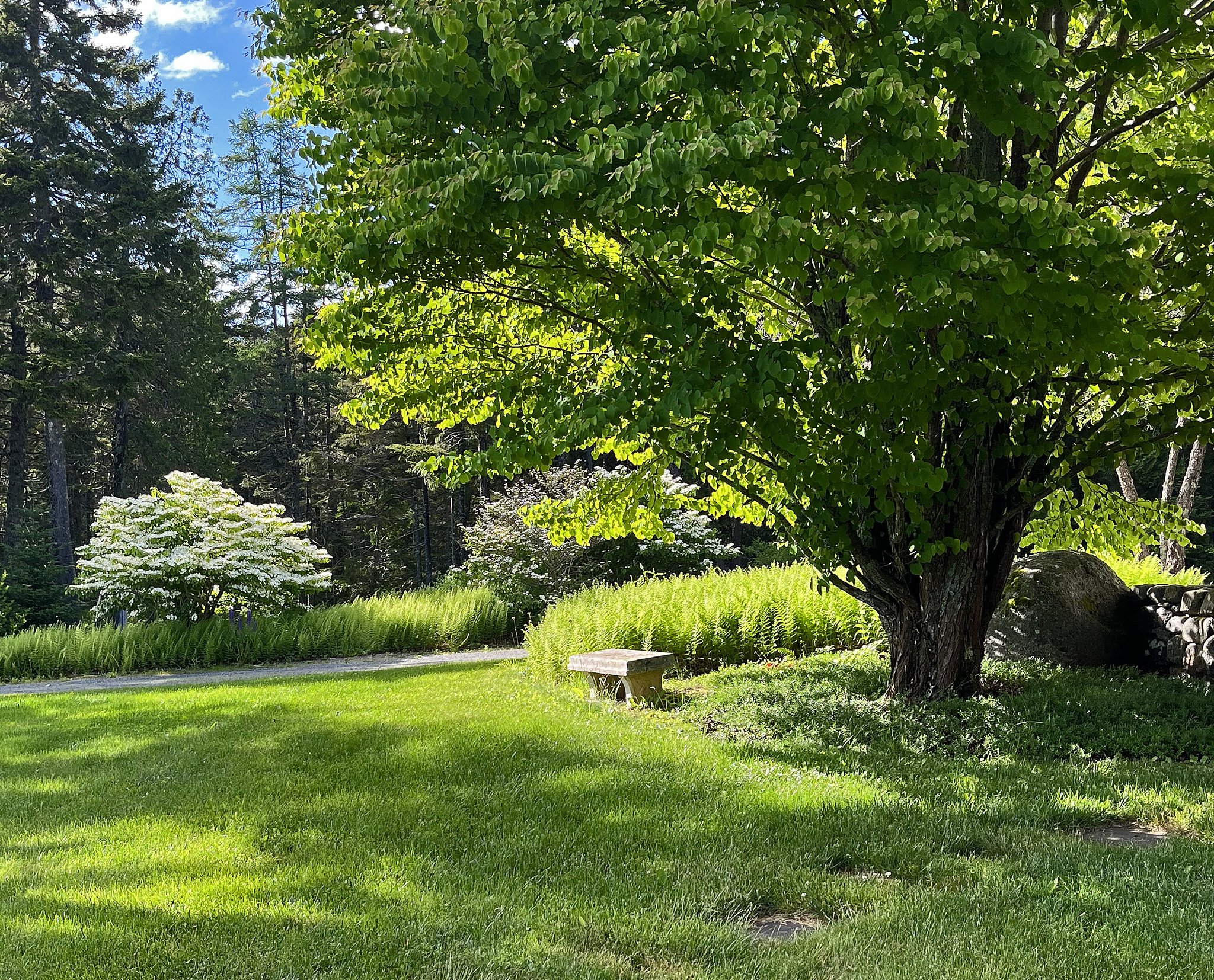
Above, you see a doublefile viburnum in yesterday morning’s rain. The umbrella-shaped flowers are now at their peak, clustering in cascades like white water or layers of agitated wind-blown snow. Below is another doublefile later that day in the late, lowering sun:

Although natives of Asia, doublefiles are very comfortable here and give year-long pleasure. As a bonus, they don’t seem to interest our almost insatiable deer at all. In the spring, their serrated, pleated and richly veined leaves come early and are thick and vibrant green; soon thousands of small, light-colored  buds appear. They’re flower-rich in the summer, as you see.

In the fall and early winter, their leaves turn indescribable hues of purple and red and thousands of shiny black and red berries sprout up. The berries attract flocks of birds. When the leaves fall in winter, their woody infrastructures often seem to be works of art. As do the fully-flowered summer shrubs:

(Images taken in Brooklin, Maine, on June 15, 2026.)
Comment

Comment

In the Right Place: Windjammers, II

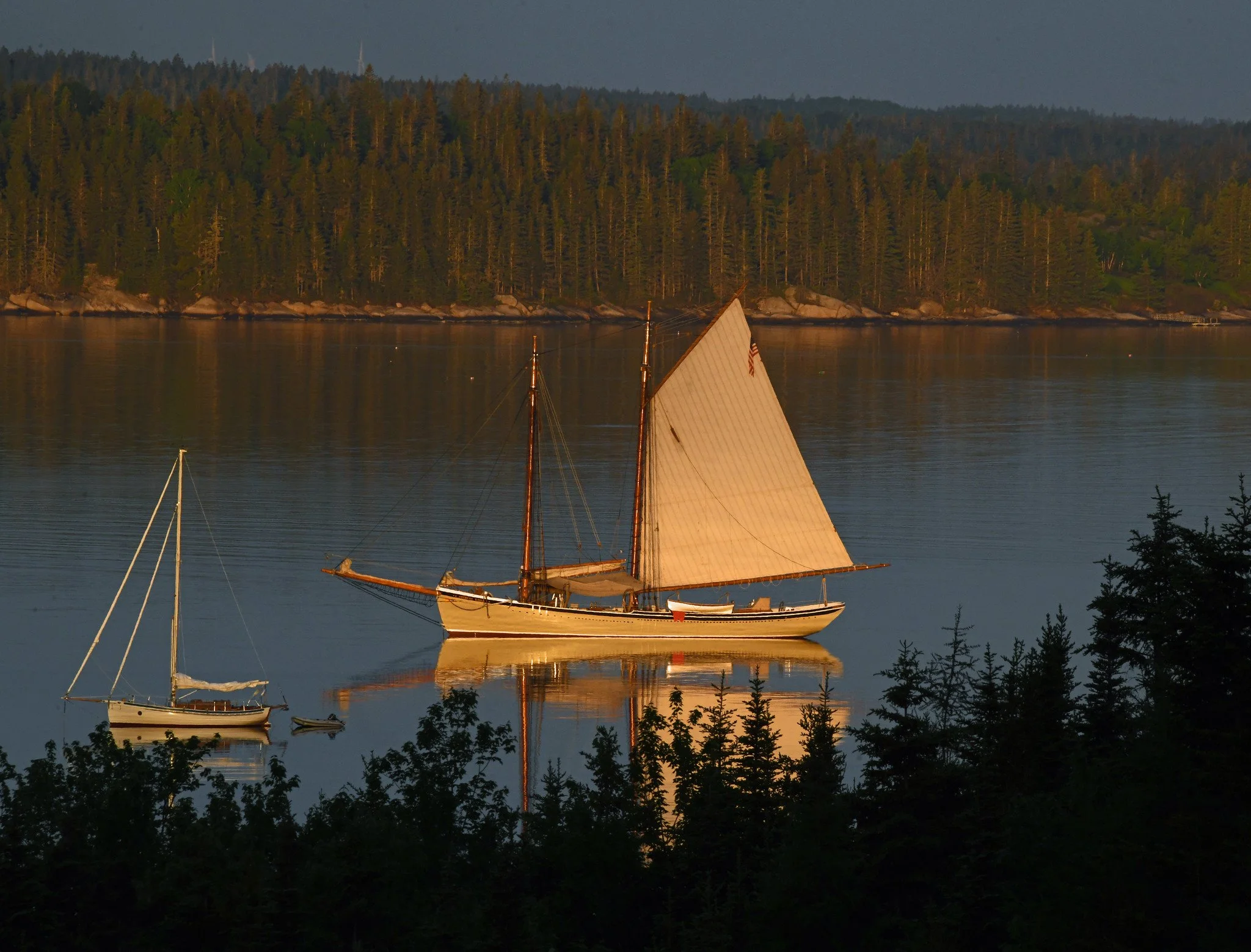
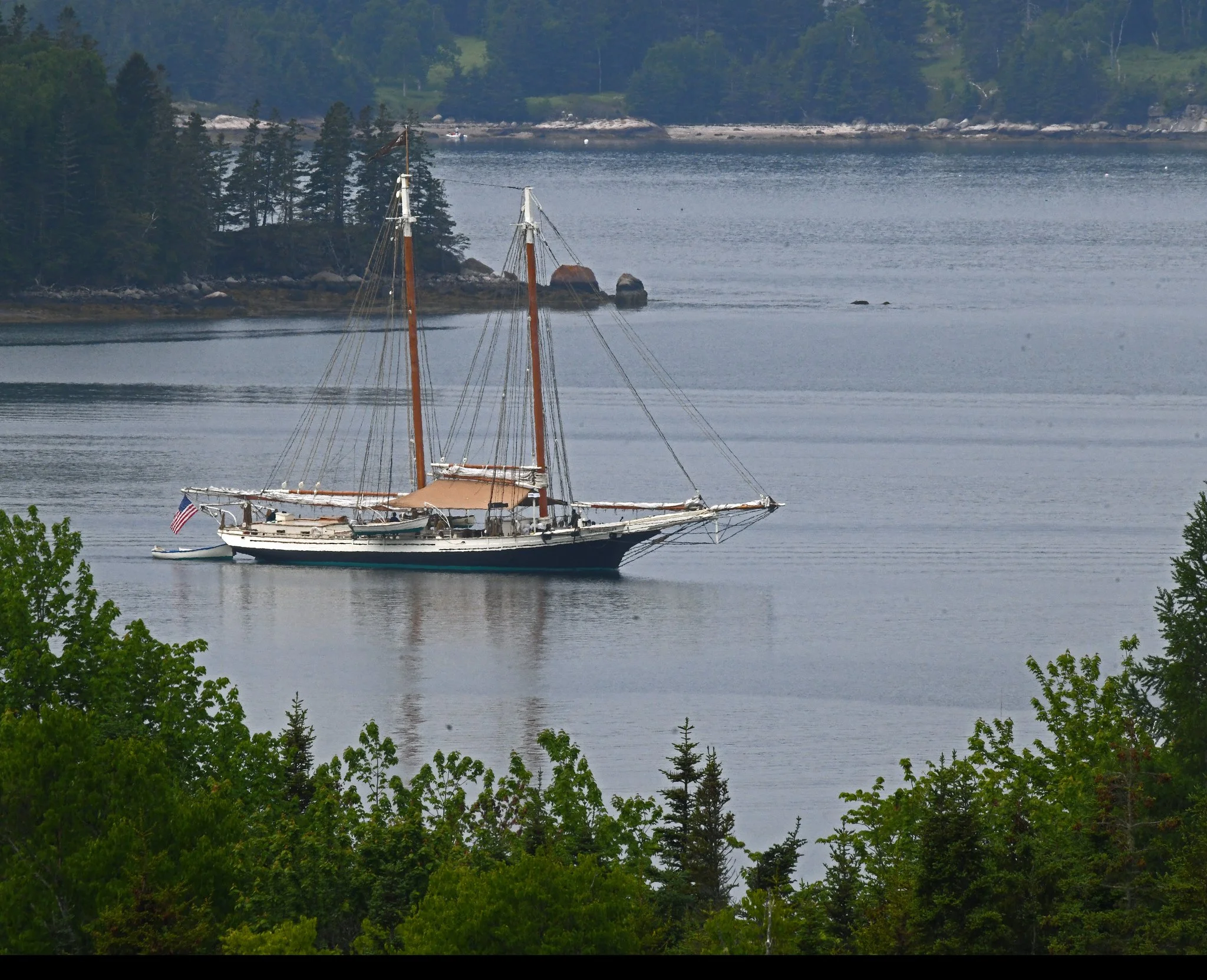
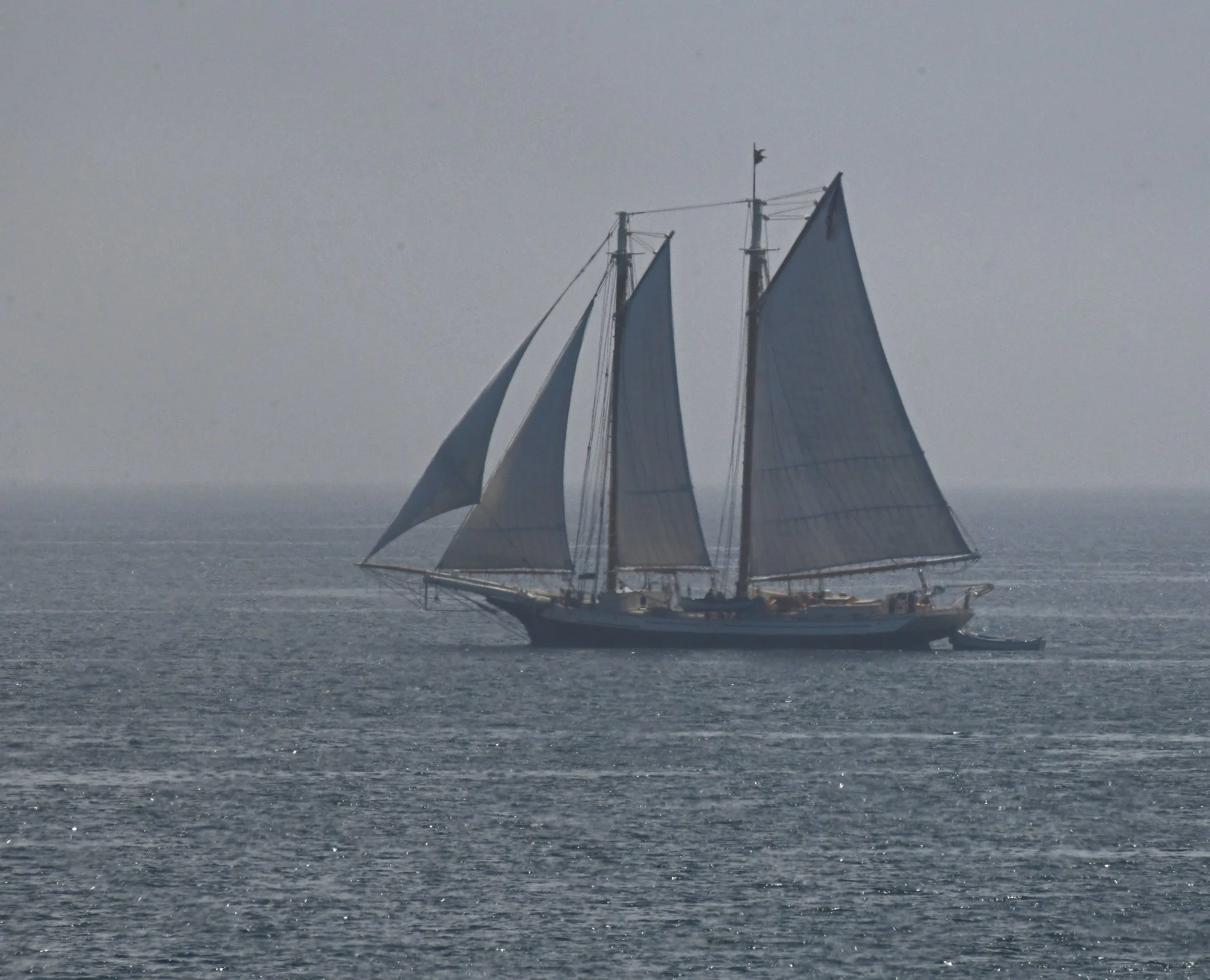
Above, you see the schooner GRACE BAILEY being pushed into Great Cove by her yawl boat at mid-morning last week. (She has no internal motor.) She anchored where she could show off her 118-foot profile and exceptionally good lines for a lady well over 100 years old:

GRACE was launched in 1882 in Patchogue, New York, and named after the daughter of her original owner, Edwin Bailey, a ccording to her website. She hauled lumber and oysters along the East coast until she was worn out. She was rebuilt in 1906 and renamed MATTIE, after Edwin’s granddaughter, Martha. She was relocated to Maine in 1919, where she lived the hard life of a coastal cargo cruiser for 20 years.

She was converted to a coastal tourist cruiser in 1939, served in World War II briefly as a training vessel for the Maine Maritime Academy, and underwent another major restoration in 1989-90. That’s when she was re-christened with her original name, GRACE BAILEY. She homeports now in Rockland, Maine.

In the images here, GRACE was on a 6-night cruise that featured live music, among other entertainment, according to her schedule. She left the Cove by early afternoon as a fog was setting in:

(Images taken in Brooklin, Maine, on June 11, 2026.)
Comment

Comment

In the Right Place: Happy Flag Day, Traditional or Wild

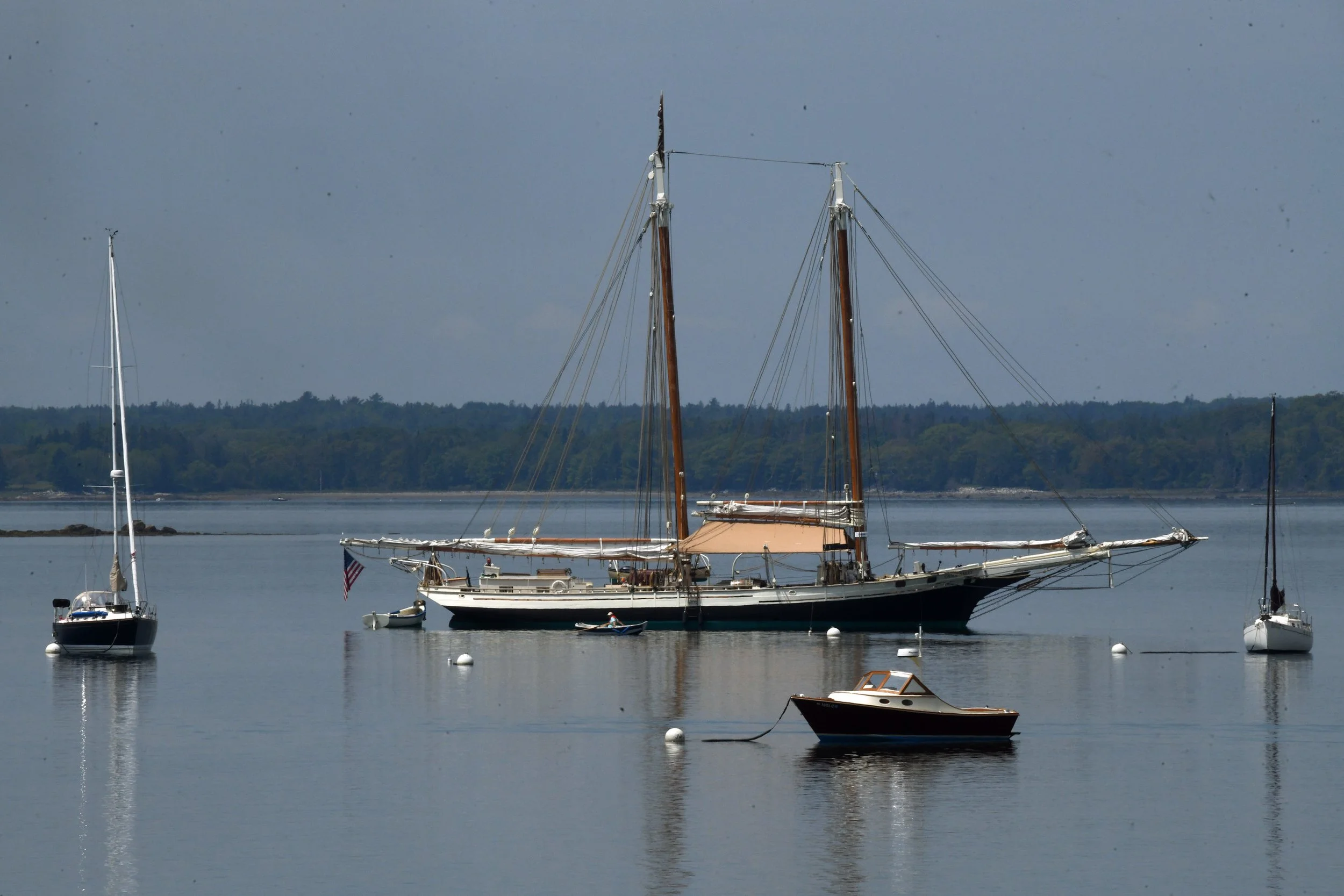
Today is traditional Flag Day in the nation at large. The day commemorates the June 14, 1777, resolution of the Continental Congress that adopted the first flag of the United States, which symbolized the union of the 13 colonies that had declared independence the year before.

That flag, as does today’s, contained 13 stripes of alternating red (7) and white (6), including red top and bottom stripes. In an upper left field of blue there were 13 white stars, which were described then as symbolizing the “new constellation” of self-declared states.

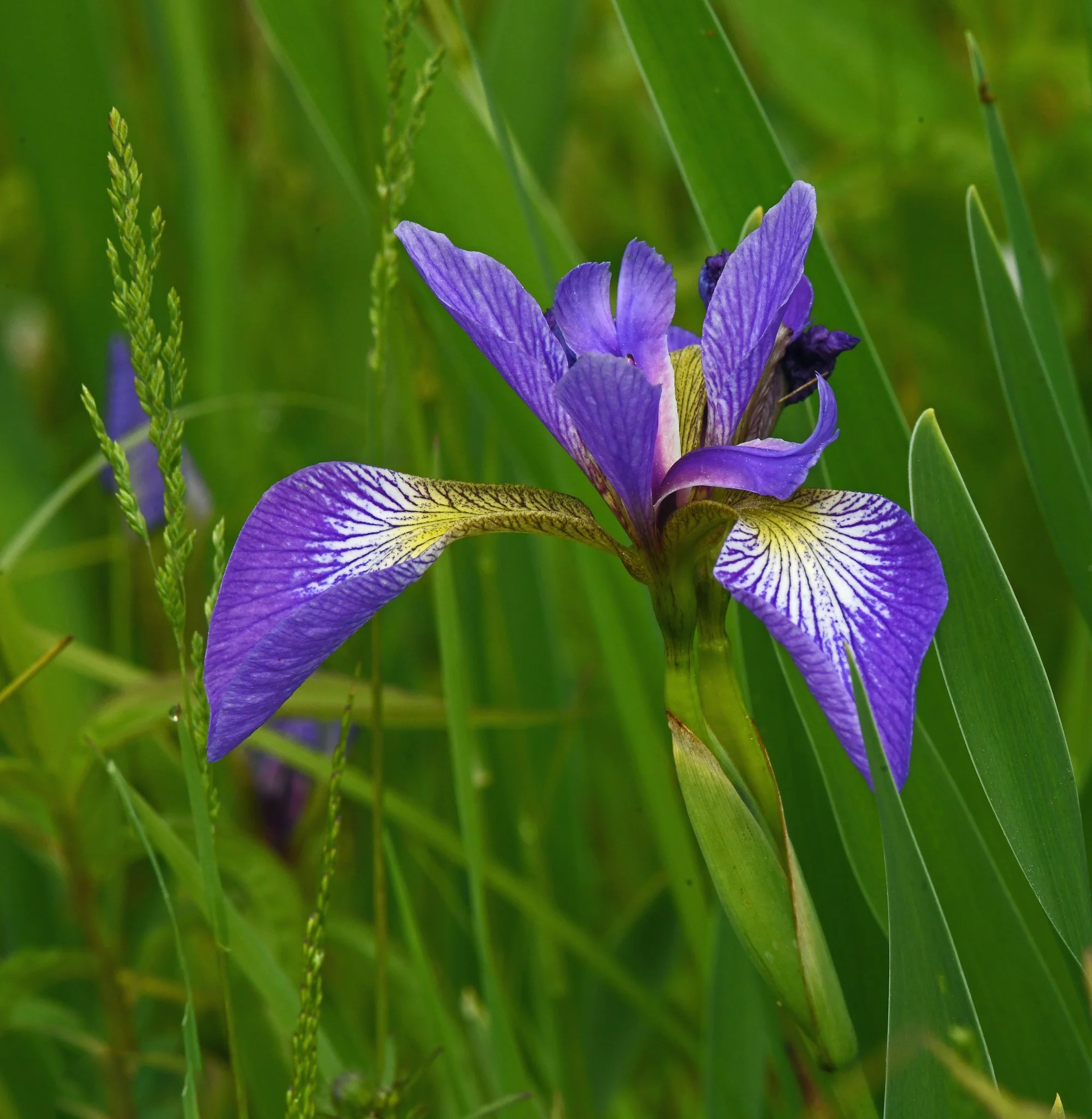
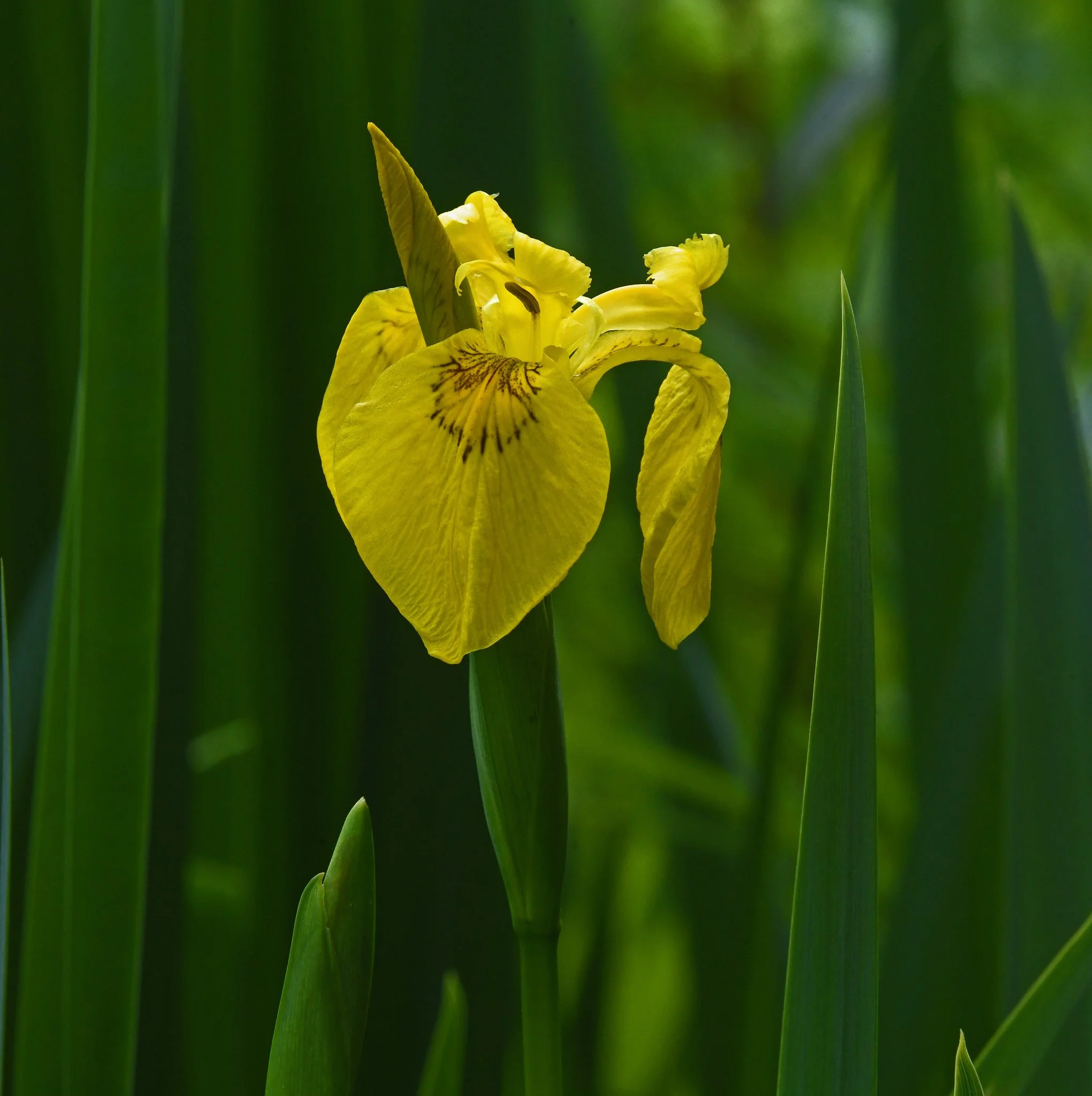
Today also is another kind of flag day for wildflower lovers in Down East Maine: Blue flag iris (shown above) and yellow flag iris (shown below) appear to be at their peaks. Yes, the blues are natives and their beauty is benign, while the yellows are foreigners and they can be beautiful troublemakers. But that’s a different story. Today, let’s let Old Glory, blue iris, and yellow iris wave beautifully.

(Images taken in Brooklin, Maine, on June 12, 2026.)
Comment

Comment

In the Right Place: Pollination vs. Pestilation

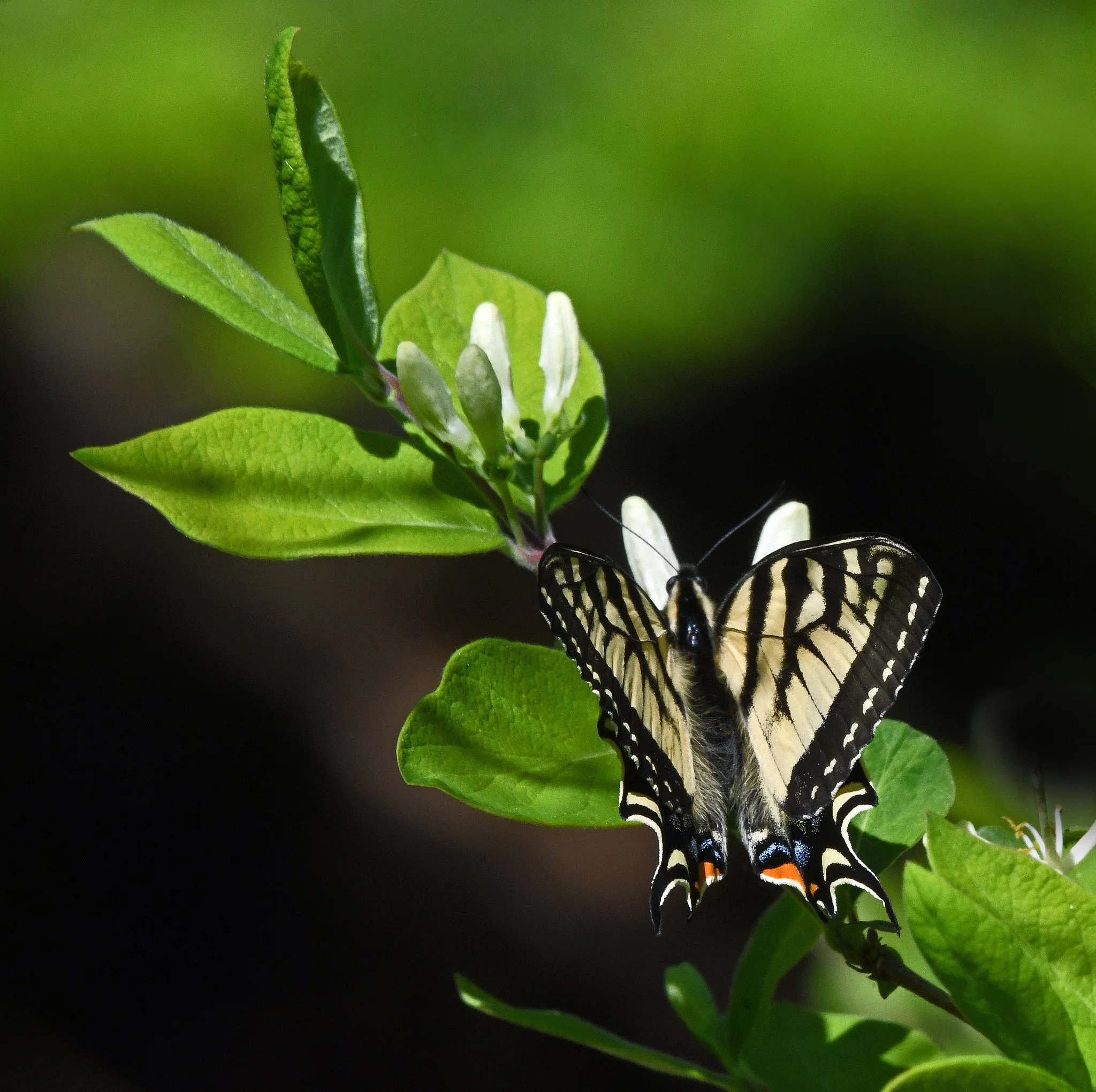
Above, you see a Canadian tiger swallowtail feeding on the deeply hidden nectar of wild honeysuckle. The flower’s pollen will stick to the butterfly’s hairs and probably be rubbed off on another plant to propagate the honeysuckle.

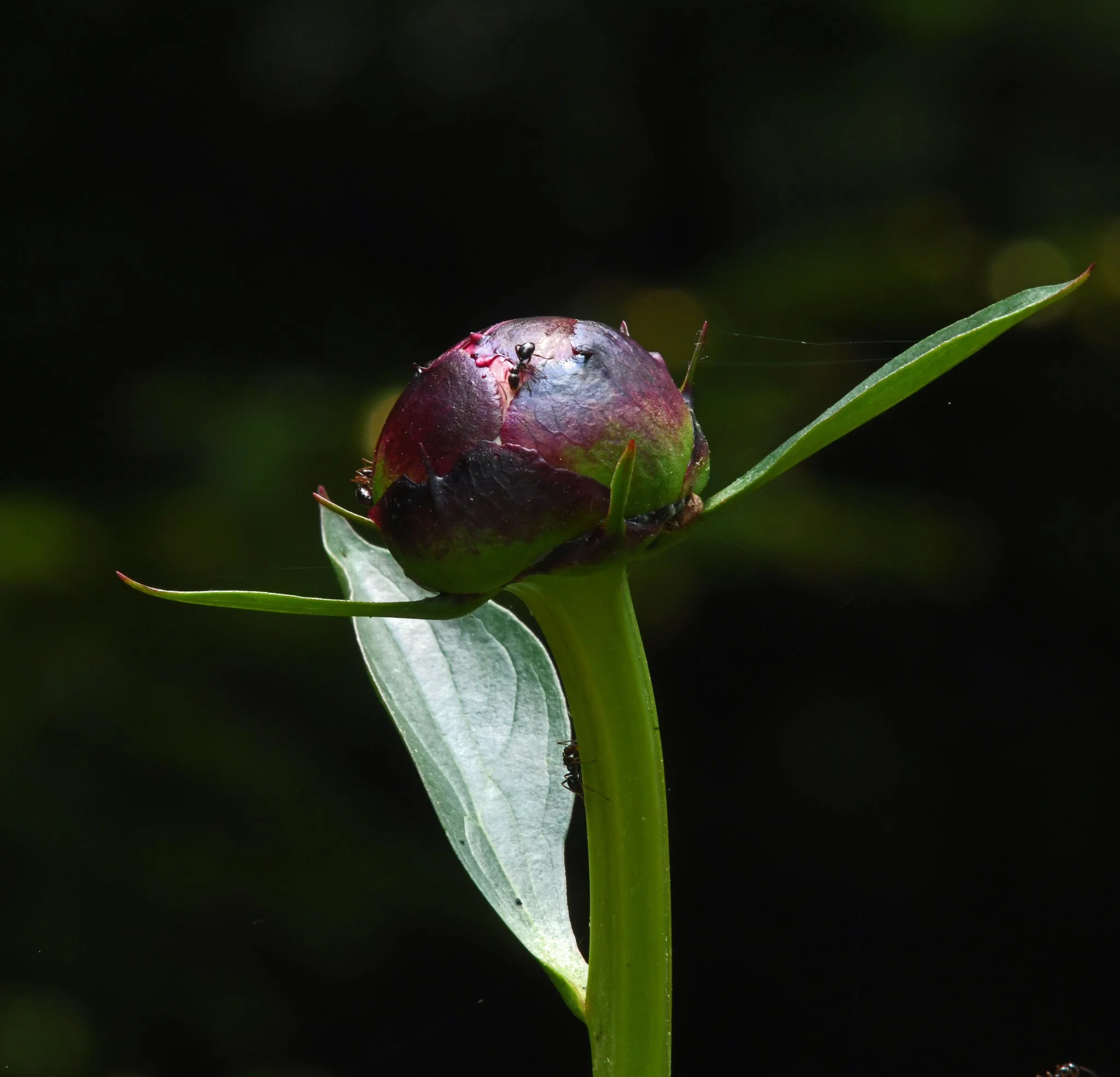
Below, you’ll see what appear to be black garden ants (Lasius niger) feeding on the oozing nectar from a peony bud’s "extrafloral nectaries" — special glands that secrete a sugary liquid. The ants aren’t engaging in pollination; they’re engaging in “biological mutualism.” That is, in exchange for the bud’s sweet sustenance, the ants perform pest control on it – they repel pests, such as aphids and thrips.

By the way, peonies don’t need this Orkin-like treatment to bloom beautifully, as many people believe. The pests usually don’t do lasting damage. The ants get the better part of the deal, but no one’s complaining except the aphids and thrips. (Images taken in Brooklin, Maine, on June 9 and 12, 2026.)
Comment

Comment

In the Right Place: Windjammers, I

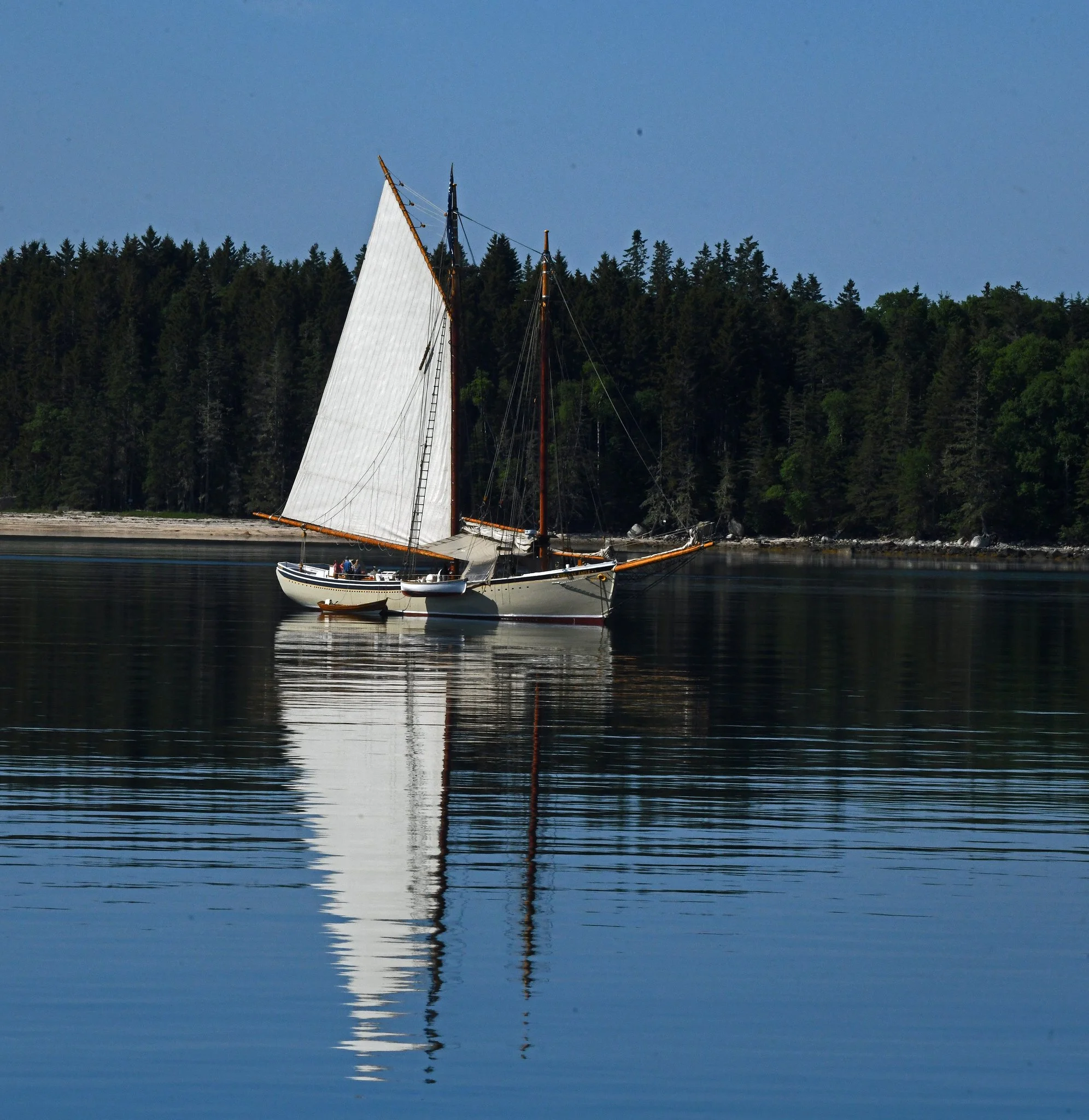
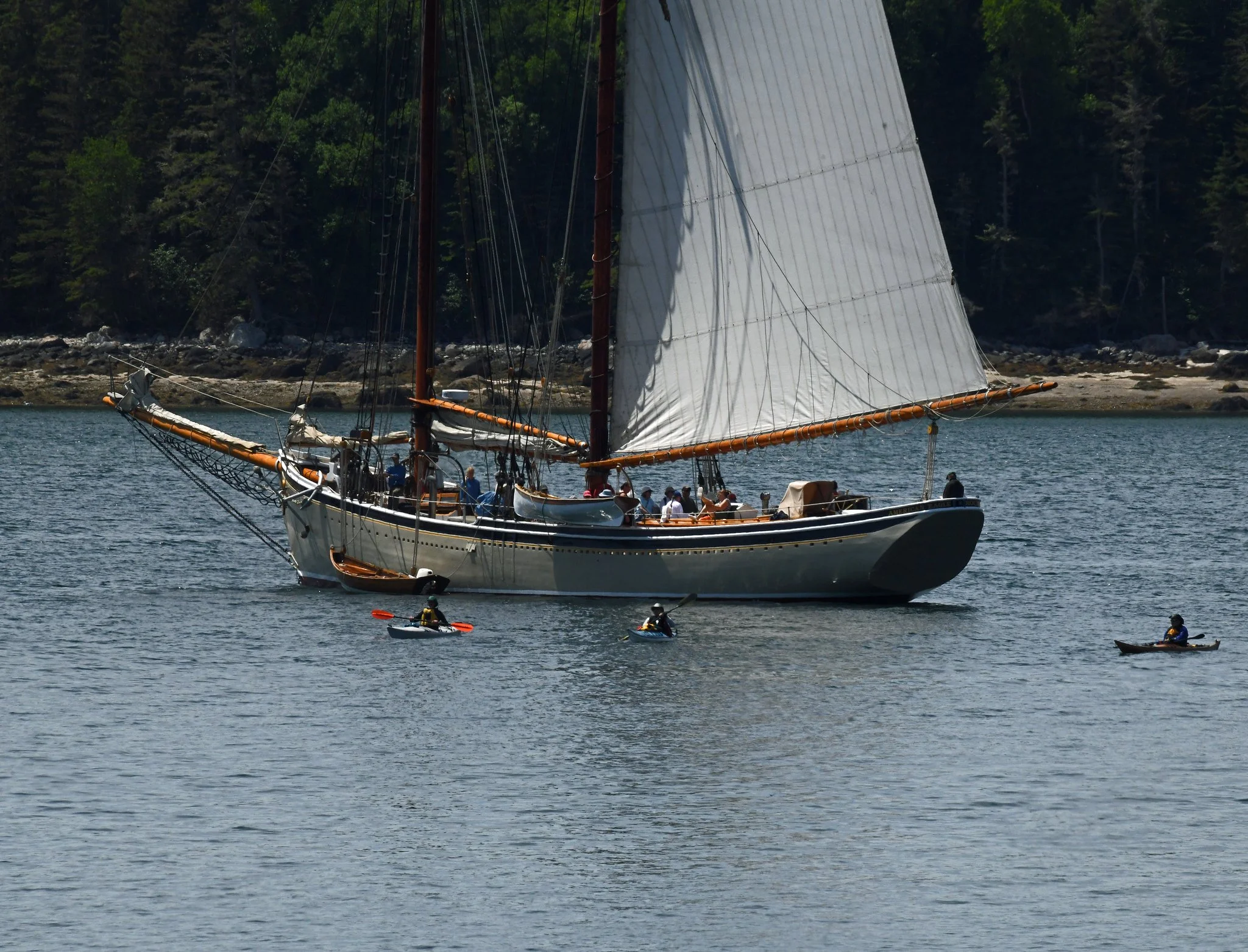
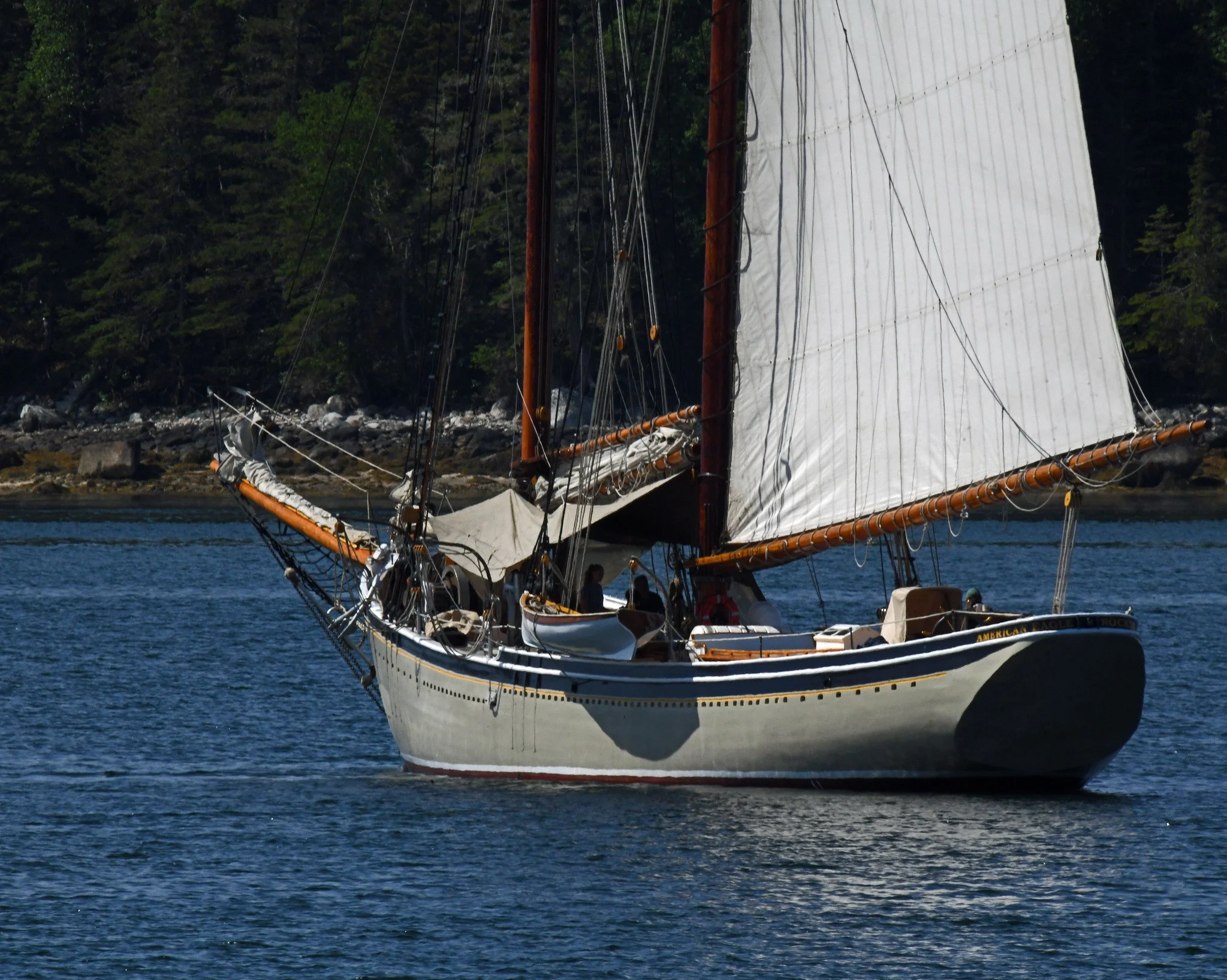
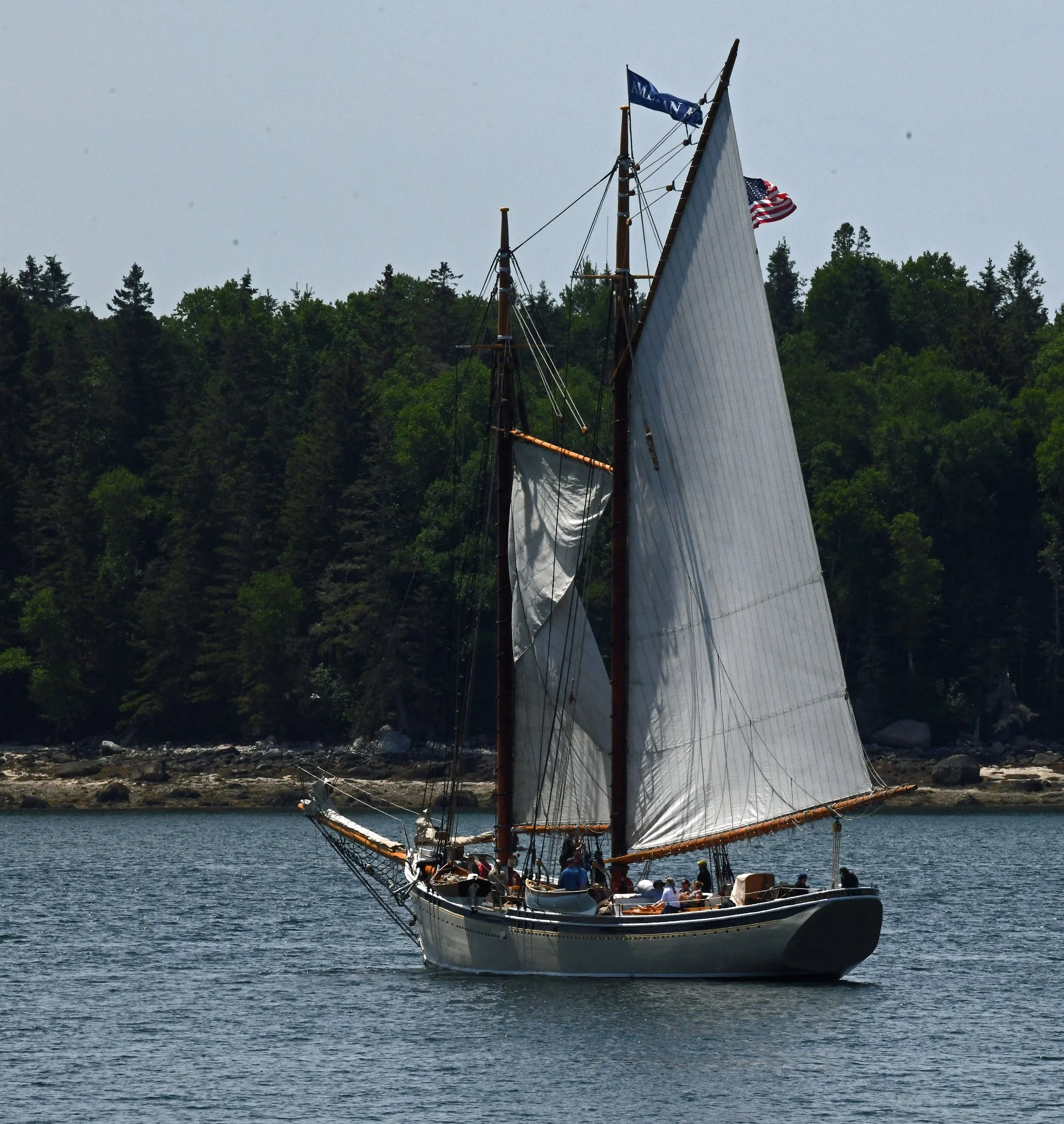
The prize for the first windjammer to overnight in Great Cove this year goes to – drum roll and trumpet fanfare, please – AMERICAN EAGLE! How appropriate for the nation’s 250th birthday.

Here you see her yesterday morning at 5 a.m., just as the low dawn light reached the Cove and gilded her gold. Several hours later she was admiring herself in the mirror as her passengers awoke:

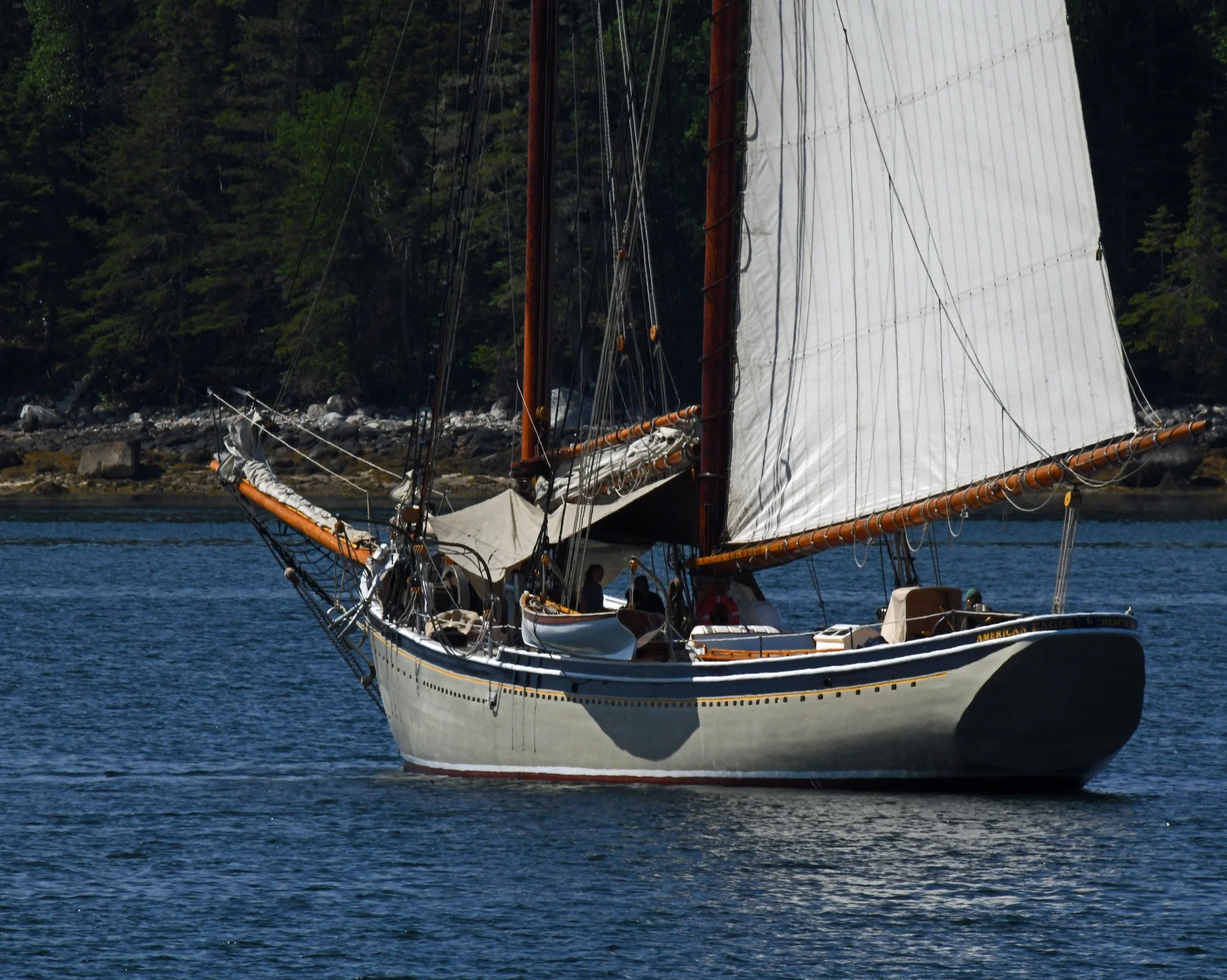
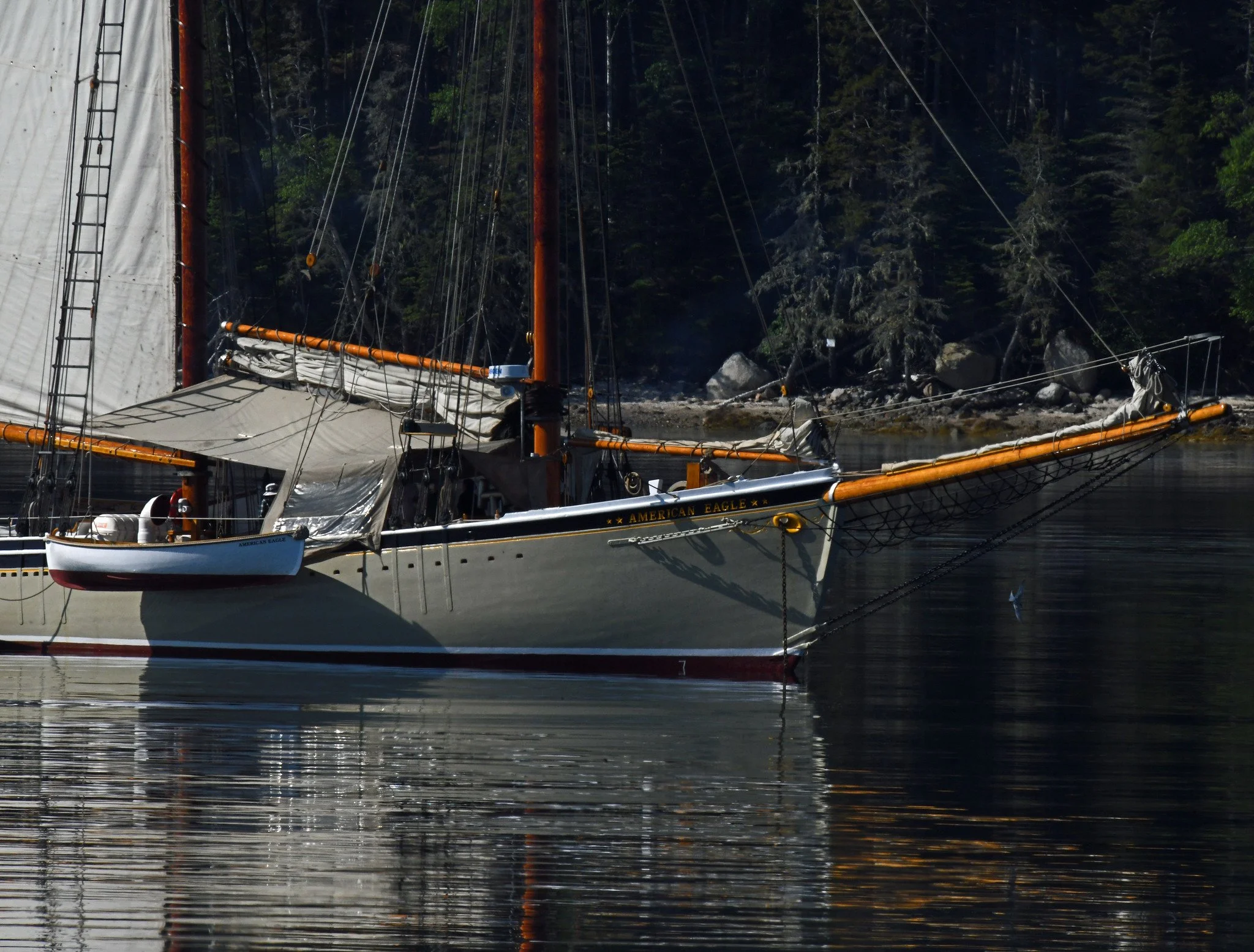
Below, you’ll see her resting and leaving the Cove in the haze of mid-day. Between those times, there was a special moment for me.

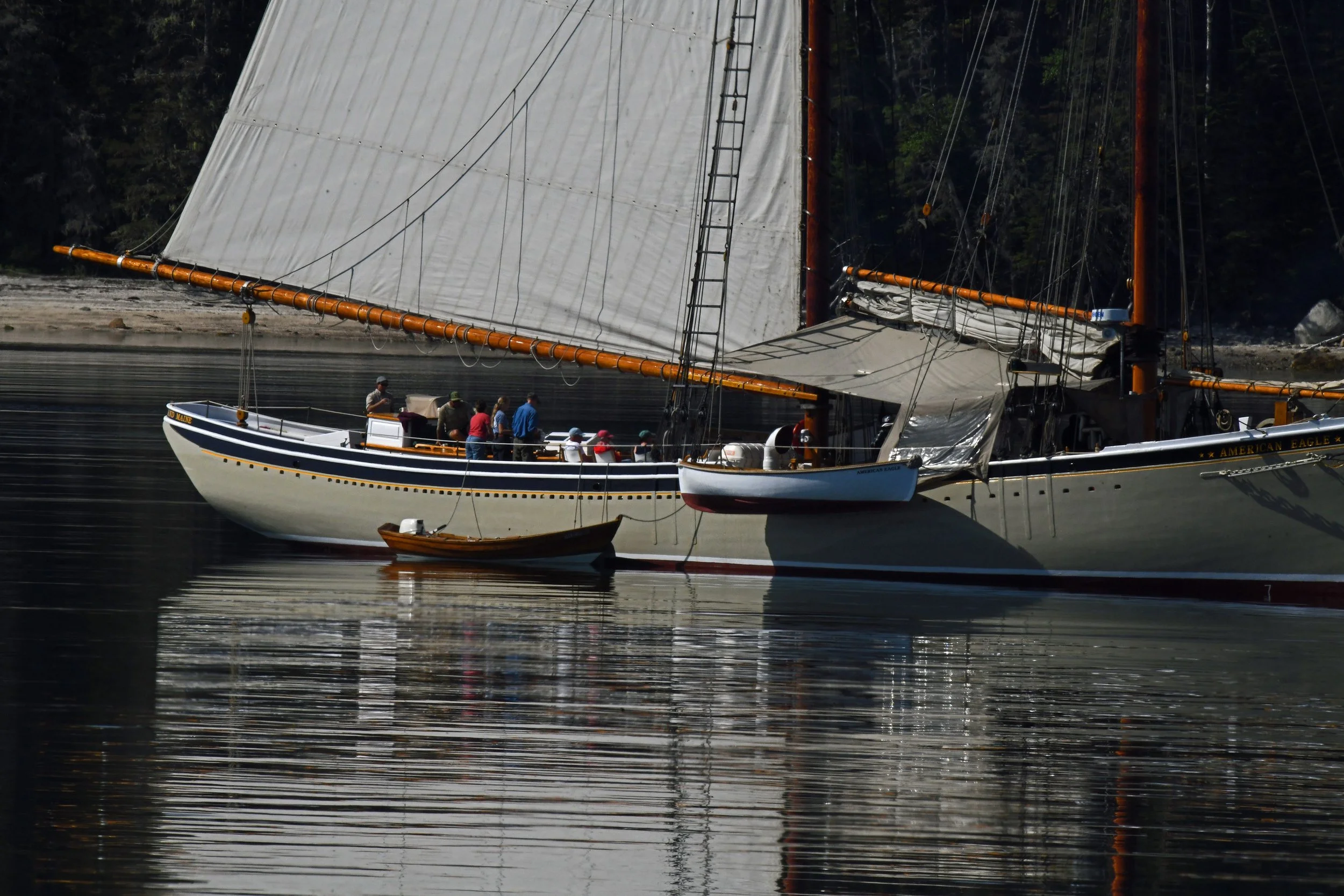
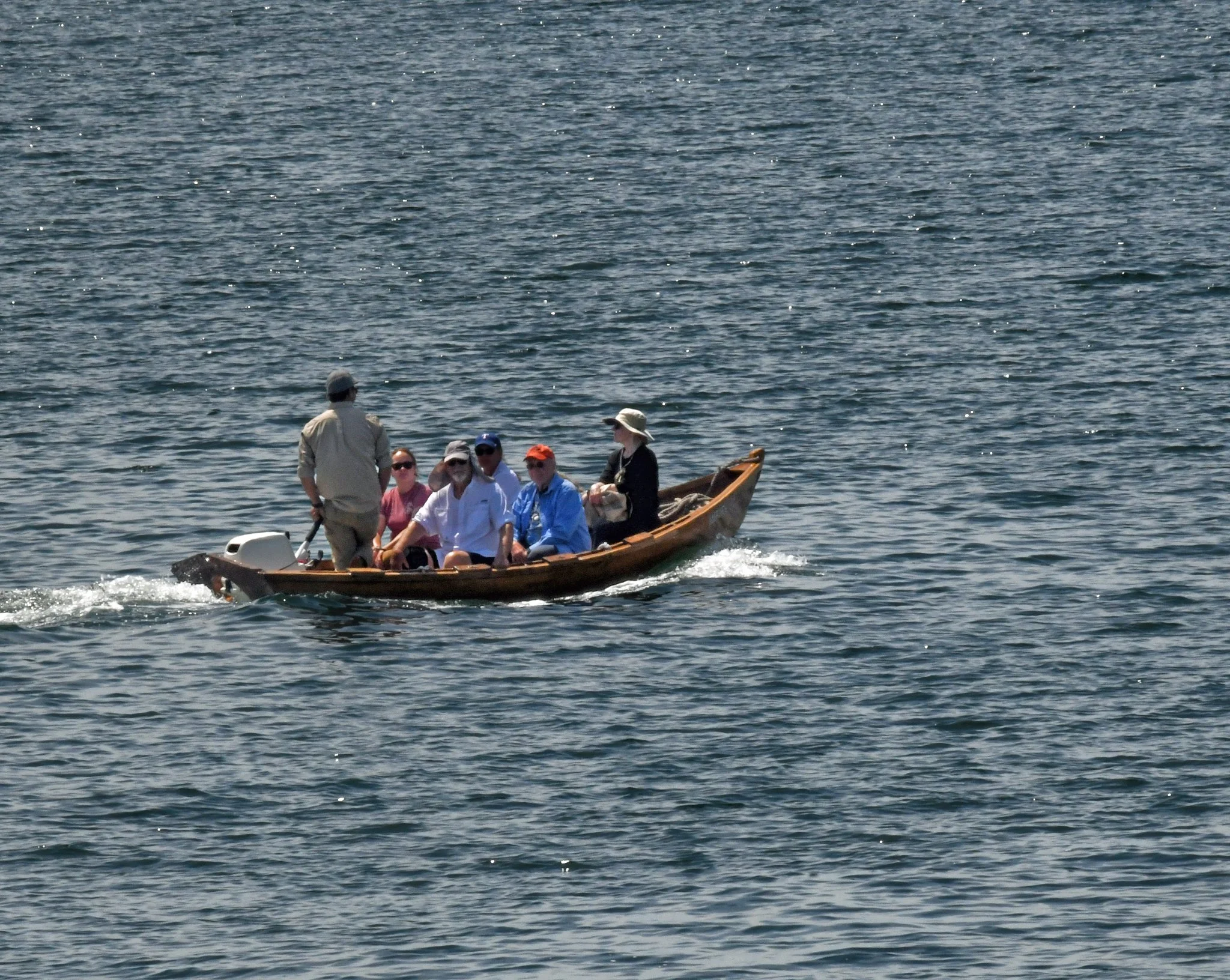
After breakfast, most of the EAGLE passengers were ferried ashore to explore the campus of the renowned WoodenBoat School; a few people remained on deck. This is not unusual for visiting coastal cruisers. However, while I was sitting on the Cove’s green bank watching the sun-lit schooner swing slowly around her anchor in a nice salty breeze, I heard something unusual.

Then the mystery made itself clear: someone was stumming and plucking a banjo and the notes were wafting off of her deck over to me. It nicely completed a moment of maritime nostalgia. It seems that the EAGLE is on a 5-night cruise ending June 12 that features onboard modern folk music, among other things, according to her schedule.

The EAGLE was launched in 1930 out of Gloucester, Massachusetts, under the name ANDREW & ROSALIE, according to the literature. Her name was changed out of patriotic sympathy during Worl War II. She’s a tidy 122 feet long overall and a high rider. She now homeports in Rockland, Maine. (Images taken in Brooklin, Maine, on June 10, 2026.)
Comment

Comment

In the Right Place: Iris, U-Ris, We All Ris

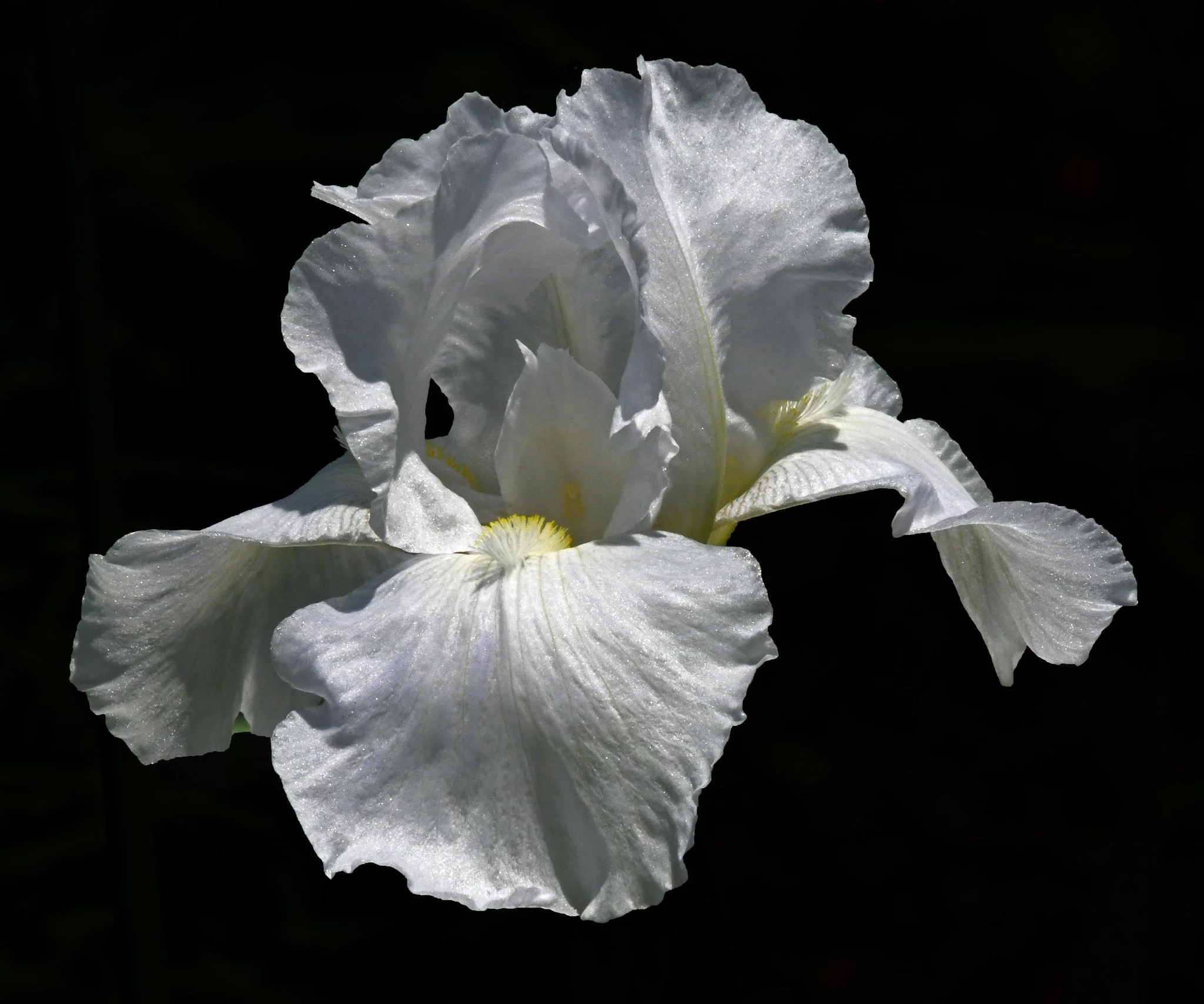
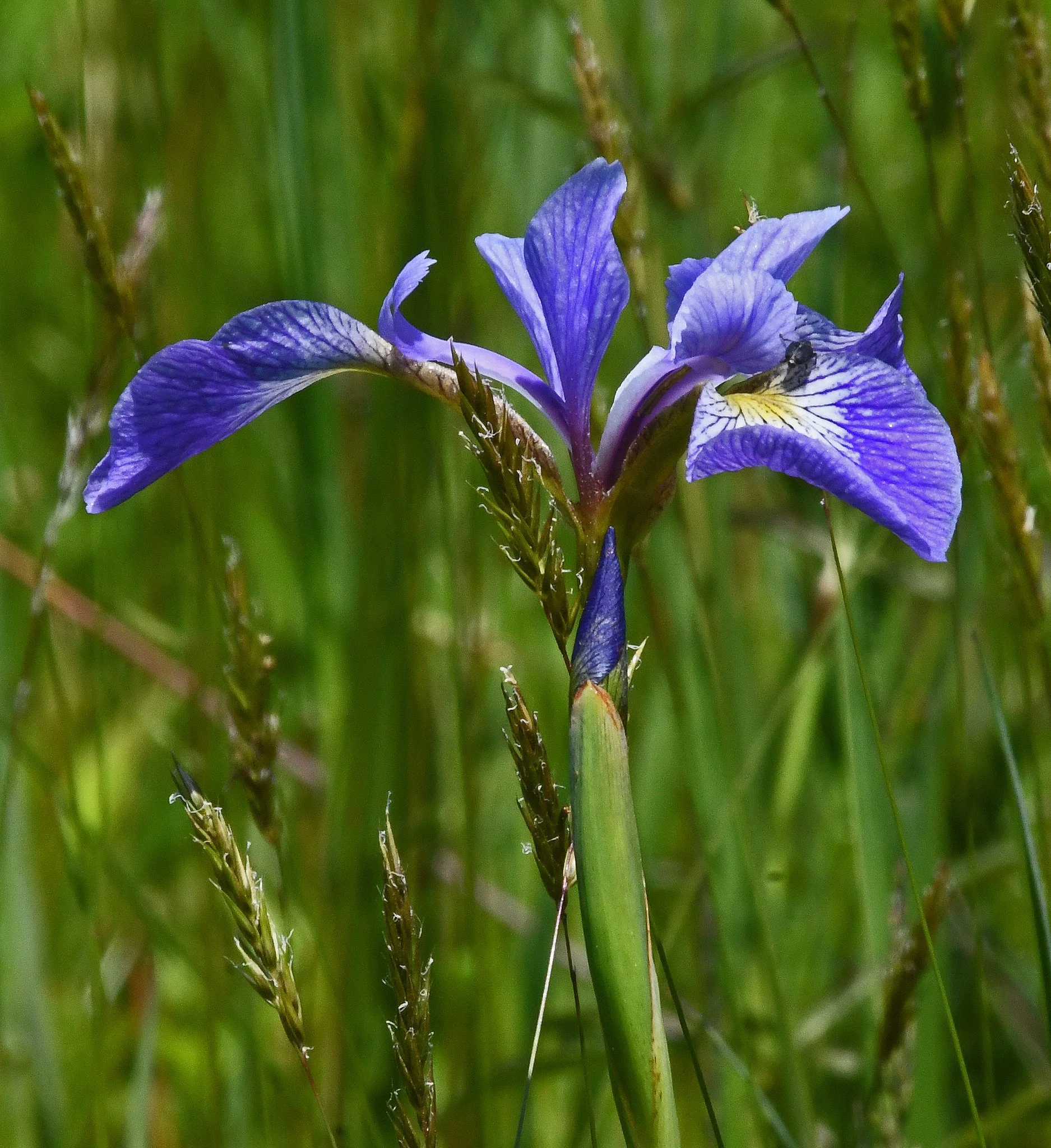
Bearded iris are revealing all in the gardens and wild blue flag iris are waving like crazy in the meadows. It’s a good time for those who like their flowers complicated and sexy and don’t distinguish much between foreign and native beauty.

Bearded iris, shown above, are native to the Mediterranean area, including southern Europe. They get their name from the fuzzy, caterpillar-like “hairs” that guide pollinators to their nectar. Blue flags, shown below, are native to Maine and like wet feet and sun-warmed petals, although they’re hardy enough to live in partial shade.

(Images taken in Brooklin, Maine, on June 9, 2026.)
Comment